

ICC Champions Trophy: India to play matches in Dubai, not Pakistan
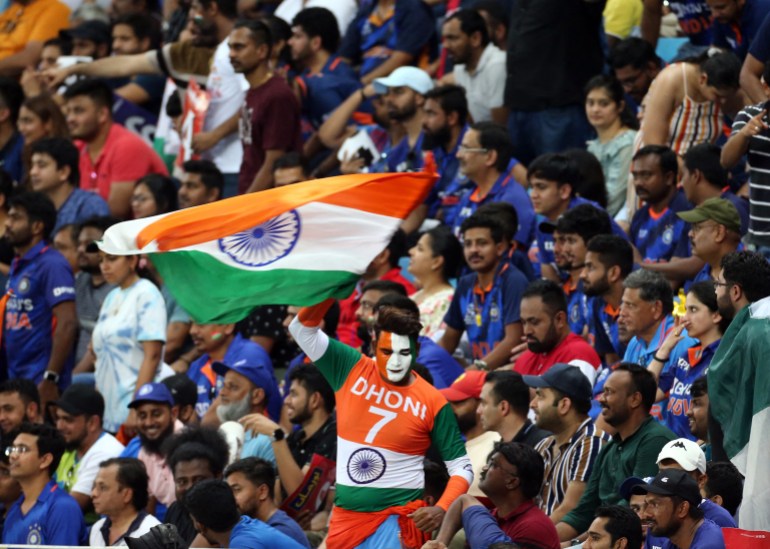
The ICC revised schedule for the tournament has India playing group matches, semifinal 1 and final, if required, in UAE. The Champions Trophy 2025 will now be held in Pakistan and Dubai, after hosts Pakistan selected the UAE as a neutral venue for their rivals India, the International Cricket Council (ICC) said. The venue change followed weeks of wrangling after India refused to visit Pakistan for their matches. Tournament holders Pakistan will now have to travel to Dubai to play India in a match on 23 February, and again, if the sides were to meet, in the final on March 9. “Lahore will also host the final on 9 March, unless India qualify, in which case it will be played in Dubai. Both the semi-finals and the final will have reserve days,” the ICC said in a statement on Tuesday. “The three group matches involving India, as well as the first semi-final, will be played in Dubai.” The eight-team competition kicks off on February 19 in Karachi, featuring a total of 15 matches across Pakistan and Dubai. Tournament matches will be held in Rawalpindi, Lahore, and Karachi. Each venue in the country is set to host three group-stage games, with Lahore also staging the second semifinal. Advertisement Pakistan face New Zealand in the Group A opener in Karachi on February 19, while India meet Bangladesh in Dubai a day later. Due to strained political ties, India have not toured Pakistan since 2008, and the Indian Cricket Board (BCCI), citing government advice, has refused to send its team for the Champions Trophy. The ICC said last week that matches between India and Pakistan in tournaments from 2024 to 2027 organised in either nation would be played at neutral venues. The Champions Trophy will be the first ICC event hosted by Pakistan since it shared the 1996 World Cup with India and Sri Lanka. India fans will need to travel to Dubai to watch their team play in the 2025 ICC Champions Trophy [Satish Kumar/Reuters] Adblock test (Why?)
Syria says ex-rebel groups agree to integrate under Defence Ministry
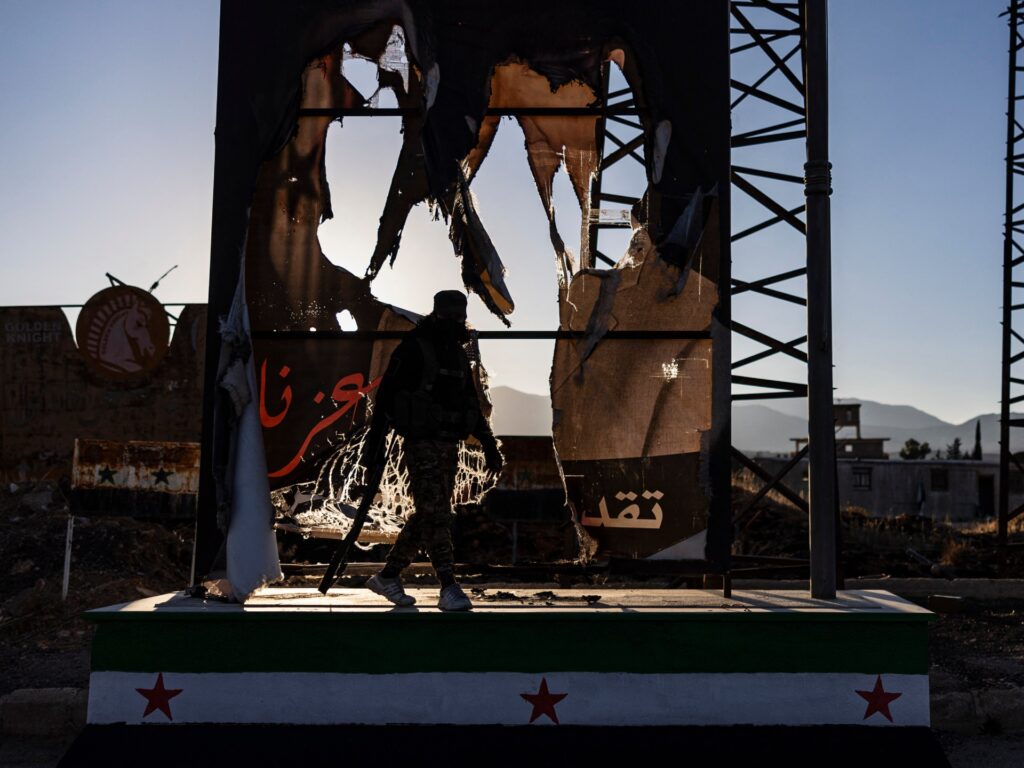
De facto Syrian leader Ahmed al-Sharaa says factions agreed to disband following a meeting with the heads of the groups. Syria’s de facto leader Ahmed al-Sharaa has reached an agreement with rebel factions to come together as one force under the Defence Ministry, according to the new Syrian general administration. A meeting between al-Sharaa and the heads of the groups “ended in an agreement on the dissolution of all the groups and their integration under the supervision of the ministry of defence”, said a statement by the new administration on Tuesday. However, the Kurdish-led and United States-backed Syrian Democratic Forces (SDF) group in northeastern Syria is not part of the deal just announced. Prime Minister Mohammed al-Bashir had said last week that the ministry would be restructured using former rebel factions and officers who defected from Bashar al-Assad’s army. “Since the fall of the Assad regime, this is perhaps the most important development that has happened in Syria,” said Al Jazeera’s Resul Serdar, reporting from Damascus. He explained that immediately after the fall of al-Assad’s regime, opposition fighters from across the country streamed into Damascus, with some of them claiming different territories of the capital. Advertisement “The main fear was how these groups that had been fighting against the regime during the course of 13 years of the civil war – groups that are heavily armed – how they are going to merge and unite,” Serdar said. “After talks and talks, several sessions and meetings … now Ahmed al-Sharaa, the de facto leader of Syria who is also the leader of HTS – the most dominant military and political power in Syria – is saying that all the armed groups have decided to merge under the Ministry of Defence; that is quite a remarkable development.” ‘Lift sanctions’ Following a sweeping offensive over two weeks ago that catapulted Hayat Tahrir al-Sham (HTS) into power in Damascus, the country’s new rulers appointed Murhaf Abu Qasra, a leading figure in the rebellion that toppled al-Assad, as defence minister in the interim government. Al-Sharaa had previously promised that all weapons in the country, including those held by Kurdish-led forces, would come under state control. He has sought to reassure Western officials visiting him that HTS, a former al-Qaeda affiliate, will neither seek revenge against the former regime nor repress any religious minority. He said his primary focus is on reconstruction and achieving economic development and that he is not interested in engaging in any new conflicts. Syrian opposition fighters seized control of Damascus on December 8, forcing al-Assad to flee after more than 13 years of war, ending his family’s decades-long rule. Forces under the command of al-Sharaa have installed a three-month caretaker government. Advertisement Qatar on Tuesday called for the swift removal of sanctions on Syria, a day after a high-level Qatari delegation visited Damascus, marking a turning point in relations. The Qatari embassy in the Syrian capital reopened on Sunday, ending a 13-year diplomatic rift between the two nations. “Qatar’s position is clear,” Foreign Ministry spokesperson Majed al-Ansari stated. “It’s necessary to lift the sanctions quickly, given that what led to these sanctions is no longer there and that what led to these sanctions were the crimes of the former regime.” Adblock test (Why?)
Guatemala finds children taken by Jewish sect after abuse investigation
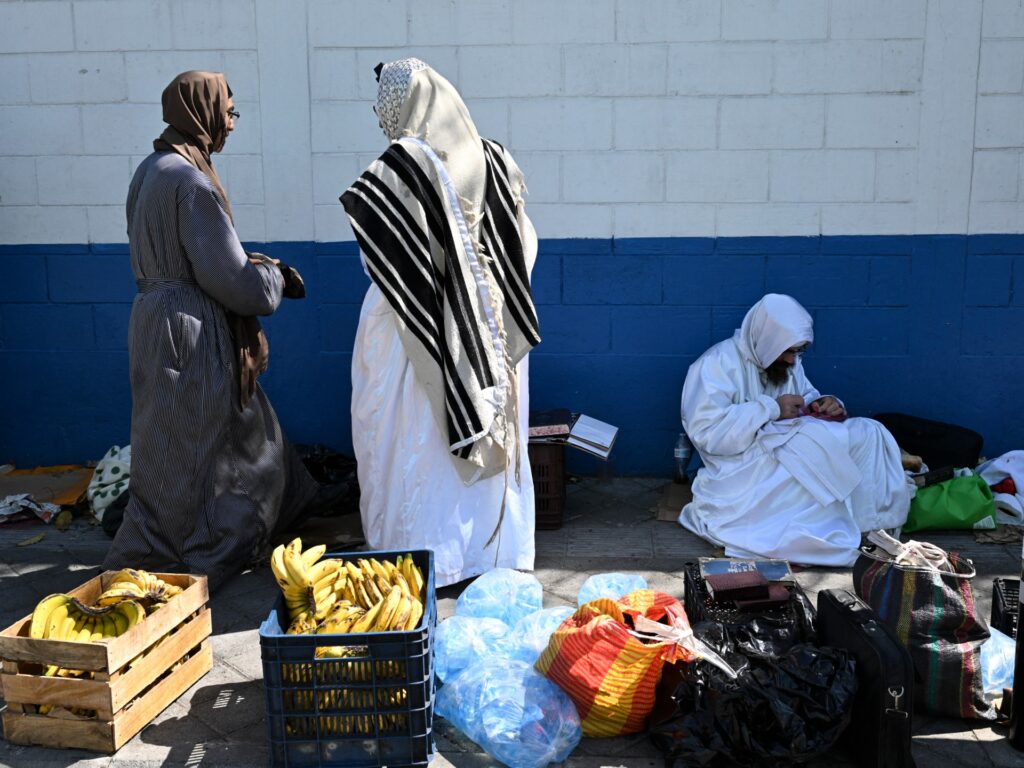
The Jewish sect, Lev Tahor, has accused Guatemala authorities of religious persecution. Guatemalan authorities have recovered several children taken by members of an ultra-orthodox Jewish sect who had broken into a care centre where they were being held. Officials said that members of the Lev Tahor sect had entered the shelter on Sunday in an effort to take back 160 minors who had been taken from the sect’s compound on Friday in a police raid. Authorities accuse the sect of child sexual abuse. Some of the children were found on Sunday, while others were recovered early on Monday, according to the AFP news agency. The farm compound in Oratoria, southwest of Guatemala City, was raided on Friday by authorities to rescue children and adolescents who “were allegedly being abused by a member of the Lev Tahor sect”, said Minister of the Interior Francisco Jimenez. Nancy Paiz, a prosecutor at Guatemala’s Prosecutor’s Office Against Human Trafficking, said at a news conference : “Based on the statements of the complainants, the evidence obtained, and the medical examinations, it was possible to establish that there are forms of human trafficking against these minors, such as forced marriage, abuse and related crimes.” Advertisement About 100 of the children’s relatives who belong to the sect gathered on Sunday outside a care centre in Guatemala City, where the children were being held, to demand their return. Sect members then “broke into” the centre at about 4:30pm local time (22:30 GMT), “forcing open the gate and abducting the children and adolescents sheltered there”, a statement from the Attorney General’s Office said. “We want them to let the children out of here,” Uriel Goldman, a representative of the families, told the AFP outside the centre before the attempted recapture of the minors. Those outside the shelter tried to prevent the authorities from bringing back the minors, leading to some scuffles with police, according to an AFP photographer at the scene. With police help, the centre “managed to locate and protect everyone again”, the Attorney General’s Office said, although the Secretariat of Social Welfare of the Presidency later clarified that some had “evaded” authorities and a search alert has been activated. Lev Tahor has also accused local authorities of religious persecution. “The authorities… tell lies with false accusations,” Goldman said. The Lev Tahor community, founded in 1988 in Israel, practise an austere form of Judaism with interpretation of Jewish law that includes long prayer sessions and arranged marriages. The community settled in Mexico and Guatemala between 2014 and 2017. In 2022, a Mexican police operation in the southern Mexican state of Chiapas on the Guatemalan border rescued a group of children and adolescents from a Lev Tahor camp, whose members were arrested on suspicions of participating in abuses against minors. Advertisement The Jewish Community of Guatemala in a statement said the sect was foreign to its organisation and expressed its support for Guatemalan authorities in carrying out the necessary investigations “to protect the lives and integrity of minors and other vulnerable groups that may be at risk”. It called on the “government and diplomatic corps of countries from whose nationalities make up members of Lev Tahor, to join forces to protect those whose rights may be violated”. The minors are now under the protection of the government and investigations remain under way. Adblock test (Why?)
Canada records almost 50,000 deaths from fentanyl since 2016
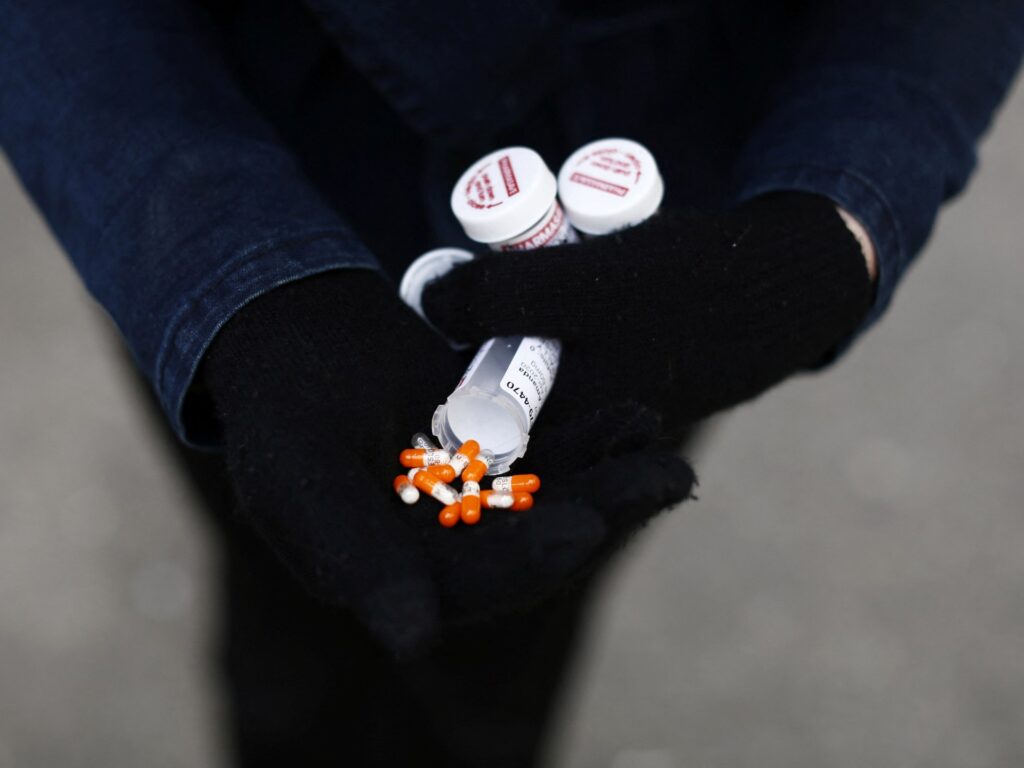
The highly addictive opioid is behind an increasing number of deaths in Canada, according to the government. Fentanyl is increasingly behind opioid overdose deaths in Canada, according to new government data. The national health agency on Monday reported that nearly 50,000 people in the North American country died from opioid overdose deaths from January 2016 to June 2024. During that period, fentanyl, a highly addictive synthetic opioid sometimes prescribed for pain relief, accounted for 49,105 of the deaths. Meanwhile, the proportion of fentanyl deaths has increased, according to the data, accounting for 79 percent of opioid deaths so far this year. That is a 39 percent increase since 2016. The data was released just weeks before United States President-elect Donald Trump is set to enter the White House. Trump’s looming presidency has drawn increased attention to the opioid crisis in North America, with the president-elect threatening to impose 25 percent tariffs on Canada and Mexico if the neighbours did not do more to stem the flow of drugs and undocumented migrants crossing into the US. Advertisement Canada’s government last week announced a raft of new border measures aimed at allaying Trump’s concerns, even if the president-elect’s claims do not quite track with the data. US Customs and Border Protections reported that less than 20kg of fentanyl was seized at the US-Canada border in 2023. Still, Canadian authorities have warned of an increase in domestic production of fentanyl in the country, with law enforcement focusing more on chemical precursors used to make the substance. Canada’s foreign ministry has said the seizure of Canadian-made fentanyl in the US, Australia and other countries indicates that domestic production exceeds demand and Canada has become a net fentanyl exporter. The overall rate of opioid overdoses has declined compared with last year, according to Health Canada. Health Canada said an average of 21 people had died each day from apparent opioid overdoses so far this year – an 11 percent decline from 2023. Still, the agency warned that the numbers are preliminary and subject to change. “We must remain cautious in drawing conclusions on the trends for 2024,” it said in a statement. “The extent of opioid and stimulant-related harms remains very high.” Adblock test (Why?)
UN raises death toll for recent Cite Soleil massacre in Haiti’s capital
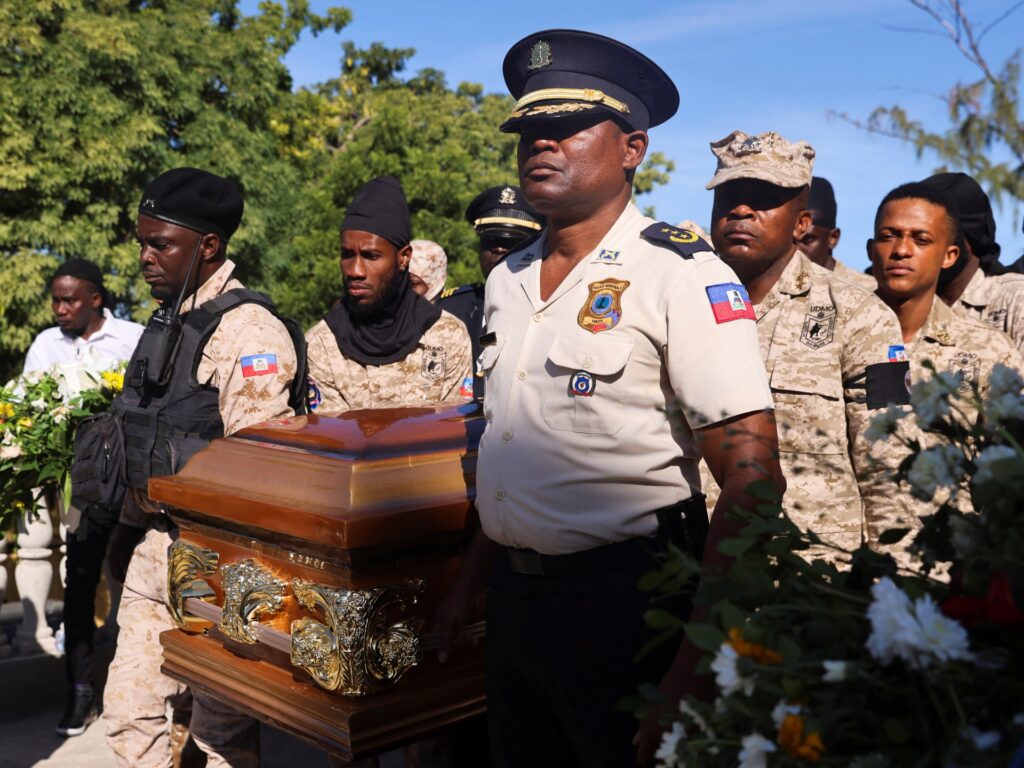
The UN now says 207 people were killed in a slum neighborhood of the capital, Port-au-Prince, earlier this month. The United Nations has raised the death toll of a recent mass killing in Haiti, saying its investigation found that 207 people were killed by a gang, including dozens of older people and Vodou religious leaders. In a report published on Monday, the UN office in Haiti detailed events that took place between December 6 and 11 in the Wharf Jeremie neighbourhood of Cite Soleil, a coastal slum in the capital, Port-au-Prince. The gang took people from their homes and a place of worship, interrogated them and then “executed” them with bullets and machetes before burning their bodies and throwing them into the sea, the report found. Earlier this month, human rights groups in Haiti had estimated that more than 100 people were killed in the event, but the new UN investigation concluded that a total of 134 men and 73 women were slaughtered. “We cannot pretend that nothing happened,” said María Isabel Salvador, the UN secretary-general’s special representative in Haiti. “I call on the Haitian justice system to thoroughly investigate these horrific crimes and arrest and punish the perpetrators, as well as those who support them,” she said in a statement. Advertisement The Haitian government acknowledged the killing of older people in a statement issued earlier this month, and promised to prosecute those responsible for this act of “unspeakable carnage”. The UN Security Council issued a statement on Monday condemning the latest gang killings and expressing their “deep concern” over the crisis in Haiti, highlighting food insecurity and gang recruitment of children. Insecurity and isolation The insecurity has deteriorated so far in Haiti that the UN recently ordered some of its personnel to leave the country or relocate from the capital to safer areas. The country is increasingly isolated after the Port-au-Prince international airport was closed due to commercial passenger planes being struck by gunfire. The UN is in discussions over what steps to take in Haiti after an international security mission led by 400 Kenyan police has struggled to restore law and order. One option being considered is a return to a full-scale peacekeeping operation, despite mixed results by previous deployments, including a “stabilisation” mission, MINUSTAH, which ran from 2004 until it departed in 2017. ‘King Micanor’ Human rights groups in Haiti said the Wharf Jeremie killings began after the son of Micanor Altes, a local gang leader, died from an illness. Witnesses told the groups that Altes, alias “King Micanor”, accused people in the neighbourhood of causing his son’s illness by casting an evil spell on him. In Monday’s report, the UN said that people were tracked down in their homes and in a place of worship by Altes’s gang, where they were first interrogated and then taken to a site where they would be killed. Advertisement The killings are the latest humanitarian tragedy in Haiti, where gang violence has intensified since the nation’s president, Jovenel Moise, was killed in a 2021 coup attempt. The Caribbean nation is currently governed by a transitional council that includes representatives from the business community, civil society and political parties, but its government has no control over many areas of the capital city, and gangs are constantly fighting over ports, highways and neighbourhoods. According to the UN, more than 5,358 people have been killed in Haiti’s gang wars this year and another 2,155 injured. More than 17,000 people have been killed or injured in gang-related violence in Haiti since the beginning of 2022. Adblock test (Why?)
‘Stand by our Syrian brothers’, says Jordan FM after meeting al-Sharaa
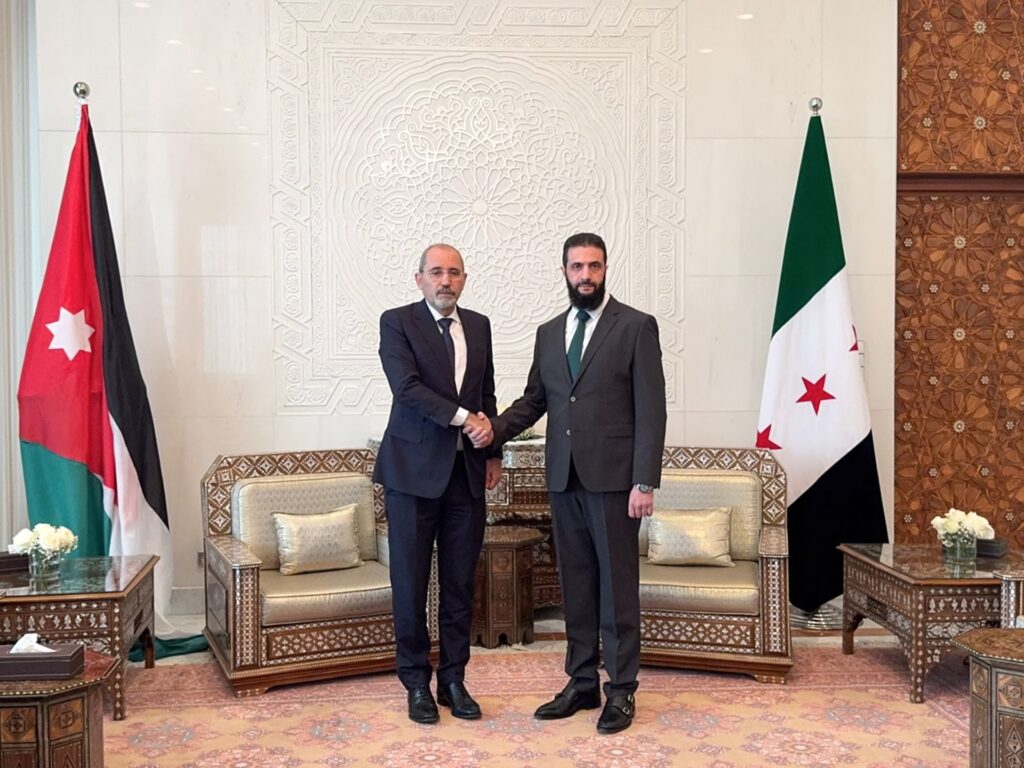
Jordan’s foreign minister has held talks with Syria’s de facto ruler Ahmed al-Sharaa in Damascus as regional leaders move to engage with the new administration following the overthrow of President Bashar al-Assad two weeks ago. “We stand by our Syrian brothers as they start the rebuilding process,” Ayman Safadi told Al Jazeera on Monday. “We want a stable, secure, safe Syria that guarantees the rights of its people through a transitional process consistent with the aspirations of Syrian people,” Safadi added. Mohammed al-Khulaifi, minister of state at Qatar’s Ministry of Foreign Affairs, also arrived in the Syrian capital, days after Doha opened its embassy in Damascus after 13 years. Qatar’s Foreign Ministry spokesperson Majed al-Ansari said al-Khulaifi will hold a series of meetings with Syrian officials “to embody Qatar’s firm position in providing all the support to the Syrian people”. Monday’s high-profile diplomatic visit came a day after Turkiye’sr foreign minister promised help with the political transition and rebuilding the war-torn country after meeting the new administration. Advertisement Hakan Fidan and al-Sharaa on Sunday stressed the need for unity and stability in Syria, as they called for the lifting of all international sanctions against the war-ravaged country. Turkiye backed the Syrian opposition fighters led by al-Sharaa’s Hayat Tahrir al-Sham (HTS), which spearheaded the offensive that toppled Bashar al-Assad’s 54-year rule. Safadi also pointed out that the security and stability of Syria are key to Jordan and the region. “We share a 375km [230-mile] border with Syria. We want that border to be stable, free from terrorist organisations, free from drugs and weapon smuggling,” he told Al Jazeera. In recent years, Jordan has tightened border controls in a crackdown on drug and weapon smuggling along its border with Syria. One of the main drugs smuggled is the amphetamine-like stimulant Captagon, for which there is huge demand in the oil-rich Gulf. “We are working out the challenges and discussed the security of our common border with Mr Sharaa today,” Safadi said. The Jordanian foreign minister also condemned Israel’s attacks on Syria in recent days and said, “It’s an encroachment of Syria’s sovereignty.” “Israel should withdraw from Syrian territory respecting the 1974 agreement,” he added. Jordan also hosted a summit earlier this month where top Arab, Turkish, EU and US diplomats and called for an inclusive and peaceful transition after more than a decade of war. Reporting from Damascus, Al Jazeera’s Hashem Ahelbarra said the new authorities in Syria are eager for more recognition from neighbouring countries. Advertisement “As far as [the meeting with] Jordan is concerned, this is going to be a significant boost for al-Sharaa. He wants to build bridges with Jordan. There are many tribal connections along the border between Jordan and Syria,” Ahelbarra said. Jordan also hosted hundreds of thousands of Syrian refugees, some of whom have returned home after al-Assad’s fall. Jordan claims it hosts some 1.3 million refugees but the United Nations says 680,000 Syrian refugees were registered with it. Al-Sharaa has hosted Arab, as well as Western diplomats, as he aims for formal diplomatic recognition. Al Jazeera’s Ahebarra noted that al-Sharaa met Turkiye’s foreign minister yesterday and later met with a top adviser of Saudi Arabia’s king, to discuss the future of Syria. Regional powerhouse Saudi Arabia is expected to send a delegation soon, according to Syria’s ambassador in Riyadh. Besides neighbouring Arab countries, al-Sharaa has also received a host of foreign delegations since coming to power. On Friday, the United States’s top diplomat for the Middle East, Barbara Leaf, had a meeting with Syria’s de facto leader. Leaf said she expected Syria would completely end any role for Iran in its affairs. A handful of European delegations have also visited in recent days. Sultan Barakat, from the Hamad bin Khalifa University based in Doha, told Al Jazeera: “I think the Jordanians, as well as the neighbouring countries, have been encouraged by Americans visiting [Syria] first … Practically all the regional forces, aside from Iran are very happy the regime change has taken place.” Advertisement “They understand the Syrian people have been suffering for over 50 years, particularly the last 13 years it has caused a lot of instability in the region. So everyone is welcoming the stability in Syria,” he said. Separately, on Monday, Iran affirmed its support for Syria’s sovereignty and said the country should not become “a haven for terrorism” after the fall of President al-Assad, whom Tehran backed militarily. “Our principled position on Syria is very clear: preserving the sovereignty and integrity of Syria and for the people of Syria to decide on its future without destructive foreign interference,” Iranian Ministry of Foreign Affairs spokesperson Esmaeil Baqaei said in a weekly news briefing. Adblock test (Why?)
Germany debates migration and motives after deadly Christmas market attack
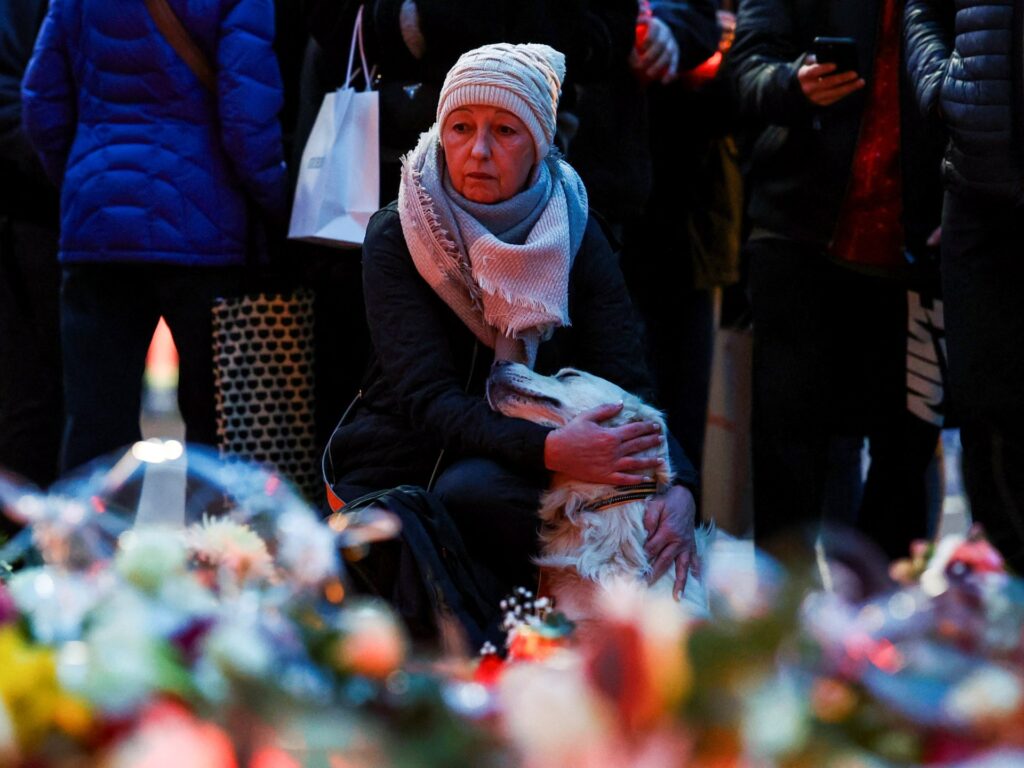
Magdeburg has been enveloped in grief since an attack that killed a nine-year-old boy and four women at a Christmas market on Friday evening. About 200 people were also injured when a car rammed into the busy market in the eastern German city. Authorities have charged Taleb al-Abdulmohsen, a 50-year old, Saudi-born psychiatrist who has lived in Germany since 2006, with murder and attempted murder. Political parties across the spectrum have expressed sorrow for the victims and promised to step up security. In a statement shared with Al Jazeera, Greens party leader Robert Habeck said he wished the city “comfort, strength and confidence”. Chancellor Olaf Scholz called the incident a “terrible and insane” act. Nicole Anger, a lawmaker and co-chairwoman of Die Linke (The Left) party in Magdeburg, said the city remains quiet and people are still stunned. “There are candlelight vigils, services and just a lot of moments of people standing together in solidarity. The salesmen from the Christmas market, which is closed for the rest of the year, have been giving away fruits and vegetables for free,” she told Al Jazeera. Advertisement But while many are united in grief, tensions are growing. Alongside vigils, more than 2,000 far-right supporters bearing banners and chanting slogans against migration gathered in the city on Saturday. Further rallies are reportedly planned for Monday. Anger, who was born and raised in Magdeburg, said the atmosphere reminded her of the mid-1990s when one man was killed after far-right agitators chased a group of Black men through the city in what has come to be known as Himmelfahrtskrawalle, or the Magdeburg Ascension Day riots. “At the moment, children and people with a migration background are scared to be out on the streets,” she said. The attack took place as Germans prepared to close off a heated political year. After the coalition led by Scholz collapsed in November, the chancellor then lost a confidence vote in mid-December, triggering snap elections. Germans will head to the polls on February 23. Meanwhile, the far-right Alternative for Germany (AfD) party continues to gain political ground after successes in state elections this year. The day before the attack, US billionaire Elon Musk stirred controversy by posting on the X social media platform he owns: “Only the AfD can save Germany.” Observers have described a sense of fear and concern, saying a blame game over the Magdeburg attack could distract from the main issues facing the German electorate. “We still have to be very cautious about what the attacker’s real motives were. But what is obvious is that if there is an extremist force in the political discourse which is actually not only Islamophobic but generally phobic against any foreigners, if this is articulated in this strong way as the AfD is constantly doing, it trickles down,” said Justus von Daniels, editor of the German publication Correctiv, which in January broke the news of a meeting between the AfD and neo-Nazi activists to discuss a migrant deportation “master plan”. Advertisement He said how Germany acts now in terms of increasing security will be telling. In the run-up to the elections, political parties should avoid playing into the hands of the AfD’s antimigration narrative and focus on issues affecting the electorate, von Daniels said. “The economy is a big part of this election, and a case like Magdeburg shifts the public discourse to migration issues. If the AfD will try to push the migration issue further, I worry that the other political parties will respond to that, and this is not healthy to the political debate.” The suspect and his possible motives have puzzled authorities and the public. Al-Abdulmohsen described himself as an ex-Muslim activist on social media. His posts showed disdain for Islam and support for right-wing ideologies. He said he supported women fleeing Saudi Arabia, but a journalist at Correctiv who was in contact with him has challenged that claim, reporting that several women blocked him because he was “behaving problematically”. Some alleged they felt sexually harassed by him. Saudi Arabia said it had warned Germany about the doctor in November 2023. Germany has acknowledged receiving the tip but ultimately decided al-Abdulmohsen did not appear to be a threat at that time. Tahir Abbas, an associate professor in Islamophobia and political violence at Leiden University in the Netherlands, said the suspect seems to have become “a bit of a fanboy of populist ethno-nationalist ideals”. “What I think this does is align this particular perpetrator’s motivations more broadly with far-right practices and ideologies, including in relation to the treatment of women,” he said. Advertisement “The far right is so hypernormalised across Europe and North America at the moment that there are tremendous challenges that have emerged and will continue to emerge, particularly as President Donald Trump takes the helm in the US again.” The suspect made clear on social media his admiration for Europe’s hard-right leaders, such as the Dutch politician Geert Wilders. Since the attack, the far right in Germany and across Europe has been quick to weaponise the attack to promote their antimigrant agenda, observers said. Jorinde Schulz, an activist and member of The Left party, said the “extreme right is allowed to mobilise almost unhindered”. “For them, this attack is a stepping stone to gain more support, which is all the more disturbing since they are the ones who are going to attack people of colour in the street and intimidate political activists.” On Sunday, police in Bremerhaven, a port city in northern Germany, detained a man who took to TikTok to threaten violence. The man is alleged to have warned he would stab any person of Arabic appearance in the city on Christmas Day, the German news agency dpa reported. Adblock test (Why?)
Millions in bonds for Israel put US states at odds with investment policies
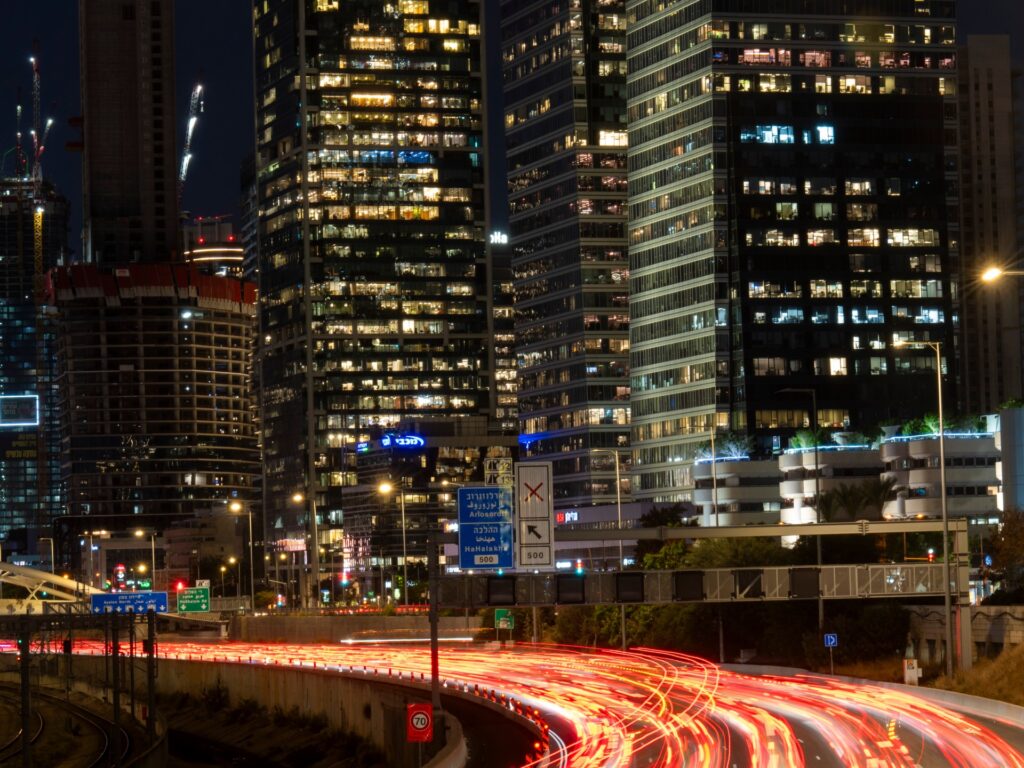
The United States has long been Israel’s primary international backer, lending it vast political, diplomatic and financial support. This has only increased since Israel began its assault on Gaza last October, even as it gradually expanded the parameters of its war, in which it is widely accused by human rights groups of committing genocide. According to Brown University’s Watson Institute, the US government provided Israel with almost $18bn in weapons and military aid in the first year of Israel’s war. But Israel is also increasingly dependent on another source of funds: bonds, bought by states and municipalities across the US. Between October 7, 2023 – when the Palestinian group Hamas attacked Israel and the latter subsequently began its war on Gaza – and April 18 this year, nearly three dozen states and counties have bought $1.7bn worth of bonds, according to Israel Bonds, a US-based company that raises foreign funds for Israel. This money has gone straight into Israel’s general fund, where it can then be funnelled into Israel’s ballooning military budget. An email from Israel Bonds to an Ohio county treasurer noted the bonds were used in part to “refund the United States Government for security equipment”. Advertisement The world’s single largest purchaser of Israel’s war bonds is Palm Beach County – the wealthy Florida county home to President-elect Donald Trump’s Mar-a-Lago residence. Palm Beach holds a startling $700m worth of Israel bonds – a loan large enough to cover the purchase of multiple F-15 fighter jets. But now, after more than a year of an escalating and internationally condemned conflict, Israel’s economy is stumbling. Tens of thousands of Israeli firms are predicted to shut this year, the budget deficit has ballooned from 4 percent to 8 percent of gross domestic product (GDP), direct investment has fallen about 30 percent and US rating agencies have downgraded Israel’s credit. All this means that when local treasurers buy Israeli bonds, they increasingly risk violating their own policies, which require them to invest taxpayer money in a responsible way. In fact, a review by Al Jazeera found that at least two states appear to face violating their state treasury investment policies if they buy more Israeli bonds. At least four other states that have bought Israeli bonds since October 2023 could also face non-compliance if Israel’s credit is lowered further. A risky investment When a state or county buys Israeli bonds, they essentially loan the Israeli government money with an agreement that they will get those funds back in an agreed-upon number of years, plus interest. After October 7, the staff of the underwriter for Israel Bonds directly contacted treasurers in Florida, Louisiana, Ohio, and other states. Those treasurers quickly bought tens of millions of dollars worth of Israeli bonds. Advertisement But as Israel’s economy weakens, it appears increasingly difficult to justify these investments. In April, Fitch, one of the three leading US credit rating agencies, warned that the conflict could “lead to a large deterioration of Israel’s credit metrics”. By August, Fitch had downgraded Israel’s credit. The next month, another agency, Moody’s, also downgraded Israel’s credit rating to Baa1 for the first time in its history, and in October, the third agency, S&P, downgraded Israel as well. Moody’s even warned of further downgrades in light of Israel’s conflict with the Lebanese group Hezbollah. A ceasefire between Israel and Hezbollah was agreed to in late November, but Fitch warned “the ceasefire is likely to be fragile”, and predicted a rise in Israel’s 2025 budget deficit. All three major credit rating agencies project a negative outlook for Israel’s credit. All together, it indicates Israel is less able to pay back its loans. This places some US states in a precarious position, as some state investment policies specify that treasurers can only invest in foreign entities if they are above specific credit ratings. Al Jazeera has found that two states – Florida and Nevada – may face violating their investment policies if they buy more Israel bonds. The Treasury policies of both states require foreign obligations to have ratings of AA- or higher from at least one credit rating agency. Israel Bonds stopped meeting that standard in April. Florida’s Chief Financial Officer last announced purchases of Israeli bonds in March, bringing the state’s holdings to $250m. Nevada bought Israeli bonds last October, according to the CEO of Israel Bonds. Advertisement Neither the Florida nor Nevada Treasury office responded to requests for comment. If Israel’s credit is further downgraded, at least four other US states may also have to halt purchases of Israeli bonds: Ohio, Georgia, Louisiana, and Oklahoma. Rachel Ziemba, a geo-economic and country risk expert and adjunct senior fellow at the Center for a New American Security, said that further purchases of Israeli bonds would appear to violate these states’ policies after she reviewed the policy documents. “Reading their guidelines suggests that it’s in violation… they would have to sell their Israeli bonds especially if there are further downgrades,” Ziemba said, though she added that state investment committees could also decide to make exceptions. “Ultimately I think they’re doing it [buying Israeli bonds] for political and what they believe are moral reasons [but] given the credit rating outlook, it’s probably something that will come up more and more, and probably there will be more legal cases around this issue.” Daniel Garrett, an assistant professor of finance at the Wharton School of the University of Pennsylvania, was more cautious. He noted that Florida had multiple portfolios, some of which have higher rating requirements, and that it was unclear which portfolio the Israeli bonds sit in. Garrett added that all state policies tend to give investment managers flexibility when a security falls out of compliance, and “getting your credit downgraded doesn’t lead to immediate divestment, even if it doesn’t meet these portfolio standards any more”. Advertisement Still, he added, “If I saw increasing investments in a security that has a declining and no longer complying credit rating, that would be out of line with
Will the Christmas market attack divide Germans further over immigration?
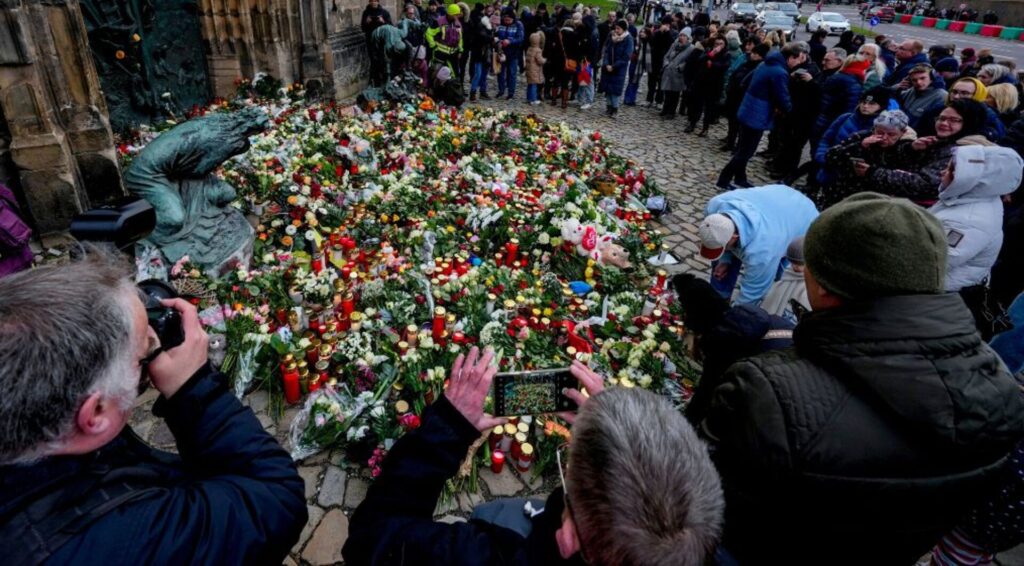
German authorities say the suspect supports a right-wing party. German authorities say the psychiatrist accused of a ramming attack in Magdeburg is Islamophobic. They have charged the Saudi psychiatrist – who has lived in Germany for 18 years – with several counts of murder and attempted murder. But the anti-immigrant, far-right Alternative for Germany party has made gains in opinion polls before February’s snap election. And just days after the fall of the al-Assad regime, the government in Berlin froze asylum applications from Syrians. Will Friday’s carnage, coupled with the dispute about migrants in Europe, divide Germany even further? Could police have done more to prevent the attack? Presenter: Neave Barker Guests: Ulrich Brueckner – Professor of political science at Stanford University in Berlin Rachel Rizzo – Non-resident senior fellow at the Atlantic Council’s Europe Center Muhammad al Kashef – Political adviser and consultant at Migrant Solidarity Network Adblock test (Why?)
As South Korea draws visitors chasing beauty, dodgy practices pose risks

Seoul, South Korea – When Alex looked into the price difference between rhinoplasty, commonly known as a “nose job”, in the United States and South Korea, she thought that flying to the Asian country for the surgery was a no-brainer. “$30,000 or $6,000, the choice was clear,” Alex, who asked not to be referred to by her real name, told Al Jazeera, describing her decision to undergo the procedure in the country “known to be number one in plastic surgery”. But less than a year later, the entertainer found herself grappling with severe complications. The implant from her surgery had begun protruding through her skin, necessitating emergency removal back in the US. “Had I known what I know now, I would have never done it,” she said, visibly distressed as she described her ongoing struggle with complications, including a crooked nose and visible hole that required corrective surgery. “I don’t think I’ll ever go back to Korea to do surgery because of this.” South Korea has the highest rate of plastic surgery procedures per capita in the world, according to Expert Market Research, with a market worth $1.7bn in 2023. Advertisement The sector is expected to grow to be worth $5.19bn by 2032, driven by the global popularity of Korean pop culture, or “hallyu”, which has popularised Korean beauty standards and fuelled interest in Korean cosmetic procedures worldwide. In the capital Seoul, the affluent district of Gangnam is awash with clinics and hospitals specialising in cosmetic procedures and surgery, offering everything from double eyelid surgery to facial contouring, liposuction and breast augmentation. A pedestrian walks past an advertisement for a plastic surgery clinic at a subway station in Seoul on March 26, 2014 [Jung Yeon-Je/AFP] While they also cater to local customers, international patients are a highly lucrative part of their business. Last year, South Korea attracted 605,768 non-resident foreign patients for medical services, according to the Ministry of Health and Welfare, with the highest numbers coming from Japan, China, the United States and Thailand. Plastic surgery accounted for 16.8 percent of procedures – more than 114,000 surgeries – making it the second most sought-after medical speciality after dermatology. But beneath the glossy marketing and viral social media videos luring medical tourists from around the world, foreign patients face a multitude of barriers to access, misinformation and deceptive practices, putting their health at risk, an investigation by Al Jazeera has found. One of the biggest challenges for medical tourists is the language barrier. In key markets like China and the US, prospective patients often turn to a variety of online platforms for advice, including open chat groups, Reddit pages, and even niche forums ostensibly dedicated to topics like designer handbags. Advertisement These murky digital spaces are filled with anonymous users discussing procedures while exchanging clinic and doctor recommendations, procedure tips, so-called blacklists and translator contacts. The abundance of unverified information and lack of accountability make it challenging for users to discern genuine experiences from potentially biased accounts or covert advertisements. They are also a hunting ground for illegal brokers who can make substantial commissions for simply referring clients. While soliciting to foreign patients is legal, it requires a government licence. Eligible companies must have a registered Korean office address, maintain specified capital and carry insurance. Hospitals face more stringent requirements to be able to legally receive foreign patients, including having at least one specialist per medical department and higher levels of medical malpractice insurance. When posing as a potential patient on a number of platforms, Al Jazeera was approached within minutes by anonymous facilitators who admitted they did not have the required certification. In 2020, the dangers of the industry were thrust into the spotlight when Bonnie Evita Law, a heiress to a Hong Kong fashion empire, died during a liposuction procedure at a Seoul clinic. Law was reportedly introduced to the hospital through an illegal broker. The operating surgeon, later revealed to be an orthopaedic specialist rather than a plastic surgeon, was charged with professional negligence resulting in death. The outcome of the case was not publicly revealed. Advertisement While only certified specialists can officially call their practices “plastic surgery clinics”, any licensed medical doctor in South Korea can legally perform cosmetic surgeries as Korean medical law does not restrict doctors to only working in their specialised field. In a more recent case, a Chinese woman died in January shortly after receiving liposuction surgery at a clinic in Gangnam. The problem of Chinese cosmetic surgery patients falling victim to unscrupulous and unsafe practices has become so prevalent that the Chinese embassy in Seoul in January issued a notice warning its citizens to “be wary of advertising and risks” and “carefully choose intermediary agencies”. Pedestrians walk outside the Chinese embassy in Seoul on January 10, 2023 [Anthony Wallace/AFP] The Ministry of Health and Welfare, through the Korea Health Industry Development Institute (KHIDI), operates a centre for reporting illegal soliciting of foreign patients. The number of reports has risen significantly – from 11 cases in 2021 to 16 in 2022, to 59 last year. An official at KHIDI, speaking on condition of anonymity, said that “cases handled as suspected violations are subject to follow-up measures such as fines and penalties”. “Those confirmed as illegal solicitation are administratively disposed of by local governments in accordance with the law,” the official said. However, when pressed for specifics on how many cases were actually investigated or processed, the official did not provide figures, only stating that the number would “inevitably be lower” than the number of cases reported. Advertisement Kang Ki-yoon, a lawmaker with South Korea’s ruling People Power Party, last year raised concern about the lack of clarity around the handling of cases, suggesting that despite the increase in reports, there appeared to be little follow-up action. “It’s a national disgrace for foreigners seeking our country’s world-class medical technology to fall victim to unethical practices by some medical institutions,” Kang said, calling for more rigorous management of such cases. Speaking on condition of anonymity, a friend