

Erdogan urges end of foreign support for Kurdish fighters in Syria
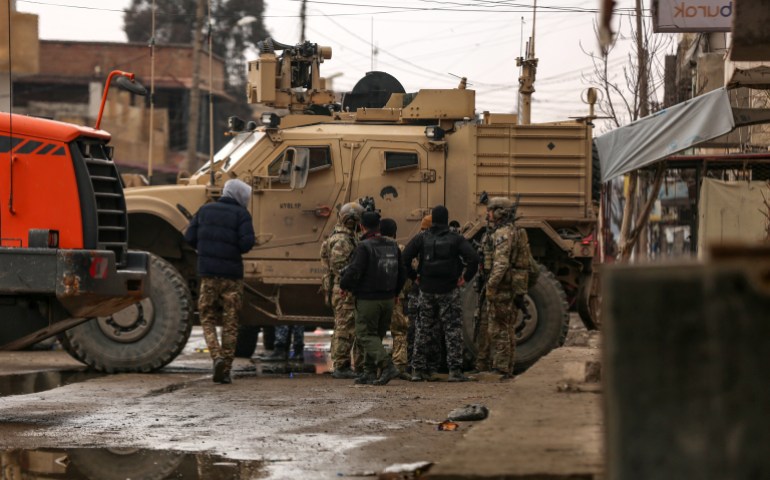
Turkish president compares Kurdish YPG fighters to ISIL and says neither group has a future in Syria. Turkiye expects foreign countries to withdraw support for Kurdish fighters in Syria after the toppling of Bashar al-Assad, President Recep Tayyip Erdogan says, as Germany warns against an escalation in fighting with Kurdish forces. Speaking to reporters on a flight home from a summit in Egypt, Erdogan said there was no longer any reason for outsiders to back Kurdish fighters with the People’s Protection Units (YPG). His comments were released by his office on Friday. The YPG is the main force in a United States-backed alliance called the Syrian Democratic Forces (SDF) in northeastern Syria. Turkiye considers the YPG an extension of the Kurdistan Workers’ Party (PKK), which has long fought the Turkish state and is designated as a “terrorist” group by Ankara, Washington and the European Union. In his remarks, Erdogan compared YPG fighters to ISIL (ISIS), an armed group also known as Daesh, and said neither group has a future in Syria. SDF forces operating in the neighbourhood of Ghwayran in the northeastern Syrian city of Hasakah [File: AFP] “In the upcoming period, we do not believe that any power will continue to collaborate with terrorist organisations. The heads of terrorist organisations such as Daesh and PKK-YPG will be crushed in the shortest possible time.” Advertisement The US still has 2,000 soldiers on the ground in Syria working alongside the SDF. The alliance played a major role on the ground defeating ISIL forces in 2014-2017 with US air support and still guards ISIL fighters in prison camps. Ankara, alongside Syrian allies, has mounted several cross-border offensives against the SDF in northern Syria while repeatedly demanding that its NATO ally Washington halts support for the fighters. Hostilities have escalated since President al-Assad was toppled less than two weeks ago with Turkiye and Syrian groups it backs seizing the city of Manbij from the SDF on December 9, prompting the US to broker a fragile ceasefire. Erdogan told reporters that Turkiye wanted to see a new Syria in which all ethnic and religious groups can live in harmony. To achieve this, ISIL, “the PKK and its versions, which threaten the survival of Syria, need to be eradicated”, he said. Security for Kurds ‘essential’ Later on Friday, German Foreign Minister Annalena Baerbock told her Turkish counterpart that security for the Kurdish people is critical for Syria. “Security, especially for Kurds, is essential for a free and secure future for Syria,” she told journalists after meeting Turkish Foreign Minister Hakan Fidan while warning of the dangers of any “escalation” with Kurdish forces in Syria. Baerbock also raised the alarm over new violence in northern Syria. “Thousands of Kurds from Manbij and other places are on the run in Syria or are afraid of fresh violence,” the German minister said. “I made it very, very clear today that our common security interests must not be jeopardised by an escalation with the Kurds in Syria.” Advertisement Fidan told Baerbock that it was essential for Kurdish groups including the PKK and YPG to lay down their arms and dissolve, Turkish Ministry of Foreign Affairs officials said. Meanwhile, a senior US diplomat said on Friday that Washington was urging a ceasefire between Turkish-backed forces and the SDF around the flashpoint Syrian city known as Kobane in Kurdish and Ain al-Arab in Arabic. “We are working energetically in discussions with Turkish authorities, also with the SDF. We think the best way ahead is for a ceasefire around Kobane,” Barbara Leaf, the top US diplomat for the Middle East, told reporters after her first visit to Damascus since the fall of al-Assad. Adblock test (Why?)
Starbucks workers’ union goes on strike in US cities
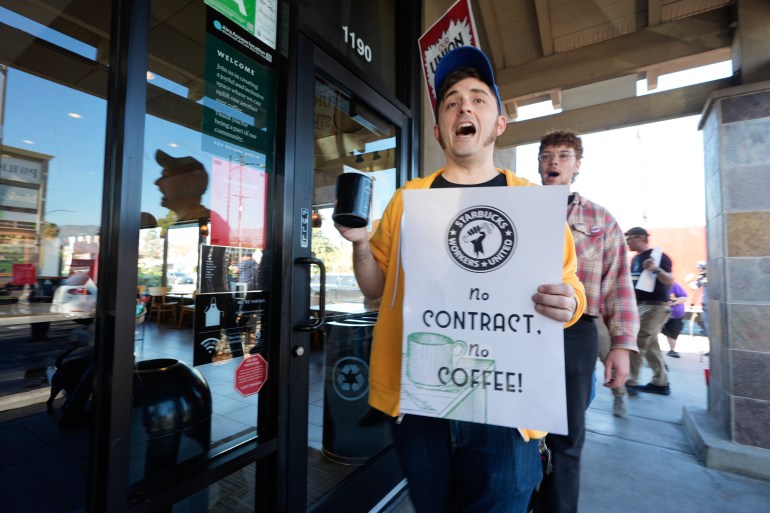
Some members of the workers’ union representing more than 10,000 baristas at Starbucks in the United States have begun a five-day strike at stores in Los Angeles, Chicago and Seattle, citing unresolved issues over wages, staffing and schedules. The strike, which started on Friday, is the latest in a series of labour actions in the US that have picked up pace across service industries following a period when workers of automotive, aerospace and rail manufacturers won substantial concessions from employers. The Starbucks Workers United Union, which represents employees at 525 stores across the US, said late on Thursday that walkouts would escalate daily and could reach “hundreds of stores” nationwide by Christmas Eve. “It’s estimated that 10 stores out of 10,000 company-operated stores did not open today,” Starbucks said, adding that there was no significant impact on store operations on Friday. About 20 people joined a picket line at a Starbucks location on Chicago’s north side, buffeted by snow and wind, but cheering in response to the honking horns of passing cars. Advertisement A few confused customers tried to walk into the closed store before strikers began chanting, but union member Shep Searl said the reaction had been mostly positive. Searl said 100 percent of the unionised workers at the Starbucks location in Chicago’s Edgewater neighbourhood were participating in the strike and, according to the workers, they have been subject to numerous unfair labour practices including write-ups, “captive-audience” meetings and firings. (A captive-audience meeting is a mandatory meeting organised by a firm where employees are interested in unionising and where it brings in labour relations consultants to talk about the pros and cons of unionising.) The union members said they made about $21 an hour and added that this “would have been a great wage in 2013”. It is an inadequate wage, the baristas said, given inflation and the high cost of living in a large city, especially since they rarely got 40-hour work weeks. “We’re planning to escalate if we need to,” they said. Deadlock Negotiations between the company and Workers United began in April, based on an established framework agreed upon in February, which could also help resolve numerous pending legal disputes. Starbucks workers picket outside of a closed Starbucks on Friday in Burbank, California [Damian Dovarganes/AP Photo] The company said on Thursday it has held more than nine bargaining sessions with the union since April, and reached more than 30 agreements on “hundreds of topics”, including economic issues. Advertisement The firm, whose headquarters are in Seattle, said it was ready to continue negotiations, claiming the union delegates prematurely ended the bargaining session this week. The union, however, said in a Facebook post on Friday that Starbucks had yet to present a serious economic proposal with less than two weeks remaining until the year-end contract deadline. The workers’ group also snubbed an offer of no immediate wage hike and a guarantee of a 1.5 percent increase in future years. “Workers United proposals call for an immediate increase in the minimum wage of hourly partners by 64 percent, and by 77 percent over the life of a three-year contract. This is not sustainable,” Starbucks said on Friday. Hundreds of complaints have been filed with the National Labor Relations Board (NLRB), accusing Starbucks of unlawful labour practices such as firing union supporters and closing stores during labour campaigns. Starbucks has denied wrongdoing and said it respects the right of workers to choose whether to unionise. Last month, the NLRB said that Starbucks broke the law by telling workers at its flagship Seattle cafe that they would lose benefits if they joined a union. “It’s [the strike] taking place during one of the busiest times of the year for Starbucks, which could magnify its impact while bringing unwanted public scrutiny into the company’s labour practices,” Rachel Wolff, an analyst with market researcher Emarketer, said. The coffee chain is undergoing a turnaround under its newly-appointed boss Brian Niccol, who aims to restore “coffee house culture” by overhauling cafes and simplifying the menu, among other measures. Advertisement “Given how much Starbucks is already struggling to win over customers, it can ill afford any negative publicity – or impact to sales – that the strike could bring,” Wolff said. The union has called for support at the picket lines in the three cities starting at about 18:00 GMT, according to a post on X. The Starbucks workers’ strike comes in the same week as Amazon workers at seven US facilities walked off the job, on Thursday, during the holiday shopping rush. There were 33 work stoppages in 2023, the most since 2000, though far lower than in past decades, data from the US Bureau of Labor Statistics showed. Adblock test (Why?)
At least two dead as car slams into crowded Christmas market in Germany
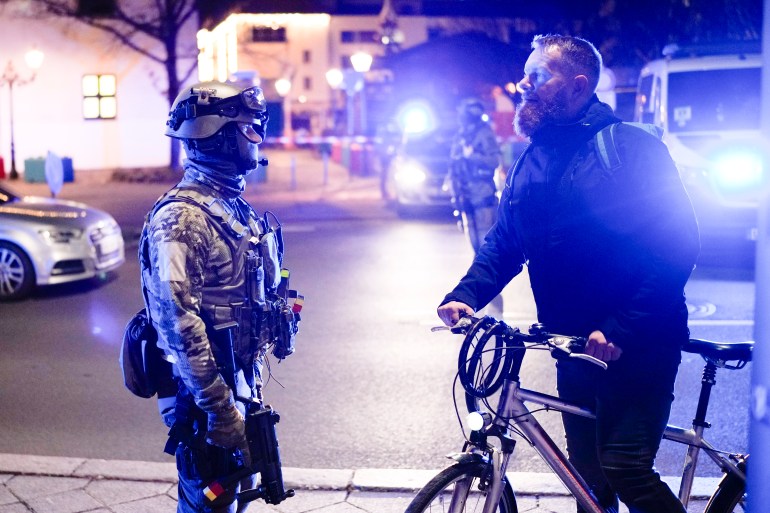
At least two people are dead and as many as 68 injured after a car rammed into a crowded Christmas market in the city of Magdeburg, the capital of the central German state of Saxony-Anhalt. Officials on Friday night described the incident as an intentional attack and announced that the driver had been taken into custody at the scene. An investigation is under way. German Chancellor Olaf Scholz was among the many offering their condolences in the immediate aftermath of the incident. His office indicated that he would be visiting the scene on Saturday. “The reports from Magdeburg suggest something terrible has happened. My thoughts are with the victims and their families,” Scholz wrote on the social media platform X. “We stand by their side and by the side of the people of Magdeburg. My thanks go to the dedicated rescue workers in these anxious hours.” A police officer speaks with a man outside a cordoned-off area after a suspected attack in Magdeburg, Germany, on December 20 [Ebrahim Noroozi/AP Photo] The interior minister for Saxony-Anhalt, Tamara Zieschang, identified the suspect as a 50-year-old doctor from Saudi Arabia who arrived in Germany in 2006. He was previously unknown to security services. Advertisement Another state official, Premier Reiner Haseloff, told a local news outlets that one of the dead was a child and the other an adult. He added that he could not say whether there would be further deaths as a result of the suspected attack. “That is speculation now. Every human life that has fallen victim to this attack is a terrible tragedy and one human life too many,” Haseloff told reporters. He said that officials currently believe the suspect in custody was the sole perpetrator behind the car ramming. “As things stand, he is a lone perpetrator, so that as far as we know, there is no further danger to the city,” Haseloff told reporters. Among the injured, 15 were identified as being in critical condition, according to the city government’s website. Another 37 people had injuries of medium severity and 16 were lightly injured. Local media reports indicate the car involved was seen driving at high speeds before striking the crowd at about 7pm local time (18:00 GMT). A police officer blocks a road near the scene of a suspected attack on a Christmas market in Magdeburg, Germany, on December 20 [Ebrahim Noroozi/AP Photo] Christmas markets are a tradition dating back to the Middle Ages in German-speaking parts of Europe. In Magdeburg, a city of about 240,000 residents, the market was set up in a town square, with stalls selling regional food and drink. “It’s a terrible tragedy. This is a catastrophe for the city of Magdeburg and for the state, and for German generally as well,” Haseloff said. “It is really one of the worst things one can imagine, particularly in connection with what a Christmas market should bring.” Advertisement Al Jazeera correspondent Dominic Kane, who was headed to the scene of Friday’s suspected attack, said the Christmas market would have been especially crowded when the car struck. “ It’s the last Friday before Christmas. It’s the tradition all over Germany that Christmas markets are places that people go to, especially on Friday night,” Kane said. “And then think about the physical geography of the market concerned, where it is. It’s not that far from the town… not that far from the river Elbe, in quite a picturesque city actually. So there will have been lots of reasons for people to be in the centre of the city at the time.” Kane added that the suspect’s reported use of a rental car would provide investigators an avenue to learn more about his actions in the lead-up to the attack. “Obviously, there will be a record of when the car was picked up, where it was picked up and what documentation was used to get the car in the first place. These are all lines of inquiry,” Kane said. Friday night’s suspected attack comes eight years after a similar car ramming in the German capital of Berlin on December 19, 2016. In that case, a Tunisian suspect, 24-year-old Anis Amri, intentionally drove a truck into a Christmas market in a major public square, Breitscheidplatz. Twelve people were killed in that attack and as many as 56 were wounded. Amri was eventually killed in a shootout in Milan, after fleeing to Italy. Raphael Bossong, a senior associate at the German Institute for International and Security Affairs, speculated that the two incidents will likely be seen as related, though it is too early to speculate. “ Unfortunately, this is a very sad anniversary, and I’m sure the perpetrator chose this thing for that purpose, to bring up this memory,” Bossong told Al Jazeera shortly after the news broke. He added that Friday’s suspected attack was likely to have political repercussions in Germany, which is slated to hold federal elections in February 2025. Advertisement “We are entering an election period, and the German debate is already very polarised around these issues of migration,” Bossong explained. “I’m sure this will only add fuel to the fire, as sad as it is.” In particular, security arrangements – both at the market and in the country as a whole – are likely to come under scrutiny. “All Christmas markets and all these facilities in general now are supposed to be cordoned off against traffic, in the sense that since no car and no lorry could drive into them,” Bossong told Al Jazeera. “Probably the authorities will have to do some explaining.” Already, the billionaire tech entrepreneur Elon Musk – an increasingly prominent figure on the far right – has used the attack to call for Chancellor Scholz’s resignation. “Scholz should resign immediately,” he wrote in a comment on his social media platform X. “Incompetent fool.” Earlier in the day, Musk had announced he would back the far-right Alternative for Germany (AfD) party in Germany’s upcoming elections. “Only the AfD can save Germany,” he posted, signalling
A ‘miracle’: Pakistani survivor of a deadly Mediterranean sea crossing
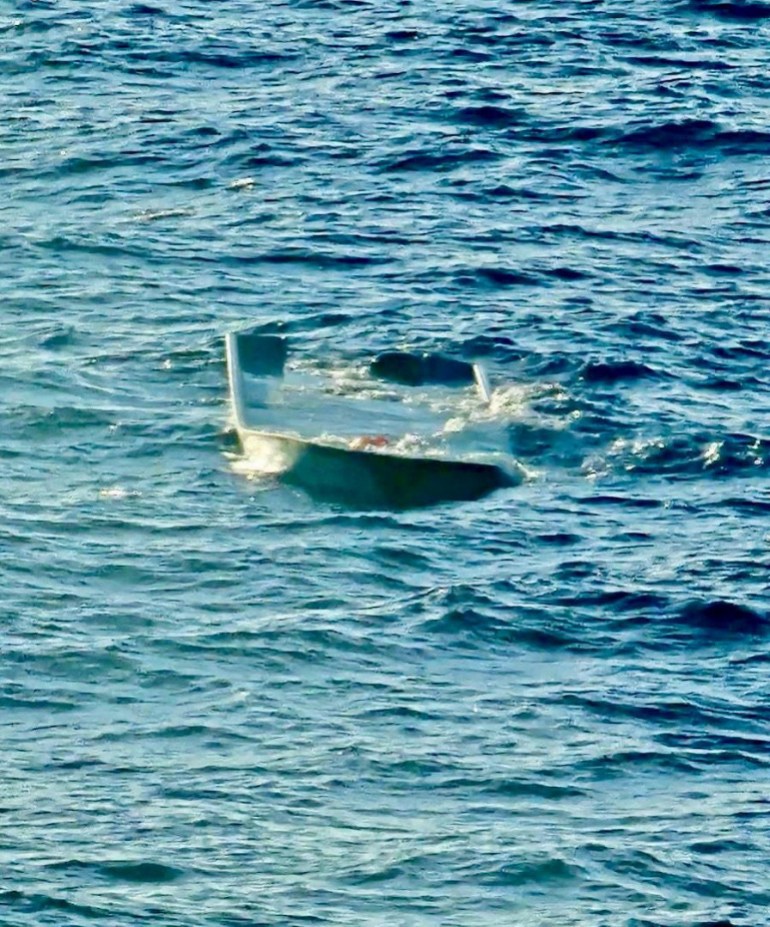
Islamabad, Pakistan – When Hassan Ali fell into the icy waters of the Mediterranean Sea, he thought of his two children – of their smiles, their hugs and his hopes for their future. Then he remembered the others from his small village in Pakistan’s Punjab province who had dreamed of making it to Europe and wondered if they, too, had spent their last moments in the pitch-black sea, thinking of home and the people they had left behind. “I’d heard about so many others,” says Hassan, speaking on a borrowed phone from Malakasa, a refugee camp near Athens. Unable to swim, he says he felt certain that he would drown. Then, he felt the rope – thrown from a merchant navy ship. “I held onto it with my life,” he says. Hassan was the first person pulled on board in the early hours of Saturday, December 14, near the Greek island of Crete. Many others would follow during the two-day rescue operation that involved nine vessels, including the Greek coastguard as well as merchant navy ships and helicopters. Advertisement But not everyone made it. Greek authorities confirmed at least five deaths and more than 200 survivors, following four separate rescue operations by the coastguard over the weekend, though the total number of missing people remains unclear. Three boats carrying migrants capsized between December 14 and 15, near the island of Gavdos, which is further south of Crete, and another boat capsized near the Peloponnese peninsula. Pakistan’s foreign ministry confirmed that the bodies of five Pakistani nationals were recovered, while at least 47 Pakistanis were rescued. The Pakistani embassy in Athens said that at least 35 Pakistani nationals remain missing. A view shows a capsized migrant boat off the island of Gavdos, Greece, on December 14, 2024 [Handout/Hellenic Navy via Reuters] ‘To live with dignity’ Hassan’s journey had started about three and a half months earlier when the 23-year-old left his wife and two toddler sons in their village near the major industrial city of Gujrat. The third of five siblings, he worked on construction sites as a steel fixer, earning 42,000 rupees ($150) per month, if he worked 10 to 12 hour days, seven days per week. But no matter how hard or long he worked, he struggled to stay afloat as prices kept rising. “My electricity bill would be anywhere between 15,000 ($54) and 18,000 rupees ($64) [per month],” he explains. “And groceries would cost nearly the same for my family, including my parents and two younger siblings.” Hassan often had to take small loans at the end of the month just to make ends meet and he always worried about what would happen if there was some kind of emergency, like an illness in the family. Advertisement “In Pakistan, it’s impossible to live with dignity on such earnings,” he says. It drove him to take desperate measures. “Nobody willingly risks their life like this,” he explains. Hassan first spoke to his wife, mother and older brother to suggest that he follow others in their village and attempt to reach Europe. His family agreed and decided to sell a small plot of land, along with Hassan’s mother’s jewellery, to help fund the journey. They raised nearly two million rupees ($7,100) to pay an “agent” who promised safe passage to Europe. The family had heard of people who left but never made it, but also of those who had safely reached Italy within just a few days of leaving Pakistan. Hassan felt a mixture of trepidation and excitement. Just a few weeks later, he said goodbye to his family and boarded a flight from Sialkot to Saudi Arabia. He spent two days there before flying to Dubai. From Dubai, he flew to Egypt and from there, he took his final flight to Benghazi in Libya. ‘Beaten ruthlessly’ In Libya, Hassan was told that he would be put on a boat that would take him to Italy, but instead, he was taken to a warehouse where more than 100 men were confined to a 6-metre x 6-metre (20-foot x 20-foot) room. Most of the men were from Pakistan. Many had been there for months. The smugglers took Hassan’s phone, passport and backpack with a few items of clothing inside, and the 50,000 rupees ($180) he carried with him. Hassan says guards from Libya and Sudan watched them at all times and warned them not to make any noise. Advertisement “We received a piece of bread daily,” he explains, adding: “The guards allowed us one five-minute bathroom break a day.” He describes how anyone who complained about the lack of food or asked to use the toilet or shower was beaten with steel rods and PVC pipes. “All we were able to do was to look at each other or whisper with each other a little. Anybody making a little bit of noise, the guards would pounce and just beat them ruthlessly,” he says. Sometimes, the men would beg to be sent back home. But that, too, would be met with violence. Then, at the beginning of December, the guards told the men that bad weather meant that instead of being sent to Italy, they would be heading for Greece. They were given 30 minutes to prepare to leave the room where they had been held for months. Their phones and passports were returned to them. Pakistani authorities say at least 47 nationals were rescued whereas at least four were identified among the dead [Handout/Hellenic Navy via Reuters] ‘Everyone began praying’ Hassan, who had never seen the sea before, was terrified. “I begged to be sent back to Pakistan, but they told us, ‘There is no going back. Either go forward or die’,” he says. More than 80 men were crammed on board a rickety wooden boat designed to carry no more than 40 passengers, Hassan explains. The sea was treacherous. Hassan describes how “stormy winds and huge waves” left the men “soaked and terrified”. “The engines broke down and everyone
Malaysia to resume search for missing Malaysian Airlines MH370
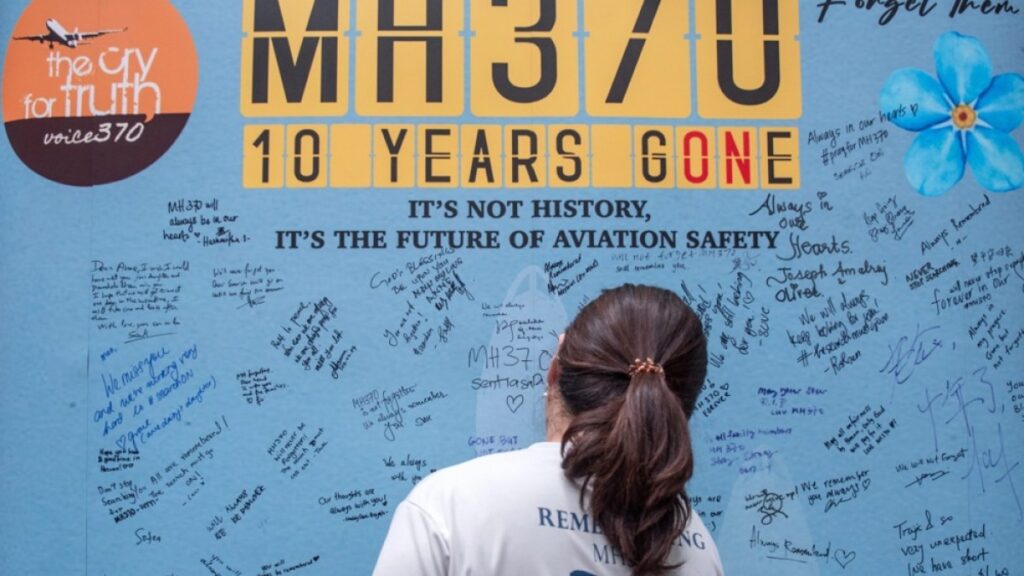
Flight MH370, a Boeing 777 carrying 227 passengers and 12 crew, vanished en route from Kuala Lumpur to Beijing on March 8, 2014. Malaysia’s government has agreed in principle to resume the search for the wreckage of missing Malaysia Airlines Flight MH370, more than 10 years after it disappeared in one of the world’s greatest aviation mysteries, the country’s transport minister announced. Anthony Loke said on Friday that the proposal to search a new area in the southern Indian Ocean came from United States-based exploration company Ocean Infinity, which had also conducted the most recent search for the plane that ended in 2018. “The proposal for a search operation by Ocean Infinity is a solid one and deserves to be considered,” Loke told reporters. “Our responsibility and obligation and commitment is to the next of kin. We hope this time will be positive, that the wreckage will be found and give closure to the families.” Flight MH370, a Boeing 777 carrying 227 passengers and 12 crew, vanished en route from Kuala Lumpur to Beijing on March 8, 2014. Loke said Ocean Infinity would receive $70m if the wreckage found is substantive. Advertisement Malaysian investigators initially did not rule out the possibility that the aircraft had been deliberately taken off course. Investigators previously found that less than an hour into the overnight flight, its communications systems were turned off. Military radar then revealed the aircraft had turned back across Malaysia, skirted the island of Penang, and headed towards the northern tip of Sumatra. Some 26 countries joined the search and rescue mission that followed the disappearance, but could find nothing. Weeks later, the Malaysian government announced MH370 had flown until it ran out of fuel, ending its journey thousands of kilometres from Beijing in the depths of the southern Indian Ocean. Debris, some confirmed and believed to be from the aircraft, has washed up along the coast of Africa and on islands in the Indian Ocean. Relatives had been demanding compensation from Malaysia Airlines, Boeing, aircraft engine maker Rolls-Royce and the Allianz insurance group, among others. Malaysia engaged Ocean Infinity in 2018 to search in the southern Indian Ocean, offering to pay up to $70m if it found the plane, but it failed on two attempts. That followed an underwater search by Malaysia, Australia and China, which had 150 nationals on the flight, in a 120,000sq km (46,332sq mile) area of the southern Indian Ocean, based on data on automatic connections between an Inmarsat satellite and the plane. Adblock test (Why?)
Sri Lanka Navy rescues over 100 Rohingya adrift in the Indian Ocean
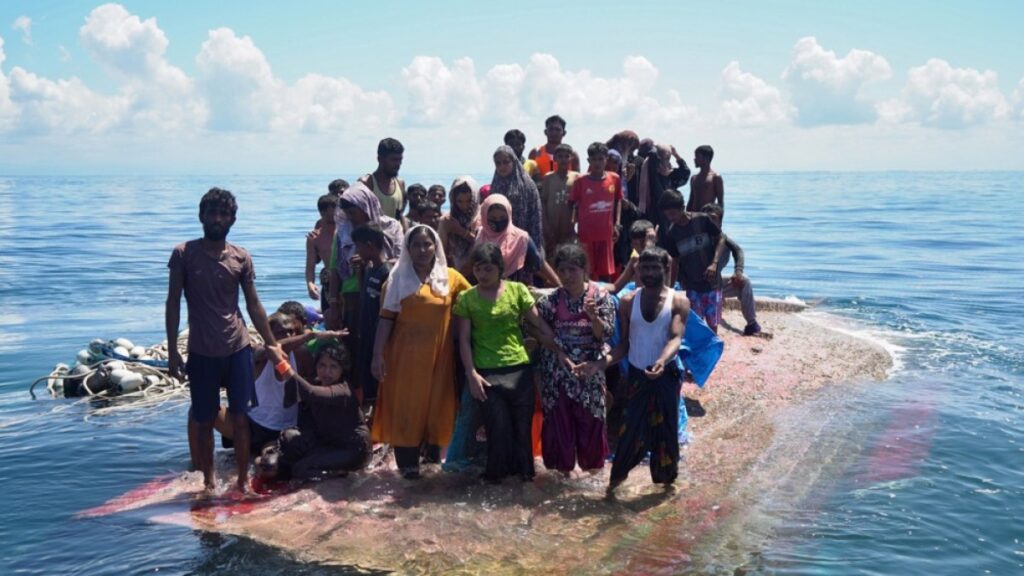
The 102 refugees, including 25 children, were taken to Sri Lanka’s eastern port of Trincomalee. More than 100 Rohingya refugees from war-torn Myanmar have been rescued while adrift on a fishing trawler off the Indian Ocean island nation by Sri Lanka’s navy, bringing them safely to port. The 102 people, including 25 children, were taken to Sri Lanka’s eastern port of Trincomalee, a navy spokesman said on Friday. “Medical checks have to be done before they are allowed to disembark,” the spokesman said. The Muslim-majority ethnic Rohingya are heavily persecuted in Myanmar and thousands risk their lives each year on long sea journeys, the majority heading southeast to Malaysia or Indonesia. But fisherman spotted the drifting trawler off Sri Lanka’s northern coast at Mullivaikkal at dawn on Thursday. The navy spokesman said on Friday that language difficulties had made it hard to understand where the refugees had been headed, suggesting that “recent cyclonic weather” may have pushed them off course. While unusual, it is not the first boat to head to Sri Lanka, which is about 1,750km (1,100 miles) across open seas southwest of Myanmar. Advertisement In October, six people died as nearly 100 Rohingya landed by boat in Indonesia’s Aceh province in one of the latest waves of arrivals from Myanmar. The Sri Lankan navy rescued more than 100 Rohingya refugees in distress on a boat off their shores in December 2022. In 2017, hundreds of thousands of Rohingya fled Myanmar for neighbouring Bangladesh during a crackdown by the military that is now the subject of a United Nations genocide court case. Myanmar’s military seized power in a 2021 coup and a grinding civil war since then has forced millions to flee. The Rohingya have borne the brunt of the latest fighting because they have been forcibly drafted into the army despite not being recognised as citizens. Adblock test (Why?)
Pakistan slams US sanctions on ballistic missile programme
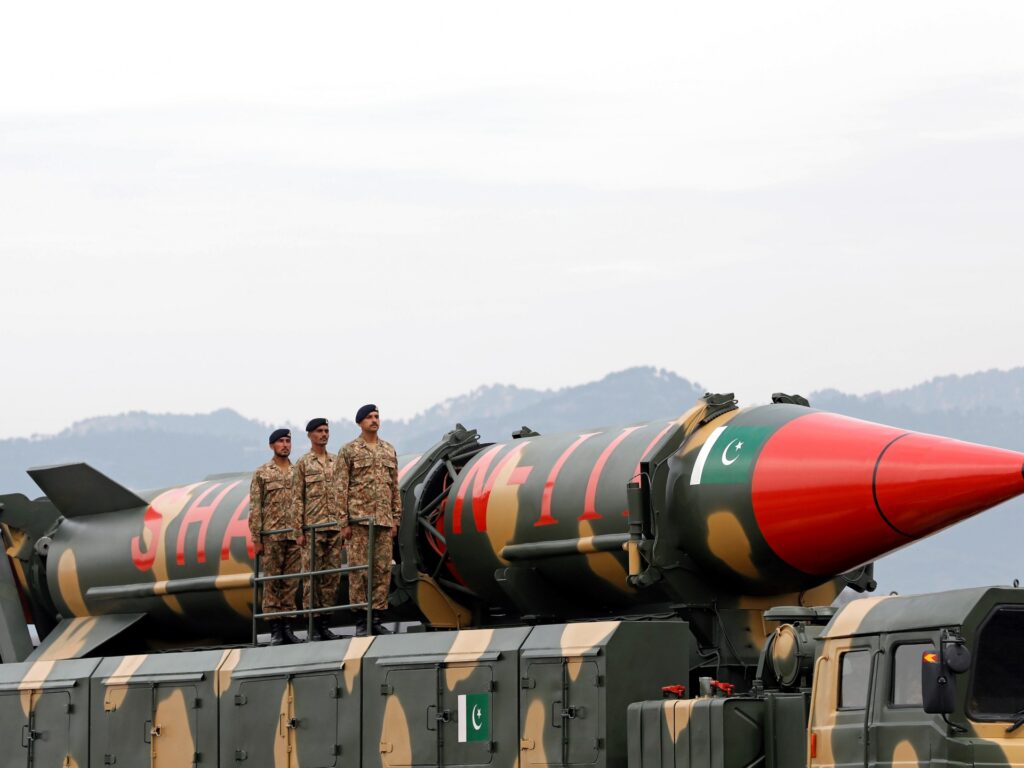
Pakistan’s foreign ministry warns sanctions have ‘dangerous implications’ for the ‘strategic stability of the region’. Pakistan has denounced new US sanctions on the country’s ballistic missile programme as “discriminatory” and said they put the region’s peace and security at risk. Pakistan’s Ministry of Foreign Affairs on Thursday warned in a statement that the sanctions “have dangerous implications for strategic stability of our region and beyond”. It also cast doubt on US allegations that targeted businesses were involved in weapons proliferation because previous sanctions “were based on mere doubts and suspicion without any evidence whatsoever”. It also accused the US of “double standards” for waiving licensing requirements for advanced military technology to other countries. The sanctions freeze any US property belonging to the targeted businesses and bar Americans from doing business with them. The US Department of State said one such sanctioned entity, the Islamabad-based National Development Complex, worked to acquire items for developing Pakistan’s long-range ballistic missile programme that includes the SHAHEEN series of ballistic missiles. Advertisement The other sanctioned entities are Akhtar and Sons Private Limited, Affiliates International and Rockside Enterprise. The latest US sanctions came months after similar measures were slapped on other foreign entities, including a Chinese research institute, after the US State Department accused them of working for the National Development Complex, which it says was involved in the development and production of Pakistan’s long-range ballistic missiles. Pakistan became a declared nuclear power in 1998, when it conducted underground nuclear tests in response to those carried out by its rival and neighbour India. The two sides regularly test-fired their short-, medium- and long-range missiles. ‘Emerging threat to US’ Later on Thursday, a senior White House official said Pakistan is developing long-range ballistic missile capabilities that eventually could allow it to strike targets outside of South Asia, including in the United States. Deputy National Security Adviser Jon Finer said Islamabad’s conduct raised “real questions” about the aims of its ballistic missile programme. “Candidly, it’s hard for us to see Pakistan’s actions as anything other than an emerging threat to the United States,” Finer told the Carnegie Endowment for International Peace audience. “Pakistan has developed increasingly sophisticated missile technology, from long-range ballistic missile systems to equipment that would enable the testing of significantly larger rocket motors,” he said. If those trends continue, Finer said, “Pakistan will have the capability to strike targets well beyond South Asia, including in the United States.” Advertisement Adblock test (Why?)
Why is Apple being sued by the Democratic Republic of the Congo?

Tech giant accused of using illegally mined metals in iPhones and other products sold globally. The world’s most valuable company – Apple – is being sued by the Democratic Republic of the Congo. The tech giant has been accused of using illegally mined minerals in products like iPhones. Apple denies the claim. What is behind this legal action? Presenter: James Bays Guests: Robert Amsterdam – International lawyer representing the Democratic Republic of the Congo in this case Alain Uaykani – Journalist who has covered the conflict for more than 15 years Gregory Mthembu-Salter – Consultant who specialises in natural resource governance and served on the UN Group of Experts on the Democratic Republic of the Congo Adblock test (Why?)
In the dark: How rolling blackouts have transformed life in Ecuador
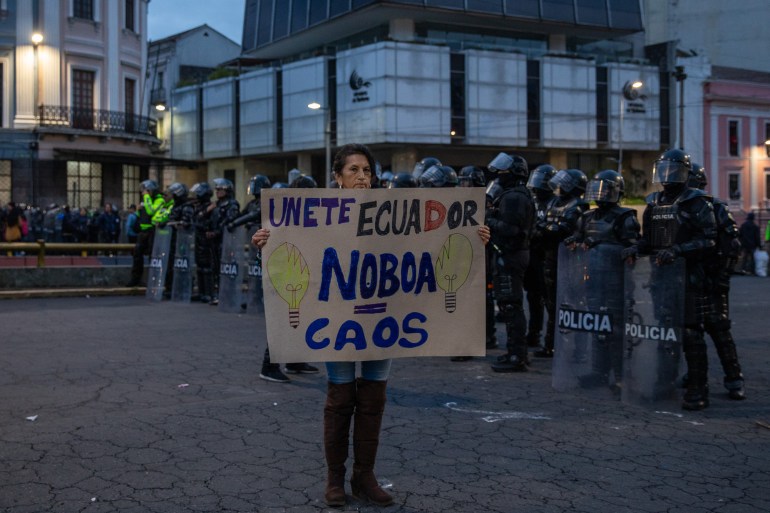
As Ecuador’s historic drought continues, power cuts may persist until April, said Jorge Luis Hidalgo, an energy consultant. For decades, experts have urged authorities to increase Ecuador’s energy supply by expanding its solar and wind energy capacities and bolstering its thermoelectric plants. But Hidalgo said that electricity and fossil fuel subsidies have kept Ecuador’s energy prices among the lowest in the region: Residents and businesses pay only around $0.10 per kilowatt hour, according to government estimates. That lack of income has, in turn, disincentivised the private sector from investing in alternative energy, according to Hidalgo. “While Ecuador continues to give energy away, this situation will continue,” he said. A protester in Quito on November 21 held a sign that reads, ‘Come together Ecuador. Noboa = chaos’ [Christina Noriega/Al Jazeera] Over the years, as the population grows, the demand for energy has exceeded supply, Hidalgo added. It is a problem President Noboa himself has acknowledged. In October, he posted a video on social media where he explained that Ecuador currently has an energy deficit that fluctuates between 1,000 to 1,400 megawatts. That means that Ecuador’s need for electricity exceeded its capacity for production by more than one-tenth. As of 2022, the country was only capable of producing around 8,864 megawatts in total. The shortage has spurred a political crisis for Noboa, who faced protests in the streets as a result of the government-imposed power cuts. Those demonstrations come at a delicate time for Noboa. He faces re-election in 2025, as his current mandate is to complete the remainder of his predecessor’s term. Protesters in November even marched on the presidential palace in Quito, chanting, “There’s no light. There’s no education. And you have the nerve to ask for re-election?” By December, Noboa promised to end the government blackouts. “We will go back to having normal lives,” he pledged. Already, in November, Noboa announced that his administration had spent $700m on maintenance of Ecuador’s outdated thermoelectric plants, designed to support Ecuador’s hydroelectric power system during dry periods. Currently, hydroelectric dams are responsible for generating about 70 percent of Ecuador’s energy. Noboa also reached an agreement with Colombia to continue buying energy from the neighbouring country. Earlier this year, Colombia had cut electricity exports to Ecuador due to its own problems with drought. The Ecuadorian government has also brought in a floating thermoelectric plant from Turkiye that produces 100 megawatts and 23 power generators that produce 80 megawatts in total. In addition, Noboa has axed an energy subsidy for mining companies. “The mining companies in Ecuador consume more energy than a hospital needs to operate. And yet, their energy rate has been subsidised by the state,” Noboa wrote on social media in October. “The subsidies must go to those who need them most.” But the changes may come too late for the families hardest hit by the blackouts, like Samueza’s. Brandon Samueza, 26, is currently working for a ride-hailing app while looking for long-term employment [Christina Noriega/Al Jazeera] Since he was laid off, his wife has stepped up as the family breadwinner, working as a treasurer at a logistics company. Samueza, meanwhile, is trying out driving for a ride-hailing app, which has so far earned him less than a minimum wage. With a tighter household budget, Samueza said the holiday season is likely to come and go without much fanfare. But he is optimistic that, come the new year, the power cuts will have ceased and the economy will have recovered enough that he might find a job. Still, he feels frustrated with the government for his present predicament. “There shouldn’t be power cuts,” said Samueza. “A government should be prepared for these types of cases, especially since we already went through the same thing in April and May. The fact that they have not done anything to adjust speaks badly of the government.” Adblock test (Why?)
Russia-Ukraine war: List of key events, day 1,029
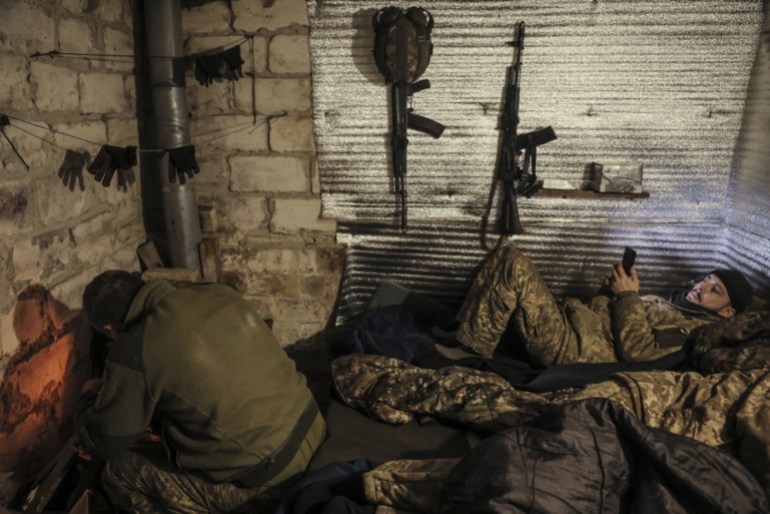
Here are the key developments on the 1,029th day of Russia’s full-scale invasion of Ukraine. Here is the situation on Thursday, December 19: Fighting The governor of Russia’s southern Rostov region said that Ukraine had launched an attack with at least 13 missiles and dozens of drones, triggering a fire at the Novoshakhtinsk oil refinery. The Ministry of Defence said Russian air defences shot down 84 drones, including 36 over the Rostov region. South Korean lawmaker Lee Seong-kweun claimed that at least 100 of the thousands of North Koreans deployed to support Russia’s war effort in Ukraine have been killed since entering combat in December. Nearly 1,000 may have been injured, according to the country’s National Intelligence Service. Britain said it would send an additional 225 million pounds ($286m) of military equipment to Ukraine to help it in the war against Russia. North Korea would be capable of producing ballistic missiles and supplying them to Russia for use in Ukraine within months, according to the United Kingdom-based Conflict Armament Research organisation. The group’s head, Jonah Leff, informed the United Nations Security Council that remnants of four North Korean missiles found in Ukraine included one that indicated it was produced in 2024. Authorities in Russia arrested a suspect over the killing of Lieutenant General Igor Kirillov, the head of the Russian army’s chemical weapons division, and his aide in Moscow earlier in the week. The Investigative Committee said the 29-year-old Uzbekistan national had been “recruited by Ukrainian special forces” to carry out the assassination, which involved the remote triggering of a bomb hidden in an electric scooter. Russia’s Defence Ministry claimed the capture of two new settlements – Stari Terny and Trudove – in the Donetsk region of east Ukraine. Both are located near the industrial town of Kurakhove, which Russia appears close to capturing. Russian Foreign Ministry spokeswoman Maria Zakharova said security agencies had evidence that Ukraine had repeatedly dropped white phosphorus munitions from drones in September. Kyiv denied the allegations. Ukrainian Armed Forces servicemen rest in a shelter close to their position near Chasiv Yar, Donetsk region, Ukraine, 12 December 2024 [File/EPA-EFE/24th Mechanized Brigade Handout] Politics and diplomacy North Korea’s Ministry of Foreign Affairs lashed out at “reckless provocation” by the United States and its allies for criticising the country’s support for Russia’s war in Ukraine, accusing them of “distorting and slandering” Pyongyang’s “normal cooperative” ties with Moscow. Former Russian President Dmitry Medvedev said that journalists at The Times were considered “legitimate military targets after the newspaper ran an editorial calling Ukraine’s assassination of Lieutenant General Igor Kirillov “a legitimate act of defence”. NATO chief Mark Rutte met Ukrainian President Volodymyr Zelenskyy and other European leaders in Brussels to strategise over Russia’s war ahead of Donald Trump’s return to the White House. He said he wanted Ukraine to be “in the best possible position” when peace talks start, specifically alluding to the provision of air defence systems and other weapons. French President Emmanuel Macron held separate talks with the Ukrainian president, his office stating that France would make reinforced support for Ukraine its ″absolute priority″ and would continue giving Ukraine ″the means to defend itself and to make Russia’s war of aggression fail″. Advertisement Adblock test (Why?)