

Israel committing ‘acts of genocide’ by cutting off water in Gaza, HRW says
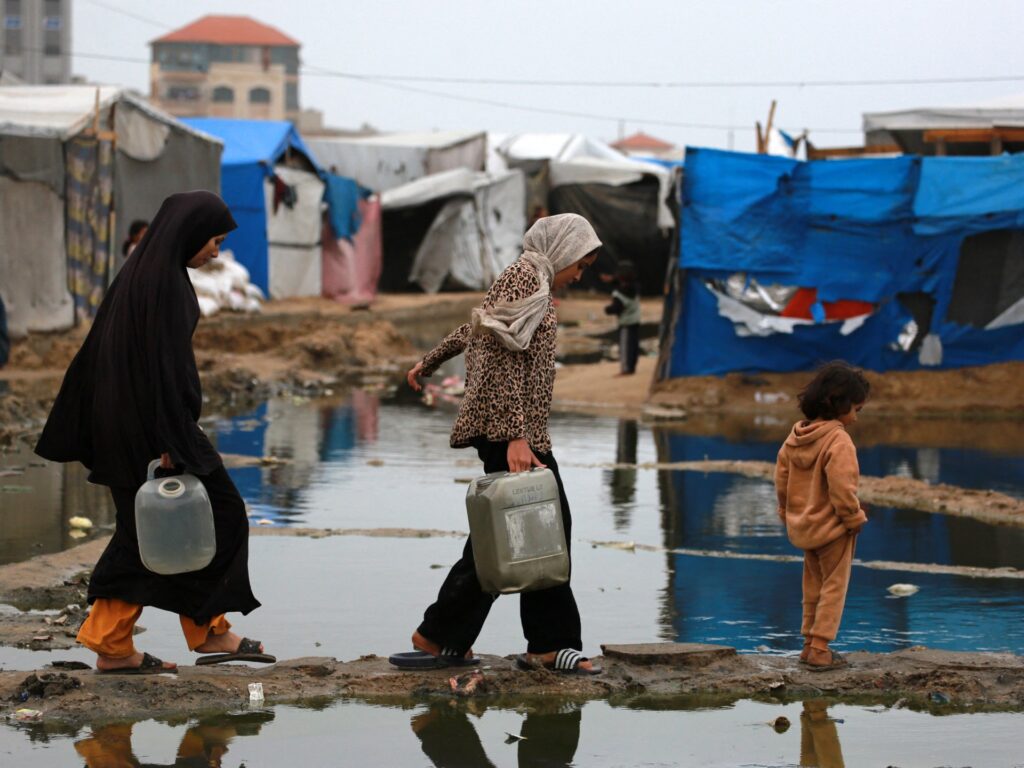
Human Rights Watch has accused Israel of committing “acts of genocide” by denying clean water to Palestinians in Gaza, and called on the international community to impose targeted sanctions. In a new report released on Thursday, the New York-based watchdog said that since October 2023 – when Israel launched its military offensive in Gaza – Israeli authorities have “deliberately obstructed Palestinians’ access to the adequate amount of water required for survival in the Gaza Strip”. “What we have found is that the Israeli government is intentionally killing Palestinians in Gaza by denying them the water that they need to survive,” Lama Fakih, Human Rights Watch Middle East director told a news conference. The 184-page study described how the Israeli government cut off the water supply piped into Gaza from Israel, cut off the electricity supply needed to operate water pumps, and blocked and restricted the fuel needed to run generators in the absence of electricity. It also blocked United Nations agencies and humanitarian aid organisations from delivering water-related materials and other humanitarian aid. Advertisement Satellite imagery analysed by the organisation found extensive damage and destruction to water and sanitation infrastructure, including the “apparently deliberate, systematic razing of the solar panels powering four of Gaza’s six wastewater treatment plants by Israeli ground forces, as well as Israeli soldiers filming themselves demolishing a key water reservoir”. As a result, Palestinians in Gaza had access to only a few litres of water a day in many areas, far below the 15-litre threshold for survival. A large number of the more than 2.3 million people living in Gaza were deprived of access “to even that bare minimum amount of water, which has contributed to death and widespread disease”. This policy amounts to “acts of genocide” under the Genocide Convention of 1948, it concluded. “Israeli authorities intentionally inflicted on the Palestinian population in Gaza ‘conditions of life calculated to bring about its physical destruction in whole or in part.’” Israel rejects findings Israel has repeatedly rejected any accusation of genocide, saying it has a right to defend itself after the Hamas-led attack from Gaza on October 7, 2023. On Thursday, it rejected HRW’s report, calling its findings “appalling lies”. Proving the crime of genocide against Israeli officials before international courts also requires establishing an intent to commit this crime. The Genocide Convention, enacted following the mass murder of Jews in the Nazi Holocaust, defines the crime of genocide as “acts committed with intent to destroy, in whole or in part, a national, ethnical, racial or religious group”. Advertisement The report cited statements by some senior Israeli officials which it said suggested they “wish to destroy Palestinians” which means the deprivation of water “may amount to the crime of genocide”. It also argued that Israel violated provisional measures issued by the International Court of Justice (ICJ) in January, as part of a case brought by South Africa alleging that Israel is violating the Genocide Convention. The court required Israel to enable the provision of basic services and humanitarian assistance to demonstrate it has no genocidal intent. In light of its findings, HRW called on the international community to issue “targeted sanctions, suspension of arms transfers and military assistance, and review of bilateral trade and political agreements” to pressure Israel to comply with the ICJ’s provisional measures. The report follows another study by Amnesty International issued earlier this month that also concluded that Israel’s actions in Gaza amount to genocide. The International Criminal Court (ICC) last month issued arrest warrants for Israeli Prime Minister Benjamin Netanyahu and his former defence chief for alleged war crimes and crimes against humanity. Israel’s war has killed more than 45,000 Palestinians, displaced most of the population and reduced much of the coastal enclave to ruins. Adblock test (Why?)
‘It’s chaos’: Aftermath of Cyclone Chido in Mayotte
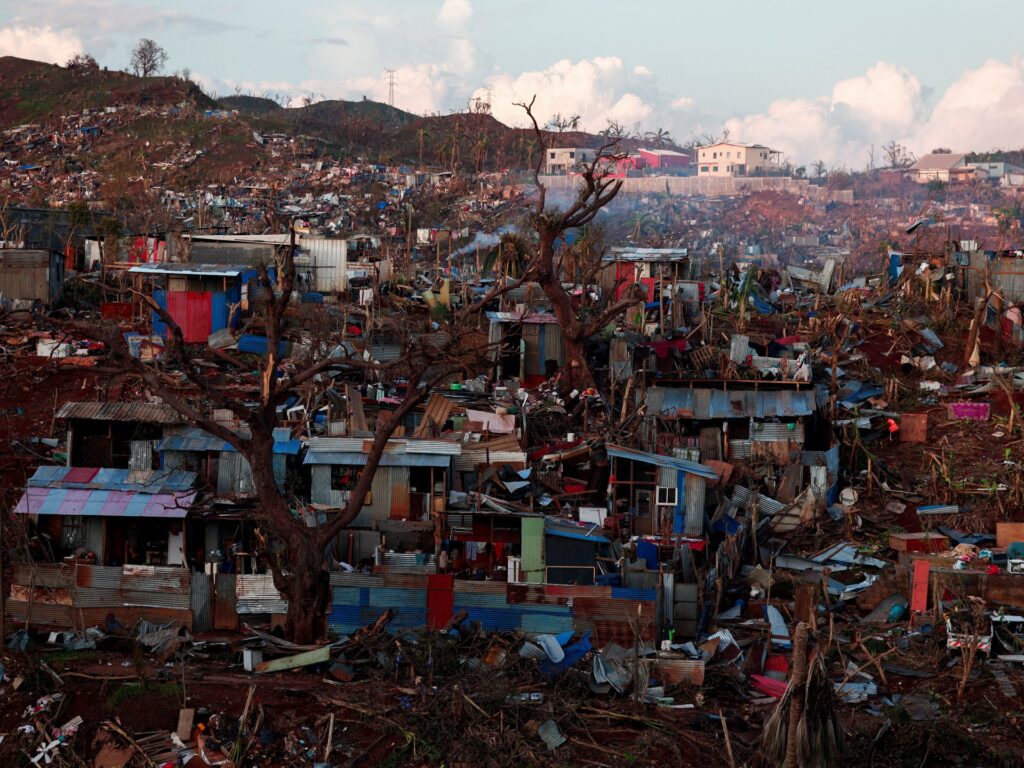
Days after Cyclone Chido hit the French Indian Ocean territory of Mayotte, residents are still struggling to access water and food, as rescuers race to find those missing. The cyclone devastated entire neighbourhoods and killed at least 31 people, according to France’s interior ministry. Among the damaged and destroyed homes in Mayotte’s capital, Mamoudzou, people lined up with jugs to get water or waited to charge their phones. On Thursday morning, French President Emmanuel Macron arrived in Mayotte to assess the devastation wrought by the cyclone. His visit to the French overseas territory comes after Paris declared “exceptional natural disaster” measures for Mayotte late on Wednesday night to enable swifter and “more effective management of the crisis”. Officials have warned that the death toll from the most destructive cyclone in living memory could reach hundreds, possibly thousands, as rescuers race to clear debris and comb through flattened shantytowns to search for survivors. “The tragedy of Mayotte is probably the worst natural disaster in the past several centuries of French history,” Prime Minister Francois Bayrou said. Advertisement Located near Madagascar off the coast of southeastern Africa, Mayotte is France’s poorest region. An estimated one-third of Mayotte’s population lives in shantytowns whose flimsy, sheet metal-roofed homes offered scant protection from the storm. Cyclone Chido – which hit Mayotte on Saturday – was the latest in a string of storms worldwide fuelled by climate change, according to meteorologists. Experts say seasonal storms are being supercharged by warmer Indian Ocean waters, fuelling faster, more destructive winds. At Mamoudzou’s Mayotte Central Hospital, windows were blown out and doors ripped from hinges, but most of the medics had taken to sleeping at their battered workplace on Wednesday as Chido had swept their homes away. “It’s chaos,” said medical and administrative assistant Anrifia Ali Hamadi. “The roof is collapsing. We’re not very safe. Even I don’t feel safe here.” Adblock test (Why?)
Russia says Uzbek man confesses to assassination of general
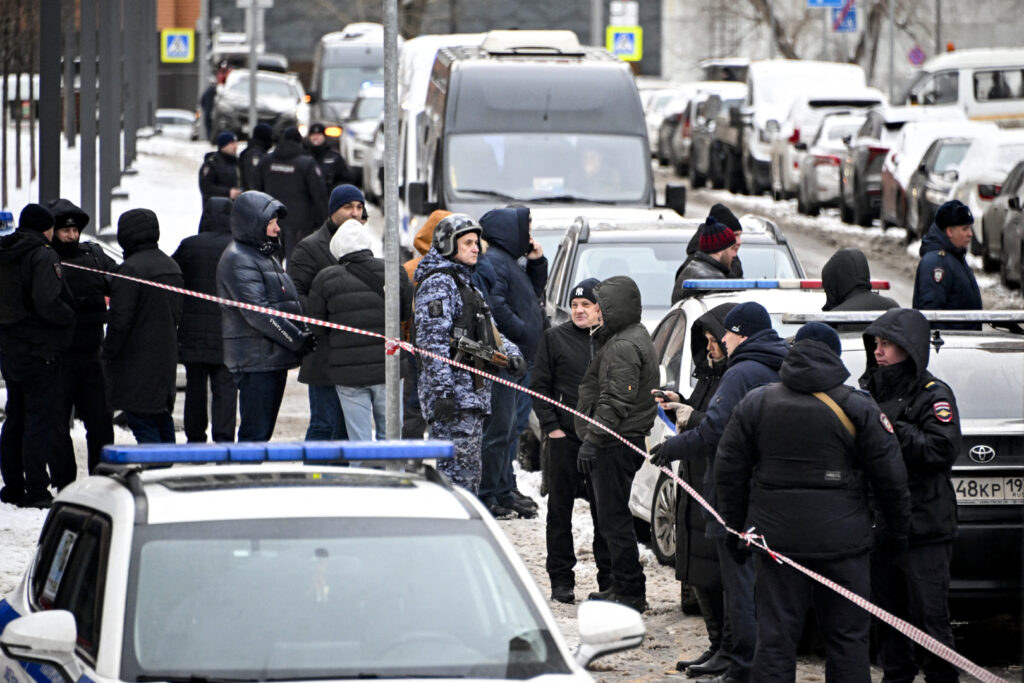
Russian authorities have detained an Uzbek suspect in the killing of Lt. Gen Igor Kirillov in a bombing in Moscow. Russia says the suspect said Ukraine’s intelligence offered him $100,000 to carry out the assassination. Russia is calling this hit a terrorist act. Adblock test (Why?)
Prime minister of Mauritius reopens talks with UK over Chagos Islands deal
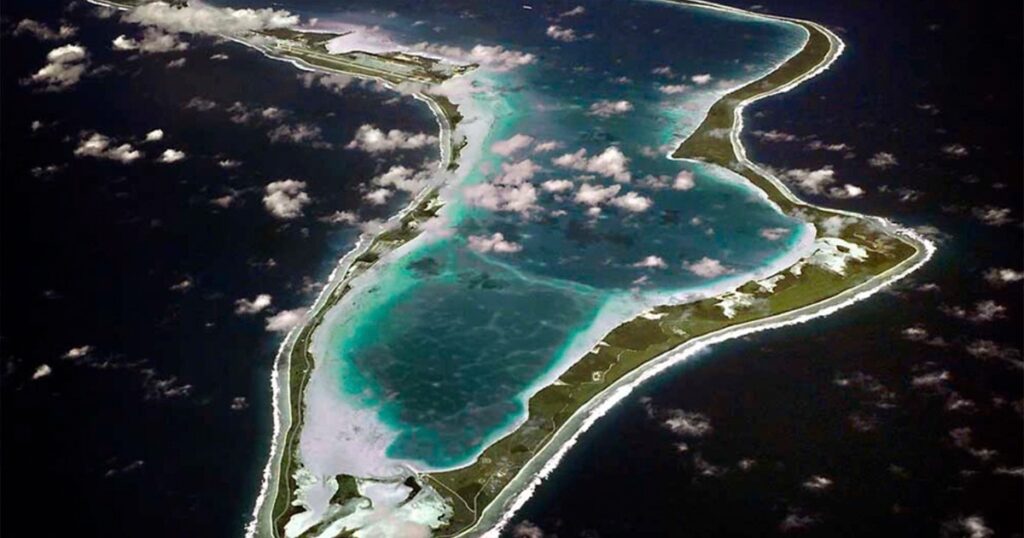
Mauritius’s prime minister says he issued ‘counterproposals’ to UK over Chagos Islands deal. A historic deal for the United Kingdom to hand over control of the Chagos Islands to Mauritius has been put into question after the African island country’s new prime minister issued “counterproposals”. The British government still plans to hand over control of the chain of 60-some islands to Mauritius under the condition that a strategic joint UK-US military base on the largest of the islands, Diego Garcia, would remain under British control for at least 99 years. Mauritius’s Prime Minister Navin Ramgoolam, who took office last month, said on Tuesday that he was reopening negotiations because the current deal “would not produce the benefits that the nation could expect from such an agreement”. Ramgoolam told lawmakers in Mauritius’s parliament that his government “is still willing to conclude an agreement with the United Kingdom” and had submitted counterproposals. Britain’s minister for UK overseas territories, Stephen Doughty, said on Wednesday that he was confident the deal would be finalised and that it is “completely understandable” for the new Mauritian government to seek time to review the details. Advertisement “I am confident that we have agreed a good and fair deal that is in both sides’ interests,” he told lawmakers in the House of Commons. “It protects the base at proportionate cost. It has been supported across the national security architecture in the United States and by India.” The UK’s opposition Conservatives have accused the government of surrendering sovereignty over a British territory. US President Joe Biden praised the agreement as “historic”, emphasising its importance for the future of the US Navy base on Diego Garcia. However, supporters of US President-elect Donald Trump have criticised the deal. The base, which is home to about 2,500 American military personnel, has been described as “an all but indispensable platform” for security operations in the Middle East, South Asia and East Africa. The Chagos Islands have been under British control since 1814. In the 1960s and 1970s, Britain forcibly evicted nearly 2,000 locals to make way for the US military base, which played a pivotal role in US military operations in Vietnam, Iraq, and Afghanistan. In 2008, the US also acknowledged that the base had been used for covert rendition flights of “terrorism” suspects. The displaced Chagossians have fought for years in British courts for the right to return to their homeland. Under the terms of the new agreement, they and their descendants would be allowed to return to the islands, though they would be excluded from Diego Garcia. Mauritius, an African nation located about 2,100 kilometres (1,300 miles) southwest of the Chagos Islands, lies off the eastern coast of Madagascar in the Indian Ocean. Advertisement Adblock test (Why?)
Mexico’s Sergio Perez leaves Red Bull F1 team but no replacement named

Perez departs the team after a poor season in 2024 where he failed to help Red Bull win the Constructors’ championship. Red Bull Racing announced that Mexican driver Sergio Perez has departed the Formula One team after four seasons. Perez, 34, joined Red Bull in 2021 and helped the team earn two constructors’ titles and completed a drivers’ standing one-two with four-time world champion teammate Max Verstappen in 2023. “I would like to thank Checo [Perez] for all he has done for Oracle Red Bull Racing over the past four seasons,” Red Bull team principal Christian Horner said in a statement on Wednesday. “From the moment he joined in 2021, he proved himself to be an extraordinary team player, helping us to two Constructors’ titles and to our first 1-2 finish in the Drivers’ championship. “While Checo will not race for the team next season, he will always be an extremely popular team member and a treasured part of our history. Thank you, Checo.” Perez won five Grands Prix in Red Bull colours, including a victory at the Monaco GP and a double in Azerbaijan. However, his form dipped in the 2024 season leading to rumours about his future in the team. Advertisement He came eighth in the drivers’ standings as Red Bull surrendered their team title to McLaren with a third-place finish. “I’m incredibly grateful for the past four years with Oracle Red Bull Racing and for the opportunity to race with such an amazing team,” Perez said. “Driving for Red Bull has been an unforgettable experience and I’ll always cherish the successes we achieved together. “A big thank you to every person in the team … I wish you all the best for the future. “It has also been an honour to race alongside Max as a teammate all these years and to share in our success.” Red Bull added in their statement that “announcements regarding the team’s full 2025 line-up will be made in due course.” New Zealander Liam Lawson is considered the favourite to replace Perez. Sergio Perez of Mexico driving the (11) Oracle Red Bull Racing RB20 on track during practice before the F1 Grand Prix of Abu Dhabi at Yas Marina Circuit on December 6, 2024, in Abu Dhabi, United Arab Emirates [Joe Portlock/Getty Images] Adblock test (Why?)
Trump sues Des Moines Register newspaper, claiming ‘election interference’
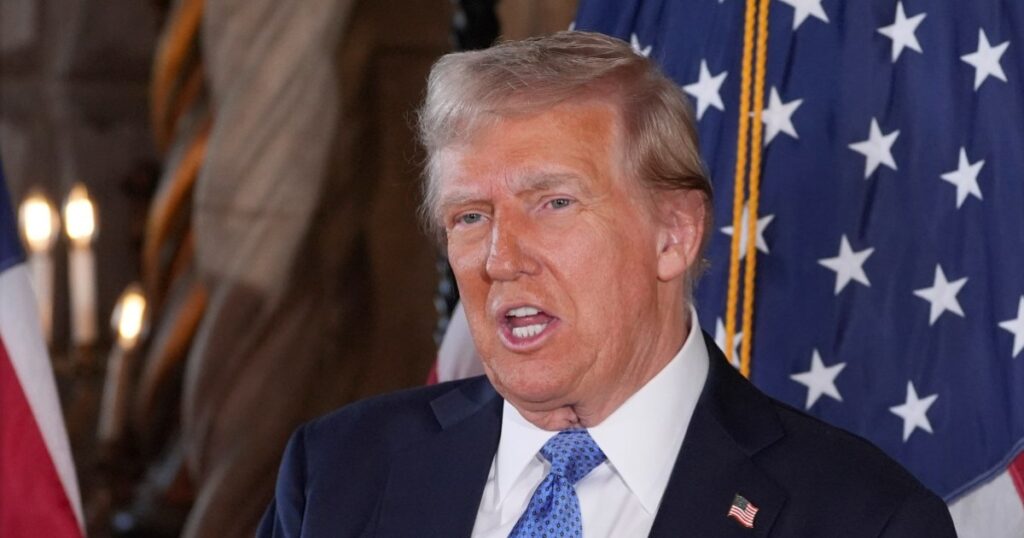
US president-elect’s lawsuit comes days after reaching defamation settlement with ABC News. United States President-elect Donald Trump has filed a lawsuit accusing a newspaper and a polling firm of engaging in “brazen election interference” by publishing a pre-election survey that underestimated his popularity. The lawsuit filed late on Monday accuses The Des Moines Register newspaper, its parent company Gannett and pollster Ann Selzer of intentionally downplaying Trump’s support in a poll that showed him trailing Democratic presidential candidate Kamala Harris. The November 2 poll, which showed Harris ahead by three percentage points in Iowa, generated widespread attention as Trump easily carried the midwestern state in the 2016 and 2020 elections. Trump won Iowa in last month’s presidential election by more than 13 percentage points. “Selzer’s polling ‘miss’ was not an astonishing coincidence – it was intentional,” the lawsuit filed in Iowa’s Polk County said. “As President Trump observed: ‘She knew exactly what she was doing.’” The lawsuit, which bases its claims on alleged breaches of Iowa consumer fraud law, seeks triple the damages incurred as determined by a jury. Advertisement Lark-Marie Anton, a spokeswoman for The Des Moines Register, said the newspaper stood behind its reporting and viewed the lawsuit as without merit. “We have acknowledged that the Selzer/Des Moines Register pre-election poll did not reflect the ultimate margin of President Trump’s Election Day victory in Iowa by releasing the poll’s full demographics, cross-tabs, weighted and unweighted data, as well as a technical explanation from pollster Ann Selzer,” Anton said. Selzer did not immediately respond to a request for comment, but said in an interview with PBS last week that she was mystified why anyone would think she had designed the poll to generate a particular result. Trump’s lawsuit comes just days after ABC News agreed to settle a defamation case he brought over anchor George Stephanopoulos’s inaccurate assertion that he had been found civilly liable for rape. The Foundation for Individual Rights and Expression, a civil liberties organisation, condemned the lawsuit as a “direct assault” on the First Amendment of the US Constitution, which guarantees the right to freedom of speech. “If newspapers and polling firms are sued for ‘deceptive practices’ because they publish stories and poll results politicians don’t like, every media outlet’s First Amendment rights are threatened. Getting a poll wrong is not election interference or fraud,” the group said. Trump, who is also suing CBS News over an interview with Harris that he claims was deceptively edited, faces steep legal hurdles to victory in his lawsuits due to the US’s speech protections, which rank among the strongest in the world. Advertisement Still, the suits could create difficulties for news organisations by exposing potentially embarrassing internal communications and subjecting journalists and executives to depositions. Adblock test (Why?)
Mary Jane Veloso, Filipina nearly executed in Indonesia, arrives home
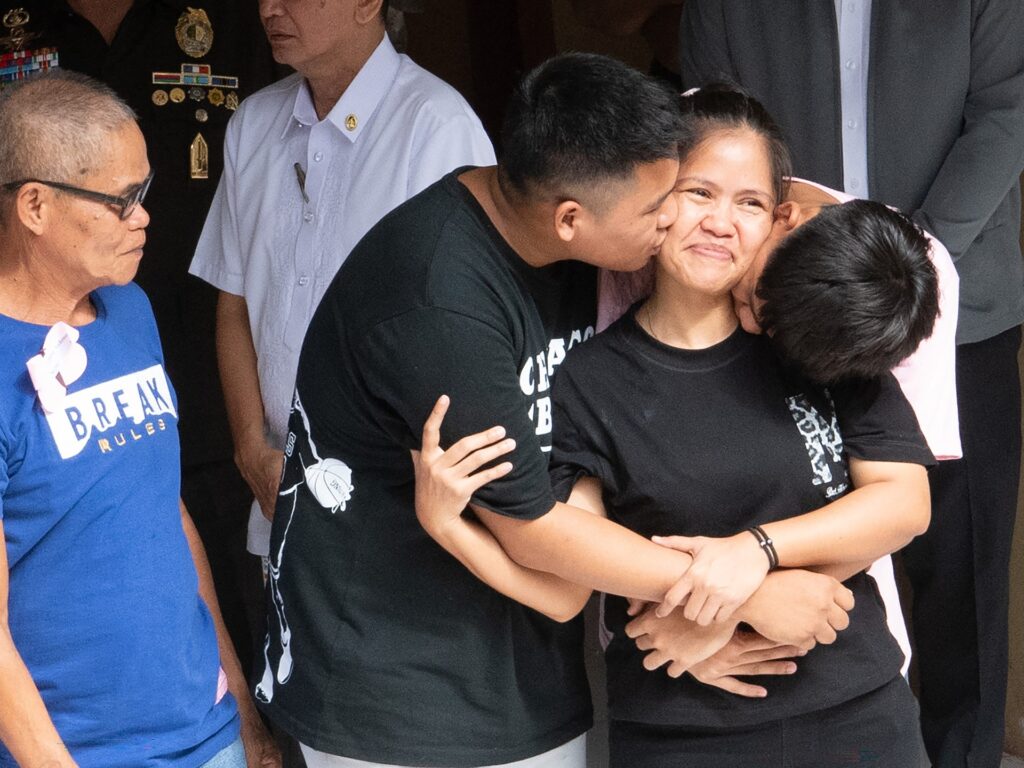
A Filipina who spent nearly 15 years on death row in Indonesia and was almost executed by firing squad has returned home, where she now awaits a potential pardon in a women’s prison. Mary Jane Veloso, 39, landed at Manila airport early on Wednesday following a repatriation deal between the two countries that eliminated the threat of her execution, as the Philippines has long abolished the death penalty. The mother of two was arrested and sentenced to death in 2010 after a suitcase she was carrying was found to be lined with 2.6 kilogrammes (5.7 pounds) of heroin. She flew home without handcuffs alongside Filipino correctional officials on an overnight commercial flight after a Jakarta ceremony marking “the end of a harrowing chapter in Veloso’s life”, the corrections bureau said in a statement. Veloso was flanked by heavy security upon her arrival at the airport and was transported straight to a prison facility for women. Her family and dozens of supporters chanting slogans such as “Clemency for Mary Jane” and “Free, free Mary Jane” who were waiting outside the terminal failed to greet Veloso on her arrival. Advertisement Prison guards later allowed Veloso’s family to spend time with her. Veloso’s two sons ran towards her and hugged her tightly as they met inside the prison compound. “I hope our president [Ferdinand Marcos] will give me clemency so I can go back to my family. I had been in jail in Indonesia for 15 years over something I did not commit,” an emotional Veloso, who is technically still serving a life sentence, told reporters after undergoing a medical examination at the Manila prison. Trafficking victim The conviction and death sentence for the single mother of two sons caused an outcry in the Philippines. She had travelled to Indonesia where a recruiter, Maria Kristina Sergio, reportedly told her a job as a domestic worker awaited her. Sergio also allegedly provided the suitcase where the drugs were found. In 2015, Indonesia moved Veloso to an island prison where she and eight other drug convicts were scheduled to be executed despite objections from their home countries Australia, Brazil, France, Ghana and Nigeria. Indonesia executed the others but Veloso was granted a stay of execution because Sergio had been arrested in the Philippines two days earlier. She faces human trafficking charges, and Veloso was named as a prosecution witness in the case. Veloso became a poster child for her country’s 10 million-strong economic diaspora, many of whom take jobs as domestic workers abroad to escape poverty at home. Marcos said last month that Veloso’s story resonated in the Philippines as “a mother trapped by the grip of poverty, who made one desperate choice that altered the course of her life”. Advertisement In a statement on Wednesday, Marcos thanked Indonesia for turning over custody of Veloso, but made no mention of a pardon or clemency. Under the agreement, Veloso’s life sentence now falls under the Philippines’ purview, “including the authority to grant clemency, remission, amnesty and similar measures”. “Definitely, that’s on the table,” Justice Undersecretary Raul Vasquez told reporters on Wednesday, adding Veloso’s clemency bid would be “seriously studied”. She will serve out her life sentence if not pardoned, Vasquez added. Indonesia’s government has said it will respect any decision made by Manila. The Veloso deal includes a “reciprocity” provision. “If Indonesia requests similar assistance in the future, the Philippines shall fulfil such a request,” the agreement states. There has been intense press speculation that Indonesia would seek custody of Gregor Johann Haas, an Australian detained on drug charges in the Philippines earlier this year. He is also being sought by Jakarta over drug smuggling, which could land him the death penalty. About 530 people are on death row in Indonesia, mostly for drug-related crimes, including 96 foreigners, Ministry of Immigration and Corrections data showed last month. Indonesia’s last executions, of a citizen and three foreigners, were carried out in July 2016. Five Australians who spent almost 20 years in Indonesian prisons for heroin trafficking returned to Australia on Sunday under a deal struck between the governments. Adblock test (Why?)
India’s Ashwin retires from international cricket after Brisbane Test draw
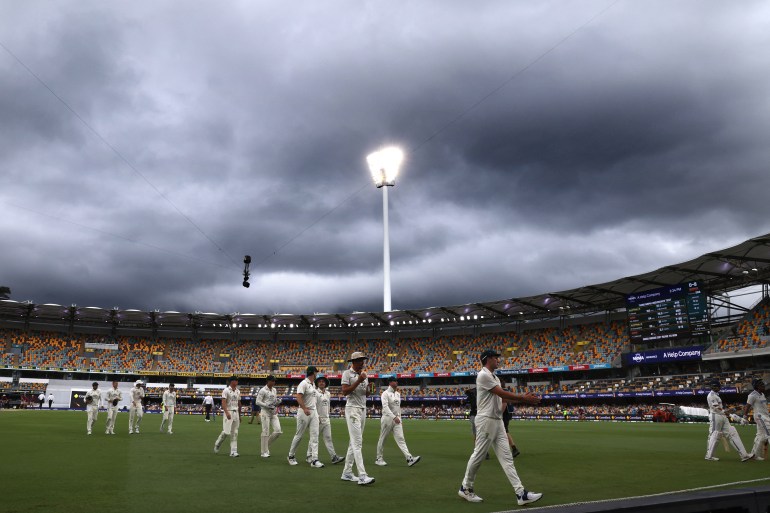
Veteran spinner calls time on 106-Test career after rain forces an early end to the third Test, with the five-match series tied 1-1. India’s spin spearhead Ravichandran Ashwin has announced his retirement from international cricket in all formats after his team’s third Test against Australia ended in a draw in Brisbane. “This will be my last day as an Indian cricketer in all formats in the international level,” the 38-year-old told reporters at the Gabba ground on Wednesday. “I do feel there’s a bit of punch left in me as a cricketer, but I would like to showcase that in club-level cricket.” Ashwin played only one of the three matches of the five-Test series as he took one wicket in the Adelaide Test. The 38-year-old took 537 wickets in his 106 Tests at an average of 24.00, leaving him seventh on the all-time list and second only to Anil Kumble (619) for his country. He also played 116 one-day and 65 Twenty20 internationals. Ashwin made his Test debut in 2011 against the West Indies and was also handy with the bat, scoring 3,503 runs with six centuries and 14 fifties. The third match ended in a draw after rain cut short Australia’s push for victory on the final day, raising the stakes for Melbourne where the series shifts for the traditional Boxing Day clash. Advertisement India were eight for no loss when tea was called early due to failing light, with the tourists needing 267 runs for victory. With a heavy downpour preventing the resumption of play after the break, the match was abandoned and the series remains locked at 1-1. Rain and bad light led to an early end to the third Test between Australia and India at the Gabba in Brisbane [David Gray/AFP] “We’ll take that, obviously,” India’s captain Rohit Sharma said at the post-match presentation. “We head to Melbourne with the confidence that we can try to pull things toward us.” Pat Cummins had declared Australia’s second innings closed at 89 for seven to give India an improbable 275-run victory target as dark clouds gathered near the ground. Cummins and fellow pacer Mitchell Starc bowled only 2.1 overs at the Indian openers before play was halted. Yashasvi Jaiswal was four not out, with KL Rahul also on four. “Unfortunately a lot of rain, which you can’t do anything about … I’m really proud of how the guys played,” said Cummins. “We were right ahead of the game … We just about ticked off every box we could.” Australia bowled out India for 260 after scoring a first innings 445, with rain blighting the match throughout. After capturing India’s final wicket in the first hour on day five, Australia led by 185 runs, but rain denied them the chance to bat until after lunch. In search of quick runs, Australia crashed to 33 for five as Akash Deep and Jasprit Bumrah removed the top four for single-digit scores, a day after the pacemen combined in a brave 10th-wicket partnership to ensure India would avoid the follow-on. Advertisement Travis Head and Alex Carey (19 not out) briefly stemmed the bleeding with a 27-run partnership before Head top-edged Mohammed Siraj to be out for 17. Cummins slogged 22 off 10 balls before becoming Bumrah’s third wicket and declared five balls later. Australia’s hopes of forcing a result were always hostage to the weather but their chances of victory were already wafer-thin given their attack was a man down. Pace stalwart Josh Hazlewood was out of action after succumbing to a calf injury, while there were also concerns about all-rounder Mitchell Marsh’s fitness after he bowled only two overs in the match. Head was named player of the match after scoring 152 in Australia’s first innings, having also scored a big hundred in the hosts’ second Test win in Adelaide. Adblock test (Why?)
Conor McGregor announces boxing bout against Logan Paul in India

Ireland’s Conor McGregor confirms preliminary talks to fight American social media influencer-turned boxer, Logan Paul. Mixed martial arts fighter Conor McGregor has reached a preliminary agreement to fight American social media influencer-turned-fighter Logan Paul in an exhibition boxing match, the former UFC champion said on social media. The Irish fighter added in his revelation on X that he is in talks with the family of billionaire industrialist Mukesh Ambani for the bout. “I am in preliminary agreements with the Ambani family to face Logan Paul in India. I have agreed,” McGregor wrote on Tuesday. McGregor also said that rumours of a potential bout with Ultimate Fighting Championship featherweight champion Ilia Topuria were false. McGregor said he would “seek his return to the Octagon” after his boxing exhibition with Paul. Topuria also denied any speculation he would fight McGregor. “The rumors of bout with mchicken are false,” Topuria said on social media. “I don’t fight nor am I interested in fighting with a rapist.” Logan Paul has previously fought Floyd Mayweather in an exhibition [Miguel Rodriguez/Reuters] McGregor’s announcement comes less than a month after a civil court jury in Ireland ruled he must pay nearly $257,000 to a woman who said he “brutally raped and battered” her at a Dublin hotel penthouse in December 2018. Advertisement Nikita Hand said the assault left her heavily bruised and suffering from post-traumatic stress disorder. McGregor testified that he never forced the woman to do anything against her will and said she fabricated the allegations after the two had consensual sex. The Associated Press generally does not name alleged victims of sexual violence unless they come forward publicly, as Hand has done. The 36-year-old McGregor was once the biggest UFC star, but he has not fought injuring his leg since during a bout with Dustin Poirier in July 2021. He pulled out of a scheduled UFC 303 match with Michael Chandler last June and said later that it was due to a broken toe. Paul is a YouTuber-turned-boxer. He previously survived eight rounds against retired five-division champion Floyd Mayweather, who is 18 years his senior, in a fight three years ago. His brother Jake Paul won a unanimous decision over 58-year-old former heavyweight champion Mike Tyson last month in Arlington, Texas. The Jake Paul-Tyson fight was the first live sports event on Netflix, which announced that the bout was viewed in 60 million households. Adblock test (Why?)
UN envoy warns Israeli attacks in Syria are destabilising
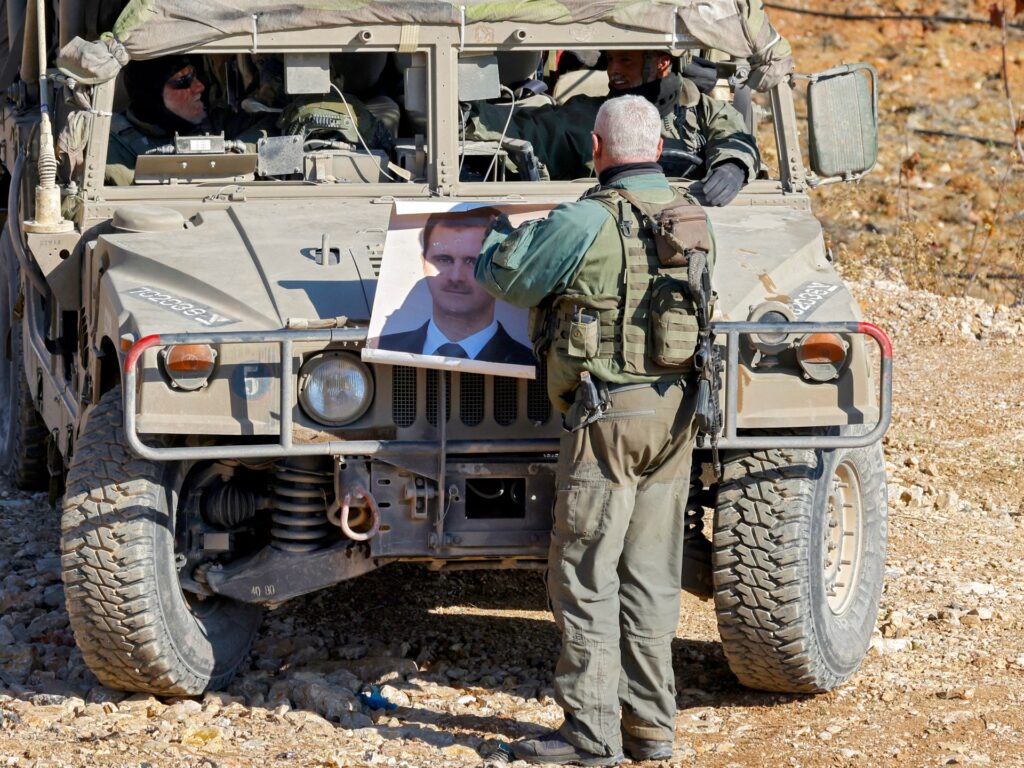
NewsFeed UN Special Envoy for Syria Geir Pedersen has warned that Israeli attacks inside Syria are undermining the country as its tries to rebuild after the fall of Bashar al-Assad. Published On 17 Dec 202417 Dec 2024 Adblock test (Why?)