

Israeli forces strike, storm Gaza’s Kamal Adwan Hospital with ‘no warning’
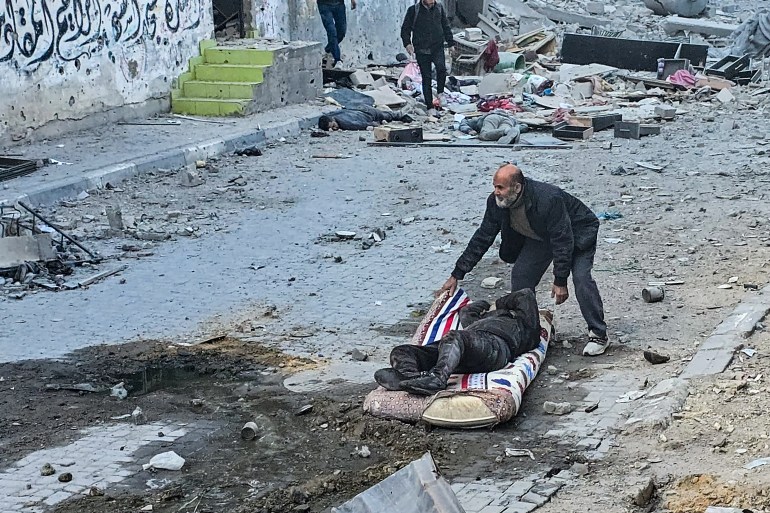
The World Health Organization says Israel issued no warning for the strike on the hospital that killed four staff. At least four staff have been killed when several air strikes hit Gaza’s Kamal Adwan Hospital and Israeli forces stormed the facility, according to the hospital’s director and the enclave’s Civil Defence agency. Hossam Abu Safieh, the director of one of the last functioning health centres in northern Gaza said a series of air strikes hit the northern and western sides of the hospital on Friday, “accompanied by intense and direct fire”. No surgeons were left in the hospital, he added. Soldiers swept into the hospital and ordered all staff, patients and displaced people into its courtyard before allowing them hours later to return inside. Richard Peeperkorn, spokesman of the World Health Organization (WHO), the United Nations health agency, said “there was no official warning or evacuation order before the bombing of … the hospital, only rumours that spread panic.” A Palestinian man uses a mattress to pull away a victim after an Israeli attack on Kamal Adwan Hospital in Beit Lahiya [AFP] This comes just a week after the WHO had facilitated the entrance of an Indonesian emergency medical delegation to the hospital for the first time in 60 days. The facility had run out of most supplies, including fuel. Advertisement Abu Safieh said some hospital staff, including the emergency team, were ordered to leave the premises for good. Peeperkorn said the fact that the attack on the hospital had taken place after Israeli authorities had allowed the entry of the medical delegation was particularly troubling for the staff and patients. “Within one week, they feel forced, scared, whatever, to leave,” Peeperkorn said at a Geneva news briefing. “That is extremely concerning and should never happen.” The hospital was “minimally functional”, he said. According to the WHO, about 12,000 patients across Gaza need medical evacuation but only 78 have been evacuated so far. The bodies of victims lie in the courtyard of Kamal Adwan Hospital [AFP] Gaza’s Ministry of Health said the three main hospitals in northern Gaza are barely functioning and have been under repeated attack since Israel sent tanks into the northern town of Beit Lahiya and nearby Beit Hanoon and Jabalia in October. The ministry on Friday accused the Israeli military of committing a “war crime” in Kamal Adwan Hospital by perpetrating “all forms of killing and violence inside and around it”. “The injured who remained inside are in critical condition and need immediate medical care,” it added. The Israeli army has not yet commented on the attack. Beit Lahiya has been the site of an intense military operation for the past two months that has escalated in recent days, forcing thousands of people to flee the bombing. Emptying the hospitals Al Jazeera’s Tareq Abu Azzoum, reporting from Deir el-Balah in central Gaza, said medical sources confirmed the Israeli military ordered patients out of the facility while the Indonesian medical delegation was able to flee to al-Ahli Arab Hospital in Gaza City. Advertisement “It seems that they are trying to empty northern Gaza of medical facilities and push civilians to move towards Gaza City in order to impose significant military control in these areas,” he said. Hospitals, their staff, patients and vehicles are protected under international law. An Israeli drone last week killed Ahmed al-Kahlout, the director of Kamal Adwan Hospital’s Intensive Care Unit, as he was reportedly passing through the gate of the besieged hospital in northern Gaza. Israel has accused Hamas fighters of using civilian buildings, including hospitals, schools and apartment blocks, for operational cover. Hamas has denied this, accusing Israel of indiscriminate bombings and assaults. Adblock test (Why?)
What might four more years of Donald Trump look like?

What is next for the United States as it embarks on a second Trump presidency. As the dust settles following the United States election results, the world is adjusting to the prospect of four more years of Donald Trump.The future either looks bright or worrying, depending on which side of the political aisle you stand. Presenter: Anelise Borges Guests:Ky Polanco – Co-founder of the FEMINIST organisationElizabeth Booker Houston – Lawyer and comedianMaribel Hernandez Rivera – American Civil Liberties Union Adblock test (Why?)
Trump taps hawkish former Senator David Perdue as ambassador to China
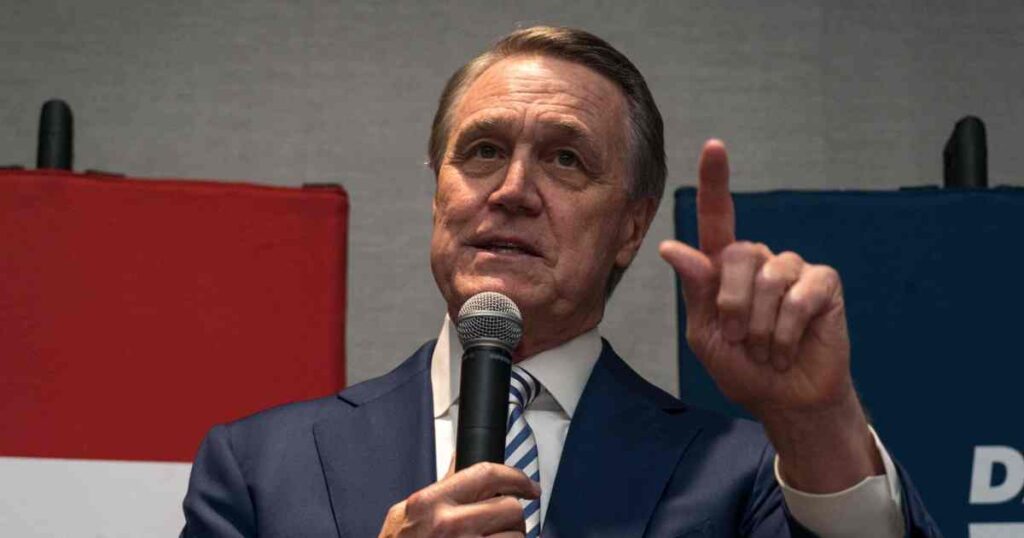
US president-elect says ex-Georgia senator will help maintain a ‘productive working relationship with China’. United States President-elect Donald Trump has named former Georgia Senator David Perdue as his pick for ambassador to China, a post that will require navigating an increasingly tumultuous relationship between Washington and Beijing. “As a Fortune 500 CEO, who had a 40-year International business career, and served in the US Senate, David brings valuable expertise to help build our relationship with China. He has lived in Singapore and Hong Kong, and worked in Asia and China for much of his career,” Trump said in a post on his social media platform Truth Social. “He will be instrumental in implementing my strategy to maintain peace in the region and a productive working relationship with China’s leaders,” Trump said. As a member of the Senate from 2015 to 2021, Perdue took a tough stance on China that has become a hallmark of the Republican Party. “America’s outdated view of China could result in lost opportunities, or even worse, dangerous miscalculations or complacency,” he wrote in a 2018 op-ed for Fox News alongside Republican Senators Steve Daines of Montana, Chuck Grassly of Iowa, and Ron Johnson of Wisconsin. Advertisement “We must have a long-term plan to compete and deal with China’s rising economic and geopolitical influence.” Perdue’s appointment will require the approval of the US Senate, but his confirmation is likely to proceed as Republicans hold a majority in the chamber. As ambassador, Perdue will face a challenging workload right out of the gate, as Trump appears set on steering the US into an all-out trade war with China. Trump has pledged to impose a 10 percent tariff on all Chinese goods when he takes office on January 20 in retaliation for Beijing’s failure to stop the flow of the synthetic opioid fentanyl into the US. During his campaign, Trump also threatened to impose tariffs of 60 percent or more on all Chinese goods. Tensions are already mounting between the two countries. Earlier this week, the outgoing administration of President Joe Biden imposed its third round of export controls on semiconductors and related technology, curbing exports to 140 companies. Beijing in retaliation blocked exports of gallium, germanium, and antimony – materials that are critical to the semiconductor and defence industries. During his first term, Trump imposed tariffs on some $300bn of Chinese goods. Biden kept those tariffs in place and added his own on goods such as electric vehicles and solar cells. Trump on Friday also tapped tech investor David Sacks as his “crypto czar” to oversee artificial intelligence and cryptocurrency policy. “In this important role, David will guide policy for the administration in artificial Intelligence and cryptocurrency, two areas critical to the future of American competitiveness,” Trump wrote on Truth Social. Advertisement “David will focus on making America the clear global leader in both areas. He will safeguard free speech online, and steer us away from Big Tech bias and censorship. He will work on a legal framework so the crypto industry has the clarity it has been asking for, and can thrive in the US.” The appointment is another win for the crypto industry, after Trump named Paul Atkins as his pick to head the Securities and Exchange Commission. Atkins previously served as a SEC commissioner from 2002 to 2008 under President George W. Bush and is known for his pro-crypto and pro-business stances. Adblock test (Why?)
Can Indian billionaire Gautam Adani be tried in the US for India ‘crimes’?
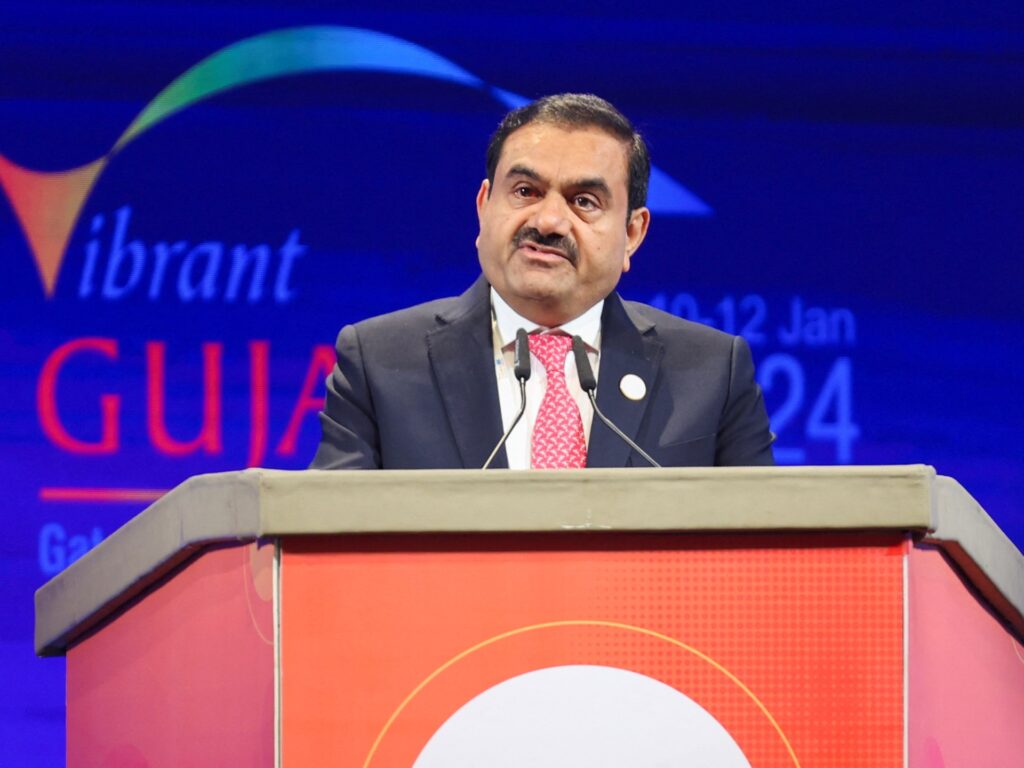
It is a tumultuous time for Gautam Adani, the billionaire chairman of one of India’s biggest corporate conglomerates, the Adani Group, and one of the richest people in the world. The United States Securities and Exchange Commission (SEC) has accused Adani and others of conspiring to pay about $265m in bribes to Indian government officials to obtain contracts and develop India’s largest solar power plant project. US prosecutors unveiled in November an indictment of Gautam Adani, his nephew Sagar Adani and five others. The Adani Group has rejected these claims, calling them baseless. Amid all this, Adani remains defiant. “This is not the first time we have faced such challenges … every attack makes us stronger and every obstacle becomes a stepping stone,” Adani said on Sunday at an award ceremony he was attending in the western Indian city of Jaipur, his first public appearance after the indictment. The indictment and jurisdiction complexities A grand jury indictment means that an empanelled jury, and a judge, are convinced that there is enough evidence to merit a continuing investigation and to potentially move ahead to trial, Irfan Nooruddin, an authority on US SEC corruption cases, told Indian outlet The Print. However, the bar for a grand jury indictment is lower than the bar for a jury trial, he added. Advertisement The recent allegations also highlight jurisdictional complexities. Indian senior criminal lawyer Vikas Pahwa told Al Jazeera, “The Prevention of Corruption Act [PCA] mandates investigations into bribery involving Indian officials be conducted by Indian authorities like the CBI [Central Bureau of Investigation]. Trials, if any, would also fall under Indian jurisdiction.” However, the US Foreign Corrupt Practices Act (FCPA) governs acts of bribery involving US-linked entities, such as those using US financial systems or targeting American investors. Allegations against Adani and others include violations of anti-bribery provisions and misleading US investors during a $600m bond offering (which was withdrawn once the charges became public). While this establishes potential US jurisdiction, such cases must align with international legal principles and respect India’s sovereignty, pointed out Pahwa. Since both nations are signatories to mutual legal assistance treaties (MLATs), they need to cooperate to ensure evidence adheres to international standards. “Adani’s defence may argue the lack of a direct US connection to the alleged acts and emphasise compliance with Indian anticorruption laws,” Pahwa added. Meaning, if an investigation in India clears Adani and his co-accused of these charges, that would work in their defence in the US, he said. In terms of next steps, the US needs to issue a formal extradition request to the Indian government to bring the accused to the US for a trial. Earlier this month New Delhi said it has not received any such request. There has been no update from the government since then. Advertisement For Adani to step forward with his defence, he will have to present his case in a court in the US. It’s unclear if he would do so. He will be entitled to a speedy trial within 70 days if he demands one in a US court. Niranjan Adhikari, managing lawyer at Washington-based Adhikari Law, says, “They can begin the trial in absentia and issue lookout notices to the defendants if they do not present themselves in a defined period of time”, which is set by a jury at the time of trial. US Attorney Breon Peace, who unveiled the charges, can issue international arrest warrants for Adani and his co-defendants. In case of any such lookout notice or international warrant, they could be arrested outside India (Interpol has no jurisdiction within India), curtailing their travel. Since India and the US have an extradition treaty, India is obligated to consider the request should it come. That process would be handled by a court in India, which would need to consider several factors including whether the crime he was charged with within the US is also a crime in India, whether the charges are politically motivated or whether he could face inhumane treatment in the US. However, extradition cases are often prolonged, and Adani could fight it. Adani is also perceived to be close to Indian Prime Minister Narendra Modi and that relationship might help him clear these charges in India, critics say. For now, the government has chosen to distance itself and said “this is a legal matter involving private firms and individuals and the US Department of Justice. We are not part of it in any manner at this point of time,” India’s Foreign Ministry spokesperson Randhir Jaiswal told the media during a news briefing on November 29. Advertisement A jury of 12 would need to unanimously vote to convict Adani, and he could appeal a verdict against him. He could face decades in prison if convicted, but would probably receive far less time. He could also face financial penalties. Any sentence would ultimately be up to the judge overseeing the case. Adblock test (Why?)
World Bank announces record $100bn support for world’s poorest countries

International development organisation says sum will be deployed to support 78 countries that ‘need it most’. The World Bank has announced that it has raised close to $24bn to provide loans and grants for some of the world’s poorest nations, which it can leverage to generate a record $100bn in total spending power. Donor countries committed $23.7bn to replenish the bank’s concessional lending arm, known as the International Development Association (IDA), a World Bank spokesperson told the AFP news agency, marking a slight increase from the roughly $23.5bn pledged during the last fundraising round three years ago. The bank can use this money to borrow on financial markets, allowing it to leverage the amount raised by around four times, unlocking about $100bn in new loans and grants, up from $93bn in 2021. “We believe the historic success of this IDA21 replenishment is a vote of confidence and support from donors and clients,” a World Bank statement read, referring to the current IDA funding round. “This funding will be deployed to support the 78 countries that need it most,” World Bank President Ajay Banga said in a separate statement, referring to the developing countries that are eligible for IDA support. Advertisement It would, he added, help provide “resources to invest in health, education, infrastructure, and climate resilience,” as well as to help stabilise economies and create jobs. The World Bank’s announcement follows two days of talks in the South Korean capital, Seoul, a city still reeling after President Yoon Suk-yeol declared martial law late on Tuesday local time, before backtracking under pressure from lawmakers. IDA has become the single largest source of concessional, or below-market, climate finance, and about two-thirds of all IDA funding over the past decade has gone to support countries in Africa, according to the World Bank, an international development organisation owned by 187 countries. IDA replenishment is a crucial part of the bank’s operations, and happens once every three years, with much of the funding coming from the United States, Japan and several European countries including the United Kingdom, Germany and France. This year, the US announced ahead of time that it would commit a record $4bn in new funding to the IDA, while other countries – including Norway and Spain – also significantly stepped up their financial support. Thirty-five former recipients of IDA assistance have graduated from developing economy status in recent decades, including China, Turkey and South Korea, with many of them now donors to the fund. Adblock test (Why?)
Israel wants to continue war on Gaza, but to what end?

US president-elect Donald Trump is handing over US Middle East policy to people “who see God as some kind of cosmic real estate agent”, argues Stephen Zunes, chair of the Middle Eastern Studies Program at the University of San Francisco. Regarding Trump’s “to whom it may concern” threat that “there will be all hell to pay in the Middle East” regarding Israeli hostages, Zunes tells host Steve Clemons that the situation for Palestinians is likely to get even worse. But at least Trump “can’t pretend that he’s trying to reach an equitable, just peace” like his predecessors, Zunes says. Adblock test (Why?)
Bahamas rejects Trump proposal to take in deported third-country migrants
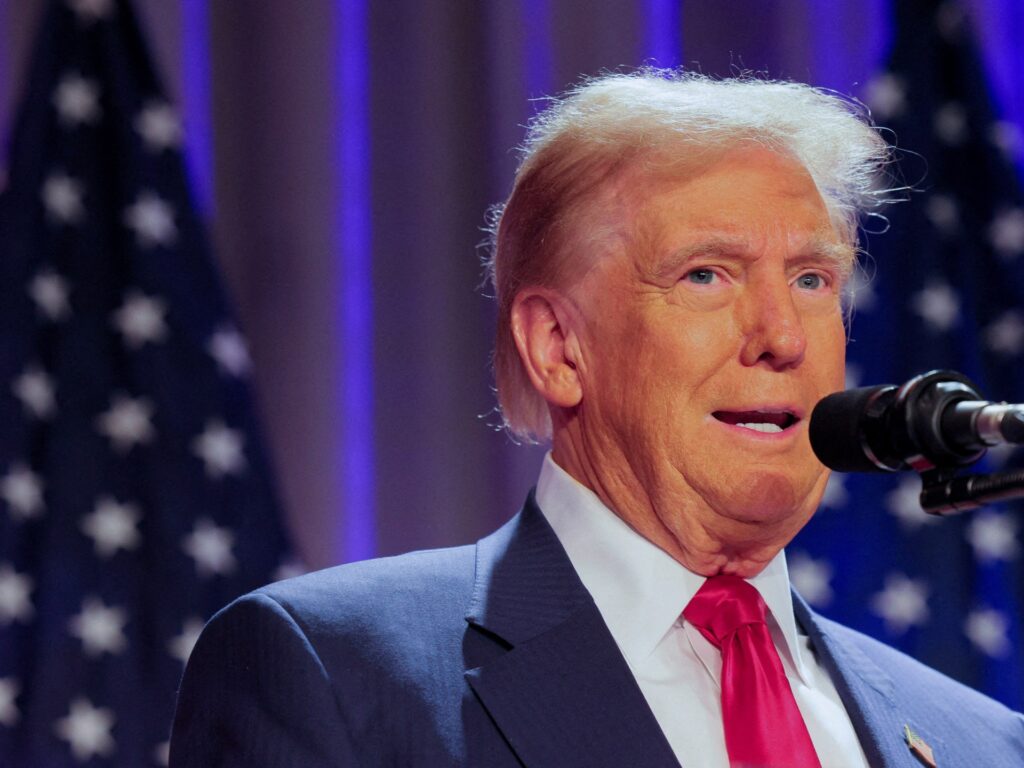
The Bahamas says it has rejected a proposal from the transition team of United States President-elect Donald Trump to take in migrants from other countries who may be deported by the incoming administration. In a statement on Thursday, the office of Bahamian Prime Minister Philip Davis said the scheme to have the Bahamas accept deportation flights “was reviewed and firmly rejected”. “The Bahamas simply does not have the resources to accommodate such a request,” Davis’s office said. “Since the Prime Minister’s rejection of this proposal, there has been no further engagement or discussions with the Trump transition team or any other entity regarding this matter. The Government of The Bahamas remains committed in its position.” Trump, who won last month’s US presidential election and will take office on January 20, has promised to carry out the “largest deportation operation” in the country’s history. The Office of the Prime Minister wishes to address recent reports regarding a proposal from the Trump transition team in the United States for The Bahamas to accept deportation flights of migrants from other countries. This matter was presented to the Government of The Bahamas… — Latrae L. Rahming (DOC)🇧🇸 (@latraelrahming) December 5, 2024 Advertisement The proposed effort has spurred condemnation from rights advocates and raised questions about the feasibility of removing millions of undocumented immigrants from the country. The Department of Homeland Security estimates 11 million “unauthorised” people lived in the US as of 2022. The Bahamas census for the same year shows the country has less than 400,000 people total. Trump’s deportation plans will also likely test the limits of his power as president, as any “mass deportation” would involve legal challenges and cooperation with foreign governments. Citing three unnamed sources, NBC News reported earlier on Thursday that Trump’s team was preparing a list of countries that it could send migrants to should their home countries not agree to take them back. The list included the Bahamas, Turks and Caicos Islands, Panama and Grenada, the sources told the US news outlet. In 2019, during Trump’s first term as president, the US signed a deal with Guatemala forcing asylum seekers who transited through the Central American country on their way to the US-Mexico border to first apply for protection there. The so-called “safe third country” agreement allowed the Trump administration to deport people from third countries, such as Honduras and El Salvador, to Guatemala. It remains unclear whether any countries will agree to take in deported, third-country migrants and asylum seekers when Trump takes office again in January. Last month, the American Civil Liberties Union (ACLU) of Southern California sued US Immigration and Customs Enforcement (ICE) to obtain records revealing how the agency’s deportation flights could be expanded to carry out a mass deportation programme. Advertisement “Little is known about how President-elect Trump would carry out its mass deportation agenda, but what we do know is that this proposal has already instilled fear among immigrant communities,” Eva Bitran, director of immigrants’ rights at the ACLU chapter, said in a statement. “The public has a right to know how its taxpayer dollars could be used to fund deportation flights that would tear apart not only families, but also our communities.” Meanwhile, Trump continues to promote his hardline immigration policies, threatening last month to impose 25-percent tariffs on Mexico and Canada “until such time as Drugs, in particular Fentanyl, and all illegal Aliens stop this Invasion of our Country!” Canada has since promised to bolster border security while Mexico — which has already been carrying out a crackdown on migrants and asylum seekers trying to reach the US — made the largest fentanyl seizure in its history this week. During a news conference on Thursday, Mexican President Claudia Sheinbaum said she hoped to reach a deal with the Trump administration so that Mexico would not have to take in third-country deportees. “We hope to reach an agreement with the Trump administration so that, in case these [massive] deportations happen, they send people from other countries directly to their countries of origin,” she said. Mexico, she added, was “in solidarity with everyone, but our main purpose is to receive Mexicans”. Adblock test (Why?)
Hezbollah backs Syria’s al-Assad as opposition forces intensify offensive
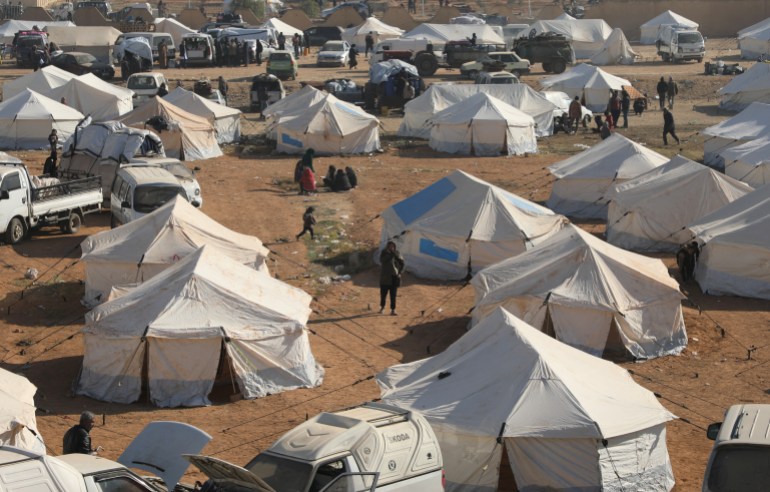
UN Secretary General Antonio Guterres calls for de-escalation, warns tens of thousands in Syria are at risk. Hezbollah’s secretary-general Naim Qassem has pledged the Lebanese group will stand by the Syrian government amid an advance by “terrorist groups” trying to sow chaos in the country. “They will not be able to achieve their goals despite what they have done in past days, and we as Hezbollah will be by Syria’s side in thwarting the goals of this aggression as much as we can,” Qassem said on Thursday, adding that the “aggression” is sponsored by the United States and Israel. His comments came hours after Syrian opposition forces captured the strategic city of Homs in central Syria, their latest victory in a lightning offensive that was launched eight days ago. Qassem did not give details of how Hezbollah would support Syrian President Bashar al-Assad, but said the Iran-aligned group would do what it could. Hezbollah is currently observing a fragile, US-brokered ceasefire agreement with Israel, after a year of war that has brought much devastation to Lebanon’s south in particular. Many of the group’s leadership have been killed in Israeli attacks, while tens of thousands of Lebanese civilians have been driven from their homes. Advertisement ‘Region already on fire’ Civilians have also borne the brunt of Syria’s 13-year-long war, which had been largely frozen since 2020 until opposition forces led by Hayat Tahrir al-Sham (HTS), a former al-Qaeda affiliate, launched a new offensive from their strongholds in northwest Syria last week. Over the weekend the rebels captured Aleppo, the country’s second largest city, before pushing south and entering Hama on Thursday. More than 280,000 people have been displaced by the recent fighting, the United Nations World Food Programme said in a post on X. People gather near tents for the displaced who fled the Aleppo countryside, in Tabqa, Syria [Orhan Qereman/Reuters] UN Secretary-General Antonio Guterres called for an end to the fighting and said the escalating conflict in Syria is the result of a “chronic collective failure” of diplomacy. Guterres called for immediate humanitarian access to all civilians in need in Syria and a return to a UN-facilitated political process to end the bloodshed. “Tens of thousands of civilians are at risk in a region already on fire,” Guterres told reporters. “We are seeing the bitter fruits of a chronic collective failure of previous de-escalation arrangements to produce a genuine nationwide ceasefire or a serious political process to implement Security Council resolutions,” he said. He urged “all those with influence to do their part for the long-suffering people” of Syria and said all parties are obligated to protect civilians. While al-Assad relied heavily on Russian and Iranian backing throughout the most intense years of Syria’s war, some opposition groups established ties with Turkiye. Advertisement Turkish President Recep Tayyip Erdogan on Thursday called on al-Assad to urgently find a “political solution” to the war. “The Syrian regime must commit urgently with its people in favour of a global political solution,” Erdogan said in a call with Guterres, according to a statement released by the presidency. Erdogan, whose country has become home to about three million Syrian refugees since the war started in 2011, has held several discussions with other leaders on the crisis in recent days. “Turkiye has been striving to reduce tensions, protect civilians and open a political process and will continue to do so,” Erdogan was quoted as saying in the statement. Highlighting that the conflict has reached a “new stage”, Erdogan said, “Turkiye’s biggest wish is that Syria does not become embroiled in bigger instability and see even more civilian victims.” Erdogan was an outspoken critic of al-Assad for much of the war but has recently taken a more conciliatory line. Adblock test (Why?)
Brazilian vet hopes to rescue heron with cup stuck in throat

NewsFeed A Brazilian biologist who spotted a heron with a plastic cup stuck in its throat is on a mission to find the bird and save its life. Published On 5 Dec 20245 Dec 2024 Adblock test (Why?)
Theatre of Violence: The ICC’s landmark trial of a former child soldier
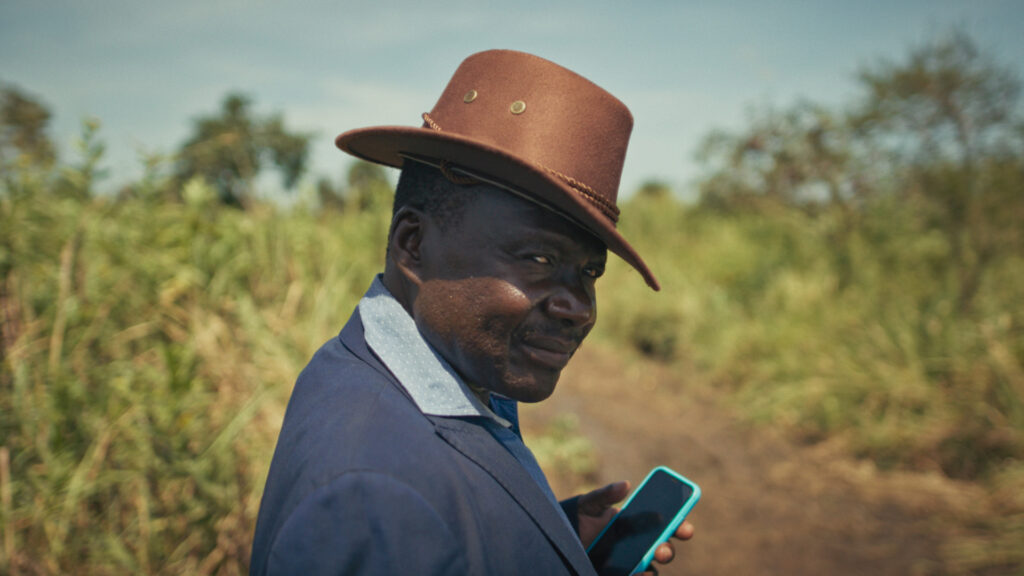
A Ugandan defence lawyer asks whether the International Criminal Court (ICC) is imposing a new form of colonialism. Krispus Ayena is appointed defence lawyer in The Hague to defend the first former child soldier to be prosecuted by the International Criminal Court (ICC). His client, Dominic Ongwen, was nine years old when he became one of at least 20,000 children abducted by rebel leader Kony’s Lord’s Resistance Army (LRA) in Uganda. He is charged with 70 counts of different war crimes, including torture, rape and murder. But Ayena wants him acquitted, raising vital questions about accountability when someone is both victim and perpetrator, and what justice means when prosecuted in an international court far away from the crime scene. Theatre of Violence is a documentary film by Lukasz Konopa and Emil Langballe. Adblock test (Why?)