

‘Not our fight’: President-elect Trump distances US from Syria’s conflict
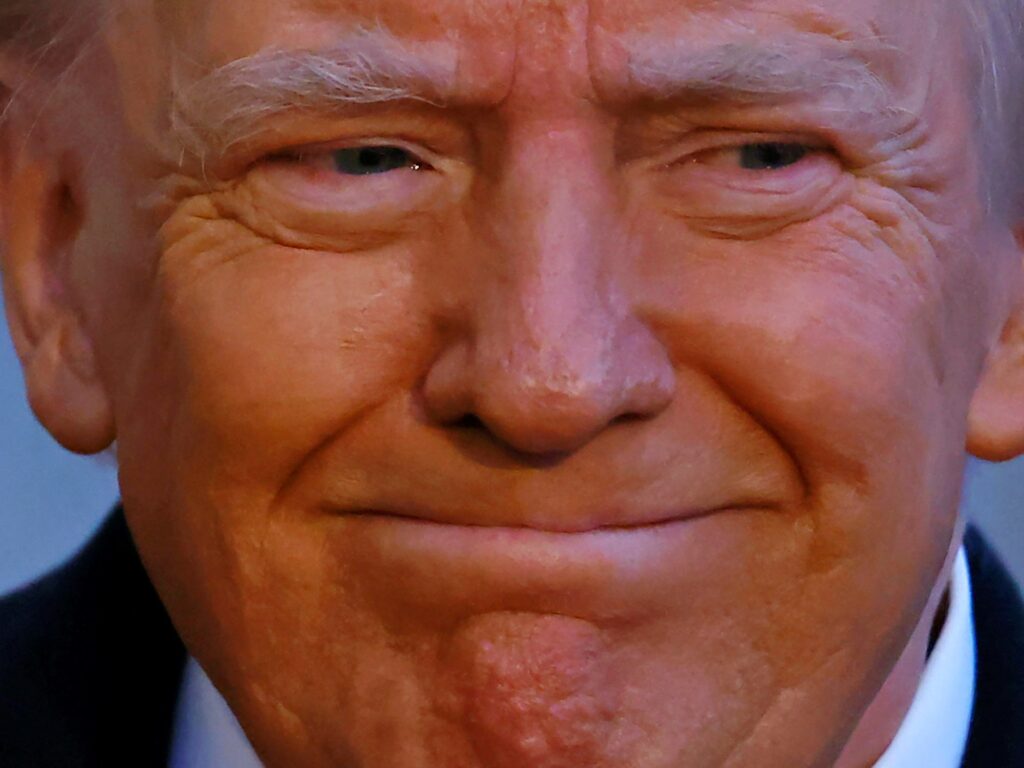
President-elect Donald Trump has signalled that, under his administration, the United States would cease any involvement in Syria’s long-running civil war, hinting at a possible end to support for Kurdish-led forces in the region. In a Saturday morning missive on social media, Trump addressed the surprise opposition offensive that has redrawn the battle lines in the Syrian conflict. “Syria is a mess, but is not our friend,” Trump wrote, before switching to all uppercase letters for emphasis. “THE UNITED STATES SHOULD HAVE NOTHING TO DO WITH IT. THIS IS NOT OUR FIGHT. LET IT PLAY OUT. DO NOT GET INVOLVED!” Trump campaigned for re-election in November’s presidential race by pushing an “America First” platform, one that critics feared could destabilise US alliances abroad. In Syria, the US maintains no formal diplomatic relations with the government of embattled President Bashar al-Assad. But it does back the Syrian Democratic Forces (SDF), a Kurdish-led coalition based largely in the northeast, as an ally in defeating ISIL (ISIS). Advertisement The war in Syria has been raging since 2011, when “Arab Spring” protests erupted against al-Assad and the government responded with a heavy-handed crackdown. The situation sparked a multi-sided conflict, with four main groups holding territory in Syria. But the boundaries of the conflict shifted dramatically on November 27, when opposition fighters led by the group Hayat Tahrir al-Sham (HTS) made a push from their northwestern stronghold of Idlib. After reclaiming Aleppo in a lightning offensive, the opposition forces swept southward, capturing a string of government-held cities including Hama and Deraa and encircling other areas like Homs. By Saturday, they were kilometres from the capital, Damascus. Trump, a Republican, noted the rapidly changing nature of the conflict in his Saturday post, calling the opposition offensive “unprecedented”. He predicted a “big move toward taking out Assad”. Still, his post was largely focused on US relations with Russia and his ongoing rivalry with former President Barack Obama, a Democrat. He made no mention of the Kurdish-led coalition, which holds about a quarter of Syria’s territory in many oil-rich regions. Nor did Trump address the US troops currently in Syria, estimated to comprise fewer than 1,000 service members scattered across bases in places like Omar Oil Field and al-Shaddadi. Instead, Trump pointed to Russian military weakness in Syria, where it backs al-Assad’s government. “Russia, because they are so tied up in Ukraine, and with the loss there of over 600,000 soldiers, seems incapable of stopping this literal march through Syria, a country they have protected for years,” he wrote. Advertisement “But now they are, like possibly Assad himself, being forced out, and it may actually be the best thing that can happen to them.” Trump also used his post to take another jab at Obama, the predecessor to his first term. During his time in office, from 2009 to 2017, Obama had called for al-Assad to step down and called the use of chemical weapons in the Syrian conflict a “red line” that would result in “enormous consequences”. But Obama ultimately opted not to launch a full-scale military campaign, resorting instead to targeted air strikes against ISIL (ISIS). And ultimately the Syrian government agreed to dismantle its chemical weapons programme, as part of a deal brokered by Russia. “Obama refused to honor his commitment of protecting the RED LINE IN THE SAND,” Trump wrote on Saturday. “There was never much of a benefit in Syria for Russia, other than to make Obama look really stupid.” Still, US air attacks in the region have continued, even during the latest opposition offensive. Just a few days ago, on December 3, the US conducted air strikes in Syria against weapons systems described as a “threat to US and coalition forces in Syria”. But the administration of outgoing President Joe Biden, a Democrat, said the attacks against the weapons systems were no indication that the US was interested in joining the wider conflict. “To be clear, these self-defense actions successfully eliminated imminent threats to U.S. personnel and were not linked to any broader activities in northwest Syria by other groups,” Pentagon Press Secretary Pat Ryder said in a statement. Advertisement Trump is slated to take over from Biden on January 20. But he has signalled he plans to disengage the US from overseas entanglements. He repeatedly told voters on the campaign trail, “I will prevent World War III from happening,” presenting himself as a candidate for peace. Experts say US leaders may have other incentives to stay away from the Syrian conflict. Speaking to Al Jazeera last week, Joshua Landis, a Middle East studies professor at the University of Oklahoma, said the US is slated to face pressure from Turkiye, which considers the Kurdish fighters a “terrorist” threat. “Turkiye is going to want the Americans to leave, and it’s going to want to attack the Kurds,” Landis said. “It’s likely that President Trump, the new incoming president, will choose Turkiye over the Kurds.” Adblock test (Why?)
Qatar says ‘momentum’ building back up in Gaza ceasefire efforts
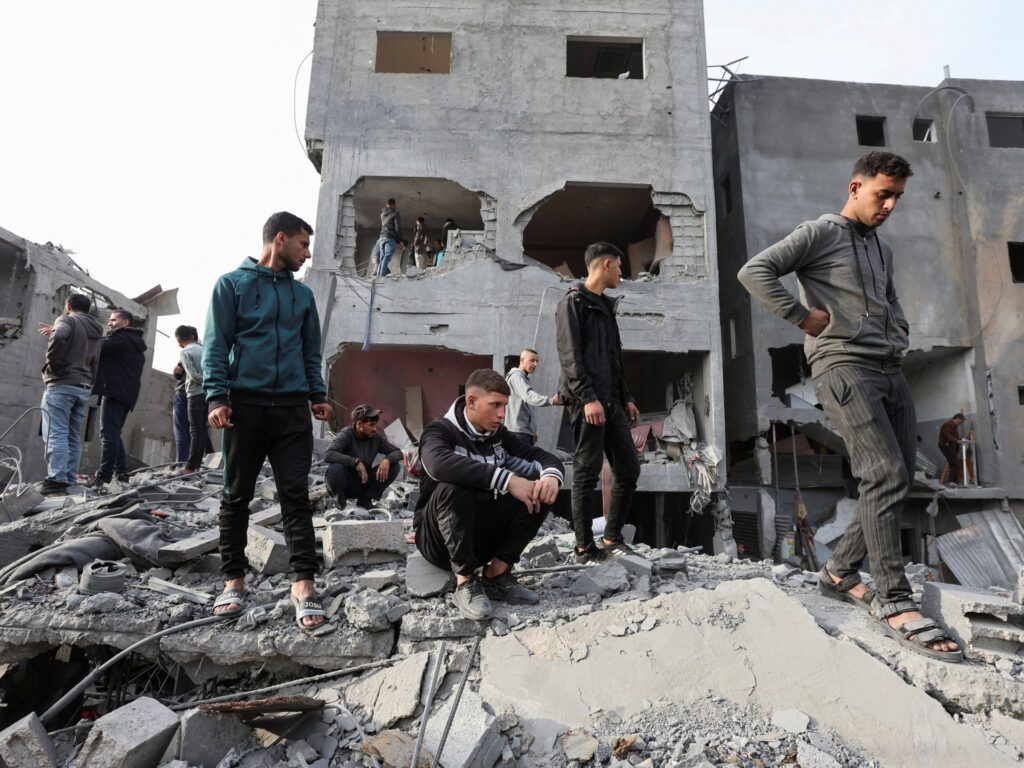
A month after suspending its mediation bid, Qatar has said it sees “momentum” in efforts to reach a deal to end Israel’s war on the Gaza Strip, as dozens of Palestinians were killed in the Israeli military’s continued attacks on the besieged enclave. Speaking at the Doha Forum on Saturday, Qatari Foreign Minister and Prime Minister Sheikh Mohammed bin Abdulrahman Al Thani said the country took a step back from mediating Gaza ceasefire talks because it failed to see “a real willingness” to end the war. But the minister said that after the United States presidential election on November 5, Qatar has sensed “that the momentum is coming back”. “We have seen a lot of encouragement from the incoming administration [of US President-elect Donald Trump] in order to achieve a deal even before the president comes [into] office” in January, Al Thani said. “And that actually made us [try] … to put it back on track. We’ve been engaging in the past couple of weeks,” he added. Efforts to end Israel’s war on Gaza, which has killed more than 44,600 Palestinians since early October 2023, have foundered, with critics accusing Israeli Prime Minister Benjamin Netanyahu of stymying the negotiations. H.E. Sheikh Mohammed bin Abdulrahman Al-Thani @MBA_AlThani_ , Prime Minister and Minister of Foreign Affairs, at a panel discussion in Doha Forum: Qatar stresses that reaching a lasting agreement depends on sincere willingness from all parties to end the war and finalize a… pic.twitter.com/sjGYthIY5i — Ministry of Foreign Affairs – Qatar (@MofaQatar_EN) December 7, 2024 Advertisement The administration of outgoing US President Joe Biden, which has repeatedly said it is pushing for an end to the fighting in Gaza but refuses to condition US aid to Israel, also has faced criticism for failing to secure a ceasefire. The US provides Israel with at least $3.8bn in military aid annually, and the Biden administration has authorised $14bn in further assistance to its ally since the war began last year. Trump – who, like Biden, is a staunch supporter of Israel – this week warned that “there will be hell to pay” if captives held in Gaza are not released by the time he enters the White House on January 20. “Those responsible will be hit harder than anybody has been hit in the long and storied History of the United States of America. RELEASE THE HOSTAGES NOW!” he wrote on social media. Dozens killed across Gaza Meanwhile, medical sources in Gaza told Al Jazeera Arabic on Saturday that 39 Palestinians were killed since dawn in Israeli attacks across the bombarded territory, including a strike in the Nuseirat refugee camp that killed at least 26 people. Reporting from Deir el-Balah in central Gaza, Al Jazeera’s Tareq Abu Azzoum said the attack on the refugee camp targeted a building in a densely populated area housing displaced families. “People have been buried under tonnes of debris,” said Abu Azzoum, adding that rescuers and residents were still searching through the rubble for possible survivors as well as bodies that can be taken for burial. The Israeli military also has laid siege to Kamal Adwan Hospital in northern Gaza’s Beit Lahiya, as well as the surrounding area. Advertisement Footage verified by Al Jazeera’s Sanad fact-checking agency showed Israeli forces firing on a Palestine Red Crescent Society ambulance near the hospital. Amid intense bombardment and hostilities in close proximity of Kamal Adwan Hospital in northern #Gaza yesterday, 33 people were reportedly killed just outside the facility. Given the volatile security situation, the international medical team —deployed by @WHO five days ago… — Tedros Adhanom Ghebreyesus (@DrTedros) December 7, 2024 Tedros Adhanom Ghebreyesus, head of the World Health Organization (WHO), said an international medical team “was forced to self-evacuate” amid the deteriorating security situation at Kamal Adwan Hospital. He said in a social media post on Saturday that “displaced people, caregivers, and many injured patients began fleeing the hospital and panic spread” but that 90 patients and 66 medical staff remained at the facility. “Kamal Adwan is minimally functional, but this latest incident further threatens its ability to remain operational. It is one of the last lifelines for the people of northern Gaza. We urgently call for the immediate protection of healthcare facilities and an end to the hostilities!” he wrote. Back in Doha, the Qatari prime minister said the Gulf country was working to protect the negotiation process “to make sure that we can achieve a meaningful result”. “We hope to get things done as soon as possible. We hope that the willingness of the parties to engage in good faith continues in the same manner,” Al Thani said. Advertisement “It’s all about the main questions: Is there a willingness to end the war? Yes or no. Is there a willingness to have an exchange deal? Yes or no,” he added. “Those are two very simple questions with very simple answers. If the answers are yes on both questions then we have a deal.” Adblock test (Why?)
World leaders gather for reopening of Notre-Dame Cathedral in Paris
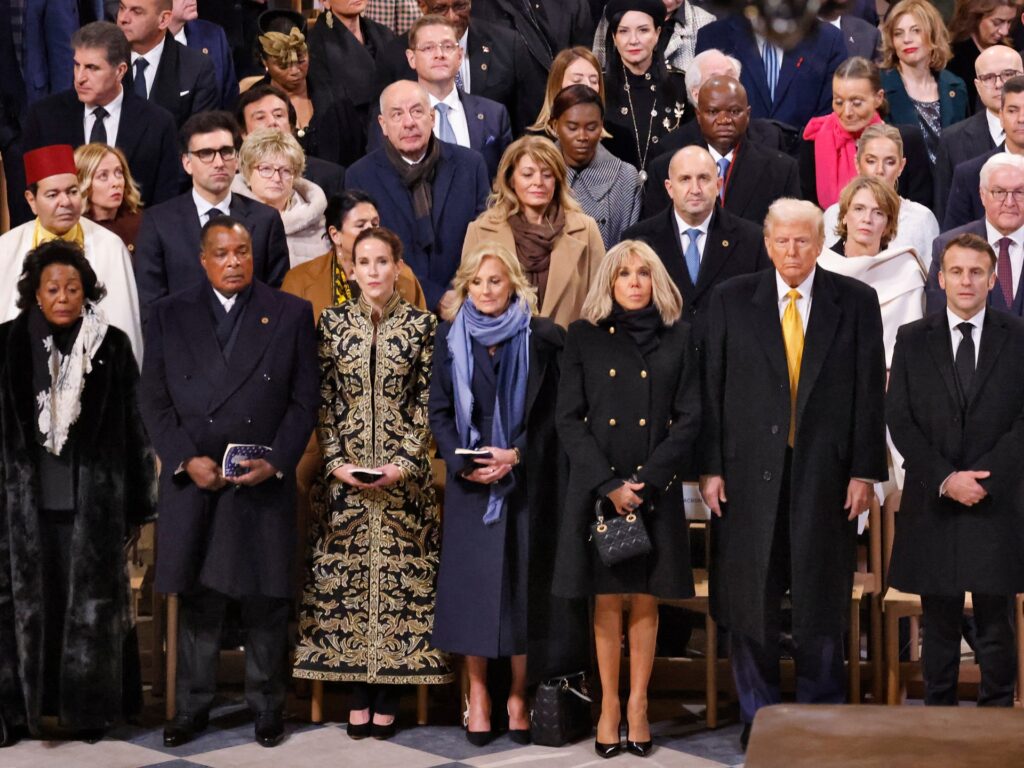
French President Emmanuel Macron thanks all who ‘saved, helped, rebuilt’ beloved cathedral after devastating 2019 fire. World leaders have gathered in the French capital for the reopening of the Notre-Dame Cathedral, five years after the UNESCO World Heritage site was severely damaged in a fire that drew a global outpouring of support. Paris Archbishop Laurent Ulrich ceremonially opened the doors to Notre-Dame on Saturday evening at the start of a ceremony attended by French President Emmanuel Macron and other heads of state from around the world. Ukrainian President Volodymyr Zelenskyy and US President-elect Donald Trump, who was making his first overseas trip since winning last month’s US election, were among the many leaders in attendance. “Tonight, I stand before you … to express the gratitude of the French nation – gratitude to all those who saved, helped, and rebuilt Notre-Dame,” Macron said during the ceremony. “Tonight, the bells of Notre-Dame will ring again.” Nous y sommes.Le monde nous regarde.Allons réouvrir Notre-Dame ! — Emmanuel Macron (@EmmanuelMacron) December 7, 2024 [Translation: “Here we are. The world is watching us. Let’s reopen Notre-Dame!”] The 2019 fire brought the beloved, 12th-century gothic cathedral close to collapse, as flames engulfed Notre-Dame and sent massive plumes of smoke billowing into the sky above Paris. Hundreds of firefighters were deployed to extinguish the blaze. Advertisement Following the fire, nearly $1bn in donations poured in from around the world to help with reconstruction efforts. The cathedral has been meticulously restored, with a new spire and rib vaulting, its flying buttresses and carved stone gargoyles returned to their past glory and white stone and gold decorations shining brightly once again. French firefighters who helped fight the fire received a standing ovation during Saturday’s reopening ceremony. The word “merci” – French for “thank you” – was also illuminated on the front of the building. Parisian careworker Pascal Tordeux, who has a tattoo on his arm representing the cathedral, told the Reuters news agency that Notre-Dame “means everything”. “I saw the construction every day from my window, the spire being brought down, being brought back,” said Tordeux, who lives across the river from the cathedral. “I saw it burn, I saw it rise again. I followed it day by day.” The reopening comes as Macron faces a political crisis at home after parliament earlier this week pushed out his prime minister. Al Jazeera’s Natacha Butler, reporting from outside Notre-Dame on Saturday evening, said the French president – who had promised to rebuild the cathedral in five years – is hoping to distract from that political uncertainty. “We have also seen Macron use this as something of an opportunity for a bit of last-minute diplomacy,” Butler explained. Macron held talks with Zelenskyy and Trump at the Elysee before the ceremony. “It was behind closed doors, but no doubt, Macron will be rather pleased that he’s managed to get these two together before Trump is inaugurated in January,” Butler added. Advertisement Observers have raised concerns that Trump – who has questioned continued US support for Ukraine since Russia’s 2022 invasion – could cut off Washington’s assistance to Kyiv once he takes office. In a post on X, the Ukrainian president described Saturday’s meeting with Macron and Trump as “good and productive”. “We all want this war to end as soon as possible and in a just way. We spoke about our people, the situation on the ground, and a just peace,” Zelenskyy wrote. “We agreed to continue working together and keep in contact. Peace through strength is possible.” I had a good and productive trilateral meeting with President @realDonaldTrump and President @EmmanuelMacron at the Élysée Palace. President Trump is, as always, resolute. I thank him. I also extend my gratitude to Emmanuel for organizing this important meeting. We all want… pic.twitter.com/eKMtuhp2ZI — Volodymyr Zelenskyy / Володимир Зеленський (@ZelenskyyUa) December 7, 2024 Adblock test (Why?)
Russia-Ukraine war: List of key events, day 1,017
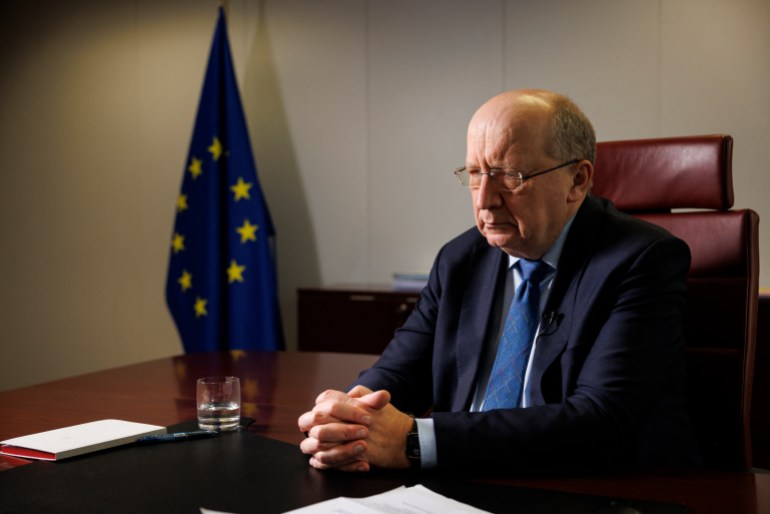
Here is the situation on Saturday, December 7: Fighting: A Russian attack on the southern city of Zaporizhzhia killed at least 10 people and wounded 24 on Friday. The city’s governor, Ivan Fedorov, said the attack had set a car garage and service station on fire in the blast. Another attack on nearby Kryvyi Rih, President Volodymyr Zelenskyy’s hometown, killed at least two people, according to the local governor. Moscow said its forces had captured a village near the embattled supply hub of Pokrovsk and another near the industrial town of Kurakhove, gaining ground in two key areas of the east Ukraine front line. Lithuanian Commissioner for Defence and Space Andrius Kubilius at the European Commission in Brussels, on December 6, 2024 [Simon Wohlfahrt / AFP] Military and diplomacy: Zelenskyy slammed Putin after the attacks, saying in a post on Telegram that “thousands of such strikes carried out by Russia during this war make it absolutely clear that Putin does not need real peace,” adding that “only through force can real peace be established”. The EU’s first-ever defence commissioner, Andrius Kubilius, has called for a “big-bang approach” in spending and policy changes to strengthen the bloc’s defences, warning that Russia could be prepared for military aggression against the EU or NATO by 2030. Ukraine unveiled a new domestically produced “rocket drone” called Peklo (Hell in Ukrainian) saying it can fly 700km (430 miles) – more than twice the longest range attributed to missiles supplied by Western allies. Russian Foreign Minister Sergey Lavrov said in a broadcast interview that his country’s recent use of a hypersonic missile in the Ukraine war sought to make the West understand that Moscow was ready to use “any means” to stave off defeat. Zelenskyy is set to travel to Paris this weekend for the reopening of the Notre Dame cathedral, where he hopes to meet with the US president-elect Donald Trump. German Chancellor Olaf Scholz said in an interview published on Saturday that he believed he and Trump would be able to develop a “joint strategy” for Ukraine. Adblock test (Why?)
The Palestinian boy who wanted to be like Ronaldo, killed by Israel
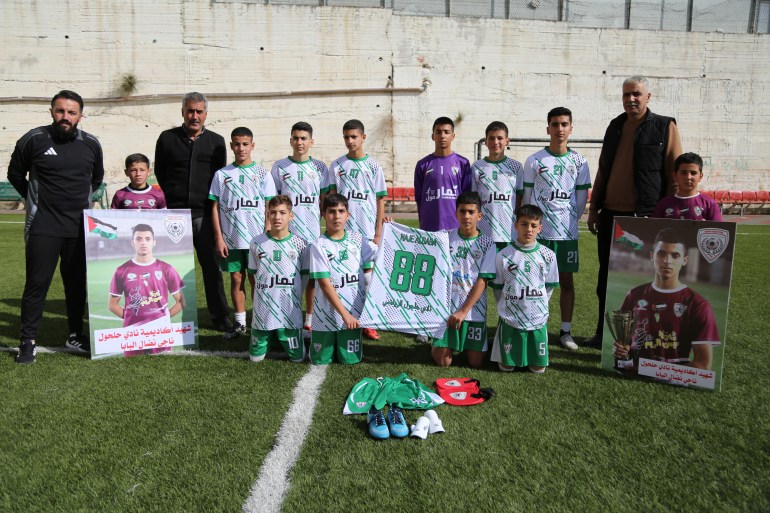
Halhul, occupied West Bank – Like kids the world over, Naji al-Baba dreamed of becoming an international football player, “just like Ronaldo”. But – like his name, which means “survivor” – that was not to be the fate of a boy born in the occupied West Bank. Tall for a 14-year-old, Naji was always smiling and his family remember his kindness, calmness and helpfulness to everyone around him. He was passionate about football – practising for hours at the sports club in Halhul, just north of Hebron. A normal boy who loved to knock a football around with the neighbourhood children after school. Naji’s teammates hold up his football jersey as they remember their star player [Mosab Shawer/Al Jazeera] His mother, Samahar al-Zamara, remembers the moment she realised Naji had grown taller than her and how he never refused a request from a friend or loved one “He grew up before his age,” the 40-year-old says. “When he left us, I felt that I lost a part of me that we’ll never get back.” One month ago, Naji was killed by Israeli soldiers while he was doing the thing he loved – playing football with his friends. Naji’s mother, Samahar al-Zamara, centre, arrives at the hospital with other women from the family the day after her son’s killing to prepare his body for the funeral [Mosab Shawer/Al Jazeera] November 3 – the day Naji died – didn’t seem unusual, his father Nidal Abdel Moti al-Baba, 47, tells Al Jazeera. Advertisement “I went in the morning to work in Bethlehem and Naji went to school. When I returned from work at 12 noon, I found Naji near his school, leaving for home. He got into the truck with me to return home together.” Naji’s sisters had prepared his favourite meal – molokhia with chicken – for lunch. Afterwards, he asked his father to let him go out to play with his friends near his grandfather’s grocery store, which is close to their home. Naji was the fifth of six children, after Sondos, 23; Bashir, 21; Amira, 20; and Mohammed, 16; and ahead of Rataj, 13. He checked in at home after half an hour – a little after 3pm – and then set off to play again. It was the last time the family would see him alive. Nidal al-Baba’s hand was broken when he was violently assaulted by Israeli soldiers responsible for the killing of his 14-year-old son [Mosab Shawer/Al Jazeera] ‘The most difficult 40 minutes of my life’ Just moments later, at about 3:30pm, Naji’s cousin ran to the house, shouting: “Uncle Nidal! Uncle Nidal!” The family listened in horror. Israeli soldiers had arrived and started shooting at the children playing in a nearby wooded area – and Naji had been hit, he said. Desperately hoping he was merely injured – as many have been since the increase in illegal Israeli settlements and incursions by Israeli settlers and the army across the West Bank since Israel’s war on Gaza began – Naji’s father and uncle Samir rushed to the spot where a cluster of Israeli soldiers was standing. “I want my son! I want my son!” Nidal screamed before about 10 soldiers turned on him and his brother and beat them so violently they broke Nidal’s hand. Advertisement As he continued to demand to see his son, he was handcuffed, tied up and left on the ground for more than 40 minutes. The most difficult 40 minutes of his life, Nidal says now. “I heard an officer ask the soldiers to stand in two teams, five on the right and one on the left to carry the body. “That’s when I started screaming: ‘How can you kill a 14-year-old child? What did he do to you? What did he do to you?’” One of the soldiers replied that Naji had been in an area Palestinians are forbidden to enter. Family and friends arrive at the hospital to prepare Naji’s body for his funeral [Mosab Shawer/Al Jazeera] In this confusion: “For a moment,” Nidal says, “I thought: ‘Maybe this child isn’t my son.’ “I watched him being carried on the soldiers’ shoulders towards an army vehicle and… I could see it was Naji. “I recognised him from his shoes which I had bought for him only days before; a pair of black trainers he had longed for. All I could think about was how happy he was when I bought them for him.” The soldiers took Naji’s body away and ordered Nidal and Samir to leave immediately or they would be killed. The family found out later that a Palestinian ambulance was called after two hours and his body was handed over and taken to Halhul’s Abu Mazen Hospital overnight The forensic medical report found that Naji had been hit by four bullets – one in the pelvis, another in the foot, the third through his heart and the fourth in the shoulder. It also found that the boy was left for 30 minutes without medical attention after being shot. Advertisement The next morning, Naji’s family were able to visit the hospital to prepare him for his funeral. Despite his broken hand, Nidal insisted on carrying his son’s body on his shoulder for the funeral, which was attended by hundreds of people from Halhul. Al Jazeera contacted the Israeli Ministry of Defence for comment regarding the killing of Naji al-Baba, but did not receive a response. The funeral procession of Naji in Halhul, West Bank [Mosab Shawer/Al Jazeera] Remembering Naji The family was devastated and could not speak to anyone for nearly a month. In happier times, Naji was the one who took care of his family – fetching blood pressure medicine for his father and keeping an eye on the doses. “I have 20 grandchildren, but he was the most loving among them, affectionate, supportive and helpful,” his grandmother Intisar al-Baba, 70, remembers. In the winter, she says, Naji would keep an eye on the firewood and rush off
S Korea’s Yoon apologises for martial law crisis as impeachment vote looms
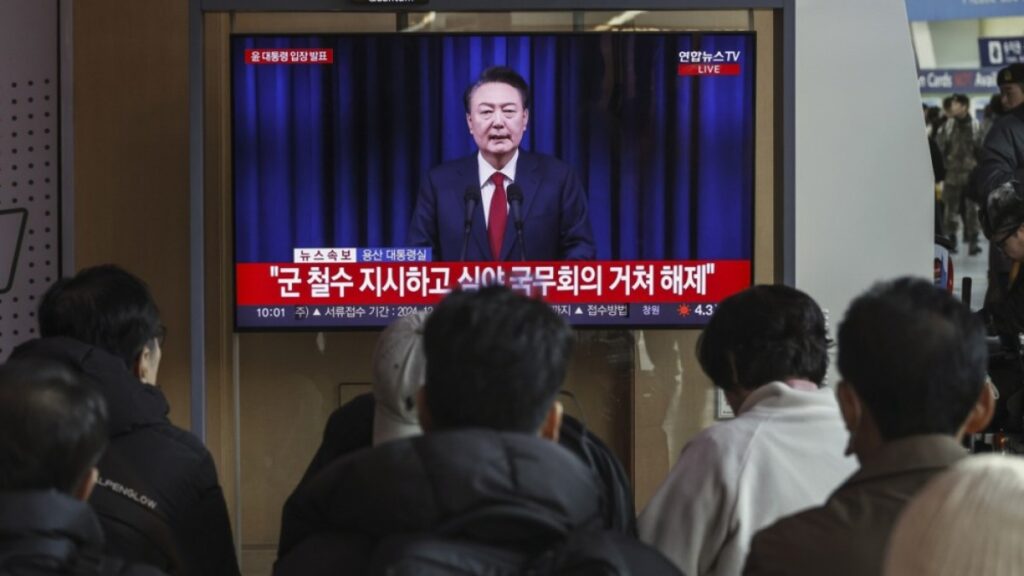
South Korean lawmakers are scheduled to vote on an opposition motion to impeach the president for declaring martial law earlier this week. South Korean President Yoon Suk-yeol has made a public apology for his attempt to impose martial law this week but did not resign, defying intense pressure to step down – even from some in his own party – only hours before a planned impeachment vote. In a televised address to the nation on Saturday, Yoon said he would not seek to avoid legal and political responsibility for his decision to invoke the emergency measure of martial law for the first time in South Korea since 1980. He said his decision was born of “desperation”. “I am very sorry and would like to sincerely apologise to the people who were shocked,” Yoon said, promising there would be no second attempt. “I leave it up to my party to take steps to stabilise the political situation in the future, including the issue of my term in office,” he said, standing in front of the South Korean flag and bowing after he finished his brief remarks. The speech was the embattled leader’s first public appearance since he rescinded the martial law order early on Wednesday, just six hours after it was declared and after parliament defied an armed military raid and police cordons to vote against the decree, which forced the president to revoke his order. Advertisement Han Dong-hoon, leader of Yoon’s People Power Party (PPP), said after the address that the president was no longer in a position to carry out his public duties and his resignation was now unavoidable. On Friday, Han had said Yoon was a danger to the country and needed to be removed from power. On Saturday, Han met with the country’s Prime Minister Han Duck-soo to discuss the crisis, South Korea’s Yonhap news agency reported. Under the constitution, if Yoon resigns or is impeached then the prime minister, who was appointed by Yoon, becomes South Korea’s acting president. If Yoon leaves office before his single five-year term ends in May 2027, the constitution requires a presidential election to be held within 60 days upon his departure. Lawmakers are scheduled to vote at 5pm local time (08:00 GMT) on the main opposition Democratic Party’s motion to impeach Yoon. Opposition leaders said if the motion fails, they plan to revisit it again on Wednesday. Prosecutors, the police and the Corruption Investigation Office for High-ranking Officials have all launched probes into Yoon and senior officials involved in the martial law decree, seeking to pursue charges of insurrection and abuse of power, among others. Many in South Korea are still reeling from the president’s shock announcement late on Tuesday night, which gave the military sweeping emergency powers in order to combat unspecified threats from “North Korean communist forces”, and “to eradicate the shameless pro-North antistate forces”. Advertisement Yoon said martial law was necessary, accusing opposition members in the National Assembly of launching an unprecedented number of impeachment efforts against members of his administration, effectively paralysing key operations of government, and of handling the budget in a way that undermined the fundamental functions of government, including public safety. Yoon’s move plunged Asia’s fourth-largest economy and key US military ally into its greatest political crisis in decades, and threatened to shatter South Korea’s reputation as a democratic success story. Adblock test (Why?)
Russian attacks across Ukraine kill at least 11 people
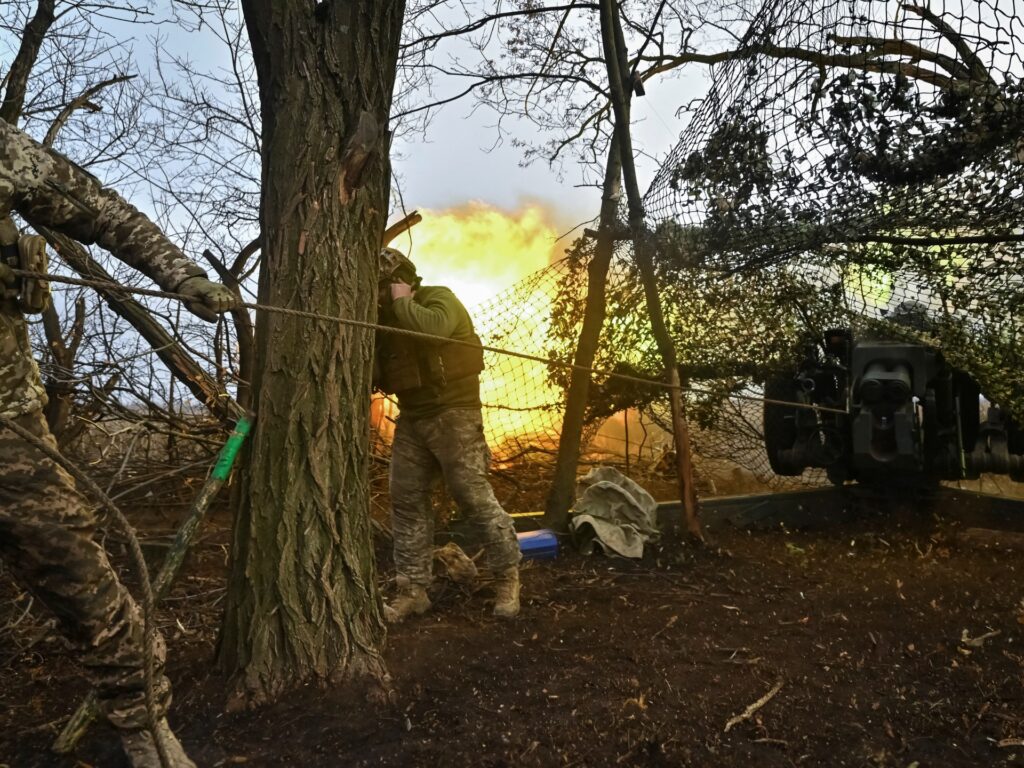
Governor says strike on Ukraine’s Zaporizhia region sets a service station on fire, killing at least nine people. At least nine people have been killed in a Russian attack on Ukraine’s Zaporizhia region, its governor says. Ivan Fedorov said the strike on Friday set a car garage and service station on fire. “Nine dead and six wounded,” Fedorov said in a post on Telegram alongside images of a fire blazing with debris strewn across a street. He added that two children, aged four and 11, were among those hurt. The attack comes after weeks of escalation in the nearly three-year war in Ukraine, where Moscow has stepped up its strikes at the start of winter. The Russian military also struck the central Ukrainian city of Kryvyi Rih on Friday, the local governor said, killing at least two people. The state emergency services agency said at least 16 others were wounded, including a child, while rescuers were searching for one missing person. “A three-storey building was destroyed, residential buildings and cars were damaged,” the agency said on Telegram. Kryvyi Rih, located about 80km (50 miles) from the front lines in southern Ukraine, has been targeted frequently by Russian aerial strikes since the country’s 2022 invasion of its neighbour. Advertisement Friday’s attacks came as Russian President Vladimir Putin met with his Belarusian counterpart, Alexander Lukashenko, in Belarus’s capital of Minsk, where the two leaders signed a mutual defence pact. Speaking alongside Lukashenko, Putin emphasised the new agreement includes the potential use of Russian tactical nuclear weapons deployed to Belarus in response to an aggression. Russia also could deploy its newly developed hypersonic Oreshnik missiles in Belarus in 2025 as it begins to ramp up production, the Russian president said. Moscow unveiled the nuclear-capable weapon last month in a strike on the central Ukrainian city of Dnipro, sharply escalating tensions. “As for the possibility of deploying, to put it bluntly, such formidable weapons as Oreshnik on Belarusian territory, … it will become possible, I think, in the second half of next year,” Putin said on Friday. Russia had already deployed tactical nuclear weapons in Belarus in 2023. Putin and other Russian officials have repeatedly said such weapons deployed to Belarus remain under Moscow’s control, but the secretary of Belarus’s Security Council, Alexander Volfovich, said on Friday that their use would require Lukashenko’s approval. On Thursday, Russian Foreign Minister Sergey Lavrov said the recent use of the Oreshnik medium-range missile in Ukraine sought to make the West understand that Moscow was ready to use “any means” to stave off defeat. The Oreshnik launch on November 21 came after Ukraine carried out strikes against Russian military facilities in the Bryansk and Kursk regions with Western-supplied weapons. Advertisement Ukrainian President Volodymyr Zelenskyy has called Russia’s use of Oreshnik “the latest bout of Russian madness” and appealed to allies for updated air defence systems to meet the new threat. Hypersonic missiles travel at speeds of at least Mach 5 – five times the speed of sound – and can manoeuvre mid-flight, making them harder to track and intercept. Adblock test (Why?)
Food crisis as 1.5 million Syrians could be displaced, says WFP
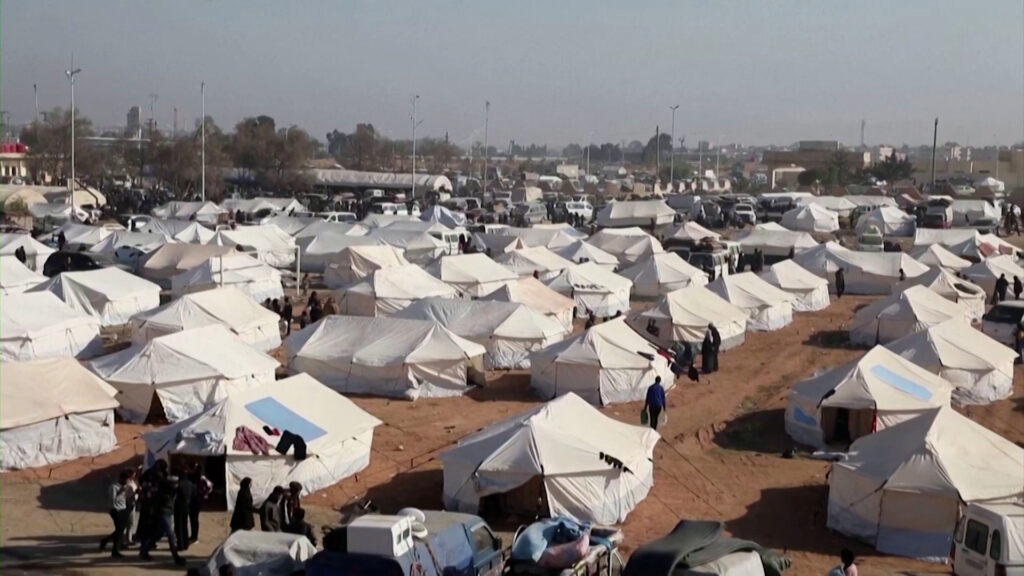
NewsFeed The ongoing fighting in Syria is expected to displace around 1.5 million people, says the UN World Food Programme. This is a breaking point for a food crisis in the country where 12.9 million people are already considered food insecure. Published On 6 Dec 20246 Dec 2024 Adblock test (Why?)
Why is the opposition capture of Hama in Syria so important?
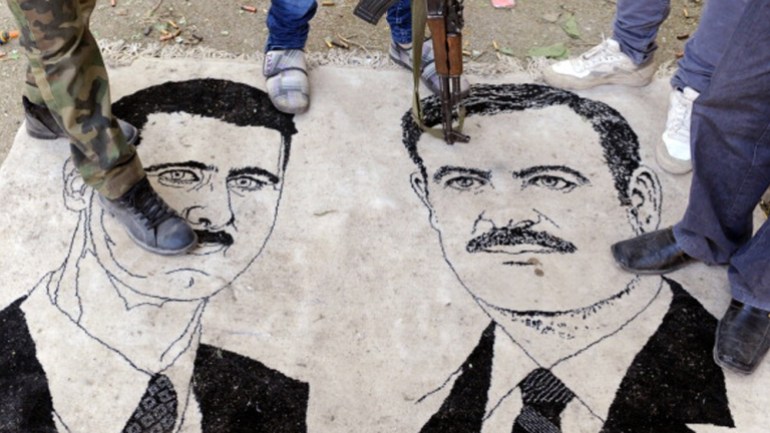
Opposition fighters in Syria captured the strategic city of Hama on Thursday in a matter of hours. Fighters from Hayat Tahrir al-Sham (HTS), which means the Committee for the Liberation of the Levant, led the offensive as they stormed the city. Government forces quickly retreated. Inhabitants appeared to welcome what many described as the liberation of their city from Syrian President Bashar al-Assad’s clutches. One HTS fighter, who did not want to give his name, told Al Jazeera after entering Hama: “Thank God we liberated the city of Hama and now we are securing [it]. With God’s blessing, we will enter the city of Homs next.” Analysts and observers believe antigovernment fighters could capture most of the country, but say Hama has a particular value for the Syrian opposition. This is what we know about the strategic and symbolic significance of the city. Why is Hama so significant in Syria? The city witnessed one of the most brutal acts of repression in Syrian history, analysts and observers say. Advertisement In 1982, al-Assad’s father, Hafez, who was then president, ordered the killing of members of the Muslim Brotherhood who were occupying the city. The targeted people were part of a movement trying to remove the al-Assads from power and had taken over the city after ambushing army troops. They killed senior officers and leaders within the government and looted their homes, according to a report by the European Council for Foreign Relations, a think tank based in the United Kingdom. The group’s operations attracted widespread support and triggered an uprising against the government in the city. The government responded by bombing Hama for several days while Syrian troops moved in to crush the uprising. Syrian opposition fighters standing on a mat bearing drawings of Syrian President Bashar al-Assad and his late father Hafez [AFP] In the following weeks, Syrian forces laid siege to the city, going door to door to kill, torture and arrest any young men they believed to be with the opposition, according to Amnesty International. It is estimated that between 10,000 and 40,000 people were killed in Hama – the precise figure is still unknown. “It was the awareness of the mass arrests and executions that terrified people,” said Robin Yassin-Kassab, an expert on Syria and the co-author of, Burning Country: Syrians in Revolution and War. “[The episode] made Syria a kingdom of silence,” he told Al Jazeera. The 2011 Syrian uprising momentarily shattered that barrier of fear. As protests swept the country, inhabitants of Hama gathered and sang “Yalla erhal ya Bashar,” which translates to “Come on and leave, Bashar!” Advertisement Protesters in Hama carried olive branches and crowds reached more than 500,000 people, activists told Al Jazeera in 2011. What did the Syrian regime do to Hama in 2011? All across Syria, government forces violently repressed demonstrations in 2011, including in Hama. For more than a decade, the regime barrel-bombed cities and arrested and tortured activists and perceived opponents. The government often relied on Alawi, as well as Shia, armed groups, both from Syria and across the region, to crack down on protesters. The Alawi sect in Syria is an offshoot of Shia Islam to which al-Assad and his family belong. Yassin-Kassab said many believe the barrier of fear has been shattered for a second time after rebel groups captured Aleppo and now Hama within days. In Hama, scenes of prisoners of conscience being liberated from the central prison prompted celebrations by Syrians. In the city, inhabitants tore down a statue of Hafez al-Assad. “I presumed Hama is where [the government and its loyalists] would put up a serious fight … but they weren’t capable,” said Yassin-Kassab. “After Hama [was liberated], I thought to myself: ‘The Syrian revolution is back.’” An abandoned Syrian army armoured vehicle sits on a field controlled by Syrian opposition fighters in the outskirts of Hama, on December 3, 2024 [Ghaith Alsayed/AP] Is Hama strategically important? Very much so. The capture of Hama allows rebel groups to keep moving down the Aleppo-Damascus M5 highway towards Homs, which if captured, could split apart the regime’s strongholds. Advertisement Opposition fighters appear to have reached the outskirts of the city, according to reports, while thousands of people have fled. Homs has a larger population of Alawis than Hama, but HTS has reportedly offered assurances that minorities in Syria will not be harmed. The city is effectively a gateway to Syria’s capital, Damascus, as well as to the coastal provinces of Tartous and Latakia, which are Alawi heartlands and where Russian naval and air bases are located. If Homs falls to the opposition, then opposition fighters are likely to push on to try to take Damascus, said Yassin-Kassab. “I do think if Homs falls, then that will be the beginning of the end for the [Assad regime],” he told Al Jazeera. Adblock test (Why?)
Romania’s top court annuls results of presidential election’s first round
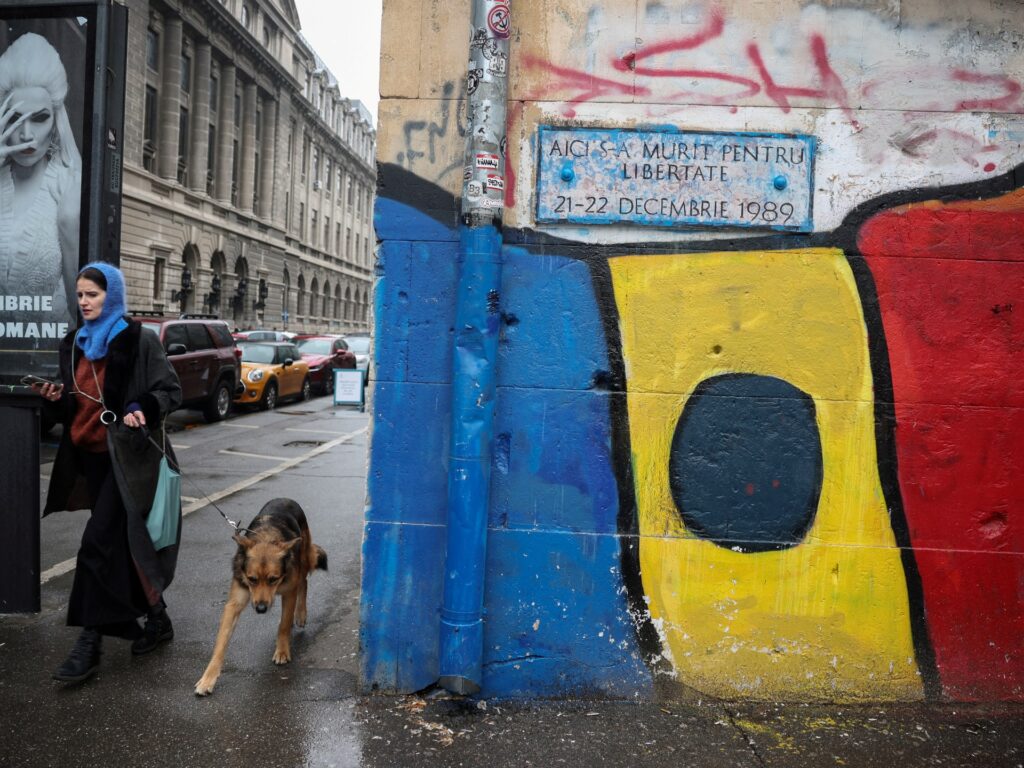
Constitutional Court says move aims to ensure ‘correctness, legality’ of process amid Russian interference claims. Romania’s top court has annulled the results of the first round of the presidential election and says the process must be rerun after allegations that Russia ran a coordinated campaign to promote the far-right candidate who emerged as the winner. The Constitutional Court’s decision on Friday, which is final, came after President Klaus Iohannis declassified intelligence this week that alleged Romania was the target of “aggressive hybrid Russian attacks” during the election period. The alleged effort included thousands of social media accounts that promoted far-right populist Calin Georgescu across platforms such as TikTok and Telegram. The court has decided “to annul the entire electoral process for the election of the President of Romania … to ensure the correctness and legality of the electoral process”, it said in Friday’s decision. Georgescu, a pro-Russian candidate who wants to end Romania’s support for Ukraine amid Russia’s invasion, emerged as the frontrunner in the first-round vote on November 24 despite being a political outsider who declared zero campaign spending. Advertisement He was due to face pro-European Union centrist Elena Lasconi of the Save Romania Union party in a run-off on Sunday. Voting is already under way in polling stations abroad. Prime Minister Marcel Ciolacu said the court’s ruling was “the only correct decision” after the declassified documents showed alleged Russian interference. The intelligence files released on Wednesday were from the Romanian Intelligence Service, the Foreign Intelligence Service, the Special Telecommunication Service and the Ministry of Internal Affairs. In light of their release, the Constitutional Court received multiple legal complaints urging it to annul the first-round vote, but it is not clear yet on what grounds it made the decision. A new date will now be set to rerun the first round. “The electoral process to elect Romania’s president will be fully rerun, and the government will set a new date and … calendar for the necessary steps,” the Constitutional Court said in a statement. Adblock test (Why?)