

Ding, Dommaraju tied after six games at World Chess Championship
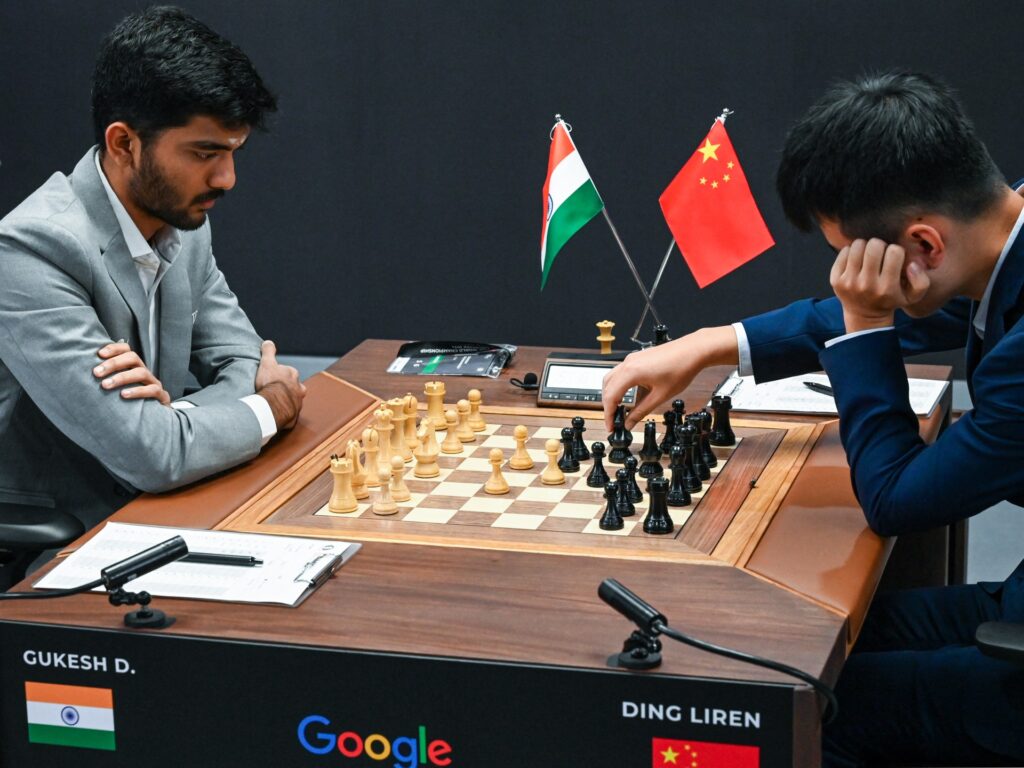
Teen challenger Gukesh Dommaraju of India holds reigning champ Ding Liren after first week of competition. The 2024 World Chess Championship is finely poised after defending champion Ding Liren and teenage challenger Gukesh Dommaraju played out a thrilling 46-move draw in Singapore. The score is tied at three points each after six games, rounding off the first week of the 14-game series. Monday will be a rest day, and play resumes on Tuesday. Ding, a Chinese grandmaster, started strongly on Sunday, putting his 18-year-old Indian challenger on the defensive. But Dommaraju recovered to send the match down into a dramatic double-rook endgame with pawns strewn across the board. A threefold repetition after 46 moves from both players ended the game in a draw after more than four hours. The Indian rejected a chance to end the game in a draw earlier despite being worse off on the board and nearly paid for it. “I just thought there was still a lot of play left in the position, and I didn’t really see much danger for me,” Dommaraju told reporters after the match. “I wanted to play a longer game than just finishing at that point.” Ding, 32, who played with the white pieces, admitted he had let his advantage slip at critical moments. “That’s what I should improve in the next couple of games,” he said after the match. Ding defeated Dommaraju in game one on Monday before their second encounter ended in a draw. Dommaraju hit back by winning game three on Wednesday followed by draws in games four and five. There are 14 match days, and the first player to get 7.5 points is declared the winner. Tie-breaks will take place if the players are tied on seven points after 14 games. Dommaraju is the youngest player in history to compete in the World Chess Championship, and he is looking to surpass Garry Kasparov as the youngest undisputed world chess champion. He said on Sunday that he was happy to have rebounded from his first-game loss but added there is still a long way to the finish. “We are not even halfway through the event,” he said. Adblock test (Why?)
Death toll from sectarian violence in northwest Pakistan rises to 130
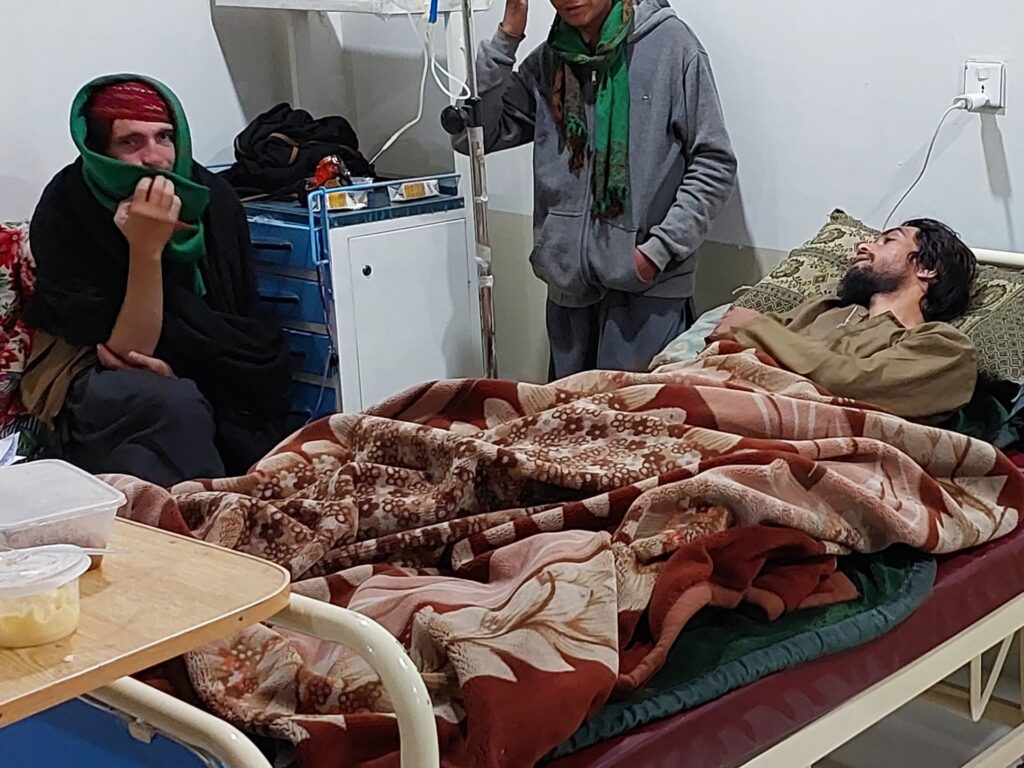
Violence has been ongoing in the region after gunmen opened fire on convoys carrying Shia pilgrims on November 21. Sectarian violence continued in Pakistan’s northwest over the weekend, killing at least 14 people and wounding 27 in the past 24 hours in the Kurram district, located in the Khyber Pakhtunkhwa province near the border with Afghanistan. This brings the death toll from fighting over the last 10 days to at least 130, with 200 people wounded, according to officials on Sunday. Violence has escalated in the region since November 21, when gunmen opened fire on convoys carrying Shia pilgrims. The attack killed 52 people, including women and children. No group has claimed responsibility for the assault. Kurram is the only district in Pakistan where Shia make up the majority of the population, in contrast to the rest of the country, where Sunnis are the majority. Waves of violence have been unfolding since July, when tensions between Shia and Sunni tribes flared over a land dispute. The Pakistani government has made efforts to ease tensions. On November 24, government officials brokered a seven-day ceasefire, but it failed to hold. This week’s death toll marks a significant escalation. The Human Rights Commission of Pakistan reported that 79 people were killed between July and October due to sectarian violence. Javed Ullah Mehsud, Kurram’s deputy commissioner, said talks are under way with tribal elders to negotiate a new ceasefire, and that security personnel have been deployed to enforce peace. The closure of the main highway connecting the city of Parachinar with the provincial capital Peshawar has resulted in shortages of basic necessities like food, fuel, and medicine. Despite the violence, Mehsud said authorities have restored internet and mobile services in the area. The fighting comes amid an already tense period in Pakistan, as violence surges across the country. In addition to the Shia-Sunni clashes in Kurram, at least 245 people have been killed in attacks and clashes nationwide in November, according to data released by the Pakistan Institute for Conflict and Security Studies (PICSS), an Islamabad-based think tank. The report found that 127 of the victims were members of armed groups, 68 were security personnel, and 50 were civilians. Adblock test (Why?)
Syrian rebels push towards Hama as government forces launch counterattacks
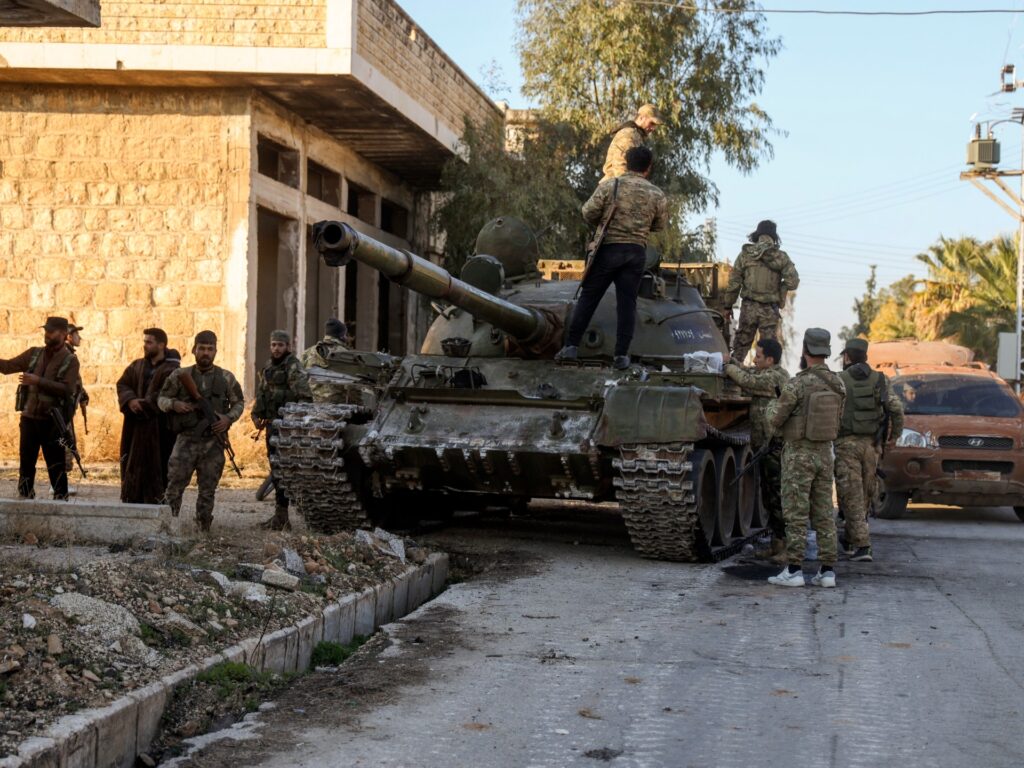
Rebel groups in northwestern Syria say they are pushing towards the city of Hama after taking control of nearby Aleppo in a lightning offensive that started last week. The attempted southern advance on Sunday comes on the fifth day of the surprise rebel offensive as Syrian and Russian forces have launched counterattacks, reportedly pounding opposition-controlled Idlib province and Aleppo with air attacks since Saturday. Government forces under the control of Syrian President Bashar al-Assad have also been fortifying the northern province of Hama, according to the Syrian state news agency, SANA. It reported the army overnight pushed back opposition fighters in its northern countryside. Forces there were being resupplied with heavy equipment and rocket launchers, according to SANA. On Sunday, United Nations special envoy to Syria, Geir Pedersen, appealed for all stakeholders in the conflict to immediately seek a political resolution. “The latest developments pose severe risks to civilians and have serious implications for regional and international peace and security,” he said. The fighting marks the most significant turn in years in the Syrian war, which began with popular uprisings across the country in 2011. Since 2020, the front lines had largely been stagnant with an array of rebel groups largely contained to a small portion of Idlib province. But on Friday, opposition fighters led by Hayat Tahrir al-Sham (HTS) entered Aleppo, prompting government forces to withdraw from the strategically significant city of more than 2 million people. The rebels have since claimed several strategic victories, including taking control of the supply-line town of Khansir, Aleppo Industrial City, Aleppo’s military academy and the field artillery college. Formerly known as al-Nusra Front, the Syrian branch of al-Qaeda, HTS has distanced itself from the group while becoming the strongest opposition movement in northwestern Syria. It is still considered a “terrorist” organisation by the United States, Syria and Russia. Push towards Hama In his first public comments since the start of the offensive, released late on Saturday, al-Assad said his forces will continue to defend the government’s “stability and territorial integrity against terrorists and their supporters”. He said Syria is able to defeat the rebel groups no matter how much their attacks intensify. But reporting from the Turkish-Syrian border, Al Jazeera’s Sinem Koseoglu said rebel forces remained on the outskirts of Hama and are “trying to counter the Syrian government forces there”. “The villages, towns that have been taken by the opposition, sometimes the Syrian government forces take them back,” she said. “So there is an exchange of [control]. Still, it’s very dynamic, very volatile on the ground.” The government said air strikes on opposition-controlled areas were targeting weapon depots and rebel strongholds. However, the United Kingdom-based war monitor, the Syrian Observatory for Human Rights, said Russian strikes hit camps for displaced people on Sunday, killing eight civilians and wounding 50. The Syrian Civil Defence, which operates in opposition-held areas, also reported a series of attacks on Aleppo, including the Aleppo University Hospital in the centre of the city. It was not immediately clear if there were any casualties. Years of war in Syria have created one of the world’s largest displacement crises with thousands more people reported displaced in the latest fighting. Fears of ‘scorched earth’ Speaking to Al Jazeera, Razan Saffour, a British-Syrian human rights activist with family in Aleppo, said that while there is relative stability in Aleppo, there is fear over the response from government and Russian forces. Russia’s military intervention in the country starting in 2015 as well as Iran’s two years earlier helped to turn the tide of the war in favour of al-Assad. Russia’s aerial bombardments of Aleppo then helped government forces take full control of the city in 2016. “We’re speaking about rebel groups who are gaining Syrian territory at a very, very fast pace, but at the same time, they don’t have air defences,” she said. “And when we’ve seen this happen [previously], … the al-Assad regime, Russia and their ally Iran responded with a scorched earth policy.” Iranian Foreign Minister Abbas Araghchi was to travel to Damascus on Sunday, telling reporters Tehran would back al-Assad. Jordan’s King Abdullah II and United Arab Emirates President Sheikh Mohamed bin Zayed Al Nahyan also expressed solidarity with al-Assad in recent calls with him. Still, Saffour said that beyond the confusion and fear, there is also a sense of anticipation among some residents of Aleppo who had lived for years under government control. “We’re very apprehensive, but we’re also very excited and very hopeful to see what’s going to come next,” she said. Adblock test (Why?)
US surgeon breaks down reading stories from Gaza doctors
[unable to retrieve full-text content] US paediatric surgeon Dr Tanya Haj-Hassan broke down in tears at a UN hearing as she recounted stories from Gaza.
Israel to be “more forceful” with any Hezbollah “skirmishes”
[unable to retrieve full-text content] Drew Mikhael on why Israel may consider ratcheting up its military response to any ceasefire violations by Hezbollah.
Loving it: Populist on populist violence
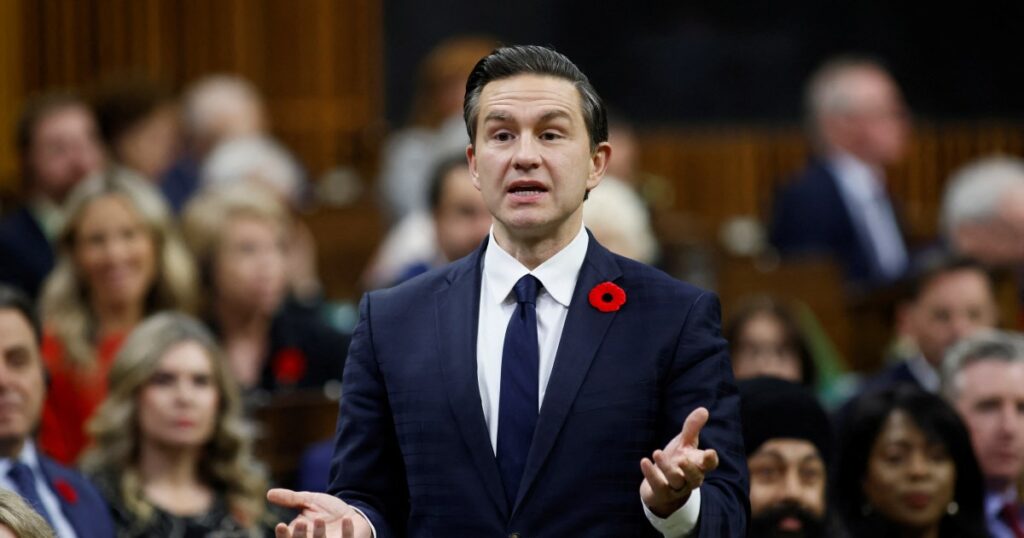
I don’t know about you, but, recently, I have enjoyed watching an entertaining spasm of populist-on-populist violence. Perhaps “violence” is too strong a word. Populist-on-populist “animus” may be a more accurate way to describe how Canada’s two leading populist charlatans have been responding to the threat made by their populist hero – American President-elect Donald Trump – to impose 25 percent tariffs on Canadian goods and services exported to the United States. The glorious spectacle began when Ontario’s semi-coherent premier, Doug Ford, and the slightly more articulate Conservative Party leader, self-styled tough guy and would-be prime minister, Pierre Poilievre, recognised that the inevitable meaning of Trump’s xenophobic-drenched “America First” vow translated into “Canada Last”. So the pair of pedestrian “firebrands” were suddenly obliged to hold hastily arranged press conferences to extinguish the fire from their brands while they chastised and “distanced” themselves from an irrational felon they adore and who, if he imposes the threatened tariffs come his return to the Oval Office early next year, would reportedly devastate the Ontario and Canadian economies. The premier was the first out of the harried rhetorical gate earlier this week, delivering a 15-minute-long anguished reaction to Trump’s proposed tariffs. Ford’s meandering address was resounding proof not only of his flimsy command of the English language, but of a spurned lover’s gooey affection for a raging populist who appears poised to “stab” America’s dearest friend, Canada. As if to convey the gravity of what he was about to say, a pale, shaken-looking Ford took hold of a lectern with both hands to steady himself before delivering his panic-tinged remarks. “Last night,” Ford said, “we received the biggest threat we have ever received from our closest friend and ally [and] from President-elect Trump.” Wow. The “biggest threat … ever”, eh? That grade A hyperbole is sure to register with the undisputed champion of unhinged hyperbole – Donald Trump. After that bit of nonsense, Ford launched into an unhinged diatribe of his own, saying that he was insulted that Trump had “compared” Canada to Mexico. Ford complained that Trump’s indictment of Canada was “unfair” without, of course, explaining why it was unfair. “I can tell you, Canada is no Mexico,” Ford said with all the faux outrage he could muster. Gone, apparently, were the happy days when Canada, Mexico, and the US were considered the “three amigos” who applauded each other’s democratic values and commitment to unhindered trade, culminating in the much-celebrated North American Free Trade Agreement (NAFTA) renegotiated by the aforementioned “three amigos” in 2020. Ford and much of Canada’s amnesiac establishment press – who once giddily extolled the wonderful benefits and virtues of NAFTA – have ditched one of the “amigos” to assuage a thug turned president – again. Oh, how fleeting supposedly cherished friendships and alliances can be. Then, Ford got to the “heart” of the matter, so to speak. “It’s like a family member stabbing you right in the heart,” he said. A curious aside: One has to wonder about the psychological roots of the premier’s halting choice of imagery here. Ford could have opted for the more palpable platitude, that Trump had “stabbed Canada in the back”. Instead, he imagined that America’s soon-to-be commander-in-chief was plunging a knife into Canada’s beating heart – metaphorically speaking. My goodness. Ford said he has travelled frequently to the US and no one he has encountered has ever had an issue with Canada – a country most Americans know little or nothing about other than that we share the same continent. Take that, President-elect Trump! Ford threw Mexico under the bus – I’m sorry, given the premier’s grating lead, I couldn’t resist the cliché – insisting that the “threat” its porous border posed to Canada and the US was “serious”. He urged Prime Minister Justin Trudeau “to do better on our borders”. Showing his mastery of the file, the premier suggested, incorrectly, that 197 million – yes, 197 million – undocumented “foreign nationals” were crossing from Canada into the US. Well done, sir. Predictably and painfully, Ford reminded Trump that – cliché alert – “there is no closer ally, there is no other country in the world that has stood shoulder-to-shoulder with our American … family”. “I am proud to stand in front of our flags, of Canada and the US,” Ford added, almost misty-eyed. It went on like that for another 10 grovelling minutes, with the Ontario premier repeating like a metronome that while he was “insulted” by Trump’s disparaging comments and “unfair” ultimatums, Canada and the US were conjoined twins who needed one another to survive – economically speaking. Finally, Ford agreed that despite those deep and shared patriotic ties, Canada would be obliged to retaliate if Trump makes good on his tariff gambit. One apparently blind, easily impressed columnist praised Ford’s embarrassing performance this way: “Donald Trump’s threat of a 25-per-cent tariff … [was] an opportunity for the Ontario premier to show leadership and he’s making the most of it. Ford’s quick response to the tariff threat ‘struck the right balance between emotion and action’.” That’s not “leadership”, it’s pandering of the most blatant and cringe-worthy order. Speaking of cringe-worthy pandering, Canada’s prime minister in impatient waiting, Poilievre, was more muted in his criticism of his populist-stunt mentor, Trump. An uncharacteristically subdued Poilievre droned on for more than 20 minutes in French and English about how the brewing trade dispute between Canada and the US was Trudeau’s irresponsible fault. All Poilievre could summon from his brimming bag of school-yard epithets was that Trump’s potentially ruinous tariff hike was “unjustified”. Boy, that’s telling him, tough guy. Like the lifelong, calculating politician that he is, Poilievre pivoted instantly to condemn Trudeau for being caught unaware since “President Trump had been talking about it for years on the campaign trail”. According to Poilievre, the villain in this trade drama is not Trump – a convicted villain – but Canada’s prime minister who visited Trump at his Florida Mar-a-Lago resort on Friday to mend, pardon me, fences. Trump should have appointed Poilievre the next US ambassador to Canada given
Georgia’s president will not step down until ‘illegitimate’ election rerun
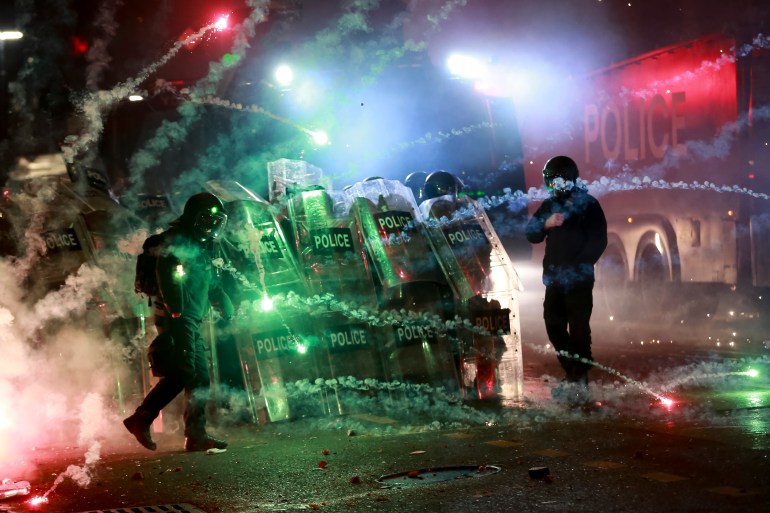
Pro-EU critic of governing Georgian Dream party says she won’t leave office next month as parliament elected fraudulently. Georgian President Salome Zourabichvili said she will not leave office when her term ends because the parliament is “illegitimate”, while the prime minister warned against a “revolution” amid continuing pro-European Union protests. Thousands of Georgians protested on Saturday for a third straight night after Prime Minister Irakli Kobakhidze announced the government will suspend talks on EU accession. The goal to join the 27-member is now enshrined in Georgia’s constitution, but the prime minister – who has been building closer ties with Russia – suspended the talks for four years and accused Brussels of “blackmail”. In an address on Saturday, Zourabichvili, a pro-EU critic of the Georgian Dream governing party, said parliament had no right to elect her successor when her term ends in December, and that she would stay in post. The president, whose powers are largely ceremonial, maintains that the country’s October 26 election, which was won by Georgian Dream with 54 percent of the vote, was fraudulent and therefore renders the elected parliament illegitimate. “There is no legitimate parliament, and therefore, an illegitimate parliament cannot elect a new president. Thus, no inauguration can take place, and my mandate continues until a legitimately elected parliament is formed,” she said. Georgia’s election commission earlier this month confirmed the governing party as the winner, but watchdogs and politicians in the EU and the United States have also suggested an investigation needs to look into potential fraud. Demonstrators use firecrackers against police as police block a street to prevent protesters [Zurab Tsertsvadze/AP] The country’s Interior Ministry said on Saturday it had arrested 107 people in the capital, Tblisi, overnight during protests which saw some demonstrators build barricades and throw fireworks at riot police, who used water cannon and tear gas. The unrest came as Kobakhidze, the prime minister, accused opponents of the government’s move to halt EU accession talks of plotting a revolution, similar to Ukraine’s 2014 Maidan protest, which deposed a pro-Russian president. “In Georgia, the Maidan scenario cannot be realised. Georgia is a state, and the state will not, of course, permit this,” Kobakhidze was quoted as saying by local media. The US State Department said on Saturday it had suspended its strategic partnership with Georgia following the decision by the Georgian Dream party to suspend accession to the EU. “We condemn excessive force used against Georgians rightfully protesting this betrayal of their constitution – EU is a bulwark against Kremlin,” State Department spokesperson Matthew Miller wrote on X. “We have therefore suspended our Strategic Partnership with Georgia.” Georgia gained independence from neighbouring Russia in 1991 after the fall of the Soviet Union, and the two countries have not had any diplomatic relations since a brief 2008 war over Moscow-backed territories of South Ossetia and Abkhazia. But the Georgian Dream party’s efforts to build closer relations with Russia had already stalled the country’s application to join the EU. The bloc has said laws against “foreign agents” and LGBTQ rights are among the main reasons behind the stall, as they curtail human rights and are modelled after legislation in Russia. Adblock test (Why?)
Will Australia’s ban on under-16s using social media work?
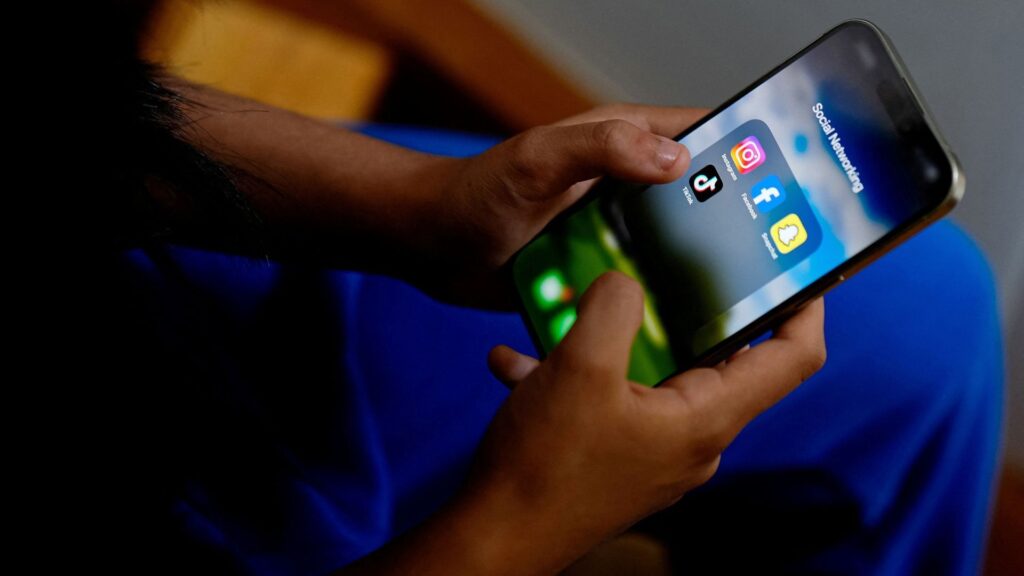
The move has divided opinion internationally on how to protect children online. Under-16s have been banned from using social media under strict new legislation in Australia. The government says it is to protect children, but Big Tech companies and some human rights groups say it will not work. What are the arguments and the views worldwide? Presenter: Bernard Smith Guests: Mark Andrejevic – A professor at Monash University’s School of Media, Film, and Journalism in Melbourne and a specialist on the implications of data mining and online monitoring Nirali Bhatia – A cyberpsychologist and the founder of Cyber BAAP, an anti-cyberbullying campaign in New Delhi Noeline Blackwell – A human rights lawyer and online safety coordinator for the Children’s Rights Alliance in Ireland Adblock test (Why?)
Qatar GP: Formula 1 qualifying – Vestappen gets pole, Piastri wins sprint
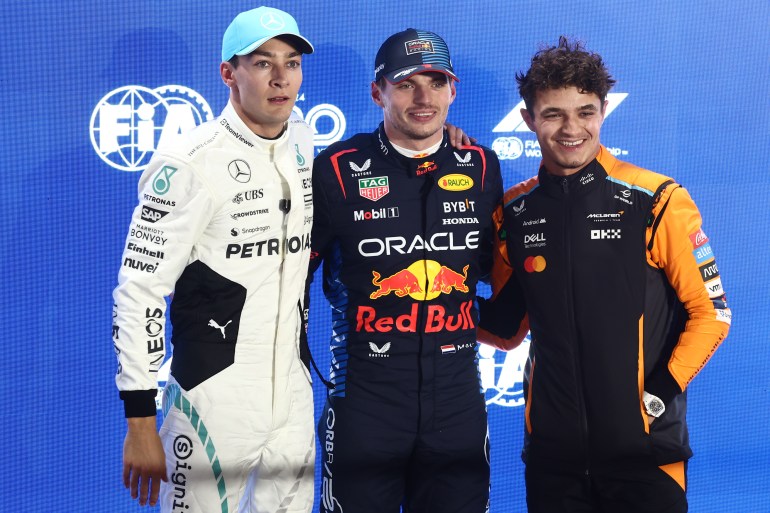
Max Verstappen takes pole position for F1’s Qatar GP while Oscar Piastri wins sprint race in Saturday’s qualifying. Lando Norris ignored team orders as he handed his McLaren teammate Oscar Piastri the win in the sprint race in Qatar on Saturday, while champion Max Verstappen secured pole position for the Grand Prix. With McLaren eyeing its first Formula 1 constructors’ title in 26 years and George Russell close behind for Mercedes, Norris was told by the team over the radio to “finish in this order”, ahead of Piastri. He chose to gift his teammate the win anyway, easing off to the right on the exit of the final corner and then swooping back across in front of Russell, who finished third. “The team told me not to do it, but I thought I could get away with it and we did,” Norris said. “Honestly, I don’t mind. I’m not here to win sprint races. I’m here to win races and the championship, but that’s not gone to plan.” Norris had Brazil on his mind in Qatar Norris was paying Piastri back for doing the same in the sprint race in Brazil when Norris was still fighting Verstappen for the driver’s title. “I made my mind up in Brazil when it happened,” Norris said. “I needed to do something to give it back.” George Russell of Mercedes, Max Verstappen of Red Bull Racing and Lando Norris of McLaren after qualifying ahead of the Formula 1 Grand Prix of Qatar [Jakub Porzycki/NurPhoto via Getty Images] Piastri said he had not expected Norris to take the risk. “I was aware it could happen. I was a bit surprised that with George half a second [away], it did,” Piastri said. “It just shows off our teamwork and the lack of egos within the team.” It continues a season where McLaren’s race tactics have often been a talking point, such as when Norris and Piastri swapped for the lead in Hungary after a lengthy and often awkward radio exchange with the team. On Saturday, Norris started in pole position and kept the lead at the start as Piastri squeezed past Russell for second. As Russell repeatedly attacked Piastri, Norris dropped back instead of building a lead. That put Piastri within one second of Norris, allowing the Australian to use the DRS overtaking aid for extra speed. McLaren teamwork ‘frustrates’ Mercedes Russell said he found the McLaren teamwork “pretty infuriating” while stuck behind Piastri and also objected to what he saw as late moves from Piastri to defend the position. “Hopefully, we can have a proper race [on Sunday] rather than this team orders stuff,” Russell said. The F1 champion was not much of a factor in the sprint but he returned to form in qualifying, taking pole for Sunday’s race from Russell by just .055 of a second on his last run. McLaren’s Oscar Piastri crosses the line to win the sprint race ahead of second place McLaren’s Lando Norris [Altaf Qadri/Reuters] It is his first pole since the Austrian Grand Prix in June, after McLaren, Ferrari and Mercedes all put pressure on the previously dominant Red Bull team in the second half of the season. “Crazy. I mean, honestly, I didn’t expect that,” Verstappen said. “We did change a bit on the car but I never thought it would make such a swing in performance.” Qatar and Abu Dhabi to play decisive role in F1 championship decider Norris was .252 off the pace and lines up third, with Piastri fourth, followed by Ferrari’s Charles Leclerc, Mercedes’s Lewis Hamilton and Ferrari’s Carlos Sainz Jr. McLaren increased its lead over Ferrari in the constructors’ championship to 30 points, and has both of its drivers ahead of the Ferraris on the grid. Teams can earn a maximum 88 more points from the Grand Prix in Qatar and next week’s Abu Dhabi Grand Prix. Red Bull dropped to 67 points behind McLaren in the standings as Verstappen – crowned the drivers’ champion for the fourth time last week in Las Vegas – finished eighth and his Red Bull teammate Sergio Perez was last after a pit stop to change his car’s nose. Adblock test (Why?)
Israel doubles down on its critics
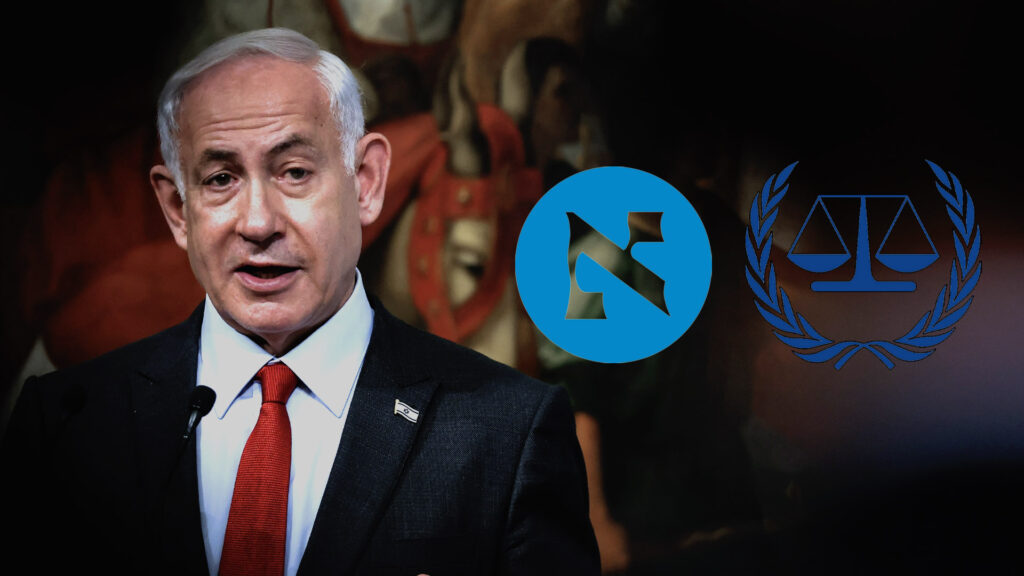
Be it ICC arrest warrants or media criticism, Israel is pushing back hard. Faced with an arrest warrant from the ICC, Prime Minister Benjamin Netanyahu – and much of the Israeli media – reflexively dismissed the move as anti-Semitic. While the walls appear to be closing in on Netanyahu, he is a survivor. He knows how to muddy the waters. His government is also going after one of the few Israeli news outlets critical of the war on Gaza – Haaretz. Contributors:Omer Bartov – Professor of Holocaust and Genocide Studies, Brown UniversityDiana Buttu – Human Rights Lawyer & AnalystDana Mills – Writer, +972 Magazine & Local CallOri Goldberg – Academic & Political Commentator On our radar Following a deadly crackdown on political dissent in Pakistan, citizens experienced a new type of internet shutdown. Ryan Kohls reports on the Chinese-built internet “firewall”, that gives authorities greater control over what they can restrict – right down to specific features of applications. Three months after a student uprising ousted Bangladesh’s authoritarian prime minister, Sheikh Hasina, many news organisations that once toed the line under her administration have begun speaking truth to power. However, as for any transition, challenges remain. The Listening Post’s Meenakshi Ravi reports on Bangladesh’s newly opened media space and the prospect of lasting change. Featuring: Kamal Ahmed – Head, Media Reform CommissionFaisal Mahmud – Editor, Bangla OutlookZyma Islam – Journalist, The Daily Star Adblock test (Why?)