

Syrian army announces temporary withdrawal from Aleppo after rebel assault
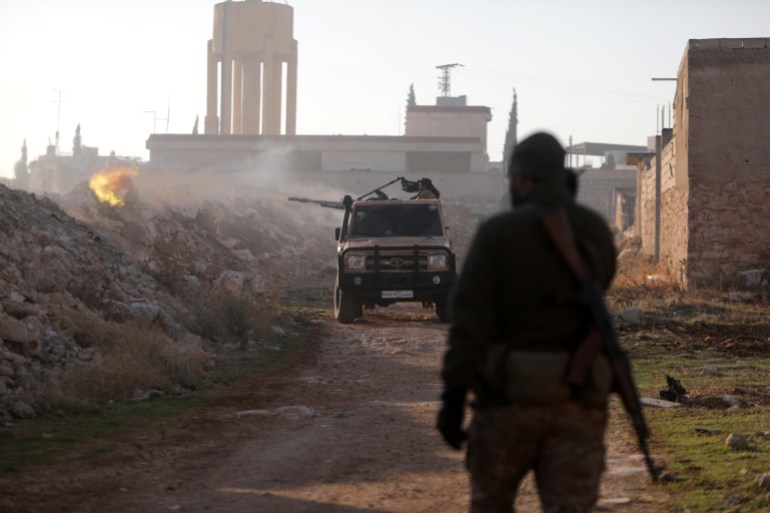
Military says dozens of soldiers killed in attacks in northwest and it was regrouping to launch a ‘counterattack’. Syria’s military has announced a “temporary troop withdrawal” in the northwestern city of Aleppo, where rebel groups launched a surprise offensive on government-held positions for the first time in years. The military said on Saturday that dozens of its soldiers had been killed or wounded in fierce battles with “armed terrorist organisations” in the governorates of Aleppo and Idlib over the previous few days and that it was now regrouping, redeploying troops to strengthen its defence lines as it prepared a “counterattack”. It said that rebel groups had launched “a broad attack from multiple axes on the Aleppo and Idlib fronts”, reporting clashes “over a strip exceeding 100km (60 miles)”. The statement marked the military’s first public acknowledgement that opposition fighters led by the Hay’et Tahrir al-Shams (HTS) group had entered “large parts of neighbourhoods” of Aleppo in the lightning attack that began earlier this week. On Saturday, a witness in Aleppo told Al Jazeera that rebel fighters were “combing” the city in search of soldiers. “Last night they had some prisoners of war, regime soldiers, but they took very good care of them and moved them out immediately so they wouldn’t be in any danger,” the witness said. Fighters fire at Syrian army troops in Rashidin district on the outskirts of Aleppo, on November 29, 2024 [Bakr Alkasem/AFP] People in Aleppo were “confused because they hadn’t been following the news” and some “were “really happy that they could now go back to their homes that they had had to flee years ago”, according to the witness. The rebel assault is the most intense fighting seen in northwestern Syria since 2020, when Russia and Turkiye agreed to a deal to de-escalate the conflict, government forces seizing areas previously controlled by opposition fighters. HTS-led fighters carried out a surprise sweep through government-held towns and reached Aleppo nearly a decade after having been forced out of the city, opening the way for civilians to return to their homes. The military had earlier claimed it repelled the major offensive, saying it had inflicted heavy losses on the rebels, who reported they had seized control of dozens of towns and villages in Aleppo and Idlib. Syrian authorities closed Aleppo airport and cancelled all flights on Saturday, according to three military sources cited by the Reuters news agency. The rebels also captured the Abu al-Duhur airbase in the Idlib governorate, which Al Jazeera’s Resul Serdar said was “symbolically … extremely important”. Syrian opposition fighters gather around a fire to keep themselves warm at Saadallah al-Jabiri Square in the city of Aleppo, on November 30, 2024 [Mahmoud Hasano/Reuters] Upheaval James Dorsey, a specialist in Middle East politics at Singapore’s Nanyang Technological University, told Al Jazeera that opposition fighters launched their offensive now to take advantage of the current upheaval in the region. Al Jazeer’s Serdar explained that the Syrian government of President Bashar al-Assad was caught off guard by the swift rebel operation, attributing their rapid advance to Hezbollah and Iran being distracted by the conflicts in Gaza and Lebanon. “Now the question is: will the regime or Russia or Iran let HTS have full control of the second-largest city in Syria, or are they going to hit back?” asked Serdar. While there are still skirmishes in southern Aleppo, the central and northwestern parts of the city, never before captured by the rebels, are now fully under their control, said Serdar. “That this happened in just four days is unbelievable.” HTS has become the strongest opposition group in northwestern Syria, controlling much of Idlib province near the Turkish border. It is considered a “terrorist” organisation by Syria, the United States and Russia. On Friday, Syrian state television said Russia was providing Syria’s military with air support. Adblock test (Why?)
US approves $385m arms sale to Taiwan
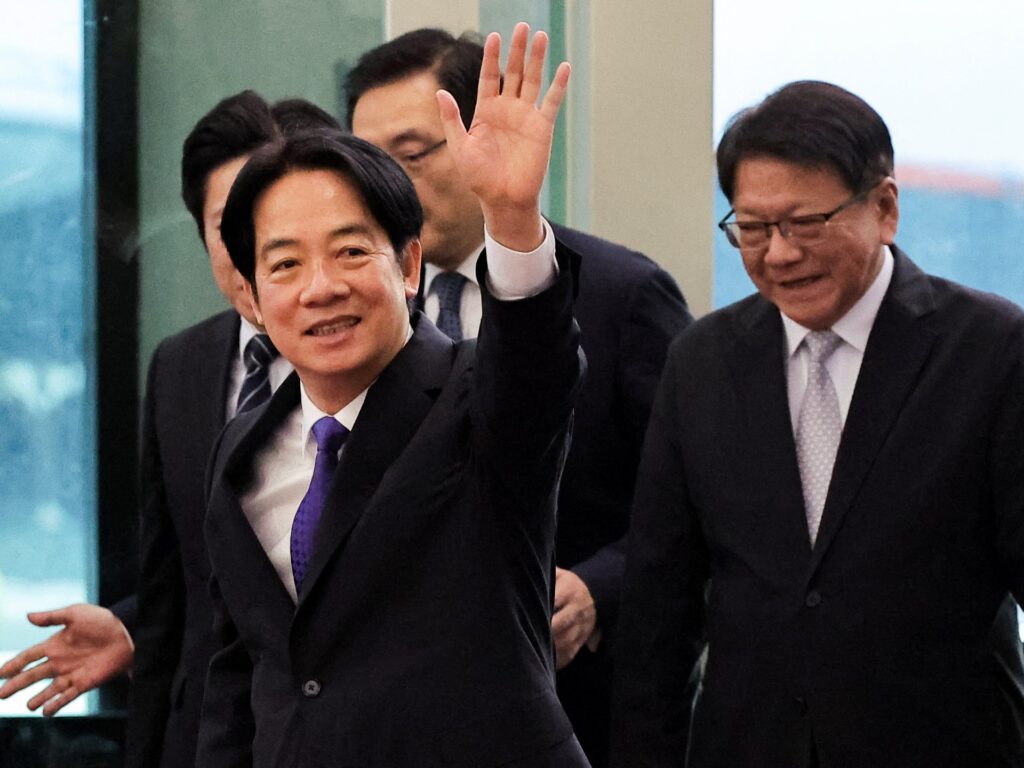
Deal includes spare parts for fighter jets and radar systems as President Lai heads to Pacific, with stops in US. The United States has signed off on $385m in new weapons sales to Taiwan, the latest sign of deepening military ties that have unsettled China. The US expects to begin delivering the military equipment, including spare parts for fighter jets and radar systems, in 2025, the US Defense Security Cooperation Agency (DSCA) said in a statement on Friday. The sale approved by the US Department of State will ensure Taiwan can “meet current and future threats by maintaining the operational readiness” of its F-16 fleet, said the DSCA. On Saturday, Taiwan’s President William Lai Ching-te set off for a trip to the Pacific, with planned stopovers in the US that have prompted fury from China. China claims the self-ruled democracy as its own and has not ruled out the use of force to achieve its goal of unification. It has long opposed US arms sales to Taiwan. While heading on Saturday to Pacific allies Marshall Islands, Tuvalu and Palau, Lai will make stops in the US state of Hawaii and territory of Guam on his first foreign trip since taking office in May. In a speech shortly before takeoff, Lai said the tour “ushered in a new era of values-based democracy” and he thanked the US government for “helping to make this trip a smooth one”. China’s Ministry of Foreign Affairs said it opposes Taiwan’s leaders “scurrying” to the US, which despite lacking formal diplomatic ties is the island’s biggest arms supplier and backer. The US should “handle the Taiwan issue with utmost caution, unequivocally oppose Taiwan independence, and support the peaceful reunification of China”, said ministry spokesperson Mao Ning. The State Department responded that it sees “no justification for a private, routine, and unofficial transit to be used as a pretext for provocation”. ‘Consolidate our security partnership’ This is the 18th arms deal announced during the tenure of US President Joe Biden, according to Taiwan, which has increasingly sought to broaden military ties with its ally. Last month, the US approved a $2bn arms sale package for Taiwan, including advanced surface-to-air missile systems and radar. The Ministry of National Defense in Taipei “expressed gratitude” to the US for the weapons support and said it was determined to strengthen its defences in the face of China’s military pressure. “Taiwan and the United States will continue to consolidate our security partnership,” it said. China has ramped up military pressure on Taiwan in recent years with near-daily deployments of fighter jets and warships around the island. On Saturday, Taiwan’s defence ministry said 18 Chinese military aircraft and seven naval vessels as well as two balloons were detected in the 24 hours to 6am (22:00 GMT Friday). Adblock test (Why?)
What’s next after Syrian opposition forces’ surprise offensive?
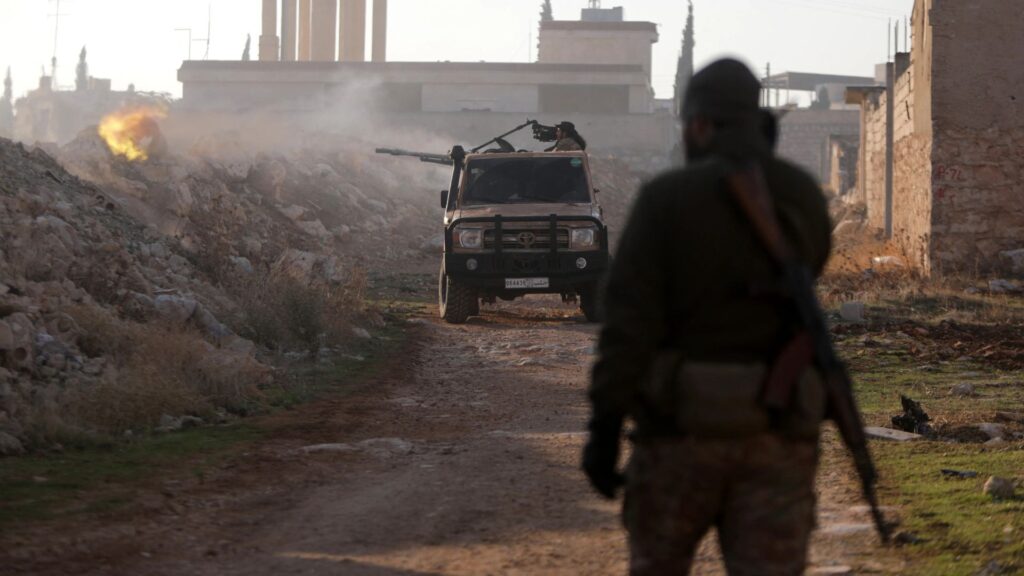
Fighting around Aleppo and Idlib reaches its most intense level in years. Anti-government fighters in northwest Syria launch their biggest offensive in years. The fighting is the most intense since the height of the war almost a decade ago. So why has the violence flared up again, and why now? Could it escalate? Presenter: Bernard Smith Guests: Qutaiba Idlbi – Senior policy adviser at the American Coalition for Syria Omer Ozkizilcik – Director of Turkish studies at the Omran Diraset research organisation Caroline Rose – Director at the New Lines Institute, a non-partisan think tank in Washington, DC Adblock test (Why?)
Fear of Trump tariffs drive shoppers for Black Friday deals
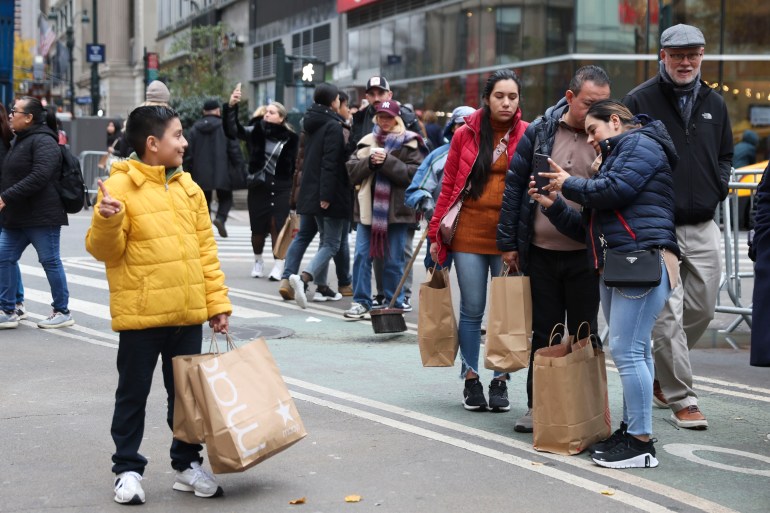
Brushing snowflakes off her hair, Teagan Hickson walked into a Walmart Supercenter in Fort Wayne, Indiana, with hopes of picking up a few holiday deals on Black Friday. The first thing the mother of two spotted: a pallet stacked high with Gourmia digital air fryer ovens for $50 each. Her sister Jordan had been wanting one, she said, but money was tight right now for everyone in her family. She worried about expenses next year after reading posts on Facebook about price hikes if President-elect Donald Trump’s planned tariffs go into effect in January. “I’m trying to not spend too much,” said Hickson, 43. “I don’t want to add to my credit cards, but I don’t want to pay more for stuff next year.” As retailers reopened United States stores after the American Thanksgiving holiday, some locations drew clusters of shoppers. People were eager to see stores’ Black Friday discounts, often comparing them to rivals’ prices for similar merchandise online. Weighing on the minds of many Americans: Should prices rise in 2025 as a result of Trump’s move to implement new tariffs on some US imports, consumers like Hickson could feel the impact at grocery stores and restaurants, potentially driving up their living costs. At the Walmart, Hickson called her husband, Josh, who was sitting in front of his computer at home and ready to compare prices in the store with what they could find online. “Baby, this looks pretty nice,” she told Josh. “What’s it online?” A few seconds later, Josh found a similar model on Amazon for double the price. She grabbed a box, put it in her cart, and headed deeper into the big-box store. Walmart, which operates 4,700 US stores, this year is offering a variety of deals on Samsung TVs, Dyson vacuum cleaners, Lego and Hot Wheels toys, Levi’s jeans, and air fryers, although its pre-Black Friday discounts began on November 11. Cristal Lopez pushed a cart full of clothing and a couple of sling tote bags through the aisles of a North Bergen, New Jersey, Walmart Supercenter, looking for holiday clothes for her two kids.“I find the prices pretty much the same as last year,” she said, adding that she still had some shopping to do to finish her holiday list. She intends to spend $1,000 to $2,000 total – same as last year – mostly on clothing. Shoppers were expected to buy more merchandise online on Friday, and with purchases of $10.8bn, up nearly 10 percent from a year ago, according to projections from Adobe Analytics. People looking to upgrade their TVs may find the best deals on Friday, with discounts peaking at 24 percent off the listed price, according to Adobe’s analysis of retailers’ online prices. Macy’s opened its door three hours earlier than its normal time [File: Heather Khalifa/AP Photo] ‘Spontaneous purchases’ Still, the US retail trade group, the National Retail Federation, expects roughly 85.6 million shoppers to visit stores this year, up from 76 million last year. Shoppers have only 26 days between Thanksgiving and Christmas, against a more leisurely 31 days last year. Adding pressure for retailers is inflation-fatigued shoppers’ reluctance to splurge unless they get good deals. “With fewer days to shop, consumers are more likely to make spontaneous purchases, contributing to retail growth during the holiday season,” said Marshal Cohen, chief retail adviser at Circana, a research firm. Evelyn Contre, 49, waited in a 20-person line at a Lululemon store with her two daughters. Contre had already browsed the websites of Abercrombie & Fitch and Lululemon on Thursday for Black Friday deals before heading into Crabtree Valley Mall in Raleigh, North Carolina, on Friday. Crowds were sparse early at a Macy’s store in Santa Barbara, California, despite Black Friday discounts reaching 50 percent for home goods and apparel and an early opening of 7am, three hours earlier than typical. John Dillard, 66, was shopping for Levi’s 504 jeans that he said his daughter had suggested for him. Macy’s was offering them for 40 percent off their usual $60 price. Dillard, a local retiree, said he was planning to attend a holiday party and needed new clothes for the occasion. Dillard, who said he had already bought men’s dress pants at Macy’s that were discounted to $35 from $95 and a pair of black men’s dress shoes for just $25, said he typically eschews in-store shopping to avoid the crowds. Deals were important to him because he planned to only buy what he needed for the party. “How often am I going to wear these clothes?” he said. Target cut prices by $100 on products such as a 75-inch Westinghouse TV and Nintendo Switch gaming console, and took more than 50 percent off Barbie dolls, Keurig coffee machines and KitchenAid mixers, deals which started on Thanksgiving and run through Saturday. The retailer is selling a new Taylor Swift Eras Tour book, and exclusive Wicked-related products for Target Circle members. “Black Friday is just not what it used to be,” said Hoss Moss, a 58-year-old chef from New Jersey, who stood outside a Target store for the first time in 15 years to buy Swift’s book for his teenage daughter. “Grocery prices are expensive and … even clothing is not at a price you would get before.” He said his family of four plans to spend $2,000 to $3,000 on gifts this year, mostly at Macy’s and Lululemon. Adblock test (Why?)
Leicester sign van Nistelrooy as manager after his impressive Man Utd spell
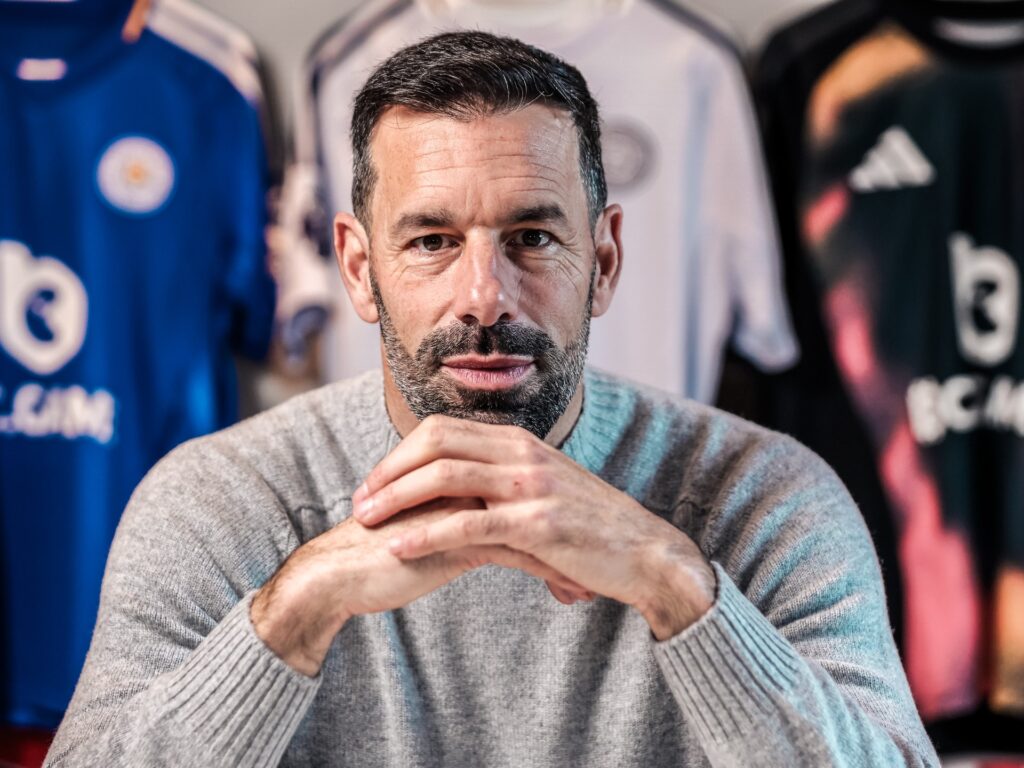
Leicester City appoint Ruud van Nistelrooy as their new manager following Dutchman’s release by Manchester United. Leicester City hired Ruud van Nistelrooy as their manager on Friday following his impressive spell as interim coach at former club Manchester United, which included two wins over his new team. The 48-year-old van Nistelrooy joined on a deal until June 2027 and will take over a team in fifth-to-last place in the English Premier League after promotion last season. Van Nistelrooy, a former Netherlands striker who played club football for Man United and Real Madrid, joined United’s coaching staff in July as an assistant to compatriot Erik ten Hag. After Ten Hag was fired last month, Van Nistelrooy took charge on an interim basis and had three wins and a draw in his four games at the helm before Ruben Amorim was hired as Ten Hag’s full-time replacement. Among those victories was a 5-2 thrashing of a weakened Leicester team in the English League Cup and a 3-0 win over the Foxes in the Premier League. “I’m proud, I’m excited. Everybody that I speak to about Leicester is enthusiastic,” Van Nistelrooy said. This will be van Nistelrooy’s second senior full-time managerial role, having led PSV Eindhoven for almost a season and winning the Dutch Cup before quitting near the end of the 2022-23 campaign. “Ruud’s experience, knowledge and winning mentality will undoubtedly bring great value to us,” Leicester chairman Aiyawatt Srivaddhanaprabha said, “and we look forward to supporting him in achieving success for our fans and our club.” Leicester, which fired Steve Cooper last weekend after just two wins from its 12 league games so far, plays Brentford away on Saturday. Van Nistelrooy will not be in charge then but will be in attendance, with the team being led by first-team coach Ben Dawson. Dawson said the departure of Cooper was “a little bit unexpected” and the players “shared some of that unexpectedness early in the week”. He added the club’s hierarchy “dealt” with the fallout from a Christmas party that Leicester’s players had in Copenhagen last weekend, images of which have circulated on social media. OInone video, a sign bearing the words “Enzo I miss you” was carried around a nightclub where Leicester’s players were partying. Cooper’s predecessor was Enzo Maresca, who joined Chelsea in the offseason. Cooper was fired a day after the party in Copenhagen. British newspaper The Daily Telegraph reported this week that Leicester’s Thai owner, Aiyawatt, held a meeting with the players after being left disappointed by the footage. “First and foremost, the lads had a couple of days off and it’s their decision what they do with their time off,” Dawson said. “The issue you mentioned, the club have dealt with pretty quickly early in the week. Everybody has moved on and the lads have been really professional and worked well.” Adblock test (Why?)
Iran plans to install 6,000 centrifuges to enrich uranium, IAEA says
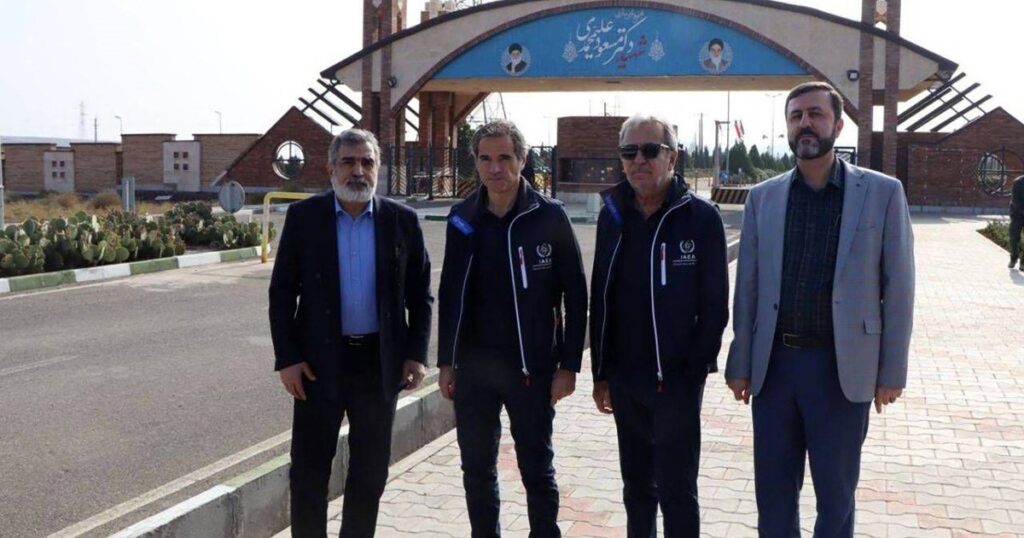
UN nuclear watchdog’s report comes as Iran prepares to hold talks with European nations over its nuclear programme. Iran has informed the International Atomic Energy Agency (IAEA) that it plans to install more than 6,000 new centrifuges to enrich uranium, the United Nations nuclear watchdog said. The report comes as Iran prepares to hold talks with Britain, France and Germany in Geneva on Friday over its nuclear programme. By also bringing more centrifuges already in place online, the confidential report outlined what Iran meant following a censure by the IAEA’s 35-nation Board of Governors passed last week at the request of Britain, France, Germany and the United States. Iran had previously agreed to a demand by the UN agency to cap its stock of high-enriched uranium up to only 60 percent purity, well below the weapons-grade enriched level of 90 percent needed for a bomb. According to the IAEA, Iran also intends to install 18 extra cascades of IR-4 centrifuges at that Natanz plant, each with 166 machines, the greater capacity meaning that it can enrich uranium at a faster pace, potentially increasing the risk of nuclear proliferation. Tehran has repeatedly denied seeking nuclear weapons. The talks in Geneva will take place two months before US President-elect Donald Trump’s return to the White House. During his first term, Trump pursued a policy of “maximum pressure” against Tehran, which eventually resulted in Washington’s unilateral decision to withdraw from the 2015 Iran nuclear deal with world powers. Iran stepped up its nuclear enrichment in response. Majid Takht-Ravanchi, a deputy to Foreign Minister Abbas Araghchi, will represent Iran at the meeting. On Thursday, he met with Enrique Mora, the deputy secretary-general of the European Union’s foreign affairs arm. Mora said on social media platform X that they held a “frank exchange … on Iran’s military support to Russia that has to stop, the nuclear issue that needs a diplomatic solution, regional tensions (important to avoid further escalation from all sides) and human rights”. Kazem Gharibabadi, Iran’s deputy foreign minister for legal and international affairs who was also at the meeting, said the 27-nation bloc “should abandon its self-centred and irresponsible behaviour” on a range of issues including the Ukraine war and the Iranian nuclear issue. The EU’s “complicit behaviour towards the ongoing genocide in Gaza” leaves it without moral authority to “preach” on human rights, Gharibabadi said. Israeli Prime Minister Benjamin Netanyahu said on Thursday that his country would do “everything” to stop Iran from acquiring a nuclear weapon after Araghchi warned Tehran could end its ban on developing one if Western sanctions are reimposed. Adblock test (Why?)
Australian children react to social media ban for minors
NewsFeed We’ve been talking to children in Australia about the country’s new social media ban for under 16s. Reporting by Soraya Lennie. Published On 29 Nov 202429 Nov 2024 Adblock test (Why?)
UK MPs face crucial vote on divisive assisted dying bill
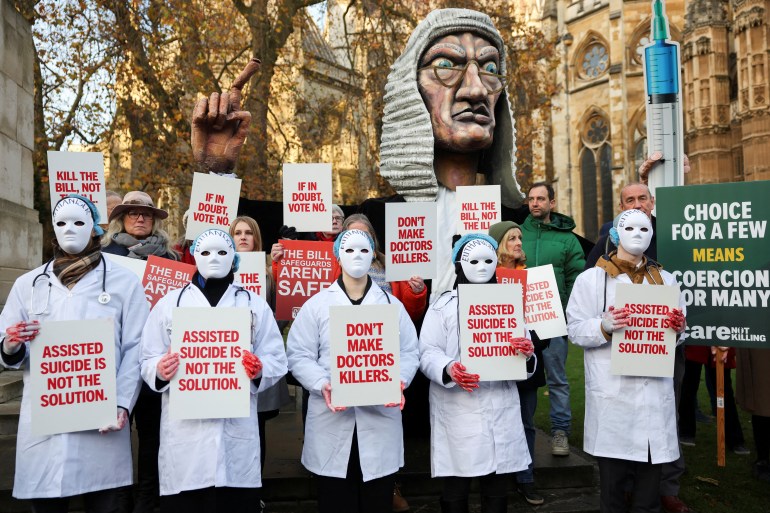
Many politicians are still undecided on whether the terminally ill should be allowed to end their lives. Lawmakers in Britain are debating divisive legislation on assisted dying for terminally ill patients ahead of what is expected to be a knife-edge vote of conscience. Parliament started a second reading of the Terminally Ill Adults (End of Life) bill on Friday, assessing whether mentally competent adults with an incurable illness who have a life expectancy of less than six months should be allowed to end their lives with medical help. Opening the debate, Labour MP Kim Leadbeater, who proposed the measure, said changing the law would give terminally ill people “choice, autonomy and dignity at the end of their lives”. Those in favour of the bill, which would apply in England and Wales, argue that it is about shortening the death of those who are terminally ill and giving them more control. Opponents believe vulnerable, ill people will feel pressured to end their lives to avoid being a burden to their families. “Let’s be clear, we’re not talking about a choice between life or death, we are talking about giving dying people a choice about how to die,” Leadbeater said, as supporters of both sides gathered outside parliament. Two polls last week indicated that a majority of people back the proposed legislation, but many members of parliament indicated that they had yet to make up their minds ahead of the free vote, which will see them casting votes according to their conscience rather than along party lines. Protesters opposed to the bill hold placards as they gather outside parliament in London [Mina Kim/Reuters] Leadbeater has said that the bill would include “the strictest safeguards anywhere in the world” – any patient’s wish to die would have to be signed off by a judge and two doctors. But support in parliament appears less secure, with some MPs saying the current proposal lacks detail and needs to be underpinned by more research to study the legal and financial implications of a law change. Speaker Lindsay Hoyle rejected a bid on Friday by a group of MPs to halt further debate on the bill. They had previously lodged a proposed amendment, which could stop the bill from progressing to a vote. If MPs vote in favour of the bill, it will proceed to the next stage of the parliamentary process, and face further votes in 2025. If the United Kingdom eventually passes the law, it will join other countries like Australia, Canada and some US states in launching the major social reform. Since the 1961 Suicide Act, it has been illegal in England and Wales to encourage or assist suicide, and those found guilty face up to 14 years in prison. Adblock test (Why?)
Could the Israel-Hezbollah ceasefire deal be a step towards regional peace?
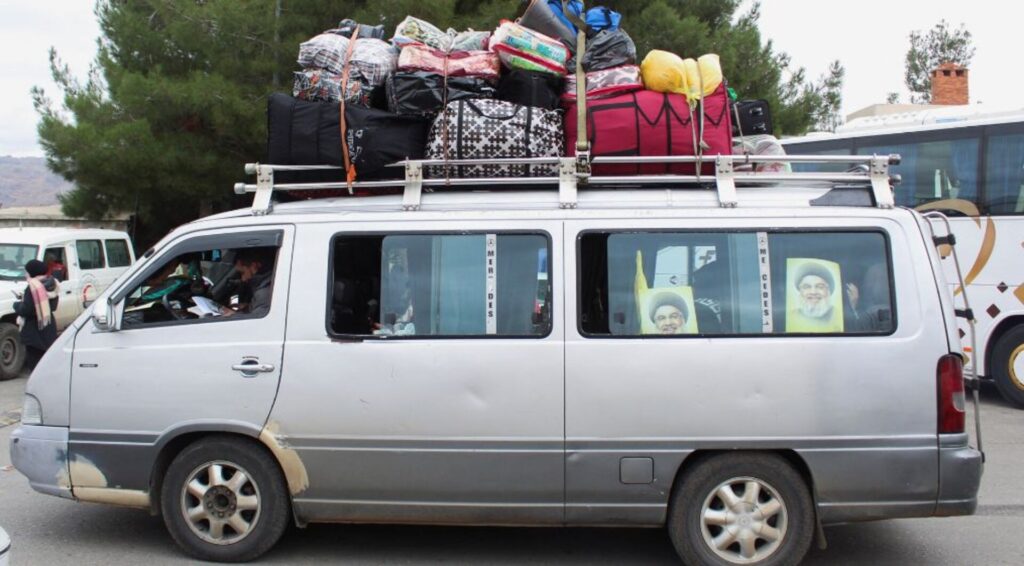
Pause in hostilities renews a push to end Israel’s genocide in Gaza. A day after announcing the Lebanon ceasefire, US President Joe Biden said he would resume efforts with international partners to end Israel’s war on Gaza. Qatar and Egypt have shown a willingness to join the negotiations. The Palestinian armed group Hamas has indicated it is open to discussions about an agreement that would lead to the withdrawal of Israeli troops from Gaza. But the Israeli military has continued to bombard the coastal enclave. Could the pause in hostilities in Lebanon be a sign of things to come in the region? Presenter: Dareen Abughaida Guests: Nadim Houry – Executive director, Arab Reform Initiative Mohammad Marandi – Professor of American studies, University of Tehran Akbar Shahid Ahmed – Senior diplomatic correspondent, HuffPost Adblock test (Why?)
Rain and protest dampen Macy’s annual Thanksgiving Day parade in New York

Pelting rain dampened the 98th annual Macy’s Thanksgiving Day parade in the United States, as it cut across New York City on Thursday. But for a second year in a row, the giant balloons and party floats had to navigate another obstacle: protesters. As the procession made its way down West 55th Street, a group of pro-Palestinian demonstrators entered the parade route, briefly blocking a gigantic balloon representing McDonald’s restaurant mascot, the red-headed clown Ronald McDonald. They sought to remind parade-goers of the human toll of Israel’s ongoing war in Gaza, which has killed at least 44,330 Palestinians, many of them women and children. In the middle of the street, the protesters unfurled a banner that read, “Don’t celebrate genocide! Arms embargo now. Free Palestine!” Several sat cross-legged on the wet pavement, holding up small Palestinian flags. McDonald’s, the fast-food chain whose balloon they blocked, has been the subject of an ongoing boycott after a subsidiary in Israel announced free meals for Israeli military members after the start of the war. The chain, however, has distanced itself from that effort, pointing out that the decision was made by a local franchise, not by the company’s global leadership. Police quickly arrested 21 of the protesters on Thursday, dragging some out of the street in order to let the parade pass. The delay was only a matter of minutes. Last year, a similar demonstration occurred, resulting in the detention of 34 protesters, many of whom were clad in white jumpsuits splattered with fake blood. As then, the protesters this year called for the US to stop supplying Israel with arms. Media reports have indicated the US is planning to greenlight a new $680m arms sale to its Middle East ally, on top of its existing military aid. The parade otherwise continued without a hitch. Beloved cartoon characters like the dog Bluey soared through the air. The Disney character Minnie Mouse made her debut as a balloon. And Broadway stars like Idina Menzel and Billy Porter rode atop floats or mingled among the dancers and marching bands pounding the pavement during the parade. The parade contained 22 big balloons and 34 floats, according to organisers. It is televised live across the US. Last year, the broadcast raked in 28.5 million viewers, a record for the event, according to the publication The Hollywood Reporter. That made it one of the most watched non-sporting events of the year. Adblock test (Why?)