

Venezuela approves bill targeting domestic supporters of US sanctions
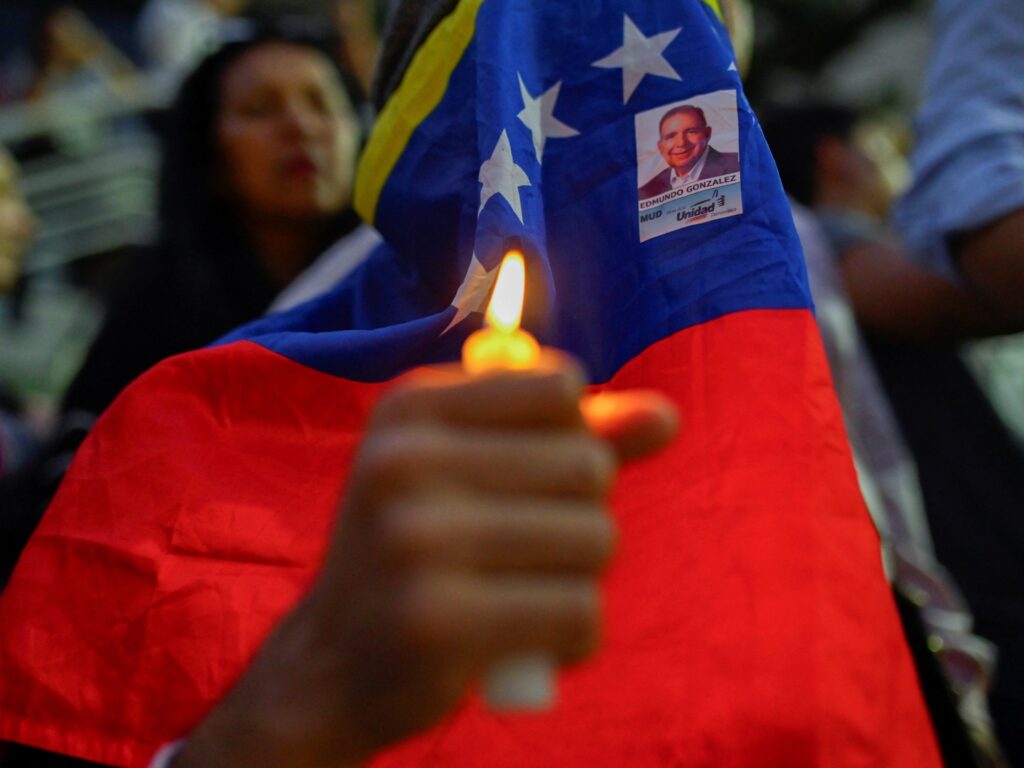
Assembly passes law that would ban officials who support international sanctions from holding office for up to 60 years. Venezuelan lawmakers have approved a measure that would implement steeper penalties for those who support US sanctions against the government of President Nicolas Maduro. On Thursday, the country’s National Assembly passed the so-called Simon Bolivar Liberator law, which bans officials who approve US sanctions against Venezuela from holding office for up to 60 years. “Anyone who promotes, instigates, requests, invokes, favours, facilitates, supports or participates in the adoption of coercive measures … will be punished with imprisonment of 25 to 30 years,” the law also states. The law also allows broadcast media to be shut down if they support sanctions, while text-based media may be hit with fines of up to $51.7m. The bill is the latest effort by the Maduro government to crack down on the country’s political opposition, who maintain that they were the true winners of the July presidential election, in which many cast doubt on Maduro’s claims of victory. The opposition has released precinct data that they say shows a convincing win over Maduro, who has resisted calls by regional governments to release data that could validate his claims of victory. In the time since, protests against the government have been met with a harsh crackdown by police and a series of laws that human rights groups say are aimed at stifling dissent. The Venezuelan National Assembly – dominated by the pro-Maduro governing party – voted in favour of the law after the United States House of Representatives passed the Bolivar Act, which would ban US government bodies from working with anyone who has ties to the Maduro government. The US Senate has yet to approve that bill, which Maduro himself has denounced as “trash”. The US has stepped up pressure on the Maduro government in the last two weeks, recognising opposition leader Edmundo Gonzalez as the country’s rightful leader and announcing a new round of sanctions targeting figures allegedly involved in the post-election crackdown. Gonzalez, who fled to Spain during the post-election crackdown, has said that he intends to return to Venezuela in early January when the winner of the election is set to assume office. Gonzalez has said that he is “morally prepared” to be detained if he returns to the country. Adblock test (Why?)
Is China better prepared for another trade row with the US?
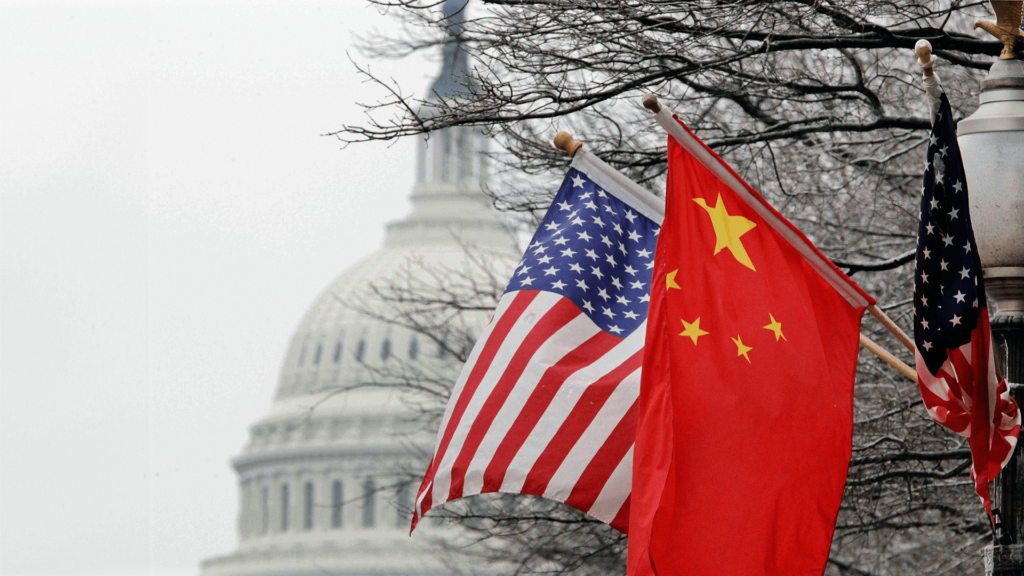
China has moved to support its exporters before tariff hikes, as pledged by US President-elect Donald Trump. China is struggling with a real estate downturn, a local government debt crisis and deflation – all of which are dragging down its economic growth. This has made many Chinese companies shift their focus to sales abroad. But, United States President-elect Donald Trump recently announced raising tariffs by an additional 10 percent on all Chinese imports as soon as he takes office. China has announced measures aimed at supporting its exporters in advance of the start of the second Trump administration. Scott Bessent is Trump’s pick for US treasury secretary. Plus, could Google Chrome be sold? Adblock test (Why?)
Is AI to blame for teen’s suicide?
[unable to retrieve full-text content] Is AI to blame for teen’s suicide?
At least 13 killed, many more feared dead as landslides bury Uganda homes
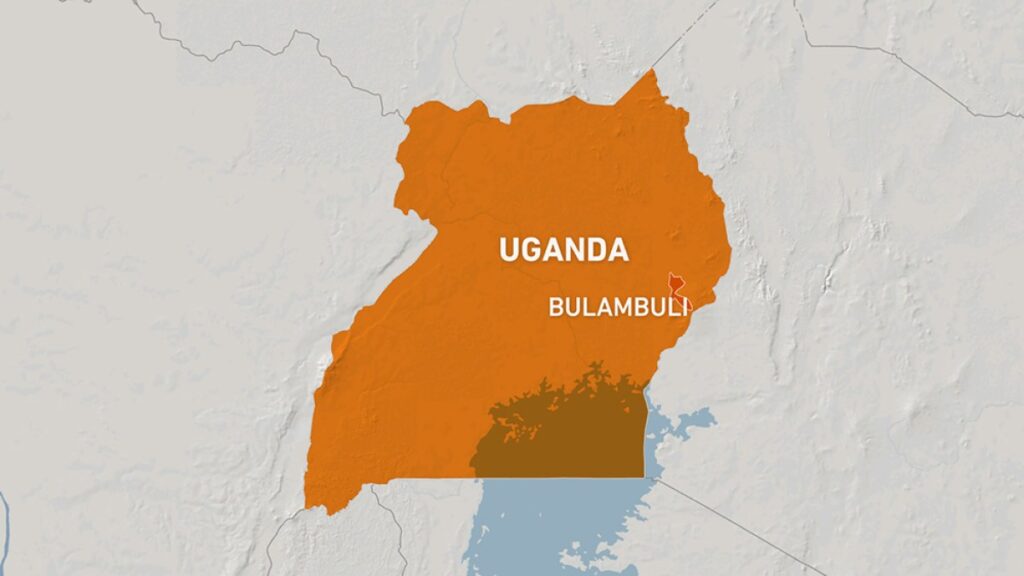
Dozens of houses in six villages of Bulambuli district in eastern Uganda submerged in landsides triggered by heavy rainfall. More than 10 people have been killed and many others are feared dead after heavy rains caused landslides in eastern Uganda. The Uganda Red Cross Society said on Thursday at least 13 bodies had been recovered after landslides “completely buried” 40 homes in six villages of the mountainous district of Bulambuli the previous night. Images on local media showed huge swaths of fallen earth covering the land in the village of Masugu, about a five-hour drive from the capital, Kampala. Videos and photographs shared on social media purported to show people digging for survivors in the village of Kimono. The Uganda Red Cross Society said the rescue effort was continuing but the death toll was likely to rise. 🆘️ Landslide Alert – Bulambuli District* *November 28th 2024* Following heavy rains on November 27th 2024, a landslide struck the villages of Masubu, Nameche Trading Centre, Mamono, Tangalu, Buzemulili, Masoola in Buluganya Sub-county, Bulambuli District. The incident left… pic.twitter.com/U2dtOFMSSw — Uganda Red Cross Society (@UgandaRedCross) November 28, 2024 “We lost about 30 people,” district commissioner Faheera Mpalanyi told the AFP news agency, adding that six bodies, including that of a baby, had been recovered so far. “Given the devastation and the size of the area affected and from what the affected families are telling us, several people are missing and probably buried in the debris,” she said. The heavy rains in recent days caused flooding in the northwest after a tributary of the Nile River burst its banks, prompting the prime minister’s office to issue a disaster alert on Wednesday, saying that main roads across the country had been cut off. Emergency teams were sent to rescue stranded motorists. A road connecting the country with South Sudan was impassable late on Wednesday, with emergency boat crews deployed near the town of Pakwach. “Unfortunately, one of the boats capsized, resulting in the death of one engineer,” Uganda’s defence forces said on X. Adblock test (Why?)
China says top military official suspended, placed under investigation
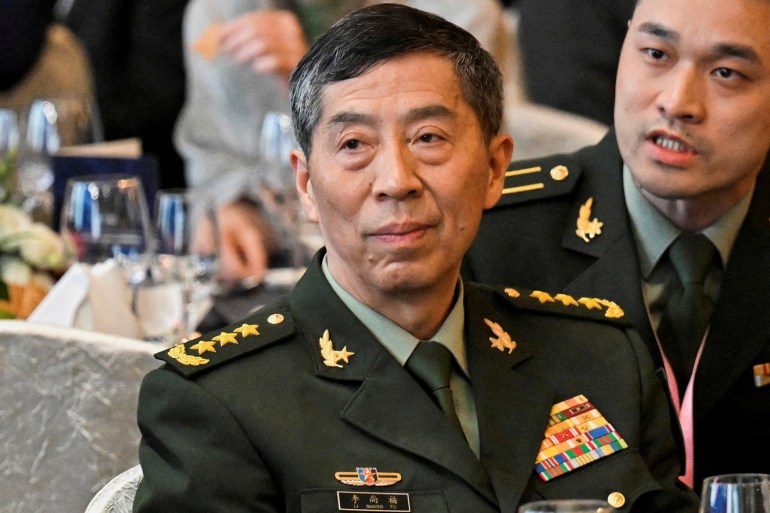
Probe into Miao Hua comes as China slams earlier reports of investigation into defence minister as ‘slanderous’. China has suspended a high-ranking military official suspected of “serious violations of discipline”, the latest in a series of senior figures targeted in a widening crackdown on corruption in the armed forces. The Ministry of Defence said on Thursday that Miao Hua, director of the political work department on the powerful Central Military Commission that oversees the People’s Liberation Army, was being investigated for disciplinary breaches, commonly read as a euphemism for corruption. The governing Communist Party “has decided to suspend Miao Hua from duty pending investigation”, ministry spokesperson Wu Qian told a news briefing. Wu did not provide further details about the charges against Miao, one of five high-ranking officials on the commission that oversees the military and is headed by President Xi Jinping. Xi’s campaign against corruption has focused in the past year on the armed forces, with nearly 20 military and defence industry officials removed since 2023, as well as defence ministers. Wu, the spokesperson, also criticised media reports that Defence Minister Dong Jun had been placed under investigation for corruption. British newspaper The Financial Times reported on Wednesday that Dong, who oversaw a recent thaw in military ties between China and the United States, had been caught up in the country’s sweeping anticorruption purge, quoting current and former US officials familiar with the situation. “The rumour mongers are ill-intentioned. China expresses its strong dissatisfaction with such slanderous behaviour,” Wu told reporters in a direct reference to the FT report. China’s former Defence Minister Li Shangfu at the 20th IISS Shangri-La Dialogue in Singapore prior to his disappearance from public view [File: Caroline Chia/Reuters] While reports on the investigation into Dong remain unconfirmed, two other defence ministers have been caught in the anticorruption dragnet. Dong’s predecessor, Li Shangfu, was removed after seven months into the job, and then expelled from the Communist Party, for offences that included bribery, according to state media. He has not been seen in public since. Li’s predecessor, Wei Fenghe, was also kicked out of the party after serving in the post from 2018 to 2023, and referred to prosecutors for alleged corruption. A Communist Party statement at the time said the pair “betrayed the trust of the party and the Central Military Commission, seriously polluted the political environment of the military, and caused great damage to … the image of its senior leaders”. They were found to have received huge sums of money in bribes and to have “sought personnel benefits” for others, it said. Adblock test (Why?)
Pakistan determined to host full ICC Champions Trophy despite India impasse

PCB chief says he will ‘make the best decision for Pakistan’ at the ICC board meeting on November 29 to decide the tournament’s fate. Pakistan Cricket Board’s (PCB) chairman Mohsin Naqvi says he will “make the best decision for Pakistan” at the International Cricket Council’s (ICC) board meeting, which is expected to make a final call on the hosting rights for the Champions Trophy 2025. Pakistan is set to host the eight-team men’s cricket tournament from February 19 to March 9, but India’s refusal to travel across the border has thrown the competition’s logistics into disarray. Naqvi has remained adamant that the PCB will not accept a “hybrid” model, wherein all fixtures involving India are played at a neutral venue, insisting that the full tournament must be played in Pakistan. “The Champions Trophy will be held in Pakistan,” the PCB chief told reporters at the Gaddafi Stadium in Lahore on Wednesday. “Our stance remains the same: a hybrid model will not be accepted and we’ll do whatever is in the best interest of Pakistan,” he said. Earlier this month, the Board of Control for Cricket in India (BCCI) informed the ICC that its team will not travel to Pakistan upon the instructions of its government. For many years, India’s government has barred the national cricket team from travelling to Pakistan because of ongoing political tensions between the neighbours. India has not visited Pakistan since 2008, and the rivals play each other only at multi-team events. The impasse has led to a conundrum for cricket’s governing body, which will now call upon all board members to resolve the issue at a meeting on Friday. The ICC is expected to present the PCB with the option of hosting India’s matches in the United Arab Emirates (UAE) or another neutral venue, but Naqvi said Pakistan “will not sell out” and agree to monetary compensation in return for accepting a hybrid model. “How can it be [fair] that we always go to India to play cricket but [they] don’t come to Pakistan?” he said. “Whatever happens must be on equal terms and we have made our stance very clear to the ICC.” The PCB earlier wrote to the ICC, asking for a copy of the BCCI’s concerns about travelling to Pakistan. It has also sought advice from Pakistan’s government on tackling the issue, and Mohsin said the board will do “whatever the government says”. The Champions Trophy will be Pakistan’s first professional men’s ICC tournament since 1996, when it co-hosted the World Cup with India and Sri Lanka. Pakistan hosted the six-team Asian Cricket Council’s (ACC) Asia Cup in 2023, but India’s matches were played in Sri Lanka after their government did not allow the team to travel to Pakistan. Adblock test (Why?)
Russia threatens Europe with strikes while gnawing at Ukraine’s east
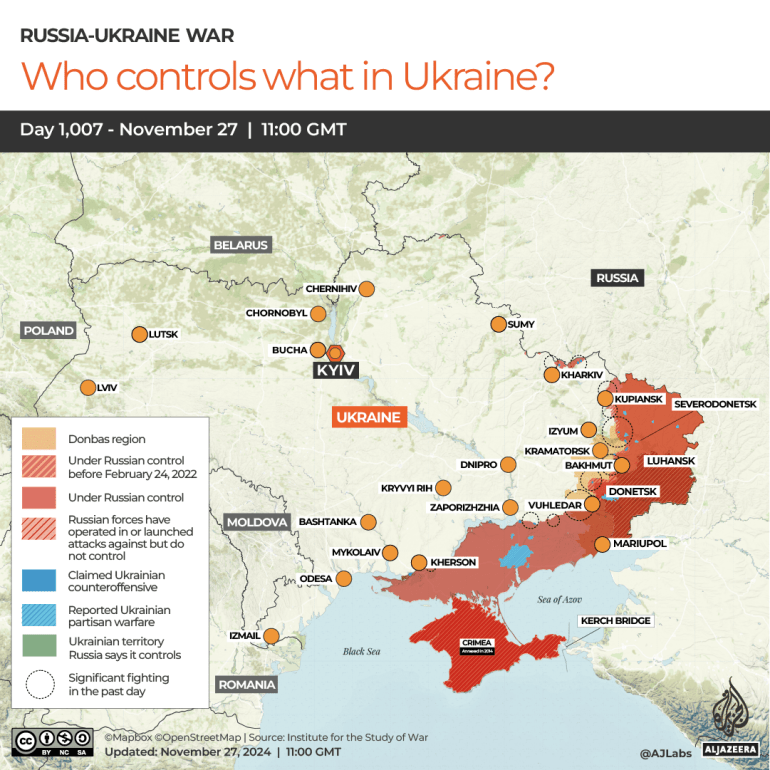
The United States on Tuesday provided the first official confirmation that its long-range Army Tactical Missiles (ATACMS) were in use in Russia, as Europe absorbed the ramifications of Russia’s retaliatory response with an intermediate ballistic missile that could strike “anywhere in Europe”. As the question of strategic escalation swirled around NATO capitals and Moscow, Russian forces continued a dogged advance through Ukraine’s eastern Donetsk region, seizing more villages. “Right now, they are able to use ATACMS to defend themselves, you know, in an immediate-need basis,” White House national security spokesperson John Kirby told reporters. “And right now, you know, understandably, that’s taking place in and around Kursk, in the Kursk oblast.” In a change of communications tactics, the Russian Ministry of Defence, too, acknowledged Ukrainian ATACMS strikes. Moscow authorities have often fudged Ukrainian missile and drone hits, claiming “falling debris” from a destroyed incoming missile has struck infrastructure and inflamed it. (Al Jazeera) But on Tuesday Russia’s Defence Ministry acknowledged that ATACMS struck an S-400 air defence radar at Lotarevka on Saturday and the Khalino airfield on Monday. Both objects are about 90km (560 miles) from Ukrainian front-line positions in Kursk. Geolocated footage confirmed the hits. The apparent reason for Russian acknowledgement is Russian President Vladimir Putin’s promise to retaliate as appropriate when ATACMS or other long-range weapons are used. Britain and France have licensed Ukraine to fire 200km-range (120-mile) SCALP/Storm Shadow missiles into Russia. Russia fired a new type of intermediate-range ballistic missile at the central Ukrainian city of Dnipro last Thursday, in retaliation against the first ATACMS and Storm Shadow strikes earlier in the week. The missile, dubbed Oreshnik and carrying six warheads, was aimed at a missile and aerospace factory. Ukrainian officials said it caused no serious damage. (Al Jazeera) In a television address after the Oreshnik strike, Putin threatened those European countries whose weapons were used against Russia: “We consider ourselves entitled to use our weapons against military facilities of those countries that allow their weapons to be used against our facilities.” “It can hit targets throughout Europe,” said Sergei Viktorovich, commander of Russia’s Strategic Missile Forces in a staged meeting with Putin on Friday. In a more menacing tone, Putin suggested a cluster of Oreshnik missiles would have the effect of a nuclear weapon. “Due to its striking power, especially when used in a massive, group manner, and in combination with other high-precision long-range systems that Russia also has, the results of its use against enemy targets will be comparable in effect and power to strategic weapons.” Can Russia fire many of these missiles? “We have a reserve of such products, a reserve of such systems ready for their use,” Putin said. Vasily Petrovich, first deputy chairman of the Military Industrial Commission, said the Oreshnik had been built “entirely on Russian technologies”, adding that “the issues of import substitution have been resolved” and that Russia’s defence industrial base “allows for the serial production of this type of weaponry”. (Al Jazeera) Non-Russian observers were not so sure. Kyrylo Budanov, the head of Ukrainian intelligence, told RBC-Ukraine that Russia did not have mass production capacity. “The missile is experimental. We knew for sure that two prototypes were supposed to be made by October, maybe a little more. But this is a prototype,” Budanov said. Oreshnik, which means hazelnut tree, was the codename for the research programme that produced the missile, he added. The missile itself was called Kedr, or cedar. Observers were also unsure that the Kedr represented a new Russian technology, as Putin was eager to suggest. Pentagon spokesperson Sabrina Singh said it was based on the RS-26 Rubezh intercontinental ballistic missile. Weapons analysts said it had been in development “for some time”. Kedr warheads were capable of travelling at speeds of 2.5 to 3 kilometres (1 to 2 miles) per second on their final approach to their target, said Putin, making them impossible to intercept with existing technologies. But Russia has used ballistic weapons on Ukraine already. The Kedr used on Thursday was part of a cluster of missiles that included a Kh-47 Khinzal ballistic missile and six Kh-101 cruise missiles. Ballistic missile warheads are very difficult to intercept because of their terminal speed and because they are unguided in their final stage, making them impossible to jam or disorient using electronic warfare. They can best be intercepted at the launch and ascent stages, but Budanov said the Kedr’s entire flight lasted only 15 minutes from launch to impact, leaving a very small interception window. (Al Jazeera) Ukraine and Russia traded more conventional aerial attacks during the past week. Ukraine’s general staff said their forces had struck a Russian oil depot in the Kaluga region on Monday. Russia launched a record number of drones and missiles into Ukraine on Tuesday, including four Iskander ballistic missiles and 188 drones. Russia’s advance in Donetsk was also speeding up, according to an assessment by the Institute for the Study of War, a Washington-based think-tank. “The frontline in Donetsk Oblast is becoming increasingly fluid as Russian forces recently have been advancing at a significantly quicker rate than they did in the entirety of 2023,” said the ISW. Russian troops had accelerated their advance in Ukraine and had effectively disrupted Kyiv’s 2025 military campaign, Russian defence minister Andrey Belousov said last week. Russian forces had reportedly seized a string of villages north of Vuhledar, a town they had lost to last year’s Ukrainian counteroffensive but reconquered in October, partly thanks to the use of Starlink satellite communication terminals, which helped them to speed up their counterbattery fire. “Russian forces have significantly increased the tempo of their advances in the Pokrovsk, Kurakhove, Vuhledar, and Velyka Novosilka directions since September 1, having gained at least 1,103 square kilometres (426 square miles) in these areas,” said the ISW, in contrast with gains of just 387 square kilometres (150 square miles) in all of 2023. The ISW assessed that Russian gains in September averaged 14 square kilometres a day (5.4 square miles), but
Israel-Hezbollah ceasefire holds as UN chief sees ‘ray of hope’
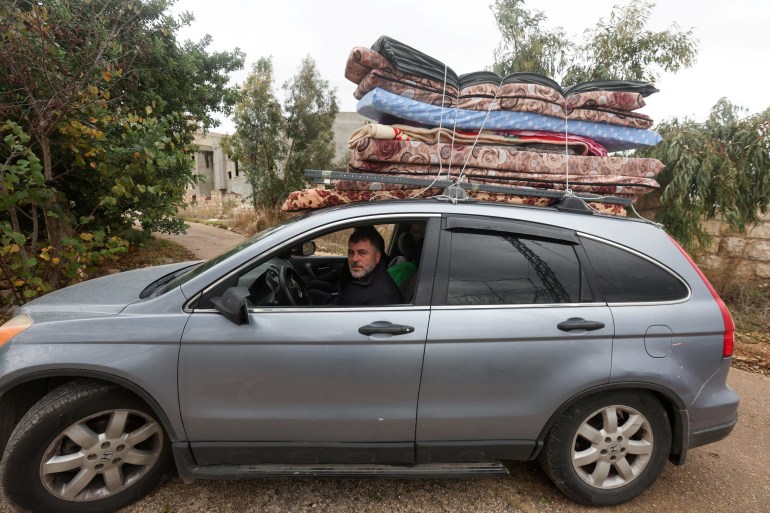
A ceasefire between Israel and Hezbollah has appeared to hold on its first day as thousands of displaced people set out to return to their homes in southern Lebanon despite Israel’s military announcing restrictions on movement in the area. Israeli military spokesperson Avichay Adraee said on X on Wednesday that residents would be barred from travelling south of the Litani River, about 30km (20 miles) from the Israeli border, from 5pm (15:00 GMT) until 7am (05:00 GMT) on Thursday. He said displaced residents would not be allowed to return to villages the army had ordered them to leave as Israeli forces were still present in the area. The ceasefire, which was brokered by the United States and came into effect on Wednesday morning, gives Israeli forces and Hezbollah fighters 60 days to withdraw from southern Lebanon. Israeli Prime Minister Benjamin Netanyahu said he instructed the military not to allow residents back into the Lebanese villages near the Israel-Lebanon border. Lebanon’s army, which has been given the responsibility of ensuring the ceasefire lasts and will take control of southern Lebanon as Israel gradually withdraws its forces, said it has begun deploying additional troops south of the Litani. Earlier on Wednesday, the Israeli military Chief of Staff Herzi Halevi said Israel’s enforcement of the ceasefire would be determined by whether Hezbollah keeps to the agreement. “Hezbollah operatives who approach our troops, the border area and the villages within the area we have marked will be struck. … We are preparing, getting ready for the possibility that this [ceasefire] approach won’t succeed,” he said. Hezbollah claims ‘victory’ In its first public statement since the truce came into effect, Hezbollah said it achieved a “victory” over Israel. “Victory from God almighty was the ally of the righteous cause,” the statement from the Iran-algned group said. Hezbollah fighters “will remain in total readiness to deal with the Israeli enemy’s ambitions and its attacks”, the statement added. Earlier, Lebanon’s caretaker Prime Minister Najib Mikati called for unity after what he said was the “most cruel phase in Lebanese history”. Israeli Prime Minister Benjamin Netanyahu told US President Joe Biden that his government had approved the ceasefire and that he appreciated his “understanding that Israel will maintain its freedom of action in enforcing it”, his office said. Biden released a joint statement with French President Emmanuel Macron, emphasising that both countries “will work with Israel and Lebanon to ensure this arrangement is fully implemented and enforced”. Hezbollah began launching rockets towards Israel on October 8, 2023, in what it said was solidarity with Palestinians in Gaza. Cross-border attacks persisted for months. Israel’s military escalated the fighting in September, bombarding areas across the country and then launching a ground offensive in October. At least 3,823 people have been killed and 15,859 wounded in Israeli attacks in Lebanon since October 2023, according to Lebanese health authorities. ‘Ray of hope’ Despite Israel’s warning of restrictions on movement, displaced Lebanese residents piled into cars carrying mattresses and drove through the heavily bombed southern city of Tyre to go back to areas they had been forced to leave. Shams Fakih, a resident from Kfar Kila in southern Lebanon, told Al Jazeera: “Once they let us return to our village, we will go there, but now we’re going to another village [in] Debeen, where my brother who was fighting for the resistance was killed.” Others were not able to return to their home villages as Israeli forces had yet to withdraw from the area. Hussam Arrout, a father of four, told the Reuters news agency that he was desperate to go home, but Israeli forces were still in southern Lebanon. “The Israelis haven’t withdrawn in full. They’re still on the edge. So we decided to wait until the army announces that we can go in. Then we’ll turn the cars on immediately and go to the village,” he said. Displaced Lebanese Assaad Bzih is driving with his belongings piled on top of his car near his destroyed home in Zibqin in southern Lebanon [Aziz Taher/Reuters] After the ceasefire announcement, United Nations Secretary-General Antonio Guterres said the agreement was the “first ray of hope” in the regional war. “It is essential that those who signed the ceasefire commitment respect it in full,” he said in a televised statement during a visit to Lisbon, adding that UN peacekeeping forces in Lebanon were ready to monitor the ceasefire. “I received an auspicious sign yesterday, the first ray of hope for peace amid the darkness of the past months,” he said, adding: “It is a moment of great importance, especially for civilians who were paying an enormous price of this spreading conflict.” Guterres also reiterated his call for a ceasefire in Gaza. Adblock test (Why?)
FBI confirms Trump cabinet picks targeted with bomb threats, ‘swatting’
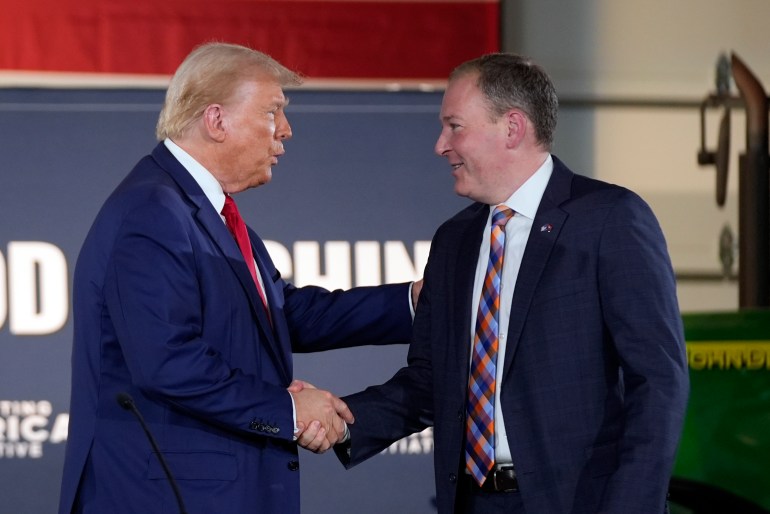
The Federal Bureau of Investigation (FBI) in the United States has issued a statement confirming that several picks for President-elect Donald Trump’s incoming administration have been the subject of threats in the days since their nominations. “The FBI is aware of numerous bomb threats and swatting incidents targeting incoming administration nominees and appointees, and we are working with our law enforcement partners,” the bureau said on Wednesday. “We take all potential threats seriously and, as always, encourage members of the public to immediately report anything they consider suspicious to law enforcement.” The short statement echoed reports from within the Trump transition team itself. Earlier in the day, Trump spokesperson Karoline Leavitt indicated that cabinet nominees such as Lee Zeldin and Elise Stefanik were among those targeted. “Last night and this morning, several of President Trump’s Cabinet nominees and Administration appointees were targeted in violent, unAmerican threats to their lives and those who live with them,” she wrote in a press release. Zeldin, a former congressman from New York, posted about his experience on social media, confirming he and his family were safe. “A pipe bomb threat targeting me and my family at our home today was sent in with a pro-Palestinian themed message,” said Zeldin, who has been tapped by Trump to lead the Environmental Protection Administration (EPA). Stefanik, a US representative from New York and Trump’s pick to serve as ambassador to the United Nations, issued a statement through her office explaining that she too had been the subject of a bomb scare. “This morning, Congresswoman Elise Stefanik, her husband, and their three year old son were driving home to Saratoga County from Washington for Thanksgiving when they were informed of a bomb threat to their residence,” the statement said. “New York State, County law enforcement, and US Capitol Police responded immediately with the highest levels of professionalism.” Citing an anonymous law enforcement official, The Associated Press news agency also reported that incoming chief of staff Susie Wiles, former attorney general pick Matt Gaetz, and his replacement Pam Bondi were targeted as well. The FBI cited instances of “swatting”, in which law enforcement is called to a home or office under false pretences, creating a potentially dangerous situation for the person inside. Recent incidents like the attack on the US Capitol on January 6, 2021, have heightened concerns about the threat of political violence in the US. That riot saw thousands of Trump supporters storm the US Congress in an attempt to disrupt the certification of the 2020 presidential election. A 2023 investigation from the news agency Reuters found 213 cases of political violence happened in the years since the Capitol riot. Concerns over political violence continued into the 2024 election cycle, when Trump faced two apparent assassination attempts. One, in July, resulted in a bullet grazing Trump’s ear while he stood on stage at a rally in Butler, Pennsylvania. An audience member, firefighter Corey Comperatore, was killed in the attack. A second attempt on Trump’s life was averted outside his golf resort in West Palm Beach, Florida, in September, when a gunman was discovered hiding in the bushes. Also in September, the city of Springfield, Ohio, also received hoax bomb threats at its government buildings, after Trump depicted the local Haitian American population as a threat. In the aftermath of those threats, politicians on both sides of the aisle called for voters to “turn down the temperature” on hostile political rhetoric. One study even found that tolerance for “partisan violence” declined among Republicans after the assassination attempts. “We cannot, we must not go down this road in America. We’ve traveled it before throughout our history. Violence has never been the answer,” President Joe Biden, a Democrat, said in a speech. Then-candidate Donald Trump greets Lee Zeldin at a campaign event at a Pennsylvania farm on September 23 [Alex Brandon/AP Photo] Trump, meanwhile, accused Democrats of spurring the violence, though critics point out he has shown little aversion to painting political opponents as dangerous enemies. “Because of this Communist Left Rhetoric, the bullets are flying, and it will only get worse!” Trump wrote on social media in September. He also told Fox News that Biden and Vice President Kamala Harris, his rival in the presidential race, were to blame. “Their rhetoric is causing me to be shot at, when I am the one who is going to save the country, and they are the ones that are destroying the country – both from the inside and out,” he said. There is, however, no evidence that any of the attacks against Trump were motivated by his Democratic rivals. Still, on Wednesday, Leavitt pointed to Trump as a role model for how to handle the recent threats. “With President Trump as our example, dangerous acts of intimidation and violence will not deter us,” Leavitt said. Adblock test (Why?)
Will the US-brokered ceasefire in Lebanon hold?

Agreement ends more than a year of fighting between Hezbollah and Israeli military. At least 3,823 people killed, more than 1.2 million displaced and estimated economic losses of $8.5bn. Lebanon’s prime minister is calling Hezbollah’s nearly 14-month conflict with Israel the “cruellest phase” in the country’s history. The ceasefire offers hope for a return to peace and a chance for people to rebuild their lives. But the agreement has raised questions: Is the underfunded Lebanese army in a position to enforce the terms of the deal? And how fragile will the situation be in the next 60 days, when Israeli troops and Hezbollah fighters withdraw from southern Lebanon? Presenter: Tom McRae Guests: Jamal Ghosn – Political commentator Randa Slim – Director of the Conflict Resolution Program at the Middle East Institute Drew Mikhael – Non-resident fellow at the Tahrir Institute of Middle East Policy Adblock test (Why?)