

US slaps sanctions on Venezuelan officials over post-election crackdown
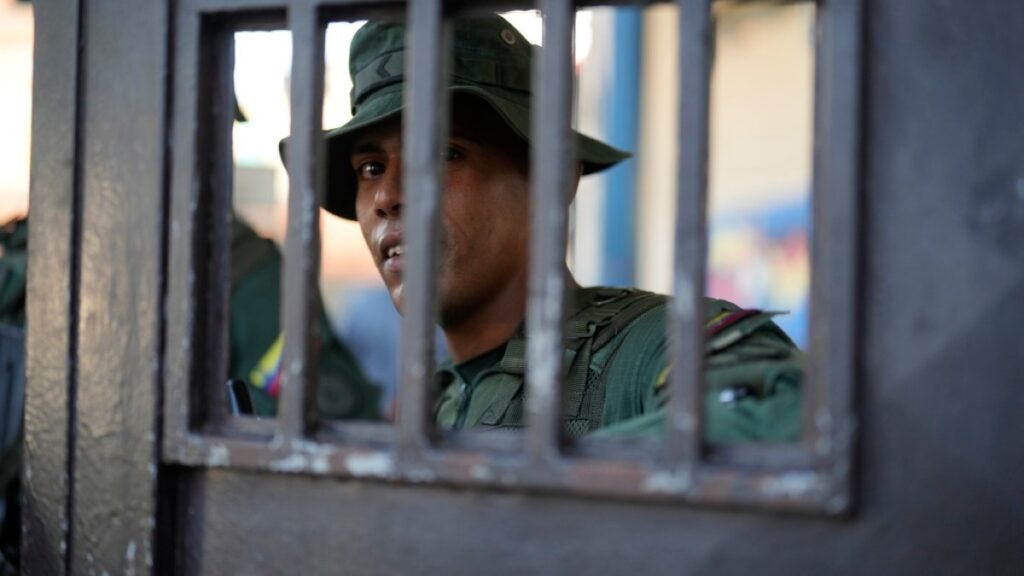
The US says its sanctions target 21 individuals involved in anti-democratic practices and the repression of protests. The United States has announced sanctions against 21 allies of Venezuelan President Nicolas Maduro, citing alleged involvement in the suppression of protests following a contested July election. Officials with the US Department of the Treasury said on Wednesday that the harsh crackdown, in which at least 25 protesters were killed, was an effort to stifle dissent. More than 2,400 protesters were arrested during the demonstrations. “Maduro and his representatives’ repressive actions in the wake of the Venezuelan presidential election are a desperate attempt to silence the voices of its citizens,” Bradley Smith, the acting undersecretary of the Treasury Department, said in a statement. The sanctions come months after a July 28 presidential election in which Maduro claimed victory, despite pre-election polling showing him losing by an insurmountable margin. When the election results were announced without the usual breakdown of votes, the opposition denounced the tally as fraudulent. It published copies of ballot sheets online that it said proved opposition candidate Edmundo Gonzalez won the race. International observers also questioned the election results. “Venezuela’s 2024 presidential election did not meet international standards of electoral integrity and cannot be considered democratic,” The Carter Center, a US-based nonprofit, wrote in a news release afterwards. Last week, the administration of US President Joe Biden recognised Gonzalez as Venezuela’s legitimate leader. It is unclear what effect that announcement, along with the new round of sanctions, will have on Venezuela. A separate news release from the US Department of State said that the sanctions target “members of the security forces and cabinet-level officials” who “undermined a competitive and inclusive electoral process in Venezuela or are responsible for acts of repression”. “Maduro’s security apparatus has engaged in widespread abuses, including killings, repression and mass detention of protestors,” the State Department wrote. The release also said that such sanctions have been applied to a total of 180 current and former Venezuelan officials, including today’s batch. Nearly 2,000 people face visa restrictions for their alleged role in the electoral repression as well. The Maduro government has faced growing diplomatic isolation following the election, which awarded the bus-driver-turned-president a third term in office. Some leaders in the region, including Brazil’s Luiz Ignacio Lula da Silva and Colombia’s Gustavo Petro, had previously expressed a desire for stronger ties with Venezuela. But both men have since cast doubt on the legitimacy of Maduro’s victory and called for the release of voting tallies that could confirm the government’s claims. Maduro’s government has yet to release such documentation. Gonzalez, meanwhile, left Venezuela after the government issued a warrant for his arrest, part of a wider campaign against members of the opposition. He is currently in Spain. Adblock test (Why?)
Netanyahu says Israel to appeal against ICC arrest warrants over Gaza war
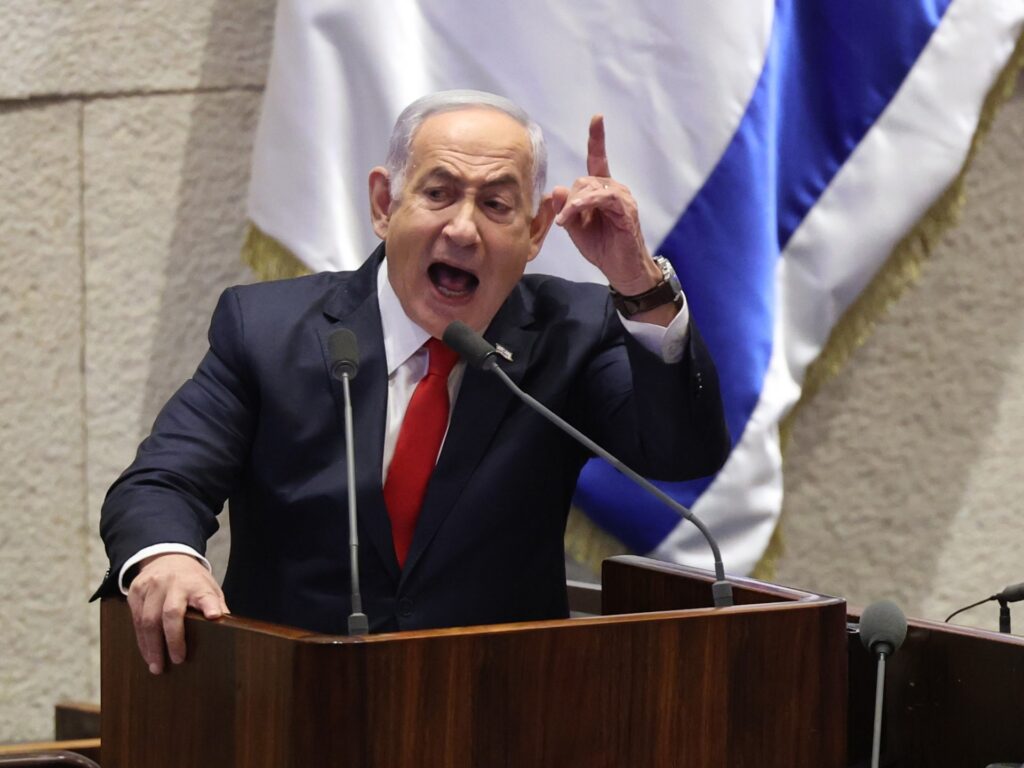
Prime Minister Benjamin Netanyahu says Israel urged the court to suspend the warrants against him and former Defence Minister Yoav Gallant pending the outcome of the appeal. Israel has told the International Criminal Court that it will appeal against arrest warrants for Prime Minister Benjamin Netanyahu and former Defence Minister Yoav Gallant over their actions in the war on Gaza, Netanyahu’s office said, as France said it believes the Israeli officials have “immunity” from the warrants. Netanyahu’s office said on Wednesday that Israel also urged the ICC to suspend the warrants against him and Gallant for alleged “war crimes” and “crimes against humanity” pending the appeal. The court said last week there were reasonable grounds to believe the officials were responsible for using “starvation as a method of warfare” in Gaza by restricting supplies of humanitarian aid to the besieged Palestinian territory. “The State of Israel denies the authority of the International Criminal Court (ICC) in The Hague and the legitimacy of the arrest warrants,” a statement from Netanyahu’s office read. “Israel today submitted a notice to the International Criminal Court of its intention to appeal to the court, along with a demand to delay the execution of the arrest warrants,” it added. The move has come after France’s Ministry for Europe and Foreign Affairs said it believed the officials benefit from immunity because Israel is not a member of the court. France’s view, issued a day after the announcement of a ceasefire between Israel and Lebanese armed group Hezbollah brokered by the US and France, was criticised by rights groups. Other countries, including Italy, have also questioned the legality of the mandate. France’s stance Paris has taken almost a week to come up with a clear position, after the court in The Hague issued arrest warrants on November 21 for the Israeli officials and a leader of the Palestinian armed group Hamas. After initially saying it would adhere to the ICC statutes, France’s Foreign Ministry fine-tuned that in a second statement on November 22 amid concerns that Israel could scupper efforts for a ceasefire in Lebanon, saying it noted that the court’s decision merely formalised an accusation. On Wednesday, the ministry pointed out that the Rome Statute that established the ICC provided that a country cannot be required to act in a manner incompatible with its obligations “with respect to the immunities of States not party to the ICC”. “Such immunities apply to Prime Minister Netanyahu and other relevant ministers and will have to be taken into consideration should the ICC request their arrest and surrender.” It said France intended to continue to work closely with Netanyahu and other Israeli authorities “to achieve peace and security for all in the Middle East”. ‘Deeply problematic’ Rights groups suggested France had tempered its response to maintain a working relationship with Netanyahu and his government. “Some shocking nonsense from France here. No one gets immunity from an ICC arrest warrant because they’re in office – not Netanyahu, not Putin, no one,” Andrew Stroehlein, European media director at Human Rights Watch wrote on X. Rights group Amnesty International said France’s position was “deeply problematic”. “Rather than inferring that ICC indictees may enjoy immunity, France should expressly confirm its acceptance of the unequivocal legal duty under the Rome Statute to carry out arrest warrants.” Italian Foreign Minister Antonio Tajani said on Tuesday that Rome had many doubts about the legality of the ICC mandates and clarity was needed on whether high state officials had immunity from the arrest. “Netanyahu would never go to a country where he can be arrested … The arrest of Netanyahu is unfeasible, at least as long as he is prime minister,” he said. France has been involved in efforts to end fighting in the Middle East and, with the United States, helped broker the Israel-Hezbollah ceasefire that came into effect on Wednesday. Adblock test (Why?)
Video: Namibians vote in contested presidential and parliamentary elections
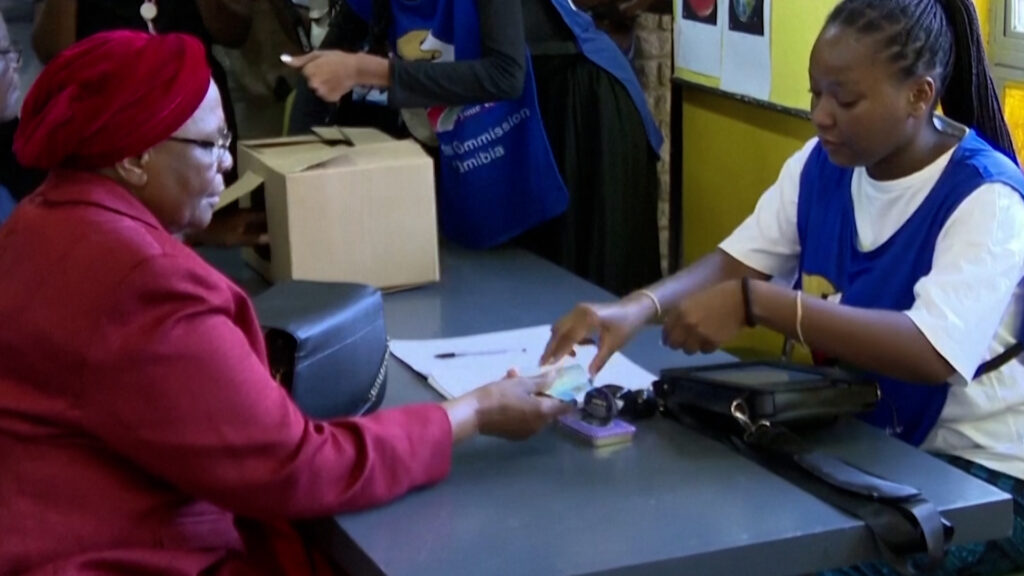
NewsFeed Namibian voters waited in long queues to cast their votes in one of the nation’s most competitive elections. The governing SWAPO (South West Africa People’s Organisation) party faces growing frustration among voters over high unemployment and inequality. Published On 27 Nov 202427 Nov 2024 Adblock test (Why?)
China launches corruption probe against Defence Minister Dong Jun: Report
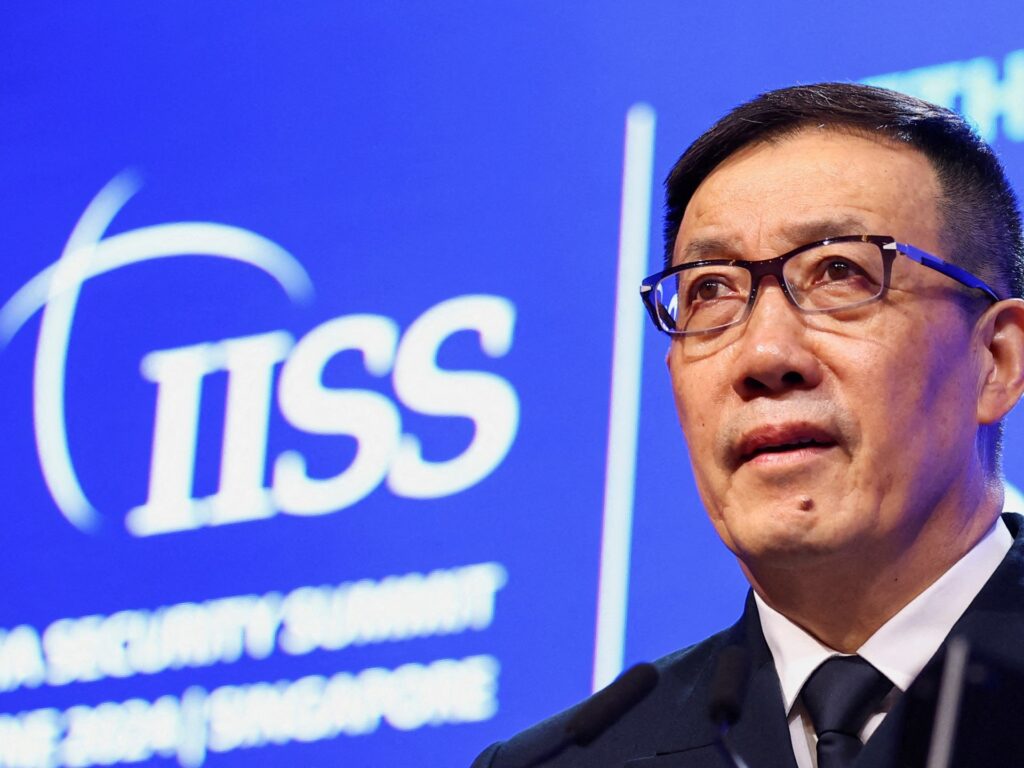
Investigation is part of a broader probe into military corruption that unseated Dong’s two predecessors. China has launched an investigation of Defence Minister Dong Jun due to suspicion of corruption, according to reports. Citing current and former US officials familiar with the situation, British newspaper The Financial Times said on Wednesday that Dong is the latest official to be caught up in a broad crackdown on corruption in the country’s military. For the meantime, the report is unconfirmed. Chinese officials failed to respond to requests for comment or confirmation from news agencies on Wednesday morning. China’s military has undergone a sweeping anticorruption purge since last year, with at least nine People’s Liberation Army (PLA) generals and several defence industry executives removed from the national legislative body to date. Dong would be the third Chinese defence minister in a row to fall under investigation for corruption, unnamed US officials told the FT. ‘The trust of the party’ Dong, a former PLA Navy chief, was appointed defence minister in December 2023. He is responsible for China’s military diplomacy with other nations. He oversaw a recent thaw in US-China military ties, with both nations holding theatre-level commander talks for the first time in September. Dong’s predecessor, Li Shangfu, was removed after seven months into the job, and then expelled from the Communist Party, for offences that included bribery, according to state media. He has not been seen in public since. Li’s predecessor, Wei Fenghe, was also kicked out of the party and passed on to prosecutors for alleged corruption. A Communist Party statement at the time said the pair “betrayed the trust of the party and the Central Military Commission, seriously polluted the political environment of the military, and caused great damage to … the image of its senior leaders”. They were found to have received huge sums of money in bribes and to have “sought personnel benefits” for others, the statement said. According to experts, this is a blow to the party and the role. “It’s certainly a blow … because one would imagine they will be super careful to have someone very clean in this role,” Dylan Loh, an assistant professor at Singapore’s Nanyang Technological University, told the AFP news agency. “Graft probes are very commonly targeted at the military because of the long historical ties between the business world and the PLA,” he said. At least two other high-ranking officers connected to the Rocket Force, a relatively new unit of the Chinese military, have also been removed for corruption. Victor Shih, an expert on China’s elite politics, told AFP that Dong “likely had authority over tens of billions in procurement per year” during his time in the navy. “The problem is that competition for top positions is so fierce that there might be some mutual recriminations between officers, which would lead to endless cycles of arrests, new appointments and recriminations,” he said. Adblock test (Why?)
Celebrations and heavy traffic as Lebanon ceasefire begins
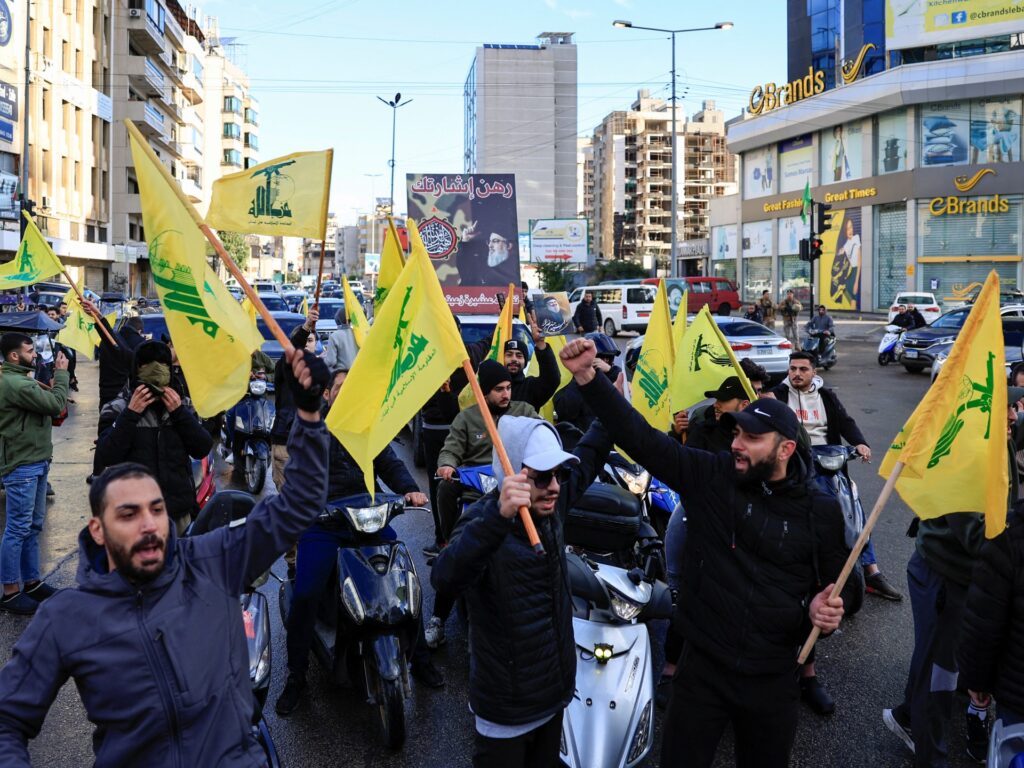
NewsFeed People in Lebanon celebrated and thousands of cars filled the roads to return home after a ceasefire between Israel and Hezbollah took effect. Published On 27 Nov 202427 Nov 2024 Adblock test (Why?)
Is Russia poisoning Namibia’s water in its hunt for uranium?
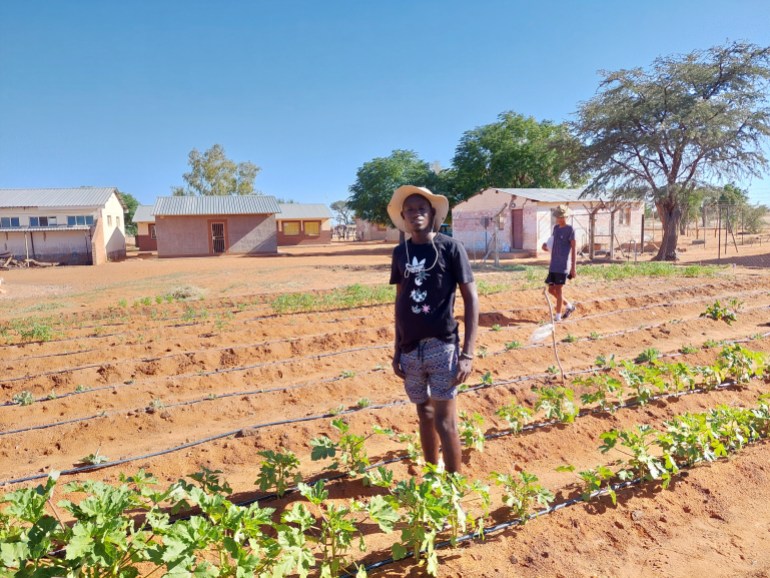
Windhoek and Leonardville, Namibia – Impo Gift Kapamba Musasa holds a hose pipe in one hand and gestures to a garden of cabbages, onions and turnips with the other. He is a teacher in the crumbling village of Leonardville in rural Namibia, where water is becoming scarce. The vegetables, grown for children at the primary school where he teaches, are watered from one of the largest aquifers on earth. The groundwater nourishes tens of thousands of people and is the lifeblood of the Kalahari Desert, which stretches across Namibia, as well as neighbouring Botswana and South Africa. Around Leonardville, 386km (240 miles) from the capital, Windhoek, scrubland meets ochre-coloured dunes known as the “red fingers of the Kalahari” for the way they reach out across the vast desert. Leonardville is a village of cattle farmers subsisting off meagre government handouts and homegrown vegetables, but it also sits on top of vast deposits of uranium – the fuel for nuclear reactors. That has brought the village of a few thousand people some unlikely attention in recent years. Impo Gift Kapamba Musasa grows vegetables for schoolchildren in Leonardville, Namibia [Tom Brown/Al Jazeera] On shop windows and village waypoints, posters appear, bearing the name and logo of a foreign company: Rosatom – Russia’s State Atomic Energy Corporation, one of the world’s largest uranium companies. Rosatom has spent years attempting to set up a mine in eastern Namibia after the country lifted a temporary ban on uranium mining in 2017. The isolated African village has since seen an influx of investment from companies linked to the Russian government. A Rosatom subsidiary, known as Headspring Investments, in 2011 proposed to use a controversial drilling method to extract the uranium, known as “in situ” mining, which involves injecting a solution that includes sulphuric acid down into the aquifer. While Australian miners frequently use the drilling method, it has never been attempted in Africa, and is not usually done around aquifers, mining experts said. While the prospect of financial reward has some locals supporting a potential mine in the area, Rosatom’s proposal has also raised concerns among others in the country. Calle Schlettwein, the minister of agriculture, water and land reform, told Namibia’s National Assembly on February 29 that Headspring’s activities could “endanger the groundwater” in Namibia, South Africa and Botswana, “destroying the economic basis for the entire region”. Additionally, because of the need to cool down equipment during uranium mining, the process is also one of the most water-intensive operations. Namibia is becoming hotter and drier because of climate change, leaving residents more dependent on aquifers to grow their food as rainfall decreases. With the prospect of a uranium mine and its effects dangling over their heads, local farmers worry their livelihoods will disappear – for good. “Pollution is going to change people’s livelihoods,” says school teacher Impo, looking at his crops. Some local landowners have even started campaigning against the planned uranium mine, asking the government to consider the risks to their water supply. “Should uranium mining be allowed, it could render the water in the southeastern region of Namibia unfit for human and animal consumption, effectively bringing agriculture to a total and permanent standstill in the area,” said former Namibia Agricultural Union (NAU) president, Piet Gouws, speaking to the Namibian Sun in 2022. Just as it seemed that Rosatom was on the cusp of achieving its goal of building the uranium mine, the Namibian government cancelled the drilling permits in November 2021, citing non-compliance with the licence terms. Many farmers hoped this was the last they would hear of Headspring. But Rosatom doubled down – on the ground in Leonardville and by trying to win supporters through softer means. The inauguration of the Rosatom-funded school kitchen in Leonardville, Namibia [Justicia Shipena/Al Jazeera] Trips, truck and influence operations Since 2021, Rosatom has been accused of running an influence campaign in Namibia, sponsoring trips for government officials and reporters to visit Russia, Al Jazeera has found. In April this year, Rosatom subsidiary Uranium One invited Namibian Minister of Health and Social Services Kalumbi Shangula to Sochi, Russia, to attend Atomexpo 2024, a nuclear industry event organised by Rosatom, where he spoke about rising cancer cases in his country. Uranium One had earlier donated a four-wheel drive to the Namibian Ministry of Health. Pijoo Nganate, the governor of the Omaheke region where Leonardville is located, has also visited Russia multiple times in trips he confirmed were at least partially funded by Rosatom. Nganate at first refused to answer whether Rosatom sponsored his trips to Russia. “Let them make those claims,” he said when informed via phone of accusations that the leadership in the region was aligning itself with the Russian-state entity, adding: “That’s immaterial, you lose the bigger picture.” He went on to tell Al Jazeera that it was Namibian ministries that had requested some donations in the form of food and medicine from Rosatom, not the other way around, and pointed out the severe unemployment and poverty in Omaheke. The Omaheke region has the smallest population in Namibia, but one of its highest poverty rates, at 51 percent of the population. Other government officials are listed on travel documents, seen by Al Jazeera, as attending multiple sponsored trips to Russia and Kazakhstan between 2022 and 2023. Namibian government officials appearing on these documents include Governor Nganate; Obeth Kandjoze, the director of the National Planning Commission; Hardap regional Governor Salomon April, who said he could not attend; and the chairperson of the parliamentary standing committee on natural resources, Tjekero Tweya. Phone calls to Kandjoze and Tweya by Al Jazeera, seeking their response, went unanswered. Responding to Al Jazeera’s request for comment on the accusations of the company trying to gain influence through donations and sponsored trips, Rosatom spokesperson Riaan van Rooyen said: “It is disheartening to see and hear that there are those cynical people that label Uranium One’s community upliftment efforts as ‘greenwashing’ and even ‘bribery’.” “Those privileged ones have had numerous opportunities and time
Russia expels British diplomat for alleged spying
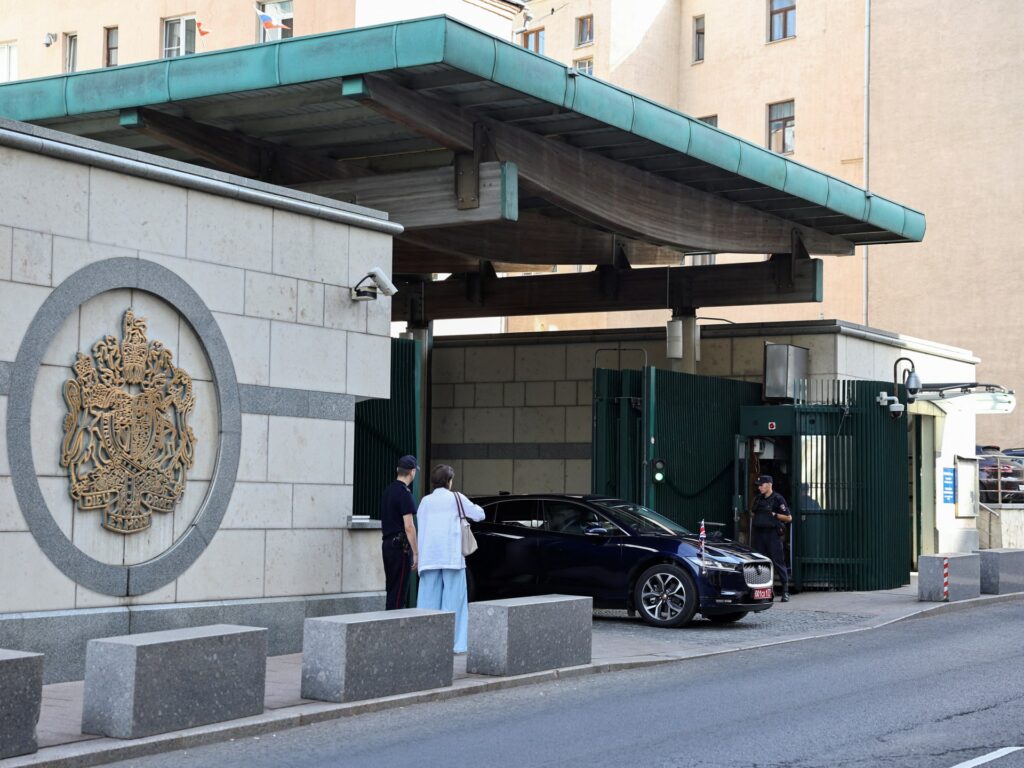
Moscow kicks out the diplomat, who, it says, was ‘conducting intelligence and subversive work that threatens the security of Russia’. Russia has ordered a British diplomat to leave the country for allegedly spying, in the latest blow to the already dire state of relations between the two countries. The FSB security service said on Tuesday that the diplomat, whose photo was splashed across TV news bulletins, had intentionally provided false information when he entered the country. “During counterintelligence work, the Russian Federal Security Service has discovered an undeclared British intelligence presence under the cover of the national embassy in Moscow,” it said. “At the same time, the Russian FSB has discovered signs of the said diplomat conducting intelligence and subversive work that threatens the security of the Russian Federation,” it said in a statement. It named him as Edward Wilkes and said he was a second secretary, a relatively junior diplomatic rank. A spokesperson for British Prime Minister Keir Starmer said he was unaware of the reported diplomatic expulsion, the Reuters news agency reported. Russia’s Ministry of Foreign Affairs spokesperson Maria Zakharova said that a decision was made to revoke the diplomat’s accreditation and he has been ordered to leave the country within two weeks. She said that the ministry had summoned the British ambassador to hand over the notice. The envoy, Nigel Casey, was shown by Russian state media arriving at the Foreign Ministry in Moscow. According to the FSB, the British diplomat was a replacement for one of six British diplomats expelled earlier this year, also on espionage charges. Tense relations Reacting to the earlier expulsions in September, the United Kingdom rejected the spying allegations against its diplomats as “malicious and completely baseless” and said Russia’s behaviour was completely unacceptable. Relations between the UK and Russia have plunged to post-Cold War lows since the start of the Ukraine war. The UK has joined successive waves of sanctions against Russia and provided arms to Ukraine. Russia said Ukraine fired British-made Storm Shadow cruise missiles at its territory last week for the first time. President Vladimir Putin cited the use of the British-made missiles, and the launching of US ATACMS ballistic missiles by Ukraine, as the reason Russia responded by launching a new hypersonic missile at the Ukrainian city of Dnipro last week. Relations between London and Moscow have been repeatedly strained by alleged spy scandals, including the 2006 assassination of former Russian agent and Kremlin critic Alexander Litvinenko in a London poisoning attack. Then in 2018, the UK and its allies expelled dozens of Russian embassy officials they accused of being spies over the attempted poisoning of former double agent, Sergei Skripal, who was living in exile in the UK. Skripal survived the attempted Novichok attack but a British civilian died after touching a contaminated perfume bottle, triggering uproar in London. Adblock test (Why?)
Walt Disney agrees to pay $43.3m to settle pay discrimination suit

The suit was filed in 2019 after the plaintiff learned that six men with same job title earned substantially more. Walt Disney has agreed to pay $43.3m to settle a lawsuit alleging that its female employees in California earned $150m less than their male counterparts over an eight-year period, the plaintiffs’ lawyers have said. As part of the settlement, Disney has agreed to retain a labour economist for three years to analyse pay equity among full-time, non-union California employees below the vice president level, and address differences, the three law firms representing the plaintiffs said in a statement on Monday. The suit was originally filed by LaRonda Rasmussen in 2019, after she learned that six men with the same job title earned substantially more than her, including one man with several years less experience, who was earning $20,000 a year more than she did. Some 9,000 current and former female employees of the entertainment company eventually joined the suit. Disney attempted to stop the class action, but a judge ruled last December that it could proceed, Andrus Anderson, one of the law firms, said at the time. “I strongly commend Ms Rasmussen and the women who brought this discrimination suit against Disney, one of the largest entertainment companies in the world. They risked their careers to raise pay disparity at Disney,” Lori Andrus, a partner at Andrus Anderson, said in Monday’s statement. “We have always been committed to paying our employees fairly and have demonstrated that commitment throughout this case, and we are pleased to have resolved this matter,” a Disney spokesperson told Reuters. The case was also supported by an analysis of Disney’s human resource data from April 2015 until December 2022 that found female Disney employees were paid roughly 2 percent less than their male counterparts. The analysis was conducted by David Neumark, a University of California Irvine professor and labour economist. The settlement agreement, which was filed in a California state court, still requires approval by a judge, according to the lawyers. Adblock test (Why?)
Syrian Civil Defence creates early warning system for schools in Idlib
[unable to retrieve full-text content] The Syrian Civil Defence team created an early warning system to detect warplanes for schools in Idlib.
Netanyahu says he will present Lebanon ceasefire deal to cabinet
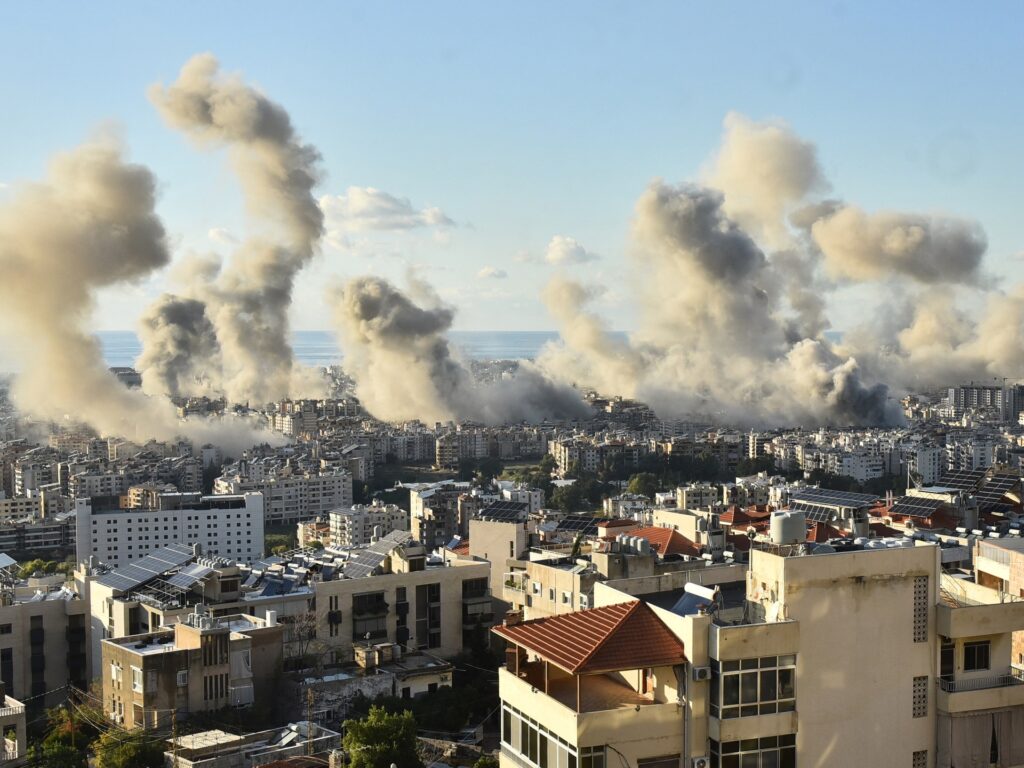
NewsFeed Israeli Prime Minister Benjamin Netanyahu has said he will present a ceasefire deal to his cabinet that would stop the fighting in Lebanon but how long it will last depends on Hezbollah. Published On 26 Nov 202426 Nov 2024 Adblock test (Why?)