

Could protests by Imran Khan supporters lead to more political instability?
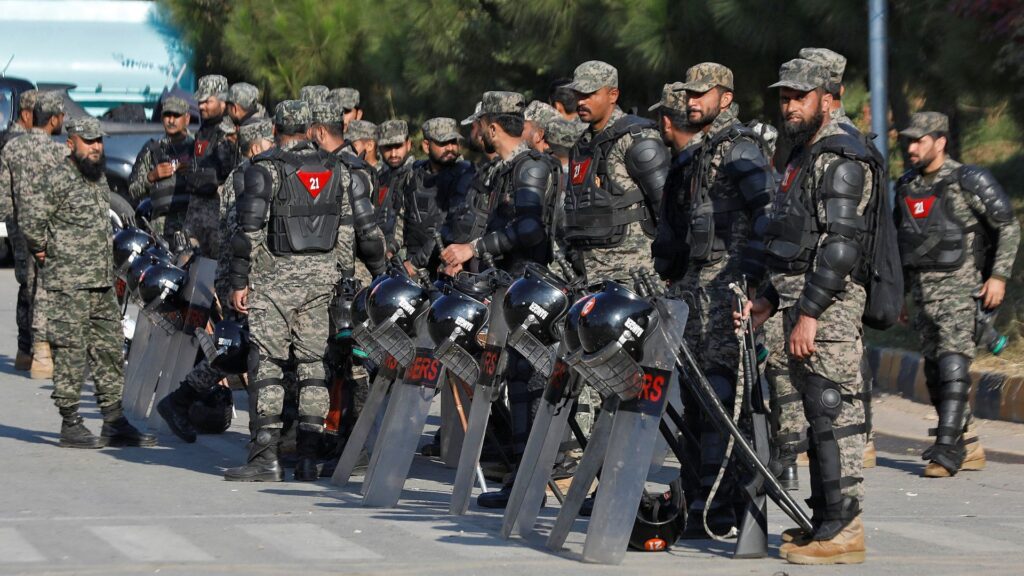
Security forces seal off Islamabad as demonstrators demand former Pakistani prime minister be released from jail. Pakistan is witnessing arguably the biggest protest since February’s disputed elections. Security forces have been deployed to stop Imran Khan’s supporters from marching into the capital. They are demanding the former prime minister be released from jail and the government resign. Can the government in Islamabad survive? Could Khan be freed? Presenter: Bernard Smith Guests: Azeema Cheema – political economy specialist and founding director of the Pakistani think tank Verso Consulting Hassan Akbar – Pakistan fellow at the Woodrow Wilson Center who previously worked in national security and strategic policy for the Pakistani government and in the private sector Fahd Humayun – visiting scholar at the Center for International Security and Cooperation at Stanford University Adblock test (Why?)
Pakistan’s capital in lockdown as Imran Khan supporters protest
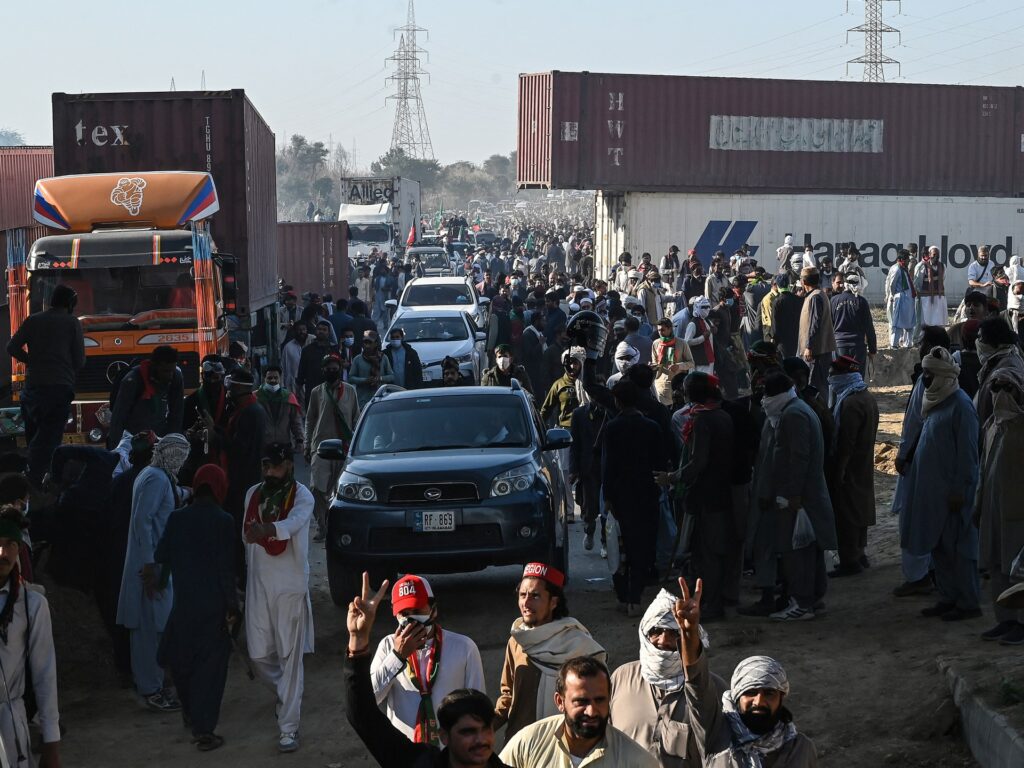
NewsFeed Supporters of ex-Pakistani Prime Minister Iman Khan are descending on Islamabad, demanding an end to what they say is political persecution of the popular political leader. Published On 25 Nov 202425 Nov 2024 Adblock test (Why?)
In Uruguay, a presidential run-off focused on ‘democratic coexistence’
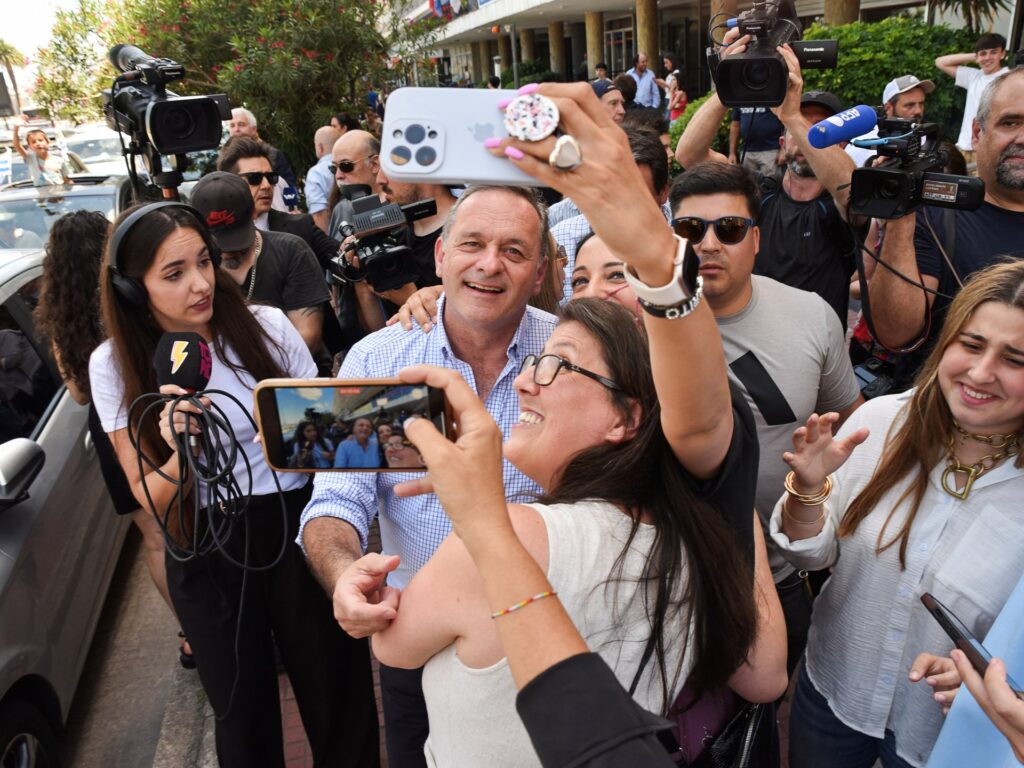
Political violence marred Mexico’s elections this year. And in Venezuela’s presidential race, protests accompanied a contested result and widespread allegations of electoral fraud. But in Uruguay on Sunday, a much more muted presidential election unfolded. Located on the southern Atlantic coast, north of Argentina, Uruguay was one of several Latin American countries holding high-stakes presidential elections this year. And unlike some of its counterparts, critics say Uruguay serves as a model for democratic stability in the region. Sunday’s election was a run-off, pitting the top two presidential contenders from the October 27 general election against one another. The early favourite was Yamandu Orsi, the candidate for the left-wing Broad Front coalition. In the October vote, he notched 44 percent support — well short of the 50 percent needed to avoid a run-off. Coming in second place on October 27 was Alvaro Delgado of the ruling National Party, a conservative group. While he only received 27 percent of the vote in the first round, he is likely to benefit from the 20 percent of voters who cast their ballot for the third-place candidate, fellow conservative Andres Ojeda of the Colorado Party. Both Orsi and Delgado advanced to Sunday’s run-off with strong support, making the outcome a nail-biter. Orsi, a 57-year-old history teacher, has the support of former President Jose Mujica, a former leftist rebel fighter who survived torture under Uruguay’s military dictatorship in the 1970s and ’80s. Mujica has since become a beloved figure on the left: He was dubbed the “world’s poorest president” during his time in office, from 2010 to 2015, for his humble lifestyle. Orsi’s Broad Front coalition was in power until the 2019 election, which saw the rise of the conservative National Party. It was the first conservative victory in nearly 15 years. But outgoing President Luis Lacalle Pou is prevented by law from seeking a second consecutive term. Running instead for his party is the 55-year-old Delgado, a former veterinarian. Both Delgado and Orsi have emphasised strengthening Uruguay’s economy. Orsi, who campaigned with the slogan “We know how to achieve”, has emphasised measures to raise wages for low-income workers. Delgado, meanwhile, has focused on streamlining Uruguay’s bureaucracy and forging trade deals with partners like China. Both men have pledged to respect the results of the election and work together, no matter the outcome. “We must value what we have: democratic coexistence,” said the head of the Broad Front coalition, Fernando Pereira. Meanwhile, Ojeda — the third-place candidate knocked out in the first round of voting — remarked to local media about the calm accompanying Uruguay’s election. “If I had brought a foreigner here and I didn’t tell him that there was an election, he wouldn’t have noticed,” Ojeda said. Adblock test (Why?)
Hard-right populist takes shock lead in Romania’s presidential vote
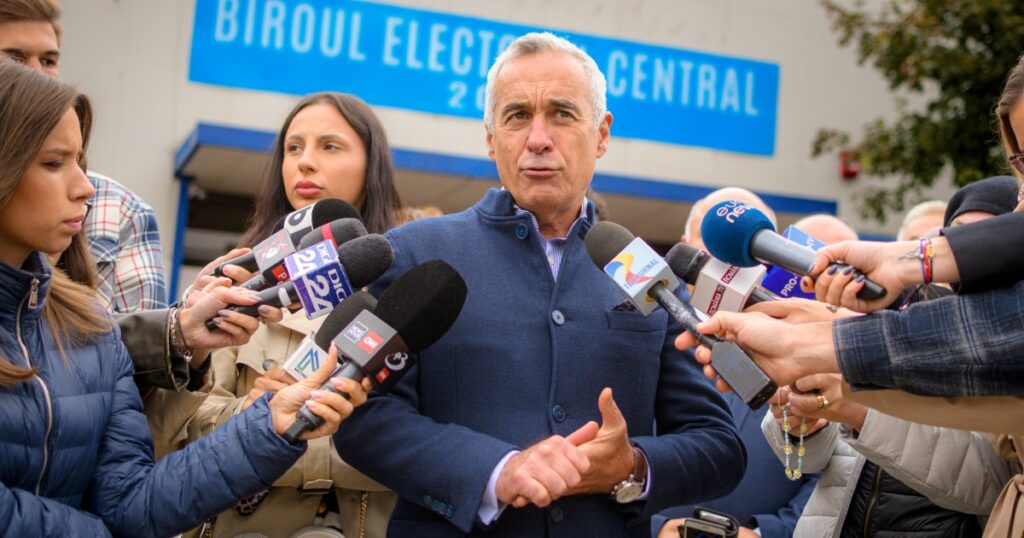
NATO critic Calin Georgescu on track to face pro-European Prime Minister Marcel Ciolacu in run-off vote next month. A hard-right populist known for his opposition to the European Union and NATO has surged into the lead in Romania’s presidential election in a shock result that throws the country’s pro-Western outlook into doubt. With 98 percent of ballots counted, Calin Georgescu had nearly 23 percent of the vote, slightly ahead of centre-left Prime Minister Marcel Ciolacu with about 20 percent, partial results from the Central Electoral Bureau showed on Sunday. Elena Lasconi of the centre-right Save Romania Union party was running third with nearly 19 percent, followed by George Simion of the far-right Alliance for the Unity of Romanians with 14 percent. The partial results put Georgescu, 62, on track to face off against Ciolacu in a run-off vote on December 8. The outcome comes as a major upset as Georgescu, a relatively unknown figure who held a number of positions in Romania’s Ministry of Environment during the 1990s, had attracted only about 5 percent support in opinion polls ahead of the election. Running as an independent, Georgescu was largely absent from mainstream media and relied heavily on social media platforms such as TikTok to reach voters. Exit polls had shown Ciolacu, the leader of the Social Democratic Party, in the lead and Lasconi in second place in a race dominated by the economy and the rising cost of living. A former member of the right-wing populist Alliance for Uniting Romanians party, Georgescu has called for an end to aid for Ukraine – which is in the midst of battling a Russian invasion – and criticised the presence of a NATO missile defence station on Romanian soil. In a 2021 interview, he called the missile defence shield a “shame of diplomacy” and said the North Atlantic alliance would not protect its members in the event of an attack by Russia. He has also attracted controversy over his views on Romania’s past, including that Ion Antonescu, the country’s World War II-era leader who joined forces with Adolf Hitler, should be seen as a national hero. Georgescu on Sunday said the vote showed that the people had “cried out for peace”. “And they shouted very loudly, extremely loudly,” he said. Romania, an EU and NATO member, shares a 650km-long (400 miles) border with Ukraine and has experienced repeated breaches of its airspace by Russian drones. Bucharest has been a staunch supporter of Ukraine since Russia’s 2022 invasion, providing Kyiv with military aid, including a Patriot air defence battery, and establishing a training centre to train Ukrainian marines. Adblock test (Why?)
Yamandu Orsi wins Uruguay’s run-off presidential election
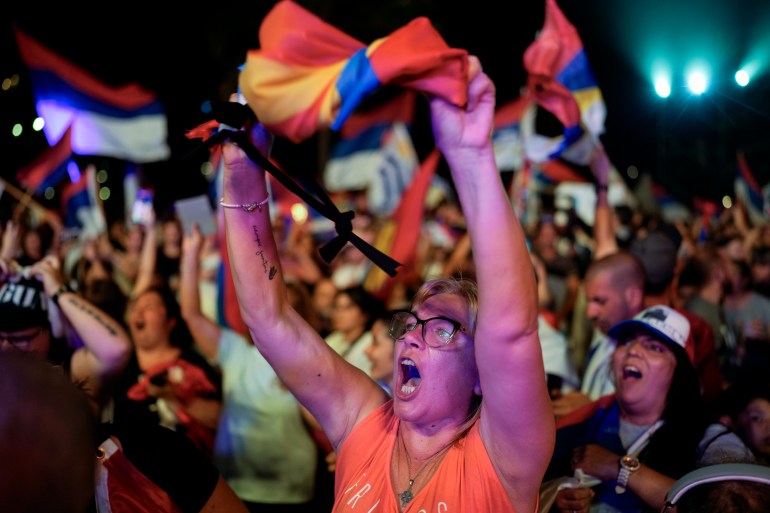
Yamandu Orsi, the candidate for the left-wing Broad Front coalition, is projected to emerge victorious in Uruguay’s run-off election for the presidency. He bested Alvaro Delgado of the ruling National Party to win the tightly fought race, though public opinion polls showed the two candidates in a dead heat in the lead-up to Sunday’s vote. Orsi’s supporters took to the streets in the capital of Montevideo, as the official results started to show the former mayor and history teacher surging ahead. Many waved the party banner: a red, blue and white striped flag with the initials FA for “Frente Amplio”, which translates to “Broad Front”. “Joy will return for the majority,” the coalition posted on social media as Orsi approached victory. “Cheers, people of Uruguay.” Supporters of Yamandu Orsi celebrate early results after polls closed in Montevideo, Uruguay, on November 24 [Natacha Pisarenko/AP Photo] Orsi’s win restores the Broad Front to power in the small South American country, sandwiched on the Atlantic coast between Brazil and Argentina. For 15 years, from 2005 to 2020, the Broad Front had held Uruguay’s executive office, with the presidencies of Jose Mujica and Tabare Vazquez, the latter of whom won two non-consecutive, five-year terms. But that winning streak came to an end in the 2019 election, with the victory of current President Luis Lacalle Pou, who led a coalition of right-leaning parties. Under Uruguay law, however, a president cannot run for consecutive terms. Lacalle Pou was therefore not a candidate in the 2024 race. Running in his stead was Delgado, a former veterinarian and Congress member who served as a political appointee in Lacalle Pou’s government from 2020 to 2023. Even before the official results were announced on Sunday, Delgado had conceded, acknowledging Orsi’s victory was imminent. “Today, the Uruguayans have defined who will hold the presidency of the republic. And I want to send here, with all these actors of the coalition, a big hug and a greeting to Yamandu Orsi,” Delgado said in a speech as he clutched a large Uruguayan flag in his hand. He called on his supporters to “respect the sovereign decisions” of the electorate, while striking a note of defiance. “It’s one thing to lose an election, and another to be defeated. We are not defeated,” he said, pledging that his right-wing coalition was “here to stay”. The outgoing president, Lacalle Pou, also reached out to Orsi to acknowledge the Broad Front’s victory. “I called [Yamandu Orsi] to congratulate him as president-elect of our country and to put myself at his service and begin the transition as soon as I deem it pertinent,” Lacalle Pou wrote on social media. Supporters hold cutouts of Yamandu Orsi’s face in Montevideo, Uruguay, on November 24 [Natacha Pisarenko/AP Photo] Orsi had been considered the frontrunner in the lead-up to the first round of the elections. Originally from Canelones, a coastal regional in the south of Uruguay, Orsi began his career locally as a history teacher, activist and secretary-general of the department’s government. In 2015, he successfully ran to be mayor of Canelones and won re-election in 2020. In the 2024 presidential race, Orsi – like virtually all the candidates on the campaign trail – pledged to bolster Uruguay’s economy. He called for salary increases, particularly for low-wage workers, to grow their “purchasing power”. He also called for greater early childhood education and employment programmes for young adults. According to a United Nations report earlier this year, nearly 25 percent of Uruguay’s children live in poverty. But the economy was not the only issue at the forefront of voters’ minds. In a June survey from the communications firm Nomade, the largest share of respondents – 29 percent – identified “insecurity” as Uruguay’s “principal problem”. That dwarfed the second-highest ranked topic: “Unemployment” was only picked by 15 percent of respondents. As part of his platform, Orsi pledged to increase the police force and strengthen Uruguay’s borders, including through the installation of more security cameras. As he campaigned, Orsi enjoyed the support of former President Mujica, a former rebel fighter who survived torture under Uruguay’s military dictatorship in the 1970s and ’80s. Mujica remains a popular figure on Uruguay’s left, best known for his humble living arrangements that once earned him the moniker of the “world’s poorest president”. Supporters of Yamandu Orsi, candidate for the Broad Front, walk a dog decorated with the party’s colours in Montevideo, Uruguay, on Sunday [Natacha Pisarenko/AP Photo] In the first round of voting, on October 27, Orsi came out on top, with 44 percent of the vote to Delgado’s 27 percent. But his total was far short of the 50 percent he needed to win the election outright, thereby triggering a run-off. The race got tighter from there forward. Only two candidates progressed to the run-off – Delgado and Orsi – and Delgado picked up support from voters who had backed former Colorado Party candidate Andres Ojeda, a fellow conservative who was knocked out in the first round. Nevertheless, Orsi quickly pulled ahead after the polls closed for the run-off election on Sunday. “The horizon is brightening,” Orsi said in his victory speech. “The country of freedom, equality and also fraternity triumphs once again.” Adblock test (Why?)
Iran to meet with Germany, France, UK in nuclear talks
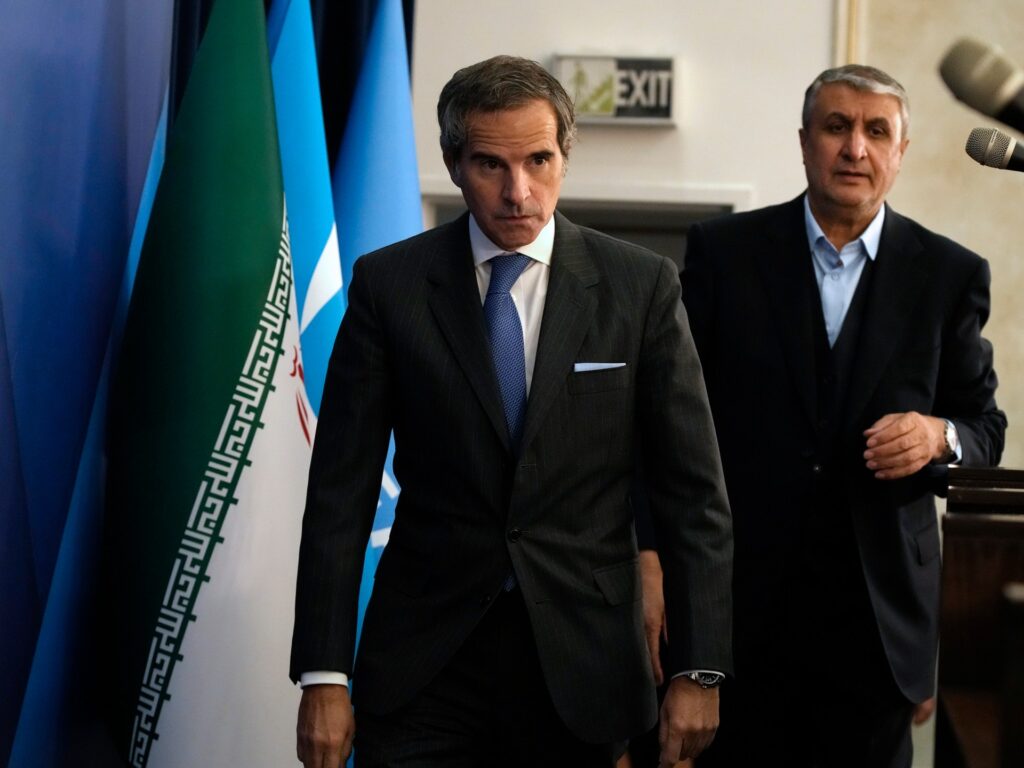
The meeting follows an IAEA resolution denouncing Iran for what it called a lack of cooperation. Iran says it will hold nuclear talks with officials from France, Germany, and the United Kingdom this week, amid escalating tensions over Iran’s nuclear programme. The meeting, which is set to happen on Friday, was announced by the Iranian Foreign Ministry on Sunday, and UK officials also confirmed the meeting. “A range of regional and international issues, including the issues of Palestine and Lebanon, as well as the nuclear issue, will be discussed,” Iranian Foreign Ministry spokesperson Esmaeil Baghaei said. Neither London nor Tehran said where the meeting would take place. On Thursday, the United Nations’ International Atomic Energy Agency (IAEA) adopted a resolution denouncing Iran for what it called a lack of cooperation. The three European Union members that will meet with Iranian officials were among those voting for the resolution. Nineteen countries out of the 35-member IAEA voted to censure Iran – a largely symbolic gesture – while 12 countries abstained. Russia, China, and Burkina Faso voted against the resolution. Thursday’s resolution marked the third time the UN had taken such action since 2020. The move came as tensions ran high over Iran’s nuclear programme, which critics fear is aimed at developing a nuclear weapon – something Tehran has repeatedly denied. On Friday, Iran announced a “series of new and advanced centrifuges”, technology that refines enriched uranium into gas. “We will substantially increase the enrichment capacity with the utilisation of different types of advanced machines,” Behrouz Kamalvandi, Iran’s atomic energy organisation spokesman, told Iranian state TV. Despite the announcement, Iran said it would continue to cooperate with the IAEA. “We remain committed to taking every diplomatic step to prevent Iran from developing nuclear weapons, including through snapback if necessary,” the UK’s Foreign Ministry told the news agency AFP. In 2015, Iran reached an agreement with world powers, including the United States, to curb its nuclear programme due to concerns about the country potentially developing nuclear weapons. But in 2018, during US President Donald Trump’s first term, the US unilaterally withdrew from the agreement and imposed sanctions on Iran – a move that stoked tensions between Washington and Tehran. Since then, Tehran has scaled back its cooperation with the IAEA, deactivating surveillance devices put in place by the UN. Concurrently, Iran has increased its stockpile of enriched uranium. Iran has “begun implementation of preparatory measures” to cap its stockpile of highly enriched uranium. According to leaked reports from the IAEA, Iran is close to the 90 percent threshold needed to produce a nuclear warhead. Adblock test (Why?)
Rival sectarian groups agree to seven-day ceasefire in Pakistan
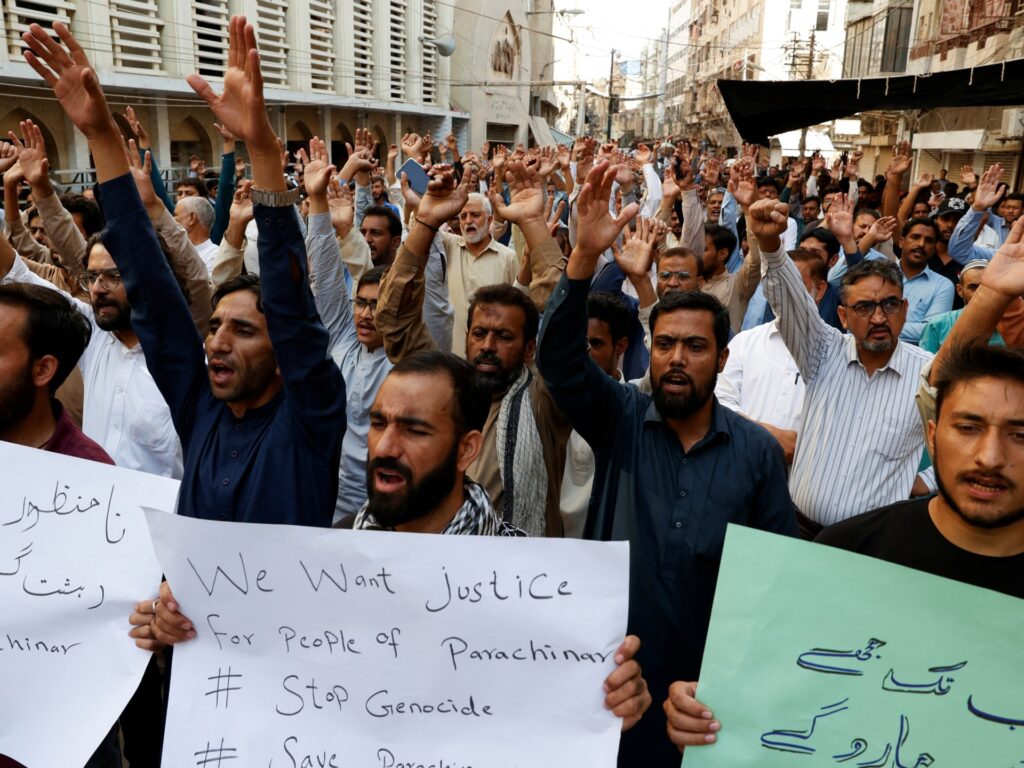
Local Sunni and Shia armed groups have clashed for decades, but the most recent fighting has killed more than 30 people. Pakistani officials have announced a seven-day truce between rival sectarian groups after days of clashes killed dozens of people in the northwest of the country. The violence between the groups began on Thursday after gunmen attacked civilian convoys, killing at least 40 people, who mainly were Shia Muslims. In retaliation, residents in the area of Kurram targeted Sunni Muslims. Local Shia and Sunni Muslims have engaged in sectarian rivalry for decades over a land dispute in the Kurram district in the Khyber Pakhtunkhwa province, near the border with Afghanistan. Following the violence, Muhammad Ali Saif, spokesperson for the Khyber Pakhtunkhwa provincial government and a member of the mediation team, said on Sunday that both sides had agreed to a seven-day ceasefire. “They will also exchange prisoners and return bodies to one another,” Saif said. He added that the ceasefire announcement should stop more minor clashes reported in the district’s remote areas. The mediation team flew into Parachinar, Kurram’s main city, on Saturday and met with Shia and Sunni leaders while the district was under a virtual curfew with armed groups roaming the streets in many villages. Akhtar Hayat Gandpur, the police chief of Khyber Pakhtunkhwa, and another member of the mediation team said Shia leaders were calling for the immediate arrest of those involved in attacking civilian vehicles as well as compensation for the victims. The Pakistani government has yet to name who the attackers were publicly, and no one has claimed responsibility. Earlier on Sunday, Khyber Pakhtunkhwa’s Law Minister Aftab Alam Afridi said that once a truce is agreed upon, “we can begin addressing the underlying issues”. Sectarian violence Last month, at least 16 people were killed in Kurram, including three women and two children, due to clashes between the two armed groups. Police have struggled to control the violence in the area, which was part of the semi-autonomous Federally Administered Tribal Areas until it was merged with Khyber Pakhtunkhwa in 2018. But the Human Rights Commission of Pakistan said 79 people were killed between July and October in sectarian violence. Fighting in July and September only ended following a tribal council calling for a ceasefire. On Friday, several hundred people demonstrated against the violence in Karachi and Lahore. Adblock test (Why?)
Israel sanctions Haaretz due to articles that ‘hurt’ Israeli state
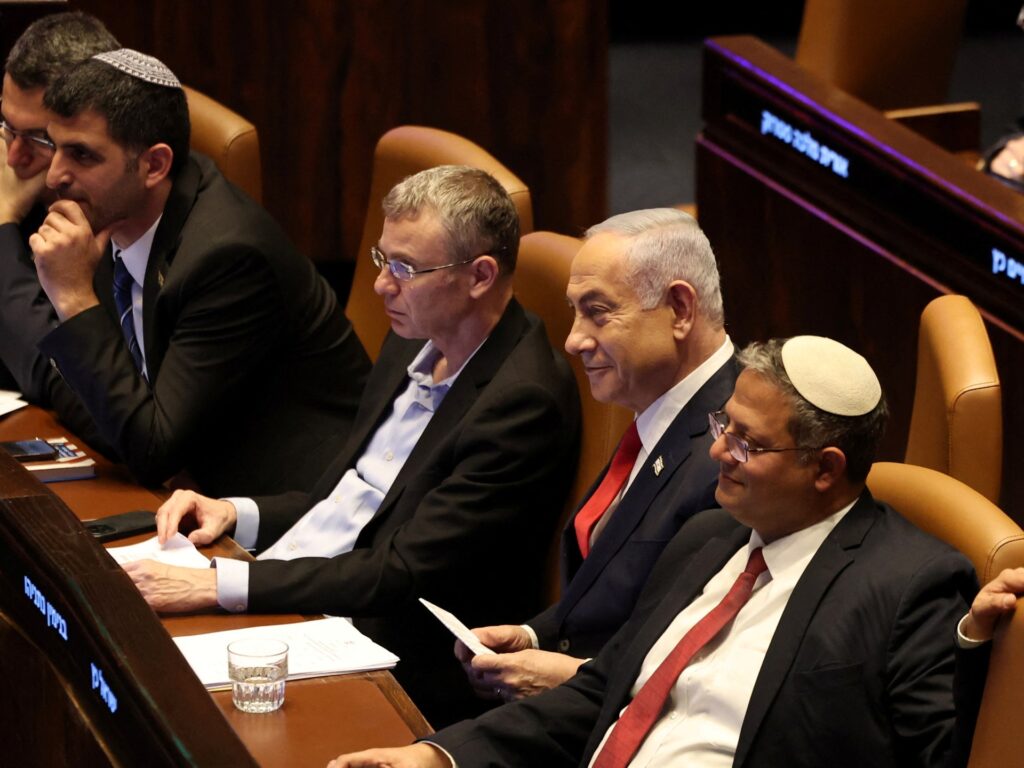
The Haaretz newspaper called the decision ‘another step in Netanyahu’s journey to dismantle Israeli democracy’. Israel has approved a resolution to cut ties with the Israeli news outlet Haaretz and ban government funding bodies from communicating or placing advertisements with the newspaper. The government said its decision was due to “many articles that have hurt the legitimacy of the state of Israel and its right to self-defence, and particularly the remarks made in London by Haaretz publisher Amos Schocken that support terrorism and call for imposing sanctions on the government,” Haaretz reported on Sunday. The left-leaning news outlet added that Prime Minister Benjamin Netanyahu approved the decision, which did not appear on the government’s agenda for the weekly cabinet meeting. In response to the decision, Haaretz said it was an “opportunist resolution to boycott Haaretz, which passed in today’s government meeting without any legal review … [and] another step in Netanyahu’s journey to dismantle Israeli democracy”. “Like his friends [Russian President Vladimir] Putin, [Turkish President Recep Tayyip] Erdogan, and [Hungarian Prime Minister Viktor] Orban, Netanyahu is trying to silence a critical, independent newspaper. Haaretz will not balk and will not morph into a government pamphlet that publishes messages approved by the government and its leader,” the outlet added. Haaretz columnist Gideon Levy told Al Jazeera that the government sanctions on the outlet “send a very bad message, both politically and morally”. “Many view it [Haaretz] as the only newspaper in Israel because, especially [in] this war, almost all the media outlets totally recruited themselves to the narrative of the government and the army,” and did not show Israelis what was happening in Gaza, he said. The government’s dispute with the organisation intensified last month at a conference in London, where publisher Schocken said Netanyahu’s government did not care about “imposing a cruel apartheid regime on the Palestinian population”. “It dismisses the costs of both sides for defending the settlements while fighting the Palestinian freedom fighters that Israel calls ‘terrorists’,” he added. Following an Israeli public outcry over the comments, Schocken said that his mention of Palestinian freedom fighters did not mean Hamas. However, Communications Minister Shlomo Karhi, who proposed the sanctioning of the news outlet, launched a renewed campaign against Haaretz, calling for a boycott of the newspaper. Last year, Karhi approached the Israeli cabinet secretary with a draft resolution to halt all subscriptions to Haaretz by state employees, including the army. Israel has clamped down on the media as the war continues, and has killed dozens of Palestinian journalists in Gaza, including Al Jazeera’s Ismail al-Ghoul, Rami al-Rifi, Samir Abudaqa, and Hamza Dahdouh. Several other Al Jazeera journalists have been threatened by Israel, and the network has been forced to shut its bureaus in Israel and the occupied West Bank. Adblock test (Why?)
The West, the ICC, and ‘mtu wetu’ in Israel
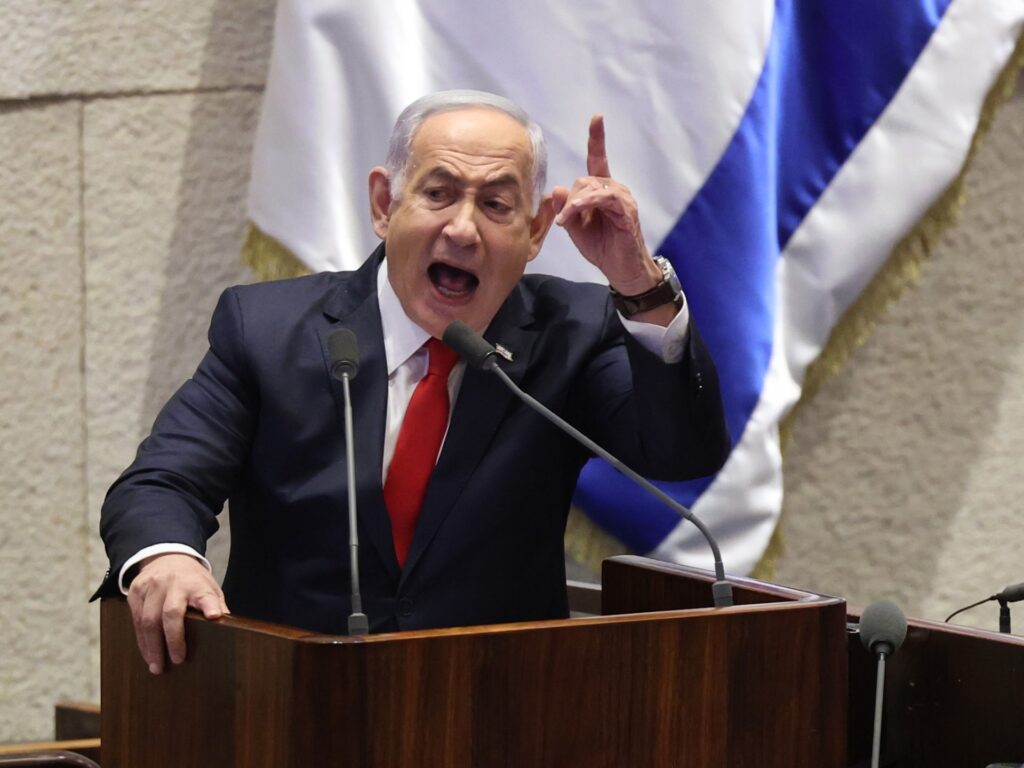
The arrest warrants for Israel’s Prime Minister Benjamin Netanyahu and former Defence Minister Yoav Gallant, issued by the International Criminal Court (ICC), have brought back not-so-fond memories to many Kenyans. More than a decade ago, then Kenyan President Uhuru Kenyatta and his deputy – current President William Ruto – became the first incumbent heads of state or government to actually face an ICC trial, having been indicted before they got into office. However, while both Kenyatta and Ruto chose to cooperate with the court – at least on the face of it – and attended their trials, thus obviating the need for an arrest warrant, it is unlikely that Netanyahu and Gallant will be taking a trip to The Hague any time soon. Kenyatta and Ruto were accused of being responsible for the violence that followed the country’s disputed 2007 election, in which more than 1,300 people lost their lives. The two had been on opposing sides of the conflict and were alleged to have organised and funded “tribal” militia to carry out killings. To date, only a handful of people have ever been prosecuted for the murders, rapes and mutilation that led to the forcible displacement of 660,000 people, and it was only after the Kenyan state proved unwilling to act that the ICC stepped in. Similarly, when he applied for warrants for the Israeli leaders in May, ICC Prosecutor Karim Khan – who coincidentally headed Ruto’s defence team – also indicated he would be happy to defer prosecution if Israel’s justice system shows any willingness to take action against Netanyahu and Gallant and “engage in independent and impartial judicial processes that do not shield suspects and are not a sham”. The ICC judges have now agreed that there are reasonable grounds to believe the two bear criminal responsibility for the many crimes committed by Israel against the Palestinians during its ongoing genocidal assault on Gaza. With an official death toll of more than 44,000, Gaza has witnessed murders, rapes and displacement on a vast scale, as well as mass starvation, and the deliberate targeting of schools, hospitals and places of worship. Many have complained about the seven-month-long delay in the ICC judges issuing the arrest warrants, but Kenyans had to wait for two years to have the ICC prosecutor send a request for an investigation and then another five months for the court to approve it. It then took another 12 months for the actual indictment of specific individuals – six of them – to be handed down. Thus, by comparison, the Palestine cases have moved much faster. Among the reasons for the delay in the Palestine case were the numerous briefs challenging the court’s jurisdiction and the admissibility of the allegations. There was also a lot of pressure put on the ICC by Israel and its Western friends. There were Israeli attempts to intimidate the court even before the war started last year, with Khan’s predecessor, Fatou Bensouda, facing threats by the Mossad not to launch an investigation into Israel’s war crimes of 2021. Khan now himself faces accusations of sexual misconduct. It is notable that few Western nations came to Kenyatta’s and Ruto’s aid. On the contrary, there was more than a subtle hint given to Kenyans that electing Kenyatta and Ruto would be a bad idea – that “choices have consequences”. I am not saying they should have opposed the duo’s arraignment, but there is more than a whiff of double standards here. It does seem that there is more of an interest in seeing justice done when those in the dock are Africans, and not just anti-Western. That point is driven home when one considers how the indictments of Israeli officials have been framed in the Western press. The Guardian, for example, described it as “the first time a western ally from a modern democracy has been charged with war crimes and crimes against humanity by a global judicial body”. This account comes as a surprise to Kenya, which for well over six decades has considered itself a “Western ally” and which – having held regular elections throughout that time – can be described as something of a “modern democracy”, whatever that means. Unless, of course, these are euphemistic descriptors of more problematic relationships. Kenyans have a name for this sort of thing: the “mtu wetu [our guy] syndrome”. Whenever our politicians find themselves being investigated or – God forbid! – charged with crimes, they try to rally their ethnic kinsmen around the idea that it is the “tribe” being targeted. The mobilisation of an imagined identity is a political tactic that is very effective in scaring off prosecutors and intimidating judges both locally and internationally. “Mtu wetu” is how Kenyatta and Ruto were able to avoid prosecution at home and then instrumentalise their control of the Kenyan state to undermine their cases at the ICC. It is why the ICC found itself accused of “race hunting” – of focusing on prosecuting Black Africans, an allegation that conveniently ignored the fact that most of the situations the court was pursuing had been referred to it by African governments. “Mtu wetu” is why Netanyahu today accuses the court of anti-Semitism, suggesting his prosecution is an attack on all Jews. “Mtu wetu” is why suddenly Germany seems less keen on upholding its obligations under international law, and why US politicians are threatening all and sundry, even those in Canada and Europe who perhaps mistakenly thought they would be always part of the tribe. It is sadly ironic that on the 140th anniversary of the Berlin West Africa Conference – which set the stage for European colonisation of Africa and which subsequently introduced the scourge of tribalism to the continent – that the same irrational and totalising conception of identity is being weaponised in the West to defend people accused of some of the worst categories of crimes imaginable. The views expressed in this article are the author’s own and do not necessarily reflect Al Jazeera’s
Israeli attacks kill six across Gaza, army issues new ‘evacuation order’
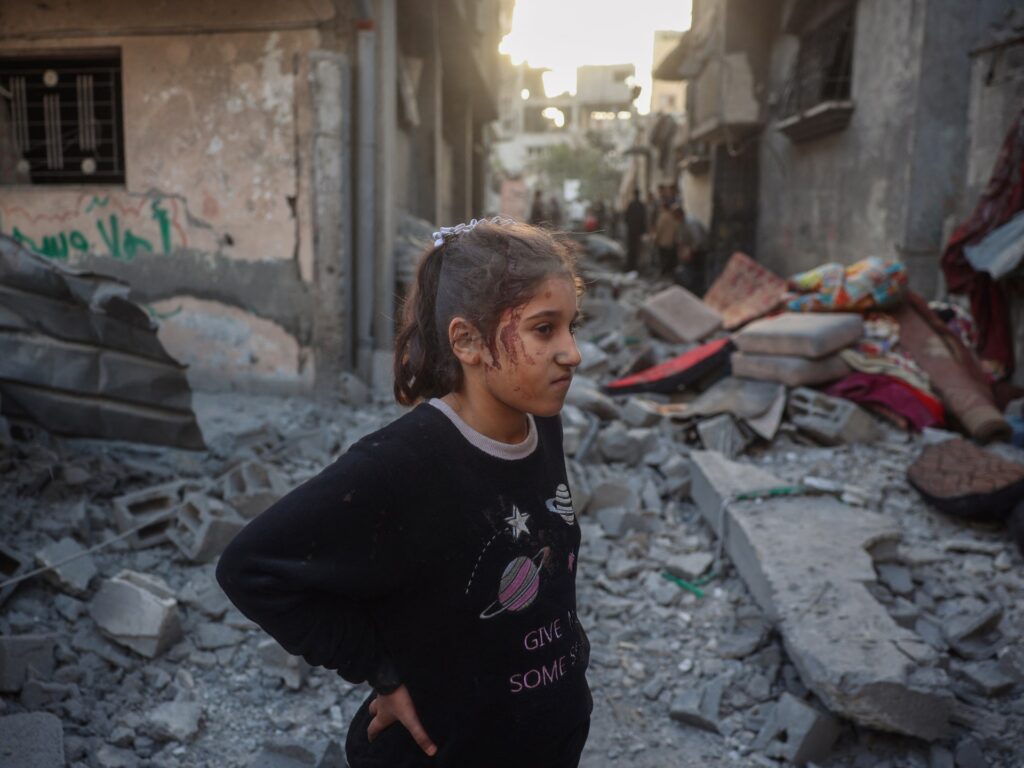
At least six people have been killed in Israeli attacks across Gaza amid a new so-called evacuation order issued by Israeli forces in a Gaza City suburb. On Sunday, Israeli attacks have so far killed one person in Nuseirat and two in Maghazi, both in central Gaza, as well as three people in Rafah, southern Gaza. In northern Gaza, which Israeli forces have besieged since early October, Gaza’s Ministry of Health said the Kamal Adwan Hospital was attacked, injuring its director, Hussam Abu Safia. In a video circulated by the ministry on Sunday, Abu Safia said the Israeli drone attack would “not stop us from completing our humanitarian mission and we will continue to do this job at any cost”. “We are being targeted daily. They targeted me a while ago but this will not deter us,” he said from his hospital bed. Gaza Civil Defence spokesman Mahmoud Basal told the AFP news agency that Abu Safia suffered an injury to his back and left thigh due to metal fragments but that he was now in a “stable” condition in hospital. Kamal Adwan Hospital is one of the three hospitals that are barely operating in northern Gaza after Israeli forces detained and expelled medical staff and prevented emergency medical equipment from reaching. Reporting from Deir el-Balah, central Gaza, Al Jazeera’s Hind Khoudary said the attack on Abu Safia was typical of Israeli attacks on Palestinians in intensive care units in northern Gaza, unable to receive medical aid due to a blockade. “In the northern Gaza Strip, there are no civil defence teams, ambulances or paramedics. This is also adding more misery because even if you can get the chance for anyone to help rescue you, there are no teams to help you or save your life,” Khoudary said. In the past few weeks, Israel has said it facilitated the delivery of medical and fuel supplies to northern Gaza, but the amount of aid going in is still below the needs of the residents. In Jabalia, Beit Lahiya and Beit Hanoon, towns in northern Gaza that are being heavily attacked, residents told the Reuters news agency that Israeli forces had blown up hundreds of houses in the latest attacks. Palestinians in Gaza say Israeli tactics seem to be directed at depopulating the area completely and creating a buffer zone, a claim denied by Israel. Gaza’s Health Ministry said on Sunday that at least 44,211 people have been killed in Israeli attacks, and 104,567 others have been wounded. Forced displacement Meanwhile, the Israeli army issued evacuation orders in the Shejaia suburb of eastern Gaza City on Sunday. “For your safety, you must evacuate immediately to the south,” army spokesperson Avichay Adraee wrote on X. Adraee’s address came after Hamas claimed a rocket volley on Saturday, which it said had targeted an Israeli army base over the border. On social media, footage showed Palestinians leaving Shejaia on donkey carts and rickshaws moving to southern Gaza. Since the war began 13 months ago, Israel has issued several evacuation orders, each time forcing Palestinians to move from places previously designated as “safe zones”. The orders have been criticised as effectively being tantamount to the forced displacement of Palestinians. Adblock test (Why?)