

Far right in strong position as Romania votes in presidential election
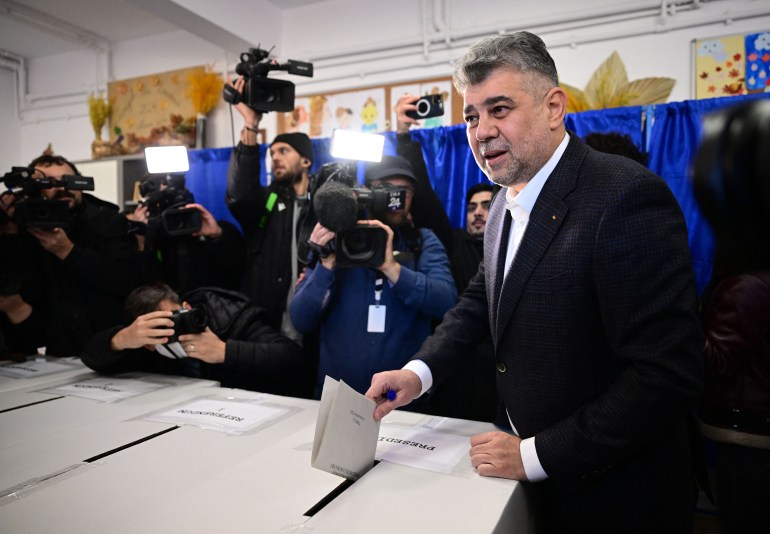
Social Democrat Marcel Ciolacu and far-right George Simion are the most likely to move on to a run-off on December 8. The first round of presidential elections has begun in Romania, with voters choosing a replacement for the outgoing President Klaus Iohannis. Romanians are choosing between 13 candidates on Sunday, with the top two moving on to a second round of voting on December 8 if no single candidate gets more than 50 percent of the vote in the first round. That second presidential vote may be between current Social Democratic Party (PSD) Prime Minister Marcel Ciolacu and the far-right leader of the Alliance for the Union of Romanians (AUR), George Simion. Social Democratic Prime Minister Marcel Ciolacu casts his ballot in the Romanian presidential election on November 24, 2024 [Daniel Mihailescu/AFP] By 12:00 GMT, Romania’s central election bureau said the voter turnout was 27 percent. Romanians have until 19:00 GMT to cast their votes. Ciolacu has been leading in the polls with 25 percent compared with Simion, who according to opinion polls holds the support of 15 to 19 percent of the country. Romanian political analyst Cristian Pirvulescu said that the AUR party could get a boost in the parliamentary election slated for December 1 if Simion performs well in the presidential vote, and other right-leaning voters could coalesce around Simion if he reaches the run-off. “Romanian democracy is in danger for the first time since the fall of communism in 1989,” Pirvulescu told the news agency AFP. Ciolacu’s PSD has shaped the country’s politics since 1990, but this election comes at a tumultuous time in the European Union member state amid rising inflation and the ongoing war in neighbouring Ukraine. Simion has been able to tap into an affordability crisis in the country. While inflation is trending downwards from a record 10 percent last year, the far-right candidate has tapped into voter frustrations about economic issues. Presidential candidate and leader of the far-right Alliance for the Union of Romanians, George Simion, greets the press outside a polling station in Bucharest, Romania, November 24, 2024 [Andrei Pungovschi /AFP] Inflation is expected to be 5.5 percent by the end of 2024. Simion opposes sending military aid to Ukraine – a country with which Romania shares a 650-kilometre (400-mile) border. Simion, who has repeatedly praised United States President-elect Donald Trump, has tapped into a hard right message that appears to be growing in popularity in both the US and Europe. Borrowing from the Trump playbook, Simion has warned of possible electoral fraud, and has also opposed sending military aid to Ukraine. Simion has also campaigned for unification with Moldova, which has renewed a five-year ban on him entering the country. “We are at a point where Romania can easily divert or slip towards a populist regime because [voter] dissatisfaction is pretty large among a lot of people from all social strata,” Cristian Andrei, a political consultant, told The Associated Press news agency. “And the temptation for any regime, any leader, will be to go on a populist road.” Adblock test (Why?)
Thousands protest against sexual violence in France
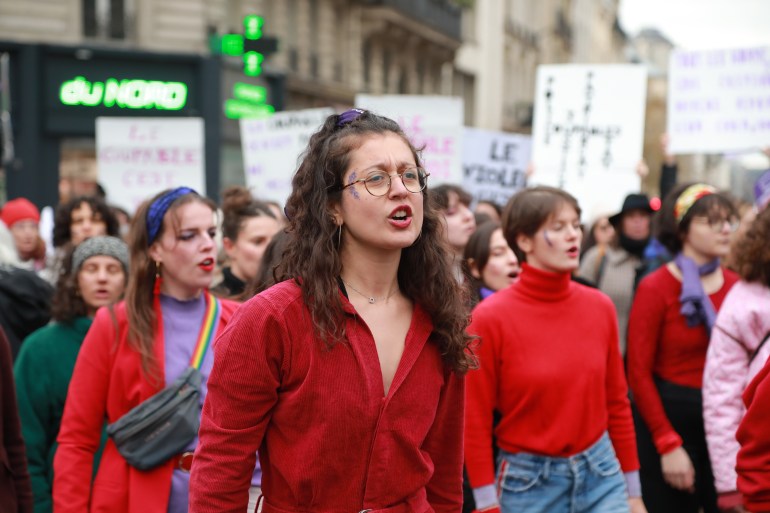
Thousands of people have taken to the streets across France to protest against sexual violence. The protests on Saturday come two days before the International Day for the Elimination of Violence Against Women. In the capital, Paris, large crowds of women and men marched waving purple placards that denounced gender-based violence and defended women’s reproductive rights. Demonstrators voiced concerns about a possible rollback on women’s rights in the United States when President-elect Donald Trump returns to the White House in January. Vice President-elect JD Vance said he would like a national abortion ban in a podcast interview in 2022, but has since emphasised that individual states should determine their policies. Demonstrators march against violence against women two days before the International Day for the Elimination of Violence Against Women in Paris, France on November 23, 2024 [Mustafa Yalcin/Anadolu] The French newspaper Le Monde reported that roughly 80,000 protesters took to the streets in Paris, with 400 different organisations taking part in demonstrations. It said thousands of people also took to the streets in smaller cities across the nation, including 1,500 in Renne outside Lyon in the southeastern part of France. France enshrined abortion rights in the constitution in March — a move largely seen as a response to the US move to roll back key reproductive rights protections in 2022 when the Supreme Court overturned decades-old laws protecting abortion rights nationally. While abortion has been legal since 1975 in France, the constitutional change explicitly guaranteed abortion access. France was the first country in the world to do so. Protesters also voiced solidarity with Gisele Pelicot, whose ex-husband Dominique Pelicot and 50 other co-defendants are on trial over allegations that the men drugged and raped her while she was unconscious over a decade. In September, Dominique accepted the charges. “Unfortunately, anybody can be a perpetrator of violence. It can be our brothers. It can be our fathers. It can be our colleagues. It can be our bosses. I think that’s the big shock for people,” said Maelle Noir, representing the feminist collective Nous Toutes, which translates as All of Us, told The Associated Press news agency at the Paris protest. Demonstrators hold signs in sexual violence protests in Paris, France, on November 23, 2024 [Mustafa Yalcin/Anadolu] Protesters in Paris [Mustafa Yalcin/Anadolu] Adblock test (Why?)
What does the use of more powerful weapons mean for Ukraine?
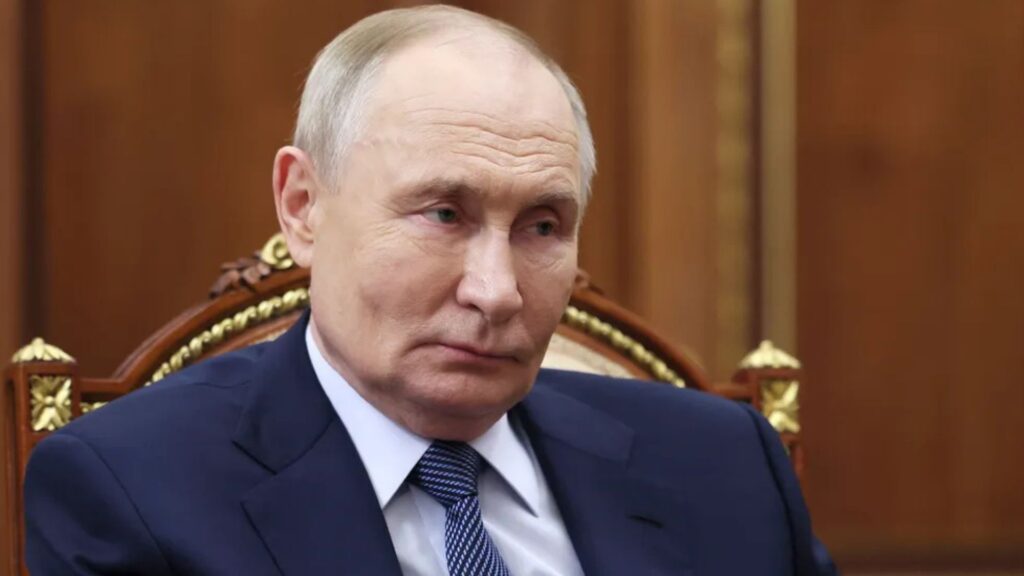
Russia uses hypersonic missile for first time in the war after Ukraine uses Western weapons to hit Russian territory. Russia has attacked Ukraine with a new hypersonic missile. Western leaders say it marks a dangerous new phase in the war. The Kremlin says it follows a decision by the White House to let Ukraine fire US missiles into Russian territory. So, what could happen next? Presenter: Bernard Smith Guests: Michael Bociurkiw – Global affairs analyst Pavel Felgenhauer – Russian defence and military analyst Steven Erlanger – Chief diplomatic correspondent (Europe), The New York Times Adblock test (Why?)
Trump backs staunchly anti-Muslim Florida lawmaker to run for US Congress
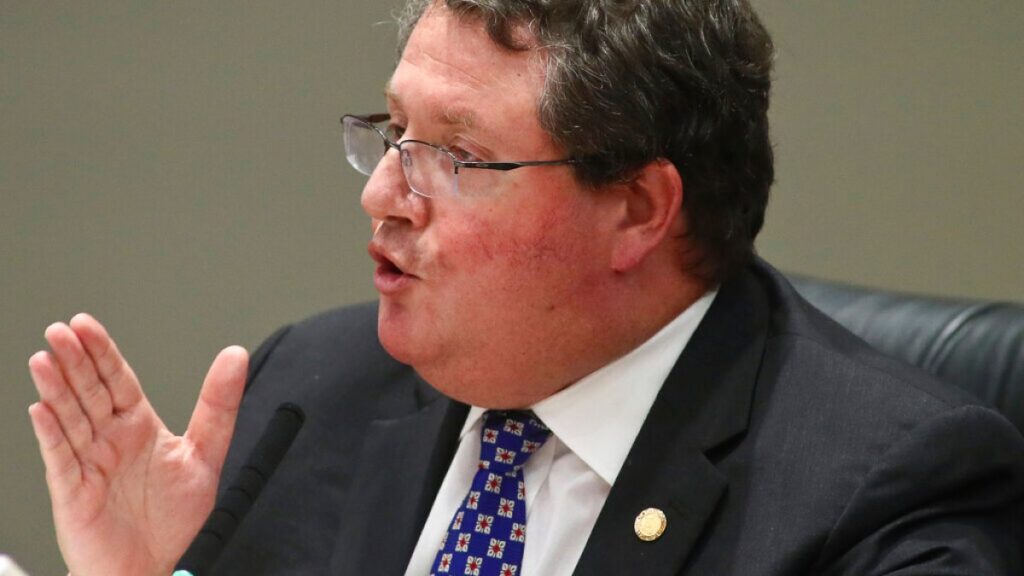
United States President-elect Donald Trump is encouraging a Florida legislator who celebrated the killing of an American citizen by the Israeli military to run for Congress. Trump said in a social media post on Sunday that if State Senator Randy Fine decides to seek a congressional seat in Florida, the state lawmaker would have his “Complete and Total Endorsement”. Fine, who has a long history of anti-Muslim statements, sparked outrage earlier this year when he appeared to praise the killing of Aysenur Ezgi Eygi, a US activist who was fatally shot by the Israeli military in the occupied West Bank. “Throw rocks, get shot. One less #MuslimTerror ist. #FireAway,” Fine wrote in a social media post in September. Eygi was taking part in a peaceful protest when she was shot. Both Israel and the outgoing administration of US President Joe Biden have dismissed her killing as an accident. Fine’s post – which X (formerly Twitter) found to be in violation of its violent speech policy – is part of a long list of inflammatory, anti-Palestinian and Islamophobic comments by the state legislator. “Fine is a friend to no one except fascism,” Rasha Mubarak, a Palestinian-American activist from Florida, told Al Jazeera. “Trump’s endorsement signals a deepening alignment with the violent, fascist elements within the capitalist class, whose interests are served by sowing division and perpetuating the dominance of imperialism.” Fine often proclaims that the US has a “Muslim problem”. In 2021, when told by a social media user that Palestinians were being forced out of their homes by Israel, he responded with: “#BlowThemUp”. According to the Council on American Islamic Relations (CAIR), he also sent a private message to a Florida resident saying: “Go blow yourself up!” Two years earlier, Fine referred to Jews who support Palestinian rights as “Judenrat” – Nazi collaborators. Last year, Fine argued that fear of Muslims is justified. “While many Muslims are not terrorists, they are the radicals, not the mainstream,” he wrote in a post on X. “Now is the time to speak truth, not bathe in political correctness that will kill us.” Fine’s office did not immediately respond to Al Jazeera’s response for comment. Over the years, CAIR has called on Florida lawmakers to censure and penalise Fine, including over his recent comments on Eygi’s killing. “We struggle to think of another time in modern American history when an elected official openly celebrated the murder of an American by a foreign government and encouraged more such killing,” CAIR’s deputy executive director, Edward Ahmed Mitchell, said in May. “Randy Fine has made it clear where his priorities lie, and it is not with the American people. We urge the Florida House of Representatives to censure him for this hateful, un-American rant.” Despite celebrating the killing of an American woman by a foreign military, Trump described Fine as an “America First Patriot”. He called on him to run for the seat of Congressman Mike Waltz, who will leave his seat to serve in the White House as national security adviser. Florida Governor Ron DeSantis will call for a special election to fill the vacancy next year. Fine, who previously served in Florida’s House of Representatives and was recently elected to the state’s Senate, has not announced his candidacy, but he welcomed Trump’s statement. “It would be the honor of my life to be one of your footsoldiers,” he wrote, addressing the incoming president. “Your confidence is overwhelming and I will have news to share soon!” Trump himself has regularly spread anti-Muslim rhetoric, including saying that the Quran, Islam’s holy book, teaches a “very negative vibe” and proclaiming that “Islam hates us”. He also imposed a travel ban on several Muslim-majority countries during his first term as president. But this year, the former president softened his tone as he courted Arab and Muslim voters, promising to bring “peace” to the Middle East. Trump’s endorsement of Fine as well as some of his staunchly pro-Israel cabinet picks highlights the depth of his alliance with far-right forces. Adblock test (Why?)
Philippines VP Sara Duterte threatens Marcos assassination if she is killed

The president’s security has been boosted after his deputy’s ‘active threat’ that were ‘made so brazenly in public’. Security agencies in the Philippines have stepped up safety protocols after Vice President Sara Duterte threatened to have President Ferdinand Marcos Jr assassinated if she was killed. Duterte, an ally of Marcos until recent months, made the threat on Saturday, as a rift between the two most powerful political families in the county widens. “This country is going to hell because we are led by a person who doesn’t know how to be a president and who is a liar,” she said in the profanity-laced briefing broadcast on her Facebook page. “Don’t worry about my safety. I have talked to a person and I said, if I get killed, go kill BBM [Marcos], [First Lady] Liza Araneta, and [Speaker] Martin Romualdez. No joke. No joke,” she said. “I said, do not stop until you kill them and he said yes.” Duterte made the statement in response to comments urging her to stay safe while she was in the House of Representatives, where her chief of staff was detained for failing to reply to questions on the alleged misuse of funds at the vice president’s office. The vice president did not cite any threat against her. The presidential communications office said Duterte’s remarks were being taken as a serious threat against Marcos. “Acting on the vice president’s clear and unequivocal statement that she had contracted an assassin to kill the president if an alleged plot against her succeeds, the executive secretary has referred this active threat to the Presidential Security Command for immediate proper action,” it said in a statement. “Any threat to the life of the president must always be taken seriously, more so that this threat has been publicly revealed in clear and certain terms,” it added. Executive Secretary Lucas Bersamin referred the “active threat” against Marcos to an elite presidential guards force, which said it considered the Duterte’s threat, which was “made so brazenly in public”, a national security issue. Duterte is the daughter of Marcos’s predecessor, Rodrigo Duterte, who is notorious for his crude language and a controversial war on drugs that is under investigation by the International Criminal Court. She remained Marcos’s deputy after resigning from her post as education secretary in the cabinet in June, indicating a crack in their political alliance that propelled them to a landslide victory in 2022. In October, Vice President Duterte told reporters that her relationship with Marcos had become so “toxic” that she sometimes imagines beheading him. She also confessed that she felt “used” after teaming up with Marcos. She threatened to dig up the remains of Marcos’s father, the late dictator Ferdinand Marcos Sr, from the national cemetery and dump them in the sea. The political rift comes before mid-term elections in May, when Filipinos are to vote for new members of the House of Representatives, half of the Senate and thousands of local officials. It will be a litmus test of Marcos’s popularity and an opportunity for him and his political allies to consolidate power. Even though Duterte resigned from the cabinet, she remains the constitutional successor to the 67-year-old president. Adblock test (Why?)
1000 days of war and the toll on Ukraine’s media
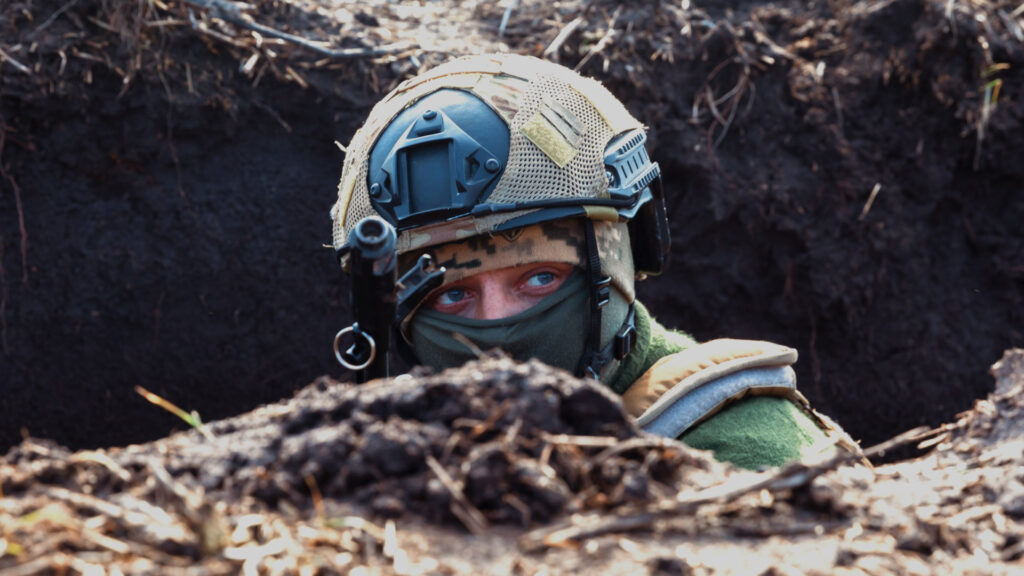
President Biden’s decision to allow Ukraine to fire US missiles into Russia has brought the world’s two leading nuclear powers to a head. Western media overlooks the broader implications of this move. Inside Ukraine, journalists face the dual threats of restricted press freedoms and Russian aggression. Contributors:Branko Marcetic – Writer, Jacobin MagazineLeonid Ragozin – Journalist & authorPauline Maufrais – Ukraine program manager, Reporters Without BordersSevgil Musaieva – Editor-in-chief, Ukrainska Pravda On our radar Israel’s media and political class have united in their fury over the arrest warrants issued by the ICC for Israeli leaders. Tariq Nafi looks at the media coverage. Silenced voices: Afghan journalism in the shadow of Taliban rule Since the Taliban regained power, Afghanistan’s media landscape has faced severe restrictions. We sat down with the former head of Tolo News to discuss working in exile and keeping the spirit of Afghan journalism alive. Featuring:Lotfullah Najafizada – Former director of news, Tolo TV Adblock test (Why?)
Israel and its supporters cannot gaslight the law
It was expected that the issuance of arrest warrants by the International Criminal Court (ICC) against Israeli Prime Minister Benjamin Netanyahu and Defence Minister Yoav Gallant for their roles in crimes committed against Palestinian civilians in Gaza would cause a flood of furious responses from Israel and its allies. The chorus is as colourful as its arguments are flimsy and dehumanising: from French writer Bernard-Henri Levy, who claims the ICC can only prosecute in countries without a “proper judicial system” to Republican Senator Lindsey Graham declaring war on the ICC and any nation that dares to implement its warrants. However, the more sinister attacks, illustrated by statements of Democratic Congressman Ritchie Torres and Israeli politician Naftali Bennett, which argue that Israel’s actions were justifiable as self-defence or reprisals against Hamas’s brutal October 7 attack, constitute a dangerous form of gaslighting and need to be debunked. These arguments fail not only on moral but also on legal grounds, when taking into account international humanitarian law and legal precedents set by special courts like the International Criminal Tribunal for the former Yugoslavia (ICTY). The protections afforded to civilians in armed conflict are absolute and non-derogable, and the ICC is right to enforce them. The argument that Israel is exercising its “right to self-defence” has been made throughout this war and not just in response to legal rulings. However, self-defence under international law is not a justification for violating fundamental legal principles. The targeting of civilians, indiscriminate attacks and disproportionate use of force are explicitly prohibited under the Geneva Conventions and customary international law. During the ICTY’s prosecution of Milan Martic, leader of Serb rebels in Croatia, for the shelling of Zagreb, the Appeals Chamber unequivocally held that attacks against civilians cannot be justified by self-defence. It stated that “whether an attack was ordered as pre-emptive, defensive or offensive is from a legal point of view irrelevant” if the conduct of the attack violates principles of international law. In Gaza, evidence indicates that Israeli military operations have resulted in widespread and systematic attacks against civilians. Residential areas, hospitals and schools – protected spaces under international humanitarian law – have been subjected to intense bombardment. Even in cases where military targets may exist, attacks that fail to distinguish between civilians and combatants or cause disproportionate harm to civilian populations violate Articles 51 and 52 of Additional Protocol I to the Geneva Conventions. Therefore, Torres’s argument that the ICC is “criminalising” self-defence does not hold. Bennett, who himself has made statements of intent to commit crimes against Palestinian civilians, asserts that Israel is “fighting back” Hamas’s attacks. However, international law unequivocally prohibits reprisals against civilian populations. Article 51(6) of Additional Protocol I states: “Attacks against the civilian population or civilians by way of reprisals are prohibited in all circumstances.” This prohibition applies irrespective of the conduct of the opposing party. The ICTY precedents further reinforced this, including in the case of Martic, holding that reprisals must meet strict conditions, including necessity, proportionality, and adherence to humanitarian principles. Even when responding to serious violations by the adversary, acts of reprisal must respect international law. The indiscriminate and disproportionate nature of attacks in Gaza, including the use of heavy explosives in densely populated areas, renders the argument of reprisal legally untenable. Voices parroting the points made by Torres and Bennett argue that Hamas’s alleged use of human shields absolves Israel of responsibility for civilian casualties. This is a dangerous misrepresentation of international law. While the use of human shields by Hamas would itself be a violation of international law, it does not diminish Israel’s obligation to avoid harm to civilians. Additional Protocol I clarifies that violations by one party do not permit the opposing party to disregard its own legal obligations. The Appeals Chamber of the ICTY addressed this issue directly, emphasising that the failure of one party to adhere to its obligations does not absolve the other from its responsibilities. In the case of Gaza, indiscriminate aerial bombardments have resulted in tens of thousands of civilian deaths, raising serious concerns about whether adequate precautions were taken to minimise harm, as required by Articles 57 and 58 of Additional Protocol I. A core tenet of international humanitarian law is the principle of proportionality, which prohibits attacks where the expected civilian harm would be excessive in relation to the anticipated military advantage. The ICC’s charges against Israeli leaders focus precisely on this issue. Reports from Gaza have highlighted the devastating impact of military operations on civilians, with entire neighbourhoods razed, residential buildings purposefully demolished and vital infrastructure destroyed. Moreover, the principle of distinction, enshrined in Article 48 of Additional Protocol I, mandates that parties to a conflict must at all times distinguish between civilian populations and combatants. Weapons and tactics that cannot discriminate between the two, such as large-scale aerial bombardments of urban areas, are considered inherently unlawful. The case of Martic illustrates this point: the ICTY found that the use of indiscriminate weapons, such as cluster munitions, in civilian areas constitutes a direct attack on civilians and a grave breach of international law. The parallels with the weaponry and tactics employed in Gaza are evident. Israel’s actions in Gaza have clearly provided the ICC with enough ground to pursue a case against Netanyahu and Gallant. In this context, Torres’s assertion that the court is engaging in an “ideological crusade against the Jewish State” is simply false. The ICC does not single out specific nations; it prosecutes individuals where there is credible evidence of war crimes, crimes against humanity, or genocide. The ICC’s intervention serves a critical purpose: to uphold the universal principles of humanity enshrined in international law. Accountability is essential to deterring future violations and ensuring justice for victims. To dismiss the ICC’s actions as a “kangaroo court”, as Torres did, disregards the court’s mandate and the legal precedents it draws upon, including those established by tribunals for the former Yugoslavia, Rwanda and Sierra Leone. While the October 7 attack by Hamas constitutes a heinous
What do the ICC arrest warrants mean for Israel and its allies?
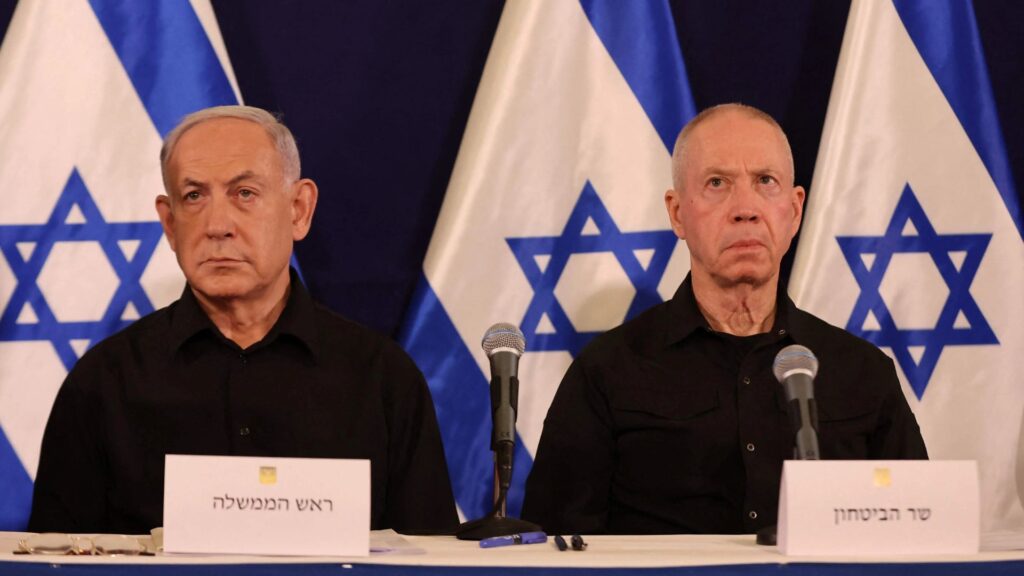
Israel and its key ally the United States have attacked the International Criminal Court’s decision to issue arrest warrants for Prime Minister Benjamin Netanyahu and former Defence Minister Yoav Gallant. Several European nations say they would execute the warrants if either man steps on their soil. So what might happen next? Presenter: Bernard Smith Guests: Francesca Albanese – UN special rapporteur on the occupied Palestinian territory Ori Goldberg – political commentator and former academic specialising in Middle East studies Stephen Zunes – professor of politics at the University of San Francisco Adblock test (Why?)
Soldier students: Job training gives hope to Myanmar’s military defectors
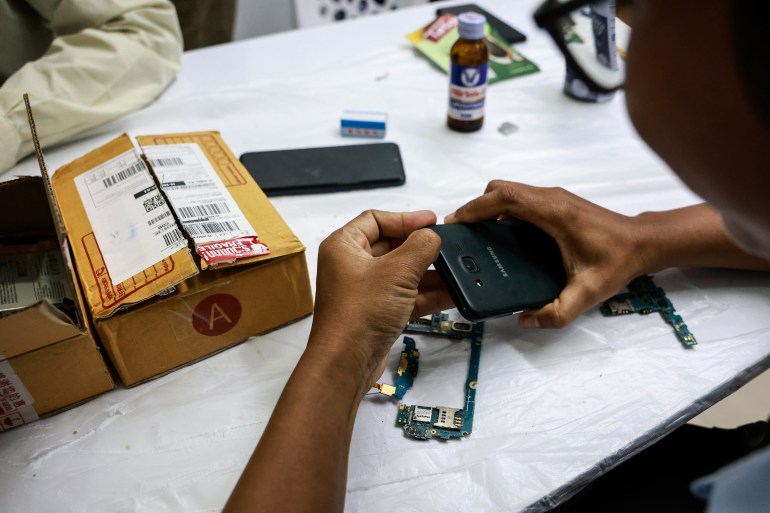
Myanmar-Thailand border – At a secret gathering above a cafe in a town on the Myanmar-Thailand border, Ko Aye examined the inside of an Android phone alongside 10 fellow defectors from Myanmar’s military and police forces. The trainer, an ex-captain in the Myanmar army, guided the group through the process of repairing a mobile phone, a skill that could help them build a future beyond the conflict they recently left behind. Having fled the notorious institutions they were once part of, these former police officers and soldiers now live in Thailand, near the Myanmar border, where they are learning new skills to adapt to a peaceful civilian life. “If Myanmar gets peace one day, I’ll return and repair phones there,” said Ko Aye, a transgender man, for whom the workshops mark a new chapter in a resilient life journey. “Although I’ll have to practise on some broken ones at home first,” Ko Aye added with a smile, wearing one of his homemade tie-dye shirts – a craft he taught himself to earn money. A defector from Myanmar’s armed forces learns to repair mobile phones near the Myanmar-Thailand border on November 2, 2024 [Valeria Mongelli/Al Jazeera] Mocked by colleagues about his gender during his time as an airport police officer, 31-year-old Ko Aye defected after the Myanmar military coup in February 2021. He retrained as a medic with the country’s pro-democracy resistance movement and it was during that time that Ko Aye witnessed firsthand the devastation of air attacks on the civilian population who are resisting military rule in Myanmar. Eventually, Ko Aye fled to Thailand in search of safety and mental recuperation. He is now part of the first cohort of graduates from a vocational training programme launched by People’s Goal, an advocacy group for military defectors. Alongside fixing mobile phones, the programme offers bicycle, e-bike and motorcycle repair training – skills that can help forge a new path for those who have taken part in years of waging war. A repair instructor and a defector from Myanmar’s armed forces fix a bicycle during an e-bike and bicycle repair workshop on November 1, 2024, near the Myanmar-Thailand border [Valeria Mongelli/Al Jazeera] ‘Our main goal is to give hope’ Many defectors from Myanmar’s army struggle to secure work and accommodation when they arrive in Thailand after fleeing Myanmar. They lack legal residency, exacerbating fears of being arrested by Thai immigration authorities and deported to their country, where they could face torture, long prison sentences, or even execution. Fearing infiltration by military spies into their midst, most of the soldiers-turned-students on the skill training programme prefer to use aliases to protect their identities and shield their families from any potential retaliation back home. “Our main goal is to give hope for people who want to defect,” said Naung Yoe, 40, a former army major who defected three years ago. He explains how People’s Goal also provides safe houses, counselling and political education on democracy and human rights for the former members of the armed forces. Naung Yoe, 40, one of People’s Goal directors, at a training centre near the Thailand-Myanmar border on November 1, 2024 [Valeria Mongelli/Al Jazeera] One of five directors of the organisation, Naung Yoe said the training courses also serve as a beacon for soldiers who are contemplating defection, as members of the armed forces often worry about what awaits them and their families outside the cloistered world of the military. Myanmar is approaching its fourth year of widespread civil war, which erupted after the military removed the elected government of Aung San Suu Kyi in 2021, detained civilian leaders, and then killed people who peacefully protested against the army’s takeover. According to United Nations investigators, reports of systematic torture, gang rape, and child abuse have escalated under military rule. On both sides of Myanmar’s conflict, thousands of young people have been shaped by years of brutality. A generation traumatised and desensitised to violence, with their education disrupted and ready access to weaponry, presents immense challenges for their reintegration into civilian life. Naung Yoe estimated that by December 2023, approximately 10,000 police officers and 3,900 military personnel had defected or surrendered following the coup. He believes that number has since surpassed 15,000, although verifying the exact figure is impossible. People’s Goal also cannot verify whether a former soldier who approaches them for skills training has been involved in war crimes, nor can the group sanction them for such involvement. “Generally, those who have committed war crimes are unlikely to defect,” Naung Yoe said. “They never feel safe outside the military.” If a former soldier confesses to crimes, however, the organisation will pass on information to investigators from international courts that are seeking evidence of such crimes carried out by Myanmar’s military, Naung Yoe said. “Defections weaken [the] regime, and after the revolution, everyone who has committed crimes will have to face justice, somehow,” he added. Former soldiers and analysts say Myanmar’s military brutalises troops, conditioning them to believe their bloody actions are righteous, but access to social media and smartphones has diluted that indoctrination. Naung Yoe explained that soldiers – who are closely watched by their superiors – have less access to information than most of the population, but they are still aware the military is killing civilians. “Those who opposed the killings enough defected,” he told Al Jazeera. “But some defectors have gaps in their knowledge. That’s why we offer democracy training and work with civilian organisations to help them learn.” ‘Now only military power and pressure’ Phone repairs trainer Thet Oo, 30, a former captain in the military, told Al Jazeera he was sceptical about whether vocational training could encourage would-be defectors. Although he is willing to teach soldiers and police officers who have deserted later than others, Thet Oo said he has little time for those “who haven’t stood by the people” and remain in the military. “I’m doing this training to help defectors provide for themselves and improve their lives,” he said. “Enough time
Gatwick Airport south terminal evacuated over security concerns
[unable to retrieve full-text content] Gatwick Airport’s south terminal was evacuated after a suspicious item was found in a piece of luggage.