

Mapping the impact of climate change on global displacement
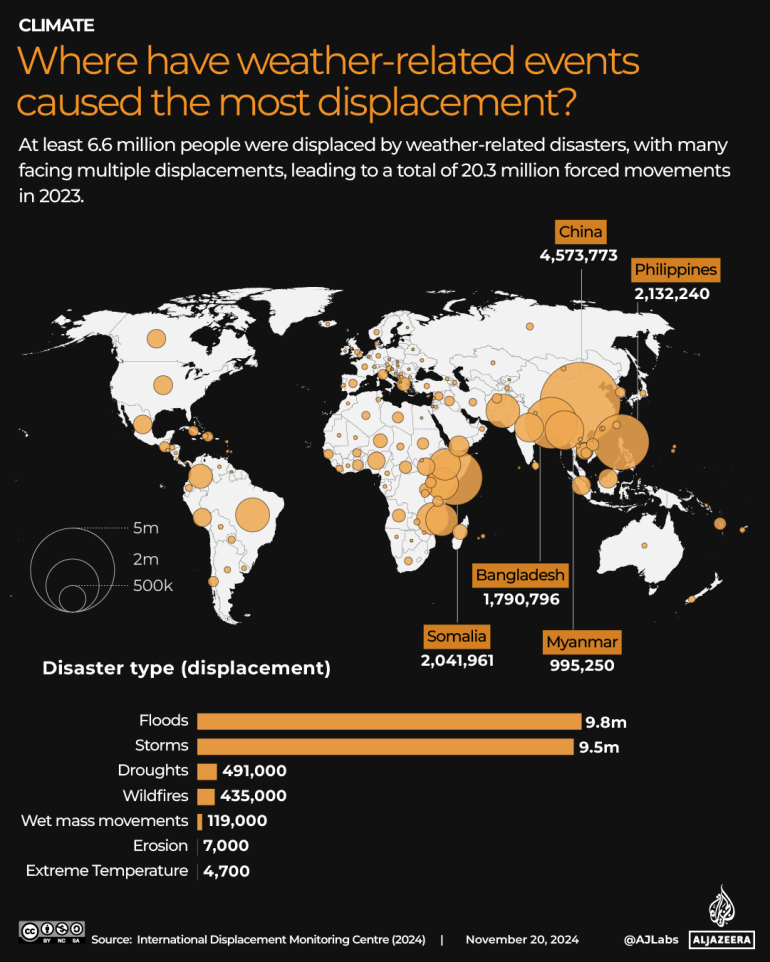
As the annual United Nations Climate Change Conference (COP29) concludes in Baku, Azerbaijan, global commitments to address climate change are once again being confronted with the stark realities on the ground of widespread weather-related displacement. According to the 2024 Global Report on Internal Displacement, at least 6.6 million people worldwide were displaced by weather-related disasters by the end of 2023. However, many were displaced multiple times primarily due to floods, storms, droughts and wildfires, resulting in a total of at least 20.3 million forced movements throughout the year. An additional 1.1 million people were displaced by natural disasters not directly attributed to climate change such as earthquakes and volcanic activity. “It is expected that the number of people in need of humanitarian assistance will grow exponentially in countries vulnerable to climate change,” the Norwegian Refugee Council’s global lead on climate and environment, Julie Gassien, told Al Jazeera. “Climate change will contribute to much larger numbers of people being displaced and will lead to more, larger and more intense hazardous events”, she added. Where did climate change cause the most displacement? The countries with the highest number of weather-related displacements in 2023 were China (4.6 million) and the Philippines (2.1 million). There, Typhoon Doksuri, one of the most powerful storms of the season, displaced more than a million people and killed dozens. In Africa, Somalia experienced the continent’s highest number of displacements with 2 million, largely due to the “worst floods in decades” forcing hundreds of thousands to flee their homes. Weather-related events also increase risks for already vulnerable communities, including those affected by conflict, said Ezekiel Simperingham, global manager for migration and displacement at the International Federation of the Red Cross. “The compounding impacts affect people’s lives, health and livelihoods,” he told Al Jazeera, noting that these communities also struggle to receive the support they need. (Al Jazeera) Floods and storms accounted for the vast majority of displacements with 9.8 million and 9.5 million respectively, followed by droughts (491,000) and wildfires (435,000). Wet mass movements, such as landslides, led to at least 119,000 displacements, while erosion and extreme temperatures caused 7,000 and 4,700 displacements, respectively. The number of weather-related displacement incidents has risen sharply over the past 16 years, since the Internal Displacement Monitoring Centre (IDMC) began tracking them in 2008. Floods, in particular, have seen a clear upward trend despite some fluctuations, rising from 272 weather-related incidents in 2015 to a peak of 1,710 incidents in 2023 – an increase of more than six times. Similarly, storm events, including hurricanes, cyclones and typhoons, have experienced a significant surge, growing more than seven times from 163 recorded incidents in 2015 to 1,186 in 2023. Combined, floods and storms were responsible for 77 percent of all weather-related incidents globally from 2008 to 2023. (Al Jazeera) Pushker Kharecha, deputy director of the Climate Science, Awareness, and Solutions programme at Columbia University’s Earth Institute, says human-induced climate change “has certainly played a significant role” in worsening temperature-related extremes. “It has also worsened floods, droughts, storms and extreme sea levels in most inhabited regions,” Kharecha told Al Jazeera. He warned that the “worsening of extremes” is expected to persist if we “miraculously achieve the 1.5 degrees Celsius by 2100 temperature target” – which aims to limit global warming to 1.5C above pre-industrial levels by the end of the century to reduce severe climate impacts. Displacements occurring worldwide Out of the 359 million weather-related global displacements recorded since 2008, nearly 80 percent were from the Asia and Asia Pacific regions, accounting for about 106 and 171 million respectively. China, the Philippines, India, Bangladesh and Pakistan were the top five countries with the most recorded internal displacements over the 16-year period, accounting for 67 percent of global displacements. According to the World Bank, over the past two decades, more than half of South Asia’s population – about 750 million people – have been affected by at least one natural disaster such as floods, droughts or cyclones. The region is projected to experience annual losses averaging $160bn by 2030 if current trends continue. (Al Jazeera) Overall, countries in the Global South, including large parts of Africa, Asia, Asia Pacific, MENA and Latin America, experienced five times (5.13) more displacements relative to their populations compared with countries in the Global North in 2023. Columbia University’s Kharecha called this phenomenon one of the major ”global injustices” – where the Global South has contributed the least to the problem but is suffering the most severe impacts, and will continue to bear the brunt of its effects. According to a New York Times analysis, 23 industrialised nations, overwhelmingly in Western Europe and North America, contributed to 50 percent of all the greenhouse gases that have contributed to global warming, released by fossil fuels and industry over the past 170 years. Kharecha explained that the Global South already contains the warmest regions on Earth, and hence even the relatively small increase in global temperature affected those regions more than colder regions. “Also, these countries are the most vulnerable to climate impacts as they generally have the fewest financial and/or technological resources to mitigate the problem,” he added. (Al Jazeera) Are COP members doing enough to tackle displacement? Alice Baillit, policy adviser at the Internal Displacement Monitoring Centre, says addressing disaster displacement requires addressing “both its root causes, including vulnerabilities created by climate change, as well as the losses and damages it creates”. “Current pledges [at COP] are woefully inadequate, in part because they do not fully consider the true costs of displacement,” Baillit told Al Jazeera. Last week, more than 200 former leaders and climate experts in a letter said the UN-led COP summit was “no longer fit for purpose”, and requires a “fundamental overhaul”. Kharecha at Columbia University also expressed scepticism about what summits like COP can achieve. “Just look at any graph of CO2 emissions over time. They continue to grow unabated after decades of these meetings,” he said. “As long as the agreements are not legally binding, ‘commitments’
Old is gold: Why Bollywood is turning to re-releases amid string of flops

New Delhi, India – When Raghav Bikhchandani found out on social media that Gangs of Wasseypur, the acclaimed Indian blockbuster released in 2012, was all set to hit the theatres in New Delhi again, he knew he could not miss it this time and even alerted several film clubs and WhatsApp groups he was part of. For the 27-year-old copy editor, getting to watch the two-part film felt like “finally being introduced to the most memed movie in Indian pop culture” as he found himself commuting for three hours on an August afternoon to a seedy theatre in the city’s Subhash Nagar neighbourhood to catch the movie on the big screen. “I came into Hindi cinema much later in life, and I had missed out on seeing this on the big screen. When I was studying abroad in Chicago, even NRIs in my university would quote dialogues from this movie but I had never gotten a chance to see it. So I knew I couldn’t miss this opportunity,” he told Al Jazeera. Based in a mining town in eastern India on a decades-long feud between rival gangs mainly dealing in coal, “the black diamond”, the Anurag Kashyap-directed duology attained popularity and critical acclaim following its full-house premier at the 2012 Cannes Film Festival in France. With an inventive cast, sharp dialogues, pitch-black comedy and gritty setting, the five-hour epic crime and political drama cemented its status as one of the most memorable Indian films of the past decade. Actress Reema Sen poses during a Gangs of Wasseypur success party in Mumbai [File: Strdel/AFP] But it isn’t just Gangs of Wasseypur. Bollywood, India’s much-vaunted Hindi film industry based in Mumbai, as well as regional film studios spread across the world’s most populous nation, are witnessing an unprecedented surge in re-releases of films celebrated in the past, some going as far back as the 1950s. Dozens of such films have hit theatres in many cities this year – far more than ever before – as the country’s nearly $200bn film industry looks to revive its fortunes after taking multiple hits in recent years. In a country like India, which produces more films a year than Hollywood, cinema is essentially a mass medium, most enjoyed in the dark and dreamy confines of a film theatre showing its latest offering on a 70mm screen. But the coronavirus pandemic hurt Indian films – as it did with movies globally. Since 2022, theatres across the world have been struggling to get people back, a crisis compounded by the rise of online streaming and OTT platforms. India reeled under two deadly COVID-19 waves in 2020 and 2021, forcing the closure of nearly 1,500 to 2,000 theatres – a majority of them single-screen cinemas, which could not stand up to the corporate franchise-driven multiplexes mostly seen in shopping malls mushrooming across the country. Then there is the rising cost of making a full-length film. Stars, mainly men, are now paid an unprecedented fee, some amounting to nearly half of a film’s budget. Moreover, the expense of their entourage – makeup and publicity crew, vanity vans, hotels and travel – puts further financial strain on producers and studios. Recently, prominent producer and director Karan Johar told journalists the star fees in Bollywood were “not in touch with reality”. Bollywood actor Ranbir Kapoor promoting his 2011 film Rockstar at a college in Mumbai. The film returned to Indian theatres this year [File: Yogen Shah/The India Today Group via Getty Images] To make matters worse, Bollywood in recent years has been witness to a string of flops, with even big multiplex chains such as PVR INOX incurring heavy losses – and therefore forced to be more imaginative in their offerings. It was against such a backdrop that theatre owners and filmmakers decided to re-release old films. Many of films that have returned to theatres were runaway successes the first time around, while others weren’t – until now. PVR INOX’s lead strategist Niharika Bijli was quoted in a report in September this year as saying the chain re-released a whopping 47 films between April and August this year. While the average occupancy for a new release during this period stood at 25 percent, re-releases enjoyed a higher average of 31 percent, according to the reports. Filmmaker Anubhav Sinha, whose 2002 hit Tum Bin was released again this year to much fanfare, told Al Jazeera nostalgia has “a large role to play here”. “There are usually two kinds of viewers going in for the re-releases. The first is the people who missed these films in theatres. Maybe they saw it on OTT and felt like having a theatrical experience of it. Or there’s people who have memories, nostalgia attached to a film, and want to revisit it,” he said. Tum Bin’s actors: Sandali Sinha, right, Priyanshu, centre, and Himanshu [File: JSG/CP] Indian film trade analyst Taran Adarsh agreed, saying the success of Tumbbad, a 113-minute mythological horror initially released in 2018, was proof that the formula of reruns was working. “It’s also about nostalgia, some people might want to experience the magic of a film on the big screen again,” he said. Tumbbad did not do well when it first came out. But with rising popularity and critical acclaim, the film was re-released in September this year and went on to perform significantly better than the year it hit the big screen. “When it re-released, Tumbbad actually collected over 125 percent more revenue in its opening weekend than it did back in 2018. People will watch things if there is word-of-mouth publicity and theatre owners and distributors are aware of it. Superstars like Shah Rukh Khan and Salman [Khan] are coming back to theatres, thanks to Karan Arjun getting a re-release,” said Adarsh, referring to the actors, who, despite being in their late 50s, continue to be the top two reigning stars in Bollywood. First released in 1995, Karan Arjun, a rebirth-themed action drama directed by actor-turned-director Rakesh Roshan, is set to
Russia-Ukraine war: List of key events, day 1,002

These were the key developments on the 1,002nd day of the Russia-Ukraine war. Here is the situation on Friday, November 22: Ballistic missile attack President Vladimir Putin confirmed that Russia fired a hypersonic intermediate-range ballistic missile at the Ukrainian city of Dnipro in response to the United States and United Kingdom allowing Kyiv to strike Russian territory with advanced Western weapons, in a further escalation of the 33-month-old war. Putin said civilians would be warned in advance of further strikes with such weapons, and he said the conflict has “acquired elements of a global character”. Ukrainian President Volodymyr Zelenskyy said use of the new missile amounted to “a clear and severe escalation” and called for strong worldwide condemnation, lamenting that “right now, there is no strong reaction from the world”. Kyiv initially suggested Russia fired an intercontinental ballistic missile – a weapon designed for long-distance nuclear strikes and never before used in war – but US officials and NATO echoed Putin’s description of the weapon as an intermediate-range ballistic missile, which has a shorter range of 3,000–5,500km (1,860-3,415 miles). An anonymous US official told the Reuters news agency that Russia notified Washington shortly before the missile strike, while another official said the US had briefed Kyiv and allies to prepare for the possible use of such weapons. Russia’s Defence Ministry said air defence forces had shot down two British Storm Shadow cruise missiles fired by Ukraine, while Russia’s ambassador to the UK Andrei Kelin has warned that Britain “is now directly involved in this war”. Russia said a new US ballistic missile defence base in northern Poland will lead to an increase in the overall level of nuclear danger. Warsaw has said “threats” from Moscow only strengthen the argument for NATO defences. Fighting Russia’s Defence Ministry has said its forces captured the eastern Ukrainian village of Dalne in the Donetsk region. Ukraine’s General Staff made no acknowledgement of Dalne being in Russian hands, but mentioned the village as one of seven in an area where Russian forces had tried to pierce Ukrainian defences 26 times over the past 24 hours. Ukraine’s parliament has postponed a sitting due to have taken place on Friday out of “potential security issues”. Russia’s weekend missile strikes hit three of the five working thermal plants owned by Ukrainian power giant DTEK and one of them is still offline, an industry source has said, illustrating the severity of the latest blow to the national grid. A car drives along a road during a power outage in Kyiv, Ukraine on November 20, 2024 [Gleb Garanich/Reuters] North Korea President Joe Biden dropped his opposition to Ukraine firing US missiles at targets inside Russia in response to North Korea’s entry to the war, two sources familiar with the decision have told Reuters. North Korean leader Kim Jong Un has accused the US of ramping up tension and provocations, saying the Korean Peninsula has never faced such risks of nuclear war as now, state media said. The defence ministers of South Korea and Japan condemned North Korea’s dispatch of troops to Russia during talks, Seoul’s Defence Ministry said in a statement. Sanctions The US has issued new Russia-related sanctions, including on Russia’s Gazprombank, according to a notice posted on the Department of Treasury’s website. Poland, Lithuania, Latvia and Estonia have submitted a letter to the European Commission calling for customs duty to be imposed on fertilisers from Russia and Belarus. Adblock test (Why?)
A strong treaty can end plastic pollution and save lives

Two years ago, global leaders promised to establish a treaty by the end of 2024 that would lay the groundwork to end plastic pollution. The words used then to describe the treaty, such as “international”, “legally binding” and “addresses the full plastics lifecycle”, suggested a strong global treaty with teeth, one that evoked hope that countries were ready and united to do the utmost. Since then, and after four divisive rounds of negotiations due to consistent opposition from a small minority of oil-producing countries, language governing the scope and mandate of this treaty has been pared down, with strong measures at risk of being replaced with weak alternatives such as “nationally-determined”, “voluntary”, and “waste management” (rather than the full plastics lifecycle). This week, as we head into the fifth and final round of negotiations, scepticism about whether negotiators will reach a strong global treaty is understandable. However, we must not give in to those who seek to continue with business as usual. Governments must stand strong and unite to prevent irreversible loss for all, knowing that they have the support of the rest of the world. We have done this before – the Montreal Protocol on ozone-depleting substances provides us with a shining example of how countries can come together to agree on common global rules that have brought us back from the brink. We must do this again and we must do it now as plastic pollution is rapidly escalating the threats to both nature and humanity. Failure is not an option when there’s ample proof of plastics’ pervasive danger. Two years ago, just after the world agreed to create the treaty, researchers detected, for the first time, microplastics in human breast milk, potentially poisoning our children. The more vulnerable among us need our support – not because they cannot help themselves, but because individual actions are insufficient to tackle the issue without the systemic changes needed to end plastic pollution. This is where our leaders need to step up and put in place a strong global treaty that the world not only wants but urgently needs. The reasons we must take action now are clear, and so are the solutions that an effective treaty must entail. One, a strong treaty will save lives. Research indicates that the current volume of plastic pollution is projected to increase exponentially, and it is already destroying ecosystems and wildlife populations, prompting climate change and infiltrating our bodies through the air we breathe and the food and water we consume. To protect human lives and nature from the worst effects of plastic pollution, we need a strong treaty that bans the most harmful plastic products and chemicals. Additionally, a strong treaty is one that establishes global product design requirements so we can ensure the plastics we use are safe and can be effectively recycled. Two, a strong treaty will help us address some of the current inequalities created and exacerbated by plastic pollution. The world is inundated with plastic pollution, yet its effects are not felt equally. In low-income countries, the lifetime cost of plastic is 10 times higher than in wealthier nations. Even in affluent countries, the plastic pollution toll can be severe and even deadly for some, as seen in Cancer Alley in the United States, an economically distressed area that accounts for a quarter of the country’s petrochemical production. Decades of plastic, petrochemical, and industrial pollution have led to this region having the highest cancer rate in the US. To counter the crippling inequities in the plastics value chain, a strong treaty must contain robust financial mechanisms to support a just transition, especially in the Global South. This means aligning both private and public financial flows with the treaty’s obligations, while also mobilizing and distributing additional financial resources – especially for implementation in developing countries – to reduce plastic pollution. Furthermore, a treaty like this, through the mechanisms we just discussed, will be capable of halting harmful financial flows that contribute to the crisis. Lastly, a strong treaty is the only approach that has the potential to deliver on the goal of ending plastic pollution. From scientists and governments to citizens and businesses, there is widespread agreement that the world urgently needs a treaty with global binding obligations. This type of treaty will raise the bar, create a level playing field for all, and mandate a shift away from destructive business-as-usual models towards meaningful systems change. Securing enduring and impactful global action requires courage and leadership in carving a path that breaks free from harmful and deeply ingrained practices. Our leaders must take responsibility and be accountable for the promise they made two years ago to deliver a strong treaty, one that we need to put our planet on a path to recovery. The views expressed in this article are the author’s own and do not necessarily reflect Al Jazeera’s editorial stance. Adblock test (Why?)
Will Israel’s Netanyahu and Gallant ever be arrested?
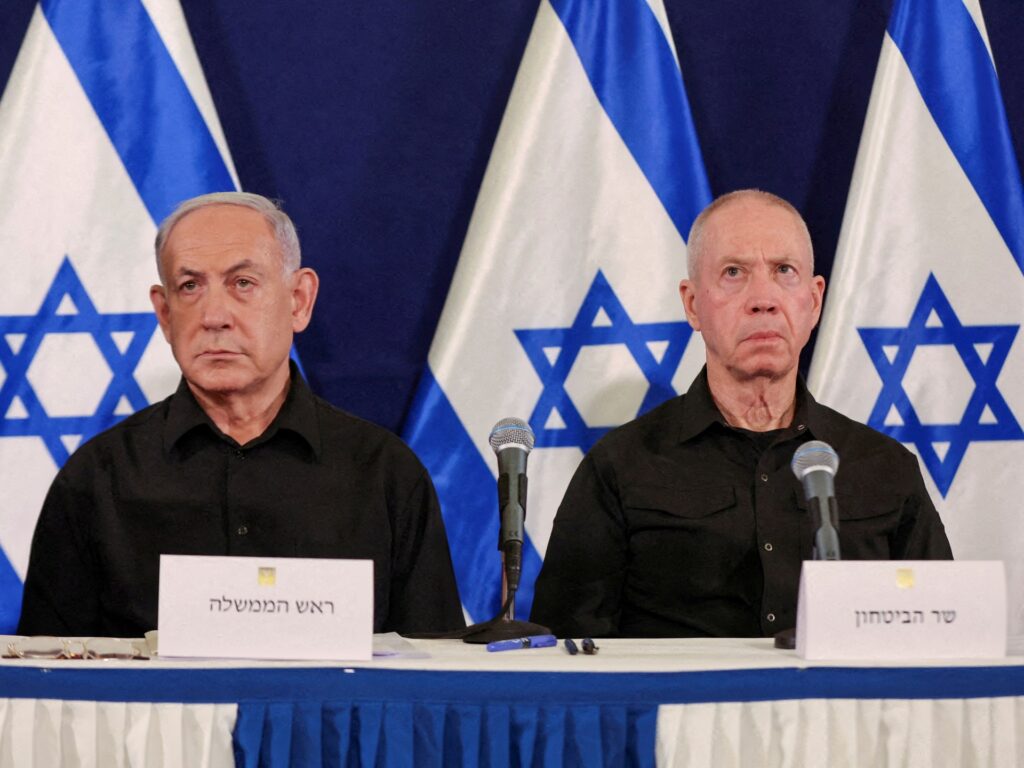
NewsFeed The International Criminal Court issued arrest warrants for Israel’s Prime Minister Benjamin Netanyahu, former Israeli Defence Minister Yoav Gallant and Hamas commander Mohammed Deif. More than 120 countries that are part of the ICC are obliged to enforce the arrest warrants, but are they prepared to act? Al Jazeera’s Virginia Pietromachi explains. Published On 22 Nov 202422 Nov 2024 Adblock test (Why?)
What do we know about Russia’s new ballistic missile, Oreshnik?
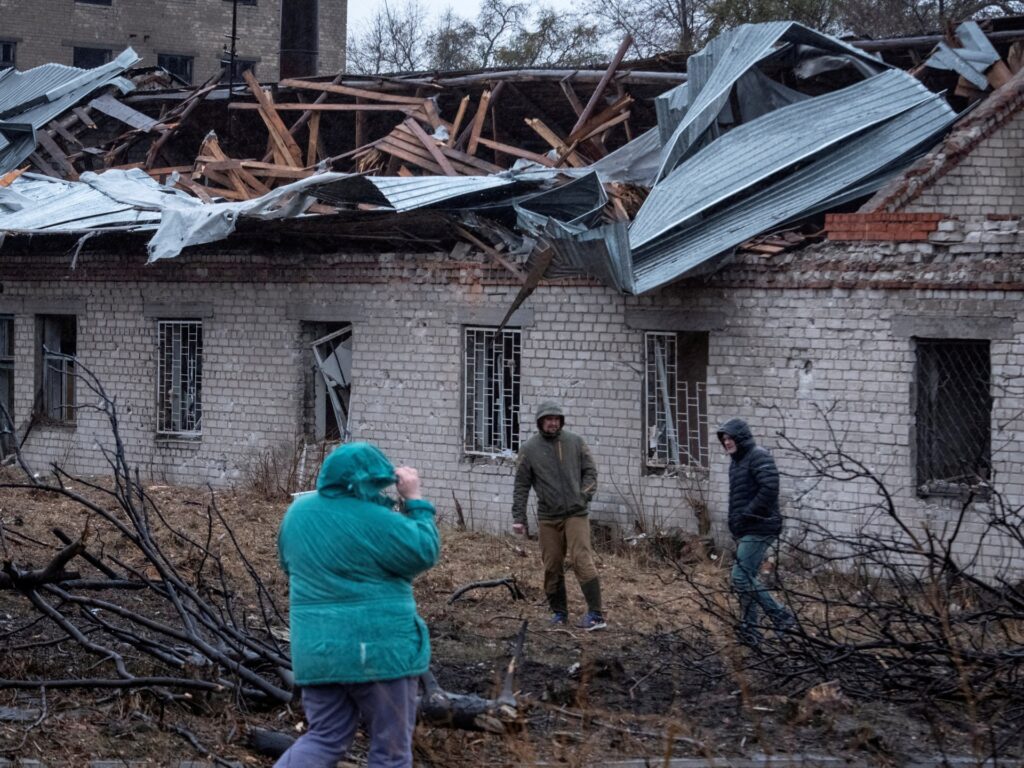
President Vladimir Putin has confirmed that Russia tested a hypersonic intermediate-range missile in an assault on the Ukrainian city of Dnipro, Ukraine. The Kremlin said the attack was in response to Ukraine’s recent use of US- and UK-supplied missiles to target Russian territory. Joe Biden, the outgoing US president, and his administration only recently gave the green light for Ukraine to launch long-range strikes into Russia, a move which has escalated tensions. The Pentagon said the US had been notified of the launch through nuclear risk reduction channels. Here is what you need to know: What is the Oreshnik, Russia’s new ballistic missile? The new intermediate-range ballistic missile, Oreshnik, which means hazel tree in Russian, is a nuclear-capable weapon that has not been previously mentioned publicly. The Pentagon said it is based on the “RS-26 Rubezh” intercontinental ballistic missile (ICBM). Hypersonic missiles travel at speeds of at least Mach 5 – five times the speed of sound – and can manoeuvre mid-flight, making them harder to track and intercept. The missile can have three to six warheads, military expert Viktor Baranets wrote in the Komsomolskaya Pravda tabloid. Igor Korotchenko, editor of the Moscow-based National Defence journal, told the TASS state news agency that based on video footage of the strike, Oreshnik has multiple independently guided warheads. Why has Russia used this missile now? Russia is in retaliation mode. The launch came after Ukraine fired US- and UK-supplied missiles on Russian territory for the first time, escalating tensions in the nearly three-year-long conflict. This followed the reversal of a ban on Kyiv, which had been placed by Washington, on using high-precision Army Tactical Missile Systems (ATACMS) to strike targets in Russia. Moscow says six US-made ATACMS missiles were launched at Russia on Tuesday, while British Storm Shadow cruise missiles and US-made HIMARS were fired at the country on Thursday. Moscow says this makes Western countries that authorise Ukraine to use their missiles to hit Russia direct participants in the conflict. Kremlin spokesman Dmitry Peskov said on Friday that Moscow was in “no doubt” that Washington had understood that the strike on Dnipro was a warning. “The main message is that the reckless decisions and actions of Western countries, which produce missiles, supply them to Ukraine, and subsequently take part in carrying out strikes on Russian territory, cannot remain without a reaction from the Russian side,” Peskov said. What has Putin said about the attacks? In an unscheduled television appearance on Thursday, Putin said the strike on the city of Dnipro had tested in combat conditions “one of the newest Russian mid-range missile systems”. Putin said it had been deployed “in a non-nuclear hypersonic configuration” and said the “test” had been successful and had hit its target. Putin said air defences cannot intercept the Oreshnik. “Modern air defence systems… cannot intercept such missiles. That’s impossible,” Putin said. “As of today, there are no means of counteracting such a weapon,” the president boasted. Putin also stated that Russia will “address the question of further deployment of intermediate and shorter-range missiles based on the actions of the United States and its satellites”. What has Ukraine said about the strike? Kyiv claimed that Russia had used an intercontinental ballistic missile (ICBM) along with a barrage of other missiles at Dnipro. Local authorities said the attack hit an infrastructure facility and injured two civilians. President Volodymyr Zelenskyy warned of a “clear escalation”. An intercontinental ballistic missile (ICBM) has a range of 1,000-5,500km (621 to 3,418 miles), a level below that of an intermediate-range ballistic missile. Ukraine’s Main Intelligence Directorate said it was fired from the 4th Missile Test Range, Kapustin Yar, in Russia’s Astrakhan region and flew 15 minutes before striking Dnipro. The missile had six warheads, each carrying six submunitions. The peak speed the missile reached was 11 Mach. What happens next? NATO will hold an emergency meeting with Ukraine at the alliance headquarters in Brussels on Tuesday to discuss Moscow’s use of the missile, a NATO source said on Friday. The Western military alliance confirmed that the NATO Ukraine Council, grouping allies’ NATO ambassadors and their Ukrainian counterparts, will convene at Kyiv’s request, but did not give any detail on the topic of discussions. Adblock test (Why?)
Can Colombia’s talks with the Comuneros del Sur help achieve ‘total peace’?

For Gómez-Suárez, if Colombia’s conflict is regional, then the solution should be too. He draws a contrast between his approach to the Comuneros and the way the Colombian government previously negotiated peace with the Revolutionary Armed Forces of Colombia (FARC), once the largest rebel group in the country. In 2016, under then-President Juan Manuel Santos, Colombia signed a historic peace deal with the FARC that promised rural reforms and development in exchange for the nationwide demobilisation of the group’s fighters. The negotiations that led up to the deal, however, were fraught — and some parts of the FARC splintered off into dissident groups rather than agree to the terms. Gómez-Suárez argued his region-specific approach could be more efficient. “With previous agreements, namely that with the FARC guerrillas, there was this idea that nothing is set until everything is agreed, which implied that the parties would only begin implementation after a final document was signed,” Gómez-Suárez said. “Our case is impressive because sometimes we have even implemented before agreements are formally reached.” Mama Dina, an Indigenous spiritual leader, leads a ceremony as negotiators from the government and the Comuneros del Sur meet [Carlos Saavedra/Al Jazeera] He pointed out that the Comuneros proposed a unilateral ceasefire even before their first meeting with the government’s delegates, as a sign of good faith. Since then, the parties have signed two agreements and plan to begin the Comuneros’ transition to civilian life before the next presidential elections in 2026. The first agreement comprises four points, including a definitive bilateral ceasefire, the gradual destruction of the group’s weapons and a collaborative programme to remove land mines throughout Nariño. The second establishes safety guarantees for the Red Cross, a humanitarian nonprofit, to operate in the Comuneros’ territory. In addition, the deal calls for the creation of a team composed of Comuneros members who will be trained and tasked with searching for people who have gone missing during the conflict. In return, the government has pledged funding for constructing roads, aqueducts, schools and universities in the territory, to help address poverty and infrastructure shortcomings in Nariño. Adblock test (Why?)
What are the ICC countries where Netanyahu and Gallant may face arrest?
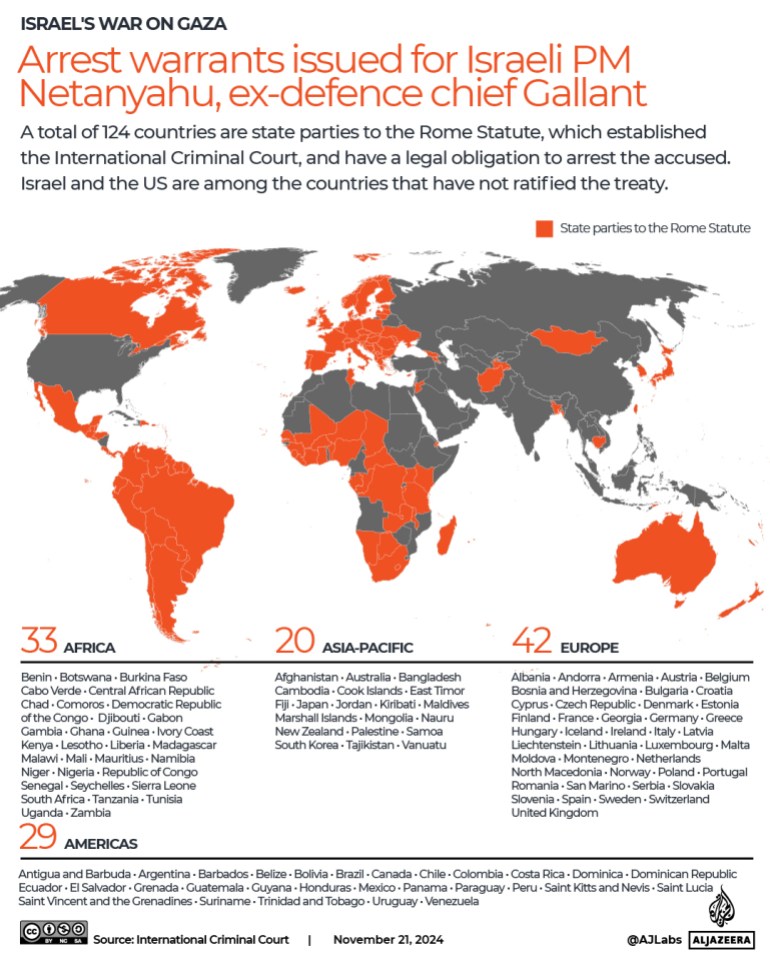
More than 120 countries that are part of the International Criminal Court are obliged to enforce the arrest warrants. Israeli Prime Minister Benjamin Netanyahu and his former Defence Minister Yoav Gallant are now fugitives from justice after the International Criminal Court (ICC) issued arrest warrants against them over suspected war crimes in Gaza. While Israel does not recognise the authority of the ICC and Netanyahu and Gallant will not turn themselves in, the pair’s world just got a lot smaller. The Rome Statute, the treaty that established the ICC, includes 124 state parties across six continents. Under the statute, countries that are part of the ICC are legally bound to enforce its arrest warrants, according to international human rights lawyer Jonathan Kuttab. “The law operates on the basis of a presumption that people will obey it. That’s how all laws are created,” Kuttab told Al Jazeera. “You expect everybody to respect the law. Those who don’t respect the law are themselves violating the law.” He added that there were early signs that countries would not ignore the court’s decision. Many of Israel’s allies — including the European Union — have committed to enforcing the arrest warrants, Kuttab pointed out. Netanyahu has rebuked the charges and called them anti-Semitic. Here is the list of countries where Netanyahu and Gallant could be detained after the ICC’s decision: [Al Jazeera] A Afghanistan Albania Andorra Antigua and Barbuda Argentina Armenia Australia Austria B Bangladesh Barbados Belgium Belize Benin Bolivia Bosnia and Herzegovina Botswana Brazil Bulgaria Burkina Faso C Cabo Verde Cambodia Canada Central African Republic Chad Chile Colombia Comoros Congo Cook Islands Costa Rica Cote d’Ivoire Croatia Cyprus Czech Republic D Democratic Republic of the Congo Denmark Djibouti Dominica Dominican Republic E Ecuador El Salvador Estonia F Fiji Finland France G Gabon Gambia Georgia Germany Ghana Greece Grenada Guatemala Guinea Guyana H Honduras Hungary I Iceland Ireland Italy J Japan Jordan K Kenya Kiribati L Latvia Lesotho Liberia Liechtenstein Lithuania Luxembourg M Madagascar Malawi Maldives Mali Malta Marshall Islands Mauritius Mexico Mongolia Montenegro N Namibia Nauru Netherlands New Zealand Niger Nigeria North Macedonia Norway P Palestine Panama Paraguay Peru Poland Portugal R Republic of Korea Republic of Moldova Romania S Saint Kitts and Nevis Saint Lucia Saint Vincent and the Grenadines Samoa San Marino Senegal Serbia Seychelles Sierra Leone Slovakia Slovenia South Africa Spain Suriname Sweden Switzerland T Tajikistan Timor-Leste Trinidad and Tobago Tunisia U Uganda United Kingdom United Republic of Tanzania Uruguay V Vanuatu Venezuela Z Adblock test (Why?)
All to know about Man Utd’s manager Ruben Amorim before first EPL match

Manchester United’s new manager Ruben Amorim takes charge of his first game on Sunday when he leads his side to Ipswich Town in the Premier League. The 39-year-old Portuguese coach and former player was announced as Erik ten Hag’s replacement at the helm of the fallen giants this month. Al Jazeera takes a look at five things you need to know about Amorim before his debut: 1. The new ‘Special One’? The latest Portuguese managing sensation to be dubbed “the new Mourinho” – after former Chelsea, Real Madrid and Manchester United manager Jose Mourinho – Amorim arrives with quite the reputation as a coach even in his fledgling career. Amorim established himself as one of the most sought-after young coaches in world football at Sporting Lisbon, but his challenge in Manchester is of a different magnitude. The coach, who won two league titles at Sporting, follows the path from Portugal to the Premier League taken a generation ago by Mourinho, then the shining young managerial star, who swapped Porto for Chelsea while naming himself the “Special One”. Amorim will, however, be expected to do something that even Mourinho did not manage during his subsequent stint at United – win the club’s first Premier League title since the trophy-filled days of Alex Ferguson ended in 2013. Amorim has described Mourinho as a role model. He spent a short internship with his compatriot when Mourinho was managing United from 2016 to 2018. He arrives at Old Trafford two years younger than Mourinho was when he took over a Chelsea side that won two Premier League titles in his first two seasons at the helm. Other coaches have come from Portugal with big reputations, but not all have succeeded. Andre Villas-Boas failed to live up to expectations after swapping Porto for Chelsea in 2011. He too was burdened with the same nickname as Mourinho gave himself. But everything about Amorim, who was also linked to the manager’s job at Liverpool this year, suggests he could be something special. Ruben Amorim, left, led Sporting Lisbon against Jose Mourinho’s Roma in a preseason friendly in 2022 [Carlos Rodrigues/Getty Images] 2. The Amorim effect as a manager Amorim started his managerial career in 2018 with a short stint at the Lisbon club Casa Pia, then in the Portuguese third tier. He was appointed reserve team manager at Braga the following year and just three months later was promoted to first team boss. Eye-catching success at the top-flight club, including a shock League Cup final win over Porto, was enough to convince Sporting to pay his release clause in 2020, and he delivered immediately, leading the Lisbon club to their first Primeira Liga title in 19 years in his first full season with the loss of just one game. He also won the League Cup, defeating his former club Braga in the final. The club reached the Champions League last 16 the following season and the Europa League quarterfinals in the 2022-2023 campaign. He won a second Portuguese title last season to further burnish his reputation. He leaves Sporting sitting top of the league and second in the Champions League after thumping Manchester City 4-1 in Amorim’s last home game as coach. A dramatic fightback from two goals down, reminiscent of the United of old, was staged in his final Primeira Liga match as a 4-2 win was secured at Braga – maintaining Sporting’s 100 percent record for the season. Manchester City coach Pep Guardiola, right, congratulates Ruben Amorim of Sporting after the Champions League match on November 5, 2024 [Eric Verhoeven/Getty Images] 3. Amorim’s journey as a player Born in Lisbon, Amorim was a hard-working midfielder who spent the bulk of his playing career at Benfica, where he won a domestic treble in 2013-2014. He won 14 caps for Portugal, appearing at two World Cups, but ended his playing days at the age of 32 after a loan spell in Qatar with Al-Wakrah. He also enjoyed a loan spell with Braga during his formative years at Benfica, who he joined in 2009 and would go on to win three league titles with. The pinnacle of his playing career, having been a Portuguese youth international at all age levels from under-18s in 2003, was undoubtedly his appearances at the World Cups in South Africa in 2010 and 2014. Although mostly a squad player for his international career, which spanned more than five years, Amorim gained crucial experience as part of the set-up – and lined up alongside Cristiano Ronaldo throughout his own Portugal days. But more on that in a moment. Ruben Amorim, sixth from left, lines up with Cristiano Ronaldo, right, at the 2014 World Cup [Marius Becker/picture alliance via Getty Images] 4. Amorim will do it his way – starting with three at the back The Portuguese coach must hit the ground running with United struggling in the English top flight after just three wins in their opening nine games this season and sitting 14th in the table. United spent about 757 million pounds ($955m) on new players for ten Hag, who led them to one FA Cup and one League Cup. These are luxuries that Amorim will not enjoy in the short term as January’s transfer window will come too soon for the new manager to seal any sizeable signings. Few happen midseason anyway. Instead, it will be Amorim’s approach on the field that will be of most interest. There is little secret that he prefers a three-man defence with two wingbacks, two central midfielders and then two forwards supporting the striker. United’s current squad makeup does not lean towards these positions, particularly in attack, where wingers have been the order of the day for United since the days of George Best through to Ronaldo. One player that may enjoy a revival under Amorim, though, is his former teammate at Benfica, Victor Lindelof. (The pair also played alongside former United midfielder Nemanja Matic in that time.) The Swedish defender has failed to nail
Netanyahu, Gallant wanted for arrest by International Criminal Court
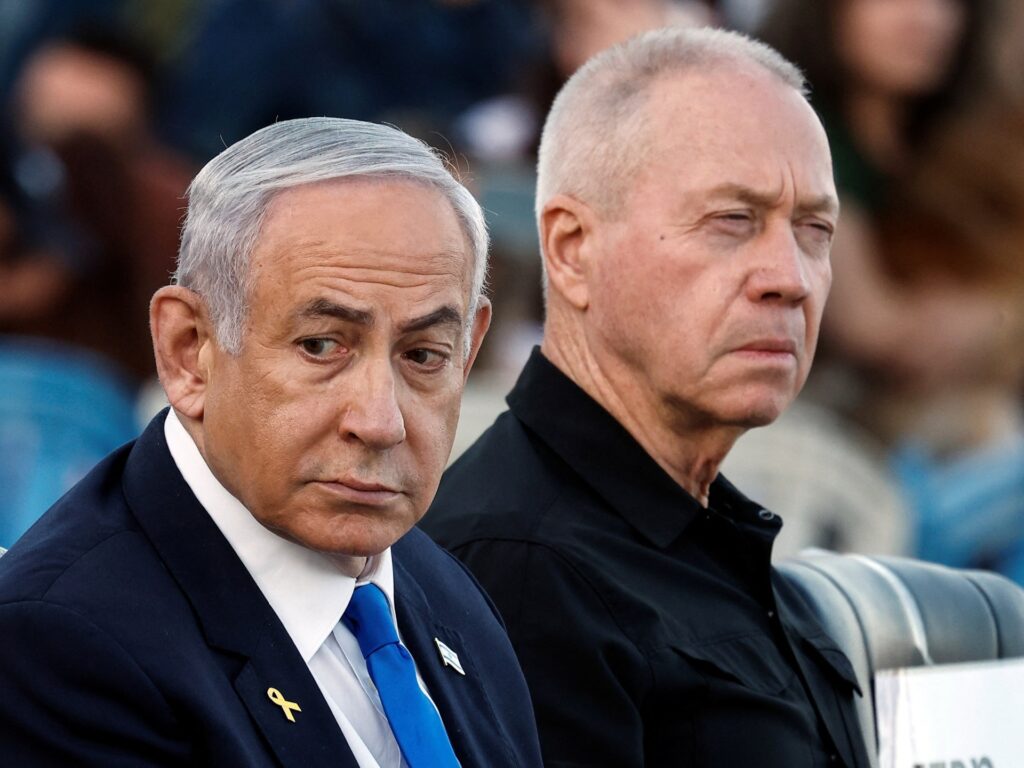
NewsFeed The International Criminal Court (ICC) issued arrest warrants for Israeli Prime Minister Benjamin Netanyahu and ex-Defence Minister Yoav Gallant for their conduct in Israel’s on Gaza. A Hamas leader Israel claims to have killed is also wanted by the court. Published On 21 Nov 202421 Nov 2024 Adblock test (Why?)