

From far-right gains to the economy: What’s at stake in Germany’s election?
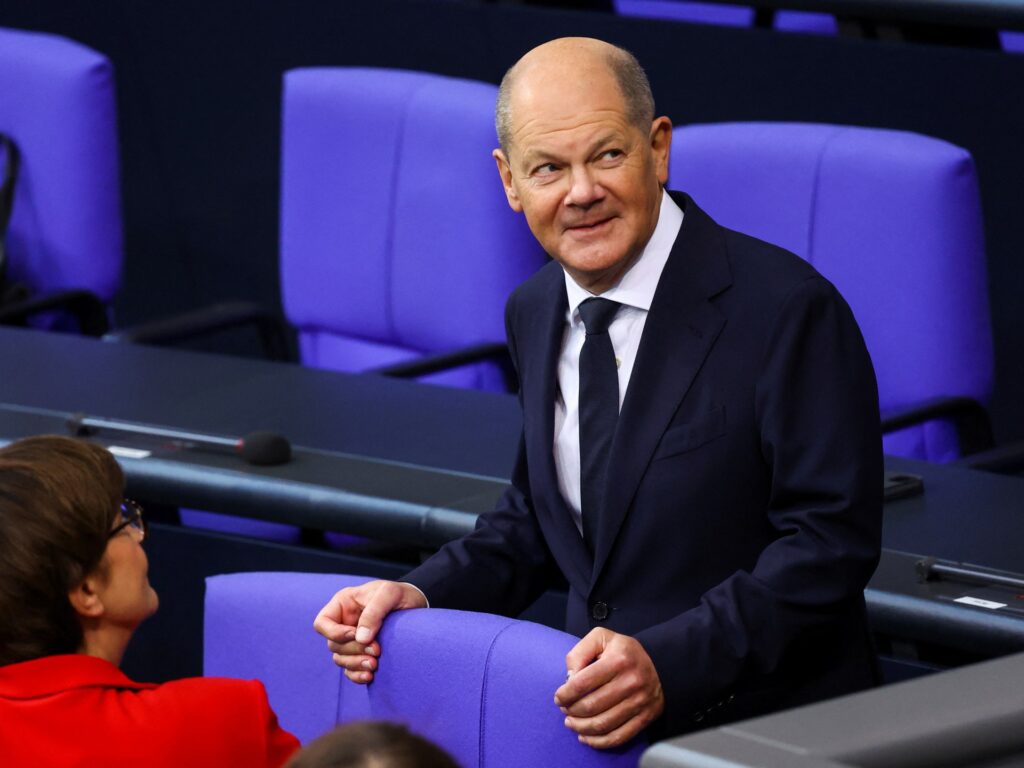
Berlin, Germany – In some countries, a snap election is held in a matter of weeks. Germany, by contrast, will enjoy a leisurely three months before it goes to the polls in an election that is likely to be overshadowed by the return of Donald Trump to the White House, an increasingly perilous situation in Ukraine, and a flagging domestic economy. Germany’s ruling “traffic light” coalition, formed by the Social Democratic Party (SPD), Greens and Free Democrats (FDP) collapsed on November 6, after Chancellor Olaf Scholz dismissed his finance minister, FDP leader Christian Lindner. Scholz has announced a vote of confidence will take place on December 16. The snap poll is expected to take place on February 23. Why did the coalition collapse? The three-way alliance formed after the 2021 elections was a rarity for Germany, and the FDP’s fiscal hawkishness always made an uneasy marriage with its centre-left partners, who campaigned in the 2021 elections on increased social and climate spending. The final break came during preparations for the 2025 budget, with Scholz arguing to pause Germany’s “debt brake”, which tightly limits public borrowing. Lindner insisted on demanding major public spending cuts and rolling back climate targets. Last week in the Bundestag, Scholz accused the FDP leader of pitting the government’s financial and military support for Ukraine against German pensioners. The national weekly newspaper Die Zeit reported that the FDP had deliberately provoked Scholz to collapse the coalition and force an early election, which the party has denied. “It was difficult to reconcile those three very different political ideas and ideologies,” said Markus Ziener, a senior fellow at the German Marshall Fund think tank, who believes infighting has weakened Germany’s position within the European Union at a time when the bloc is sorely in need of leadership. “The hope could be that the next elections will bring much more stable conditions to form a reliable government.” Who’s leading opinion polls now? The Christian Democratic Union (CDU) and its Bavarian sister party are currently polling at 32 percent, according to a recent INSA poll, more than all three of the coalition parties put together. Friedrich Merz, a former BlackRock board member who has moved the party rightward since becoming leader in 2022, is therefore well-placed to become the next chancellor. Based on current polling, he could lead a government with the SPD – based on the latest predictions likely to secure 16 percent, as a junior partner, a return to the familiar “grand coalition” that was in place for three of Angela Merkel’s four terms, or with the Greens, which are polling at 12 percent. Merz has promised to roll back several of the coalition’s reforms, including on climate. He wants to lower taxes, reduce social welfare spending and tighten the country’s borders. “It is time for a fundamental course correction in migration, security, foreign and economic policy,” Merz told the Bundestag last week. Scholz, now the least popular chancellor in post-war German history according to polls, has indicated that he will run again as the party’s candidate. But many senior figures in the SPD want to make a clear break with his tenure, and quickly. If he is to be deposed, Defence Minister Boris Pistorius is likely to replace him. How popular are far-right and leftist parties? The far-right Alternative for Germany (AfD) is on course to record a historic result. Assessments from Germany’s domestic intelligence agency that several of the party’s state branches are right-wing extremist organisations have not prevented the party from polling second, at 20 percent. Though all other parties refuse to form a coalition with the AfD, a strong performance could increase its influence on powerful parliamentary committees. Meanwhile, the FDP and the socialist Left party are currently below the 5 percent threshold required to enter parliament. The newly formed, left-wing Sahra Wagenknecht Alliance is at 7 percent. What are the key foreign policy and domestic economic issues? Trump’s campaign promise to bring a quick end to the conflict in Ukraine, and threats to pull military assistance to President Volodymr Zelenskyy’s government, come at a time when the war-torn nation is losing ground to Russia in the east and facing major attacks on its energy infrastructure ahead of winter. If Trump follows through, Germany, Ukraine’s second-largest backer, will be expected to dig deep and massively increase its military spending. Scholz recently spoke with Russian President Vladimir Putin for the first time in two years. He tends to tread a more careful approach and has refused to deliver long-range Taurus missiles out of fears of escalating the conflict. By comparison, Merz has been more hawkish on weapons deliveries and indicated he would approve the transfer, in line with the policies of the United Kingdom, France and the United States. Potentially adding further strain to the budget, Trump’s plans to slap 20 percent tariffs on all imports and 60 percent on Chinese imports would have severe consequences for the economy, as Germany remains heavily reliant on exporting manufactured goods. Europe’s largest economy is also its slowest growing. Though it has narrowly skirted recession, Germany’s central bank said on Tuesday that the present stagnation is likely to continue in the face of weak international demand and investment, and the prospect of new US tariffs. “We’re basically in a squeeze here. On the one hand, we probably have to deal with direct additional customs in the United States,” said Ziener. “On the other hand, we will probably be very much affected by high duties against Chinese products.” How do politicians plan to fix the economy? With no end in sight to the economic woes, more financial institutions and business representatives are calling for a reform of Germany’s debt brake to increase public investment, which has lagged for years. Merz, long known as a fiscal disciplinarian, has recently suggested an openness to reforming it, a possible sign of a shifting consensus. The constitutional-anchored measure limits borrowing to 0.35 percent of gross domestic product (GDP), but special investment off-budget funds
Prosecutors open to delaying Trump’s sentencing in hush money case
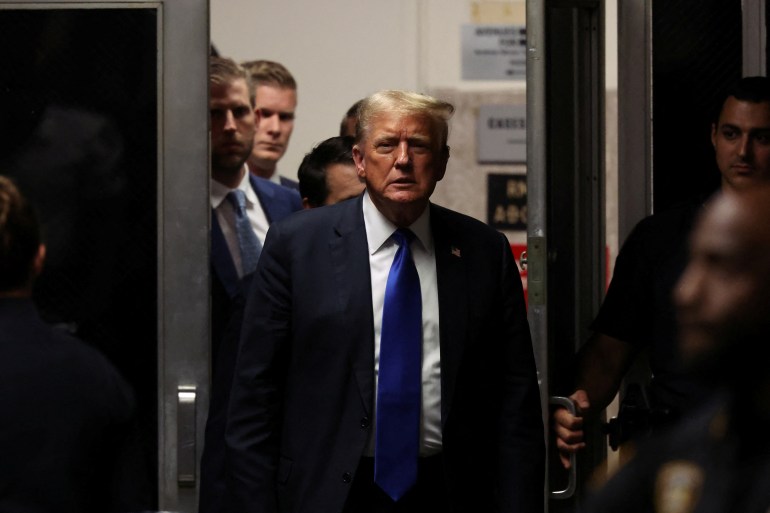
New York prosecutors say they are opposed to dismissing United States President-elect Donald Trump’s hush money case but have expressed openness to delaying his sentencing until after his second term. In a court filing Tuesday, the Manhattan District Attorney’s Office argued that Trump’s forthcoming presidency does not warrant dismissing a case that has already gone through the courts. However, “given the need to balance competing constitutional interests”, prosecutors said that “consideration must be given” to possibly pumping the brakes on the case until Trump exits office again. The case has long been plagued by delays. Last week, Judge Juan Merchan delayed ruling on Trump’s previous efforts to overturn his conviction related to a July ruling by the US Supreme Court, which allows a president’s immunity from criminal prosecution for official acts in office. It is unclear when the judge could rule on the matter. He could opt to delay the case for an undisclosed period of time or wait to see how a federal appeals court rules on Trump’s simultaneous attempts to move the case out of state court. In Tuesday’s court filing, prosecutors argued that “no current law establishes that a president’s temporary immunity from prosecution requires the dismissal of a post-trial criminal proceeding that was initiated at a time when the defendant was not immune from criminal prosecution and that’s based on unofficial conduct for which the defendant is also not immune”. Prosecutors stressed the need to “proceed in a manner that preserves both the independence of the Executive and the integrity of the criminal justice system”. Trump was found guilty on all counts in May of falsifying business records in a historic trial, becoming the first US president in history to be charged and convicted of a crime. The reality star billionaire had faced 34 felony counts of falsifying business documents tied to a $130,000 hush money payment made to adult film actress Stormy Daniels in the run-up to the 2016 US presidential election. A possible dismissal of the case would automatically dispose of Trump’s criminal record and a potential prison term. Former US President Donald Trump returns to the courtroom during his hush money trial at Manhattan Criminal Court on May 30, 2024, in New York City [Michael M Santiago/Reuters] Trump’s sentencing had been set for November 26. Following his victory in the November 5 presidential election, Trump’s lawyers pressed Merchan to toss it. They argued the case must be thrown out “to facilitate the orderly transition of executive power — and in the interests of justice”. On Tuesday, the incoming White House communications director, Steven Cheung, blasted prosecutors’ latest filing as a major win for Trump. “This is a total and definitive victory for President Trump and the American People who elected him in a landslide,” Cheung said in a statement, cited by The Associated Press. “President Trump’s legal team is moving to get it dismissed once and for all.” Prosecutors say Trump engaged in the hush money scheme with former lawyer-fixer Michael Cohen to facilitate a payment to Daniels to buy her silence regarding a tryst a decade earlier. Trump, who later paid Cohen back, recorded the payments as legal expenses in an effort to obscure their true nature, according to prosecutors. Trump has pledged to appeal the verdict if the case is not dismissed. He has long denied any wrongdoing or that he had sexual relations with Daniels. He called the verdict against him “rigged” and “disgraceful”, singling out the efforts of Manhattan District Attorney Alvin Bragg as part of a vengeful “witch-hunt” bent on smearing his campaign. Al Jazeera has reached out to Bragg’s office for comment. Some legal analysts, however, say prosecutors could face an uphill battle in ultimately securing a sentence against Trump. Supporters of Republican presidential candidate and former US President Donald Trump wait outside the Manhattan criminal court on May 30, 2024, to hear a verdict in Trump’s criminal trial over charges that he falsified business records to conceal money paid to silence porn actress Stormy Daniels in 2016 [Cheney Orr/ Reuters] David Shapiro, a lecturer at New York’s John Jay College of Criminal Justice and a financial crimes expert, said he was not surprised by prosecutors’ latest filing, noting that Bragg’s office had assumed a “risk-averse” posture in pushing back against Trump’s legal teams’ efforts to dismiss the case. He highlighted, however, the highly unusual legal scenario of delaying a potential sentencing until 2029, when Trump leaves office. “It’s unprecedented,” Shapiro told Al Jazeera. “The idea that this matter should be postponed until the end of the president’s term – it does not strike me as a just resolution,” Shapiro said. “I think the best outcome of this war for justice is for somebody to make a decision to make it final.” Shapiro laid out several possible legal routes Merchan could take in the coming days and weeks. “One, the judge can say, ‘I’m sentencing you. This doesn’t involve any immunity issues. We’re going to sentence you before you’re inaugurated.’” Shapiro said he could also see the presiding judge issuing an unconditional discharge in the matter, instead of officially sentencing Trump, a pathway which he deemed more likely. Trump’s guilty verdict would effectively stand, but he would not face any type of prison sentence or fines. “That way, everybody saves face,” Shapiro explained. “Mr Trump can appeal it, and whatever. The prosecutors save face. The judge saves face. And the United States is not harmed by an impaired president.” The hush money trial is one of four criminal indictments Trump has faced following the end of his first term in office, all of which are currently in limbo following this month’s presidential election. Special Counsel Jack Smith is in the midst of closing two of his open cases against Trump, which involve Trump’s alleged involvement in overturning the 2020 election and separate accusations that he stashed troves of classified documents at his Mar-a-Lago estate. Another case in Georgia involving allegations of state election interference there is
Israeli attack kills 3 more Lebanese soldiers as death toll passes 40

The number of Lebanese troops killed in Israeli attacks since October 2023 is reported to have reached 41 after latest attack kills three soldiers in southern Lebanon. Three Lebanese soldiers have been killed in an Israeli air strike on an army base in southern Lebanon’s town of Sarafand, while at least 17 civilians living nearby the facility were injured, the country’s military and Ministry of Public Health said. “The Israeli enemy targeted an army centre in the town of Sarafand in the south, which led to the martyrdom of three soldiers,” the Lebanese military said in a post on social media late on Tuesday. Lebanon’s Health Ministry said that 17 people were injured in the strike after reporting earlier that Israeli attacks across the country over the previous 24 hours had killed 28 people and wounded 107 – bringing the death toll in Lebanon since fighting erupted between Hezbollah and Israel in October 2023 to 3,544 dead and more than 15,000 injured. The Lebanese army’s spokesperson, Fadi Eid, told The Associated Press (AP) news agency before the attack in Sarafand that 38 soldiers had been killed in Israeli strikes since October last year. The three latest casualties bring the overall death toll in the Lebanese army to 41, the AP reported. استهدف العدو الإسرائيلي مركزًا للجيش في بلدة الصرفند- الجنوب، ما أدى إلى استشهاد ٣ عسكريين.#الجيش_اللبناني #LebaneseArmy pic.twitter.com/QKy5BcCTYe — الجيش اللبناني (@LebarmyOfficial) November 19, 2024 Translation: The Israeli enemy targeted an army centre in the town of Sarafand in the south, which led to the martyrdom of three soldiers. On Sunday, Israeli forces bombed a Lebanese military post in Mari, in the southeastern Hasbaiyya province, killing two soldiers and critically injuring three others. The Israeli military has not yet commented on its latest killing of Lebanese soldiers who have for months provided security for Lebanese civilians and engaged in search and rescue efforts amid the fighting between Hezbollah and Israel. Lebanon’s government said on Monday that it plans to file a formal complaint with the United Nations Security Council over “repeated attacks” by Israel on its army, and accused Israeli forces of repeated violations of international law. Earlier on Tuesday, Italy’s Ministry of Defence reported that eight rockets hit the headquarters of the Italian contingent of the UN peacekeeping force, UNIFIL, in Chama, in southern Lebanon, and Ghanaian peacekeepers were injured in a rocket explosion in nearby Ramyah. “Four Ghanaian peacekeepers on duty sustained injuries as a rocket – fired most likely by non-state actors within Lebanon – hit their base” in the village of Ramyah, UNIFIL said in a statement. Though no injuries were reported, five Italian soldiers are being monitored in the Chama base’s medical facility after the rocket attack, Italy’s Defence Ministry said in its statement. Investigations are also under way to determine where the rockets originated and to identify those responsible for the attack, which hit some outdoor areas and the base’s supply warehouse. Also on Tuesday, Argentina informed UNIFIL that it would be pulling out of the peacekeeping mission in Lebanon. “Argentina has asked its officers to go back [to Argentina],” UNIFIL spokesperson Andrea Tenenti said in response to a question about a newspaper report. He declined to comment on the reason for the Argentinian departure, referring the question to Argentina’s government. Argentina is one of 48 countries contributing peacekeepers to UNIFIL, with a total of three staff currently in Lebanon, according to a UN website. UNIFIL has previously referred to “unacceptable pressures being exerted on the mission through various channels”, amid demands by the Israeli military for UN personnel to leave their bases and withdraw from southern Lebanon. More than 20 peacekeepers have been injured in the past two months and several UNIFIL bases have been damaged by Israeli air attacks, which Israel has claimed were unintentional. Israel accuses UNIFIL peacekeeping bases of shielding Hezbollah fighters. UNIFIL has rejected Israel’s demands to evacuate from southern Lebanon for its own safety. Adblock test (Why?)
Rio Tinto employees report rise in bullying, sexual assault

Half of survey respondents also say mining giant’s workplace culture has improved ‘a lot’ or ‘a little’. More than one-third of workers at Rio Tinto experienced bullying in the previous 12 months, a progress review has found, nearly three years after the mining giant pledged to tackle pervasive sexism and racism in the workplace. Among the nearly 12,000 surveyed Rio Tinto employees, 39 percent reported being bullied, up from 31 percent in 2021, the report commissioned by the British-Australian company showed on Wednesday. Female employees were more likely to say they experienced bullying. Half of the women surveyed reported such experiences, compared with 36 percent of men, up from 36 percent of women and 29 percent of men, respectively, in 2021. The rise in bullying against women was partly due to “increasing retaliation in the form of gendered bullying as a response to Rio Tinto’s efforts to promote gender diversity and inclusion,” the report said. Seven percent of respondents – 16 percent of women and 4 percent of men – said they had experienced sexual harassment, a proportion unchanged from 2021. Eight employees said they had experienced actual or attempted sexual assault or rape, compared with five in 2021. Despite the findings, about half of the employees reported that the workplace culture at the company had improved. Fifty percent of respondents said the situation in relation to bullying had gotten “a lot” or “a little” better, while 47 percent and 46 percent of respondents, respectively, reported improvements in relation to sexual harassment and racism. The review also found that 26 of the recommendations outlined in the 2022 Everyday Respect Report commissioned by the company had been largely implemented. Rio Tinto’s chief executive, Jakob Stausholm, said he was “greatly troubled” that workers were still experiencing harmful behaviours but encouraged by the company’s efforts to change. “The review also shows that while progress is being made, achieving the sustained change we want to see in our culture will require ongoing focus and effort,” Stausholm said in a statement. “My message today is that we will stay the course.” The review, conducted by former Australian Sex Discrimination Commissioner Elizabeth Broderick, comes after a 2022 parliamentary inquiry in Western Australia found that sexual harassment and assault were widespread in the mining sector. Adblock test (Why?)
British farmers protest against ‘tractor tax’ on inheritance
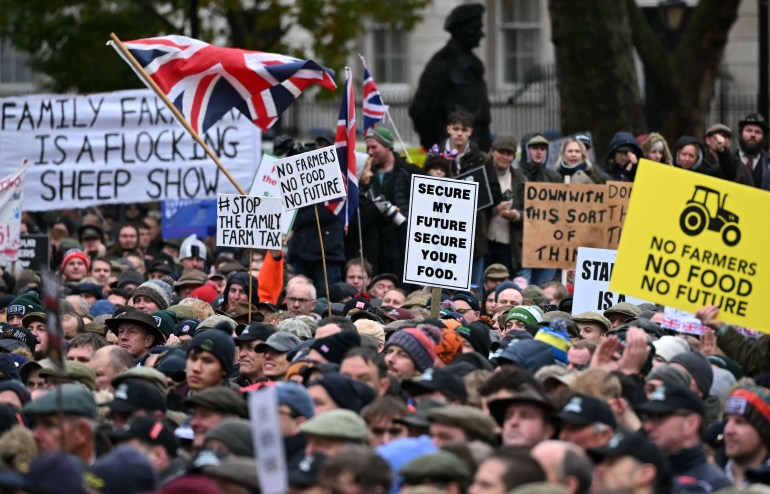
Farmers say the tax will destroy family farms and threaten food production, while the gov’t says it’s needed to raise funds. British farmers have descended on London to call on the government to scrap inheritance tax rules on land ownership, which they say will destroy family-run farms. On Tuesday, protesters held placards reading “no farmer, no food, no future” and “[Prime Minister Keir] Starmer the farmer harmer” around Parliament Square. The measure, referred to by critics as the “tractor tax”, was announced last month as part of the new Labour government’s budget to raise funds. However, the tax has caused backlash from farming communities, who say the government does not understand rural communities. Before the announcement of the new budget, passing down farms through generations was tax-free. However, from 2026, a 20 percent tax will be paid on the value of a farm above one million British pounds ($1.27 million). Farmers, however, say that while their land and machinery are highly valued, their farms have low profit margins, meaning their children would have to sell their land to cover the tax bill. One protesting farmer, Olly Harrison, told Al Jazeera, “We’re not tax dodgers. If we were making profits, tax our profits. But if we’re not making profits, we can’t pay inheritance tax.” “We do have these huge land resources that have a value on paper, but in reality when you’re farming it doesn’t mean anything,” he said. ‘Disastrous human impacts’ Emma Robinson, 44, a farmer who joined the protests, told the Reuters news agency that her farm in northwest England has been in her family for 500 years and she plans to pass it down to her children. “[Now] it’s being taken out of my hands by someone that’s been in Parliament for literally days,” she said. The government has said the tax change would affect about 500 farms a year, based on the number of inherited farms in 2021-22, with the tax rate payable in instalments over 10 years. Demonstrators listen to speakers during a farmers’ protest against changes to inheritance tax rules for land ownership, outside of Downing Street, on Whitehall in central London [Justin Tallis/AFP] However, farmers say the number of farms affected could be much higher, with the Country Land and Business Association estimating that 70,000 farms are worth more than one million pounds and could be affected. National Farmers’ Union president Tom Bradshaw said the latest protests would continue for as long as necessary, telling Sky News that the government “cannot have a policy in place which has such disastrous human impacts and think we’re going to go quiet.” However, the government has reiterated that the actual threshold before paying inheritance tax could be as much as three million pounds ($3.8m) once exemptions for each partner in a couple and for the farm property are considered. Starmer said on Monday that “the vast majority of farms” will not be affected. Adblock test (Why?)
Trump picks pro-tariff billionaire Howard Lutnick for US commerce secretary
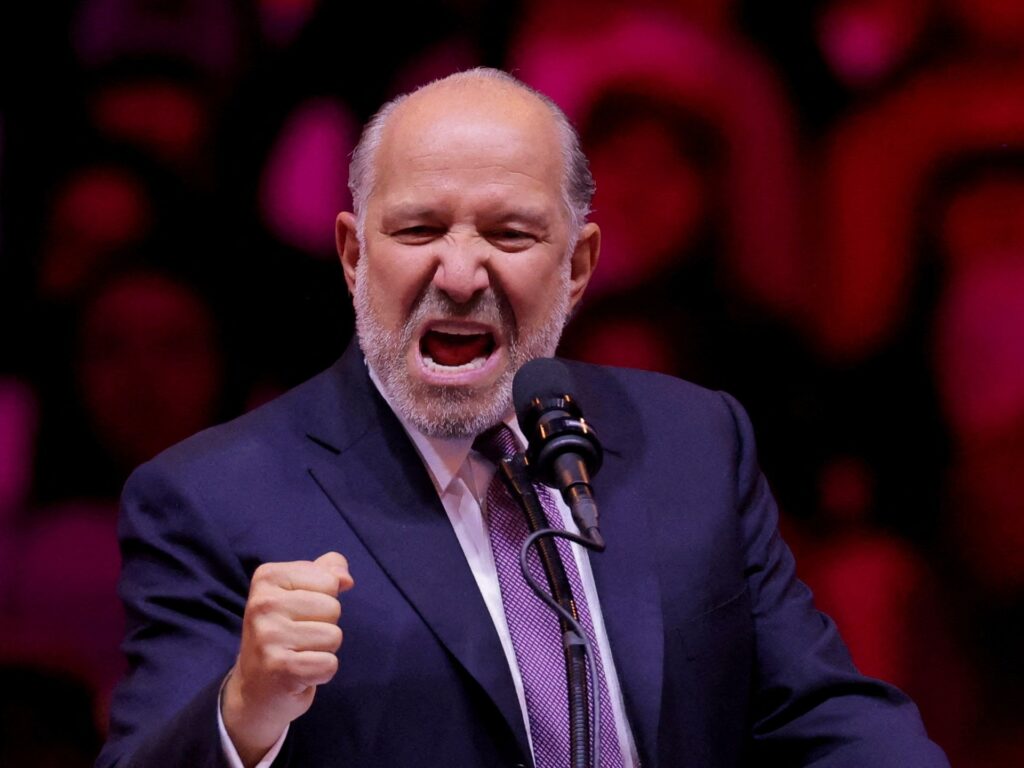
US president-elect nominates Lutnick, a Wall Street investment firm CEO, to lead his ‘tariff and trade agenda’. United States President-elect Donald Trump has nominated Howard Lutnick, a billionaire and head of the investment firm Cantor Fitzgerald, as the next US secretary of commerce. In a statement on Tuesday, Trump hailed Lutnick – who has served as co-chair of the Republican’s transition team – as “a dynamic force on Wall Street for more than 30 years”. “He will lead our Tariff and Trade agenda, with additional direct responsibility for the Office of the United States Trade Representative,” Trump said. The nomination is the latest from Trump, who has named a growing list of Republican allies and other loyalists to cabinet posts since he won the November 5 presidential election over Democrat Kamala Harris. As commerce secretary, Lutnick would be in charge of a sprawling cabinet agency that is involved in funding new computer chip factories, imposing trade restrictions, releasing economic data and monitoring the weather. It is also a position in which connections to CEOs and the wider business community are crucial. Under President Joe Biden, the Commerce Department stepped up export controls on critical technologies like quantum computing and semiconductor manufacturing goods, taking aim at access by adversaries like Beijing. Trump’s incoming administration could harden this stance. The Republican has promised to slap 10- to 20-percent tariffs on all imports as well as a 60-percent tariff on goods coming specifically from China, which the US views as one of its top geopolitical rivals. Researchers at the Peterson Institute for International Economics said in August that a 20-percent tariff across the board alongside a 60-percent tariff on China “would cost a typical US household in the middle of the income distribution more than $2,600 a year”. But Trump and his allies have portrayed the tariffs policy as a key plank of his “America First” foreign policy agenda. Lutnick told CNBC in September that “tariffs are an amazing tool for the president to use – we need to protect the American worker”. A native of New York City’s Long Island suburbs with a background in trading and real estate, Lutnick has been one of Trump’s top Wall Street advocates, hosting fundraisers and touting his policies in the media. Speaking at a Trump campaign rally last month at Madison Square Garden in New York City, he said the US has been “letting the rest of the world eat our lunch”. “And it is time to Make America Great Again,” he shouted. Earlier in his speech, Lutnick said the first reason to re-elect Trump, however, was “because we must crush jihad”. Before Tuesday’s nomination, Lutnick had been considered for secretary of the US Treasury, a role that has been at the centre of high-profile jockeying within the Trump world. Billionaire Elon Musk and others in Trump’s orbit had called on the president-elect to dump the previous frontrunner for treasury secretary, Scott Bessent, in favour of Lutnick. “Bessent is a business-as-usual choice, whereas [Lutnick] will actually enact change,” Musk wrote in a social media post on Saturday. Trump has yet to name a treasury secretary, but on Tuesday he also named the television doctor and former Republican Senate candidate for Pennsylvania Mehmet Oz as the administrator for the Center for Medicare and Medicaid Services. Dr Oz, as he is popularly known, is a Turkish American medical doctor who had a daytime talk show from 2009 to 2022. Adblock test (Why?)
Musk to launch SpaceX Starship rocket with Trump at his side
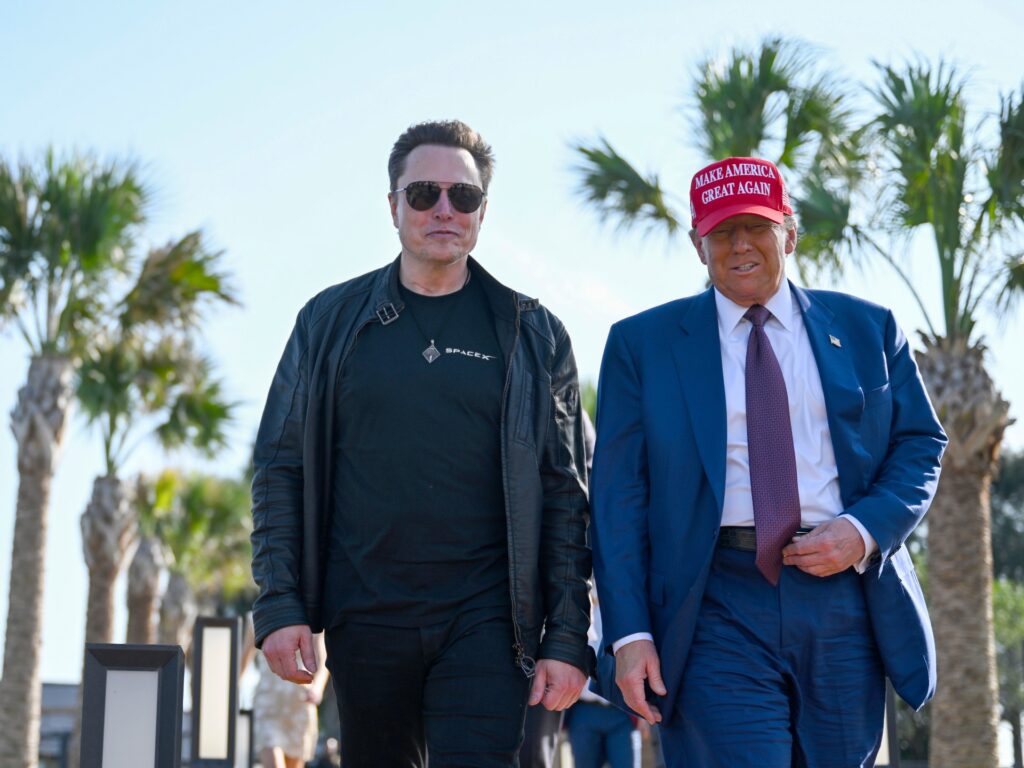
Elon Musk, the world’s richest man, launched the sixth test of his SpaceX rocket with United States President-elect Donald Trump joining him to watch. Trump and Musk travelled to Brownsville, Texas, on Tuesday to attend the launch of the giant Starship rocket at SpaceX’s test site in nearby Boca Chica. The rocket lifted off shortly after 5pm (23:00 GMT), about an hour behind schedule. But SpaceX chose to abort a planned attempt to catch the first-state booster of the rocket using the ‘chopstick’ technique, instead allowing it to fall into the ocean. The last Starship test flight in October made headlines after the Super Heavy booster made a stunning return to the launch site where it was captured midair by a pair of giant mechanical “chopstick” arms attached to SpaceX’s launch tower. Liftoff of Starship! pic.twitter.com/rSLQ2DDy63 — SpaceX (@SpaceX) November 19, 2024 Trump’s attendance is part of a growing bond with Musk – the owner of SpaceX, the electric carmaker Tesla and the social media platform X – who is a strong political supporter, having spent close to $130m to help get the former president re-elected. Trump was expected to be joined by his son Donald Jr and Republican Senator Ted Cruz of Texas. Starship, the largest rocket ever built, is designed to be a reusable vehicle for flying cargo and people beyond Earth. Musk’s constant presence Trump’s presence at the launch is “another example of Musk’s increasing role in Trump’s orbit”, according to a report by CNN. Since Trump won the US November 5 presidential election, Musk has been a constant presence at the president-elect’s Mar-a-Lago estate in Palm Beach, Florida. He has counselled Trump on nominees for the new administration and joined the president-elect’s phone call with Ukrainian President Volodymyr Zelenskyy. Musk also flew with Trump for a meeting with Republicans from the House of Representatives in Washington, DC last Wednesday, and joined him for the Ultimate Fighting Championship at Madison Square Garden in New York on Saturday. Trump has recently rewarded Musk for his political support by appointing him, along with Republican Vivek Ramaswamy, to advise the newly created Department of Government Efficiency with a mission to slash government spending. “Importantly, we will drive out the massive waste and fraud which exists throughout our annual $6.5 Trillion Dollars of Government Spending,” Trump said in a statement about the appointment, one of his first after winning the election. Musk’s businesses could benefit personally from his close ties with Trump. SpaceX – which has among its goals to eventually start a colony on Mars – has billions of dollars in government contracts. The billionaire has also battled with US federal regulators over safety concerns involving autonomous driving, which is available in his Tesla electric vehicles. “Trump has the biggest possible regard for people who break the rules and get away with it,” said William Galston, a senior fellow in governance studies at the Brookings Institution, told The Associated Press news agency. “Musk has demonstrated extraordinary accomplishment in doing that.” Not always friends The two have not always been that close, however. Trump used to mock Musk in his election speeches and Musk had once said it was time for Trump to “hang up his hat & sail into the sunset” because he was too old to be president. But that changed after Trump survived an assassination attempt in the lead-up to the election. Musk endorsed Trump and became a central figure on the Republican campaign trail. Trump even started to talk about Musk’s space accomplishments while campaigning. He was intrigued when Starship’s reusable rocket booster returned to the launch tower and was caught by mechanical arms. “Did you see the way that sucker landed today?” Trump asked the crowd at a political rally after that Starship test. So far, there are no indications that the friendship forged during the election is about to cool. Last week, Musk was a guest of honour at a black-tie event held at Mar-a-Lago. Trump, in his remarks that night, said Musk’s IQ was “about as high as they can get” and praised him as “a really good guy.” Musk was then invited to speak to the crowd. “The public has given us a mandate that could not be more clear,” Musk said of the election results, sounding more like Trump’s running mate than a buddy. Adblock test (Why?)
Recess appointments: Can Trump bypass Senate to appoint Gaetz, other aides?
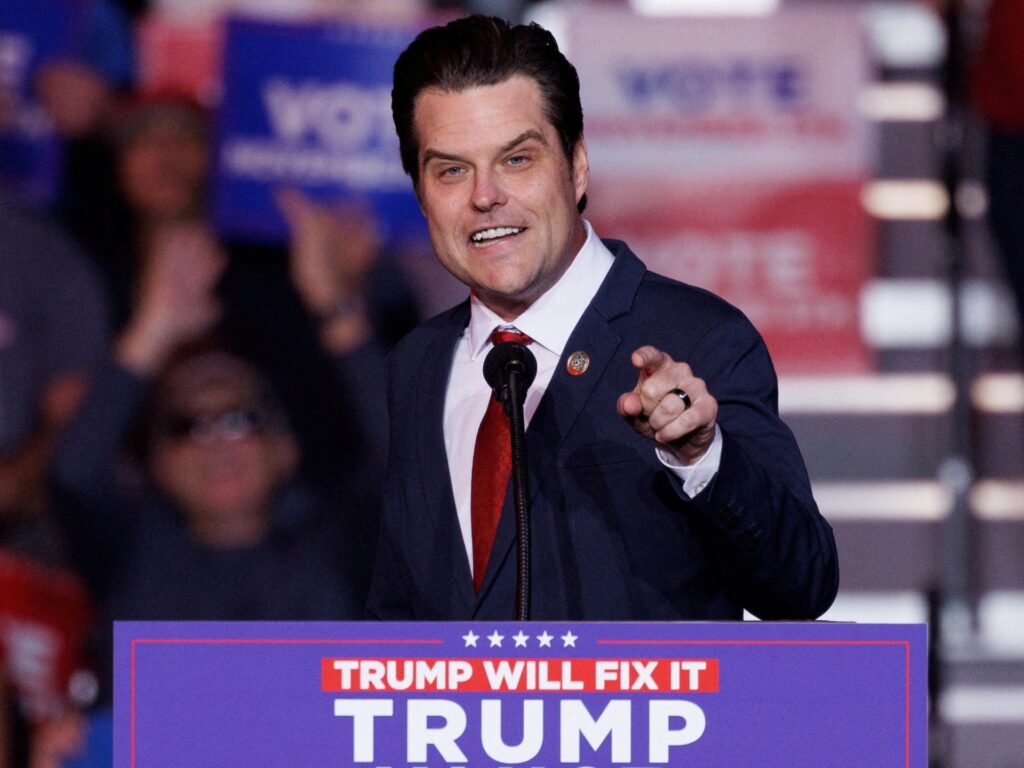
Throughout his business, media and political career, Donald Trump has demonstrated a willingness to break the norm. But the United States president-elect’s latest proposal to do away with the established processes used to appoint cabinet officials to his incoming administration poses grave risks to the rule of law in the country, experts say. Just days after his election victory this month, Trump on November 10 invoked a provision under the US Constitution that would allow him to appoint cabinet members without Senate confirmation. “Any Republican Senator seeking the coveted LEADERSHIP position in the United States Senate must agree to Recess Appointments (in the Senate!), without which we will not be able to get people confirmed in a timely manner,” Trump wrote on social media, prompting all three contenders for the leadership role to to quickly say they would comply. The suggestion to use so-called “recess appointments” has sparked concern as Trump continues to roll out a list of controversial nominees to key positions within his government, including far-right firebrand Matt Gaetz as head of the US Justice Department. Bypassing the Senate would dilute the checks-and-balances system that provides Congress with oversight over the executive branch, analysts told Al Jazeera, while effectively giving Trump even more power at a time when Republicans hold “trifecta” control of the White House, Senate and House of Representatives. “The selection of the cabinet is the primary way in which the president exercises power,” said David Froomkin, an assistant professor at the University of Houston Law Center who specialises in administrative law. “Eliminating the most important check on that power would massively empower the president.” Any Republican Senator seeking the coveted LEADERSHIP position in the United States Senate must agree to Recess Appointments (in the Senate!), without which we will not be able to get people confirmed in a timely manner. Sometimes the votes can take two years, or more. This is… — Donald J. Trump (@realDonaldTrump) November 10, 2024 A vestige of the past But what exactly is a recess appointment? The process dates back to the country’s early days, when the US Congress would be in recess for months at a time, usually during the summer. When lawmakers were gone and a vacancy occurred, the US Constitution allowed the president to appoint someone without confirmation, though only through the end of the next session of Congress, explained Gabe Neville, a senior adviser at the law firm Covington & Burling, which focuses on regulatory practices. “In the modern era, when Congress is in session most of the time, there have been some changes in how the process works and is used,” Neville said. Lawmakers are no longer travelling by stagecoach and rail, for example, so there is no longer a need for the president to fill vacancies on an emergency basis because Congress would not be meeting for months. But recess appointments have persisted, although not at the high-profile cabinet level. Former presidents have used the provision mostly to fast-track the approval of federal judges — but the authority technically applies to any appointee, including top cabinet members and Supreme Court justices. Former US President Bill Clinton made 139 recess appointments to full-time positions, for instance, and his successor George W Bush made 171. After that, President Barack Obama made 32 before a US Supreme Court decision in 2014 restricted the president’s ability to invoke the power to periods in which the Senate was in recess for at least 10 days. Wary to give the president too much power, Congress has in the past worked around the provision by calling what’s known as “pro forma” sessions, when no real work is being done, just to stop the president from using the authority. “So a member from Maryland or Virginia who lives close by would come in and call the House and Senate into session and then immediately adjourn for the day. But technically they’re in session that day,” Neville told Al Jazeera. But in theory, members of Congress could also decide to go on recess precisely in order to allow the president to make recess appointments — and Neville said there is an opportunity now, with Republicans in control of Congress and Trump in the White House, for GOP lawmakers to do that. “And we haven’t really seen that before,” he said. Sending a message Still, it remains unclear when — or even whether — Trump may invoke the recess appointment authority, or whether Congress would go into recess to allow him to do so. The new Congress will start on January 3, three weeks before the presidential inauguration, and Republican senators are planning to begin hearings on Trump’s cabinet nominees immediately. Should Trump appoint one of his nominees during a congressional recess, that person would only remain in office for the remaining duration of the two-year Congress. But by mentioning the provision, Trump – whom critics accuse of authoritarianism – is sending a message to lawmakers, even those from his own party, that he may have little patience for their pushback. “If the Senate goes along with Trump’s demand, it will be the first loud sound of the Constitution ripping,” Michael Waldman, president of the Brennan Center for Justice at New York University School of Law, wrote in an op-ed. Nicholas Xenakis, a former chief counsel for late Democratic Senator Dianne Feinstein who also works at the Covington & Burling law firm, told Al Jazeera that the president-elect may also be invoking the power as “leverage”. “Like, ‘Hey Senate, don’t make me use this power I have. Hurry up and confirm my nominees’,” he said. “[Opposition] parties often will be very slow to confirm nominees because they don’t support the president’s agenda,” Xenakis said, adding that such situations played out during Trump’s first term as well as during Democratic President Joe Biden’s administration. “So this may just be used as a way to push back on that,” he said. Avoid public scrutiny Still, with Republicans controlling the Senate, that sort of pushback is
Brazil arrests five suspects in alleged Lula assassination plot
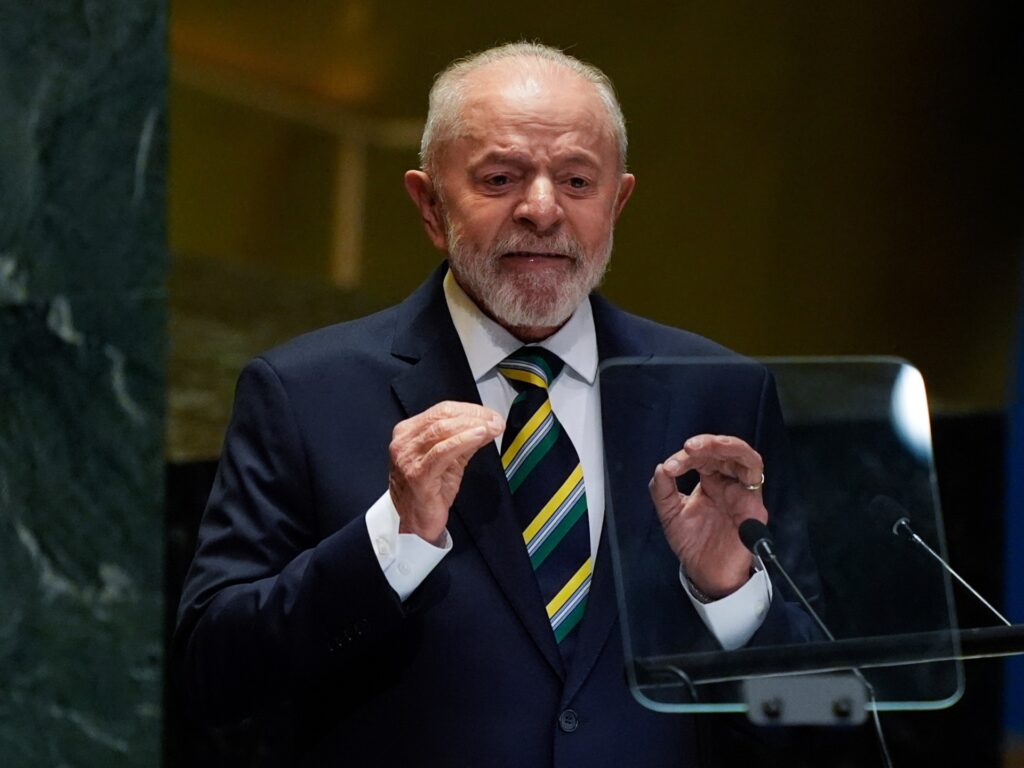
Four G20 security guards reportedly among those arrested after murder bid mentioned for first time as part of coup probe. Five people have been arrested in Brazil for their suspected involvement in an alleged attempt to assassinate then President-elect Luiz Inacio Lula da Silva and his vice president in December 2022, according to police. The police said in a statement on Tuesday that most of those investigated in the alleged coup attempt are military personnel with special forces training. “A detailed operational plan called ‘Green and Yellow Dagger’ was identified, which would be executed on December 15, 2022, aimed at the murder of the elected candidates for president and vice president,” the statement said, in an apparent reference to the colours of the Brazilian flag. This was the first time in the alleged coup attempt investigation that federal police have mentioned a plot to kill Lula and Vice President Geraldo Alckmin. Federal police officers carried out five arrest warrants on Tuesday, the police said without providing any names. The four “were arrested in Rio [de Janeiro], where they were participating in the security operation for the G20 leaders meeting” on Monday, a federal police source told the AFP news agency, adding that a police officer was also taken into custody. Jair Bolsonaro Lula won the presidential election in October 2022, defeating the far-right incumbent Jair Bolsonaro, and took office in January last year. Thousands of Bolsonaro supporters stormed government buildings in Brasilia on January 8 last year. Several investigations have been opened into those events as well as other alleged plots to prevent Lula from taking office. A federal police investigation will conclude that Bolsonaro conspired to engineer the attempted coup after he lost the election, a source with direct knowledge of the investigations told the Reuters news agency in October. The probe is expected to finish its work this month. The Brazilian army monitored the federal operation against the coup plotters, which was carried out in the states of Rio de Janeiro, Goias, Amazonas and the Federal District. The police said the suspects under investigation had planned for an “Institutional Crisis Management Office” to be installed to manage problems arising from the coup. They also planned to seize and kill a Supreme Court justice if they succeeded, police said without naming the judge. Adblock test (Why?)
EU court starts hearing case over Hungary’s alleged anti-LGBTQ law

The EU alleges the Hungarian law undermines core human rights values while Budapest says it wants to protect children. The top court in the European Union has started hearing a case that marks a major confrontation between Hungary and the bloc over a law criticised as being anti-LGBTQ. A lawyer for the European Commission, which in December 2022 referred the case to the Court of Justice, told the tribunal on Tuesday that the legislation was a “massive and flagrant violation of several important EU rules”. “This is a frontal and serious attack on the rule of law and more generally on European society.” The Hungarian Child Protection Act is legislation approved by the Central European country in 2021 with the ostensible goal of safeguarding children from harm, including by imposing a zero-tolerance policy for convicted paedophiles. But it also puts restrictions on depictions of homosexuality and gender reassignment in media and educational content made for children under 18, prompting outrage from activists and many politicians in other EU countries who criticised the law for stigmatising LGBTQ people and equating same-sex relations to paedophilia. The European Parliament in April adopted a resolution that strongly condemned the law and alleges it works towards dismantling democracy and the rule of law in Hungary. Sixteen of the 27 member states of the bloc, including France and Germany, also joined in on the legal action taken against Budapest in what has been described as the largest human rights case in EU history. They believe the law is modelled after a similar piece of legislation enacted in Russia, which was declared unlawful by the European Court of Human Rights in 2017. In Hungary, bookstores and shops have received hefty fines for depicting blacklisted content after the government started implementing the legislation. The European Commission alleges the legislation violates core EU values on fighting discrimination and upholding human rights while undermining single market rules on services and audiovisual media. Budapest has dismissed the allegations, arguing that the law is meant to protect children and a referendum held on the subject favoured the legislation. If Hungary is found to be at fault by the Court of Justice, it could potentially be ordered to pay a large fine, or such a verdict could even lead to procedures that could suspend the country’s voting rights in EU meetings. Many EU countries have also been angered by Hungarian Prime Minister Viktor Orban’s close relations with Russia and delays in support for Ukraine since Moscow’s invasion of the country nearly three years ago. The EU has other legal proceedings under way against Hungary, including over its “sovereignty” and foreign influence law. Adblock test (Why?)