

Thousands protest in Spain’s Valencia over handling of deadly floods
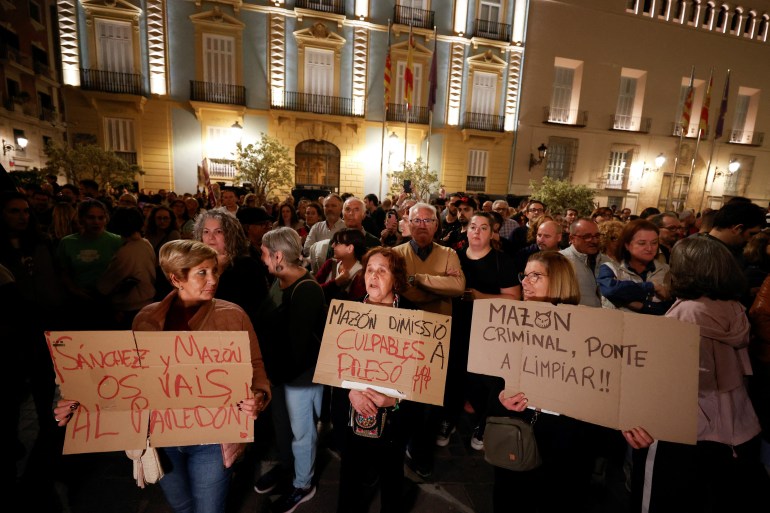
About 80 people are still missing and people are angry at the government after the deadliest deluge in decades. Thousands of people have demonstrated in Spain’s eastern city of Valencia to protest the authorities’ handling of one of Europe’s deadliest natural disasters in decades and call for accountability. Large crowds gathered in the central part of the city on Saturday night, with some clashing with riot police in front of Valencia’s city hall. Police were filmed using batons to beat back protesters who were marching towards the seat of the regional government. In Spain, regional governments are charged with handling civilian protection and can ask for extra resources from the national government in Madrid. The current regional leader is Carlos Mazon of the conservative Popular Party, who is facing calls for resignation after his administration failed to issue flood alerts to citizens until after the water was filling people’s homes. Mazon has defended his handling of the crisis, arguing that the magnitude of the crisis was unforeseeable and that authorities in Madrid failed to notify his administration adequately and on time. But Spain’s weather agency issued a red alert, the highest level of warning, for bad weather at approximately 7:30am local time (06:30GMT) on Tuesday morning, more than 12 hours earlier than Mazon’s administration finally sent out alerts to people’s cellphones. The regional leader is also facing heavy criticism due to what people viewed as a slow and unorganised response to the natural disaster, which has killed at least 220 people as of Saturday. People hold placards as civil groups and unions protest against Valencia’s regional leader Carlos Mazon [Eva Manez/Reuters] In many of the hardest-hit areas on Valencia’s southern outskirts, volunteers were the first to help people, with the government taking days to fully mobilise the thousands of police forces and soldiers who were sent to assist the flood-stricken. “You killed us!” some of the protesters wrote on their protest banners on Saturday, with others chanting for Mazon’s resignation and some leaving muddied boots outside the council building to show their fury. “We want to show our indignation and anger over the poor management of this disaster which has affected so many people,” said Anna Oliver, president of Accio Cultural del Pais Valenciano, one of about 30 groups that organised the protest, according to the Reuters news agency. There were also protests in Valencia earlier this week, and people threw mud and chanted “murderers” when King Felipe and Prime Minister Pedro Sanchez visited a suburb of the city. At least 212 of the deaths were recorded in the eastern Valencia region, and nearly 80 people are still believed to be missing in the deadliest deluge in a European country since floods in Portugal in 1967 killed about 500. Adblock test (Why?)
Thousands march in Valencia to protest flood response
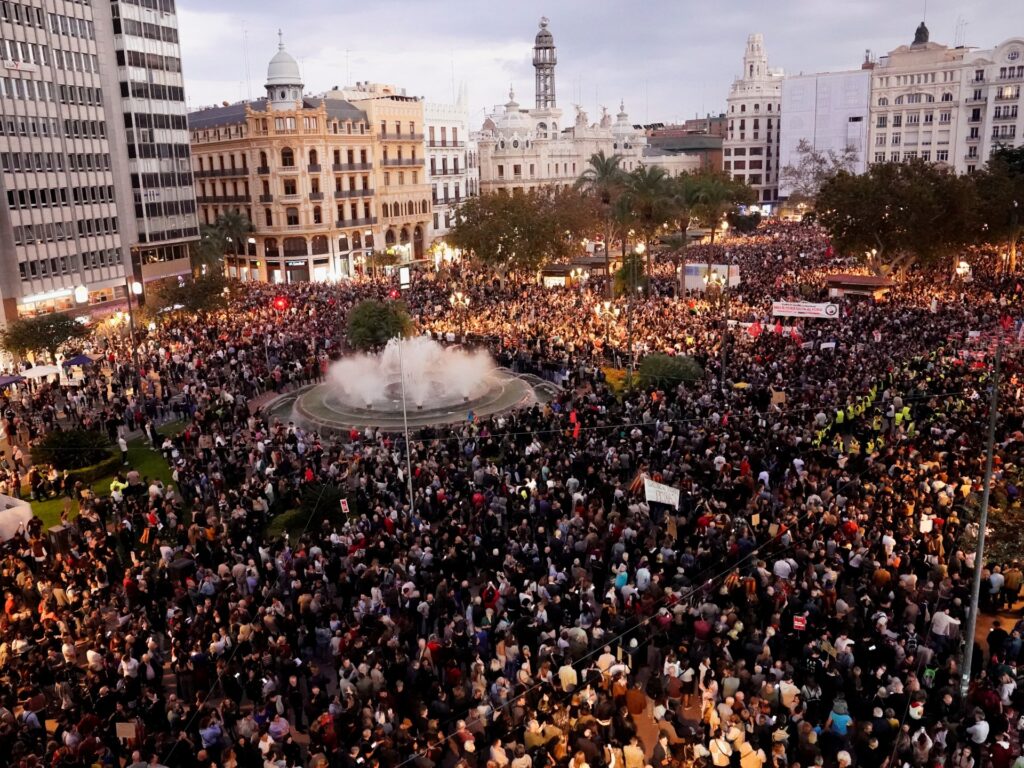
NewsFeed Thousands of protesters march in the Spanish city of Valencia, expressing their anger at the response to catastrophic flooding that killed more than 200 people in October. Published On 9 Nov 20249 Nov 2024 Adblock test (Why?)
Boy who sleeps on his mother’s grave in Gaza
[unable to retrieve full-text content] Palestinian boy Zein Yousef has been sleeping at his mother’s grave since she was killed in an Israeli attack in Gaza.
Nearly 380,000 people displaced by South Sudan floods, UN says
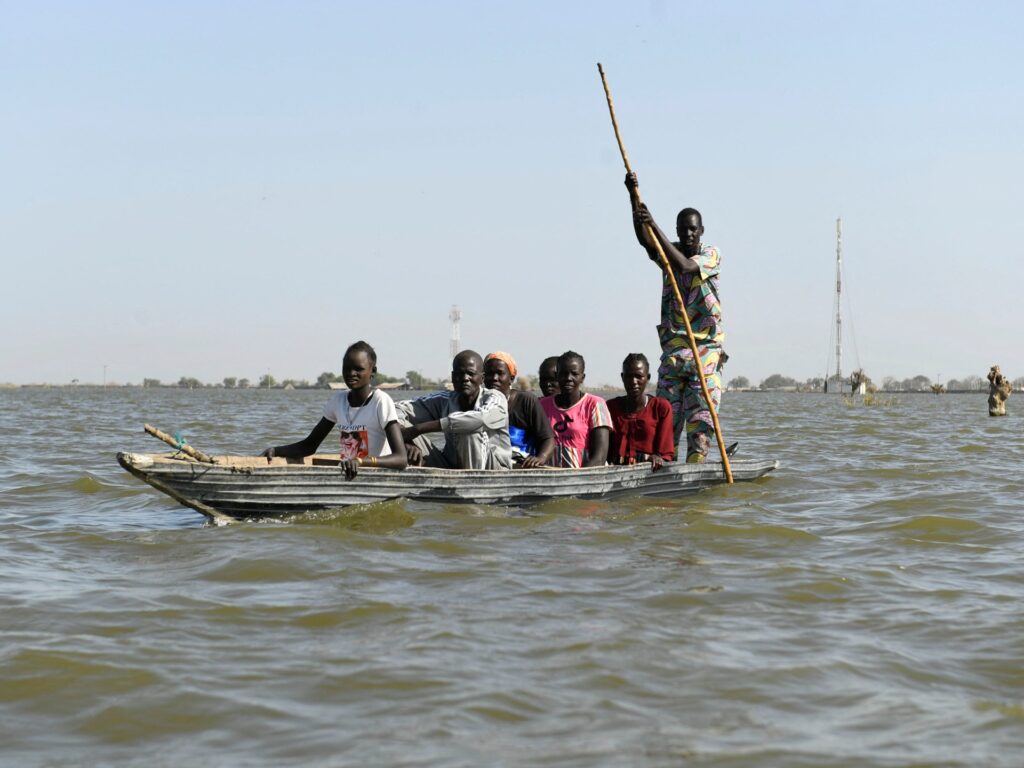
A surge in malaria is reported in several states and is overwhelming the health system, according to a UN agency. Flooding in South Sudan has displaced more than 379,000 people, according to a United Nations update that warned about a surge in malaria. Aid agencies have said the world’s youngest country, highly vulnerable to climate change, is in the grip of its worst flooding in decades, mainly in the north. The floods have affected about 1.4 million people, the UN Office for the Coordination of Humanitarian Affairs (OCHA) said on Friday, across 43 counties and the disputed Abyei region, which is claimed by both South Sudan and Sudan. It added in a statement that more than 379,000 people were displaced in 22 counties and in Abyei. “A surge in malaria has been reported in Jonglei, Unity, Upper Nile, Northern Bahr el Ghazal, Central Equatoria and Western Equatoria states – overwhelming the health system and exacerbating the situation and impact in flood-hit areas,” the UN agency said. Since gaining independence from Sudan in 2011, South Sudan has been plagued by chronic instability, violence and economic stagnation as well as climate disasters such as drought and floods. More than 1.6 million children malnourished The World Bank said last month that the latest floods were “worsening an already critical humanitarian situation marked by severe food insecurity, economic decline, continued conflict, disease outbreaks, and the repercussions of the Sudan conflict“, which has seen several hundred thousand people pour into South Sudan. More than seven million people are food insecure in South Sudan and 1.65 million children are malnourished, according to the UN’s World Food Programme. The country faces a further period of political paralysis after the president’s office announced in September yet another extension to a transitional period agreed to in a 2018 peace deal, delaying elections by two years to December 2026. South Sudan has vast oil resources but the vital source of revenue was decimated in February when an export pipeline was damaged in neighbouring war-torn Sudan. Adblock test (Why?)
Pentagon allows US military contractors to fix weapons in Ukraine
US eases restrictions for a few contractors to work away from the front lines and says they won’t engage in combat. The United States is allowing a small number of American defence contractors to work inside Ukraine to maintain and repair Pentagon-provided weaponry, according to US officials. The US has been a key military backer of Ukraine, committing more than $60bn in security aid since Russia’s full-scale invasion in February 2022. But it has not permitted US military contractors to work in Ukraine, wary that it could be drawn into a direct conflict with Russia. US President Joe Biden made the decision in a significant policy shift before he leaves office in January, US media reported on Friday, before the November 5 presidential election, won by Donald Trump. Biden also plans to rush billions of dollars in security assistance to Ukraine before his term ends. Trump has criticised the scale of US military and financial support for Ukraine and has pledged to end the war with Russia quickly – without saying how. For the past two years, US and allied forces have been providing real-time maintenance advice using phones and tablets to communicate in encrypted chatrooms with Ukrainian forces. Officials said the Pentagon is allowing the contractors to go because some equipment – including F-16 fighter jets and Patriot air defence systems – require high-tech expertise to repair. Using the contractors, they said, will ensure the weapons are fixed quickly so Ukrainian forces can continue to use them in combat. The number of contractors would be small and located far from the front lines. They would not be engaged in direct combat, the officials said. The companies will be responsible for the safety of their employees. The restrictions have sometimes slowed down repairs and proven increasingly difficult as the US has provided Ukraine with more complicated systems, such as the F-16s and Patriot systems. A lot of equipment is not being used because it is damaged. In August, an F-16 jet crashed while repelling a Russian attack, killing its pilot. The policy change would move the Pentagon in line with the US Department of State and US Agency for International Development, which already have US contractors in Ukraine. The decision comes at a critical time in the conflict, as Russia makes more advances into Ukrainian territory. It is unclear, however, how sustainable the policy shift will be with so little time left in Biden’s administration. Trump takes office on January 20. President Volodymyr Zelenskyy has urged his Western allies to allow Ukraine to use long-range missiles to hit targets inside Russia and increase pressure on Moscow to end the war. Adblock test (Why?)
US charges man allegedly tasked by Iran to plot Trump killing pre-election
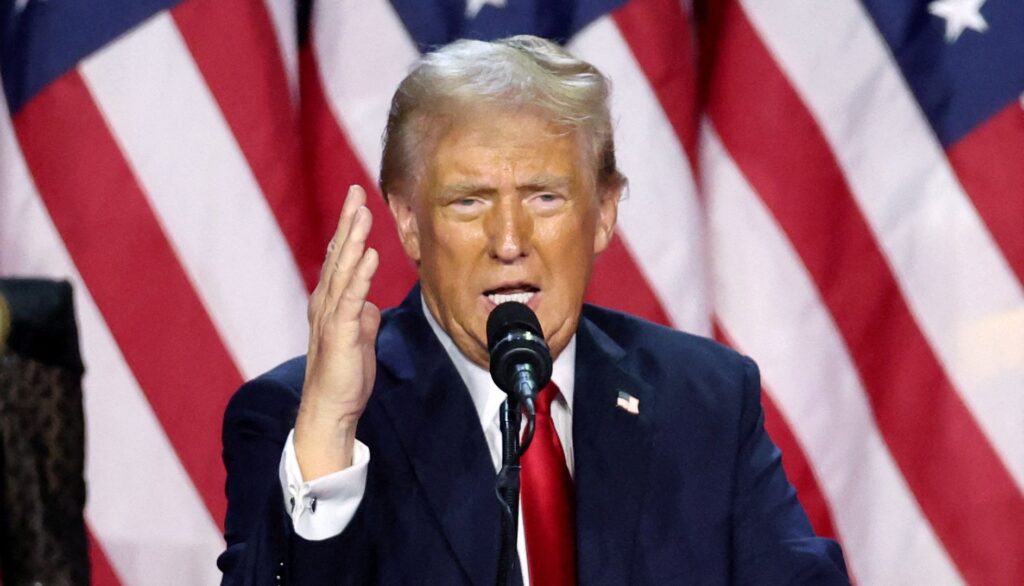
Iranian citizen tapped to create plan to assassinate former president, DOJ alleges, although he never followed through. The United States Department of Justice has unsealed criminal charges against a man allegedly tasked by Iran with “surveilling and plotting to assassinate” Donald Trump before the presidential election. The criminal complaint filed in federal court in Manhattan on Friday said an agent with Iran’s Revolutionary Guard had instructed an Afghan citizen, Farhad Shakeri, to come up with the plan in October. However, Shakeri told investigators he did not intend to provide a plan in the timeline requested: Before the election on November 5. In a statement, Attorney-General Merrick Garland said the Justice Department “has charged an asset of the Iranian regime who was tasked by the regime to direct a network of criminal associates to further Iran’s assassination plots against its targets, including President-elect Donald Trump”. He added, “There are few actors in the world that pose as grave a threat to the national security of the United States as does Iran.” Iran did not immediately respond to the allegation, but has in the past dismissed similar claims and has denied wanting to kill Trump. Former immigrant, deported The alleged assassination effort was revealed as part of a wider complaint that alleged Shakeri, and as well as New York City residents Carlisel Rivera and Jonathon Lodholt had taken part in a separate plot to kill a US journalist who has been a vocal critic of Iran. The complaint said Rivera and Lodholt had spent months surveilling the journalist, who was not identified, and shared regular updates with Shakeri, who remains at large and is believed to reside in Iran. According to the Justice Department, Shakeri immigrated to the US as a child and was deported in or about 2008 after serving 14 years in prison for a robbery conviction. “In recent months, Shakeri has used a network of criminal associates he met in prison in the United States to supply the IRGC with operatives to conduct surveillance and assassinations of IRGC targets,” the Justice Department said in a news release. Shakeri also told investigators he had separately been offered $500,000 to surveil and eventually kill two “Jewish American citizens residing in New York”. The three men were charged with murder for hire and money laundering. Shakeri has also been charged with providing and conspiring to provide “material support to a foreign terrorist organisation”. US says Iran motivated by revenge The FBI has said that threats against Trump surged following the July 13 assassination attempt against the former president in Butler, Pennsylvania, although that attack was not believed to have been connected to any foreign actors. A second assassination attempt against Trump in September was also not believed to have been connected to any foreign governments. Still, in August, the Justice Department said a Pakistani man was charged in an alleged plot to carry out political assassinations in the US. The arrested man, Asif Merchant, allegedly had ties with Iran, although court documents did not specify who he was targeting. In September, Trump wrote on his Truth Social platform that he had been briefed on US intelligence on “big threats” to his life by Iranian agents. His campaign manager said at the time that the intelligence community had warned Trump “regarding real and specific threats from Iran to assassinate him in an effort to destabilize and sow chaos in the United States”. In its statement on Friday, the Justice Department repeated allegations that Iran is “actively targeting nationals of the United States and its allies living in countries around the world for attacks, including assault, kidnapping, and murder”. It claimed that Iran was doing so both to silence dissent and to enact vengeance for the US drone killing of Islamic Revolutionary Guard Corps Commander Qassem Soleimani in Iraq in January 2020. Trump was president when that strike was ordered. Adblock test (Why?)
Russia seeks 6-year jail term for medic accused of criticising Ukraine war
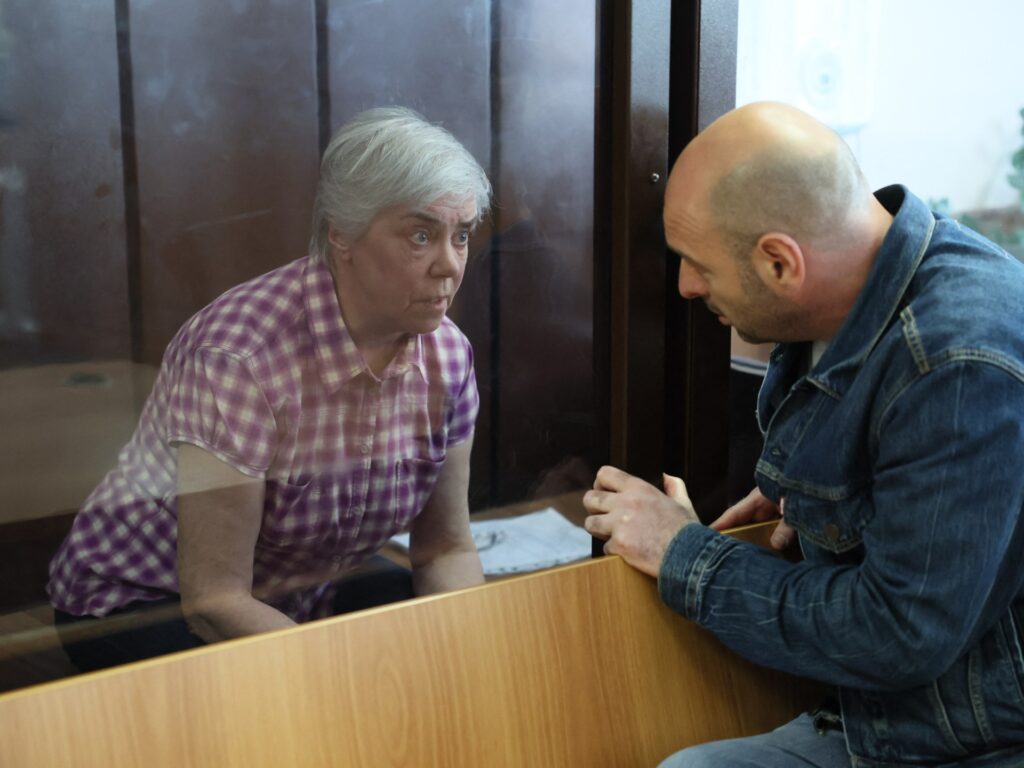
Paediatrician Nadezhda Buyanova is on trial for statements allegedly made during a private appointment with a patient. Authorities in Russia are seeking a six-year prison term for a paediatrician accused of criticising the war in Ukraine during a private appointment with a patient and his mother. Dr Nadezhda Buyanova was reported to the police by the ex-wife of a soldier missing after fighting in Ukraine – Anastasia Akinshina – who accused the doctor of blaming Russia for the war and telling her son that his father was a legitimate target for Kyiv’s troops. Buyanova, 68, was arrested in February and initially released on condition of complying with certain restrictions. But two months later, authorities placed her in pre-trial detention, arguing that she violated some of the restrictions. She is charged with spreading “fake” information on the Russian army under military censorship laws used to silence dissent. The case against her is one of hundreds brought against Russians after Moscow launched a full-scale invasion of Ukraine in February 2022 and unleashed an unprecedented crackdown on opposition activists, independent journalists and Russian citizens. Handcuffed behind a glass defendant’s cage in a court hearing on Friday, the Moscow medic cried and said: “I am innocent.” Many have pointed to her birthplace – Ukraine’s western city of Lviv, which Russia has painted as the root of all evil – as a reason for such treatment. “I was born in the city of Lviv, a city in the Ukrainian Soviet Socialist Republic,” she said, sobbing after prosecutors announced they were seeking a years-long prison sentence. “What kind of hatred can I feel? I am related to three Slavic peoples: Russia, Belarus, Ukraine,” she said. “I am not a politician. … I am just a doctor,” she said. Buyanova also denied the charges against her. “None of this happened,” she said in court, accusing Akinshina of making up the conversation. At the start of the trial in April, Akinshina said her son was not present in the room when the dialogue took place. But in a court hearing over the summer, the seven-year-old boy said Buyanova had alleged, “Russia is an aggressor country, and Russia kills peaceful people in Ukraine.” He also said Buyanova had called his father a “legal target for Ukraine”. “I saw that boy. … These were such adult phrases, such scary ones. I doubt that those were his words,” Buyanova said in court. Lawyers had asked if the boy was pressured, but the court refused to consider the complaint. “It is obvious the boy could not remember or understand such phrases like ‘legal target’,” Buyanova’s lawyer Oskar Cherdiyev told reporters. A dozen people, mostly medics, came to court to support Buyanova, whose first name means “hope” in Russian. “The whole situation is absurd,” 49-year-old child psychologist Arina told the AFP news agency. “The only thing we can do is to show Nadezhda that she is not alone, … that there are people who are hoping for a miracle,” she said. Adblock test (Why?)
UN peacekeepers accuse Israel of ‘deliberate and direct’ attack in Lebanon
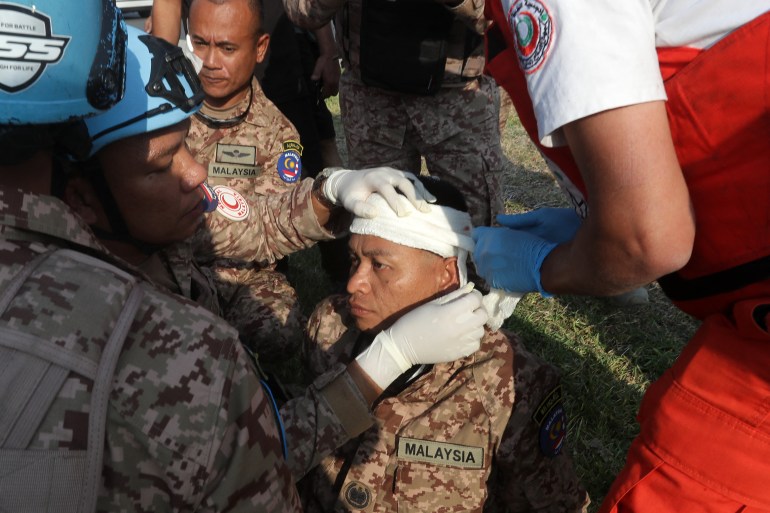
The Israeli military, which has hit UNIFIL positions several times, denies responsibility despite footage. United Nations peacekeepers in southern Lebanon have reported another Israeli assault on their positions as ground and air attacks on Lebanon continue to claim lives. The UN Interim Force in Lebanon (UNIFIL) said on Friday that two Israeli military excavators and one bulldozer had destroyed part of a fence and a concrete structure at a UN base in Ras Naqoura a day earlier. The Israeli military denied any activity after UN forces contacted it to protest, despite UNIFIL publishing footage of the incident online. The Israeli military’s “deliberate and direct destruction of clearly identifiable UNIFIL property is a flagrant violation of international law and resolution 1701”, UNIFIL said, referring to the UN Security Council resolution aimed at ending the 2006 war between Israel and Hezbollah. Statement: Yesterday, two IDF excavators and one IDF bulldozer destroyed part of a fence and a concrete structure in a UNIFIL position in Ras Naqoura. In response to our urgent protest, the IDF denied any activity was taking place inside the UNIFIL position. pic.twitter.com/gQm02hjNTG — UNIFIL (@UNIFIL_) November 8, 2024 Since September 30, Israel has repeatedly demanded that UN peacekeepers vacate their internationally mandated premises so it can more freely advance with its ground invasion of southern Lebanon. The peacekeeping mission in southern Lebanon has been targeted 40 times since then, UNIFIL’s deputy spokesperson Kandice Ardiel told Al Jazeera on Friday. Ardiel said eight of those attacks were confirmed to have originated from the Israeli army. Peacekeepers have been wounded and property destroyed in previous attacks. Israel also requested that UNIFIL evacuate 29 sites near the Blue Line, the UN-delineated line of withdrawal between Israel and Lebanon, Ardiel said. Earlier, UNIFIL said Israeli forces have been destroying and removing blue barrels that mark the Blue Line. “Yesterday’s incident, like seven other similar incidents, is not a matter of peacekeepers getting caught in the crossfire, but of deliberate and direct actions” by the Israeli military, UNIFIL added. UNIFIL convoys ‘at risk’ European Union foreign policy chief Josep Borrell on Friday said the bloc condemns an “incident which put at risk an UNIFIL convoy and left several peacekeepers wounded” after six Malaysian peacekeepers were injured on Thursday by an Israeli drone strike that killed three Lebanese people in a car nearby. Borrell’s statement did not directly name Israel and said “all parties must ensure the safety and security of UN personnel and allow them to carry out their vital mission under UNIFIL’s mandate”. A rescuer and a member of the Malaysian battalion of UNIFIL treat the wound of a fellow soldier, after he was injured at the site of an Israeli airstrike in Sidon, on November 7, 2024 [Mahmoud Zayyat/AFP] Meanwhile, the Israeli military continues to push ahead with its ground operation in southern Lebanon and launch air strikes across the country as Hezbollah fires rockets and launches drones into Israel. At least three people were killed and more than 30 wounded in one of the latest Israeli attacks on Lebanon that struck two buildings in the ancient city of Tyre on Friday night. Lebanon’s Ministry of Public Health announced that at least 15 people were killed and 69 wounded on Thursday as a result of Israeli strikes. Since October last year, at least 3,117 people have been killed and 13,888 wounded by Israeli attacks in Lebanon, the ministry said. Among them, 617 are women and 192 children. The casualties include 180 health workers. The ministry said hospitals have been attacked 65 times. Israeli attacks are ongoing across the Gaza Strip as well, where more than 43,000 people have been killed since October last year, nearly 70 percent of them children and women, according to the UN. This is while famine is looming in northern Gaza, which has been under siege for more than a month. Adblock test (Why?)
German opposition hits out at Scholz for delaying confidence vote
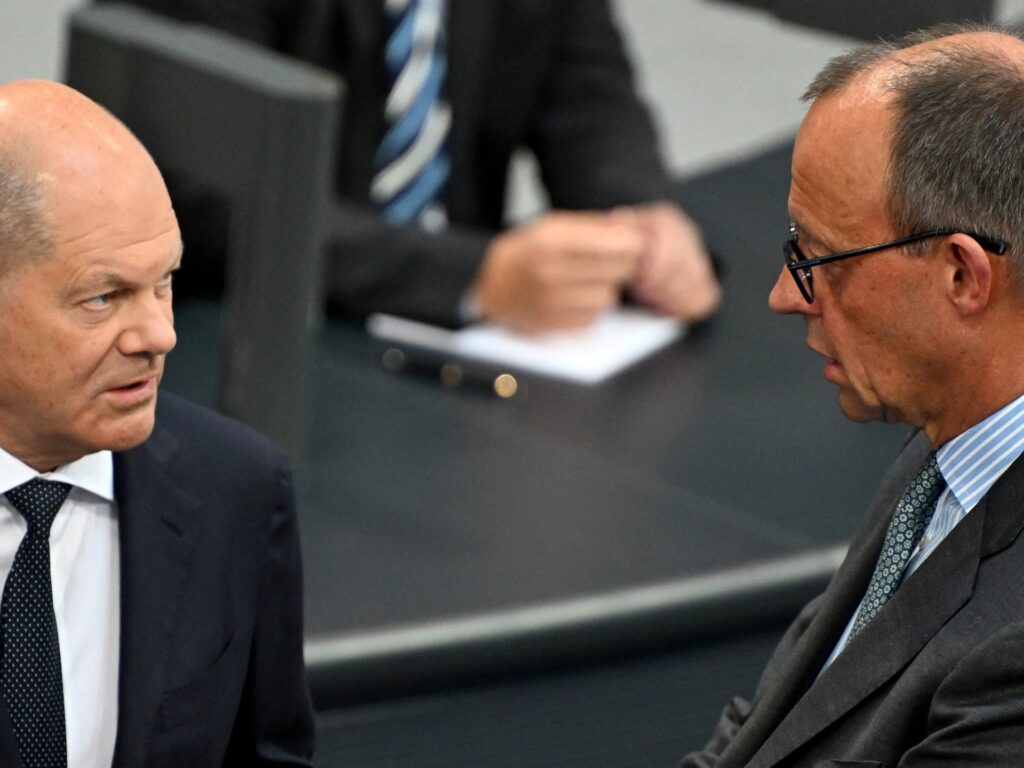
Conservative leader wants confidence vote now, triggering January election, as poll shows more than half of Germans agree. Germany’s conservative opposition leader Friedrich Merz has slammed Chancellor Olaf Scholz, describing his decision to delay a confidence vote until next year as “irresponsible”. Merz, who leads the Christian Democratic Union (CDU), accused Scholz on Friday of being steered by “party-political motives” after he declined calls for an immediate parliamentary vote of confidence following the collapse of his rocky three-way coalition government this week. The “vast majority” of the German electorate agreed with his view that Scholz, who now leads a minority government with his Social Democrats and the Greens after the Free Democrats (FDP) party exited the coalition, was being “irresponsible”, Merz said. Opposition parties and business groups want an immediate vote, which Scholz would likely lose, enabling elections to be held eight months ahead of schedule in January, a move that they say will minimise political uncertainty. But Merz, who met Scholz on Thursday, failed to convince the chancellor to budge from his original plan of holding the vote on January 15, meaning new elections would not be held until the end of March. Scholz’s coalition fell apart on Wednesday when years of tensions culminated in a row over how to plug a multibillion-euro hole in the budget, with the chancellor sacking Finance Minister Christian Lindner, prompting the FDP to leave the government. As parties positioned themselves, Vice Chancellor Robert Habeck of the Greens party, a 55-year-old former novelist and philosopher, is set to fire the starting pistol on his own bid to become chancellor, according to news outlet Der Spiegel, quoting party sources. The break-up creates a leadership vacuum at the heart of the European Union just as it seeks a united response to the election of Donald Trump as United States president on issues ranging from Russia’s war in Ukraine to the future of the US-led NATO alliance. Attending a meeting of European leaders in Budapest on Friday, Scholz pledged to work with Trump, but stressed that the 27-nation European bloc must remain strong in light of conflicts in Europe and the Middle East. “One question is quite clear. Together as the European Union, as Europeans, we must do what is necessary for our security,” he said. Eyeing the top job, Merz adopted a more strident tone, calling on Europe to take a tougher stance during the upcoming Trump presidency. “This will make an impression in America,” he said on a talk show aired by German public broadcaster ZDF on Thursday evening. “Donald Trump is not impressed by weakness, only by strength, even opposition.” The ZDF Politbarometer, an opinion poll, confirmed that 84 percent of Germans want an election as soon as possible. Some 54 percent want it to happen before Scholz’s projected timeline. Adblock test (Why?)
US election results: How did opinion polls undercount Trump voters again?
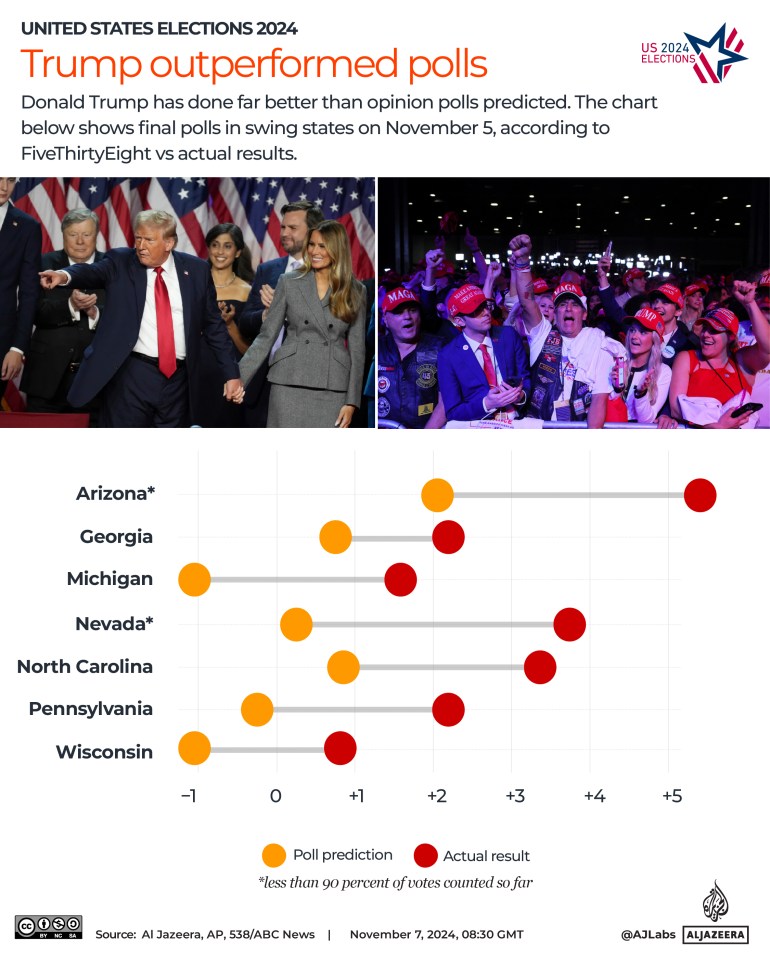
Ahead of the United States presidential elections on Tuesday, public opinion polls had predicted a neck-and-neck race between Donald Trump and Vice President Kamala Harris. Yet eventually, Trump cruised to a comfortable victory, defying most polls. He has already won five of the seven swing states – Pennsylvania, Georgia, North Carolina, Michigan and Wisconsin – and appears poised to win the remaining two, Arizona and Nevada. Most of these wins are by margins larger than the polls had forecast. And, while most pollsters had predicted a narrowing margin between Harris and Trump in the popular vote, almost all showed Harris ahead. In the end, Trump is on course to not just win the popular vote – but to do so by a margin of close to 5 million votes. That’s a win no Republican can boast of since George HW Bush in 1988. Overall, Trump has already won 295 Electoral College votes, comfortably more than the 270 needed to win, while Harris won 226. If he wins Arizona and Nevada as is predicted, Trump will end up with 312 Electoral College votes. So how did the opinion polls go wrong – so wrong? What did the polls predict about swing states? Most national polls, weeks into the vote, predicted the two candidates deadlocked, deeming the race too close to call. A few days before the elections, some pollsters, such as poll aggregator FiveThirtyEight then shifted slightly and predicted that Harris was more likely to win, although by a small gap of less than 2 percent. In the seven battleground states, Harris was predicted – based on an average of polls by aggregator FiveThirtyEight – to win a majority in the traditionally Democrat, or Blue Wall states of Michigan, Pennsylvania and Wisconsin. Trump was leading in the polls in North Carolina, Georgia and Arizona, while there was almost nothing separating the two candidates in Nevada, according to the polls. On election night, Trump won all three of Michigan, Pennsylvania and Wisconsin. He is expected to win Arizona handsomely. And he is ahead in Nevada by three percentage points – well beyond what the polls had predicted. What about other states Trump won? In Iowa, the Midwestern state that has long been solidly Republican, Selzer and Co, a trusted polling company owned by analyst J Ann Selzer, surprisingly predicted Harris winning by three percentage points over Trump in the closing days of the campaign. To be sure, it was an outlier poll: an Emerson College poll that came out at almost the same time showed Trump winning the state by nine percentage points. But Selzer is widely respected in the polling industry and has repeatedly called Iowa correctly in presidential and Senate races over the decades. She cited widespread anger among white women over the overturn of hard-won abortion rights by Trump-appointed Supreme Court Judges back in 2022, and said previously undecided women voters were breaking late for Harris, giving her the edge. Trump, on his social media channel, Truth Social, condemned Selzer’s poll, calling her an “enemy” and saying that the poll was wrong “by a lot”. Eventually, Trump won the state by 13 percentage points – more than what even many Republican-funded polls had predicted. When polls get it so wrong, it “exacerbates a key challenge in this race: the perceived lack of legitimacy of polling”, Tina Fordham of risk advisory company Fordham Global Foresight told Al Jazeera. What about states that Trump lost? Pollsters got it wrong even in several states that Harris won – undercounting Trump’s support and thereby predicting a far great margin of victory for the vice president in solidly Blue states than what happened in the election: New York: The polling average at the start of November 5 had Harris winning by 16 percentage points. She won by 11 points. New Jersey: Harris, per FiveThirtyEight, was forecast to win by 17 percentage points. She beat Trump – but only by 5 points. New Hampshire: The polls suggested Harris would win by 5 percentage points. She barely beat Trump by two percentage points. Did pollsters warn of possible errors? Yes, pollsters always point out that their surveys operate within margins of error in their calculations – about 4 percent in many cases. That means that their predictions could be off by 4 percent in either direction: if Harris is shown leading Trump 48 percent to 44 percent, for instance, they could actually end up equal, or Harris could end up with an 8 percent win eventually. Nate Silver, who founded pollster FiveThirtyEight, and now anchors the newsletter, Silver Bulletin, wrote in The New York Times ahead of the vote that his “gut” went with Trump. Silver had earlier predicted a deadlock, but it was possible, he noted, that the polls were underestimating the numbers of Trump supporters because they could not reach them for surveys. But in the final days before November 5, Silver was one of several pollsters who said their models had shifted slightly more towards Harris, giving her a 48 percent chance at victory over Trump’s 47 percent. (Al Jazeera) Have polls got it wrong before? Yes. Polling in the US began from newspapers collecting local opinions in the 1880s. Predictions have often been right, historically. But of late, they have often also been horribly wrong. In 2016, opinion polls correctly predicted the popular vote for Hillary Clinton, but also had her winning, comfortably, in states like Pennsylvania, Michigan and Wisconsin, that Trump eventually won. Their forecast of Clinton winning the Electoral College was proved wrong. Polls were off in 2020 again, when COVID-19 restrictions greatly limited surveys. Most polls correctly predicted that Joe Biden would win the Electoral College and national vote. But they significantly overestimated the support for Democrats by an “unusual magnitude”, according to the American Association for Public Opinion Research (AAPOR), while undercounting voters backing Trump. Researchers called it the least accurate polling in 40 years. Then, in 2022, polls got it wrong the other way – for the midterm