

Thousands evacuated as wildfires ravage homes near Los Angeles
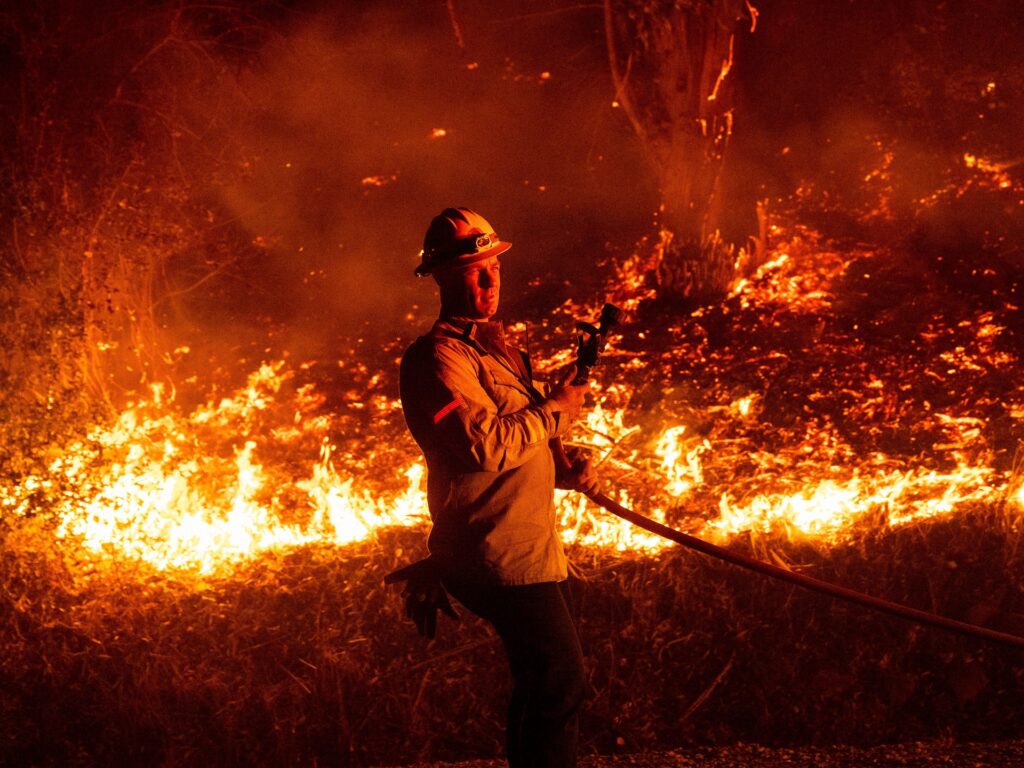
Thousands of people have been ordered to evacuate from a wildfire northwest of Los Angeles as fierce seasonal winds blew flames into ranches and neighbourhoods, destroying dozens of homes. The wildfire has destroyed 132 structures in less than two days, fire officials said on Thursday. Firefighters and police cleared residents from neighbourhoods near Camarillo before homes were set ablaze by embers blown 3.2km (2 miles) from the firefront, Ventura County Fire Department Captain Tony McHale said. “It’s like trying to put out a blowtorch with a squirt gun,” said McHale of the fire, which started in a hillside canyon on Wednesday and tore west, driven by Santa Ana winds. Fuelled by abundant grass and scrub, with wind gusts up to 130km/h (80 mph), the blaze had burned more than 8,094 hectares (20,000 acres) by Thursday evening, authorities said. Several civilians were injured and a “significant” number of homes, businesses and other structures were destroyed, McHale added. Ventura County fire department officials said they were throwing resources at the blaze in an area that is home to 30,000 people, but that changing wind patterns meant there was hope the fire could die down in the coming days. At least 400 homes had been evacuated, Ventura County Sheriff Jim Fryhoff said, adding that 250 residents had chosen to stay behind. “I urge everyone to stay out of the areas that are impacted. The fire is still very dangerous,” he said. The cause of the fire was not immediately known, but meteorologists had raised a Red Flag Warning and a rare Particularly Dangerous Situation (PDS) warning in the area, indicating dangerous fire conditions. They said two years of above-average rainfall had led to the abundant growth of vegetation, which was now all bone-dry after a long, hot summer. Electricity companies had cut power to tens of thousands of customers in the area – a common strategy in California during high winds in a bid to reduce the risk of new fires from toppled power lines. The United States is experiencing a strong wildfire year with 3.3 million hectares (8.1 million acres) burned to date, compared with an annual, full-year average of about 2.8 million hectares (7 million acres) over the last decade, according to National Interagency Fire Center data. Adblock test (Why?)
‘Yesssss!’: Israel reacts to Donald Trump’s return to power in US election
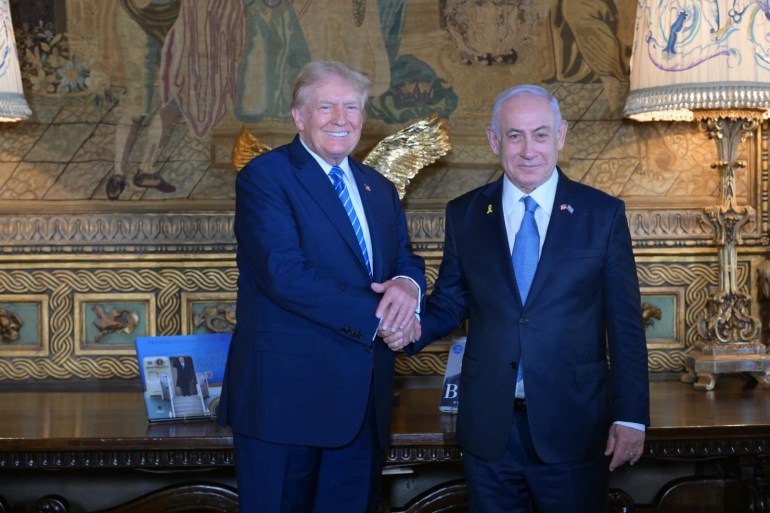
Even before the US presidential election polls had closed on Tuesday night, Israel’s far-right National Security Minister Itamar Ben-Gvir had taken to Twitter, posting “Yesssss” in English, while adding emojis of a flexing bicep and images of the Israeli and American flags. Yesssss 💪🏻🇮🇱🇺🇸 https://t.co/kPqkYI3PDP — איתמר בן גביר (@itamarbengvir) November 6, 2024 Israel’s prime minister, Benjamin Netanyahu, was only slightly slower in congratulating Trump on his triumph in the US presidential election, becoming the first world leader to do so and framing Trump’s victory as a “powerful recommitment to the great alliance between Israel and America”. Dear Donald and Melania Trump, Congratulations on history’s greatest comeback! Your historic return to the White House offers a new beginning for America and a powerful recommitment to the great alliance between Israel and America. This is a huge victory! In true friendship,… pic.twitter.com/B54NSo2BMA — Benjamin Netanyahu – בנימין נתניהו (@netanyahu) November 6, 2024 Two days before this week’s election, which saw former US President Donald Trump stage one of the wildest political comebacks in recent history, leading the Republican Party to a landslide victory, polls in Israeli media showed Trump had already won the hearts and minds of many in Israel. Asked who they would like to see in the White House, almost 65 percent of respondents said they preferred Trump over his rival, Kamala Harris. Among those who identified themselves as Jewish, the difference was even more marked, with 72 percent of those polled telling the Israel Democracy Institute they felt Israel’s interests would be better served by a Trump presidency. This is a further lurch towards the Republicans. A similar poll conducted by the same body in 2020 showed that 63 percent of Israelis favoured Trump over the eventual victor, Joe Biden. For Vice President Kamala Harris, who polls showed took a beating for her administration’s unflinching, if occasionally critical, support of Israel’s war on Gaza and its refusal to halt military aid, celebrations of Trump’s win in Israel likely come as another twist of the knife in her defeat. Donald Trump shakes hands with Benjamin Netanyahu as they pose for a photo during their meeting at Trump’s Mar-a-Lago estate, in Palm Beach, Florida on July 26, 2024 [Amos Ben-Gershom (GPO)/Handout/Anadolu via Getty Images] A ‘watershed moment’ “People are celebrating now,” pollster and former political aide to, among others, Netanyahu, Mitchell Barak told Al Jazeera from Jerusalem. “I mean, you’ve seen the polls, people see this as a win for Israel, and for Netanyahu. He [Netanyahu] gambled on this, reckoning that he just had to hold on till November and a Trump victory, and that gamble turned out to be right. “Within Israel, people see this as being a watershed moment,” he said. In the build-up to the 2020 election, Trump had told US voters in a bid to win the Jewish vote that “the Jewish state has never had a better friend in the White House than your president, Donald J Trump”. In this, unlike many of the former US president’s statements, he appeared factually correct. In his first term as president, Trump defied international norms and recognised the occupied Golan Heights – Syrian territory, two-thirds of which is occupied by Israel – as Israeli territory, accepted Jerusalem as Israel’s capital, subsequently moving the US embassy and installed its pro-settler ambassador there. Consolidating Israel’s position within the region, the US president also embarked on what he termed the Abraham Accords, leading to the normalisation of relations between Israel and four Arab states; Bahrain, the UAE, Morocco and Sudan, in return for US concessions and, in many cases, access to Israel’s cutting edge intelligence and weapons technology. More recently, Trump emphasised his wish to re-establish the warm relationship he enjoyed with Netanyahu during his first presidency in July this year when he welcomed the Israeli prime minister to his Florida estate, Mar-a-Lago. In contrast, the Biden administration’s relations with Netanyahu, while strong, have cooled through the course of 13 months of war on Gaza. First, there were the repeated US “concerns” over the Israeli campaign on Gaza that has so far killed 43,391 people – mostly women and children – and with many thousands more lost and presumed dead under the rubble. Then there were Biden’s red lines on Israel’s subsequent invasion of Rafah. And finally, the US government’s recent requests that aid be allowed into northern Gaza, which aid agencies have said sits upon the brink of famine. All this appears to have jarred with the Israeli prime minister who, in March this year, went so far as to say that US President Biden – whose unflinching military and diplomatic support has underpinned Israel’s war on Gaza – was “wrong” in his criticism of Israel. Given the pressure that Netanyahu faces both at home – from people who want a Gaza ceasefire deal to be done to secure some chance of retrieving the remaining Israeli captives there – and abroad, where many countries are appalled by the levels of violence seen in Gaza – Netanyahu needs an American ally that is uncritical, analysts have said. Demonstrators in front of the Ministry of Defence building in Tel Aviv, Israel, carry banners and posters criticising the government and demanding a ceasefire in Gaza and a swap deal for the captives held in Gaza on November 2, 2024 [Mostafa Alkharouf/Anadolu via Getty Images] End of the two-state solution? As well as being more likely to give Netanyahu free rein over his actions in Gaza and the West Bank – as is feared by Palestinians in the wake of the election – Trump may also be the catalyst to putting paid to any notion of a two-state solution. “People often accuse the Israeli right of never looking too far forward,” independent Israeli analyst Nimrod Flaschenberg said of Netanyahu and his cabinet. “And they’re often right. However, with Trump, they’ve recognised that his election probably marks an end to the two-state solution and Gaza, as we’ve known it.” In the US, despite its unflinching
France slams Israel after gendarmes detained in occupied East Jerusalem
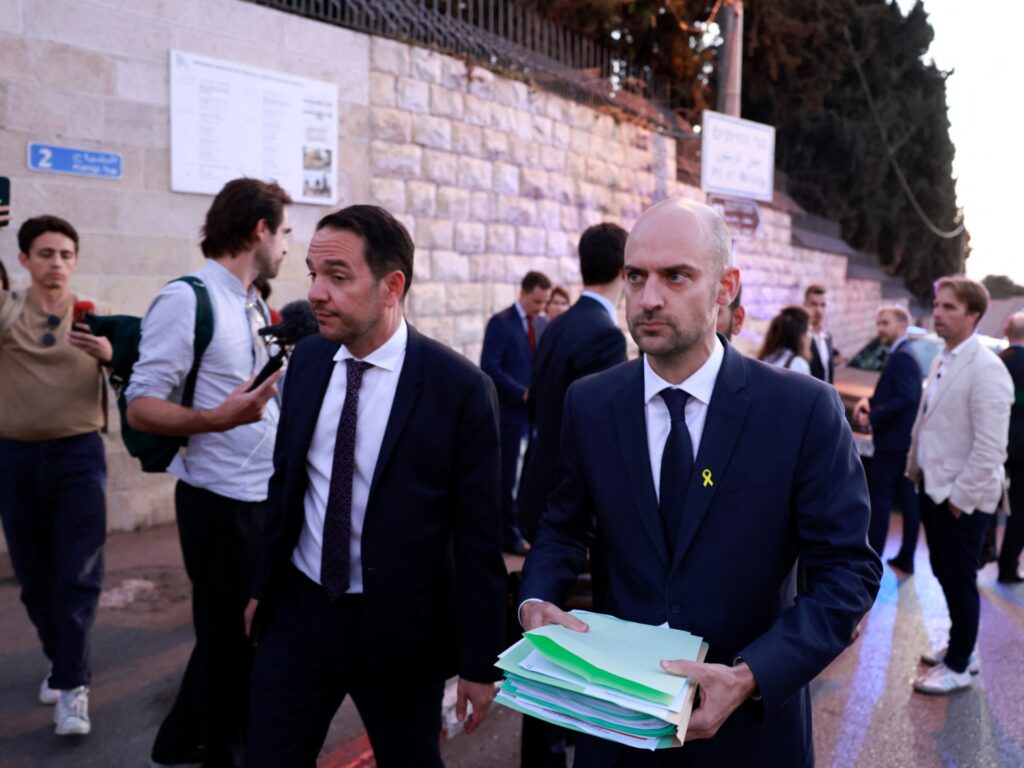
Officers freed after brief detention during visit by France’s top diplomat, with both sides trading blame over incident. France has accused Israel of harming bilateral ties after Israeli forces entered a holy site under French administration in occupied East Jerusalem and briefly detained two gendarmes with diplomatic status. The incident took place on Thursday as French Foreign Minister Jean-Noel Barrot was due to visit the compound of the Church of the Pater Noster on the Mount of Olives. The site, one of four administered by France in Jerusalem, is under Paris’s responsibility and deemed part of France. French diplomatic sources told the Reuters news agency that Israeli security had been told not to enter before Barrot’s visit. Barrot refused to enter the compound, called Eleona in French, while they were present. Two French security officials were then briefly detained, the sources said, adding that the Israelis were aware the two were from the consulate and had diplomatic status. Israel’s Ministry of Foreign Affairs maintained that the security protocol for the visit had been “clarified” in advance, and the police said the French gendarmes had not identified themselves and had obstructed their work. The ministry said in a statement that an argument ensued between Israeli forces and the two French security guards. They were released immediately after they identified themselves as diplomats, it said. The AFP news agency reported that Israeli police surrounded the two French gendarmes, who were not in uniform, before pushing one of them to the ground. The gendarme identified himself and shouted, “Don’t touch me!” several times, according to AFP. Both gendarmes were then led into police cars. Troubled ties The dispute casts a shadow over diplomatic relations that are already strained over Israel’s wars in Gaza and Lebanon. “This violation of the integrity of a site under French responsibility risks undermining the ties I had come to nurture with Israel at a time when we all need to move forward the region on the path to peace,” a visibly angry Barrot told reporters outside the building. Israel’s ambassador to France will be summoned in the coming days, the French Ministry for Foreign Affairs said in a statement. Diplomatic relations between France and Israel have worsened since President Emmanuel Macron called for an end to supplying Israel with offensive weapons used in Gaza. The French government also banned Israeli weapons firms from exhibiting at a trade fair in Paris and has become increasingly uneasy over Israel’s conduct in its offensives in Gaza and Lebanon. French officials have repeatedly said Paris is committed to Israel’s security and that its military helped defend Israel amid Iranian missile attacks earlier this year. Barrot’s trip had aimed to press Israel to engage diplomatically to end the conflicts in the region now that the presidential election in the United States is over. It was not the first time that tensions have arisen surrounding France’s historical holdings in the city. In 2020, Macron lost his temper when visiting the Church of St Anne, another site under French administration, demanding Israeli security personnel leave the Jerusalem basilica. In 1996, France’s then-President Jacques Chirac lost patience with Israeli security agents at the same church, telling one of them that his treatment was a “provocation” and threatened to get back on his plane. Adblock test (Why?)
More than 40 monkeys on the loose in US town after escaping lab
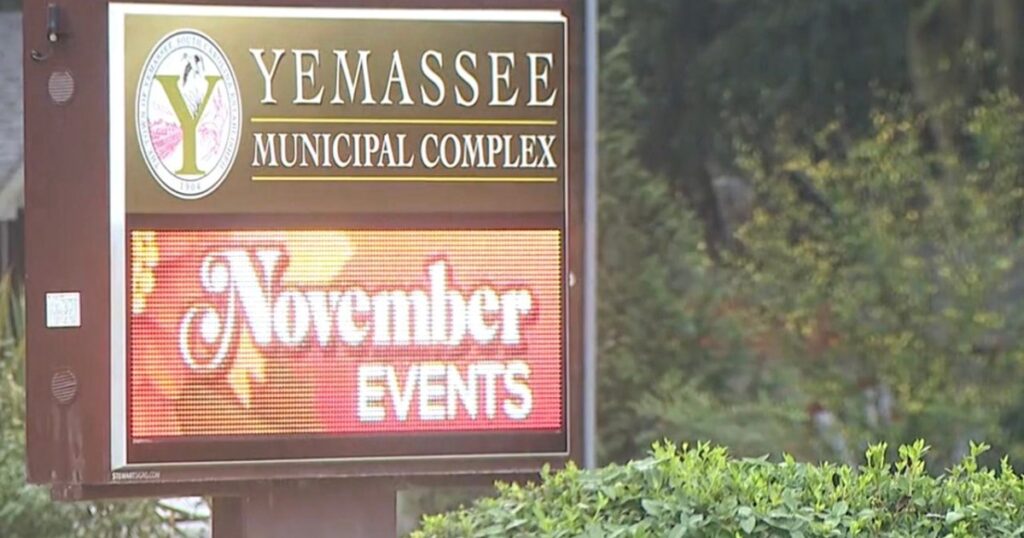
Police describe escapees, who are not carrying disease, as ‘harmless and a little skittish’, posing ‘almost no danger to public’. More than 40 monkeys escaped from a research lab in a small town in the United States after an employee failed to properly shut an enclosure. The 43 rhesus macaque monkeys fled from the Alpha Genesis facility in Yemassee, South Carolina, on Wednesday, according to a police statement issued the following day. Police said the monkeys were all females weighing about 3kgs (6.6 pounds), too small and young to be used for testing. “They are not infected with any disease whatsoever. They are harmless and a little skittish,” said Yemassee Police Chief Gregory Alexander on Thursday, emphasising that they posed “almost no danger to the public”. Alpha Genesis set up traps and was using thermal imaging cameras to recapture the monkeys on the run. “The handlers know them well and usually can get them back with fruit or a little treat,” said Alexander. Police urged residents of the town, which has a population of about 2,000, to keep their doors and windows “securely closed”, report any sightings immediately and refrain from approaching the monkeys “under any circumstances”. Greg Westergaard, CEO of Alpha Genesis, which provides primates for research worldwide, told CBS News he was “hoping for a happy ending” with the primates returning of their own volition. “It’s really like follow-the-leader. You see one go and the others go,” he said of their escape. However, this was not the first breakout from the lab. In 2018, federal officials fined Alpha Genesis $12,600 after dozens of primates escaped. There were other escapes in 2014 and 2016, with a total of 45 monkeys fleeing. The group Stop Animal Exploitation Now sent a letter to the US Department of Agriculture asking the agency to immediately send an inspector to the Alpha Genesis facility and to conduct a thorough investigation. “The clear carelessness which allowed these 40 monkeys to escape endangered not only the safety of the animals, but also put the residents of South Carolina at risk,” wrote Michael Budkie, the executive director of the group, in a letter. Adblock test (Why?)
Two dead, 12 missing after fishing boat sinks off South Korea

South Korean President Yoon Suk-yeol orders all available resources and personnel to assist with search for survivors. At least two people are dead and 12 others missing after a fishing boat capsized off the coast of South Korea, coastguard officials have said. The 120-tonne Geumseong sank about 24 kilometres (15 miles) off the resort island of Jeju after leaving the port of Seogwipo to catch mackerel late on Thursday, the Korea Coast Guard said on Friday. The crew on board included 16 South Koreans and 11 foreigners, two of whom are unaccounted for, officials said. Coastguard officials said they received a distress signal at about 4:30am on Friday from a nearby fishing vessel that went to the scene to help rescue their crew. Crew members told the coastguard that the ship suddenly capsized and began to sink while they were transferring their catch to another ship, according to officials. South Korean President Yoon Suk-yeol ordered all available resources and personnel to be mobilised to assist with the rescue, his office said. At least 11 vessels and nine aircraft from South Korea’s coastguard, police, fire service and military, and 13 civilian vessels, have been deployed to search for survivors. Adblock test (Why?)
Cuba struggles in wake of Hurricane Rafael
[unable to retrieve full-text content] Cuba is facing widespread power outages and damage after Hurricane Rafael ripped through the island.
Trump 2.0: Will China and Imran Khan test Pakistan ties with the US?
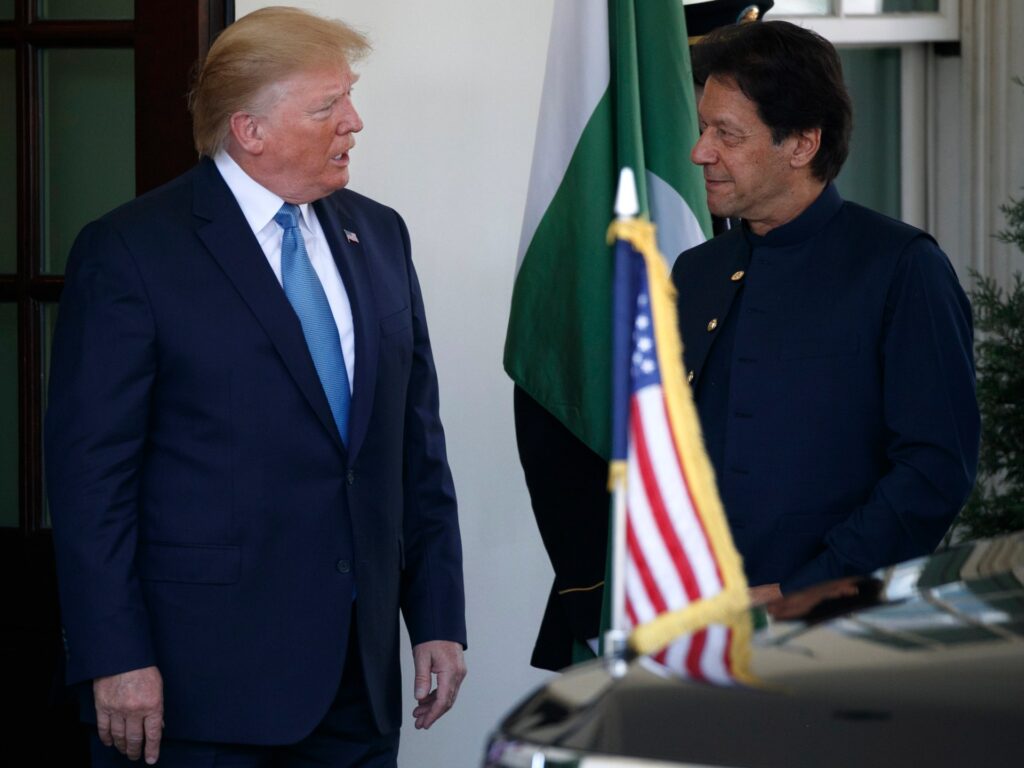
Islamabad, Pakistan – Amid a flurry of congratulatory messages from political leaders worldwide following his victory in the US presidential election, Donald Trump received a message from an unexpected source: Pakistan’s former Prime Minister Imran Khan, his “very good friend” who is currently in jail. In a brief, 55-word post on his X social media account, Khan congratulated Trump on his win and said the will of the American people “held against all odds”. “President Elect Trump will be good for Pak-US relations based on mutual respect for democracy and human rights. We hope he will push for peace, human rights, and democracy globally,” Khan’s message read. Congratulations on behalf of myself & PTI to @realDonaldTrump for winning the US Presidential Elections. The will of the American people held against all odds. President Elect Trump will be good for Pak-US relations based on mutual respect for democracy & human rights. We hope… — Imran Khan (@ImranKhanPTI) November 6, 2024 The post points to some of the ways in which a deeply divided Pakistan’s relationship with the US under a second Trump presidency could be tested, say analysts. Will Trump intervene on Khan’s behalf? While most experts believe Pakistan is unlikely to be a priority for the new administration, Khan’s party, Pakistan Tehreek-e-Insaf (PTI), is hopeful that Trump’s win could ease the political troubles faced by the former prime minister, who just two years ago accused the US, under President Joe Biden, of meddling in Pakistan’s domestic politics to remove him from power. Former Pakistan president and a senior member of PTI, Arif Alvi, congratulated Trump for his victory, adding that “free and fair” elections allowed “the citizens of America to make their dreams come true”. “We look forward to continued cooperation as democratic nations. Indeed, your victory must have sent shivers down the spine of dictators and aspiring dictators of the world,” Alvi wrote on platform X. But Pakistan’s officials appeared confident that the US under Trump would not pressure them for Khan’s release – and laid down Islamabad’s red line on the matter. “Pakistan and the United States are old friends and partners, and we will continue to pursue our relations on the basis of mutual respect, mutual confidence and noninterference in each other’s domestic affairs,” Pakistan’s Foreign Ministry spokesperson Mumtaz Zahra Baloch told reporters on Thursday. Joshua White, a former White House official for South Asian affairs under the Obama administration, suggested that engagement with Pakistan will likely be a “low priority” for Trump’s team. White, now a non-resident fellow at the Brookings Institution, noted that Pakistan is primarily viewed through a counterterrorism lens in Washington, with “little appetite” for renewing a broader security or economic partnership. “It’s plausible that someone in Trump’s circle might encourage him to address Khan’s case or the PTI’s position more generally,” White told Al Jazeera, “but it is unlikely he would use the US government’s influence to pressure the Pakistani military on this matter.” After Khan was removed through a parliamentary vote of no confidence in April 2022, he accused the US of colluding with Pakistan’s military to remove him, a claim both Washington and Islamabad deny. But relations have since warmed gradually between the two nations, with the Biden administration appointing Donald Blome as US ambassador to Pakistan in May 2022, filling a position vacant since August 2018. Throughout the crackdown on Khan and PTI, including Khan’s imprisonment since August 2023, US authorities have largely refrained from commenting, citing it as an internal matter for Pakistan to resolve. However, following controversial general elections in February, where the PTI claimed their majority was curtailed through a “mandate theft”, the US stopped short of characterising the election as free and fair. Congress subsequently held a hearing on the “future of democracy” in Pakistan, spurred by legislators urging President Biden and Secretary of State Antony Blinken to scrutinise the election outcome. In October, more than 60 democratic legislators urged Biden to use Washington’s influence with Pakistan to secure Khan’s release. Although Trump had criticised Pakistan in his first term, accusing it of providing “nothing but lies and deceit”, he developed a rapport with Khan during the latter’s premiership from 2018 to 2022. The two first met in Washington in July 2019 and again in Davos in January 2020, where Trump referred to Khan as his “very good friend”. By contrast, relations between Khan and Biden were frosty, with Khan often complaining about Biden never making contact with him. Just days before the November 5 election, Atif Khan, a senior PTI leader, also met Trump’s daughter-in-law, Lara Trump, to discuss concerns about Khan’s incarceration. Maleeha Lodhi, a former Pakistani ambassador to the US and the UK, questioned expectations that Trump might intervene on Khan’s behalf. “While Trump and Khan enjoyed a warm relationship, Pakistan does not figure prominently among US foreign policy priorities,” Lodhi told Al Jazeera. “Relations are at a crossroads and need redefinition, but it’s unclear how interested a Trump administration would be in engaging on this front.” Will Pakistan matter more – or less – to the US under Trump? Foreign policy expert Muhammad Faisal added that Pakistan, which had some engagement with the US under Trump due to the Afghanistan conflict, may now receive less attention as the administration grapples with issues like Gaza, Ukraine, and US-China tensions. “The presidency will be more focused on domestic policy and global trade issues. Pakistan’s domestic politics is not a topic of mutual interest for the incoming Trump administration,” the Sydney-based analyst said. Still, some see Pakistan’s relevance to US interests potentially increasing if tensions in the Middle East rise, particularly with Iran. “Pakistan’s significance may grow if tensions between the US and Iran escalate,” Washington-based geopolitical commentator Uzair Younus told Al Jazeera. “In such a scenario, Pakistan could serve as a partner to limit the influence of Iran’s regional proxies.” The China test Pakistan’s ties with China could also come under the microscope, said other observers. China, Pakistan’s longstanding ally, has invested
Israel killed over 3,100 people in Lebanon since October 2023: Ministry
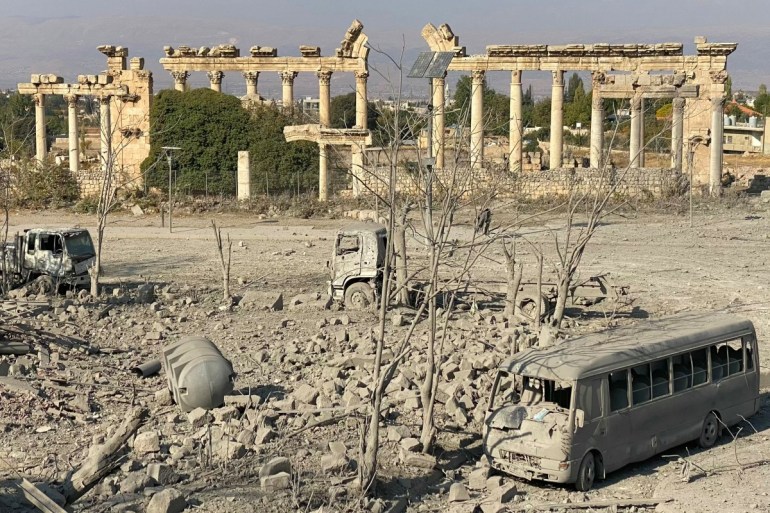
Israeli attacks across Lebanon have killed at least 3,103 people and injured 13,856 others since October last year, according to Lebanon’s Ministry of Health. Since the genocide in Gaza began, Israel has also been at war with the Lebanese armed group Hezbollah, which is an ally of the Palestinian group Hamas, and expresses solidarity with the people in Gaza. In September this year, Israel expanded its war from Gaza into southern Lebanon. On Thursday, Lebanon’s Ministry of Health also said that Israeli strikes killed at least 53 people and wounded 161 others over the past 24 hours. Five Malaysian peacekeepers from the United Nations Interim Force in Lebanon (UNIFIL), three Lebanese soldiers and three Lebanese civilians were among the wounded after an Israeli raid in south Lebanon’s main city of Sidon. In a statement, UNIFIL reminded “all actors to avoid actions putting peacekeepers or civilians in danger”, adding that “differences should be resolved at the negotiating table, not through violence”. UNIFIL, as well as unarmed technical observers known as UNTSO, have long been stationed in southern Lebanon to monitor hostilities along the demarcation line between Lebanon and Israel, known as the Blue Line – drawn by the UN in May 2000 to divide the two countries. Reporting from Beirut, Al Jazeera’s Imran Khan said the Israeli attack on the UNIFIL location was crucial. “The Awali checkpoint is one of the places where Israel issues a forced evacuation order. It tells people to go north of the Awali River. That’s where the checkpoint is,” Khan said. “So they’re telling people to go north of that particular checkpoint, but they’re also hitting that checkpoint as well. This is very, very concerning for UNIFIL, which has been attacked nearly 20 times since Israel announced its ground invasion,” Khan added. Israel also bombarded Beirut’s southern suburbs. “Death has become a matter of luck. We can either die or survive”, Ramzi Zaiter, a resident of south Beirut, told the AFP news agency. The Israeli strikes on Lebanon came after Hezbollah said it carried out a missile attack targeting a military base near Israel’s Ben Gurion International Airport on Wednesday. The Lebanese armed group said it had also targeted the “strategic Stella Maris naval base for monitoring and surveillance” with missiles northwest of Haifa in Israel on Thursday. In its war update, the Israeli military said around 40 projectiles crossed into northern Israel from Lebanon but were intercepted. The military added that in recent weeks, five Israeli soldiers were killed and 16 others wounded in combat in southern Lebanon. ‘Protect Lebanon’s historic sites’ Also on Thursday, more than 100 Lebanese lawmakers issued an appeal to the UN, demanding the preservation of UNESCO World Heritage Sites in areas being heavily bombed by Israel. Lebanon is home to six UNESCO World Heritage sites, including Roman ruins in Baalbek and Tyre, where Hezbollah holds sway. The destruction in Lebanon’s Bekaa Valley, with a Roman temple in the background [Sam Skaineh/AFP] In Baalbek, Israeli strikes on Wednesday destroyed a heritage house and damaged a historic hotel near the city’s Roman temples, according to local authorities. In a letter addressed to the head of UNESCO, Lebanese MPs stated, “During the devastating war on Lebanon, Israel has caused grave human rights violations and atrocities.” The letter demanded the protection of Lebanon’s historic sites in Baalbek, Tyre, Sidon, and other invaluable landmarks “currently at risk due to the escalation of the atrocities”. On Monday, Lebanon’s Prime Minister Najib Mikati called for a ceasefire “to protect our country’s cultural heritage, including the ancient archeological sites of Baalbek and Tyre”. Meanwhile, some in Lebanon are hopeful a new leadership in the United States, where Republican Donald Trump has won the presidency, might bring them a reprieve. “Many believe that no significant diplomatic efforts will take place until Trump, the US president-elect, assumes office in January,” said Al Jazeera’s Zeina Khodr, reporting from Beirut. Adblock test (Why?)
Russia’s Putin says ready for dialogue with ‘courageous’ Trump
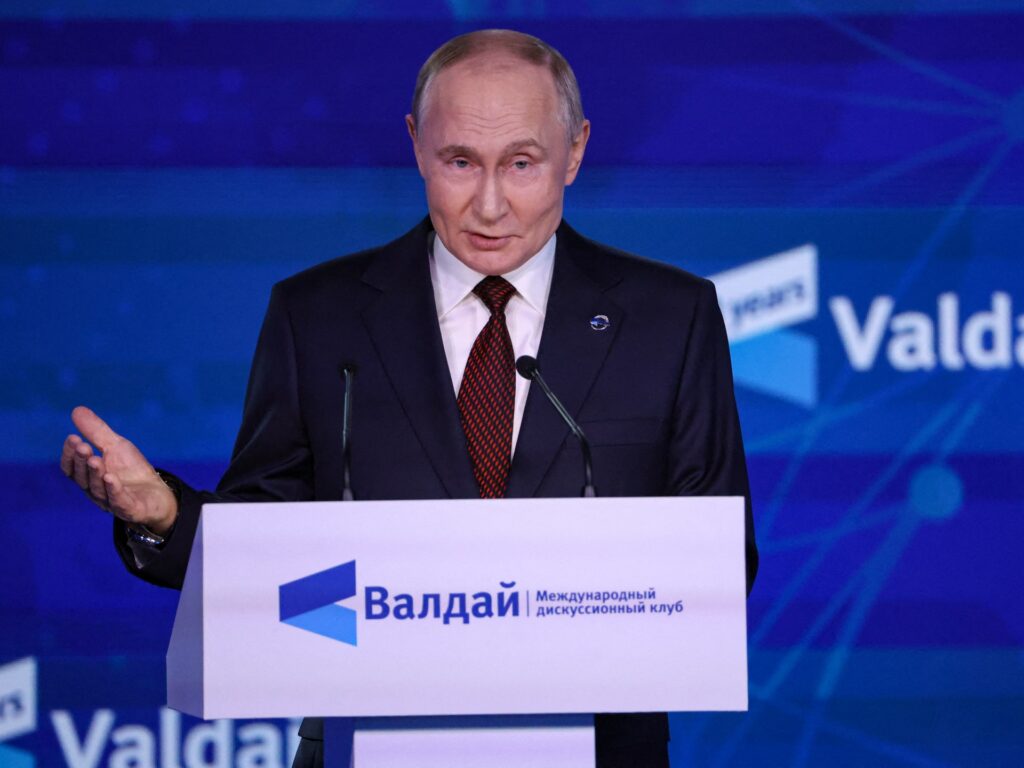
Russia’s President Vladimir Putin has congratulated Donald Trump on winning the United States election, saying Moscow was ready for dialogue with the Republican president-elect. In his first public remarks since Trump’s win, Putin on Thursday praised the US leader’s courage during an assassination attempt at a campaign rally in Butler, Pennsylvania, on July 14. “He behaved, in my opinion, in a very correct way – courageously, like a real man,” Putin said at the Valdai discussion club, an international forum, in the Russian Black Sea resort of Sochi. Asked whether he was open to holding talks with Trump, the Russian leader said, “Ready”. Putin, 72, also said that Trump’s comments “about the desire to restore relations with Russia, to help end the Ukrainian crisis, in my opinion, deserves attention at least”. The Kremlin earlier welcomed Trump’s claim that he could negotiate an end to the conflict in Ukraine “in 24 hours” but emphasised that it would wait for concrete policy steps. During his presidential campaign in the US, Trump said that he could bring peace to Ukraine within 24 hours if elected, but he has given few details on how he would seek to end the biggest land war in Europe since World War II. As to what he expects from a second Trump administration, Putin said, “I don’t know what will happen now. I have no idea.” “For him, this is still his last presidential term. What he will do is his matter,” Putin said. Earlier, Kremlin spokesperson Dmitry Peskov said that Moscow remembered Trump’s words on resolving the war in Ukraine but that the incoming US president “exaggerated” the speed at which he could do it. “If the new administration is going to look for peace, not for the continuation of the war, it will be better in comparison with the previous one,” Peskov said. Meanwhile, Ukraine is scrambling to put pressure on its allies for more support in its fight against Russia following Trump’s victory. Ukrainian President Volodymyr Zelenskyy was among the first world leaders to congratulate Trump. “We agreed to maintain close dialogue and advance our cooperation. Strong and unwavering US leadership is vital for the world and for a just peace,” Zelenskyy said in a post on X on Wednesday. But in his plan to end the war, Trump suggested that Ukraine might have to cede territory to Russia to reach a peace deal, something Ukraine has rejected and US President Joe Biden never suggested. Speaking to European leaders at a summit in Hungary, Zelenskyy blasted those urging him to give in to some of Putin’s hardline demands and urged Europe and the US not to loosen ties following the election of Trump. “There has been much talk about the need to yield to Putin, to back down, to make some concessions … It’s unacceptable for Ukraine and unacceptable for all Europe,” Zelensky said. “We need sufficient weapons, not support in talks. Hugs with Putin won’t help. Some of you have been hugging him for 20 years, and things are only getting worse,” he said. Zelenskyy also urged Europe and the US to preserve their strong ties following Trump’s victory. “We do hope that America will become stronger. This is the kind of America that Europe needs. And a strong Europe is what America needs. This is the connection between allies that must be valued and cannot be lost,” he said. Meanwhile, reports say Biden plans to rush billions of dollars in security assistance to Ukraine before he leaves office in January. Since Russia’s full-scale invasion of Ukraine in 2022, the US has already provided more than $64.1bn in military assistance to Ukraine, according to the data by the US Department of State. Adblock test (Why?)
Trump 2.0: Who is going to be in the US president-elect’s administration?
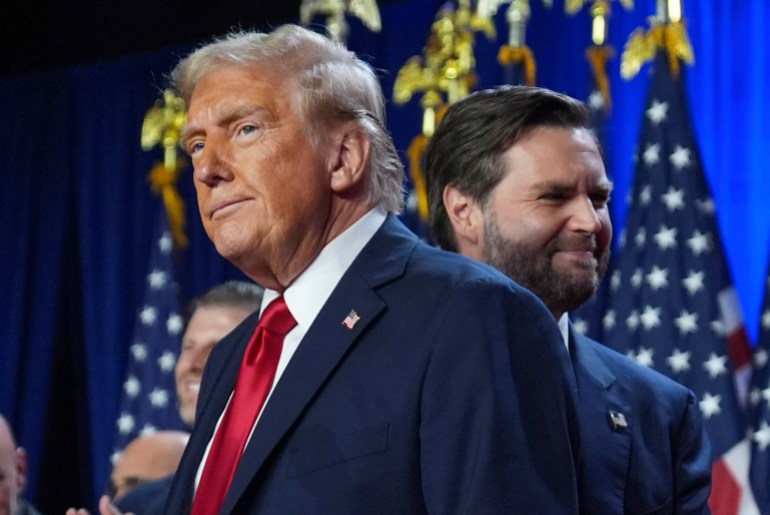
EXPLAINER As a second Trump administration looms, intense jockeying for key spots in his forthcoming cabinet has begun. Who’s in? And who’s out? Donald Trump is carefully considering his cabinet picks following his historic presidential election victory over Democratic nominee Kamala Harris on Tuesday. Trump had reportedly avoided detailed cabinet discussions until after the election results were clear. Now, as names emerge, here’s a closer look at who might be part of the next administration, from seasoned Republican figures to unexpected newcomers. JD Vance – Senator, Ohio, and vice president-elect President-elect Donald Trump and his running mate Senator JD Vance, stand on stage at an election night watch party at the Palm Beach Convention Center on November 6, 2024, in West Palm Beach, Florida [Evan Vucci/AP] Ohio Senator JD Vance has quickly risen as a prominent GOP voice, going from never-Trumper to loyal running mate. Despite once comparing Trump to Hitler, ideologically Vance is aligned with the 47th president’s MAGA base, particularly on issues like national security and US-China relations. A former venture capitalist and author, Vance is a staunch advocate of Trump’s America First agenda. He’s a sharp critic of Joe Biden’s foreign policy and will bring a populist stance to the Oval Office. Robert F Kennedy Jr – Presidential candidate, environmental lawyer Robert F Kennedy Jr dropped his campaign for the Democratic Party, opting instead to run as an independent, before sacking his campaign altogether to stump for Trump [File: Mark Makela/Reuters] One-time Democrat, Robert F Kennedy Jr, ran on an unsuccessful independent ticket for president this election cycle, before ending his campaign to become a Trump surrogate. He weathered a number of gaffes that came to light during his campaign, including admitting to short-term memory loss due to “brain worms”, abandoning a dead bear in a park, and accusations that he sexually assaulted his family’s live-in nanny in 1998. A purveyor of vaccine conspiracies, Trump predicted he’d tap Kennedy to “go wild on health,” per The New York Times. His first act of business if appointed? Kennedy said he would push to “advise all US water systems to remove fluoride from public water”. Vivek Ramaswamy – Biotechnology entrepreneur Vivek Ramaswamy speaks during a rally for Republican presidential nominee and US presidential nominee Donald Trump, at Madison Square Garden, in New York City on October 27, 2024 [Carlos Barria/Reuters] Vivek Ramaswamy, an entrepreneur-turned-politician, made a name for himself in the 2024 Republican primary with his anti-“woke” agenda and government reform. Ramaswamy, a vocal critic of Big Tech censorship and bureaucratic overreach, could take a role in the Department of Commerce or a technology-focused post, driving policies that challenge Silicon Valley and reinforce free speech. While he’s a longtime friend of JD Vance, he has portrayed himself as differing from the next vice president ideologically, casting himself in a more libertarian mould, as opposed to Vance’s support for elements of economic populism. Marco Rubio – Senator, Florida US Senator Marco Rubio speaks during the rally of Republican presidential nominee and former US President Donald Trump, at Mullett Arena in Tempe, Arizona on October 24, 2024 [Go Nakamura/Reuters] Senator Marco Rubio, who was repeatedly attacked by Trump in the 2016 Republican primaries, has been a vocal critic of Biden’s stance on national security and foreign policy; he’s strongly anti-Russia and anti-China. Rubio, who was tapped as a potential vice presidential pick, has experience in foreign affairs positions, making him a strong candidate for secretary of state or another foreign policy role. He aligns closely with Trump’s emphasis on prioritising American interests. Elon Musk – CEO, Tesla, SpaceX Elon Musk has become one of Trump’s most important supporters [File: Evan Vucci/AP] Another billionaire eyeing a top spot in Trump world, Elon Musk was central to Trump’s decisive victory at the polls. Musk endorsed Trump shortly after the assassination attempt against the president-elect at a Butler, Pennsylvania rally. The tech tycoon was a fixture on the incoming president’s campaign trail, mobilising the MAGA vote at rallies and online with a super PAC he set up. Days before Trump was catapulted back to the White House, the X owner pledged to overhaul the federal government as a “secretary of cost-cutting” if awarded a cabinet position. However, Musk may decide he’s better suited for an oversight role, rather than a position like secretary of energy, which would involve congressional approval hearings. Doug Burgum – Governor, North Dakota North Dakota Governor Doug Burgum walking into the spin room before a presidential debate between Republican President-elect President Donald Trump and Democratic nominee Vice President Kamala Harris on September 10, 2024, in Philadelphia [Matt Slocum/AP] Doug Burgum ran a longshot primary campaign against Trump, in which the incoming president steamrolled the North Dakota governor. But could the gambit have paid off in the long run? Burgum’s failed primary effort significantly boosted his profile on the national stage. His experience in managing North Dakota’s natural resources positions him as a suitable candidate for secretary of the interior. He is likely to focus on balancing energy development with conservation efforts, overseeing public lands, and implementing policies that support both economic growth and environmental stewardship. John Ratcliffe – Former director of national intelligence Former Representative John Ratcliff testifies before a Senate Intelligence Committee nomination hearing on Capitol Hill in Washington on May 5, 2020 [Gabriella Demczuk/AP] John Ratcliffe, who served as director of national intelligence under Trump, is a trusted ally with deep experience in intelligence and cybersecurity. Known for his loyalty to Trump and expertise in “counterterrorism”, Ratcliffe could resume a similar role, focusing on cybersecurity threats and intelligence reform. His reappointment would signal a continuity in Trump’s approach to national security and information integrity. Adblock test (Why?)