

Video: Germany’s ruling coalition collapses after finance minister sacked
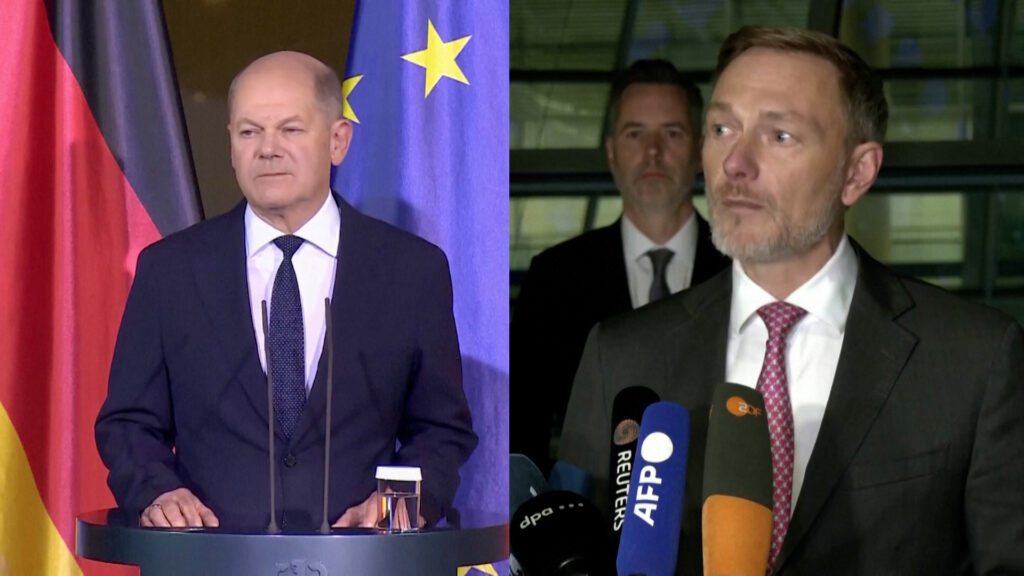
NewsFeed Germany’s ruling coalition has collapsed after Chancellor Olaf Scholz sacked his finance minister over budget disputes, meaning early elections are expected within months. Published On 7 Nov 20247 Nov 2024 Adblock test (Why?)
US reinstates plea deals for Khalid Sheikh Mohammed, other 9/11 suspects
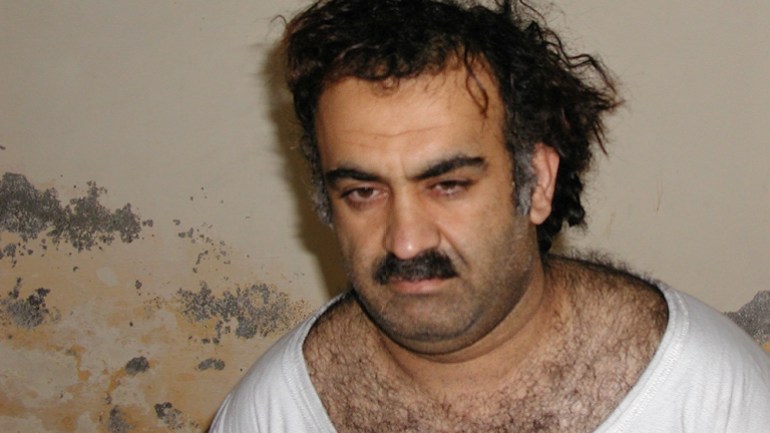
Military judge rules Defense Secretary Austin did not have the authority to rescind plea agreements with three accused. A United States military judge has ruled that plea agreements reached with the alleged plotters of the September 11, 2001, attacks are valid, reversing an order by the country’s defence minister. The order by the judge, Air Force Colonel Matthew McCall, means the three accused men may eventually be sentenced to life in prison instead of death as part of the deal reached earlier, The New York Times and The Associated Press news agency reported on Wednesday. Defense Secretary Lloyd Austin rescinded the three separate pretrial agreements on August 2, two days after a senior Pentagon official signed them. But the military judge at Guantanamo Bay in Cuba ordered that Khalid Sheikh Mohammed, the alleged mastermind, and two accused accomplices, Walid bin Attash and Mustafa al-Hawsawi, can appear before his court to enter pleas. He is reportedly yet to set a timetable. The judge argued that Austin had the authority to exert supervision over the process when it was ongoing, but did not have the legal authority to rescind the plea deals as the defence minister. The Pentagon was reviewing the judge’s decision and had no further comment, said its spokesman Major-General Pat Ryder. Prosecutors have also not commented on the ruling, which has not yet been publicly announced. Mohammed and four others were charged in 2012 with conspiring in the attacks that killed nearly 3,000 people, but the cases have for years been mired in litigation over the torture of the defendants by the Central Intelligence Agency (CIA). Khalid Sheikh Mohammed, the alleged 9/11 mastermind, is seen shortly after his capture during a raid in Pakistan [File: AP Photo] Pretrial hearings were scheduled at Guantanamo Bay in the case for another defendant, Ammar al-Baluchi, who has not reached a plea deal. The fifth defendant, Ramzi bin al-Shibh, was last September found incompetent to stand trial or reach a plea deal. A forensic psychiatrist is reportedly expected to testify on Thursday on whether the defendants made their 2007 confessions under torture or voluntarily, after spending years in secret CIA prisons. The cases are still expected to take a long time before reaching the finish line even if verdicts and sentences are reached. A US court of appeals would then likely have to hear many of the issues surrounding the cases – including the destruction of videos of interrogations by the CIA. Mohammed was regarded as one of al-Qaeda chief Osama bin Laden’s most trusted men before he was captured in a covert operation in Pakistan in March 2003. He spent three years in secret CIA prisons before arriving in Guantanamo in 2006. Bin Attash, a Saudi of Yemeni origin, allegedly trained two of the hijackers who carried out the attacks. He was captured with Mohammed in 2003 and was also held in a network of secret CIA prisons. Al-Hawsawi is suspected of managing the finances for the 9/11 attacks. He was arrested in Pakistan on March 1, 2003, and was also held in secret prisons before being transferred to Guantanamo in 2006. Adblock test (Why?)
Spain floods: Is Europe prepared for climate change?
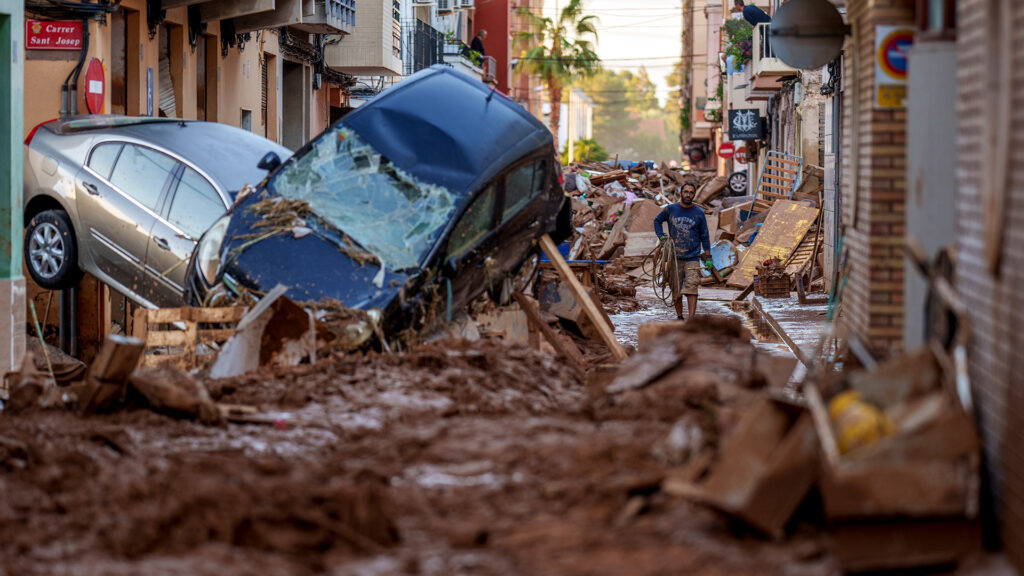
Spain’s devastating floods have raised concerns about EU preparedness for climate change. It is Spain’s worst natural disaster in recent history and some scientists are linking it to global warming. Devastating floods across the eastern region of Valencia have destroyed roads, railways, other infrastructure and businesses. Recovery efforts are still under way, but the total cost is likely to be enormous. The government has approved more than $11bn in loans and grants to help storm and flood victims. But many Spaniards are outraged by what they say is a slow response to the crisis. Israel extends a lifeline for the Palestinian economy, but just for one month. Plus, Africa’s energy potential. Adblock test (Why?)
UN agency for Palestinians facing its ‘darkest hour’, UNRWA chief says
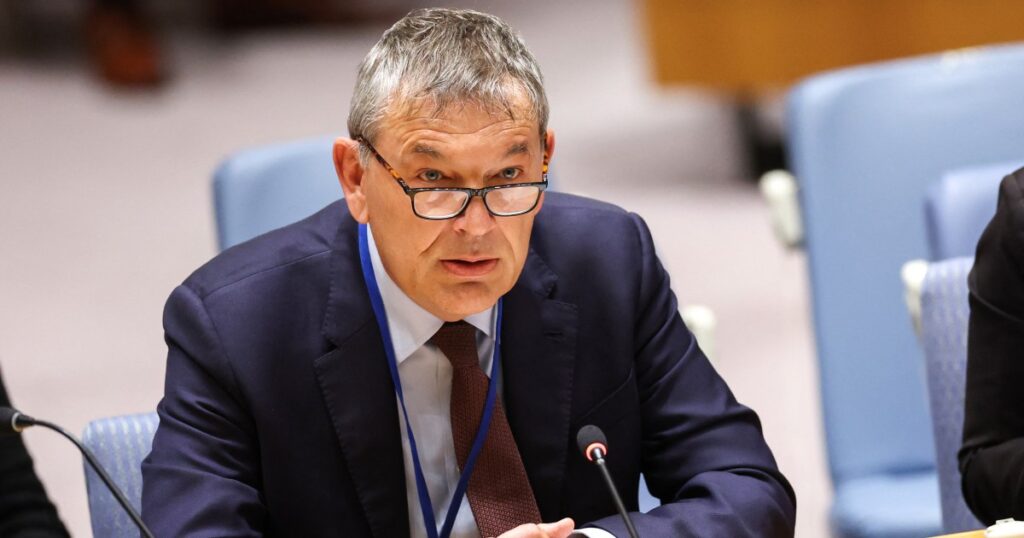
The United Nations Relief and Works Agency for Palestine Refugees (UNRWA) is facing its “darkest hour” and requires ongoing support from UN members after Israel’s decision to ban the organisation, its chief has said. “Without intervention by member states, UNRWA will collapse, plunging millions of Palestinians into chaos,” Philippe Lazzarini, the agency’s commissioner-general, told the UN General Assembly in New York on Wednesday. He called on the UN – which created UNRWA in 1949 – to prevent implementation of the ban on the organisation in Israel and the occupied Palestinian territories. In a statement on Monday, the Israeli Ministry of Foreign Affairs said it cancelled a cooperation agreement from 1967 which provided the legal basis of the country’s relations with UNRWA. “UNRWA – the organisation whose employees participated in the October 7 massacre and many of whose employees are Hamas operatives – is part of the problem in the Gaza Strip and not part of the solution,” said Israel Katz, the country’s newly appointed defence minister, who was foreign minister at the time. In January, Israel claimed that a dozen of UNRWA’s Gaza employees were involved in the October 7, 2023 attack on Israel by Hamas. At the time, the UN launched an investigation into Israel’s allegations and terminated the contracts of nine staff members who were accused. However, Lazzarini said that despite multiple requests, Israel has not provided any evidence to support its claims. UNRWA said it takes measures to ensure its neutrality. But the Israeli ban has raised fears that UNRWA employees will lose their ability to coordinate with Israeli authorities to cross checkpoints and move from one place to another in the occupied West Bank and Gaza. UNRWA provides education, healthcare and other basic services to Palestinian refugees displaced in 1948 during Israel’s creation, and their descendants, who now number nearly six million. Refugee families make up the majority of Gaza’s 2.3 million population. “In Gaza, dismantling UNRWA will collapse the UN humanitarian response, which relies heavily on the agency’s infrastructure,” Lazzarini said. “In the absence of a capable public administration or state, only UNRWA can deliver education to more than 650,000 girls and boys in Gaza. In the absence of UNRWA, an entire generation will be denied the right to education,” he said. ‘Time to move on’ Since Israel’s war on Gaza began last October, UNRWA itself has suffered heavy losses, with at least 223 of its staff killed and two-thirds of its facilities in Gaza damaged or destroyed. Riyad Mansour, the permanent observer for the State of Palestine at the UN, told the General Assembly that the ban on UNRWA “is proof of the Israeli genocide in Gaza”. Meanwhile, Hadi Hashim, the interim representative for Lebanon at the UN, said Israel’s ban was a “war crime” and noted that UNRWA was crucial not only in Gaza and the occupied West Bank, but also in Syria, Lebanon and Jordan. “We call on the General Assembly to take the necessary and urgent measures legally and politically to stand against this attack not only against UNWRA, but against us all,” he said. Jordan, South Africa and the European Union also condemned the Israeli government’s decision to ban the UN agency. But Israeli ambassador Danny Danon called the agency “a failure”. “UNRWA is shielded by a misconception that it is the backbone of humanitarian efforts in Gaza,” he said. “It is time to move on and build a new path so the UN can regain its integrity and deliver on its promise to support peace and security.” Israeli authorities have long called for the agency to be dismantled, arguing that its mission is obsolete and it fosters anti-Israel sentiment among its staff, in its schools and in its wider social mission. UNRWA strongly disputes this characterisation. In the past, Israeli Prime Minister Benjamin Netanyahu has also called on the United States, Israel’s top ally and the agency’s biggest donor, to roll back its support. Adblock test (Why?)
Kamala Harris calls Donald Trump to concede defeat in US election
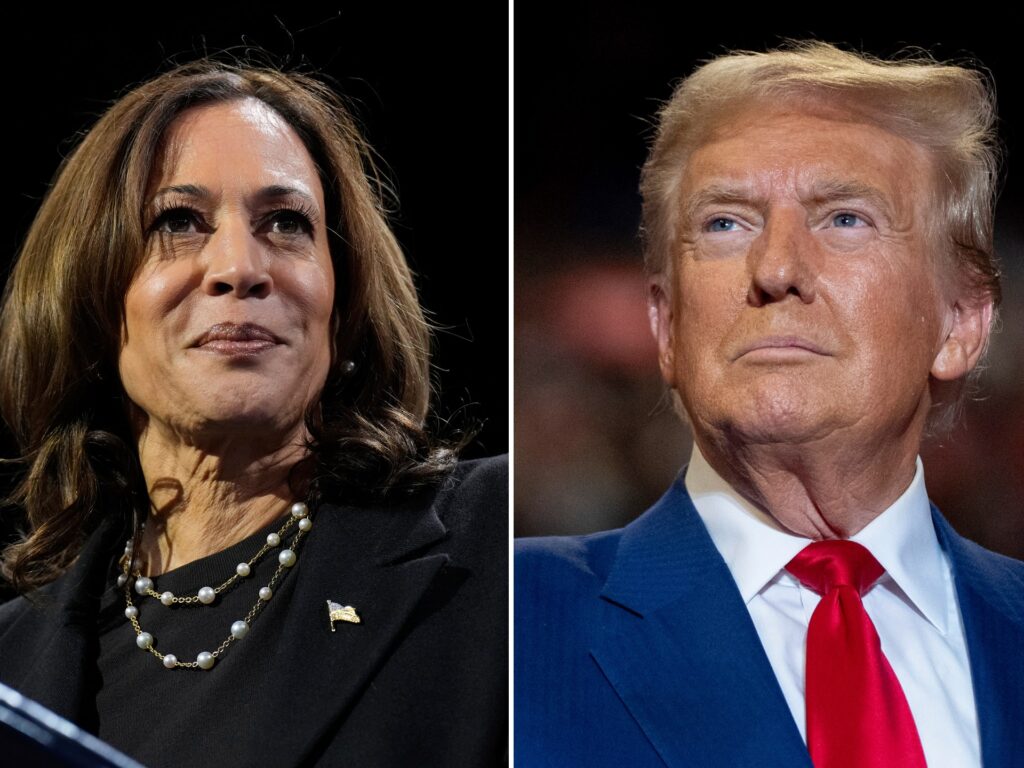
DEVELOPING STORYDEVELOPING STORY, Democrat congratulates Republican during phone call, discusses importance of peaceful transfer of power, aide says. Democratic presidential candidate Kamala Harris has called her rival, Republican Donald Trump, to concede defeat in the United States presidential election, a senior aide has said. In Wednesday’s phone call, Harris congratulated Trump and also “discussed the importance of a peaceful transfer of power” and being a president for everyone in the country,” her aide said. Harris is due to deliver remarks in Washington, DC later on Wednesday, her first public speech since her projected loss to Trump in the November 5 race. She was supposed to address the throng of supporters on the campus of her alma mater, Howard University, last night, but late in the evening her campaign director told the tearful crowd waiting outside that she would speak the next day after more results were in. Trump, who has been convicted of felony charges, has comfortably cleared the 270 Electoral-vote threshold required to clinch the White House. Harris, 60, took over the campaign after President Joe Biden stepped down after stumbling badly in a presidential debate with Trump and amid ongoing concerns about his ability to serve until the age of 86. He dropped out of the race on July 21 , endorsed his vice president , and Harris quickly took over the campaign. She was seen among many Democrats as a potential saviour for her party, the first Black woman and the first person of South Asian descent who could reach the Oval Office. Four years ago she broke the same barriers in national office by becoming Biden’s second in command. Harris ran an energetic campaign focused on moving away from Trump’s dark message of economic ruin and immigrants flooding the country. A key platform was women’s reproductive freedom that resonated with many young voters who flocked to her rallies. In the first presidential campaign since the US Supreme Court struck down constitutional protection for abortion rights, the Harris campaign was looking for a surge of support from women. But it wasn’t enough to overcome the deep anger among US voters over high inflation, the cost of basic necessities like food and affordable housing , and worries over undocumented immigration, according to exit polls. Trump’s promise to return to a “golden age” of America saw the key battleground states move decisively away from the Democrats. He is due to take office on January 20, 2025, returning to power as the 47th US president four years after refusing to accept defeat to the incumbent Biden. As the sitting vice president , Harris is expected to oversee Congress’s ceremonial certification of Trump’s win. Biden has also said he will attend the inauguration , unlike Trump in 2021 who snubbed his successor. Adblock test (Why?)
Germany’s far-right AfD to expel members over links to ‘militant’ groups
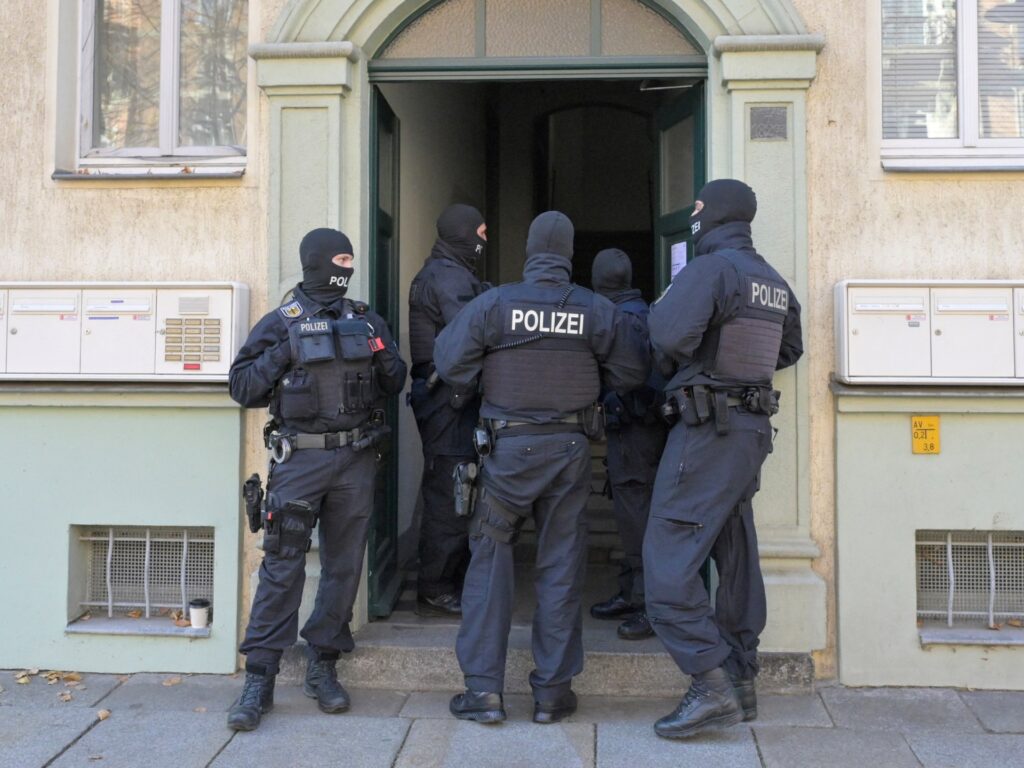
The political party that made gains in regional polls is defended by its leaders while labelled ‘right-wing extremist’ by Germany’s security services. The far-right Alternative for Germany (AfD) political party has said it will throw out three of its members who have been arrested on suspicion of having joined an “extremist” paramilitary group. The political party’s announcement comes after eight people were arrested and at least 20 properties were searched during a police operation on Tuesday. The operation targeted the Saxonian Separatists, a group authorities consider a domestic “terrorist organisation”. It was founded in November 2020 and is driven by racist ideology and conspiracy theories. Members had been training in warfare for the downfall of the modern German state before hundreds of police swooped on locations linked to it in eastern Germany, neighbouring Poland, and also in Austria. Interior Minister Nancy Faeser said on Tuesday that the police operations had thwarted “early stage militant coup plans” and investigators noted that the group was planning to establish a new system in the country’s east inspired by Nazism. Der Spiegel magazine reported on Wednesday that Tuesday’s police raids had also uncovered unregistered weapons, munitions – including Kalashnikov cartridges – and silencers, as well as the shell of a mortar grenade. The AfD leadership in the eastern state of Saxony confirmed the exclusion of three party members and partially named them in a statement as Kurt H, Hans-Georg P and Kevin R. A statement from the party said: “No matter on whose behalf the Saxonian Separatists have been operating, there is no place for them in our party of freedom, peace and national sovereignty.” AfD co-leaders Alice Weidel and Tino Chrupalla added that an extraordinary meeting of the party leadership would be held on Wednesday with the sole purpose of excluding the three men. In Germany, political parties need to demonstrate a serious violation in order to expel a member. Weidel and Chrupalla said that the AfD stands for “the liberal democratic order and has nothing to do with this suspected neo-Nazi grouping”. Meanwhile, the party’s leader in Saxony, Joerg Urban, said the AfD “rejects any form of violence in political debate” and that “preparations for violent acts or coups are also unacceptable”. In September, the anti-immigrant AfD won regional elections in the eastern state of Thuringia, a first for a far-right party since World War II. It also performed strongly in neighbouring Saxony. But German security services have labelled the party’s local branches in Thuringia and Saxony as “right-wing extremist” and its leader Bjorn Hocke has been fined twice for using Nazi slogans. Adblock test (Why?)
Hurricane Rafael becomes a Category 2 storm as it nears Cuba

Rafael continues to strengthen and forecast to be near major Category 3 hurricane status at landfall in western Cuba. Hurricane Rafael has intensified into a Category 2 hurricane just hours before it is forecast to make landfall in Cuba, according to the United States National Weather Service. Hurricane Rafael is located about 260km (160 miles) south-southeast of Havana, Cuba, with maximum sustained winds of 160km/h (100mph), the Miami-based National Hurricane Center (NHC) reported on Wednesday. Rafael continues to strengthen and is now expected to reach “major hurricane” intensity – classified as Category 3 or above – at landfall in western Cuba, the NHC added. It was another stroke of bad news for Cuba, which has been struggling with blackouts while recovering from Hurricane Oscar, which killed at least six people two weeks ago in the eastern part of the island. Rafael is likely to exacerbate the island’s acute energy crisis, which has led to work stoppages and prolonged power outages in recent weeks due to decrepit infrastructure and a lack of fuel for Cuba’s oil-fired power stations. Hurricane #Rafael Advisory 12: Rafael Expected to Become a Major Hurricane Before Landfall In Western Cuba. Life-Threatening Storm Surge, Damaging Hurricane-Force Winds, And Flash Flooding Expected in Portions of Western Cuba. https://t.co/tW4KeGe9uJ — National Hurricane Center (@NHC_Atlantic) November 6, 2024 Forecasters warned that Rafael was expected to slam into Cuba on Wednesday evening after dumping rain on Jamaica and the Cayman Islands on Tuesday. The NHC warned of floods, storm surges and mudslides. The US Department of State issued an advisory for Cuba on Tuesday afternoon, offering departure flights to nonessential staff and American citizens and advising others to “reconsider travel to Cuba due to the potential impact” of Rafael. Also on Tuesday, the Cuban Civil Defence called on citizens to prepare as soon as possible because when the storm makes landfall, “it’s important to stay where you are.” Authorities said they had issued an evacuation order for 37,000 people in far eastern Cuba in the province of Guantanamo due to bad weather. A hurricane warning was in effect on Tuesday for a portion of the Cayman Islands and the Cuban provinces of Pinar del Rio, Artemisa, La Habana, Mayabeque, Matanzas and the Isle of Youth. A tropical storm warning was in effect for the Cuban provinces of Villa Clara, Cienfuegos, Sancti Spiritus and Ciego de Avila as well as the lower and middle Florida Keys. Warnings were lifted in Jamaica after the storm passed by the western coast. Rafael on Tuesday knocked out power in Jamaica and unleashed flooding and landslides. The Jamaica Public Service, the island’s electricity provider, said in a statement late on Tuesday that impassable roads were preventing crews from restoring power in some areas. Rafael is the 17th named storm of the season. The US National Oceanic and Atmospheric Administration predicted the 2024 hurricane season was likely to be well above average with 17 to 25 named storms. The forecast called for as many as 13 hurricanes and four major hurricanes. An average Atlantic hurricane season produces 14 named storms, seven of them hurricanes and three major hurricanes. Rafael is the 11th hurricane to form this year with four becoming major Category 3 storms with maximum sustained winds of 178km/h (111mph) or more. Adblock test (Why?)
Israel’s wartime row: What’s behind the rift between Netanyahu and Gallant?
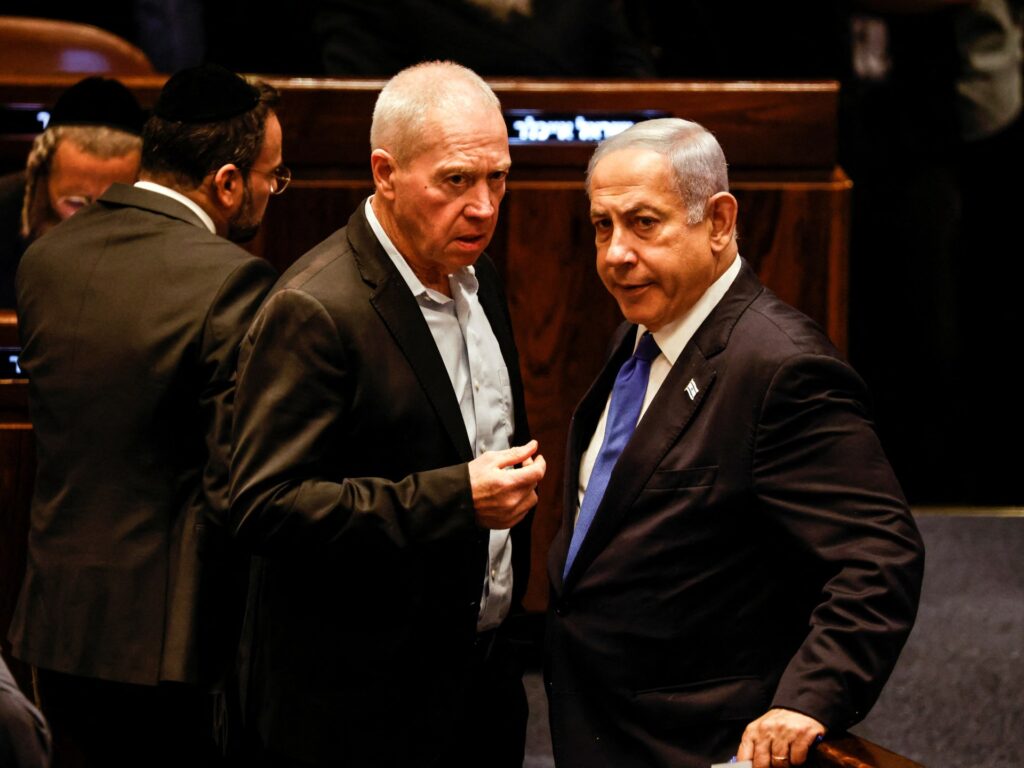
As Americans cast their votes in a monumental presidential election, Israeli Prime Minister Benjamin Netanyahu quietly ousted Defence Minister Yoav Gallant. The two figures shared an openly divisive relationship following the Hamas-led attack on southern Israel on October 7, 2023. Netanyahu has long attempted to absolve himself of responsibility for the security lapse. The prime minister has consistently blamed the security establishment for the events that unfolded on October 7, during which 1,139 people were killed and 250 were taken captive. His position has compounded tensions between his far-right coalition and the Israeli army’s senior brass. Where did Gallant stand on Gaza? Gallant, infamous for likening Palestinians to “human animals”, has criticised Netanyahu’s war on Gaza, which has reduced most of the enclave to rubble, killed more than 43,400 people and displaced almost the entire population. The International Criminal Court (ICC) has applied for arrest warrants against Gallant and Netanyahu, accusing them of committing atrocities such as starving Palestinians in Gaza and overseeing the extermination of civilians. While Gallant has shown no remorse for Palestinians, he believes Israel is “conducting a war without a compass” and that it needs to reassess its military objectives in the region. Netanyahu has responded by replacing Gallant with Israel Katz, his foreign minister and loyal ally with little military experience. What’s behind the tumultuous history between Gallant and Netanyahu? Here’s what you should know. What was their relationship like before Israel’s wars began? Gallant and Netanyahu’s relationship was fractious before October 7. In March 2023, Netanyahu was facing mass protests due to his plans to weaken the judiciary. At the time, Gallant criticised Netanyahu during a televised address, arguing that the proposed judicial reforms endangered national security by deepening political divisions within security branches. Critics and analysts said the judicial reforms would effectively curb the powers of the Supreme Court and embolden the legislative and executive branches of government. They accused Netanyahu, who was facing corruption charges and implicated in a bribery scandal, of pushing through these reforms to evade criminal prosecution. What’s the wartime division about? In July, Gallant called for the establishment of an independent inquiry to investigate the Hamas-led attack on October 7 and security failures that day. He said his role, the failures of the Israeli army, those of Netanyahu, as well as the culpability of the internal security agency Shin Bet should be probed. But Netanyahu had long obstructed calls for an international or state-led inquiry, arguing that a commission should be established only after the war in Gaza, so that soldiers do not have to “hire lawyers” while fighting on the battlefield. Critics have said Netanyahu is opposed to establishing a commission because it would reveal his role in strengthening Hamas at the expense of the Palestinian Authority (PA), which controls large swathes of the West Bank as part of the Oslo Accords – a failed peace agreement inked between Palestinian and Israeli leaders in 1993. “We need an investigation at the national level that will clarify the facts – a state commission of inquiry,” Gallant said on a podium during a graduation ceremony for new army officers. “It must examine all of us: the decision-makers and professionals, the government, the army and security services, this government – and the governments over the last decade that led to the events of October 7,” he added as the crowd applauded. Did the pair agree on a strategy to return the captives? One of the largest disputes between Gallant and Netanyahu was over securing a permanent ceasefire deal in Gaza in order to retrieve the remaining captives held by Hamas. Netanyahu approved a temporary ceasefire deal back in November 2023, which led to the release of 105 Israeli captives in exchange for 240 Palestinian prisoners. But since then, Netanyahu has effectively torpedoed every single ceasefire proposal in order to prolong the war in Gaza and his political career, analysts and critics have previously told Al Jazeera. On July 31, Hamas’s political chief and lead negotiator Ismail Haniyeh was assassinated. Haniyeh was killed while attending the inauguration of Iranian President Masoud Pezeshkian in the capital Tehran. While Gallant did not denounce the assassination, which has been blamed on Israel, he has repeatedly called for a deal to retrieve the Israeli captives. Israeli families of the captives believe that Gallant’s dismissal is further proof that Netanyahu is undermining a ceasefire deal. How did Gallant envision Gaza after an end to the war? As part of any ceasefire deal, Gallant stressed that Israel should promote or encourage a new Palestinian faction to control Gaza in a “day after” scenario. The United States has long called on a reformed PA, headed by Mahmoud Abbas, to return to Gaza and assume governance. The PA was first pushed out of Gaza following an inter-factional war with Hamas in 2007. Despite objections from the US and from his own security officials, Netanyahu has said that Israel will remain in full military control of Gaza and the West Bank. In May, Gallant publicly condemned Netanyahu’s plan and said that he would “not agree to the establishment of Israeli military rule in Gaza”. Netanyahu has dismissed Gallant’s remarks and repeatedly promised to achieve “total victory” against Hamas in Gaza. In August, Gallant described this war aim and rhetoric as “nonsense”. Adblock test (Why?)
Americans react as Donald Trump wins US presidential race

Donald Trump has won a sweeping victory in the United States presidential election and will return to the White House as the 47th president. The vote was called in favour of the Republican candidate early on Wednesday, The Associated Press reported. Trump made an astonishing political comeback in defeating his rival, Vice President Kamala Harris, who is yet to concede. His victory has been met by international congratulations but is likely to add further uncertainty to a turbulent geopolitical situation. Results showed Trump beating Harris, a Democrat, in a race far less tight than expected as he triumphed in key battleground states. Victory in Wisconsin after earlier triumphs in Georgia, North Carolina and Pennsylvania saw the former president clear the threshold of the 270 Electoral College votes required to clinch the White House in Tuesday’s election. Adblock test (Why?)
US election: The day after – What results say; what Harris, Trump are up to
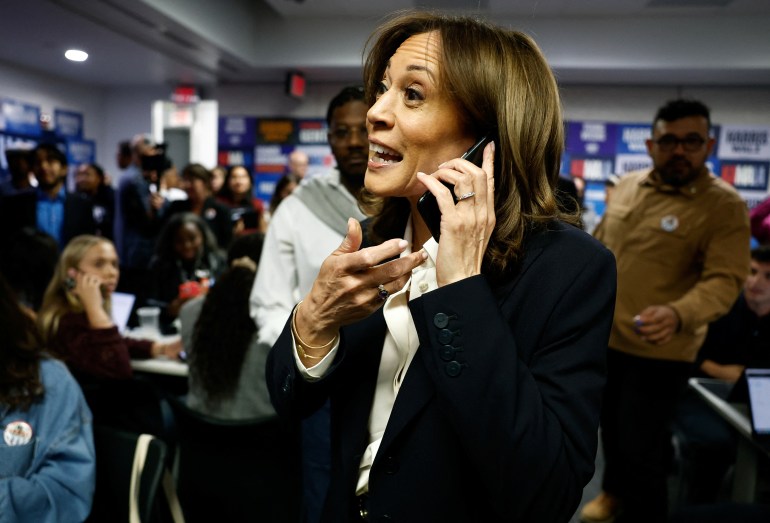
After months of campaigning in the United States, an election dropout, and assassination attempts, Americans have cast their ballots to decide who will take over the White House for the next four years. Election results have been called in 42 states and in Washington, DC, while several swing states still continue their vote count. Who is leading in the US election results so far? Former President and Republican candidate Donald Trump is leading against his Democratic counterpart, Vice President Kamala Harris. But the margin between them in several swing states remains razor-thin. With 246 Electoral College votes projected in his favour so far, Trump is inching towards the 270-mark that a candidate needs to win. Harris is projected to have won 214 Electoral College votes so far and has more than 63 million votes (47.3 percent of the popular vote) overall. Trump, by contrast, has won more than 68 million votes (51.2 percent of the popular vote) so far. The Associated Press (AP) has called 25 states for Trump, including solidly Republican states and the swing states of Georgia and North Carolina. Among all the red states called, Texas has the highest number of Electoral seats at 40. While Trump also won in Nebraska, the state’s Electoral College has been split between him and Harris. Seventeen states have been called for Harris, including California where she previously served as attorney general, and New York. She is also projected to win the District of Columbia, which is not a state but has three Electoral College votes. California has 54 Electoral College votes, the highest of any state. What was Election Day like? Voting proceeded smoothly in most areas, though some states saw long lines. There were software glitches in Pennsylvania, protests against US funding of Israel’s war in New York, and bomb threats in Georgia. The FBI deemed the threats, which delayed voting in some counties, to be not credible and likely the work of Russian election interference. Several states, including Georgia and Arizona, took extra security measures to protect voting places. Arab, Muslim, and progressive voters said they faced a tough choice between two candidates both seen as unsympathetic to Palestine. Even across the world, from Gaza to Iran, people watched the election intently. In Thulasendrapuram in southern India – a tiny village where Harris’s grandfather was born – residents gathered to pray for the Democratic candidate to become the first US leader with South Asian roots. What was Kamala Harris up to on Election Day? Both candidates spent Election Day urging their supporters to get in line, stay in line, and cast their ballots. Harris spent part of the day calling radio stations to encourage her supporters to vote. “We’ve got to get it done. Today is voting day, and people need to get out and be active,” CNN quoted Harris as telling one radio station in Georgia. She also visited the Democratic National Committee headquarters in Washington, DC, where she held phone banks with volunteers. Harris talks on the phone at the DNC headquarters on Election Day [Evelyn Hockstein/Reuters] What was Donald Trump up to on Election Day? Trump addressed the media after casting his ballot in Palm Beach, Florida, saying he feels “very confident” about his election odds. “It looks like Republicans have shown up in force,” Trump said. “We’ll see how it turns out”. He added, “I hear we’re doing very well.” Florida also voted on six constitutional amendments, including measures to legalise marijuana and protect abortion rights. When first asked how he voted on the state’s abortion measure, Trump deflected, saying he had done “a great job bringing it back to the states”. This referenced his appointment of three conservative Supreme Court justices who in 2022 helped overturn Roe v Wade – which made abortion a right nationally. When pressed again, he snapped, telling the reporter to “stop talking about that”. It is now officially ELECTION DAY! This will be the most important day in American History. Voter enthusiasm is THROUGH THE ROOF because people want to Make America Great Again. That means lines are going to be long! I need you to deliver your vote no matter how long it takes.… — Donald J. Trump (@realDonaldTrump) November 5, 2024 His running mate JD Vance also voted in Cincinnati, Ohio, the same morning. “Look, I feel good. You never know until you know, but I feel good about this race,” Vance said after he and his wife cast their ballots. Vance said he would depart for Palm Beach, Florida, later in the day to be with Donald Trump as results come in. What’s next in the election? Eight states, including five battleground areas are yet to be called by AP while most official results are yet to be determined. But while there are as many as 21 routes for Trump to win the presidency, Harris’s pathways have dwindled significantly – down to just three. And all those remaining tracks require Harris to win one state: Pennsylvania, with its 19 Electoral College votes. As of early Wednesday morning, she was narrowly trailing Trump in the state. Adblock test (Why?)