

Harris supporters disperse after election night speech postponed
[unable to retrieve full-text content] Kamala Harris supporters were seen leaving her watch party in Washington DC, after her speech was postponed.
Afghan opium cultivation bouncing back amid Taliban clampdown
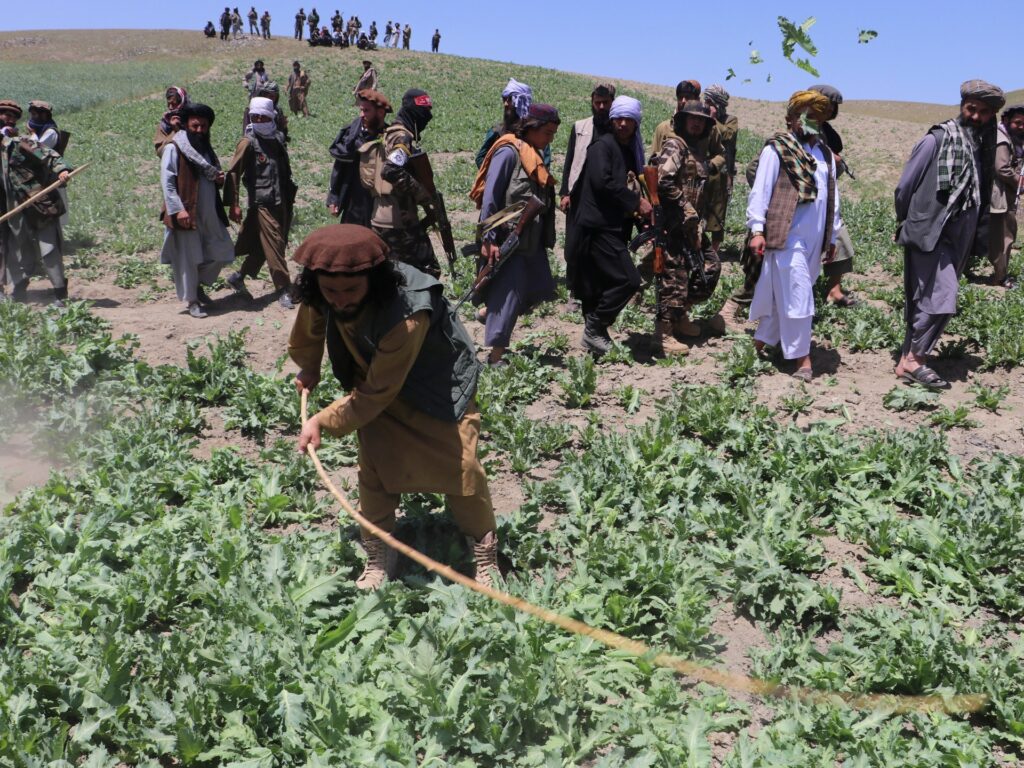
Poppy planting remains far below pre-ban levels, United Nations reports, despite rise of 19 percent year on year. Afghanistan’s opium poppy cultivation grew in 2024 despite a Taliban-imposed ban, according to a United Nations report. Cultivation increased by an estimated 19 percent this year, the report published on Wednesday by the United Nations Office on Drugs and Crime (UNODC) said. Despite the increase, the cultivation of opium poppies – the source of the raw material for much of the world’s heroin – remains well below the levels reached before the Taliban clampdown in 2022. This year’s cultivation area amounted to just 12,800 hectares (31,629 acres), a sharp drop from the 232,000 hectares (573,284 acres) cultivated before the prohibition. The ban on narcotic cultivation in April 2022 saw a 95 percent drop in opium farming by 2023, according to the UNODC. “This is important further evidence that opium cultivation has indeed been reduced, and this will be welcomed by Afghanistan’s neighbours, the region and the world,” said Roza Otunbayeva, special representative of the secretary-general and head of the UN Assistance Mission in Afghanistan. The report also notes that cultivation has moved away from its traditional southwest heartland to the northeastern provinces, where 59 percent of cultivation occurred in 2024. Cultivation surged by 381 percent in these provinces over 2023, particularly in Badakhshan, which accounted for most of the region’s opium production. Sustainable The report also notes that the ban has led to a spike in opium prices, meaning that poppy cultivation remains an enticing prospect for struggling Afghans. Prices have stabilised at about $730 per kg, up from pre-ban averages of about $100, and significantly higher than the “20-year peak” of $408 recorded in August 2023. Otunbayeva stressed that rural communities deprived of the key income source that opium poppies represented must be supported. “They desperately need international support if we want this transition to be sustainable,” she said. Many farmers in Afghanistan, one of the poorest countries in the world, have been hit hard financially by the ban and have not been able to reap the same profit from alternative crops. Even legal crops are only a short-term solution, according to the International Crisis Group, which says a focus is needed on job creation in non-farm industries. In May, clashes between farmers and brigades sent to destroy their poppy fields resulted in several deaths in Badakhshan, a mountainous area that includes a stretch of the Hindu Kush and Afghanistan’s relatively short border with China. “With opium cultivation remaining at a low level in Afghanistan, we have the opportunity and responsibility to support Afghan farmers to develop sustainable sources of income free from illicit markets,” said UNODC Director Ghada Waly. Adblock test (Why?)
Asia’s export-driven economies brace for upheaval under Trump
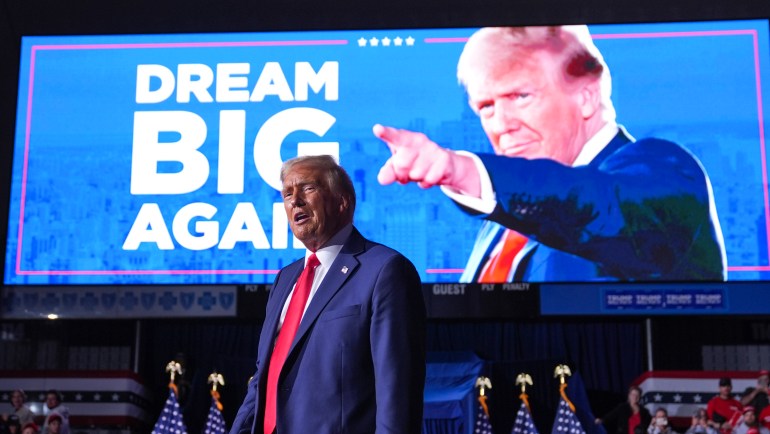
Taipei, Taiwan – Asia is bracing for disruption should American voters return Donald Trump to the White House, with his plans for sweeping tariffs threatening to hobble the region’s export-driven growth. Trump, who ran neck-and-neck with Vice President Kamala Harris in polls before Tuesday’s presidential election in the United States, has pledged to impose tariffs of 60 percent or more on Chinese imports and tariffs of 10 to 20 percent on all other foreign goods. The trade measures would come on top of tariffs on $380bn worth of Chinese goods that Trump imposed during his first term and current President Joe Biden kept in place. Trump’s duties could result in a particularly serious economic fallout in Asia, home to many of the world’s most trade-dependent economies. The 10 members of the Association of Southeast Asian Nations have an average trade-to-gross domestic product (GDP) ratio of 90 percent, double the global average, according to the Hinrich Foundation, a trade-focused philanthropic organisation based in Singapore. Emerging East Asia’s trade-to-GDP ratio is higher still, at 105 percent, according to the Brookings Institution, a Washington, DC-based think tank. “We can expect that there will be some type of move to turn US policy more protectionist, and that’s bad for Asia because most of the region’s economies, if not all the economies, are incredibly reliant on external demand – specifically demand coming from the US,” Nick Marro, principal economist for Asia at the Economist Intelligence Unit, told Al Jazeera. Former US President Donald Trump at a campaign rally in Grand Rapids, Michigan [Evan Vucci/AP] While parts of Asia benefited from the initial US-China trade war as companies shifted production away from China, the broad-based tariffs Trump has proposed this time around would inflict economic damage across the region, analysts said. Oxford Economics has said that “non-China Asia” would be a net loser with the region’s exports and imports predicted to fall 8 percent and 3 percent, respectively. Last week, Trump’s plans prompted a rare warning from the head of Singapore’s sovereign wealth fund, Rohit Sipahimalani, who said the tariffs could “create uncertainty” and “impact global growth”. “He’ll do what he said he’s going to do. He’ll impose tariffs, and he’ll impose them quickly,” Steve Okun, the founder and CEO of Singapore-based APAC Advisors, told Al Jazeera. “This is not going to be like the first term, where it’s going to be a year or two before he does anything.” With Chinese companies likely to divert more production to Southeast Asia to circumvent higher tariffs, Trump could also ramp up measures targeting exports from countries such as Vietnam, Malaysia and Thailand, Marro said. “These all point to a pretty worrisome outlook when it comes to the wider region,” he said. Asia could also potentially move to impose tariffs of its own to combat dumping by Chinese companies seeking markets to replace the US. Such concerns in January prompted Malaysia to impose a 10 percent tariff on certain low-value goods while Indonesia last month banned ultra-cheap Chinese e-commerce site Temu in a bid to protect domestic companies. In a number of cases, Trump has singled out particular economies over what he alleges are their unfair trade practices. Trump has, for example, repeatedly accused Taiwan of “stealing” the global chip industry from the US. Like China and Vietnam, Taiwan has a large trade surplus with the US, which is a source of aggravation for Trump, said Deborah Elms, head of trade policy at the Hinrich Foundation. “Not only is Trump obsessed with goods, but the metric that he uses for assessing whether the United States is winning or losing is a trade deficit in goods,” Elms told Al Jazeera. “If you are on the wrong side of that metric, … you’re going to be in trouble.” Despite many of these concerns, Trump may be no worse for the region than Harris if Biden’s protectionist policies are any guide to how his vice president might govern, said Jayant Menon, a senior fellow at Singapore’s ISEAS-Yusof Ishak Institute. While Biden is seen as less unpredictable than Trump, he not only kept his predecessor’s tariffs on Chinese goods but also imposed new tariffs affecting $18bn worth of imports including steel, semiconductors and electric vehicles. Biden has also implemented protectionist policies through legislation such as the CHIPS Act, which aims to boost semiconductor production in the US and keep advanced chips out of Chinese hands. Harris is widely expected to continue or expand Biden’s policies towards trade and industry although she has gone into little detail during the presidential campaign. “At the moment, it looks like from a purely protectionist stance Harris will be more protectionist, but there’s not that element of uncertainty and anti-globalisation that comes with Trump that can get out of control,” Menon told Al Jazeera. Shipping containers at a port in Singapore [Wong Maye-E/AP] Julien Chaisse, an expert in international economic law at the City University of Hong Kong, said that while Harris may be more of a team player than Trump on economic issues, she is likely to follow many of the same protectionist principles. “Harris may also pursue deeper cooperation with Asian allies on AI and cybersecurity to protect supply chains and counter Chinese influence in tech. Though less confrontational than Trump, Harris’s policy would likely maintain some scrutiny on Chinese investments in critical infrastructure across Asia,” Chaisse told Al Jazeera. Other observers in the region, such as Liew Chin Tong, Malaysia’s deputy minister of investment, trade and industry, have voiced similar sentiments. In an interview with The Straits Times this week, Liew said the difference between Trump and Harris was a matter of “intensity” rather than “direction”. “Trump will definitely take a far more isolationist and America First approach, but it doesn’t mean Harris will be able to take the world back to 1995 when the WTO [World Trade Organization] was formed,” Liew told the newspaper. Another difference between Trump and Harris could be simple timing. While Trump would be likely to take advantage
French court jails 18 members of English Channel people-smuggling network
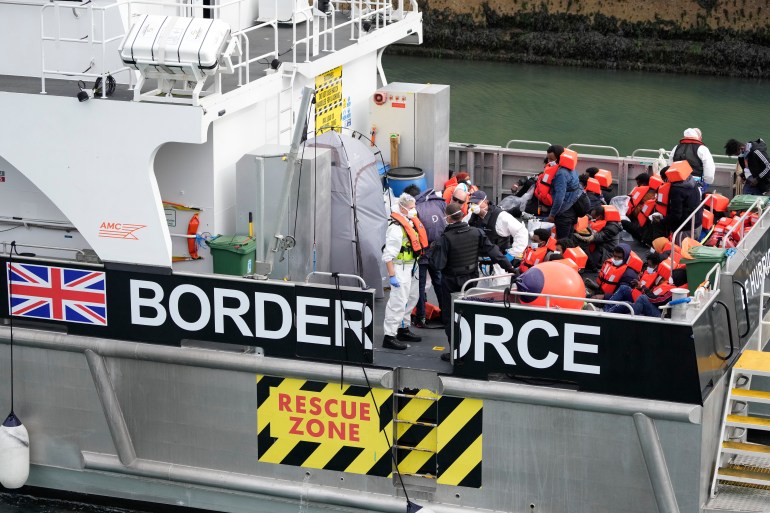
The longest sentence of 15 years is given to Iraqi national Mirkhan Rasoul, who was accused of leading the network. A French court has found 18 people guilty in a major people-smuggling trial that has shed light on the often deadly business of transporting migrants and refugees on small boats across the English Channel from France to the United Kingdom. The defendants were swept up in a pan-European police operation in 2022 that led to dozens of arrests. The longest sentence of 15 years in prison was handed down on Tuesday to Iraqi national Mirkhan Rasoul, 26, who was accused of being the leader of the network and coordinating its actions from his French prison cell after previous convictions. The sentences issued by the court in the northern city of Lille for the other 17 accused, who included one woman, ranged from two to 10 years in prison. “These sentences are obviously very severe,” Kamel Abbas, a lawyer who represented one of the defendants already imprisoned in France, was quoted as saying by The Associated Press news agency. “That’s a testimony of the scale of the case and of the intention to severely punish the smugglers.” Most of the defendants were not in court for the verdicts and sentencing. Some attended the trial remotely from various prisons in northern France while others are not in custody. Arrest warrants have been issued for nine of the other defendants who were convicted in absentia. Fourteen of the 18 defendants are from Iraq, and the others come from Iran, Poland, France and the Netherlands. “The defendants are not volunteers helping their fellow humans but merchants of death,” the prosecutor said during the trial, describing how boats were loaded with passengers “up to 15 times their theoretical capacity”. An investigation found that this particular network from 2020 to 2022 had great control over crossings from France to the UK, which have cost dozens of lives in recent years. More than 50 searches led to the seizure of 1,200 life jackets, nearly 150 inflatable boats and 50 boat engines during operations carried out jointly by France, Germany, Belgium, the Netherlands and Britain and coordinated by the Europol and Eurojust agencies. People who made the crossing from France are brought into port after being picked up in the channel by a British border force [File: Matt Dunham/AP] ‘Sole motive was profit’ Britain’s National Crime Agency (NCA) said in a statement that one of the men convicted had been arrested by British authorities and extradited to France for the trial. Kaiwan Poore, 40, was detained by British officers at Manchester Airport as he tried to board a flight to Turkey in July 2022. He was given a five-year sentence by the Lille court. The NCA said each single crossing of migrants and refugees from France to England stood to net the criminal network about 100,000 euros ($109,000) in profit. The trial was held during what has been a particularly deadly year for attempted crossings of the English Channel, one of the world’s busiest shipping lanes. More than 31,000 people have made the perilous crossing so far this year, more than in all of 2023, though fewer than in 2022. At least 56 people have died in the attempts this year, according to French officials, making 2024 the deadliest year since the crossings began surging in 2018. British and French authorities are seeking to improve cooperation to stop the people-smuggling networks after several years during which post-Brexit tensions appeared to hamper attempts to tackle the problem. The NCA said a number of those convicted in the trial had been identified thanks to the Joint Intelligence Cell, a specialist British-French unit based in northern France set up to target people smugglers. “Their sole motive was profit, and they didn’t care about the fate of migrants they were putting to sea in wholly inappropriate and dangerous boats,” NCA Deputy Director Craig Turner said. He said the network was “among the most prolific we have come across” in terms of the number of crossings. British Prime Minister Keir Starmer has promised to “smash the gangs” behind the trade and said people smuggling should be put on a par with global “terrorism”. Adblock test (Why?)
Software glitch hits Pennsylvania county forcing extension of voting hours
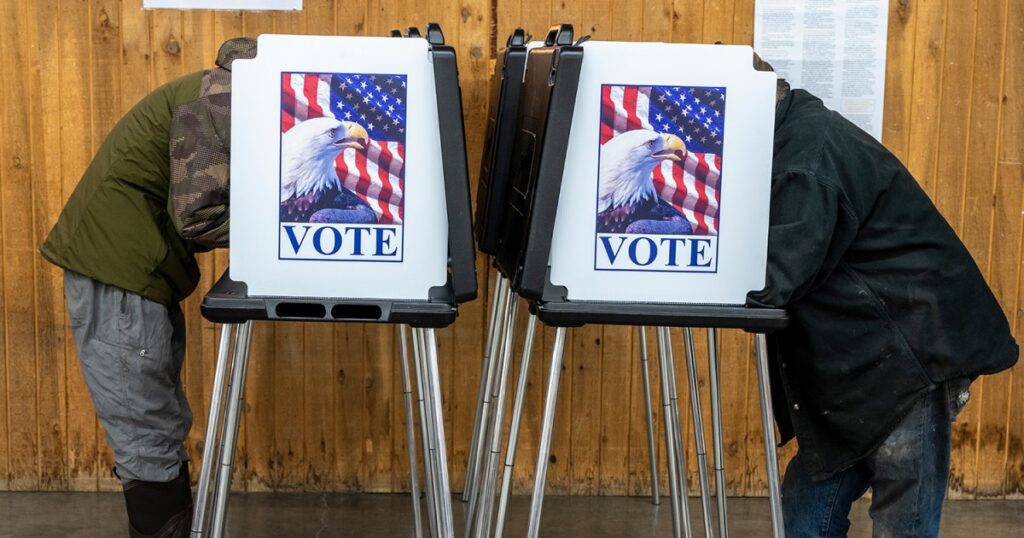
NewsFeed Officials say a software issue which stops ballots being scanned has delayed many people from casting their vote in a county in the key swing state of Pennsylvania. Published On 5 Nov 20245 Nov 2024 Adblock test (Why?)
US election: It’s voting day – What polls say; what Harris, Trump are up to
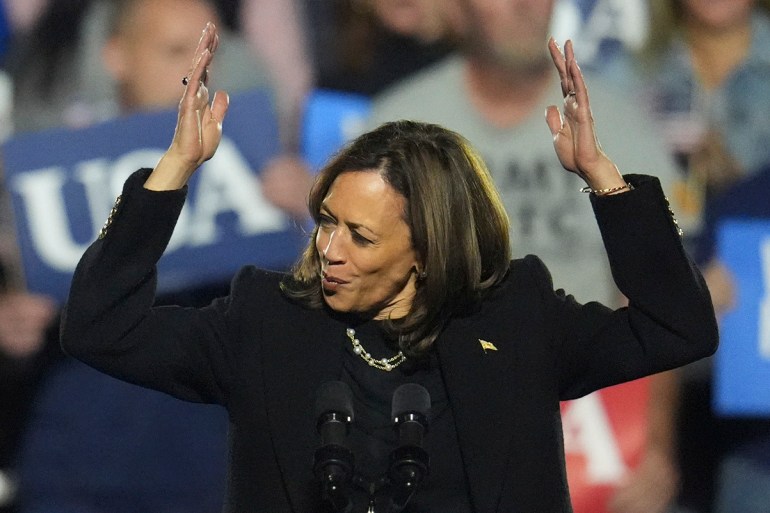
On the eve of Election Day in the United States, presidential candidates Donald Trump and Kamala Harris blitzed through battleground states while trying to drive home key promises to supporters and voters still on the fence. Vice President Harris zoned in on cities across Pennsylvania while former President Trump made stops in North Carolina, Pennsylvania and Michigan. The Democratic candidate was joined by pop culture figures including Lady Gaga and Oprah Winfrey, while Trump called to stage his sons and former Fox News host Megyn Kelly, with whom he once had a contentious relationship. What are the latest updates from the polls? The race continues to remain tight according to the latest polls, with key swing states presenting narrow leads for both candidates. According to FiveThirtyEight’s daily tracker, Harris has a 1.2-point lead over Trump nationally, a margin that has remained fairly static in recent days, though it has shrunk compared with a month ago. In swing states, Harris has a one-point advantage in Michigan and Wisconsin, according to FiveThirtyEight. Meanwhile, Trump’s lead in Georgia and North Carolina has shrivelled to under one point, while he is ahead by 2.2 points in Arizona. In Pennsylvania and Nevada, less than half a point separates the two: Harris has sneaked ahead in the former, though only marginally, after trailing Trump narrowly for the past two weeks; while the Republican candidate is barely ahead in Nevada. Yet, the gap between the two candidates remains within the margin of error of polls in all seven swing states. Pennsylvania has 19 Electoral College votes, the most among the battleground states, while Nevada has the fewest – six. Still, Al Jazeera correspondent John Holman said that Nevada could prove to be crucial because of how close the race is. Key election issues resonate strongly here, with Nevada facing one of the highest unemployment rates and costs of living in the US. More than 82 million Americans have already voted this year, according to a tally by the Election Lab at the University of Florida. The figure represents more than half of the total votes cast in the 2020 presidential election. What was Kamala Harris up to on Monday? Harris spent the final day campaigning in Pennsylvania. The Democratic candidate started off with an event in Scranton, the hometown of President Joe Biden. She continued touting a message of unity while stating that the country is ready to move on from the Trump era. Between rallies, Harris stopped by the Old San Juan Cafe, a Puerto Rican restaurant in Reading, Pennsylvania, trying to woo a community that has a large electoral presence in the state and that has come into focus after a comedian made racist comments about the US territory at a Trump event recently. In the afternoon, Harris made her way to the steel city of Pittsburgh where she pledged to sign into law a national reproductive rights bill if passed by Congress. Harris capped off the day with a big rally in front of the Philadelphia Museum of Art, which featured music stars Lady Gaga and Ricky Martin, as well as influential media personality Oprah Winfrey. Harris speaks during a campaign rally at Carrie Blast Furnaces in Pittsburgh [Gene J Puskar/AP Photo} What was Donald Trump up to on Monday? Donald Trump continued his campaign with a whirlwind tour through North Carolina, Pennsylvania and Michigan. In his first stop at Raleigh, North Carolina, the Republican candidate claimed a decisive advantage in the presidential race, which he said was “ours to lose”. Trump went on to attack Harris on crime and immigration, arguing that “you’ll have open borders the very first day” if she is elected. The stop marked Trump’s third consecutive day in the state while Al Jazeera’s Phil Lavelle reported an unusually low turnout in Raleigh, describing the venue as “only half full”, with empty seats visible around the edges. Trump wraps up a campaign rally at JS Dorton Arena in Raleigh, North Caroline [Evan Vucci/AP] Later, Trump went to Reading, Pennsylvania, where he again suggested that he would carry out mass deportations by invoking an antiquated law, and to get Ultimate Fighting Championship (UFC) fighters to battle migrants. Trump said he told UFC CEO Dana White – a backer of the former president – to set up a league. “At the end, I want the migrant to go against the champion, and I think the migrant might actually win, that’s how nasty some of these guys are,” Trump said. “But I don’t know, I doubt that,” he added, trailing off. He also reiterated unfounded election fraud claims. Trump also said Green Party presidential candidate Jill Stein, who could siphon votes from Democrats in some swing states, particularly those outraged by the war in Gaza, “may be my favourite politician”. He ended his day in Grand Rapids, Michigan with a final appeal to voters. Trump, Donald Trump Jr and Michael Boulos listen as Eric Trump speaks at a campaign rally in Reading, Pennsylvania [Chris Szagola/AP Photo] What’s next for the Harris and Trump campaigns? Hailing from California, Harris has voted absentee by mail. Her home state, which carries 54 Electoral College votes, is anticipated to vote Democratic this year, continuing a trend that has lasted for the past 36 years. According to the NPR radio network, Harris will host a watch party at her alma mater, Howard University, in Washington, DC. The District of Columbia, with its three Electoral votes, is expected to support the Democratic candidate, consistent with its historical backing in every presidential election. Meanwhile, Trump’s campaign announced plans last week to host an election watch party at the Palm Beach Convention Center instead of his Mar-a-Lago estate in Palm Beach. Despite previously indicating he would vote early, Trump has decided to cast his ballot in Florida on Election Day. Throughout this election cycle, he has encouraged Americans to vote early, even while expressing doubts about the integrity of the electoral process. Florida, with its 30 Electoral votes, was for
Next Gen Diplomacy: Foreign Policy & Elections

What do young people truly think about the US’s role in the world today? Are they more idealistic than older generations? Do they hold the answers to solving today’s global challenges? A discussion on US foreign policy ahead of the elections, by the people of today who want to change tomorrow. This special election episode of RebellionZ brings together Gen Zers from across the political spectrum, hosted by Dena Takruri. Be sure to tune in. You won’t want to miss what they have to say. Adblock test (Why?)
Death toll from Israeli attacks on Lebanon surpasses 3,000: Health Ministry
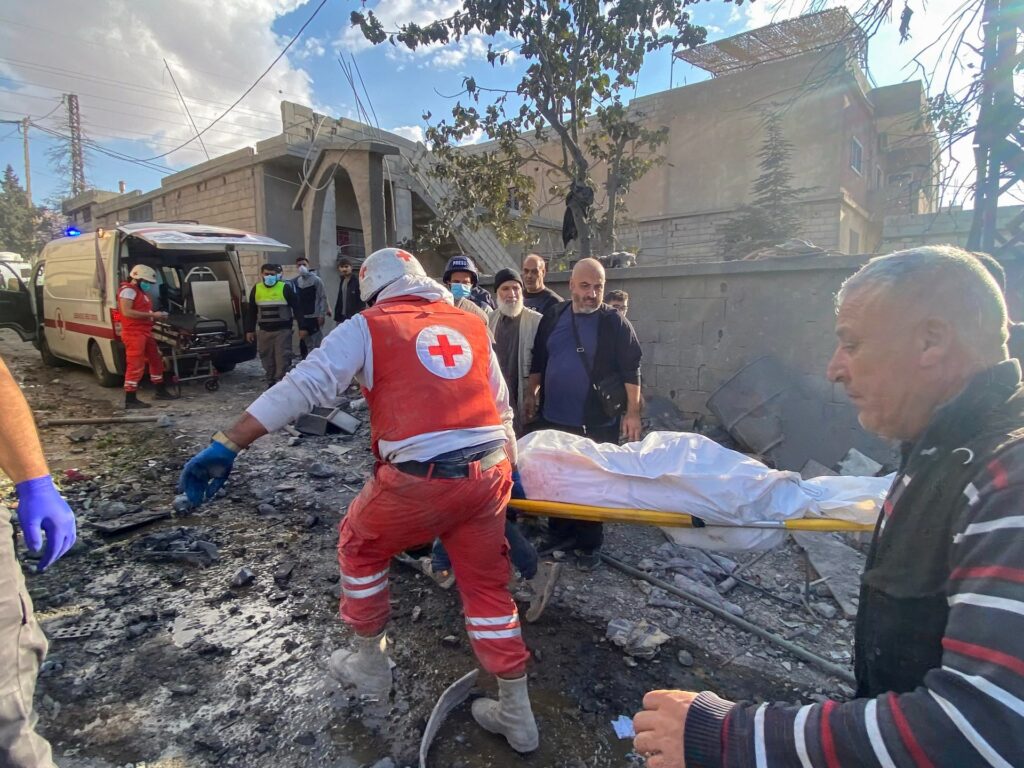
Israeli attacks on Lebanon have killed more than 3,000 people in the 13 months of fighting between Hezbollah and Israeli forces along the border, the Lebanese Ministry of Public Health has said. The ministry said late on Monday that 3,002 people were killed and 13,492 injured since the beginning of Israel’s “aggression” against Lebanon. There were 589 women and at least 185 children among the dead, it added. While Israel claims that hundreds of Hezbollah fighters have been killed in its attacks, witnesses and independent reports from bombed communities across Lebanon attest to the high number of civilian casualties from widespread and indiscriminate Israeli air strikes and artillery shelling. The United Nations children’s agency said last week that at least one child per day had been killed in the country over the past month. “Since October 4 of this year, at least one child has been killed and 10 injured daily,” Catherine Russell, UNICEF executive director, said. “Thousands more children who have survived the many months of constant bombings physically unscathed are now acutely distressed by the violence and chaos around them,” she added. The mounting death toll comes as an estimated 1.2 million of Lebanon’s population of 5.8 million have been forcibly displaced from cities, towns and villages as well as neighbourhoods in the capital, Beirut, which Israel has bombed repeatedly and continues to issue forced evacuation orders. The UN agency for refugees (UNHCR) said an average of 400-600 people from Lebanon have been arriving in Iraq every day over the past week. Most of them are Lebanese, but there has also been an uptick in the arrival of Syrians and Palestinians. At least 28,350 refugees from Lebanon arrived in the country since the escalation in fighting between Israel and Hezbollah in September, the agency said. A majority of them are being hosted in Najaf and Karbala. Meanwhile, an estimated 472,000 people from Lebanon crossed into Syria in recent weeks, the UNHCR said on Monday. According to the World Health Organization (WHO), emergency medical services in Lebanon have reported 201 attacks over the past year, resulting in 151 deaths. At least 212 people have been wounded in the violence, which “is hindering the rescue and relief efforts, and ultimately contributing to high death rates”, the WHO said. In Israel, 72 people have been reported killed in Hezbollah attacks since October last year. The number includes at least 30 Israeli soldiers killed in fighting with the Lebanese armed group. More than 60,000 people have been displaced from their homes in northern Israel. A cessation in the fighting appears to be a long way off amid the rising number of deaths and destruction of Lebanese infrastructure and civilian property. On Friday, Lebanon’s caretaker Prime Minister Najib Mikati accused Israel of blocking any progress in the negotiations towards a ceasefire with Hezbollah. “Israeli statements and diplomatic signals received by Lebanon confirm the Israeli stubbornness in rejecting the proposed solutions and insisting on the approach of killing and destruction,” he said. The AFP news agency verified video footage on Monday showing massive detonations in a southern Lebanese border village, where a local official said hundreds of houses have been wiped out by Israel since last year. The video, shared widely online, showed more than a dozen simultaneous detonations that ripped through Meiss el-Jabal and razed Lebanese homes to dust. Similar aerial scenes of home demolitions have been captured from several border villages, including Mhaibib and Odaisseh since Israel sent ground troops into southern Lebanon in late September, AFP reports. Houses covering lush hills are seen crumpling in a cloud of grey dust in the videos circulating widely online. According to Lebanon’s official National News Agency (NNA), Israeli troops blew up buildings in at least seven border villages last month. Monday’s video from Meiss el-Jabal showed large detonations near a vacated hospital in the village, Mayor Abdul-Monhem Choukair said. “Seventy percent of Meiss el-Jabal is destroyed,” the mayor said, adding that the “Israeli enemy’s goal is systematic destruction”. Adblock test (Why?)
Any Trump deal to end Gaza would likely be “tenuous”
[unable to retrieve full-text content] Akbar Shahid Ahmed talks about how Trump, if re-elected, might try for a quick deal to end Israel’s war on Gaza.
At least 12 killed in Gaza attacks as Israel bombards Kamal Adwan hospital
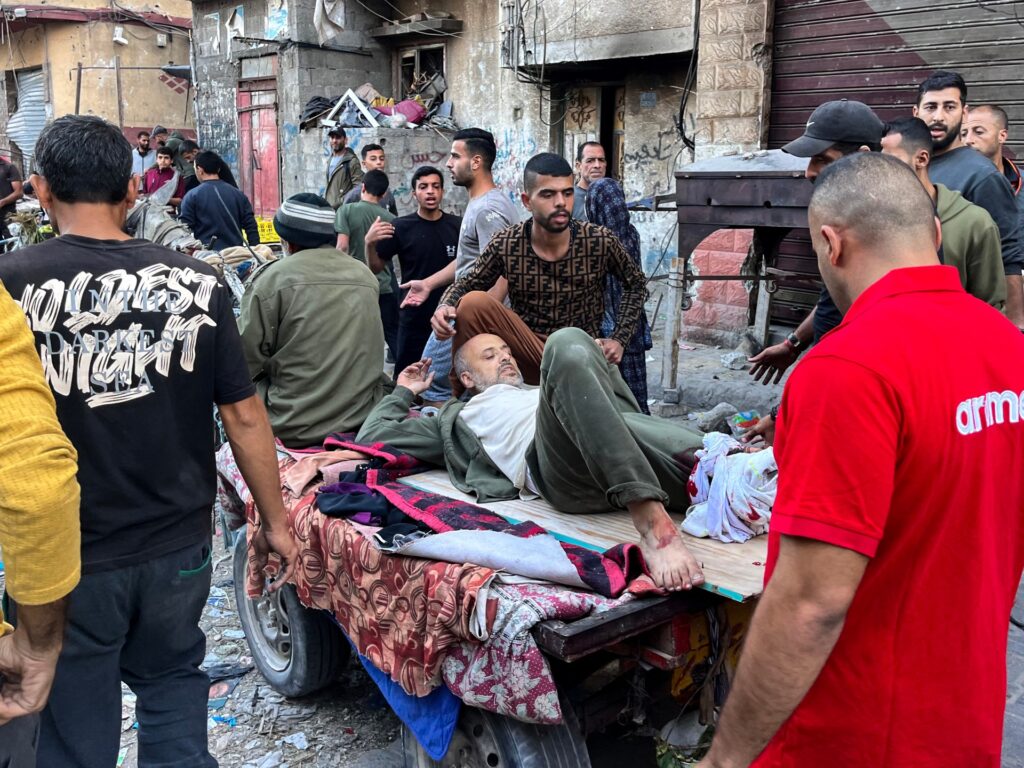
Hospital director says staff and patients were wounded in Israeli attacks on the last partially functioning hospital in northern Gaza. At least 12 Palestinians have been killed in Israeli air strikes on Gaza, medics said, as Israeli forces continue to press their siege and ground assault on the northern part of the Palestinian territory. Medics in Gaza told the Reuters news agency on Monday at least seven people were killed in an attack on the north Gaza city of Beit Lahiya. Five others were killed in attacks in central and southern Gaza. The Palestinian Ministry of Health in Gaza said that the Kamal Adwan Hospital, the last partially functioning hospital in the north of the enclave, was being attacked by Israeli forces. “At this moment, occupation forces are continuing to violently bombard and destroy Kamal Adwan Hospital, targeting all parts of the hospital,” the ministry said. Hospital director Hossam Abu Safieh said in a statement that the situation was “catastrophic”, and that “the army did not contact the hospital before directly targeting it”. “Several of our staff have been injured, and we are unable to leave the hospital,” he said. “We do not understand the purpose behind this bombing that is targeting the hospital.” Reporting from Deir el-Balah in central Gaza, Al Jazeera’s Hani Mahmoud said this is the second time in recent weeks that the hospital had been attacked. “The hospital does not operate as a health facility now. It’s more of accommodating injuries and the dead who are brought to the hospital,” Mahmoud said. “The entire northern part of the strip is left without any proper healthcare facility, the whole healthcare system is gone, is completely collapsing … and civilians are left without any proper access to that,” he added. Israel’s military began a siege and ground assault on northern Gaza on October 5 in what it said was an operation to prevent Hamas fighters from regrouping there. Palestinians say the new offensives and orders for people to leave were aimed at emptying two northern Gaza towns and a refugee camp to create buffer zones. Israel denies this. Since Israel launched its war on Gaza in October 2023, at least 43,374 people have been killed in the enclave, and 102,261 others wounded, according to Palestinian health authorities. The Israeli assault came in response to the Hamas-led attack on southern Israel on October 7 2023, in which at least 1,139 people were killed, according to an Al Jazeera tally based on Israeli statistics, and around 250 others were seized as hostages. ‘Unspeakable suffering’ Earlier on Monday, Israel announced that it had informed the United Nations it was ending its relations with the UN Agency for Palestinian Refugees (UNRWA), despite international calls for the importance of the UN agency in providing aid. UNRWA Commissioner-General Philippe Lazzarini said that along with banning the agency, Israel had also scaled back the entry of aid trucks into Gaza to an average of 30 trucks a day, which “cannot meet the needs of two million people.” “Restricting humanitarian access and at the same time dismantling UNRWA will add an additional layer of suffering to already unspeakable suffering,” Lazzarini said. An Israeli government spokesperson said no limit had been imposed on aid entering Gaza, with 47 aid trucks entering northern Gaza on Sunday. Adblock test (Why?)