

Nigeria president orders release of minors charged over protests
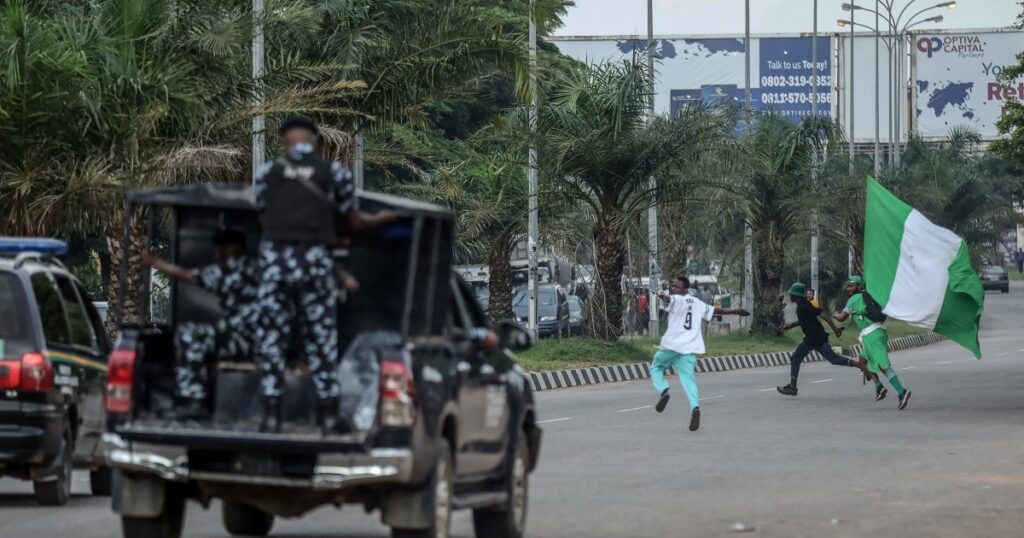
At least 30 minors were charged with treason and inciting a military coup after they took part in August protests against the rising cost of living. Nigeria’s president has directed that all minors detained during protests against the rising cost of living in August be freed and treason charges against them dropped, Information Minister Mohammed Idris has said. “The president has directed that these children, these minors, be released immediately,” Idris said on Monday. At least 76 people, including 30 minors, were charged with treason and inciting a military coup after they took part in deadly August protests against economic hardship. The minors’ arraignment sparked public outrage and criticism of the government after they were paraded in court last Friday. Frustration over the cost-of-living crisis has led to several protests in recent months that demand better opportunities and jobs for young people. In August, protesters rallied in Abuja, the commercial capital Lagos and several other cities to show discontent with economic reforms that have led to rampant inflation and the worst cost-of-living crisis in a generation in Nigeria. Rights group Amnesty International said at least 22 people died during the demonstrations in clashes with security forces. President Bola Tinubu has since vowed to pursue the changes, which he says are needed to keep the economy afloat. In addition to the severe financial crisis, Nigerians are living with widespread insecurity that has damaged the farming sector, with armed gangs kidnapping residents and schoolchildren for ransom in the north. Adblock test (Why?)
With North Korea’s troops in Russia, South Koreans weigh role in Ukraine
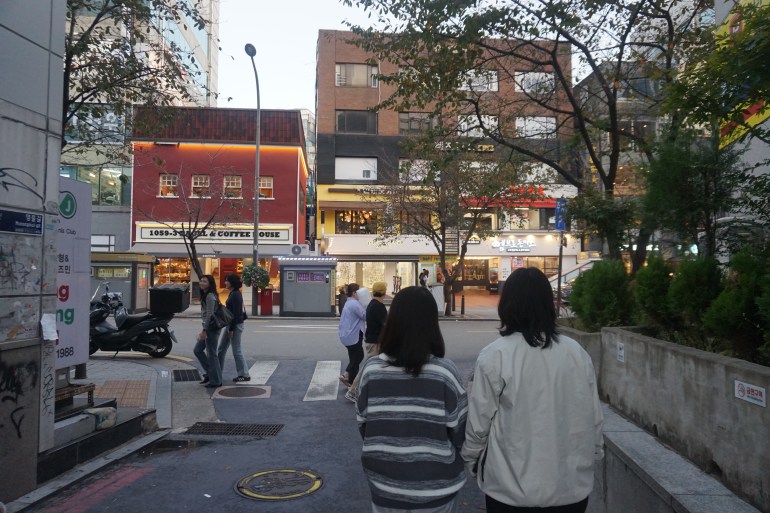
Seoul, South Korea – When Yang Seung-ji heard that thousands of North Korean soldiers had been sent to Russia for possible deployment in Ukraine, she began searching online for the nearest emergency shelter. Yang is concerned that tensions between North and South Korea, which have been aggravated by Pyongyang’s reported involvement in the war in Ukraine, could spill over into an armed confrontation. “I worried that public transportation would be down and make me unable to go back home,” the 25-year-old job seeker, who recently moved from the regional city of Chungju to Seoul, about 50 km (30 miles) from the inter-Korean border, told Al Jazeera. “We thought about packing our stuff and stacking some food in our apartment.” “Ever since hearing about North Korea’s balloons carrying rubbish landing in parts of Seoul, there’s just a sense that things are escalating,” Yang added. Yang Seung-ji (left) and her sister in Seoul [David D. Lee/Al Jazeera] The United States Department of Defense said last week that up to 10,000 North Korean soldiers are undergoing training in Russia as Moscow looks to reinforce its troop strength in the nearly three-year-long war, corroborating earlier statements by Ukrainian and South Korean intelligence. For South Korea, the cooperation has raised fears North Korea could receive nuclear technology from Russia as compensation. On Thursday, North Korea test-launched a new solid-fuel intercontinental ballistic missile dubbed Hwasong-19, which logged a record flight time of 86 minutes. South Korean President Yoon Suk Yeol has pledged to respond to North Korea’s involvement in Ukraine, including by potentially supplying weapons to Kyiv. “If North Korea dispatches special forces to the Ukraine war as part of Russia-North Korea cooperation, we will support Ukraine in stages and also review and implement measures necessary for security on the Korean Peninsula,” Yoon said last week during a joint news conference with Polish President Andrzej Duda. Directly supplying weapons to Ukraine would mark a significant change in South Korea’s involvement in the war, which has so far been confined to humanitarian aid and helping backfill weapons by supplying arms to NATO members. Such a move would also require revisions to South Korea’s Foreign Trade Act, which prohibits the country from sending lethal weapons to live conflict zones except for peaceful uses. Since the division of the Korean Peninsula following the end of the 1950-53 Korean War, South Korea has focused heavily on diplomacy to forge the trade relationships that drive its export-driven economy. During its rapid transformation into one of the world’s most developed economies during the 1960s and 1970s, the country honed its soft power, including cultural exports such as K-pop and Korean film, to exert influence. Its military involvement overseas, such as in the US-led wars in Iraq and Afghanistan, has been mostly confined to small deployments of troops in noncombat roles. “As a country that has been able to manage decades of relative stability without involvement in any direct warfare, it goes against the tendencies of our society and the government’s policies to jump into a war,” Son Key-young, a professor of international relations at Korea University, told Al Jazeera. “Even looking at the outlier instance, which was the Vietnam War, South Korea sent a significant amount of troops only because we didn’t want US forces in South Korea leaving their bases.” Between 1964 and 1973, South Korea deployed about 320,000 soldiers to Vietnam to fight alongside the US army in exchange for US aid to revive the then-ailing economy. “Hearing from my students, it’s quite obvious how young people are against being involved in the Russia-Ukraine War. And the slow state of the economy is likely to make other South Korean citizens frown upon the idea as well,” Son said. “South Korea’s role in this conflict looks to be very limited, but President Yoon seems to be searching for a way to be involved as his administration has shown to be active in national security issues.” South Korean President Yoon Suk Yeol attends a news conference at the Presidential Office in Seoul on October 24, 2024 [Jeon Heon-Kyun/pool via AFP] Han Jun-seo, a 27-year-old advertising professional, said he would support South Korea sending weapons to Ukraine, but only if the government could do so without “catching too much attention”. “One thing that does worry me is that North Korean troops will get real field experience while the last time our troops got any live experience was in Vietnam,” Han told Al Jazeera. Park J. R., an office worker in Seoul, said South Korea should only take action in Ukraine in cooperation with the international community and the United Nations. “Russia won’t remain our enemies forever, so we don’t want to damage relations for good. Acting by ourselves and making hasty decisions is a fast lane to being used,” Park, 54, told Al Jazeera. Park also said he was uncertain about North Korea’s true motives. “I don’t know if North Korea is doing this as a form of aggression towards our country or if they want to just strengthen their alliance with Russia. Either way, both scenarios don’t look good for us,” he said. For some older South Koreans, who grew up when military clashes between the Koreas were a more regular occurrence, it is crucial not to show weakness to the North. “I don’t think it’s right for South Korea to be overly conscious about North Korea when we make these decisions,” Kim Shin-gyu, a 65-year-old apartment complex janitor, told Al Jazeera. “If the situation calls for it, we should be able to confidently make our own decisions.” Taking a break from a game of janggi, a board game sometimes compared to chess, at Seoul’s Tapgol Park, Oh R. M. said South Korea should learn to fight fire with fire. “If our country also had nuclear weapons, the north wouldn’t be able to put fear in us all the time,” Oh, 68, told Al Jazeera. “If we become capable of defending our country from outside threats first, why not send weapons
Stunning Verstappen wins wet Sao Paulo Grand Prix from 17th on the grid
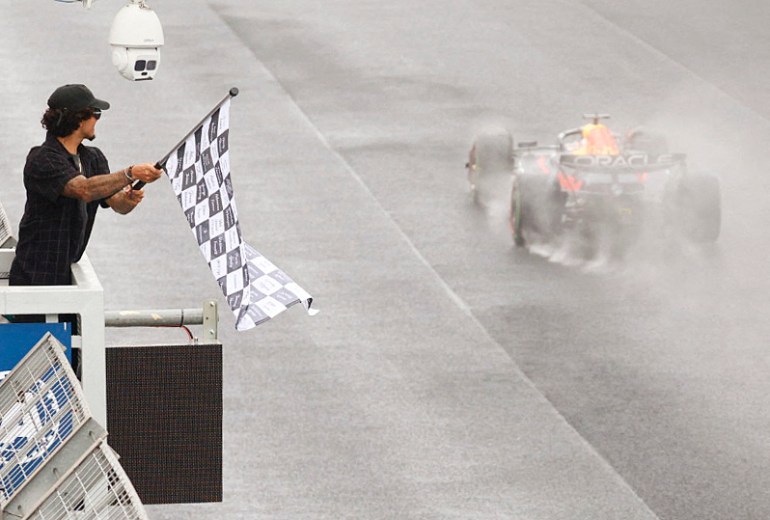
The Red Bull driver wins a chaotic race, tightening his grip on the title as McLaren’s Norris plunges from pole position to sixth. Red Bull’s Max Verstappen has his fourth Formula One title within reach after a stunning drive to victory from 17th on the grid in Brazil, dealing a shattering blow to Lando Norris’s hopes. Norris, who started the wet and chaotic Sao Paulo race in pole position and 44 points behind Verstappen, finished sixth for McLaren on Sunday. The title gap blew out to 62 points with three rounds remaining and 86 points still to be won. If results go his way, Verstappen could hit the championship jackpot in the next race down the floodlit Las Vegas Strip on November 23. In a crash-strewn race shortened to 69 laps, halted after 33 and restarted, Verstappen took his eighth win of the season – and one of the best of his career – by 19.477 seconds and with a bonus point for the fastest lap. “We stayed out of trouble, we made the right calls and stayed calm and we were flying so all of these things together made that result possible,” Verstappen said. “But I mean unbelievable, to win here from so far back on the grid.” The win stopped the rot at Red Bull, ending a 10-race losing streak for their Dutch driver dating back to Spain in June. Verstappen now has 393 points to Norris’s 331, with Leclerc on 307. McLaren lead the constructors’ standings with 593 points to Ferrari’s 557. “It was a tough day, I did my best. I’ve had a lot of good races, it was about time that something didn’t go right,” said Norris, who won the Saturday sprint. Brazilian surfer Gabriel Medina waves the chequered flag to Max Verstappen as he wins the Sao Paulo Grand Prix [Sebastiao Moreira/AFP] ‘Like driving a jet-ski’ Verstappen was described as “insane” and “invaluable” after delivering one of the greatest wet weather drives in chaotic, rain-lashed conditions. “I was feeling all over the place, a roller-coaster,” he said. “My emotions went from wanting to destroy the garage after qualifying to winning the race.” Verstappen said driving under those conditions was akin to “driving a boat or a jet-ski”. “The rain came and we stayed out, which was sketchy, and I just had to keep the car on track and the conditions were undriveable – so it was special today.” Verstappen’s victory was also an emphatic statement of intent as he reeled off five successive fastest laps in the closing stages and 17 altogether as he came home 19.4 seconds clear of Alpine’s Esteban Ocon. His win made him the first driver since Kimi Raikkonen at the 2005 Japanese Grand Prix to win from as far back as 17th on the grid. “He was insane today,” his father Jos, a former F1 driver, said. Red Bull team boss Christian Horner described the world champion as “invaluable”. “It’s impossible to put a number on that. That was a champion’s drive. There’s some great drivers out there, but to stand out and shine like that today – that marks him out, I think, with some of the greats now,” said Horner. “The way he’s driven, and even when we’ve had a difficult car this year, he’s never given up. He’s gone about collecting the points, he’s always trying to get maximum out of the car.” DRIVER STANDINGS (after 21/24 rounds) Max Verstappen surges ahead with just three races to go#F1 #BrazilGP pic.twitter.com/7PezUcF3om — Formula 1 (@F1) November 3, 2024 Adblock test (Why?)
Russia-Ukraine war: List of key events, day 983
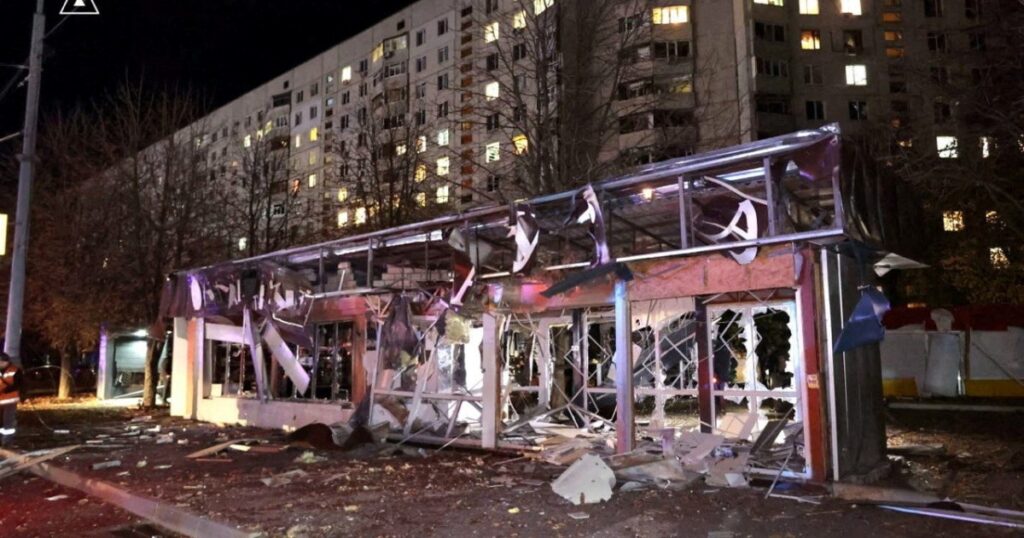
As the war enters its 983rd day, these are the main developments. Here is the situation on Monday, November 4: Fighting Debris from destroyed Russian drones started park and grass fires in Kyiv, the mayor of the Ukrainian capital said on Monday. Emergency crews were dispatched, with no immediate reports of casualties. Meanwhile, Ukraine’s air defence units tried to repel a Russian drone attack on Kyiv, the military administration said on Monday. “Stay in shelters!” Serhiy Popko, head of Kyiv’s military administration posted on Telegram. A Russian guided bomb attack late on Sunday, which hit a supermarket in the northeastern Ukrainian city of Kharkiv, injured four people. An earlier strike had hit a forested area of the city. Russia’s military said on Sunday its forces had taken control of the village of Vyshneve in Ukraine’s eastern Donetsk region as they pursue their advance towards the logistical centre of Pokrovsk. One man was killed by a Ukrainian drone attack in Russia’s Belgorod region on Sunday, regional governor Vyacheslav Gladkov said on Telegram. A second Taiwanese volunteer fighting alongside Ukrainian soldiers against Russia has been killed, Taiwan’s Ministry of Foreign Affairs said on Sunday. The man was a member of Ukraine’s military legion of foreign fighters, the ministry said in a statement. Diplomacy United Nations Secretary-General Antonio Guterres has said he is “very concerned” about reports that North Korean troops have been sent to Russia to possibly aid in its war against Ukraine, said Stephane Dujarric, the UN chief’s spokesperson, on Sunday. Europe will need to rethink its support of Ukraine if Donald Trump is elected president of the United States, Hungarian Prime Minister Viktor Orbán said on Sunday, as the continent “will not be able to bear the burdens of the war alone”. Orban opposes military aid to Ukraine and supports Trump in the election, believing he shares his views and would negotiate a peace settlement for Ukraine. Adblock test (Why?)
Rights group calls for release of minors charged over Nigeria protests
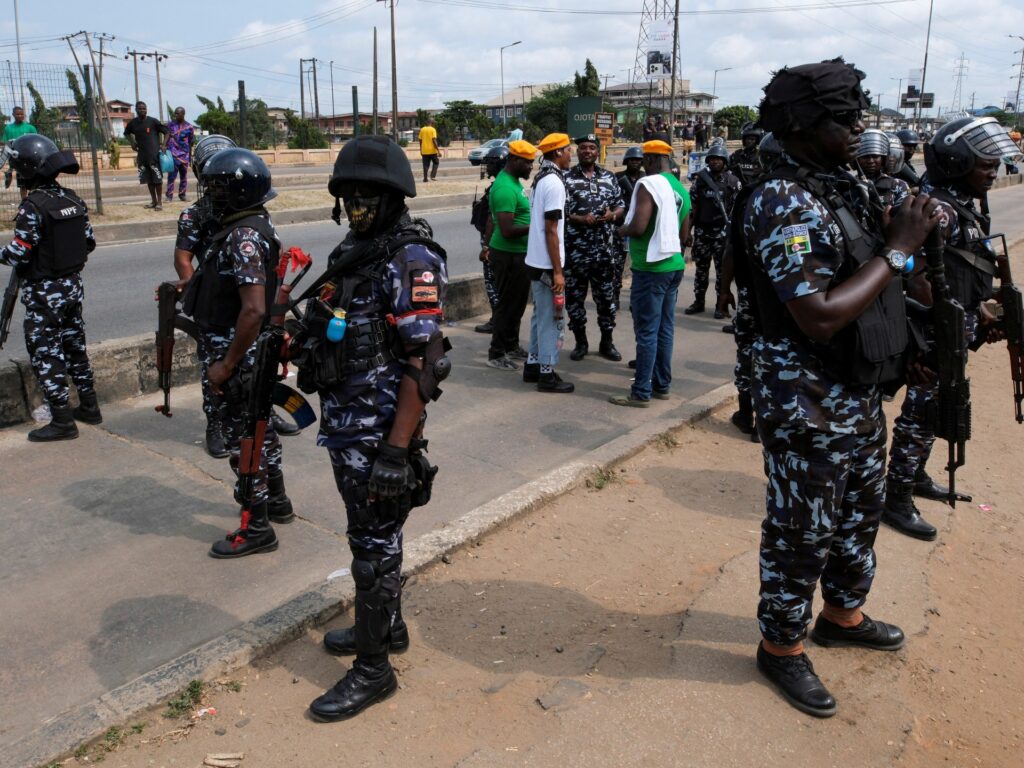
Scenes of young Nigerians fainting while in court in the capital Abuja sparked uproar from politicians, civil society. The Nigerian government is facing increasing pressure to drop charges against dozens of minors amid an uproar over detention conditions since they were arrested over their alleged participation in protests against the high cost of living. A total of 76 people, including 30 children, were arraigned on Friday and charged with 10 felony counts, including treason, destruction of property, public disturbance and mutiny. The minors ranged in age from 14 to 17 years old, the Associated Press news agency reported. Scenes of the young Nigerians fainting while in court in the capital, Abuja, sparked an uproar from politicians and civil society. They have been under detention for three months following their arrests in August. “The footage reveals minors, some so weak that they could barely stand, others fainting from sheer exhaustion and lack of nourishment,” said politician Peter Obi, who unsuccessfully contested the 2023 presidential election. Amnesty International also condemned the minors’ “horrifying detentions for participating in protests against hunger and corruption”, calling it “one of the deadliest attempts to suppress freedom of assembly” so far. The office of the Nigerian Inspector General of Police denied having subjected the detainees to ill-treatment, saying that medical aid was provided to the defendants. It said “age does not exempt individuals from facing legal consequences”. On Friday, police spokesperson Muyiwa Ogunjobi told Nigerian television that “once you are more than seven years old, you can be” arraigned. The minors were granted bail, and their lawyers said the case would come to trial in January. On Sunday, The Socio-Economic Rights and Accountability Project (SERAP), a Nigerian human rights group, called on President Bola Tinubu to use his “leadership position” to release the minors “within the next 48 hours”. “These children and other protesters are detained solely for the peaceful exercise of their human rights,” SERAP said in a statement posted on its website. The group also called on President Tinubu to order an investigation into the “circumstances surrounding the grave violations of the human rights of the children” and other protesters. Nigeria’s Punch news website reported on Sunday that the Minister of Justice and Attorney General Lateef Fagbemi had “commenced” moves to drop the charges against the minors. Frustration over the cost-of-living crisis has led to several large protests in the country in recent months. In August, at least 20 people were shot dead, and hundreds more were arrested at a protest demanding better opportunities and jobs for young people. Adblock test (Why?)
Purging voters: Inside Republican efforts to restrict 2024 election vote
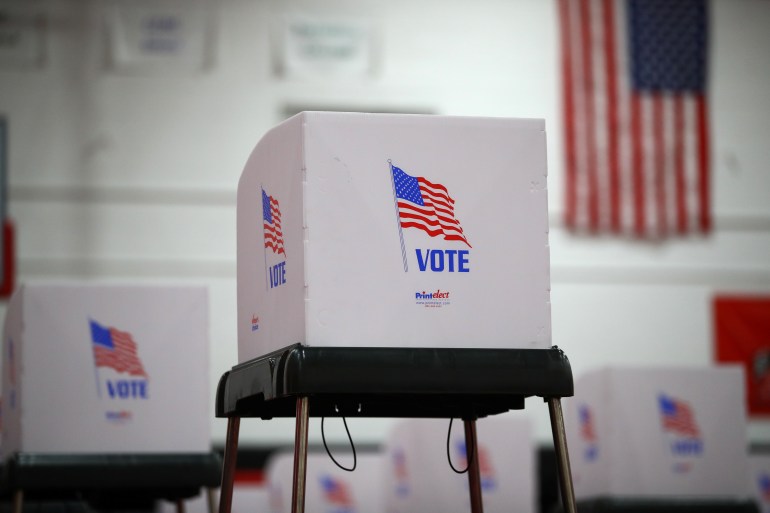
On Wednesday, the United States Supreme Court’s conservative majority gave the Republicans a win, voting to uphold Virginia’s efforts to purge voters less than a week before the 2024 election. A federal judge had previously found that Virginia had illegally purged 16,000 voter registrations over the previous two months, however, the Supreme Court granted the largely Democratic-voting state’s Republican Governor Glenn Youngkin an emergency appeal this week. A coalition of independent groups, including the US Department of Justice, had previously sued the state for violating federal election law, arguing the efforts were stripping eligible voters of their right to vote. Youngkin said voters who believe they were improperly removed from the rolls can still vote in the election because Virginia has same-day registration. “There is the ultimate, ultimate safeguard in Virginia, no one is being precluded from voting, and therefore, I encourage every single citizen – go vote,” Youngkin told reporters. On social media, Republican presidential nominee Donald Trump had previously blasted the Virginia court’s initial ruling as a “totally unacceptable travesty.” “Only US Citizens should be allowed to vote,” the former president added. The legal win, which comes as Trump and Democratic candidate Kamala Harris duke it out in the dying days of their respective campaigns, represents a broader strategy by the GOP to tighten voting regulations across key states, including Arizona, Michigan, and Nevada. A privacy booth is seen at a polling station located in the Baltimore City Community College (BCCC) Gymnasium in Baltimore, during early voting in Maryland, US, October 26, 2020 [File: Hannah McKay/Reuters] Why is this happening? Across the country, the GOP is targeting voter rolls and absentee ballots, and also monitoring elections. It says this is an attempt to ensure that the election is fair, but its opponents say these are actually attempts to suppress the vote. The Republican focus on election-related legal battles dates back to lingering distrust from the 2020 presidential election. Former President Trump’s false claims that the election was stolen have fuelled enduring scepticism within the party, where a significant number of GOP voters continue to believe in election fraud without substantial evidence. These lawsuits have become a strategy not just for election integrity but for appealing to a base that feels disenfranchised by the previous electoral outcome. How and where else is the GOP challenging the vote? In recent months, Republicans have launched lawsuits in multiple battleground states challenging voting access in attempts to purportedly boost election integrity and oversight. This strategy includes lawsuits aimed at purging suspected non-citizens from voter rolls, restricting the votes of convicted felons, contesting absentee ballot processing, and challenging election worker protections. The results have been mixed. In Alabama, a federal judge ordered Republicans to stop attempting to purge the voter rolls. In Nebraska, another judge upheld the right to vote for those who have completed their felony sentences. And in Georgia, a court declared new rules unconstitutional that would have allowed election results to be more easily contested. A person previously convicted of a felony holds a sign about voter suppression during a Poor People’s Campaign assembly, April 19, 2021, in Jackson, Mississippi [File: Rogelio V. Solis/AP Photo] Here’s a breakdown of what’s happening in some other states: Nevada: Republicans, including Trump-aligned groups, unsuccessfully filed lawsuits challenging voter registration procedures, which sought to remove alleged non-citizens from Nevada’s voter rolls. These legal efforts focused on specific matches between the state’s Department of Motor Vehicles records and current voter rolls. Republicans argued, without evidence, that voters with addresses flagged in a national database may have mail ballots sent to addresses where others could fill them out on their behalf. The move could have potentially axed 19,000 registered voters from Clark County and an additional 11,000 in Washoe County, according to the ACLU of Nevada, which filed a motion to intervene in the lawsuit. Republicans have abandoned the effort after the ACLU and others raised technical objections, Nevada Public Radio reported. Arizona: Several lawsuits backed by GOP and conservative groups also challenged Arizona’s election procedures, including absentee ballot handling and voter roll management, aiming to enforce stricter eligibility standards for voting. In May, a Maricopa County judge in Arizona dismissed portions of a GOP-led lawsuit challenging the revised state Elections Procedures Manual, citing concerns that some elements of the lawsuit might lead to voter intimidation. North Carolina: A Republican National Committee (RNC) legal effort aiming to purge 225,000 voters in the state, alleging issues with voter registration accuracy, stalled after the state’s Board of Elections won an appeal that will keep the litigation in federal court. The lawsuit, filed in late August, demanded the court make the state’s Board of Elections formulate a strategy to remove those voters from the rolls by September 6, despite federal law barring the systematic purging of voters 90 days before an election, according to the Carolina Journal. The North Carolina State Board of Elections has criticised the GOP efforts as baseless, arguing the timing could cause confusion and disruptions on Election Day. Republicans also argued that ballots with improperly sealed envelopes should be excluded, targeting absentee voting, which has favoured Democrats in previous elections. North Carolina elections officials claim they’ve removed 750,000 ineligible voters from voter rolls since the beginning of 2023. The state has 7.7 million registered voters. Michigan: Republicans in Michigan have challenged absentee ballot verification processes, arguing for stricter enforcement, with ongoing court proceedings to clarify standards. The GOP also sued the state’s Secretary of State Jocelyn Benson over guidance on absentee ballot verification, claiming it lacked proper enforcement detail. Last week, however, a federal judge tossed a lawsuit that targeted the state’s voter roles out. In another case, a state judge reversed a Republican challenge of a tiny number of voter registrations by military and overseas voters, according to the Detroit Free Press. The RNC could potentially appeal the ruling. Supporters of Democratic presidential nominee US Vice President Kamala Harris’s at a campaign event on the National Mall one week before the November 5
Schools to close as air pollution hits record high in Pakistan’s Lahore
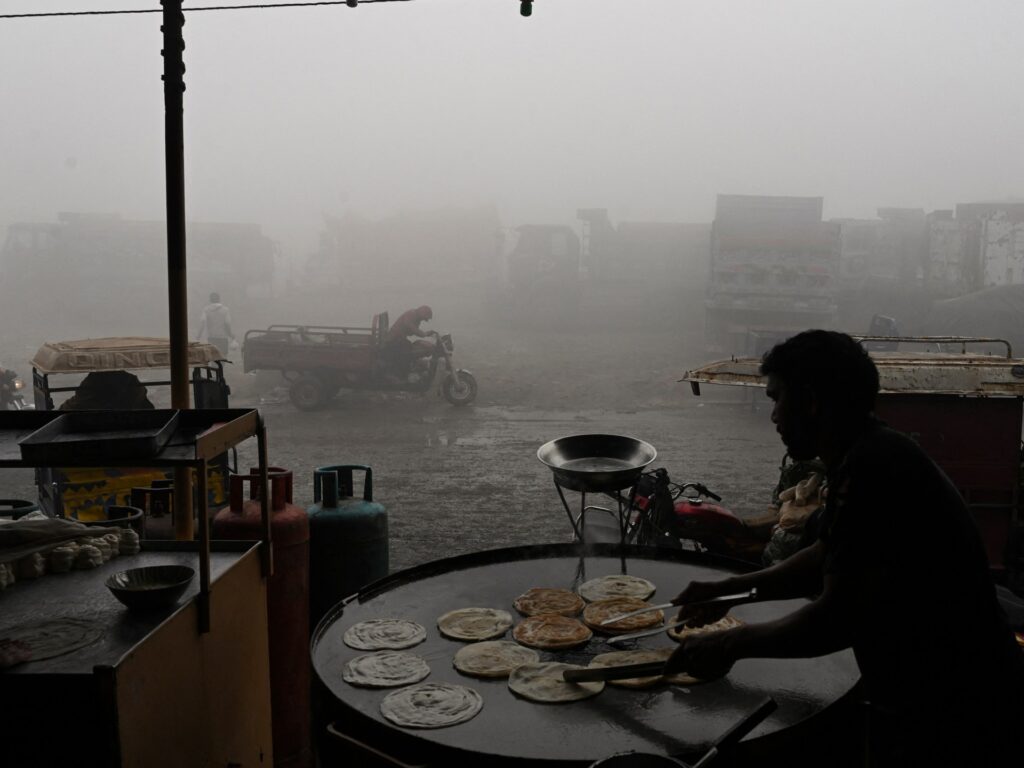
Unprecedented air pollution levels prompt authorities to take emergency measures. Pakistan’s second-largest city of Lahore will close primary schools for a week after it saw “unprecedented” pollution levels, government authorities have said. For days, the city of 14 million people has been enveloped by smog, a mix of fog and pollutants caused by low-grade diesel fumes, smoke from seasonal agricultural burning and winter cooling. The air quality index, which measures a range of pollutants, exceeded 1,000 on Saturday – well above the level of 300 considered “dangerous” – according to data from IQAir. The Punjab government also recorded peaks of over 1,000 on Sunday, which it said was “unprecedented”. “Weather forecast for the next six days shows that wind patterns will remain the same. Therefore we are closing all government and private primary schools in Lahore for a week,” Jahangir Anwar, a senior environmental protection official in Lahore, told the AFP news agency. “This smog is very harmful for children. Masks should be mandatory in schools. We are keeping an eye on the health of children in senior classes,” Punjab senior minister Marriyum Aurangzeb told a news conference on Sunday. Smog counters have been established in hospitals, she added. Breathing the toxic air can have catastrophic health consequences, with the World Health Organization (WHO) saying that strokes, heart disease, lung cancer and respiratory diseases can be triggered by prolonged exposure. On Saturday, the concentration of deadly PM2.5 pollutants – fine particulate matter in the air that causes the most damage to health – was more than 40 times the level deemed acceptable by the WHO. PM2.5 levels on Sunday morning exceeded that before decreasing slightly. Children particularly vulnerable Last week, the provincial environmental protection agency announced new restrictions in four “hot spots” in the city. Tuk-tuks equipped with polluting two-stroke engines are banned, as are restaurants that barbecue without filters. Government offices and private companies will have half their staff work from home starting Monday. Children are particularly vulnerable because they have less developed lungs and breathe more rapidly, taking in more air relative to their size than adults. Last month, authorities banned schoolchildren from outdoor exercise until January and adjusted school hours to prevent children from travelling when the pollution is most punishing. Pollution in excess of levels deemed safe by the WHO shortens the life expectancy of Lahore residents by an average of 7.5 years, according to the University of Chicago’s Energy Policy Institute. Adblock test (Why?)
Harris, Trump hit North Carolina in final weekend push before US election
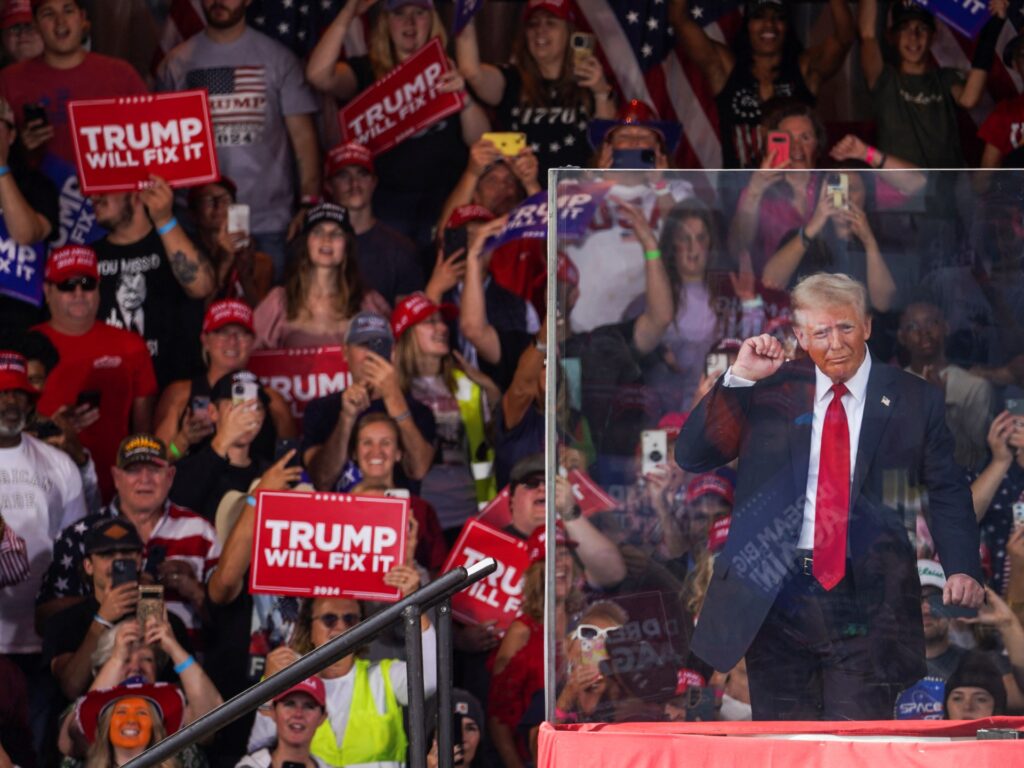
The fate of the election is expected to be determined by the seven battleground states, which are being heavily courted. United States presidential candidates Kamala Harris and Donald Trump are touring southern swing states as they try to attract voters with just three days left until Election Day. The Democratic and Republican leaders headed to the southern battleground state of North Carolina on Saturday. It marked the fourth day in a row that Vice President Harris and former president Trump visited the same state on the same day, further emphasising how votes will likely decide the election outcome in a few key states that polls have projected will be close. They were both in North Carolina on Wednesday, Nevada on Thursday and Wisconsin on Friday, at one point holding events just a few kilometres from each other as they fought over the swing states. The two candidates took big hits against each other, focusing on how the other party would be bad for the US while also touching on a string of issues like the economy and immigration. “We win this state, we’re gonna win the whole ball game,” Trump said in his Gastonia, North Carolina speech. “We won it twice before, and we’re gonna win it easily.” He also repeated the false claim that there had been “cheating” in the 2020 presidential election vote. Trump was planning a visit to Salem, Virginia, before heading back to North Carolina. Harris said there is an opportunity to “turn the page on a decade of Donald Trump” in a speech. “This is not someone speaking about how to make your life better,” she told the crowd in Georgia’s Atlanta, saying she plans to improve standards of living. The vice president also tried to strike a message of unity, saying her priorities would include a middle-class tax cut and bringing down the cost of living for Americans. After the Georgia speech, Harris will head to a rally in North Carolina where the rock star Jon Bon Jovi is expected to make an appearance. In one of the latest clashes among the two parties, which brought highly differing takes on major issues, Democrats hit out at US House Speaker Mike Johnson. The Republican suggested that the GOP would probably try to cut government subsidies for semiconductor manufacturing if it wins. Johnson later walked back his comments, claiming he meant that Republicans would “streamline” the bipartisan CHIPS and Science Act that has injected billions of dollars into producing computer chips in the US. In the national polls, Harris is holding on to a slight lead. In polls of the seven key swing states, Trump is ahead in Arizona, Georgia and North Carolina, while Harris maintains single-point leads in Michigan and Wisconsin. Pennsylvania and Nevada are even. The election looms on November 5, but millions have already cast their ballots in recent weeks. As of Saturday, more than 72 million votes had already been cast, according to a tracker maintained by the University of Florida, which said that more than half of all voters are expected to cast their ballots before election day. Adblock test (Why?)
Ukraine’s Zelenskyy urges allies to act before N Korean troops reach front
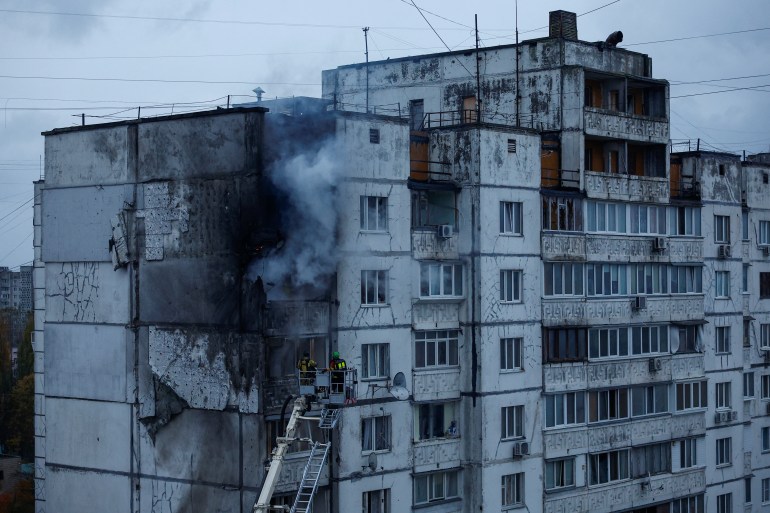
Ukraine’s President Volodymyr Zelenskyy has urged its allies to stop “watching” and take steps before North Korean troops deployed in Russia reach the battlefield, and the country’s army chief warned that his troops are facing “one of the most powerful offensives” by Moscow since the all-out war started more than two years ago. Zelenskyy raised the prospect of a preemptive Ukrainian strike on camps where the North Korean troops are being trained and said Kyiv knows their location. But he said Ukraine cannot do it without permission from allies to use Western-made long-range weapons to hit targets deep inside Russia. “But instead … America is watching, Britain is watching, Germany is watching. Everyone is just waiting for the North Korean military to start attacking Ukrainians as well,” Zelenskyy said in a post late Friday on the Telegram messaging app. The Biden administration said on Thursday that some 8,000 North Korean soldiers are now in Russia’s Kursk region near Ukraine’s border and are preparing to help the Kremlin fight against Ukrainian troops in the coming days. On Saturday, Ukraine’s military intelligence said that more than 7,000 North Koreans equipped with Russian gear and weapons had been transported to areas near Ukraine. The agency, known by its acronym GUR, said that North Korean troops were being trained at five locations in Russia’s Far East. It did not specify its source of information. Western leaders have described the North Korean troop deployment as a significant escalation that could also jolt relations in the Asia Pacific region, and open the door to technology transfers from Moscow to Pyongyang that could advance the threat posed by North Korea’s nuclear weapons and missile program. North Korean Foreign Minister Choe Son Hui met with her Russian counterpart in Moscow on Friday. Ukrainian leaders have repeatedly said they need permission to use Western weapons to strike arms depots, airfields and military bases far from the border to motivate Russia to seek peace. In response, US defence officials have argued that the missiles are limited in number, and that Ukraine is already using its own long-range drones to hit targets farther into Russia. Moscow has also consistently signalled that it would view any such strikes as a major escalation. President Vladimir Putin warned on September 12 that Russia would be “at war” with the US and NATO states if they approve them. Firefighters work at a site of an apartment building damaged by a Russian drone strike, amid Russia’s attack on Ukraine, in Kyiv [Valentyn Ogirenko/Reuters] Ukraine facing ‘powerful’ Russian offensive Zelenskyy’s call came shortly before Ukraine’s top commander, General Oleksandr Syrskii, said on Saturday that his troops are struggling to stem “one of the most powerful offensives” by Russia since its all-out invasion of its southern neighbour in February 2022. Writing on Telegram following a call with a top Czech military official, Syrskii hinted that Ukrainian units are taking heavy losses in the fighting, which he said “require constant renewal of resources.” While Syrskii did not specify where the heavy fighting took place, Russia has for months been conducting a ferocious campaign along the eastern front in Ukraine, gradually compelling Kyiv to surrender ground. But Moscow has struggled to push Ukrainian forces out of its Kursk border region following an incursion almost three months ago. Dozens injured in Russian strikes on Ukraine Russian missiles hit Ukraine’s second-largest city of Kharkiv overnight into Saturday, killing a policeman and injuring dozens, local Governor Oleh Syniehubov reported. According to Syniehubov and Ukraine’s national police force, one missile slammed into a spot where a large group of police were gathered, killing a 40-year-old serviceman and injuring 36 more. In Ukraine’s southern Kherson province, Russian shelling on Saturday killed a 40-year-old woman and wounded three others, including two children, local Governor Oleksandr Prokudin reported. Another Kherson resident was wounded in a drone attack later that day, according to local Ukrainian authorities. Five more civilians, including two children, were injured after Russia struck Ukraine’s central Dnipropetrovsk region, Governor Serhiy Lysak said. In Kyiv, air raid sirens wailed for more than five hours early Saturday morning as Russian drones rained on the capital, sparking a fire in an office block downtown and injuring two people, according to the city’s military administration. Overall, Russian forces overnight attacked Ukraine with more than 70 Iranian-made Shahed drones, the Ukrainian air force reported Saturday. It said most were shot down or sent off-course using GPS jamming. Falling debris damaged power networks and residential buildings in multiple provinces and injured an elderly woman near Kyiv, officials said. Ukraine’s Foreign Ministry hinted that Russia’s drone campaign was slowing down, saying Moscow launched just more than half as many in October as the month before. Meanwhile, Russia’s defence ministry reported that its forces overnight shot down 24 Ukrainian drones over four Russian regions and occupied Crimea. There were no immediate reports of casualties or damage. Adblock test (Why?)
How significant is North Korea’s support for Russia?
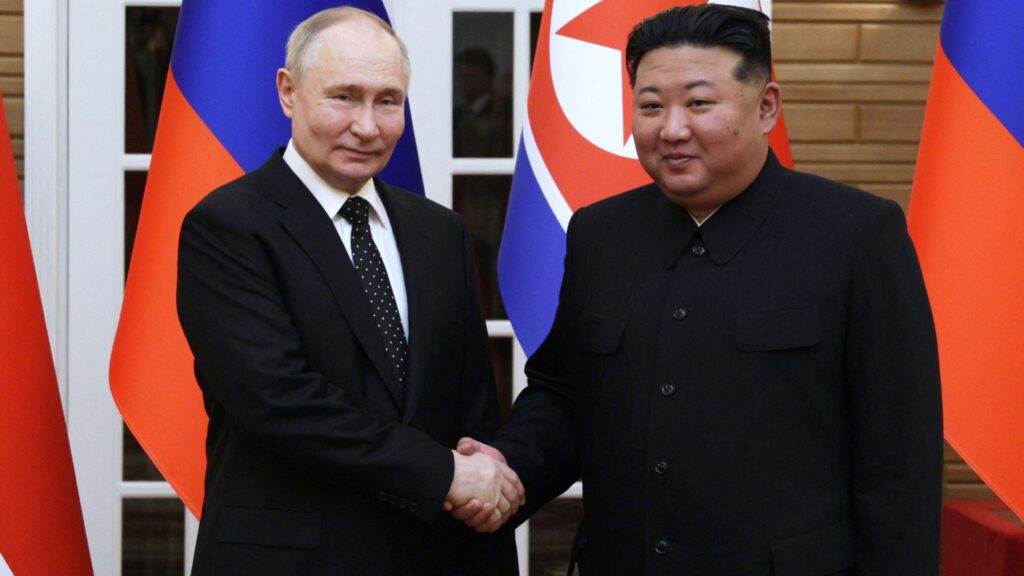
Pyongyang says it will stand by Moscow in its war against Ukraine. The United States says thousands of North Korean soldiers are now on Russian soil, preparing to enter the war against Ukraine. Most are in Russia’s Kursk region – where Ukraine launched a counter-invasion almost three months ago. Fighting there has been intense, and some analysts say the addition of North Korean troops could change the dynamics of the conflict. As the Kremlin struggles to lure new recruits, Pyongyang has pledged unwavering support for Moscow. Does Vladimir Putin’s reach for North Korean troops reveal a military stretched to the breaking point? Or is this a sign of Russian strength, as it builds new alliances? Presenter: Laura Kyle Guests: Graham Ong-Webb – Adjunct fellow at S. Rajaratnam School of International Studies Pavel Felgenhauer – Military analyst and political commentator Craig Mark – Adjunct lecturer at Hosei University, Tokyo Adblock test (Why?)