

Donald Trump targets Liz Cheney as he courts Arab, Muslim voters
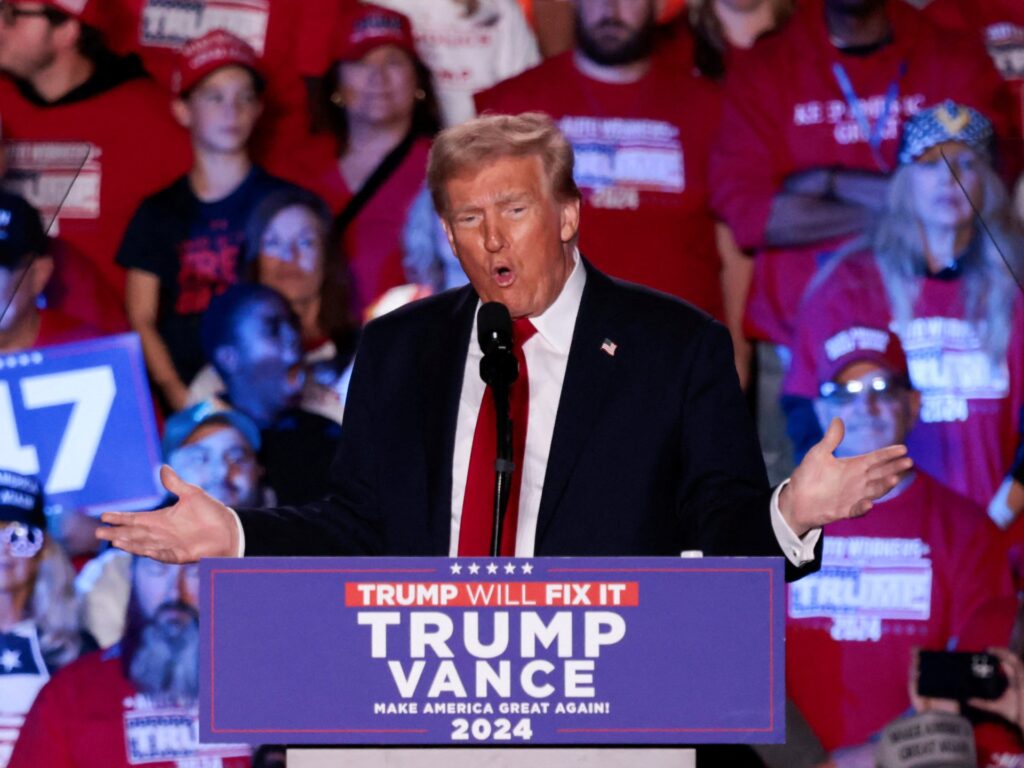
NewsFeed Republican presidential candidate Donald Trump again attacked Republican ex-lawmaker Liz Cheney, who has campaigned with Democratic presidential candidate Kamala Harris, saying she “always wants war” and suggesting she would be a coward on a battlefield. Trump has been courting Arab and Muslim voters in Michigan. Published On 2 Nov 20242 Nov 2024 Adblock test (Why?)
The Gaza factor in the US election
Voters distraught over the war in Gaza are torn between Harris and Trump. With the United States presidential election just days away, the race for the White House is too close to call. Given the Biden administration’s support for the war in Gaza, many Arab American voters who normally vote Democrat are now leaning towards Trump, creating panic in the Democratic Party’s electoral machine. Contributors:Shadi Hamid – Columnist, The Washington PostSamraa Luqman – Trump supporterWa’el Alzayat – CEO, EmgageYumna Patel – Editor-in-Chief, Mondoweiss On our radar: As US media outlets brace for a possible Trump victory, major publications like The Washington Post and The Los Angeles Times have chosen to withhold presidential endorsements. Meenakshi Ravi breaks down the implications of this. More than three years after a military coup halted Myanmar’s democratic progress, journalists continue to report – often covertly or from abroad. Among them, the Mizzima network has become a symbol of the nation’s enduring struggle against military rule. Featuring:Mu Philista – Journalist, Kantarawaddy TimesSein Win – Managing Editor, MizzimaSoe Myint – Co-founder & Editor-in-Chief, Mizzima Adblock test (Why?)
In Context: What Trump said about Cheney facing a firing squad
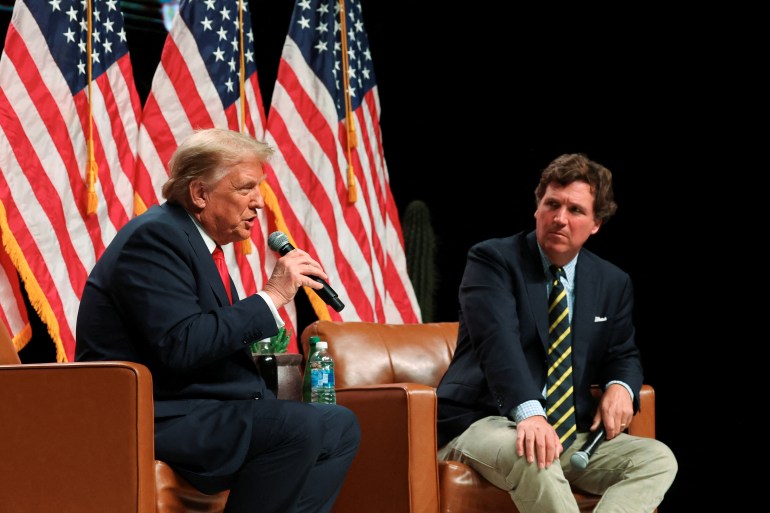
EXPLAINER With widespread interpretations of Trump’s remarks, we review his comments in their original context. So what did he say — and what did he likely mean? By Amy Sherman | PolitiFact Published On 2 Nov 20242 Nov 2024 Former US President Donald Trump called former US Republican lawmaker Liz Cheney a “radical war hawk” and said she should see how it feels to face guns “trained on her face”. Trump made the comments to former Fox News host Tucker Carlson at an October 31 campaign event in Glendale, Arizona. Carlson asked Trump whether it was “weird” for him to see Cheney, the daughter of former Republican Vice President Dick Cheney, campaigning against him. Liz Cheney has vocally supported Kamala Harris, the Democratic presidential candidate, and her father also said he would vote for Harris. With widespread interpretations of Trump’s remarks, we review his comments in their original context. So what did he say – and what did he likely mean? Trump’s answer to Carlson’s question lasted several minutes and covered his feelings about former President George W. Bush and Dick Cheney; the pardon of Lewis “Scooter” Libby, who was a former Dick Cheney aide; and the US House Select Committee that investigated the January 6, 2021 assault on the US Capitol. Trump’s comments about Liz Cheney and a firing squad drew the most public attention. When asked about Liz Cheney campaigning for Harris, Trump said, “Well, I think it hurts Kamala a lot. Actually. Look, [Cheney is] a deranged person. The reason she doesn’t like me is that she wanted to stay in Iraq.” Trump covered many other topics, then said, “I don’t want to go to war. [Liz Cheney] wanted to go, she wanted to stay in Syria. I took [troops] out. She wanted to stay in Iraq. I took them out. I mean, if it were up to her, we’d be in 50 different countries. And you know, number one, it’s very dangerous. Number two, a lot of people get killed. And number three, I mean, it’s very, very expensive.” Republican presidential candidate Donald Trump participates in a fireside chat with Tucker Carlson at ‘Tucker Carlson Live on Tour’ at Desert Diamond Arena in Glendale, Arizona, on October 31, 2024 [Brendan McDermid/Reuters] Later, Trump added, “I don’t blame [Dick Cheney] for sticking with his daughter, but his daughter is a very dumb individual, very dumb. She is a radical war hawk. Let’s put her with a rifle standing there with nine barrels shooting at her, OK? Let’s see how she feels about it. You know, when the guns are trained on her face.” Liz Cheney replied on November 1 on X: “This is how dictators destroy free nations. They threaten those who speak against them with death. We cannot entrust our country and our freedom to a petty, vindictive, cruel, unstable man who wants to be a tyrant.” Her post included the hashtags #Womenwillnotbesilenced and #VoteKamala. Some people, including former Republican presidential candidate and Illinois representative Joe Walsh, a Trump critic, said Trump’s main point was about Liz Cheney’s stance on war. Trump’s campaign defended his remarks, publishing multiple statements: Campaign spokesperson Karoline Leavitt wrote on November 1 on X: “To every FAKE NEWS reporter taking President Trump’s words out of context: President Trump was CLEARLY explaining that warmongers like Liz Cheney are very quick to start wars and send other Americans to fight them, rather than go into combat themselves. In a November 1 statement to the press, the Trump campaign wrote, “The press has been disgracefully covering these remarks by saying that President Trump suggested that Liz Cheney should be put in front of a ‘firing squad’. Are these reporters malicious or dumb? President Trump was clearly describing a combat zone.” In another November 1 statement to the press, the campaign wrote, “Nowhere did President Trump suggest War Hawk Liz Cheney be put in front of a ‘firing squad’, be ‘executed’, or be ‘shot’ — he was making the point that War Hawks are quick to start endless foreign wars and send other Americans to fight, with zero regard for the human cost.” In 2002, Dick Cheney made the George W. Bush administration’s case for preemptive military action against Iraq based on allegations about weapons of mass destruction. In 2007, the Institute for Defense Analyses, a nonprofit research branch of the Pentagon’s Joint Forces Command, completed an assessment of the Bush administration’s rationale, basing its conclusions on more than half a million captured Iraqi documents. That study “found no ‘smoking gun’ (i.e., direct connection) between Saddam’s Iraq and al-Qaida”. When Liz Cheney represented Wyoming as a Republican in Congress, she supported Trump’s legislative agenda while he was president but broke with him after the January 6, 2021, assault on the Capitol. She dismissed Trump’s false claims of a fraudulent 2020 election and has blamed him for inciting the Capitol riot. Cheney served on the US House January 6 select committee that held public hearings about the riot. She lost her reelection bid in 2022. Adblock test (Why?)
Armed group in Bolivia takes over military post in latest flare-up
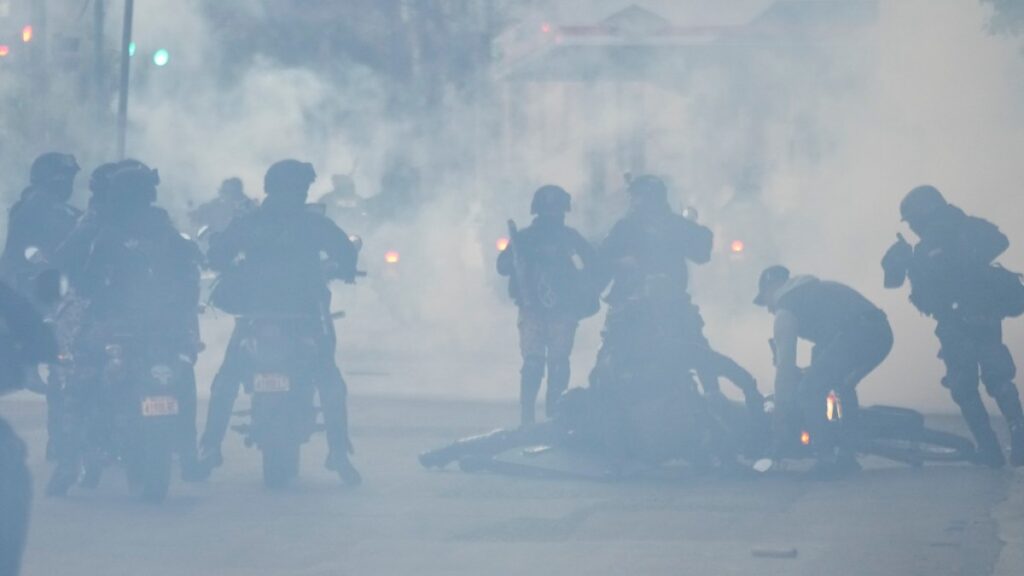
The takeover is latest chapter in standoff between the Arce government and supporters of ex-president Evo Morales. An armed group in Bolivia has taken over a military post outside the city of Cochabamba while holding some soldiers captive, the armed forces said in a statement, ramping up tensions in the already restive Andean nation. Cochabamba, located in central Bolivia, is home to many supporters of former President Evo Morales. Friday’s standoff over the military post, located about 100 miles (160 km) east of Cochabamba, marks the latest escalation in Bolivia’s increasingly volatile and often violent politics. The military’s statement described the armed group as “irregular”, noting it had also taken control of firearms and ammunition, and stressed that such actions amounted to treason. Authorities urge group to disperse ‘immediately and peacefully’ It urged those responsible for the takeover to “immediately and peacefully” abandon the facility. “The lives of my instructors and soldiers are in danger,” warned an unnamed military official in a recording broadcast on local media. Televised images showed a row of uniformed soldiers with their hands behind their backs, possibly tied, surrounded by members of the armed group. Earlier on Friday, some soldiers stationed in the area as well as their families fled their homes, as police stations shut down to prevent further confrontations. After police and military units sought to remove a key highway blockade that connects Cochabamba with the city of Oruro, some protesters retaliated by launching dynamite at them from nearby hills. Police then hurled tear gas canisters at them. The seizure of the military outpost is seen as a response to efforts earlier this week by security forces under the control of President Luis Arce to dislodge highway blockades organised by supporters of Morales since mid-October. The two leftist leaders, both with roots in Bolivia’s ruling socialist party, have gone from close allies to bitter rivals in recent months as they jockey for position ahead of next year’s presidential election. In an address to the nation on Wednesday, Arce called for an end to the blockades, estimating that the disruptions to key transport routes have already cost the impoverished South American country’s economy over $1.7bn. Adblock test (Why?)
Supreme Court rejects bid by GOP not to count some Pennsylvania ballots
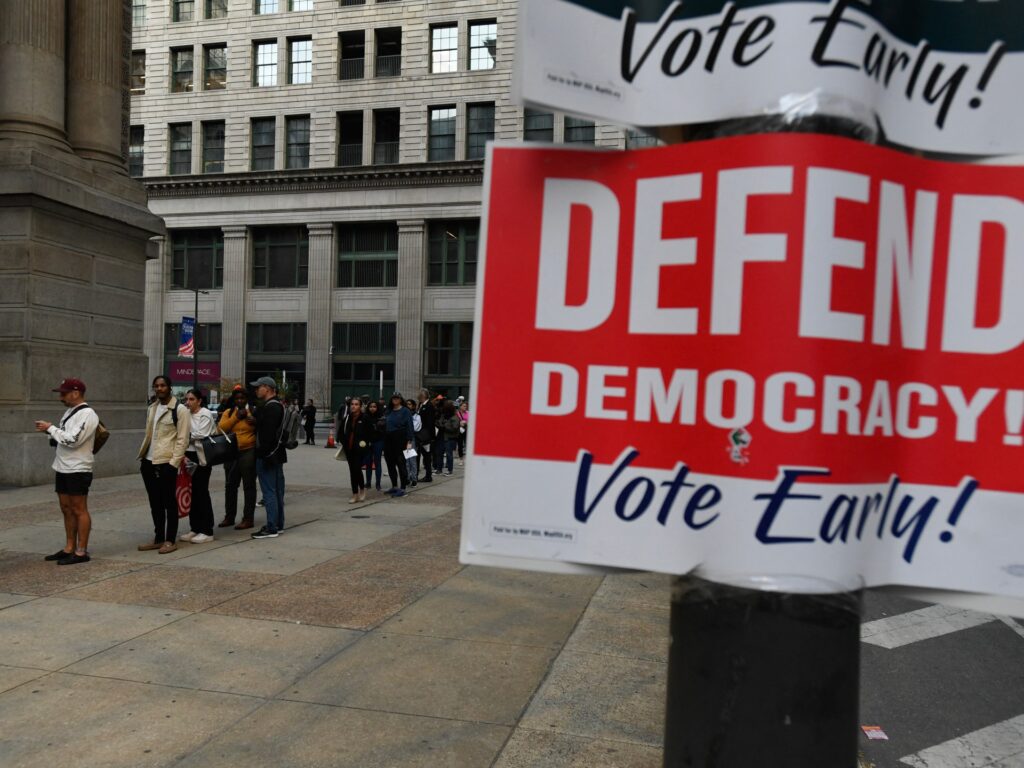
Republicans wanted some so-called provisional ballots to be rejected. The United States Supreme Court has dismissed an effort by Republicans to prevent the counting of provisional ballots in Pennsylvania – a move that would have meant thousands of votes were not tallied. Republicans in the state, which Joe Biden and the Democrats narrowly won in the 2020 US presidential election on their way to victory, had argued that “tens of thousands of votes” could be at stake and ought to have been rejected. Reports suggested that as of late this week, somewhere close to 9,000 ballots out of more than 1.6 million were returned, as they had arrived at election offices around Pennsylvania lacking a secrecy envelope, a signature or a date. The ruling is a victory for voting-rights advocates, who had tried to force various counties, especially Republican-controlled counties, to allow voters to cast a provisional ballot on Election Day if they had realised their mail-in ballot was to be rejected for any of a variety of errors. Provisional ballots generally protect voters from being excluded from the voting process if their eligibility is uncertain on Election Day. The vote is counted once officials confirm eligibility. The Associated Press said the court ruling could apply to thousands of ballots, and possibly more, according to elections experts. ‘The right to vote means the right to have your vote counted’ The Supreme Court justices left in place a decision by Pennsylvania’s top court that elections officials must count provisional ballots cast by voters whose mail-in ballots were rejected. Democrats had intervened on the side of the activists, arguing that if a defective mail-in ballot could not be counted, that person had not yet voted and a provisional ballot must be counted. Harris campaign spokesperson Michael Tyler and Democratic National Committee spokesperson Rosemary Boeglin said in a joint statement after the Supreme Court acted: “In Pennsylvania and across the country, Trump and his allies are trying to make it harder for your vote to count, but our institutions are stronger than his shameful attacks. [This] decision confirms that, for every eligible voter, the right to vote means the right to have your vote counted.” Adblock test (Why?)
Arizona top prosecutor investigating Trump’s comments about ‘gunfire’
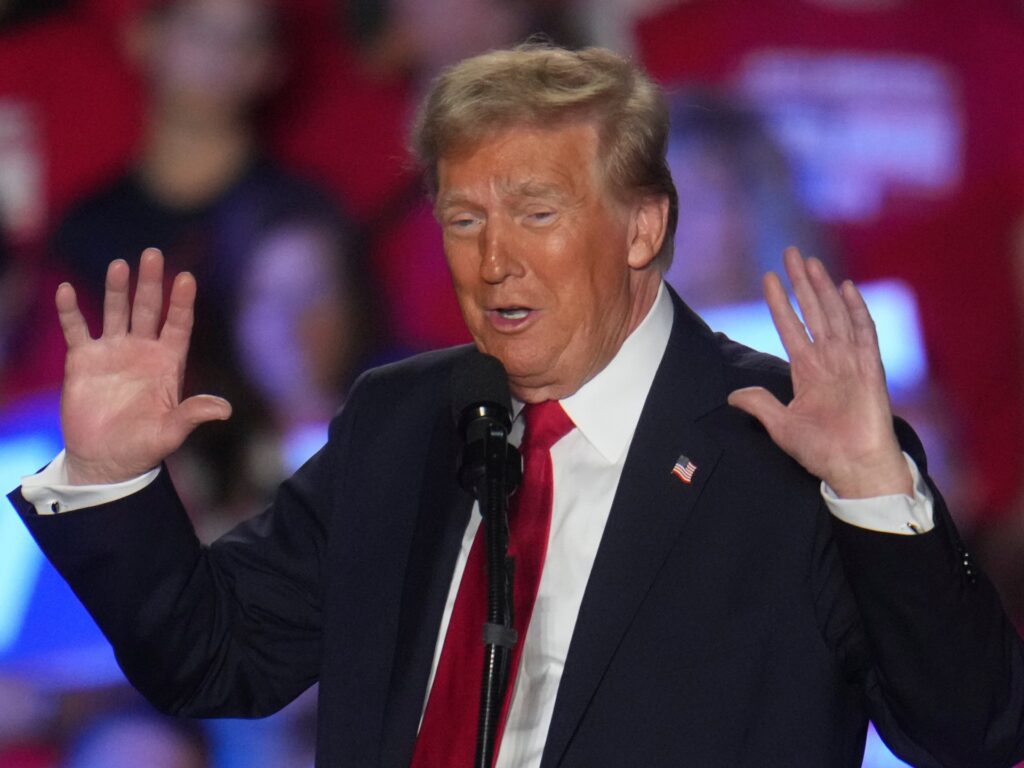
Arizona’s top prosecutor is investigating whether Republican presidential candidate Donald Trump violated state laws for suggesting that one of his most prominent critics should face “gunfire” in combat. Trump has been widely criticised for comments he made about former Republican lawmaker Liz Cheney at a campaign event in Arizona on Thursday. “She’s a radical war hawk,” Trump said of Cheney. “Let’s put her with a rifle standing there, with nine barrels shooting at her, OK? Let’s see how she feels about it, you know, when the guns are trained on her face.” On Friday, speaking to a local TV station, Arizona Attorney General Kris Mayes, a Democrat, said Trump might have violated state laws that prohibit death threats. “I have already asked my criminal division chief to start looking at that statement, analysing it for whether it qualifies as a death threat under Arizona’s laws,” Mayes told 12News. Mayes said it was not yet clear if Trump’s comment amounted to protected free speech or a criminal threat. “That’s the question, whether it did cross the line. It’s deeply troubling,” Mayes said. “It is the kind of thing that riles people up, and that makes our situation in Arizona and other states more dangerous.” Cheney endorsed Democrats Cheney, a former top Republican in the US House of Representatives, has endorsed Democratic presidential candidate Kamala Harris and called the former president “a danger”. Harris told reporters the comments were a sign Trump has become increasingly unhinged. “Anyone who wants to be president of the United States who uses that kind of violent rhetoric is clearly disqualified and unqualified to be president,” she said in Madison, Wisconsin. Trump spokesperson Karoline Leavitt said his remarks were misinterpreted. “President Trump is 100 percent correct that warmongers like Liz Cheney are very quick to start wars and send other Americans to fight them, rather than go into combat themselves,” she said. Trump goes after former VP At a rally in Warren, Michigan, earlier in the day, Trump attacked Harris and Cheney again, and this time his comments included her father – former Vice President Dick Cheney. “They want the Arab American vote. They want to get the Muslim votes, so she picks Liz Cheney whose father virtually destroyed the Middle East,” he said. He added: “It’s easy for her to say she wants to start wars from the comfort of her nice home, or her father’s lavish home, that he got from killing a big portion of the Middle East. You know that, right? You know he headed up a company, that was a big company, a big beneficiary of the wars.” Cheney was vice president under President George W Bush and played a key role in the so-called “war on terror” – the US response to the terrorist attacks on September 11, 2001. Before he served as vice president, Cheney was the former CEO of Halliburton, a multinational oil services company that won multibillion-dollar contracts with the US military in Iraq. Cheney has also refused to back Trump’s third presidential run and has endorsed Harris. Both Harris and Trump held evening campaigns in Milwaukee, Wisconsin, on Friday as part of a final push for votes in the crucial swing state. Adblock test (Why?)
Jailed Algerian journalist Ihsane El Kadi freed after presidential pardon
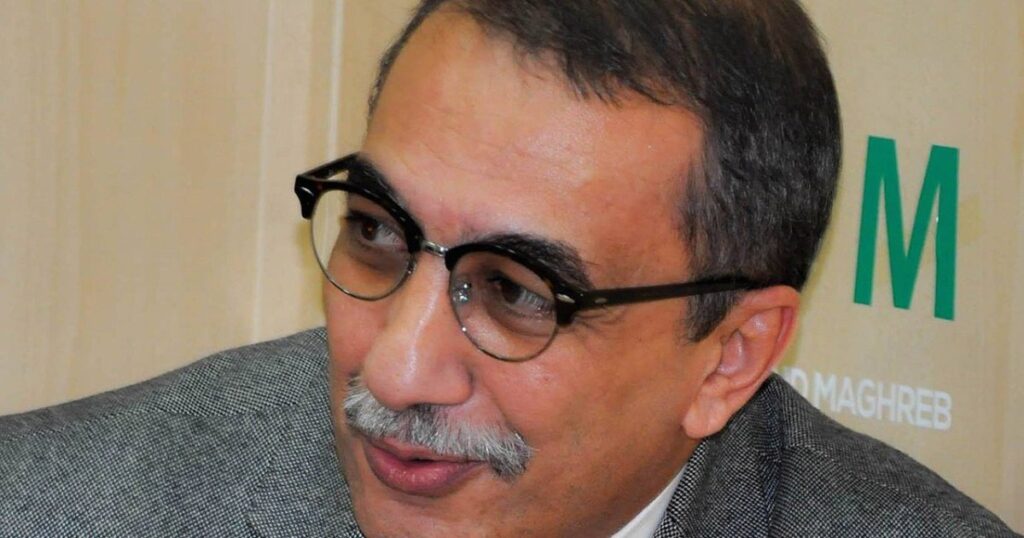
President Abdelmadjid Tebboune pardons 4,000 detainees to mark 70th anniversary of the independence war with France. Prominent Algerian journalist Ihsane El Kadi has been freed by a presidential pardon, his lawyers say, after being imprisoned for taking foreign funding for his media outlets and “threatening state security”. El Kadi, 65, was released on Friday after President Abdelmadjid Tebboune signed two decrees pardoning more than 4,000 detainees to mark the anniversary of the 1956-1962 conflict with France that led to the North African country’s independence. His lawyer Noureddine Ahmine posted on Facebook: “What joy! Ihsane El Kadi is free!” alongside a picture of the journalist at home with his family. Another lawyer, Nabila Smail, posted: “At last Ihsane El Kadi is back home with his loved ones. Freed on November 1. The end of a nightmare.” El Kadi, who heads Interface Medias, which includes the Maghreb Emergent news website and Radio M, had served a year and four months of the seven-year sentence he received in June 2023. Seven years is the maximum penalty under an article in the penal code that criminalises anyone who receives “funds, a grant or otherwise … to carry out acts capable of undermining state security”. He was first arrested in December 2022 and held under a state security law. In addition to his imprisonment, the court ordered the two media entities dissolved and ruled the two companies and El Kadi pay a total of 11.7 million dinars ($86,200) in fines. The two media projects were key outlets during the Hirak protest movement, which led to the resignation of octogenarian President Abdelaziz Bouteflika in 2019 after 20 years in power. Among the Hirak movement prisoners freed was Mohamed Tadjadit, 29, dubbed the “poet of the Hirak” for his recitations during the mass protests and for his posts on Facebook. El Kadi was sentenced to seven years after he appealed an initial five-year term for “foreign financing of his business”. His lawyers had argued that the funds had been sent by his London-based daughter Tin Hinane, a shareholder in his media group, to settle debts. El Kadi’s arrest sparked a wave of solidarity among his colleagues and rights activists in both Algeria and Europe. A petition by Reporters Without Borders, known by its French initials RSF, a media rights watchdog, attracted more than 10,000 signatures. RSF on Friday expressed “immense relief” at El Kadi’s release, saying it hoped this would “also signal a lifting of restrictions on press freedom”. Algeria ranks 139 of 180 countries and territories on RSF’s 2024 World Press Freedom Index. Adblock test (Why?)
Conservative Christians, Israel and the US vote
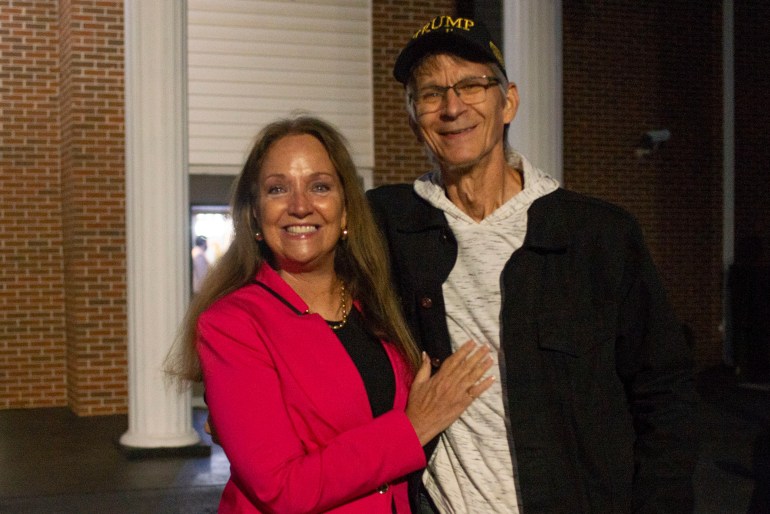
Trump and the Republican party continue to connect with several segments of Christian voters, a diverse group of denominations that spans racial identities and political perspectives. A Pew Research poll released in September found Trump commanded 82 percent of white evangelical Protestant voters, 58 percent of white non-evangelical Protestant voters, and 52 percent of Catholics. Harris, meanwhile, had 86 percent of support among Black Protestants, a group that has long skewed heavily Democratic. Those numbers are especially significant in a swing state like Georgia, which carries 16 Electoral votes and went to US President Joe Biden in 2020 by less than 12,000 votes. It was the first time the state had gone to a Democratic presidential candidate in 18 years. White evangelical Protestants – themselves divided into several sub-denominations – account for 38 percent of Georgia’s population. That is by far the largest segment of any religious group, followed by Black Protestants at 17 percent. Cindye and Stan Coates say they do not agree with the emphasis on Israel support from Republicans ahead of the vote [Joseph Stepansky/Al Jazeera] Evangelicals remain some of the staunchest supporters of Israel, according to a recent analysis of polling by the Chicago Council on Global Affairs. The entrenched support is rooted, in part, in some segments of the denomination that believe that Jewish people must be in control of Jerusalem for the second coming of Jesus, which will beckon in the Rapture, when living and dead Christians alike will rise to heaven. Polls have shown that up to 82 percent of white evangelical Protestants believe that Israel was given to the Jewish people by God, according to the analysis. The group is the most supportive of Israel out of all Christian denominations – at least 60 percent say they fully oppose putting any arms restrictions on Israel, while 64 percent believe that Israel’s actions in Gaza are justified. But the polls also show a more complicated story: Thirty-three percent of White evangelicals say they support some form of restrictions on aid to Israel, with another 11 percent reporting that they feel Israel has gone too far in the war on Gaza. That may be a reflection of wider trends within the Republican party, with a Data for Progress poll in October showing 52 percent of Republicans aged 18 to 29 supported an arms embargo on Israel. Speaking to Al Jazeera after buying a black “Make America Great Again” bucket hat in Austell, 20-year-old voter Troy said he was among those who were uncomfortable with continued aid to Israel, which he broadly categorised with other forms of foreign assistance, including large transfers to Ukraine amid Russia’s invasion. “I don’t really understand why Israel is that big of an issue in this election cycle,” said Troy, who declined to give his last name, but identified himself as an Anabaptist Protestant. “I don’t think the United States should be so involved in anything overseas like that. We keep sending billions to Ukraine, there are still people reeling from the hurricane that came through,” he said, referring to Hurricane Helene, which ravaged Georgia in September. For his part, Trump has framed himself as a “protector” of Israel, even as he has broadly claimed that the October 7 attack on southern Israel, which killed at least 1,139 people, and the war that has spiralled since would not have happened on his watch. Still, speaking during a debate in July, he said US President Joe Biden should allow Israel to “finish the job” in Gaza, and has also claimed to speak to Netanyahu on a near daily basis. Adblock test (Why?)
Hope still exists for Turkey-PKK detente, despite deadly attack
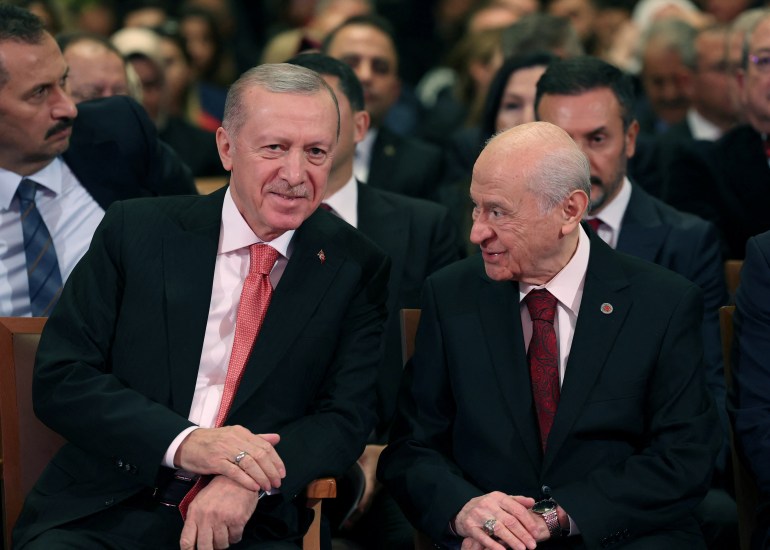
Istanbul, Turkey – The sight of Devlet Bahceli, the leader of the Nationalist Movement Party (MHP) walking across the floor of the Turkish parliament on October 1 and shaking hands with politicians from a pro-Kurdish party, DEM, was an unlikely one. The MHP leader, a close ally of Turkish President Recep Tayyip Erdogan, has been a vociferous opponent of Kurdish demands for more rights. He has referred to Kurdish politicians as “terrorists,” accusing them of links to the PKK, an armed group that is listed as a “terrorist organisation” by Turkey and the West. He also called for DEM’s predecessor to be banned. The promise of new peace negotiations between Turkey and the Kurdish fighters who have waged a 40-year rebellion was called into question last month after an attack on an aerospace plant near the capital Ankara. Bahceli later said his gesture was a “message of national unity and fraternity”. Weeks later, he raised the possibility that PKK leader Abdullah Ocalan, who has been serving a life sentence since 1999, could be granted parole if he renounced violence and disbanded his organisation. And then, the very next day on October 23, an attack on the TUSAS aerospace and defence company, which killed five people and left the two assailants dead, threatened to reverse the baby steps that had been taken. TUSAS manufactures civilian and military aircraft, including unmanned drones that have been crucial in combating the PKK, which has fought a war against the Turkish state since the 1980s, as part of an effort to claim more autonomy for Kurds living in southeastern Turkey. The PKK claimed responsibility for the TUSAS attack two days later. Its statement said the raid was not related to the latest “political agenda” but had been planned long before because TUSAS weapons “killed thousands of civilians, including children and women, in Kurdistan”. Turkish President Recep Tayyip Erdogan and Devlet Bahceli, leader of the Nationalist Movement Party (MHP), attend a Republic Day event to mark the republic’s 101st anniversary in Ankara, Turkey, on October 29, 2024 [Murat Kula/Presidential Press Office/Handout via Reuters] ‘Historic window of opportunity’ And yet, the attack may not be the death knell for the potential rapprochement as some initially feared. Instead, there seem to be elements of an underlying desire by both sides to push towards a solution to a protracted conflict that has killed tens of thousands. DEM quickly made it clear that they opposed the TUSAS attack, condemning it and saying that it was “meaningful” that it took place “when Turkish society is talking about a solution and the possibility of dialogue is emerging”. Even after the attack, Erdogan himself described the developments as an “unparalleled opportunity”. While commending Bahceli’s “will to focus on the right path” in an October 30 speech, the president said, “Those who read the calls of the MHP chairman in this context see the historic window of opportunity.” DEM is now reportedly trying to arrange a formal structure for peace negotiations involving senior figures from across the political parties. Ibrahim Akin, a DEM Party MP, described Bahceli’s remarks about Ocalan as a “sign of a new era” and an indication of the government’s approach. “However, there are still many things that are uncertain and cause hesitation,” he said. “We want a transparent process to be carried out in which all parties and all political actors are included.” Supporters of the pro-Kurdish DEM Party display flags with a portrait of jailed PKK leader Abdullah Ocalan during a rally to celebrate Newroz, which marks the arrival of spring, in Istanbul, Turkey, on March 17, 2024 [Umit Bektas/Reuters] Rationale Following the Ankara attack, Turkey launched a wave of air strikes against the PKK in Iraq and Syria. The group has directed its operations in Turkey from northern Iraq’s Qandil Mountains since the late 1990s. The Turkish military has severely curtailed PKK activity inside Turkey in recent years through the establishment of dozens of bases on the Iraqi side of the border and cross-border air strikes. In northeast Syria, meanwhile, Turkey has also targeted the PKK-affiliated People’s Defence Units (YPG), which the United States has supported since 2015 in the fight against ISIL (ISIS), providing weapons and training. American support for the Kurdish armed group strained Turkey’s relations with the US. While Turkey does not recognise any separation between the PKK and YPG, most Western states have declined to list the latter as a “terrorist” group. Speaking after the TUSAS attack, Erdogan said the two PKK assailants had crossed into Turkey from Syria, implicating the YPG. Some commentators see the rationale behind the latest push for talks as Erdogan’s desire to amend Turkey’s current constitution, which would not allow him to run for office again unless early elections are called. DEM – the third-largest party in parliament – could provide valuable backing. “The ruling coalition will probably try to amend the constitution to remove Erdogan’s time limits,” said Berk Esen, a political scientist at Istanbul’s Sabanci University. “They probably want to divide the opposition coalition and co-opt, if not directly the Kurdish political movement, then at least some Kurdish voters, particularly conservative Kurdish voters in southeastern Anatolia.” The idea of a deal between the Turkish government under Erdogan and the PKK is not as far-fetched as it perhaps might first seem. Erdogan’s Justice and Development Party (AK Party) made a strong effort in its early years in power in the 2000s to give more rights to Kurds in Turkey, who had long been a marginalised group. A peace process launched in 2013 appeared, at times, to come close to success before failing in 2015. The current move also comes at a time of extreme turmoil in the Middle East. US support for Israel has reportedly unsettled Kurdish groups, including the PKK, which has historical ties to Palestinian armed groups. DEM is highly critical of Israeli actions in Gaza and Lebanon. A second Donald Trump presidency would also likely see US troops pulled from Syria, removing protection for
Allying with Trump, Elon Musk is the latest billionaire to seek gov’t power
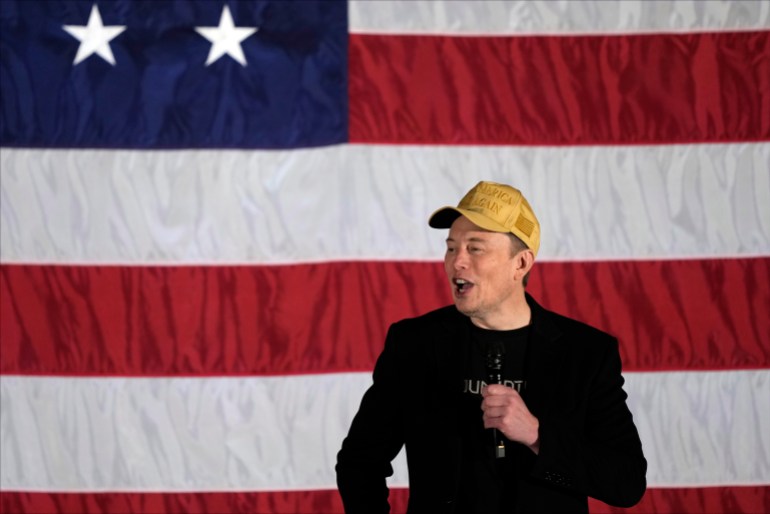
If Elon Musk joins the United States government following a Donald Trump victory in the presidential election, he will be the latest in a succession of billionaire businesspeople to hold public office. From the late Vice President Nelson Rockefeller and former New York City Mayor Michael Bloomberg to Illinois Governor JB Pritzker and former President Trump himself, the super-rich have long held positions of power in Washington, DC and across US state capitals. With polls showing Tuesday’s election on a knife edge, Musk is in serious contention to join Trump’s cabinet after the Republican candidate floated the idea of the tech billionaire serving as so-called “Secretary of Cost Cutting”. Since entering politics after decades in the real estate business, Trump has displayed a penchant for drafting high-net-worth individuals from the private sector. During his first term in office, Trump nominated five people as Cabinet secretaries who had spent all or nearly all of their careers in the business world, including Exxon Mobil CEO Rex Tillerson, billionaire philanthropist Betsy DeVos, and former World Wrestling Entertainment CEO Linda McMahon. According to an analysis by the Pew Research Centre, Trump’s first slate of Cabinet nominees had more businesspeople with no public sector experience than any other before it. Musk, the world’s richest man, has called for drastic reductions in government spending, although he has provided few specifics about where he would direct cuts. During Trump’s Madison Square Garden rally on Sunday, the CEO of Tesla and SpaceX CEO said the federal budget could be slashed by “at least” $2 trillion. “Your money is being wasted, and the Department of Government Efficiency is going to fix that,” Musk told Howard Lutnick, the chief executive of Wall Street firm Cantor Fitzgerald and a member of Trump’s transition planning team, when asked how much he could “rip out” of the latest federal budget. “We’re going to get the government off your back and out of your pocketbook.” Such a reduction in spending – equal to nearly one-third of last year’s federal budget of $6.75 trillion – would almost certainly be impossible to achieve without steep cuts in areas that politicians across the aisle have been loath to touch, including social security, healthcare, veterans’ benefits, and defence. Musk himself has acknowledged that such a sharp cut in spending would inflict serious economic pain. On Tuesday, he responded “sounds about right” to a post on X that predicted there would be “an initial severe overreaction in the economy” and “markets will tumble.” SpaceX and Tesla did not respond to requests seeking comment from Musk. Elon Musk speaks as part of a campaign town hall in support of former President Donald Trump in Folsom, Pennsylvania on October 17, 2024 [Matt Rourke/AP] While politicians pledging to end wasteful spending is hardly new, there is no “precise parallel” to a businessman like Musk overseeing a department tasked with improving government efficiency, said Bruce Schulman, a professor of history at Boston University. Political candidates that touted their experience in business, from former President George W. Bush to presidential nominee Mitt Romney, typically had a track record in public service before seeking to enter the highest levels of the federal government. Government commissions aimed at eliminating waste and inefficiency – such as the Hoover Commission and the National Partnership for Reinventing Government led, respectively, by former President Herbert Hoover and Vice President Al Gore – have also generally been led by seasoned government officials. Schulman said while initiatives to eliminate waste have been endorsed at various times by both Democrats and Republicans, they have been largely for “political show”. “These efforts have had marginal effects, and mostly been for political show. But overall, both the size of the federal government in number of employees and in terms of spending have been flat for a long time even though the US population has increased dramatically. The federal government is much leaner than it was in the 1960s/70s,” Schulman told Al Jazeera. John Pelissero, director of Santa Clara University’s Markkula Center for Applied Ethics, questioned Musk’s standing to hold a government position given his lack of experience in the public sector. “Without any working experience in government, one might wonder how he could be qualified to occupy a position, for example, that focuses on government efficiency,” Pelissero told Al Jazeera. “It is worth noting that past government efficiency or reform commissions have often been led by an individual who has earned public trust and has deep experience in government.” While Musk has been lauded as a tech visionary in the private sector, his business track record is not without its stumbles and controversies. Since his $44bn takeover of X in 2022, the social media platform’s value has fallen about 80 percent, according to a valuation by the investment giant Fidelity, largely as a result of advertisers leaving the platform over its loosening of content moderation. The Environmental Protection Agency has accused SpaceX of polluting the area around its Texas base, damaging a surrounding state park and federal wildlife refuge. In September, the agency fined SpaceX $148,378 over a chemical spill – a minuscule penalty for a company of its size that Musk nonetheless branded as “silly”. A Cabinet position would be an enticing reward for Musk, who has emerged as one of Trump’s most vocal and powerful supporters since July’s failed assassination attempt on the former president. Musk’s companies hold billions of dollars in contracts with government agencies, raising concerns that his elevation to the government would create potentially huge conflicts of interest. SpaceX alone has received more than $15bn in government contracts for launching rockets for NASA, satellites for the Pentagon, and ferrying US astronauts to the International Space Station. In February, the Wall Street Journal reported that the company was awarded a $1.8bn classified government contract with an unnamed government agency. Tesla, which is facing regulatory scrutiny from numerous government agencies, stands to benefit from potentially looser regulatory enforcement during a friendly Trump administration, as well as tax cuts and subsidies. X,