

Boeing workers to vote on 38% pay rise offer to end weeks-long strike
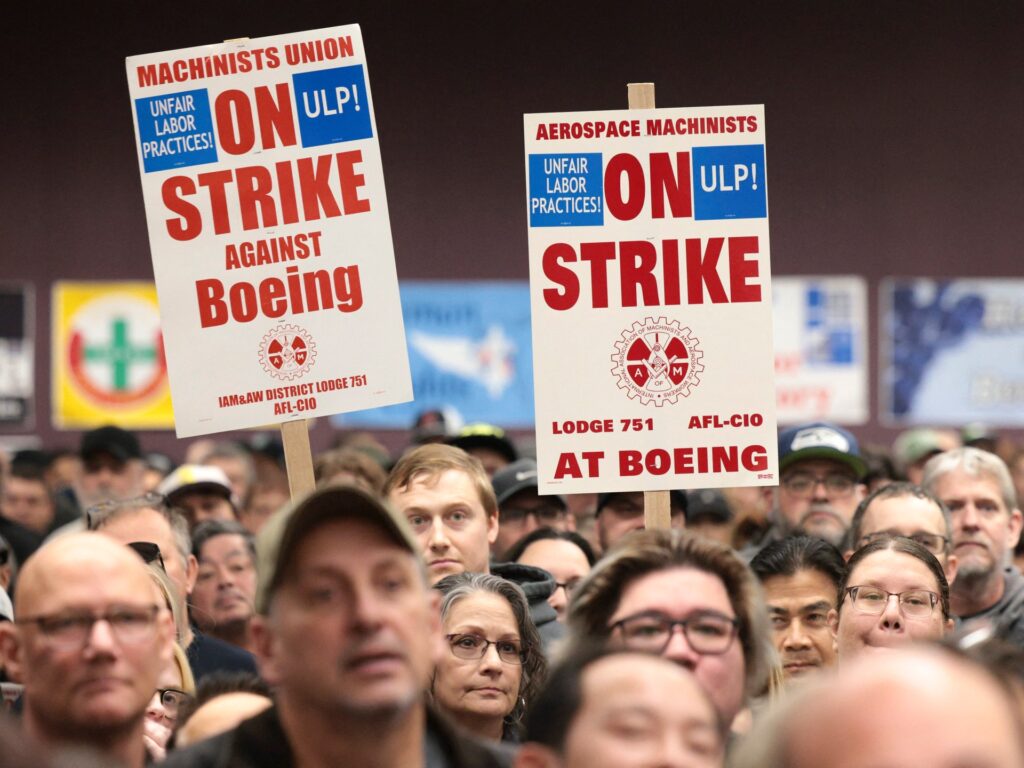
Striking workers to vote Monday on contract that includes 38 percent pay rise and $12,000 ratification bonus. Striking Boeing workers in the United States are set to vote on a new contract deal after a previous offer by the company failed to get them back to work. The offer to be voted on Monday includes a 38 percent pay rise over four years, a $12,000 ratification bonus and the reinstatement of an annual bonus scheme that was not included in the earlier proposal, The International Association of Machinists and Aerospace Workers (IAM) said in a statement on Thursday. Nearly two-thirds of workers last week rejected a contract that would have provided a 35 percent wage rise over four years but did not restore a defined pension plan sought by many employees. Workers have been pushing for a 40 percent wage increase and the reinstatement of the old pension scheme. “Your union is endorsing and recommending the latest IAM/Boeing contract proposal. It is time for our members to lock in these gains and confidently declare victory,” the IAM chapter said. Some 33,000 IAM members have been on strike since September 13, halting operations at Boeing factories in the Seattle area that produce the 737 Max and 777. The strike has added to a difficult year for Boeing, which has been under intense scrutiny since a January incident during which a 737 Max plane operated by Alaska Airlines lost a door panel midflight. Boeing shares rose 2.5 percent in after-hours trading after the announcement of the latest offer, after closing 3.2 percent earlier on Thursday. Adblock test (Why?)
Donald Trump sues CBS over ‘misleading’ interview with rival Kamala Harris
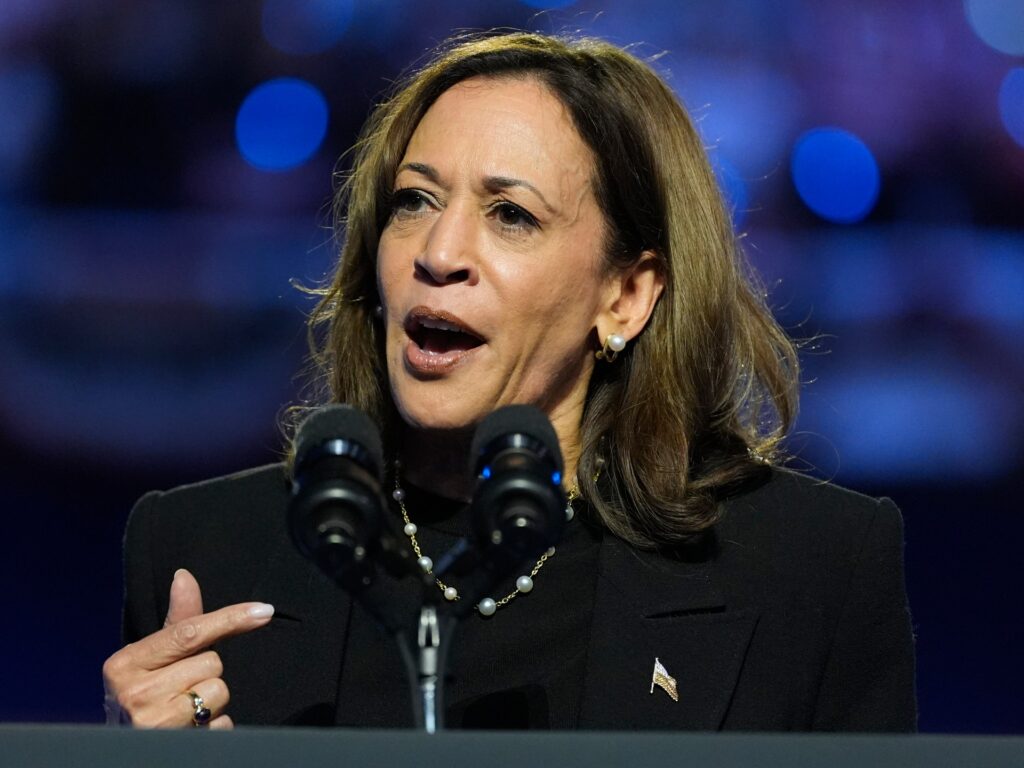
Lawsuit against 60 Minutes demands $10bn in damages and claims footage was edited. United States presidential candidate Donald Trump has filed a lawsuit against a US television network for what he calls a “misleading” interview with rival Kamala Harris. The suit against CBS News filed in a Texas court on Thursday alleged the network aired two different responses from Democratic presidential candidate Kamala Harris when responding to a question about the war between Israel and Hamas in Gaza. The version that aired during the 60 Minutes programme on October 6 did not include what the lawsuit called a “word salad” response from Harris about the Biden administration’s influence on Israel’s conduct of the war. The suit filed by the Republican Party presidential nominee essentially accused CBS of editing Harris’s response to make it seem clearer. The lawsuit has been filed in federal court in the Texas city of Amarillo, which has only one judge – Matthew Kacsmaryk. US media reports said the Trump-appointed judge’s court had become an increasingly popular choice for lawsuits filed by Republicans. CBS says the allegations are wrong CBS News has rejected the claims. “Former President Trump’s repeated claims against 60 Minutes are false,” a CBS News spokesperson said. “The lawsuit Trump has brought today against CBS is completely without merit, and we will vigorously defend against it.” The suit demanded a jury trial and about $10bn in damages, the filing showed. It alleged violations of a Texas law barring deceptive acts in the conduct of business. Trump has repeatedly assailed the network on the campaign trail over the episode and has threatened to revoke CBS’s broadcasting licence if elected. CBS has said Trump backed out of his own planned interview with 60 Minutes. The lawsuit is just another example of Trump’s fraught relationship with the media. He has called it “fake news” and the “enemy of the people” and has often called for television stations to have their licences revoked. However, Trump is also still willing to talk to media outlets such as Fox News that he considers friendly, and continues to give regular and often relaxed off-the-cuff news conferences during the campaign. The organisation Reporters Without Borders, known by its French acronym RSF, which monitors press freedom worldwide, is worried that Trump poses “an existential threat” to the media’s ability to do its job in the US. It analysed Trump’s campaign comments from September 1 to October 24, 2024. It found he had “insulted, attacked, or threatened the media at least 108 times in public speeches or remarks”. RSF’s executive director, Clayton Weimers, warned that violent words could lead to physical violence against reporters. Trump and Harris face each other in what polls show to be a tight race in next Tuesday’s presidential election, with both campaigning on Thursday in the three Western states of New Mexico, Nevada and Arizona. Adblock test (Why?)
In Georgia, four years of US election fraud claims resonate among voters
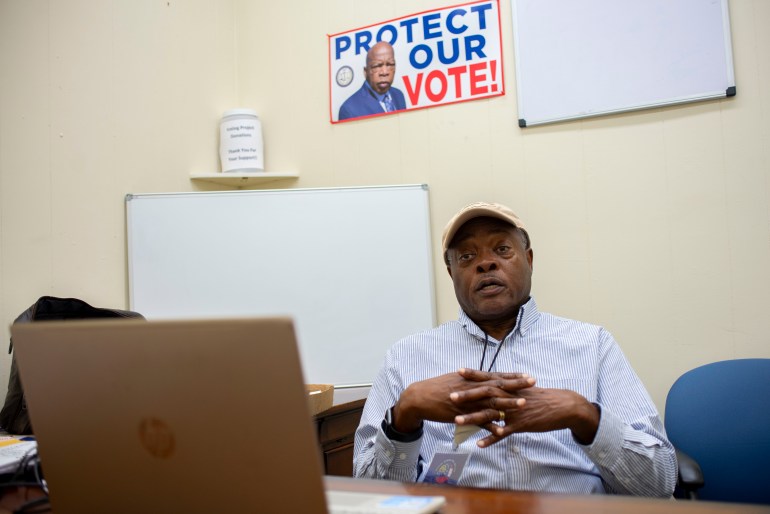
As the rumours surrounding the dumpster and the false claims of thrown-out ballots spread, Ben Johnson, a local tech entrepreneur, tweeted at L Lin Wood, a lawyer who led efforts to challenge the 2020 results in Georgia and Michigan on behalf of Trump. Johnson claimed to have “the source video for ballots found in the dumpster in Spalding County”, as reported by the Daily Beast, citing since-deleted posts. Less than a year later, Johnson, whose posts also appear to support pro-QAnon conspiracy theories, became chair of the Spalding County election board. Most recently, in August, Gabriel Sterling, a top Republican election official in the state, posted on X that the “actual evidence points to no fraud” in Georgia’s 2016, 2018, 2020 and 2022 elections. Johnson shot back, “Gabe’s pic[ture] is beside the definition of #gaslighting on dictionary.com” But Dexter Wimbish, a local lawyer and one of two Democratic members on the election board, feels there is more behind Johnson’s appointment. Prior to 2020, the election board was divided evenly between Republicans and Democrats. The fifth and final member was chosen by coin toss. But after the election, Republican state legislators passed a law mandating that three top county judges instead choose the final board member. As those judges are conservative, Wimbish explained, the change all but guaranteed that Republicans would dominate the board. “I really believe that Spalding County is sort of a test site for the right in terms of coming up with local strategies to to interfere with the election process,” Wimbish said. He pointed to a recent decision by the board to require hand-counting audits of one local and one federal race, which he argued could lead to protracted litigation after election day, while stoking confusion. Concerns peaked when Georgia’s state board passed new election rules that allowed county officials to investigate and potentially not certify election results in some cases. A report by Pro-Publica identified Spalding, along with Troup and Ware, as counties in Georgia with election boards dominated by election sceptics that could have outsized influence in light of those rules. However, a Georgia judge has since declared the new rules “illegal, unconstitutional and void”, saying that local officials were mandated to certify the election results. The state’s Supreme Court has said it will not intervene before the election. Spalding County Democratic Committee vice chair Elbert Solomon speaks from his office in Griffin, Georgia [Joseph Stepansky/Al Jazeera] But in places like Spalding County, there may still be trouble, local observers warn. Wimbish, the Democrat member of the Spalding County election board, told Al Jazeera, “it’s clear that the majority of the board welcomes litigation because they think the litigation is going to bring about their their desired outcome…I still think there’s a strong possibility that we’re going to see some sort of election controversy in Spalding County with the upcoming election.” Elbert Solomon, the vice chair of the Spalding County Democratic Committee, has also been a vocal critic of the new board. “Here in Spalding, if they could come up with some reason not to certify the election, I believe they would,” Solomon told Al Jazeera from his office in Griffin. “They have the majority vote.” For his part, Johnson has maintained during public meetings that the board seeks to act in a non-partisan manner. He did not respond to a request for an interview from Al Jazeera. Adblock test (Why?)
Show us the money: How big money dominates the 2024 US election
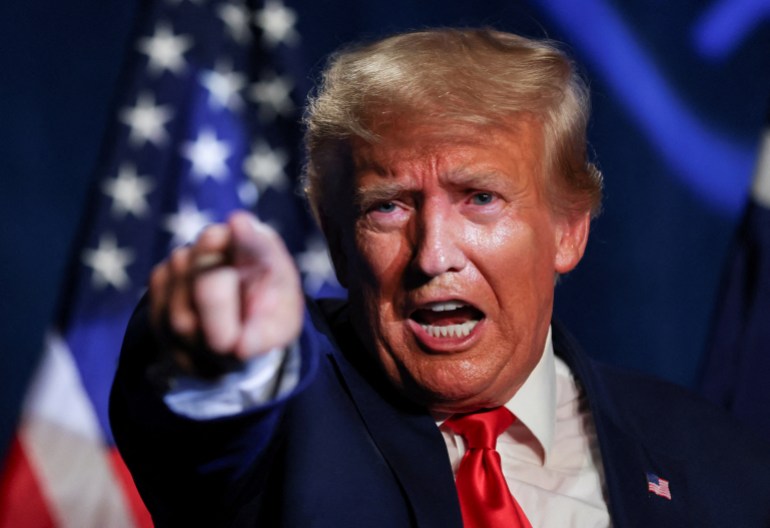
The 2024 US presidential election is on track to be the costliest election in modern history. When Joe Biden dropped out of the 2024 race in June and backed Vice President Kamala Harris to face former President Donald Trump, it triggered a huge flow of cash to the Democrats. In the 24 hours after Harris announced her candidacy, $81m flooded her campaign fund. Harris’s campaign has been a major cash cow for the Democratic Party. She set a new record, pulling in $1bn in three months. She entered October with a huge cash advantage over Trump, having outraised the Republican Party candidate almost three-to-one, in September, pulling in $378m. Harris has also edged Trump in the battle for small donors. Despite a smaller war chest, Trump still has deep pockets, raising $160m in September. At a June event, Trump walked away with $50m after addressing donors for roughly 45 minutes. And thanks to his loyal base, when he was found guilty of falsifying business records in May, Trump used his conviction to raise $52.8m in about 24 hours, according to his campaign. Trump also leveraged an assassination attempt and his New York mugshot to extract millions from donors. Former US President and Republican candidate Donald Trump has not raised as much money as his opponent in the presidential election, Vice President Kamala Harris [File: Sam Wolfe/Reuters] What are the rules of funding? In the US, campaign finance is regulated by a series of laws, which aim to prevent corruption while promoting transparency. The Federal Election Commission (FEC) enforces these rules. Individuals, organisations, and companies can contribute to political campaigns, but there are limits on how much they can give directly to candidates. Individuals usually contribute the lion’s share of any given candidate’s campaign funds. Wealthier donors tend to give more. Legally, individuals can donate up to $3,300 per candidate, per election in the 2024 cycle. Both parties have federal- and state-level committees that also raise money. Candidates can also self-fund, as Trump has partially done in the past. Democrats have rallied behind Kamala Harris since she became the party’s nominee for president, after President Joe Biden dropped out of the race [File: Evelyn Hockstein/Reuters] What’s a super PAC? There are ways to get around the contribution limits – political action committees (PACs) and super PACs, which play a monumental role in US elections. PACs pool contributions from members and donate them to campaigns, with limits of $5,000 per candidate per year. PACs often represent industries like oil or aerospace, or focus on issues like climate change or gun rights. Super PACs, created after a 2010 Supreme Court ruling, are funded by individuals, unions, and corporations. Unlike PACs, they can donate unlimited amounts to independent organisations linked to a candidate, but cannot give to, or coordinate directly with, campaigns. And that freedom allows the wealthy to pump as much money as they want to support their preferred candidate. So far, outside spending from these groups has totalled approximately $2.8bn since 2010, according to OpenSecrets, a nonpartisan group tracking money in politics. Much of that money funds advertising, mailings, canvassing, and online presence. Tesla and SpaceX CEO and significant monetary Trump donor Elon Musk walks to the stage to speak alongside Republican presidential candidate former President Donald Trump at a campaign event at the Butler Farm Show, Saturday, October 5, 2024 [Alex Brandon/AP Photo] What’s the impact? The influence of money in politics raises concerns. Super PACs especially open the door for significant contributions, often raising questions about whether elections truly reflect the will of the people or that of elite donors. Elon Musk, the controversial tech billionaire — and the world’s richest person — who endorsed Trump, announced in July that he planned to donate about $45m monthly to the America PAC, a Trump-supporting super PAC that he set up. His fundraising efforts, focussed on voter registration and early voting in battleground states, have faced scrutiny. Meanwhile, Miriam Adelson, the conservative billionaire, donated $95m to another super PAC supporting Trump, CNN has reported. The rise of “dark money” — contributions not required to disclose donors — has also made transparency harder to achieve. OpenSecrets reported an “unprecedented surge” in dark money during the 2023 and 2024 cycles, which could surpass the $660m from unknown sources in 2020. In some cases, PACs and Super PACs are even a way of influencing another party from the one the donor supports. For example, the American Israel Public Affairs Committee (AIPAC), which specifically aims to fund candidates who back Israel and support the opponents of those who don’t, was found to be the biggest source of money from Republican-aligned donors to Democrats in the latter’s primaries earlier this year, according to an analysis by Politico. That money successfully helped to defeat Jamaal Bowman and Cori Bush, two pro-Palestinian progressives in the House of Representatives, during their primaries this year. Early voting has begun in the 2024 election, but millions are still being pumped in to support candidates and reach people who have not yet voted [Megan Varner/Getty Images/AFP] What’s being done? Campaign finance reform could help balance the scales, but efforts advocating for stricter donation limits, transparency, and public financing have not gained traction at the federal level. In 2022, President Biden called dark money a “serious” threat to democracy and urged Congress to pass a campaign finance bill requiring political groups to disclose big donors. Senate Republicans blocked the bill. There are state initiatives, however, helping balance the scales. New York City has a public matching system, where small-dollar donations are matched by public funds, amplifying the voices of more modest contributors over large donors. Other efforts, like the Honest Ads Act, had aimed to make political advertising more transparent, by providing more information on the people buying the advertisements. It was folded into the Freedom to Vote Act, but that has failed to pass the US Senate. Adblock test (Why?)
Israeli soldiers in Gaza surprised to be identified by their online posts

NewsFeed Israeli soldiers in Gaza are seemingly surprised that they are being identified through their social media posts. Some are now worrying about possible consequences. Published On 31 Oct 202431 Oct 2024 Adblock test (Why?)
Prosecutors push for 17-year sentence for Pentagon leaker Jack Teixeira

A low-level airman, Teixeira pleaded guilty to sharing hundreds of classified files on the social media site Discord. United States prosecutors will seek a 17-year prison term for an airman who admitted to leaking hundreds of highly classified military documents about the Ukraine war and other national security secrets. In a sentencing memorandum filed earlier this week, prosecutors said the crime by Jack Teixeira, 22, a member of the Massachusetts Air National Guard, amounted to one of the most “consequential violations of the Espionage Act in American history”. “The defendant took an oath to defend the United States and to protect its secrets — secrets that are vital to US national security and the physical safety of Americans serving overseas,” prosecutors wrote. “Teixeira violated his oath, almost every day, for over a year.” The classified records were shared last year by Teixeira on the messaging app Discord. Authorities say Teixeira began by typing out copies that he then published online. Later, he photographed the files, some of which bore “SECRET” and “TOP SECRET” markings. Mossad details The leaked documents held highly classified information on allies and adversaries, with details ranging from troop movements in Ukraine to intelligence about Israel’s Mossad spy agency. The breach embarrassed the Pentagon and forced the administration of President Joe Biden to scramble to try to contain the diplomatic and military fallout. Unlike other leakers of US military secrets, Teixeira’s lawyers say he had no political goal and was not a spy working for a foreign government. The lawyers are pushing for a lighter sentence of 11 years, saying their client, who pleaded guilty in March, “made a terrible decision” but never meant to harm the US. “Instead, his intent was to educate his friends about world events to make certain they were not misled by misinformation,” said the lawyers. They also noted that Teixeira has autism and has never been convicted of a crime before. “Jack has thoroughly accepted responsibility for the wrongfulness of his actions and stands ready to accept whatever punishment must now be imposed,” wrote Teixeira’s lawyers. Prosecutors countered that Teixeira, who held a top-secret security clearance while working in cyberdefence operations, does not suffer from an intellectual disability that prevents him from knowing right from wrong. They argued that Teixeira’s post-arrest diagnosis as having “mild, high-functioning” autism “is of questionable relevance in these proceedings”. “Whatever developmental or social difficulties Teixeira may have experienced, his decision to illegally disclose national defence information and put the lives of other people at risk was a volitional choice that he made knowingly, wilfully, and with full awareness of the consequences time and time again,” prosecutors wrote. Teixeira, who is scheduled to be sentenced on November 12, cannot be charged with further Espionage Act violations under the terms of his guilty plea. Adblock test (Why?)
North Korea fires suspected long-range ICBM towards sea, South Korea says

North Korea is believed to have test-fired an intercontinental ballistic missile towards the sea, South Korea reports. North Korea launched a suspected intercontinental ballistic missile (ICBM) towards waters off its eastern coast, South Korea’s military said, in what is believed to be the longest flight-time yet for a North Korean missile. South Korea’s Joint Chiefs of Staff (JCS) said in a statement that the missile launch towards the East Sea, which is also known as the Sea of Japan, was detected at about 7:10am local time (22:10 GMT). “North Korea’s ballistic missile appears to be an ICBM fired on a lofted trajectory,” the JCS said in a text message, the country’s Yonhap news agency reports. North Korea’s launch of longer-range missiles in “lofted trajectory” means firing the missile almost vertically. This allows a missile to travel to a very high altitude but then land a short horizontal distance from the launch site. Such launches are said to enable Pyongyang to gather data sent back from missile tests to better understand the challenges faced when a long-range warhead re-enters the Earth’s atmosphere. Japan’s Defence Minister Gen Nakatani said the missile, which had been expected to land about 300km (190 miles) west of Japan’s Okushiri Island, off the country’s northern Hokkaido region, had flown the longest time of any of Pyongyang’s past missiles. “It was the longest time flying of any missile so far,” Nakatani told reporters. “I think it may be different from conventional missiles,” he said. North Korea has not test-launched ballistic missiles since September this year and has not launched an ICBM since December 2023, South Korea’s Yonhap news agency reports. The latest reported missile launch comes a day after South Korea’s military intelligence agency told lawmakers that North Korea has likely completed preparations for its seventh nuclear test and was close to test-firing a long-range missile capable of reaching the United States. The launch also comes amid concerns about North Korea’s reported troop dispatch to Russia to support its war against Ukraine. Speaking at a news conference in Washington with South Korean Defence Minister Kim Yong-hyun on Wednesday, US Defense Secretary Lloyd Austin said North Korean troops wearing Russian uniforms and carrying Russian equipment are moving towards Ukraine, in what he called a dangerous and destabilising development. South Korea reports that North Korea has sent more than 11,000 troops to Russia and that more than 3,000 of them have been moved close to fighting in western Russia. Adblock test (Why?)
Military interaction with N Korea doesn’t breach int’l law: Russia UN envoy
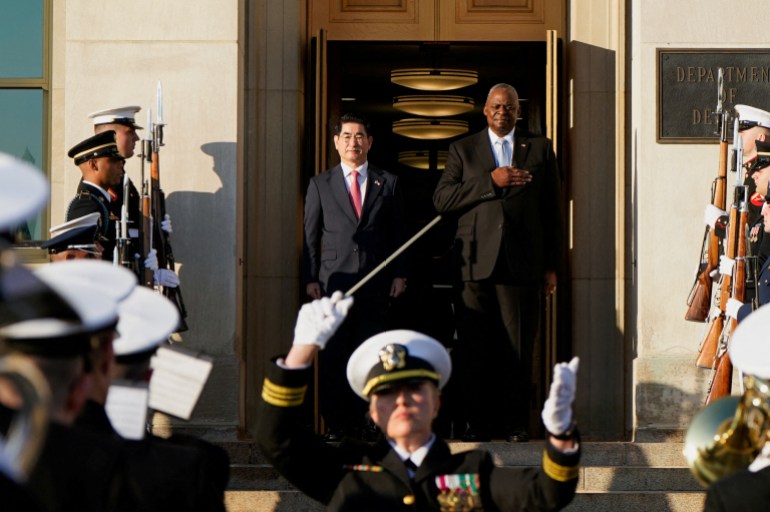
Russia’s military interaction with North Korea does not violate international law, the country’s representative to the United Nations told the UN Security Council, calling reports that North Korean troops were present at the front lines in the war against Ukraine “barefaced lies”. “I would like to underscore that the Russian interaction with DPRK in the military and other areas is in line with international law and is not a violation of it. It’s not aimed against third countries,” Vasily Nebenzya said at a UN Security Council meeting on Wednesday, using the acronym of the country’s official name, the Democratic People’s Republic of Korea. This came on the same day the United States and South Korean defence chiefs called for North Korea to withdraw its troops from Russia, where Washington says some 10,000 of them have been deployed for possible use against Ukrainian forces. “I call upon them to withdraw their troops out of Russia,” US Defense Secretary Lloyd Austin said at the Pentagon, speaking alongside his South Korean counterpart, Kim Yong-hyun, who urged the “immediate withdrawal” of Pyongyang’s forces. Austin said the US will “continue to work with allies and partners to discourage Russia from employing these troops in combat”, but warned Moscow is likely to do so. The Pentagon said the previous day that a “small number” of North Korean troops have already been deployed in Russia’s Kursk region, where Ukrainian troops have been conducting a ground offensive since August. US Defense Secretary Lloyd Austin meets with South Korea’s Defence Minister Kim Yong-hyun [Elizabeth Frantz/Reuters] Speaking at the UNSC meeting, Russia’s Nebenzya said: “These statements about the North Korean soldiers in our front should not surprise no one, because they’re all barefaced lies and they are trying to distract.” He later added: “Even if everything that is being said about the cooperation between Russia and North Korea by our Western colleagues is true, why is it that the United States and allies are trying to impose on everyone the flawed logic that they have the right to help the [Ukrainian President Volodymyr] Zelenskyy regime mobilise the military and intelligence of NATO, and Russia and its allies have no right to do a similar thing?” North Korea’s UN ambassador Kim Song told the UNSC that the DPRK and Russia “are entitled to develop bilateral relations in all fields”. He added that “the biggest threat to international peace and security at present is the acts of the United States and its allies against peace”. Russia and North Korea have boosted their political and military alliance over the course of the Ukraine conflict. Both are under sanctions – Pyongyang for its nuclear weapons programme and Moscow for its war against Kyiv. North Korea’s move to tighten its relationship with Russia has triggered alarms across the globe. Key concerns At the Pentagon, Austin said officials are discussing what to do about the troop deployment, which he said had the potential to broaden or lengthen the conflict in Ukraine. When asked if it could prompt other nations to get more directly involved in the conflict, he acknowledged that it could “encourage others to take action”, but he provided no details. South Korea’s Kim said he does not necessarily believe the deployment will trigger war on the Korean Peninsula but could increase security threats between the two nations. Ukraine’s UN ambassador Sergiy Kyslytsya told the UNSC that Russia’s moves with North Korea were “another step taken by Moscow to further escalate its war against Ukraine”. “Building the interoperability of the Russian and DPRK armies constitutes a threat to Europe, the Korean peninsula, its neighbours and beyond,” he added. A key concern is what North Korea will get in return for providing the troops. But officials have yet to say specifically what Pyongyang may have requested or what Moscow has offered. Experts have said that in return for these forces, North Korea is likely aiming to acquire military technology, ranging from surveillance satellites to submarines, plus possible security guarantees from Moscow. A Ukrainian official told The Associated Press news agency that North Korean troops are currently stationed 50km (31 miles) away from the Ukrainian border with Russia. The official was not authorised to disclose the information publicly and spoke on condition of anonymity. At the UNSC meeting, Kyslytsya claimed up to 12,000 North Korean servicemen are stationed at five training grounds of the Russian Armed Forces. He added that between October 23 and 28, at least seven aircraft carrying up to 2,100 soldiers flew from the Eastern Military District to Russia’s border with Ukraine. North Korea has also provided munitions to Russia, and earlier this month, the White House released images it said were of North Korea shipping 1,000 containers of military equipment there by rail. A resident stands in front of an apartment building damaged by a Russian drone strike, amid Russia’s attack on Ukraine, in Kyiv [File: Valentyn Ogirenko/Reuters] Fighting continues Meanwhile, on the ground, Russia and Ukraine exchanged scores of drone strikes on Wednesday. A Russian guided bomb struck the fourth floor of a high-rise apartment building in Kharkiv, causing casualties, regional governor Oleh Syniehubov said on Telegram. Earlier, Ukraine’s air force said that Russia launched 62 drones and one missile overnight, adding that 33 of them were intercepted and 25 were jammed. The attack injured nine people in Kyiv, according to the city administration. Russian attacks also targeted other regions of Ukraine, killing at least four and injuring about 30 others over the past 24 hours, authorities said. At the same time, Russian forces have pressed their slow-moving offensive in eastern Ukraine. The Russian Ministry of Defence announced the capture of the village of Kruhlyakivka in the Kharkiv region and said that air defences downed 25 Ukrainian drones over several regions in the country’s west and southwest. The new attacks come as North Korea’s Foreign Minister Choe Son-hui travelled to Russia for talks that South Korea’s spy agency said could involve discussions on sending additional troops to Russia. Adblock test (Why?)
President Biden denies referring to Trump supporters as ‘garbage’
[unable to retrieve full-text content] US President Joe Biden has denied referring to Trump supporters as ‘garbage’ during an interview.
UK’s Labour government raises taxes by 40bn pounds in first budget
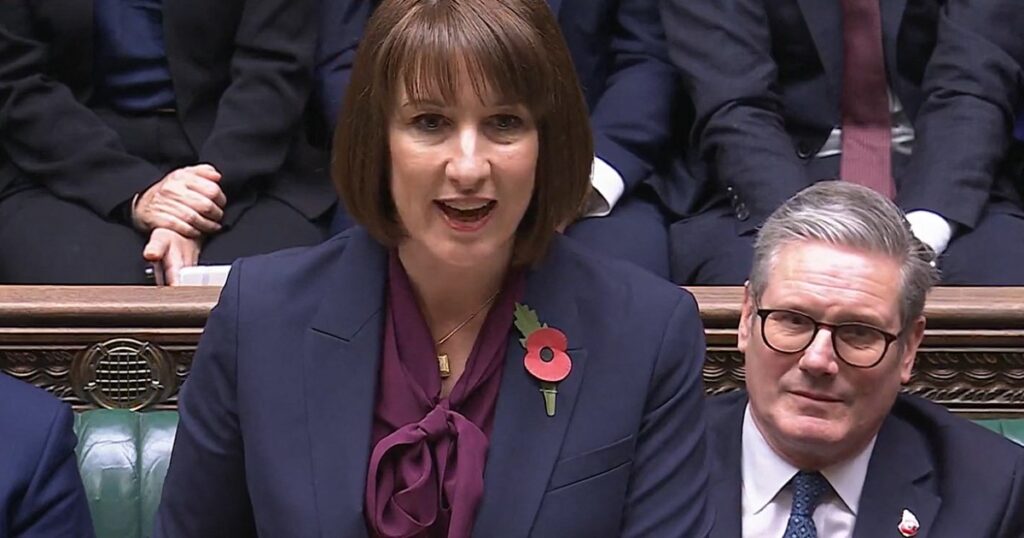
Finance minister Rachel Reeves has said the tax hike will be used to fund public services and bolster public finances. British Chancellor of the Exchequer Rachel Reeves has told lawmakers that taxes will rise by 40 billion British pounds ($52bn) in order to plug a hole in the public finances and provide new funding for the United Kingdom’s cash-starved public services, in a wide-ranging budget statement that could set the tone for years to come. In the Labour Party’s first budget since returning to power earlier this year after 14 years in opposition, Reeves said she was also changing the UK’s rules so the government can “invest, invest, invest” and spur economic growth. Her biggest cash commitment was an additional 25 billion pounds ($32.5bn) for the country’s National Health Service, which has seen waiting lists rise to record levels in the wake of the coronavirus pandemic. “The choices that I have made today are the right choices for our country,” Reeves said at the end of her statement on Monday. “To restore stability to our public finances. To protect working people. To fix our NHS. And to rebuild Britain.” Reeves said the tax hike, which in large part comes from an increase in the tax businesses pay for employing people, is needed because of the economic “black hole” left by the previous Conservative government. Her centre-left party was elected on July 4 after promising to banish years of turmoil and scandal under Conservative governments, get Britain’s economy growing and restore frayed public services. Reeves has said she will not let public debt balloon, mindful of how former Conservative Prime Minister Liz Truss sent the bond market into a tailspin two years ago with unfunded tax cut plans. She also announced that she would raise the rate of social security contributions paid by employers by 1.2 percentage points to 15 percent from April next year, and lower the threshold at which firms start to pay it – moves which would raise an extra 25 billion pounds ($32.5bn) a year over five years’ time. Company bosses have warned that higher taxes on them, combined with planned new protections for workers and an increased minimum wage, could undermine Labour’s promises to turn Britain into the fastest-growing Group of Seven economy. Reeves announced a string of other revenue-raising moves including changes to the tax rules on capital gains and inheritances and tax paid by private equity executives and non-domiciled residents. Prime Minister Keir Starmer had warned “those with the broadest shoulders” would have to pay more tax. But Reeves ruled out making more individuals pay basic and higher income tax rates after a freeze on the threshold for payments expires in the 2028-29 tax year. She also extended a freeze on fuel duty and cut a tax on draught beer served in pubs. Adblock test (Why?)