

Muscle Inc.: The New Frontier of Bodybuilding Drugs

Fitness influencers are marketing dangerous new classes of performance-enhancing drugs to their teenage followers. Performance-enhancing drugs were once a closely guarded secret in the bodybuilding world, but a new generation of fitness influencers is openly sharing their use on social media and marketing dangerous new substances known as research chemicals to their teenage followers. These new drugs have been linked to organ damage, heart failure and, in some cases, death. Their sale for human use is illegal but social media companies and the Federal Drug Administration are seemingly unable or unwilling to stop their spread. In this episode of Fault Lines, we take you inside the deadly market for research chemicals and introduce you to their suppliers, marketers, and victims. Adblock test (Why?)
Politics and starvation: Gaza learns of Israel’s decision to ban UNRWA
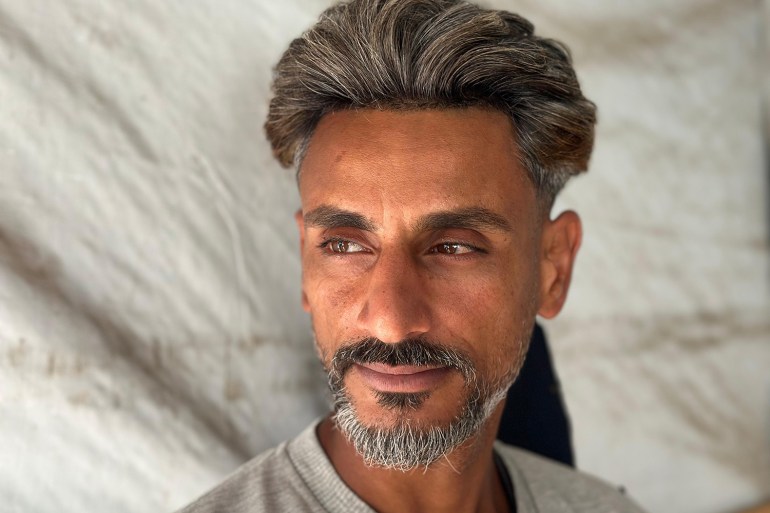
Until this morning, 38-year-old Hussam Abu Ghaban had not heard of the Israeli Knesset’s decision to ban the UN agency responsible for his family’s welfare. Now, with the Israeli Knesset passing two bills banning the agency from Israel and choking off its ability to work in Gaza, the family does not know what to do. Someone in the nearby camp operated by the UN Relief and Works Agency (UNRWA) had mentioned it, but Abu Ghaban had not known about what turned out to be an overwhelming Knesset vote in favour of the ban despite international outrage. ‘People would go hungry’ The concern on Abu Ghaban’s face was unavoidable as he weighed the news. He, his wife Ola and their eight children had fled Shati refugee camp in the north of the Gaza Strip in early November to the relatively safe vicinity of a camp at Deir el-Balah maintained by UNRWA. Hussam Abu Ghaban, 38, Deir el-Balah, Gaza [Hussein Owda/UNRWA] Overcrowded and painfully under-resourced as the camp is, it represents some small support to the 1.9 million displaced people in Gaza. “UNRWA ‘s support has been crucial,” Abu Ghaban told a translator. “They provide essential services such as health, education and food, as well as managing the camp,” he said, outlining how the family of 10, reduced to living in a tent, relied upon the UN agency for the dwindling number of essentials that make it through the Israeli checkpoints. Abu Ghaban did not know how the family would survive without the support the UN agency has given generations of them since they were uprooted from their village of Hiribya to make way for the new state of Israel in the 1948 Nakba (catastrophe). The Abu Ghaban family in Deir el-Balah displacement camp. As a family, they have been displaced since 1948 [Hussein Owda/UNRWA] Since then, barred by Israel from returning, their displacement has become generational. Abu Ghaban struggled to imagine life under Israel’s brutal assaults on Gaza without the support of the UN. “Refugees would struggle to survive,” he said. “People would go hungry, and that could lead to increased violence,” he said of an enclave he described as already gripped by hunger, fear and instability. Life is already difficult, he said. There had not been space in the official camp when they arrived. Now they exist on its periphery, though still under the care of the UN. Abu Ghaban pointed to the plastic sheet UNRWA had provided to cover their tent. He still had nothing to make the rough dirt floor safe for his children, the youngest just six. Life in Deir el-Balah is hard enough for the young, Abu Ghaban explained. “They’re now forced to focus just on survival, but I can see they still remember their previous life. UNRWA’s recreational activities help ease some of the strain. “The children still express their hopes through drawing,” he said, pointing to the rough childlike sketch on the tent’s wall of a family going home. Drawing on the tent where the Abu Ghaban family takes shelter, Deir el-Balah [Hussein Owda/UNRWA] The impotence of aid The legislation that may well stop much of the aid provided to the Abu Ghaban family will become law 90 days after Israel’s foreign minister informs the UN. Moreover, with no alternative humanitarian agency earmarked in the legislation to replace the UNRWA, the consequences for those trapped in Gaza stand to be catastrophic. Within the enclave, UNRWA acts as what its spokesperson Jonathan Fowler described as the “backbone” of the international humanitarian operation in Gaza. Without UNRWA, that aid operation in Gaza would unravel, he said. In Gaza, the situation has never been more desperate. In the northern reaches, with access strictly controlled by the Israeli military, famine looms over everyone as international concerns over a siege of the area, denied by the Israeli government, continue to grow. epa11581588 Internally displaced Palestinians attend a gathering to collect food donated by a charity, in Khan Younis camp on September 3, 2024 [Haitham Imad/EPA] Should UNRWA’s ability to operate within the territory be halted, the delivery of the limited assistance that still penetrates parts of Gaza would also grind to a halt, Fowler told Al Jazeera. “Such a move by a UN member state against a UN General Assembly-mandated organisation is unprecedented and dangerous,” Fowler said. “It … violates the State of Israel’s obligations under international law… [and it] would be a setback to sustainable peace efforts and to reaching a diplomatic solution to the decades-long Israeli-Palestinian conflict,” he added. “Failing to push back against attempts to intimidate and undermine the United Nations in the occupied Palestinian territory will eventually compromise humanitarian and human rights work worldwide.” The politics of hunger Israel’s longstanding campaign against UNRWA has escalated during Israel’s war on Gaza and includes a list of as yet unevidenced accusations of supporting Hamas’s fighters. Throughout, UNWRA has strained to work on the ground in Gaza to help mitigate the effects of an Israeli military campaign deemed by the International Court of Justice in its January ruling a potential case of genocide. Nevertheless, in the face of international pressure, unparallelled during the 13 months of total war on Gaza, the Israeli Knesset voted overwhelmingly to ban the agency, potentially collapsing the entire fragile network of aid that has so far managed to sustain what remains of Gaza’s population. Even Israel’s closest ally the United States has recognised the seriousness of the situation. Speaking earlier this week, a State Department official acknowledged both the dire humanitarian situation in Gaza, especially its north, and UNRWA’s role in mitigating it. One of the drafters of Israel’s legislation banning UNRWA, Yulia Malinovsky, dismissed the concerns of the US, which has provided Israel with unflinching diplomatic cover and weaponry throughout its war on Gaza, as representing unacceptable interference in Israel’s internal affairs. A screengrab shows Israel’s National Security Minister Itamar Ben-Gvir speaking at the Al-Aqsa Mosque compound in occupied East Jerusalem on July 17, 2024 [AFPTV/AFP] “I congratulate and thank the members of
Kamala Harris’s pursuit of Republican voters may backfire
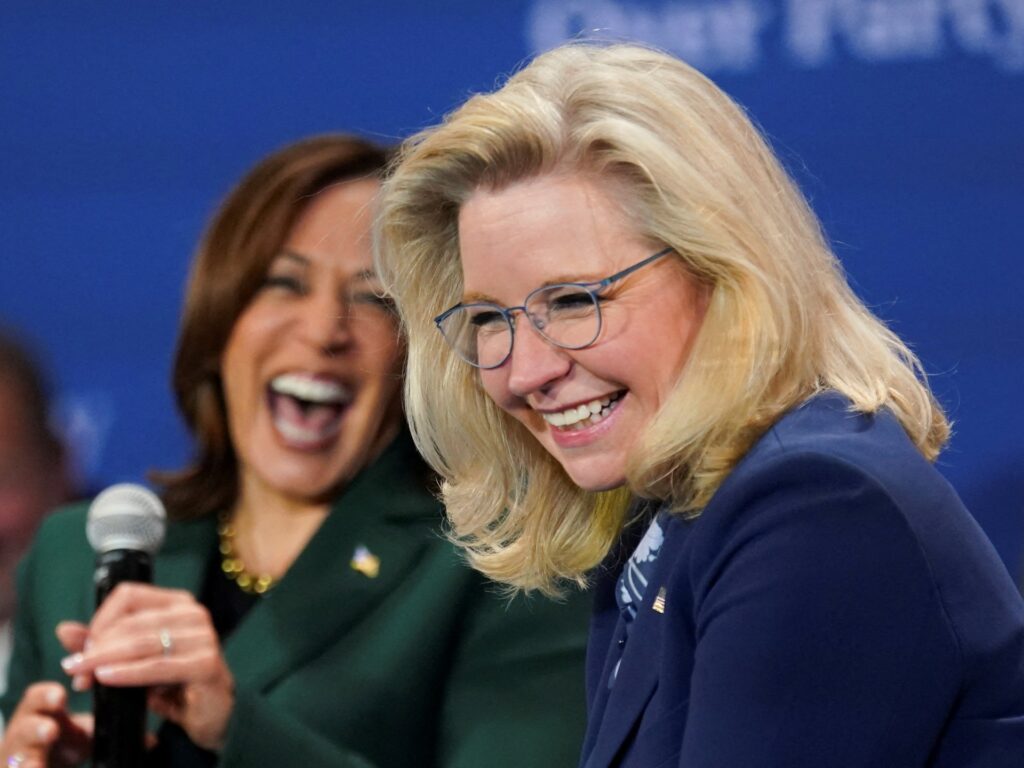
As the United States presidential election nears, Vice President Kamala Harris has escalated outreach to Republican voters. Over the past several weeks, she has been accompanied by former Republican Congresswoman Liz Cheney at campaign events in the swing states of Pennsylvania, Michigan and Wisconsin and more recently by former President George W Bush’s daughter, Barbara. On October 16 after Harris held an event with former Republican lawmakers in Pennsylvania, she gave an interview to Fox News, saying: “I invite ideas, whether it be from the Republicans who are supporting me, who were just on stage with me minutes ago, and the business sector and others who can contribute to the decisions that I make.” Many prominent Republicans have endorsed Harris, including former Vice President Dick Cheney, former Congressman Adam Kinzinger, and late Senator John McCain’s son Jim. She has also gained the approval of 200 staffers of former Republican presidential nominees. Trying to encourage this momentum, Harris’s campaign even established Republicans for Harris chapters in several swing states. However, Harris’s pursuit of Republican voters may not bring the results she hopes. At the grassroots level, things remain hopelessly polarised. Prominent endorsements notwithstanding, few members of the opposition party will cross “enemy lines” to back Harris. In fact, her rightward sway may actually cost her more Democratic votes than the Republican ones she gains. In a poll released on October 25, just 4 percent of Republicans said they intended to vote for Harris. The same percentage of Democrats said they would vote for Republican candidate Donald Trump. In other words, Democrats for Trump are just as much of a thing as Republicans for Harris. This makes the prediction that “millions of Republicans” will cast a ballot for Kamala Harris utterly fanciful. Some may argue that Harris is trying to sway Republican voters specifically in swing states. But even there, the numbers do not differ dramatically. According to New York Times/Siena polls, Harris is winning 7 percent of registered Republicans in Arizona while 6 percent of the state’s Democrats back Trump. In Pennsylvania, these numbers are 12 percent and 10 percent respectively. In Nevada, Harris is getting 6 percent of registered Republicans and Trump is getting 10 percent of the Democrats. The margin of error for all these polls is 3 to 4 percent. While Harris is running after the few Republican voters who may flip, she is alienating many others on the progressive side. According to the Pew Research Center, progressives constitute roughly 12 percent of the Democratic base. The millions of votes who went for Senator Bernie Sanders, a prominent progressive, in the Democratic primaries in 2016 suggest this group may be even larger. Harris’s swing to the right is definitely not well received by progressives. Her promise to sign “the toughest bipartisan border” bill in decades has earned rebukes from immigration advocates. Likewise, her unequivocal support for Israeli aggression is a cold shoulder to proponents of peace and basic human rights. On healthcare, after endorsing universal coverage during her 2020 run, Harris has now stopped well short of that. Given their political commitments, progressive leftists won’t flip to Trump, but they may vote for a third party or stay home, which would hurt Harris, especially in the battleground states. Chasing Republicans is, therefore, unwise. And history proves it. Democrats pursued them hard in 2016 as well. Before that presidential election, Democratic Senator Chuck Schumer claimed that: “For every blue-collar Democrat we lose in western Pennsylvania, we will pick up two moderate Republicans in the suburbs in Philadelphia, and you can repeat that in Ohio and Illinois and Wisconsin.” Needless to say, Schumer was wrong. Democratic candidate Hillary Rodham Clinton lost to Trump in a historic, humiliating upset. The only state Schumer mentioned that Clinton won was Illinois, a Democratic stronghold that also happens to be where she was born. As the former secretary of state campaigned in deeply red states like Nebraska, her “blue wall” crumbled. No Democrat since Walter Mondale in 1984 had lost Michigan, Pennsylvania and Wisconsin. And that was the biggest loss in American presidential history with Mondale only winning his home state of Minnesota. Harris would have had a higher chance of winning if she had not pursued voters whom she cannot win and instead focused on those whom she can: independents and progressives and key groups within them. A recent poll from AtlasIntel shows Trump ahead with independents by 8.5 points. The two most important issues for independents are the economy and crime, and Harris could have easily appealed to them on these points without swinging so far to the right and chasing after endorsements from neoconservatives and others on the hard right. Furthermore, independents also embrace positions that are more moderate. Independents overwhelmingly favour marriage equality, expansion of Medicare and marijuana legalisation – issues that progressives also care about. Harris could have also won back some progressives by walking back some of her right-wing rhetoric and changing her posture on US foreign policy and more specifically, Israel. Like her running mate, Tim Waltz, Harris has been fully in Israel’s corner. She has refused to distance herself from the complicity of President Joe Biden’s administration in Israeli militarism, occupation and terror. That complicity has only mounted in recent weeks as the White House, which she is part of, oversees Israel’s “General’s Plan” of ethnically cleansing northern Gaza through bombing, starvation and expulsion of civilians. Biden’s last-ditch effort to push for a short-term truce and release of Israeli-American captives would not change voters’ perceptions of where Harris stands. This aggressive posture has especially alienated Arab and Muslim Americans. The latter accounted for under 1.5 percent of registered voters in 2022, but their distribution gives them disproportionate power, which they already demonstrated with the uncommitted movement they led during the Democratic primaries. While people tend to focus on Michigan, Muslim voters are also a significant group in Georgia and Arizona. Their numbers far outstrip Biden’s razor-thin margin of victory in those states in 2020. Even
Iraqi Kurdistan’s ruling KDP wins delayed elections
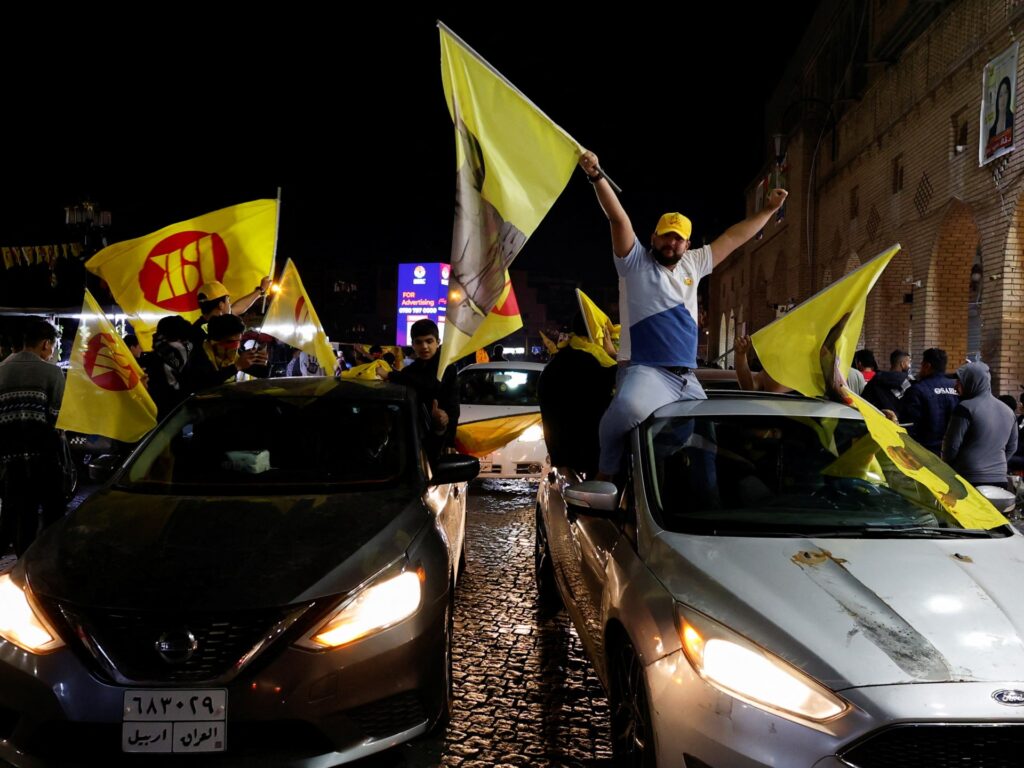
Disputes between the major parties – KDP and PUK – could complicate the formation of a new government. The ruling Kurdistan Democratic Party (KDP) has come first in parliamentary elections in the semiautonomous Kurdistan region of Iraq. The KDP won 39 seats in the 100-seat parliament, the election commission said on Wednesday, putting it at the helm of the next regional government. The KDP’s historical rival and junior coalition partner in government, the Patriotic Union of Kurdistan (PUK), came second in the October 20 elections with 23 seats, the commission said at a news conference. The largest Kurdish opposition party, New Generation, came a distant third with 15 seats. The commission said voter turnout was 72 percent, up from the 59 percent reported in the previous election in 2018. The elections were originally planned for 2022, but the polls were repeatedly delayed by disputes between the KDP and the PUK. Ongoing disputes between the rivals could complicate the formation of a new government. The KDP and PUK, which have been sharing power since 1992, are likely to continue governing together, but the results suggest that former Kurdistan Regional Government President Masoud Barzani’s KDP will take a dominant position. The new parliament must elect a president and prime minister, posts that are now held by KDP figures Nechirvan Barzani and his cousin Masrour Barzani, respectively. Adblock test (Why?)
Why is Israel banning the UN’s relief agency for Palestinians?
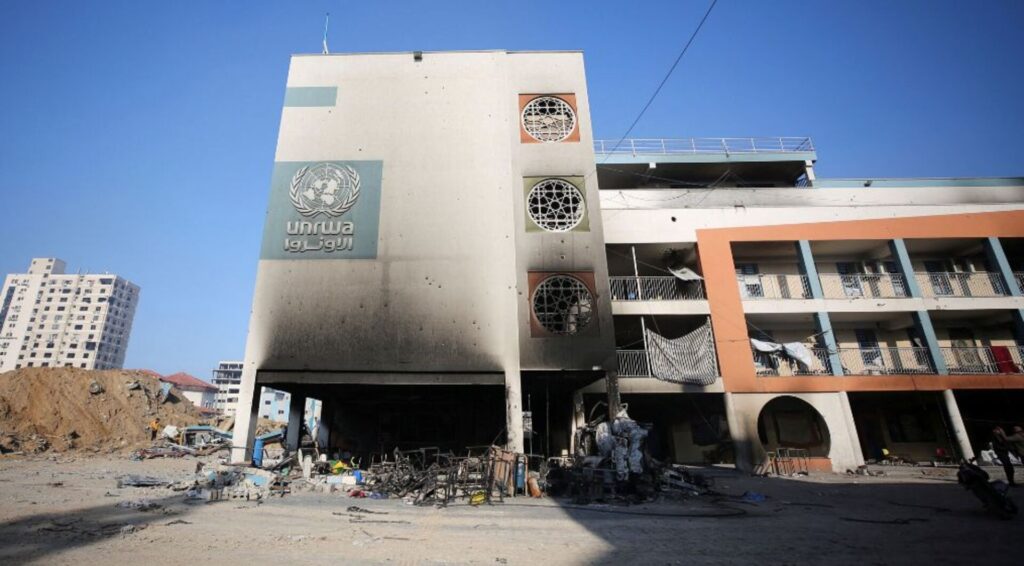
Israel’s parliament passed bills that would ban UNRWA from operating in Israeli territory. Israel’s move to ban the United Nations Relief and Works Agency for Palestine Refugees (UNRWA) has provoked widespread international condemnation. A deeper catastrophe looms for millions of people, many of them already under Israeli attack. What will be the legal, diplomatic and humanitarian consequences of the ban? Presenter: Hashem Ahelbarra Guests: Daniel Levy – President of the US/Middle East Project Gry Ballestad – Director of Development and Humanitarian Cooperation at Norwegian People’s Aid Triestino Mariniello – Professor of law at Liverpool John Moores University Adblock test (Why?)
More outrage after Trump calls controversial New York rally ‘a lovefest’
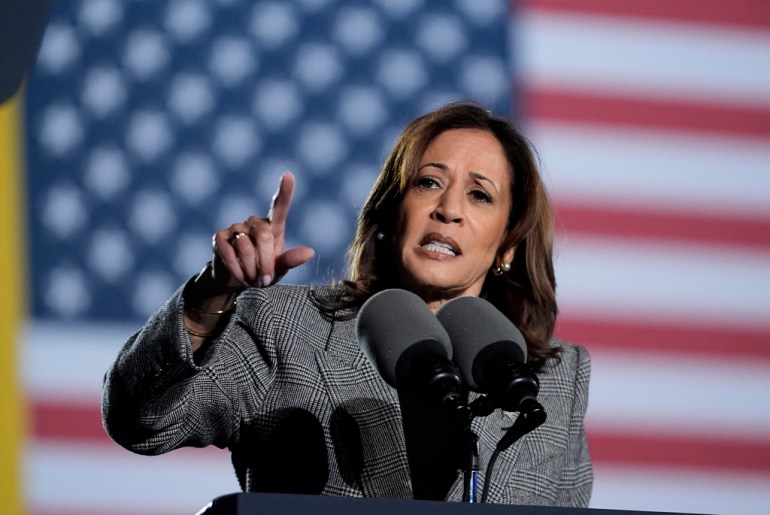
The United States presidential candidate Donald Trump is facing more blowback from a controversial Madison Square Garden rally marred by sexist and racist insults, by calling it a “beautiful” event and “an absolute lovefest”. Trump made the comments during a news conference at his Mar-a-Lago resort in Florida on Tuesday, saying the rally in which a headline comedian, Tony Hinchcliffe, called Puerto Rico a “floating island of garbage” was an unprecedented display of affection. Despite a firestorm of outrage on social media from Democrats and a host of Puerto Rican celebrities, as well as some leading Republicans, Trump made no apology for the racist comments by Hinchcliffe and others. Instead, he brushed off the critics who compared it to a 1939 Nazi event at the arena. “There was love in the room. The love in that room was breathtaking,” Trump said. “Politicians that have been doing this for a long time – 30 and 40 years – said there’s never been an event so beautiful,” he added. “It was like a love fest, an absolute love fest, and it was my honour to be involved”. “It was not full of love, except for him. There was a lot of love for Donald Trump there,” quipped CNN’s political reporter, Dana Bash. The Lincoln Project, an anti-Trump political action committee, was quick to slam Trump’s characterisation of the event and called on voters to end his election hopes. “No explanation, no apology,” the group wrote on X. “He’s trash, throw him away in the dustbin of history in 7 days.” Trump’s comments were reminiscent of other notorious events which he has sought to describe in positive terms. When hundreds of pro-Trump rioters stormed the US Capitol on January 6, 2021, injuring policemen in the process, Trump called it a “day of love.” Trump’s New York rally on Monday involved some 30 speakers dishing out multiple insults aimed at Black people, Latinos and Democrats. One speaker described Vice President Kamala Harris as “the devil” and “the antichrist,” while former Fox News host Tucker Carlson mocked Harris’s biracial heritage. But the fiercest backlash came from Americans of Puerto Rican descent, some 500,000 of whom live in the key swing state of Pennsylvania. “Right now, we have no business and no relationship with Trump,” Angel M Cintron, the Republican party’s chair in Puerto Rico, said during a Monday talk show. “If Donald Trump doesn’t apologise, we won’t vote for him.” The popular Puerto Rican singer, Bad Bunny, released an eight-minute tribute video to his homeland on Tuesday. Touching on the controversy, he captioned it simply “garbage” on his Instagram page which has more than 45 million followers. “Not a joke” The rally also prompted a harsh editorial in the island’s leading newspaper, El Nuevo Dia, which called on Puerto Ricans who can vote in the United States to support Democrat Kamala Harris. “Politics is not a joke and hiding behind a comedian is cowardly,” wrote the paper’s editor, Maria Luisa Ferre Rangel, in the editorial that appeared on Tuesday’s front page and the website. But not all Puerto Ricans were offended. Trump was set to hold a rally later Tuesday in Allentown, Pennsylvania, a city with a large Hispanic population, where Puerto Rico’s shadow US senator, Zoraida Buxo, will join him, AP reported. Buxo, who does not have a vote in the Senate because Puerto Rico is not a state, voiced her support for Trump in a post on X. She said Trump is the “strong leader” that Puerto Rico needs. Trying to stem the damage, Trump’s campaign has sought to distance itself from the Puerto Rico quip by Hinchcliffe, even though it reviewed at least part of the routine beforehand, reported The Bulwark. Campaign spokesperson Daniella Alvarez said Hinchcliffe’s joke “does not reflect the views of President Trump or the campaign”. Trump simply said, “I don’t know him, someone put him up there”, when asked about the comedian by ABC News. Colonial history The US took Puerto Rico, Cuba, the Philippines and other colonial possessions from Spain during the brief Spanish-American War in 1898. The first large wave of migration of Puerto Ricans to the US occurred after World War II to ease labour shortages on the mainland. Today, about 5.9 million people identify as ethnically Puerto Rican, according to 2022 estimates from the US Census Bureau’s American Community Survey, making up the second-largest population of Hispanic origin in the US after Mexicans. Steve Herman, chief national correspondent at Voice of America, told Al Jazeera that Puerto Rican voters who choose to punish Trump at the ballot box could have a huge impact, especially in Pennsylvania. “Pennsylvania is a bellwether state, and it’s very unlikely that either candidate will win enough electoral votes to become president without [it],” said Herman. “It’s possible that a few Puerto Ricans who were planning on voting for Trump would now be so angry that they would vote for Harris or not vote at all.” He added that a few thousand votes could be sufficient to swing the election result. “That’s just how tight this is.” Next stop Pennsylvania Trump spent much of his Tuesday news conference railing against the administration of his Democratic opponent Kamala Harris, accused her of running “a campaign of absolute hate”. Trump zeroed in on immigration, a central issue of his, blaming Harris and President Joe Biden for weakening the US border, as well as “runaway inflation” and triggering global instability. “They’ve unleashed a war and chaos all over the world … look around, everything’s blowing up or getting ready to blow up,” said Trump, speaking in front of a banner with the words “Trump will fix it!” He also repeated several campaign pledges, including to ramp up tariffs, end taxes on social security and impose the death penalty for migrants who commit murder in the US. Trump also pledged that if he’s elected he will seize “the assets of the criminal gangs and drug cartels … and we will use those assets
Ukraine’s Zelenskyy says Russia war is being pushed ‘beyond borders’
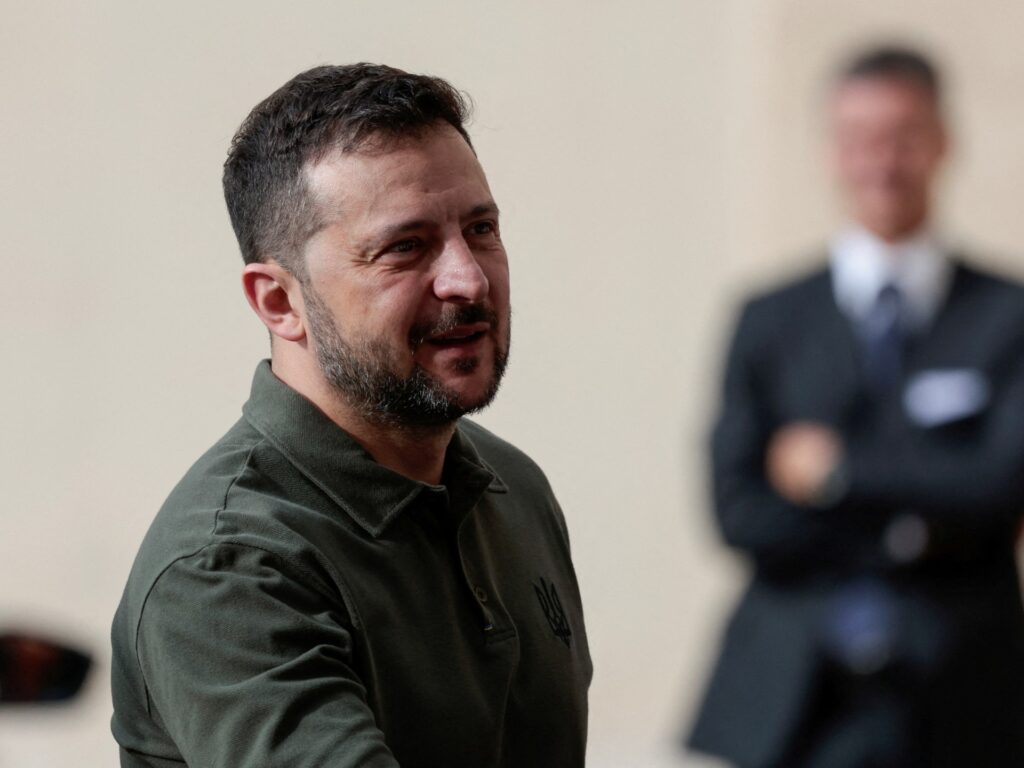
Ukrainian President Volodymyr Zelenskyy said that the thousands of North Korean soldiers expected to reinforce Russian troops on the front line in Ukraine are pushing the almost three-year war beyond the borders of the warring parties. Western leaders say North Korea has sent some 10,000 soldiers to help Russia’s military campaign and warn that its involvement in a European war could also unsettle relations in the Indo-Pacific region, including Japan and Australia. Zelenskyy said on Tuesday he spoke to South Korean President Yoon Suk Yeol and told him that 3,000 North Korean soldiers are already at military bases close to the Ukrainian front line and that he expects that deployment to increase to 12,000. Pentagon spokesperson Pat Ryder on Tuesday said a “relatively small number” of North Korean troops are now in Russia’s Kursk region, where Russian troops have been struggling to push back a Ukrainian incursion, and a couple thousand more are heading in that direction. South Korea, which has been in close contact with NATO, the US and the European Union about the latest developments, warned last week that it could send arms to Ukraine in retaliation for the North’s involvement. “There is only one conclusion – this war is internationalised and goes beyond the borders” of Ukraine and Russia, Zelenskyy wrote on Telegram. The Ukrainian president also said he and Yoon agreed to step up their countries’ cooperation and exchange more intelligence, as well as develop concrete responses to Pyongyang’s involvement. More US military support? In Washington, White House National Security Adviser Jake Sullivan met Tuesday with Zelenskyy’s top adviser to discuss the North Korean troops, as well as a coming surge of weaponry that the US is delivering to Kyiv to help the Ukrainians harden protection of their energy infrastructure, The Associated Press news agency reported, citing White House officials familiar with their private talks. Sullivan and Andriy Yermak, head of the Ukrainian president’s office, shared concerns that North Korean troops could be deployed to Russia’s Kursk region and what such a development could mean for the war. The officials, who were not authorised to comment publicly, said during the two-hour meeting at the White House, Sullivan also briefed Yermak on President Joe Biden’s plans to push additional artillery systems, ammunition, hundreds of armoured vehicles and more to Ukraine before he leaves office in January. Sullivan told Yermak that by year’s end, the US administration plans to provide Ukraine with 500 additional Patriot and ARAAM missiles to help bolster air defences, according to the officials. Later on Tuesday, Biden said Ukraine should strike back if North Korean troops crossed into the country. “I am concerned about it,” Biden said when asked about North Korean troops being present in the Kursk region. “If they cross into Ukraine, yes,” he said when asked if the Ukrainians should strike back. Meanwhile, North Korea said its top diplomat was visiting Russia, in another sign of their deepening relationship. North Korean Foreign Minister Choe Son Hui arrived in Russia’s far east on Tuesday on her way to Moscow, Russian state media said. Russian state news agencies said it was not clear who Choe, making her second visit in six weeks, would meet. The Kremlin said Russian President Vladimir Putin had no plans to meet her. What role the North Korean troops may play remains unclear. “The numbers make this more than a symbolic effort, but the troops will likely be in support roles and constitute less than 1 percent of Russia’s forces,” the Center for Strategic and International Studies (CSIS) think tank said in a note. “Russia is desperate for additional manpower, and this is one element of Russia’s effort to fill the ranks without a second mobilisation,” it added, noting the presence could grow. Ukraine cities bombarded Meanwhile, Russian drones, missiles and bombs smashed into Kyiv and Kharkiv, Ukraine’s biggest cities, in nighttime attacks, killing four people and wounding 15 in a continuing aerial onslaught, authorities said Tuesday. Russia has bombarded civilian areas of Ukraine almost daily since its full-scale invasion of its neighbour, causing thousands of casualties. The Russian army is also pushing hard against front-line defences in the eastern Donetsk region of Ukraine. The Russian Defence Ministry claimed that Russian troops captured the Donetsk town of Hirnyk and the villages of Katerynivka, and Bohoiavlenka. Adblock test (Why?)
America is a decomposing myth
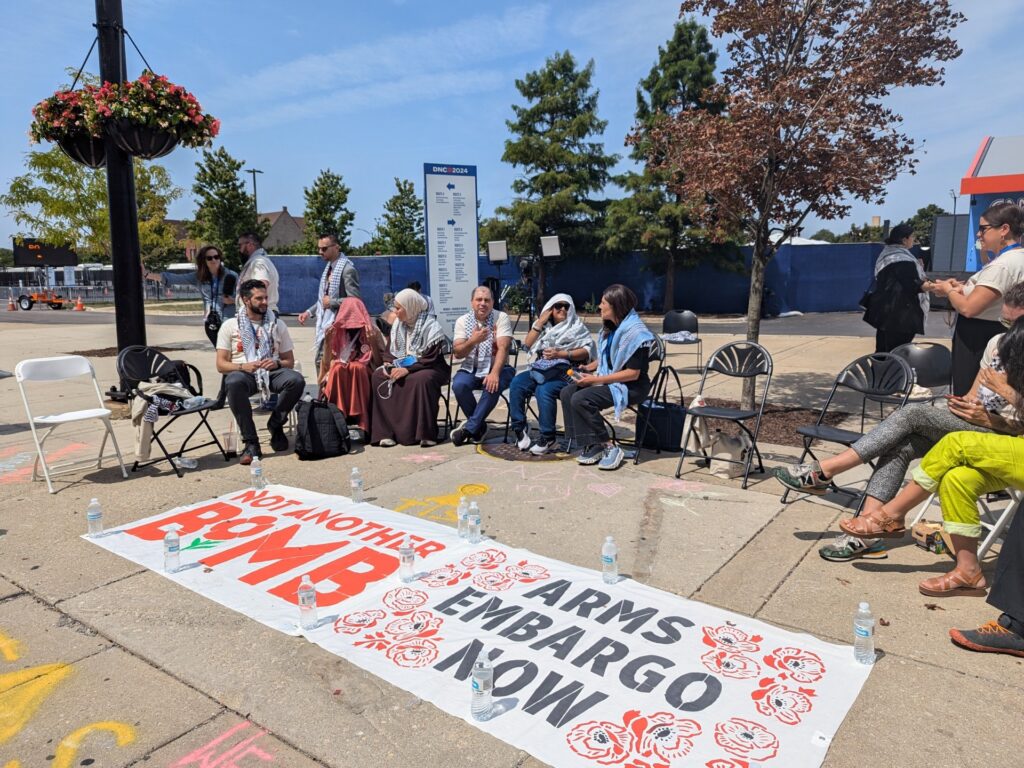
The world, we are told, is on the eve of witnessing the most consequential US presidential election since witnessing the last most consequential US presidential election. The hyperbole has a familiar ring because the so-called “stakes” have a familiar ring. Anyone with even a passing understanding of American history knows that presidential elections have always been cast as a binary choice between the past and future, prosperity and decay, peace and war, and, lately, democracy and authoritarianism. The myth that girds these “choices” is that American voters have a choice at all; that the two dominant political parties are, save the glib edges, ideological adversaries when, on, say, urgent matters of war and peace, they remain steadfast soulmates to the core. The billionaire oligarchs who run the whole decrepit show in America know that “democracy” is a sweet illusion meant to convince the gullible that party 1 is different from party 1a. That is the stubborn conundrum confronting Arab and Muslim American voters: The leaders of party 1 and party 1a have, on the defining issue of these awful times, promoted and defended a blatant genocide in Gaza and the occupied West Bank. So, who to choose or whether to choose at all? Remember, there is no “daylight” on this cowardly, abominable score between Donald Trump and Kamala Harris. Both have played willing and enthusiastic handmaidens to their indicted darling in the Middle East, Israeli Prime Minister Benjamin Netanyahu. Both have backed every sickening measure of the state-engineered atrocities that have killed more than 43,000 (and counting) mostly Palestinian children and women – the carpet bombing, the deliberate starvation, the denial of medical care, the spread of disease, the forced marches, and on and on and on. Both refuse, of course, to use the short, sharp word “genocide” to describe – not as a rhetorical cudgel, but as a matter of international law – the crimes being committed by an apartheid state in Gaza and the West Bank. Both believe unquestionably that Israel has the absolute “right to defend itself” despite the ongoing “extermination” of Palestinians in Gaza and the West Bank. And when their fellow citizens took to the streets and university campuses to demand a stop to the wholesale killing and apocalyptic destruction, Democrats and Republicans dismissed these enlightened Americans as “terrorist” sympathisers and applauded the draconian efforts by powerful, entrenched interests to silence the “protesters” through force, threats, and intimidation. But, as election day approaches, fretting Democrats and their compliant allies – among the “progressive” cognoscenti in the mainstream media ecosystem – have grown ever more nervous. Their palpable anxiety has been on puffing display on forgettable cable TV programmes and in forgettable online columns meant to reassure one another that everything will turn out all right. Alas, for the forlorn, a spate of national and state polls – if they are accurate – reveal a deadlocked race for the White House. In some “swing” states with could-possibly-tip-the-scales-sized Arab and Muslim populations, Trump appears to be edging ahead. The prospect that America may soon elect a fascist as commander-in-chief is registering with Kamala Harris and obedient company in the Democratic Party establishment and beyond. Oh heavens, what shall we do? “Outreach.” Yes, “outreach”. “Outreach” is a euphemism for pretending to “listen to” Arab and Muslim voters when, all along, Harris et al have ignored a grieving community that the Democratic nominee for president suddenly thinks she can mollify with meaningless bromides. “We are working night and day to arrange a ceasefire in Gaza,” Harris keeps repeating like a wind-up metronome. Sure, you are. The obscene “facts on the ground” confirm that your peace-making pleas are a hollow, cynical pantomime. When “outreach” doesn’t work, Harris and the “progressive” wailing heads have resorted, in effect, to blackmail. Arab and Muslim Americans will be responsible, they say, for electing a Muslim-banning autocrat if they cast a “protest vote” against the top of the Democratic ticket. Apart from being an outrageous affront, blackmail is rarely a convincing strategy. This is my advice to the Arab and Muslim American voters in crucial bellwether states like Michigan: Do not listen to craven politicians and journalists who, in lockstep with the leaders of party 1 and party 1a, have granted Israel the uncontested licence to kill as many Palestinians as it wants to, for as long it wants to, for whatever reason it wants to. To the uncommitted movement, I urge you to remain uncommitted in guise and spirit. Do not be dissuaded from remaining faithful to your conscience by the appeals of charlatans who believe that Palestinian lives are cheap and disposable. Do not reward the charlatans who believe that Palestinian lives are cheap and disposable by heeding their specious advice and choosing between disingenuous leader 1 and disingenuous leader 1a. Do not be swayed by the predictable stable of apologists who claim that electing Trump would only make matters “worse” for Arab and Muslim Americans. Muslim and Arab Americans have, for generations, been viewed as fifth columnists who pose an existential threat to America. You cannot be trusted. You remain “outsiders”. Accordingly, you have been treated with disdain. You have been jailed or blacklisted for speaking out. Your loyalty has been questioned. You have been routinely taken for granted. You are expected to behave. You are supposed to remain invisible and mute. Do not oblige the charlatans. I implore you, instead, to exercise your agency by depriving leader 1 and leader 1a of what they value most – position and power. Again, to the uncommitted movement, I urge you to remain uncommitted. Decency and history demand that, together, you shout: “Enough.” It is the right and just thing to do. Opting for leader 1 or leader 1a is a vote – whether you are prepared to admit it or not – for the co-architects of the genocide that has turned Gaza into dust and memory. You will not be to blame if Trump prevails. That will be the exclusive fault of millions of
Israeli strikes reportedly kill more than 150 in northern Gaza and Lebanon
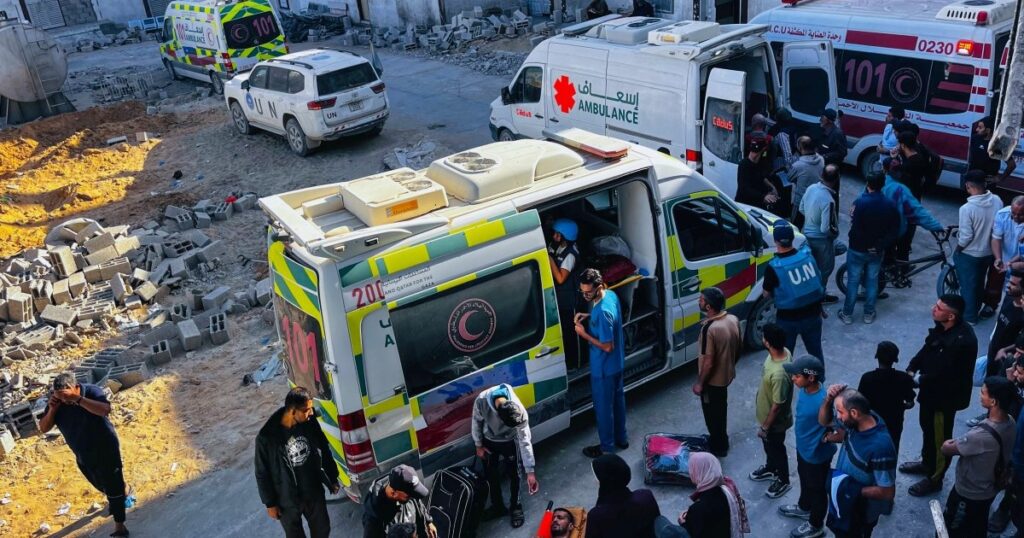
The attacks are carried out as the humanitarian situation in both places worsens and ceasefire talks resume with no expected breakthrough. More than 150 people are reported to have been killed in Israel’s latest attacks in northern Gaza and Lebanon. At least 93 Palestinians were killed when an Israeli attack flattened a five-storey residential building housing displaced people in northern Gaza’s Beit Lahiya on Tuesday, the head of Gaza’s Government Media Office said. Overnight, at least 60 people were killed in eastern Lebanon’s Bekaa Valley. Israel carried out the attacks as the humanitarian situation in both Gaza and Lebanon deteriorates. Conditions in northern Gaza, which has been under an Israeli siege since early October, are particularly harsh. Despite the high death toll and worsening plight of those still living in northern Gaza, ceasefire talks that have resumed in Qatar are not expected to achieve a breakthrough while Israel has moved to halt the operations of the United Nations Relief and Works Agency for Palestine Refugees (UNRWA), which is the main lifeline for most of Gaza’s 2.3 million people. Al Jazeera’s Hani Mahmoud, reporting from Deir el-Balah in Gaza, described harrowing scenes from the strike in Beit Lahiya. “The images we are seeing show that more bodies are being pulled from under the rubble, including women and children,” he said. Those being pulled from the rubble were reported to be bleeding “severely” with many “crushed by the heavy weight of the large pieces of concrete that collapsed on their heads while they were sleeping”. Dr Hussam Abu Safia, the director of Kamal Adwan Hospital, the main medical facility in northern Gaza, said more than 150 dead and wounded had arrived after the attack. However, he warned that many of those injured may die because of a lack of resources. Israeli forces detained dozens of medical staff at the hospital last week, leaving only three doctors. “We call on the world to send specialised medical delegations,” the doctor told Al Jazeera. ‘Most violent day’ In eastern Lebanon, overnight attacks in the Bekaa Valley killed at least 60 people and injured 58, the Ministry of Public Health reported. The highest death toll was in the town of Sahl Allak in Baalbek province, where 16 people were killed, according to Lebanon’s National News Agency (NNA). In Ramm, also in Baalbek, an Israeli air strike killed nine people, including a mother and her four children, the state news agency reported. Baalbek Mayor Bachir Khodr described the strikes as “the most violent day in Baalbek since the beginning of the aggression”. He said in a post on X that people remained trapped under the rubble. Israeli bombardment of the area as well as of southern Lebanon and Beirut’s southern suburbs has intensified over the past several weeks as part of an offensive against Hezbollah that has also killed hundreds of civilians. In Gaza, at least 43,020 people have been killed in Israeli attacks since October 7, 2023. An estimated 1,139 people were killed in Israel during the Hamas-led attacks that day, and more than 200 were taken captive. Adblock test (Why?)
CNN bans conservative commentator after verbal attack on Mehdi Hasan
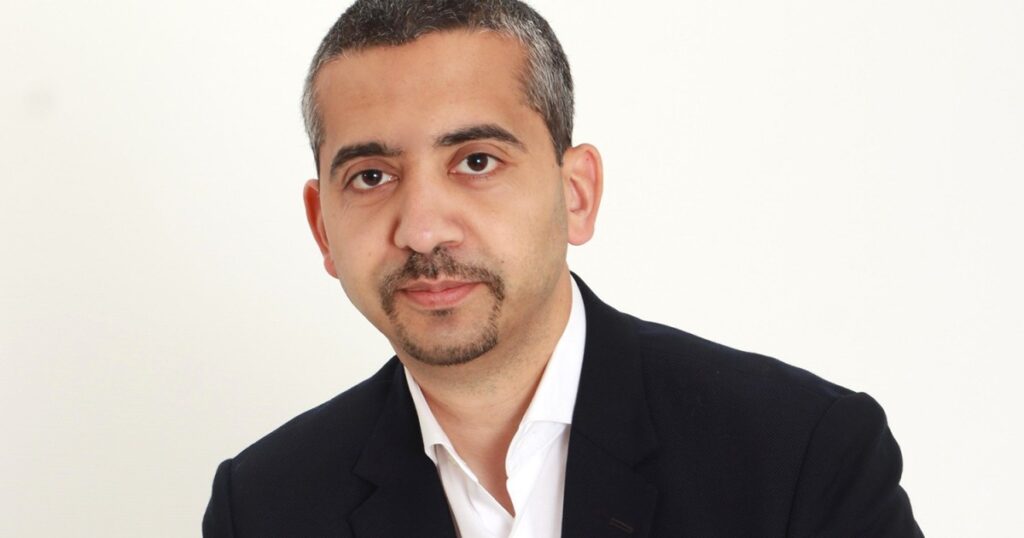
US network says it has ‘zero room for racism’ after Girdusky tells Hasan: ‘I hope your beeper doesn’t go off.’ CNN has banned a conservative commentator after he verbally attacked British-American journalist Mehdi Hasan by referring to a series of exploding handheld devices in Lebanon that targeted Hezbollah. “I hope your beeper doesn’t go off,” Ryan James Girdusky said during a heated debate with Hasan, a prominent broadcaster and outspoken critic of Israel’s war on Gaza, on the show CNN Newsnight with host Abby Phillip on Monday. In a statement, the network said: “There is zero room for racism or bigotry at CNN or on our air.” Nearly 40 people were killed and thousands wounded in two days of unprecedented attacks in September when pagers, walkie-talkies and other handheld communication devices exploded across Lebanon, which were blamed on Israel. Guests on CNN Newsnight were debating the upcoming United States presidential election and the controversial Madison Square Garden rally of Republican candidate Donald Trump, including remarks made by comedian Tony Hinchcliffe about Puerto Rico. Hasan, founder of new media company Zeteo, criticised the rhetoric at the rally during which several speakers, including Trump, made racist and sexist comments aimed at several minority groups, including Black Americans, Latinos and Jews. At one point, Hasan acknowledged that the accusation that Trump and his supporters are Nazis is “inflammatory”. “But if you don’t want to be called Nazis, stop doing, stop saying,” Hasan said before he was interrupted and talked over by Girdusky, who went on to note that Hasan himself was called an “anti-Semite more than anyone at this table”. “I am in support of the Palestinians, so I am used to it,” Hasan said. Girdusky then replied, “I hope your beeper doesn’t go off”, in an apparent reference to the mass attacks in Lebanon. “Did you just say I should die? Did you just say I should be killed?” Hasan responded. Phillip, the host, chastised Girdusky and apologised to Hasan following a commercial break while noting that Girdusky had been removed from the panel of guests. “There is a line that was crossed there, and it’s not acceptable to me,” Phillip said. CNN also said in its statement, “We aim to foster thoughtful conversations and debate including between people who profoundly disagree with each other in order to explore important issues and promote mutual understanding.” Sharing @CNN’s statement and a quick message from me about what happened on tonight’s show. I take this very seriously and want to again apologize to @mehdirhasan and I hope he’ll join us another time. pic.twitter.com/O9l0Ftv5NZ — Abby D. Phillip (@abbydphillip) October 29, 2024 “But we will not allow guests to be demeaned or for the line of civility to be crossed. Ryan Girdusky will not be welcomed back at our network,” it added. Hasan, who has been hosting Al Jazeera’s Head to Head show, has yet to issue a statement about the incident. He, however, shared the statements from CNN and Phillip on social media platform X. Trita Parsi, executive vice president of the Quincy Institute for Responsible Statecraft think tank, said, “Every day, we think we may have hit rock bottom, and every day we are proven wrong.” Girdusky later posted on X: “Apparently you can’t go on CNN if you make a joke. I’m glad America gets to see what CNN stands for.” Adblock test (Why?)