

What’s the focus for Harris, Trump in the last few days of the US campaign?
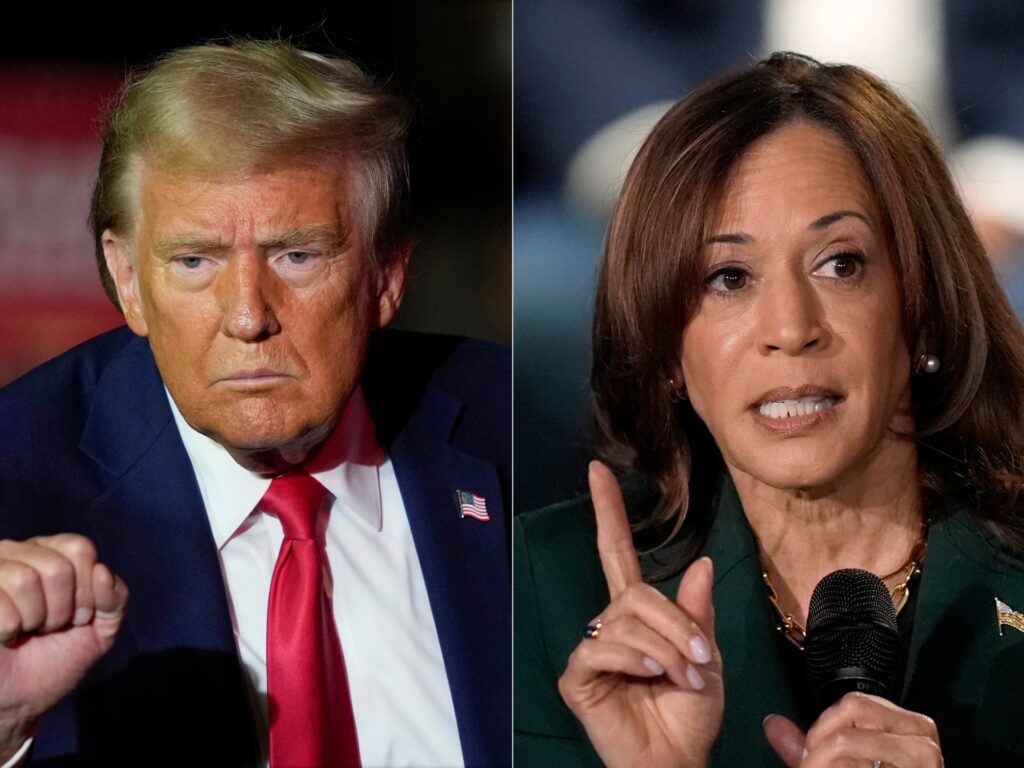
Opinion polls suggest the US presidential election is tight. The United States presidential election campaign has entered its last week, with opinion polls suggesting it’s neck and neck. So, what’s the focus for Kamala Harris and Donald Trump in these final days? And how big a say could US support for Israel’s war on Gaza have on the result? Presenter: Hashem Ahelbarra Guests: Steve Herman – Chief national correspondent at Voice of America and author of the book Behind the White House Curtain Clyde Wilcox – Professor of government at Georgetown University in Qatar, author on US politics Thomas Gift – Director of the Centre on US Politics at University College London Adblock test (Why?)
Bolivian government accuses Morales of staging assassination attempt
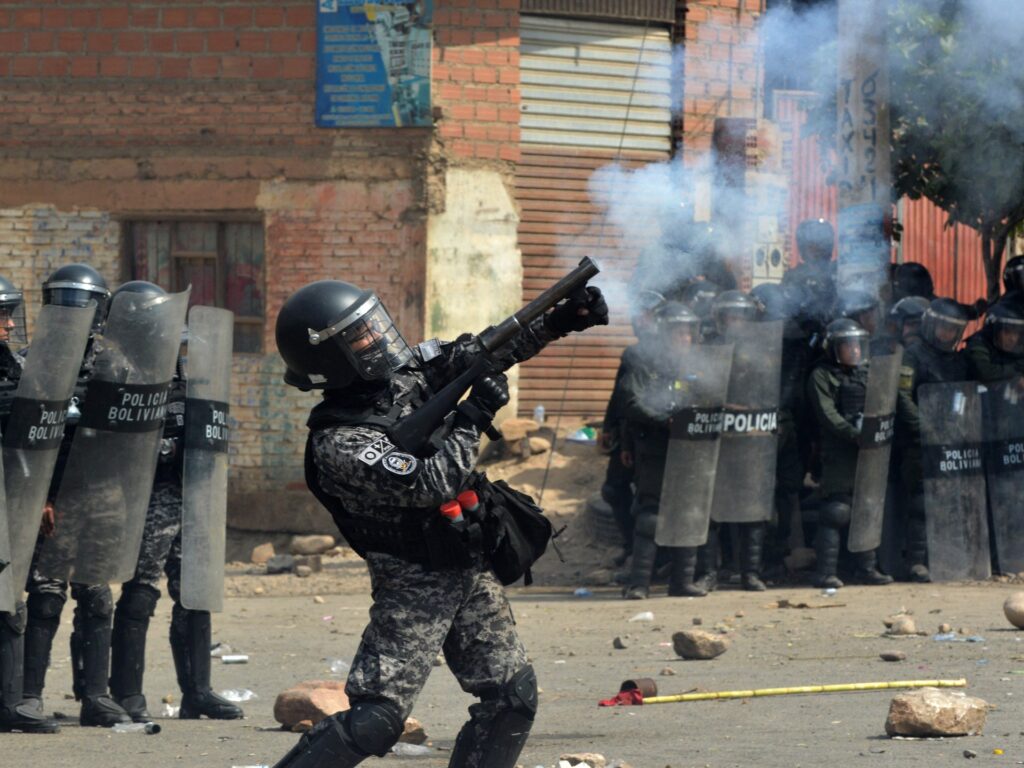
Two very different versions have emerged of Sunday’s incident when Morales says his car was hit by bullets. The Bolivian government has disputed claims by former President Evo Morales that he was the victim of an assassination attempt by police at the weekend in the latest incident heightening tensions between the popular Indigenous leader and his former ally, President Luis Arce. Instead, the government on Monday accused Morales of staging an attempt on his own life, saying that the shots fired at his car on Sunday came after he tried to run a police checkpoint. Morales claims the government attempted to assassinate him when bullets struck his car in the early hours of Sunday. He said his driver was wounded as assailants with covered faces shot at him while he was en route to a radio station for an interview in the city of Cochabamba. “The car in which I arrived has 14 bullet holes,” said Morales, adding: “This was planned. The idea was to kill Evo.” Minister of Government Eduardo del Castillo responded during a news conference that an anti-drug trafficking unit was carrying out a standard highway patrol on Sunday when Morales’s convoy shot at police and ran over an officer. He denied that the former president was deliberately targeted. “Mr Morales, nobody believes the theatre you have staged,” he told reporters. Evidence destroyed Morales’s vehicles were suspected of transporting drugs, according to the government. Del Castillo added that Morales had instructed his vehicles to be burned after the run-in, destroying any evidence before it could be collected. “If he had really been victim of an assassination attempt, it would have been in his interest to leave them intact” so that investigators could search them to collect evidence, del Castillo said. The radio station that hosted the interview, Kawsachun Coca, released a video that it said was of the bullet-ridden pick-up truck that Morales had been in. The windscreen had three bullet holes and the driver had blood on his head. Rising tensions Sunday’s incident comes amid rising tensions, with Morales’s supporters blocking highways in central Bolivia and security forces and police attempting to clear them. On Saturday, the government criticised the former president for “destabilising” the country with two weeks of road blockades that have disrupted food and fuel supply nationwide. The government also claimed in a statement that some groups allied with Morales were armed and warned of potential violence, noting that 14 police officers had been wounded while attempting to break up the blockades. At least 44 protesters were arrested on Friday when more than 1,700 police officers were deployed to dismantle the roadblocks. Fourteen police officers were injured, according to the government. Morales, 65, who held office from 2006 to 2019, is the main opponent of Arce, 61. They both belong to the same Movement Toward Socialism (MAS) party. But the two leaders have clashed over the last year, part of a power struggle ahead of the 2025 presidential elections. The country is also grappling with dwindling gas production, depleted foreign currency reserves and rising inflation, which is adding pressure on the governing party and increasing political infighting. Morales is also facing allegations of relationships with minors. He was formally summoned by regional prosecutors to testify in the case but did not appear, and now faces an arrest warrant. Morales strongly denies the accusations. Adblock test (Why?)
More than one in three tree species at risk of extinction: Report

The International Union for Conservation of Nature says tree species are at risk of extinction in 192 countries. More than one in three species of trees are at risk of extinction worldwide, threatening life as we know it on Earth, according to a report published by the International Union for Conservation of Nature (IUCN) Red List of Threatened Species. The report published on Monday has warned that over 16,000 tree species are at risk of extinction. More than 47,000 species were assessed for the IUCN study, out of an estimated 58,000 species thought to exist in the world. According to the report, trees are felled for logging and to clear land for farming and human expansion. Climate change also poses an additional threat through worsening drought and wildfires. Over 5,000 of the species on the IUCN Red List are used for construction timber, and more than 2,000 species for medicines, food and fuels. Species at risk include the horse chestnut and ginkgo, both used for medical applications, the big leaf mahogany used in furniture making, as well as several ash, magnolia and eucalyptus species, said Emily Beech, head of conservation prioritisation at Botanic Gardens Conservation International (BGCI), which contributed to the tree assessment. Moreover, according to the IUCN report, the number of trees at risk is “more than double the number of all threatened birds, mammals, reptiles and amphibians combined”. While tree species are at risk of extinction in 192 countries, the highest proportion is found on islands due to rapid urban development and expanding agriculture, and the introduction of invasive species, pests and diseases from elsewhere, the report noted. In South America, which boasts the greatest diversity of trees in the world, 3,356 out of 13,668 assessed species are at risk of extinction. Many species on the continent, home to the Amazon jungle, have likely not even been discovered yet. When they are, they are “more likely than not to be threatened with extinction”, said the report. The IUCN has called for forest protection and restoration through tree planting as well as the conservation of species dying out through seed banks and botanic garden collections. “Trees are essential to support life on Earth through their vital role in ecosystems, and millions of people depend upon them for their lives and livelihoods,” IUCN Director-General Grethel Aguilar said in a statement. The report’s publication also coincides with the United Nations COP16 summit on biodiversity, which has begun in the Colombian city of Cali. The UN Environment Programme (UNEP) estimates spending on nature needs to increase to $542bn annually by 2030, up from $200bn as of 2022, to halt nature loss and meet climate goals. Adblock test (Why?)
Fact-check: Donald Trump’s Madison Square Garden rally in New York City

Former President Donald Trump hammered home an anti-immigration theme in his closing argument pitch to voters on October 27 at New York City’s Madison Square Garden. But before Trump spoke, the event made headlines for a series of racist jokes by comedian Tony Hinchcliffe. He called Puerto Rico an “island of garbage” and disparaged Black Americans, Latinos and Jewish people. Democrats and at least two Florida Republicans, including Senator Rick Scott, swiftly condemned Hinchcliffe’s remarks about Puerto Rico. “This joke does not reflect the views of President Trump or the campaign,” Danielle Alvarez, a senior adviser to the Trump campaign said in a statement after the rally addressing the comedian’s comment about Puerto Rico. At the rally, Trump, the Republican presidential nominee, said he presided over the most secure border in United States history (he did not), that the Federal Emergency Management Agency did not deliver hurricane relief because the government spent its money bringing immigrants into the country illegally (it did not) and that foreign nations were emptying their prisons and sending convicts to the US (they are not). A gaggle of speakers preceded Trump, including Trump’s running mate, Senator JD Vance, Trump’s sons Eric and Don Jr, Trump’s wife, Melania, his daughter-in-law and Republican National Committee co-Chair Lara Trump, US House Speaker Mike Johnson, Ultimate Fighting Championship CEO Dana White, professional wrestler Hulk Hogan, entrepreneur Elon Musk and former Fox News host Tucker Carlson. Carlson riffed about Harris’s potential victory marking “the first Samoan, Malaysian, low-IQ former California prosecutor ever to be elected president”. Harris identifies as a Black woman of multicultural descent; her mother was born in India and her father was born in Jamaica. Trump nevertheless said the Republican Party he leads “has really become the party of inclusion, and there’s something very nice about that”. Trump’s choice of New York City as a rally site may have challenged political logic; New York, as a state, has voted for the Democratic candidate for president for decades, though Madison Square Garden has hosted major political events for more than a century. Appearing in New York City also placed Trump in the back yard of officials whom he frequently has criticised, including District Attorney Alvin Bragg who obtained a 34-count felony conviction against Trump for falsifying business records. Trump supporters gather with banners outside Madison Square Garden ahead of Donald Trump’s rally in New York [Selcuk Acar /Anadolu via Getty Images] Here are eight claims we fact-checked, leading with four about immigration. Immigration Trump said Harris “has imported criminal migrants from prisons and jails, insane asylums and mental institutions from all around the world, from Venezuela to the Congo”. Pants on Fire! There is no evidence that countries are emptying their prisons – or mental institutions – and sending people to illegally migrate to the US. Immigration officials arrested about 108,000 non-citizens with criminal convictions (whether in the US or abroad) from fiscal years 2021 to 2024, federal data shows. That accounts for people stopped at and between ports of entry. Not everyone was let in. Trump said: “I will invoke the Alien Enemies Act of 1798.” Legal experts told PolitiFact that Trump does not have the authority to use the law to carry out mass deportations and that invoking it would lead to legal challenges. The Alien Enemies Act lets a president quickly deport noncitizens without due process if they are from a country at war with the US. The law has been used only three times in US history, all during wartime. The last time the act was invoked was during World War II, and it was used to place non-citizens from Japan, Germany and Italy in internment camps. Trump said: “Think of this: 325,000 children are missing, dead, sex slaves, or slaves. They came through the open border and they’re gone.” This is a distortion of federal data about migrant children. An August federal oversight report about unaccompanied minors released from federal government custody said Immigration and Customs Enforcement (ICE) had not served a “Notice to Appear” to more than 291,000 unaccompanied minors, as of May. (A notice to appear is a charging document authorities issue and file in immigration court to start removal proceedings.) The report said unaccompanied children “who do not appear for court are considered at higher risk for trafficking, exploitation, or forced labour”. The report does not state how many children have actually been trafficked. The report led Republican legislators and conservative news outlets to say that ICE “lost” the children or that they are “missing”. But that is not what it said. Trump said Harris “vowed to abolish” US Immigration and Customs Enforcement False. As a US senator in 2018, Kamala Harris criticised the Trump administration’s immigration policies, including a policy that led to family separations at the border. In that context, Harris said US ICE’s function should be re-examined and that “we need to probably even think about starting from scratch.” But Harris did not say there should not be immigration enforcement. In 2018, Harris also said ICE had a role and should exist. Economy Trump said Harris “cast the deciding vote that launched the worst inflation in the history of our country. She cost the typical American family over $3,000 in a short period, but over $30,000 over the last three years”. Mostly False. Harris cast the tie-breaking vote on the motion to proceed to a final Senate vote on the 2021 American Rescue Plan Act, a coronavirus pandemic relief bill. An ideologically diverse cross-section of economists agrees that the American Rescue Plan added a couple of percentage points to inflation, but did not cause the wider spike. The primary causes, they say, were supply chain disruptions from the pandemic and Russia’s invasion of Ukraine. Year-over-year inflation peaked in 2022 at about 9 percent. That made it the worst annual rate in 40 years, but not the worst in US history. The $28,000 increase is a credible estimate of the extra amount that households have paid for
Japan PM Ishiba says will stay in office despite election setback
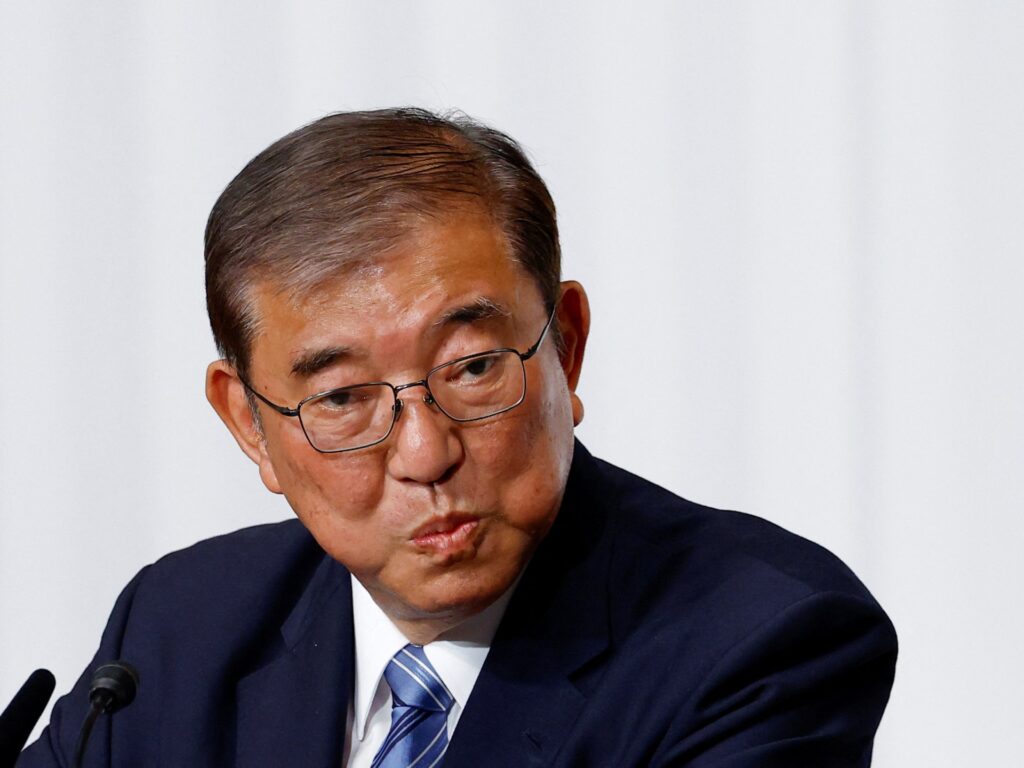
Sunday’s snap election was the governing party’s worst result in 15 years, exit polls and media showed. Japan’s Prime Minister Shigeru Ishiba has pledged to stay in office despite receiving a major blow in Sunday’s snap election he called himself to shore up more support for his party. Ishiba told reporters on Monday he would not allow a “political vacuum” to occur after Japan’s ruling coalition lost its parliamentary majority in a significant defeat for his Liberal Democratic Party (LDP), which has governed the country almost continuously since 1955. Ishiba, 67, called the vote days after assuming office on October 1. But voters, angry at a funding scandal, punished the LDP by reducing it to 191 seats, down from 259 in the 465-member lower house of parliament. LDP’s coalition partner Komeito won 24 seats. The snap election was the governing coalition’s worst result in 15 years, exit polls and results reported by national broadcaster NHK and other media showed. The yen hit a three-month low as results came out. Despite this, Ishiba said: “I want to fulfill my duty by protecting people’s lives, protecting Japan.” “People’s suspicion, mistrust and anger” at the slush fund scandal – which saw LDP figures pocket money from fundraising events and which helped sink his predecessor Fumio Kishida – factored in the election result, Ishiba said. “I will enact fundamental reform regarding the issue of money and politics,” Ishiba stressed, repeating that voters had delivered a “severe judgement” on the party. Japanese media had earlier speculated that if LDP lost the majority, Ishiba could quit, becoming the nation’s shortest-serving prime minister since the end of World War II. The LDP’s election committee chief, former Premier Junichiro Koizumi’s son Shinjiro Koizumi, resigned on Monday. What next? Ishiba is expected to seek to head a minority government, with the divided opposition seen as likely incapable of forming a coalition of their own, analysts said. But the prime minister on Monday said he was not considering a broader coalition “at this point”. As mandated by the constitution, the parties now have 30 days to figure out a grouping that can govern. The opposition, under former premier Yoshihiko Noda’s Constitutional Democratic Party (CDP), made significant gains, which raised its projected seat tally to 148 from 96 at the last election. “Voters chose which party would be the best fit to push for political reforms,” Noda said late on Sunday, adding that the “LDP-Komeito administration cannot continue”. Japan’s government and governing coalition officials are planning to convene a special parliament session to select the prime minister on November 11, Kyodo News reported on Monday, quoting multiple unnamed sources. “Lawmakers aligned with [former Prime Minister Shinzo] Abe were cold-shouldered under Ishiba, so they could potentially pounce on the opportunity to take their revenge,” Yu Uchiyama, political science professor at the University of Tokyo, told the AFP news agency. “But at the same time, with the number of LDP seats reduced so much, they might take the high road and support Ishiba for now, thinking it’s not the time for infighting,” he added. Adblock test (Why?)
Report from scene of major Israeli attack on north Gaza homes
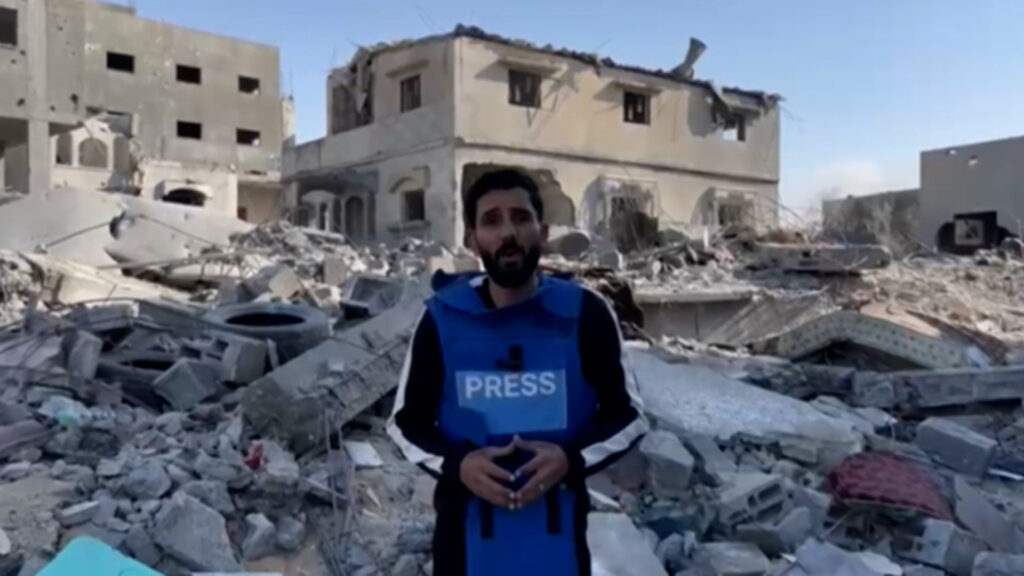
NewsFeed Al Jazeera’s Moath al-Kahlout has been to the site of a major Israeli air attack on homes in north Gaza’s Beit Lahiya, where dozens of people were killed and left buried under rubble. Published On 28 Oct 202428 Oct 2024 Adblock test (Why?)
Is a peace deal in Gaza possible after the killing of Yahya Sinwar?
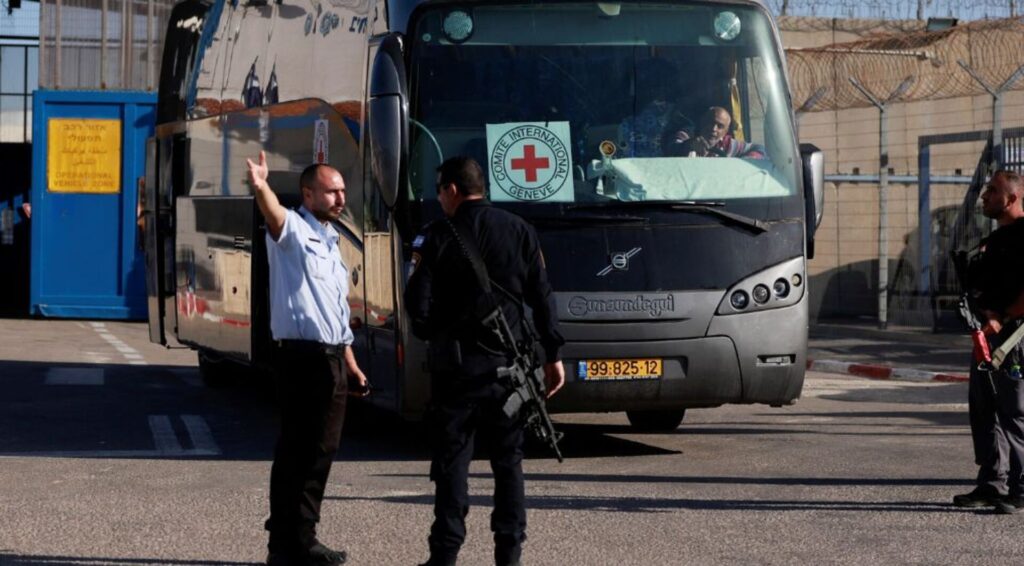
Leaders gather in Doha for yet another round of ceasefire talks, with hopes are running high. Gaza ceasefire talks have restarted in the Qatari capital, Doha, after being stalled for months. Israel’s Mossad foreign intelligence agency chief and the head of the CIA have met with the Qatari prime minister in hopes of moving negotiations forward. The killing of Hamas leader Yahya Sinwar should, according to Israel and the US, pave the way for a peace agreement, ending the war on Gaza and allowing for the release of the remaining captives in Gaza. The latest round of talks comes on the heels of a series of targeted assassinations by Israel of leaders both in Gaza and Lebanon. But could the talks really lead to a breakthrough? Presenter: Hashem Ahelbarra Guests Salman Shaikh – former UN official who advised the UN’s peace envoys to Gaza, Jerusalem and Lebanon. Hafsa Halawa – political consultant specialising in the Middle East and North Africa, and a non-resident Fellow at the Middle East Institute. Alon Pinkas – former adviser to Israeli Prime Ministers Shimon Peres and Ehud Barak. Adblock test (Why?)
Bulgaria centre right leads in snap vote, fails to win majority: Exit polls
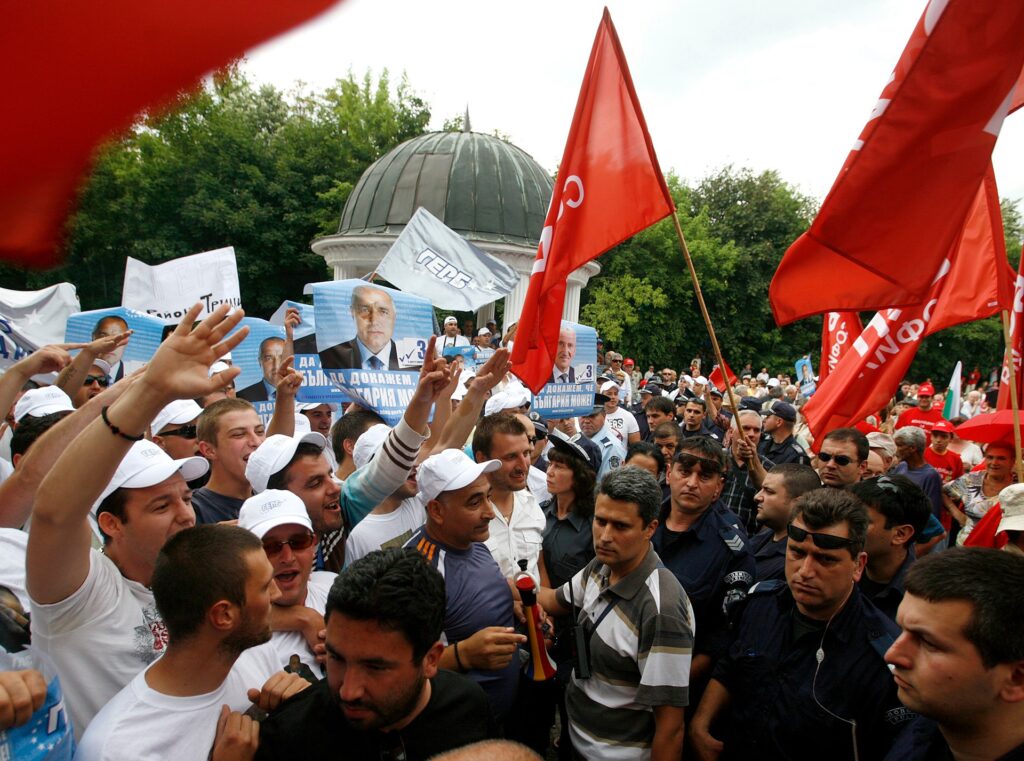
GERB party in the lead in parliamentary elections, but falls short of majority needed to end political instability. Bulgaria’s centre-right GERB party was in the lead after a parliamentary election on Sunday, an exit poll showed, but has fallen short of a majority that would put an end to the country’s political instability. The Alpha Research poll showed Citizens for European Development of Bulgaria (GERB) winning 26.4 percent of the votes, while reformist We Continue the Change (PP) was seen coming second with 14.9 percent of the votes. The pro-Russia ultra-nationalist Revival party was set to come third with 12.9 percent of the vote. In the seventh such vote in four years, former conservative Prime Minister Boyko Borisov’s GERB party repeated its performance in the previous ballot last June by winning between 25 and 27 percent of the vote on Sunday, according to the polls. Sunday’s election was triggered by the failure of Bulgaria’s political parties to agree on forming a coalition government after an inconclusive election on June 9. The European Union’s poorest member country has been at a standstill since 2020, when massive anti-corruption protests brought down Borisov’s cabinet. But there is a high chance that GERB will yet again struggle to find partners to govern in the country’s extremely fragmented parliament, where seven to nine parties are expected to be represented. GERB would get 74 seats in the 240-seat parliament, while PP would get 42 seats, and Revival 36 seats, according to the Alpha Research poll. “GERB has the responsibility to form a government, let’s see what they propose,” said Nikolai Denkov, former prime minister and member of the PP party. “We are going to wait for the final results.” Bulgaria needs a period of stable, well-functioning government to accelerate the flow of European Union funds into its creaking infrastructure and nudge it towards adoption of the euro. Plans to join the eurozone have already been pushed back twice because of missed inflation targets. Accession is currently slated for January 25, 2025. Compared to the last election, voter turnout appeared to have slightly increased to 35 percent one hour before the polls closed. In June, voter turnout plummeted to just 34 percent – the lowest since the end of communism. According to a recent opinion poll, about 60 percent of Bulgarians surveyed view the political deadlock as “extremely alarming”. Many voters said they feared further uncertainty ahead. “What was expected, happened more or less… I think we are going to have more elections,” said Vassil Vasilev, 60, after hearing about the exit poll. Adblock test (Why?)
Plight of Gaza civilians ‘unbearable’ as Israel kills over 50 in a day
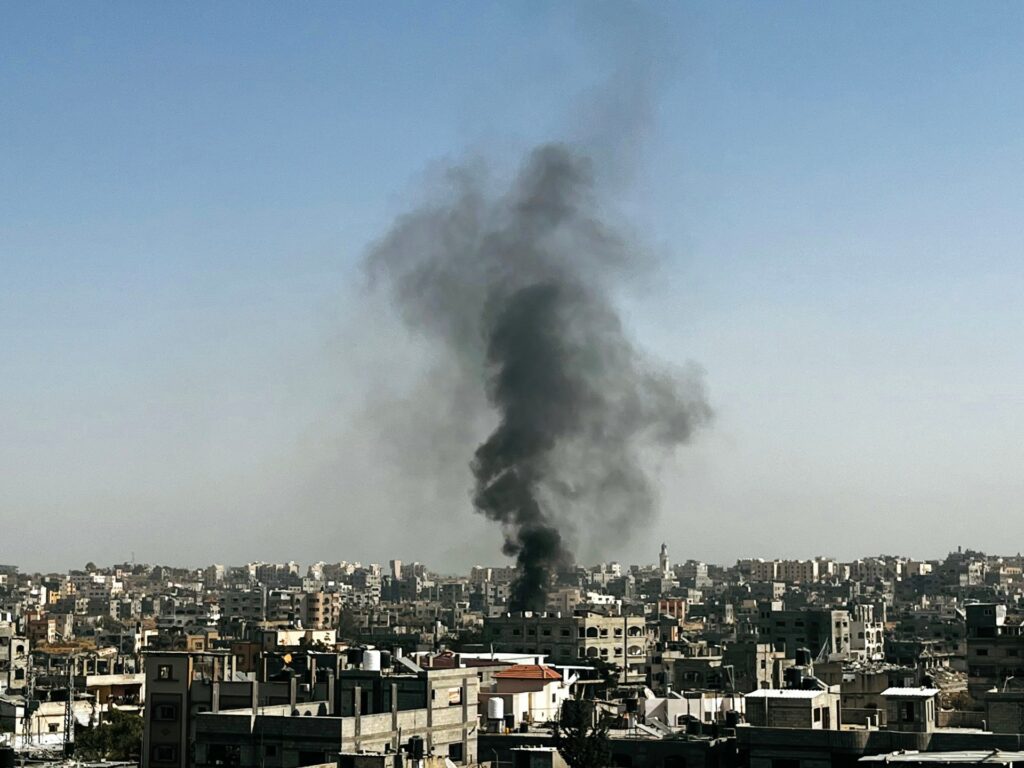
UN chief Antonio Guterres says the levels of death and injury in north Gaza are ‘harrowing’ and calls plight of Palestinians ‘unbearable’. Israeli attacks have killed more than 50 Palestinians across the Gaza Strip in less than a day, most of them in the north of the enclave which has been the scene of renewed Israeli ground offensive for the past three weeks, leading the chief of the United Nations to call the plight of civilians there “unbearable”. At least 11 Palestinians were killed and dozens of others wounded after a school in northern Gaza was hit on Sunday. Reporting from Deir el-Balah in central Gaza, Al Jazeera’s Hind Khoudary said the school is in the middle of the Shati refugee camp, a densely populated camp in northern Gaza. “The Israeli strike killed at least eight Palestinians, including three journalists and an eight-year-old girl called Zayn al-Ghoul, who was waiting in a queue to receive biscuits from the school,” she said, adding that the death toll could climb as the number of injured was high. The Israeli military has said it was looking into the report about the strike on the school. The military added that it had killed more than 40 Hamas fighters in the Jabalia area in the past 24 hours, as well as dismantled infrastructure and located large quantities of military equipment. Hamas has not yet commented on the Jabalia strikes. Israeli military strikes on the towns of Jabalia, Beit Hanoon and Beit Lahiya in northern Gaza have so far killed about 800 people in the three-week offensive, Gaza’s Ministry of Health said. UN Secretary-General Antonio Guterres has said he is “shocked by harrowing levels of death, injury and destruction” in north Gaza. “The plight of Palestinian civilians trapped in North Gaza is unbearable,” Guterres’s spokesman said. As the death toll from Israel’s retaliatory campaign in Gaza approaches 43,000 since the start of the war on October 7, with the densely populated enclave in ruins, new ceasefire talks have begun in Doha. On Sunday, the directors of the CIA and Israel’s Mossad intelligence agency travelled to Qatar to meet Qatar’s prime minister to discuss a ceasefire agreement. Egyptian officials are also participating in the talks. Separately, Egyptian President Abdel Fattah el-Sisi has proposed a two-day ceasefire in Gaza in exchange for Israeli captives with some Palestinian prisoners. Meanwhile, in Lebanon on Sunday, Israeli forces continued their air raids on the capital Beirut’s southern suburbs after warning residents of several neighbourhoods to leave their homes. Israeli forces also targeted southern Lebanon. At least eight people were killed and 25 injured in an Israeli air strike on the coastal city of Sidon in southern Lebanon. Lebanese officials said at least 21 people were in Israeli attacks in southern Lebanon. In retaliation, Hezbollah has been launching attacks across the border into northern Israel. United States Secretary of State Antony Blinken on Friday met with Lebanese Prime Minister Najib Mikati in London but stopped short of calling for an immediate ceasefire. Washington provides weapons and diplomatic cover to Israel, which has been condemned for violating the rules of war. Adblock test (Why?)
Japan’s ruling party likely to lose parliamentary majority in snap election
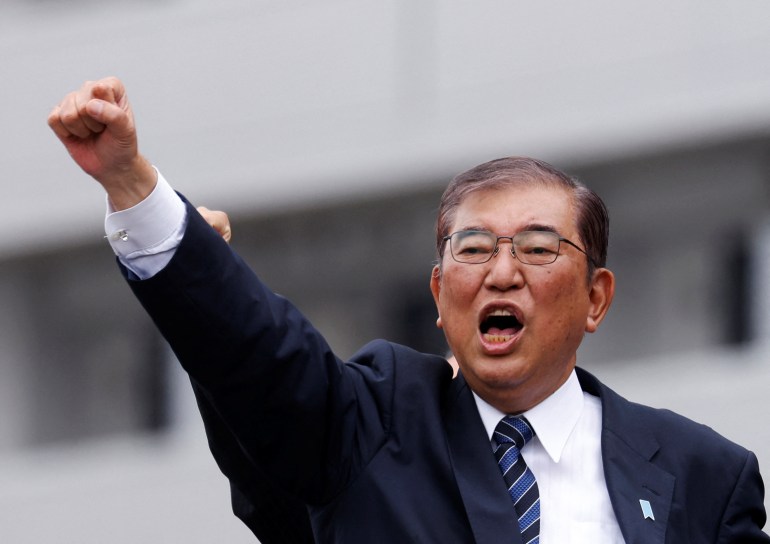
While voters are weighing the ruling party’s funding scandals and the stagnant economy, they are also sceptical about the opposition’s ability and experience. Japan is voting in its tightest election in years, with new Prime Minister Shigeru Ishiba and his Liberal Democratic Party (LDP) facing potentially their worst result since 2009 over a funding scandal and inflation. The LDP and its longtime partner Komeito are likely to lose their comfortable majority in the lower house of parliament in Sunday’s election, opinion polls suggest. A record 314 women among a total of 1,344 candidates are running for office. Polls close at 8pm (11:00 GMT), with early results expected within hours. Ishiba, 67, took office on October 1, replacing his predecessor Fumio Kishida who resigned after an outcry over slush fund practices among LDP legislators. Ishiba immediately announced a snap election in hopes of shoring up more support. Ishiba gestures during a campaign event in Tokyo [Manami Yamada/Reuters] But the LDP is facing potentially its worst result since 2009 – possibly leading Japan into political uncertainty, though a change of government was unexpected. Ishiba has set a goal of retaining 233 seats for the ruling coalition between the LDP and its Buddhist-backed junior partner Komeito, a majority in the 465-member lower house, the more powerful of Japan’s two-chamber parliament. In his final campaign speeches on Saturday, Ishiba apologised for his party’s mishandling of funds and pledged “to restart as an equal, fair, humble and honest party”. He said only the LDP’s ruling coalition can run Japan with its experience and dependable policies. But voters in the world’s fourth-largest economy have been rankled by rising prices and the fallout from a party slush fund scandal that helped sink previous premier Fumio Kishida. “I made my decision first and foremost by looking at their economic policies and measures to ease inflation,” Tokyo voter Yoshihiro Uchida, 48, told AFP on Sunday. “I voted for people who are likely to make our lives better.” The 101-year-old Utako Kanayama casts her ballot at a polling station in Tokyo [Kim Kyung-Hoon/Reuters] Japan’s biggest opposition party, the Constitutional Democratic Party of Japan (CDP), meanwhile, is expected to make significant gains. Its centrist leader, former Prime Minister Yoshihiko Noda, said Sunday’s election is a rare chance for a change of government. Local media speculated that Ishiba could potentially even resign immediately to take responsibility, becoming Japan’s shortest-serving prime minister in the post-war period. The current record is held by Naruhiko Higashikuni who served for 54 days – four days more than British leader Liz Truss in 2022 – just after Japan’s 1945 defeat in World War II. “The LDP’s politics is all about quickly implementing policies for those who give them loads of cash,” 67-year-old Noda told his supporters on Saturday. “But those in vulnerable positions… have been ignored,” he added, accusing the government of offering insufficient support for survivors of an earthquake in central Japan. A woman accompanying her children in Halloween costume casts her ballot [Kim Kyung-Hoon/Reuters] Analysts suggest Ishiba could fall short of reaching his target, though his LDP was expected to remain the top party in Japan’s parliament as voters are sceptical about the opposition’s ability and experience. Ishiba’s party is also being tested to break the legacy of the late Premier Shinzo Abe. Abe’s policies focused on security, trade and industry but largely ignored equality and diversity, and his nearly eight-year tenure led to the corruption, experts say. “The public’s criticisms against the slush funds scandal has intensified, and it won’t go away easily,” said Izuru Makihara, a University of Tokyo professor of politics and public policy. “There is a growing sense of fairness and people are rejecting privileges for politicians.” Adblock test (Why?)