

Industry Days gathers top documentary professionals in Sarajevo

Event aims to demonstrate the power and art of storytelling as well as connect filmmakers with decision-makers. The Al Jazeera Documentary Channel has launched the third edition of Al Jazeera Documentary Industry Days to connect decision-makers with the most promising documentary projects. The event, which kicked off on Saturday and will continue until Monday, is being held during the Al Jazeera Balkans Documentary Film Festival in the capital of Bosnia and Herzegovina, Sarajevo. The event features 80 experts who will evaluate and support documentary projects that aim to tell inspiring human stories, address pressing social issues and promote universal human values while shedding light on areas that have not received enough attention in the documentary film industry. The event also aims to foster a deeper understanding of different perspectives by promoting cultural exchanges between the participants. On Saturday, 10 sessions were held in the event’s Main Pitch category, beginning with the presentation of a documentary project titled The Other Gaza. “This emotional pitch tells the story of Wafa Jamil, who lives in Stockholm while her family resides in Gaza. The focus of her project is to show a different side of Gaza to her eight-year-old daughter, who lives with her in Sweden,” a statement released by the organisers said. Jamil said her project was inspired by the ongoing conflict in the Palestinian territory. “It is an important topic, and I’m very grateful to have the opportunity and the space to present it at such an important event, filled with so many influential people from this industry,” she said. Rudy Buttignol, who is moderating the event for a third time, praised the programme’s evolution. “Every year, the quality of the projects improves,” he said, adding that the event “maintains an intimate atmosphere, perfect for making new connections and reinforcing older ones”. The director of the Al Jazeera Documentary Channel, Ahmed Mahfouz, said Al Jazeera Documentary Days represents the Qatar-based network’s commitment to support the documentary industry. He said an unprecedented number of projects have been shortlisted for the ongoing event, adding that he believed documentaries can bring about social change. “This event aims to enhance international cooperation to showcase the works of filmmakers on a global level,” he said. Adel Ksiksi, director of Al Jazeera Documentary Days, said the event has grown over the years. He said 29 documentary projects will be chosen from a pool of nearly 270 proposals by filmmakers and independent producers from North Africa, the Arab world, Southeastern Europe and the Caucasus. The 29 selected projects will be divided into four categories: Main Competition (10 projects), Projects in Progress (nine projects), Balkan Stars (six projects) and Out of Competition Projects (four projects). “These projects reflect the diversity, creativity and dedication of documentary filmmakers around the world who continue to push boundaries and tell inspiring stories,” Ksiksi said. Adblock test (Why?)
US says preparing ‘substantial’ Ukraine aid package in coming weeks
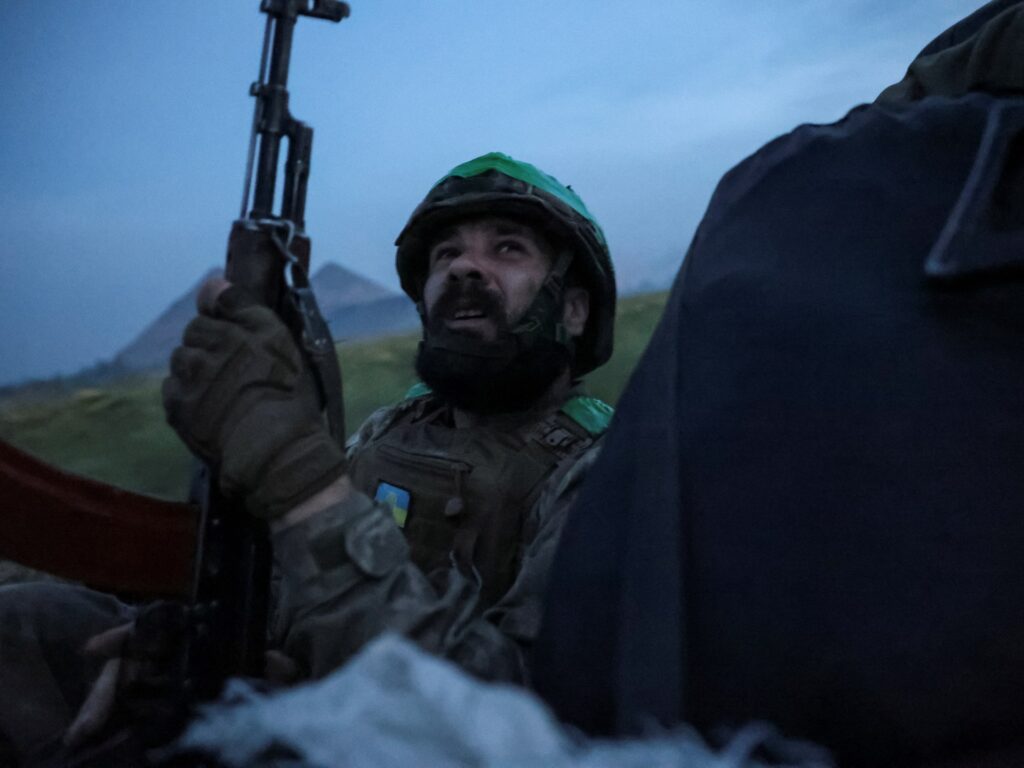
Announcement comes as Ukraine pushes to be allowed to use Western-supplied, long-range missiles for strikes in Russia. The administration of United States President Joe Biden says it is preparing a large aid package for Ukraine in the coming weeks as a debate continues over whether Ukrainian forces should be allowed to use Western-supplied weapons to strike farther inside Russia. White House National Security Adviser Jake Sullivan said on Saturday that Washington is working on a “substantial” round of further assistance for Kyiv and Biden will meet his Ukrainian counterpart, Volodymyr Zelenskyy, this month. “I do think we need a comprehensive strategy for success in this war, and that is what President Zelenskyy says he is bringing,” Sullivan said in remarks delivered via videolink at the Yalta European Strategy conference in Ukraine’s capital. “So we are very much looking forward to sitting down and talking that through, and President Biden is eager for that conversation,” he said. Sullivan made the remarks as Ukraine has been pushing for more long-range weaponry to hit targets deeper inside Russian territory, a development that analysts worried could escalate tensions between Moscow and Kyiv’s Western backers. More than two and a half years since Russia launched a full-scale invasion of its neighbour in February 2022, Ukrainian forces have struggled in recent weeks as Russia has made progress around Pokrovsk, a key transit hub in eastern Ukraine. Pokrovsk’s capture could enable Moscow to open new lines of attack and complicate Ukrainian logistics. Sullivan said recent developments in the area are of “unique concern”. The White House adviser added that Biden, who is not seeking re-election and whose term ends in January, is working to put Ukraine in the “best possible position to prevail” during his final months in office. “President Zelenskyy has said that ultimately this war has to end through negotiations, and we need them to be strong in those negotiations,” Sullivan said. Meanwhile, NATO Military Committee Chairman Rob Bauer said he supported Ukraine’s use of long-range weapons to strike inside Russia. “Every nation that is attacked has the right to defend itself. And that right doesn’t stop at the border of your own nation,” the admiral said on Saturday at a committee meeting. Russian President Vladimir Putin has warned that if Western nations allow Ukraine to use such weapons to strike inside Russia then it will mean NATO would be “at war” with his country. “This would in a significant way change the very nature of the conflict. It would mean that NATO countries, the US, European countries, are at war with Russia,” Putin told Russian state TV on Thursday. “And if this is so, then, bearing in mind the change in the very essence of this conflict, we will make appropriate decisions based on the threats that will be created for us.” A day later, Russia’s ambassador to the United Nations delivered a similar message to the UN Security Council in New York. “The facts are that NATO will be a direct party to hostilities against a nuclear power. I think you shouldn’t forget about this and think about the consequences,” Vassily Nebenzia told the 15-member council. Adblock test (Why?)
‘Kings of the world’: The last of the horseback shrimp fishers
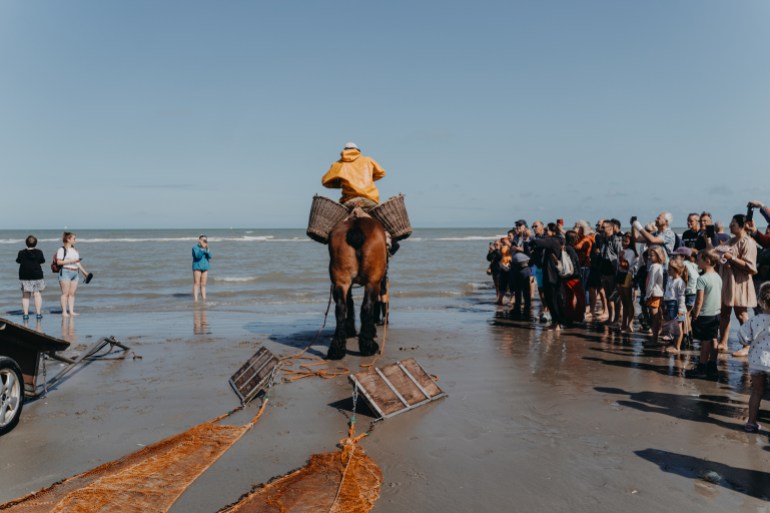
Oostduinkerke, Belgium – A few hours after dawn one late July morning, the sound of Gregory Debruyne’s horse Kelly trotting through the verdant lanes of Oostduinkerke echoes through the quaint coastal village in west Belgium. Pulling a cart filled with fishing gear and equipment to sift shrimps, Kelly – a brown Belgian draught horse – and Debruyne are heading towards the sandy shores of the North Sea to go shrimp fishing. Debruyne is a Belgian horseback shrimp fisherman in Oostduinkerke – the last place in the world where this centuries-old practice of catching shrimp using horses rather than boats continues. “I learned horseback shrimp fishing from my father when I was 11 years old,” Debruyne, now 27, tells Al Jazeera, as he gets Kelly ready to fish for the day in the village centre, close to the sea. Dozens of tourists are crowding around them and eagerly watching as Debruyne covers Kelly with a warm blanket and mounts two brown baskets on either side of her back. He also attaches a chained net to her tail. “Using her hindquarters, Kelly will wade through the shallow waves of the North Sea, until the seawater reaches her chest, pulling the net, which has a chain at the bottom. This pull generates a vibration that disturbs the shrimp in the shallow waters, instigating them to jump into the expanded net,” Debryune explains. Four other fishermen and their horses have joined Kelly and Debruyne in the village. All the horseback shrimp fishermen don bright yellow anoraks – thick waterproof jackets – and black gum boots and head off towards the North Sea on their horses. “I hope to return after about an hour, with a worthy catch,” Debruyne shouts back as the spectators watch him and Kelly heading into the sea. Horseback shrimp fishers in Oostduinkerke attract crowds both from Belgium and abroad, particularly during the summer season [Diana Takacsova/Al Jazeera] Horseback shrimp fishing – which is on the “Intangible Cultural Heritage of Humanity” list maintained by the United Nations Educational, Scientific and Cultural Organization (UNESCO) – began in northern Belgium at the turn of the 15th and 16th centuries, when the region was under the control of Christian monks. While it was also practised in the Netherlands, France and parts of southern England, just 12 families in Belgium still pursue the tradition. In 1502, there was an abbey at Koksijde (in present-day Belgium) and the monks wanted shrimps and fish to eat, something the local religious community was only too happy to oblige. “The local farmers, who owned horses, decided to go to the sea and catch shrimp and fish and give it to the monks of the abbey. This kicked off the practice of horseback shrimp fishing,” Eddy D’Hulster, who worked as a horseback shrimp fisherman for 56 years, tells Al Jazeera. These days, horseback fishermen like Debruyne also work on commercial vessels to earn more money. On vessels, the horseback shrimp fishers also catch other fish and not just shrimp. D’Hustler himself has also worked as a fisherman on vessels, but says he much prefers catching shrimp on horseback since he believes the brown shrimp is tastier when it comes from the shallow waters of the North Sea. ‘Live for the horse and the sea’ Sporting a navy blue cap imprinted with a symbol of a horseback shrimp fisher, 81-year-old D’Hulster is watching the bright yellow anoraks of Debruyne and the other fishermen with their horses out at sea and reminiscing about his first time fishing in such a manner. “I started fishing for shrimp on horseback thanks to a love story,” he chuckles. “I met this beautiful girl in the village and learned that her father was a horseback shrimp fisherman. I began learning the tradition from him when I was around 18 years old, seeking to impress his daughter. We were soon married which was great,” he says, blushing. “But this was also the onset of a bigger love story in my life which always made me feel like the king of the world – horseback shrimp fishing!” he exclaims. Eddy D’Hulster, a former horseback shrimp fisherman, says practising the ancient tradition makes him feel like the ‘king of the world’ [Diana Takacsova/Al Jazeera] Shrimp caught by the horseback shrimp fishermen in the North Sea are greyish-brown in colour and called brown shrimp. They are found in the shallow waters of the sea and Belgians consider them to be the tastiest shrimp in the world due to their sweet and salty flavour. “When I started fishing, it was the beginning of spring and the North Sea back then was brimming with brown shrimp,” D’Hulster says. “Treading into the shallow waves of the sea, we could easily catch about 20-30kg [44-66lbs] of shrimp and make a living through this tradition, earning about 30 Belgian francs [about 0.75 euros] for a kilo.” Today the price is 10 euros ($11.11) for a kilo of shrimp, he says, and “it is the only kind of shrimp I love eating”. While the catch and the money they could earn was an incentive that drew young men and women in Oostduinkerke to horseback shrimp fishing, D’Hulster says that for many of them, it is also a passion for horses and the “mighty blue” North Sea, which keeps the ancient tradition alive here. “Shrimps are what we catch, but as a horseback fisherman, you must live for the horse and love the sea. When I started fishing, the thing I loved the best was my horse, Mina. She was about 10 years old and I bought her from my father-in-law. We learned shrimp fishing together,” he says. Mina died when she was 20 years old, after which it took D’Hulster six months to train another horse to fish. “Mina taught me to love the open sea. I do miss her, but my family now owns around 10 to 20 horses which are trained to fish in the sea,” D’Hulster says. Like Kelly, Mina was a
South Sudan postpones December election by two years
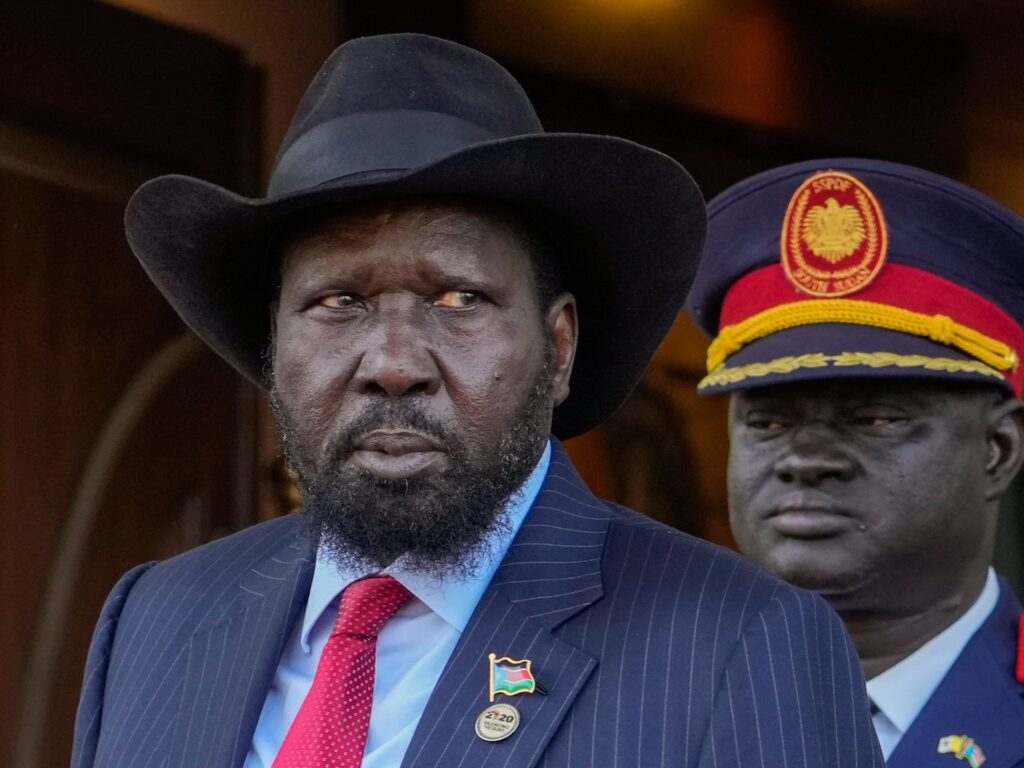
Government says it needs more time to complete a census, draft a permanent constitution and register political parties. South Sudan’s government has announced it is postponing long-delayed general elections until December 2026, citing a lack of preparedness. This is the second time the country, which gained independence in 2011, is postponing elections and extending a transitional period that started in February 2020. President Salva Kiir and his former rival turned deputy, Riek Machar, signed a peace agreement in 2018 that ended a five-year civil war which killed an estimated 400,000 people, triggered a famine and led to a massive refugee crisis. “The presidency, under the chairmanship of President Salva Kiir Mayardit, has announced an extension of the country’s transitional period by two years as well as postponing elections, which were initially scheduled for December 2024 to December 22nd, 2026,” Kiir’s office said on Friday. The government said it needed more time to complete processes such as a census, the drafting of a permanent constitution and the registration of political parties before an election could be held, according to the presidential adviser on national security, Tut Gatluak. Cabinet Affairs Minister Martin Elia Lomuro said the extension followed recommendations from both electoral institutions and the security sector. “There is a need for additional time to complete essential tasks before the polls,” Kiir’s office said. The country is going through an economic crisis that has seen civil servants go unpaid for almost one year, after its oil exports were affected by a damaged pipeline amid the civil war in neighbouring Sudan through which it exports. Andrea Mach Mabior, an independent political analyst, warned that any sham elections may result in a waste of resources and chaos. “Going for elections that do not meet international standards will be a waste of money,” Mabior told The Associated Press news agency. A new security act that allows for warrantless detentions became law in August despite concerns from human rights groups that it would create a climate of fear in the run-up to the elections. An estimated 9 million people – 73 percent of the country’s population – are in need of humanitarian assistance this year, according to the United Nations. Adblock test (Why?)
The optics and strategy of the Harris-Trump debate

With both candidates averse to media scrutiny, the presidential debate took on huge significance. This week marked the first presidential debate between Donald Trump and Kamala Harris. With both candidates giving legacy media the cold shoulder, was it enough to convince voters of their vision for America? Contributors: Shana Gadarian – Professor of Political Science, Syracuse UniversityNatasha Lennard – Contributing Writer, The InterceptJohn Nichols – National Affairs Correspondent, The NationMitchell Robertson – Lecturer in US History, UCL On our radar: US authorities say they are conducting a coordinated operation against Russian foreign influence in this election. Meenakshi Ravi looks at the right-wing online influencers who are accused of taking money from Moscow. Cobalt mining in the DRC: Big Tech’s dark secret Cobalt is one of the most in-demand minerals in the world today. It’s used in the batteries of smartphones, laptops and electric cars. And most of it comes from the Democratic Republic of the Congo. However, covering cobalt extraction in the DRC is notoriously difficult which makes it hard to know what conditions the miners are working under. In the first of a two-part report, the Listening Post’s Nic Muirhead went to the DRC to try and gain access to the mines – to see for himself – what the story is. Featuring: Franck Fwamba – Editor, Mining News MagazineSiddharth Kara – Author, Cobalt RedSylvie Manda – JournalistCandy Ofime – Researcher on Climate Justice, Amnesty International Adblock test (Why?)
The Hague to ban fossil fuel ads from January
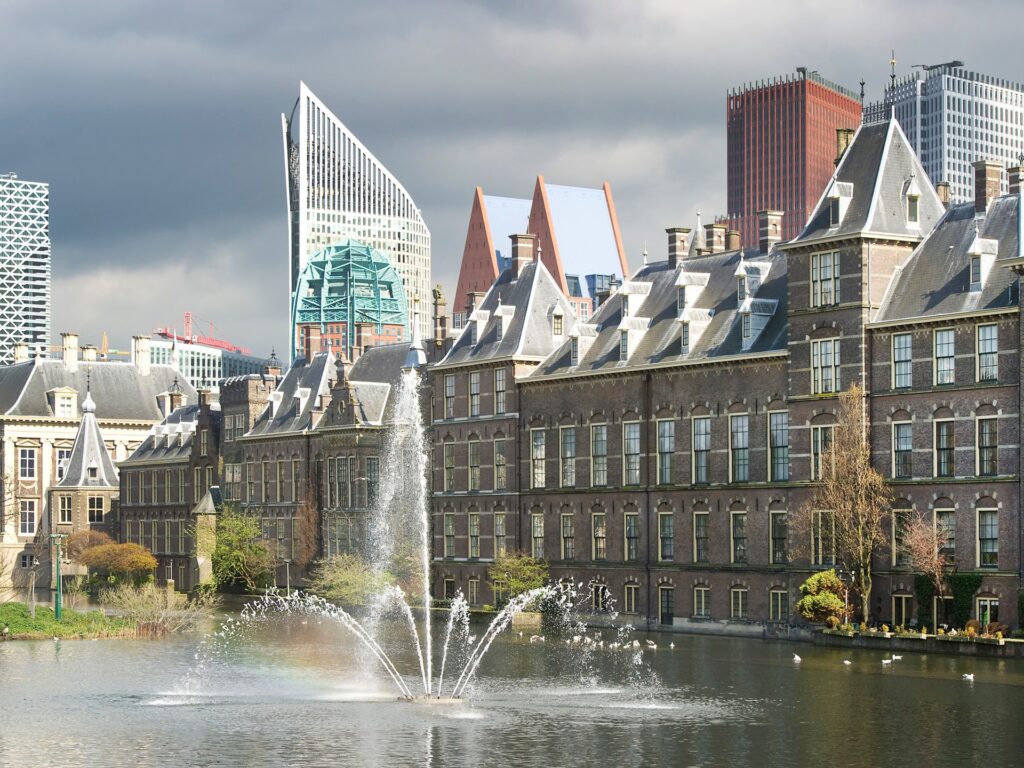
City council in third largest city in Netherlands approves the new rules, which will apply from January. The Hague will ban street advertising for fossil fuels, according to a notice published on the Dutch city’s website, as a number of cities worldwide crack down on publicity for fossil fuels and high-emissions sectors. The Municipal Council in the third largest city in the Netherlands voted on Thursday to approve the new rules for outdoor advertising, which will apply from January to billboards and freestanding advertising screens. “The city council of The Hague adopted two proposals to ban fossil advertising in outdoor spaces,” council spokesman Jordy Kruse told the AFP news agency on Friday. The first proposal informs advertising agencies that fossil fuel advertising is not permitted while the second bans all fossil fuel advertising in public spaces, Kruse said. “We believe that adopting binding laws to ban fossil fuel advertising through local legislation is a world first,” Leonie Gerritsen, a Hague council member for the Party for Animals. “We hope that this law will also give a signal to other cities to do the same to fight climate change,” Gerritsen, one of the main drivers of the legislation, told AFP. Other cities in the world have moved against fossil fuel advertising, but The Hague is the first to enact binding legislation. In June, UN Secretary-General Antonio Guterres urged every country to enact bans on ads for fossil fuel companies, which he called “the godfathers of climate chaos”. Oil, gas and coal are the biggest contributors to climate change, accounting for the bulk of greenhouse gas emissions. In 2022, the Dutch city of Haarlem agreed to outlaw ads for intensively farmed meat on public places like buses, shelters and screens. Many countries have banned advertising for products that have proven harmful to human health, such as tobacco. The Hague, the country’s administrative centre and the hub of international law, is seeking to be climate neutral by 2030 Adblock test (Why?)
Pope Francis tells US Catholics to choose ‘lesser evil’ in coming election
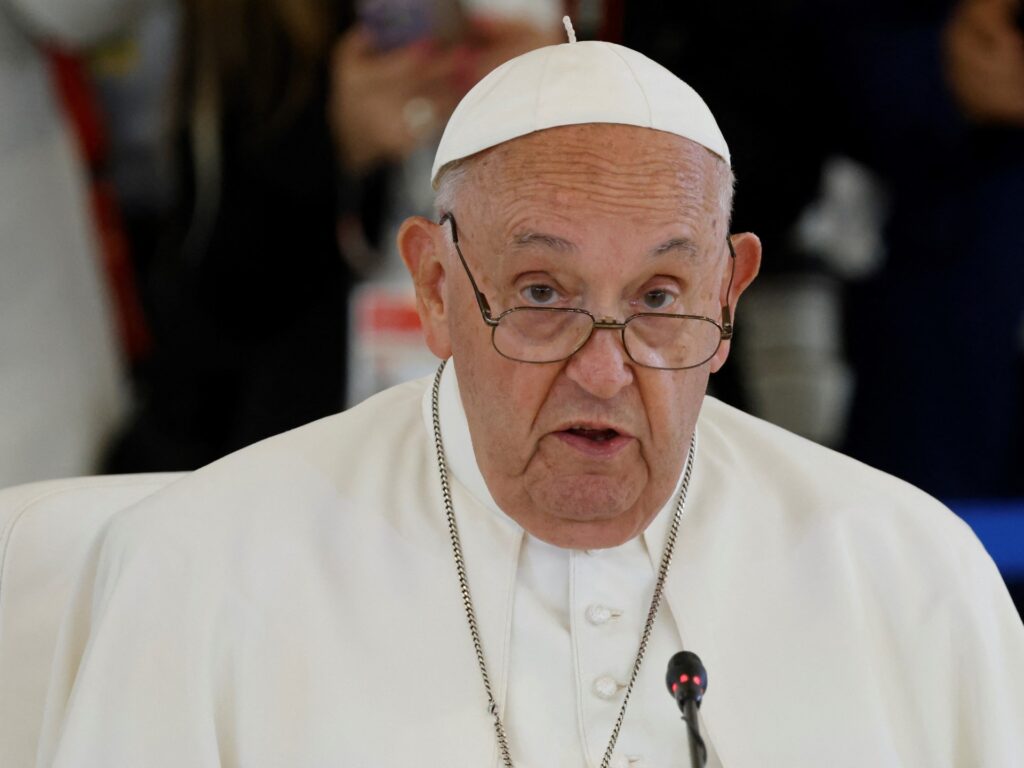
Without naming the two main US presidential candidates, the pontiff decried abortion and restrictions on immigration. Pope Francis has encouraged Catholics in the United States to vote in the November elections, saying they should “choose the lesser evil” while criticising both of the leading candidates. In remarks on Friday while flying to Rome from Singapore, the pope named neither the Republican nor Democratic presidential nominees: former President Donald Trump and Vice President Kamala Harris, respectively. But he offered pointed criticisms of their platforms, saying refusing to welcome immigrants is a “grave” sin and abortion is akin to an “assassination”. “Not voting is ugly,” Francis said. “It is not good. You must vote.” “You must choose the lesser evil,” he added. “Who is the lesser evil? That lady or that gentleman? I don’t know. Everyone, in conscience, [has to] think and do this.” The 87-year-old pontiff made the comments as the US presidential election is entering its final weeks, with voting scheduled for November 5. While conservative on social issues like abortion, Francis has been one of the foremost critics of rich countries embracing increasingly restrictive immigration policies. “Whether it is the one who is chasing away migrants or the one who kills children,” the pope said, “both are against life.” The US is home to about 52 million Catholics, a conservative-leaning constituency that is well-represented in several key swing states, such as Pennsylvania and Wisconsin. Polling by the Pew Research Center indicated that about 52 percent of US Catholics identify with or lean towards the Republican Party, compared with about 44 percent for the Democratic Party. But the centre noted that the Catholics, in the past, have been “closely divided”. In his comments on Friday, which came after a 12-day tour across Southeast Asia and Oceania, Francis also lamented the lack of progress towards a peace deal to bring Israel’s war in Gaza to a close. “Forgive me for saying so, but I don’t see any progress being made towards peace,” he told reporters on board the papal plane, adding that an Israeli strike on a school this week that killed Palestinian children was “ugly”. Adblock test (Why?)
US accuses RT of ‘covert’ intelligence activities, issues fresh sanctions
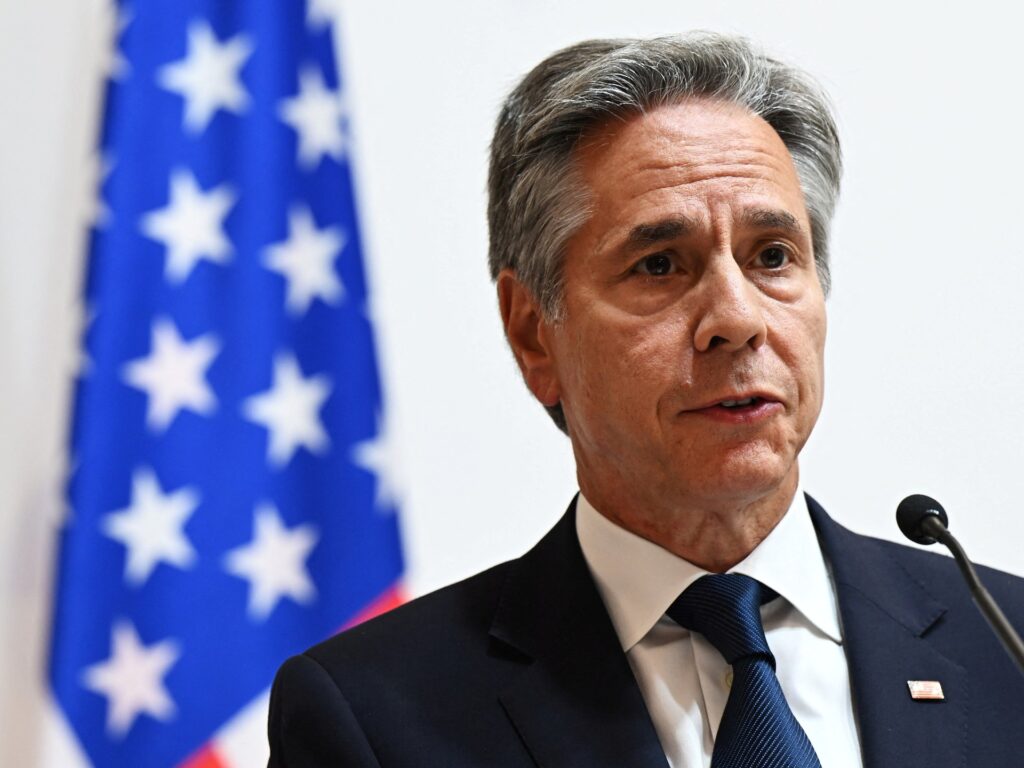
The US State Department says Russia’s RT network has ‘moved beyond being a media outlet’ and has cyber-capabilities. The United States has issued new sanctions against Russia’s state media outlet RT, accusing the television network of taking part in covert “influence and intelligence operations” around the world and weapons procurement for the Russian military. In a statement on Friday, the US State Department said RT — previously known as Russia Today — had “moved beyond being simply a media outlet and has been an entity with cyber capabilities”. “It is also engaged in information operations, covert influence, and military procurement. These operations are targeting countries around the world, including in Europe, Africa, and North and South America.” Washington also alleged that an online crowdfunding platform operating within RT and on social media provided “material support and weaponry” to Russian military units in Ukraine. The arms include sniper rifles, body armour, drones and other equipment, the State Department said. Friday’s announcement comes amid years of strained relations between the US and Russia over the latter’s invasion of Ukraine. The administration of US President Joe Biden — a staunch critic of his Russia counterpart, Vladimir Putin — has issued waves of sanctions against Russian individuals and companies since the war began in 2022. American officials also have accused Russia of interfering in elections. Last week, the US Justice Department announced a range of actions to counter Russian efforts to meddle in November’s vote, including criminal charges against two RT employees it accused of taking part in a Moscow-directed influence operation. Speaking to reporters about Friday’s sanctions, US Secretary of State Antony Blinken said the Russian state media outlet “wants its new covert intelligence capabilities, like its longstanding propaganda disinformation efforts, to remain hidden”. “Our most powerful antidote to Russia’s lies is the truth,” Blinken said. “It’s shining a bright light on what the Kremlin is trying to do under the cover of darkness.” RT has created websites posing as legitimate news sites to spread disinformation and propaganda in Europe, Africa, South America and elsewhere, officials said. They alleged the outlet also expanded its use of cyber-operations with a new unit with ties to Russian intelligence created last year. Russia’s embassy in Washington, DC, did not immediately respond to a request for comment from the Reuters news agency. Asked for comment by CNN, the US news outlet said RT “responded with a mocking email that read in part: ‘We’ve been broadcasting straight out of the KGB headquarters all this time.’” Adblock test (Why?)
Putin warns Ukraine use of long-range arms will put NATO at war with Russia
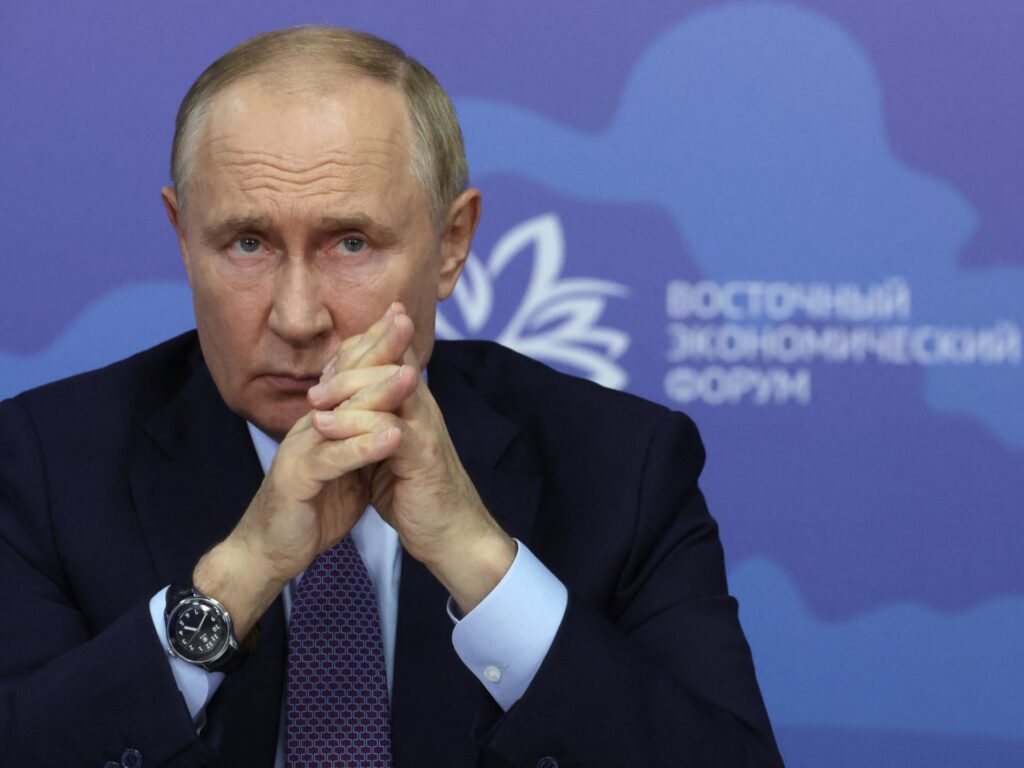
President Vladimir Putin has warned that if Western nations allow Ukraine to use long-range weapons to strike inside Russia then it will mean NATO would be “at war” with his country. “This would in a significant way change the very nature of the conflict. It would mean that NATO countries, the US, European countries, are at war with Russia,” Putin told Russian state TV on Thursday. “And if this is so, then, bearing in mind the change in the very essence of this conflict, we will make appropriate decisions based on the threats that will be created for us,” he said. His comments come ahead of a meeting in Washington, DC, on Friday between British Prime Minister Keir Starmer and US President Joe Biden, who are expected to discuss giving Ukraine the go-ahead to strike targets inside Russia amid mounting concerns over its losses on the battlefield. Ukrainian President Volodymyr Zelenskyy has repeatedly called for restrictions on Western-supplied, long-range weapons to be lifted so his forces can target airfields, ammunition depots and command centres deep inside Russia, also increasing the costs of the invasion for Moscow. Speaking to reporters en route to the US, Starmer said, “Russia started this conflict. Russia illegally invaded Ukraine. Russia can end this conflict straight away. Ukraine has the right to self-defence”, according to British media reports. It will likely be the last meeting between the US and British leaders before Biden leaves office and ahead of the US presidential election in November that will pit Democrat Kamala Harris against Republican Donald Trump. Trump repeatedly refused to take sides on the war, which started with Russia’s full-scale invasion of Ukraine in 2022, during a debate with Harris this week, saying only: “I want the war to stop.” Biden said he was “working” on Ukraine’s request as US Secretary of State Antony Blinken and British Foreign Secretary David Lammy made a rare joint visit to the Ukrainian capital, Kyiv, where they announced $1.5bn in additional aid. Blinken wrapped up a three-nation, Ukraine-focused European tour in Poland on Thursday after hearing repeated appeals from Ukrainian officials to use Western-supplied weaponry for long-range strikes inside Russia. “As what Russia’s doing has changed, as the battlefield has changed, we’ve adapted,” Blinken said at a news conference in Warsaw. Biden has allowed Ukraine to fire US-provided missiles across the border into Russia in self-defence but has largely limited the distance they can be fired. One of the key requests from Ukraine is to strike with US-produced Army Tactical Missile Systems (ATACMS). But the Pentagon has said they wouldn’t be the answer to the main threat Ukraine faces from long-range Russian glide bombs, which are being fired from more than 300km (186 miles) away, beyond the ATACMS reach. On Friday, Donald Tusk, the prime minister of NATO member Poland, which shares a border with Ukraine, said he was not worried by Putin’s comments. “It is necessary to take all events in Ukraine and on the Ukrainian-Russian front very seriously, but I would not attach excessive importance to the latest statements from President Putin,” Tusk told a news conference. “They rather show the difficult situation the Russians have on the front.” Polish Foreign Minister Radowslaw Sikorski had previously said Kyiv should be allowed to use Western weapons in self-defence because “Russia is committing war crimes by attacking civilian targets”. “Missiles that hit these civilian targets are fired from bomber aircraft from over the territory of Russia. These bombers take off from airfields on Russia’s territory,” Sikorski said. Russian forces have ramped up pressure on the battlefield in eastern Ukraine’s Donetsk region and increased air attacks across the country. Ukraine was pressing on with attacks in western Russia’s Kursk region following its surprise cross-border incursion on August 6, but Zelenskyy confirmed on Thursday that Moscow’s troops were mounting a counteroffensive. Adblock test (Why?)
Trump says no more debates against Kamala Harris

NewsFeed US Presidential candidate Donald Trump says he will not debate Kamala Harris again before November’s election, calling the Vice President a liar and lashing out against ABC’s debate moderators. Published On 13 Sep 202413 Sep 2024 Adblock test (Why?)