

Germany expands border controls as right pressures government on migration
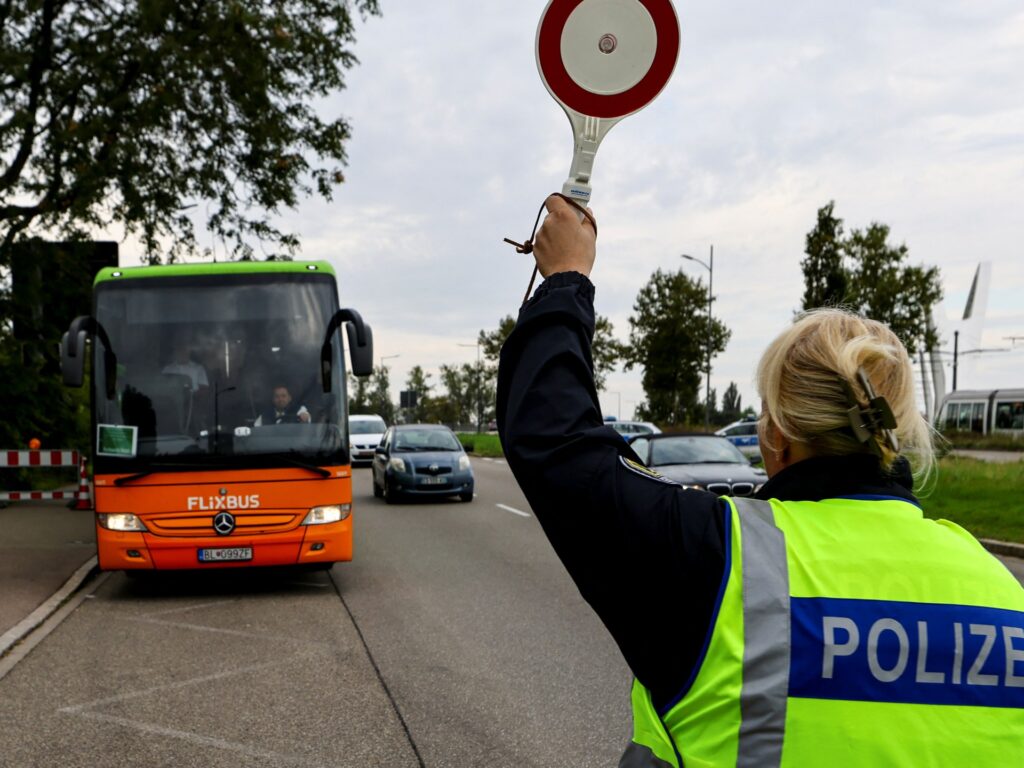
The governing parties are seeking to head off challenge of the far right as it faces key elections. Germany has expanded border control measures, with the crossings to all nine of its neighbouring countries now being checked. The checks, implemented on Monday in what the government said last week are a bid to to curb entry of undocumented migrants, are due to last six months. The move has drawn criticism from other European Union members, rights groups, and Brussels for disrupting the bloc’s border-free Schengen zone. However, with national elections looming next year, Chancellor Olaf Scholz’s government is under intense political pressure from far-right political groups to toughen its stance on migration in the wake of a deadly knife attack. The controls include temporary physical structures at land crossings and spot checks by federal police, according to the AFP news agency. Border controls with Poland, the Czech Republic, Austria and Switzerland were already in place before the extended regime was announced. Checks will now also cover Germany’s borders with France, Luxembourg, the Netherlands, Belgium and Denmark. On Sunday, Interior Minister Nancy Faeser said the step aims to limit irregular migration and “put a stop to criminals and identify and stop Islamists at an early stage”. Faeser promised to minimise the effect of the restrictions on people living and working in border regions, assuring “coordination with our neighbouring countries”. The Ministry of the Interior advised travellers to carry identification when crossing the border. Poland and Austria have voiced concern, and the European Commission has warned that EU members impose such steps only in exceptional circumstances. However, the Social Democrat-led government is being pulled to the right. Germany took in more than one million asylum seekers in 2015-16, many of them Syrians, and has hosted another million or so Ukrainians since the start of the Russian invasion in 2022. But a string of incidents in recent weeks, including a deadly knife rampage, have shocked Germany, fuelling rising public anger and demands for border control. That has helped radical right-wing forces to gain support. Last month, the anti-immigration, far-right Alternative for Germany (AfD) party won state elections in Thuringia and came second in Saxony. The AfD is also leading in polls ahead of upcoming state elections in Brandenburg. Faeser’s Social Democrats currently governs the state in coalition with the Greens and Christian Democrats. A spokesperson for the Interior Ministry told reporters on Monday that racial profiling will not be allowed at the borders. “There is absolutely no question [of racial profiling], and I would like to emphasise this again here that racially motivated police action is completely unacceptable and unlawful,” the spokesperson said. Germany’s Federal Police Union, however, questioned the feasibility of the restrictions, citing issues with staffing and a short preparation period. Adblock test (Why?)
Ukraine invites UN and Red Cross to Russia’s Kursk region
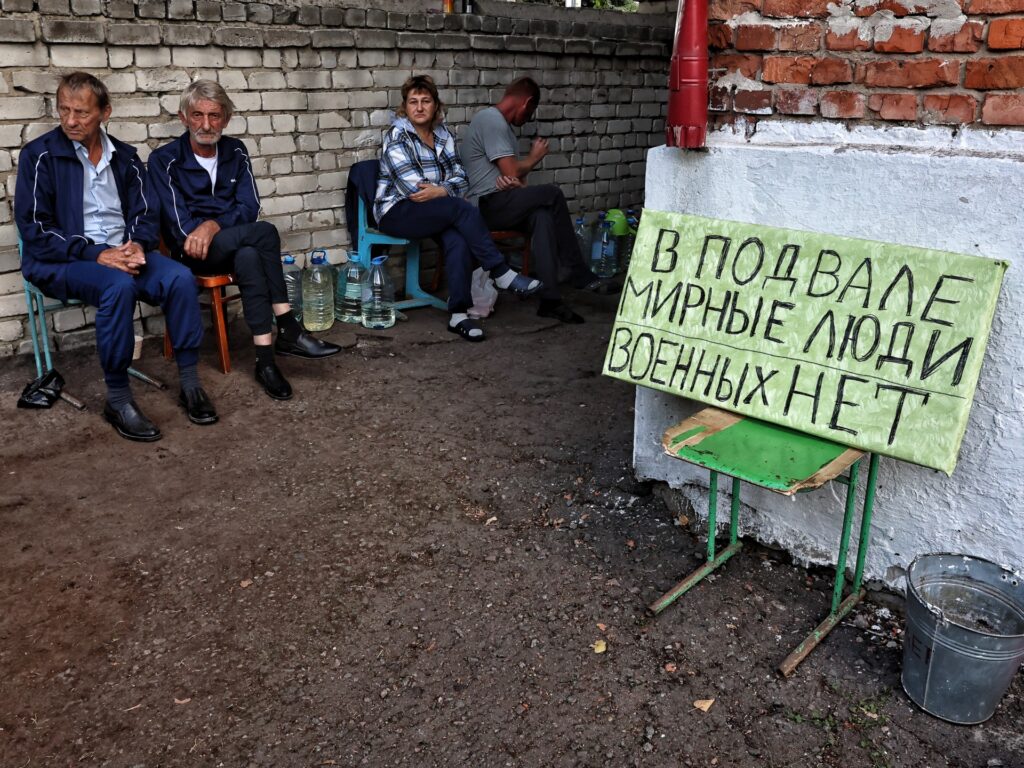
Kremlin slams invitation as ‘pure provocation’ as it prepares to welcome Red Cross chief. Ukraine says it has asked the United Nations and the International Committee of the Red Cross (ICRC) to verify the situation in areas of Russia’s Kursk region seized by Kyiv. Ukrainian Foreign Minister Andrii Sybiha said on Monday that he had instructed his ministry to extend formal invitations to the organisations. The invitation is intended to “prove [Ukraine’s] adherence to international humanitarian law”, he added, in a clear reference to numerous atrocities committed by Russian forces in Ukraine since they invaded in February 2022. It was not immediately clear whether the UN or ICRC had responded to the invitation. Yesterday, while on a visit to our warriors in the Sumy region, I instructed @MFA_Ukraine to officially invite the UN and ICRC to join humanitarian efforts in the Kursk region. Ukraine is ready to facilitate their work and prove its adherence to international humanitarian law. — Andrii Sybiha 🇺🇦 (@andrii_sybiha) September 16, 2024 Posting on the social media platform X, Sybiha said the Ukrainian army was ensuring “humanitarian assistance” and “safe passage” to civilians in the Kursk region, where Ukraine’s army remains more than a month after it began a major cross-border offensive. Kyiv says it controls about 100 settlements in the southern Russian region on the border with Ukraine. Sybiha said he told his ministry to issue the invitations after a visit to Ukraine’s Sumy region, from which Ukrainian forces launched their lightning raid in August. The Ministry of Foreign Affairs confirmed that it had issued the requests, which asked the ICRC to monitor Ukraine’s compliance with international humanitarian law in accordance with the Geneva Conventions, which cover the protection of people caught up in armed conflicts. Kremlin spokesman Dmitry Peskov branded the invitation, which came as ICRC President Mirjana Spoljaric arrived in Moscow for a planned visit, as “pure provocation”. He said Russia expects “a sober assessment” of Ukraine’s request from the UN and the ICRC. Spoljaric is to meet with Russian Foreign Minister Sergey Lavrov on Tuesday, days after shelling killed three Ukrainian ICRC employees in a village in the front-line Donetsk region in eastern Ukraine. Spoljaric has condemned the attack. Ukraine has been careful to try to present its army in a different light than the Russian forces occupying about 20 percent of Ukrainian territory. Moscow has denounced Ukraine’s counteroffensive, noting that it has pushed about 150,000 Russian civilians to evacuate. Adblock test (Why?)
Ukraine’s ‘Bucha witches’ volunteer to shoot down Russian drones
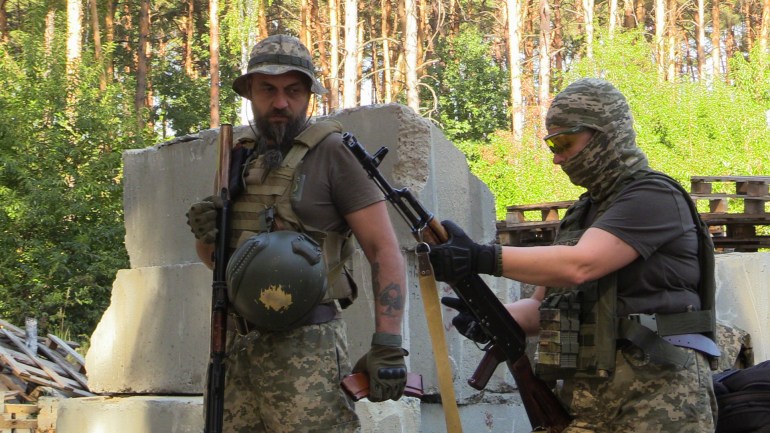
Bucha, Ukraine – Valentyna beams when she talks about her new vocation – a “witch of Bucha”. That’s the unofficial moniker of almost 100 women aged 19 to 64 who are volunteers in part-time military service in air defence units in the suburban community northwest of Kyiv. Each “Bucha witch” trains to handle assault rifles and machineguns to shoot down Russian drones that swarm above their homes several times a month. The weapons fly towards Kyiv to blow up buildings, prompting Ukrainian air defence forces to launch pricey Western-supplied missiles at them. The buzzing swarms repeat the route of Russian ground forces in early 2022 when they occupied most of the Bucha district for 33 days and committed atrocities, now well documented, that captured the world’s attention. According to Ukrainian officials and international war crimes monitors, Russian fighters killed hundreds of civilians and robbed, raped and tortured thousands more. A volunteer learns how to reload an assault rifle [Mansur Mirovalev/Al Jazeera] Decimated by the killings, migration and mobilisation, residents in Bucha described a community reeling from a collective post-traumatic stress disorder and itching for revenge. Since April, several women have signed up to become a “Bucha witch” to find solace and fulfilment. “My mum is happy that I found myself. And I did find myself here. Found friends, colleagues, brothers and sisters,” Valentyna, a 51-year-old mother of three sons, told Al Jazeera. She and her peers interviewed for this story withheld their last names and personal details in accordance with military regulations. “We’re all kindred spirits. We have one heart for all. We have one purpose – to speed up the victory and invest in the victory any way we can,” Valentyna said earnestly. Clad in camouflage with blonde hair spilling from under a baseball cap, she was holding an assault rifle and a flak jacket covered with dust, dry leaves and pine needles. Valentyna and four other women spent several hours on a sunlit military range. They built dugouts and pits for their vehicles there. These days, the women are bussed to the range to learn how to load arms, shoot and coordinate attacks in twos and threes. The location is called “Mordor”, and Russian soldiers are routinely called “orcs” in Ukraine. Mordor is a realm in the fictional world of JRR Tolkien’s Middle Earth fantasy series while orcs are evil beings. ‘When you put on a uniform, you’re not a woman or a man. You’re a defender’ On a recent Saturday, the women and their instructors “stormed” a dugout covered with grey plastic and pine logs that smelled like a Christmas tree. The male instructors acted unceremoniously, occasionally cursing and yelling things like “Move your a** from the tree!” or “I shot you. You’re f****** dead!” Their commander is gender-blind. “When you put on a uniform, you’re not a woman or a man. You’re a defender,” Andriy Verlaty, a raspy-voiced and burly colonel, told Al Jazeera. “But there are women who can outdo any man in fulfilling military duties, in being responsible, pedantic. “They even manage to wax their assault rifles,” he said like a stern parent admitting he’s proud of his child. Two doors away from his office in a dusty storage room were the twisted pieces of one of their trophies – a shot-down Iranian-made Shahed drone. Remnants of a Russian Geran drone shot down by the female volunteers [Mansur Mirovalev/Al Jazeera] Packed with 50kg (110lb) of explosives, the Shaheds and their modified Russian-made siblings, Gerans, move in raven-like flocks of dozens at 150 kilometres per hour (93 miles per hour). Filling the air with the harrowing screech of their engines, they are easy to spot but hard to shoot down. “Their tactics are always evolving,” Vladyslav Korg, who serves in a Bucha air defence unit, told Al Jazeera. Each Russian drone has a GPS tracker and streams live video to its operator. And when a Ukrainian air defence unit starts shooting, one of the drones, a bombless “spy”, flies up to it and turns on a projector so its operators can sic the swarm, Korg said. Before joining air defence, each Bucha witch has to undergo weeks of training. And it’s not a picnic. “I thought I wouldn’t be able to handle it,” Valentyna said. “But the body handles it. And when strength ends, spirit kicks in.” She panted heavily while doing push-ups with a flak jacket on. Next to her was a first-timer – Kateryna, who owns an art gallery in Kyiv. “I was worried. I’ve never touched a gun before,” she said after the training. “But now, I’m beginning to understand things a little.” The women joked that the drills were a “free outdoor gym”. But they give them much more than workout endorphins. ‘Better to take part’ On the first day of Moscow’s full-scale invasion, another first-timer, Natalya, saw Russian soldiers spilling out of planes and helicopters at the Hostomel airport near Bucha. Several panicked hours later, she fled with her daughters and nieces while her husband and son stayed on to serve in the military. These days, she’s their peer. “It’s better to take part than to watch from aside,” Natalya, a confectioner from 9 to 5, told Al Jazeera. The training is also a form of collective psychotherapy. Valentyna’s village next to Bucha has not been occupied, but her family survived near-death horrors. One day, deafening shelling forced them into their ice-cold basement. The walls were shaking, and shards of stucco kept falling from the ceiling. The shelling was so loud that she could not hear the words of her frightened child, who she hugged as he yelled into her ear. When leaving westwards in a jam-packed car, Russian soldiers flagged it down and ordered the family to roll down the windows. One of the soldiers touched her son’s head with his gun’s muzzle, she said. “That was such a shock and such a fear, a starting point” that eventually led her to the group of female fighters, Valentyna
Why does the Israeli army get away with killing foreign activists?
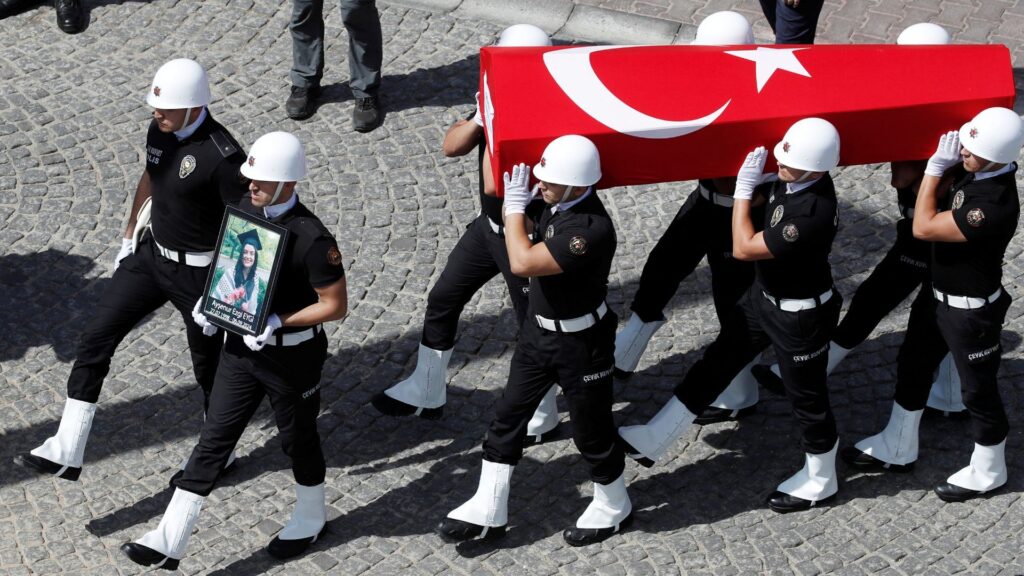
Investigations into Israeli soldiers’ attacks on civilians rarely lead to prosecutions. The killing of Aysenur Ezgi Eygi, a 26-year-old American-Turkish activist in the occupied West Bank, has once again brought a troubling issue into the spotlight: Israeli forces targeting civilians. Despite international condemnation and calls for justice, questions linger about whether anyone will be held accountable. The Israeli military says it is investigating, but critics say these internal probes rarely lead to prosecutions. What will it take to break this cycle? And who will hold Israel to account? Presenter: James Bays Guests: Miko Peled – founder and president of Palestine House of Freedom, an aid and rights organisation Daniel Santiago – American peace activist who was demonstrating in Beita last month when he was shot by the Israeli military Amir Oren – columnist at Haaretz newspaper who focuses on military and government affairs Adblock test (Why?)
Trump safe as FBI probes ‘attempted assassination’ near Florida golf course

DEVELOPING STORYDEVELOPING STORY, White House says both President Biden and Trump’s rival Kamala Harris were ‘relieved’ to know Trump is safe. Former United States President Donald Trump said he is “safe and well” after gunshots were reported in his vicinity as he played golf at his resort in Florida. The FBI said it is “investigating what appears to be an attempted assassination of former President Trump”, in the incident the Secret Service said occurred before 2pm local time (18:00 GMT) on Sunday. “I am safe and well, and no one was hurt. Thank God!” Trump said in a statement on his website. “But, there are people in this world who will do whatever it takes to stop us,” the Republican presidential nominee added. “I will not stop fighting for you. I will never surrender.” Police vehicles are pictured near Trump International Golf Club, West Palm Beach, Florida, after gunshots were reported in the vicinity [Stephanie Matat/AP] FBI investigating “attempted assassination” In a statement, the FBI said it “has responded to West Palm Beach Florida and is investigating what appears to be an attempted assassination of former President Trump”. Trump had been golfing at his West Palm Beach course, not far from his Mar-a-Lago residence, during a day away from the presidential campaign, multiple media reports said. At a joint news conference with the FBI, Secret Service and local officials, officials said that a Secret Service agent, who was one hole ahead of Trump on the golf course, spotted a person with a firearm and fired in his direction. It was unclear if the suspect fired back at the agent, the officials added. The Palm County sheriff said the suspect was 400 to 500 yards (365 to 457 metres) from Trump and it appeared he sought to film himself. The suspect fled the wooded area in a black vehicle, but was quickly located and detained by law enforcement agencies, officials added. A backpack, GoPro camera, firearm scope and AK-47-style rifle were recovered from the scene, the officials said. ‘Violence has no place in America’ The White House said that President Joe Biden and Vice President Kamala Harris, the Democratic presidential nominee, had both been briefed and would be kept updated on the investigation. The White House added that both Biden and Harris were “relieved” to know Trump is safe. “Violence has no place in America,” Harris said in a post on X. Trump was injured in an assassination attempt in Pennsylvania on July 13. A bullet grazed his right ear and one person attending the rally was killed in the gunfire. The attacker, identified as 20-year-old Thomas Crooks, was also killed by a Secret Service sniper. The attack raised questions about protection for the candidates just months ahead of what is likely to be a highly contested November 5 election in which Trump will face off against Harris. Kimberly Cheatle was forced to resign as Secret Service director under bipartisan congressional pressure. The agency’s new acting director said in August that he was “ashamed” of the security lapse that had led to the assassination attempt on Trump. Adblock test (Why?)
Trump’s VP pick JD Vance defends spreading false story about migrants

Top US Republican politicians continue to repeat debunked rumours about Haitian immigrants eating pets in Ohio town. Former President Donald Trump’s running mate in the US election, Republican Senator JD Vance, has defended amplifying false stories about migrants stealing and eating pets in the United States, saying in an interview that the political ends justify the means. During several television appearances on Sunday, Vance was questioned about the unfounded claims he and Trump have made about Haitian migrants in the city of Springfield, Ohio, as part of a wider attack on the immigration policies of the Democratic presidential candidate, Vice President Kamala Harris. Trump had touted the false story during his first – and likely only debate – with Harris last week, with 67 million viewers tuning in. Local officials have repeatedly said they have received no evidence to support the rumours. But Vance remained defiant on Sunday, saying in an interview with CBS News that he had received “verifiable and confirmable” accounts from residents of the Ohio community, without providing further evidence of the alleged incidents. “Everybody who has dealt with a large influx of migration knows that sometimes there are cultural practices that seem very far out there to a lot of Americans,” he said. “Are we not allowed to talk about this in the United States of America?” In another exchange on CNN, Vance was asked to “affirmatively say” that there is no evidence to support the stories about Haitian migrants eating pets. Vance again replied he was only responding to constituents’ concerns. “If I have to create stories so that the American media actually pays attention to the suffering of the American people, then that’s what I’m going to do … because you guys are completely letting Kamala Harris coast,” Vance replied, before backpedaling. “I say that we’re creating a story, meaning we’re creating the American media focusing on it,” Vance said. For his part, Trump on Saturday again referenced Springfield, Ohio, during a speech near Los Angeles, vowing to deport Haitian immigrants from the community if elected in the November 5 vote. Trump and his Republican allies have also been sharing cat-themed memes to push the anti-immigrant narrative. Trump posts ‘I HATE TAYLOR SWIFT’ For years, political violence experts have warned that the Trump campaign’s bellicose rhetoric and flippant approach to misinformation stoke social tensions and raise the spectre of violence. Just two days after the debate, hospitals, schools and government buildings in Springfield, Ohio were forced to close amid a series of bomb threats that referenced the influx of migrants in the community. On Friday, US President Joe Biden called the attacks “simply wrong”. “This has to stop, what [Trump’s] doing. It has to stop,” Biden said. Critics have also pointed to the Trump campaign’s approach as further evidence of US election seasons becoming increasingly dominated by ephemeral cultural spectacle meant to stoke partisan outrage, while sidelining meaningful policy discussion. In the latest example, Trump on Sunday responded to pop star Taylor Swift’s recent endorsement of Harris. The nod is considered a major political boon for the Democratic candidate, with Swift boasting hundreds of millions of ardent fans across the world. In a brief, all-caps post on his Truth Social account, Trump wrote: “I HATE TAYLOR SWIFT.” Adblock test (Why?)
Four dead as torrential rains batter Central and Eastern Europe
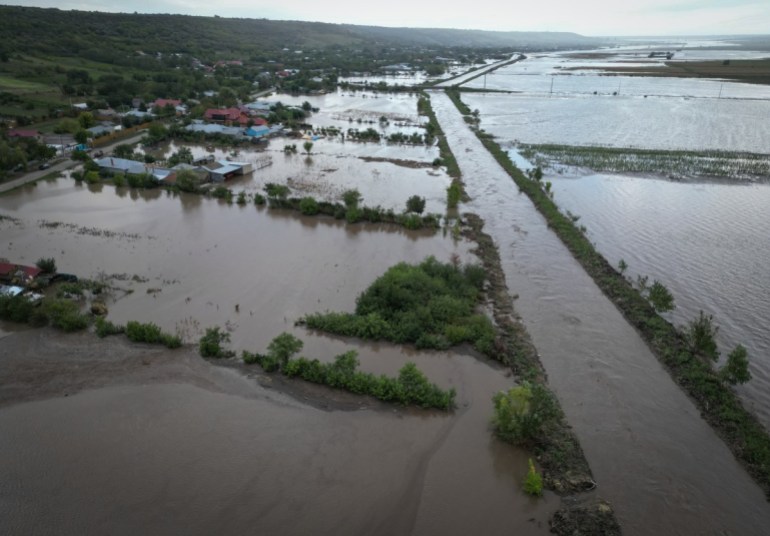
At least five people have been found dead in eastern Romania after torrential storms dumped unprecedented rain, leaving hundreds stranded in flooded areas, emergency authorities said on Saturday. Rescue services scrambled to save people in the hard-hit eastern counties of Galati and Vaslui. The bodies of three older women and one man were found in four localities, the Department for Emergency Situations said. Emergency authorities released video footage showing teams of rescuers evacuating people using small lifeboats through muddy waters and carrying some older people to safety. Some of the most significant flood damage was concentrated in Galati, where 5,000 households were affected. A Black Hawk helicopter was also deployed there to help with the search and rescue efforts. The storms battered 19 localities in eight counties in Romania, with strong winds downing dozens of trees that damaged cars and blocked roads and traffic. Authorities sent text message alerts to residents to warn them of adverse weather as emergency services rushed to remove floodwater from homes. The rising floodwater in the Romanian village of Slobozia Conachi [Daniel Mihailescu/AFP] Romanian Environment Minister Mircea Fechet told The Associated Press news agency that in some of the badly flooded areas, more than 160 litres (42 gallons) of rain fell per square metre (about 10.7 square feet), which he said is a rare occurrence. The stormy weather comes as several Central European nations – the Czech Republic, Poland, Austria, Germany, Slovakia, and Hungary – anticipate severe flooding over the weekend. In the Czech Republic, river waters reached dangerously high levels in many areas, prompting the authorities to evacuate hundreds of people, including from a hospital in the second-largest city of Brno, to escape raging floods. By Saturday evening, Czech authorities had declared the highest flood warnings in more than 70 areas across the country and said thousands more people should be prepared to be evacuated as the rains continued to slam down. The Bela River flows past a church during floods in Mikulovice, Czech Republic [Petr David Josek/AP Photo] In neighbouring Austria, authorities declared 24 villages in the northeast Lower Austria province “disaster zones” on Saturday afternoon and began evacuating residents from those areas. The torrential downpours have also caused a sharp rise in water levels in the Danube River in the Austrian capital, Vienna, where special flood relief channels were built in the 1970s and 80s and are likely to be tested over the weekend. The Kamp River, a tributary of the Danube, is also swelling because of the unprecedented weather event. Heavy rain also hit Moldova on Saturday, where emergency workers pumped floodwater from dozens of houses in several localities, and 13 localities in three districts suffered partial electricity outages, authorities said. In Poland, many people were evacuated as a precautionary measure on Saturday from two villages near the town of Nysa, in the Nysa River basin, after meteorologists warned of unprecedented rainfall. Some farms were flooded. Adblock test (Why?)
Philippine Coast Guard ship in standoff with China returns to port

Manila says new vessel will ‘immediately take over’ after the BRP Teresa Magbanua left disputed area in South China Sea. A Philippine Coast Guard (PCG) vessel that spent months anchored at a disputed reef in the South China Sea has left the area, but a new vessel is being deployed “immediately” to replace it, Philippine officials announced, in a move that is likely to irk China. BRP Teresa Magbanua had been anchored inside Sabina Shoal since April to assert the Philippine claims to the area within its exclusive economic zone, and to prevent China from seizing it. “After more than five months at sea, where she carried out her sentinel duties against overwhelming odds, BRP Teresa Magbanua is now sailing back to her homeport with her mission accomplished,” Lucas Bersamin, executive secretary and chairman of the National Maritime Council, said in a statement on Sunday. Bersamin said the vessel’s return was necessary to the medical needs of its crew and to undergo repairs. NMC spokesperson Alexander Lopez later said “another will immediately take over”, citing a PCG order. “Definitely, we will keep our presence there,” Lopez added, without sharing which vessel would take over. ‘Indisputable sovereignty’ In a brief statement, China Coast Guard (CCG) spokesperson Liu Dejun said Beijing “has indisputable sovereignty over … Xianbin Jiao and its adjacent waters”, using the Chinese name for Sabina Shoal. China asserts sovereignty over nearly all of the South China Sea, including areas claimed by the Philippines, Taiwan, Malaysia, Indonesia, Vietnam and Brunei. A 2016 international tribunal ruling said Beijing’s assertion has no legal basis. Philippine and Chinese vessels have collided at least three times recently near Sabina Shoal, located 140km (86 miles) from the western Philippine island of Palawan and 1,200km (746 miles) from China’s nearest major landmass, Hainan Island. The Teresa Magbanua’s bridge wing and freeboard were damaged in one of the collisions in August. In a statement posted on X, PCG spokesman Commodore Jay Tarriela said the “structural damage to the ship”, which he blamed on the “deliberate ramming by the China Coast Guard”, further complicated the vessel’s integrity. Last month, Chinese vessels blocked a resupply mission for the Filipino sailors on board the ship, leaving them running critically low on food and other provisions. Images published by the GMA TV network showed the vessel crew members being transported in stretchers due to reported dehydration resulting from the blockade. Earlier this week, officials from the Philippines and China held high-level talks on their maritime issues, wherein Beijing reiterated its demand for the withdrawal of the Philippine vessel. The latest situation has echoes of 2012, when Beijing took control of Scarborough Shoal, another strategic feature about 240km (149 miles) west of the main Philippine island of Luzon. Then, Manila pulled its ships back after a tense two-month maritime standoff. In recent years, the Philippines has accused China of repeated harassment of Philippine vessels in the South China Sea. Adblock test (Why?)
‘Canelo’ Alvarez pummels Berlanga to retain super middleweight boxing belts
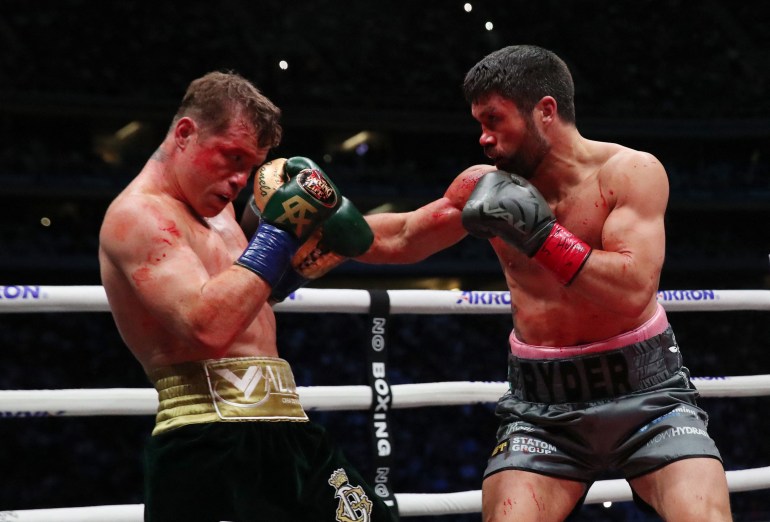
Undisputed super middleweight champion Saul ‘Canelo’ Alvarez outpoints challenger Edgar Berlanga. Mexican superstar Saul “Canelo” Alvarez has retained his unified super middleweight world title with a punishing unanimous decision over Edgar Berlanga in Las Vegas. Alvarez knocked down the previously unbeaten Berlanga in the third and was relentless throughout the 12 rounds on Saturday night. The champion rocked Berlanga with a big right in the waning seconds of the ninth round and Berlanga’s cornerman could be heard asking his fighter: “Are you awake?”, as he sat on his stool before the 10th. Berlanga, who was warned for an intentional head butt, remained defiant, taunting Alvarez as they came out for the 12th. But the Puerto Rican-American, who launched his pro career with 16 straight first-round knockouts, could not find the stoppage he had brashly predicted. The vastly experienced Alvarez put him under pressure early, Berlanga looking tentative in the opening two rounds as he was backed repeatedly into the corner. He tried gamely to respond in the third after Alvarez landed a right to the head, but a devastating left hook from Alvarez sent him down. Berlanga banged his gloves together as he sat on the canvas and hopped up quickly. Saul ‘Canelo’ Alvarez, left, receives a right jab from John Ryder [Henry Romero Berlanga had no answer as Alvarez went after him with debilitating body blows round after round. “I did good,” said Alvarez, who was awarded the fight by a score of 118-109 by two judges and by 117-110 from the third. “Now what are they going to say? I fight younger fighters? Before they say I fought older fighters. Now what are they going to say? They always talk. “I’m the best fighter in the world,” added Alvarez, who improved to 62-2-2 (39 KOs) and retained his World Boxing Association, World Boxing Council and World Boxing Organization belts. Alvarez bounces back Alvarez was stripped of his International Boxing Federation belt in July when he opted to take on Berlanga rather than IBF mandatory challenger William Scull. That was immaterial to the partisan crowd of more than 20,000 at T-Mobile Arena, where Alvarez claimed another victory on Mexican Independence Day weekend – a holiday he made his own along with Cinco de Mayo. “It means a lot,” Alvarez said. “It’s an honor for me to represent my country on this day. I feel proud about it.” Berlanga, 27, fell to 22-1. As the final bell sounded, the fighters embraced in an extended hug. “I was telling him that he’s my idol,” Berlanga said. “Since I was a kid, I looked up to him.” John Ryder is knocked down by Saul ‘Canelo’ Alvarez Reuters [Henry Romero/Reuters] It was the fifth straight points victory for Alvarez, whose last win inside the distance was an 11th-round knockout of Caleb Plant in November 2021. But it was the fourth consecutive fight in which Alvarez scored a knockdown. The four-division champion, who has been accused of ducking rising star David Benavidez, said he would take some time to ponder what is next for him. “I’m going to rest with my family now and then I’m going to decide,” he said. On the undercard, Erislandy Lara retained his WBA middleweight world title with a ninth-round stoppage of Danny Garcia. The slow pace of the bout drew boos from the crowd, but 41-year-old Cuban-born southpaw Erislandy connected with a straight left that dropped Garcia to a knee late in the ninth. When the round ended, Garcia’s father and coach Angel called for the bout to be halted. “I took him to school,” said Lara, who improved to 31-3-3 with 19 knockouts. Garcia, fighting for the first time since July 2022, fell to 37-4 with 21 wins inside the distance. Adblock test (Why?)
How crucial are long-range missiles in the Ukraine war?
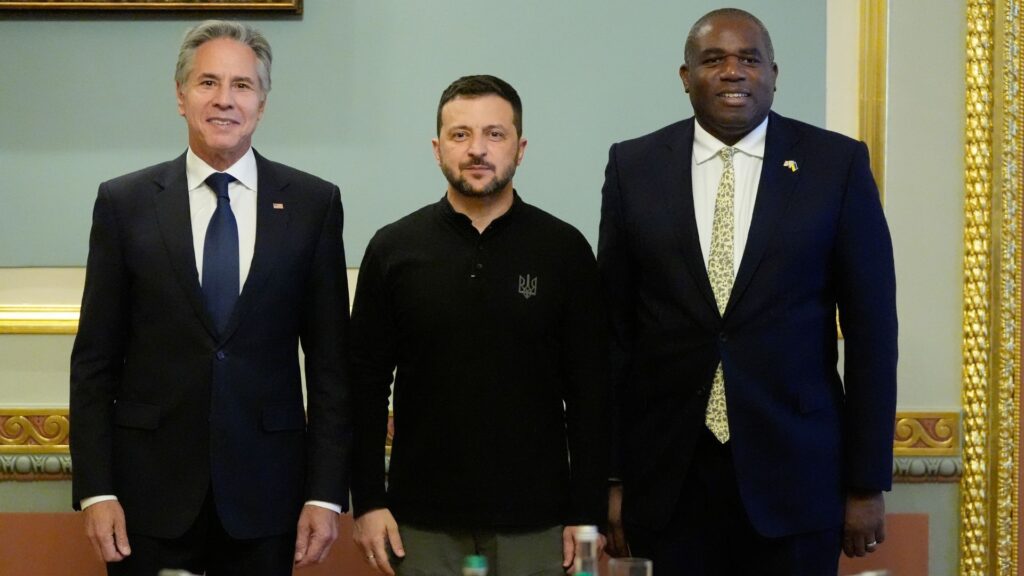
No green light for Ukraine to use long-range, Western-made missiles in Russian territory. The war in Ukraine is at a critical juncture. Western allies are considering a shift in their support and may allow Ukraine to use long-range missiles against targets deep inside Russian territory. Ukraine has been pleading for the go-ahead for months, but there’s no indication when or if US President Joe Biden will grant the request. The Kremlin has warned such approval would mean NATO members were directly involved in the conflict. Will Western nations cross President Vladimir Putin’s red line? And if they do, how will Russia respond? Presenter: James Bays Guests: Pavel Felgenhauer – independent Russian defence analyst Marina Miron – postdoctoral researcher at the War Studies Department, King’s College London Lawrence Korb – former US assistant secretary of defence Adblock test (Why?)