

Deaths reported as more communication devices explode in Lebanon
NewsFeed At least 3 people have been killed and hundreds injured in Lebanon when more communication devices exploded a day after the massive simultaneous detonation of pagers used by members of Hezbollah. Published On 18 Sep 202418 Sep 2024 Adblock test (Why?)
How did Hezbollah’s pagers explode in Lebanon?

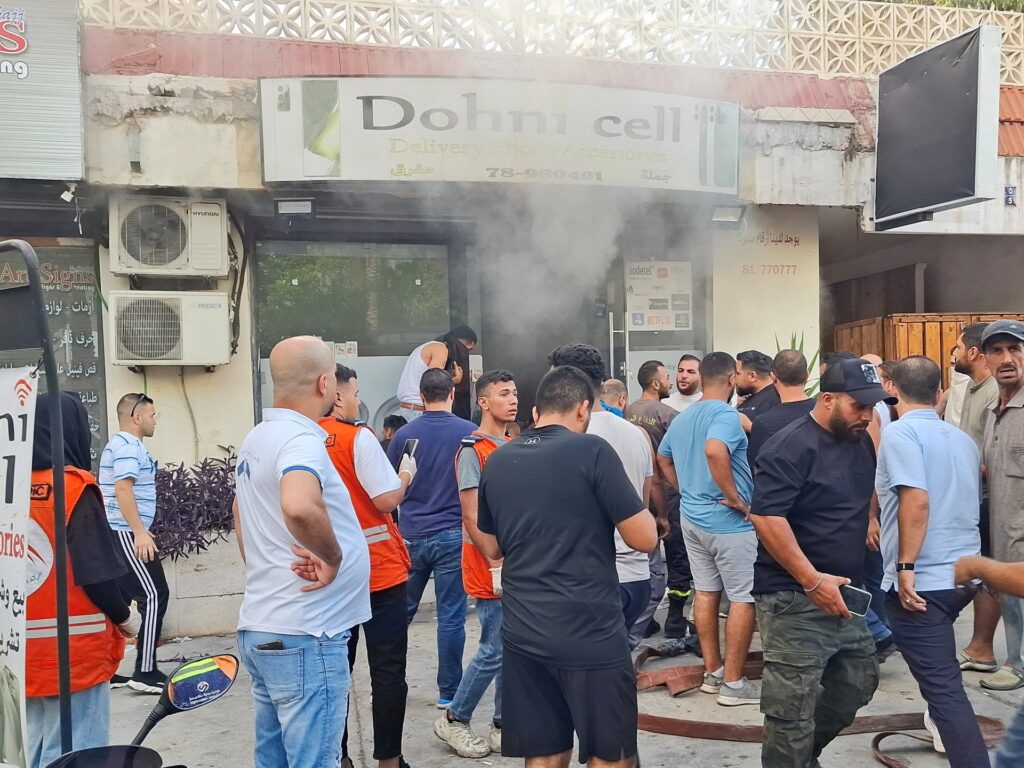
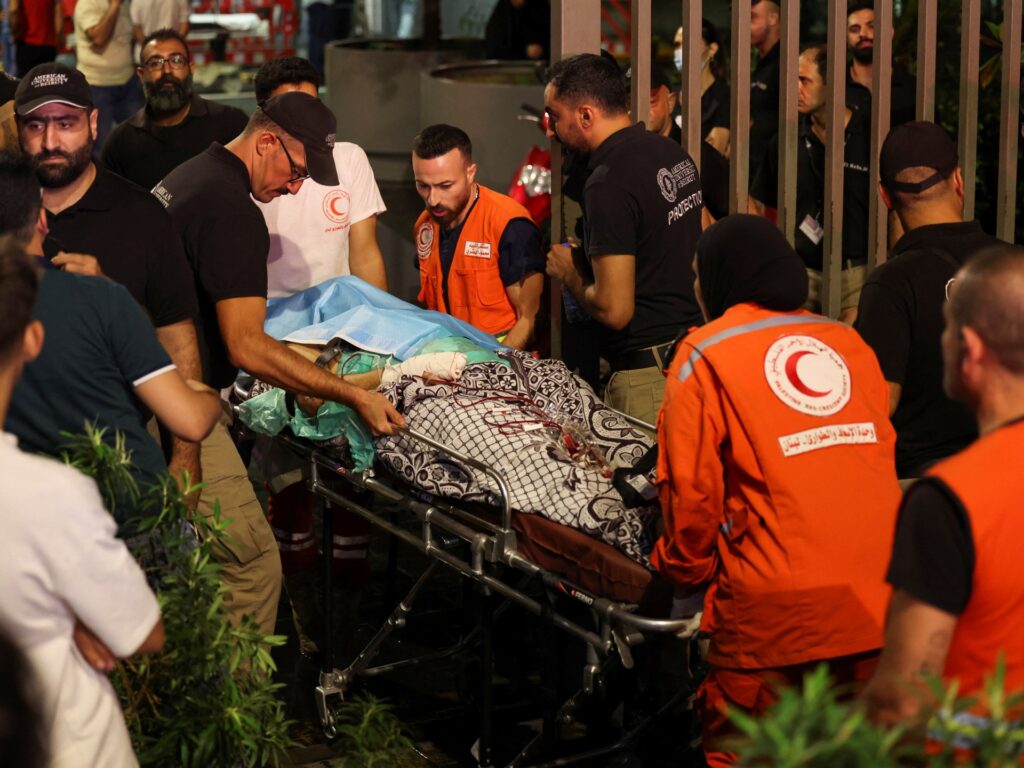
Hundreds of pagers belonging to the Lebanese armed group Hezbollah have simultaneously exploded across Lebanon. At the time of publishing, at least nine people have been killed and 2,750 wounded, according to security services and the Lebanese health minister. Pagers are small communication devices used commonly before mobile phones became widespread. The devices display a short text message for the user, relayed by telephone through a central operator. Unlike mobile phones, pagers work on radio waves, the operator sending a message by radio frequency – rather than the internet – unique to the recipient’s device. It is thought that the basic technology used in pagers as well as their reliance upon physical hardware means they are harder to monitor, making them popular with groups such as Hezbollah where both mobility and security are paramount. Pager [GettyImages] What happened? The series of explosions began at about 4:45pm and lasted for around an hour. Casualty numbers are still being confirmed. One eight-year-old girl has been confirmed among the dead. Mohammad Mahdi Ammar, the son of Hezbollah MP Ali Ammar, has also been reported killed. Hezbollah confirmed that two of its fighters had been killed. Lebanese Health Minister Firass Abiad told Al Jazeera: “About 2,750 people were injured, … more than 200 of them critically” with injuries mostly reported to the face, hands and stomach. Iran’s ambassador to Lebanon, Mojtaba Amani, was also injured in the explosions. Lebanese Civil Defense first-responders carry a man who was wounded when his handheld pager exploded in the southern port city of Sidon on September 17, 2024 [AP Photo] Who carried out the attack? Many people, including Hezbollah, are pointing to Israel. Israel and Hezbollah have been engaged in a mostly low-level exchange of fire over the Lebanon-Israel border since October 8, the day after Hamas-led attacks on Israel killed 1,139 people, saw about 240 taken captive and set off Israel’s war on Gaza. Recently, Israeli politicians and media have increasingly talked of military action against Lebanon to drive Hezbollah back from the border to allow for the return of about 60,000 Israelis evacuated right after the attacks began. “We hold the Israeli enemy fully responsible for this criminal aggression,” Hezbollah said in a statement, adding that Israel “will certainly receive its just punishment for this sinful aggression”. Despite a similar condemnation from Lebanese Information Minister Ziad Makary, Israel itself – in keeping with previous situations – remains tight-lipped. Why didn’t similar blasts occur in Gaza? According to Hamza Attar from the Department of Defence at King’s College in London, “They cannot use the same method in Gaza because Hamas is very cyber-aware compared to Hezbollah. “They are very capable when it comes to telecommunications,” he said of Hamas, stressing the efforts the group goes to to encrypt communications. “They don’t use phones or cellphones. They have their own network and internet and communication and don’t need anything above ground,” he said. We still don’t know. Some speculation has focused on the radio network that pagers rely on, suggesting that it may have been hacked, causing the system to emit a signal that triggered a response within the already doctored pagers. “What I think happened [is that] every Hezbollah [member] who was at a specific level was attacked,” data analyst Ralph Baydoun told Al Jazeera. Civil Defense first responders transport a man injured in the pager blasts to Al Zahraa Hospital University Medical Center in Beirut on September 17, 2024 [Hussein Malla/AP] He also suggested that Israel would not need to know the names of whoever received the corrupted signal but it could gather valuable intelligence after the detonations. “If they had the satellites on, … they would know the names and locations of all operatives who were attacked … immediately when [they asked] for help. They would disclose [their] locations,” he speculated. Other analysts, such as former British army officer and chemical weapons expert Hamish de Bretton-Gordon, suggested that Hezbollah’s pagers may have been tampered with along the supply chain and “wired to explode on command”. If the pager’s lithium battery was triggered to overheat, this would kick-start a process called thermal runaway. Essentially, a chemical chain reaction would occur, leading to an increase in temperature and eventually the battery’s violent explosion. However, triggering that chain reaction within multiple devices that have never been connected to the internet is far from straightforward. “You have to have a bug in the pager itself [so that] it will overheat as a result of certain circumstances,” Baydoun said, speculating that those circumstances would most likely be a trigger introduced into the pager through doctored code. Adblock test (Why?)
Bolivia braces for turmoil as antigovernment protesters begin march
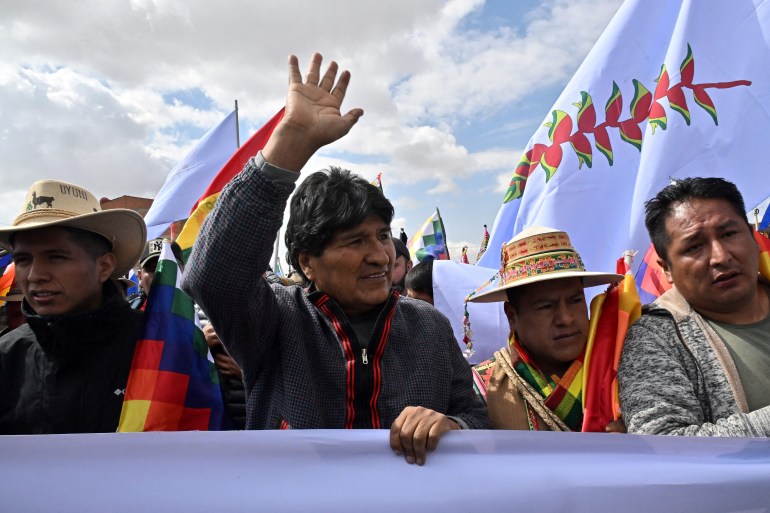
A simmering political battle between former allies is threatening to boil over into an all-out struggle for power after Bolivia’s popular and controversial former leftist president, Evo Morales, called on supporters to take to the streets in protest against current President Luis Arce. Morales announced a weeklong “March to Save Bolivia” on Monday after Arce accused him on national TV of trying to overthrow his government in a coup attempt. Antigovernment protesters blocked roads on the outskirts of the capital, La Paz, on Tuesday, calling for Arce’s resignation due to his mismanagement of the economy. Supporters also blocked roads leading to Lake Titicaca, shared by Bolivia and Peru and a popular tourist destination. “It’s an incompetent government that we have, and it won’t solve the economic crisis,” said Pablo Merma, a peasant leader of the so-called Red Ponchos, rebel Indigenous activists from the high plains, who was among the protesters. Morales: a disgraced former strongman Bolivia’s political and economic crisis, sparked by fuel shortages and dwindling foreign currency reserves, has caused some Bolivians to grow nostalgic for the disgraced former strongman who famously reduced poverty while in office. Although Arce was Morales’s former economy minister and his candidate in Bolivia’s 2020 elections, the erstwhile allies began vying for power after Morales returned from exile seeking to make a political comeback. Alleged coup attempt Over the past year, the Arce-Morales rift has polarised Bolivia, tainting the country’s politics and creating a sense of turmoil that soldiers sought to seize upon in June in a bizarre supposed coup attempt. Speaking to reporters, Morales encouraged the international community to follow his near 200km (124-mile) march along a highway from the southeast village of Caracollo to La Paz. “The march is the response of a people fed up with their unthinking government, which has maintained absolute silence in the face of the crisis, corruption and the destruction of stability,” Morales wrote on the social media platform X. Morales made his appeal to Bolivia’s farmers, miners and peasants on Monday after an unprecedented televised speech by Arce late on Sunday, in which he lambasted his former mentor. Arce accused Morales of trying to sabotage his administration and undermine democracy, escalating a high-stakes power struggle that has pushed Bolivia to the brink. “Enough, Evo!” Arce exclaimed on state TV. “Until now, I have tolerated your attacks and slander in silence. But putting the lives of people at risk is something I cannot tolerate.” Bolivian former President (2006-2019) Evo Morales Ayma (C) waves during the so-called ‘March to Save Bolivia’ -against his former ally, leftist leader Luis Arce- in Caracollo, province of Oruro, 200 km south of La Paz, Bolivia, on September 17, 2024. [Aizar Raldes / AFP] “Democracy at risk” Arce, who has faced a series of mounting crises with his governing party riven by disagreements, alleged that Morales’s attempts to mobilise support and run against Arce in next year’s presidential election were “putting democracy at risk.” “You are threatening the entire country,” Arce said, claiming that Morales sought to return to power by “means fair or foul”. His dramatic speech in the Andean nation of 12 million dredged up the chaos and bloodshed of 2019, when Morales ran for an unconstitutional third term and won. After accusations of fraud led to mass protests, Morales resigned under pressure from the army, in what his supporters call a coup. At least 36 people were killed in the ensuing crackdown by security forces. Morales, who served as Bolivia’s first Indigenous president from 2006-2019, was extremely popular until he tried to bypass the constitution and seek a fourth term. Ever since the constitutional court last year barred the charismatic leader from the race, coca cultivators, Indigenous tribes and workers have come to his defence with street protests, marches and road blockades. Another protest leader, Ponciano Santos, warned Arce that the social movement would hold him responsible for whatever happened on Tuesday. “If you tear gas us, if you interfere with our march, the government will fall,” Santos told reporters. Adblock test (Why?)
US downplays ability to prevent escalation after Lebanon pager explosions
Washington, DC – The United States has said it does not want to see further escalation between Israel and Hezbollah after the Lebanese armed group blamed Israel for a series of deadly, coordinated handheld pager blasts. But the administration of US President Joe Biden, which remains Israel’s top military and diplomatic backer, on Tuesday also sought to downplay its ability to tamper tensions between the pair. Speaking to reporters on Tuesday afternoon, State Department spokesman Matthew Miller said Washington was not involved in the apparent attack and was not given prior notification that it would occur. “I will say that our overall policy remains consistent, which is, we do want to see a diplomatic resolution to the conflict between Israel and Hezbollah,” Miller said. “We are always concerned about any type of event that may cause further escalation.” But when pushed on whether the Biden administration’s influence – the US provides Israel with $3.8bn in military aid annually as well as staunch diplomatic support – could be used to prevent a wider war, Miller said that was “not just a question for the United States”. “Of course, it’s a first … order question to Israel. It’s a question to Hezbollah, but is a question to all of the other countries in the region about what type of region they want to live in,” he said. “So the United States is going to continue to push for a diplomatic resolution.” Miller’s remarks come as rights advocates have urged the Biden administration to apply pressure on Israel to end its war on the Gaza Strip, which has killed more than 41,000 Palestinians since early October and decimated the coastal Palestinian enclave. Analysts have repeatedly accused Washington of acting as both an “arsonist and firefighter” by continually refusing to leverage US military aid to its “ironclad” ally despite the risks that a prolonged Gaza war could lead to a wider regional escalation. Hezbollah, which has been exchanging cross-border fire with Israel since the war in Gaza began, blamed Israel for Tuesday’s pager blasts and pledged that it would get its “fair punishment”. The Israeli army has yet to comment on the explosions. The Lebanese health minister said at least nine people were killed, including an eight-year-old girl, when the pagers exploded across Lebanon. About 2,750 people also were injured, including 200 in critical condition. Asked about the apparently indiscriminate nature of the explosions, Miller at the US State Department declined to comment directly on what happened. However, he said that, broadly speaking, the US position is that “no country, no organisation should be targeting civilians”. ‘Mud in their face’ The explosions took place as the Biden administration continues to say it is pushing to broker a Gaza ceasefire agreement between Israel and Hamas, the Palestinian faction that governs the territory. On Tuesday, US Secretary of State Antony Blinken was travelling to the Middle East for the latest meeting with mediators. “President Biden doesn’t have a whole lot of time, the US election is less than 60 days away,” Al Jazeera’s Kimberly Halkett reported from Washington, DC. “So if [the Lebanon explosions] are something that Israel is in fact responsible for, this is certainly discouraging to the United States.” The deadly blasts also came less than a day after White House adviser Amos Hochstein met with Israeli Prime Minister Benjamin Netanyahu to push for de-escalation along Israel’s northern border with Lebanon. Following the meeting, Netanyahu’s office released a defiant statement saying Israelis would not be able to return to evacuated areas along the Lebanon border “without a fundamental change in the security situation in the north”. Ramy Khoury, a distinguished fellow at the American University of Beirut, called the Israeli response to the US appeal “par for the course”. “The Israelis routinely not only neglect what the Americans tell them, but throw mud in their face,” Khoury told Al Jazeera. “The Americans have very limited capabilities in terms of their diplomatic action. They’ve focused more on military support for Israel and sanctions against Israel’s foes.” Khoury added that US “diplomatic efforts are not taken very seriously by most people in the region” due to the country’s unconditional support for Israel. “The US should be a huge diplomatic actor,” he said. “But it is clearly on the side of Israel and everything it does has to fit into the priorities of Israel.” Adblock test (Why?)
What’s the point of international law? | Start Here
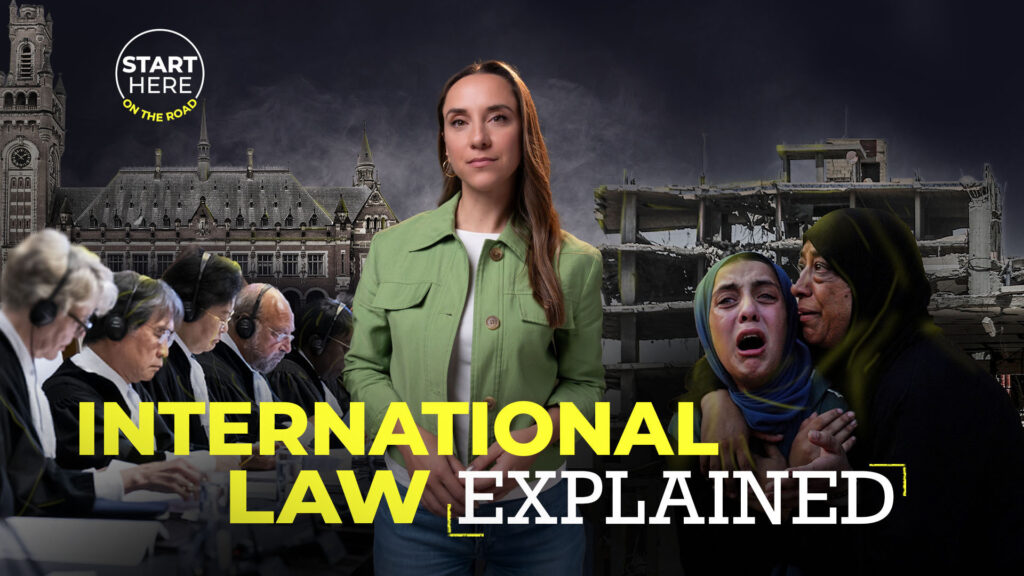
International law – explained. From the Gaza war to Ukraine – the role of international law has been under intense scrutiny recently. What exactly is international law? How does it work? And what’s the point of it if so often it doesn’t seem to lead to the accountability and justice that many people want? Sandra Gathmann takes #AJStartHere to The Hague – home of the International Court of Justice (ICJ) and International Criminal Court (ICC) – to explain. Adblock test (Why?)
Doctors Without Borders halts Russian operations after losing legal status
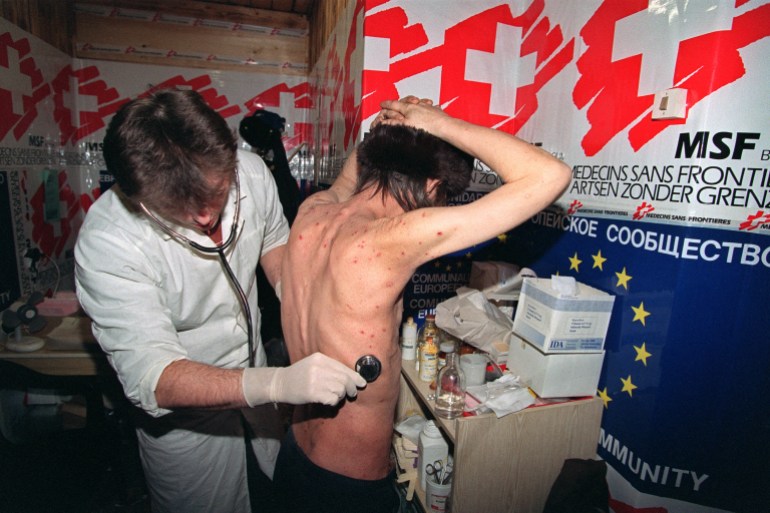
The aid group announced the decision with ‘a heavy heart’ after losing its legal authorisation. Doctors Without Borders has said it has halted its operations in Russia after Moscow removed its authorisation to work in the country. The NGO, also known as Medecins Sans Frontieres (MSF), announced the decision late on Monday, saying it was compelled to stop activities because Russia’s justice ministry had removed it from a roster of approved foreign charities. “It is with a heavy heart that we have to close our activities in Russia,” said a statement by MSF, which employed more than 50 people in Russia. “To comply with the [justice ministry] decision, we had to close our operations in the country and terminate the contracts of our staff in accordance with all legal requirements,” spokeswoman Maria Borscheva told the AFP news agency. The decision applied to the Dutch branch of MSF in Russia but since this was the only association active in the country, it effectively ended the group’s presence there. A branch office dealing with nonoperational activities in Moscow will stay open, according to the group. The move puts MSF, which has operated in Russia for 32 years, as part of a growing list of foreign charities pushed out during the Ukraine war. Last year, Russia declared Western aid groups Greenpeace, Transparency International and World Wide Fund for Nature “undesirable,” effectively banning them from operating in the country. Kursk aid With a mission to offer medical assistance to “people affected by conflict, epidemics, disasters, or exclusion from healthcare”, MSF has been in Russia since 1992, operating programmes that give aid to homeless people and migrants, tuberculosis treatment and general healthcare. Russian doctors working for MSF take care of homeless people, most of whom suffer from various skin diseases, at the Kursky railway station in Moscow, on March 2, 1993 [Michael Evstafiev/AFP] Since the invasion of Ukraine, its aid operations have reached 52,000 refugees and displaced people, 15,400 of whom have received free medical, mental health and psychosocial support, the NGO said. One of its most recent goals was to respond to the humanitarian and medical needs of the internally displaced people in Russia’s Kursk region, where Ukrainian forces have recently made inroads, it noted. “We are very sad to conclude our programmes in the country as many people in need of medical and humanitarian assistance will now be left without the support we could have provided to them,” said Norman Sitali, MSF operations manager in Russia. “MSF would like to still work in Russia again, if and when possible,” added Sitali. Adblock test (Why?)
What Trump has said about apparent assassination plot
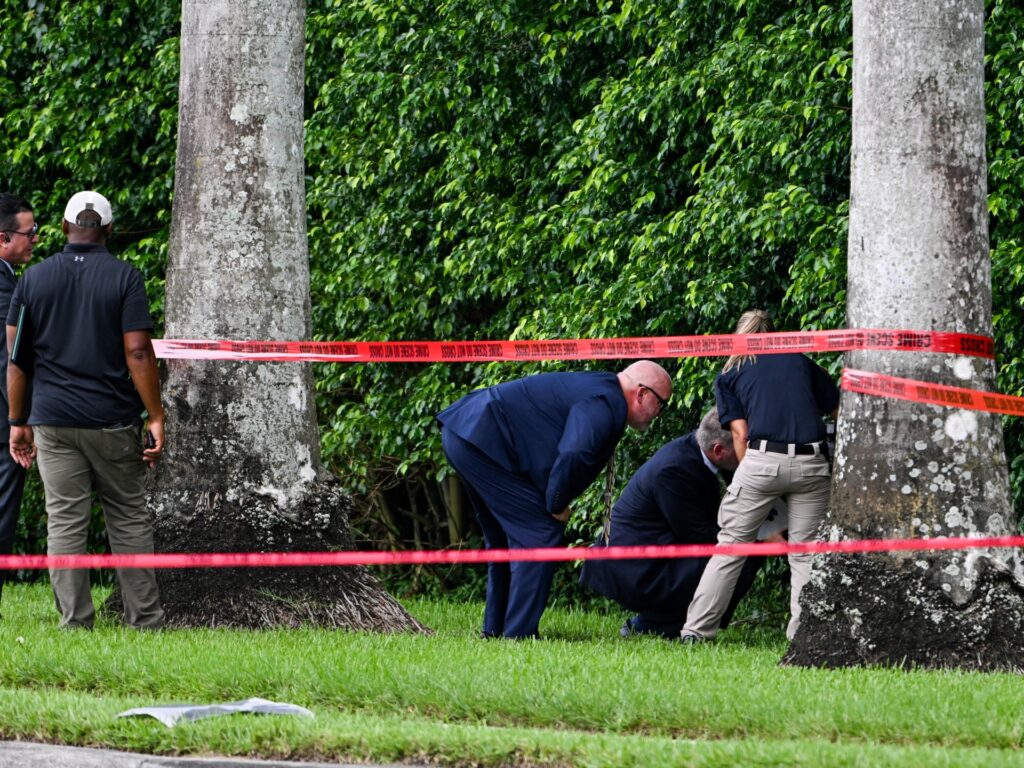
NewsFeed Republican presidential nominee Donald Trump has praised the Secret Service agents who fired on a gunman suspected of plotting to kill the former president in Florida, as more details emerged about the incident. Published On 17 Sep 202417 Sep 2024 Adblock test (Why?)
Murdoch succession drama plays out in closed US court
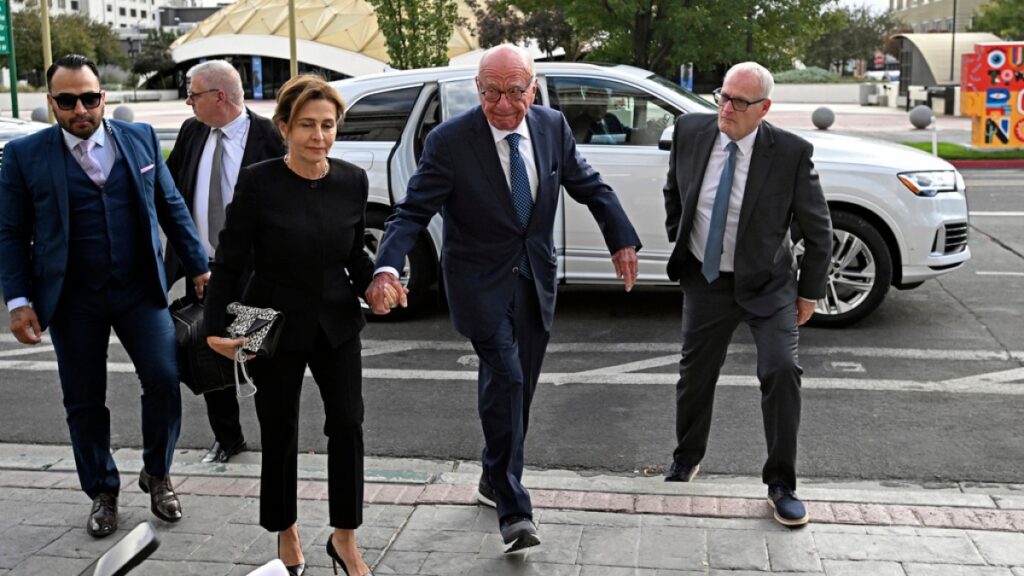
Rupert Murdoch’s proposed amendment would reportedly block any interference by three of his oldest son Lachlan’s siblings, who are more politically moderate. A battle over control of Rupert Murdoch’s global television and publishing empire begins Monday in a Reno, Nevada courtroom, where a judge will consider the contentious matter of succession. Murdoch, 93, is attempting to change the terms of the family’s trust – which holds significant stakes in Fox News’s parent company and Wall Street Journal owner News Corp. The billionaire is looking to ensure that, upon his death, the media companies remain under the control of his eldest son, Lachlan Murdoch, according to the New York Times, which obtained a sealed court document detailing the succession drama. A hearing to determine whether Murdoch is acting in good faith will take place in probate court, where the proceedings are closed to the public. A Nevada judge on Thursday rejected an appeal by Reuters and other news organisations to open the hearings to the public. The news organisations had said the fate of such culturally and politically influential media outlets was a matter of public interest, but the judge cited the need to prevent the disclosure of confidential personal and financial information. Most documents also remain sealed. The Murdoch trust was formed around the time of Rupert Murdoch’s divorce from his second wife, Anna, in 1999. The trust is the vehicle through which the elder Murdoch controls News Corp and Fox, with roughly a 40 percent stake in voting shares of each company. Upon Rupert Murdoch’s death, News Corp and Fox voting shares will be transferred to his four oldest children – Prudence, Elisabeth, Lachlan and James. Potentially, three of the heirs could out-vote a fourth, setting up a battle over the future of the companies, even as Lachlan Murdoch runs Fox and is the sole chair of News Corp. The Murdoch family members arrived in Reno on Monday morning for the hearing. James, Elisabeth and Prudence appeared first, and Rupert and Lachlan came later. The hearing was set to begin at 9am local time (16:00 GMT). Rupert Murdoch’s proposed amendment would block any interference by three of Lachlan’s siblings, who are more politically moderate, the New York Times reported, citing a sealed court document. Lachlan Murdoch is viewed as ideologically aligned with his conservative father. James Murdoch, who has donated to progressive political groups, resigned in 2020 from the News Corp board, citing disagreements over editorial content. Adblock test (Why?)
Russia-Ukraine war: List of key events, day 935
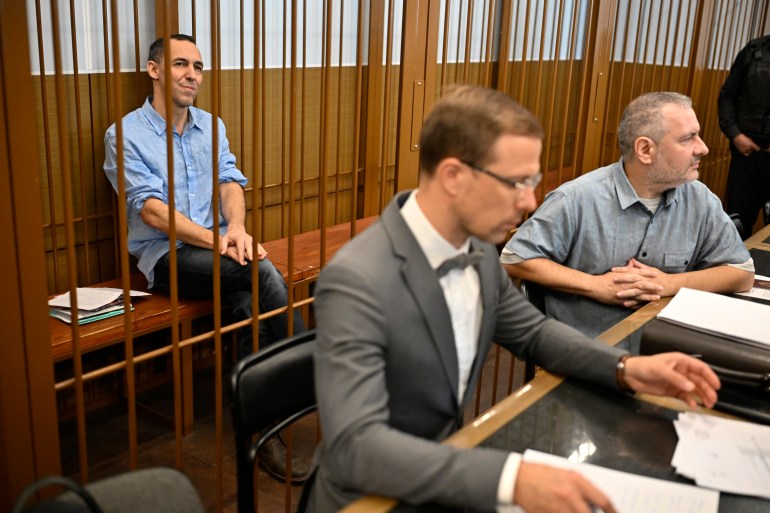
As the war enters its 935th day, these are the main developments. Here is the situation on Tuesday, September 17, 2024. Fighting At least one person was injured and several homes damaged in a Russian drone attack on Ukraine’s Kyiv region, Governor Ruslan Kravchenko said. Ukraine’s Air Force said it shot down 53 of the 56 Russian drones that targeted the country’s central, northern and southern regions. Air defence units destroyed nearly 20 drones that were heading towards Kyiv itself, the military said. Ukrainian President Volodymyr Zelenskyy, speaking in his nightly video address, said there had been 100 battles over the past 24 hours on the eastern front with the heaviest fighting in the Pokrovsk and Kurakhove sectors. Russia ordered the evacuation of settlements close to the Ukrainian border in the Kursk region and said it had retaken two villages – Uspenovka and Borki – Ukraine captured last month in a surprise cross-border incursion. Ukrainian Foreign Minister Andrii Sybiha invited the United Nations and the International Committee of the Red Cross (ICRC) to visit the parts of Kursk it occupies to “prove [Ukraine’s] adherence to international humanitarian law”. The Kremlin said the move was a “provocation”. Politics and diplomacy Laurent Vinatier, a 48-year-old French researcher arrested in Russia on charges of unlawfully collecting military information, pleaded guilty on the first day of his trial in Moscow. Russian state media said the guilty plea could mean a reduced sentence of about three years. Vinatier was arrested in June. France says he has been arbitrarily detained and has called for his immediate release. French citizen Laurent Vinatier was arrested in June [Dmitry Serebryakov/AP Photo] The US Attorney’s office in Boston said it had charged Sam Bhambhani and Maxim Teslenko with illegal smuggling and conspiring to violate export controls by selling equipment to Russia’s nuclear energy industry. Bhambhani was arrested on September 9 and released following a court appearance. Moscow-based Teslenko remains at large overseas. Ukraine added Russian-Canadian filmmaker Anastasia Trofimova, the director of a controversial war documentary, to its national security blacklist. Ukraine says her film Russians at War, which features interviews with soldiers fighting on the front line in Ukraine, spread “Russian propaganda” about Moscow’s invasion. Russia charged two more military officers with taking bribes, investigators said on Monday, the latest in a string of arrests linked to alleged corruption in the Ministry of Defence. Weapons Iran’s President Masoud Pezeshkian said that his government had not transferred any weapons to Russia since it took office in August. The United States and its allies accused Iran last week of transferring ballistic missiles to Russia for use in its war in Ukraine. Outgoing NATO Secretary-General Jens Stoltenberg said he welcomed talks on Ukraine’s use of long-range missiles to strike military targets inside Russian territory, but any decision on the weapons’ use would have to be made by countries individually. Adblock test (Why?)
Suspect in Trump assassination attempt may have lain in wait for 12 hours
Ryan W Routh, the 58-year-old man suspected of planning to assassinate Donald Trump, has been charged with two gun-related crimes in federal court a day after being spotted with a rifle on the perimeter of the former United States president’s golf course in Florida. Phone records suggest the suspect may have been lying in wait for nearly 12 hours, hiding in the bushes with a loaded SKS semi-automatic rifle, according to court documents filed on Monday. Routh, who appeared briefly in federal court in West Palm Beach, did not fire any shots and never had Trump in his line of sight, the Secret Service said. “The FBI is conducting its investigation of this incident as an assassination attempt upon the former president,” the US Attorney for the Southen District of Florida, Markenzy Lapointe, told a press conference on Monday afternoon. Routh was arrested on Sunday after allegedly fleeing the crime scene and is being held in custody on charges of illegally possessing a firearm with an obliterated serial number. US Secret Service agents stationed on the golf course ahead of Trump opened fire on the suspect after they noticed the muzzle of a rifle sticking through a fence that lines the course. The gunman fled in an SUV, leaving behind the rifle, which was fitted with a scope, as well as two backpacks and a GoPro camera, according to police. The man was stopped soon after by heavily armed law enforcement officers on Interstate 95, a busy highway in a neighbouring county, and put up no resistance. Police say the licence plate on his vehicle had been reported stolen from another car. Second assassination attempt in two months Trump is scheduled to unveil a new cryptocurrency business on X on Monday night at his private Florida club, Mar-a-Lago, where he lives, before resuming his presidential campaign for events in Michigan on Tuesday and New York on Wednesday. The incident has raised new questions about the violent nature of US politics and how an armed suspect was able to get so close to Trump, just two months after another gunman fired at him during a July 13 rally in Butler, Pennsylvania, grazing his ear with a bullet. Trump’s personal schedule is not made public, so investigators will be trying to find out how the gunman knew of his golfing plans. However, the Republican presidential nominee is an ardent golfer and it is no secret that he likes to fit in a round whenever he is visiting his Florida home. The Secret Service, which protects US presidents and presidential candidates, has been under intense scrutiny since the botched handling of the July attempt on Trump’s life. The service bolstered Trump’s security detail following the July 13 attack, in which the gunman was shot dead by responding agents. Trump was also due to meet the new head of the Secret Service in person on Monday after the former chief resigned in the wake of the July shooting. Trump posted a message on social media on Sunday thanking the Secret Service and law enforcement for keeping him safe, calling them “brave and dedicated Patriots” and adding that it was “certainly an interesting day!” He also blamed President Joe Biden and Vice President Kamala Harris, the Democratic presidential candidate, for the apparent assassination attempt. He claimed the suspected gunman was acting on Democrats’ “highly inflammatory language,” though authorities have not yet offered evidence of any motive. Biden and Harris were briefed on the matter and each issued a statement condemning political violence. Harris added that she was “deeply disturbed” by the day’s events and that “we all must do our part to ensure that this incident does not lead to more violence”. Biden said he had directed his team to ensure the Secret Service “has every resource, capability and protective measure necessary to ensure the former President’s continued safety.” Police officers stand outside the court, ahead of a possible planned appearance for Ryan W Routh, the suspect in an apparent assassination attempt on former President Donald Trump, in West Palm Beach, Florida, September 16, 2024 [Marco Bello Reuters] Searching for clues Routh has at least two prior felony convictions, both in North Carolina, according to court records. In 2002, he pleaded guilty to possession of an unregistered fully automatic gun, according to the county district attorney’s office, and was sentenced to probation. He was also convicted of possessing stolen goods in 2010. The FBI is likely combing through Routh’s prolific social media posts searching for clues regarding his alleged planning of the crime and his motive for wanting to kill the president. Records show Routh lived in North Carolina for most of his life before moving to Hawaii in 2018. In 2020, he made a social media post backing Trump’s re-election, but in more recent years, his posts have expressed support for Biden and Harris. Routh is a staunch supporter of Ukraine and travelled there after Russia’s 2022 full-scale invasion, seeking to recruit foreign fighters, according to an interview with The New York Times last year. Ukrainian officials distanced themselves from Routh on Monday and The International Legion, where many foreign fighters in Ukraine serve, said it had no links with Routh. Profiles on X, Facebook and LinkedIn with Routh’s name contained messages of support for Ukraine as well as statements describing Trump as a threat to US democracy. Adblock test (Why?)