

UN accuses Israel of ‘massive’ violation of child rights treaty in Gaza
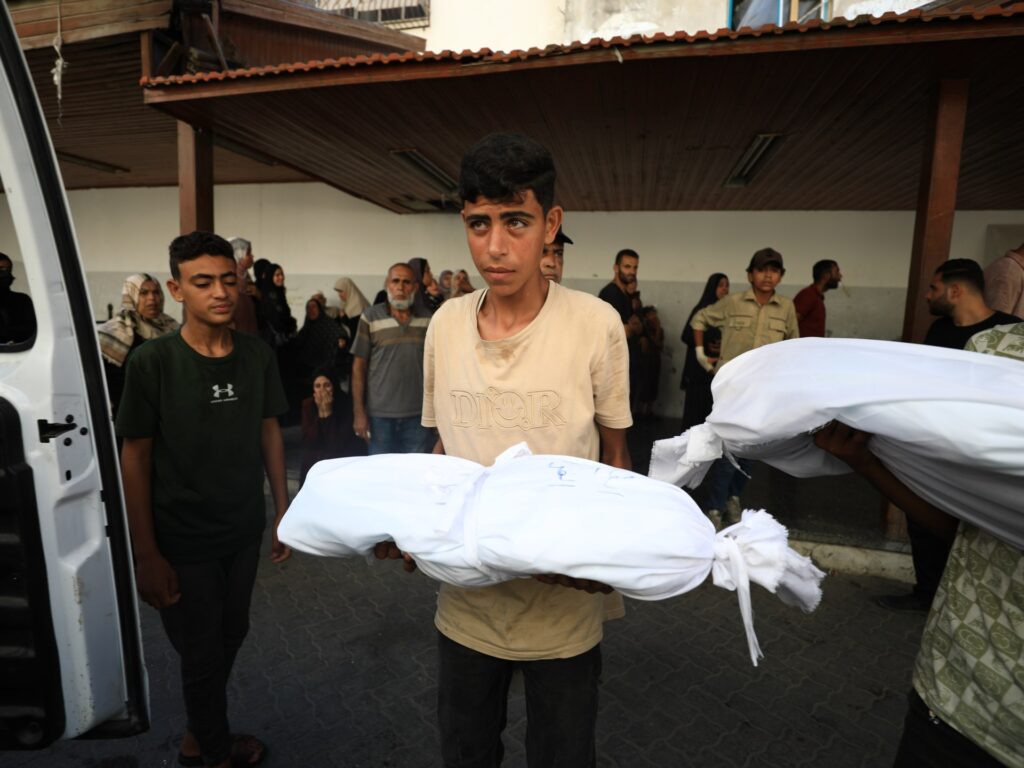
UN committee says horrific impact on children from Israel’s war on Gaza will have an ‘extremely dark place in history’. A United Nations committee has accused Israel of severe breaches of a global treaty protecting children’s rights, saying its military actions in Gaza have had a catastrophic impact on children and are among the worst violations in recent history. More than 11,355 minors have been killed in Gaza since the start of the war triggered by Hamas-led attacks in southern Israel on October 7. More than 1,100 people, mostly Israeli civilians, were killed in the Hamas-led attacks and about 250 were taken captive. In response, Israel has waged a war in the besieged enclave, killing more than 41,000 people and reducing large swaths of the Palestinian territory to rubble. “The outrageous death of children is almost historically unique. This is an extremely dark place in history,” Bragi Gudbrandsson, vice chairperson of the committee, told reporters on Thursday. “I don’t think we have seen before a violation that is so massive as we’ve seen in Gaza. These are extremely grave violations that we do not often see,” he said. On top of the registered casualties by the Palestinian Ministry of Health in Gaza, thousands of children are believed to be missing under the rubble, buried in unmarked graves or severely wounded by explosives, the British aid group Save the Children said in a report published in June. According to an Al Jazeera tally in January – when the number of children killed by Israel’s war in Gaza was about 10,000 – one Palestinian child was being killed there every 15 minutes. The 18-member UN committee monitors countries’ compliance with the 1989 Convention on the Rights of the Child, a widely adopted treaty that seeks to protect children from violence and other abuses. Israel, which ratified the treaty in 1991, sent a large delegation to the UN hearings in Geneva on September 3-4. They argued that the treaty did not apply in Gaza or the occupied West Bank but said Israel was committed to respecting international humanitarian law. It says its military campaign in Gaza is aimed at eliminating Hamas and it does not target civilians but Palestinian fighters hide among them, which Hamas denies. Civilians and health workers on the ground have repeatedly told Al Jazeera that attacks against homes with no warnings and no ongoing fighting have taken place since October 7 with entire families being obliterated in Israeli air attacks. The committee praised Israel for attending the hearings but said it “deeply regrets the state party’s repeated denial of its legal obligations”. In its conclusions, the committee called on Israel to provide urgent assistance to thousands of children maimed or injured by the war, provide support for orphans and allow more medical evacuations from Gaza. The UN body has no means of enforcing its recommendations, although countries generally aim to comply. During the hearings, the UN experts also asked many questions about Israeli children, including details about those taken captive by Hamas, to which Israel’s delegation gave extensive responses. Sabine Tassa, the mother of a 17-year-old boy shot dead in the October 7 attacks, addressed the UN hearings and said child survivors were traumatised. “The children of Israel are in an appalling state,” she said. Adblock test (Why?)
Hezbollah chief: Israel crossed “all red lines” with device explosions
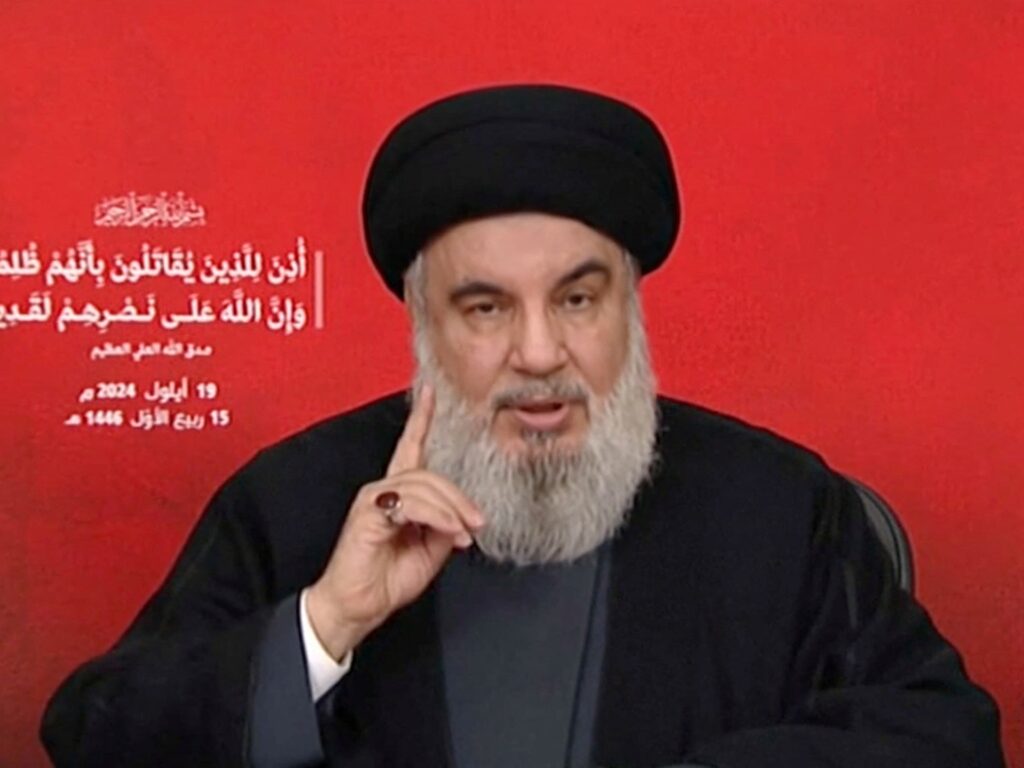
NewsFeed Hezbollah chief Hassan Nasrallah blamed Israel for sabotaging communication devices that exploded across Lebanon, vowing retaliation for the attack he says crossed “all laws and red lines.” Published On 19 Sep 202419 Sep 2024 Adblock test (Why?)
Lebanese people talk about fears after pager and walkie-talkie explosions
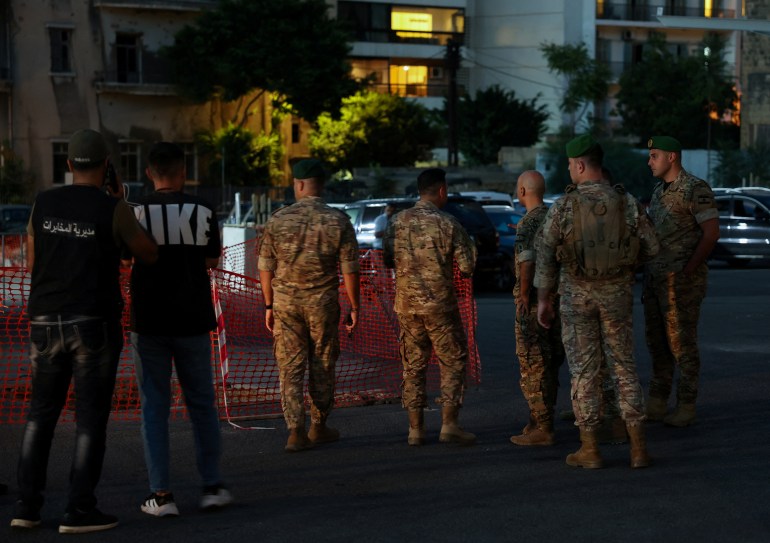
Beirut, Lebanon – Electronic devices exploded in south Beirut and other parts of Lebanon for a second day on Wednesday, resulting in casualties and fires, a second attack blamed on Israel. Twenty people were killed and more than 450 wounded in Wednesday’s attack, according to Lebanon’s Ministry of Public Health. On Tuesday, thousands of Hezbollah pagers exploded, killing 12 people and wounding nearly 3,000. The two attacks coming so close together has left many in Lebanon worried about their use of electronic devices and the state of the country’s security situation. The attack allegedly targeted mobile phones, laptops, solar energy cells as well as walkie-talkie radios that were purchased at a similar time – about five months earlier – as the exploding pagers. Devices exploded in cities including Beirut and its southern suburbs, Hermel, Baalbek, Saida, Nabatieh, Tyre, Naqoura and Marjayoun. ‘We really don’t know’ Officials were still conducting controlled explosions of suspicious devices found in locations around the country on Wednesday evening. Lebanese soldiers prepare to carry out a controlled explosion of a walkie-talkie outside the American University of Beirut Medical Center (AUBMC) on September 18, 2024 [Mohamed Azakir/Reuters] The tension and worry it caused among Lebanese people was heightened, as the devices said to be exploding on Wednesday were more “modern” and used more widely. Event planner Maria Boustany has told her team to ditch the walkie-talkies they use to communicate at weddings and events due to doubts over their safety. “It may not be the same brand but we really don’t know what’s happening,” she said. Instead, Boustany said her team would be using WhatsApp to communicate. “It’s better to be safe,” she said. The team had not been using pagers. Lebanon’s hospitals ‘are managing’ Outside the American University of Beirut Medical Center (AUBMC), relatives or friends of people wounded on Tuesday stood in groups the next day. Neighbours greeted each other and inquired about others’ loved ones inside the hospital’s doors. Many were wearing black. Inside, nurses were turning people away who had come to donate blood, telling them that so many people came to donate on Tuesday that they no longer needed blood on Wednesday. While Tuesday necessitated a “Herculean effort” on the part of Lebanese healthcare, given the massive numbers of injuries, caretaker Lebanese Prime Minister Najib Mikati said the hospitals were “managing” to cope with new injuries on Wednesday. “We still have 140 patients in house and some are still going to surgeries,” Salah Zeineldine, AUBMC’s chief medical officer, told Al Jazeera. “We’ve frozen all elective … cases.” Zeineldine noted that of the 140 patients, several are still critical but none are in life-threatening conditions. “A lot [of them] lost fingers or eyes,” he said. ‘Fear is the furthest thing from our minds’ Many of the people in front of AUBMC on Wednesday did not want to speak to the media. On a nearby kerb, 40-year-old Ali agreed to chat, saying he had come to the hospital to visit a wounded person, without specifing his relationship to them. A day earlier, he said, he had been in Beirut’s southern suburbs when he heard a series of explosions. “Every five to 10 seconds, I heard another,” he said. An ambulance arrives at AUBMC after the incident involving Hezbollah members’ wireless devices in Beirut, Lebanon, on September 17, 2024 [Wael Hamzeh/EPA-EFE] Ali called Tuesday’s attack “stupid”, adding: “The people are strong and fear is the furthest thing from our minds.” At nearby Clemenceau hospital, men lined the area outside the main entrance, waiting to visit loved ones. Witnesses said that, while Beirut’s hospitals were busier than usual, they were much calmer than on Tuesday when all medical personnel were requested to report for duty to help treat the deluge of patients. A doctor who reported for emergency duty at Mount Lebanon Hospital on Tuesday said the roads to the hospital were relatively empty – having been kept empty by authorities – but the vicinity of the hospital was crowded to the extent that they had to abandon their cars wherever they could. By the time he arrived, the most serious life-threatening injuries had already been transferred to the operating rooms, which were at capacity. The hospital was full of admitted patients, he said, three floors with at least 20 patients per floor. He and other doctors began triaging, determining who was in urgent need of surgery to be scheduled, who needed antibiotics or tetanus shots, and who had injuries minor enough that they could be sent home. All the patients he saw were men in or around their 30s with mild to moderate injuries – mostly to the face and hands. “These were not nice injuries,” the doctor said. “They were frightening wounds but the patients were all calm. They were like: ‘Finish up with me and I’ll be OK.’ “They were calm … not scared or anxious.” What happened and what’s next? The attacks have left many Lebanese wondering what will happen next. Social media was roiled with debates over whether the attacks were impressively precise or indiscriminate and a violation of international law. Boy scouts raise the picture of a fellow scout, killed when pagers exploded across Lebanon on Tuesday, during the funeral procession of some victims, in Beirut’s southern suburbs on September 18, 2024 [Anwar Amro/AFP] Hezbollah and Israel have exchanged near-daily cross-border attacks since last October, Hezbollah saying they are fighting in support of Hamas and would cease fire should one be agreed in Gaza. Meanwhile, Israel has intensified discussions about expanding the war against Hezbollah. On Tuesday, Premier Benjamin Netanyahu announced an expansion of Israel’s war goals to include returning families to their homes in the north, which many Israelis believe can only be accomplished through fighting Hezbollah. The Northern Command’s top general was lobbying for a potential invasion into Lebanon, according to Israeli media. Defence Minister Yoav Gallant said on Wednesday the war had entered “a new phase”. For its part, Hezbollah has promised a response. Speaking almost
Hong Kong man sentenced to 14 months in jail for ‘seditious’ T-shirt
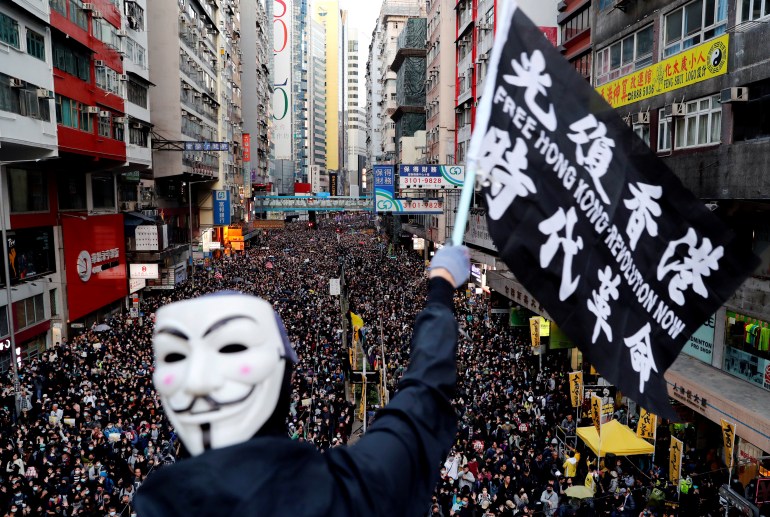
Chu Kai-pong is the first person to be convicted under Article 23, the China-ruled city’s tough new national security law. A Hong Kong man has been sentenced to 14 months in jail for wearing a T-shirt and a mask with protest slogans deemed “seditious”, the first person to be convicted under the city’s tough new national security law. Chu Kai-pong, 27, was sentenced on Thursday at the West Kowloon Magistrates’ Courts, having pleaded guilty earlier in the week to one count of “doing acts with seditious intention”, an offence carrying a maximum penalty of 10 years in jail under the new legislation, known as Article 23. Chu was arrested for wearing a T-shirt reading “Liberate Hong Kong, revolution of our times” and a yellow mask printed with “FDNOL” – shorthand for another pro-democracy slogan, “five demands, not one less” – on June 12, a date marking the fifth anniversary of the city’s huge pro-democracy protests in 2019. The 2019 protest movement was the most concerted challenge to the Hong Kong government since the former British colony returned to Chinese rule in 1997. It waned because of widespread arrests, the exile of democracy activists, the COVID-19 pandemic and China’s imposition of an earlier security law in 2020. Referring to the 2019 protests, Chief Magistrate Victor So – a judge handpicked by the government to hear national security cases – said on Thursday that Chu “took advantage of a symbolic day with the intention to reignite the ideas behind the unrest”. In January, the judge had sentenced Chu to three months in jail for wearing a similar T-shirt at the airport and possessing publications deemed seditious. He noted that Chu’s “subsequent act” showed the “deterrent effect of his previous sentence was insufficient”. Quelling dissent The sedition offence was created under British colonial rule, which ended in 1997, but was seldom used until Hong Kong authorities revived it in 2020 after the protests. With the protests quashed, China imposed a national security law on the city in mid-2020 to quell further dissent. The new national security law – the Safeguarding National Security Ordinance, also known as Article 23 – came into force in March. The revised law augments the offence of sedition to include inciting hatred against China’s communist leadership, upping its jail sentence to a maximum penalty of 10 years if the sedition is conducted in collusion with an “external force”. Critics, including Western nations such as the United States, say Article 23 will further erode freedoms and silence dissent in Hong Kong – a finance hub once considered one of the freest territories in China. As of this month, 303 people have been arrested under the two security laws, with 176 prosecuted and 160 convicted. China introduced a draconian national security law in Hong Kong following mass pro-democracy protests in 2019 [File: Danish Siddiqui/Reuters] Adblock test (Why?)
Russian attacks on Ukraine power grid probably violate humanitarian law: UN
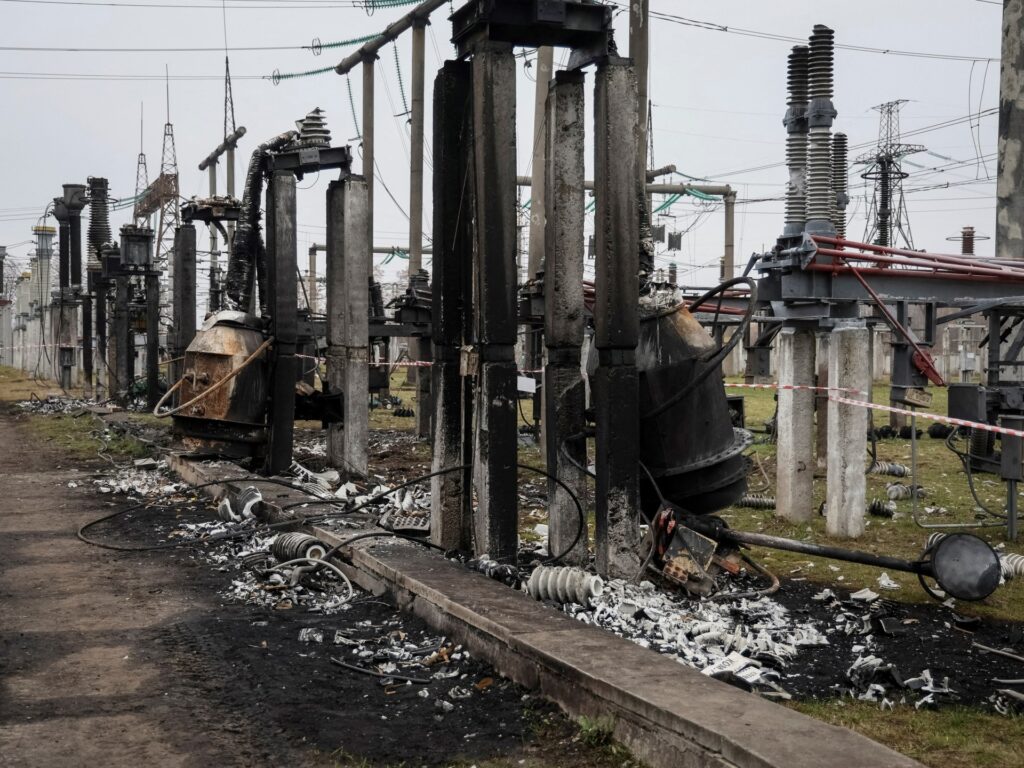
Russian air strikes on Ukraine’s electricity generation, transmission and distribution facilities probably violate international humanitarian law, according to the United Nations Human Rights Monitoring Mission in Ukraine (HRMMU). The report published on Thursday focused on nine waves of attacks between March and August this year. HRMMU said it had visited seven power plants that were damaged or destroyed by attacks, as well as 28 communities affected by the strikes. “There are reasonable grounds to believe that multiple aspects of the military campaign to damage or destroy Ukraine’s civilian electricity and heat-producing and transmission infrastructure have violated foundational principles of international humanitarian law,” the report said. The first big wave of strikes hit in 2022, several months after Russia began its full-scale invasion of Ukraine in February that year. The attacks have continued throughout the war, though Moscow has markedly stepped up its campaign since last March. Each wave of strikes has left Ukrainian cities without power for hours at a time for weeks on end. Ukraine says the targeting of its energy system is a war crime, and the International Criminal Court (ICC) has issued arrest warrants for four Russian officials and military officers for the bombing of civilian power infrastructure. Russia says power infrastructure is a legitimate military target and has dismissed the charges against its officials as irrelevant. “Russia is trying to plunge Ukraine in the dark with targeted attacks on its energy systems,” European Commission President Ursula von der Leyen said on Thursday as she announced that 160 million euros ($178m) from the proceeds of frozen Russian assets will be allocated to meet Ukraine’s urgent humanitarian needs for this winter. Russia has knocked out about 9 gigawatts of Ukraine’s energy infrastructure, which von der Leyen said was the “power equivalent of the three Baltic states”. A fuel power plant is being dismantled in Lithuania and will be rebuilt in Ukraine, where 80 percent of the country’s thermal plants have been destroyed, she said. A third of Ukraine’s hydropower is also out. The HRMMU said the attacks posed risks to Ukraine’s water supply, sewage and sanitation, to the provision of heating and hot water, public health, education and the wider economy. It highlighted a particular problem in urban areas, where most homes are linked to centralised heating and hot water systems. The report said that nearly 95 percent of residents in the Ukrainian capital, Kyiv, relied on centralised basement heating systems whose output required electric pumps to reach the upper floors of the building. “Without emergency electricity supply, millions of urban residents could be left without heat,” it said. HRMMU cited experts as saying that Ukrainians should expect power outages of between four and 18 hours a day this winter. ‘Sternest test yet’ Separately, the International Energy Agency made a similar grim prediction on Thursday, with IEA Executive Director Fatih Birol saying the coming winter would prove the “sternest test yet” for Ukraine’s energy grid. The IEA report said that in 2022 and 2023 “about half of Ukraine’s power generation capacity was either occupied by Russian forces, destroyed or damaged, and approximately half of the large network substations were damaged by missiles and drones”. It warned of a “yawning gap between available electricity supply and peak demand”. The report urged European countries to expedite deliveries of equipment as well as parts to rebuild the damaged facilities and called for measures to protect them from drones. Latest attacks On Thursday, Ukraine’s national grid operator Ukrenergo said Russia attacked energy infrastructure in Sumy overnight, prompting a temporary power cut in the northeastern region. Nine Ukrainian regions were attacked by Russia overnight, according to the war-torn country’s air force, saying it shot down all 42 drones and one of four missiles. Serhiy Lysak, the governor of the central Dnipropetrovsk region, said the air force had shot down one missile over his region, and that no one was hurt there. Kharkiv regional governor Oleh Syniehubov said six people were wounded in a Russian attack on the eastern town of Kupiansk, 8km (five miles) from the front line. Civilian infrastructure, a school, a kindergarten and 10 apartment buildings were damaged in the city of Kharkiv, he said. An educational institution was also damaged in the Cherkasy region, regional governor Ihor Taburets said. One elderly woman was killed and two other women were wounded by Russian strikes in Ukraine’s Zaporizhia region, Governor Ivan Fedorov said on Thursday. Russian forces shelled the region 161 times over the past 24 hours, damaging infrastructure facilities and residential buildings, he said on the Telegram messaging app. ‘Victory Plan’ Meanwhile, Ukraine’s President Volodymyr Zelenskyy said on Wednesday that his “Victory Plan”, intended to bring peace to his country while keeping it strong and avoiding all “frozen conflicts”, was now complete after much consultation. Zelenskyy pledged last month to present his plan to US President Joe Biden, presumably next week when he attends sessions of the UN Security Council and UN General Assembly. While providing daily updates on the plan’s preparation, Zelenskyy has given few clues of its content, indicating only that it aims to create terms acceptable to Ukraine. Zelenskyy said in his nightly video address that there was no alternative to peace, “no freezing of the war or any other manipulations that would simply postpone Russian aggression to another stage”. Adblock test (Why?)
Battered by typhoons: Why aren’t Philippine flood control projects working?
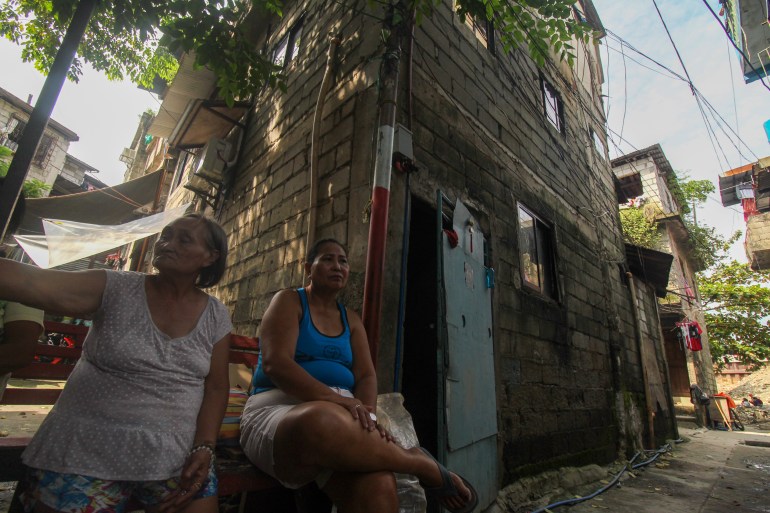
Manila, Philippines – With the exception of a few pieces of hanging laundry, the first two floors of 65-year-old Veronica Castillo’s three-storey home are practically empty. “Our belongings are up top. We build our houses upwards here. Every year the floods will scrape the ceilings of the second floor,” Castillo told Al Jazeera, surveying her home in one of Marikina city’s slums, among the most flood-prone areas of Metro Manila. But while the government is building a pumping station to address the problem just five minutes away, construction has been going on so long that Castillo wonders whether it will ever be finished. “It’s been eight years,” she said. Since taking office in 2022, President Ferdinand Marcos Jr has spent about half a trillion dollars to address persistent flooding from extreme weather in the Philippines. But despite the significant spending, cities continue to be inundated in a country that typically sees about 20 typhoons a year. During a speech in July, Marcos Jr boasted about his administration completing more than 5,000 flood control projects, of which 656 were in Metro Manila. Days later, Super Typhoon Gaemi deposited a month’s worth of rain on the area within 24 hours, killing dozens and leaving parts of the sprawling city submerged. Veronica Castillo lives on the top storey of her home because of the risk of flooding [Michael Beltran/Al Jazeera] Earlier this month, it was followed by Tropical Storm Yagi. Officials put the cost of the damage at 4.7 billion Philippine pesos ($84.3m) with nearly seven million people affected. At least a dozen more typhoons are expected before the end of the year. The Philippines has topped the World Risk Index‘s list of countries struggling to cope with natural hazards for 16 years in a row. According to the international engineering group GHD, floods and storms will cost the nation $124bn by 2050. Some analysts say the government’s approach is failing. “No amount of engineering can completely control floods,” said environmental geographer Timothy Cipriano from the scientist group AGHAM and the Philippine Normal University. “We might be able to control street-level flooding, but we have neglected the overflow from rivers and coastal areas.” Cipriano notes that Metro Manila and its 12 nearby provinces are “one big basin surrounded with the coasts on some sides and the mountains on the other plus the many man-made activities means surface runoffs quickly increase, and thus, rivers overflow.” Currently, the government has nine “flagship” flood control projects in the pipeline. Each involves building concrete or “grey” infrastructure to drain or trap excess water. At a public inquiry last August, the Department of Public Works and Highways (DPWH) chief, Manuel Bonoan, said Marcos Jr’s accomplishments were only for “immediate relief” and admitted many big-ticket projects had encountered delays. Government data shows that just one of the smaller “flagship” projects was completed this year, while the rest have languished in their preparatory stages since at least 2018. This includes the Metro Manila Flood Management Project, which aims to rehabilitate 36 pumping stations and build 20 new ones by this year. Despite a $415m World Bank loan, only two stations have been rehabilitated and none of the new ones have been completed. The 60-kilometre (37-mile) Central Luzon-Pampanga floodway, meant to drain stormwater from Metro Manila, was supposed to begin construction in 2024. However, last month, Bonoan conceded that delays had set the project back by three years. The DPWH also reported that 70 percent of Metro Manila’s “antiquated drainage system” was clogged with rubbish and silt, hampering flood management. It also reported that the country lacks a national flood control master plan, with only 18 scattered plans for major river basins which are “still being currently updated”. Perspective shift Most flood control efforts steer stormwater west to Manila Bay or Laguna Lake in the southeast. However, civil engineering expert Guillermo Tabios III says this approach has been ineffective for many years, and sometimes just transfers flood risks to coastal communities. “We divert around 2,500 cubic metres of water to Laguna Lake,” he said, adding that water also means “a lot of the surrounding towns will be submerged”. Cipriano blames rapid urbanisation and nearby quarrying for strangling Metro Manila’s 31 rivers and their tributaries. Merjelda Toralba in her home. She says the floods get worse every year [Michael Beltran/Al Jazeera] During Gaemi, Merjelda Toralba, 70, spent nearly 24 hours on the roof of her makeshift creek-side home. She had to tie a rope from her wooden doorframe to a coconut tree to stop the rising current from carrying the entire house downstream. “The flooding is worse each year. And I’m more afraid each time it rains hard. In just a few hours, I’d be trapped and the waters just won’t go away,” she told Al Jazeera. Environmental and sanitation expert Jose Antonio Montalban of Pro-People Engineers and Leaders (Propel) says much of the new infrastructure is costly to maintain. In Yagi’s heavy downpours, sections of the Molino Riverdrive Project collapsed as floodwaters spilled onto the roads. Montalban blames unavoidable erosion to the cement and possible substandard materials, but “it was clearly over its maximum carrying capacity. Now repairs will cost taxpayers yet again”. Montalban says what is needed is a “holistic approach” that considers “all factors economic, ecological, hydrological and social. Unfortunately for us, rudimentary engineering applications are the norm”. During Gaemi, the government admitted that 71 of the Metro Manila pumping stations were unable to handle the rainfall, which was more than double the system’s 30mm/hour capacity. Cipriano says the authorities need to look at flood-prone areas as a “sponge city. Instead of controlling water, you design spaces to accommodate water. Make it less of a concrete jungle, allow waters to seep or flow without constricting rivers.” Big spender Since 2015, the Philippine government has allocated 1.14 trillion Philippine pesos ($20.3bn) for flood control, with 48 percent of it during the Marcos Jr administration. Independent public budget analyst Zy-za Nadine Suzara says probable “patronage politics” was involved after noticing
Russia-Ukraine war: List of key events, day 937
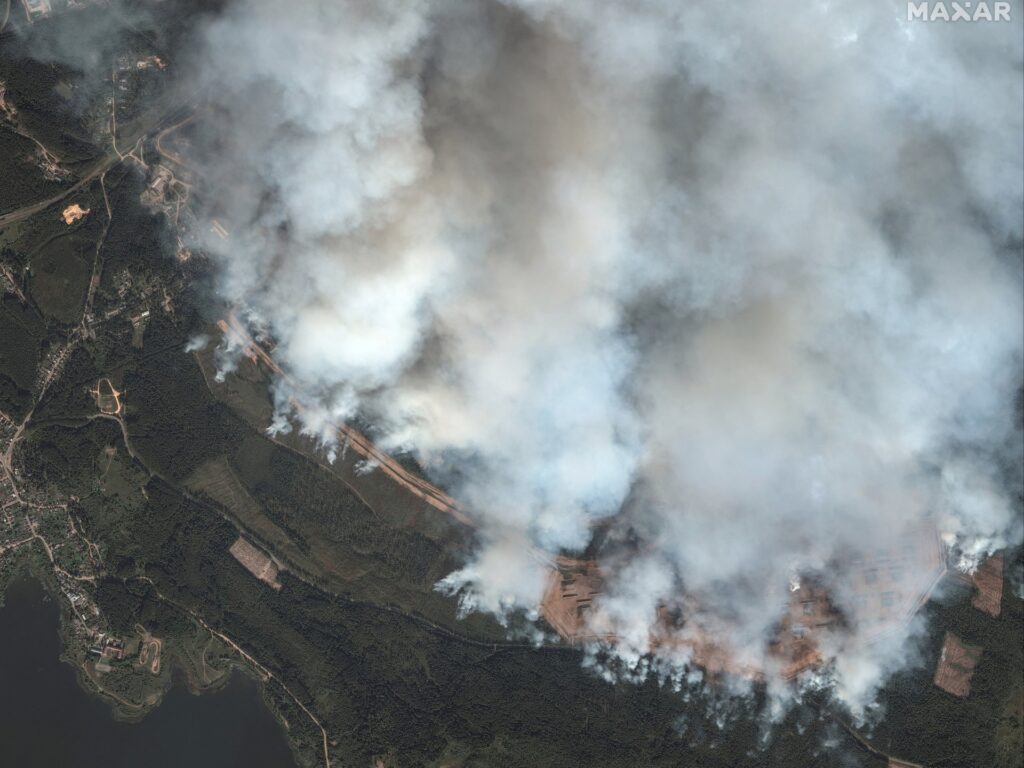
As the war enters its 937th day, these are the main developments. Here is the situation on Thursday, September 19, 2024. Fighting At least one person was killed and a 90-year-old woman injured in a Russian attack on the central city of Kropyvnytskyi, regional authorities said. The Ukrainian air force said it shot down 46 of 52 drones launched by Moscow against Ukraine and that Russia had used three guided air missiles which did not reach their targets. Russia’s counteroffensive to retake Ukrainian-occupied territory in the Kursk region has been “stopped”, Oleksiy Dmytrashkivskyi, a spokesman from Ukraine’s military administration in Kursk, told the AFP news agency. Russia is engaged in an effort to take back territory seized by Ukraine since its surprise August 6 incursion across the border. Ukraine said it struck an arms depot in Russia’s western Tver region, starting a massive fire that forced the evacuation of the nearby town of Toropets, some 400km (250 miles) northwest of Moscow. The Russian Ministry of Health said at least 13 people were injured in the attack. Politics and diplomacy Ukrainian President Volodymyr Zelenskyy said that Kyiv had “fully prepared” its “victory plan” to end the war with Russia, and he would discuss the plan with United States President Joe Biden when he visits the US this month. Slovenia, which currently holds the presidency of the 15-member United Nations Security Council, said Zelenskyy would address the body on Tuesday as world leaders converge on New York for the annual United Nations meetings. Defence ministers from nine countries on NATO’s eastern flank called for a collective response to repeated violations of their airspace by Russian drones and missiles targeting Ukraine. Russia detained Major General Denis Putilov, head of the Central Military District’s armoured car service, on suspicion of taking a bribe of 10 million roubles ($108,000). It is the latest in a string of arrests linked to alleged corruption in the defence sector. Weapons US officials told The Associated Press news agency that Washington wants more detailed information about how Kyiv plans to use the Western-supplied long-range weapons it says are necessary for strikes deep inside Russia, and how they would fit into its broader strategy for the war. Adblock test (Why?)
Haiti sets up council to prepare for first elections since 2016
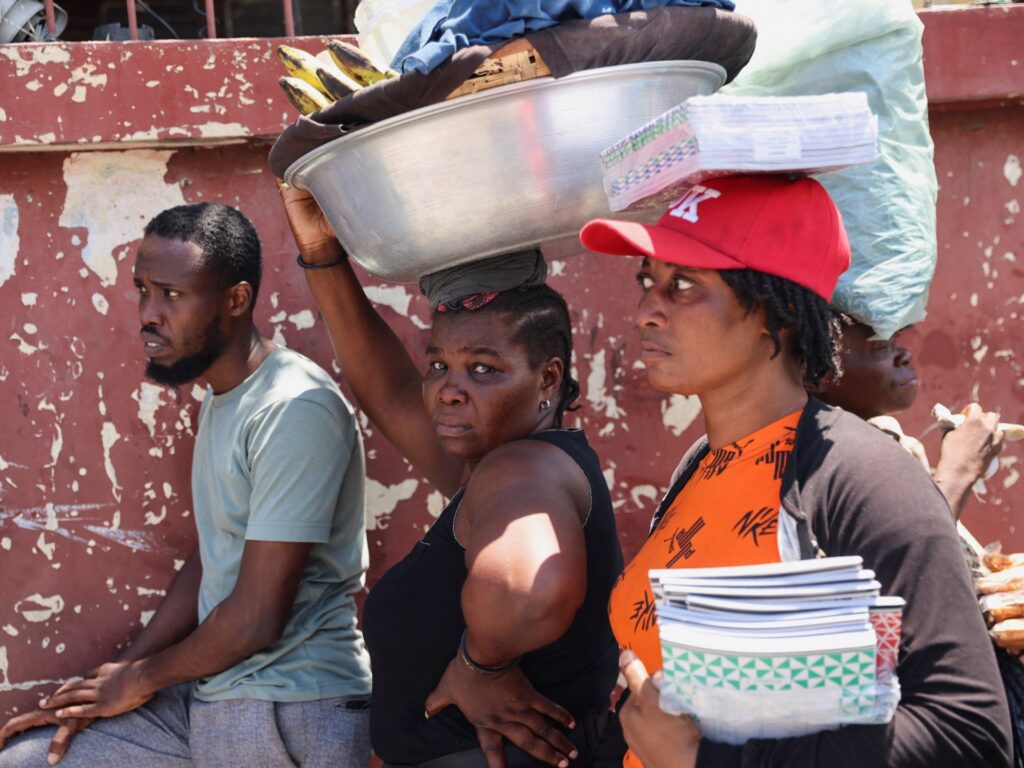
Country is mired in political strife with international peacekeepers drafted in to restore stability. Haiti’s government has set up a provisional electoral council to prepare the troubled Caribbean country for its first general elections since 2016. The electoral council represents groups including farmers, journalists, human rights activists and the Vodou community and is tasked with setting up a legal framework for elections and organising the poll, which is due to be held by 2026. The council created on Wednesday has seven members, the prime minister’s office said on social media platform X. Two other seats, one for human rights groups and another for women’s rights organisations, still lack a delegate, the office added. Smith Augustin, a member of the country’s transitional presidential council, told The Associated Press news agency that the remaining members would probably be announced in the coming days. By law, the council must have nine members. Haiti’s shaky political situation has been exacerbated by a power that emerged following the assassination of President Jovenel Moise in 2021 and has not had a president since. Armed gangs have also spread their control over some 80 percent of the capital Port-au-Prince and most other parts of the nation. A previous electoral council was dissolved in 2021 under former Prime Minister Ariel Henry, who took office after Moise’s death but was forced out of his post earlier this year. In Haiti, executive power is meant to be split between the president and the prime minister. The interim government in May tapped Garry Conille as prime minister. Only Kenya and Jamaica have so far deployed forces to Haiti as part of the United Nations-backed anti-gang offensive, which is set to expire at the start of October if its mandate is not renewed later this month. The mission could also be converted into a formal UN peacekeeping operation, which would ensure funding and the longevity of the mission, a draft resolution showed. Adblock test (Why?)
Fact check: Was Kamala Harris truthful in interview with Black journalists?

During her interview with the National Association of Black Journalists (NABJ) on Tuesday, Vice President Kamala Harris criticised former President Donald Trump and his running mate, Republican Senator JD Vance, for spreading misinformation about Haitian immigrants in Springfield, Ohio. In the presidential debate held last week, Trump claimed that immigrants in the Midwestern state were eating residents’ pets. “When you have that kind of microphone in front of you, you really ought to understand how much your words have meaning,” Harris said on Tuesday. “I learned at a very young stage of my career that the meaning of my words could impact whether someone was free or in prison.” On Israel’s war on Gaza, Harris reiterated that Israel has a right to defend itself, following Hamas’s October 7 attack last year, but didn’t have a straight answer for co-moderator and Politico White House Correspondent Eugene Daniels’ question about how her policies would differ from President Joe Biden’s. Harris said “We need to get this deal done,” referring to freeing captives and a ceasefire deal. The discussion took place at US public radio station WHYY in downtown Philadelphia and featured Daniels, theGrio White House correspondent and Managing Editor of Politics Gerren Keith Gaynor and WHYY Fresh Air programme co-host Tonya Mosley as moderators. Harris’s interview happened days after Trump was targeted in an apparent assassination attempt. Harris said she spoke to Trump earlier in the day. “There’s no place for political violence in our country,” Harris said. In addition to these topics, the moderators tried to get specifics from Harris about her positions on the economy and healthcare. We fact-checked several of her claims. Economy ‘Worst unemployment since the Great Depression’ When Harris and Biden took office, replacing Trump, the US had “the worst unemployment since the Great Depression”. False. Harris had also made this claim during the presidential debate against Trump. She’s wrong. The US unemployment rate spiked to a post-Great Depression record of 14.8 percent in April 2020, as the pandemic escalated. Trump was in office then. But by December 2020, before Biden and Harris took office, the unemployment rate fell to 6.4 percent – high for recent history but well below numerous spikes during recessions. Democratic presidential nominee Vice President Kamala Harris criticised former President Donald Trump during her interview with members of the National Association of Black Journalists [Jacquelyn Martin/AP Photo] ‘Lowest Black unemployment rate in generations’ Harris: “We have the lowest Black unemployment rate in generations.” Half True. The Black unemployment rate in August, the most recent month available, was 6.1 percent. That’s low by historical standards, though it’s up from a record low of 4.8 percent set in April 2023. Black unemployment was also low under Trump, which was not “generations” ago. Trump set a record low of 5.3 percent in September 2019 which was later eclipsed by the record low under Biden. Reduced Black child poverty ‘by half’ Harris: “When we expanded the Child Tax Credit a couple years ago, we reduced Back child poverty by half.” Mostly True. The White House, after Biden made a similar claim in February 2023, said Black child poverty fell from 17.2 percent in 2020 to 8.3 percent in 2021, a 52 percent drop. The drop from 2019, the White House said, was 60 percent. The White House cited supplemental poverty numbers from the Census Bureau. The supplemental poverty measure, introduced in 2011, updated the official poverty measure, which was based on cash resources. The supplemental poverty measure includes cash and non-cash benefits and accounts for government programmes designed to aid low-income families. Biden’s American Rescue Plan increased the child tax credit from $2,000 to $3,600 for children younger than six and to $3,000 for children aged six to 17. Beneficiaries, which included families with very low incomes that weren’t required to file tax returns, received up to half the credit in monthly payments from July 2021 to December 2021. The provision lapsed after that, facing opposition from Republicans and independent Senator Joe Manchin, who said expanding the credit would worsen inflation. When the expanded tax credit expired, child poverty spiked. Supplemental child poverty rose from 12.1 percent in December 2021 to 17 percent in January 2022 – a 41 percent change. This meant 3.7 million more children were living below the poverty line in 2022 compared with 2021. Creating new jobs Harris: “As of today, we have created over 16 million new jobs, over 800,000 new manufacturing jobs.” Mostly True. Non-farm employment has increased by about 15.9 million jobs from January 2021 to August 2024, the period that Biden and Harris have been in office. Manufacturing employment has risen by 739,000. However, there are a few caveats. The Bureau of Labor Statistics, the federal agency that calculates how many people are working, said in August that the initial statistics may have overstated job gains by 818,000. This revision was part of the bureau’s annual effort to fine-tune initial data that the agency acknowledges is imperfect. That would reduce the job gains to about 15 million jobs, not 16 million. But for now, the old numbers Harris was using are the official ones. Any changes would be finalised early next year. Another caveat is that no president can claim full credit for job gains on their watch (or job losses). Many factors that go into employment changes stem from developments beyond presidents’ control, including the health of the global economy. Healthcare Black people are ’60 percent more likely to be diagnosed with diabetes’ Harris: “We know Black folks are 60 percent more likely to be diagnosed with diabetes.” True. Black adults in 2018 were 60 percent more likely than non-Hispanic white adults to be diagnosed with diabetes by a physician, US Centers for Disease Control and Prevention (CDC) data shows. In 2019, Black adults were 2.5 times more likely to be hospitalised with the condition and have associated long-term complications. The group was also twice as likely as non-Hispanic white people to die from the disease, the
More deadly explosions hit Lebanon, a day after Hezbollah pager blasts
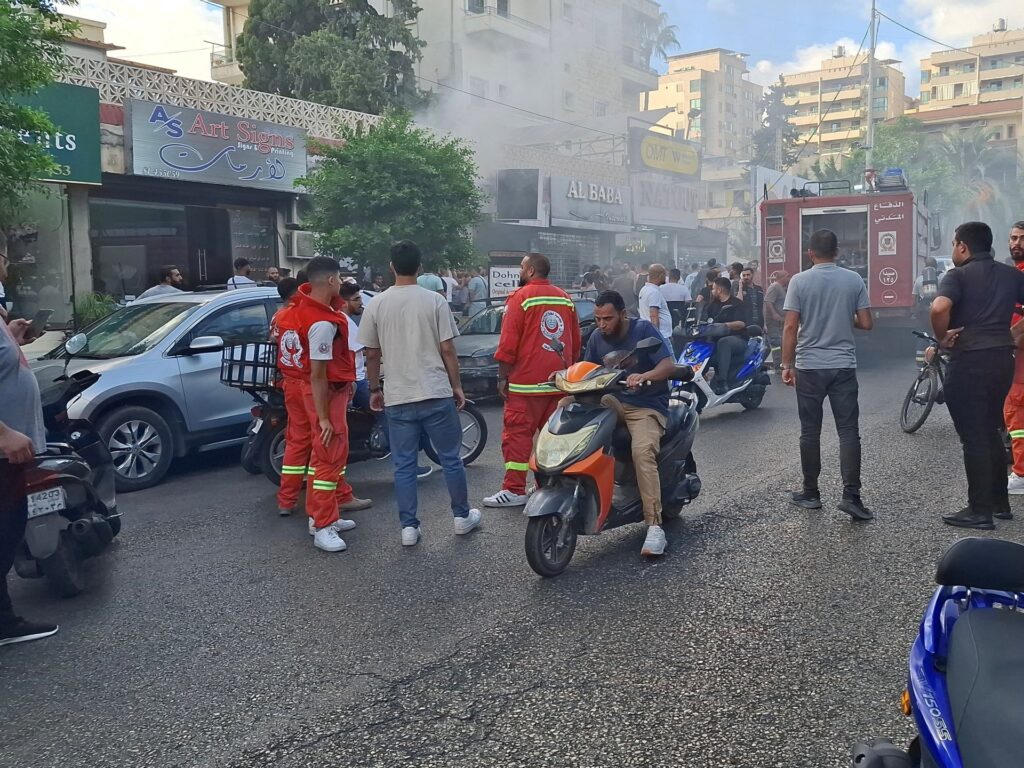
BREAKINGBREAKING, Lebanon’s state media says three people killed in Lebanon’s Bekaa region, as more explosions reported across the country. At least one person has been killed and hundreds were wounded in Lebanon in a new wave of blasts related to communication devices, the Health Ministry has said, a day after thousands of pagers used by Hezbollah detonated across the country. Multiple explosions were reported across Lebanon on Wednesday, with Lebanon’s state-run National News Agency reporting that pagers and “devices” exploded in Hezbollah strongholds in the east and south of Beirut. The Iran-backed group’s Al Manar TV reported explosions in multiple areas of Lebanon, which it said were the result of walkie-talkies detonating. Hezbollah’s Ali Hashem, reporting from Tyre in southern Lebanon, witnessed two explosions. “There was a car that exploded just behind us. At the same time, there was an explosion at another place [nearby],” he said. “I’m currently in the middle of the street. There are a lot of ambulances, chaos everywhere.” Several blasts took place simultaneously, Hashem said, similar to what happened on Tuesday. “But this time, it was mostly walkie-talkies or radios [that exploded],” he said, adding that reports suggested that solar devices and some batteries in cars also exploded. Lebanon’s official news agency reported that home solar energy systems exploded in several areas of Beirut. In Beirut, Al Jazeera’s Imran Khan said a blast was reported in Dahiyeh, a southern suburb of Lebanon’s capital city. “We are hearing a lot of ambulance activity in the area suggesting there may be well casualties coming here or other hospitals nearby, possibly as a result of explosions within Beirut itself.” The new round of explosions took place a day after pagers used by Hezbollah, a Lebanese Iran-backed group, exploded nearly simultaneously in several locations across Lebanon, killing at least 12 people, including two children, and wounding around 2,800. Hezbollah and the Lebanese government blamed Israel for Tuesday’s attacks. Adblock test (Why?)