

More than 70 killed in Mali attack: What happened, why it matters
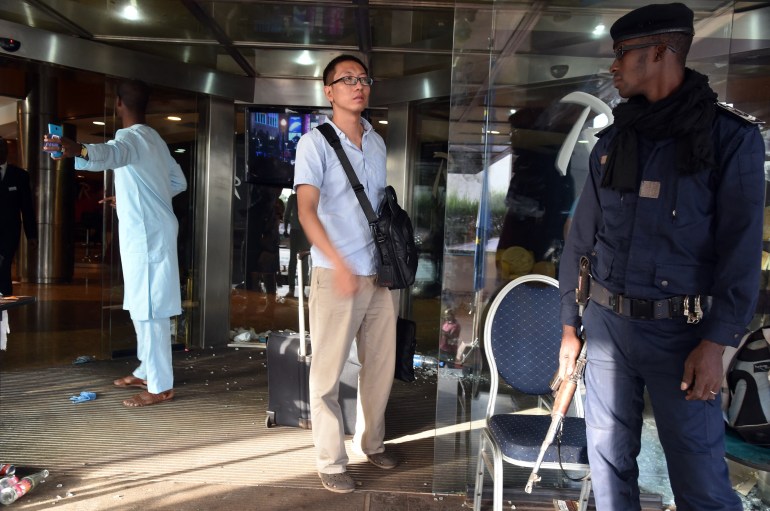
An estimated 77 people have been killed in an attack on Mali’s capital, Bamako, according to the AFP news agency. About 200 others were injured in the attack, which took place on Tuesday and caused hospitals to be overwhelmed with wounded patients, a diplomat who asked to remain anonymous told the news agency. It’s unclear how the victims were wounded; however, residents reported gunshots and explosions. There was also smoke from apparent fires coming from buildings. Malian authorities closed Modibo Keita International Airport after the attack. Mali’s military government downplayed the incident with officials stating the situation was “under control” and the attack had been repelled. Officials later admitted the military had suffered casualties. State TV station ORTM showed images of about 20 suspects believed to have been involved in the attack wearing blindfolds and with their hands tied. It was reported they had been captured by the military. “The sweep continues,” army Chief of General Staff Oumar Diarra said. What happened in the attack? Malian authorities said an armed group attacked an elite military police training school in the Faladie district of Bamako as well as a military base close to the airport early on Tuesday. Gunshots rang out in the city centre, and smoke billowed into the sky from what appeared to be fires the fighters had lit in buildings and other infrastructure, according to some accounts. Responsibility for the attack has been claimed by the al-Qaeda-linked Jama’at Nusrat al-Islam wal-Muslimin (JNIM). The group’s stated aims include to “remove oppression” and expel non-Muslim “occupiers”, referring to Western influence in the country, such as foreign troops stationed in Mali. It also operates in Burkina Faso and Niger. https://x.com/ali_naka/status/1835949989522190422 JNIM members appeared to have killed scores of Malian soldiers and Russian fighters from the Wagner mercenary group during the nine hours the attack is believed to have lasted for. The Wagner Group, now called Africa Corps, is deployed in the country to assist the government in repelling armed groups. JNIM posted videos of the assault on social media sites. The clips showed fighters setting fire to a government airplane and firing on an plane owned by a United Nations aid organisation, the World Food Programme (WFP). Videos also showed dozens of apparently dead soldiers, including white soldiers presumed to be Russians. https://x.com/YoroDIA18/status/1836391875340591559 While JNIM claimed to have taken control of the airport and the surrounding area on Tuesday, the Malian authorities said on state broadcasting networks later in the day that the attack had been repelled. JNIM claimed a few dozen of its members were killed during the assault and it had been able to wound hundreds of Malian soldiers and Russian fighters. UN Secretary-General Antonio Guterres condemned the attack and confirmed that one UN staff member had been injured. The African Union, Senegal, France and the United Kingdom denounced the violence. WFP spokesperson Djaounsede Madjiangar confirmed the damage to the aircraft he said was used to “transport aid workers and provide emergency humanitarian aid in remote areas of Mali”. The airplane was on the ground at the time and had no personnel in it. Madjiangar said the attack “reduces our humanitarian response capacity”. #Mali / #Bamako: Les terro-ristes au milieu des avions à l’aéroport Bamako Sénou. #SahelLeaks pic.twitter.com/jPniwYnoBM — SahelLeaks (@SahelLeaks) September 17, 2024 Why is this attack significant? The attack happened in Bamako, the capital and seat of the military government, and specifically targeted military bases. Such a high-profile attack on Bamako has not happened in years. While Mali has been beset by violence from several armed groups since 2012, including JNIM and the ISIL (ISIS) affiliate in the Greater Sahara (ISGS), it has been concentrated in the northern and central parts of the country, hundreds of kilometres from the southwestern capital. The last time a high-profile attack was carried out in the city was in 2015 when fighters targeted foreigners at a nightclub in March and again at the Radisson Blu Hotel in November. A civilian government was in power at the time, and French forces were assisting the army. Five people were killed and nine injured in the nightclub attack. Twenty people were killed in the Radisson Blu attack. Both attacks were carried out by the al-Mourabitoun armed group, which has now merged with the Ansar Dine and Macina Liberation Front groups to form JNIM. A guest leaves the Radisson Blu Hotel in Bamako on November 21, 2015, after retrieving his belongings one day after a deadly attack [Issoufo Sanogo/AFP] The groups have seized large swaths of land in central and northern parts of the country and tax civilians in occupied communities. Groups like JNIM also launch incursions into neighbouring Burkina Faso and Niger. Like Mali, the two countries have been ruled by their militaries since 2021. How has violence by armed groups been countered before now? France, a former ally of Bamako, deployed thousands of soldiers to Mali in 2013 and to neighbouring countries. In addition, the UN deployed the 11,000-man peacekeeping force MINUSMA (UN Multidimensional Integrated Stabilization Mission in Mali). The forces together were able to seize territories from the armed groups and hold them, but attacks like those in 2015 persisted, causing general dissatisfaction among Malians. In 2020, forces led by Colonel Assimi Goita seized power in a military coup while blaming the civilian government of President Ibrahim Boubacar Keita for not doing enough to ease the worsening insecurity caused by the armed groups. When anti-French sentiment began to rise in the region around 2015, partly due to continued attacks by armed groups, Goita ordered French forces and MINUSMA to leave. The troops started withdrawing in 2022 and completed their exit by December last year. Goita’s government has instead turned to Russia’s Wagner forces for support. There are now about 2,000 Wagner fighters in the country. Although the Russians, along with Malian soldiers, have been accused of human rights violations, the collaboration has seen Mali regain some territory from armed groups, especially in the north, analysts said. What other major losses have
Israeli forces kill dozens across Gaza as tanks advance deeper into Rafah
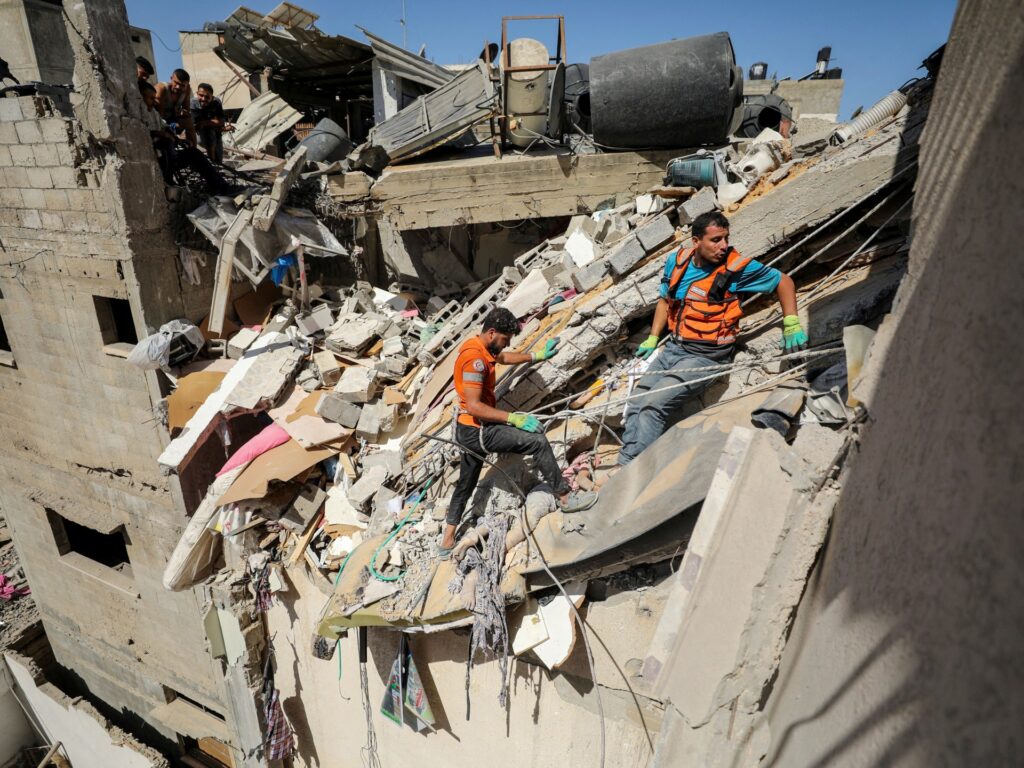
At least 13 people, including children, were killed in Israeli attacks on two homes in Rafah, medical sources say. Israeli forces have killed at least 27 Palestinians in tank and air attacks across Gaza, as tanks advanced further into northwest Rafah near the border with Egypt. The unrelenting Israeli attacks in the enclave continued on Friday, even as a parallel conflict in the Lebanon-Israel border area involving Hamas’s allies Hezbollah intensified. In the southern city of Rafah, at least 13 Palestinians, including three children, were killed in Israeli air raids on two residential properties in the Mesbah area, medical sources told Al Jazeera. Al Jazeera’s Tareq Abu Azzoum, reporting from Deir el-Balah in central Gaza, said the two properties were completely destroyed in the attack. “Civil defence crews are scrambling to reach the scene of the attack as fighting between Hamas and Israel rages in the area,” he said. “There are still people buried in the debris.” Tanks advanced further to the northwest area of Rafah backed by aircraft, residents told the Reuters news agency. Heavy fire and explosions echoed in the eastern areas of the city, where Israeli forces blew up several houses, according to residents and Hamas media. “Our fighters are engaged in fierce gun battles against Israeli forces, who advanced into Tanour neighbourhood in Rafah,” Hamas’s armed wing said in a statement. Separately, Palestinian health officials said shelling by Israeli tanks killed eight people and wounded several others in the Nuseirat refugee camp in the central area of Gaza, and six others were killed in an air raid on a house in Gaza City. In the northern town of Beit Hanoon, an Israeli attack on a car killed and wounded several Palestinians, medics said. The Israeli military has said that forces operating in Rafah have killed hundreds of Palestinian fighters, located tunnels and explosives and destroyed military infrastructure in the last few weeks. The United States and mediators Qatar and Egypt have attempted to secure a truce between Israel and Hamas for months, but have failed to bring about a final agreement. Two obstacles have been especially difficult – Israel’s demand that it keep forces in the Philadelphi Corridor between Gaza and Egypt, and the specifics of an exchange of Israeli captives for Palestinian prisoners held by Israel. Israel’s latest war on Gaza began after October 7, when Hamas fighters entered Israel, killing 1,200 people and taking about 250 captives, according to Israeli tallies. Since then Israel has been relentlessly attacking the enclave, killing more than 41,000 Palestinians, according to the local health ministry, while displacing nearly the entire population of 2.3 million, causing a hunger crisis and leading to allegations of genocide at the World Court, which Israel has denied. Adblock test (Why?)
Israel strikes Beirut suburb in latest attack in Lebanon
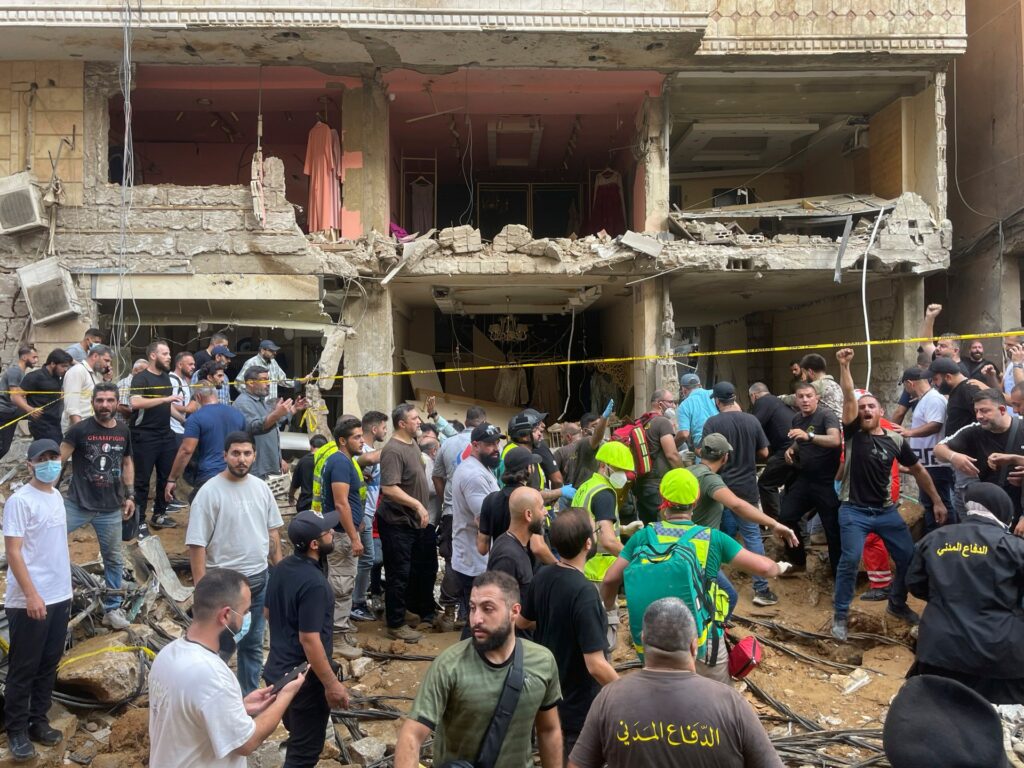
NewsFeed At least 12 people were killed and dozens injured in an Israeli strike in a Beirut suburb on Friday, with the Israeli military claiming to have a killed a senior Hezbollah commander. Published On 20 Sep 202420 Sep 2024 Adblock test (Why?)
The pager bombings – everyday tech that kills
[unable to retrieve full-text content] Attacks against Hezbollah with booby-trapped pagers and two-way radios, blamed on Israel, are new in scale, not approach
Components for pagers used in Lebanon blasts not from Taiwan, minister says
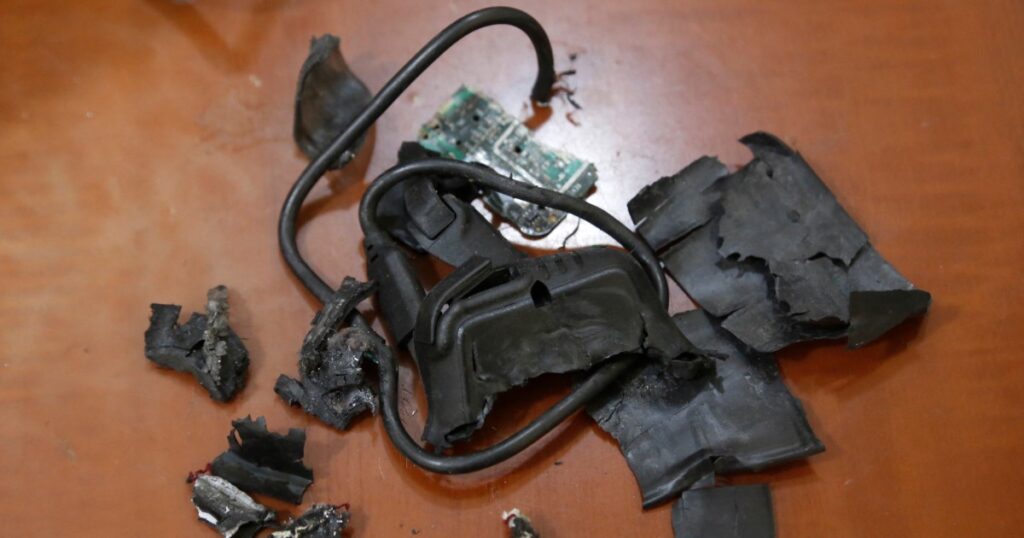
CEO of Taiwan-based Gold Apollo released after questioning over role in deadly explosions. Components used in thousands of pagers that detonated on Tuesday in Lebanon in a deadly blow to Hezbollah were not made in Taiwan, Taiwan’s economy minister has said. Taiwan-based Gold Apollo said this week it did not manufacture the devices used in the attack, and that Budapest-based company BAC to which the pagers were traced has a licence to use its brand. It was not clear how or when the pagers were weaponised so they could be remotely detonated. The same applies to the hundreds of hand-held radios used by Hezbollah that exploded on Wednesday in a second wave of attacks. The two incidents killed 37 people and wounded about 3,000 in Lebanon. “The components are (mainly) low-end IC (integrated circuits) and batteries,” Taiwan’s Economy Minister Kuo Jyh-huei told reporters on Friday. When he was pressed on whether the parts in the pagers that exploded were made in Taiwan, he said, “I can say with certainty they were not made in Taiwan,” adding the case is being investigated by judicial authorities. Security sources said Israel was responsible for the pager explosions on Tuesday that raised the stakes in a growing conflict between the two sides. Israel has not directly commented on the attacks. Taiwan’s Foreign Minister Lin Chia-lung, also speaking to reporters at parliament, answered “no” when asked if he had met with the de facto Israeli ambassador to express concern about the case. “We are asking our missions abroad to raise their security awareness and will exchange relevant information with other countries,” Lin said. As Taiwanese authorities look into any potential link between its sprawling global tech supply chains and the devices used in the attacks in Lebanon, Gold Apollo’s president and founder, Hsu Ching-kuang, was questioned by prosecutors late into the night on Thursday, then released. Another person also at the prosecutor’s office was Teresa Wu, the sole employee of a company called Apollo System, who did not speak to reporters as she left late on Thursday. Hsu said this week a person called Teresa had been one of his contacts for the deal with BAC. A spokesperson for the Shilin District Prosecutors Office in Taipei told the Reuters news agency that it had questioned two people as witnesses and was given consent to conduct searches of their firms’ four locations in Taiwan as part of its investigation. “We’ll seek to determine if there was any possible involvement of these Taiwanese companies as soon as possible, to ensure the safety of the country and its people,” the spokesperson said. Iran-aligned Hezbollah has pledged to retaliate against Israel, which has not claimed responsibility for the detonations. The two sides have been engaged in cross-border warfare since conflict in Gaza erupted last October. Adblock test (Why?)
Diplomatic failings and ‘elite bargains’ prolonging Libya turmoil: Analysts
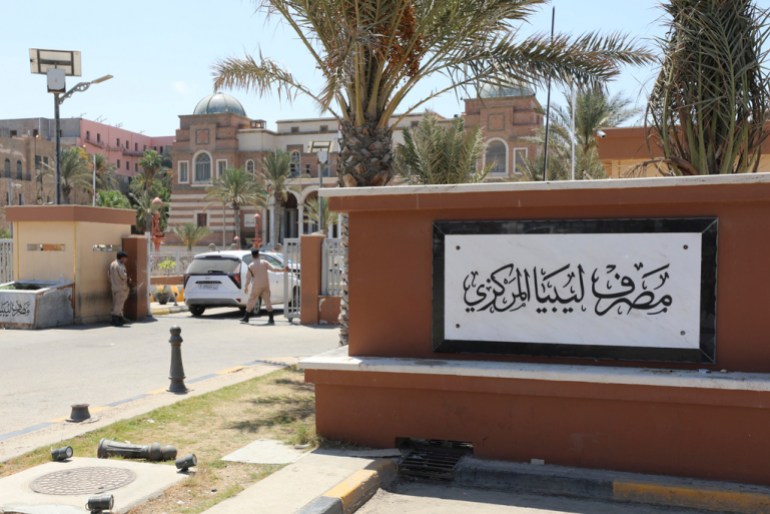
After weeks of tension that saw the Central Bank of Libya (CBL) shuttered, salaries go unpaid and cash vanish, the country’s two rival governments appeared ready to accept a United Nations-brokered agreement to resume operations, before once more reverting to a deadlock familiar to many in the country. The internationally recognised Government of National Accord (GNA) in the west had tried to replace CBL Governor Sadiq al-Kabir, accusing him of mishandling oil revenues and going to the extent of sending armed men in to remove him from his office. Angered, the Government of National Unity (GNU) in eastern Libya, which is supported by renegade commander Khalifa Haftar, shut down much of the country’s oil production, which it controls, in protest. “This is serious,” said Jalel Harchaoui, an associate fellow with London’s Royal United Services Institute. “The CBL, although weaker now than it was a few years ago, remains a linchpin to the nation’s access to hard currency.” He added that the CBL funds most of Libya’s imports of food, medicines and other staples, which the country cannot last long without. The clash is the latest battleground in the 13-year rivalry between political and military elites that has dogged Libya since the overthrow of long-term ruler Muammar Gaddafi in 2011. Since then, various analysts say, life in Libya has deteriorated as fighting has continued between rival Libyans and as the international community has tried to preserve the rule of a political and military elite, convinced they are the best for stability and for the proclaimed goal of “unifying Libya”. Why the central bank? As well as holding Libya’s vast oil wealth, the CBL unified Libya’s eastern and western “central banks” in one body to manage the salaries of civil servants and soldiers from both governments and build confidence that recovery was possible. After the GNA-GNU struggle over who would head the CBL, al-Kabir fled the country, claiming that he took the access codes for bank deposits with him, leaving the bank isolated from international financial networks. Asim al-Hajjaji, director of the CBL compliance department, said international contacts had been restored, although Al Jazeera understands that most international trading remains suspended. Soldiers guard the gate of the Central Bank of Libya in Tripoli, on August 27, 2024 [Yousef Murad/AP Photo] Meanwhile, oil exports have plunged to a new low, salaries are uncertain and everyday life for about six million Libyans is in turmoil. “The United Nations is talking about talks, which is a sure sign we’re nowhere near resolution,” Tarek Megerisi, a senior fellow at the European Council on Foreign Relations, said of negotiations to restart operations at CBL. The West, which typically backs the GNA despite it being responsible for much of the uncertainty, “doesn’t know what to do, or really has the bandwidth to do it. They’re dealing with wars in Gaza and Ukraine,” he said. “It’s just too much. In Libya, international efforts to achieve any kind of just settlement have lost momentum.” And this is far from the first time. Over more than a decade of uncertainty and war, analysts say, the international community’s efforts focused on shoring up the country’s elites in the hope that might lead to stability. The latest talks over the CBL appear little different, with access to the millions of dollars in assets of primary interest to the country’s elites, and access to the services and certainty craved by much of the population seemingly an afterthought, analysts told Al Jazeera. Elite bargains presiding over endless turmoil “Preventing a shooting war has come to be seen as the only international strategy in Libya,” Tim Eaton, a senior fellow at Chatham House who contributed to a paper on the international practice of prioritising powerful elites, told Al Jazeera. “It’s death by a thousand cuts,” Harchaoui said. “Everyone’s talking about a return to the status quo as if there were ever a neat, static equilibrium,” he noted. “This was never the case. Even when things appeared quiet, the arrangements were continually decaying and degrading. And that gradual deterioration is what suddenly became visible last month with the CBL crisis.” National elections, or even a framework that might lead to them, remain a distant prospect after the last vote, initially scheduled for December 2021, was postponed after infighting. “Any move towards holding national elections has been blocked,” Eaton said. “Both [Abdul Hamid] Dbeibah [head of the GNA] and Haftar might say they want elections tomorrow, but they only really want their side, or at least their proxies, on the ballot paper.” Both governments continue to rule separately, while their members, allies and militias profit from smuggling in both people and fuel and unregulated cross-border trade. Members of the so-called ‘Libyan National Army’, commanded by Khalifa Haftar, get ready to head out of Benghazi to reinforce troops advancing to Tripoli, in Benghazi on April 13, 2019 [Esam Omran Al-Fetori/Reuters] However, as individual members jockey for position within small and exclusive circles, systems intended to support everyday life in Libya continue to deteriorate and fail. Eaton notes that the city of Derna, which flooded in September 2023 after a dam that the GNU was responsible for collapsed, remains unreconstructed. “For healthcare, Libyans have to go overseas,” he noted. “And if anyone is ever caught in an emergency, there’s no one number or department they can call. “All the while, the super-rich that are supposed to be looking after people, are getting even richer.” Both sides, he explained, claim to work towards establishing a central government while state institutions needed to oversee any future state, like a strong central bank, have been hollowed out and captured by elites on either side. Regionally, over its 13 years of sporadic conflict and political uncertainty, Libya has become a continued source of instability within an already unstable region. Within a divided Libya, various actors have come to use the country’s east as a staging point from which to project their own international ambitions in Sudan, Syria and beyond. Ex-Governor of CBL Siddiq
As Sri Lanka votes, a $2.9bn IMF loan looms large
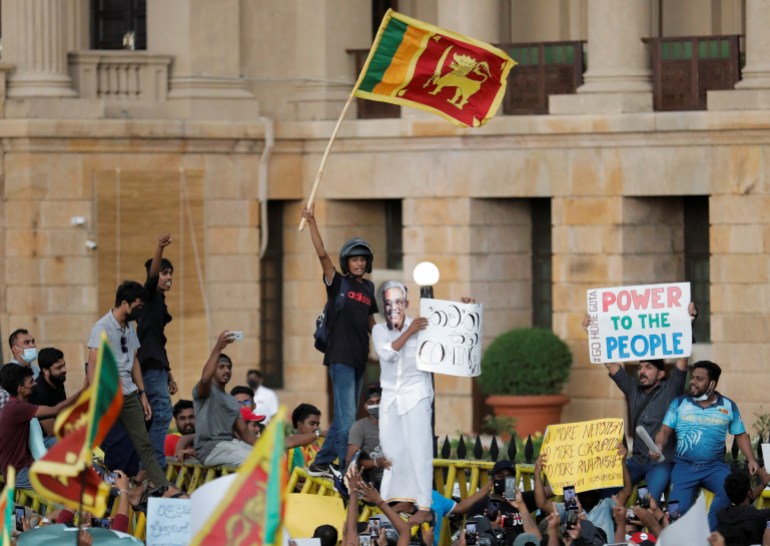
Ahead of Sri Lanka’s presidential election, no issue is more central than the economy. With the South Asian country still struggling from its worst financial crisis in decades, Saturday’s ballot amounts to a referendum on austerity measures imposed by the International Monetary Fund (IMF) last year. In a crowded field of 38 candidates, all eyes are on three men: incumbent President Ranil Wickremesinghe and his two closest rivals, Anura Kumara Dissanayake and Sajith Premadasa, both of whom want a new deal with the Washington, DC-based lender. A six-time prime minister, Wickremesinghe represents the old guard. His United National Party (UNP) has been one of Sri Lanka’s dominant political forces since the country’s independence in 1948. While Wickremesinghe’s supporters commend his $2.9bn IMF loan – and subsequent debt restructuring deals – Sri Lankans experienced a cost-of-living crisis on his watch, with inflation peaking at nearly 74 percent in 2022. After the end of its civil war in 2009, Sri Lanka borrowed heavily to fund infrastructure-led growth. Then, in 2019, President Gotabaya Rajapaksa introduced unfunded tax cuts. Fiscal pressures were compounded when the COVID-19 pandemic led tourism and remittance inflows to dry up. In 2022, a surge in oil prices and rising US interest rates tipped Sri Lanka into a balance of payments crisis. To maintain imports, Colombo was forced to prop up its plunging currency – the rupee – by running down scarce international reserves. A protester wearing a mask of Sri Lanka’s President Gotabaya Rajapaksa performs during a protest in front of the Presidential Secretariat in Colombo, Sri Lanka, on April 9, 2022 [Dinuka Liyanawatte/Reuters] Rajapaksa’s government faced an increasingly stark choice – continue servicing its international debt or pay for critical imports like food, fuel and medicine. In April 2022, Sri Lanka defaulted on $51bn of external debt. By July, with the country facing shortages of essential goods and power blackouts, inflation was hovering at 60 percent. Anger over the government’s handling of the crisis led to mass street protests, forcing Rajapaksa to flee the country and resign. As Rajapaksa’s successor, Wickremesinghe was tasked with reversing Sri Lanka’s economic crisis. With few options on the table, he turned to the IMF. In March 2023, Colombo agreed to a 48-month emergency loan. As with all IMF deals, it came with strict conditions. In exchange for funds, Wickremesinghe was forced to remove electricity subsidies and double the rate of value-added tax (VAT). “Wide-ranging austerity also included a sovereign debt restructuring,” Katrina Ell, director of economic research at Moody’s Analytics, told Al Jazeera. Refinancing operations typically involve exchanging old debt instruments for new, more affordable ones. Sri Lanka’s foreign and domestic lenders had to accept equivalent losses of 30 percent as part of the IMF agreement. “All these measures do not offer a quick fix,” Ell said. Still, “Sri Lanka’s economy has shown meaningful signs of improvement” since 2022, she said. The rupee has stabilised and inflation has come down sharply from its 2022 peak. The World Bank forecasts the economy to expand 2.2 percent in 2024, following two straight years of negative growth. On the other hand, real wages remain significantly below pre-crisis levels and the country’s poverty rate has doubled, according to the World Bank. Samagi Jana Balawegaya party leader and presidential candidate Sajith Premadasa addresses supporters during a rally in Colombo on September 18, 2024 [Ishara S Kodikara/AFP] Presidential contender Premadasa, whose Samagi Jana Balawegaya (SJB) party splintered off from Wickremesinghe’s UNP in 2020, has criticised the IMF deal. Premadasa has argued that boosting export markets and strengthening the rule of law are the way forward. Yet he is not the main candidate for change, according to Jayati Ghosh, a professor of economics at the University of Massachusetts Amherst. “That mantle falls to Anura,” Ghosh told Al Jazeera. Dissanayake’s political stock has risen dramatically in recent months. Though his far-left Janatha Vimukthi Peramuna (JVP) secured just three seats in the last parliament, it has since re-branded itself to project a more mainstream image. Today, the JVP represents a coalition of leftist groups. And while it receives strong support from young voters, those over 50 still recall the JVP’s attempts at insurrection in the late 1980s – a period of terror in southern Sri Lanka that led to between 60,000 and 100,000 deaths. “Dissanayake has distanced himself from his party’s past and his old Marxist leanings,” Ghosh said. “And though he’s inched towards the centre, he’s still the progressive in the race.” Dissanayake has pledged to increase Sri Lanka’s income tax-free threshold and exempt some health and food items from the 18 percent value-added tax to make them more affordable. “Anura wants to change the Fund’s insistence on treating external and domestic debt equally,” Ghosh said. “On top of regressive VAT increases, public pension funds bore a big brunt of the restructuring. Teachers and nurses had their pensions slashed. It’s criminal,” she added. “Dissanayake would try and push the IMF to shift the burden away from ordinary Sri Lankans onto external creditors. Poor people’s livelihoods have already been badly hit. He has been far more critical on the debt issue than Premadasa.” Following a $4.2bn debt restructuring with China’s Ex-Im Bank in October, Sri Lanka completed a $5.8bn restructuring with a number of countries including India and Japan in June. In a last-minute agreement before the election, the country on Thursday clinched a deal with private investors to restructure $12.5bn of international bonds, clearing the way for the release of its fourth tranche of IMF bailout funds. National Peoples Power party leader Anura Kumara Dissanayake takes part in a protest in Colombo on February 26, 2023 [Ishara S Kodikara/AFP] But, according to Ahilan Kadirgamar, a Sri Lankan economist, “it’s far too favourable to the creditors”. “In theory, restructuring operations are meant to lower debt costs and free up public resources for things like education and healthcare. That’s not what’s happening in Sri Lanka,” Kadirgamar told Al Jazeera. Sri Lanka’s debt-to-GDP (gross domestic product) ratio is expected to fall from
US believes Gaza ceasefire deal unlikely in Biden’s term: Report
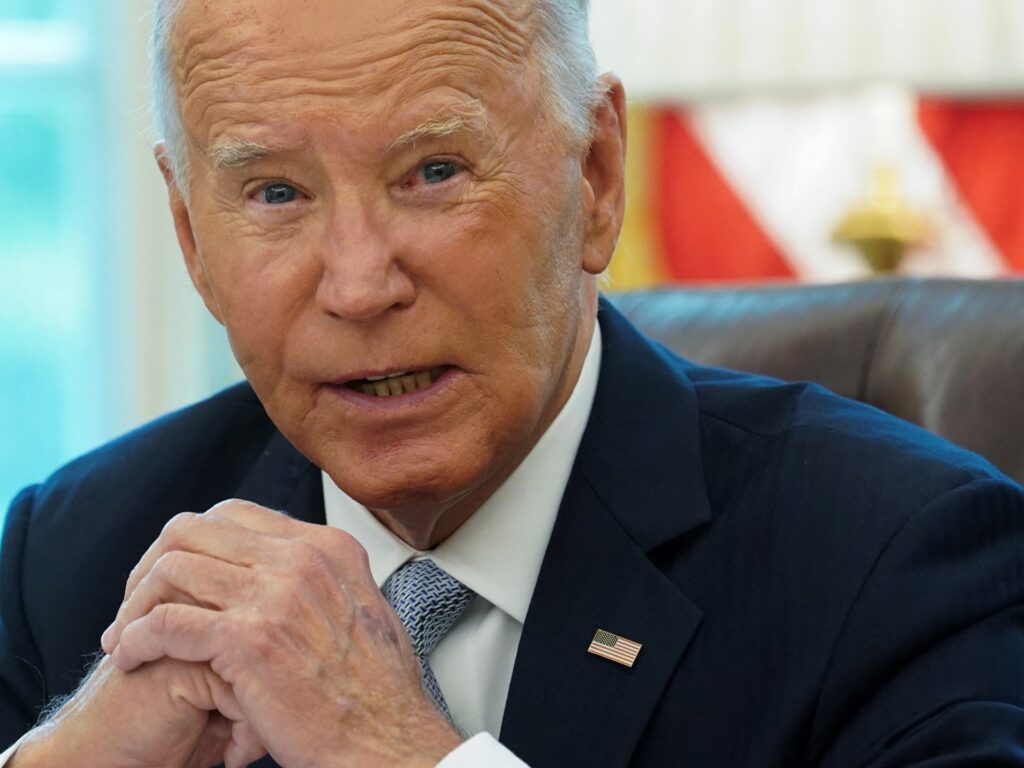
Wall Street Journal cites multiple US officials saying they are sceptical a ceasefire can be achieved before January. Officials in the United States believe that a ceasefire deal between Israel and Hamas in Gaza is unlikely before President Joe Biden leaves office in January, according to the Wall Street Journal. The newspaper on Thursday cited top-level officials in the White House, State Department and Pentagon without naming them. “No deal is imminent. I’m not sure it ever gets done,” one of the US officials told the newspaper. The officials told the Journal there were two key obstacles to a deal: the number of Palestinian prisoners Israel must release in exchange for each captive held by Hamas, and the rising tensions between Israel and Hezbollah. In public, officials in Washington have stressed that they will continue to work for an agreement. “I can tell you that we do not believe that deal is falling apart,” Pentagon spokesperson Sabrina Singh told reporters on Thursday before the Wall Street Journal report was published. US Secretary of State Antony Blinken said two weeks ago that 90 percent of a ceasefire deal had been agreed upon. Washington has been working for months with mediators Qatar and Egypt to try and bring Israel and Hamas to a final agreement. Biden laid out a three-phase ceasefire proposal on May 31 saying that Israel had agreed to it. The US holds its presidential election on November 5 with Vice President Kamala Harris running against Republican Donald Trump. The latest bloodshed began nearly a year ago when Hamas launched a surprise attack on Israel on October 7, killing 1,139 people and taking more than 200 captive. Israel’s subsequent assault on the Hamas-governed territory has killed at least 41,272 Palestinians and injured 95,551. It has also led to the displacement of nearly the entire population of 2.3 million, a hunger crisis and a genocide case at the World Court. Adblock test (Why?)
Los Angeles Dodgers’ Shohei Ohtani makes baseball history

Player becomes first in MLB to record 50 home runs and 50 stolen bases in a single season. Los Angeles Dodgers’ Shohei Ohtani has made Major League Baseball (MLB) history by becoming the first player in the league’s history to record 50 home runs and 50 stolen bases in a single season. Ohtani made three home runs and lifted his tally of steals to 51 in the Dodgers’ 20-4 victory over the Miami Marlins on Thursday. The win sent the Dodgers into the playoffs, a first for Ohtani. “To be honest, I’m the one probably most surprised,” the Japanese player said through a translator of his spectacular performance. “I have no idea where this came from, but I’m glad I performed well today.” It has been an eventful year for Ohtani who joined the Dodgers in December on a 10-year, $700m contract after spending six seasons with the crosstown rival Angels. He is not pitching this season as he recovers from reconstructive surgery on his throwing elbow and has also endured a scandal in which his former friend and interpreter, Ippei Mizuhara, stole millions of dollars from him to repay sports gambling debts. Dodgers manager Dave Roberts, addressing his players in the clubhouse as they celebrated the victory, noted the achievement. “This is a game that has been played for over 200 years,” Roberts said. “And this is something that has never been done.” Ohtani, 30, tried to keep the focus on the team. “I’m glad that the team won,” he said, admitting that with so much attention focused on his 50-50 pursuit, it “was something I wanted to get over as quickly as possible. “It’s something that I’m going to cherish for a very long time.” Earlier this season, Ohtani became the MLB’s all-time leader in home runs among Japanese-born players when he surpassed the 175 of Hideki Matsui with 222 home runs over the course of his career. Adblock test (Why?)
Judge in Brazil orders Musk’s X to obey ban or face daily fine

The social network X faces hefty new fine after its appears to defy ban ordered by a judge. Brazil’s Supreme Court has ordered the social media platform X to remove access to its website after service was restored despite a judge’s ban or face a daily fine of more than $900,000. The social network, formerly known as Twitter, was banned last month in Latin America’s largest nation as part of a crackdown on disinformation, but access to the phone app returned on Wednesday. X said the return of its service was “inadvertent and temporary”, but the government accused the company of deliberately violating the suspension order. Judge Alexandre de Moraes said X would face a daily fine of 5 million reais ($913,000) until it obeys the order to suspend its service. The social media platform has more than 22 million users in Brazil. Last month, the judge ordered the suspension of X after Musk refused to remove dozens of right-wing accounts accused of spreading fake news. The suspension has fuelled a fierce debate on freedom of expression and the limits of social networks, both inside and outside the country. The judge also froze the assets of X and Musk’s satellite internet operator Starlink, which has been operating in Brazil since 2022, especially in remote communities in the Amazon. Internet providers explained that X had been accessible again after an automatic update to the phone application. New software allows the app to use constantly changing identifying IP addresses, which makes it much harder to block. The National Telecommunications Agency, also called Anatel, said Thursday that it had “identified a mechanism which we hope” will block the service again. De Moraes has also ruled that anyone using “technological subterfuges”, such as virtual private networks (VPNs), to access the blocked site could be fined up to $9,000. X owner Elon Musk has refused Brazilian court orders to block accounts accused of spreading election misinformation [File: Susan Walsh/AP] X’s history of problems This is not the first time X has been banned by a country. China was the first country to ban the platform in June 2009 when it was still called Twitter, two days before the 20th anniversary of the Tiananmen Square massacre. Venezuela ordered a 10-day block of X last month over a disputed presidential vote in the country after election authorities declared incumbent Nicolas Maduro the winner. Political tensions escalated after the disputed election results. Why has Brazil banned X? In January 2023 after supporters of ex-President Jair Bolsonaro, spurred on by false claims of electoral fraud, stormed the National Congress, the Brazilian Supreme Court issued an order for X and other social media platforms to restrict accounts linked to fake news and hate speech. In April, de Moraes again asked X to block several accounts accused of spreading misinformation about Bolsonaro’s defeat in the 2022 general election. This time, Musk refused and removed X’s legal representative in Brazil in protest. According to Brazilian law, foreign companies that conduct business in Brazil are required to have a legal representative in the country who acts as a liaison between the firm and local authorities. Adblock test (Why?)