

Republican-led probe blames Biden for chaotic Afghanistan withdrawal
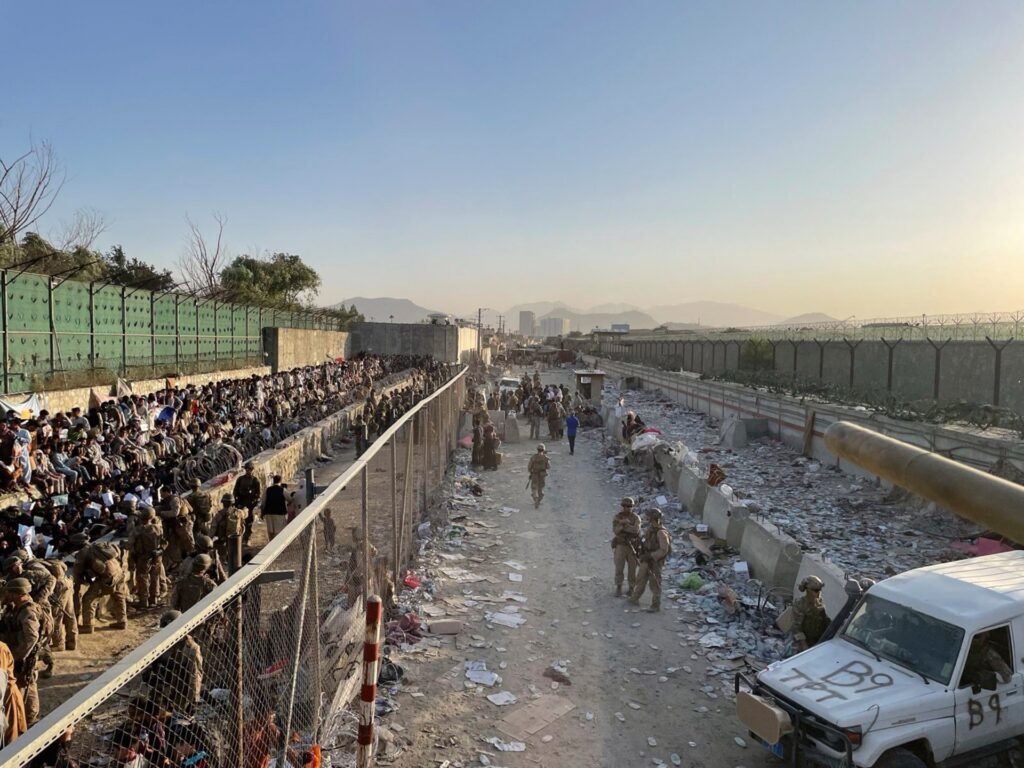
Washington, DC – In a new report, Republicans in the United States House of Representatives have placed the blame for the chaotic 2021 US withdrawal from Afghanistan on the administration of Democratic President Joe Biden. The assessment by the majority on the House Foreign Affairs Committee, released late on Sunday, said the Biden administration chose “optics over security” as it oversaw a withdrawal agreement reached by former President Donald Trump and the Taliban in 2020. Democrats, meanwhile, released their own minority report on the 18-month investigation on Monday, accusing Republicans of shutting them out of the probe and choosing partisan politics over the pursuit of truth The Republican report said the Biden administration “had the information and opportunity to take necessary steps to plan for the inevitable collapse of the Afghan government”. Such planning would have allowed Washington to “safely evacuate US personnel, American citizens, green card holders, and our brave Afghan allies”, said the more than 350-page report, titled Willful Blindness. It added that Biden and his vice president, Democratic presidential candidate Kamala Harris, “misled and, in some instances, directly lied to the American people at every stage of the withdrawal” in what amounted to a White House-led “misinformation campaign”. The assessment came just before Harris and Trump are to face off on Tuesday in their first presidential debate. Republicans have increasingly criticised the Democratic administration over its foreign policy record, especially the Afghanistan withdrawal. Democrats on the committee swiftly condemned the Republicans’ framing, saying in their own report: “The American people deserve the truth.” “We owe it to them to highlight the facts elicited in this investigation without undue spin and with respect for the seriousness of the subject and the witnesses who have voluntarily testified to us about it,” the Democrats’ report said. “We must continue to wrestle with these matters not to rewrite the past or assign partisan blame, but to identify lessons that can help us better fight and end wars in the future.” Chaotic exit The two reports are only the latest evaluations of the end of the US involvement in the two-decade war in Afghanistan. Several government agencies, including the independent Special Inspector General for Afghanistan Reconstruction (SIGAR), have conducted their own probes. US involvement in Afghanistan began with coalition troops toppling the Taliban from power in 2001 in the wake of the September 11 attacks. It ended with the Taliban’s lightning offensive in 2021 as American troops withdrew and the US-backed Afghan government crumbled. The Taliban took control of Kabul on August 15, 2021, just days before the last US soldiers left the country. While the Biden administration had pushed back an earlier withdrawal date agreed to by the Trump administration, the final days of the withdrawal devolved into chaos. The disarray turned particularly deadly on August 26, 2021, when an attack by ISIL (ISIS) outside the Kabul airport – where tens of thousands of Afghans had gathered in hopes of boarding a Western evacuation flight – killed at least 170 Afghans and 13 US military personnel. The withdrawal also left hundreds of thousands of vulnerable Afghans – many of whom had worked directly with US forces – in the lurch, prompting an ongoing refugee crisis. In February 2023, a report by SIGAR said actions by both the the Trump and Biden administrations “ultimately accelerated the collapse” of the Western-backed Afghan military and government. Biden administration responds For its part, the Biden administration has broadly defended its decision to go forward with the withdrawal. It has given only muted acknowledgement to shortcomings in its execution. Instead, the administration has largely emphasised Trump’s role in reaching the initial deal with the Taliban, which White House officials have criticised for imposing an unrealistic timeline while sidelining the Afghan government. On Monday, White House spokesperson Sharon Yang said the Republican report was based on “cherry-picked facts, inaccurate characterisations and pre-existing biases”, according to The Associated Press news agency. In a lengthy statement responding to the Republican report, the Department of State also said the Trump deal “was, and remains a flawed agreement that hampered efforts to end the war through negotiations among Afghans” and that Biden entered office to find a “complete lack of planning for a withdrawal”. The State Department also pushed back on claims in the Republican report that the Biden administration relied on “severely limited” input from officials on the ground in Afghanistan before the withdrawal as well as claims that US officials rewrote reports to water down security warnings. The Republican report cited witness testimony and records collected throughout the probe. In its statement, the State Department said “it stands ready to work alongside any member [of Congress] who expresses serious interest in finding legislative and administrative solutions”. “However, we will not stand by silently as the department and its workforce are used to further partisan agendas.” Republican Congressman Michael McCaul, who led the investigation, has denied the report’s release was timed to impact the November 5 presidential election. Its release comes as Republican candidate Trump has sharpened attacks seeking to tie Harris to the Afghanistan withdrawal. The former president has regularly featured family members of US soldiers killed during the evacuation at his campaign events. “This is not about politics to me – it never has been,” McCaul said in a statement. “It’s about getting to the bottom of what happened so we can make sure it never happens again. And it’s about finding who was responsible for this catastrophe so they can finally, after three long years, be held accountable.” Adblock test (Why?)
Trump says he supports effort to legalise marijuana in Florida
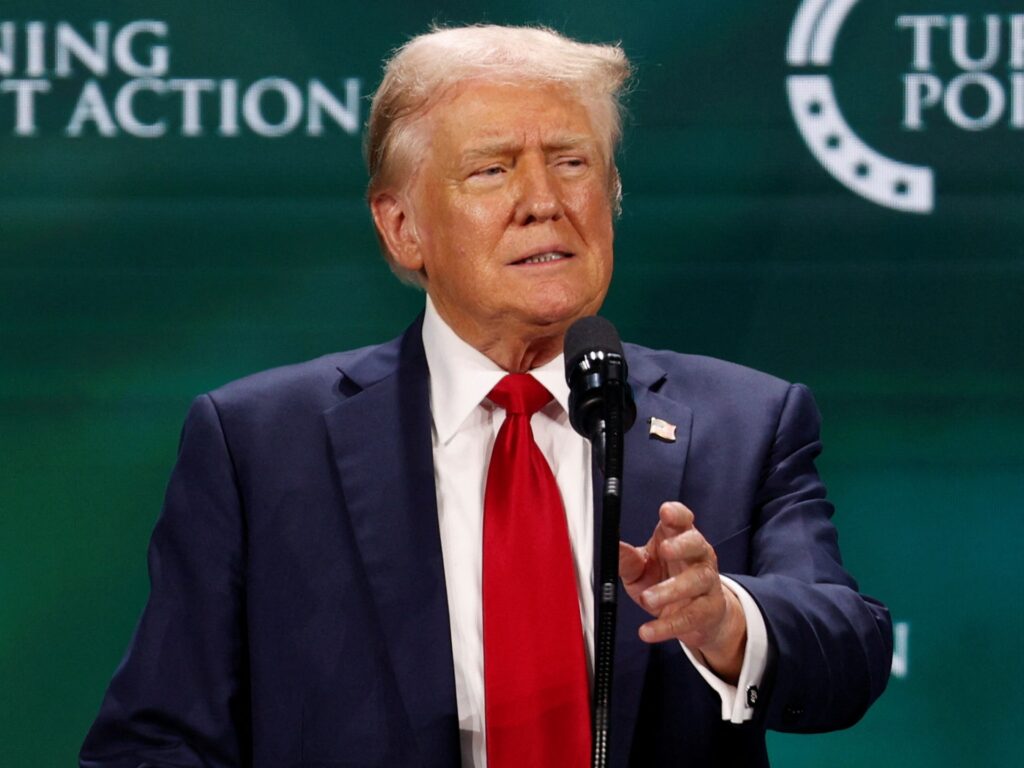
Endorsement puts former US president at odds with social conservatives but in line with majority of American public. Former US President Donald Trump has said he will support a ballot measure in the southern state of Florida that would legalise marijuana for people over the age of 21. In a social media post on Monday, the Republican presidential nominee said that as president he would support state-level efforts to decriminalise and regulate marijuana, as well as research into the drug’s potential medical applications. “As I have previously stated, I believe it is time to end needless arrests and incarcerations of adults for small amounts of marijuana for personal use,” Trump said. “We must also implement smart regulations, while providing access for adults, to safe, tested product. As a Floridian, I will be voting YES on Amendment 3 this November.” Trump also said he would work with the US Congress to pass “common sense” laws around the issue, including safe banking for state-authorised marijuana vendors. Efforts to ease restrictions on marijuana usage are widely popular in the United States. A 2024 survey by the Pew Research Center found that 57 percent of people in the US believe that the drug should be legal for medical and recreational purposes, with only 11 percent stating that it should not be legal at all. The announcement comes as Trump is locked in a tight race for the US presidency with Democratic Vice President Kamala Harris. The two candidates are set to hold their first debate on Tuesday. But in Florida, a Republican-leaning state with a long history of strict policies on criminal justice, the legalisation bid – known as Amendment 3 – has divided conservative lawmakers. The state’s right-wing Governor Ron DeSantis, who mounted an unsuccessful primary challenge against Trump for the Republican Party’s presidential nomination, has expressed his opposition to the effort. Trump’s social media post came several hours after DeSantis told a group of Florida churchgoers that Amendment 3 was an effort to create a “drug cartel” using the state’s constitution. “Public use of this will be rampant,” DeSantis said. “You can’t point to a state that is better off for doing it.” Polls show the effort on track to win a sizable victory in the state, with a recent Emerson poll showing 64 percent in favour and 27 percent opposed. Recreational marijuana usage is legal in about two dozen US states. For decades, the US pursued a harsh approach to drug use that contributed to surging jail populations, disproportionately affecting people of colour and low-level drug offenders. Democrats have taken a more lenient approach to marijuana in recent years. In April, President Joe Biden said “nobody should have to go to jail for smoking weed”, but his administration has stopped short of pushing to legalise the drug at the federal level. Adblock test (Why?)
In the Philippines, users of loan apps decry deception, threats and debt
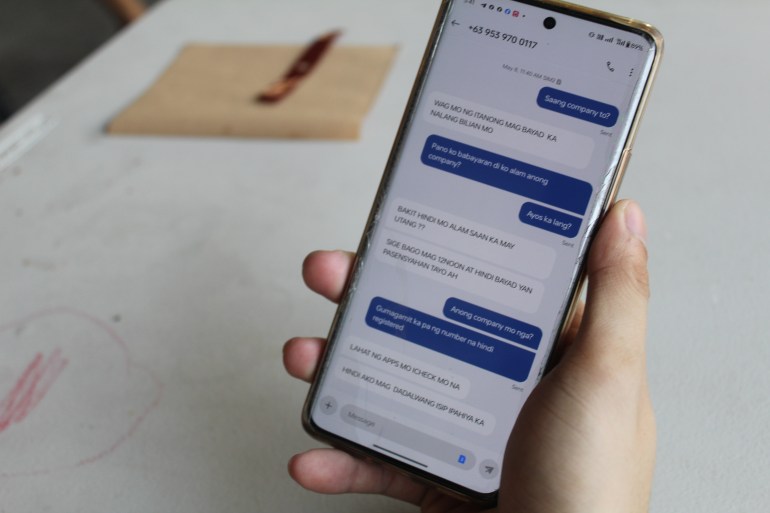
Manila, the Philippines – From the early morning hours to late at night, Lance receives hundreds of threatening texts and dozens of missed calls each day. When he answers the phone, the person on the other end of the line often immediately hangs up. Other times, a threatening voice tells him that his days are numbered if he does not pay the debts he has racked up using online lending platforms. “They’re toying with me,” Lance, who asked to use a pseudonym, told Al Jazeera. His family’s breadwinner, Lance, 31, lost his job in sales twice during COVID-19 lockdowns in Manila. Unable to provide a good enough credit rating for a bank loan, he turned to loan apps. “It starts with one. Then somewhere along the line, you’re faced with even a small emergency. You don’t pay them back on time, which leads you to another app,” he said. Since 2021, Lance has accumulated close to one million pesos in debt on more than 20 different lending platforms. Now with a better credit rating, he has resorted to taking out bank loans to cover the fast-rising penalty fees. On social media, hundreds of thousands of anonymous accounts populate support groups for users of loan apps who, like Lance, feel they have been taken advantage of. They say that many apps are designed to trick users into taking on bigger and bigger debts, and that relentless verbal abuse and threats follow when they inevitably cannot pay up. Many of those who have been burned accuse the authorities of not doing enough to keep predatory lenders in check. Loan apps exploded in popularity during the pandemic, racking up millions of downloads. In 2023 alone, the number of new or unique users of such platforms soared by 64 percent to 47.5 million, according to digital lending company Digido. The Philippines’ Securities and Exchange Commission (SEC) has issued licences for 140 digital lending companies, many of which offer services through apps. So far, the licences of fewer than 40 platforms have been revoked for unfair debt collection practices. Robert Dan Roces, chief economist for Security Bank Philippines, said the platforms have been a “disruptor” in the world of finance. With minimal requirements, “they offer the unbanked and underbanked faster and easier access to credit”, Roces told Al Jazeera. While the convenience offered by the apps can be tempting for people in straitened circumstances, it “often comes at a steep price, with predatory practices”, he added. Kikay Bautista, the founder of the United OLA (Online Lending Apps) Victims Movement, said that exploitative online lending platforms are a growing problem in the Philippines. “It’s getting worse, and many are still being tricked,” Bautista, who founded her support group after she was forced to sell her furniture to pay off debts racked up using online lending platforms, told Al Jazeera. Users of loan apps such as MocaMoca say they have faced harassment after failing to make repayments on time [Michael Beltan/Al Jazeera] Bobbie, a 22-year-old university student in Manila, said he turned to loan app MocaMoca after being “bombarded” with advertisements promising ultra-quick processing, low interest rates and a 90-day repayment window. “Easy money. Who wouldn’t be interested?” Bobbie, who requested to use a pseudonym, told Al Jazeera. Bobbie said he borrowed 2,500 Philippine pesos ($42) but the app only transferred him 1,500 ($25), with the difference eaten up by processing fees. He said he was then suddenly informed that he had seven days to return 2,300 pesos ($39), and 90 days to pay back the remaining 200 pesos (USD3). “It only tells you this once they’ve lent you the money! I was able to pay at first. But eventually I took care of family expenses and missed a day of payment,” Bobbie said. Within hours, agents were threatening violence and to have him jailed, he said. Bobbie said that Mocamoca imposed a 400-peso ($6.90) penalty for late repayment the following day. Struggling to keep up with repayments, Bobbie said he resorted to borrowing from other apps, including MoreGold, and eventually amassed a debt of 200,000 pesos ($3,421), which he is still trying to repay. Although the SEC stripped MocaMoca operator Copperstone Lending of its licence to operate in April last year, the platform continues to operate pending an appeal. When contacted for comment, Mocamoca said that it follows the “legal process” without elaborating further. A visit by Al Jazeera to the address listed as Mocamoca’s office found that it belongs to a hotel in Manila. Staff at the hotel denied having any affiliation with any lending platform and said that they often have to explain to disgruntled customers that the hotel has no connection to the app. The listed address for the office of the lending app Mocamoca belongs to a hotel in Manila [Michael Beltan/Al Jazeera] A representative for MoreGold, which Bobbie said had also made threatening phone calls, told Al Jazeera that “our company maintains a strict zero-tolerance policy regarding any form of harassment”. When Al Jazeera visited the address listed as MoreGold’s office, building security said there was no such company at that location. The platform did not respond to requests for comment about its address and location. Since 2022, the SEC has set the monthly interest rates and additional fees that most online platforms may charge their clients at 15 percent. Nonetheless, borrowers such as Bobbie have found that many platforms charge much higher rates in practice. The SEC told Al Jazeera that it is actively investigating fraudulent practices. The regulator said it had revoked the licences of three platforms since 2023, with another currently under investigation. Lending platforms have also come under fire for their lax approach to data collection and privacy. Many borrowers have complained of being inundated with spam calls and messages after using their services, often from people whose identity and company affiliation are unclear. In August 2021, the National Privacy Commission (NPC) ordered the immediate takedown of four platforms – which it did not name –
Russia-Ukraine war: List of key events, day 927
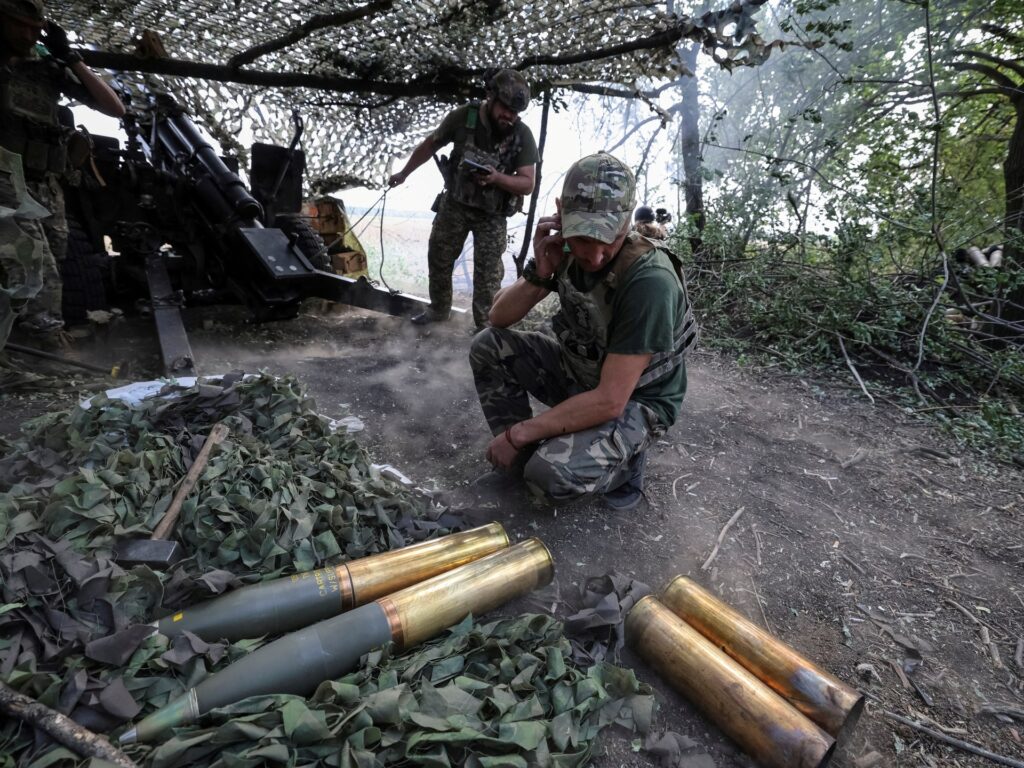
As the war enters its 927th day, these are the main developments. Here is the situation on Monday, September 9, 2024. Fighting At least three people were killed and one injured after Russia struck the village of Cherkaske in the eastern Donetsk region with cluster munitions, Governor Vadym Filashkin said. Two people were killed and four injured, including two children, in a Russian air attack on the Sumy region, the regional military administration said. Sumy borders Russia in northeastern Ukraine. The death toll from a missile attack on a military educational institute in Ukraine’s Poltava city rose to 58 after three more people died from their injuries. Russia said it had taken control of Novohrodivka, some 12km (7 miles) from Pokrovsk, a strategically important town in eastern Ukraine. Novohrodivka had a population of 14,000 people before the war. In its regular update, the General Staff of the Ukrainian military detailed heavy fighting throughout the Pokrovsk sector, including Novohrodivka. It said 29 attempted Russian advances had been repelled, with seven skirmishes continuing. Ukraine’s Air Force said air defence units destroyed 15 of 23 Russian attack drones and one guided air missile. Two of the drones and three other missiles did not reach their targets, the Air Force said. Romania and Latvia, NATO members and allies of Ukraine, said they were investigating breaches of their airspace by Russian drones that then crashed. NATO Deputy Secretary-General Mircea Geoana said the incidents were “irresponsible and potentially dangerous”. Politics and diplomacy German Chancellor Olaf Scholz called for renewed diplomatic efforts to achieve peace in Ukraine “more quickly”. Speaking in an interview with the broadcaster ZDF, Scholz said he and Ukrainian President Volodymyr Zelenskyy had agreed in recent talks on the need for a new peace conference that would include Russia. Zelenskyy appointed former arms production minister Oleksandr Kamyshin as an external adviser for strategic issues, according to a decree published on the president’s website. Kamyshin resigned as minister for strategic industries in a major government reshuffle. Weapons Zelenskyy again urged Ukraine’s allies to relax conditions on the use of Western-supplied weapons against targets inside Russia. “In just one week, Russia has used over 800 guided aerial bombs, nearly 300 Shahed drones, and more than 60 missiles of various types against our people,” he said in a Facebook post. Adblock test (Why?)
NATO members Latvia, Romania say Russian drones breached airspace
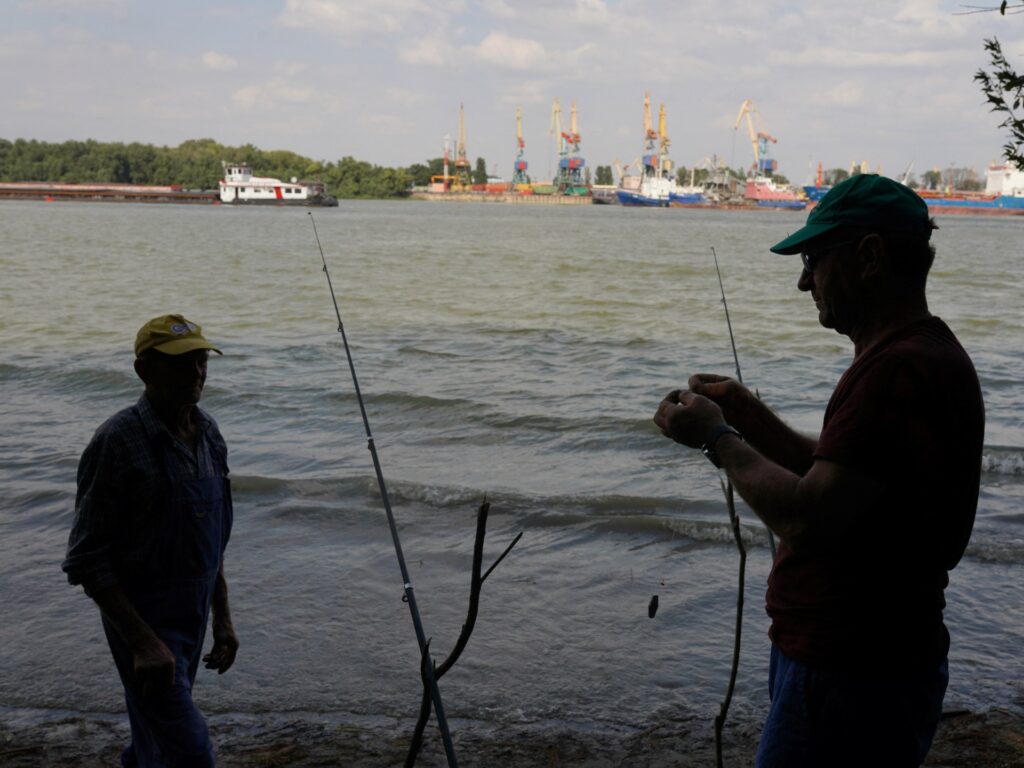
Romania has confirmed drone fragments on several occasions since Russia began its full-scale invasion of Ukraine in February 2022. Latvia and Romania, NATO members who are allies of Ukraine, have said that Russian drones violated their airspace. Romania said a Russian drone entered its airspace during nighttime attacks across the Danube River in neighbouring Ukraine in the early hours of Sunday, while Latvia said one crashed in the eastern part of the country a day earlier. Romania’s Ministry of National Defence said that Bucharest deployed F-16 fighter jets to monitor its airspace and that a search for the weapon’s debris was under way at a potential crash site near the border. There were no immediate reports of casualties or damage. Bucharest strongly condemned the “renewed violation” brought on by Moscow’s “illegal attacks”. Latvia’s President Edgars Rinkevics, meanwhile, said a Russian military drone had crashed in the eastern part of its territory. The Defence Ministry said that the drone had flown into the country’s airspace from Belarus and crashed around Rezekne, a town of about 25,000 people some 55km (34 miles) west of Russia and 75km (47 miles) from Belarus, a close ally of the Kremlin. While the incursion into Latvian airspace appeared to be a rare incident, Romania has confirmed drone fragments on its territory on several occasions since Russia began its full-scale invasion of Ukraine in February 2022. Romania shares a 650km (400 mile) border with Ukraine. Mircea Geoana, NATO’s outgoing deputy secretary-general and Romania’s former top diplomat, said the military alliance condemned Russia’s violation of Romanian airspace. “While we have no information indicating an intentional attack by Russia against Allies, these acts are irresponsible and potentially dangerous,” he wrote on the social media platform X. Russia has carried out repeated nighttime attacks on cities across Ukraine, frequently targeting its Danube River ports, which are just a few hundred metres from Romania. Ukraine’s Minister of Foreign Affairs Andrii Sybiha condemned the breaches of Romanian and Latvian airspace, calling them “a stark reminder that Russia’s aggressive actions extend beyond Ukraine”. He added on X that Ukraine needed concrete action from its allies. “A brave collective decision to use partner air defence to intercept Russian missiles and drones over Ukraine. Stronger and faster military aid for Ukrainian warriors. Lifting restrictions on Ukraine’s use of weapons. Act now,” he said. Poland has also recorded at least two cases of its airspace being violated by Russian missiles or drones attacking Ukraine, most recently in December. Romanian lawmakers plan to consider legislation at their current session on enabling Romania to shoot down drones invading the country’s airspace in peacetime. Adblock test (Why?)
Lebanon FM: Israel against Lebanon ceasefire, even if Gaza war ends
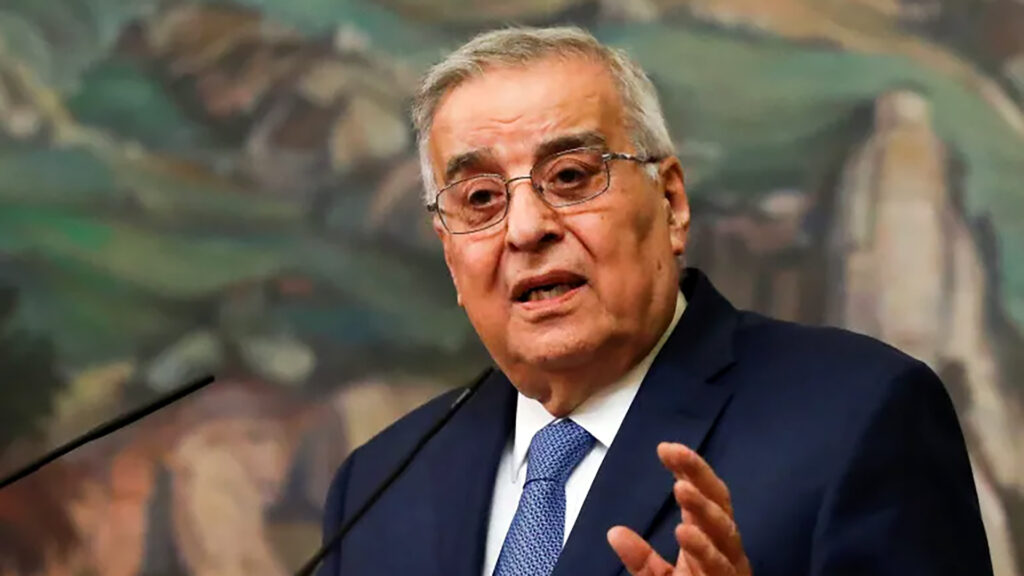
Abdallah Bou Habib discusses rising tensions along Lebanon’s southern border with Israel as fears of a regional war grow. Lebanon is grappling with rising tensions along its southern border with Israel, sparking fears of a broader regional war. The ongoing war on Gaza, now in its 11th month, has further complicated Lebanon’s already fragile security, drawing in domestic, regional, and international powers. As the situation grows more precarious, questions arise about Lebanon’s path forward and how it can withstand these shifting geopolitical realities. Lebanese Foreign Minister Abdallah Bou Habib talks to Al Jazeera. Adblock test (Why?)
India records first suspected mpox case, male patient in isolation

The health ministry says the young patient recently travelled from a country experiencing the virus outbreak. India’s health ministry says it has recorded a suspected case of mpox found in a man who recently travelled from a country suffering an outbreak of the virus. The young male patient has been isolated in a hospital and is in stable condition, the ministry said in a statement on Sunday, adding that the world’s most populous nation had “robust measures” in place. “The case is being managed in line with established protocols, and contact tracing is ongoing to identify potential sources and assess the impact within the country,” the health ministry added. The ministry did not specify which strain of the mpox virus the patient might have, but tests were being conducted to confirm the infection. The clade 1b variety of mpox has triggered global concern because it seems to spread more easily through routine close contact. A case of the variant was confirmed last week in Sweden and linked to a growing outbreak in Africa. India has detected 30 cases of an older strain, known as clade 2, between 2022 and March 2024. Formerly called monkeypox, the virus was discovered in 1958 in Denmark, in monkeys kept for research. It was first detected in humans in 1970. It is caused by a virus transmitted to humans by infected animals, but can also be passed from human to human through close physical contact. Usually mild, it is fatal in rare cases. It causes flu-like symptoms and pus-filled lesions on the body. Last year, the World Health Organization (WHO) changed the name monkeypox to mpox, saying the name of the disease appeared to be “racist”. Last month, the global health body declared the outbreak a public health emergency of international concern after the new variant was identified. But the WHO added that the mpox outbreak is not another COVID-19. More than 17,500 mpox cases and 629 deaths have been reported in the Democratic Republic of the Congo (DRC) since the start of the year, according to the WHO. Both strains – clade 1b and clade 1a – are present in the country. The DRC has received its first batch of mpox vaccines, which health authorities hope will help curb an outbreak that has prompted the United Nations to declare a global public health emergency. The virus has also been detected in Pakistan, the Philippines and Thailand. Adblock test (Why?)
Are restrictions on pro-Palestine speech ‘the new McCarthyism?’
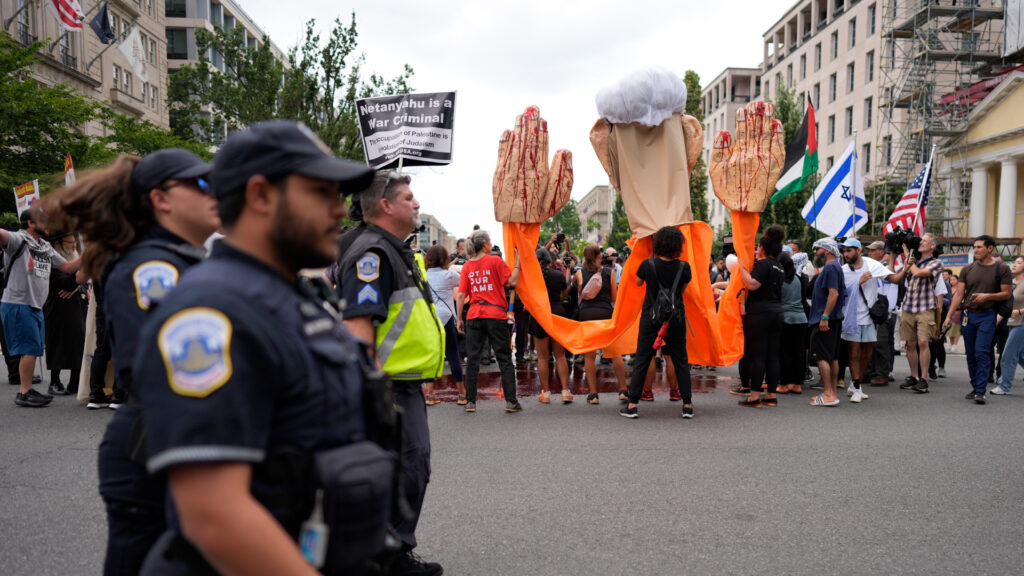
Is there an attempt to chill debate on Palestine and Israel on both sides of the Atlantic? The United States, and the West in general, are in a “dire period” of repression of speech on Palestinian freedom or criticism of Israel, argues Dima Khalidi, founder of Palestine Legal. Khalidi tells host Steve Clemons that despite strong constitutional protections for free expression, “there seems to be this exception when it comes to Palestine”, as witnessed by the wave of censorship, intimidation, firings and restrictions on activism in the wake of Israel’s war on Gaza. The situation is similar across Europe, says British journalist Richard Medhurst, who’s been covering Gaza closely and was arrested for “speech crimes” upon arrival in London recently. Adblock test (Why?)
Russia-Ukraine war: List of key events, day 926

As the war enters its 926th day, these are the main developments. Here is the situation on Sunday, September 8, 2024. Fighting At least five people were killed in Russian attacks on Ukraine’s eastern Donetsk region. Three people were killed and four injured in the town of Kostiantynivka, Donetsk Governor Vadym Filashkin said, while two men were reported killed near the town of Toretsk about 20km (12 miles) to the southeast. Serhiy Lysak, the governor of Ukraine’s Dnipropetrovsk region, said the number injured in a Russian missile attack on the city of Pavlohrad the day before had increased to 82. “Sixty people remain in hospital,” he said. Debris from one of dozens of Russian drones shot down over Ukraine in the early hours of Saturday was found next to Ukraine’s parliament building, the country’s parliament said in a statement. Funerals were held in Poltava for the more than 50 people killed when Russia attacked a military educational institute in the eastern Ukrainian city. Residents knelt in silent tribute as hearses carrying the victims passed by on their way to a military cemetery outside the city for burial. At least three people were injured in Ukrainian shelling of the town of Shebekino in Russia’s Belgorod region, Governor Vyacheslav Gladkov said. Russia’s Ministry of Defence said its forces had taken control of the village of Kalynove in Ukraine’s eastern Donetsk region. Kalynove lies about 25km (16 miles) southeast of Pokrovsk, a major Ukrainian logistics hub that Russia aims to capture. Ukraine attacked a munitions depot in the Russian region of Voronezh with drones, a Ukrainian security source told the Reuters news agency. Alexander Gusev, the province’s governor, said that “explosive objects” had triggered a fire. There were no casualties but several hundred people were evacuated and a local state of emergency declared. Politics and diplomacy Richard Moore, the head of the United Kingdom’s MI6 foreign intelligence service, and CIA chief William Burns wrote a joint op-ed for the Financial Times highlighting British and United States efforts to help Ukraine in its war against Russia, and stressing it was crucial for the West to maintain its support. US Secretary of State Antony Blinken will travel to London on Monday and Tuesday to discuss the war in Ukraine, the war in Gaza and other key security concerns, the State Department said. Italian Prime Minister Giorgia Meloni pledged unwavering support for Ukraine after a meeting with President Volodymyr Zelenskyy on the sidelines of a conference at Lake Como in which they discussed Kyiv’s plans to end the war against invading Russian forces and reconstruction efforts. Zelenskyy also met Dutch far-right politician Geert Wilders at the forum and the two discussed Ukraine’s peace plan. Wilders is the leader of the largest Dutch parliamentary party. Weapons Ukraine’s Ministry of Foreign Affairs said it was deeply concerned by reports about a possible impending transfer of Iranian ballistic missiles to Russia. The ministry said the deepening military cooperation between Tehran and Moscow was a threat to Ukraine, Europe and the Middle East, and called on the international community to increase pressure on Iran and Russia. Reports in August said Russia was expecting the imminent delivery of hundreds of Fath-360 close-range ballistic missiles from Iran. Adblock test (Why?)
Former Brazilian President Bolsonaro leads ‘free speech’ rally in Sao Paulo

Former Brazilian President Jair Bolsonaro has rallied thousands of protesters in central Sao Paulo to protest against the country’s ban of the social media platform X. The demonstration was timed to the country’s Independence Day on Saturday. It also unfolded while Bolsonaro’s political rival, President Luiz Inacio Lula da Silva, led an official parade with the country’s military in the capital Brasilia. Dressed in the colours of the Brazilian flag, Bolsonaro climbed atop a temporary stage erected on Sao Paulo’s main thoroughfare, Paulista Avenue, and addressed the crowd. His remarks took aim at one of the main figures responsible for the ban on X: Supreme Court Justice Alexandre de Moraes. “I hope that the Federal Senate puts the brakes on Alexandre de Moraes, this dictator who does more harm to Brazil than Luiz Inacio Lula da Silva himself,” Bolsonaro told the crowd. De Moraes had called upon the social media platform to appoint a legal representative in Brazil, as is required under Brazilian law. In August, when X refused to comply, De Moraes released an order for the suspension of all the platform’s activities in Brazil. It was the culmination of an ongoing spat between De Moraes and X’s owner, Elon Musk. The billionaire entrepreneur had closed X’s offices in Brazil earlier that month, to avoid having to comply with separate court orders to suspend accounts peddling misinformation. On September 2, Brazil’s Supreme Court unanimously upheld the decision to ban X, with all five judges offering their support. Explaining the decision, Justice Flavio Dino said, “A party that intentionally fails to comply with court decisions appears to consider itself above the rule of law.” But that failed to quell the uproar, particularly among members of the far right in Brazil, who considered the shuttering of X as an infringement of their free-speech rights. Bolsonaro, a figurehead of Brazil’s far right, seized the moment to call for protest. “When freedom of expression and the press are threatened, democracy cries out for help,” he wrote on social media on September 4. “Therefore, I call on all Brazilians who love freedom and our democracy: Come to Paulista Avenue next Saturday, September 7!” Bolsonaro himself has had clashes with De Moraes, who formerly led the Superior Electoral Court (TSE), which oversees Brazil’s elections. In the lead-up to the 2022 presidential elections, Bolsonaro, the incumbent, spread misinformation about electoral fraud. After he lost the vote, Bolsonaro and his allies proceeded to challenge the results, using unfounded claims to sow suspicion. The result was weeks of protests and a violent assault on Brasilia’s government buildings on January 8, 2023, as Bolsonaro’s supporters looted the premises. De Moraes led the Superior Electoral Court in voting to ban Bolsonaro from office until 2030 for his role in spreading false information. At the Independence Day protest in Sao Paulo, Bolsonaro re-upped his false claims about the 2022 election. “The 2022 elections were completely biased by the president of the Superior Electoral Court, Alexandre de Moraes,” he told the crowd, adding that the January 8 riot was a “set-up”. Adblock test (Why?)