

Police search for gunman after seven hurt in Kentucky highway shooting
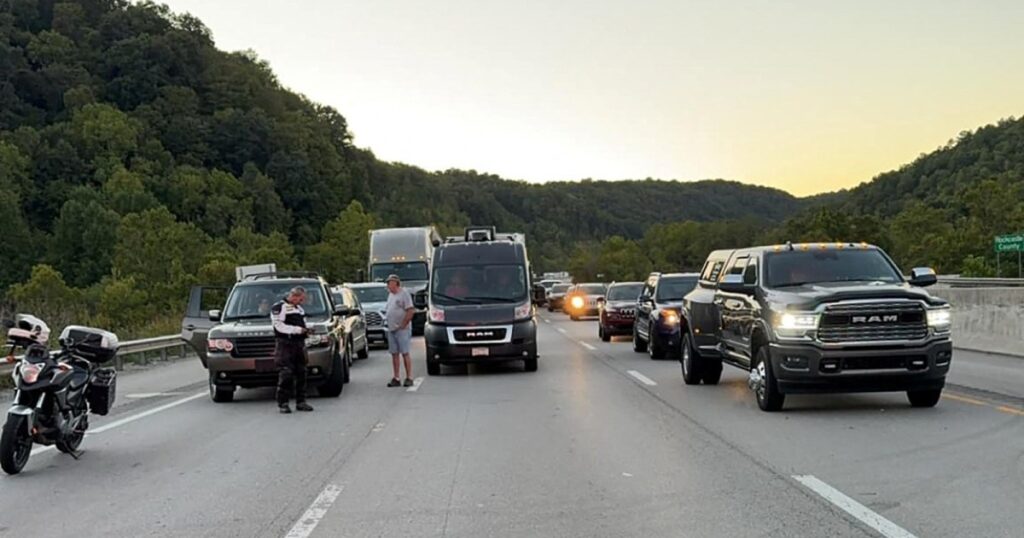
Authorities are looking for a man suspected of shooting at cars travelling along a rural stretch of the I-75 highway. Police in the southern United States state of Kentucky are searching for the shooter after as many as seven people were injured on a rural stretch of a major highway. They had been driving along the road just before 6pm (10:00 GMT) not far from London, the town’s mayor, Randall Weddle, said on Facebook. Kentucky State Police spokesman Scottie Pennington said earlier that between four and six people had been hurt. Local news station WYMT said there were “multiple severe injuries” but no confirmed deaths. The shooting led to the temporary closure of Interstate 75, a major north-south highway that cuts across the eastern half of the US, in both directions. Authorities said they were searching for 32-year-old Joseph Couch in rugged terrain near the highway. Local media said the shots had been fired from a wooded area or an overpass. “Consider armed and dangerous,” the sheriff’s office said in a Facebook post about Couch. “Do not attempt to approach.” The incident comes days after two students and two teachers were killed in a school shooting in Georgia. A 14-year-old boy has been charged with murder over that attack while his father, who had allegedly bought the gun for him as a gift, has been charged with involuntary manslaughter and second-degree murder. Gun violence is common in the US, a country where there are more firearms than people. Adblock test (Why?)
Kosovo closes two of four border crossings with Serbia after protests
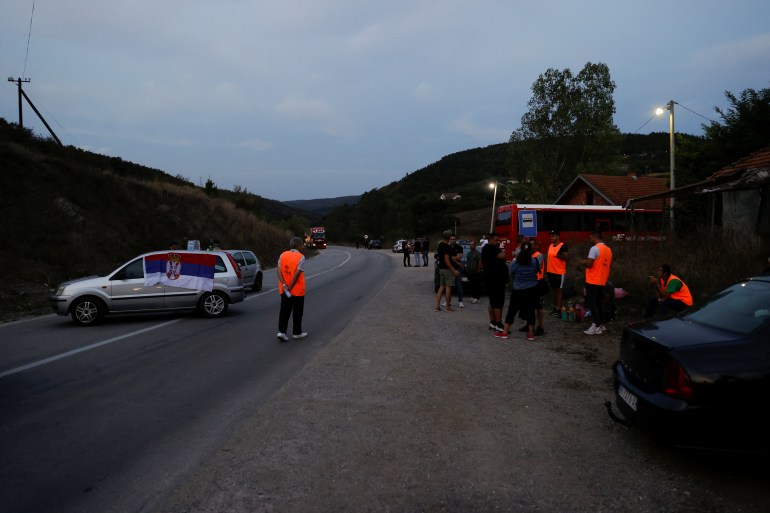
Kosovo’s Interior Ministry blamed the closures on ‘masked extremists’ blocking traffic into Serbia. Kosovo has closed two of its four border crossings with Serbia, the government said, after protesters on the Serbian side blocked roads and turned away passengers carrying Kosovo documents. The closures at the Brnjak and Merdare crossings – both located in Kosovo’s northern region with a majority ethnic Serb population – came into effect overnight from Friday to Saturday. Kosovar Interior Minister Xhelal Svecla said the move was due to “masked extremist groups in Serbia” selectively blocking transit for travelers. “And all this in plain sight of the Serbian authorities,” he said. At least two other crossings between Serbia and Kosovo remain open. What prompted the Serbian protests? On Friday, dozens of demonstrators in Serbia blockaded the crossings to prevent traffic entering Serbia from Kosovo. They said they were protesting against the closure of parallel administrations that ethnic Serbs in northern Kosovo had set up to rival the official ones. The Serbian government in Belgrade – which has never recognised the independence of Kosovo, its former southern province – finances a parallel health, education and social security system in Kosovo for the latter’s ethnic Serb population. The Serbian demonstrators told media their border blockade would last until Kosovo police were “withdrawn from the north of Kosovo and the usurped institutions are returned to the Serbs”. They also demanded that the NATO-led peacekeeping force in Kosovo (KFOR) “take over control in the north of Kosovo”. The border blockade began a few days after police in northern Kosovo raided and then closed five administrative offices linked to the Belgrade government. Protesters gather to partially block the road near the main Kosovo-Serbia border crossing in Merdare, Serbia, on September 6 [Valdrin Xhemaj/Reuters] Longstanding tensions Kosovo’s Foreign Minister Donika Gervalla-Schwarz told reporters on Friday the Serbian protests were “yet more proof” that Belgrade was trying to provoke and destabilise its southern neighbour. Animosity has persisted between Serbia and Kosovo since a war in the 1990s between Serbian armed forces and Kosovo’s ethnic Albanian secessionists. Kosovo declared independence in 2008. But Serbia has refused to recognise the move and has encouraged ethnic Serbs living in Kosovo to remain loyal to Belgrade. Tensions ratcheted up a notch earlier this year, when Kosovo made the euro the only legal currency, effectively outlawing the use of the Serbian dinar. Adblock test (Why?)
At least five killed as ethnic violence flares in India’s Manipur
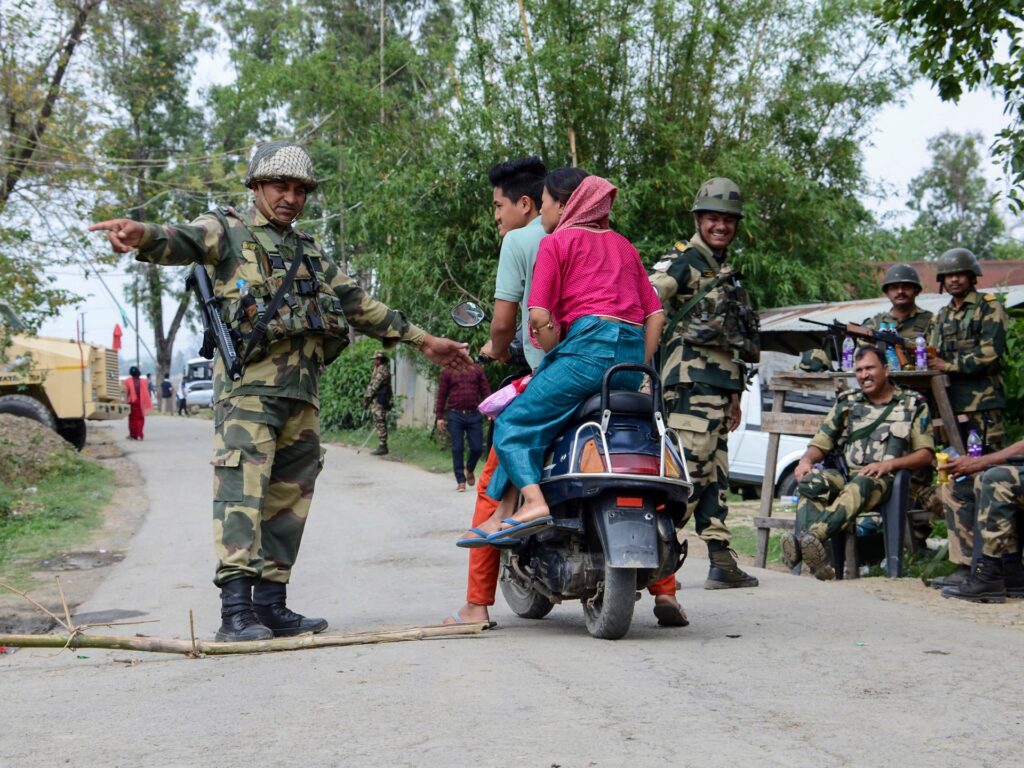
State government orders all schools in the state to remain shut citing security concerns after latest spurt of violence. At least five people, including one civilian, have been killed as violence flared between two warring ethnic communities in the restive northeastern Indian state of Manipur, according to authorities. Manipur has been rocked by periodic violence for more than a year between the predominantly Hindu-majority Meitei and the mainly Christian Kukis over economic benefits, and government jobs and education quotas. A court had ordered the state government to share the benefits enjoyed by the Kukis to the Meitis, fuelling the tension. A new round of clashes and exchange of gunfire took place on Saturday in the district of Jiribam, located on India’s border with Myanmar. “Fighting has been going on between armed groups of both the communities since the morning,” said Krishna Kumar, deputy commissioner of Jiribam. One person, a civilian, was shot dead while sleeping and another four “armed persons” were killed in a “subsequent exchange of fire”, the Press Trust of India news agency reported. Officers responding to the attack “were fired upon by suspected Kuki militants but the police team retaliated robustly and repelled the attack”, a police statement said. A state of 3.2 million people, Manipur has been divided into two enclaves since an ethnic conflict began in May 2023 – a valley controlled by the majority Meiteis and the Kuki-dominated hills. The areas controlled by the Meitei and Kuki tribes are separated by a stretch of no-man’s land monitored by federal paramilitary forces. Amid the violence, the state government ordered all schools in the state to remain shut on Saturday “to protect the safety of the students and teachers”. Attacks that began earlier this week have seen the use of drones to drop explosive devices in what authorities have called a significant escalation. The Indian Express newspaper, citing an unnamed security source, said the rockets appeared to be “improvised projectiles” made using “galvanised iron pipes attached to explosives”. Police say they suspect that the drones were used by Kuki armed groups, a claim the group denied. More than 225 people have been killed and some 60,000 have been displaced since the tensions erupted last year. Adblock test (Why?)
Mexico arrests alleged cartel kingpin tied to 43 missing students
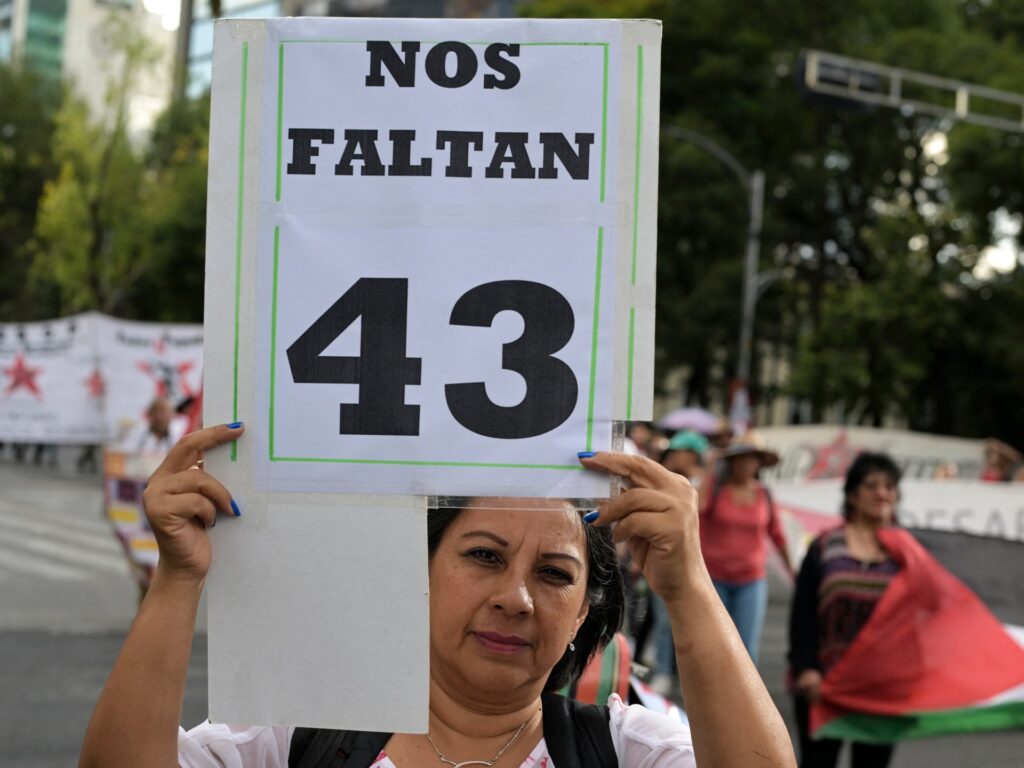
Gildardo Lopez Astudillo’s arrest comes weeks before the 10th anniversary of the students’ disappearance. Authorities in Mexico say they have arrested an alleged cartel chief linked to the decade-old disappearance of dozens of students. Gildardo Lopez Astudillo, the suspected cartel leader, was detained on charges of “organised crime” and taken to the Altiplano maximum security prison in south-central Mexico, Reuters news agency reported, citing a federal security source. This is the second time Lopez Astudillo, known as “El Gil”, has been jailed since the cartel he allegedly leads was accused of orchestrating the disappearance and suspected murder in 2014 of 43 students in Iguala, a case that rocked the nation and ignited years of protests. The arrest of Lopez Astudillo comes as relatives prepare demonstrations to mark the 10th anniversary of the students’ disappearance. He was first arrested in 2015 before being released in 2019 after a judge found the evidence against him was obtained illegally. Lopez Astudillo later served as a protected witness for the prosecution’s office, offering alleged details about the criminal group’s involvement in the students’ disappearance, according to the El Pais newspaper. What happened to the missing students? In September 2014, the 43 students who had been travelling to a political demonstration in Mexico City were, investigators believe, kidnapped by the Guerreros Unido drug cartel, in collusion with corrupt police. The exact circumstances of their disappearance are still unknown, but a truth commission set up by the government has branded the case a “state crime”, saying the military shared responsibility, either directly or through negligence. Arrests have been made or ordered for dozens of suspects, including military personnel and a former attorney general who led a controversial investigation into the mass disappearance. The remains of only a few of the victims have been identified. [embedded content] Adblock test (Why?)
New French PM vows to toughen stance on immigration, hints at tilt to right
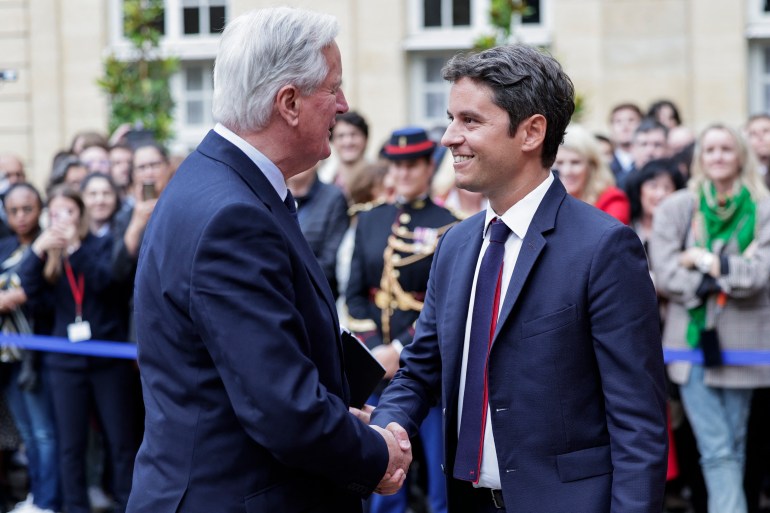
Conservative Michel Barnier promises to uphold some of Macron’s policies while tackling a divided parliament. New French Prime Minister Michel Barnier says he will defend some of President Emmanuel Macron’s policies and toughen the government’s stance on immigration. In his first interview since his nomination, Barnier said on Friday that his government, which lacks a clear majority in a hung lower house of parliament, will include conservatives as well as members of Macron’s camp. Members from other groups, including the left, are also welcome to back the new government, he said. “There is no red line,” Barnier said, adding: “We need to open the door … to all those who want it.” Macron named 73-year-old Barnier, a conservative and the European Union’s former Brexit negotiator, as prime minister on Thursday, capping a two-month-long search after his ill-fated decision to call legislative elections that delivered an unruly hung parliament. Barnier faces the daunting task of trying to drive reforms and the 2025 budget through that parliament as France is under pressure from the European Commission and bond markets to reduce its deficit. Signalling his readiness to hold up some of Macron’s widely unpopular reform policies, which likely includes taking political risks, Barnier said he was not prepared to repeal the rise of the retirement age to 64 from 62. “We must not call into question this law, which was adopted in very difficult circumstances,” Barnier said but added he was prepared to adjust the policy to better protect what he called “the most vulnerable”. The left-wing New Popular Front and the far-right National Rally (RN), which together have a majority and could oust the prime minister through a no-confidence vote should they collaborate, campaigned strongly against the reform. Newly appointed Prime Minister Michel Barnier, left, shakes hands with outgoing Prime Minister Gabriel Attal during the handover ceremony at the Hotel Matignon in Paris on September 5, 2024 [Stephane De Sakutin/Pool/AFP] ‘Our borders are sieves’ In a sign he would take a rightward shift on some issues, Barnier said he would pursue tougher policies to curb immigration. “There still is a feeling that our borders are sieves and that migration flows aren’t being controlled,” he said, adding: “I don’t have much in common with the ideologies of the National Rally, but I respect it.” Macron’s political rivals earlier said Marine Le Pen’s party was exerting outsize power over the president, who nominated Barnier with the tacit support of the far right after spending weeks looking for a candidate who would not immediately be toppled by a majority of lawmakers. The RN gave tentative support to Barnier’s nomination by saying it would not immediately try to vote it down but made clear it could withdraw support at any point if its concerns on immigration, security and pocketbook issues were not met. Adblock test (Why?)
Advocates demand justice after US protester killed in Israeli gunfire
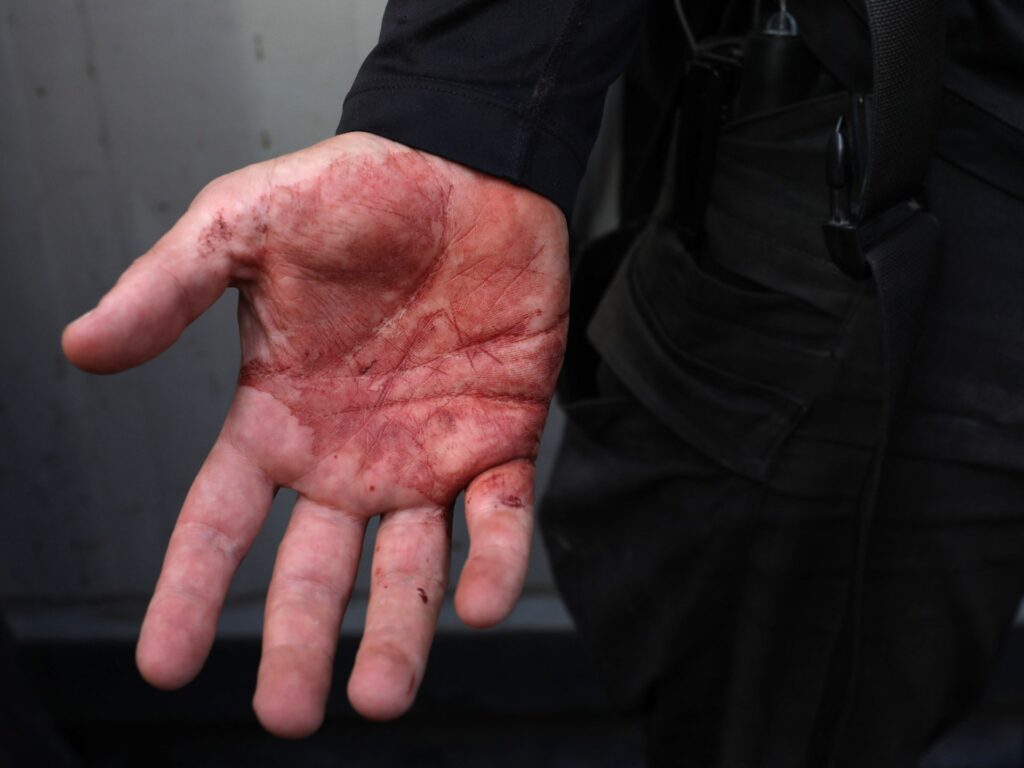
Washington, DC – The fatal shooting of a 26-year-old Turkish American protester in the occupied West Bank has sparked fresh calls for the United States to demand accountability from Israel’s armed forces. But advocates say justice for US citizens killed by Israeli soldiers has long proven elusive, with many accusing the administration of President Joe Biden of applying a double standard to Israel and its military. Friday’s shooting claimed the life of 26-year-old Aysenur Ezgi Eygi, a dual US and Turkish citizen who was taking part in a demonstration against an illegal Israeli settlement on Mount Sbeih in Beita, a town south of Nablus. During the protest, witnesses said an Israeli soldier shot Ezgi Eygi in the head, and she collapsed in an olive grove. She later died of her wounds at Rafidia Hospital in Nablus. Palestinian American Congresswoman Rashida Tlaib was among the first US officials to respond to the killing, and she called on Secretary of State Antony Blinken to “do something to save lives”. Blinken himself was asked about the killing at a news briefing later in the day, where a journalist pressed him on the military aid the US continues to provide to Israel. “I just want to extend my deepest condolences, condolences of the United States government, to the family of Aysenur Ezgi Eygi,” Blinken responded. “We deplore this tragic loss.” He said the Biden administration would “gather the facts” and “act on it” as necessary. “I have no higher priority than the safety and protection of American citizens, wherever they are,” Blinken added, echoing a similar statement made by US Ambassador to Israel Jack Lew. .@SecBlinken: Do something to save lives! https://t.co/2g4hKCa330 — Rashida Tlaib (@RashidaTlaib) September 6, 2024 Elusive justice? But advocates have questioned the US government’s commitment to American safety overseas, particularly in the occupied Palestinian territories. They pointed to a string of high-profile killings by Israeli forces that they say Washington has not sought accountability for. Earlier this year, for instance, an off-duty Israeli police officer and a settler opened fire and killed 17-year-old US citizen Tawfiq Ajaq near his ancestral village of al-Mazraa ash-Sharqiya in the West Bank. An investigation into the case is ongoing. In 2022, an Israeli sniper also shot US citizen and Al Jazeera journalist Shireen Abu Akleh, who was reporting at the time in the West Bank’s Jenin refugee camp. The Israeli military later admitted its soldier fired the fatal bullet but deemed the killing an accident and declined to punish any individual involved. While the US Federal Bureau of Investigation (FBI) opened an inquiry nearly two years ago, it too has offered no updates or resolution. That same year, 78-year-old Palestinian American Omar Assad died after being detained by Israeli soldiers at a checkpoint near his home in Jiljilya. The US ultimately declined to cut funding to the soldiers’ unit, despite its track record of abuses. Other examples stretch back more than a decade. In 2010, teenager Furkan Dogan, another dual US and Turkish citizen, was killed when Israeli commandos boarded a ship trying to deliver aid to Gaza. And in 2003, an Israeli soldier driving a bulldozer crushed Washington resident Rachel Corrie to death as she protested the destruction of Palestinian homes. Her name is Aysenur Ezgi Eygi, 26, and she’s not the first US citizen to be killed by the IDF whilst peacefully protesting Israel in Palestine, or whilst simply doing her job there. From Rachel Corrie to Shireen Abu Akleh, this sad list is growing. https://t.co/yOxTAxNpNq — Monica Marks (@MonicaLMarks) September 6, 2024 White House reaction In the case of Friday’s killing, the Biden administration indicated it would rely on Israel to look into the incident. “We have reached out to the government of Israel to ask for more information and request an investigation into the incident,” White House National Security Council spokesman Sean Savett said. He added that the administration was “deeply disturbed by the tragic death”. For its part, the Israeli military issued a statement saying its forces had “responded with fire toward a main instigator of violent activity who hurled rocks at the forces who posed a threat to them”. It said it was looking into reports “that a foreign national was killed as a result of shots fired in the area”. Israel is one of the US’s closest allies in the Middle East, and critics fear that has led to a reticence towards pursuing justice in cases in which its soldiers appear to be at fault. On Friday, for instance, the Council of American-Islamic Relations (CAIR) underscored the lengthy delays in seeking accountability. “For years, American Muslim and Palestinian-American organisations have been calling for the Department of Justice (DOJ) and the Federal Bureau of Investigation (FBI) to address crimes against Palestinian-Americans killed by Israeli government and adjacent actors,” Robert McCaw, CAIR’s government affairs director, wrote in an open letter. A double standard The US was the first country to recognise Israel as a country in 1948, and it has maintained tight relations with its government ever since. Washington provides $3.8bn in military aid to the country each year. That number has increased since Israel’s war in Gaza erupted in October, with the Biden administration pledging additional weapons and support. The war started with an attack on southern Israel by the armed group Hamas. About 250 people were taken captive during the attacks, and some have since been killed in Gaza. Among them was Hersh Goldberg-Polin, a 23-year-old US citizen. Advocates on Friday questioned whether the Biden administration would pledge to seek the same accountability in Ezgi Eygi’s case as it had in Goldberg-Polin’s. “There was — rightfully — outrage and sadness when an American hostage was killed last week in Gaza,” Yohan Lieberman, the co-founder of IfNotNow, an American Jewish advocacy organisation, wrote on the social media platform X. But Lieberman wondered whether the same outrage would greet Ezgi Eygi’s death. “Will [Biden and Vice President Kamala Harris] even acknowledge her?” he asked. Political analyst Omar Baddar also pointed
Is there a ’60-day rule’ in the US elections? What to know in 500 words
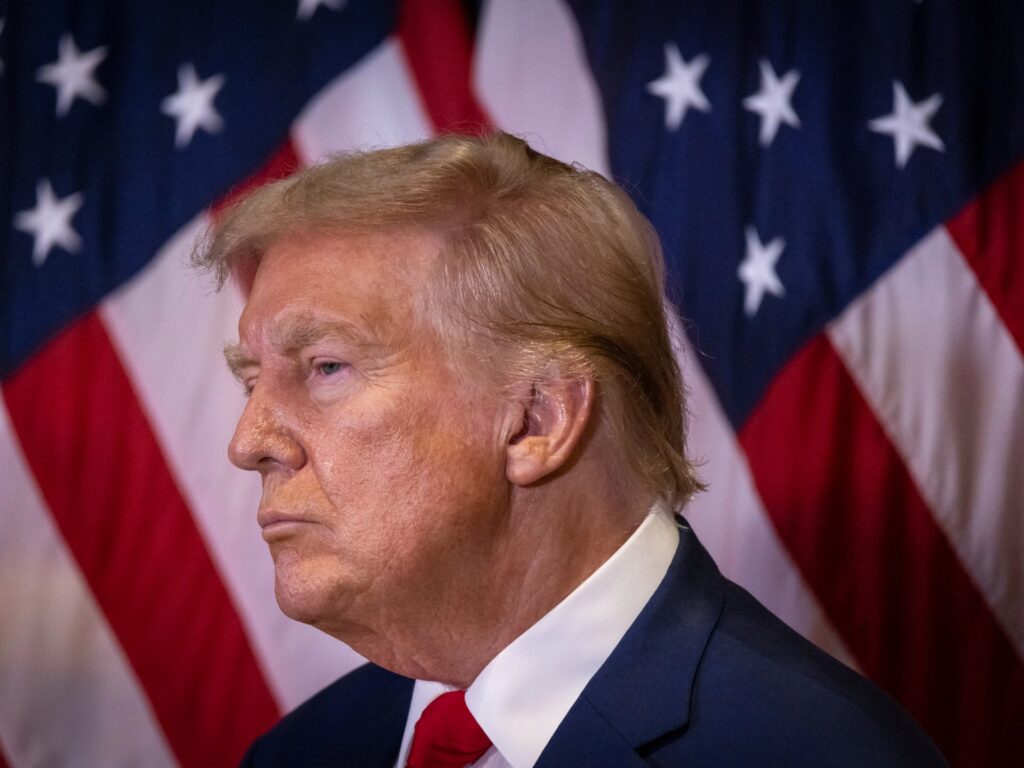
EXPLAINER Trump falsely claims the Justice Department is hamstrung in the lead-up to November’s vote as he stares down two federal cases. Former President Donald Trump has said the Department of Justine has a “60-day rule” that prevents it from taking certain law enforcement actions against candidates in the run-up to a United States election. If Trump’s statement were correct, it would have wide-ranging implications as he stares down two federal indictments: one in Washington, DC, for efforts to overturn the 2020 election, and another in Florida for allegedly hoarding classified documents. Friday marks 60 days until the presidential election on November 5. So what are the facts behind the claim? What did Trump say? Trump invoked the “60-day rule” while responding to an updated indictment filed last month in the federal election case in Washington, DC. “It is DOJ policy that the Department of Justice should not take any action that will influence an election within 60 days of that election – but they just have taken such action,” Trump wrote on Truth Social. Others have since echoed that criticism. Last week, Judge Aileen Cannon, a Trump appointee, questioned federal prosecutors in the Florida case about whether holding a trial before the election would violate the rule. Legal experts, however, have rejected that position. And Jay Bratt, a federal prosecutor in the Florida case, told Cannon that, since Trump had already been charged, no rule or norm would be violated. So what was Trump talking about? Trump was referring to an unwritten — and admittedly vague — guideline that Justice Department officials have adopted over the years. A 2018 report from the Justice Department’s inspector general clearly states: “No Department policy contains a specific prohibition on overt investigative steps within a particular period before an election.” Still, it noted that many officials have adhered to “a longstanding unwritten practice to avoid overt law enforcement and prosecutorial activities close to an election, typically within 60 or 90 days of Election Day”. The report probed the decision by former FBI director James Comey to reopen an investigation into Democratic candidate Hillary Clinton’s emails just 11 days before the 2016 election. Comey later said avoiding actions that could impact the election was a “very important norm”. Does Trump have any recourse? No. Because the guideline is unwritten, it is a best practice rather than a legal requirement. When and how the guideline applies is up to department officials. Legal scholars have further argued that Trump cannot claim he was being treated unfairly because the guideline only applies to major actions, like the filing of brand-new indictments. Because Trump had been indicted long before the 60-day window, the guideline would theoretically not apply to the ongoing federal proceedings in Washington, DC, and Florida. The guideline is also not valid for Trump’s upcoming sentencing in New York or the pending trial in Georgia: Both of which are state-level proceedings, whereas the guideline is strictly federal. Finally, Trump may need to check his math. Even if he were correct about the rule, Special Counsel Jack Smith filed the updated indictment on August 27. That is 70 days out from the November 5 vote. Adblock test (Why?)
Israel will cease to exist if Harris becomes president, Trump claims
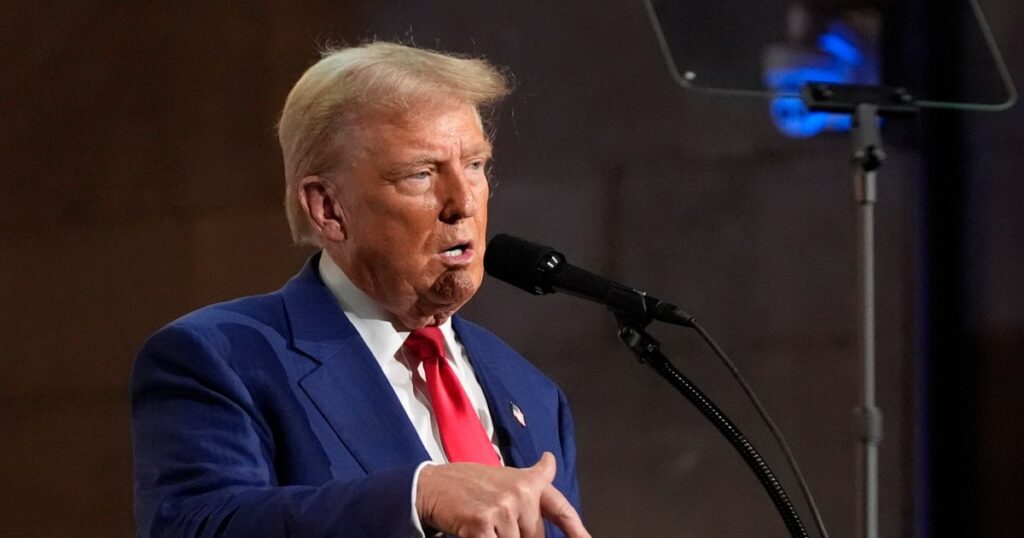
Republican presidential nominee tells Jewish donors that his Democratic rival would ‘totally abandon’ Israel. Israel will cease to exist if United States Vice President Kamala is elected to the White House in November, former President Donald Trump has claimed. Addressing Jewish donors in Las Vegas, Nevada, on Thursday, the Republican nominee claimed that Harris would “totally abandon” Israel as president and that “terrorist armies” would wage war to “drive Jews out of the Holy Land”. “You are going to be abandoned if she becomes president, and I think you have to explain that to your people. Because they don’t know it. They have no idea what they are getting into,” Trump said in a remote address to the Republican Jewish Coalition. “You are not going to have an Israel … if she becomes president. Israel will no longer exist.” Trump said he would ban refugees from “terror-infested areas” including Gaza, arrest “pro-Hamas thugs” who vandalise government property, and cancel funding and accreditation for universities that spread “anti-Semitic propaganda” if elected to a second term. US university campuses earlier this year were rocked by protests over Israel’s war in Gaza, triggering claims of anti-Semitism along with counterclaims that accusations of bigotry were being used to silence legitimate criticism of Israeli policy. Trump, who claimed Hamas’ October 7 attack on Israel would not have happened if he was president, also took aim at Jewish people who vote for Democratic candidates, claiming he had done more for Israel than any other US president. “Who are the 50 percent of Jewish people that are voting for these people that hate Israel and don’t like the Jewish people?” he said. “Why are they, why are they voting? How do they exist?” In response to Trump’s remarks, Harris campaign spokesperson Morgan Finkelstein said the vice president “stands steadfastly against anti-Semitism” and has been a “lifelong supporter of the State of Israel as a secure, democratic homeland for the Jewish people”. Finkelstein also said Trump had a history of demeaning Jewish people and associating with far-right figures, including holding a private dinner with white supremacist and Holocaust denier Nick Fuentes. “He has said the only people he wants counting his money are ‘short guys wearing yarmulkes’, and praised neo-Nazis who chanted ‘Jews will not replace us’ as ‘very fine people’,” Finkelstein said. Harris has largely echoed President Joe Biden’s staunch support of Israel, resisting pressure from the progressive wing of her party to halt shipments of weapons being used by Israeli forces in Gaza. The Democratic nominee has, however, placed greater emphasis on the plight of Palestinians in public statements, saying she will not be “silent” about the suffering in Gaza and that “far too many” innocent civilians have been killed in the war. Adblock test (Why?)
What killing of Hindu teen by India cow vigilantes tells us about Modi 3.0
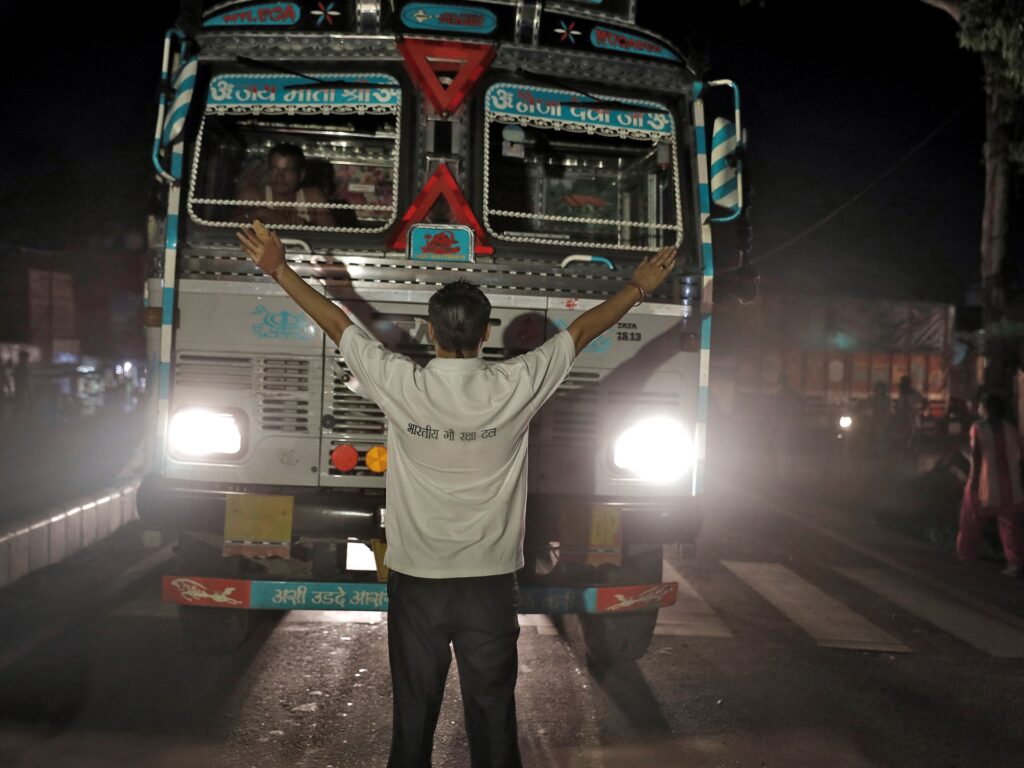
At about 1am on August 24, Aryan Mishra, a 19-year-old 12th-grade student received a phone call. Two of his friends, both sons of Mishra’s landlord, wanted him to join them for a late-night snack – noodles, according to reports. Mishra soon joined them, grabbing the passenger seat in the landlord’s red SUV in a middle-class neighbourhood in Faridabad, a city in Haryana state on the outskirts of the national capital, New Delhi. One of the brothers, Harshit Gulati, was at the wheel, while his elder sibling, Shankey Gulati, 26, was in the rear with their mother Sujata Gulati and her friend Kirti Sharma, according to Indian media reports. As they drove along the largely empty streets of Faridabad, a car with a flashing red and blue beacon on top of it tried to stop them, local media reports said. Such beacons are usually allowed only on government vehicles. But the illegal use of these beacons by private vehicles remains rampant – especially when the owner is politically influential. Details of what happened next are hazy and are being investigated by the police. But according to most reports, the car that Aryan and his friends were in tried to speed away from the chasing vehicle. Was that because they were just scared of being followed by an unknown car? Was it because Shankey, according to some reports, was accused in a separate attempted murder case, and his family thought they were being pursued by a police vehicle? What is known is that a 40-kilometre (25-mile) chase followed. During the chase, a gunshot fired from the car behind hit Mishra on the shoulder. Harshit stopped the car. The men behind pulled up. One of them walked up to the car and pumped another bullet into Mishra’s neck from close range. The teenager was rushed to a local hospital, where he died. Though the killing took place almost two weeks ago, its details are emerging only now, shocking and outraging the country. Mishra had been killed in cold blood. But it is not that alone that has caused the outrage. It is the fact that Mishra was Hindu, killed by another Hindu – who thought he was Muslim. The suspects were cow vigilantes, members of a nationwide right-wing Hindu militia, Gau Raksha Dal (GRD or Cow Protection Association), that claims to protect cows – considered holy by many Hindus – from slaughter, mainly by Muslim cattle traders. Cow slaughter is banned or regulated in most Indian states. The vigilantes have rarely faced the brunt of the law. Instead, it is their victims and their families who have often faced police cases and scrutiny over whether they were actually in possession of beef. Against that backdrop, global and Indian rights groups believe these vigilantes operate under the patronage and protection of Prime Minister Narendra Modi’s Bharatiya Janata Party (BJP) since the Hindu nationalist leader came to power a decade ago. The BJP has denied that it is linked to these attacks, and in 2016, Modi publicly criticised vigilantes. But a cow vigilante in the southern state of Karnataka has received an election ticket from the BJP. Eight vigilantes convicted of lynching a 45-year-old Muslim meat trader were garlanded by a BJP minister in 2018. And the funeral of one of the men accused of lynching a Muslim man in 2015 was attended by another BJP minister. The Gau Raksha Dal has chapters in almost half of the Indian states, mostly in the north. Their logo depicts the head of a cow, flanked by two automated rifles or a pair of daggers. The vigilantes are armed with guns and sticks and patrol the streets through a large network of WhatsApp groups. They are the judge, jury and executioner, delivering their deadly justice on the streets of India. The vigilantes also share information about alleged incidents of cow slaughter or cattle smuggling with the police and are reported to have even joined police officers in conducting raids or arrests. Since 2014, when Modi first came to power, nearly 50 cow-related lynchings of Muslim men have been reported – most victims are poor farmers or daily wage workers, who left behind grieving families staring at an uncertain future. In nearly all such incidents, no cow meat was found, only the battered and tortured – and often lifeless – bodies of the victims. ‘We killed our brother’ According to a report on The Print website, when the local police told Mishra’s father Siyanand they suspected the involvement of cow vigilantes in his son’s killing, he did not believe they could kill “one of their own” and asked to meet the alleged shooter, Anil Kaushik, who was in judicial custody. During the meeting, Kaushik confessed to the distraught father that he regretted killing “a brother”, thinking he was a Muslim, and sought forgiveness. The report added that Kaushik did not know Mishra was a Brahmin, the most privileged class in India’s complicated caste hierarchy. “This incident is a blot for us. This is the first time in a decade that such an incident has happened. It’s a sad truth that we killed our brother,” Shailendra Hindu, a member of Bajrang Dal, a far-right militia that runs the cow vigilante groups, told The Print. Many Indian media outlets, meanwhile, called it a case of “mistaken” killing. This is India’s new normal: that the act of killing in itself is not a mistake, killing a Hindu is. Only three days after Mishra was shot dead, a 26-year-old Muslim ragpicker, Sabir Malik, was lynched by a mob on August 27 in Charkhi Dadri, a town in Haryana, about 130km (80 miles) from Faridabad, over suspicions he had consumed beef. Malik was a migrant worker from the eastern state of West Bengal. He lived in Charkhi Dadri with his wife and two-year-old daughter, according to media reports. News reports cite the police as saying that there was a rumour in the area where Malik lived that some migrant workers had consumed beef. A group
Father of Georgia high school shooting suspect Colt Gray arrested
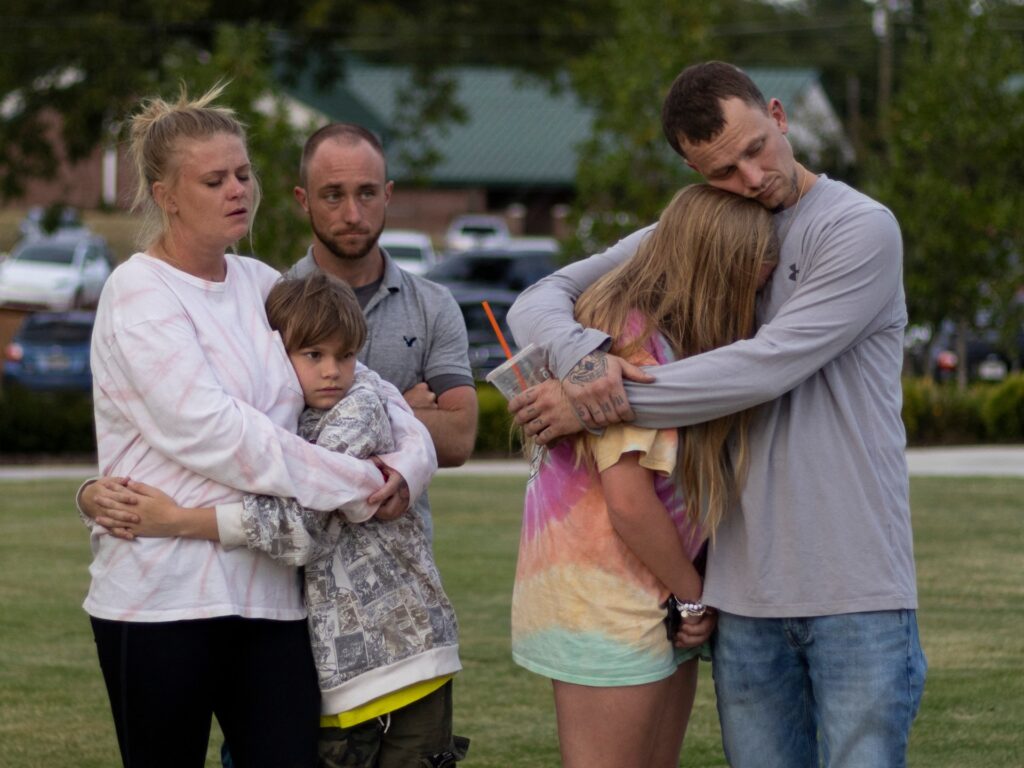
Two students and two teachers were killed and nine people injured in Wednesday’s high school shooting. The father of the 14-year-old boy suspected of shooting dead four people and injuring nine more in a Georgia school has been arrested. State officials said Colin Gray knowingly allowed his son Colt to have the weapon he used in Wednesday’s attack. Gray, 54, was charged with four counts of involuntary manslaughter, two counts of second-degree murder and eight counts of cruelty to children, the Georgia Bureau of Investigation (GBI) said. “These charges stem from Mr Gray knowingly allowing his son Colt to possess a weapon,” Chris Hosey, director of the GBI, told a news conference. Colt Gray has been charged with four counts of murder and officials have said he will be tried as an adult. He is due to appear in court by video camera on Friday morning. Two 14-year-old students and two teachers were killed in the attack on the Apalachee High School in Winder, northeast of Atlanta, reviving a long-running US debate on gun control. Investigators say the younger Gray used an “AR platform style weapon”, or semiautomatic rifle, to carry out the shooting. It remained unclear exactly how the teenager came into possession of the weapon. Citing unnamed sources, CNN reported that the gun, which it described as an AR 15-style assault rifle, had been bought for the teenager by his father as a holiday gift. “The investigation into the shooting at Apalachee HS is still active [and] ongoing,” the GBI said in a post on social media platform X. Parental responsibility Officials identified the two students killed as Mason Schermerhorn and Christian Angulo. The two teachers were Richard Aspinwall, 39, and Cristina Irimie, 53. Nine people were injured, seven of them students. All are expected to make a full recovery. Parental responsibility in mass shootings, particularly those carried out by minors, has come increasingly under the spotlight in recent months. “How could you have an assault rifle, a weapon in a house, not locked up and knowing your kid knows where it is?” President Joe Biden told reporters on Thursday. “You’ve got to hold parents accountable if they let their child have access to these guns.” In April, the mother and father of a Michigan teen were sentenced to between 10 and 15 years in prison when a jury convicted them of manslaughter after their son shot and killed four classmates. It was believed to be the first time parents had been held legally responsible for their child’s actions in a school shooting. Experts and gun safety advocates said the Michigan case was an important step in holding gun-owning parents more accountable for gun violence carried out by their children. Studies by the US Department of Homeland Security have shown that about 75 percent of all school attackers got their weapons from home. The United States has seen hundreds of shootings inside schools and colleges in the past two decades. The carnage has intensified the debate over gun laws and the US Constitution’s Second Amendment “to keep and bear arms”. Adblock test (Why?)