

Israeli army withdraws from Jenin leaving trail of destruction
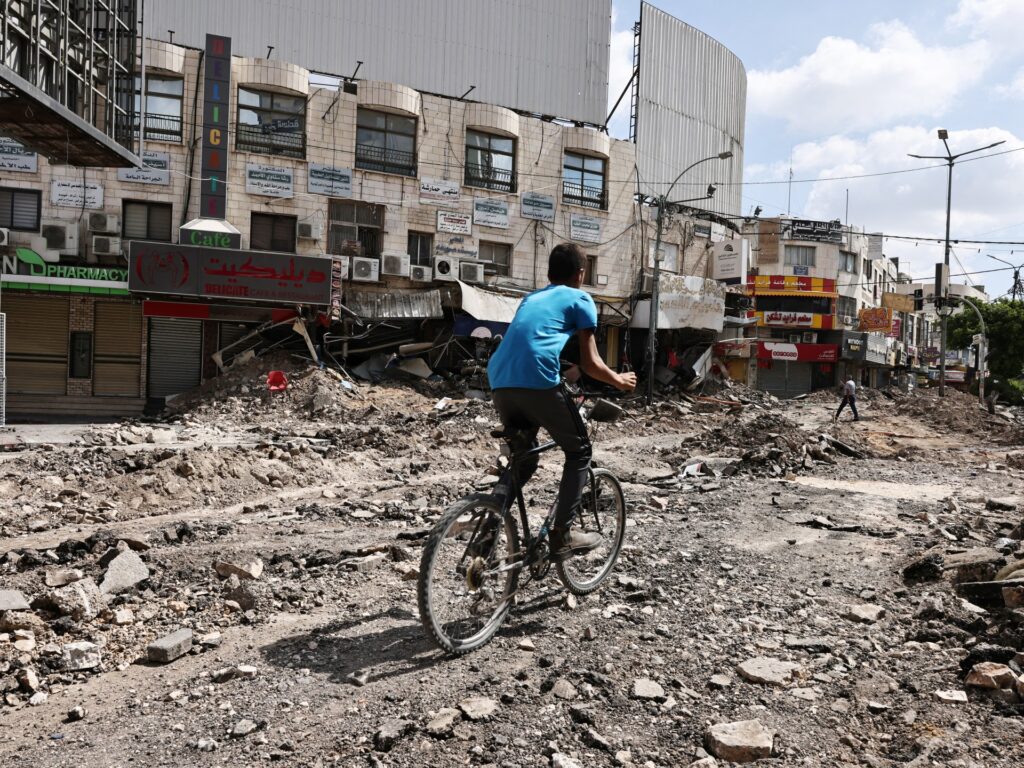
NewsFeed Palestinians in the occupied West Bank city of Jenin have been seeing the wreckage left by Israeli forces after a 10-day assault which left many people imprisoned in their homes without basic supplies. Published On 6 Sep 20246 Sep 2024 Adblock test (Why?)
‘Russia backs Kamala Harris’: Putin’s history of US election ‘endorsements’
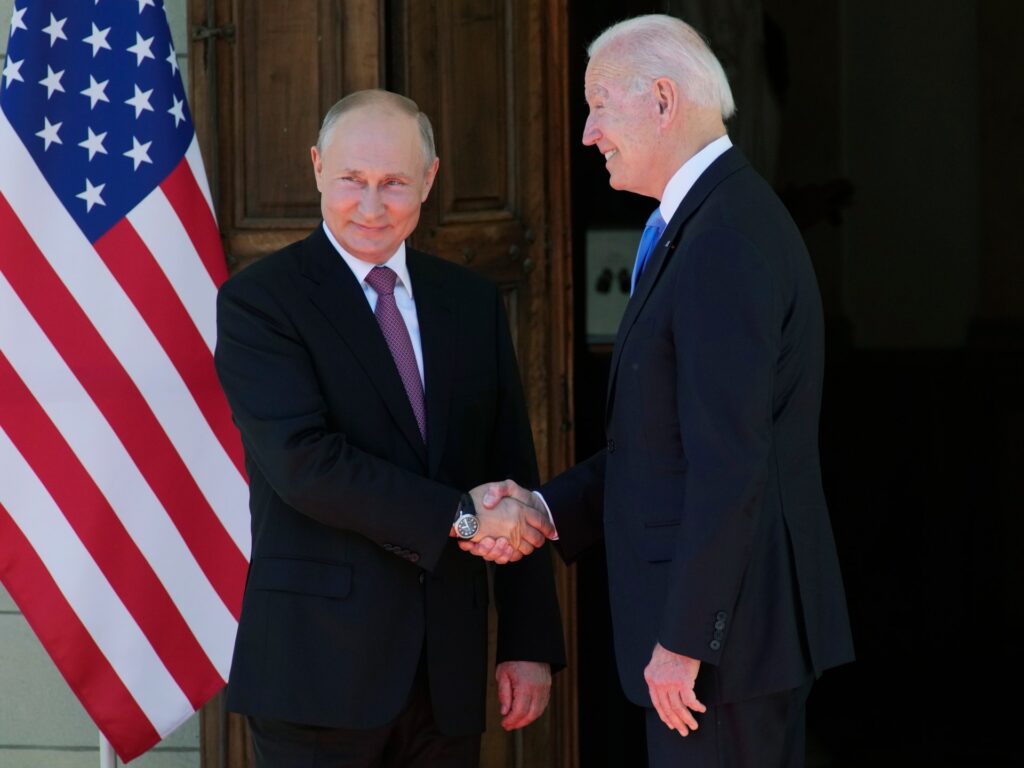
Russian President Vladimir Putin on Thursday said Moscow would back US Vice President Kamala Harris, the Democratic Party’s nominee, in presidential elections in November. The nature of Putin’s comments suggests he was joking, or trolling the Harris campaign, at a time when the US government under the Joe Biden administration has levelled new allegations that Russia is seeking to interfere in the November vote, to favour former President Donald Trump. Yet whatever Putin’s motivations for the comments on Harris, they are the latest iteration of the Russian leader’s attempts to inject Moscow into the US electoral process. This is not the first time Putin has thrown his support behind a US presidential candidate. Putin himself has been in Russia’s top job since 2012. He was also president between 2000 and 2008. Al Jazeera recaps two decades of the Russian president’s tongue-in-cheek meddling in US elections. Did Putin endorse Harris? At an economic forum in the Russian Far East port of Vladivostok, Putin wryly said that current President Joe Biden was his “favourite”. Since Biden has dropped out of the race and endorsed Harris, she was Putin’s next best bet, the Russian leader teased. He added that Harris has an “expressive and infectious laugh”, which indicates “she’s doing well”. The audience broke into scatted laughter as he said that if Harris is doing well, maybe she would not impose sanctions on Russia. “I don’t know if I’m insulted or he did me a favour,” Republican challenger Trump responded at a campaign stop at the New York Economic Club on Thursday. Putin’s comments came a day after the US Department of Justice accused Russian-owned state broadcaster RT of campaigning to sway the US vote, indicting two Russian journalists. But this isn’t the first time that Putin has stirred the pot of US domestic politics. 2004: Putin endorses Bush In October 2004, Putin endorsed Republican incumbent President George W Bush. He said that if Bush lost it would lead to the “spread of terrorism” globally. Bush had been facing criticism from Democratic challenger John Kerry for not adequately tackling “terrorism”. This was amid the war on Iraq which started in 2003 after the US under Bush invaded the country. Bush defeated Kerry in the 2004 race and was re-elected as president. 2008: Russia leans towards Obama win While Putin did not make a clear endorsement in the 2008 US presidential race, experts were clear that a win for Democrat Barack Obama over Republican John McCain was Russia’s preferred outcome. While both Obama and McCain held a harsh stance on Russia, Kremlin officials believed that under Obama, a newcomer at the time, US-Russia relations could start with a clean slate unlike under Cold War veteran McCain. After being in office for two terms between 2000 and 2008, Putin was constitutionally barred from assuming the role of president for a third consecutive term. Hence, Dmitry Medvedev rose to the top job with Putin as his premier. However, it was widely believed in Russia and globally at the time that Putin continued to hold real power in Russia. It was said that Putin and Medvedev ruled in “tandemocracy”. Obama won the 2008 election. 2012: Putin praises Obama Ahead of the 2012 US presidential race, in which Obama was taking on Republican challenger Mitt Romney, Putin told Russian state media that Obama was “an honest person who really wants to change much for the better”. Romney had deemed Russia the top “geopolitical foe” of the US, something Putin said Romney was “mistaken” about, during the same interview. Obama defeated Romney in the 2012 election. 2015: Putin deems Trump ‘outstanding and talented’ Ahead of the 2016 US election, Putin spoke highly of Trump during an annual news conference with reporters. “He is a bright and talented person without any doubt,” he said, adding that Trump is “outstanding and talented”. Trump was up against Democratic challenger Hilary Clinton in the election. After Trump’s election victory, Putin said Trump was a “clever man” who would “quickly understand” his role in office. 2016: US blames Russia for DNC leaks, election interference In July 2016, Democratic National Committee (DNC) emails were hacked and leaked, showing preferential treatment to Clinton, angering supporters of her primary Democatic opponent Bernie Sanders. The US government formally placed the blame for the hack on Russia in a joint statement by the Department of Homeland Security and the Office of the Director of National Intelligence. Putin denied Russia’s role in the DNC hack but said the leaks themselves were important. “The important thing is the content that was given to the public,” he said. The US also accused Russia of a larger election interference programme aimed at defeating Clinton and helping Trump come to power, involving troll farms that amplified messaging tailored against the Democrats. 2019: Putin jokes Russia will meddle in 2020 election In October 2019, on a panel at Russian Energy Week, Putin was asked if he would interfere with the 2020 US election. “I’ll tell you a secret: Yes, we’ll definitely do it. Just don’t tell anyone,” the Russian president joked in a fake whisper. He then said his working relationship with Trump did not mean that he had any influence on the domestic politics in the US. He insisted that he did not interfere in the 2016 US election and that he was dealing with issues in his own country. “We have our own problems,” he said. Adblock test (Why?)
How Israel’s war on Gaza is destroying Palestinian education
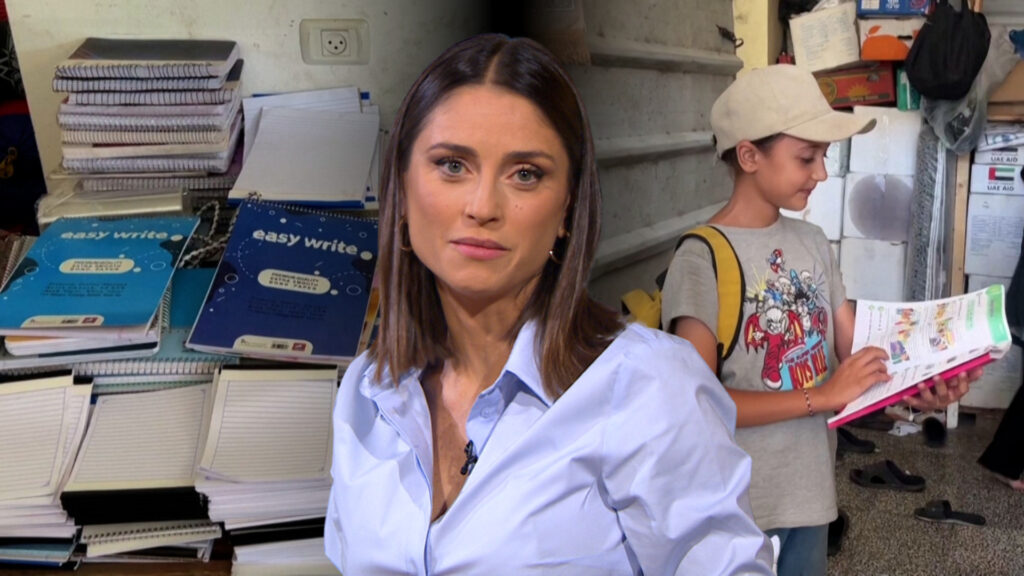
With 80 percent of schools destroyed, students in Gaza have lost a year of education and are on the brink of losing another. It is a back-to-school week in the Middle East, except for Palestinian students in the Gaza Strip. Their classrooms are in ruins or have become shelters for the displaced. Their backpacks used to be filled with books but now carry the little they have left. Almost 80 percent of schools in Gaza have been damaged or destroyed, and the last remaining university in the Strip was demolished by the Israeli military in January. What effect will all these losses have on the culture and the memory of Palestinians? Presenter: Anelise Borges Guests:Samar Saeed – Georgetown UniversityMuhannad Ayyash – Mount Royal UniversityDeanna Othman – Educator & journalistNoor Nasar – Schools Without Borders founderAfaq Baker – Student in Gaza Adblock test (Why?)
Japanese scientists graft living skin onto ‘smiling’ robot
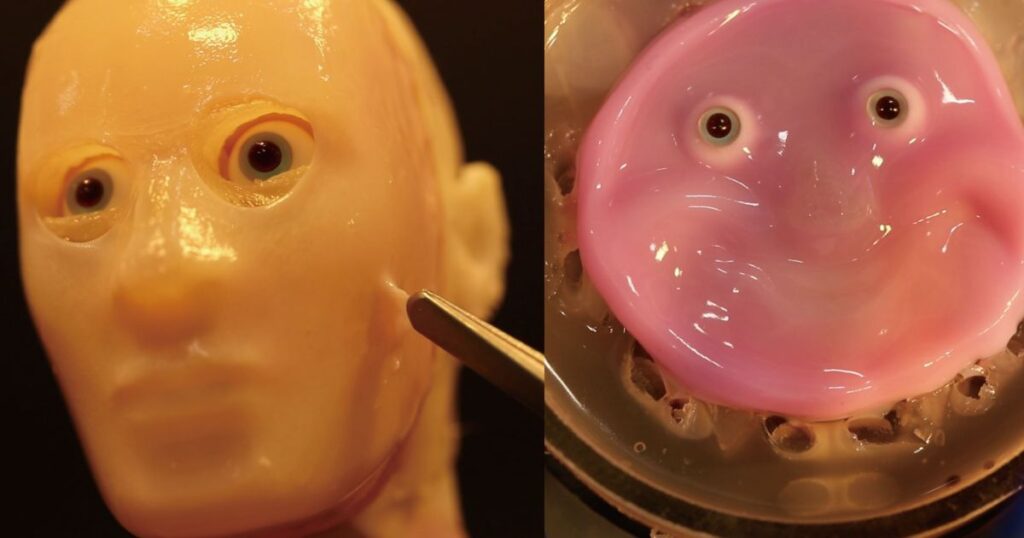
Tokyo, Japan – Japanese scientists have developed a technique to attach self-healing, living skin to a robot face and make it “smile”. The scientists, led by professor Shoji Takeuchi at the University of Tokyo’s Biohybrid Systems Laboratory, connected cultured skin tissue in the likeness of a human face to an actuator – an external mechanical device – using “anchors” that mimic skin ligaments. In a video released by the team, the scientists can be seen manipulating the skin into a smile without causing the tissue to bunch, tear or get stuck in place. Previous efforts to attach tissue made from human cells to a solid surface would result in the skin being damaged when in motion. While Takeuchi’s fleshy pink blob bears greater resemblance to a children’s animated character than a human face, researchers hope the breakthrough will pave the way to realistic humanoids in the future. Buoyed by the results, Takeuchi is now looking at the bigger picture. “Our cultured skin aims to replicate the full range of biological functions found in human skin, including the activity of facial muscles, sweat glands, sebaceous glands, pores, blood vessels, fat, and nerves,” he told Al Jazeera. “This comprehensive functionality would enable more lifelike and interactive robotic applications.” Biohybrid robotics advocates believe that such advances could one day herald a societal revolution where humans live alongside humanoids that look and act identical to real people. Living skin, in particular, could allow robots to emote and better communicate with their human counterparts, ultimately blurring the boundary between homo sapiens and machines. While visions of a humanoid-inhabited utopia – or dystopia – may seem far-fetched for now, biological robots, and their accompanying moral and ethical quandaries, are slowly entering the world’s collective consciousness. Takeuchi’s team at Tokyo University is only in the embryonic stages of its work, which has also included developing mini robots that walk using biological muscle tissue and 3D printed lab-grown meat, as well as research into artificial cell membranes, neural networks and implantable devices. Takeuchi believes it will be a “long time” before robotic skin is close to 100 percent realistic, as significant advancements are needed in texture, colour and the integration of biological components. “While we aim to create more lifelike robots, our goal is to enhance their utility and interaction capabilities,” he said. Rafael Mestre, principal investigator at the Biohybrid Futures project based at the University of Southampton in the United Kingdom, has followed the Japanese team’s research with a sense of fascination. “Covering [robotic] devices with some sort of skin – just like our organs are isolated by our skin – to protect them and ensure they have the right conditions and nutrients is one of the first steps towards their actual use,” Mestre told Al Jazeera. “But there is still a long way to go.” Mestre argues that tissue produced for robots will need to be carefully evaluated because research on the interaction between skin cells and robotic surfaces is still in its infancy. “I suspect the first examples we see will be of some artificial skin acting as a coverture for a small-scale and simple biohybrid robot based on muscle tissue that can perform some basic form of actuation or movement, rather than in a humanoid robot with a real skin face,” he said. Mestre sees numerous potential applications for such technologies if research continues to advance, such as plastic surgery, anti-ageing research and drug testing. Other active areas of research include insect cyborgs – an area of interest for the United States government’s DARPA agency since 2006 – and biohybrid robots used for cleaning oceans or search-and-rescue operations. Misuse and abuse Concerns about the misuse and abuse of future technologies have also spurred calls for safeguards to be put in place. In a recent paper published in the Proceedings of the National Academy of Sciences of the United States of America, researchers at the University of Southampton called for better regulatory frameworks and ethical guidelines for biohybrid robotics development. The authors, who included Mestre, pinpointed three main areas of concern in the nascent field: how biorobots will interact with humans and ecosystems, the potential integration of biorobots into human bodies, and ethical considerations regarding a biorobot’s moral status. Takeuchi acknowledges ethical concerns, saying it will be crucial to implement regulatory measures and guidelines to ensure the technology is used responsibly. “While creating lifelike robots offers many benefits, we must carefully consider the implications and maintain transparency and control over their development and deployment,” he said. Mestre believes that it should not take the invention of realistic humanoid robots for ethical issues to be addressed. “Are we creating some sort of new hybrid life? What if we release them into the wild and they impact the trophic chain and environment? Or what if they’re used to enhance humans, like biohybrid prostheses, and very few people can afford them, and [it therefore] enhances inequalities?” he said. “This technology is being developed with little attention from the general public and policymakers… It’s imperative that we start having conversations about the future we want to have in relation to this technology.” Adblock test (Why?)
Russia-Ukraine war: List of key events, day 924
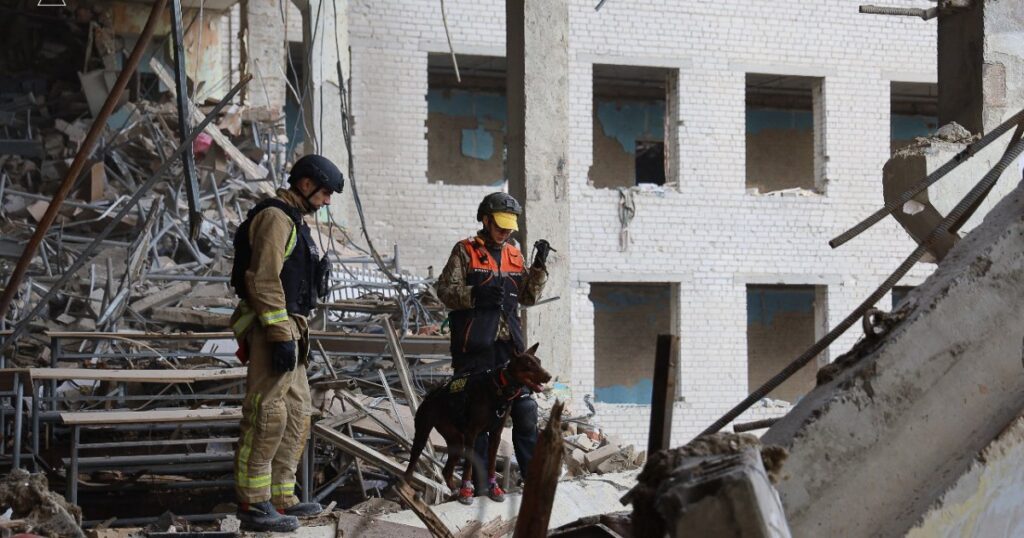
As the war enters its 924th day, these are the main developments. Here is the situation on Friday, September 6, 2024. Fighting Ukraine emergency services said at least 55 people had been confirmed dead and 328 injured after they completed their search and rescue operation at a military educational institute in the Ukrainian town of Poltava that was hit by a Russian missile on Tuesday. Belgorod Regional Governor Vyacheslav Gladkov said one civilian was killed in Ukrainian shelling on the town of Shebekino in the southern border region. Ukraine’s air force said it shot down 60 out of 78 drones launched by Russia in an overnight attack. It added that Russia also used one ballistic Iskander-M missile in the bombardment. Ukraine’s top military commander, Oleksandr Syrskii, told the CNN news channel that Kyiv’s incursion into Russia’s southern Kursk region was working and that there had been no Russian advances on a key sector of the eastern front for six days. Earlier, Russian President Vladimir Putin said the incursion had failed to slow Russia’s advance in the Donbas region of eastern Ukraine. Putin said the “main” goal of Russia’s full-scale invasion was to take control of the Donbas. Ukraine cancelled a train that was set to evacuate residents from the city of Pokrovsk in eastern Donetsk amid fears of a possible Russian attack. Russian forces are within 10 kilometres (six miles) of the city. Officials are urging the 27,000 people who still live there to leave. Politics and diplomacy Ukraine’s parliament approved Andrii Sybiha as the country’s new foreign minister after accepting the resignation of his predecessor, Dmytro Kuleba. The change is part of the biggest Ukrainian government shake-up since Russia launched its full-scale invasion in February 2022. Putin said that China, India and Brazil could act as mediators in potential peace talks over Ukraine and that a preliminary agreement reached between Russian and Ukrainian negotiators in the first weeks of the war could serve as the basis for negotiation. The United States charged five Russian military officers for allegedly conducting cyberattacks on civilian infrastructure in Ukraine in the years leading up to its invasion. Revising a June indictment, the US Justice Department said a unit of Russia’s military intelligence agency started “large-scale cyber operations” as early as 2020. The Justice Department said it had charged Virginia-based Russian television contributor Dimitri Simes and his wife Anastasia Simes with money laundering in two separate schemes to breach US sanctions imposed on Russia over its invasion of Ukraine. Weapons The British government said it would provide Ukraine with 650 lightweight multi-role missiles worth 162 million pounds ($213m) to help protect the country from Russian drones and bombing. They are expected to be delivered by the end of the year. US Defense Secretary Lloyd Austin and General CQ Brown, chairman of the Joint Chiefs of Staff, will host a meeting in Germany of the Ukraine Defense Contact Group, which is made up of military leaders from more than 50 countries. The US said the meeting’s priority would be to boost Ukraine’s air defences and energise “the defence industrial bases” of allies to ensure longterm support for Kyiv. The US Senate Permanent Subcommittee on Investigations announced it would hold a hearing next week with four semiconductor companies on the use of US-made chips in Russian weapons deployed in the war in Ukraine. Adblock test (Why?)
Indonesian fruit-pickers say seasonal work in UK left them drowning in debt

Medan, Indonesia – Indonesian workers who paid thousands of dollars to travel to the United Kingdom to pick fruit say they face the prospect of returning home heavily in debt after being sacked for not meeting unrealistic targets. Migrant worker Abdul said he departed for the UK in May with nine other Indonesians under the country’s seasonal worker scheme, which grants foreign workers six-month visas to work on British farms. Hired by UK recruiter Agri-HR, Abdul was sent to Haygrove, a farm in Hereford, about 215km (135 miles) southwest of London. “A friend of mine who had already been to the UK told me about the opportunity. He said I could make $65 per day picking fruit,” Abdul, who asked to use a pseudonym, told Al Jazeera. Abdul, who made about $130 per month in his previous job as an ice cream seller in Central Java province, said he racked up about $4,000 in debt borrowing money from family and friends to pay fees to two Indonesian third-party organisations – a recruitment agency called PT Mardel Anugerah International and a workers’ hub called Forkom – as well as out-of-pocket expenses to travel to the UK. Abdul said workers at Haygrove were expected to pick 20kg of cherries and strawberries per hour, which he found to be an impossible task due to the lack of fruit – a problem that only got worse as harvest season went on. “We [the Indonesian workers] were always put at the edge of the plantations where there was little fruit. Several times, we were given trees that were not in good condition and we picked all the fruit there was, but we couldn’t do any more than that,” he said. Abdul said he and four other Indonesian fruit-pickers received three written warnings before they were sacked within five to six weeks of arriving at the farm. He also alleged that other workers who had not met targets had not been let go. “When they let us go, Haygrove just said, ‘Sorry, we didn’t want this either’, and gave us an official letter to say we had been sacked and our ticket back to Indonesia leaving the next day,” he said. In a statement provided to Al Jazeera, Haygrove said the workers had been let go for poor performance and that it is “committed to fair employment practices and the well-being of all our workers”. “On June 24, 2024, five Indonesian workers were dismissed following a thorough and fair disciplinary process due to consistently poor performance. These dismissals were conducted in accordance with our structured performance management procedures, which include multiple stages of feedback, training, and support,” the farm said. The Gangmasters and Labour Abuse Authority (GLAA), the UK’s main agency for investigating labour exploitation, earlier this year opened an investigation into the case. According to GLAA licensing rules, “a licensing holder must not charge a fee to a worker for any work-finding services”. However, other costs such as travel and medical checks may be charged as long as they are voluntary. “Additional goods or services must be optional and cannot be discriminated against if not taken up,” the rules state. In a statement provided to Al Jazeera, GLAA said it was looking into the workers’ complaints. “We are currently investigating the recruitment processes for a number of Indonesian workers in the UK and are working to establish the exact circumstances. At this time, we cannot comment further while the investigation is underway,” it said. Cherries await harvest at an orchard in Tunisia [File: Mohamed Messara/EPA-EFE] Haygrove said it takes allegations of misconduct “very seriously” and is fully cooperating with GLAA’s investigation. “We were unaware of any illegal recruitment fees until concerns were raised by a third party and subsequently reported to the GLAA by Agri-HR. Haygrove has a zero-tolerance policy for such practices and is actively supporting the GLAA’s investigation,” the farm said. “We emphasise that no issues have been raised directly by the Indonesian workers regarding their recruitment, accommodation, or working conditions at Haygrove.” Following their dismissal by Haygrove, Abdul and two other workers decided to remain in the UK. Abdul has since found work at another farm picking lettuce, although his six-month visa is due to expire in November, after which he will have to return to Indonesia. PT Mardel told Al Jazeera that Indonesians wishing to take advantage of the UK’s seasonal worker scheme must be able to cover the cost of a visa, medical check, return plane tickets and insurance, along with other processing costs in accordance with provisions set by the Indonesian labour department. “The estimated costs required are a maximum of 33 million Indonesian rupiah [$2,123],” a company spokesperson said. “The workers we have placed in the UK are all very happy that they can work there with very good salaries. The farms also pay great attention to their welfare,” the spokesperson said. PT Mardel also said there was “no relationship between PT Mardel and Forkom”. Forkom did not respond to repeated requests for comment. Several other workers awaiting departure to the UK told Al Jazeera that they were also saddled with debt. Ali, a seasonal worker applicant from Central Java province, said he was still waiting to go to the UK after Forkom told him he could depart in August last year. “They said if I went to the UK, I would earn $65 per day picking strawberries. I had to stop work in Indonesia so that I could focus on getting all the documents together, but then I didn’t get to leave,” Ali, who asked to use a pseudonym, told Al Jazeera. Ali said he is now about $1,300 in debt to his family. “I’ve spent all my money. Before this, I used to buy secondhand goods and sell them on the side of the road. I had been doing that for 25 years and it was enough for me to pay for my family,” he said. “All the information about the scheme was sent through Forkom,
US accuses Russia of election disinformation campaigns. What to know
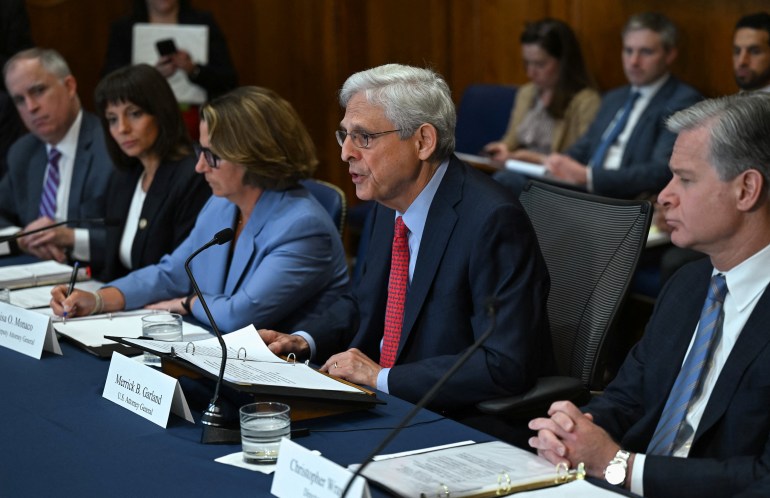
The United States has announced a range of actions to combat Russian influence in the November 2024 presidential election, as the Biden administration tries to prevent outsiders from swaying votes. Two employees of Russian state media, Russia Today (RT), were indicted, dozens of internet domains were seized for “malign influence campaigns” and a new visa restriction policy was introduced as part of the efforts to check foreign influence. Let’s take a look at what we know so far: What did the government do? The US Justice Department, State Department and the Treasury were involved in one of the largest coordinated government efforts against foreign influence based on research by the Federal Bureau of Investigation (FBI). According to an indictment unsealed by the Justice Department on Wednesday, two senior employees of the state-funded RT used shell companies and fake identities to pay $10m to a Tennessee-based media operation to create content benefitting Russia. US Attorney General Merrick Garland told reporters that the operation involved millions of followers and never disclosed that it was being directed by Moscow while falsely claiming it was being funded by a private investor. The Russia-based defendants, Kostiantyn Kalashnikov and Elena Afanasyeva, have been charged with conspiracy to launder money and conspiracy to violate the Foreign Agents Registration Act. The US-based targeted media operation was Tenet Media, which contracts a network of pro-Trump American influencers who publish right-wing content. Neither Tenet Media nor the Republican presidential candidate, Donald Trump, were named in the indictment but could be easily matched with the descriptions provided. According to the Office of Foreign Assets Control (OFAC) of the Treasury, sanctions were imposed on a total of 10 individuals and two entities. It said the designations complement the State Department’s blacklisting of the Rossiya Segodnya media group and five of its subsidiaries, RIA Novosti, RT, TV-Novosti, Ruptly, and Sputnik, as “Foreign Missions”. US Attorney General Merrick Garland speaks during a meeting of the Department of Justice’s Election Threats Task Force in Washington, DC on Wednesday [Annabelle Gordon/Reuters] The State Department has also imposed visa restrictions on the designated individuals and offered a reward of up to $10m for information pertaining to foreign interference in the US election. The Justice Department separately announced the seizure of 32 internet domains “used in Russian government-directed foreign malign influence campaigns”. The State Department and the White House have asserted that Russian President Vladimir Putin has been guiding some of the influence operations. “We believe Mr Putin is weighing in on these actions,” National Security Council spokesman John Kirby said. According to the US attorney general, the company that was allegedly set up by Russia in Tennessee published hundreds of videos with “commentary on events and issues in the United States, such as immigration, inflation, and other topics related to domestic and foreign policy”. “The American people are entitled to know when a foreign power is attempting to exploit our country’s free exchange of ideas in order to send around its own propaganda,” Garland said, adding that the US judicial system is sending a message that it has “no tolerance” for foreign influence operations. The Tennessee-based operation used a network of media personalities that included Dave Rubin, Tim Pool, Lauren Southern and Benny Johnson, who have a combined following of tens of millions on their social media pages. Several influencers took to social media to say they had no knowledge of any Russian ties with the outlet that contracted them for content, and that they were “victims” of the alleged scheme. Statement on the DOJ indictment: These allegations clearly show that I and other commentators were the victims of this scheme. I knew absolutely nothing about any of this fraudulent activity. Period. ‘People of the Internet’ was a silly show covering viral videos which ended… pic.twitter.com/KQHYDUi3ot — Dave Rubin (@RubinReport) September 4, 2024 “My lawyers will handle anyone who states or suggests otherwise,” 37-year-old right-wing commentator and YouTuber Benny Johnson wrote in a post on X, threatening against any accusation of him of working with Russia. What is the Russian side saying? The Kremlin has consistently denied allegations that it is actively interfering with US elections, with official comments at times trying to portray that Moscow may actually prefer a Kamala Harris presidency. Speaking on Thursday, the Russian president offered sarcastic remarks on the Democratic nominee amid allegations that he prefers Republicans in the White House. Putin said Biden had “recommended to voters to support Ms Harris, we will also support her”, adding, “She laughs so contagiously that it shows that everything is fine with her.” Ministry of Foreign Affairs spokeswoman Maria Zakharova said in a statement on Thursday that the Russian response to Wednesday’s moves in the US will be harsh and make “everyone shudder”. RT responded sarcastically via a message published on its website by Deputy Editor-in-Chief Anna Belkina, who said, “They’re calling from 2016 and demanding all their tired cliches back.” “There are three certainties in life: death, taxes, and RT’s interference in the American elections,” she wrote. Why would Russia do this? According to US authorities, Russia has been meddling in the upcoming US elections with the Ukraine war in mind. Moscow allegedly wants to see Trump become president for a second time because the Republican candidate has repeatedly expressed his dissatisfaction with the tens of billions of dollars in aid to Ukraine. Russia is also trying to sow divisions and unrest in the US and instil a sense of economic and political insecurity, according to US officials, who have also accused China and Iran of launching influence and meddling operations for years. China and Iran have refuted the claims, with Tehran repeatedly denying involvement in the Ukraine war as well. Iran’s mission to the United Nations wrote a letter to the Security Council on Thursday that said it is “both ironic and hypocritical” that the US, the United Kingdom and France continue to accuse Iran of contributing to the war considering their arms exports that have “prolonged” the war. US authorities have
Can an ageing workforce help keep economies churning?

The number of older people is increasing around the world. Millions of them are set to leave the workforce. From the United States and Europe to Japan and China, the world’s population is growing older. By 2050, the number of people aged 65 and above is set to rise to 1.6 billion globally. The rapid ageing of societies is raising concerns about the future of the global economy. So, is our world set for slow economic growth? Or can an ageing workforce help keep economies churning? China’s steel exports are set to reach an eight-year high. We explore the global implications. Plus, is gaming in trouble? Adblock test (Why?)
Georgia high school shooting: Who are the victims and ‘shooter’ Colt Gray?
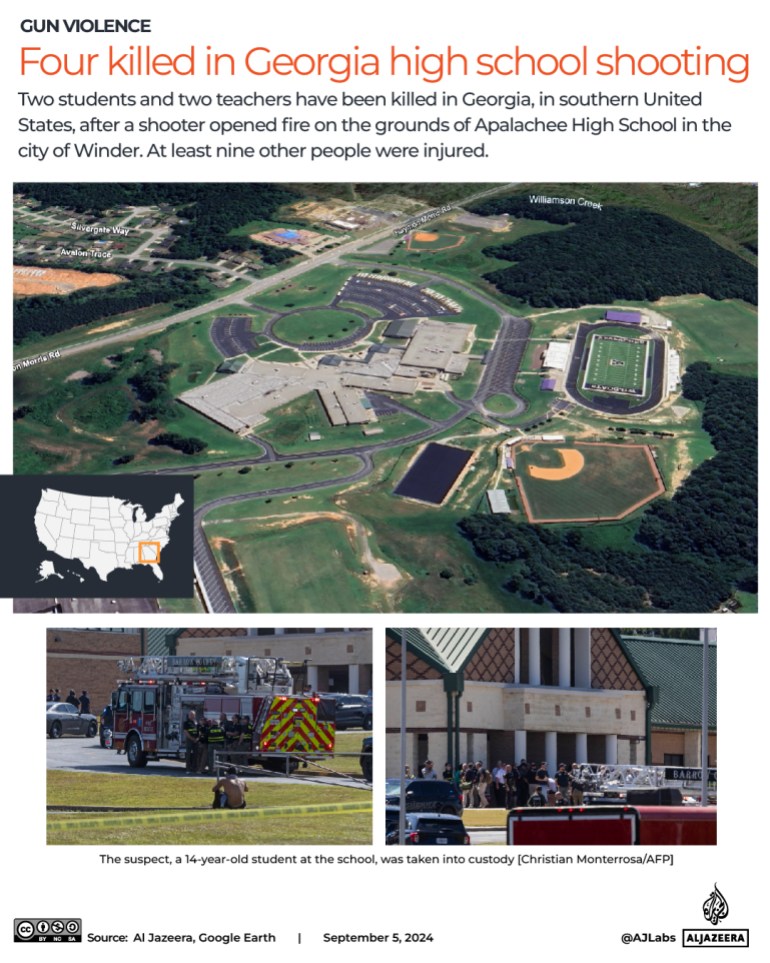
EXPLAINER A 14-year-old boy allegedly opened fire at Apalachee High School in the US state of Georgia, killing two students and two teachers. A 14-year-old boy allegedly opened fire at a Georgia high school on Wednesday, killing two students and two teachers while injuring nine other people. This incident marks the first mass shooting at a school in the United States since the beginning of the academic year — but the 23rd such incident in 2024. Here is all to know about the victims, suspect and shooting. What happened in Georgia and when? A shooting took place in Apalachee High School. Lyela Sayarath, 16, a student at the school, told CNN that she was sitting next to the suspected attacker before the shooting took place. The suspected shooter left an algebra class at about 9:45am (13:45 GMT). Later, as the class was nearing its end, he returned. A girl attempted to open the door but saw the gun and didn’t open it. She reported that the shooter then went to the classroom next door and began shooting. Officers first received reports of a shooting at the school at about 10:20am local time (14:20 GMT). After the shooting took place, all schools in the district were placed in lockdown, and police were sent out to all district high schools. A report by CNN said that earlier in the morning, Apalachee High School received a phone threat warning of shootings at five schools, with Apalachee being identified as the first target. 3. There was a call to another local high school this morning with a reported threat. Police responded, investigated, and determined there was no threat. (3/3) — GA Bureau of Investigation (@GBI_GA) September 5, 2024 Where did the shooting take place? Apalachee High School is located in the city of Winder, Georgia. It is an hour outside of Atlanta, the state’s largest city and capital. The school has nearly 1,900 students enrolled and is one of three high schools in the Barrow County School System. In the state of Georgia, individuals must be 18 or older to purchase handguns. Minors also cannot possess handguns. In 2019, Georgia ranked 15th in firearm-related deaths in the US and the 10th for the southern region, according to the Georgia Department of Public Health. Georgia ranks 46 out of 50 states in the US in terms of the strength of its gun laws, according to Everytown for Gun Safety, a nonprofit that advocates for gun control. The group describes Georgia’s policies as “some of the weakest” in the US. Who is Colt Gray, the suspected shooter? The suspected shooter was identified by authorities as Colt Gray. He is a 14-year-old student, and he will be charged and tried as an adult, authorities said. Gray was armed with an “AR platform style weapon” or semiautomatic rifle. An AR-platform rifle, the AR-15 has been involved in some of the most deadly mass shootings in US history. Gray was interviewed by local enforcement in May 2023 after the FBI received “several anonymous tips about online threats to commit a school shooting at an unidentified location and time”. According to the FBI, during that time his father said he did have hunting guns in the house, but he did not allow unsupervised access to them. They also said that at that time, there was no probable cause for arrest. Student Lyela Sayarath described Gray as “pretty quiet.” She said: “he never really talked. I couldn’t tell you what his voice sounded like, or really even describe his face to you. He was just there.” Who do we know about the victims? Officials said four people were killed and nine others hospitalised. The four victims were identified as: Christian Angulo, a 14-year-old student Mason Schermerhorn, a 14-year-old student Christina Irimie, a 53-year-old maths teacher Richard Aspinwall, a 39-year-old math teacher and assistant football coach All nine of those hospitalised — eight students and one teacher — were wounded and expected to recover. RIP to the 4 victims who tragically lost their lives today in the Apalachee High School shooting. As pictured: 1. Richard Aspinwall (math teacher)2. Mason Schermerhorn (14y/o student)3. Christian Angulo (14y/o student)4. Christina Irimie (math teacher) pic.twitter.com/Gfg7x4UWTL — Everything Georgia (@GAFollowers) September 5, 2024 How did presidential candidates react to the high school shooting? The US is two months away from election night. Georgia is a key battleground state that both principal candidates — Vice President Kamala Harris and former President Donald Trump — are desperate to win. Speaking from the campaign trail in New Hampshire, Harris described the killings in Georgia as a “senseless tragedy on top of so many senseless tragedies”. “And it’s just outrageous that every day, in our country, the United States of America, that parents have to send their children to school worried about whether or not their child will come home alive,” Harris said. Today, Doug and I are mourning the deaths of those whose lives were cut short by gun violence at Apalachee High School in Georgia. Our hearts are with the students, teachers, and families impacted by this shooting, and we are grateful to the first responders and law enforcement… — Vice President Kamala Harris (@VP) September 4, 2024 In a message posted on social media, Trump said: “These cherished children were taken from us far too soon by a sick and deranged monster.” Trump himself was the victim of gun violence last month when a gunman hit his ear in a failed assassination attempt at a rally in Butler, Pennsylvania. Nevertheless, his campaign has pledged to protect the rights of gun owners and repeal restrictions put in place under incumbent President Joe Biden. Trump’s vice presidential pick JD Vance described the shooting as “despicable violence” in a social media post. Our hearts go out to everyone affected by this despicable violence just days into the new school year. We are keeping the victims, their families, and the whole community of Winder, Georgia in our prayers this evening. —
US sailor detained in Venezuela while travelling on personal business

Detention comes amid tensions over Venezuela’s disputed election, with US seizing President Maduro’s plane this week. Venezuelan authorities have detained a United States Navy sailor who was travelling in the Latin American country, according to Pentagon officials. White House national security spokesperson, John Kirby, confirmed on Wednesday that “a US service member” had been detained. He said that Washington was trying to get more information from Venezuelan authorities. “We’re obviously in touch as appropriate, as you would be, with Venezuelan authorities to try to get more knowledge,” Kirby said. He added it was his “understanding that this individual was on some sort of personal travel and not official government business”. Two defence officials also told the Reuters news agency the sailor had travelled to Venezuela on personal leave and had not gotten the required authorisation. The officials spoke on condition of anonymity and declined to provide further details. A spokesman for the US Department of State also said it was closely tracking the situation. The detention comes as tensions over Venezuela’s disputed elections have soared, with several countries, including the US, rejecting President Nicolas Maduro’s claims of victory. Several countries, including the US and Argentina, have gone so far as to recognise Maduro’s opponent, Edmundo Gonzalez, as the winner of the July presidential race. On Monday, US authorities seized a plane allegedly purchased for Maduro’s personal use, citing a violation of sanctions imposed by Washington. Maduro’s government decried the seizure as “piracy”. Hours later, Venezuelan authorities issued an arrest warrant for Gonzalez, accusing him of conspiracy and other crimes. The US joined several other countries in the Americas in condemning the move. Several active US military members have been detained while abroad in recent years. Earlier this year, 34-year-old US Army soldier Gordon Black was arrested after travelling to Russia to visit his girlfriend. Russian authorities sentenced Black in June to three years and nine months in prison after his girlfriend accused him of stealing from her. He remains an active duty member of the army but has been placed on a non-pay status. Last year, Army Private Travis King fled to North Korea during a civilian tour of the Military Demarcation Line on the border with South Korea. King, who was already facing military disciplinary actions, was detained by North Korean authorities and later released to the US. His lawyer said last week he would plead guilty to five charges, including desertion. The US has also recently traded prisoners with Venezuela. In December, US authorities freed a close ally of Maduro’s, Alex Saab, in exchange for the release of 10 imprisoned US citizens as well as a fugitive defence contractor at the centre of a massive Pentagon bribery scandal. Adblock test (Why?)