

What did Benjamin Netanyahu’s US trip achieve?

Israeli prime minister’s visit comes amid the Gaza war and a US presidential race. Israeli Prime Minister Benjamin Netanyahu was welcomed by a cheering US Congress this week as thousands of people took to the streets in Washington, DC, to protest against Israel’s nine-month-old war on Gaza. How is Netanyahu’s visit being viewed in the US and in Israel? Presenter: Sami Zeidan Guests: Phyllis Bennis – Fellow at the Institute for Policy Studies Gideon Levy – Columnist for the Israeli newspaper, Haaretz Niall Stanage – White House columnist for the US newspaper, The Hill Adblock test (Why?)
Paris Olympics 2024: ‘Terminator’ Titmus defends 400-metre freestyle title

Ariarne Titmus knocked off the USA’s Katie Ledecky again at the Olympics, defending her 400-metre freestyle title in one of the most highly anticipated races of the Paris Games. Titmus, the Australian star known as “The Terminator,” prevailed in an event the American won at Rio de Janeiro in 2016, handing Ledecky a second straight defeat in the event. With her fingernails painted Aussie yellow, Titmus led from start to finish. The 23-year-old faced her stiffest challenge from Canadian phenom Summer McIntosh but won comfortably in three minutes and 57.49 seconds. Gold medalist, Ariarne Titmus, stands with silver medalist, Summer McIntosh, left, and bronze medalist Katie Ledecky after the women’s 400-metre freestyle final at the Paris Olympics, in Nanterre, France. [Martin Meissner/AP] “I probably felt the expectation and pressure for this race more than anything in my life, to be honest, and I’m pretty good at handling the pressure but I’ve definitely felt it,” Titmus said. “I’m just happy to get the result for myself and I feel so honoured to be a part of the race and be alongside legends like Katie. “I look up to her so much as an athlete and there’s certainly not a rivalry beyond the races. I really respect her as a person,” Titmus added. Canada’s 17-year-old McIntosh claimed the silver in 3:58.37, while American Ledecky was left in her wake and got the bronze in 4:00.86. Ledecky remains at six individual gold medals in her brilliant career – still the most of any female swimmer in Olympic history. Titmus now has three individual Olympic victories on her growing resume. She swept the 200 and 400 free in Tokyo and is favoured to pull off the same double in Paris. Ledecky is not done yet. She skipped a chance to face Titmus again in the 200 free, but the American is favoured to take gold in both the 800 and 1,500-metre events. Maertens wins men’s 400-metre freestyle gold for Germany Lukas Maertens of Germany became the first swimming champion at the Paris Olympics after he won his first Olympic gold in the men’s 400-metre freestyle, which was held shortly before the women’s event. Emerging triumphant from a final stacked with world champions, Maertens touched the wall in three minutes and 41.78 seconds to finish ahead of Australian silver medallist Elijah Winnington and South Korean bronze-winner Kim Woo-min at La Defense Arena. Lukas Maertens’ victory erases his record as a nearly-man in men’s swimming, following two bronzes and a silver at the last three world championships. [David J. Phillip/AP] Maertens, 22, came into the race with the fastest time this year and duly converted on the biggest stage to become the first German winner in the event since Uwe Dassler took the title for East Germany at the 1988 Seoul Games. The German raced at world record pace until the final 50 metres, and that proved enough despite a fast finish by Winnington, who claimed his second Olympic medal. Australia set Olympic record in women’s 4×100-metre freestyle relay Australia made it two-for-two against the rivals from the US in the women’s 4×100 freestyle relay, claiming their fourth straight Olympic title in that event. The quartet of Mollie O’Callaghan, Shayna Jack, Emma McKeon and Meg Harris set an Olympic record with a winning time of three minutes and 28.92 seconds. The Americans — Kate Douglass, Gretchen Walsh, Torri Huske and Simone Manuel — rallied to take silver in 3:30.20. They edged China’s team of Yang Junxuan, Cheng Yujie, Zhang Yufei and Wu Qingfeng by a tenth of a second. From left to right: Emma Mckeon, Meg Harris, Shayna Jack and Mollie O’Callaghan of Australia, celebrate after winning the women’s 4×100-metre freestyle final [Ashley Landis/AP] Dressel leads USA to gold in men’s 4x100m freestyle relay A US team spearheaded by Caeleb Dressel stormed to the men’s 4×100-metre Olympic relay gold medal. The quartet of Jack Alexy, Chris Guiliano, Hunter Armstrong and Dressel came home in three minutes and 9.28 seconds with Australia taking silver in 3:10.35 and Italy bronze in 3:10.70. But the US had their work cut after the opening leg with Chinese 100-metre world record holder Pan Zhanle putting in a scorching two laps. The dominant Americans hauled themselves back into contention with Dressel powering them to the finish line. Kyle Chalmers put in a cracking final leg to hand Australia silver, with his 46.59 the fastest split of any swimmer. The US has long dominated the event, winning 10 of the 14 times it has been on the Olympic programme before Paris. They only missed top spot in 2000 (Australia), 2004 (South Africa) and 2012 (France), and as a result of the boycott in 1980. The United States men’s 4×100-metre freestyle relay team celebrate after winning the gold medal [Petr David Josek/AP] Adblock test (Why?)
Martyr Biden, Saviour Kamala
Washington has never seen a week quite like it. On Sunday, President Joe Biden took himself out of the presidential race. By Tuesday, his vice president, Kamala Harris, had picked up the torch and was on the campaign trail. The pace at which this story has unfolded across the US media has left liberal commentators gasping for air. They quickly dispensed with their criticism of Biden for selfishly clinging to power and started eulogising him for his selfless change of heart. What is next now that Harris is the presumptive nominee? Contributors: Alex Shephard – Senior editor, The New RepublicSabrina Siddiqui – White House reporter, The Wall Street JournalAkela Lacy – Politics reporter, The Intercept On our radar In Bangladesh, there has been a heavy-handed response to protests centring on Prime Minister Sheikh Hasina, her government and corruption. Meenakshi Ravi looks at the media restrictions and communications blackout imposed by the state. For months – even years – much of mainstream US media downplayed or ignored the obvious – the unmistakable signs of Biden’s cognitive decline. One commentator who can fairly say he dissented from mainstream opinion and saw this coming is Cenk Uygur. The host of The Young Turks spoke with us about why the liberal media got it wrong on this story. Featuring Cenk Uygur – Co-creator and host, The Young Turks Adblock test (Why?)
The pro-Palestinian student movement is alive and well
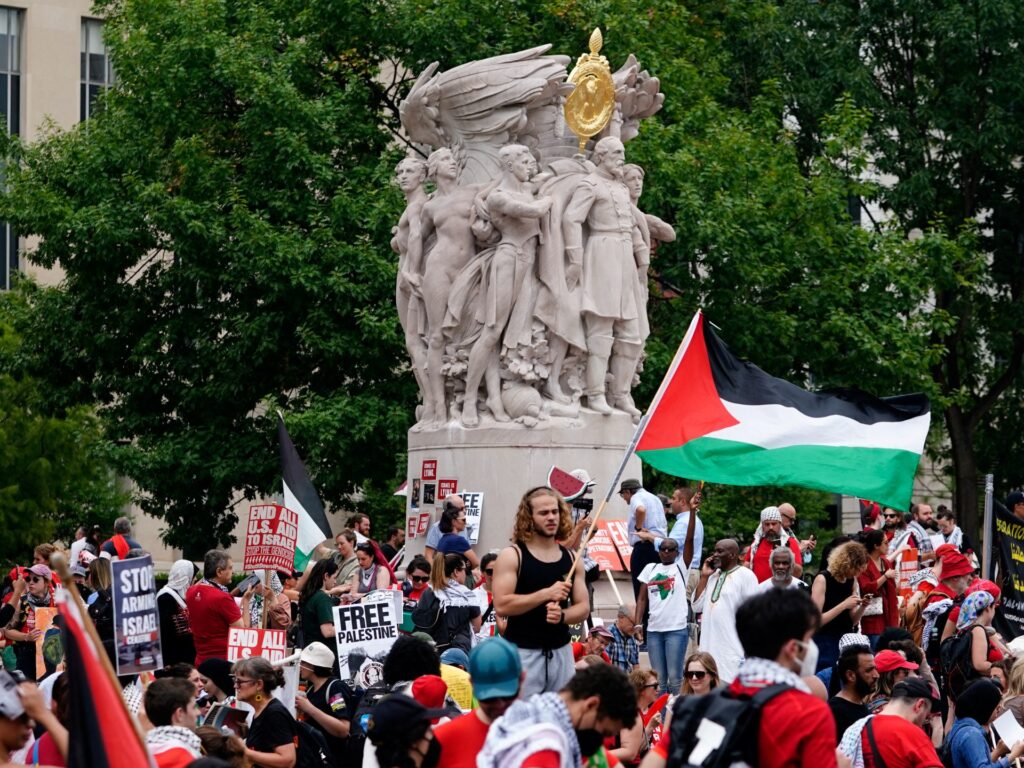
University campuses across the United States are quiet as the school year ended more than a month ago: most encampments have been cleared, campus protests have been discontinued and the mainstream media have all but forgotten about student-led demonstrations. The spirit and the cause, however, are very much alive. And that is because the encampment movement was not the start of the struggle towards Palestinian liberation, nor was it its end. Rather it was a pivotal shift, as it made the general public aware of the complicity of elected officials and public institutions in the Israeli genocide of the Palestinian people. It also expanded and solidified the solidarity network of the Palestinian movement well beyond its usual supporters. Whereas, before, pro-Palestinian protests were overwhelmingly attended by Palestinians and other Arabs, there is now a whole community of new allies that have been introduced to the Palestinian cause and show up at events. Americans across socioeconomic and racial backgrounds now believe that Palestinian life has value, that it is not anti-Semitic to say Palestine, and that Palestinians – like all other people – have inalienable rights to life and self-determination. Given that the impact of the student encampments has gone way beyond the confines of university campuses, it cannot be undone with the suppression of the protests. Pro-Palestinian action has continued mostly off-campus and taken a variety of different forms: from local protests to teach-ins and conferences to various modes of mobilisation, including online. At the end of May, just as the school year was wrapping up, the Palestinian Youth Movement, along with a number of other organisations, held a three-day conference in Detroit, Michigan. Thousands gathered to learn more about the role of technology in apartheid, solidarity with labour unions, and the importance of media in shifting the Palestinian narrative. “We will be here, in the streets, on our campuses, in our classrooms, in our workplaces, every day until Zionism is defeated and until the total liberation and return of our people,” read the final statement of the conference. A few days later, an estimated 100,000 – many of them students and youth – converged on Washington, DC to denounce the Biden administration’s unconditional support for Israel. Protesters held up a 2-mile-long red banner symbolising President Joe Biden’s non-existent red line, which has allowed the Israeli government and army to commit unimaginable atrocities in Gaza. And most recently, thousands of youths, students, and allies gathered again in Washington, DC to protest against the visit to the US and the speech of Israeli Prime Minister Benjamin Netanyahu in the US Congress. Although he is the architect of a genocide and a war criminal with a likely arrest warrant from the International Criminal Court, his address was met with applause from members of Congress from both parties. As he spewed lies about his genocidal war on Gaza, American youth made clear their rejection of this political farce and of the US government’s complicity in the Palestinian genocide. There has also been mobilisation to defend and support those who still face charges over their participation in encampments and occupations. According to The Appeal, a nonprofit news outlet, more than 3,000 students have been arrested for their involvement in campus protests against the genocide of Palestinians. While charges in many cases have been dropped, in others local prosecutors have decided to push forward with them, which could have serious consequences for the accused. The way this has been done has also illustrated how the Palestinian issue ties to various layers of injustice within the US and why so many non-Arabs have joined our cause. In the case of the 22 people arrested at the City University New York (CUNY) and slapped with criminal charges, observers pointed out early on that those detained in the wealthier Columbia University in similar circumstances only faced misdemeanour charges. In June, the Manhattan district attorney dropped felony charges against 12 CUNY students and staff but pressed forward with the cases of 10 community members, who are mostly Black people and working-class. People have rallied in their defence, trying to bring more attention to this injustice and the clear attempt by the authorities to come after the most vulnerable among us. Much is also being done on other fronts, not just on university campuses and in the streets. One area of particular note is boycotting. We know that boycotts have historically been successful in putting political pressure on occupying countries: they contributed to the dismantling of apartheid in South Africa, helped Algerians during their war of independence against the French, and put pressure on the Dutch economy during the Indonesian National Revolution against Dutch imperial rule. The Boycott, Sanctions, Divestment (BDS) movement picked up significantly over the past nine months and its efforts are bearing fruit. We have seen global sales of companies on the boycott list slump significantly, which has affected their valuation. McDonald’s shares have fallen by more than 7 percent, and Starbucks – by 17 percent. In some countries, the boycotts have been so effective that they have sent corporations into a frenzy. In Bangladesh, after sales fell by 23 percent, Coca-Cola released an advertisement denying any links to Israel, which spectacularly backfired. In US cities like Dearborn, where the Arab population makes up half the city, places like Starbucks and McDonald’s are all but empty, with local businesses being supported like never before. Elsewhere in the US, where the Muslim and Arab-American communities are smaller, students and youth are at the forefront of the BDS movement, spreading the word through social media and actively promoting the boycott of corporations complicit in the Israeli occupation of Palestine. Students also know the power of voting, and not voting. Since the start of the genocide last year, various political strategies have been deployed to ensure that our demands are heard. The “Abandon Biden” and “Listen to Michigan” campaigns were launched to convince voters to respectively withhold their vote or send a “warning” vote to Biden by voting uncommitted. Many youths and students participated in
As Venezuela’s election nears, opposition figures face Maduro’s repression
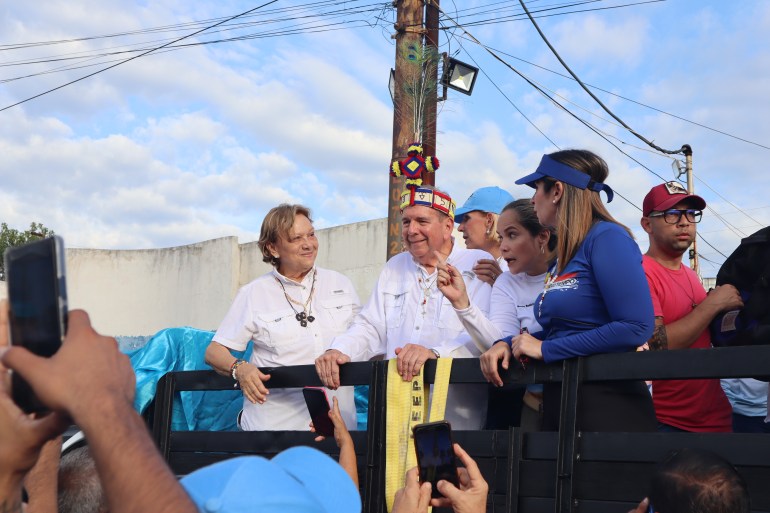
Maracaibo, Venezuela – The journey from the Venezuelan capital of Caracas to the coastal city of Maracaibo should only take about nine hours. For Maria Corina Machado, however, it took closer to 12. Machado, a popular opposition leader, had hit the road in the final days of Venezuela’s presidential race to campaign on behalf of Edmundo Gonzalez Urrutia, the candidate hoping to unseat President Nicolas Maduro. But as she travelled between cities, Machado noticed government forces had blocked the roads. Gas stations were mysteriously closed along her route. Machado has grown accustomed to such obstacles, though. As she explained at a news conference at her party headquarters in Maracaibo on July 24, she sees the obstructions as the last gasp of an authoritarian government struggling to maintain its grip on power. “This is a confession from a regime that knows it is defeated,” Machado said, as she cited yet another example: efforts to deny accreditation to citizens wishing to act as poll monitors. “But just like we have overcome all these obstacles, we’re also going to overcome this one.” On Sunday, Venezuelans head to the polls to vote for the presidency. But Maduro, the socialist president who has been in power since 2013, has struggled in the polls, trailing Gonzalez by wide margins. An opposition victory could bring nearly a quarter century of socialist rule to a close. Opposition leaders like Machado, however, warn that Maduro will not leave office without a fight. They anticipate the Maduro government will continue to sabotage their efforts — even if it means subverting democracy at the ballot box. Presidential candidate Edmundo Gonzalez Urrutia greets the crowds in Maracaibo, Venezuela, ahead of a rally [Mie Hoejris Dahl/Al Jazeera] Haunted by hurdles Machado, however, is no stranger to Maduro’s tactics. The 56-year-old, a former member of Venezuela’s National Assembly, was once a frontrunner in the presidential race herself. Last October, she swept the opposition primary with 92.5 percent of the vote. The Democratic Unitary Platform — the main opposition coalition — declared her its nominee for the presidency. But Maduro’s allies in government sought to bar her from holding office, accusing her of having supported US sanctions, being involved in corruption and losing money for Venezuela’s foreign assets. In January, Venezuela’s Supreme Court upheld the ban: Machado was effectively ousted from the race. She has been barred from air travel, too. Machado has nevertheless sought to rally voters on behalf of her replacement, Gonzalez. One of her recent campaign events in Maracaibo, Venezuela’s second largest city, drew an estimated 200,000 spectators, according to Vente Venezuela, her political party. But she remains a target, as does Gonzalez. Ahead of last Tuesday’s rally in Maracaibo, Venezuelan national police detained six people for arranging sound systems and transport for her team. Their equipment was ultimately confiscated. Machado and her team had to make do without a sound system, sometimes yelling to be heard over the crowd. But her voice was largely swallowed up in the din. Even members of her campaign have faced harassment. Since March, five of her staffers have sought refuge at the Argentinian embassy in Caracas to avoid arrest. They have been coordinating Machado’s campaign remotely from within the embassy walls. Just last week, Machado’s security chief was also arbitrarily detained in what Machado described as “a kidnapping”. He was released the following day. In addition, her campaign vehicles were vandalised, and their brake hoses were cut. Motorcyclists accompany Maria Corina Machado’s caravan of cars as she travels between cities [Mie Hoejris Dahl/Al Jazeera] Her team has grown accustomed to bringing hoses and jerrycans of fuel on the road whenever they travel, just in case the government forces gas stations along the route to close. “It is not a typical campaign,” Oliver Lopez Cano, a campaign staffer, told Al Jazeera. Still, Machado told Al Jazeera in a private conversation after the Maracaibo rally that she has received unexpected support as Maduro’s popularity tailspins. For years, motorcycle groups known as “motorizados” used to prowl the streets, harassing members of the political opposition. But Machado said some of the motorcyclists have switched sides, fed up with the economic and political instability under Maduro. “All the motorcyclists used to be chavistas,” Machado explained, using a term that refers to followers of Hugo Chavez, Maduro’s predecessor and mentor. She described how thousands of motorcyclists — mostly men — have helped protect her campaign as she navigates across the country. Even at government roadblocks, security forces sometimes hesitated to obstruct her progress when they saw the motorcyclists she travels with, Machado said. “They went from being a threat to being a shield.” Crowds gather in Maracaibo, Venezuela, to hear opposition leaders speak ahead of Sunday’s election [Mie Hoejris Dahl/Al Jazeera] Targeting the grassroots But opposition leaders are not the only individuals facing government backlash. Critics accuse the Maduro government of attacking low-level political workers and even small business owners for their association with the opposition. In the three weeks since the start of the campaign season on July 4, the Venezuelan human rights organisation Foro Penal has documented 149 cases of politically motivated arbitrary detention. One of those cases involved a man named Aldo Roso Vargas, an activist from Voluntad Popular, an opposition party. He was arrested en route to an opposition campaign event in Caracas earlier this month, charged with attempting to destabilise the electrical system. Gonzalo Himiob Santome, co-founder and vice president of Foro Penal, said examples like Roso’s are an illustration of how far the Maduro government is willing to go to stay in power. “The government’s intention is to intimidate anyone who shows closeness to the opposition movement in one way or another,” Himiob said. Even restaurant owners and chauffeurs who have served opposition figures have reportedly faced intimidation from the government and its allies. That was the case for the Plaza Real Grill in San Cristobal, the capital of Venezuela’s Tachira state. Cesar Perez Vivas, the brother of the grill’s owners, said that Venezuelan tax
Maduro’s greatest test? All you need to know about Venezuela’s election
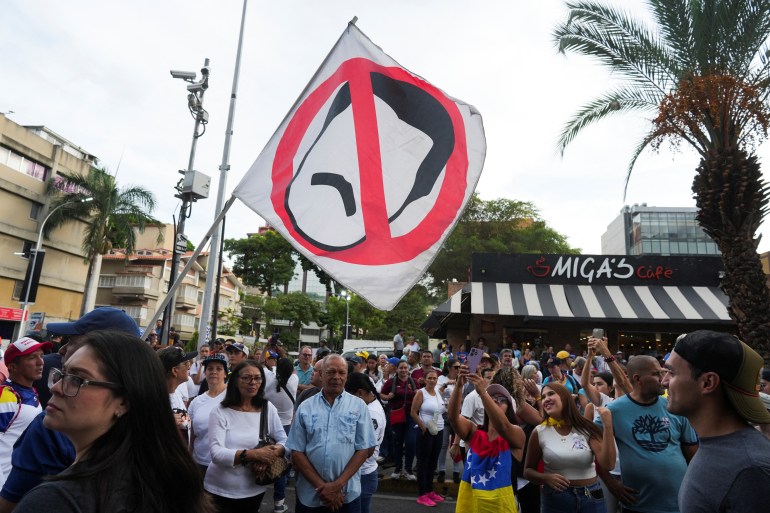
On Sunday, voters in the South American nation of Venezuela will take part in what may be one of the most consequential elections in the country’s modern history. After 11 years in power, President Nicolas Maduro is facing steep odds as he seeks a third term against opposition candidate Edmundo Gonzalez Urrutia. Polls show Maduro trailing Gonzalez by nearly 40 points, as voters express exhaustion over Venezuela’s economic crisis and political repression. But critics question whether Maduro will accept defeat if he is indeed trounced at the polls. The socialist leader has been accused of wielding his power to suppress potential rivals, arresting some and barring others from holding office. Who are the candidates, what developments have we seen so far, and under what circumstances will voting take place? We answer these questions and more in this brief explainer. Supporters of opposition candidate Edmundo Gonzalez in Caracas wave a flag showing a cartoon of President Maduro’s face crossed out [Alexandre Meneghini/Reuters] When is the election taking place? The election will take place on July 28, the birthday of the late Venezuelan President Hugo Chavez, Maduro’s mentor. What do the pre-election polls show? Maduro appears to be lagging behind his rival Gonzalez by a seemingly insurmountable margin. The polling firm ORC Consultores shows Maduro with 12.5 percent support, compared with a whopping 59.6 percent for Gonzalez. Another poll from the data firm Delphos and Andres Bello Catholic University showed Maduro with a slightly higher approval rating, about 25 percent. But he was again far behind Gonzalez, who pulled in more than 59 percent support in that poll as well. Why is Maduro so unpopular? Maduro has long struggled to muster the popularity of his predecessor, Chavez. Since the mid-2010s, Venezuela’s economy has been in dire straits, as the price of its main export, oil, cratered. The economic crisis triggered hyperinflation and severe economic strain. An exodus of people started to leave the country in search of opportunities elsewhere. Some critics blamed Maduro and his allies for corruption and economic mismanagement as well. Sanctions imposed by the United States — in response to alleged human rights abuses and democratic backsliding — have compounded the economic crisis, according to experts. Laura Dib, the Venezuela programme director at the Washington Office on Latin America (WOLA), a research and rights advocacy group based in the US, told Al Jazeera that people in the country are desperate for an improvement to the crushing economic circumstances. “The minimum wage in Venezuela can be around $130 per month, but what a family needs just to cover their basic needs is around $500,” she said. Venezuela’s President Nicolas Maduro holds the sword of independence hero Simon Bolivar during his final campaign rally in Maracaibo, Venezuela, on July 25 [Isaac Urrutia/Reuters] How many people have left the country? Perhaps the best indicator of how dire the economic situation has become is the number of people leaving the country. According to the United Nations refugee agency (UNHCR), more than 7.7 million have left the country since 2014, in one of the largest instances of mass displacement in modern history. About 2,000 people continue to leave each day. Some experts fear that number may spike if Maduro claims victory in a third successive election. Who is running? Maduro, the 61-year-old successor of former President Chavez, is seeking a third six-year term as the candidate for the United Socialist Party. He seeks to continue Chavez’s legacy of offering social programmes to the poor and taking an antagonistic stance towards the US. Facing off against Maduro is a group of opposition parties that call themselves the Unitary Platform coalition. The coalition brings together an array of political views, but its defining goal is to bring Maduro’s time in power to a close and improve relations with the West. By winning sanctions relief and boosting investments, officials in the Unitary Platform hope to improve conditions in Venezuela, allowing members of the diaspora to return home. The opposition is represented on the ballot by Gonzalez, a 74-year-old former diplomat. For his part, Maduro has painted the opposition as stooges of foreign powers who would privatise the social programmes that many poor residents rely on for economic support. Venezuelan opposition leader Maria Corina Machado and presidential candidate Edmundo Gonzalez participate in a closing campaign rally in Caracas, Venezuela, on July 25 [Enea Lebrun/Reuters] What happened last time Maduro ran? The opposition largely sat out the 2018 election in protest of what it said was a biased electoral system. Maduro ultimately won that election with more than 67 percent of the votes. But groups like the Organization of American States warned that the election failed to meet the standards for a “free, fair, transparent and democratic process”, and observers noted that voter turnout was at a record low. Has this year’s election process been fair? In short, no. While the opposition is running with Gonzalez at the top of the ticket, he was not the coalition’s first choice to take the lead. In fact, he wasn’t even the second choice. Gonzalez was selected only after the government barred the popular opposition figure Maria Corina Machado from competing in the election, as well as Corina Yoris, who was initially named as her replacement. Other opposition figures have been detained in the lead-up to the vote, on what critics consider sham charges. In January, Venezuela’s Supreme Court upheld a decision to bar Machado from holding public office for 15 years. How does the government defend those actions? The government has defended its decision by alleging that opposition figures like Machado were involved in efforts to overthrow Maduro and encouraged US sanctions against Venezuela. While Machado remains widely popular, those charges lean into anxiety over a history of US support for efforts to undermine the government in Caracas and install a new one more favourable towards Washington. Maduro and his allies have also accused Machado of being corrupt. Guards stand outside of the National Electoral Council headquarters in Caracas, Venezuela,
Kamala Harris shifts tone on Gaza, but advocates say US voters want more
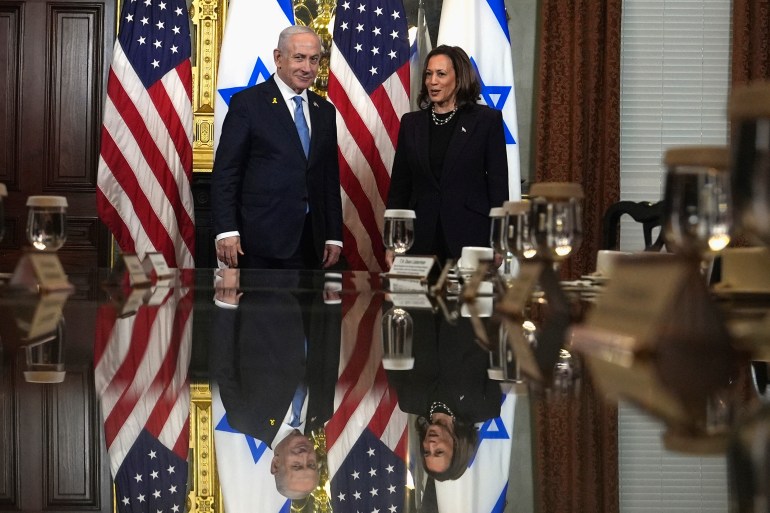
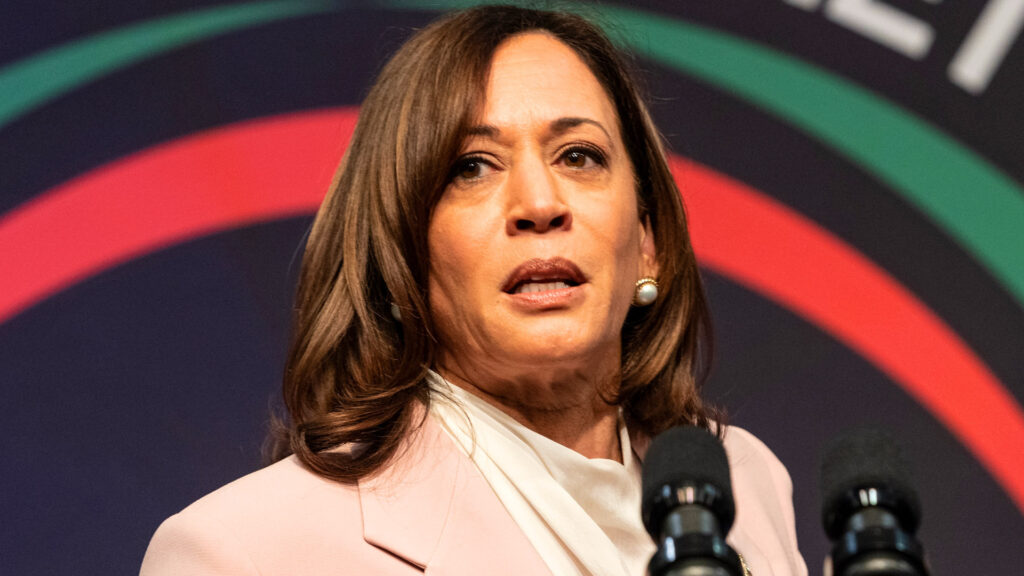
Washington, DC – Vice President Kamala Harris says she will “not be silent” in the face of Palestinian suffering, as Israel’s war in Gaza rages on. But Palestinian rights advocates want to know exactly what that means for United States foreign policy. The vice president — and the Democrats’ likely nominee for the presidency — emphasised the plight of Palestinians in Gaza after meeting with Israeli Prime Minister Benjamin Netanyahu on Thursday. Nevertheless, she pledged ongoing support for Israel. Activists say expressing sympathy for Palestinians without pursuing a meaningful shift away from the US’s policy of unconditional military and diplomatic support will not help Harris win back voters alienated by President Joe Biden’s approach to the war. “Without an actual commitment to stop killing the children of Gaza, I don’t care about her empathy for them,” said Eman Abdelhadi, a sociologist at the University of Chicago. She stressed that the US bears “responsibility” for the atrocities committed against Palestinians. “To be empathetic to someone that you’re shooting in the head is not exactly laudable. We don’t need empathy from these people. We need them to stop providing the weapons and the money that is actively killing the people that they’re supposedly empathising with.” Moreover, while Harris’s comments have been characterised as a shift away from Biden’s rhetoric, critics point out the vice president did not articulate any new policy positions. What did Harris say? After holding talks with Netanyahu on Thursday, Harris delivered a televised statement on the conflict where she reasserted her “unwavering commitment” to Israel and promised to always ensure that the country can “defend itself”. The vice president then pivoted to describing the horrific conditions in Gaza without naming Israel as the party responsible for the humanitarian crisis there. “I also expressed with the prime minister my serious concern about the scale of human suffering in Gaza, including the death of far too many innocent civilians,” Harris said, calling the war “devastating”. “The images of dead children and desperate, hungry people fleeing for safety — sometimes displaced for the second, third or fourth time — we cannot look away in the face of these tragedies. We cannot allow ourselves to become numb to the suffering, and I will not be silent.” She also voiced support for Biden’s multi-phased ceasefire proposal to achieve an end to the war and release Israeli captives in Gaza. Israel and Hamas have been negotiating indirectly for months to finalise the agreement, but a solution has remained elusive so far. At least on the surface, Harris’s tone appeared like a departure from Biden’s pro-Israel statements. “Harris created distance from Biden on Gaza by emphasizing Palestinian suffering,” a Washington Post headline read after the vice president’s comments. However, Hazami Barmada, an Arab American activist who has been organising protests in the US capital to bring awareness to the situation in Gaza, said that the vice president’s public statement of sympathy “does not make a difference”. Barmada pointed out that Secretary of State Antony Blinken has said he sees his own kids in the faces of the children in Gaza. Still, Blinken’s department has continued to approve billions of dollars in weapons for Israel. “So no, I don’t think empathy is enough,” Barmada told Al Jazeera. “We have had on our television screens genocide, ethnic cleansing, apartheid, illegal occupation, violence, all types of atrocities happening against Palestinians for 76 years. We need to move past empathy into a place of action before it’s too late.” Vice President Kamala Harris and Prime Minister Benjamin Netanyahu meet at the Eisenhower Executive Office Building in the White House complex in Washington, DC, on July 25 [Julia Nikhinson/AP Photo] Harris’s rise Harris appears set to inherit the Democratic nomination from Biden, who stepped out of the presidential race on Sunday and instead endorsed the vice president. With no serious opposition, Biden had won the overwhelming majority of votes in the Democratic primaries. But hundreds of thousands of people across the country chose the “uncommitted” option on Democratic primary ballots to express opposition to the president’s Gaza policy. The uncommitted movement has articulated three main policy demands: achieving an enduring ceasefire, imposing an arms embargo on Israel and lifting the siege on Gaza. Tariq Habash, a former Biden administration appointee, acknowledged the change of tone from Harris and called it “refreshing”. In January, he resigned from the Department of Education in a display of public opposition to US support for the war. But Habash likewise said that Harris should be prepared to follow her rhetoric with action. “What we really need, nine and a half months in, is a change in policy, a change in approach, so that we can end the unnecessary and indiscriminate violence that has continued every single day under President Biden,” Habash told Al Jazeera. “It’s still early, so we don’t know exactly what her plan or approach will be, but based on what she said yesterday, I don’t think substantively we heard a shift or any real departure from what the president has already said or done.” After all, Harris is a key member of the Biden administration, which has been unflinchingly supportive of Israel. On Thursday, White House spokesperson John Kirby said the vice president has been a “full partner” in overseeing US policy on the war. Harris’s record Harris, a former senator, also has her own long pro-Israel record. Days into her Senate tenure in 2017, Harris co-sponsored a measure to condemn a United Nations Security Council resolution that denounced Israel’s illegal settlements in the occupied West Bank. She also addressed the American Israel Public Affairs Committee (AIPAC) later that year, at a time when many left-wing politicians were distancing themselves from the pro-Israel lobby group. “Having grown up in the [San Francisco] Bay Area, I fondly remember those Jewish National Fund boxes that we would use to collect donations to plant trees for Israel,” Harris told an AIPAC conference in 2017. For years, Palestinian historians and activists have accused the Jewish National
How deep is the divide between Israel’s military and its government?
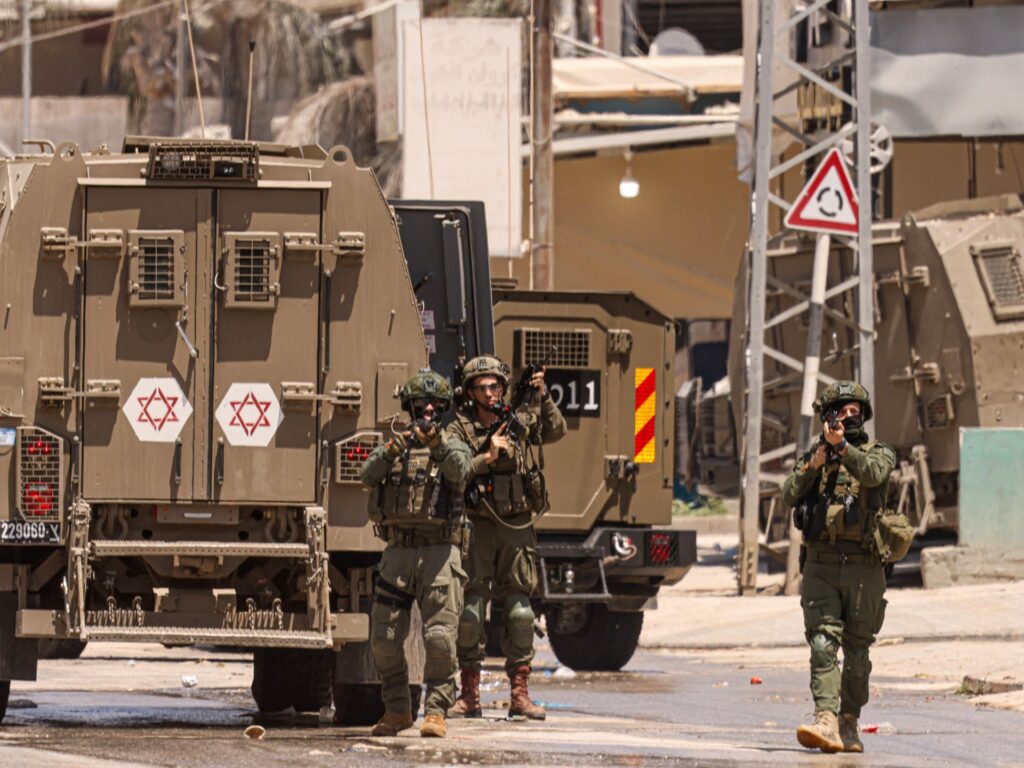
In Gaza, the Israeli military continues on the offensive, and in the United States, Prime Minister Benjamin Netanyahu has spent the past week courting more support for Israel’s assault on the Palestinian enclave. But that apparently shared purpose does not reflect the reality: a growing divide between the generals and the government. And analysts say it means that the initial Israeli unity when it came to the war on Gaza is a thing of the past. The differences emerge in the open on occasion. Most recently, they have centred on the conscription of Israel’s ultra-Orthodox yeshiva students – the military generals, and many secular Israelis, want them to be drafted like other Jews, but ultra-Orthodox parties opposed to conscription are a vital part of Netanyahu’s cabinet. Of perhaps more consequence to Gaza, however, are differences over the conduct of the war, and how to end it. In June, the Israeli army spokesperson Daniel Hagari said, “Whoever thinks we can eliminate Hamas is wrong.” The problem is that one of those people is Netanyahu himself, who has clearly made the destruction of Hamas one of his conditions for ending a war that has now killed almost 40,000 Palestinians. That criticism is part of a wider dissent among some leading Israelis – and even Netanyahu’s own defence minister, Yoav Gallant, has questioned whether there are any plans for ending the war, which began in October. Netanyahu has reserved his own criticism for the army, sharply criticising plans the military had announced, also back in June, for daily “tactical pauses in fighting” to facilitate aid delivery. An Israeli official at the time was quoted as saying that Netanyahu had made clear to the military that it was “unacceptable”. The differences between the military and Israel’s right-wing political establishment are hardly new, and are particularly rife at the moment because of the presence of the far right within the government. Over the last 20 years or so, far-right settler movements have moved from an outlier on the fringes of Israeli politics to the forefront of Israeli political and institutional life. Former supporters of Jewish movements that are banned as “terrorist” groups now sit in senior ministerial positions, with no attempt to repudiate their former affiliations. In addition to an energised and often aggressive base, the far right’s representatives dominate many of Israel’s institutions, including the police and education system, with their influence over Israel’s traditionally secular army growing more and more apparent. Rise of the far right By repeatedly threatening to walk away and collapse Israel’s electorally vulnerable governing coalition, ultranationalist National Security Minister Itamar Ben-Gvir and Finance Minister Bezalel Smotrich have come to exert an effective veto over national policy. That includes any potential ceasefire deal in Gaza – and Netanyahu has chosen to ignore those in the West calling for him to end what is an unpopular war internationally, instead fearing the wrath of the far right more. Netanyahu has his own legal troubles, and losing the protection his current position affords him could be costly. The far right’s critical view of the army isn’t new. Rather, it stems from the military’s role in the 2005 ejection of the illegal Israeli settlements in Gaza, a move violently resisted by the enclave’s settlers, and their continuing – if sometimes fractious – relationship in the occupied West Bank, officially administered by the army since 1967. “It seems strange, I know,” Eyal Lurie-Pardes of the Middle East Institute said, “but the settler movement has repeatedly accused the military of anti-Jewish bias in the West Bank”. And some of that suspicion goes beyond differences over war policy. “With its emphasis on balanced genders and the rights of the LGBTQ community, the army is often criticised by settlers and the ultra-Orthodox for what they see as its progressive culture,” Lurie-Pardes said. According to independent Israeli analyst, Nimrod Flaschenberg the religious Zionist and far right’s “march through the institutions” spurred by the 2005 Gaza withdrawal saw a gradual infiltration into many of the country’s establishments, from the media, to education and the judiciary, but the slow-moving hierarchies of the army are a work in progress. Their influence in the military is growing, however. In a recent report published by The Guardian, the British newspaper suggested that about 40 percent of the graduates from the army’s infantry officer schools come from hardline religious Zionist communities more aligned with the worldview of Ben-Gvir and Smotrich than they do either the ultra-Orthodox Haredim, who avoid military service, or the senior commanders of the Israeli military’s secular old guard. “You can see this influence in both Gaza and the West Bank,” Flaschenberg said, referring to the areas – the latter in particular, that Israeli settlers see as theirs by divine right. “You have these lower-ranked and mid-range officers repeating these almost genocidal religious chants, while either turning their backs on, or carrying out horrific rights abuses. All the while, their generals denounce such actions, while doing nothing to prevent them.” One such notable denunciation came earlier in July from the outgoing Israeli general, Yehuda Fox, who has served in the Israeli army since 1987. He publicly condemned the settler violence, which has claimed dozens of Palestinians in the West Bank during the course of the war, calling it a “nationalist crime”. And yet, ultimately, criticism from the armed forces of Israeli actions in the West Bank remain few and far between, and the military itself conducts near-daily raids on Palestinian cities, towns and villages, and has even attacked them from the air since October. The regular ill-treatment of Palestinians under occupation is also rarely, if ever, criticised by the army’s senior leadership. As for the war in Gaza, both the army and the government have been fully supportive of the widespread destruction of Gaza and accepting of the killing of thousands of Palestinians, with the differences largely over tactics and future plans. At war with the army At the beginning of July, Gallant told the public the army needed 10,000 additional
South Africa police say 95 Libyans detained at suspected military camp
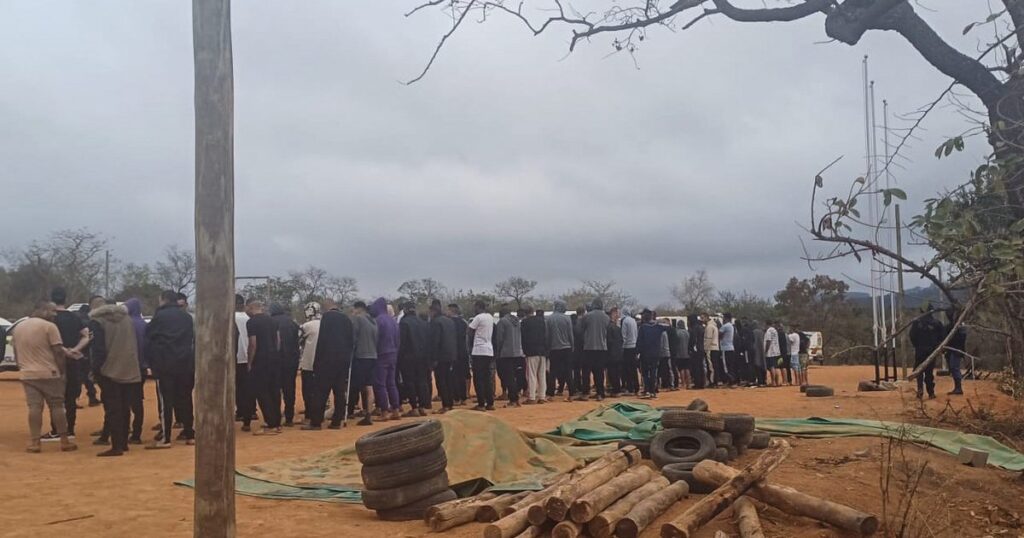
Police says Libyans entered country on study visas to train as security guards, but may have received military training. South African police have detained 95 Libyan nationals for questioning on suspicion of receiving training at a secret military camp. Police said on Friday that they had carried out a morning raid on the alleged military camp, located at a farm in White River in Mpumalanga province in the north of the country. “We are not arresting them now, but we are taking them in for questioning and will investigate any criminal activity,” said police spokesman Donald Mdhluli. “The site was said to be a training camp for a security company, but it is a military base by the looks of things,” he said, adding that the owner of the security company was a South African national. Police said the operation to arrest the Libyans and close down the camp began two days ago. Television footage from the scene showed a heavy police presence outside the suspected camp, which included green military-style tents and sandbags. National police spokeswoman Athlenda Mathe said in a post on X that the Libyans said they were entering the country on study visas to train as security guards, but police investigations suggested they had received military training. It was not immediately clear whether the 95 individuals were affiliated to any group. Libya is still riven by conflict and civil war more than a decade after the 2011 NATO-backed overthrow of longtime ruler Muammar Gaddafi. The country is divided between the United Nations-recognised government based in Tripoli and a rival administration in the country’s east. Although relative calm has returned to the oil-rich country in the past four years, clashes periodically occur between armed groups. “We take any threat to the security and stability of our province and country very seriously,” said Major General Zeph Mkhwanazi, provincial commissioner of the South African police in Mpumalanga. The investigation was “still ongoing”, said his office in a statement, underlining that there was “no immediate threat to community safety”. Adblock test (Why?)
Is traditional marriage doomed for millennials and Gen Z?

We delve into the declining marriage rates, focusing on East and Southeast Asia, and analyse the contributing factors to this trend. As marriage and birth rates decline across many countries, we explore how millennials and Gen Z are redefining long-term commitment. Younger generations in several nations are increasingly embracing alternative and non-traditional marriage trends, prompting discussions about the evolving nature of conventional marriage frameworks and their potential effects on society and the economy. Presenter: Anelise Borges Guests:Anna Lee – YouTuber and content creatorAaron Mossadeg – Actor and host of Love DelayedAmy Chan – Relationship expert and author Adblock test (Why?)