

Boeing 737: Plane skids off runway in Senegal, tyre bursts in Turkey

Accidents involving Air Senegal, Corendon Airlines come as aircraft manufacturer in crisis over its poor safety record. Two Boeing 737 passenger planes have been involved in accidents in Senegal and Turkey on takeoff and landing, raising further questions about the aircraft manufacturer’s safety record. In Senegal, a chartered Air Senegal Boeing B737-300 plane skidded off a runway before takeoff early on Thursday at Blaise Diagne International Airport in the capital, Dakar. Eight-five people – including two pilots and four cabin crew – were on board the flight operated by TransAir and bound for the Malian capital Bamako. At least 10 people were injured, the transport ministry said. Photos showed the damaged plane at a standstill in a grassy field with a damaged wing, its emergency exit slides deployed. Videos shared on social media appeared to show a left wing on fire. The aircraft was later cordoned off with red and white tape, the Reuters news agency reported. The facility was closed after the accident but had reopened by 11:00 GMT, the airport operator said. In Turkey, 190 people – including six crew members – were safely evacuated from a Boeing 737-800 belonging to Corendon Airlines after one of the aircraft’s tyres burst on Thursday during landing at Gazipasa, an airport near the Mediterranean coastal town of Alanya. Corendon Airlines denied Turkish media reports that the aircraft, which had arrived from Cologne, Germany, had landed on its nose. Turkey’s Ministry for Transport and Infrastructure reported damage to the plane’s nose landing gear. Flights were diverted to nearby Antalya airport while the aircraft was removed, the ministry said. It was the second incident at a Turkish airport in as many days. On Wednesday, a Boeing 767 cargo aircraft belonging to FedEx made an emergency landing at Istanbul Airport after its front landing gear failed. No one was injured and the crew safely evacuated the aircraft. Manufacturers are not typically involved in the operation or maintenance of jets once they enter service, but Boeing has been under intense media and regulatory scrutiny following a series of incidents involving its 737s. In January, a door panel blew out of a Boeing 737 Max during an Alaska Airlines flight. The midair blowout followed two 737 MAX crashes in 2018 and 2019 that killed 346 people. Further denting the company’s image, air safety officials in the United States are currently investigating whether employees at Boeing falsified inspection records for the 787 Dreamliner. Adblock test (Why?)
Israeli activists block Gaza-bound aid trucks on desert highway
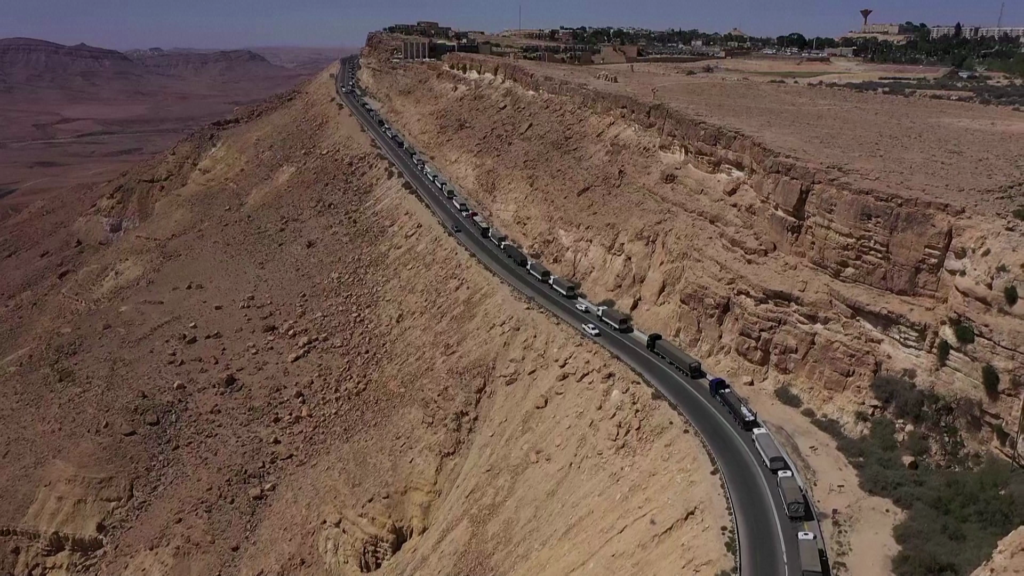
NewsFeed Drone footage captured a long line of aid trucks bound for Gaza stuck on a narrow mountain pass after being blocked by Israeli activists. The demonstrators covered the roadway with large stones to prevent their passage through Mitzpe Ramon. Published On 9 May 20249 May 2024 Adblock test (Why?)
‘It’s not human’: What a French doctor saw in Gaza as Israel invaded Rafah
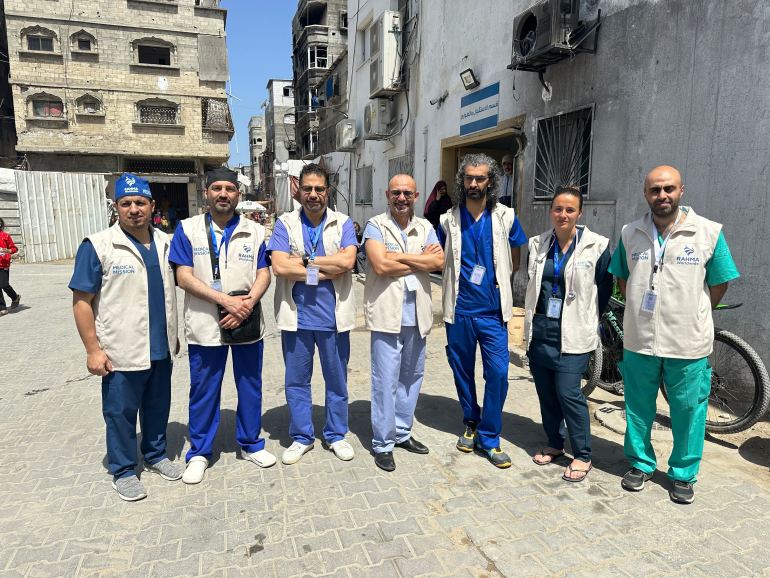
Dr Zouhair Lahna has worked in conflict zones across the globe – Syria, Libya, Yemen, Uganda and Ethiopia – but he has never seen anything like the Israeli war on Gaza. In those life-threatening situations, the Moroccan French pelvic surgeon and obstetrician said, there was a route to safety for civilians. But on Tuesday, Israeli forces seized and closed Gaza’s Rafah border crossing with Egypt – the only escape for Palestinians from the war and the most important entry point for humanitarian aid. “This is another injustice. … It’s not human,” Lahna said, shaking his head as he spoke to Al Jazeera from Cairo, Egypt, where he has been evacuated from the European Gaza Hospital in Khan Younis. He laments having to leave his Palestinian colleagues behind. “I am angry, troubled, upset … because I left some people. They are my friends. I was with them, these doctors, these people. …We eat together, we work together and now I left them in trouble. They have to move their families, look for a tent, look for water, for food,” he said. Lahna has spent months volunteering in Gaza’s hospitals as part of missions organised by the Palestinian Doctors Association in Europe (PalMed Europe) and US-based Rahma International. Dr Lahna, centre, with his colleagues at PalMed Europe and Rahma International in Gaza [Courtesy of Zouhair Lahna] On the morning that displaced Palestinians in eastern Rafah were ordered to evacuate and before Israeli tanks rolled in, Lahna and his foreign colleagues received text messages from the Israeli army. “The Israeli army, they know everything. They know everyone who is in Gaza and how to reach them. They told us to leave.” The texts urged the foreign doctors to leave Gaza because the Israeli military would soon begin an operation in eastern Rafah. A few hours later, Lahna and his counterparts from PalMed Europe and Rahma International were picked up by their organisations and taken to safety in Cairo. “There were four doctors in the European Hospital, four in the Kuwaiti Hospital and two others,” he said. “We waited while they gave our names to the Egyptian and Israeli authorities, and finally, we got word to leave.” As they were departing, leaflets from the Israeli military printed with the evacuation order fell from the sky along with missiles from Israeli warplanes. People were in a panic as they headed north from Rafah towards Khan Younis or west towards the sea, Lahna recalled. Collapse of a system When asked about the conditions of the hospitals he worked in, Lahna has trouble describing what he saw. He begins to speak, then pauses, apologising, pained by the number of sick, wounded and dying individuals who were brought in daily. “It’s difficult for me to remember this,” he said slowly. While the European Hospital has been spared from an Israeli raid, it has been receiving referrals from other overwhelmed hospitals. It has also been a place of shelter for displaced people who try to find space wherever they can, including at the doors of patient rooms, in the building’s corridors, on the stairs and in the hospital’s garden. Lahna’s visit to al-Shifa Hospital, which he says was ‘barbarically destroyed’ [Courtesy of Zouhair Lahna] Before the European Hospital, Lahna and his team volunteered at Kamal Adwan Hospital in Gaza’s northern city of Beit Lahiya. He is among the few foreign doctors to have travelled to the area. They worked there for a week, the longest Israeli authorities permitted them to be there, he said. There, the situation was even more dire, the doctor said, exacerbated by what the World Food Programme says is a “full-blown famine” in northern Gaza. In December, the hospital was the site of an Israeli raid when the military besieged and shelled it for several days. Displaced families had also been sheltering there and were rounded up alongside medical staff and personnel. Gaza’s hospitals, the majority of which are no longer functioning, have also been the site of mass graves discovered after Israeli raids. Graves have been found in recent weeks in Nasser and al-Shifa hospitals along with 392 bodies. Working for peace, not war With the collapse of the healthcare system in Gaza, Lahna is determined to return and volunteer there once again but isn’t sure when that will be possible. For now, he said, he will return to France to check in at his “other job” and spend time with his family, who may have had a harder time than he did because all they did was worry about him while he was in Gaza. He is sure all of Rafah will soon be occupied by Israeli forces, which will be deadly for the hundreds of thousands of Palestinians there, he said. “This world is blind,” Lahna said, dismayed that the Rafah incursion is likely to continue to occur despite warnings from the international community, which has not been able to stop Israel from committing mass atrocities, he said. “Human rights is a joke. The United Nations is a big joke,” Lahna added. He believes the war is as much a United States conflict as it is Israeli with the US approving an additional $17bn in aid to its top Middle East ally last month. For Lahna, the protesting university students around the world, particularly in the US, who oppose Israel’s ongoing assault know the value of human rights. Yet when it comes to Palestinians, he said, they are coming to realise that these values do not apply – and are increasingly becoming disillusioned with their elected officials and the state of the world. That disillusionment is wearing on the doctor himself, but he said it has also strengthened his resolve to offer his expertise to people in warzones around the world, including Gaza. Asked if he is worried about being arrested. tortured or killed for his work in the enclave, the surgeon barely bats an eye. He said his time to die will come one day or another and if it
Will Israel face consequences over its seizure of the Rafah Crossing?
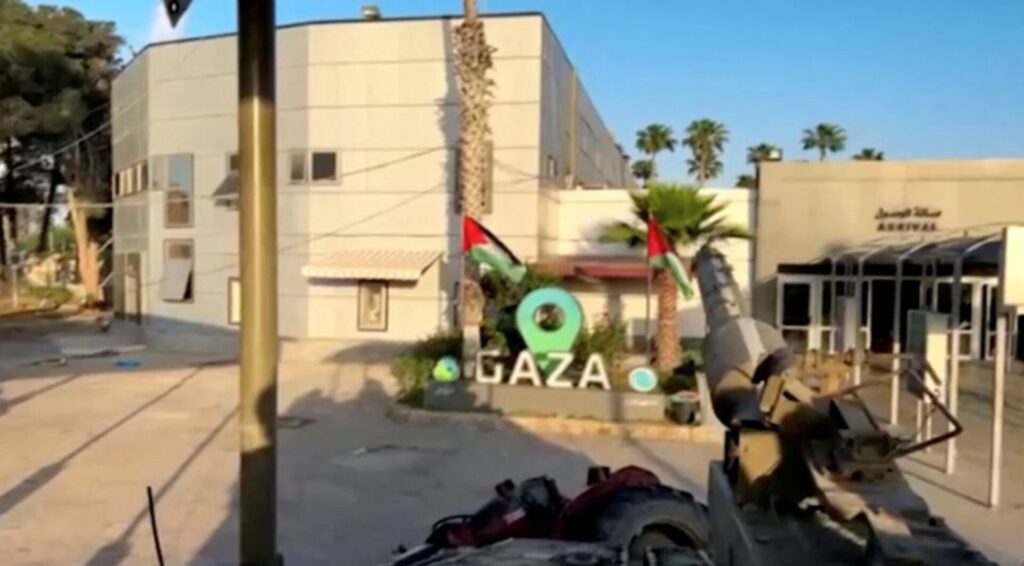
Israeli army kills more Palestians in Gaza after takeover of crossing on vital route for aid deliveries. Israel’s seizure of the Rafah crossing worsens an already dire situation for the 2.3 million Palestinians in Gaza. Why has Israel defied the US and taken over the crossing? And what could the consequences be for all sides? Presenter: Tom McRae Guests: Salman Sheikh – Founder of peacebuilding organisation The Sheikh Group Nour Odeh – Political analyst and public diplomacy specialist H A Hellyer – Senior associate fellow at the Carnegie Endowment for International Peace and the Royal United Services Institute in London Adblock test (Why?)
How food and chopstick skills are helping ease US-China tensions
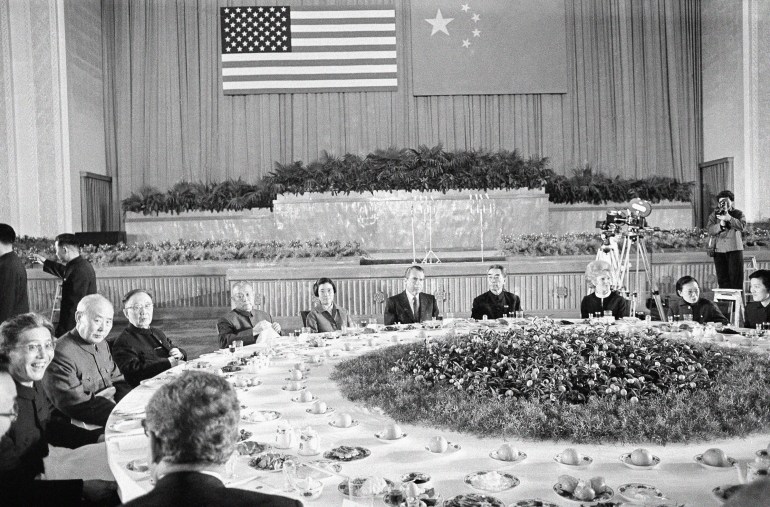
Shanghai, China – “The Chinese take great pride in their food,” read a memo prepared for United States President Richard Nixon ahead of his groundbreaking visit to the People’s Republic of China in 1972. Nixon’s lavish state banquet with Chinese premier Zhou Enlai in Beijing, broadcast live across the world, was crucial in improving US public opinion of a country that had been hidden from view for decades. More than half a century later, food is once again playing a central role in nurturing warmer US-China relations. With Secretary of State Antony Blinken and Treasury Secretary Janet Yellen both recently wrapping up their second visits to China in less than a year, meals have emerged as a key ingredient in stabilising ties between the two countries, as officials on both sides look to tap into the potential of what has been called “food diplomacy”. Yellen’s visit in early April was notable for the level of Chinese public attention on her food choices. Anticipation was high after her first visit last July, when her choice of a Beijing restaurant serving authentic food from the country’s southern Yunnan province, including mushrooms that can have psychedelic effects if cooked improperly, made her a social media darling in China. This time around, it was not only her choice of authentic Cantonese and Sichuan food that grabbed headlines but also her use of chopsticks at a popular Guangzhou restaurant established in 1880, reminiscent of Nixon’s own chopstick skills that also impressed his hosts in 1972. Although Yellen is known to sample local food during her trips around the US, the symbolic significance of doing so in China was especially pronounced, according to Thomas DuBois, a historian of China who teaches at Beijing Normal University. “In China, food is the language of diplomacy, and the Chinese are rightfully proud of their culinary culture. She [Yellen] knew that how she ate would reflect extremely heavily on her visit,” DuBois told Al Jazeera. “If you’re eating badly in China, because it’s a very food-obsessed culture, it’s more than a sign of bad taste, it’s a sign that there’s something off about you.” US President Richard Nixon’s 1972 banquet in Beijing was broadcast live on television [Bill Achatz/AP Photo] DuBois noted that one of the common phrases used to describe Yellen’s eating in China was “qianxu”, or humility – a character trait “extremely important” to the Chinese. “Eating well and knowing how to eat is a profound moral philosophy in China that really comes down to being humble enough to change yourself according to what needs to happen, such as coming here and using chopsticks,” he said. Food’s importance to diplomacy is well-known among foreign diplomats in China. According to a diplomat for a major European country in Beijing, eating together is one of the top priorities when interacting with Chinese officials. “In high-level bilateral meetings, it’s incredibly important to have an eating element in the programme because that’s where you can have an open and frank conversation,” he said, preferring not to be named. “The dinners are used strategically on both sides to create a trusted relationship,” he said. Before the diplomat was posted to Beijing, part of his training related to Chinese banquet customs, including who sits where at the table and the rules surrounding toasting. Ministers from his country are also briefed on these customs before they have meetings with their Chinese counterparts, he added. Even so, banquets can be tricky affairs. In addition to complicated customs, the complex nature of Chinese cuisine, which uses a wide range of ingredients, can lead to challenges in establishing rapport over food, especially with food allergies, which are relatively uncommon in China. At a recent banquet in Beijing arranged by the Chinese, each visiting European minister had a different allergy, from lactose intolerance to shellfish. “A Chinese staffer came over and told me that they had such difficulty planning this dinner for us because our ministers have so many different allergies,” the diplomat said. “These differences in eating habits can complexify things and create lots of stress and anxiety.” Warm coverage The viral seven-second video of Yellen’s chopstick skills was first posted by a social media account believed to be run directly by Beijing. Multiple state-run outlets published the full details of Yellen’s food itinerary, including all the dishes she ate. In an essay on the popular Chinese app WeChat, veteran commentator and former journalist Zhang Feng noted that Chinese state media coverage of Yellen’s more endearing side was a departure from the “cold” reporting on US officials in recent years. “Yellen’s trip to China may somewhat improve the anti-American sentiment of ordinary Chinese people,” Zhang wrote. Chinese public opinion of the US sharply deteriorated during the Donald Trump presidency, who famously ate “Americanised” Chinese food during his state visit in 2017, rebounding slightly since President Joe Biden took office. The warmer coverage is consistent with the Chinese state media’s shift in tone on US-China relations in recent months as the Chinese Communist Party (CCP) looks to stabilise bilateral relations amid domestic economic challenges. The practice has historical roots. Chinese officials also used food to improve perceptions of the US in the run-up to Nixon’s visit in 1972. Photos of Americans friendly to the regime, such as journalist Edgar Snow, attending various state banquets were widely circulated in both national and internal party newspapers. The Nanxiang Steamed Bun restaurant said it had seen no spike in business as a result of US Secretary of State Antony Blinken eating there [Vincent Chow/Al Jazeera] However, there has also been nationalist pushback against the recent softening of rhetoric. The outspoken tabloid Global Times said in an editorial that “[t]he Chinese people welcome anyone from anywhere to come and enjoy our food, but that does not mean we won’t push back against groundless accusations and outright crackdowns”. Another vocal critic, former Xinhua News Agency journalist Ming Jinwei, accused compatriots of being “hopelessly enamoured” with the US in a WeChat essay and referred
Russia-Ukraine war: List of key events, day 805
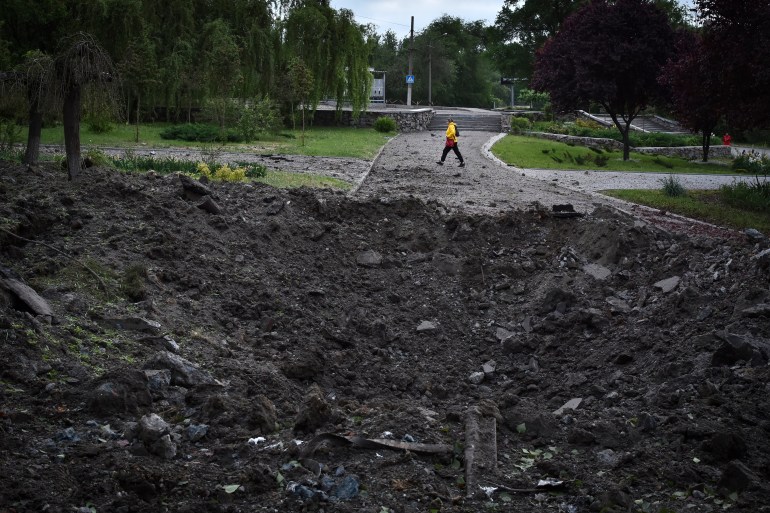
As the war enters its 805th day, these are the main developments. Here is the situation on Thursday, May 9, 2024. Fighting Three people were injured after Russia launched more than 70 missiles and drones at power stations and energy infrastructure in Kyiv and six other cities. The attack, one of the biggest in weeks, also led to power cuts in nine Ukrainian regions. At least four children and three adults were injured after a Russian air attack hit a school stadium in Ukraine’s northeastern Kharkiv. Regional Governor Oleh Syniehubov said two of the injured – two teenagers – were in serious condition in hospital. Russia’s Defence Ministry said its forces made additional advances along the 1,000-kilometre (600-mile) front, taking control of the village of Kyslivka in Ukraine’s Kharkiv region and the village of Novokalynove in the Donetsk region. Ukraine’s parliament passed a law that would allow some convicts to enlist in the army in return for a chance at parole, as part of an effort to get more men to the front and relieve exhausted troops. Indian police said they had arrested four people on suspicion of luring young men to Russia with the promise of lucrative jobs or university places only to force them to fight in Ukraine. About 35 Indian men were duped in this manner, India’s Central Bureau of Investigation (CBI) said in March. Politics and diplomacy European Union nations reached a tentative breakthrough deal to provide Ukraine with billions in additional funds for arms and ammunition using the windfall profits from frozen Russian central bank assets held in the 27-member bloc. Ministers still need to approve the legal text that will see 90 percent of the proceeds channelled into an EU-run military aid fund for Ukraine, with the remainder supporting Kyiv in other ways, four EU diplomatic sources told the Reuters news agency. Russia unleashed a massive attack on Ukraine on Wednesday, which left many areas without power [Andriy Andriyenko/AP Photo] British Home Minister James Cleverly said the United Kingdom would expel Russia’s defence attache, remove diplomatic status from some properties and impose new restrictions on Russian diplomatic visas and visits in response to what he described as Moscow’s “malign activity”. Cleverly said the attache was an “undeclared military intelligence officer”. Britain has introduced several waves of sanctions on Russian companies and individuals since Moscow began its full-scale invasion of Ukraine in February 2022. Russian Foreign Ministry spokeswoman Maria Zakharova said Russia would make an “appropriate response” to Britain’s move. The Kremlin said it had no comment on Ukrainian claims that it had uncovered a plot by Russian agents to assassinate President Volodymyr Zelenskyy. Polish border guards said they had detained a Russian defector, who illegally crossed into Poland from Belarus, a staunch ally of Moscow. Border guard spokeswoman Katarzyna Zdanowicz told the AFP news agency that the man “had his military papers on him”. Weapons Herman Smetanin, head of Ukraine’s state arms manufacturer, told the Defence Ministry’s media outlet, ArmyInform, that Ukraine was now producing the same number of long-range attack drones as Russia. He provided no figures. Hungary reiterated that it would not participate in a NATO plan to provide long-term military assistance to Ukraine through a fund worth 100 billion euros ($107bn). Foreign Minister Peter Szijjarto said the plan was a “crazy mission”. Adblock test (Why?)
Tunisia’s Olympic swimming champ Ahmed Hafnaoui likely to miss Paris 2024

The 400-metre freestyle gold medallist from 2021 has been suffering from an injury that could keep him out of the Games. Tunisia’s Olympic 400-metre freestyle champion Ahmed Hafnaoui is unlikely to defend his title at this year’s Games in Paris due to an injury. The 21-year-old’s participation at the Paris Olympics was cast in doubt after Mehrez Bousyan, head of the Tunisian Olympic Committee, told a locally televised sports programme that Hafnaoui will miss “a significant portion” of the Games, according to Africa Aquatics. However, the swimmer has refused to rule himself out completely. “I’m currently suffering from an injury, and I don’t know whether or not I will participate in the Olympics,” the 21-year-old Tunisian swimmer told AFP news agency on Wednesday. He did not give details of the injury. Boussayene said “nothing is confirmed”, adding the swimmer had a “developing injury” in his comments to AFP. “More than just medals, we seek above all the wellbeing of this young man who brought us so much joy,” said Boussayene. “He will have other world competitions.” Hafnaoui’s win at the Tokyo Olympics sent a wave of wild celebrations through the North African nation. The then 18-year-old finished in three minutes, 43.26 seconds despite being the slowest qualifier to start the final. Hafnaoui went on to win the 800-metre and 1,500-metre freestyle titles at last year’s World Championships in Fukuoka, Japan. If he swims in Paris this year, he has a chance to match Tunisia’s top Olympic swimmer Oussama Mellouli, who won two golds and a bronze in the 2008 and 2012 Games. The country’s top Olympic medallist is long-distance runner Mohammed Gammoudi, winner of four medals, including one gold in the 5,000-metre in 1968, between 1964 and 1972. Adblock test (Why?)
Peace starts with Palestine’s UN membership
OPINIONOPINION, On May 10, all member states should vote to admit the State of Palestine as the 194th member of the United Nations. On May 10, the United Nations’ 193 member states can end the Gaza war and the longstanding suffering of the Palestinian people by voting to admit Palestine as the 194th UN member state. The Arab world has repeatedly declared its readiness to establish relations with Israel within the context of the two-state solution. This goes back to the 2002 Arab Peace Initiative and has been reiterated in the 2023 Arab-Islamic Extraordinary Summit. On May 16, leaders of the region will gather for the 33rd Arab League Summit, where yet another plea for peace and stability will likely be made. The way to end the war and normalise relations in the Middle East is clear. Admit the State of Palestine to the UN, on the 1967 borders, with its capital in East Jerusalem and with control over the Muslim holy sites. Then, diplomatic relations will be established and mutual security of both Israel and Palestine will be assured. The vast majority of the world certainly agrees on the two-state solution as it is enshrined in international law and UN resolutions. Today, 142 of the 193 countries officially recognise the State of Palestine, but the United States has so far blocked Palestine’s membership to the UN, where statehood really counts. Israel continues to harbour its dream – and the world’s nightmare – of continued apartheid rule. Barbados, Jamaica, and Trinidad and Tobago have very recently established diplomatic relations with the State of Palestine, and the General Assembly is poised to vote an overwhelming endorsement of Palestine’s membership. The unity of the global community for Palestine’s political self-determination is also reflected on college campuses across the US, United Kingdom and the rest of the world. Students know the torment of apartheid and plausible genocide when they see it; and are actively demanding an end to the torment. According to Article 4 of the UN Charter, admission is effected by a decision of the General Assembly following a recommendation of the Security Council. On April 18, the Security Council’s vote on Palestinian membership was vetoed by the US, but with 12 out of the 15 council members voting in favour. The UK abstained, as if it’s not already made enough of a mess in the region. Because of the US veto, the General Assembly will take up the issue during an Emergency Special Session on May 10. This vote will show an overwhelming support of Palestine’s membership. It will then be taken up again by the Security Council. Our point is to put UN membership upfront. Peace will never be achieved at the end of another “peace process,” as with the failed Oslo process, nor by the whims of imperial powers who have perpetually devastated the region. Israel’s leaders today are dead set against the two-state solution and the US and UK have been dead set in defence of Israel’s rejection of it. The US and UK have repeatedly destroyed the two-state solution by always being for it, but never just now. They have favoured endless negotiations while Israel pursues its apartheid system, a war constituting a plausible case of genocide, and illegal settlements as “facts on the ground”. In welcoming Palestine as a UN member state, the UN would also take crucial steps to ensure the security of both Israel and Palestine. Peace would be enforced by international law, and the backing of the UN Security Council, the Arab States, and indeed the world community. This moment has been more than a century in coming. In 1917, Britain declared a province of the Ottoman Empire, which did not belong to it, as the Jewish homeland. The next 30 years were wracked by violence leading to the Nakba and then to repeated wars. After the 1967 war, when Israel conquered the remaining Palestinian lands, it administered an apartheid state. Israeli society became increasingly hardened to its rule, with extremist Israelis and Palestinians on each side of the bitter divide that only widens. The US and UK have been brazenly and cynically dishonest brokers. The politics in both countries has long been Zionist to the core, meaning that both countries almost always side with Israel regardless of justice and law. We have arrived at a truly historic moment to end decades of violence. No more peace processes to be undermined by political manipulations. Peace can come through the immediate implementation of the two-state solution, with the admission of Palestine to the UN as the starting point, not the end. Diplomatic recognition should build in and invite further crucial steps for mutual security. It is time, on May 10, for all UN member states to uphold international law and vote for justice and peace. The views expressed in this article are the author’s own and do not necessarily reflect Al Jazeera’s editorial stance. Adblock test (Why?)
Armed groups committing atrocities in Mali: HRW
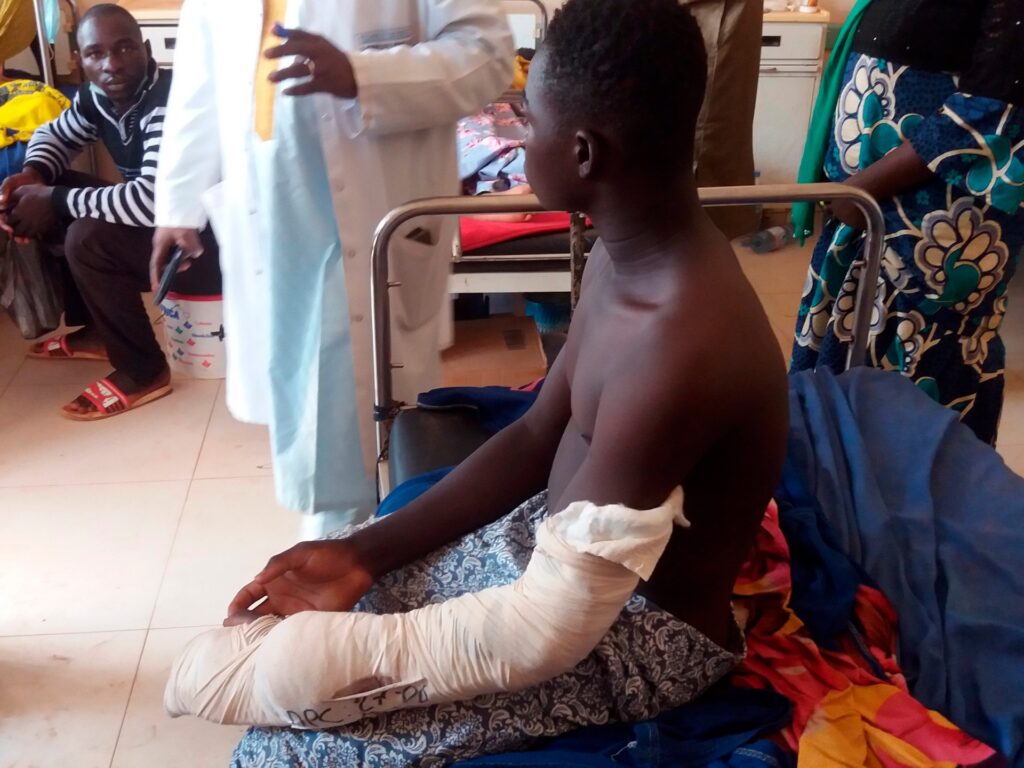
Mali is plagued by armed groups, making swaths of territory ungovernable. However, UN peacekeepers have been kicked out. Al-Qaeda-linked and warring ethnically-based armed groups are committing atrocities in Mali, Human Rights Watch (HRW) reports. The watchdog said in a report released on Wednesday that fighters from Jama’at Nusrat al-Islam wa al-Muslimeen (JNIM) and Dozo militia killed 45 people in separate attacks on villages in Central Mali in January. Mali has been plagued by such groups since 2015, but late last year, its transitional government ejected a UN peacekeeping mission. On January 6, a Dozo armed group consisting mainly of ethnic Bambara killed 13 people and abducted 24 civilians in the village of Kalala, which has a predominantly Fulani population. JNIM fighters, largely Fulani, attacked the villages of Ogota and Ouembe on January 27, killing at least 32 people, including three children, the report said. The attackers set fire to more than 350 homes and forced 2,000 people to flee. The attacks, which occurred amid recurrent tit-for-tat killings and communal violence in central Mali, violate international humanitarian law and are apparent war crimes, HRW stressed. “Islamist armed groups and ethnic militias are brutally attacking civilians without fear of prosecution,” said Ilaria Allegrozzi, senior Sahel researcher at HRW. “The authorities need to act to end the deadly cycles of violence and revenge killings and better protect threatened civilians.” Groups aligned with al-Qaeda and ISIL (ISIS) have operated in Mali since 2015, seizing territory and making swaths of the country ungovernable. A military government seized power in 2021, promising to tackle insecurity, but attacks remain rife. The military itself faces several accusations of rights abuses. Mali along with its neighbours Burkina Faso and Niger, where armed groups operate across porous borders, are all led by military governments that seized power in recent years. All three have kicked out French forces that once helped push back the armed groups and have instead formed a security alliance, turning to Russia’s mercenary units for help. In December, the United Nations Multidimensional Integrated Stabilization Mission pulled out of Mali at the request of the military government. HRW said authorities are failing to adequately investigate incidents implicating members of armed groups or ethnic militias. Adblock test (Why?)
Sikh leaders welcome arrests in Canada activist killing, but questions loom
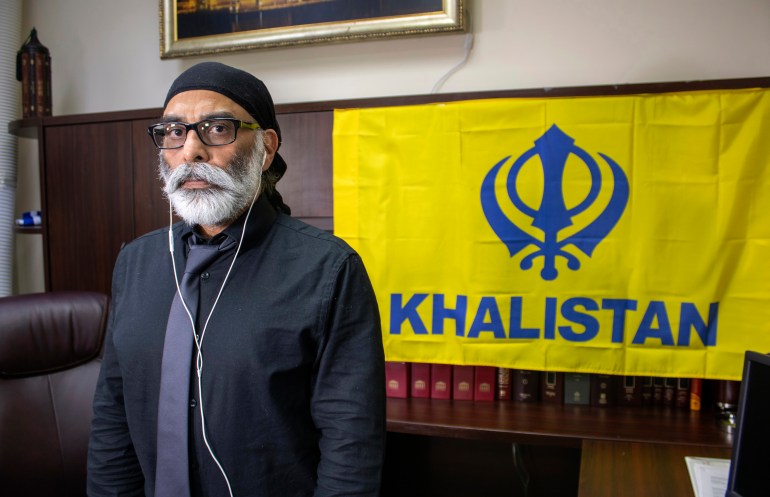
Montreal, Canada – Sikh leaders in North America have welcomed recent arrests in the killing of Canadian Sikh activist Hardeep Singh Nijjar, but allegations that the Indian government was involved continue to fuel questions and unease. Canadian police announced late last week that three Indian nationals were arrested in Canada for their involvement in the June killing of Nijjar, a prominent Sikh community leader in the westernmost province of British Columbia. Police added that their investigation into Nijjar’s shooting death would continue, including whether “there are any ties to the government of India”. Moninder Singh, a spokesman for the BC Gurdwaras Council, a coalition of Sikh temples in the province, told Al Jazeera there was “some relief” that arrests were made in the case. But Singh, who knew Nijjar personally, said the question of Indian state involvement is “looming” over the Sikh community, which numbers about 770,000 people across Canada — the largest Sikh diaspora outside India. “The foreign interference is real. The assassination plot is real,” said Singh, adding that it is imperative to get to the bottom of what India’s role has been. “All of that has to be exposed,” he continued. “There [are] numerous reasons why it’s very, very important for public safety in Canada, along with deterring India from carrying out this kind of operation ever again.” Canada-India tensions Tensions between Canada and India skyrocketed in September after Canadian Prime Minister Justin Trudeau announced that authorities were investigating “credible allegations of a potential link” between Indian government agents and Nijjar’s killing. Nijjar was fatally shot on June 18, 2023, outside the Guru Nanak Sikh Gurdwara, a temple in Surrey, British Columbia, where he served as president. India vehemently denied the allegations that it was involved, calling them “absurd”. It also accused Nijjar of being involved in “terrorism” — a claim rejected by his supporters. Nijjar had been a leading advocate in what is known as the Khalistan movement, a Sikh campaign for a sovereign state in India’s Punjab region. While largely dormant inside India itself, Sikh separatism is largely viewed as a threat by the Indian government, which has urged Western nations to crack down on Khalistan movement leaders in the diaspora. Canada has provided shelter to “Khalistani terrorists and extremists” who “continue to threaten India’s sovereignty and territorial integrity”, India’s Ministry of External Affairs said as it rejected Trudeau’s allegations in September. But Sikh leaders in Canada said they have faced threats for years, and they accused the Indian government of trying to silence them. Nijjar’s killing amplified these longstanding tensions, and new reports have emerged of Indian officials’ involvement in other alleged plots to harm prominent Sikh leaders in Canada and the United States. Reports of threats For instance, in late November, the US Department of Justice announced charges against a 52-year-old Indian national, Nikhil Gupta, over a foiled attempt to assassinate Sikh American activist Gurpatwant Singh Pannun. The plot to kill Pannun, another Sikh separatist leader, was organised in coordination with an Indian government employee and others, according to the Justice Department. Last week, The Washington Post reported that US intelligence agencies determined that the operation to target Pannun was approved by the then-head of India’s foreign intelligence agency, known as the Research and Analysis Wing or RAW. The Indian government rejected those allegations as “unwarranted” and “unsubstantiated”, according to media reports. But rights groups have said India “needs to do a lot more than issue denials” in such cases. “India’s alleged involvement in assassination plots in the US and Canada suggests a new and notorious leap in extrajudicial killings,” Elaine Pearson, Asia director at Human Rights Watch, said in December. Sikh separatist leader Gurpatwant Singh Pannun is pictured in his office in New York in November 2023 [Ted Shaffrey/AP Photo] Pritpal Singh, an activist and founder of the American Sikh Caucus Committee, was among the prominent Sikh leaders who were informed of threats against them over the past year. Agents with the US Federal Bureau of Investigation (FBI) visited Pritpal, who is based in the state of California, in June to warn him. In a statement to Al Jazeera this week, Pritpal said he commended “the unwavering commitment of Canadian and American law enforcement agencies” in their investigations into Nijjar’s killing and the surveillance of Sikhs. “The alleged involvement of the Indian government in these heinous acts is a blatant violation of international norms and human rights. It is wholly unacceptable for any government to engage in extrajudicial killings and suppress dissenting voices abroad,” he said. Pritpal also demanded accountability for threats against Sikh activists. “We must insist on US justice against those involved in India’s alleged murder-for-hire scheme targeting Americans on US soil,” he said. “It is imperative that these cases are prosecuted on American soil by the United States Department of Justice to prevent these perpetrators from self-prosecuting.” India hits out at Canada Still, India has continued to deny any involvement in the alleged plots, while blasting Canada over its approach to Nijjar’s killing in particular. The Indian High Commission in Ottawa, the Canadian capital, did not respond to Al Jazeera’s requests for comment on the case. After news broke on Friday that Canadian authorities had made arrests, the Indian external affairs minister, Subrahmanyam Jaishankar, said the Canadian government had a “political compulsion” to blame India. Speaking to Indian news outlet The Economic Times this week, Jaishankar also accused Canada of “providing a haven to organised crime”. “We’ve been repeatedly telling the Canadians that, if you actually allow such forces to set up shop and create networks, this is going to harm their own society. But so far, I don’t think that advice has been well heeded,” the minister said. Canadian authorities have rejected the idea that they have allowed unlawful activity to proliferate. Experts also argue that many of the individuals India considers “terrorists” are not violating any Canadian laws. “Canada is a rule-of-law country with a strong and independent justice system as well as a fundamental commitment