

Russia-Ukraine war: List of key events, day 804
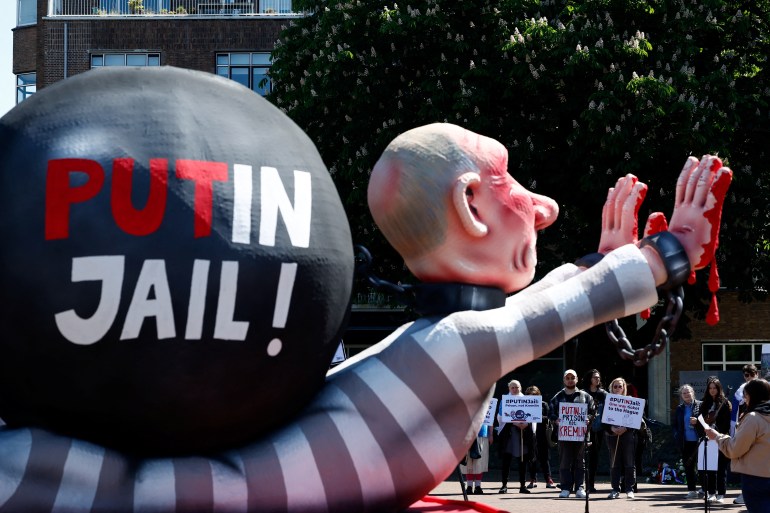
As the war enters its 804th day, these are the main developments. Here is the situation on Wednesday, May 8, 2024. Fighting One person was killed and four injured by Russian artillery fire in the eastern border region of Sumy, which has come under increasing aerial bombardment in recent weeks. Ukrainian police said Moscow’s forces had fired on the territory 224 times over the previous 24 hours. Five people were injured after Ukraine hit an oil storage depot in the Russian-occupied city of Luhansk triggering a large fire. Politics and diplomacy The Security Service of Ukraine (SBU) said it uncovered a Russian plot to assassinate Ukrainian President Volodymyr Zelenskyy and other senior officials. The SBU said Russia’s Federal Security Service (FSB) had set up a network of agents to carry out the plan and two colonels in the State Guard of Ukraine, which provides protection to top officials, had been arrested on suspicion of treason. Vladimir Putin was sworn in for a fifth term as Russian president in a Kremlin ceremony boycotted by the United States, the United Kingdom and several European Union countries. In a speech to mark the occasion, Putin said the country would emerge victorious and stronger from a “difficult” period. Several dozen protesters gathered outside The Hague’s Peace Palace to protest against Putin’s inauguration, calling for him to stand trial. The International Criminal Court issued arrest warrants for Putin and Russian Children’s Commissioner Maria Lvova-Belova on war crime charges related to the abduction of Ukrainian children in March 2023. Chinese President Xi Jinping left France after a two-day trip during which he offered no major concessions on foreign policy, even as President Emmanuel Macron urged him to use his influence on Russia to help end the war in Ukraine. Zelenskyy said the island state of Cape Verde had become the first African country to agree to attend next month’s “peace summit” in Switzerland. Bern has invited 160 delegations to the event which is scheduled for June 15-16. Russia banned the US-based non-profit Freedom House, labelling it an “undesirable” organisation in Russia. In its 2024 Freedom in the World report, Freedom House assessed Russia as “not free”, noting restrictions on political rights and civil liberties had tightened since Moscow launched its full-scale invasion of Ukraine. Protesters gathered in The Hague to call for Putin to be jailed [Piroschka van de Wouw/Reuters] Weapons Ukrainian state prosecutors told the Reuters news agency they had examined debris from 21 of about 50 North Korean ballistic missiles launched by Russia between late December and late February, as they work to assess the threat from Moscow’s cooperation with Pyongyang. The prosecutors’ office said evidence so far suggested a high failure rate. Speaking during a visit to the US, Romanian President Klaus Iohannis said he was open to discussions on sending a Patriot missile system to Ukraine. Romania signed a $4bn deal to procure Patriots in 2017, with the first shipment delivered in 2020. The Organisation for the Prohibition of Chemical Weapons (OPCW) said Russia and Ukraine each accused the other of using banned toxins on the battlefield in meetings in The Hague. The OPCW said the accusations were “insufficiently substantiated” but the situation remained “volatile and extremely concerning regarding the possible re-emergence of use of toxic chemicals as weapons”. Adblock test (Why?)
TikTok owner ByteDance files lawsuit against US law forcing app’s sale
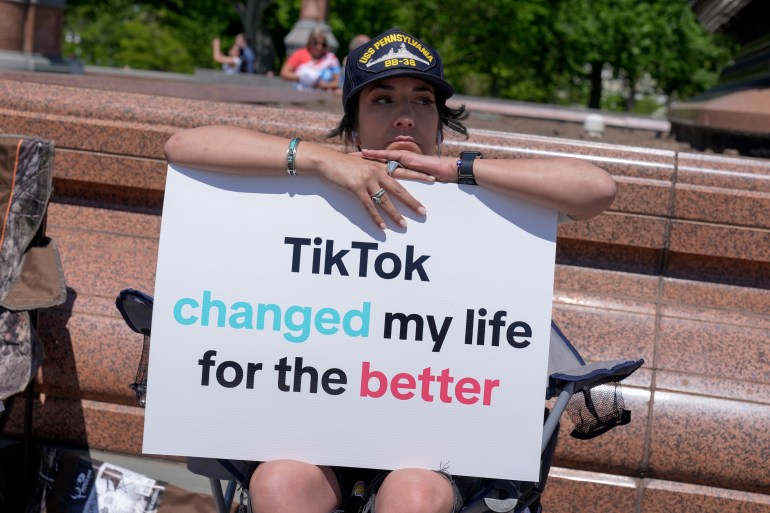
ByteDance, the owner of the social media platform TikTok, has filed a lawsuit against the United States government in an effort to block a law that would force it to divest from its US assets. On Tuesday, lawyers for ByteDance filed the complaint in the US Court of Appeals in Washington, DC, arguing the law was “obviously unconstitutional”. President Joe Biden signed the law less than two weeks ago, on April 24, as part of a package that included foreign aid to Ukraine and Israel, as well as humanitarian relief for Gaza. Under the law, ByteDance has nine months to sell off its US-based operations. Its deadline is January 19, with an additional three-month extension possible should a sale be in progress. But in its suit, ByteDance argues divestment will not be possible within the timeframe allotted — “not commercially, not technologically, not legally”. It also argues it is being unfairly targeted by a law that violates the First Amendment of the US Constitution, which protects free speech. “For the first time in history, Congress has enacted a law that subjects a single, named speech platform to a permanent, nationwide ban, and bars every American from participating in a unique online community with more than 1 billion people worldwide,” the lawsuit reads. A TikTok user protests outside the US Congress on April 23, as legislation was passed to force ByteDance to divest from its US operations [Mariam Zuhaib/AP] While ByteDance maintained it has no plans to sell TikTok, its popular video-sharing app, it said that doing so would not even be feasible under the law. Millions of lines of code would have to shift hands, the lawsuit explained, and any prospective owners would have to access ByteDance’s algorithms to keep it operational — something that would also be barred under the law. “There is no question: the Act will force a shutdown of TikTok by January 19, 2025, silencing the 170 million Americans who use the platform to communicate in ways that cannot be replicated elsewhere,” the lawsuit said. TikTok has been a target of bipartisan criticism in the US, with politicians concerned about its national security implications. ByteDance is a Chinese technology company, and its critics fear that the Chinese government could request the information it collects from users, raising privacy concerns. US Congress members like Representative Raja Krishnamoorthi said the April law is therefore necessary to protect US users. “This is the only way to address the national security threat posed by ByteDance’s ownership of apps like TikTok,” he said in a statement on Tuesday. “Instead of continuing its deceptive tactics, it’s time for ByteDance to start the divestment process.” ByteDance has long denied furnishing any information about US users to the Chinese government, and it has publicly pledged not to do so, brushing aside such concerns as “speculative”. The lawsuit also notes that the company spent $2bn to protect US user data and has made commitments under a 90-page draft “National Security Agreement” with the US government. TikTok has been in the US government’s crosshairs for nearly four years, as tensions continue between Washington and Beijing. In 2020, for instance, former President Donald Trump signed an executive order to ban the video platform, citing national security concerns. But federal judges blocked the ban, saying that officials demonstrated a “failure to consider an obvious and reasonable alternative before banning TikTok”. States have similarly sought to block the app, most notably Montana. In April 2023, Governor Greg Gianforte signed a first-of-its-kind bill, SB 419, that would fine TikTok for operating within state lines, as well as any app stores that carried it. But it was unclear how Montana planned to enforce the law, which was quickly challenged in court. Montana’s SB 419 was scheduled to take effect on January 1, but a federal judge ultimately blocked it, awarding another win to ByteDance. The state’s attorney general has promised an appeal. Many free-speech advocates predict a similar fate awaits April’s federal law forcing ByteDance to sever itself from its US operations. Jameel Jaffer, the executive director of the Knight First Amendment Institute at Columbia University, told the Associated Press that he anticipated ByteDance would prevail in Tuesday’s lawsuit. “The First Amendment means the government can’t restrict Americans’ access to ideas, information, or media from abroad without a very good reason for it — and no such reason exists here,” Jaffer said in a statement. For its part, China has taken similar actions against US-based companies like Meta, whose WhatsApp and Threads platforms were recently ordered to be removed from Chinese-based app stores over questions of national security. Adblock test (Why?)
Pro-Palestine protests: How some universities reached deals with students
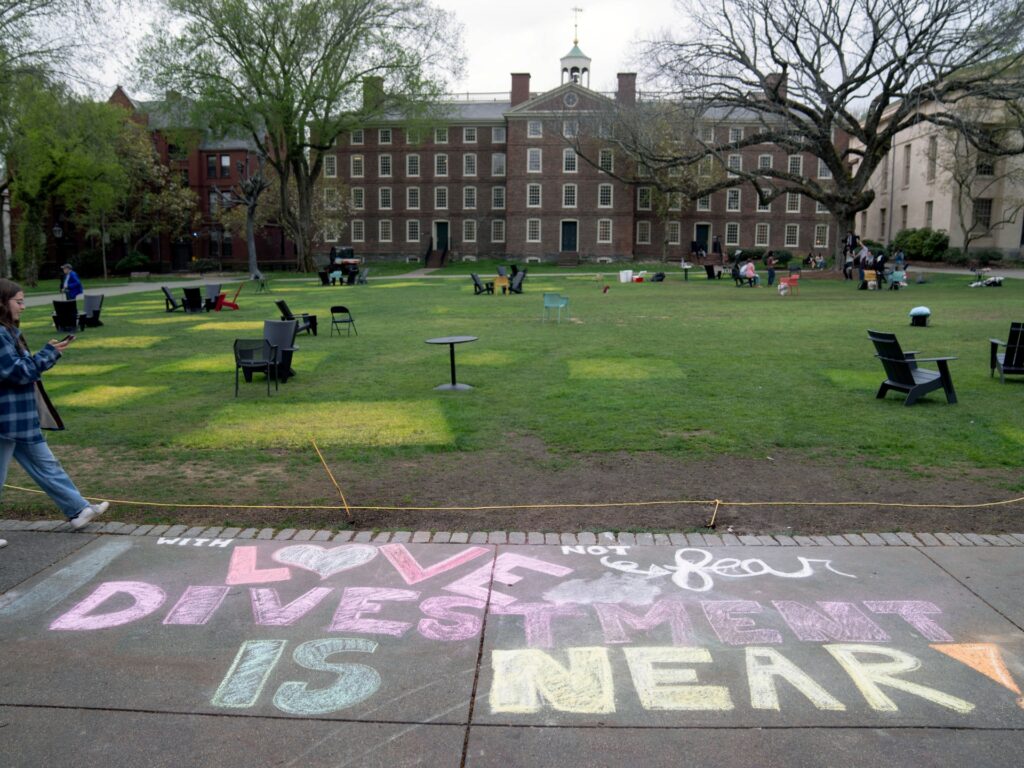
EXPLAINER Many campus protesters have taken down Gaza solidarity encampments after colleges agreed to consider divestment from Israel. College campuses around the world have exploded in recent weeks in protests by pro-Palestinian students and faculty members against Israel’s war on Gaza, in which more than 34,000 people have been killed. In university after university, protesters are demanding that their schools sever any direct or indirect financial and academic links with Israel, including by divesting from companies with ties to Israel. The protests have led to an array of different responses from universities. On Monday, Columbia University cancelled its main graduation or commencement ceremony. Many universities have called police and other law enforcement agencies on to campus. In the United States alone, more than 2,000 students have been arrested. Both protests and the campus crackdowns have also spread to other parts of the world – from Canada to Australia, and in multiple European nations. On Monday, students at Oxford and Cambridge in the United Kingdom also set up encampments. Yet, even as tension continues to soar at several campuses, students and administrators in some universities have managed to negotiate agreements that have acceded to some of the demands of the protesters. So how have these universities managed protests – and what deals have students and administrators struck in these cases? What are the compromises universities and protesters have struck? For the most part, the agreements that have helped calm tensions have revolved around a few common themes: Some universities have agreed to divest from companies with links to Israel, while others have said that they will consider the demands and take them up with bodies in charge of overseeing their investments. In some cases, universities have agreed to demands to disclose their investments, without committing to divest. Other universities, including some that have also conceded ground on divestment-related demands, have agreed to invest in setting up new centres or hiring new faculty in a bid to create greater awareness about Palestine. In exchange, students on these campuses have agreed to end their encampments. In some cases, universities have chosen to take no action to disperse encampments, allowing them to continue. These include Wesleyan University in Connecticut and the University of California, Berkeley. Which universities have agreed to specific student demands? Northwestern University, based in Illinois, US struck a deal with its protesting students on April 29 to take down most of the tents. It allowed them, however, to continue their protest – just not through an encampment – until June 1. The university promised to provide students with ways to engage with the Investment Committee of the Board of Trustees, including re-establishing an advisory committee on investment responsibility in the fall (autumn). The advisory committee could consider divestment proposals from university members. The institute agreed to disclose its investments through its endowment funds to “internal stakeholders”, which include current students, faculty, staff and trustees. Northwestern also agreed to cover education at the university for five Palestinian undergraduate students. Brown University in Rhode Island agreed on April 30 that the Corporation, Brown’s highest governing body, would vote on divestment from companies affiliated with Israel during a meeting in October. In return, students cleared the encampments that had been in place since April 24. Also on April 30, students and administrators at Evergreen State College in Washington agreed to a pact. Students removed a week-long encampment. The university set up task forces to assess – among other things – investment policies and the possibility of divestment, and look at whether the school’s policies regarding grants help governments engaged in illegal occupations abroad. On May 1, the University of Minnesota announced a compromise under which it promised to provide protesters with information on public companies it has invested in. However, the university made it clear that non-disclosure agreements barred it from disclosing information about private companies that the school has invested in. It added that the administration had recommended to the University’s police department that it avoid arresting student protesters. However, the university said it will not ban employers from career fairs because it does not “support restricting student career opportunities”. Students had been demanding that firms with ties to Israel not be invited. Student protesters from Rutgers University in New Jersey reached an agreement with the administration on May 2. The university agreed to create an Arab cultural centre and hire staff and instructors who have knowledge about Palestinian communities alongside naming Palestine, Palestinians and Gaza in future communications. It also agreed to work with students, faculty and staff to support 10 displaced Palestinian students to complete their education at Rutgers. No students, staff or faculty involved in the encampment will face retaliation, the university promised. The students’ request for divestment is also under review. Goldsmiths University in the UK reached an agreement on May 3 after students set up encampments in the university’s library. Goldsmiths agreed to a new ethical investment policy. The protesting student group will have an opportunity to present their “evidence of Goldsmiths’ complicity with Israel” to the institute’s finance committee. Goldsmiths also agreed to name one of the media department’s lecture theatres after Shireen Abu Akleh, an Al Jazeera reporter who was killed by Israeli forces while she was on assignment in the West Bank. The institute will also conduct a review of the International Holocaust Remembrance Alliance (IHRA) definition of anti-Semitism which critics have described as so broad as to effectively bar most criticism of Israel. The University of California, Riverside (UCR) issued a statement on May 3 saying an agreement has been reached to peacefully end the encampments. The university announced it would publish several details of its investments online. UCR’s School of Business has also discontinued multiple global programmes, including those in Israel. Students also want the university to ban the sale of Sabra Hummus, a packaged hummus brand owned by PepsiCo and the Israel-based Strauss Group, from campus. The university said it would review the demand. Thompson Rivers University (TRU) in Canada’s British Columbia
US rapper Macklemore releases track about college protests over Gaza
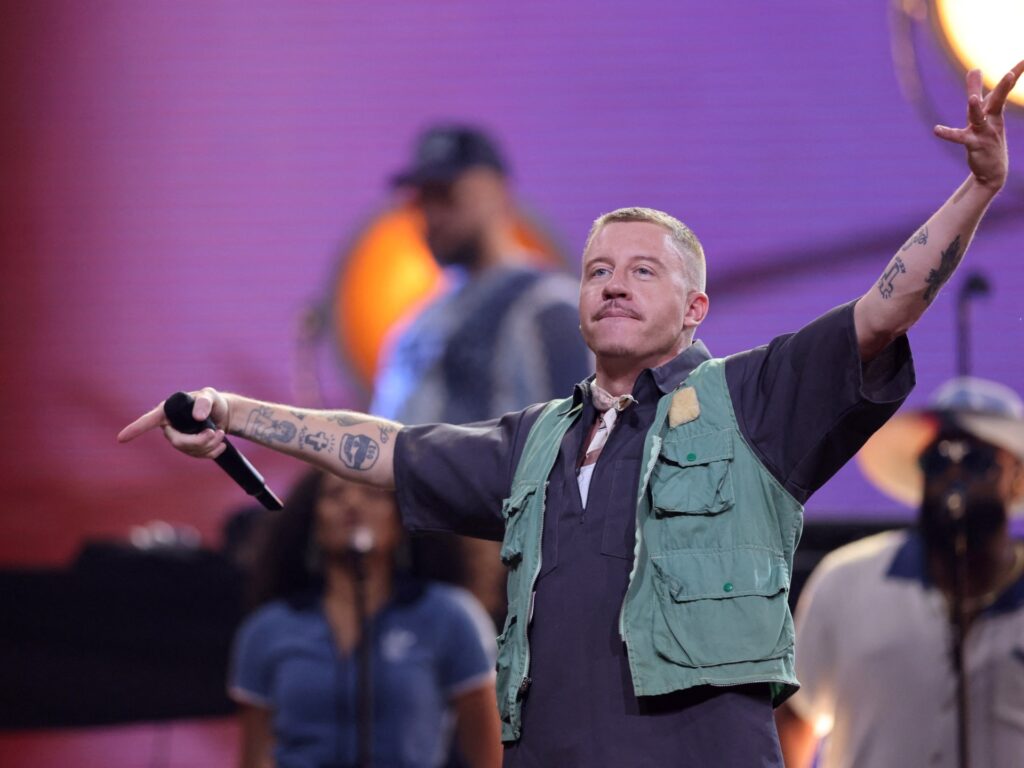
NewsFeed US rapper Macklemore’s new song about the anti-Gaza war student protests, ‘Hind’s Hall’, calls out the US for suppressing dissent and for funding Israel’s war on Gaza. Published On 7 May 20247 May 2024 Adblock test (Why?)
Beyond borders: Migrants online
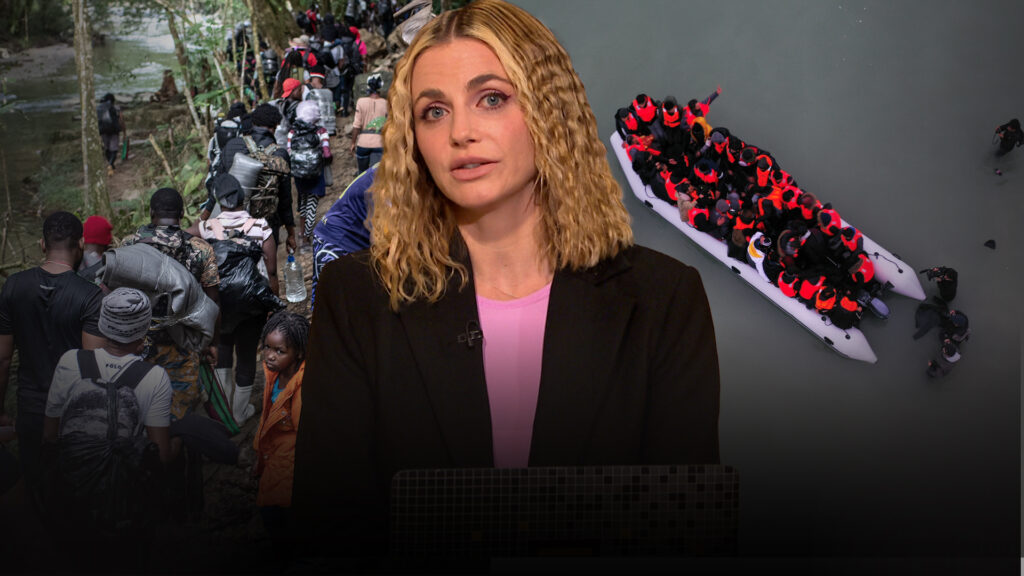
Migrants and refugees often rely on social media to navigate their way across borders, as do human trafficking networks. Social media platforms have become more than just avenues for sharing updates or staying in touch with loved ones for migrants and refugees; they’ve transformed into lifelines. Some use social media to help navigate their way across borders or document their experiences. However, criminal gangs also use these platforms to advertise dangerous crossings, and human trafficking networks abuse social media to lure victims. In this episode, we discover how social media are impacting migrant journeys. Presenter: Myriam Francois Guests: Carlos Eduardo Espina – immigrant rights activist and law studentZoe Gardner – independent migration policy researcher, advocate and writerFemi Nylander – poet, actor, filmmaker and author Adblock test (Why?)
Progressive US Senator Bernie Sanders to run for reelection
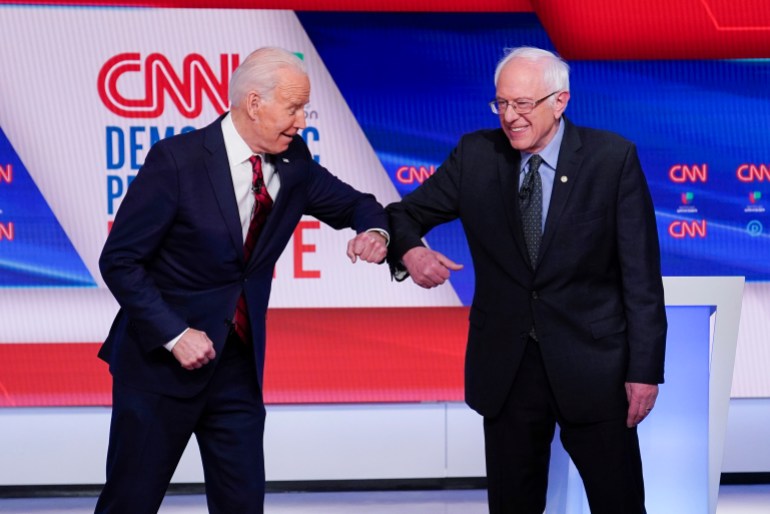
United States Senator Bernie Sanders, the 82-year-old leftist and two-time presidential candidate from Vermont, has announced that he will run for reelection amid rumours of possible retirement. Sanders, whose presidential campaigns in 2016 and 2020 galvanised young people and progressives, announced on Monday that he would run for a fourth six-year term in the US Senate. “Let me thank the people of Vermont, from the bottom of my heart, for giving me the opportunity to serve them in the United States Senate. It has been the honour of my life,” Sanders, an independent, said in a video recording. “Today, I am announcing my intention to seek another term.” The announcement comes during a tumultuous time for the Democratic Party, which is facing intense backlash from key constituencies, especially young voters, over President Joe Biden’s support for Israel’s war in Gaza. While initially rejecting calls for a ceasefire, Sanders has emerged as one of Congress’s most outspoken critics of Israel’s military campaign in Gaza. The war has killed nearly 35,000 Palestinians, most of them women and children, and reports have emerged of Israeli forces committing rights abuses, such as the torture and indiscriminate bombing of civilians. In January, Sanders spearheaded a bill that would have halted security aid to Israel until the US Department of State completed a report evaluating claims of human rights abuses in Gaza. The measure was ultimately defeated after Sanders forced it to a vote. Sanders, who identifies as Jewish himself, has also voiced support for the antiwar encampments that began on college campuses in April to show solidarity for the Palestinians under Israel’s siege. The wave of protests engulfed university life in the US and highlighted generational divides within the Democratic Party over support for Israel. But Sanders likened the campus activism to his own experiences protesting for civil rights in the 1960s. “In 1962, we organized sit-ins to end racist policies at the University of Chicago. In ’63, I was arrested protesting segregated schools. But we were right,” Sanders said in a recent social media post. “I’m proud to see students protesting the war in Gaza. Stay peaceful and focused. You’re on the right side of history.” He also slammed Israeli Prime Minister Benjamin Netanyahu for attacking the campus protests as “anti-Semitic”. “Anti-Semitism is a vile and disgusting form of bigotry that has done unspeakable harm to many millions of people. But, please, do not insult the intelligence of the American people by attempting to distract us from the immoral and illegal war policies of your extremist and racist government,” Sanders wrote in a statement on April 25. “It is not anti-Semitic to hold you accountable for your actions.” In 1962, we organized sit-ins to end racist policies at the University of Chicago. In ’63, I was arrested protesting segregated schools. But we were right. I’m proud to see students protesting the war in Gaza. Stay peaceful and focused. You’re on the right side of history. — Bernie Sanders (@BernieSanders) May 4, 2024 Sanders has gained a devoted following for championing progressive causes, including a universal healthcare system that guarantees access as a human right. He ran against Biden in the 2020 Democratic primaries, making strong showings in early-voting states. In the 2020 Iowa caucuses, for instance, he placed second. In the New Hampshire primary, he notched first. But Biden’s dominant performance in South Carolina augured a shift in the race, and Sanders ultimately suspended his campaign in April 2020. Nevertheless, he has since appeared with Biden to champion initiatives to lower healthcare costs. In April, for instance, he and Biden held a joint news conference to tout improvements in the costs of inhalers, used to treat asthma. “You and I have been fighting this for 25 years,” Biden told Sanders from the podium. “Finally we beat Big Pharma.” In March 2020, Joe Biden and Bernie Sanders participate in a Democratic presidential primary debate in Washington, DC [File: Evan Vucci/AP Photo] Still, Sanders’s decision to run for reelection in the US Senate underscores an ongoing debate over age in the Democratic Party. While he is all but guaranteed to win his race in the Democratic stronghold of Vermont, Sanders would be in his late 80s by the end of another term. Voters, for instance, have consistently expressed concern that President Biden, 81, is too old to run for a second term. A February poll from ABC News and Ipsos found 86 percent of all Americans believe Biden’s age is too advanced for the job. In his announcement video, Sanders said that he was motivated to run again partly due to the possibility that former President Donald Trump could return to the White House for a second term in office. Trump is the presumptive nominee for the Republican Party, set to face Biden in a rematch of the 2020 presidential race. “Will the United States continue to even function as a democracy?” Sanders asked. “Or will we move to an authoritarian form of government?” Adblock test (Why?)
Text of the Gaza ceasefire proposal approved by Hamas
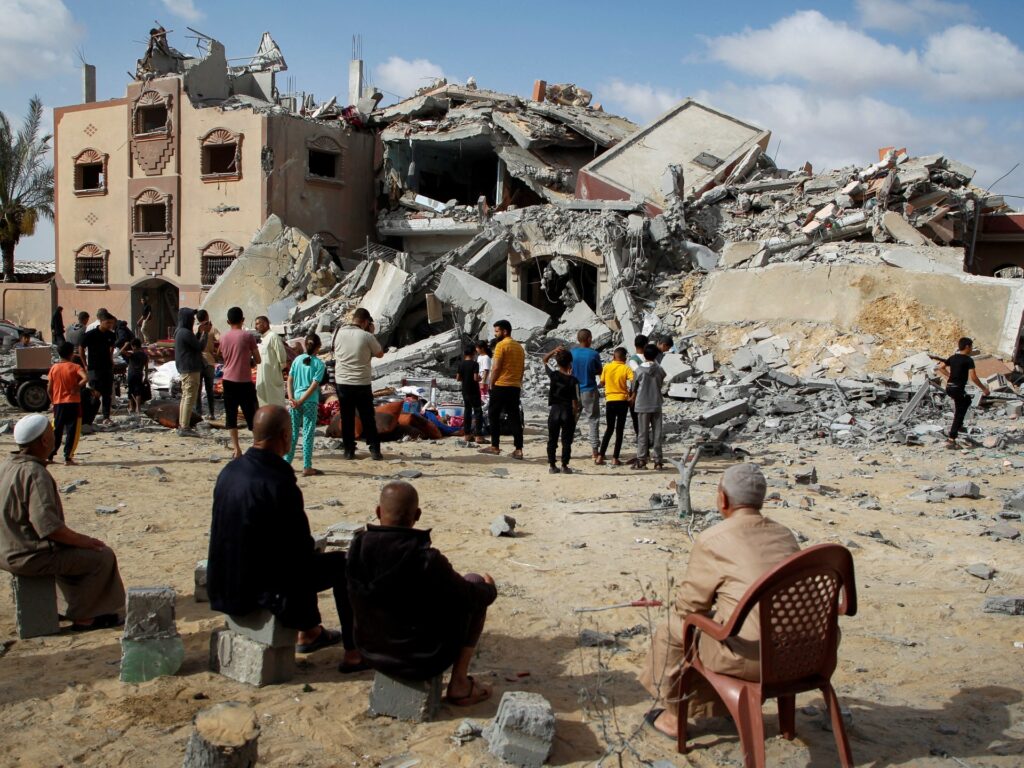
Al Jazeera has obtained a copy of the Gaza ceasefire proposal that Hamas said it accepted on Monday. The deal, which was put forward by Egypt and Qatar, would come in three stages that would see an initial halt in the fighting leading to lasting calm and the withdrawal of Israeli troops from the Palestinian territory. The proposed agreement would also ensure the release of Israeli captives in Gaza as well as an unspecified number of Palestinians held in Israeli jails. Israel has said that it does not agree to the proposal but that it will engage in further talks to secure an agreement – all while pushing on with its assault on Gaza. Meanwhile, the United States, which is also involved in the negotiations, said it is reviewing the Hamas response. Here’s the text of the proposed deal: The basic principles for an agreement between the Israeli side and the Palestinian side in Gaza on the exchange of captives and prisoners between them and the return of sustainable calm. The framework agreement aims at: The release of all Israeli captives in the Gaza Strip, civilians or military, alive or otherwise, from all periods, in exchange for a number of prisoners held by Israel as agreed upon, and a return to a sustainable calm that leads to a permanent ceasefire and a withdrawal of Israeli forces from the Gaza Strip, its reconstruction and the lifting of the siege. The framework agreement consists of three related and interconnected stages, which are as follows: The first stage (42 days) [Herein] a temporary cessation of military operations between the two parties, and the withdrawal of Israeli forces eastward and away from densely populated areas to a defined area along the border all along the Gaza Strip (including Wadi Gaza, known as the Netzarim Corridor, and Kuwait Roundabout, as below). All aviation (military and reconnaissance) in the Gaza Strip shall cease for 10 hours a day, and for 12 hours on the days when captives and prisoners are being exchanged. Internally displaced people in Gaza shall return to their areas of residence and Israel shall withdraw from Wadi Gaza, the Netzarim corridor, and the Kuwait Roundabout: On the third day (after the release of three captives), Israeli forces are to withdraw completely from al-Rashid Street in the east to Salah al-Din Street, and dismantle military sites and installations in this area. Displaced persons (unarmed) shall return to their areas of residence and all residents of Gaza shall be allowed freedom of movement in all parts of the Strip. Humanitarian aid shall be allowed in via al-Rashid Street from the first day without any obstacles. On the 22nd day (after the release of half the living civilian captives in Gaza, including female soldiers), Israeli forces are to withdraw from the centre of the Gaza Strip (especially the Netzarim/Martyrs Corridor and the Kuwait Roundabout axis), from the east of Salah al-Din Street to a zone along the border, and all military sites and installations are to be completely dismantled. Displaced people shall be allowed to return to their places of residence in the north of Gaza, and all residents to have freedom of movement in all parts of the Gaza Strip. Humanitarian aid, relief materials and fuel (600 trucks a day, including 50 fuel trucks, and 300 trucks for the north) shall be allowed into Gaza in an intensive manner and in sufficient quantities from the first day. This is to include the fuel needed to operate the power station, restart trade, rehabilitate and operate hospitals, health centres and bakeries in all parts of the Gaza Strip, and operate equipment needed to remove rubble. This shall continue throughout all stages. Exchange of captives and prisoners between the two sides: During the first phase, Hamas shall release 33 Israeli captives (alive or dead), including women (civilians and soldiers), children (under the age of 19 who are not soldiers), those over the age of 50, and the sick, in exchange for a number of prisoners in Israeli prisons and detention centres, according to the following [criteria]: Hamas shall release all living Israeli captives, including civilian women and children (under the age of 19 who are not soldiers). In return, Israel shall release 30 children and women for every Israeli detainee released, based on lists provided by Hamas, in order of detention. Hamas shall release all living Israeli captives (over the age of 50), the sick, and wounded civilians. In return, Israel shall release 30 elderly (over 50) and sick prisoners for every Israeli captive, based on lists provided by Hamas, in order of detention. Hamas shall release all living Israeli female soldiers. In return, Israel shall release 50 prisoners (30 serving life sentences, 20 sentenced) for every Israeli female soldier, based on lists provided by Hamas. Scheduling the exchange of captives and prisoners between the parties in the first stage: Hamas shall release three Israeli detainees on the third day of the agreement, after which Hamas shall release three other detainees every seven days, starting with women as much as possible (civilians and female soldiers). In the sixth week, Hamas shall release all remaining civilian detainees included in this phase. In return, Israel shall release the agreed-upon number of Palestinian prisoners, according to lists Hamas will provide. Hamas will provide information about the Israeli detainees who will be released at this stage by the seventh day (if possible). On the 22nd day, the Israeli side shall release all prisoners from the Shalit deal who have been re-arrested. If there are fewer than 33 living Israeli detainees to be released, a number of bodies from the same categories shall be released to complete this stage. In return, Israel will release all women and children who were arrested from the Gaza Strip after October 7, 2023 – provided this is done in the fifth week of this stage. The exchange process is linked to the extent of commitment to the agreement, including the cessation of military operations, the withdrawal
Slum to stardom: Indonesian film director Joko Anwar is riding high

Medan, Indonesia – Indonesian film director Joko Anwar is a busy man. He is on location in the city of Bandung, shooting “a new project”, the details of which he refuses to divulge, while also wrapping up post-production on another film to be released “soon”. At the same time, he is doing press for his latest smash-hit horror flick Siksa Kubur (Grave Torture), which was released in Indonesia on April 11 and has already sold almost 4 million tickets – putting it on track to join the top 10 highest grossing Indonesian films of all time. “Can you give me 10 minutes,” he apologises about 20 minutes into the phone interview, having said that he was on set but not that he was actually between takes. “I just need to shoot this scene.” It is perhaps no surprise that Anwar, one of Indonesia’s most celebrated film directors, is good at multitasking – particularly if the rave reviews of Siksa Kubur, which he wrote, directed and marketed, are anything to go by. The film tells the story of a young girl Sita (played by Widuri Puteri) and her brother Adil (Muzakki Ramdhan). It begins in 1997 when the siblings witness their parents, who own a bakery, die in a suicide bombing. Joko Anwar with the cast of A Copy of my Mind at the Venice International Film Festival in 2015 [Andrea Merola/EPA] The bomber, who steps into the bakery moments before detonating the bomb, plans to die as a martyr – believing he will go straight to heaven and avoid being tortured in his grave. “The concept of grave torture does not exist in other religions – it is uniquely Muslim,” Anwar explained. “Muslims believe that, when you die, you will be questioned by two angels about your life. If you don’t do well, you will be tortured in your grave.” After watching her parents die at the hands of a man who believes he can evade sin even as he murders innocent bystanders, Sita becomes obsessed with proving that grave torture does not exist and that religion is primarily a form of fear-mongering. It is a sensitive topic in Indonesia, where almost 90 percent of the country’s 270 million people are Muslim, but Anwar, himself a practising Muslim, says that he did not want the film to be “judgemental”. “We tried to treat the topic with the greatest respect and not disparage anyone. We were just throwing out questions and hoping that there would be a discussion. We wanted the film to be an experience that led to reflection,” he said. The idea for Siksa Kubur was percolating in Anwar’s mind for “a long time” before it came to fruition. “I wanted to examine the relationship between religion and people. Since I was a child, I have had questions about belief and religion, which I tried to explain to the audience through these characters.” One of these characters is the head of the Islamic boarding school that the orphaned Sita and Adil attend, and who abuses the young boys in his care. Anwar wrote the screenplay following a series of high-profile cases of abuse at religious institutions across Indonesia, including Muslim and Christian schools. “Teachers at religious schools use religion as their identity, so I wanted to ask the question: Why are they doing that then?” he said. “The theme of abuse at religious institutions was based on a very relevant issue in Indonesia.” ‘Gotham City’ Like Sita and Adil, Anwar’s childhood was difficult. He was born in 1976 in the city of Medan, the provincial capital of North Sumatra. His father worked as a pedicab driver, a backbreaking job riding a bicycle with a passenger cab around the densely populated city, while his mother sold fabric in a local market. Anwar grew up in what he describes as “a slum named Amplas”. Located in the heart of Medan, Amplas is the city’s main transit terminal, clogged with long-distance buses ferrying passengers across Sumatra and beyond. Christine Hakim got her part in Siksa Kubur after a chance meeting with Anwar in a hotel lobby [Courtesy of Joko Anwar] Like many transit hubs, Amplas has long had a reputation for a certain amount of vice, filled with pickpockets and ticket touts, grifters and traffickers – serviced by open-air shacks that offer a cheap local moonshine made from the fermented sap of toddy palms. Across the rest of Indonesia, Medan also has a nickname: Gotham City, after the crime-ridden metropolis in the Batman comics. Anwar, a comic book fan, laughs when reminded of the moniker and agrees that Medan is a tough place to live. Amplas, in particular, he says, was “not conducive to a child”. By the age of 14, the majority of Anwar’s peers were either “in prison, married because they got someone pregnant, or consumed by drugs and crime. I escaped by watching films”. From the age of six, Anwar would make an arduous 45-minute journey on foot to a rundown “bioskop rakyat” (community cinema), which sold cheap tickets for local Indonesian films and kung-fu movies from Hong Kong. Sometimes, he had the few rupiahs he needed for a ticket and could go inside, but at other times, he did not have enough or the sellers refused entry to a child on their own. On those occasions, Anwar would stand on his tiptoes and peek through the ventilation shaft of the cinema, which did not have air conditioning and was cooled by fans. “That way, I could see about three-quarters of the screen, and I discovered that there were different worlds other than my own,” he recalled. His dream of attending film school, however, proved elusive when his parents could not afford the fees, and instead, Anwar went to the Institute of Technology in Bandung where he studied aeronautical engineering before becoming a journalist and film critic for the Jakarta Post. Once there, he interviewed filmmaker Nia Dinata, who helped him get hired as an assistant director for
‘Yemen at a crossroads’: Nearly 200 aid groups issue urgent funding appeal
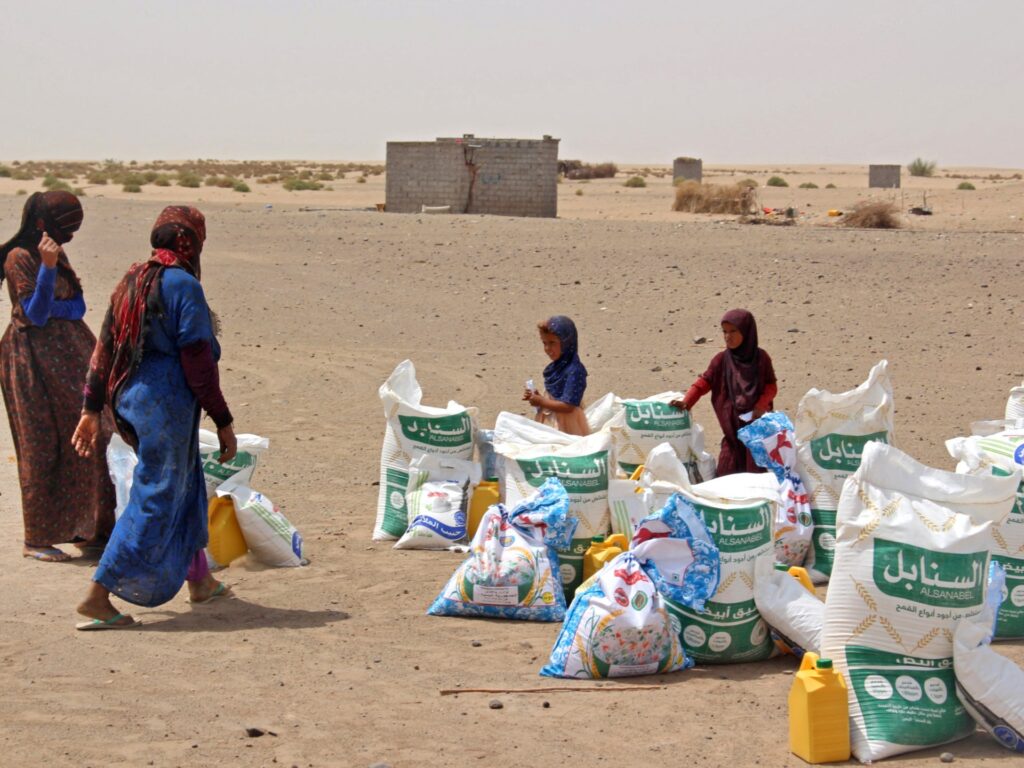
Only a fraction of funds needed to provide aid to millions in the war-torn country is secured, the groups say. Dozens of aid groups have called for more donor funding to meet the urgent humanitarian needs of Yemen, warning that inaction would lead to “catastrophic consequences” for people in the war-ravaged country. In a joint statement released on Monday, 188 humanitarian organisations including United Nations agencies said they had secured only $435m of the $2.7bn required to provide crucial assistance, warning of threats such as food shortages and diseases. “Underfunding poses a challenge to the continuity of humanitarian programming, causing delays, reductions and suspensions of lifesaving assistance programmes,” the statement said, warning that 18.2 million people – more than half the population – needed help after more than nine years of war. Dire needs despite relative calm Yemen has been gripped by conflict since late 2014 when the country’s Houthi rebels seized large swaths of the country, including the capital, Sanaa. It escalated in March 2015 when Saudi Arabia and the United Arab Emirates assembled a United States-backed military coalition in an attempt to restore the internationally recognised government of President Abd-Rabbu Mansour Hadi. A UN-brokered truce in 2022 has seen reduced hostilities, but humanitarian needs remain dire. Meanwhile, recent Houthi attacks on ships transiting through the Red Sea in protest against Israel’s war on Gaza and US retaliatory strikes threaten to shatter the relative calm. A shrinking economy, deteriorating public services, low-intensity violence and climate change vulnerabilities continue to drive humanitarian crises in the country, the aid groups’ statement said, adding that nursing women, older people and children are particularly vulnerable to rising levels of food shortages. The spread of cholera in the current rainy season, as well as unexploded munitions that have caused deaths and injuries, are also serious concerns, the groups said, noting that Yemen is a country “at a crossroads”. “We cannot ignore the significant humanitarian needs that remain and that cannot be addressed without adequate funding to respond,” the statement said. With a population of 33 million, Yemen is one of the world’s poorest countries and among the most vulnerable to climate change. Hundreds of thousands have died in the war or from indirect causes such as a lack of food, according to the UN. In March, NGOs warned that two in five Yemeni children are not attending school, while more than 17 million people – half of them children – require health assistance. Monday’s appeal to boost the country’s 2024 Humanitarian Response Plan came a day before a meeting of high-ranking European Union officials in Brussels to discuss aid for the country. Adblock test (Why?)
Israel orders Rafah evacuation after night of intense bombardment

NewsFeed Palestinian families have begun leaving eastern Rafah after the Israeli military ordered its evacuation, saying it will use ‘extreme force’ there. World leaders have repeatedly warned against a military offensive where more than 1.5 million displaced people are sheltering. Published On 6 May 20246 May 2024 Adblock test (Why?)