

Tunis police raid sees refugees abandoned near the border with Algeria
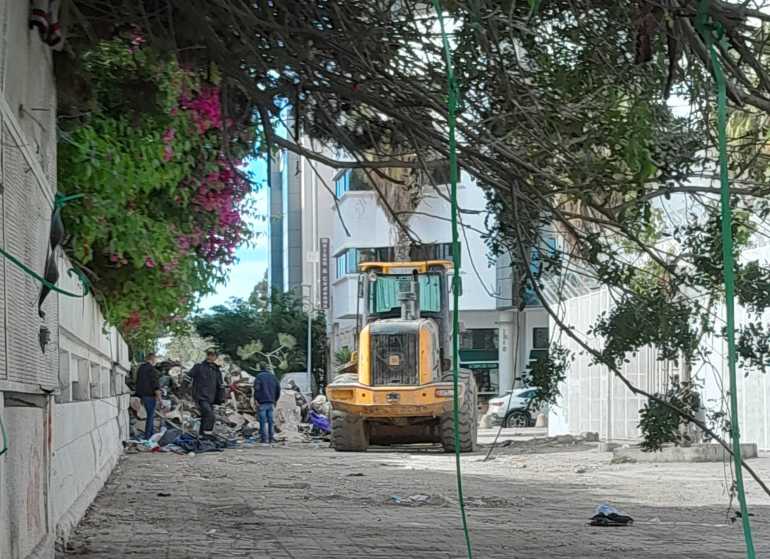
Tunis, Tunisia – Teams of refuse workers are busy in the deserted alleyway outside the International Organization for Migration (IOM) offices in Tunis. A nearby park stands empty. In both, large piles of refuse are the only evidence of the hundreds of sub-Saharan African refugees and migrants who sheltered here until recently. In the early hours of Friday morning, police swept into both camps, plus a protest site outside the offices of the UNHCR a few miles distant, clearing them of the shelters erected there and bundling the men, women and children onto municipal buses to the Algerian border. The Refugees in Libya organisation claims they were taken off the buses near the border town of Jendouba – whose governorate borders Algeria – where they were left without food or water to fend for themselves. The raids in Tunis are the latest example of an increasingly hostile environment taking hold in Tunisia. One where irregular sub-Saharan African arrivals, their numbers swelling by the day, find themselves attacked by both security services and politicians, forced to shelter in open fields while increasingly vulnerable to kidnapping and ransom. Who they are There are currently tens of thousands of irregular sub-Saharan African arrivals sheltering in Tunisia, nearly all hoping to continue their months-long journeys on to Europe. 🚨Ongoing mass desert dumping by the Tunisian authorities. Yesterday at approximately 3 am, multiple police forces including special riot control and anti-terrorism units dismantled the protest camp outside the UNHCR office in the Lac zone of Tunis. Hundreds of refugees and… pic.twitter.com/5uaYxDmR75 — Refugees In Libya (@RefugeesinLibya) May 3, 2024 Total numbers are impossible to confirm. However, the IOM estimates that about 15,000 may be living in the fields near the coastal city of Sfax after police ejected them from the centre in September. Some have returned to the outskirts of the city, squatting in the working-class districts close to the rail tracks. More shelter in the fields near Zarzis, close to the Libyan border, clustering around the UNHCR office in hopes of securing refugee accreditation and a degree of protection in a country that offers none. Some 550 were estimated to have been living rough in Tunis at the time of Friday’s police raid. Outside the offices of the IOM, many families had sheltered in structures of timber and tarpaulin. Among them were a large number of children and newborn babies, including Freedom, a four-month-old boy born in Tunisia to a Nigerian mother, Gift. “I named him that because I need freedom,” she had told Al Jazeera, “I need to know freedom. There is no freedom for us,” she says. Gift had entered the country last summer through Libya, where a militia patrolling the desert had taken her prisoner, holding her for seven months before her family in Nigeria could raise her ransom. Gift and Freedom’s location is currently unknown. Cleanup crews clearing the alleyway by the IOM office in Tunis on May 3, 2024 [Al Jazeera] Unwanted Conditions in the fields near Sfax are dire, 37-year-old Richard from Ghana said. Violent police raids and surveillance have grown more frequent and disease has gradually taken hold in a community deprived of medical care. The fear of arrest and deportation to the desert borders with Libya and Algeria is ubiquitous. “Conditions there are bad. Very, very bad,” Richard said. He had returned from Sfax to the fragile security of the IOM camp in Tunis a week earlier. “I am sick, you can see. My body hurts,” he said. “I have to go to hospital but they give you no assistance. In Sfax, it is very difficult.” He gestured to his friend Solomon, 36, who was coughing: “My brother here is really sick. He’s been coughing for some time,” he said. “I started to cough three days ago. All my body hurts. Lots of people at the camp had the same symptoms,” Solomon said. On top of the spread of disease is the ongoing threat from the police. Camps around Sfax where the undocumented shelter offer no protection from police surveillance, which has taken to the skies recently. “I saw the drones,” Solomon says. “I was at Kilometre 31. They were going up and down,” he says, waving his hand above his head. Tear gas canisters from Al Amrah, near Sfax, Tunisia 23-25 April 2024 [Courtesy of Richard] Richard joins in, he had been at Kilometre 34, names given to the informal camps based on their distance from Sfax centre. He describes a raid last month where the refugees were able to film the police burning tents and firing tear gas. “The police came and burned the tents,” Richard explains, showing the video of the raid on his phone. “I don’t know why they did it,” he says. But this is just one of what have become commonplace raids for those living in the fields around Sfax, shut off from the world by a police force that seeks to block access from NGOs and prying journalists. Both Richard and Solomon subsequently told Al Jazeera that they were away from the Tunis camps at the time of the police raid. Kidnapped With much of the sub-Saharan African refugee community existing in an official vacuum, a trade in kidnapping has been growing since at least the end of last year. In Tunis, huddled on a broken sofa that, like the shelters surrounding it, was subsequently swept up in the raid, three Sierra Leoneans spoke of having been held and tortured on arriving in Sfax from Algeria. Tunisia Is Not Safe. Please We Want To Leave Before🇹🇳Election. Many Woman,Breastfeeding Mum And Kids Have To Sleep Out Until Their Parents,Guidance Able To Fix Their Plastic Houses. European Migration Policy Keep Enslaves,Kill,Rape,Exploitation In Our Own Continent.🇹🇳🇪🇺Are Killer https://t.co/S9ULWrwguu pic.twitter.com/mMZCL4Sfqp — Josephus Thomas (@JosephusT001) April 6, 2024 They were held prisoner by an unknown number of Francophones, their guess was Cameroonians, after being “sold” to them by the Tunisian smugglers they had already paid 600 euros ($644) to. “They beat us with
No arrests as Los Angeles police clear USC pro-Palestinian encampment
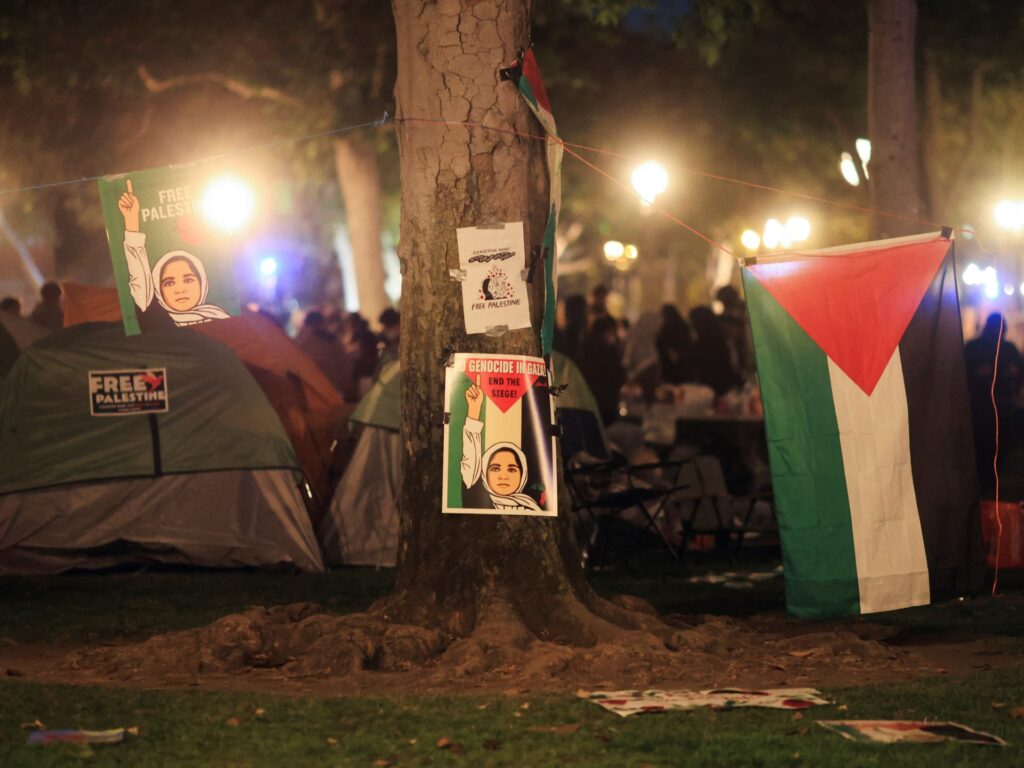
Students and other protesters have called for universities to divest their financial ties to Israel. Protests against Israel’s war on Gaza continue across university campuses in the United States as graduation season gets under way, with police in Los Angeles making no arrests as they cleared a pro-Palestinian encampment at the University of Southern California (USC). After USC requested assistance, police entered the encampment about 5am local time (12:00 GMT) on Sunday and worked with campus police to remove tents as students peacefully left the area, police said. The move comes a day after at least 25 pro-Palestinian protesters were arrested as police cleared an encampment at the University of Virginia (UVA). Tensions flared at UVA’s campus in Charlottesville, where protests had been largely peaceful until Saturday morning, when police officers in riot gear were seen in a video moving on an encampment on the campus’s lawn and cuffing some demonstrators with zip ties. Campus protests have emerged as a political flashpoint during a US election year as Democratic President Joe Biden seeks a second term in office. Police have arrested more than 2,000 people during protests at dozens of campuses around the country. Students and other protesters have called for universities to divest their financial ties to Israel and push for a ceasefire. Under mounting political pressure, Biden on Thursday broke his silence on the campus unrest, saying Americans have the right to demonstrate but not to unleash violence. Many colleges, including Columbia University in New York City, have called in police to quell protests. At the University of Texas in Austin on Sunday, drones deployed by police circled overhead as about 200 pro-Palestinian demonstrators rallied, with about 50 onlookers, local media reported. The speakers advised fellow demonstrators to remain peaceful and not engage the police. Adam, a Palestine Solidarity Committee organiser protesting at the University of Texas at Austin, told Al Jazeera that Palestinian students recognise that American students support Palestine. “We will no longer deal in the blood of Palestinians,” he said. Al Jazeera’s Phil Lavelle, reporting from the University of California Irvine, said the situation there was relatively calm and talks between the protesters and the university administration were ongoing. “We understand there is a protest in San Francisco. Here at UC Irvine, things are very calm,” he said. Separately, there have been at least four bomb threats at New York area synagogues over the weekend, police said, but none have proven credible. New York Governor Kathy Hochul said on X late Saturday: “We will not tolerate individuals sowing fear & antisemitism. Those responsible must be held accountable for their despicable actions.” At least 34,683 people have been killed, mostly women and children, and 78,018 wounded in Israel’s war on Gaza since October, according to Palestinian authorities. Israel launched the assault on Gaza after Hamas led an attack on southern Israel, killing at least 1,139 people, mostly civilians, according to an Al Jazeera tally based on Israeli statistics. Adblock test (Why?)
At least 75 killed, more than 100 others missing in Brazil floods
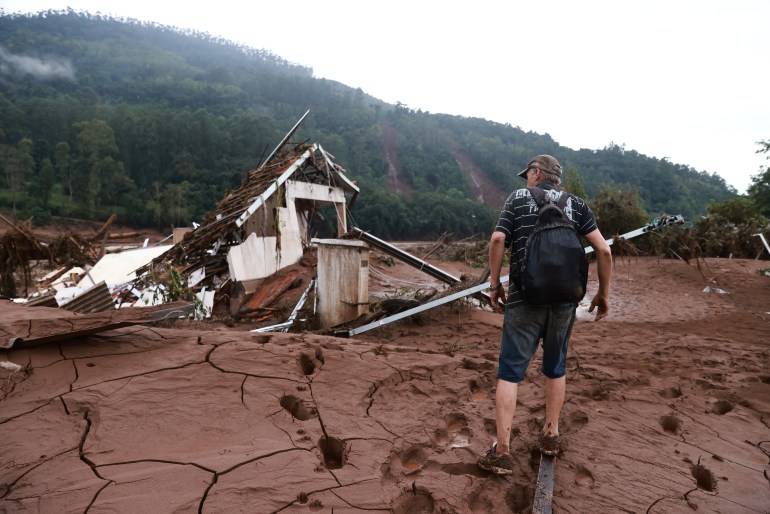
More than 88,000 people are displaced as floods hit Brazil’s southern Rio Grande do Sul state. Massive floods in Brazil’s southern Rio Grande do Sul state have killed at least 75 people over the last seven days, and another 103 were reported missing, local authorities have said. Damage from the rains also forced more than 88,000 people from their homes, state civil defence authorities said on Sunday. Approximately 16,000 took refuge in schools, gymnasiums and other temporary shelters. The floods left a wake of devastation, including landslides, washed-out roads and collapsed bridges across the state. Operators reported electricity and communications cuts. More than 800,000 people are without a water supply, according to the civil defence, which cited figures from water company Corsan. “I repeat and insist: the devastation to which we are being subjected is unprecedented,” state Governor Eduardo Leite said on Sunday morning. He had previously said that the state will need a “kind of ‘Marshall Plan’ to be rebuilt”. Brazilian President Luiz Inacio Lula da Silva visited Rio Grande do Sul for a second time on Sunday, accompanied by Defence Minister Jose Mucio, Finance Minister Fernando Haddad and Environment Minister Marina Silva, among others. The leader and his team surveyed the flooded streets of the state capital, Porto Alegre, from a helicopter. “We need to stop running behind disasters. We need to see in advance what calamities might happen and we need to work,” President Lula told journalists afterwards. A man walks by a farm destroyed by the currents of the flash floods caused by heavy rains in Jacarezinho, Rio Grande do Sul state, Brazil [Diego Vara/Reuters] The Guaiba River reached a record level of 5.33m (17.5 feet) on Sunday morning, surpassing levels seen during a historic 1941 deluge, when the river reached 4.76m (15.6 feet). During Sunday mass at the Vatican, Pope Francis said he was praying for the state’s population. “May the Lord welcome the dead and comfort their families and those who had to abandon their homes,” he said. The downpour started on Monday and was expected to last through Sunday. In some areas, such as valleys, mountain slopes and cities, more than 300mm (11.8 inches) of rain fell in less than a week, according to Brazil’s National Institute of Meteorology, known by the Portuguese acronym INMET, on Thursday. Rescue workers evacuate a flood victim in Porto Alegre, Rio Grande do Sul state, Brazil [Renan Mattos/Reuters] The heavy rains were the fourth such environmental disaster in the state in a year, following floods in July, September and November 2023 that killed 75 people. Weather across South America is affected by the climate phenomenon El Nino, a periodic, naturally occurring event that warms surface waters in the Equatorial Pacific region. In Brazil, El Nino has historically caused droughts in the north and intense rainfall in the south. This year, the impacts of El Nino have been particularly dramatic, with a historic drought in the Amazon. Scientists say extreme weather is happening more frequently due to human-caused climate change. “These tragedies will continue to happen, increasingly worse and more frequent,” said Suely Araujo, a public policy coordinator at the Climate Observatory, a network of dozens of environmental and social groups. Brazil needs to adjust to the effects of climate change, she said in a Friday statement, referring to a process known as adaptation. Adblock test (Why?)
Al Jazeera vows to continue coverage of Gaza war despite Israeli ban
NewsFeed Al Jazeera has condemned Israel’s closure of the network that has seen its offices raided and the channel go dark. The Qatar-based media outlet ‘affirms its right to continue to provide news and information to its global audiences’. Published On 5 May 20245 May 2024 Adblock test (Why?)
‘Radicalised’ 16-year-old shot dead by Australia police after stabbing man
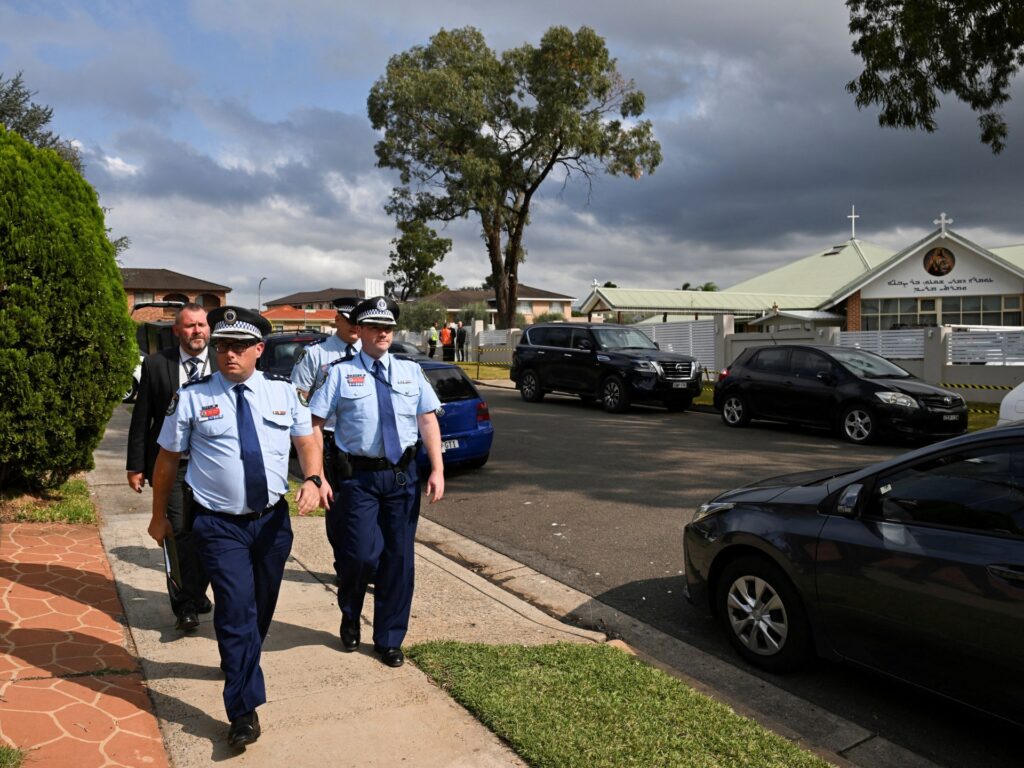
Police kill the boy after he stabbed a man in Perth in an attack authorities say indicated ‘terrorism’. Police in Australia say they have shot dead a boy after he stabbed a man in the western city of Perth, in an attack authorities said had “hallmarks of terrorism”. There were signs the 16-year-old, armed with a kitchen knife, had been “radicalised online”, Western Australia province’s Premier Roger Cook told reporters on Sunday. The victim in his 30s was stabbed in the back on Saturday night in the parking lot of a hardware store in the city’s suburban Willetton area. Authorities said they received calls from concerned members of the local Muslim community before the attack. The man was stable in a hospital, authorities said. “At this stage it appears that he acted solely and alone,” Cook told a televised news conference in Perth. Prime Minister Anthony Albanese said he had been briefed on the incident by police and intelligence agencies, which advised there was no ongoing threat. “We are a peace-loving nation and there is no place for violent extremism in Australia,” Albanese said on X. My thoughts are with those who have been affected by the incident in the Perth suburb of Willetton overnight. I have spoken with WA Premier Roger Cook this morning, and I thank the WA Police for acting swiftly to contain the incident. — Anthony Albanese (@AlboMP) May 5, 2024 Police said members of the local Muslim community had made complaints about the boy’s behaviour just before the attack, helping to quickly identify him. On Saturday night, the teenager appeared to have placed a call to the police, saying he was going to commit “acts of violence”. Police said they were later alerted by a phone call from a member of the public that a knife attack was under way in the car park. Three police officers responded, one armed with a gun and two with tasers. The tasers failed to subdue the boy before he was killed by a single gunshot. Syed Wadood Janud, the imam of Perth’s largest mosque, the Nasir Mosque, condemned the stabbing in a statement. “There is no place for violence in Islam,” he said. “We appreciate the effort of the police to keep our communities safe. I also want to commend the local Muslim community who had flagged the individual prior with the police.” Saturday’s incident is the latest in a series of knife attacks in Australia in recent weeks. Last month, New South Wales police charged several boys with terrorism-related offences in investigations following the stabbing of an Assyrian Christian bishop while he was giving a livestreamed sermon in Sydney. The attack on the bishop came only days after a stabbing spree killed six in the Sydney beachside suburb of Bondi. Gun and knife crime is rare in Australia, which consistently ranks among the safest countries in the world, according to the federal government. Adblock test (Why?)
India calls Canada arrests over Sikh activist murder ‘political compulsion’
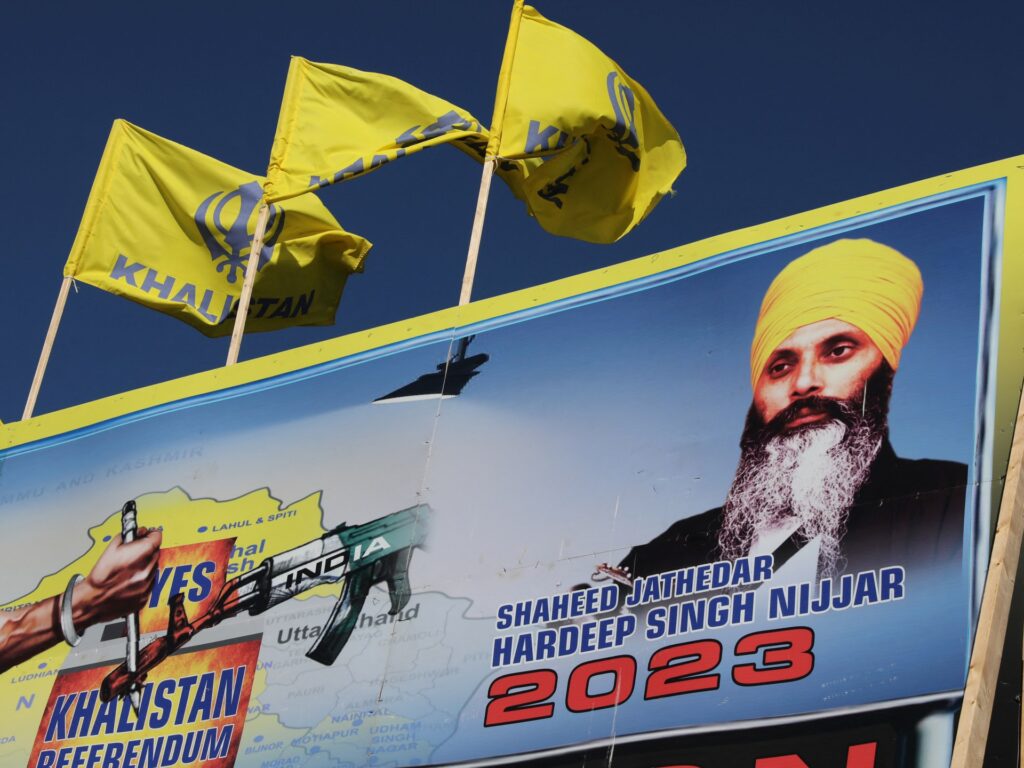
Reacting to Indian nationals’ arrest, Trudeau acknowledges fear in Canada’s Sikh community but underscores ‘rule of law’. Canada’s investigation into alleged Indian involvement in the assassination of a Sikh separatist in Vancouver last year is a “political compulsion”, India’s foreign minister has said after three Indian citizens were arrested over the killing. Canadian police on Friday arrested the trio for the murder of Hardeep Singh Nijjar, saying they were investigating their links to the Indian government, “if any”. He migrated to Canada in 1997 and acquired citizenship 18 years later. He was wanted by Indian authorities for alleged terrorism and conspiracy to commit murder, the allegations he had denied. On June 18, 2023, he was shot dead by masked assailants in the car park of the Sikh temple he led in suburban Vancouver. Nijjar’s killing sent diplomatic relations between Ottawa and New Delhi into a tailspin last year after Canadian Prime Minister Justin Trudeau said there were “credible allegations” linking Indian intelligence to the crime. India rejected the allegations as “absurd”, temporarily halting the processing of visas and forcing Canada to reduce its diplomatic presence in the country significantly. “It is their political compulsion in Canada to blame India,” the Press Trust of India news agency quoted India’s External Affairs Minister Subrahmanyam Jaishankar as saying on Saturday. New Delhi has sought to persuade Ottawa not to grant Sikh separatists visas or political legitimacy, Jaishankar said, since they are “causing problems for them [Canada], for us and also for our relationship”. He added that Canada does not “share any evidence with us in certain cases, [and] police agencies also do not cooperate with us”. Jaishankar said India will wait for the Canadian police to share information on the arrested men, adding that the suspects “apparently are Indians of some kind of gang background”. “We’ll have to wait for the police to tell us,” he said. “But, as I said, one of our concerns which we have been telling them is that, you know, they have allowed organised crime from India, specifically from Punjab, to operate in Canada.” The three Indian nationals, all in their 20s, were arrested in Edmonton, the capital of Alberta province, on first-degree murder and conspiracy charges. They were accused of being the attacker, driver and lookout in his killing last June. The Canadian police said they were aware that “others may have played a role” in the murder. Meanwhile, Trudeau, speaking on Saturday at an event in Toronto to celebrate Sikh heritage and culture, acknowledged that many Sikhs in Canada are “feeling uneasy, and perhaps even frightened right now”, but urged faith in the justice system. “Let us remain calm and remain steadfast in our commitment to our democratic principles and our system of justice,” he said. Trudeau said the arrests were “important because Canada is a rule of law country with a strong and independent justice system, as well as a fundamental commitment to protecting all its citizens”. Nijjar advocated for a separate Sikh state, known as Khalistan, carved out of India. Thousands of people were killed in the 1980s during the separatist movement, which was put down by the Indian security forces. The movement has largely petered out within India, but in the Sikh diaspora – whose largest community is in Canada, with about 770,000 people – it retains support among a vocal minority. India has warned governments in Canada, the United States and the United Kingdom repeatedly that Sikh separatists were trying to make a comeback. In November, the US Department of Justice charged an Indian citizen living in the Czech Republic with allegedly plotting a similar assassination attempt on US soil. A Washington Post investigation found last week that Indian foreign intelligence officials were involved in the plot, a claim rejected by New Delhi. Adblock test (Why?)
US elections are six months away. How does the race stand and what’s next?
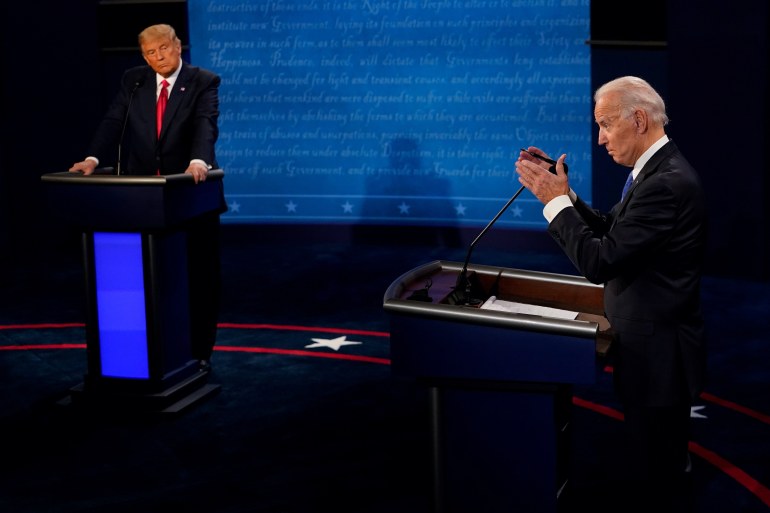
A crackdown on pro-Palestinian student protests, Donald Trump’s hush-money criminal trial, and political bickering over foreign aid and immigration have dominated headlines in the United States in recent weeks. The issues have shone a spotlight on deep divisions in the country as it moves closer to what is expected to be a heated battle for the White House between incumbent President Joe Biden, a Democrat, and his Republican predecessor, Trump. But for most people across the US, the presidential election on November 5 — exactly six months from Sunday — is not yet on their radars. “In the United States, most people still have not tuned in. Despite you, I and the political class, the vast majority of Americans are not paying attention to the election,” said Erik Nisbet, a professor of policy analysis and communications at Northwestern University. “People don’t tune in until September,” he told Al Jazeera. “At this point though, it’s important to get your narratives out. It’s important to get your base solidified and mobilised.” Perceptions of an ‘Election 2.0’ Most polls show a tight race between Biden and Trump as the election nears, with experts saying the contest will likely come down to how the candidates fare in critical swing states like Michigan, Georgia and Nevada. But there is also widespread frustration that the choice this election cycle is the same as in 2020, when Biden defeated Trump to win the White House. A recent Pew Research Center poll found that nearly half of all registered voters said they would replace both Biden and Trump on the ballot if they could. About two-thirds of respondents said they had little to no confidence that Biden is physically fit enough to be president, the poll said, while a similar number said they did not believe Trump would act ethically in office. “It is Election 2.0,” said Jan Leighley, a political science professor at American University in Washington, DC. “I think that creates a disincentive for voting, which again comes back on the campaigns to convince people that, even though it’s the same choice, there’s still a reason to vote.” Youth vote For the Biden camp, the message so far has been that a vote for the Democratic incumbent is a vote for democratic ideals. “Democracy is on the ballot. Your freedom is on the ballot,” Biden said in January. But that message is failing to resonate among key segments of the Democratic base who are angered by the Biden administration’s unequivocal support for Israel amid its war in Gaza. The recent wave of pro-Palestinian protests on college campuses has highlighted a generational divide over the US’s relationship with Israel, and that, in turn, could pose a serious problem for Biden as he seeks the youth vote in November. In 2020, Biden won about 60 percent support among voters aged 18 to 29. But a recent CNN poll showed Biden trailing Trump — 51 percent to 40 percent — among voters under age 35, and experts say a lack of enthusiasm among young voters could spell trouble. “We know how college students are feeling,” said Hasan Pyarali, the Muslim Caucus chairperson for College Democrats of America, the university arm of the Democratic Party. “And I can tell you for sure that there are too many who would stay home” on November 5 if Biden does not change his Middle East policy, Pyarali added. “I doubt that people would switch over to Trump, but they would certainly not vote.” According to Nisbet at Northwestern University, Biden’s campaign needs to focus in the coming months on “getting the Democratic house in order” before it tries to appeal to the relatively small number of undecided voters in the country. Any protests at the Democratic National Convention, for example, could hurt him. Democrats will gather in Chicago in August to formally confirm Biden as their 2024 nominee. “The Democratic Party, or at least the Biden campaign, does not want any dissension within the [party] because it’s a bad visual,” said Nisbet. Trump’s legal woes Meanwhile, on the Republican side, Trump’s campaign has unfolded against unprecedented legal turmoil. The former president faces four separate criminal cases, including an ongoing trial in New York over allegations he falsified business records related to a hush-money payment made to an adult film star. While the indictments have done little so far to dent Trump’s support among Republican voters, some polling suggests that a chunk of the US electorate would not vote for him if he were convicted in any of the cases. Trump is expected to be confirmed as the Republican Party’s 2024 nominee at the party’s convention in Milwaukee, Wisconsin, in July. “The conventions go on over the summer, but there’s usually not a whole lot of activity campaign-wise,” said Leighley at American University. But this year might be different, given Trump’s court hearings and the pressure on Biden over the Gaza war. “Those could be unusual bumps, if you will, that provide campaigns opportunities to do more in terms of ads,” she said. Key issues Both Leighley and Nisbet said the US economy is always an important election issue, and it will continue to be a focus over the next few months of campaigning. Despite positive economic indicators, many Americans believe they are worse off now than when Trump was in the White House, recent polls have suggested. “There is a big gap where people, for whatever reason — it could be because of the economics, it could be a bias of memory — they look more favourably at Trump’s then-presidency than Biden’s current one overall,” said Nisbet. He added that the economy is hurting Biden among Latino and Black voters, as well as young people, all of whom are key segments of the Democratic base. “Trump will want to talk about how bad the economy is,” said Nisbet, while Biden’s team instead will “try to change the conversation” and pivot to other issues. That includes access to abortion. Biden has made defending access to reproductive healthcare
‘No to the Russian law!’ Georgia protesters demand a ‘European future’
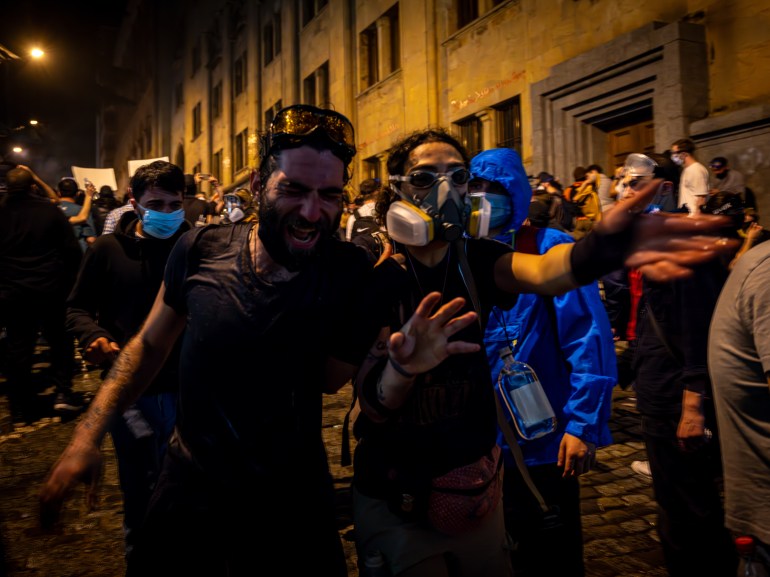
Tbilisi, Georgia – Crowds of protesters have been braving tear gas and water canons after more than two weeks of protest against the Georgian government’s draft law targeting civil society. The new law would require non-profit entities (NGOs and media outlets) receiving more than 20 percent of their funding from abroad to register as “organisations pursuing the interest of a foreign influence”, with tough penalties for noncompliance of up to $9,000. Mass demonstrations last year forced the government to withdraw a similar bill. This second attempt has given renewed energy to thousands of young people, from school pupils to university students, swelling a tide of discontent. They believe their government has fallen under the influence of the Kremlin and is sabotaging their dreams of being part of Europe. Each night, the rallies have begun with the Georgian national anthem, as well as the EU’s, Ode to Joy. “This is where I live, where my son will live – I don’t want Georgia in the enemy’s hands. I want it free for everyone,” fumes 25-year-old Giga. “No to the Russian law!” says Nutsa, 17. She’s holding up a placard which reads: “Northern neighbour, we don’t have anything in common with you”. That northern neighbour is Russia, where Vladimir Putin’s 2012 law on foreign agents has eliminated dissent. In 2022, he expanded it to require anyone receiving support from outside Russia to register and declare themselves as foreign agents. But the Georgian government has insisted its own law is similar to legislation in Western countries. The EU disagrees that the law resembles Western transparency regulations, such as EU and French planned directives and the US’s Foreign Agents Registration Act. Ursula von der Leyen, president of the EU Commission, warned on May 1 that Georgia was “at a crossroads”. Washington is alarmed. It has provided almost six billion dollars in aid to Georgia since the 1990s. US Ambassador to Georgia Robin Dunnigan said in a statement on May 2 that the US government had invited Georgia’s prime minister, Irakli Kobakhidze, to high-level talks “with the most senior leaders”. According to Georgia’s Ministry of Foreign Affairs later that day, that invitation was declined. Instead, Kobakhidze accused the US of supporting “revolutionary attempts” by non-governmental organisations working in the country, such as EU-funded organisations Transparency International Georgia and ISFED, which often call attention to government corruption and abuses of power. The government may fear that these organisations could influence the outcome of a general election in October in which the governing Georgian Dream (GD) party hopes to secure a majority. Kornely Kakachia, director of the Georgian Institute of Politics, said he believes the government’s rhetoric reflects the opinion of Bidzina Ivanishvili, the billionaire founder of the governing party. Russia’s 2022 invasion of Ukraine, he adds, has changed Ivanishvili’s calculus. “Ivanishvili and GD leaders believe that Russia is winning in Ukraine and he just thinks [of] how to be friendly with [Russia], to find his place in this geopolitical new order,” says Kakachia. In tandem with its foreign funding law, GD has promised to curb LGBT rights and has passed amendments to the tax code that will make it easier to bank money from overseas in Georgia. “That’s an attempt to try to lure Putin and the Kremlin basically to give them a new model of Georgia, which will be a kind of offshore zone for Russian oligarchs,” says Kakachia. Protesters who oppose a new ‘foreign influence’ law clash with police in Tbilisi, Georgia [Stephan Goss/Al Jazeera] Hired thugs and ‘Robocops’ The nightly protests over the past two weeks have seen some of the largest turnouts in the 11 years of GD’s government. On Thursday, protesters blocked a key intersection known as Heroes Square. But a group of unknown men in civilian clothing appeared and began to beat people. Known as Titushky, hired thugs were deployed by the Ukrainian security services during Ukraine’s Euromaidan protests in 2013 and 2014 in which people called for closer relations with the EU and protested against corruption. Professor Ghia Nodia of the Caucasus Institute for Peace, Democracy and Development said the moment feels similar to Ukrainian President Yanukovych’s decision a decade ago to use violence to put down protests. “The feeling is that this time, Ivanishvili went too far and people have to fight. There are relatively small-scale violent crackdowns almost every day, but so far, the tide of protest didn’t go down.” The protests have been mostly peaceful, though some protesters have tried to enter parliament where legislators have been debating inside. Defiant men and women wave EU and Georgian flags in front of units of black body-armoured riot police dubbed “Robocops” who are armed with truncheons, mace and shields. Other masked police officers without identification badges have been filmed punching, kicking and dragging protesters by the hair into custody. Hardware stores have been emptied of face masks. Pepper spray and tear gas quickly incapacitate those without protection, their eyes and noses streaming from the chemicals, many of them retching or struggling to breathe. The country is heavily polarised. Mikheil Saakashvili, whose reforms did much to modernise Georgia after 2003’s “Rose Revolution’” is serving a six-year prison sentence. He was found guilty of “abuse of power” and organising an assault on an opposition lawmaker. His party, the United National Movement (UNM), is the most powerful party in opposition, but it is deeply unpopular because of its own track record from its time in office from 2004- 2012. Protests have rocked Tbilisi, Georgia’s capital city, for the past two weeks [Stephan Goss/Al Jazeera] ‘Backsliding on democracy’? Many of today’s protesters do not identify with either the UNM or any other political party in opposition. MEPs have repeatedly voted on resolutions in Strasbourg and Brussels condemning GD’s “backsliding” on democracy in recent years and its treatment of the former president. But one group of protesters told Al Jazeera that the European Parliament was wrong to call for sanctions against Ivanishvili while simultaneously demanding Saakashvili’s release. In power, GD has taken
Spain and Argentina trade jibes in row before visit by President Milei
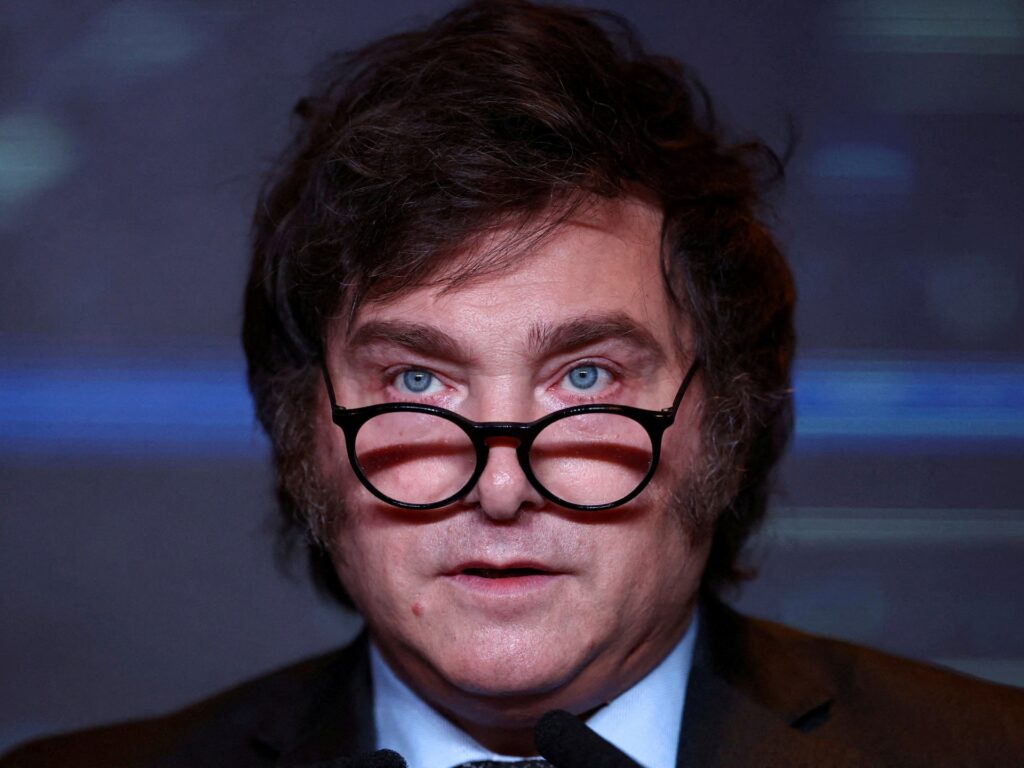
The spat began when Spain’s transport minister said Argentina’s Javier Milei took drugs during last year’s election. Spain and Argentina have their diplomatic daggers drawn and have traded jibes over drug use and economic decline. The spat began on Friday when Spanish Transport Minister Oscar Puente, during a panel discussion in Salamanca, suggested that Argentina’s President Javier Milei had ingested “substances” during last year’s election campaign. “I saw Milei on television” during the campaign, Puente told a Socialist Party conference. “I don’t know if it was before or after the consumption … of substances.” He also listed Milei among some “very bad people” who have reached high office. Milei’s office responded on Saturday in a statement condemning the remarks and also attacking Spanish Prime Minister Pedro Sanchez. The statement accused Sanchez of “endangering Spanish women by allowing illegal immigration” and undermining Spain’s integrity by making deals with separatists, while his left-wing policies brought “death and poverty”. pic.twitter.com/eg2lXgc0cL — Oficina del Presidente (@OPRArgentina) May 3, 2024 Spain reacted with fury. “The Spanish government categorically rejects the unfounded words … which do not reflect the relations between the two countries and their fraternal people,” the Spanish foreign ministry said. “The government and the Spanish people will continue to maintain and strengthen their fraternal links and their relations of friendship and collaboration with the Argentine people, a desire shared by all of Spanish society,” the statement added. The spat comes two weeks before a visit to Spain by Argentina’s “anarcho-capitalist” president. Milei will attend an event of the far-right Vox party and will be avoiding meeting Spain’s socialist head of government, Sanchez. The two have never had good relations. Sanchez supported Milei’s rival Sergio Massa in the election that brought Milei to power in December and has also not contacted Milei since the victory. Milei has meanwhile publicly supported Spain’s far-right anti-immigration Vox party. Vox leader Santiago Abascal also went to Buenos Aires for Milei’s investiture. Adblock test (Why?)
How effective is Turkey’s ban on trade with Israel?
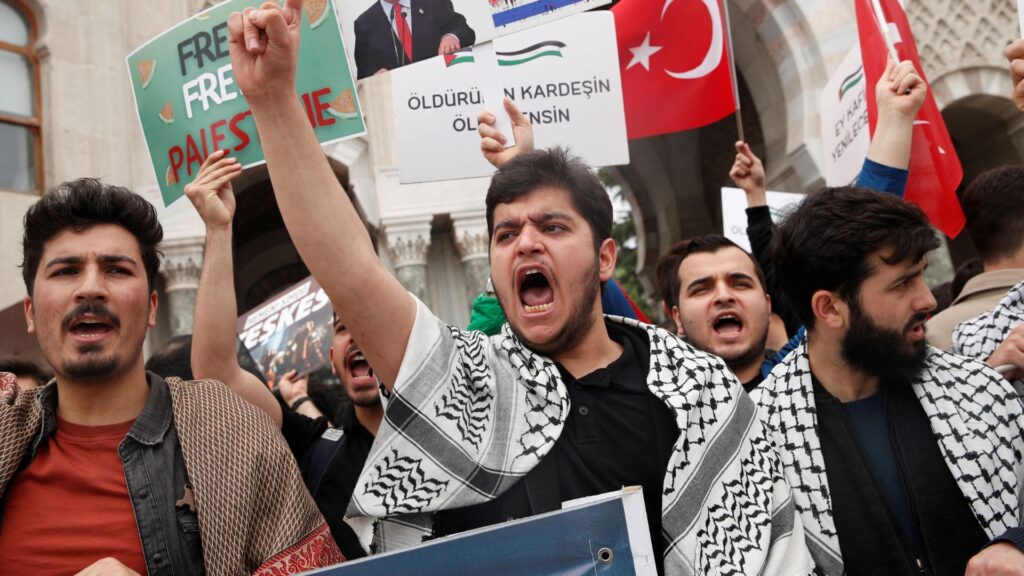
Turkey says the ban will stay in place until Israel agrees to a permanent ceasefire in Gaza. For years, Israel and Turkey have been crucial trade partners. It was a commercial relationship worth nearly seven billion dollar a year. But Israel’s war on Gaza changed all that. The Turkish government has been demanding a halt to the violence that’s killed nearly 35,000 Palestinians in seven months And the Turkish president condemned Israel’s decision to block its aid meant for Gaza last month. Recep Tayyip Erdogan has now announced a total trade ban until Israel agrees to a ceasefire. But has he acted under domestic pressure, after a setback in local elections was blamed partly on the country continuing to do business with Israel? And how will this affect the economies of both sides? Presenter: Neave Barker Guests: Vehbi Baysan – Political analyst and assistant professor at İbn Haldun University Gideon Levy – Author and columnist at Haaretz Vladimir Vano – Chief economist at international think tank, GLOBSEC Adblock test (Why?)