

At least 12 killed in bomb attacks on eastern DR Congo displacement camps
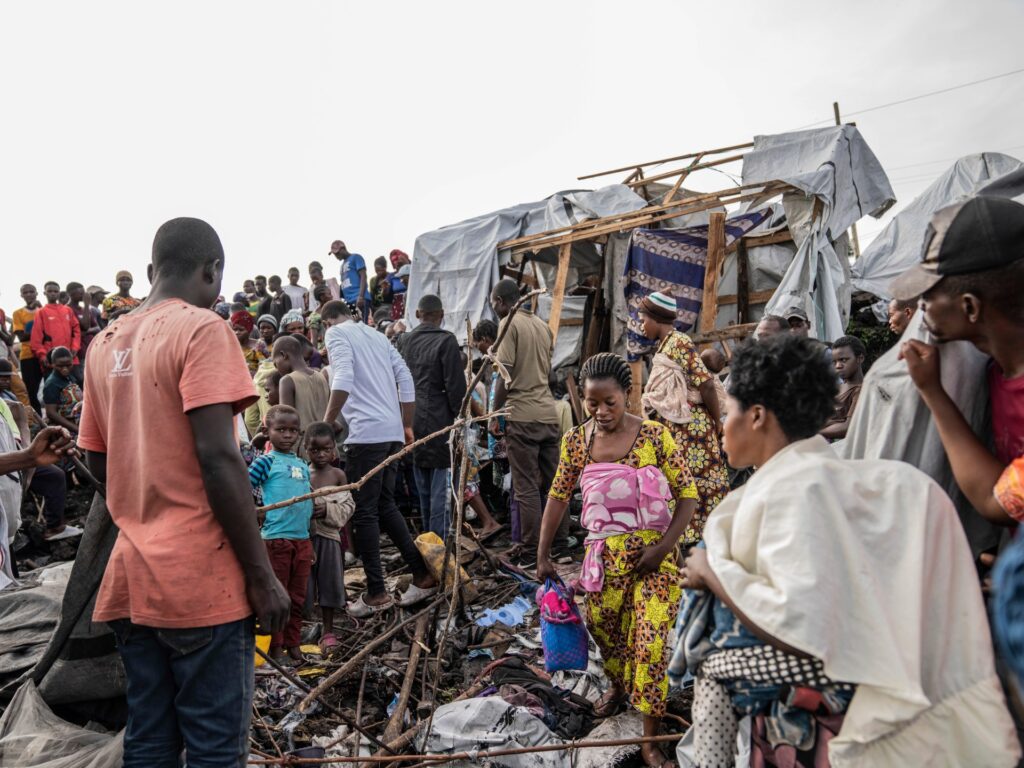
At least 12 people, including children, have been killed in twin bomb blasts that hit two camps for displaced people in eastern Democratic Republic of the Congo, according to government officials, the United Nations and an aid group. Friday’s explosions targeted the camps in Lac Vert and Mugunga, near the city of Goma, the capital of North Kivu province, the UN said in a statement. The attacks, in which at least 20 people were injured, were a “flagrant violation of human rights and international humanitarian law and may constitute a war crime”, it said. A resident of one of the camps told Al Jazeera that many of the victims were sleeping in their tents when the area was attacked. “We started running as the bombs were fired at the camp,” the resident said. The Congolese military and the United States accused the military in neighbouring Rwanda and the M23 rebel group of being behind the attacks. On Saturday, Rwanda denied the US accusations as “ridiculous”. Government spokesperson Yolande Makolo said the Rwanda Defence Force (RDF) is a “professional army” that would never attack displaced people. In a post on X, Makolo instead blamed the assault on militias supported by the Congolese military. Lieutenant-Colonel Guillaume Njike Kaiko, a spokesperson for the DRC’s army in the region, said the attacks were retaliation for earlier DRC strikes on Rwandan army positions in which arms and ammunition were destroyed. In a social media post, government spokesperson Patrick Muyaya also blamed the M23, which has taken over swaths of North Kivu in the last two years. The DRC, the UN and Western countries have said Rwanda is supporting the group in a bid to control mines and mineral resources. Rwanda has denied the allegations. Al Jazeera’s Fintan Monaghan reported that the shells were fired from an area controlled by M23. The group denied any role in the attacks and instead blamed DRC forces, in a statement posted on X. The intensifying fighting in eastern DRC has forced hundreds of thousands of civilians to flee neighbouring towns towards Goma, which is located between Lake Kivu and the Rwandan border and is largely cut off from the country’s interior. International charity Save The Children said it was present at one of the camps when shells struck close to a busy marketplace. It said dozens were injured, mostly women and children, and the final death toll remained unclear. “A tent does not offer much protection from shelling,” said Greg Ramm, the aid group’s country director in the DRC. “Protection of civilians, especially children and families living in displacement camps, must be prioritised,” he said, and called for “all parties to the conflict to end the use of explosive weapons in the proximity of populated areas”. President Felix Tshisekedi, who was travelling in Europe, decided to return home on Friday following the bombings, a statement from his office said. Tshisekedi has long alleged that Rwanda is destabilising DRC by backing the M23 rebels. The bombings follow the group’s capture of the strategic mining town of Rubaya this week. The town holds deposits of tantalum, which is extracted from coltan, a key component in the production of smartphones. Condemning the attack, US Department of State spokesperson Matthew Miller said it was “essential that all states respect each other’s sovereignty and territorial integrity”. The U.S. strongly condemns the attack today from Rwanda Defense Forces and M23 positions on the Mugunga camp for Internally Displaced Persons in eastern Democratic Republic of the Congo. It is essential that all states respect each other’s sovereignty and territorial integrity. — Matthew Miller (@StateDeptSpox) May 3, 2024 The DRC branch of the medical charity Doctors Without Borders (Medecins Sans Frontieres, or MSF) said its teams had to stop distributing essential items and halt medical consultations on Friday because of the rising insecurity. Earlier today in Goma, DR Congo: As our teams were conducting medical activities & distributing shelter kits, intense fighting erupted in the immediate vicinity of IDP camps. We heard heavy artillery which landed in densely populated areas. Several people were reportedly… pic.twitter.com/zaEWn3prvX — Doctors w/o Borders (@MSF_USA) May 3, 2024 In a post on X, the group condemned the “increasingly regular use of heavy artillery” close to sites for internally displaced people around Goma. French President Emmanuel Macron said Rwanda must halt its support for M23, during a joint news conference with Tshisekedi in Paris this week. About six million people have been killed since violence erupted in 1996. It has also displaced about seven million people, many beyond the reach of aid. Adblock test (Why?)
‘No turning back’: Carnation Revolution divides Portugal again, 50 years on
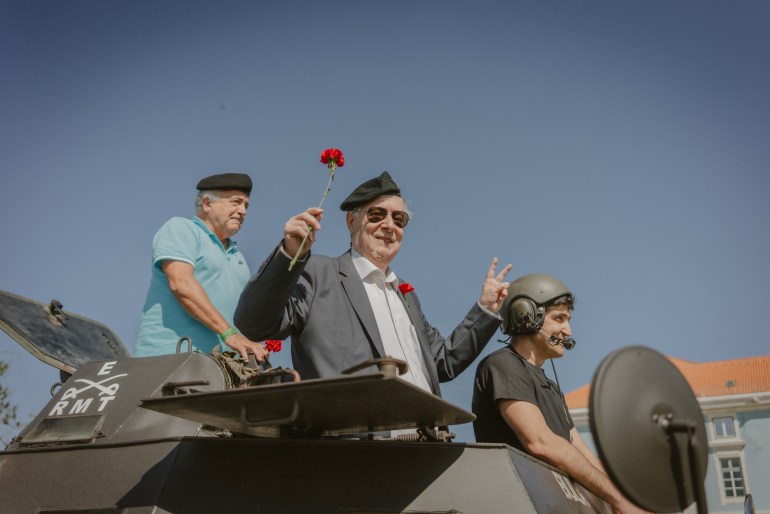
Lisbon, Portugal – The olive-green military vehicles are the same, as are the uniforms of the personnel riding them. It’s even the same day of the week on this April 25 – a Thursday. This is when it all started, on the shore of the Tagus River where the sun hangs like a bulb over the Portuguese capital and Europe’s westernmost edge. But the cheering crowds beside the road today, waving red carnations bought from flower ladies on Rossio Square weren’t there 50 years ago. Nobody clapped their hands or posted photos on social media along with catchy hashtags. On that brisk dawn, the streets were deserted while Lisbon still slumbered, while a revolt was taking birth. That morning, Portugal was still a fascist dictatorship that had fought three brutal wars in Portuguese Guinea, Angola, and Mozambique in its desperate bid to keep control over its African colonies. By the end of the day, Portugal’s 42-year-old dictatorship, Estado Novo (“New State”), had been felled by a swift military takeover. “We were professional soldiers, we’d been in wars and were trained to deal with stressful situations, but this was something completely different,” says former navy captain Carlos Almada Contreiras. Contreiras was among the 163 military captains who in September 1973 had come together in secret at a “special farmhouse barbeque” to form the clandestine “Movement of Armed Forces” (Movimento das Forcas Armadas, MFA). These were men who had fought the Portuguese dictatorship’s colonial wars and knew very well that no military victory was close at hand; on the contrary, morale was in decline and an estimated 9,000 Portuguese soldiers had died since 1961. Veterans parade on the streets of Lisbon alongside crowds celebrating the 50th anniversary of the Carnation Revolution, during which military leaders deposed the former authoritarian dictatorship, Estado Novo [Fredrik Lerneryd/Al Jazeera] On April 25, 1974, they turned their gaze towards Lisbon’s political heart, intending to seize control of key military installations, political chambers and broadcasting facilities, as well as the airport. At the time, 50 years ago, nobody could predict the outcome of the day. However, the rebels knew that “there was no turning back,” says Contreiras. It was now life or death – if the military action failed, the MFA conspirators would in all probability have been charged with high treason and quite possibly sentenced to death. But a victorious outcome might just bring a new dawn for a dying empire in its last throes. Was he afraid? Contreiras takes a deep breath and recalls that morning when his life – and the lives of numerous others – changed forever. “I haven’t thought of that,” he says. “We had to act, otherwise we would continue to live in this dead political system, keep fighting these meaningless colonial wars.” In the end, and in less than a day, MFA gained full control over Portugal’s military facilities and brought an end to the far-right dictatorship. Prime Minister Marcello Caetano bowed to the conspirators and Portugal’s notorious secret police – PIDE – was dismantled. The following year, 1975, a US-backed counter-coup in November would supplant the new government and the Carnation Revolution would come to an end. But the change it had brought about was permanent. “The people of Portugal and millions of people in our African colonies were given their lives back,” says Contreiras. As Portugal celebrates 50 years of pluralistic democracy today, however, the long shadows of the country’s authoritarian past are creeping back in the wake of the March 2024 elections, in which far-right political party Chega (“Enough”) gained 18 percent of the vote and drove a wedge through the heart of the Portuguese two-party system, which had dominated the chambers of power since the 1970s. ‘We had to act,’ former navy captain Carlos Almada Contreiras recalls the events of April 25, 1974 when he and other senior military figures finally stood up to the dictatorship Lisbon [Fredrik Lerneryd/Al Jazeera] A revolution is born On April 25, 1974, Portugal became world news. Newspapers around the world were drenched in bright images of celebrating Portuguese masses who took to the streets and placed red carnations in soldier’s rifle barrels and uniforms. Portugal’s “Carnation Revolution” is often described as a near-bloodless military takeover. But much blood had been spilled in the years leading up to that moment. In the early 1960s, as most African nations fought for and won independence from their European colonisers, Portugal stood firm in its claim to the country’s African “possessions”. These were now dubbed “Overseas Territory” instead of “colonies” as a result of a 1951 rewrite of the constitution and the country had responded to self-determination claims with brutality and repression. Dictator and Prime Minister Antonio de Oliveira Salazar had established the “Estado Novo” in 1932 – a corporatist state rooted in anti-liberalism and fascism formed in the wake of the demise of Portugal’s monarchy – and kept Portugal out of the second world war. Despite being a brutal dictatorship, Salazar managed to lead Portugal into NATO’s anti-communist club in 1949 thanks to its control of the Azores Islands, a vital strategic outpost. When the first colonial war had erupted in Angola in March 1961, soon followed by wars in Portuguese Guinea and Mozambique, Portugal was able to source weaponry – helicopters, fighter aircraft and petrochemical weapons like napalm – from allied nations, primarily the United States, West Germany and France. Furthermore, during the Cold War, the Azorean military base became a vital strategic and geopolitical outpost in the mid-Atlantic, particularly for the United States, whose continued access to the military facilities depended on political and economic support to Salazar’s authoritarian rule. The Azorean military facilities became crucial for the United States during its military operations to aid the Israel forces during the 1973 Arab-Israeli War. A veteran joins the crowds on a march down Av da Liberdade on the 50th anniversary of the Carnation Revolution in Lisbon on April 25, 2024 [Fredrik Lerneryd/Al Jazeera] Finally, in the mid-1960s, the Portuguese dictatorship started
Landslides, floods sweep Indonesia’s South Sulawesi, killing 15 people
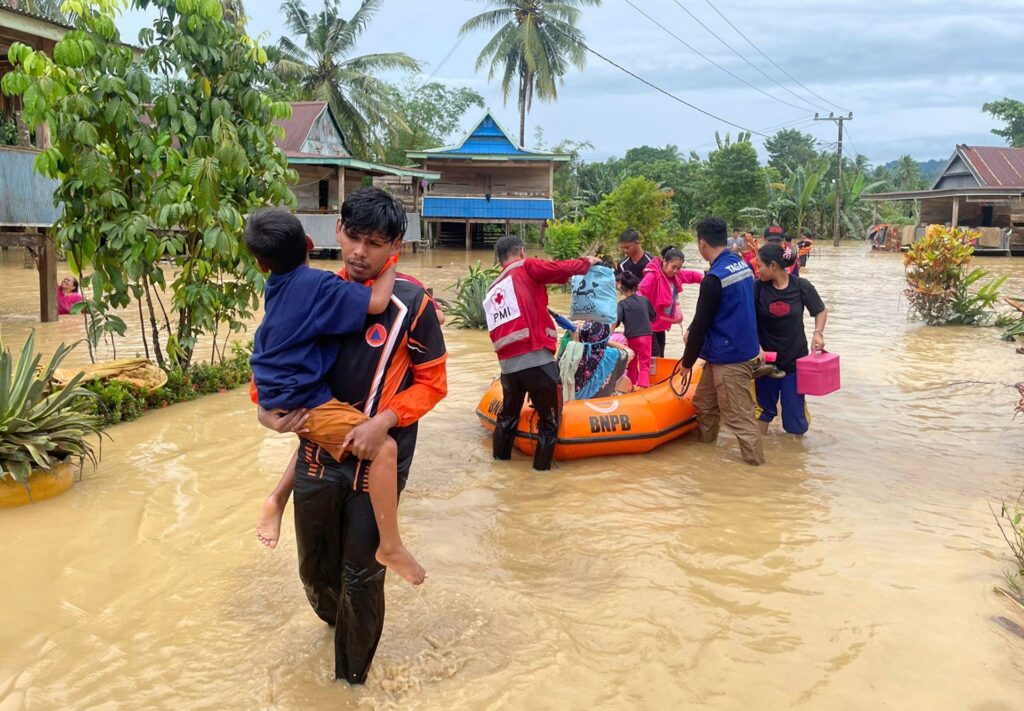
Disaster management agency says 115 people evacuated, more than 100 houses damaged amid prolonged torrential rain. Landslides and flooding triggered by heavy rains in Indonesia’s South Sulawesi province have killed at least 15 people after dozens of homes were swept away and roads damaged, the country’s disaster management agency said. Indonesia is prone to landslides during the rainy season, which began in January, with the problem aggravated in some areas by deforestation, and prolonged downpours caused floods in parts of the country that comprises 17,000 islands. The landslides struck Luwu regency in South Sulawesi on Friday, said Abdul Muhari, spokesperson of Indonesia’s disaster mitigation agency (BNPB), in a statement on Saturday. “A total of 14 residents died due to floods and landslides in Luwu regency,” he said. In another area of South Sulawesi, at least one person died and two others were injured, Abdul said. According to BNPB, more than 100 houses were seriously damaged and 42 were swept away, while four roads and one bridge were damaged. Some 115 people were evacuated to mosques or relatives’ homes and more than 1,300 families were affected with authorities trying to evacuate them. Indonesia has suffered a string of recent extreme weather events during its rainy season, which experts say are made more likely by climate change. In March, flash floods and landslides on Sumatra island killed at least 30 people. In recent days, several Indonesian cities also reported extreme heat, but the country’s weather bureau, BMKG, said the rising temperatures were not part of a heatwave currently sweeping much of the Southeast Asian region. Adblock test (Why?)
Measles outbreak kills at least 42 people in northeast Nigeria

The deaths were recorded out of nearly 200 suspected measles cases in the state of Adamawa, official says. At least 42 people have died from a measles outbreak in a little more than a week in Nigeria’s northeastern state of Adamawa, the state’s health commissioner says. Felix Tangwami said on Friday that the measles outbreak had mostly affected two local government areas where nearly 200 suspected cases were identified. “Measles vaccines have been released to those areas and our field teams are containing the situation,” he said at a media briefing. Measles is a highly contagious, airborne virus that mostly affects children under the age of five. It can be prevented by two doses of vaccine. Its early symptoms include high fever, cough and runny nose. It also often causes rashes and bumps all over the body of the patient. More than 50 million measles deaths have been averted through vaccinations since 2000, according to the World Health Organization. Widespread insecurity in many northern Nigerian states is often blamed for disruptions in vaccination campaigns, leaving children particularly vulnerable. Since the armed group Boko Haram started launching attacks in Nigeria in 2009, more than two million people have been displaced from their homes, spawning one of the world’s worst ongoing humanitarian crises. Criminal gangs have further deepened security woes in northwestern Nigeria. The COVID-19 pandemic has also disrupted the health system and vaccination programmes in parts of the country, according to Doctors Without Borders, known by its French initials MSF. MSF said earlier this year that the inability of public health actors in Nigeria “to achieve the 95 percent vaccination rate required to suppress measles” led to an alarming rise in the number of people affected by the virus last year. MSF said it treated 3,965 patients between October and December. “This is notably due to the difficulties for health workers in accessing rural communities surrounding Maiduguri,” Jombo Tochukwu-Okoli, MSF medical activity manager at the Gwange Pediatric Hospital in the capital of the northeastern state of Borno, said in a statement in February. The virus can spread quickly among unvaccinated children. “One infected child can spread the virus to between nine and 12 other unvaccinated children,” Tochukwu-Okoli said. Adblock test (Why?)
Children, infants missing after Tunis police clear makeshift refugee camps

Police cleared two of the Tunisian capital’s irregular Black migrant camps, busing residents to an unknown location. Tunis, Tunisia – Hundreds of refugees and migrants camped in the centre of Tunis have disappeared, with reports suggesting that the group, including several infants, had been abandoned in the desert near Algeria. According to local media reports, security forces swept into the encampments in the prosperous Berge de Lac business district early on Friday, rounding up men, women and children and destroying the shelters they had built. One encampment was in a walled-off public park and the other was in an alleyway outside the United Nations’s International Organization for Migration (IOM). A sit-in was being held by roughly 100 other refugees, principally from Sudan, outside the UNHCR’s offices, 6.6km (four miles) away. Several infants born in Tunisia to refugee or migrant mothers were present when Al Jazeera visited the IOM camp on Tuesday. The Refugees in Libya organisation retained some contact with the missing individuals who were able to communicate from the buses the police had forced them onto. 🚨Ongoing mass desert dumping by the Tunisian authorities. Yesterday at approximately 3 am, multiple police forces including special riot control and anti-terrorism units dismantled the protest camp outside the UNHCR office in the Lac zone of Tunis. Hundreds of refugees and… pic.twitter.com/5uaYxDmR75 — Refugees In Libya (@RefugeesinLibya) May 3, 2024 This was broken off at around 7pm (18:00 GMT) after phone batteries failed. According to the group’s spokesperson, David Yambio, the refugees and migrants had been let out of the buses about 5km (three miles) from the northwestern city of Jendouba, near the Algerian border. “Babies and infants are hungry and thirsty, they told me,” he wrote by email, “The police told them nothing except for beatings and insults.” Several nationalities were sheltering in central Tunis: Chadians, Sierra Leoneans and many Sudanese. A significant number held cards issued by the UNHCR and, though Tunisia has no asylum laws, were still able to access basic medical care and a small stipend. Video shared by Refugees in Libya showed police raiding the camp late at night, before showing refugees and migrants, including women and infants, being transported to the desert near Algeria. Crews came out to clear the debris on May 3, 2024 [Al Jazeera] Calls and emails to the IOM requesting details of the raid and what, if any, provision had been made for the people’s safety have so far gone unanswered. Past accounts from refugees and migrants who had been bussed to the Algerian border have frequently included robbery by Tunisian gangs, as the groups try to walk back to Tunis and what they hope might be security. Accusations by rights groups that refugees and migrants are being expelled by Tunisia to the Algerian and Libyan borders are longstanding, but Tunisian authorities have consistently denied the practice, which would breach international law, NGO Avocats Sans Frontieres (Lawyers without Borders) said. Criticism of Tunisia’s treatment of the irregular Black refugee and migrant population who enter the country en route to Europe is not new. Human Rights Watch, Avocats Sans Frontieres and Amnesty International have repeatedly condemned the Tunisian police and officials for their treatment of the vulnerable community. The migrant camp outside the IOM, Tunis before the police raid [Al Jazeera] Adblock test (Why?)
What’s behind the US generational divide on Israel’s war on Gaza?

Polls suggest an increasing number of young Americans are siding with Palestinians and growing critical of Israel. Successive US administrations across the political divide have backed Israel since it was created in 1948. But polls suggest that public support for Israel in the United States now appears to be waning, especially among young people. A Pew Research study two years ago indicated that only 41 percent in the age group of 18 to 29 had a favourable view of Israel. And many students from this generation are now protesting on university campuses against the war on Gaza, which has killed nearly 35,000 Palestinians. So, is the anger among young Americans highlighting a generational divide in Washington’s policy towards Israel? And what are the reasons reshaping public opinion? Presenter: Nick Clark Guests: Clair Davenport – Student at Columbia Journalism School Julie Norman – Deputy director at UCL Centre on US Politics Keir Milburn – Author of Generation Left, a book examining generational differences Adblock test (Why?)
Iran’s unravelling carpet sales

The historic Kashan bazaar in central Iran once sat on a major caravan route, its silk carpets known the world over. But for the weavers trying to sell their rugs under its ancient arches, their world has only unravelled since the collapse of Iran’s nuclear deal with world powers and wider tensions with the West. Carpet exports, which exceeded $2bn two decades ago, have plummeted to less than $50m in the last year, according to government customs figures. With fewer tourists and increasing difficulties in making international transactions, Iranian rugs are going unsold as some weavers work for as little as $4 a day. Kashan’s carpet-weaving industry has been listed as an “intangible cultural heritage” by the United Nations Educational, Scientific and Cultural Organization (UNESCO). Many of the weavers are women, with the skills needed for the Farsi weaving style passed down from generation to generation, using materials such as vine leaves as well as pomegranate skins and walnuts to make the dyes for their threads. A single rug can take months to make. After the 1979 Islamic Revolution, the United States increased sanctions on Iran’s government over the siege on the US embassy on November 4, 1979 and other issues. In 2000, the outgoing administration of US President Bill Clinton lifted a ban on the import of Iranian caviar, carpets and pistachios. By 2010, with concerns rising over Iran’s nuclear programme, the US again banned Iranian-made Persian rugs. But in 2015, Iran struck a nuclear deal with world powers which reduced its stockpile of enriched uranium. The carpet trade was allowed once again. Three years later, in 2018, US President Donald Trump unilaterally withdrew the US from the nuclear deal. Iran began enriching uranium at near weapons-grade levels and has been blamed for a series of attacks at sea and on land, including unprecedented drone and missile strikes targetting Israel last month. For the carpet weavers, that meant their wares were once again banned under US law. Making things worse is what carpet sellers see as a drop in tourists to Kashan as well. High-value American and European tourism in Iran has largely stopped, the daily Shargh newspaper warned last year. Ezzatollah Zarghami, Iran’s minister for tourism, insisted in April that six million tourists visited the country over the last 12 months, though that likely includes religious pilgrims as well as Afghans and Iraqis with lower spending power. Even foreigners who do not visit the country face the challenge of Iran’s financial system, where no major international credit card works. The collapse of the rial currency has left many Iranians unable to purchase the rugs. Wages in the industry are low, leading to a growing number of Afghan migrants working in workshops around Kashan. Adblock test (Why?)
Palestinian journalists in Gaza awarded World Press Freedom prize

NewsFeed All Palestinian journalists covering Israel’s war on Gaza have been awarded UNESCO’s World Press Freedom prize. The agency said it was a tribute to the courage of journalists facing ‘difficult and dangerous’ conditions. More than 100 have been killed during the war. Published On 3 May 20243 May 2024 Adblock test (Why?)
Palestinian employee of German development agency ‘abused’ in Israeli jail

Berlin, Germany – A Palestinian employee of Germany’s state-funded development agency has been imprisoned in Israel for more than a month, where she has been beaten and subject to abusive and humiliating treatment, her family members and lawyer say. Baraa Odeh, 34, works for the German Agency for International Cooperation (GIZ), and was detained by Israeli border guards on March 5 while returning to her home in Ramallah from a work trip to Germany. She has since been sentenced to three months of administrative detention without charge. Neither her husband, who is a German national, nor her family have had direct contact with Odeh since her arrest. “Our life is upside down,” her sister Shireen Odeh told Al Jazeera, adding that her family is extremely concerned for her wellbeing. “The only thing we do is think about her. We haven’t had a normal life since they arrested her.” Mahmoud Hassan, a lawyer for Odeh who has spoken to her in prison, said she has been physically assaulted and subject to inhumane conditions. “When she arrived [at Hasharon] prison, she was strip-searched while the policewoman was shouting at her. She was kept in a cell and later, a policeman that also shouted at her beat her on her leg,” said Hassan, who works with Addameer Prisoner Support, an NGO that supports Palestinian prisoners. “The policeman pushed her to the corner and the keys he had injured her hand. He kicked her. She said she had marks on her chest. He was threatening to keep her in this cell overnight. “After a couple of hours, he took her to another room that was not clean and was very cold.” The second room had security cameras. The toilet was so dirty that Odeh refused to use it. She was then transferred to the overcrowded Damon prison and strip-searched again. According to reports, detainees at the site have said it is difficult to access medical care or clean clothes. Guards have allegedly blindfolded and handcuffed prisoners when they are moved, and prevented them from sleeping. Israel has regularly detained and imprisoned workers for Palestinian aid organisations, and sometimes UNRWA, but it is unusual for the Israeli army to hold an employee of a Western organisation such as the GIZ under administrative detention. Since October 7, when the Israel-Palestine conflict escalated, Israel has sharply increased the arrest of Palestinians in the West Bank. Most have been held under administrative detention, without being charged or given due process. Administrative detention orders are often extended, sometimes for years. Prisoner rights groups and released detainees have raised the alarm on Israel’s systematic use of torture in its prisons, especially in recent months. Israel has arrested 8,425 Palestinians, including about 280 women and 540 children, in the West Bank and East Jerusalem between October 7 and April 22, according to Addameer. Some 5,210 administrative detention orders have been issued during the same period, while 16 prisoners have died in Israeli prisons. Meanwhile, Israel has prevented the Red Cross from making humanitarian visits to prison detainees since October 7. Germany ‘critical’ of administrative detention GIZ, one of the world’s largest international development agencies, has operated in the occupied Palestinian territories since the 1980s. It works on issues such as economic development, governance and peace-building. It is funded by the German government, one of Israel’s closest allies, and is overseen by its Federal Ministry for Economic Cooperation and Development (BMZ). “Israeli security forces have taken a national employee of the Deutsche Gesellschaft fur Internationale Zusammenarbeit (GIZ) GmbH into custody after a private trip. After a subsequent hearing, security forces ordered three months of administrative detention, to our knowledge unrelated to her professional employment,” said a spokesperson for GIZ. “GIZ is working with all the means at its disposal to clarify the background. We are also in close contact with the family.” Hassan told Al Jazeera she has been visited by a German consular official in prison. The German Federal Foreign Office did not comment on this visit when asked by Al Jazeera. Odeh is a technical adviser for GIZ, where she has been employed for 10 years. She has recently worked on projects focused on youth empowerment and psychosocial support for children, mainly in the West Bank. She is also a graduate student at Birzeit University, where she is active in a student representative body. After she was stopped at the King Hussein (Allenby) Bridge crossing, which separates Jordan from the West Bank, Odeh was first taken to Ofer detention centre and then to Hasharon prison, where she was allegedly beaten. A few days later she was transferred to Damon prison, where dozens of female detainees have been held. On March 11, an Israeli judge ordered Odeh to administrative detention until June 4 on the grounds that she is a security threat. During a hearing on March 19, she was accused of working with a banned political group, based on confidential military information. Her lawyer said she denies this accusation, and that Israel has not offered any evidence against her. The BMZ told Al Jazeera that it does not comment on individual cases. “The protection of human life and human dignity should be the top priority in every situation – including in the context of armed conflict and in detention facilities,” a spokesperson said. “The Federal Government is critical of the practice of administrative detention – ie, the possibility of detaining people over a longer period of time based on suspicion and without trial. International humanitarian law sets strict limits on this practice.” At the time of publishing, Israeli officials had not responded to Al Jazeera’s requests for comment. Adblock test (Why?)
Turkey says it halts trade with Israel over Gaza aid access

Turkey’s Ministry of Trade cites humanitarian crisis in Gaza for its decision to suspend imports and exports. Turkey has halted exports and imports to and from Israel, the Turkish Ministry of Trade says, citing the “worsening humanitarian tragedy” in Gaza. “Export and import transactions related to Israel have been stopped, covering all products,” the ministry said in a statement on Thursday. “Turkey will strictly and decisively implement these new measures until the Israeli Government allows an uninterrupted and sufficient flow of humanitarian aid to Gaza.” The announcement came after Israel’s foreign minister said Turkish President Recep Tayyip Erdogan was breaking agreements by blocking ports from handling Israeli imports and exports. “This is how a dictator behaves, disregarding the interests of the Turkish people and businessmen, and ignoring international trade agreements,” Israel Katz posted on X. .@RTErdogan is breaking agreements by blocking ports for Israeli imports and exports. This is how a dictator behaves, disregarding the interests of the Turkish people and businessmen, and ignoring international trade agreements. I have instructed the Director General of the… — ישראל כ”ץ Israel Katz (@Israel_katz) May 2, 2024 Katz said he instructed the Ministry of Foreign Affairs to work to create alternatives for trade with Turkey, focusing on local production and imports from other countries. The two countries had a trade volume of $6.8bn in 2023. Turkey last month imposed trade restrictions on Israel over what it said was Israel’s refusal to allow Ankara to take part in airdrops of aid for Gaza and for Israel’s war on the enclave. Asked about Turkey’s ongoing trade with Israel despite the harsh rhetoric from Ankara, Erdogan said last month that Turkey no longer continued “intense trade” with Israel, adding, “That is done.” He did not indicate Ankara had cut off all trade with Israel, however. Adblock test (Why?)