

Gaza will need largest post-war reconstruction effort since 1945, UN says

UN Development Programme official estimates post-war reconstruction will cost between $40-50bn. The level of destruction in Gaza has not been since World War II, according to a United Nations official who estimated that post-war reconstruction could cost up to $50bn. “We have not seen anything like this since 1945,” Abdallah al-Dardari, director of the regional bureau for Arab states at the UN Development Programme (UNDP), said on Thursday during an online news briefing. “That intensity, in such a short time and the massive scale of destruction,” he added. More than 70 percent of all housing has been destroyed, the UN official said, and about 37 million tonnes of debris needs to be removed. By comparison, during the 2014 Israel-Hamas war in Gaza, about 2.4 million tonnes of debris were removed. Overall, the level of destruction is such that the UNDP estimates that the human development index in Gaza has regressed by 40 years. The index assesses factors including years of gains in schooling, education attainment, health and life expectancy at birth. “All investments in human development … for the last 40 years in Gaza have been wiped out,” al-Dardari said. “We are almost back in the ’80s,” he added. The overall cost of post-war reconstruction in Gaza would cost between $40-50bn “at least”, he said. The UN agency’s top priority would be a three-year post-war recovery phase with the aim of providing temporary shelters and basic services for Palestinians to be able to return to the sites of their former homes. The Israeli army has been pounding the Gaza Strip since October 7, in one of the most intense aerial bombardments in modern history. More than 34,500 people have been killed, according to Palestinian authorities, large swaths of the territory have reduced to rubble and famine looms in parts of northern Gaza amid Israel’s severe restrictions on supplies of food and humanitarian aid. Israel launched the assault after Hamas led an unprecedented assault into communities in southern Israel killing at least 1,139 people, mostly civilians, according to Israeli authorities, and taking about 240 captives into the Strip. On top of the destruction, the humanitarian situation inside Gaza has been deteriorating amid restrictions on the number of aid trucks allowed to enter the Strip. UN agencies and aid groups have urged Israel to open more land crossings to Gaza to facilitate aid access and warned of a looming man-made famine. Israel has denied restricting the flow of aid into Gaza and blamed aid groups operating in Gaza for any delays. On Thursday, US Department of State spokesperson Matthew Miller said Israel should prevent attacks on aid convoys bound for Gaza after Israeli protesters assaulted two Jordanian aid trucks on their way to Gaza. Meanwhile, officials have renewed efforts around ceasefire and captives negotiations following weeks of impasse. Hamas said a delegation is set to visit Egypt soon for further talks. The group’s political bureau chief Ismail Haniyeh affirmed on Thursday that the group is studying a ceasefire proposal presented by Israel with a “positive spirit”. Adblock test (Why?)
Abu Ghraib: Iraqi victims’ case against US contractor ends in mistrial

The trial was a historic attempt at justice, marking the first time victims of the abuse that took place at the Abu Ghraib prison in Iraq testified in front of civilian jurors in the United States. But on Thursday, the judge overseeing the civil case in Virginia declared a mistrial, as the jury was unable to overcome a deadlock after eight days of deliberation. The trial focused on the human rights abuses committed at the prison following the US’s invasion and subsequent occupation of Iraq. Reports of abuse started to emerge in 2003 and later hit a fever pitch in 2004, with the release of photographs showing smiling US captors standing next to naked prisoners, posed in degrading positions. The images became emblematic of the fallout of Washington’s so-called “global war on terror”. Calls for justice have continued two decades later. At question in the Virginia trial was whether civilian interrogators, supplied to the US Army by the Virginia-based contractor CACI, conspired with soldiers to abuse detainees as a means of “softening them up” for questioning. The trial began on April 15, and lawyers for the three Iraqi plaintiffs argued that CACI was liable for mistreatment even if they could not prove that the contractor’s interrogators were the ones who directly inflicted the abuse. The evidence presented at the Virginia court included testimony from the three former prisoners: Salah Hasan al-Ejaili, Suhail Al Shimari, and Asa’ad al-Zuba’e. It was the first time any victims had testified directly to a civilian US jury. They recounted being subjected to different forms of torture by US military personnel and private contractors. The result, they said, has been physical and psychological torment that has weighed on their lives for the past two decades. Al-Ejaili, who was working as a journalist for Al Jazeera at the time of his arrest, described offering his testimony as akin to “a form of treatment or a remedy”. Prosecutors also introduced reports and testimony from two retired US army generals, who documented the abuse. They had concluded that multiple CACI interrogators were complicit. The reports found that one of the civilian interrogators, Steven Stefanowicz, lied to investigators about his conduct at the prison. They concluded that Stefanowicz likely instructed soldiers to mistreat detainees and used dogs to intimidate people during interrogations. Stefanowicz denied participating in the mistreatment in a recorded video deposition. Evidence introduced at the trial, however, showed that officials at CACI had doubts about Stefanowicz’s ability to work as an interrogator — but that he was promoted to the position shortly after arriving in Iraq due to a manpower shortage. Lawyers for CACI broadly argued that its employees had extremely limited interaction with the three plaintiffs. They said that any liability for the mistreatment belonged to the US government. The abuses at Abu Ghraib came to light largely as the result of an April 2004 report by CBS News. An image of a hooded prisoner holding electrical wires and standing on a box soon became emblematic of what rights groups have characterised as wide-scale abuses committed by US military personnel and private contractors following the 2003 Iraq invasion. A subsequent report by the International Red Cross found that the vast majority of detainees were civilians with no links to armed groups. The myriad abuses it documented at the facility were in some cases “tantamount to torture”, the Red Cross said. A total of 11 US soldiers were convicted in military courts in the following years, with nine sentenced to time in prison. But it has been difficult for victims to pursue further legal recourse. US law broadly grants the government immunity from lawsuits arising from war. In September, Human Rights Watch said the US has “apparently failed to provide compensation or other redress to Iraqis who suffered torture and other abuse by US forces at Abu Ghraib and other US-run prisons in Iraq two decades ago”. Former prisoners have instead sought compensation from contractors. In 2013, the Center for Constitutional Rights won a $5m settlement for its Iraqi clients against contractor Titan Corp. The group also represented the three clients in the case against CACI. Thursday’s mistrial, however, leaves open the possibility that the plaintiffs can pursue another trial. When asked if they would do so, Baher Azmy, a lawyer with the Center for Constitutional Rights, indicated they would. “The work we put into this case is a fraction of what they endured as survivors of the horrors of Abu Ghraib, and we want to honour their courage,” he said. Al-Ejaili, one of the Abu Ghraib survivors, likewise indicated in a press statement that he could continue to seek justice. “We might not have received justice yet in our just case today, but what is more important is that we made it to trial and spoke up so the world could hear from us directly,” he said. “This will not be the final word; what happened in Abu Ghraib is engraved into our memories and will never be forgotten in history.” Adblock test (Why?)
UCLA campus standoff as police order pro-Palestinian protesters to leave
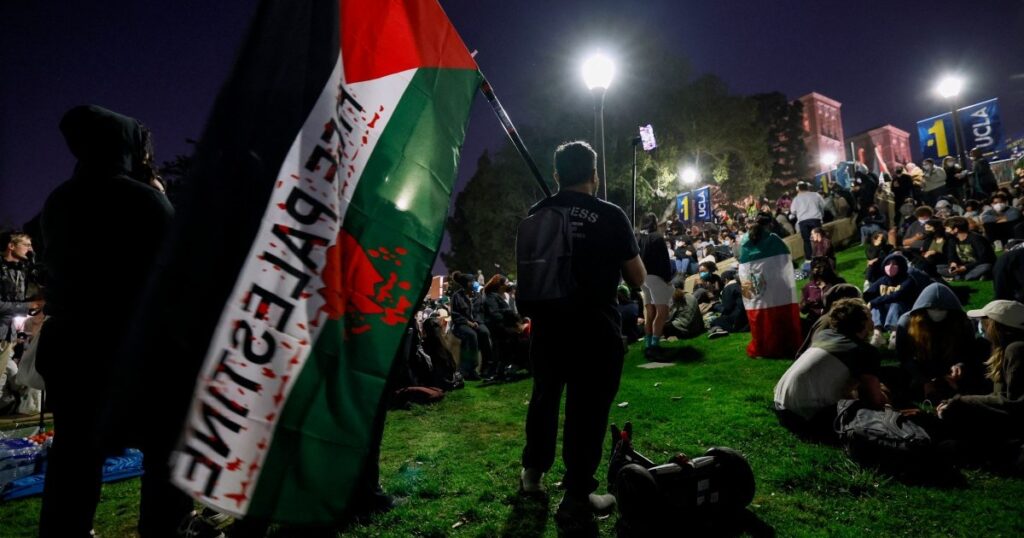
Police in riot gear massed on the University of California, Los Angeles (UCLA) campus and ordered a large group of pro-Palestinian demonstrators inside an encampment to leave the area or face arrest after violence instigated by pro-Israel counter-protesters. The barricaded encampment was full of hundreds of people and tents. Some protesters prayed as the sun set over the campus, while others chanted “we’re not leaving” or passed out goggles and surgical masks. They wore helmets and headscarves and discussed the best ways to handle pepper spray or tear gas as someone sang over a megaphone. A few made homemade shields out of plywood in case they clashed with police forming skirmish lines elsewhere on the campus. “For rubber bullets, who wants a shield?” a protester called out. Meanwhile, a large crowd of students, alumni and neighbours gathered on campus steps outside the tents, sitting as they listened and applauded various speakers and joined in pro-Palestinian chants. A small group of students holding signs and wearing T-shirts in support of Israel and Jewish people demonstrated nearby. The law enforcement presence and continued warnings stood in contrast to the scene that unfolded the night before, when counter-demonstrators attacked the pro-Palestinian encampment, throwing traffic cones, releasing pepper spray and tearing down barriers. Fighting continued for several hours before police stepped in, though no arrests were made. The tepid response from the authorities drew criticism from political leaders as well as Muslim students and advocacy groups. UCLA Chancellor Gene Block said in a statement that “a group of instigators” perpetrated the previous night’s attack, but he did not provide details about the crowd or why the administration and school police did not act sooner. Adblock test (Why?)
Pakistan T20 squad: Haris Rauf, Hasan Ali back for England and Ireland tour
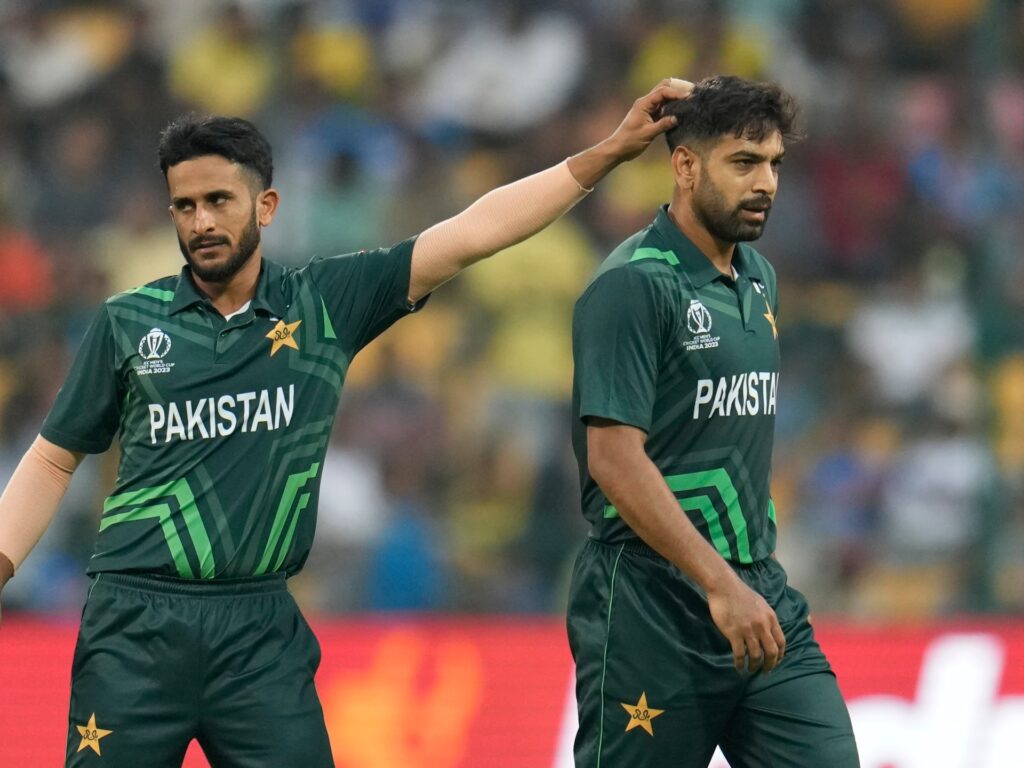
Pakistan have recalled formerly out-of-favour injured fast bowler Haris Rauf and medium-pacer Hasan Ali for their Twenty20 series against Ireland and England later this month, their final warm-ups for the T20 World Cup, but have not announced their squad for the 20-team tournament in June. Wicketkeeper Mohammad Rizwan, Azam Khan and Muhammad Irfan Khan, who all suffered injuries last month against New Zealand, were also included in an 18-man squad named on Thursday. Pakistan’s selectors have not yet named their final 15-man squad for June’s ICC Men’s T20 World Cup in the United States and West Indies. “We are having fitness issues with a few players but we hope that during the England tour, we will be able to finalise the World Cup squad,” selector Wahab Riaz told a news conference in Lahore. All 20 World Cup teams had to submit preliminary 15-player squads to the International Cricket Council by the May 1 deadline, but they can make changes until May 25. 🚨 Pakistan’s 1️⃣8️⃣-member squad announced for the T20I series against Ireland and England 🚨 Read more ➡️ https://t.co/QSn58qT7ZJ#IREvPAK | #ENGvPAK | #BackTheBoysInGreen pic.twitter.com/cTQkgveWlt — Pakistan Cricket (@TheRealPCB) May 2, 2024 Rauf, wicketkeeper-batters Mohammad Rizwan and Azam Khan and middle-order batter Irfan Khan all are recovering from injuries and were included in the 18-member squad. Rauf, 30, has been out of competitive cricket since dislocating his shoulder in February during the Pakistan Super League but has been bowling at the National Cricket Academy in Lahore, where he is undergoing rehabilitation. Azam missed out on the because of a calf muscle injury he sustained on the eve of the first T20 at Rawalpindi. Rizwan and Irfan both were ruled out of the last two T20s against the Black Caps because of hamstring injuries they sustained during the third game. “Rauf has started bowling and by the time we will be playing England he will be match fit,” said Riaz. “As a back-up, we have included Hasan Ali in the squad.” Hasan has not played a Twenty20 international for Pakistan since September 2022. Ali has taken 60 wickets in 50 T20s but has not played in the format for Pakistan since the Asia Cup in September 2022. He has been playing for Warwickshire in the English County Championship Division One and came under consideration after taking 14 wickets in the Pakistan Super League while representing Karachi Kings. Usman Khan gets another chance after switching allegiance The selectors have given another chance to top-order batter Usman Khan, who shifted his allegiance to Pakistan, his country of birth, resulting in a five-year ban from representing the Emirates Cricket Board. Usman scored only 59 runs in four matches against New Zealand with the top score of 31, and struggled to make an impact in the drawn series. Spinning all-rounder Agha Salman, who has played Tests and one-day internationals, is in line for his T20 debut after being included. Agha was recalled as an option in a spin department that also features Shadab Khan, Abrar Ahmed, Imad Wasim and Iftikhar Ahmed. Leg-spinner Usama Mir and fast bowler Zaman Khan, who both featured in the series against the Black Caps, were cut. “We understand Usama and Zaman will be disappointed,” Riaz said. “They are quality cricketers and have long careers ahead of them. They need to continue to focus on their cricket so that they are available if required.” Pakistan play Ireland in Dublin on May 10, 12 and 14. Four matches follow against England at Headingley in Leeds on May 22, Edgbaston in Birmingham (May 25), Sophia Gardens in Cardiff (May 28) and the Oval in London (May 30). Pakistan T20 squad for matches in Ireland and England: Babar Azam (captain), Abrar Ahmed, Azam Khan, Fakhar Zaman, Haris Rauf, Hasan Ali, Iftikhar Ahmed, Imad Wasim, Abbas Afridi, Mohammad Amir, Mohammad Rizwan, Irfan Khan, Naseem Shah, Saim Ayub, Salman Ali Agha, Shadab Khan, Shaheen Shah Afridi and Usman Khan. Adblock test (Why?)
Russia troops accused of ‘executing’ surrendering Ukraine soldiers: Report
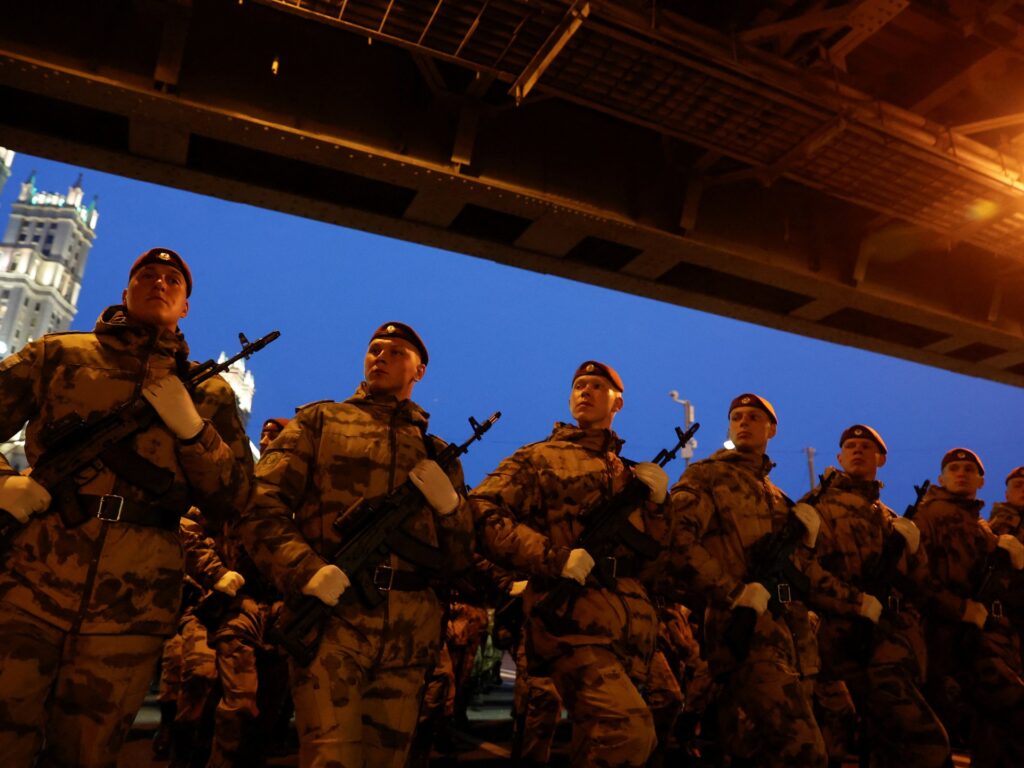
Human Rights Watch investigates ‘apparent summary executions’ and says actions could amount to war crimes. Russian forces appear to have executed Ukrainian soldiers as they attempted to surrender or had already surrendered since December 2023, an international rights group has said in a new report. The actions should be investigated as war crimes, Human Rights Watch (HRW) said in the report published on Thursday. The group probed five incidents of what it called the “apparent summary executions” of at least 15 Ukrainian soldiers as they attempted to surrender, and possibly six more who were surrendering or who had surrendered between December 2023 and February 2024. “Since Russia’s full-scale invasion of Ukraine, its forces have committed many heinous war crimes,” said Belkis Wille, a senior researcher at HRW. “The summary execution – or murder – of surrendering and injured Ukrainian soldiers, gunned down in cold blood, expressly forbidden under international humanitarian law, is also included in that shameful legacy.” Since early Dec, footage shows Russian forces gunning down at least 15 Ukrainian soldiers attempting to surrender on battlefield, and possibly six more. Russian drone recording captures voice giving orders to “take no prisoners, shoot everyone.” https://t.co/HR6FnDTTmp pic.twitter.com/GNf6jM5OSv — Belkis Wille (@belkiswille) May 2, 2024 The rights watchdog said it relied on analysis of drone footage and videos on social media, interviews with Ukrainian soldiers, and media reports, but added that it could not confirm the locations of some of the incidents. It noted that the “apparent executions do not appear to be isolated instances”. It cited one incident on February 25 when drone footage shared on X appeared to show at least seven Ukrainian soldiers coming out of a dugout removing their body armour – one soldier even removing his helmet, and all lying face down as five Russian soldiers aimed and fired at them. In other footage captured on the front lines in the Donetsk region, a Russian commander seemed to have told his troops: “Take no prisoners, shoot everyone,” according to the report. The researchers differentiated between Russian and Ukrainian troops by observing the use of each side’s identification tape – blue for Ukraine and white or red for Russia – as well as the different colours of their military fatigues. In December, the Ukrainian Prosecutor General’s Office accused Russia of committing war crimes after a grainy video on social media appeared to show several soldiers shooting two surrendering military personnel who emerged from a dugout at gunpoint. Ukrainian authorities are conducting about 27 separate investigations into similar allegations, HRW said. The United Nations Human Rights Monitoring Mission in Ukraine in March separately reported allegations that at least 32 Ukrainian prisoners were executed in 12 separate incidents between December 2023 and February 2024. Findings from 60 released Ukrainian soldiers, the mission added, showed they had been tortured using repeated beatings, electric shocks, threats of execution, prolonged stress positions, mock executions and sexual violence. Civilians in Russian-occupied Ukrainian territory were also subject to arbitrary killings, detention, and restricted freedoms of expression, the UN group said. Russia denies committing war crimes during its war in Ukraine. It is a party to the Geneva Conventions, which forbid killing prisoners of war. Ukraine has in the past also faced allegations that its soldiers summarily killed Russian troops. Adblock test (Why?)
At least 200 arrested at May Day clashes in Turkey

NewsFeed Protesters tried to reach Istanbul’s Taksim Square despite a ban by Turkish President Erdogan on May Day demonstrations at the site. Published On 1 May 20241 May 2024 Adblock test (Why?)
Can Israeli leader’s threat to invade Rafah derail Gaza ceasefire talks?

US secretary of state says a deal is achievable as he makes another diplomatic push to pause the fighting in Gaza. US Secretary of State Antony Blinken says a strong proposal for a truce in Israel’s war on Gaza is on the table as he makes his seventh visit to the Middle East since fighting began in October. The comments come as indirect talks for a ceasefire between Israel and Hamas carry on in Egypt. But questions are being raised about the chances of an agreement being reached after Israeli Prime Minister Benjamin Netanyahu reiterated his plan to invade Rafah. Can Netanyahu’s threat disrupt talks to end the war that has killed more than 34,500 Palestinians? Presenter: Nick Clark Guests: Daniel Levy – President of the US Middle East Project Nour Odeh – Political analyst William Lawrence – Professor at American University Adblock test (Why?)
US increases pressure on Israel over Gaza aid as truce talks continue

US Secretary of State Antony Blinken has urged Israeli officials to improve the facilitation of humanitarian aid supplies to Gaza amid warnings from the United Nations and aid agencies of a looming famine in parts of the war-ravaged Palestinian territory. Blinken on Wednesday travelled to Kerem Shalom, an Israeli entry point into Gaza about 3km (2 miles) from the southern city of Rafah that is known to Palestinians as Karem Abu Salem. The top United States diplomat also visited Israel’s main port, Ashdod, highlighting “progress” made in recent weeks on humanitarian access, but stressed once again that more needs to be done. “The progress is real but given the need, given the immense need in Gaza, it needs to be accelerated, it needs to be sustained,” he said. Blinken asked Israel’s government to take a set of specific steps to facilitate aid to Gaza, where nearly half the population are suffering catastrophic hunger, he said. Israel has sought to demonstrate it is not blocking aid to Gaza, especially since US President Joe Biden issued a stark warning to Israeli Prime Minister Benjamin Netanyahu, saying Washington’s policy could shift if Israel fails to take steps to address civilian harm, humanitarian suffering, and the safety of aid workers. Earlier on Wednesday, Jordan’s foreign ministry said Israeli settlers attacked two of its humanitarian aid convoys as they made their way towards Gaza. “Two Jordanian aid convoys carrying food, flour and other humanitarian aid to the Gaza Strip were attacked by settlers,” the ministry said, without giving details of what happened. Jordanian public service media outlet Al-Mamlaka TV reported that a Jordanian aid convoy consisting of 31 trucks entered Gaza via the Beit Hanoon crossing, known as the Erez crossing to Israelis. This is its first opening since the start of the war. Rafah During his earlier meeting with Netanyahu, Blinken also reiterated that Washington would not support a military operation in Rafah without a plan to ensure civilians were protected. “We cannot, will not support a major military operation in Rafah absent an effective plan to make sure that civilians are not harmed and no, we’ve not seen such a plan,” Blinken told reporters. The United Nations and humanitarian groups have long warned that a military operation there, where more than 1.5 million people are crammed in, would cause a catastrophe. “There are other ways, and in our judgement better ways, of dealing with the … ongoing challenge of Hamas that does not require a major military operation in Rafah,” he said, adding that it was the subject of ongoing talks with Israeli officials. But an Israeli government spokesperson said Israel remained determined to destroy the remaining Hamas fighting formations. “When it comes to Rafah – we are committed to remove the last four of five Hamas battalions in Rafah – we are sharing our plans with Secretary of State Blinken,” the spokesperson told a regular briefing. While facing international calls to hold off on any Rafah offensive, Netanyahu has faced pressure from the religious nationalist partners he depends on for the survival of his coalition government to press ahead. Negotiations Israel is the final stop on the top US diplomat’s Middle East tour amid renewed efforts to secure a ceasefire and exchange of hostages for prisoners. Blinken urged Hamas to accept a truce deal proposed by Egyptian mediators, which would see 33 hostages released in exchange for a larger number of Palestinian prisoners and a halt to the fighting, with the possibility of further steps towards a comprehensive deal later. “Israel has made very important compromises,” he said. “There’s no time for further haggling. The deal is there. They [Hamas] should take it.” A senior official for Hamas said the group was studying the proposed deal and accused Blinken of failing to respect both sides and described Israel as the real obstacle. “Blinken’s comments contradict reality,” Sami Abu Zuhri told Reuters. Israel is holding off sending a delegation to Cairo for follow-up truce talks, pending a response from Hamas’s leader in Gaza, Yahya Sinwar, an Israeli official told Reuters. “Only after he responds will we decide what to do.” Israeli media reported on Wednesday that Netanyahu was still refusing to accept Hamas’s central demand that any deal would have to include a permanent ceasefire and a withdrawal of Israeli troops. The Israeli news site Ynet, citing the Prime Minister’s Office, said Netanyahu told Blinken a Rafah operation “was not contingent on anything” and that he rejected any truce proposals that would end the Gaza war. Adblock test (Why?)
NBA playoffs: Bucks and 76ers win to stay alive, Cavs take lead over Magic

Injury-riddled Milwaukee Bucks score a 115-92 win over Indiana Pacers, while Philadelphia 76ers beat NY Knicks 112-106. Tyrese Maxey scored 46 points and Kelly Oubre Jr hit a tiebreaking layup in overtime as the visiting Philadelphia 76ers avoided elimination with a 112-106 victory over the New York Knicks in Game 5 of their first-round playoff series. Game 6 of the Eastern Conference series is on Thursday in Philadelphia, and if the 76ers can continue to stay alive, the teams will play a seventh game on Saturday in New York. Jalen Brunson led the Knicks with 40 points. The Knicks were 28.9 seconds away from closing out the series on Tuesday night after Miles McBride’s 14-footer put them up 96-90. Following a timeout, Maxey, who scored a career playoff high in points, converted a four-point play with 25.4 seconds left in regulation. After New York’s Josh Hart split two free throws, Maxey buried a 35-foot trey with 8.5 seconds remaining for a tie at 97. Maxey made 17 of 30 shots overall and hit seven 3-pointers for the Sixers, who survived Joel Embiid hobbling throughout the game. Embiid added 19 points, 16 rebounds and 10 assists after missing the morning shootaround with a migraine. ▪️ Sixers win, force Game 6▪️ Cavs win, take 3-2 lead▪️ Bucks win, force Game 6#NBAPlayoffs presented by Google Pixel continue Wednesday on TNT! pic.twitter.com/SzMVWX4qd9 — NBA (@NBA) May 1, 2024 Bucks 115, Pacers 92 Khris Middleton and Bobby Portis scored 29 points apiece and injury-riddled Milwaukee stayed alive with a victory over visiting Indiana in Game 5 of an Eastern Conference first-round playoff series. The Bucks controlled the contest despite Giannis Antetokounmpo (calf) and Damian Lillard (Achilles) sitting out. Antetokounmpo has missed the entire series and Lillard has sat out the past two games. Tyrese Haliburton scored 16 points and Myles Turner added 13 for the Pacers. Milwaukee outscored Indiana 64-36 over the two middle quarters to take control. The Bucks pulled within 3-2 in the series. “I told our coaches we were coming to play and win tonight,” Milwaukee coach Doc Rivers said after the game. “That was not a team walking through the walkthrough thinking this was it. That was a team thinking it could win, and it showed.” Milwaukee Bucks forward Khris Middleton (22) shoots against Indiana Pacers forward Obi Toppin during the second quarter during Game 5 of the first round for the 2024 NBA playoffs [Jeff Hanisch/USA Today Sports via Reuters] Cavaliers 104, Magic 103 Evan Mobley blocked Franz Wagner’s attempted layup with 5.1 seconds remaining in the fourth quarter, helping host Cleveland secure a win over Orlando in Game 5 of an Eastern Conference first-round playoff series. Cleveland’s Donovan Mitchell erupted for 28 points, and Darius Garland scored 17 of his 23 points in the first quarter. Mobley collected 14 points and 13 rebounds. Orlando’s Paolo Banchero recorded 39 points and eight rebounds after being limited to just nine points on 4-of-14 shooting from the floor in Game 4. Adblock test (Why?)
Malaysia’s Anwar unveils record public pay hike amid ringgit’s slide

Malaysian Prime Minister Anwar Ibrahim says pay hike of more than 13 percent will be ‘best increase in history’. Malaysian Prime Minister Anwar Ibrahim has announced a record hike in civil servants’ pay of more than 13 percent, amid rising prices and a weakening local currency. In a speech to mark Labour Day on Wednesday, Anwar said 10 billion ringgit ($2.10bn) would be allocated to support the “best increase in history” from December. Anwar, who is also finance minister, said the salary hike would ensure that civil servants earn a minimum income of 2,000 ringgit ($420) per month. “Currently the overall minimum income, which includes salary and fixed allowances, is 1,795RM per month,” Anwar was quoted as saying by state-run news agency Bernama. Anwar also called on companies making “huge profits” to share their gains by raising wages for their employees. The Malaysian leader, who last year flagged plans to increase taxes and cut subsidies to shore up the country’s finances, made the announcement as a decline in the value of the ringgit puts pressure on household budgets. The ringgit has lost nearly 4 percent of its value against the US dollar so far this year. In February, the currency slumped to a 26-year low, dropping to 4.7965 ringgit per dollar, lower than at any point since the 1998 Asian financial crisis. While helping exporters to sell their products more cheaply overseas, the currency’s slide has raised the cost of essential imports, including food and fuel. Anwar has described the currency’s slide as “concerning” but “under control.” Southeast Asia’s fifth-largest economy grew 3.7 percent last year, below government projections and sharply down from a 22-year high of 8.7 percent in 2022. Gross domestic product (GDP) expanded an estimated 3.9 percent in the first quarter of this year, according to advance estimates released by the country’s statistics agency. Malaysia’s central bank has said it expects GDP growth of 4-5 percent in 2024. Adblock test (Why?)