

US police clear out Gaza protesters at Columbia University

NewsFeed US police cleared a building occupied by protesters and the main protest camp at Columbia University on Tuesday, arresting dozens of demonstrators who defied a deadline to leave. Published On 1 May 20241 May 2024 Adblock test (Why?)
Abu Dhabi-backed group ends bid to take over Telegraph newspaper
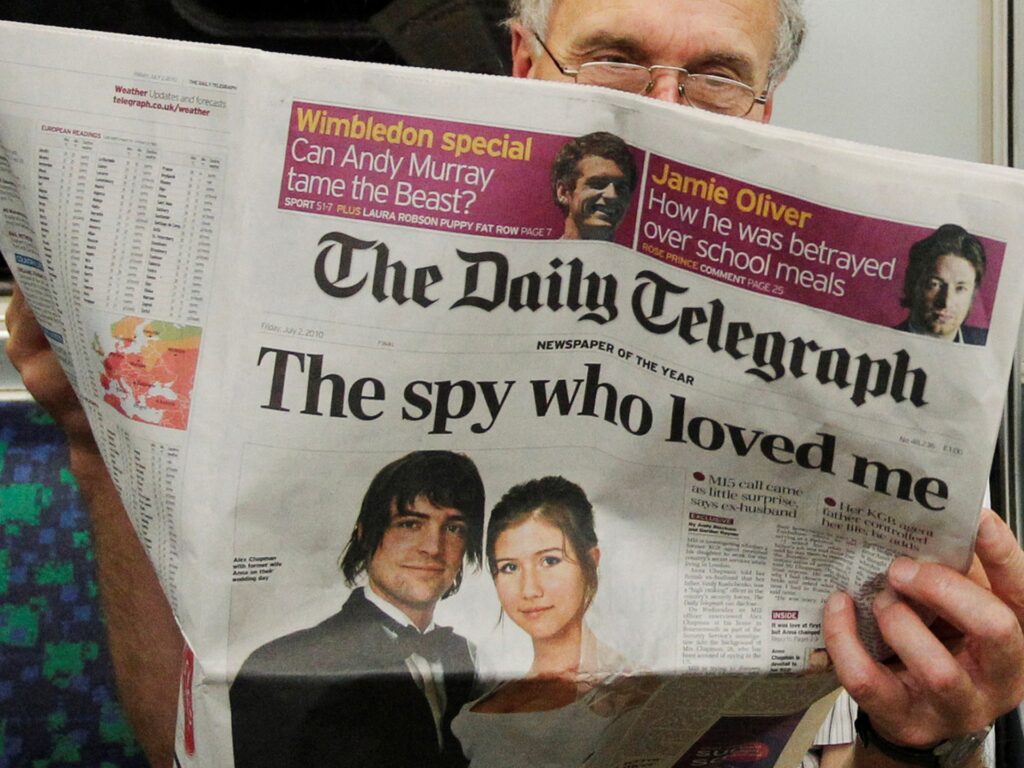
The move comes after the UK said it would bring forward legislation to block such state-backed takeover deals in media. An Abu Dhabi-backed group planning to take over Britain’s Telegraph Media Group (TMG) has said it will withdraw after the UK government moved to block the deal. RedBird IMI, a joint venture between US firm RedBird Capital and Abu Dhabi’s International Media Investments, struck a 1.2 billion-pound ($1.5bn) deal with TMG’s previous owners, the Barclay family, in November. The agreement, which has faced opposition over its potential impact on free speech given Abu Dhabi’s press freedom record, saw RedBird IMI pay off bank debts in exchange for control of the media group. However, last month the United Kingdom’s government said it would bring forward legislation to block such state-backed takeover deals in the industry, while Culture Secretary Lucy Frazer also considered a full regulatory probe. The regulatory hurdles appear to have prompted RedBird IMI to now abandon the endeavour to own and control TMG, which also includes The Spectator magazine. “RedBird IMI has today confirmed that it intends to withdraw from its proposed acquisition of the Telegraph Media Group and proceed with a sale,” it said in a statement on Tuesday. “We continue to believe this approach would have benefited the Telegraph and Spectator’s readers, their journalists and the UK media landscape more widely. “Regrettably, it is clear this approach is no longer feasible.” RedBird IMI said it now plans to bring certainty to employees and readers of the publications by seeking new owners for the titles. It said the titles “remain highly attractive” to potential suitors, with speculation they could be sold separately or as a package. ‘Cornerstone’ Frazer said she had acted to “ensure that media freedom was protected while there was an investigation into those concerns”. “I will now allow the parties to conduct an orderly transition and I will monitor the outcome with a view to taking any further regulatory action as required,” she added. “The free press is a cornerstone of our democracy, and we cannot take it for granted.” Frazer noted the government would continue to intervene “where necessary to protect the integrity and independence of these publications, given the unique role they play in our democracy”. RedBird IMI’s original ownership plans sparked an uproar in some British media circles, including among some lawmakers in the ruling Conservative Party. It has long enjoyed a close ideological relationship with the right-leaning Telegraph titles. The Spectator – once edited by former Tory prime minister and Brexit figurehead Boris Johnson – is widely considered the “Tory bible”. Redbird IMI is majority-owned by Sheikh Mansour bin Zayed Al Nahyan, vice president of the United Arab Emirates and owner of Manchester City Football Club. It is run by former CNN president Jeff Zucker. Adblock test (Why?)
ICJ rejects Nicaragua’s request to halt German arms sales to Israel
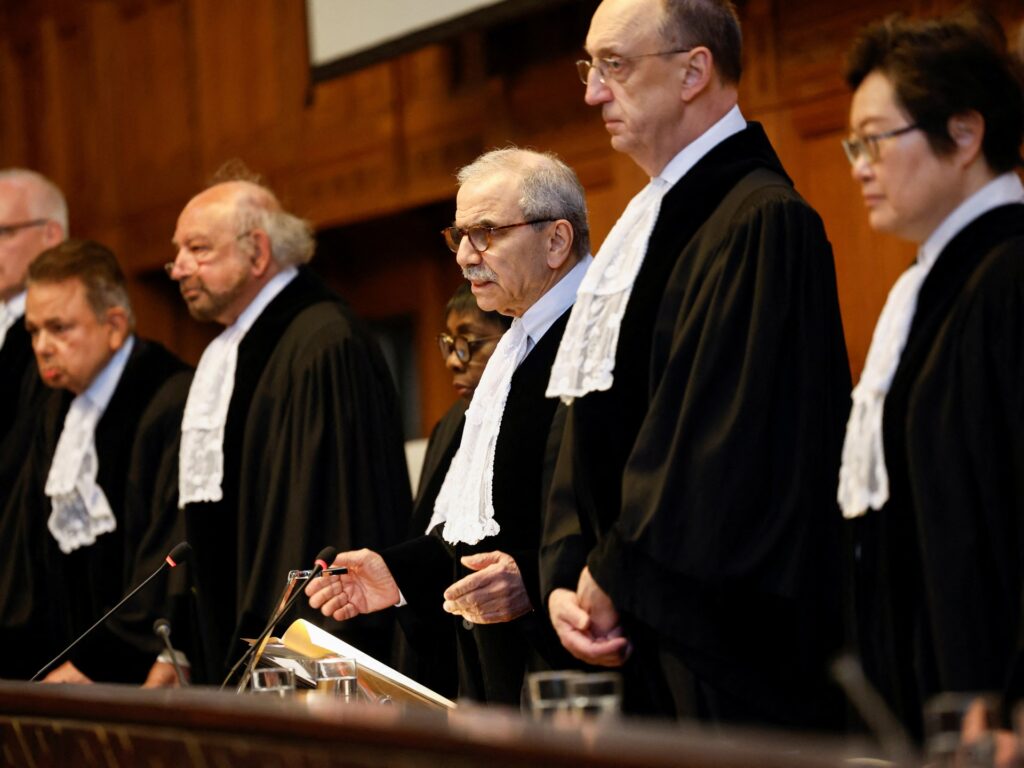
NewsFeed The UN’s top court has thrown out Nicaragua’s request to halt German arms sales to Israel. In its ruling the ICJ said the circumstances, as they present themselves now, do not require the exercise of power. However, the court said it remains “deeply concerned about the catastrophic living conditions” in Gaza and reminded all countries they have an obligation to abide by international law. Published On 30 Apr 202430 Apr 2024 Adblock test (Why?)
UN chief calls for independent probe into Gaza mass graves
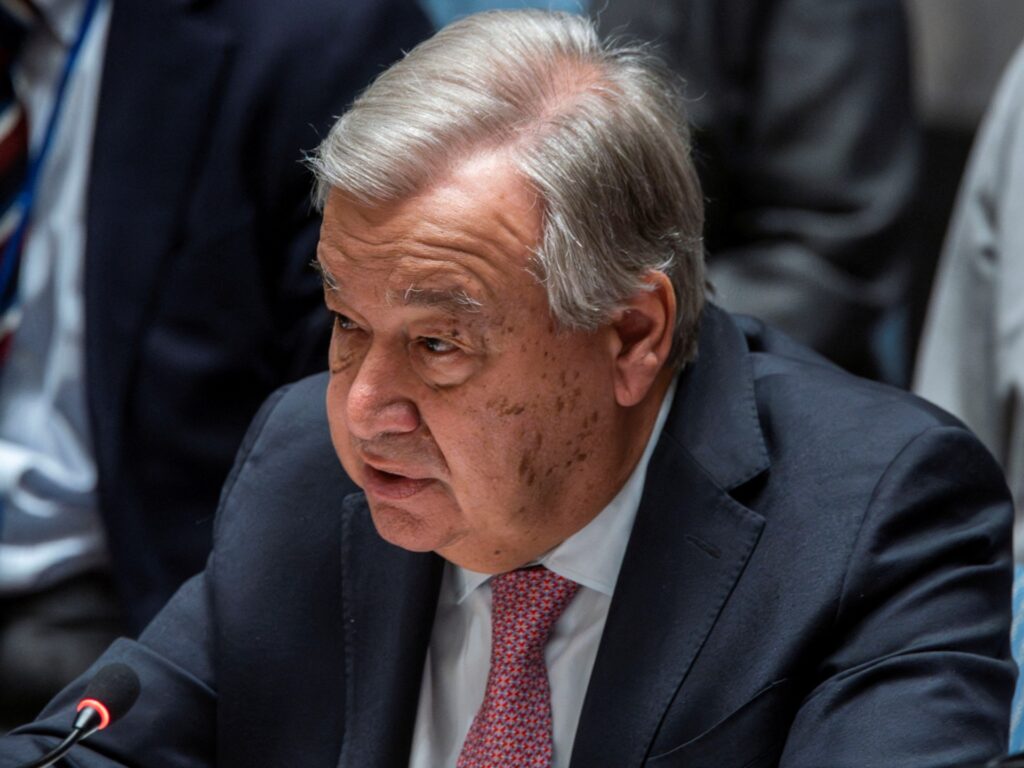
Antonio Guterres says it is ‘imperative’ that independent investigators are allowed the immediate access to mass graves in Gaza to determine the circumstances behind the deaths. United Nations chief Antonio Guterres has demanded an independent investigation into reports by Palestinian authorities of mass graves discovered in Gaza after bodies with hands tied or medical tubes attached to them were found in multiple sites, including two hospitals. “It is imperative that independent international investigators with forensic expertise are allowed the immediate access to the sites of these mass graves to establish the precise circumstances under which the Palestinians lost their lives and were buried or reburied,” Guterres said on Tuesday. The UN secretary-general also urged Israel against invading southern Gaza’s city of Rafah, the last refuge for more than 1.4 million Palestinians, after the Israeli prime minister said an offensive would go forward regardless of the outcome of truce talks with Hamas. A military assault on Rafah would “be an unbearable escalation, killing thousands more civilians and forcing hundreds of thousands to flee,” he told reporters. He added that while there has been “incremental progress” towards averting “an entirely preventable, human-made famine” in northern Gaza, much more is urgently needed, including for Israel to follow through on its promise to open “two crossing points between Israel and northern Gaza, so that aid can be brought into Gaza from Ashdod port and Jordan”. He cited the lack of security for aid workers and civilians as the major obstacle to distributing aid across Gaza. “I again call on the Israeli authorities to allow and facilitate safe, rapid and unimpeded access for humanitarian aid and humanitarian workers, including UNRWA, throughout Gaza,” he said. UNRWA Commissioner-General Philippe Lazzarini told journalists on Tuesday that aid supplies into Gaza had improved in April, but listed a series of continuing difficulties including regular crossing closures “because they [Israel] are dumping released detainees or dumping sometimes bodies taken to Israel and back to the Gaza Strip.” Juliette Touma, a spokesperson for the UN’s refugee agency for Palestinians, said that Israel had sent 225 bodies to Gaza in three containers since December that were then transported by the UN agency to local health authorities for burial, shutting the crossing temporarily. She did not have details of the circumstances of their deaths and said it was not UNRWA’s mandate to investigate. Palestinian authorities have previously said that Israel has returned bodies after confirming they were not hostages. They said they were trying to identify them and figure out where they were killed. Tensions are high between Israel and UNRWA, with the former accusing 19 UNRWA staff of involvement in the October 7 Hamas-led attack against Israel that killed at least 1,139 people, according to an Al Jazeera tally based on Israeli statistics. Israel’s allegations are being examined by UN investigators although a separate review found Israel has yet to provide evidence for accusations that hundreds of UNRWA staff are members of armed groups. More than 34,000 people have been killed in Israel’s war on Gaza since October 7, according to Palestinian authorities. Adblock test (Why?)
Boxer and MMA fighter Francis Ngannou’s 15-month-old son Kobe dies
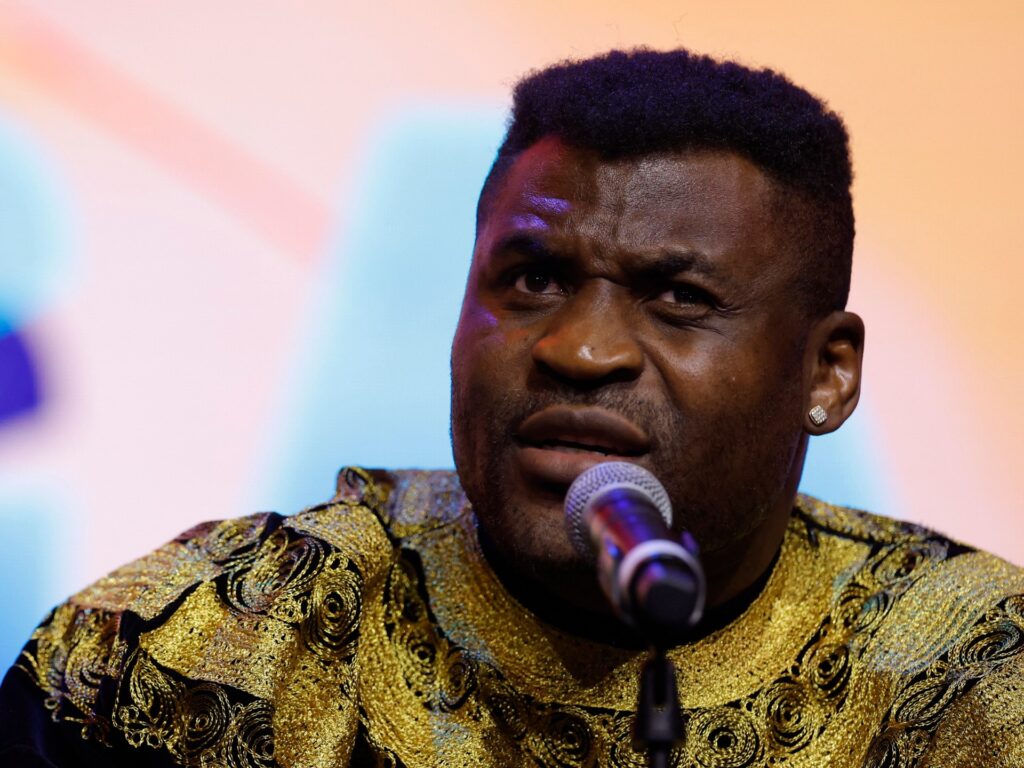
‘Too soon to leave but yet he’s gone,’ Ngannou wrote in a social media post annoucing his son’s death. Former UFC heavyweight champion Francis Ngannou’s 15-month-old son Kobe has died, the boxer said in a social media post. Ngannou, 37, posted a black and white photo with his son late on Monday and wrote, “Too soon to leave but yet he’s gone. My little boy, my mate, my partner Kobe was full of life and joy.” “Now, he’s laying without life. I shouted his name over and over but he’s not responding. “I was my best self next to him and now I have no clue of who I am. Life is so unfair to hit us where it hurts the most,” Ngannou added. 💔 pic.twitter.com/aHD685fbMQ — Francis Ngannou (@francis_ngannou) April 29, 2024 After leaving the UFC, the French Cameroonian fighter switched to professional boxing. Ngannou was knocked out by Anthony Joshua in Saudi Arabia last month, his second heavyweight defeat since switching from MMA. Ngannou had pushed world champion Tyson Fury during a controversial points defeat in his first professional boxing match in Saudi Arabia last October. A few hours before revealing Kobe’s death, Ngannou had posted on X, without reference to his son: “What’s the purpose of life if what we’re fighting tooth and nail to get away from is what finally hit us the hardest? “Why is life so unfair and merciless?” The fight world reacted with messages of condolence. “I am so sorry to hear of your loss Francis, my prayers are with you and your family at this time,” wrote fellow UFC fighter Conor McGregor on X. The fighter’s manager, Marquel Martin, posted: “Please respect @francis_ngannou and his family during this traumatic time. I along with millions (of) others will be praying for their strength.” Veteran ring announcer Michael Buffer said on social media: “The entire world of sports and beyond stand crushed and painfully supportive with Francis at this time. “Please know that millions of us embrace little Kobe with our prayers.” Adblock test (Why?)
Gunman kills at least six in attack on mosque in Afghanistan’s Herat
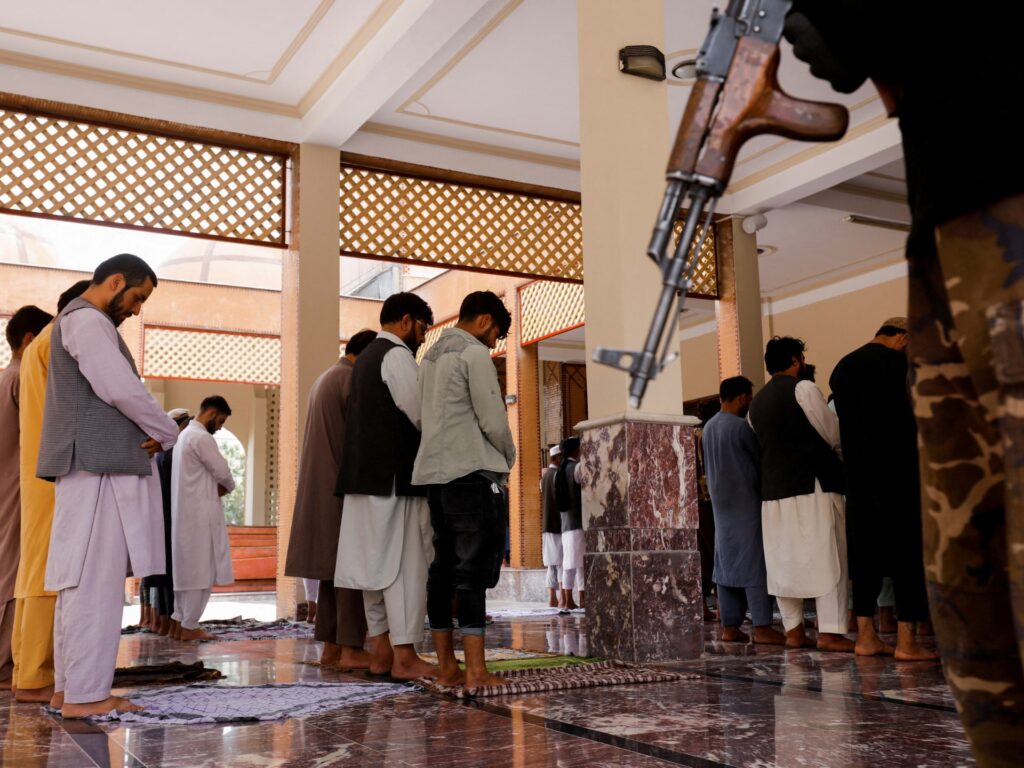
Government spokesman says unknown armed person shot at worshippers in a mosque in Herat province, killing at least six people. A gunman stormed a mosque in western Afghanistan and killed six people, a government spokesman says. Ministry of Interior Affairs spokesman Abdul Mateen Qani said “an unknown armed person shot at civilian worshippers in a mosque” at about 9pm (16:30 GMT) on Monday in Andisheh town of Guzara district in Herat province. “Six civilians were martyred and one civilian was injured,” he wrote on social media platform X early on Tuesday morning. The state-run Bakhtar News Agency gave the same death toll for the attack. Citing local sources, local media channel Tolo reported the mosque belonged to Afghanistan’s minority Shia community. A prayer leader, known as Imam, was also killed in the attack, local media reports said. The Iranian embassy in Kabul condemned the attack. While no group has yet claimed the attack, the regional chapter of ISIL (ISIS) is the largest security threat in Afghanistan and has frequently targeted Shia communities. The Taliban government has pledged to protect religious and ethnic minorities since returning to power in August 2021, but rights monitors say they have done little to make good on that promise. The most notorious attack linked to ISIL since the Taliban takeover was in 2022, when at least 53 people – including 46 girls and young women – were slain in the suicide bombing at an education centre in a Shia neighbourhood of Kabul. Taliban officials blamed ISIL for the attack. Kabul’s new rulers claim to have eliminated ISIL from Afghanistan and are highly sensitive to suggestions the group has found safe haven in the country since the withdrawal of foreign forces. Taliban authorities have frequently given death tolls lower than other sources after bombings and gun attacks, in an apparent attempt to downplay security threats. A United Nations Security Council report released in January said there had been a decrease in ISIL attacks in Afghanistan because of “counter-terrorism efforts by the Taliban”. But the report also said ISIL still had “substantial” recruitment in the country and that the armed group had “the ability to project a threat into the region and beyond”. The ISIL’s chapter spanning Afghanistan, Pakistan and Central Asia claimed responsibility for the March attack on the Crocus City Hall concert venue in Moscow, where more than 140 people were killed. It was the deadliest attack in Russia in two decades. Adblock test (Why?)
NBA playoffs: LeBron’s Lakers eliminated as Nuggets’ Murray hits late hoop
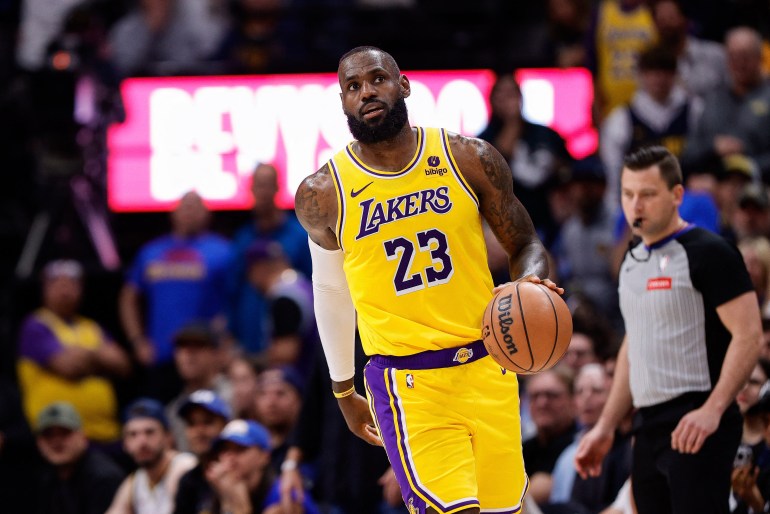
Jamal Murray hit a tiebreaking 14-footer with less than four seconds left to send the host Denver Nuggets to the Western Conference semifinals with a 108-106 win over the Los Angeles Lakers in Game 5 of a first-round playoff series. The second-seeded Nuggets won the best-of-seven series 4-1 and will face the third-seeded Minnesota Timberwolves in the Western Conference semifinals beginning on Saturday in Denver. “This series definitely got us ready for the next series,” Nuggets coach Michael Malone said, “but that being said, we’re going to have to play much better if we want to beat Minnesota.” As he did in Game 2, Murray came alive in the fourth quarter and beat Los Angeles with a clutch jumper. He finished with a game-high 32 points, 12 in the fourth quarter, despite playing on a strained left calf. Murray said of the deja vu moment, “It’s amazing. Those are shots that you dream of as a little kid and practise in your back yard, at the playground.” Nikola Jokic had 25 points, 20 rebounds, nine assists and seven turnovers, Michael Porter Jr. scored 26 points and Aaron Gordon grabbed 13 rebounds for the Nuggets. LeBron James put up 30 points, 11 assists and nine rebounds for the seventh seeded Lakers. Anthony Davis had 17 points and 15 rebounds while playing through an injured left shoulder. The game was tight throughout the fourth quarter. Jokic hit a tiebreaking runner with 2:34 left before Austin Reaves drained a 3-pointer to give the Lakers a 102-101 lead with 2:12 to go. The teams traded baskets to keep Los Angeles in front, but Murray’s 3-pointer put the Nuggets ahead 106-104 with 1:07 remaining. James made two free throws with 26.3 seconds left to tie the score before Murray dribbled down the clock and hit a fadeaway. Los Angeles’ Taurean Prince missed a long 3-point attempt for the win at the buzzer. “It sucks to lose to the same team,” Lakers coach Darvin Ham said, referring to his team’s sweep at the hands of Denver in the 2023 Western Conference finals. “Happy we broke that ice and was able to get one. Overall we won a battle and they won the war.” TALLY ‘EM UP #MileHighPlayoffs | #Road2Gold pic.twitter.com/ZovWpIL7wv — Denver Nuggets (@nuggets) April 30, 2024 LeBron James tight-lipped on future with Lakers Shortly after the game, James was asked if there was any thought he might have played his last game with the Lakers. James paused a long time before replying, “Uhhh, I’m not gonna answer that.” Asked about taking any confidence moving forward from the Lakers pushing the defending champion Nuggets, James said, “No, ‘cause we lost. … I’m not a ‘participation’ guy. We lost and you move on and see how you can get better. “Our season has been derailed all season with … injuries and guys in and out. I talked about it all year. … It’s hard to say who we are, what we can be ‘cause we have yet to be whole. I think we were only probably whole one or two times this year. I know one of them was during the in-season tournament, we got whole and we showed what we (are) capable of doing. “But we were just hit with injuries after injuries after injuries, and it’s just hard to come back from that.” If he decides to come back, James could decide whether to hit free agency or to pick up a $51.4m player option for the last year of his deal with the Lakers. James just completed his 21st NBA season, which included his 20th consecutive All-Star Game selection. He is a four-time NBA champion, a four-time NBA Finals MVP and a four-time regular-season MVP. Los Angeles Lakers forward LeBron James (23) in the third quarter against the Denver Nuggets [Isaiah J Downing/USA Today Sports via Reuters] Oklahoma City Thunder sink New Orleans Pelicans, Boston Celtics beat Miami Heat Elsewhere, Jalen Williams put on a 24-point performance as the Oklahoma City Thunder beat the New Orleans Pelicans 97-89 night to complete a four-game sweep of their first-round playoff series. Top-seeded Thunder advance to face either the fourth-seeded Los Angeles Clippers or the fifth-seeded Dallas Mavericks in the Western Conference semifinals. In Miami, Derrick White scored a career-high 38 points on 15-for-26 shooting, including 8-for-15 success from 3-point range, and Boston Celtics cruised to a win over Miami Heat. Jayson Tatum added 20 points and 11 rebounds for the Celtics, who seized a 3-1 lead in the best-of-seven Eastern Conference quarterfinal series. However, Boston lost Kristaps Porzingis to a calf injury in the first half. ▪️ BOS takes a 3-1 lead▪️ OKC advances▪️ DEN advances The #NBAPlayoffs presented by Google Pixel continue Tuesday on TNT and NBA TV! pic.twitter.com/HnWiwVnezB — NBA (@NBA) April 30, 2024 Adblock test (Why?)
US, UK urge Hamas to accept Israeli truce proposal in war on Gaza
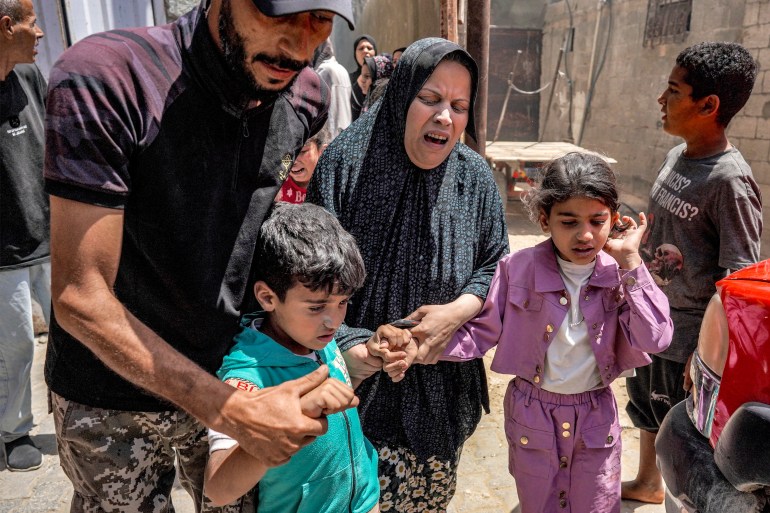
British Foreign Secretary David Cameron says proposal includes a 40-day ceasefire and the release of captives. The United States and the United Kingdom have urged Hamas to accept an Israeli proposal for a truce in the Gaza war and the release of some hostages held in the besieged territory. British Foreign Secretary David Cameron said on Monday that the Israeli proposal delivered to Hamas includes a 40-day ceasefire in the Gaza war and the release of “potentially thousands” of Palestinian prisoners in return for the release of some Israeli hostages. Speaking on Monday at a World Economic Forum meeting in the capital of Saudi Arabia, Riyadh, Cameron described the offer as “generous”. “I hope Hamas accepts the proposal in front of them,” he said, and stressed that the war would not end until all the captives are released. Earlier on Monday, US Secretary of State Antony Blinken said he hoped that Hamas would accept the proposal. “They have to decide – and they have to decide quickly … I’m hopeful that they will make the right decision,” Blinken said. A woman and children flee following Israeli bombardment in Nuseirat in central Gaza [AFP] Egypt, Qatar and the US have been working to mediate an agreement between Israel and Hamas for months, but a flurry of diplomacy in recent days appeared to suggest a new push towards halting nearly seven months of hostilities. At least 34,488 people have been killed and 77,643 others wounded in the Israeli assault on Gaza since October 7, according to Palestinian authorities in the besieged territory. Israel launched its war on Gaza after Hamas fighters led an attack on southern Israel on October 7, killing at least 1,139 people, according to an Al Jazeera tally based on official Israeli statistics, and seizing around 250 others as hostages. Dozens of hostages were released by Palestinian groups in Gaza in exchange for hundreds of Palestinian prisoners held in Israeli jails during a previous weeklong truce in late November. Hamas delegation to Cairo The 40-day truce proposal comes as a senior Hamas delegation travels to Egypt for the latest round of negotiations aimed at pausing – if not stopping – Israel’s relentless war on Gaza. Led by Khalil al-Hayya, the deputy head of Hamas in the Gaza Strip, the delegation is expected to hand in the group’s response to the latest proposal. US Secretary of State Antony Blinken said he hoped that Hamas would accept the proposal [Evelyn Hockstein/Pool via AP Photo] Hamas has repeatedly said that it wants a permanent end to the fighting as part of any deal to release captives. Meanwhile, hardline Israeli ministers are warning Prime Minister Benjamin Netanyahu that his government will collapse if a truce is agreed with Hamas in exchange for captives. Reporting from occupied east Jerusalem, Al Jazeera’s Bernard Smith said the Israelis have a delegation ready to go to Cairo tomorrow, but that depends on the response from Hamas to Israel’s ceasefire proposal. “It’s understood that the Israelis are asking for fewer than 40 of the 130 or so captives being held by Hamas, and in return for that, they’ll release Palestinian prisoners, and they’ll move to a second phase of a truce, which will offer this period of sustained calm,” he said. Smith noted that Hamas has insisted in previous rounds of talks that it wants to secure a complete end to hostilities and the withdrawal of Israeli forces from Gaza. “So the question is whether this offer of a period of ‘sustained calm’ will be enough for Hamas, considering they’ve been asking for this permanent ceasefire,” Smith said. Israel’s war on Gaza has driven around 80 percent of the territory’s population of 2.3 million from their homes, caused vast destruction in several towns and cities, and pushed northern Gaza to the brink of famine. Adblock test (Why?)
‘The encampment fills me with hope for a Palestinian future’
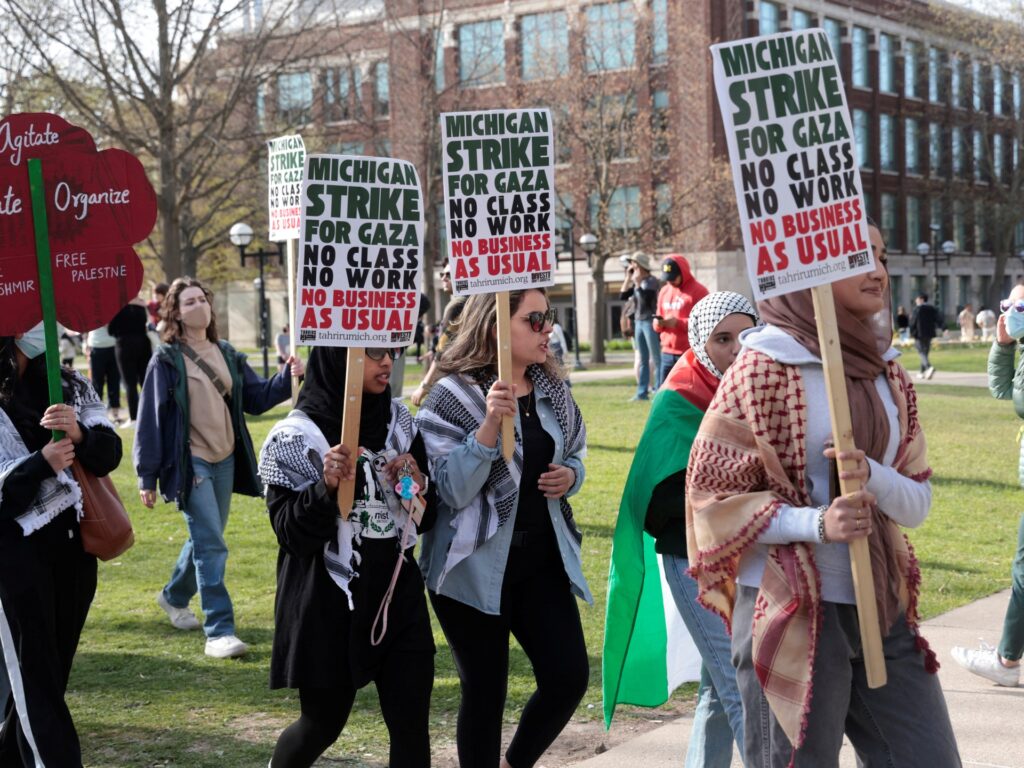
University protests are bringing people of all religions and races together in support of Palestinian rights and forcing a hard look at US support for the state of Israel, said University of Michigan demonstrator Ahmad Ibsais. Published On 29 Apr 202429 Apr 2024 Adblock test (Why?)
Gerard Depardieu released after questioning over alleged sexual assaults
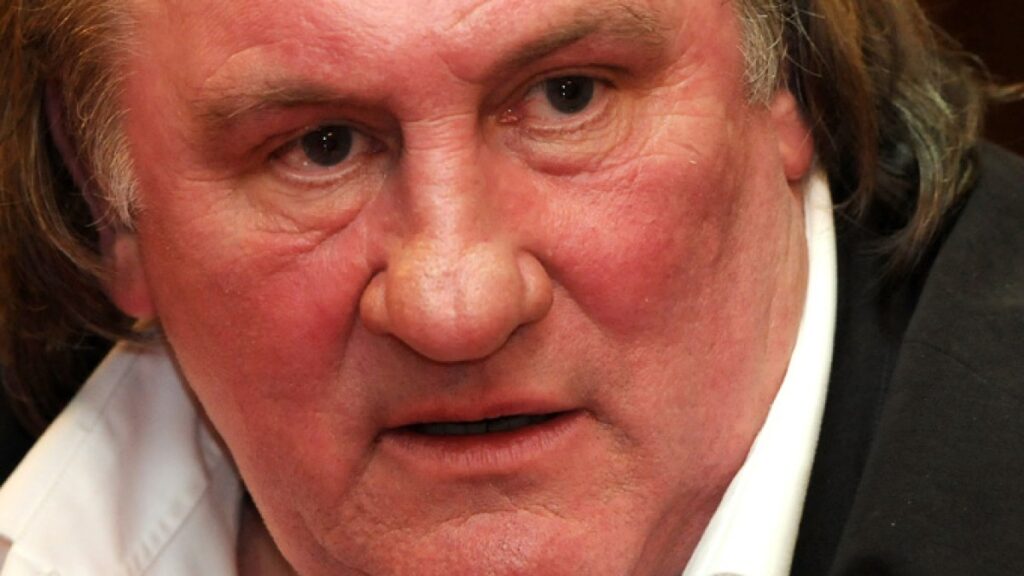
Depardieu released after questioning about allegations made by two women that he sexually assaulted them on film sets. French actor Gerard Depardieu has been released after police questioned him in connection with sexual assault allegations, his lawyer has said. French media had reported earlier on Monday that Depardieu was in police custody for questioning about allegations made by two women that he sexually assaulted them on film sets. Speaking to reporters as he was leaving the police station in the 14th district of Paris, the actor’s lawyer, Christian Saint-Palais, said: “The police custody is over. He is no longer held in the police station.” Depardieu, 75, one of France’s top movie stars, has been at the centre of a number of sexual assault allegations in recent years that have tarnished his legacy and exposed broader divisions about sexual conduct in France. BFMTV and Le Parisien reported that the police summons relates to accusations of sexual assault filed by two women who accuse him of groping during filming – one in 2014, the other in 2021. Alleged assaults The alleged 2014 assault was reported to police in January this year, Le Parisien reported. The other alleged assault involved a 53-year-old movie decorator. She alleged that Depardieu grabbed her and kneaded her waist, stomach and breasts during filming for the movie Les Volets Verts (The Green Shutters), according to the woman’s lawyer, Carine Durrieu-Diebolt, when she filed the complaint with the Paris prosecutor’s office in February. Depardieu already faces a rape charge, as well as claims of assault from more than a dozen women – all of which he has strongly denied. Adblock test (Why?)