

Car bomb kills at least seven in Syrian town near Turkish border

The blast occurred in the Syrian opposition city of Azaz during peak late night shopping after breaking the day’s Ramadan fast. At least seven people have been killed and 30 others injured after a car bomb went off in a busy marketplace in the Syrian opposition city of Azaz in the northern Aleppo province. Residents and rescuers told the Reuters news agency the blast late on Saturday occurred as residents were shopping after breaking their fast as part of activities in the ongoing Muslim month of Ramadan. Syria’s Civil Defence forces – The White Helmets – said at least 30 were wounded as the blast tore through the packed market, with some seriously injured transferred to local hospitals. The group, in a post on X, said its initial tally saw that three people – including two children – had died in the blast. “Our teams recovered and treated several of the injured and inspected the area,” The White Helmets said. “The explosion also caused major damage to shops, civilian homes, cars, and motorcycles at the site.” 3 civilians were killed (two children and an unidentified woman), and 5 civilians, including a child, were injured, in an initial toll after a car bomb explosion that occurred in a market in the city of Azaz, north of #Aleppo, after midnight today, Sunday, March 31. Our teams… pic.twitter.com/DEzW1zkj6f — The White Helmets (@SyriaCivilDef) March 30, 2024 Yaseen Shalabi, who was near the site of the explosion and was shopping with his family confirmed to Reuters that the area was experiencing “heavy congestion by shoppers” at the time of the explosion. There was no immediate claim of responsibility. Syria, which has been in a state of civil war since 2011, remains a divided country. Syrian President Bashar al-Assad regained control of two-thirds of the country, with the help of his allies Russia, Iran and the Lebanese Hezbollah group. The northwest is still under the control of opposition forces. Azaz, close to the Turkish border, is held by Syrian rebel groups backed by Turkey and opposed to al-Assad. It is home to the Syrian interim government, which claims to be the legitimate authority in the troubled country. The predominantly Kurdish YPG, or People’s Protection Units, has previously launched attacks in the area. The group controls large swaths of areas in Syria’s north and northeast regions. Turkey considers the armed group to be the Syrian branch of the Kurdistan Workers’ Party (PKK), a designated “terrorist” group in Turkey, the United States and the European Union. Azaz is a majority-Arab town with a significant Kurdish population. At least five people died when it was hit by a missile attack in November 2022. In 2017, more than 40 people were killed when a car bomb was detonated outside the town’s courthouse. Adblock test (Why?)
Aid ships with nearly 400 tonnes of food depart Cyprus for Gaza

Saturday’s shipment marks the second delivery by sea as Gaza faces imminent famine while Israel continues to block aid. A three-ship convoy has left Cyprus’s Larnaca Port headed for the Gaza Strip with nearly 400 tonnes of food and other supplies as people continue to die from hunger in the enclave amid Israel’s ongoing war. The aid that departed on Saturday will be taken to Gaza by a cargo ship and a platform towed by a salvage vessel. The shipment comes as several NGOs and rights organisations accuse Israel of deliberately blocking aid to Gaza, amid warnings of imminent famine in the besieged strip. Charity, World Central Kitchen (WCK) said the vessels were carrying ready-to-eat items like rice, pasta, flour, legumes, canned vegetables, and proteins, enough to prepare more than one million meals. Dates, which are traditionally eaten to break the daily fast during the Muslim fasting month of Ramadan, were also on board. An aid ship operated by the Spanish NGO Open Arms delivered 200 tonnes of food aid on March 16, which WCK distributed. During that mission, a makeshift jetty was constructed from rubble to enable offloading in the enclave, which does not have any port facilities. The mission was financed mainly by the United Arab Emirates (UAE) and received the support of the Cypriot authorities. Saturday’s dispatch includes two forklifts and a crane to assist with future marine deliveries. Separately, the United States plans to construct a floating pier off Gaza to receive aid. Cypriot President Nikos Christodoulides said late on Friday that the target completion date is May 1, but it could be ready by around April 15. Israel’s war on Gaza has displaced more than 80 percent of Gaza’s population and pushed hundreds of thousands to the brink of famine, the United Nations and international aid agencies have said. Israel’s military said it continued to attack dozens of targets in Gaza, days after the UN Security Council issued its first demand for a ceasefire. Airdrops The US military said during an airdrop on Friday that it had released more than 100,000 pounds (45,000kg) of aid that day and almost a million pounds (453,000kg) overall, part of a multicountry effort. But the aid is not sufficient, and aid groups have criticised the drops as “symbolic” as Israel continues its war on Gaza. In some cases, the drops have proven lethal, with one killing five people in an incident when a parachute failed to open, and 12 people drowned as they attempted to get aid dropped in the sea. Humanitarian officials say deliveries by sea and air are not enough and that Israel must allow far more aid by road. Speaking to reporters in Egypt on Saturday, Jordanian Foreign Minister Ayman Safadi said that the state of near-famine in Gaza can be dealt with in a short time if Israel opened the land crossings for aid to enter. Impending famine The UN-backed global authority on food security warned earlier this month that famine was likely to occur by May in northern Gaza and could spread across the enclave of 2.3 million people by July. On Friday, a senior US Department of State official told the Reuters news agency that famine is “quite possibly” present in parts of the north, adding that an obstacle to getting more aid to Palestinians was a scarcity of trucks in the enclave under Israeli siege. “While we can say with confidence that famine is a significant risk in the south and centre but not present, in the north it is both a risk and quite possibly is present in at least some areas,” the official said on condition of anonymity. UN spokesperson Stephane Dujarric on Wednesday described “tremendous challenges” to distributing aid in Gaza, including a “lack of security, lack of cooperation with the Israeli authorities, lack of a sufficient number of trucks, not enough fuel.” Adblock test (Why?)
Belfast mural artists put up powerful show of solidarity with Gaza

A group of mural artists in Northern Ireland have transformed Belfast’s iconic International Wall into the Palestinian Wall, in a show of solidarity with the Palestinian people and artists amid Israel’s continuing war on Gaza. The mural artists painted images that were sent to them by Palestinian artists who would have risked imprisonment, and even their safety, had they attempted to create these works in their homeland in the occupied West Bank. The Wall on Divis Street in Belfast, well known for its political murals, is now decorated with striking images commemorating Palestinians and their struggle for freedom. Adblock test (Why?)
Zelenskyy fires aides in reshuffle, Russia launches air attack at Ukraine

Top aide Serhiy Shefir was among those dismissed as well as three advisers and two presidential representatives. Ukrainian President Volodymyr Zelenskyy dismissed a longtime aide and several advisers in a continuing reshuffle on Saturday, while Russia unleashed new attacks overnight. Zelenskyy dismissed top aide Serhiy Shefir from his post of first assistant, where he had served since 2019. The Ukrainian president also let go of three advisers and two presidential representatives overseeing volunteer activities and soldiers’ rights. No explanation was given immediately for the latest changes in a wide-reaching personnel shake-up over recent months. It included the dismissal on Tuesday of Oleksii Danilov, who served as secretary of the National Security and Defence Council, and Valerii Zaluzhnyi as head of the armed forces on February 8. Zaluzhnyi was appointed Ukraine’s ambassador to the United Kingdom earlier this month. Drones, and missiles fired across Ukraine Ukraine’s air force said on Saturday that Russia launched 12 Shahed drones overnight, nine of which were shot down, and fired four missiles into eastern Ukraine. Russia unleashed a barrage of 38 missiles, 75 air raids and 98 attacks from multiple rocket launchers over the last 24 hours, Ukraine’s armed forces said in social media posts. Two people were killed and one wounded in Russian shelling in Ukraine’s partially occupied Donetsk province, regional Governor Vadym Filashkin said on Saturday. Ukrainian energy company Centrenergo announced that the Zmiiv Thermal Power Plant, one of the largest thermal power plants in the eastern Kharkiv region, was completely destroyed following Russian shelling last week. Power outage schedules were still in place for approximately 120,000 people in the region, where 700,000 people had lost electricity after the plant was hit on March 22. Russia has escalated its attacks on Ukrainian energy infrastructure in recent days, causing significant damage in several regions. Officials in the Poltava region said on Saturday that there had been “several hits” to an infrastructure facility without specifying whether it was an energy facility. Meanwhile, the toll of Friday’s mass barrage of 99 drones and missiles hitting regions across Ukraine came to light on Saturday, with local officials in the Kherson region announcing the death of one civilian. A resident of the Dnipropetrovsk region died in a hospital from shell wounds, according to regional Governor Serhiy Lisak. Adblock test (Why?)
Gaza war reminds Vietnam of liberation struggle once shared with Palestine

Hanoi, Vietnam – At a private venue tucked away in a narrow alley in Hanoi’s city centre, a group of more than 20 people listened attentively to Saleem Hammad, a charismatic, 30-year-old Palestinian man, as he spoke in fluent Vietnamese. Hammad, who runs a business in Vietnam, shared an incident from his childhood in Jenin in the occupied West Bank. Those present listened as he recounted a vivid memory of being awoken one night as Israeli soldiers surrounded and raided his family home. Earlier, he had told those attending the discussion that Vietnam’s history of fighting for liberation against the United States had inspired Palestinians in their struggle against Israel’s occupation of their lands. “Vietnamese people, with their painful and glorious history, have always been the source of inspiration for the Palestinians in our struggle for justice,” Hammad told his audience. “We always look up to you as the role model.” Horrified by Israel’s war on Gaza and the spiralling death toll, primarily young Vietnamese people have begun to raise their voices in support of Palestinians. In the process, they are discovering historical ties between Vietnam and Palestine and their shared fights for national liberation. But the decades-old relationship between the two nations has been overshadowed by more recent promotion of Israel’s business culture to a younger generation of Vietnamese. Focused on achieving success in Vietnam’s fast-growing free market economy, many have been inspired by Israel’s startup business culture while knowing little about the darker side of Israel’s success in terms of its long occupation of Palestinian land. Organised late last year by pro-Palestinian activists Trinh* and Vuong*, the gathering where Hammad spoke was inspired by the student activism the pair encountered while studying in the US. Trinh and Vuong are part of a burgeoning grassroots movement among Vietnamese youth who have been drawn to the Palestinian cause since the war on Gaza started in October. But Vietnam’s strict policies against public assemblies and political activism means pro-Palestinian campaigners have to come up with low-key and creative ways of organising events without attracting the unwanted attention of Vietnamese authorities. In Ho Chi Minh City, Trinh and some friends have organised discussions on Palestine and drawing classes with a Palestinian theme. A designer by training, Trinh has also worked with fellow creatives to design pro-Palestine merchandise, political art and fanzines. Vietnamese youth create art in support of Palestine [Courtesy of Tu Ly] In November, a screening of documentaries and films on Palestine, the Nakba and the history of Israel’s occupation of Palestine took place under the title Films for Liberation: Palestine Forever with the aim, according to the organisers, of undoing “the demonising descriptions of the Palestinians” by “Western and imperialist” actors. On social media, a host of Vietnamese-language fan pages has sprung up featuring translated Palestinian poems, pro-Palestine artwork and analyses on the history of the conflict while the embassy of Palestine in Vietnam invited former veterans of the war against the US, academics, activists and members of the public to a commemoration for those killed in Gaza. On November 29, which is the United Nations-designated International Day of Solidarity with the Palestinian People, Vietnam’s government also published a message from then-President Vo Van Thuong in which he spoke of the long history of fraternity between Vietnam and Palestine and “Vietnam’s strong support and solidarity with the Palestinians in their struggle for justice”. But the relationship between Vietnam and Palestine is not as it once was. Adblock test (Why?)
Senegal’s top court confirms Bassirou Diomaye Faye’s election victory

The 44-year-old will be inaugurated to replace Macky Sall, who ruled the West African nation for 12 years. Senegal’s Constitutional Council has confirmed the presidential election victory of opposition candidate Bassirou Diomaye Faye. The confirmation on Friday paves the way for his inauguration as the country’s fifth president, which is expected to take place on April 2. The top court validated provisional results announced on Wednesday based on vote tallies from 100 percent of polling stations. Faye – an anti-establishment candidate and ally of popular opposition figure Ousmane Sonko – won more than 54 percent of votes cast in last Sunday’s delayed presidential poll. His closest competitor in the polls, ruling coalition candidate Amadou Ba who was handpicked by outgoing President Macky Sall, took about 35 percent of the vote. The Council said no objections had been raised by the other contenders. At age 44, Faye becomes Africa’s youngest president. The African Union hailed the “unanimous acceptance of the results”. African Union Commission Chairperson Moussa Faki Mahamat said he “warmly congratulates” Faye on his victory and wished him “full success in his weighty and noble charge”. French President Emmanuel Macron also offered Faye “warm congratulations” and said France wanted to “continue and intensify the partnership” between their countries, his office said. Faye’s victory came just 10 days after he was freed from prison. He has said he wants a “break” with the current political system. Analysts said his win reflected a protest against the outgoing leadership and divisions within a powerful, but weakened, governing coalition. ‘Ousmane is Diomaye’ Millions in Senegal took part in the vote last Sunday. The polls followed three years of political turbulence that led to violent antigovernment protests, which garnered greater support for the opposition. Going into the election, Faye was seen as a strong contender to replace Sall, after his ally Sonko was disqualified from the ballot because of a suspended jail sentence following a conviction for defamation. Sonko endorsed Faye to run in his place. Although Faye was imprisoned last April and charged with contempt of court, defamation and acts likely to compromise public peace, after posting a message critical of the justice system, he was not convicted of any crime and was able to stand in the election. “A man that was imprisoned for more than 11 months, over a Facebook post that authorities had deemed dangerous to the sovereignty and the security of the state, is now at the helm of one of the fastest growing economies in West Africa,” said Al Jazeera’s Nicolas Haque, reporting from Dakar. “Faye is the youngest elected head of state in Africa and is promising change to the people … of Senegal,” he added. Commonly known as ‘Diomaye’, Faye ran under the slogan “Ousmane mooy Diomaye”, meaning “Ousmane is Diomaye” in Wolof – reinforcing the links between him and Sonko. Both men studied law and worked as tax inspectors, where they met and spoke out against corruption, and later co-founded the now-dissolved PASTEF party in 2014. They have branded themselves as incorruptible tax inspectors who did not fill their pockets while others did. Adblock test (Why?)
‘Pure veg fleet’: How Indian food app Zomato sparked a caste, purity debate

Rajesh Jatavad*, a delivery rider for Zomato, a food delivery app in southern India, is worried about his full name being displayed for customers on the platform – because his last name reveals that he belongs to a marginalised caste. More privileged communities among India’s caste system historically considered castes like Jatavad’s “untouchables”. Jatavad’s worry is based on lived experience. “It is easy for others to identify my caste from my surname. Some of the customers, after reading my surname from the app, they won’t allow me near them, or even [allow me to] hand over the food packet. They will tell me to place it down and then leave,” Rajesh told Al Jazeera. Then, in mid-March, his employer announced a decision that threatens to make Jatavad’s already perilous daily struggle against caste biases even tougher. On March 19, Deepinder Goyal, CEO of Zomato, declared on social media platform X that the company was launching a “Pure Veg Mode along with a Pure Veg Fleet on Zomato, for customers who have a 100% vegetarian dietary preference.” “India has the largest percentage of vegetarians in the world, and one of the most important feedback we’ve gotten from them is that they are very particular about how their food is cooked, and how their food is handled,” he wrote. The Pure Veg Mode allows customers to pick from curated list of restaurants that serve only vegetarian food and excludes eateries that serve any meat or fish. The Pure Veg Fleet, Goyal announced, would consist of riders who will only carry food from Pure Veg Mode restaurants. And in the future, Goyal wrote, the company plans to introduce other specialised fleets – a comment that left Jatavad anxious and that betrays, said sociologists, an ignorance of a complex reality that undergirds India’s enormous app-based food delivery industry, valued at $7.4bn in 2023. More than half – 54.5 percent – of delivery workers belong to scheduled castes and scheduled tribes, according to a March 11 study by the University of Pennsylvania. These communities are designated “scheduled” by the government because they have suffered centuries of discrimination and socioeconomic disadvantages. In India’s caste-stratified society, they are also often associated with being “impure” by privileged castes. Zomato’s latest policies could end up reinforcing those stereotypes and deepening the discrimination workers like Jatavad face, said sociologists and workers’ rights advocates. There are 700,000 to one million food delivery workers on platforms like Zomato in India. Delivery riders – many working for Zomato – wait in line to collect their orders outside a mall in Mumbai, India, on August 10, 2023 [Francis Mascarenhas/Reuters] ‘If that happens, I’m in trouble’ Jatavad learned about the specialised fleets from a screenshot shared by his colleagues. Instantly, his mind went racing. “’What is the company aiming for?” he said. “Will they create fleets based on religion and caste next? If that happens, I’m in trouble.” In his posts on X, Goyal explained his rationale for the separate fleets. “Because despite everyone’s best efforts, sometimes the food spills into the delivery boxes. In those cases, the smell of the previous order travels to the next order and may lead to the next order smelling of the previous order,” Goyal reasoned. “For this reason, we had to separate the fleet for veg orders.” Following pushback over the risks colour-coded uniforms could pose to riders, if neighbourhoods that view meat as impure decide to attack or abuse delivery workers, Goyal backtracked partly. “All our riders – both our regular fleet, and our fleet for vegetarians, will wear the colour red,” he wrote in a follow-up post. “This will ensure that our red uniform delivery partners are not incorrectly associated with non-veg food and blocked by any during any special days … our riders’ physical safety is of paramount importance to us,” his post read. But while riders carrying vegetarian and non-vegetarian food will not be distinguishable by their uniform, they will still belong to different fleets – and customers will be able to pick the “Pure Veg” fleet on the Zomato app. Workers are worried. “Today, they will say veg and non-veg; tomorrow, they will bring in religion and caste,” Shaik Salauddin, national general secretary and co-founder of the Indian Federation of App-based Transport Workers (IFAT), a trade union federation of ride-sharing and other gig transport workers, told Al Jazeera. “They will say, upper-caste customers have demanded upper-caste delivery boys. This will create a further division among workers.” Shaikh questioned why Zomato was wading into sensitive food and culture-related issues in a country as diverse as India. “This company is dividing people,” he said. “If they’re here to do business, let them do business.” ‘Purity and pollution’ Asked by Al Jazeera about the concerns of delivery workers, Zomato said that customers would not be able to choose delivery partners based on the rider’s own dietary preference. It added that the “delivery partners onboarded on Zomato are not and will never be discriminated against on the basis of any criteria (including dietary/ political/religion preferences).” But that’s easier said than done, according to Mini Mohan, a sociologist based in the southern Indian state of Kerala, who argued that by segregating vegetarian and non-vegetarian options, Zomato was exploiting religious and caste-based divisions. “The caste system in India links food with purity and pollution,” she said. “Vegetarian food is considered ‘pure’, while meat and occupations associated with lower castes are seen as ‘impure’. This shapes dietary practices, with higher castes even avoiding food handled by lower castes.” Zomato considered special green uniforms for its ‘Pure Veg Fleet’ delivery riders rather than the red uniform pictured here, but has backed away from that plan, Kolkata, India, July 13, 2021 [Rupak De Chowduri/Reuters] Zomato’s approach “not only discriminates against certain groups but also risks widening social rifts. When food choices dictate treatment, it creates conflicts and undermines social harmony,” she added. And the intersection of deep-seated biases and food delivery isn’t new for India – or for Zomato. In 2019,
How US police are co-opting a law meant to protect victims of crime
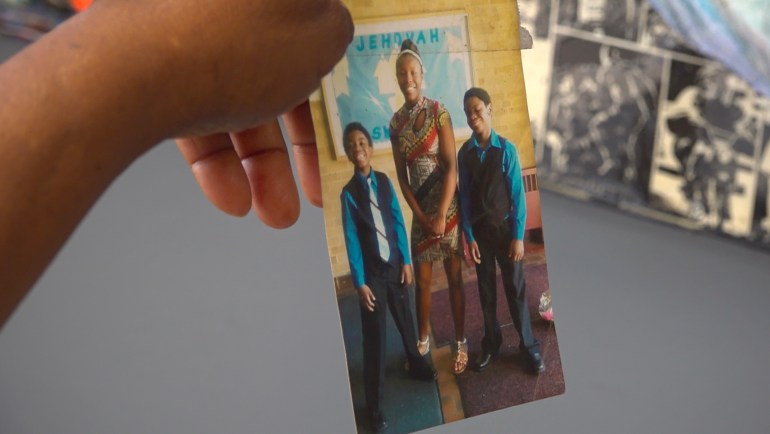
Columbus, Ohio – Some of the final moments of Ta’Kiya Young’s life unfolded in a supermarket car park last August. Suspected of stealing from a Kroger’s grocery store in Blendon Township, Ohio, Young had just climbed into her black Lexus sedan when two police officers approached her. “Are you going to shoot me?” Young asked as the officers ordered her out of the car, one with his weapon drawn. Her car started to roll slowly forward. The armed officer fired. His bullet pierced the car’s windscreen, and the body camera he wore captured a final, high-pitched scream. Young, only 21, later died in a nearby hospital. So too did her unborn daughter: Young was entering the final trimester of her pregnancy at the time of her death. She left behind two sons, ages six and three. It was a bitter loss for Nadine Young, her grandmother. “She was a fun-loving person,” Nadine said. “Always cheery.” But Nadine’s anguish was compounded when she discovered that officials considered there to be three possible victims in the deadly incident: Young plus the two cops. That allowed the officer who fired the fatal shot to invoke a state measure called Marsy’s Law, designed to conceal the identities of crime victims. Criminal justice advocates, however, warn this is part of a dangerous trend in the United States, where police officers use Marsy’s Law to shield themselves from public scrutiny. “They were saying he was a victim?” Nadine asked incredulously. “He was the man with the gun.” Nadine Young shares a photograph of Ta’Kiya Young, centre, and two other grandchildren [Patrick Orsagos/AP Photo] A shield against accountability? Marsy’s Law originated in California in 2008. Framed as a victims’ bill of rights, it sought to protect crime victims not only by ensuring their privacy but also by notifying them if their assailants were up for parole. Since then, variations of the law have been passed in about a dozen other states, including Ohio. But experts fear Marsy’s Law has been co-opted by police departments in those states to hide the identities of officers involved in use-of-force incidents. In Union County, South Dakota, for instance, a highway patrol trooper shot a man twice following an altercation in September 2018. His identity was withheld under Marsy’s Law. In Oshkosh, Wisconsin, another officer used Marsy’s Law to avoid being named after he fired upon a man who was armed and drunk last June. The law enforcement officers in both cases were said to be threatened or physically harmed, thereby making them crime victims. Voters in Ohio passed Marsy’s Law as an amendment to the state constitution in November 2017 [Stephen Starr/Al Jazeera] Supporters of the law’s use in law enforcement argue that police officers regularly face violent criminals, and the potential for victimisation is high. Their names should therefore remain private if they so wish. However, academics and rights groups have described the ability to hide officers’ identities as a “gift to bad cops”. The anonymity, they say, could translate into a lack of accountability — which in turn could lead to officers with a record of excessive force returning to the streets, endangering more lives. And the risk is on the rise. The nonprofit group Mapping Police Violence named 2023 the deadliest year in a decade. An estimated 1,243 people were killed by law enforcement last year, the nonprofit’s highest tally on record. Walter Olson, a senior fellow at the Cato Institute, a Washington, DC-based think tank, believes scrutinising law enforcement’s use of force is a critical public right. It can also help reduce the rates of police violence, he said. “[It’s] one of the key ways in which we prevent the next incidents of abuse from happening.” Ta’Kiya Young and her unborn child were shot and killed in this car park in Blendon Township, Ohio, a suburb of the state capital Columbus [Stephen Starr/Al Jazeera] On shaky legal ground But Marsy’s Law is raising broader legal questions, not only about abuse of power in law enforcement but also about due process. Critics see the law as preventing potential litigants from accessing information that might be relevant in their court cases. Then there’s the question of how to decide who is a victim. “People are being accorded these crime-victim rights even though there has been no legal process determining whether they have been victimised. That’s a paradox,” said Olson. “It can go beyond their name not being released. It could be that they don’t have to reveal information to an opposing lawyer.” Those concerns have led to high-profile legal challenges and even protests. In Florida, for instance, Marsy’s Law has come under increasing public scrutiny. A 2020 investigation from USA Today and ProPublica found that, in at least half of the cases where Florida officers invoked the law, no physical injuries occurred. That same year, two fatal police shootings in the state capital Tallahassee prompted law enforcement to invoke Marsy’s Law. One of the shooting victims, Tony McDade, was a transgender Black man. His death came only days after George Floyd, an unarmed Black man, was killed at the hands of police in Minnesota, prompting nationwide uproar and months of demonstrations. Protesters in Tallahassee likewise filled the streets, chanting McDade’s name and comparing him to Floyd. The pressure prompted the city to push for the release of the officers’ names, against the wishes of the state’s own police union. That escalated into a lawsuit. Last November, Florida’s Supreme Court ultimately ruled, six to zero, that Marsy’s Law “does not explicitly” shield the officers’ identities — nor the identities of any other victims. It was a victory for proponents of government transparency and a rebuke to law enforcement’s embrace of the statute. Sean Walton, the lawyer for the Young family, has called for police accountability in Ta’Kiya’s death [Stephen Starr/Al Jazeera] A family grappling with loss Other lawsuits are under way, including in Ohio, where Young was killed. For instance, the Columbus Dispatch, a newspaper in the state capital,
Photos: Israeli air raids kills dozens across the Gaza Strip

Israel has continued its aerial and ground bombardment of the Gaza Strip, killing dozens more Palestinians, as fighting rages around Gaza City’s main al-Shifa hospital, Palestinian officials and the Israeli military said. Seventy-one people were killed and 112 wounded over the last 24 hours, Gaza’s Ministry of Health said on Friday. Two Israeli attacks on the Shujayea suburb in eastern Gaza City killed 17 people, while an Israeli air raid on a house in the Maghazi refugee camp in the central Gaza Strip killed eight people, health authorities said. At least 10 policemen tasked with securing aid to the displaced in northern Gaza were among those killed in Shujayea, Gaza’s government media office said. The Israeli military said its forces continued operations around the al-Shifa medical complex, and that over the past day, it had killed a number of gunmen Al-Shifa, Gaza’s biggest hospital before the war, was one of the few healthcare facilities even partially operational in northern Gaza before the latest fighting. It had also been housing displaced civilians. The Israeli statement said its forces also conducted raids in central and southern areas of the besieged strip, including Khan Younis and al-Karara, where troops exchanged fire with Palestinian gunmen before they killed them. The armed wing of Hamas said its fighters targeted Israeli forces near Nasser Hospital in Khan Younis, one of the city’s two hospitals blockaded by Israeli soldiers for several days. In the far south of the Gaza Strip, Israel continued its bombardment in Rafah, the Palestinians’ last refuge where more than half of Gaza’s 2.3 million people are sheltering. An air raid on a house killed 12 Palestinians late on Thursday. More than 32,623 Palestinians have been killed by Israeli forces in Gaza since the start of the war on October 7. Adblock test (Why?)
Northern Ireland DUP leader Jeffrey Donaldson resigns after police charges

Media reports say the charges against the Democratic Unionist Party head relate to ‘non-recent sexual offences’. The leader of Northern Ireland’s largest unionist party, Jeffrey Donaldson, has resigned after confirming he has been charged with “allegations of an historical nature”, the Democratic Unionist Party (DUP) says. “In accordance with the party rules, the party officers have suspended Mr Donaldson from membership, pending the outcome of a judicial process,” a DUP statement said on Friday. The statement added that party officers had unanimously appointed Gavin Robinson, another DUP lawmaker in the United Kingdom’s parliament, as interim party leader. While the DUP has not specified the reason behind the 61-year-old’s resignation, numerous media outlets reported that Donaldson stepping down from his position was linked to a statement by the Police Service of Northern Ireland (PSNI) reporting two arrests. “A 61-year-old man has been charged in relation to non-recent sexual offences,” said a PSNI statement. “A 57-year-old woman was also arrested and charged at the time for aiding and abetting additional offences. “Both are due to appear before Newry Magistrates’ Court on 24 April,” it added. British police generally do not identify suspects by name. Meanwhile, all of Donaldson’s social media accounts appeared to have been deleted on Friday, with his handle on the social network X showing the message “This account doesn’t exist”. ‘Serious offences’ His resignation comes amid a tumultuous period for the DUP as the party tries to chart out its relations with the UK, which is expected to hold general elections later this year. Last month, Donaldson brokered a deal with the UK government that enabled the end of the DUP’s two-year boycott of the British region’s devolved power-sharing assembly at Stormont and had also been expected to lead his party into the next UK general election. Donaldson, is one of the British region’s best-known politicians and is Northern Ireland’s longest-serving lawmaker in the British parliament, to which he was first elected in 1997. He is also a former member of the Northern Irish Assembly. However, as a member of the London parliament, he does not hold a position in the Northern Irish power-sharing government, a key part of the region’s 1998 peace settlement that only resumed last month following a two-year suspension. After Donaldson’s sudden resignation, Northern Ireland First Minister Michelle O’Neill said the power-sharing government was focused on delivering its policy initiatives. “My priority is to continue to provide the leadership the public expect and deserve, and to ensure the four-party executive coalition delivers for the whole of our community now and in the future,” said O’Neill, whose Irish nationalist party Sinn Fein is obliged to share power with the DUP. “The DUP leader has resigned after being charged with serious offences. This is now a matter for the criminal justice system.” Adblock test (Why?)