

Japan pulls red mould supplement pill linked to deaths and hospitalisations
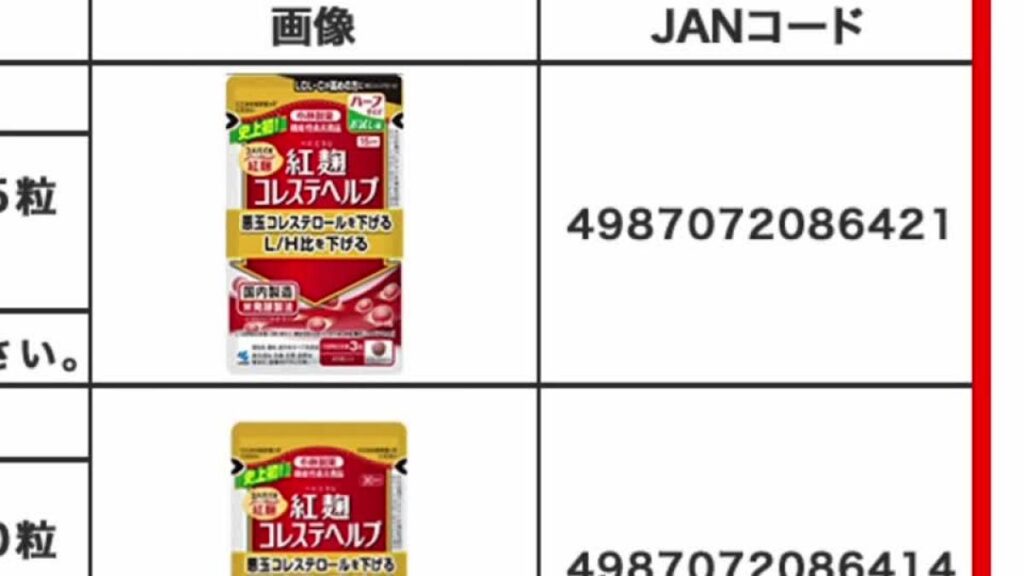
Kobayashi company recalls supplement brands with ‘benikoji’ ingredient after kidney complaints by customers. Japan has ordered the recall of health supplements believed to have killed two people and hospitalised more than 100. Kobayashi Pharmaceutical recalled three brands containing red yeast rice, or “benikoji”. The Osaka-based drugmaker said on Wednesday that it was investigating a suspected link between the products and ill effects on kidneys. Benikoji contains Monascus purpureus, a red mould that is also used as a food colouring. “Beni koji choleste help” and two other products are billed as helping to lower cholesterol. “The total number of suspected deaths [is now] two” while “106 cases of potentially linked hospitalisation also came to light,” government spokesperson Yoshimasa Hayashi told reporters. In addition to Kobayashi’s supplements, more than 40 products from other companies containing benikoji, including miso paste, crackers and a vinegar dressing, have been recalled, a Ministry of Health, Labour and Welfare official said. Health Minister Keizo Takemi said on Tuesday that the government has instructed Kobayashi Pharmaceutical to “promptly provide information”. The ministry has also “instructed local authorities nationwide to collect information on health damage”, he said as he offered condolences to those affected. Kobayashi is investigating the issue. The recalled products could be purchased over the counter without a prescription. Apologising, the company issued a statement calling on purchasers not to use the supplements “Please stop taking our products, and please do not use them in the future,” it said. The ministry official warned there could be more victims in the days ahead and called on all people to avoid benikoji. Those with health problems, like weak kidneys, could be especially vulnerable, he said. All the products were made in Japan although it is unclear if any of the raw materials were imported. A recall of imported health supplements has happened before, but this is the first major recall of a domestically produced supplement, according to Japanese media reports. Medical studies describe red yeast rice as an alternative to statins for lowering high cholesterol but also warn of a risk of organ damage depending on its chemical makeup. Adblock test (Why?)
Human rights crisis in El Salvador ‘deepening’: Amnesty
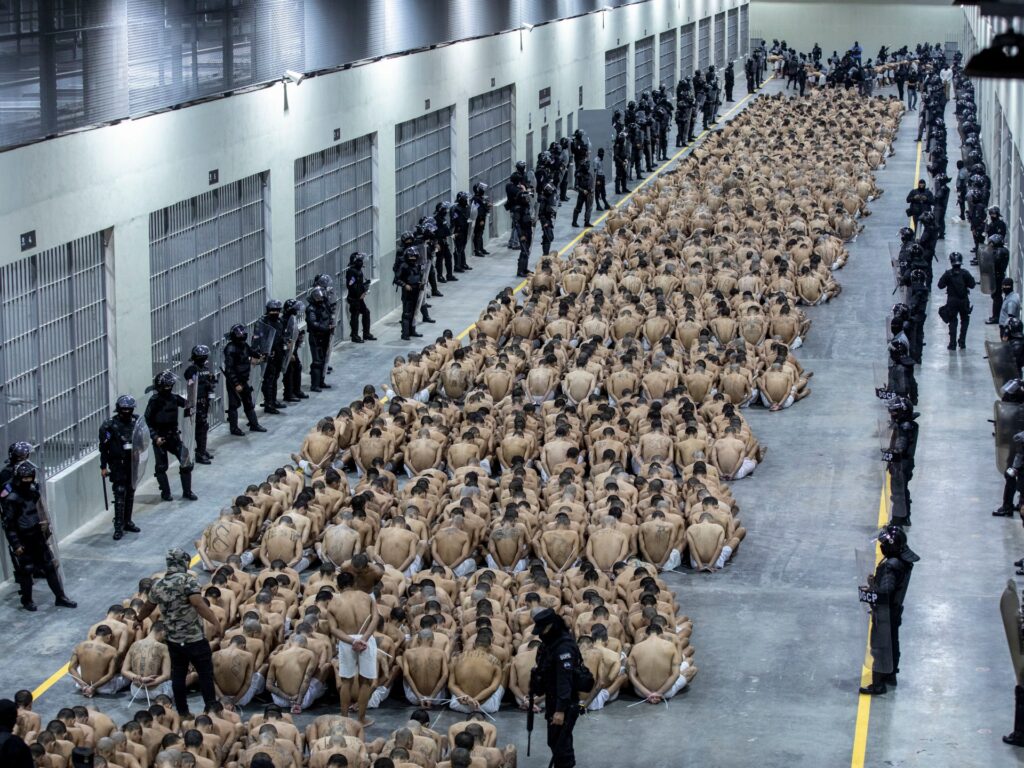
Rights group says President Nayib Bukele has reduced gang violence by replacing it with state violence. As El Salvador’s President Nayib Bukele embarks on his second term in office, an international rights group has warned that his war on gangs has created a spiralling human rights crisis. As of February 2024, Bukele’s draconian two-year campaign, which has seen the authorities detain about 78,000 people, has caused 235 deaths in state custody, said Amnesty International on Wednesday. Citing a local rights group, it also reported 327 cases of enforced disappearances. “Reducing gang violence by replacing it with state violence cannot be a success,” said Amnesty’s Americas director Ana Piquer in a statement. The Salvadoran government had adopted “disproportionate measures”, she said, denying, minimising and concealing human rights violations. Bukele launched his war on gangs in March 2022, slashing homicides to the lowest rate in three decades after imposing a state of emergency that suspended the need for arrest warrants and the right to a fair trial, among other civil liberties. Prison overcrowding currently stands at 148 percent, according to Amnesty. After Bukele consolidated power in a landslide win in February’s election, the rights group warned the situation looks set to worsen. “If this course is not corrected, the instrumentalization of the criminal process and the establishment of a policy of torture in the prison system could persist,” it said. On Tuesday, Minister of Justice and Security Gustavo Villatoro pledged there would be no let-up in the government’s campaign against the gangs, and promised to “eradicate this endemic evil”. “This war against these terrorists will continue,” he said on state television. Piquer said that Bukele had created a “false illusion” that he had found “the magic formula to solve the very complex problems of violence and criminality in a seemingly simple way”. She described the international community’s response as “timid”. “The international community must respond in a robust, articulate and forceful manner, condemning any model of public security that is based on human rights violations,” she said. Adblock test (Why?)
‘Backs to the wall’: Myanmar military prepares to mark Armed Forces Day
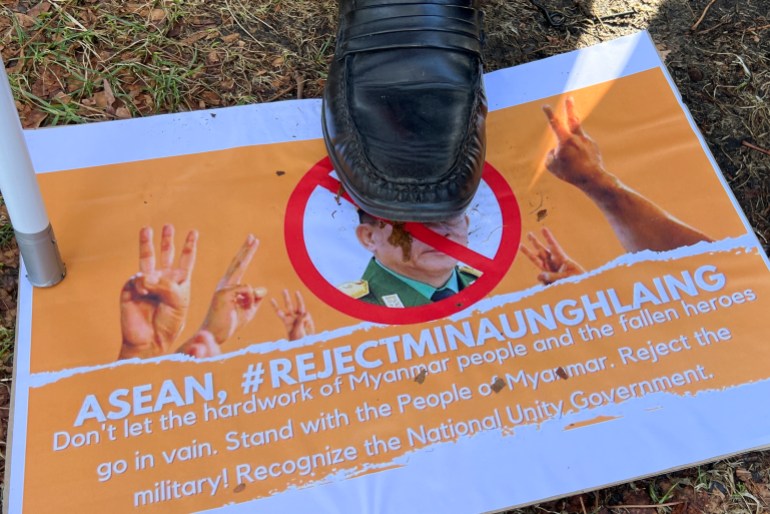
The Myanmar military will mark Armed Forces Day on Wednesday with its usual parade in the purpose-built capital of Naypyidaw. Thousands of armed troops from all three branches will march in formation, while tanks roll through the streets and fighter jets screech overhead. But the show of strength will do little to paper over the reality – Myanmar’s military is at its weakest point in decades. Perhaps not since 1949, when the Karen National Union captured the Insein neighbourhood, in the then-capital Yangon, has the military been so humiliated on the battlefield. Commander-in-Chief Senior General Min Aung Hlaing, who seized power in a 2021 coup, is expected to lead the festivities, despite presiding over the recent loss of huge swathes of territory and facing unprecedented calls for him to step down, even within pro-military circles. “He has become the most unpopular commander-in-chief among [the] rank and file in Tatmadaw history,” said Min Zaw Oo, the executive director at the think tank Myanmar Institute for Peace and Security, using the formal name for the Myanmar military. Min Aung Hlaing seized power after Aung San Suu Kyi led the National League for Democracy to a landslide election victory in 2020, with the military then killing hundreds of protesters who took to the streets calling for them to go. The bloody crackdowns inspired an armed revolt, both in the long-restive borderlands where ethnic minorities have fought for political autonomy for decades and in the previously peaceful heartland where the Bamar ethnic majority live. Anticoup protesters stamp on a picture of military leader Min Aung Hlaing [Johnson Lai/AP] The widespread armed resistance has left the military overstretched and undermanned; a situation exposed in late October when the Three Brotherhood Alliance launched a stunning offensive known as Operation 1027. The trio of ethnic armed groups seized large chunks of territory in northern Shan and southern Chin states as well as in Rakhine State, where fierce fighting continues to rage. “Operation 1027 and subsequent operations showed that the Myanmar military was much weaker than thought,” said Richard Horsey, a senior Myanmar adviser at the International Crisis Group. “A collapse of the military doesn’t appear imminent, however. The generals’ backs are to the wall, and they likely see no real alternative to fighting on,” he said, adding the same is true for Min Aung Hlaing on a personal level, who “appears determined to tough things out”. While the Brotherhood has kept some distance from the broader pro-democracy uprising, other armed groups launched their own offensives in the wake of Operation 1027, seemingly hoping to capitalise on the military’s vulnerability. The People’s Defence Force and Karenni Nationalities Defence Force, both formed after the coup, seized towns and territory in Sagaing Region and Kayah State respectively, with the KNDF now fighting on the streets of the state capital. The Kachin Independence Army – formed in 1961 and today closely aligned with the post-coup movement – supported the fighting in Sagaing and launched a major coordinated offensive of its own in Kachin State earlier this month. Min Zaw Oo said the military is “losing ground” in northern Shan, Rakhine and Kachin, where powerful ethnic armed groups are leading the charge. But it is a different story in Sagaing, where the military has managed to claw back some major towns lost to resistance groups formed after the coup. “The pro-democracy opposition is still weakly armed and fragmented,” Min Zaw Oo said, explaining that they are largely dependent on the more established ethnic armed groups. Horsey agrees. “The military’s most powerful foes are the larger ethnic armed groups and they are very unlikely to want to march on Naypyidaw as they have their own priority objectives closer to home,” he said. “Post-coup resistance forces would be motivated to take the fight to the capital, but they lack the necessary firepower, coordination and experience.” The spectacular fighting in northern Shan fizzled out after the Brotherhood signed a China-brokered ceasefire with the military, allowing the groups to consolidate control over their newly-claimed territories. But KNDF Chairman Khun Bedu said the ceasefire has also allowed the military to “consolidate their power and continue to maintain the central area”. He blamed Beijing’s continued support for propping up the military and the military’s more advanced technology. China and Russia have both provided arms to the military since the coup, including fighter jets. Khun Bedu said recently that the military has also been more frequently using drones rigged with explosives in kamikaze-style attacks or to drop bombs on resistance positions. Maintaining cohesion As a result of the recent defeats, Min Aung Hlaing has faced highly unusual public criticism from military officers and supporters. A major-general in the air force called him the “worst leader in the history of the military”, while ultranationalists called for him to step down during rallies in the aftermath of Operation 1027. But three years after overthrowing a hugely popular civilian government, presiding over unprecedented territorial losses, a calamitous economic collapse and seemingly unable to protect supporters from assassination, the bigger story may be how the military has managed to hold together this long. There have only been two unit-level defections – both ethnic militias that were loosely under military command but already operated with a high degree of autonomy. “Despite facing widespread opposition, the military has maintained its cohesion by projecting strength externally, a common strategy among military institutions worldwide,” said activist Thinzar Shunlei Yi, who works with People’s Goal, an organisation that encourages defections from the military. However, she said this perception of strength is being challenged by recent events. She said the military’s historic “indoctrination techniques are deeply rooted in nationalism and religious ideologies”, which are increasingly rejected by ethnic minorities and pro-democracy groups, leaving “soldiers and their families feeling disoriented amidst shifting societal paradigms”. “Defecting soldiers, particularly the younger generation, often cite disillusionment with the military’s actions rather than support for the revolution,” she added. A major offensive that began at the end of October last year reinvigorated forces
China’s Xi to meet foreign business leaders amid jitters over economy
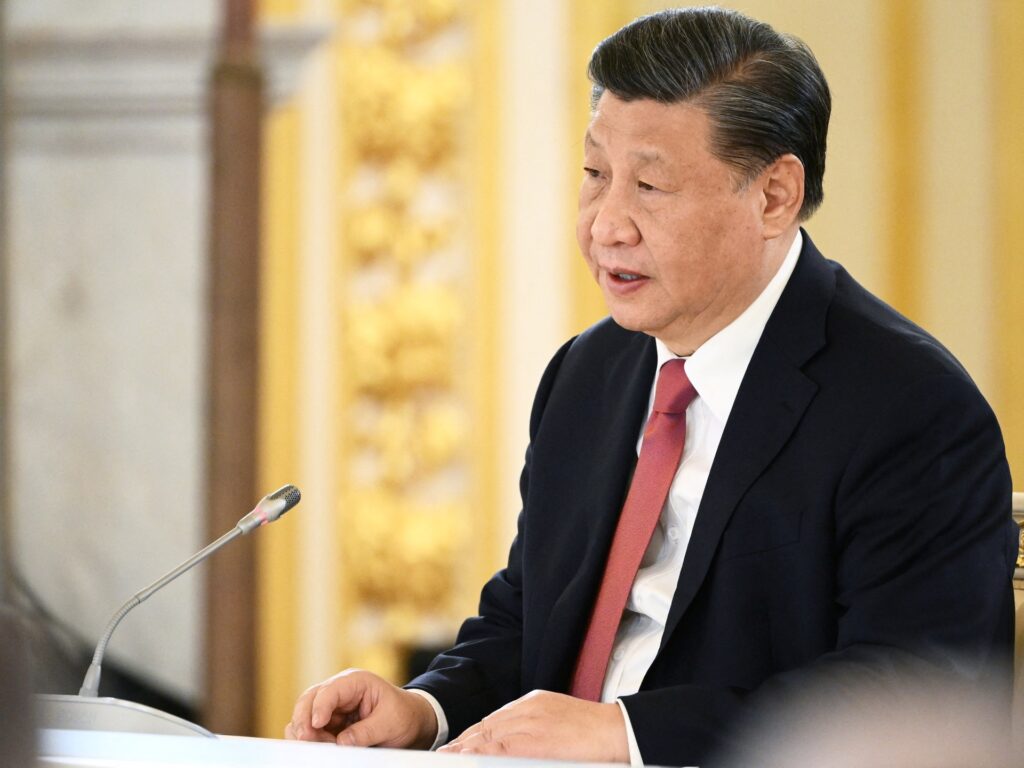
Taipei, Taiwan – Chinese President Xi Jinping is set to meet with American business leaders in Beijing, media outlets have reported, as he tries to woo foreign investment back to China after a challenging few years for the world’s second-largest economy. The meeting on Wednesday is expected to include Apple CEO Tim Cook, Blackstone head Stephen A Schwarzman and HSBC’s Noel Quinn, the Wall Street Journal reported, citing people familiar with the roster. Many of the world’s top executives are already in Beijing this week for the China Development Forum which took place on Sunday and Monday. The forum’s guest list includes World Bank President Ajay Banga, International Monetary Fund Managing Director Kristalina Georgieva, and representatives of more than 100 multinational firms. While business leaders have been able to meet with many senior Chinese leaders in recent days, the invitation to meet Xi signals a concerted effort by Beijing to address negative perceptions about the current business environment. “It’s possible that investors and executives will air some grievances at the meeting, and it’s possible that lobbying might make some impact, but I don’t think that’s what this meeting is really about,” Chris Beddor, deputy China research director at Gavekal Dragonomics, told Al Jazeera. “This is primarily about Xi sending a message. The message is that the Chinese government is attuned to the concerns of global companies and investors, and still wants their presence in the country, at a time when global businesses are very wary of China.” Last year, foreign direct investment in China fell 8 percent as companies scaled back operations and sought to “de-risk” their businesses amid continuing geopolitical tensions and a tougher regulatory environment. Tightened espionage and state secrets laws have also made some firms question whether they are truly welcome, while the COVID-19 pandemic drew attention to their overreliance on Chinese supply chains. Still, some foreign companies have stressed their eagerness to double down on their investment. Cook on Sunday told Chinese media that he hoped to increase Apple’s investment in China, where the company’s flagship iPhone has lost ground to local Huawei models like the Mate 60 Pro Plus. “I think China is really opening up, and I’m so happy to be here,” Cook was quoted as saying on the sidelines of the China Development Forum. Others, including IMF Director Georgieva, are more jittery over China’s future. During a speech at the China Development Forum, Georgieva told policymakers that more pro-market reforms are needed to help China’s economy rebound from the pandemic. Despite growing 5 percent last year, China’s economy is struggling with deflation and a protracted real estate crisis. “China is poised to face a fork in the road – rely on the policies that have worked in the past, or update its policies for a new era of high-quality growth,” Georgieva said, suggesting that reforms could add $3.5 trillion to the economy over the next 15 years. Shifting to consumption-focused growth, however, may be easier said than done in an economy marked by weakened domestic demand and sagging business confidence. Chinese officials have long relied on mega infrastructure projects to boost gross domestic product, necessitating a mind shift among policymakers to move towards consumption-led growth. Despite these concerns, China has set this year’s GDP target at 5 percent and pledged to continue its support for strategic sectors, among other goals outlined to attendees of the China Development Forum. This year’s China Development Forum got off to a less rocky start than last year’s event, which was overshadowed by the aftermath of Beijing’s tough pandemic curbs and controversy over a Chinese spy balloon in US airspace. “US-China tensions are a bit more stable this year, so the political pressure on American attendees has lessened somewhat,” Beddor said. “There simply weren’t that many foreign visitors in China in March 2023. So it’s not surprising that attendance is up this year, because foreign travel of all sorts to the country is a bit more normal compared to last year,” he said. Adblock test (Why?)
Russia-Ukraine war: List of key events, day 762
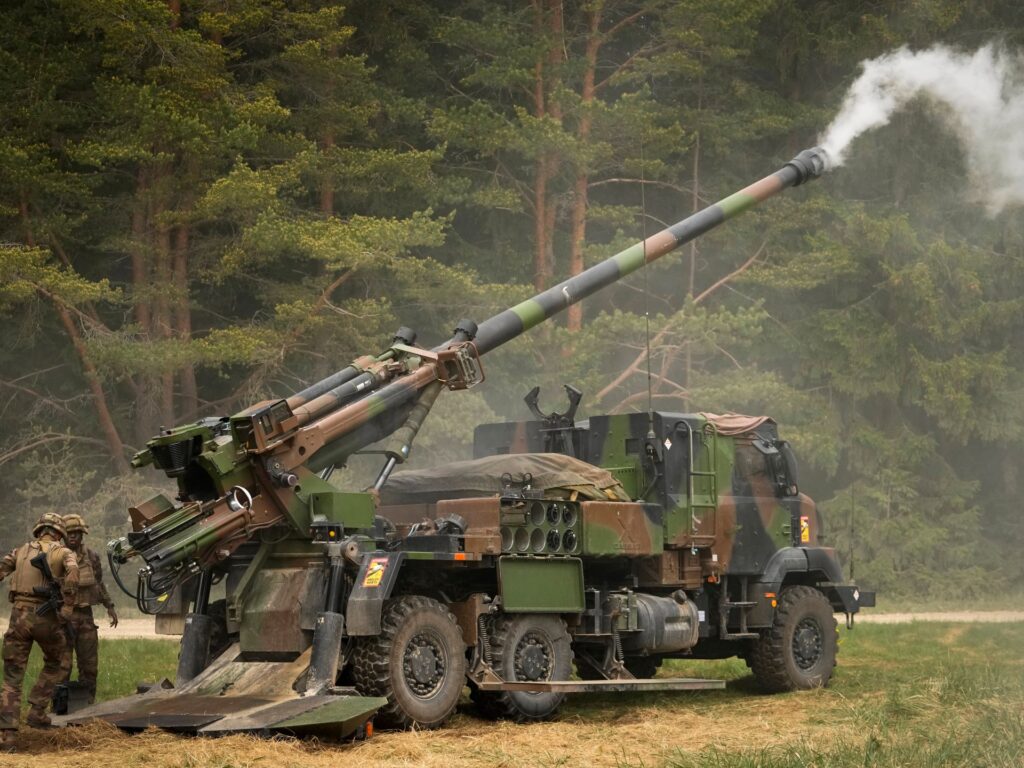
As the war enters its 762nd day, these are the main developments. Here is the situation on Wednesday, March 27, 2024. Fighting Ukraine’s navy said it damaged four Russian naval ships in a weekend missile attack on Crimea. Among those hit was the Konstantin Olshanskya large landing warship that Moscow captured from Kyiv when it annexed the peninsula in 2014. Ukraine also struck the Ivan Khurs, a Russian naval reconnaissance vessel. There was no comment from Moscow. Ukraine’s navy spokesman Dmytro Pletenchuk told the Associated Press news agency that Ukrainian forces had sunk or disabled a third of all Russian warships in the Black Sea. Belgorod regional Governor Vyacheslav Gladkov said five people, including two firefighters, were injured in Ukrainian shelling of two villages in the border region. Russia’s Ministry of Defence said air defence systems shot down 13 Ukrainian rockets. Ukraine shot down 12 Iranian-made Russian attack drones over the southern Mykolaiv and eastern Kharkiv regions. No injuries or damage were reported. The Security Service of Ukraine (SBU) said it arrested two people suspected of acting on behalf of Russia as they tried to blow up a railway line used to supply weapons to the east of the country. Politics and diplomacy Ukrainian President Volodymyr Zelenskyy named 51-year-old Oleksandr Lytvynenko to head the National Security and Defence Council. Lytvynenko takes over from Oleksiy Danilov who had been in the job since October 2019. A Russian court extended the pre-trial detention of Wall Street Journal reporter Evan Gershkovich by a further three months. The 32-year-old US journalist was arrested and accused of espionage nearly a year ago. Gershkovich, the Journal and the United States government deny he is a spy. Ukraine beat Iceland 2-1 to qualify for the Euro 2024 finals starting in June, their fourth successive appearance in Europe’s top international football tournament. Weapons French Defence Minister Sebastien Lecornu said France will soon be able to deliver 78 Caesar howitzers to Ukraine and will boost its supply of shells to meet Kyiv’s urgent needs for ammunition. Lecornu also said he was prepared to use his powers to requisition industrial capacities or order manufacturers to prioritise military over civilian orders to speed up the production of arms and shells needed on the battlefield in Ukraine and elsewhere. Adblock test (Why?)
Jordanian forces violently break up protests outside Israel embassy
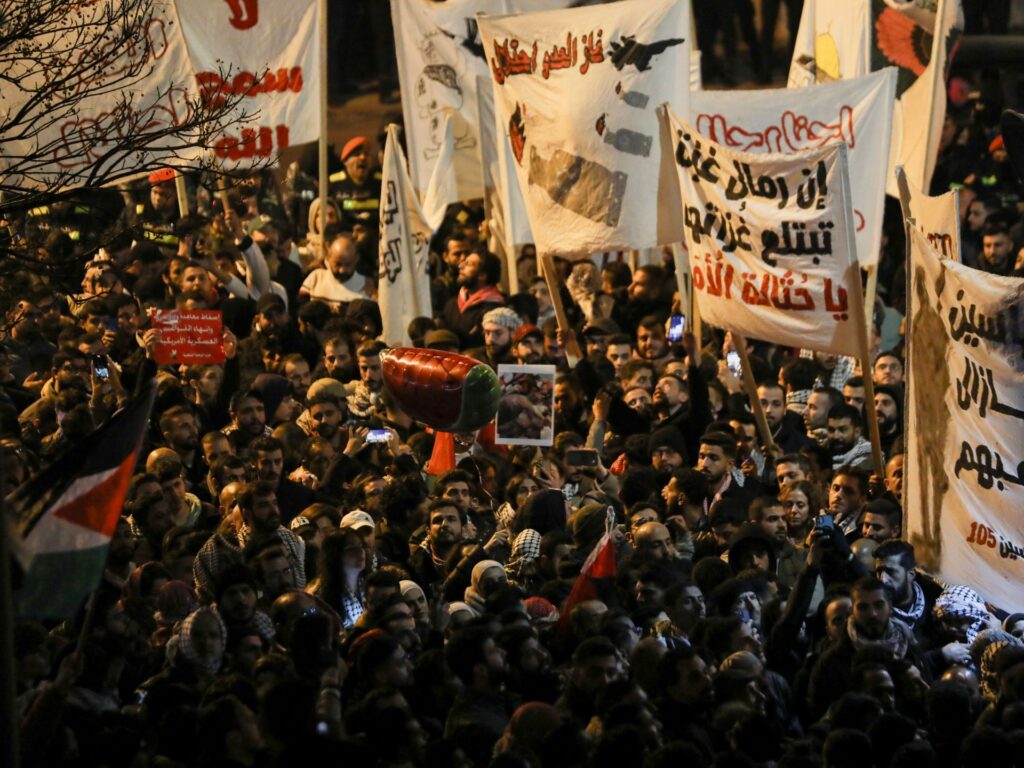
NewsFeed Thousands of pro-Palestinian protesters gathered outside the Israeli embassy in Jordan’s capital for a second day, demanding an end to Jordan’s peace agreement with Israel. Security forces broke up demonstrations with tear gas and arrests, leaving several people injured. Published On 26 Mar 202426 Mar 2024 Adblock test (Why?)
Who is election disrupter Robert F Kennedy Jr?

Robert F Kennedy Jr, scion of the most famous United States political dynasty, will announce his running mate on Tuesday as he competes as an independent candidate in the 2024 US presidential election. The odds are stacked against him as no third-party candidate has won the presidency in more than a century and a half. But the longtime environmental lawyer and anti-vaccine activist has been able to create a media buzz, thanks to his strong brand recognition: His uncle was former President John F Kennedy, and his father was Robert F Kennedy, a former US attorney general and senator. He ditched the Democratic Party after failing to secure its presidential nomination and is playing to both far-left and far-right elements in his long-shot bid for the White House. His campaign appears to be resonating among so-called double haters, who dread the prospect of a rematch between incumbent Joe Biden and former President Donald Trump, who is the frontrunner to win the Republican Party’s nomination despite his legal woes. Recent opinion polls indicated that while he might take voters from both candidates, it is Biden whom he could hurt the most. The committee in the US House of Representatives that investigated the January 6, 2021, attack on the US Capitol by Trump supporters shows footage of a 2020 presidential election debate between Trump, left, and Biden. The two men are set for a rematch in November [File: Jonathan Ernst/Reuters] Amid a climate of political disenchantment, Kennedy has projected himself as a political outsider and blasts “corporate kleptocracy” while touting his environmental credentials. A longtime vaccine sceptic, he has been accused of spreading misinformation about the COVID-19 vaccine on alternative media outlets, such as conservative host Joe Rogan’s popular podcast. Rogan has also been accused of spreading falsehoods about COVID-19 vaccines on The Joe Rogan Experience. While Kennedy’s detractors have branded him a conspiracy theorist, his supporters hail him as a truth teller. So who is this political freewheeler? Where does he come from? What does he think, and does he really stand a chance of winning? What is Kennedy’s background? Kennedy’s family name evokes privilege and tragedy in equal measure. He was just nine years old when President John F Kennedy was shot dead in November 1963. His father, Robert, suffered the same fate while mounting his own presidential bid five years later. Senator Robert F Kennedy addresses a throng of supporters in Los Angeles on June 5, 1968, after winning California’s presidential primary election. A moment later, he was fatally shot [Dick Strobel/AP Photo] Grief-stricken, RFK Jr turned to heroin to “fill an empty space inside of me”, finally getting clean after an arrest for possession. His second wife, Mary, mother of four of his six children, also battled addiction and died by suicide. He is now married to Cheryl Hines, famous for her role on the sitcom Curb Your Enthusiasm. Kennedy suffers from a speech impediment called spasmodic dysphonia, which causes muscles in the larynx to spasm, although the condition has not seemed to have dented his performance on shows hosted by the likes of Rogan and conservative Canadian best-selling author Jordan Peterson, where his shoot-from-the-hip style plays well. His controversial views have led his own family to disavow him. “Bobby might share the same name as our father, but he does not share the same values, vision or judgment,” his siblings said in a statement posted on X. “We denounce his candidacy and believe it to be perilous for our country.” Bobby might share the same name as our father, but he does not share the same values, vision or judgment. Today’s announcement is deeply saddening for us. We denounce his candidacy and believe it to be perilous for our country. @roryekennedy @joekennedy @KKT_Kennedy pic.twitter.com/WJfGwSxN1z — Kerry Kennedy (@KerryKennedyRFK) October 9, 2023 What does he stand for? Not one for sticking to a script, Kennedy holds a mixed bag record of often contradictory views that make him difficult to pigeonhole. Take the environment. Once named a “Hero of the Planet” by Time magazine, the former environmental lawyer is known for his campaigns to clean up the nation’s waterways, reduce the use of toxic pesticides and promote renewables. Yet his calls for “freedom and free markets” as a solution to climate change have raised fears that he would let industry set the pace for curbing fossil fuel use. He has also threatened to repeal Biden’s signature climate legislation, which pushes for a transition to a green economy. His libertarian streak came to the fore during the COVID-19 pandemic when he accused the US government’s then-chief medical adviser, Anthony Fauci, of “a historic coup d’etat against Western democracy”. He also claimed the virus was engineered to attack Caucasians and Black people, sparing Chinese people and Ashkenazi Jews. His views on the Israel-Palestine conflict are typically contradictory. Kennedy supported Roger Waters last year amid mass outrage over a gig that saw the Pink Floyd co-founder donning Nazi attire and projecting the logo of an Israeli arms firm on a giant inflated pig. Yet, months later, the politician staunchly defended Israel’s no-limits war on Gaza, which has killed more than 32,000 people and pushed the besieged enclave to the verge of famine. Isolationist by nature, he opposes aid to Ukraine, blaming the US and NATO for creating a “proxy war” with Russia. In a recent interview, he said the billions in funding to the war-torn country could be used for “healing farms” for people in the throes of addiction and depression as he highlighted the fentanyl crisis. “His task will be to straddle the huge chasm between RFK Jr, the very liberal, progressive environmentalist and the anti-vaccination crusader,” said Steffen Schmidt, professor emeritus in the Department of Political Science at Iowa State University. On immigration, RFK Jr opposes Trump’s plan to erect a wall on the US border with Mexico. He has also been critical of Biden’s handling of the border crisis. He has promised to secure the border with the
What does the UN resolution on Gaza ceasefire mean?
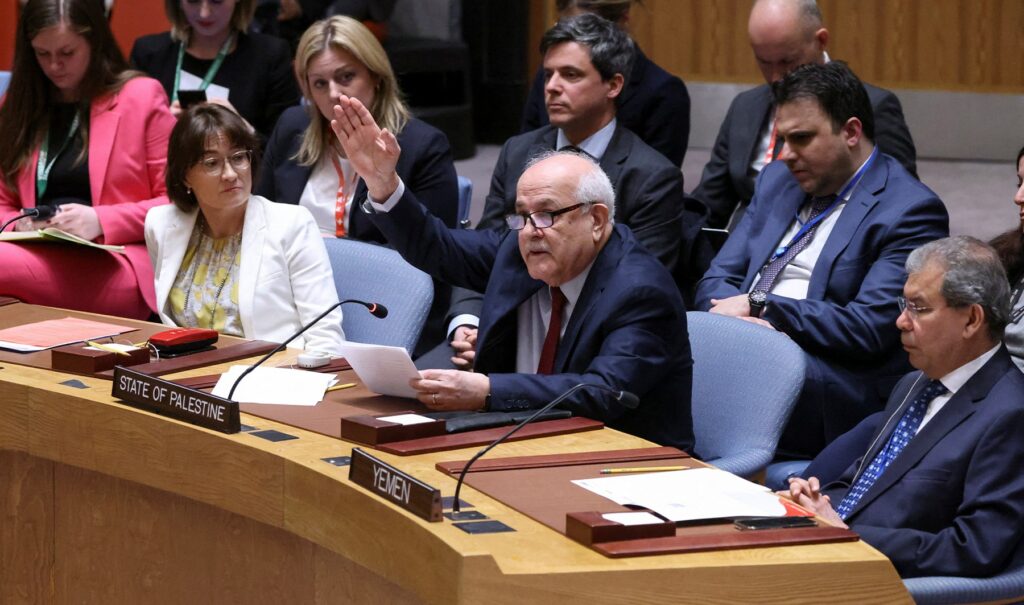
NewsFeed The UN Security Council has passed its first resolution demanding an immediate ceasefire in Gaza after nearly six months of war. Here are some of the key takeaways. Published On 26 Mar 202426 Mar 2024 Adblock test (Why?)
‘Not enough’: Why the US did not veto a Gaza ceasefire resolution at the UN
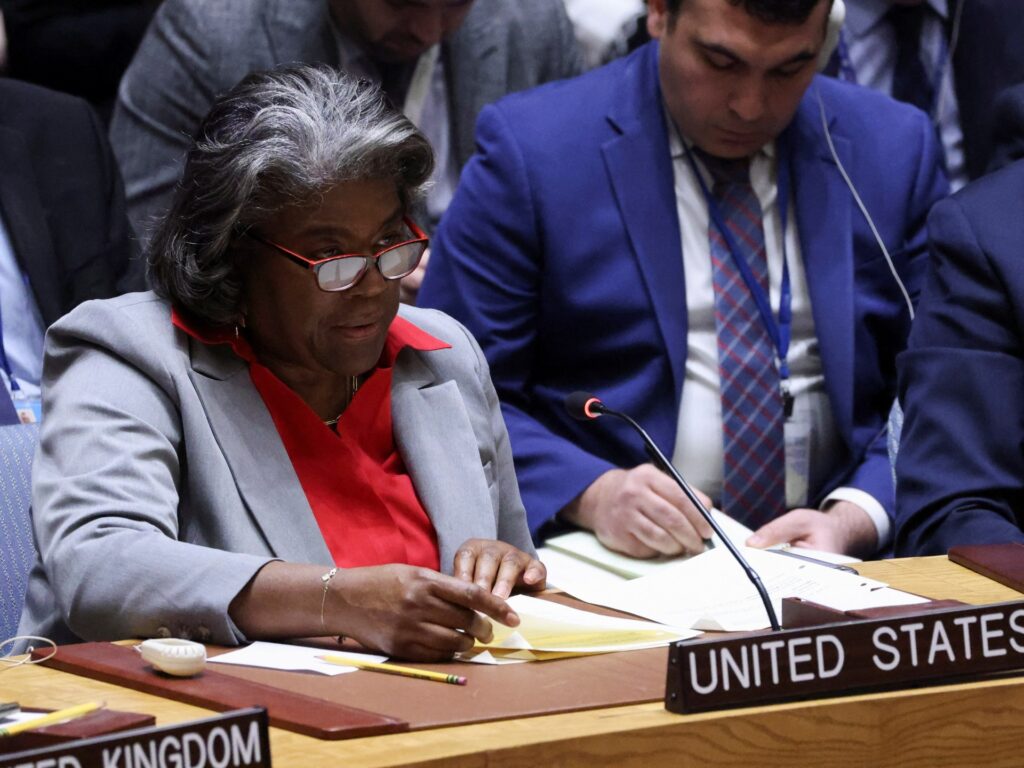
Washington, DC – On three separate occasions, the United States has used its veto power to scuttle United Nations Security Council (UNSC) resolutions aimed at bringing a ceasefire to war-torn Gaza. That streak ended on Monday, when the administration of President Joe Biden decided not to veto the latest ceasefire resolution, allowing it to pass by abstaining from the vote instead. The US move garnered widespread attention as a sign of Biden’s growing frustration with Israeli leadership, which is pressing on with its deadly military campaign in Gaza. But Palestinian rights advocates argue that what is needed is a fundamental rethinking in Washington’s support for Israel — beyond symbolism and rhetoric. “It’s a shift. However, it hasn’t stopped arms transfers from being made. And that’s ultimately what really matters,” said Adam Shapiro, a political analyst. Washington played down the resolution as “non-binding”, but the change in stance was enough to prompt a fiery response from Israeli Prime Minister Benjamin Netanyahu, who lashed out at the US for failing to block the motion. His office issued a statement accusing Washington of harming Israel’s war efforts, underscoring the growing tensions with Biden. ‘A dance’ between leaders Advocates say the question is now whether the Biden administration will use its leverage to pressure Israel to end its abuses against Palestinians in Gaza. Biden officials have urged the Israeli government to protect civilians and allow more aid to Gaza, but they have so far declined to place conditions on aid to Israel to further those goals. Tariq Kenney-Shawa, a US policy fellow at Al-Shabaka, a Palestinian think tank, said the true test of where the US stands is whether it will grant the “wish list” of arms Israel is expected to ask for. Israeli Defence Minister Yoav Gallant is on a visit to Washington, DC, and US and Israeli media outlets have reported that he will request specific weapons for the ongoing war. “The policy of providing Israel and Netanyahu in particular with all the tools he needs to continue the assault on Gaza has continued uninterrupted since October,” Kenney-Shawa said in an email to Al Jazeera. “In many ways, I see this as a dance. The Biden administration is taking what it sees as the necessary public steps to make it look like they’re doing everything they can to hold Israel’s feet to the fire, when in reality, they’re facilitating and enabling Israel to no end. Israel has yet to face any concrete consequences from the US for its war crimes and genocide.” The war started on October 7, after an attack on southern Israel killed 1,139 people. Since then, Israel’s military offensive on Gaza has killed more than more than 32,000 Palestinians and displaced hundreds of thousands more. Its blockade of Gaza has also brought the territory to the verge of famine. Monday’s resolution, which was adopted in a 14-0 vote, called for a “lasting” ceasefire as well as the release of Israeli captives in Gaza and a surge of humanitarian aid to the Palestinian territory. “Our vote does not — and I repeat that, does not — represent a shift in our policy,” White House National Security spokesperson John Kirby told reporters on Monday. “We’ve been very clear, we’ve been very consistent in our support for a ceasefire as part of a hostage deal.” ‘Slap in the face’ That is not how Netanyahu saw it, though. The Israeli prime minister said the abstention “constitutes a clear departure from the consistent US position in the Security Council since the beginning of the war”. In response, Netanyahu cancelled an Israeli delegation’s visit to Washington, DC. The group was meant to discuss ways to avert an Israeli assault on the crowded city of Rafah in southern Gaza. Israel had previously threatened to call off the trip if the US did not veto the resolution. The Biden administration has been urging Israel not to launch a full-scale offensive in Rafah, warning that such an invasion would harm civilians trapped in the city and further isolate Israel on the world stage. Against that backdrop, multiple US officials had talked up the delegation’s now-cancelled visit as an example of Washington’s efforts to contain the war. On Monday, State Department spokesperson Matthew Miller described Netanyahu’s move to nix the trip as “surprising and unfortunate”. Shapiro, the analyst, told Al Jazeera that it was a “slap in the face” to Biden. He questioned why the US — a global superpower — is failing to advance its priorities with Israel, a much smaller ally dependent on US aid. “At this point, the United States is not reacting in accordance with its complete failure to get its policy objectives met, in the current context of what Israel is doing in Gaza or the larger picture in terms of what Israel is doing overall on the occupied territories,” he said. Nancy Okail, the president of the Center for International Policy, a US-based think tank, said this is far from the first time Netanyahu has openly flouted US demands. Last week, for example, Israel announced the illegal seizure of 800 hectares (1,977 acres) in the occupied West Bank, defying US policy. ‘Significant’ vote Still, Okail said Monday’s vote on the ceasefire resolution is “significant” because it brought the US policy closer to its rhetoric on stopping the war and came against Netanyahu’s threats. “However, it’s still very late and still not enough,” Okail told Al Jazeera. “It also needs to be followed with concrete steps to show how serious the US administration is about support for ceasefire and lasting peace and about making sure that humanitarian assistance is delivered adequately and in time for the Palestinian people. “And that means taking steps towards assessing whether the US should continue sending arms to Israel.” So far, US officials have ruled out placing conditions on aid to Israel, often reasserting their commitment to Israel’s security. As the war on Gaza rages on, Israel’s public disregard for the US policy agenda is intensifying calls for
‘Fighting spirit’: How Myanmar’s armed resistance is taking new ground
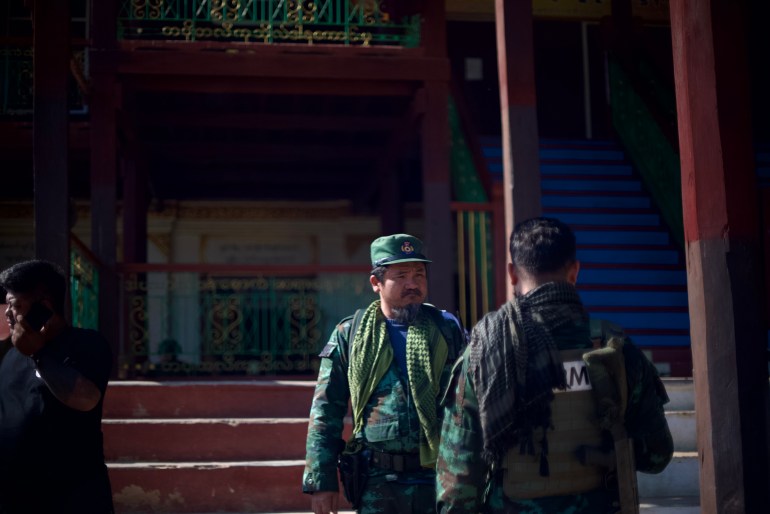
Shan and Kayah States, Myanmar – The truck rocked violently as the driver attempted to manoeuvre the rough terrain of Shan State’s dirt roads. As the wheels spun, trying to find traction, the Pa-O National Liberation Army (PNLA) soldiers inside exchanged glances, nervous about the battle to come, but composed and determined. The platoon was part of a convoy of vehicles making its way towards a small village, high in the mountains, ahead of a new offensive against Myanmar’s armed forces and an armed group aligned with the military government that seized power in a coup in 2021. Armed with AK-47s, M-16s, and rocket launchers, they planned to retake multiple outposts near Hopong Township in Shan State, in the east of the country. “We cannot attack directly, we have to check the area first and then attack slowly,” a PLNA soldier named Kyaw Zin explained at a ridge a few kilometres away from the front line. Further to the north, a key road was under the control of the Myanmar military preventing vital resources from being funnelled to the PNLA and other armed resistance groups further south. Amid the constant threat of weaponised drones and air strikes from military fighter jets, the PNLA said they expected the fight to last at least 30 days. As the sound of gunfire and mortar shelling ricocheted around the amber-coloured hills, the fighters said they were confident they would win. The Pa-O National Liberation Army (PNLA) is one of several ethnic armed groups fighting to remove the military regime [Caleb Quinley/Al Jazeera] The PNLA is riding the momentum of a series of victories for anticoup fighters in northern Shan State since the Three Brotherhood Alliance launched “Operation 1027” towards the end of last year. The coalition of three powerful ethnic armed organisations has taken control of hundreds of military outposts and dozens of towns in Shan and Rakhine States since the offensive began, and reinvigorated the campaign against the military in other parts of the country. Fighting has also escalated in Kayah State (Karenni), just south of Shan State. The Karenni National Defence Forces (KNDF) launched its own offensive on November 11, 2023, “Operation 1111”, aiming to take control of the state capital of Loikaw. About half the city, controlled by the military since the coup, is now in the hands of the Karenni resistance. The KNDF has also taken control of Demoso, Mese and Ywar Thit as well as the strategically important township of Shadaw. Adblock test (Why?)