

Wave of Russian missiles strikes Ukraine’s Kyiv, wounds more than 10
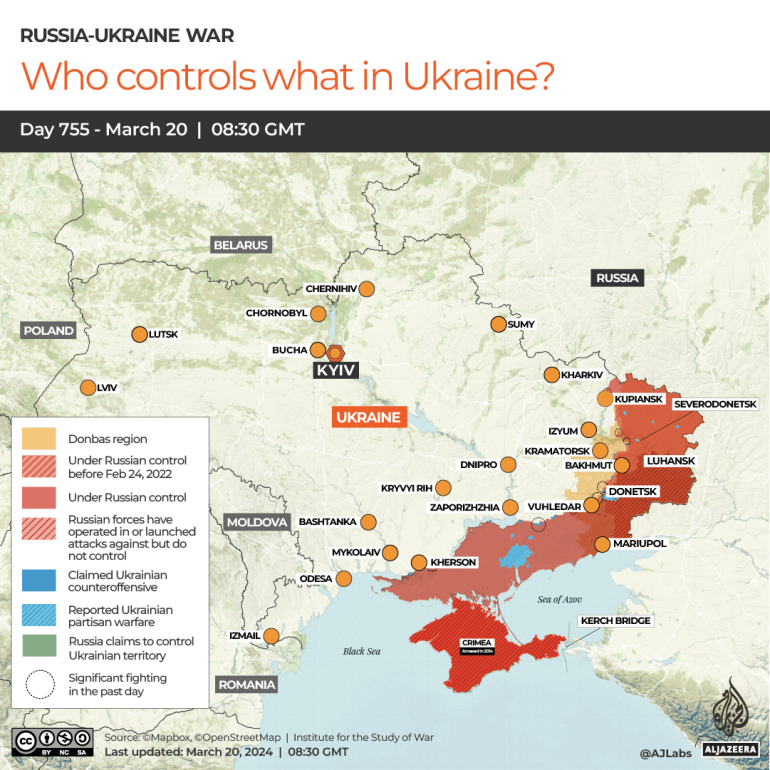
Some 30 cruise and ballistic missiles have been shot down over Kyiv in the first large attack on Ukraine’s capital in 44 days. Russia has launched a wave of missile strikes on Ukraine’s capital, Kyiv, wounding at least 13 people and damaging several buildings, according to local officials. The attack on Thursday, the first mass strike in 44 days, targeted the city with ballistic and cruise missiles, said Serhiy Popko, the head of the city’s military administration. Officials said air defences downed “about three dozen enemy missiles” but rocket fragments fell onto a kindergarten in the Sviatoshynskyi district while an apartment building and a car caught fire in other areas. A number of other residential buildings and industrial facilities were also damaged in the attack, Kyiv Mayor Vitali Klitschko said, while air alerts lasted for nearly three hours. An 11-year-old girl and a 38-year-old man were among the wounded, with two taken to hospital. The attack came hours after a visit by White House National Security Advisor Jake Sullivan to Kyiv during which he promised that the United States’ support to Ukraine in the fight against Russia would continue, even as crucial aid remains stuck in Congress since late 2023. The freeze has piled more pressure on already outgunned Ukrainian troops, with services on the front lines raising the alarm about ammunition shortages and warning they could not hold out forever under current conditions. “From our perspective, we are confident we will get this done. We will get this aid to Ukraine,” Sullivan told a joint news conference on Wednesday after meeting Ukrainian presidential chief of staff Andriy Yermak, without giving a timeline. (Al Jazeera) Also on Wednesday, a new round of aerial bombardments left civilians dead both in Ukraine and Russia. “Five people were killed by a Russia missile in Kharkiv today,” Ukrainian President Volodymyr Zelenskyy said in his evening video address. Another nine were wounded and five more were unaccounted for as search and rescue operations continued into the night, local officials said. Directly across the border from Kharkiv, the governor of Russia’s Belgorod region said multiple attacks had killed three people. Ukraine has also increased drone, rocket and artillery fire on the region over the last two weeks, in a wave of attacks launched in the lead-up to Russia’s presidential elections. Russian President Vladimir Putin, who cruised to victory after facing no real opposition, has pledged to restore order to the border regions. The escalation comes as Russian forces are on the offensive again after weathering Ukraine’s counteroffensive last year. Earlier this week, the Russian Defence Ministry said its forces had captured the village of Orlivka in Ukraine’s eastern Donetsk region, close to the also Russian-controlled town of Avdiivka. Adblock test (Why?)
US releases ‘strongest ever’ car pollution rules in push for EV transition
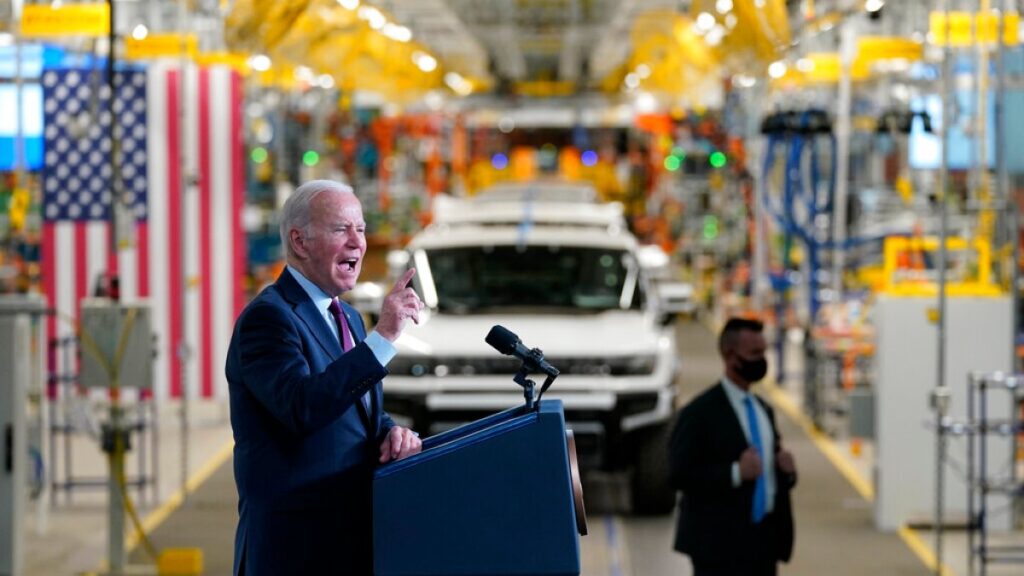
The new environmental regulations fall short of more ambitious goals previously set by the Biden administration. Washington, DC – The United States has released what it calls the “strongest ever” regulations for car tailpipe pollution, as the country looks to accelerate its sales of electric vehicles (EVs) in an effort to curb greenhouse gas emissions. Still, the rules — released on Wednesday — fall short of more ambitious goals previously set by the administration of President Joe Biden. The US Environmental Protection Agency (EPA) said it projects that the regulations would lead to 30 to 56 percent of new cars being electric between 2030 and 2032. Last year, the EPA projected that EVs would amount to 60 percent of new car sales by 2030 and 67 percent by 2032. “With transportation as the largest source of US climate emissions, these strongest-ever pollution standards for cars solidify America’s leadership in building a clean transportation future and creating good-paying American jobs, all while advancing President Biden’s historic climate agenda,” EPA Administrator Michael Regan said in a statement. “The standards will slash over 7 billion tons of climate pollution, improve air quality in overburdened communities, and give drivers more clean vehicle choices while saving them money.” In 2021, Biden signed an executive order setting an objective that half of US car sales in 2030 would be “zero-emissions vehicles”. Close to eight percent of new car sales in the US in 2023 were electric vehicles, according to the EPA. The car industry, however, has pushed back against the Biden administration’s efforts to tighten emissions regulations and speed up the transition to electric vehicles. Biden’s agenda has also faced opposition from Republicans, as well as questions about whether the US has adequate infrastructure, including charging stations, to accommodate a significant increase in the number of electric cars on the roads. But Democrats argue that curbing greenhouse emissions is necessary to address the climate crisis, as the planet sees some of its hottest temperatures on record. The EPA also said on Wednesday that the rules will save money in the long run. “These standards will … provide nearly $100 billion of annual net benefits to society, including $13 billion of annual public health benefits due to improved air quality, and $62 billion in reduced annual fuel costs, and maintenance and repair costs for drivers,” it said. Former President Donald Trump, who is set to face off with Biden in the general elections in November, has repeatedly criticised the Democratic incumbent over EVs. Trump stirred controversy last week when he said there would be a “bloodbath” if Biden is reelected, arguing that the Democratic president would allow Chinese EVs, built in Mexican factories, to flood the US market. He later clarified that his “bloodbath” comment was meant to indicate that the US car industry would suffer under his Democratic opponent. In January, Trump also took aim at EVs. “There’s no such thing as fair transition that destroys over 100,000 auto manufacturing jobs,” he said. But Biden has said that his policies will allow US companies to compete with the rest of the world, which is transitioning towards electric cars anyway. On Wednesday, Democratic Congressman Jerry Nadler hailed the new EPA rules as a win for “environment and public health”. “The new standards will also save consumers money through reduced fuel consumption and maintenance costs,” he wrote in a social media post. But Republican Congressman Tim Walberg slammed the regulations. “Despite consumer needs, grid & infrastructure concerns, & costs, Biden’s EPA is proceeding with its disastrous mandate”, he wrote on social media. “EVs may be a good option for some, but Americans should have the right to buy whatever car best suits their family.” Adblock test (Why?)
Fitch Ratings upgrades Qatar to third-highest on back of gas expansion
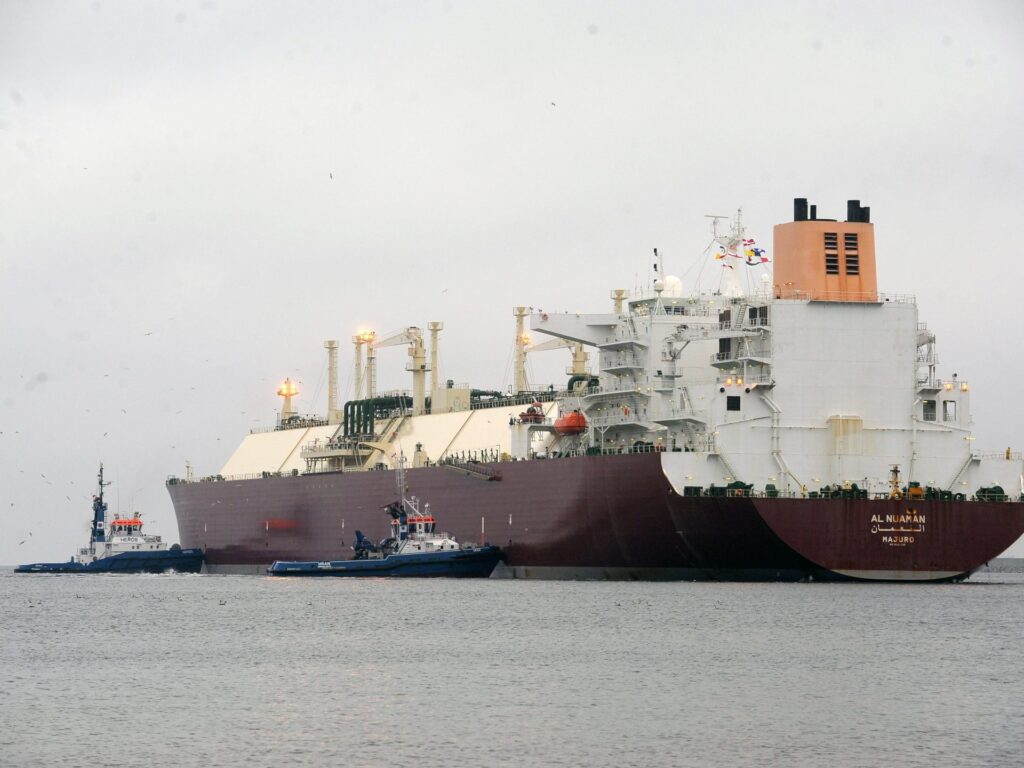
Revenues from Qatar’s LNG fields will provide budget surpluses until the 2030s, Fitch said. Fitch Ratings has upgraded Qatar to AA, its third-highest rating, on the back of revenues expected from its expanded gas fields, the agency has said. Revenues from Qatar’s liquified natural gas (LNG) fields will ensure that the country posts budget surpluses until the 2030s, Fitch said in a release on Wednesday outlining the rating rationale. The upgrade from AA- “reflects Fitch’s greater confidence that debt to GDP will remain in line with or below the ‘AA’ peer median after falling sharply in recent years,” the agency said. Fitch expects Qatar’s debt-to-GDP ratio to fall to about 47 percent of gross domestic product (GDP) in 2024 and 45 percent in 2025, from a peak of 85 percent in 2020. Qatar is already one of the richest countries in the world and boasts one of the highest ratios of GDP per capita. The added revenue boost will ensure that its external balance sheet will strengthen from an already strong level, Fitch said. However, Fitch warned that the continuing war in Gaza posed a risk to Qatar’s rating even though it had so far not been directly affected. Should a sharp escalation in regional tensions lead to capital flight from banks, for instance, or cause prolonged disruptions of Qatar’s hydrocarbon and transport sectors, that would affect the latest rating, Fitch said. Qatar is one of the biggest exporters of LNG along with the United States, Australia and Russia. Asian countries led by China, Japan and South Korea have been the main market for Qatari gas, but demand has also grown from European countries since Russia’s war on Ukraine threw supplies into doubt. Qatar Energy plans to expand LNG production capacity at North Field from 77 million tonnes per year (mtpa) to 110 mtpa by end-2025, 126 mtpa by end-2027 and announced a further expansion to 142 mtpa by end-2030. The North Field is part of the world’s largest gas field, which Qatar shares with Iran, which calls its share South Pars. Competition for LNG has ramped up since the start of the war in Ukraine, with Europe, in particular, requiring a large quantity to help replace Russian pipeline gas that used to make up almost 40 percent of the continent’s imports. However, after a decade of meteoric price rise, gas prices dropped earlier this year to nearly all-time lows after adjusting for inflation. Despite that drop, all leading gas producers, including the US, Australia and Russia, want to increase output betting on further demand growth. Adblock test (Why?)
Israeli airstrike on car in Jenin kills 3
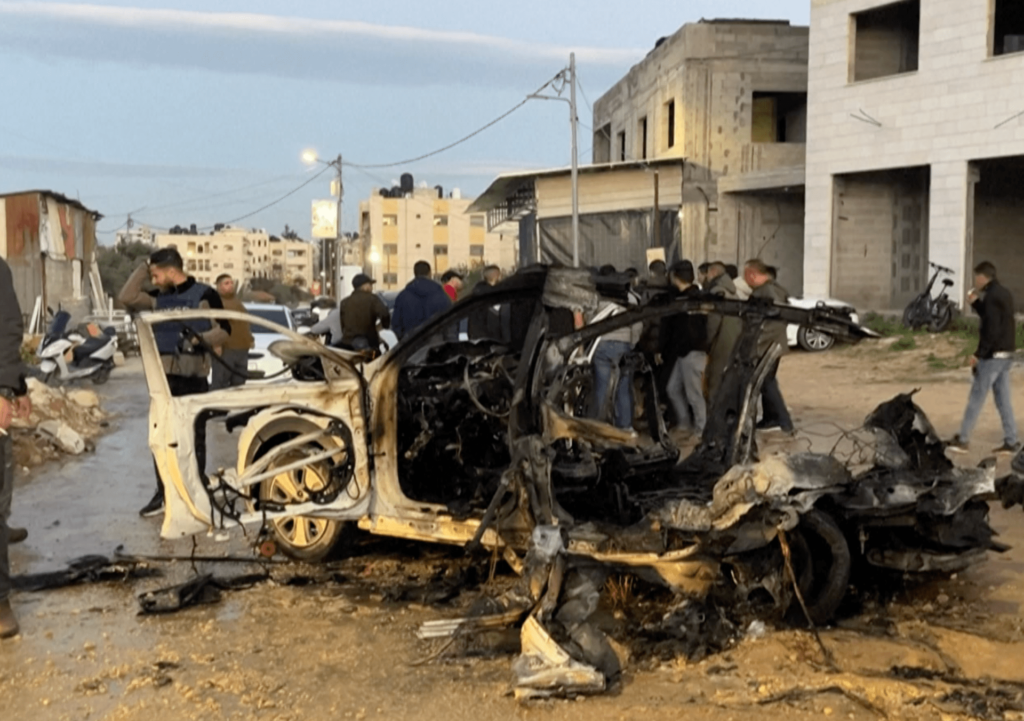
NewsFeed A security camera captures the moment an Israeli airstrike hits a car in the occupied West Bank city of Jenin. The Palestine health ministry said three Palestinians were killed and one wounded. The Israeli military said two of the targets were “senior Islamic Jihad operatives” who had been planning attacks on Israel. Published On 20 Mar 202420 Mar 2024 Adblock test (Why?)
Israel’s war on Gaza: List of key events, day 166

The WHO says increasing numbers of children in Gaza are on the ‘brink of death’ from acute hunger as the UK sends more aid. Here’s how things stand on Wednesday, March 20, 2024: Fighting and humanitarian crisis Explosions and shootings shook the Gaza Strip’s biggest hospital and surrounding neighbourhoods as Israeli forces stormed through the facility for a second day on Tuesday. Israel has said “dozens” of people were killed and some 300 people arrested during its assault on al-Shifa Hospital in Gaza City. The Israeli military said it raided al-Shifa early on Monday because Hamas fighters had grouped in the hospital and were directing attacks from inside. The Israeli claims could not be independently verified as it has not allowed international journalists to report from the besieged territory. Israel arrested Al Jazeera’s Ismail al-Ghoul during its raid on al-Shifa on Monday. Al-Ghoul was released 12 hours later after international condemnation. Separately, the Israeli military has killed at least 23 people during an attack on the Kuwait Roundabout in Gaza City early this week, while 15 more were killed in a strike on a house in the Nuseirat camp in central Gaza on Sunday. Dr Margaret Harris, a spokeswoman for the World Health Organization (WHO), said on Tuesday that increasing numbers of children in Gaza are on the “brink of death” from acute hunger. Diplomacy and regional tensions The UK’s largest aid delivery to Gaza has entered the Strip, the British Foreign Office said on Wednesday. More than 2,000 tonnes of food aid crossed into Gaza via Jordan and is being distributed by the World Food Programme and will feed “more than 275,000 people”, the office said. Israeli Prime Minister Benjamin Netanyahu is expected to address US Senate Republicans during a closed-door conference on Wednesday via video. This comes less than a week after the chamber’s top Democrat, Chuck Schumer, called for elections to replace him. Netanyahu agreed on Monday to send a team of Israeli officials to Washington to discuss the impending Rafah offensive with Biden administration officials. However, on Tuesday, he told a parliamentary committee that while he would listen to US proposals “out of respect” to Biden, “we are determined to complete the elimination of these [Hamas] battalions in Rafah, and there is no way to do this without a ground incursion”. US Defense Secretary Lloyd Austin and his Israeli counterpart, Yoav Gallant, plan to discuss securing the release of Hamas-held captives and providing humanitarian aid to Gaza during their meeting in Washington, DC, next week, according to The Associated Press news agency. Democratic Senator Bernie Sanders has hailed Canada’s Parliament for voting to halt arms sales to Israel, saying the US should follow suit and “not provide another nickel for Netanyahu’s war machine”. Canada’s parliament has voted to stop arms sales to Israel. They are absolutely right to do so. Given the humanitarian catastrophe in Gaza, including widespread and growing starvation, the U.S. should not provide another nickel for Netanyahu’s war machine. — Bernie Sanders (@BernieSanders) March 19, 2024 Violence in the occupied West Bank Local media and the Wafa news agency reported Israeli military raids in multiple locations across the occupied West Bank late on Tuesday. They include Jericho, the city of Tulkarem, and the at-Taawon neighbourhood in the city of Nablus. A Palestinian man has also been arrested after Israeli forces stormed his home in the Jalazone camp, north of Ramallah on Tuesday, while confrontations have broken out between Palestinian resistance groups and Israeli forces in the town of ar-Ram, north of Jerusalem. Adblock test (Why?)
Praying for Armageddon: Evangelicals, the US and the Middle East

Episode 1 of a doomsday political thriller about evangelical Christian influence on US foreign policy in the Middle East. The first episode of Praying for Armageddon goes inside the evangelical Christian movement to explore its influence on US democracy and foreign policy. Preparing for the “end times”, a grassroots pastor gathers an army of veterans in the heartland of the United States, and megachurch ministers provide spiritual advice to politicians in the nation’s capital. They call for the “final battle” which they believe will trigger the second coming of Christ. Central to their apocalyptic prophecy is Israel. It is with their blessing that the Trump administration controversially recognises Jerusalem as the capital of Israel and moves the US embassy there in 2018. “It feels like everyone has a say about the destiny and the future of Jerusalem except for the Palestinians living in it,” says Palestinian activist Fayrouz Sharqawi. Praying for Armageddon is a documentary film by Tonje Hessen Schei. Adblock test (Why?)
EU firms in China forced to focus on risks over business, lobby group says

European companies in China are overly focused on risk management amid a less predictable and more politicised business environment in the world’s second largest economy, a business lobby group has warned. The European Union Chamber of Commerce in China said on Wednesday that about three-quarters of respondents to a survey of its 1,700 members had reviewed their supply chains and exposure in China over the past two years amid a “general sentiment of uncertainty”. Some 21 percent of respondents said they planned to expand their production in China, while another 12 percent planned to reduce it, the chamber said. Only 1 percent said they planned to move production out of China entirely, according to the survey. The findings come “at a time when the global business environment is becoming increasingly politicised, and companies are having to make some very tough decisions about how, or in some cases if, they can continue to engage with the Chinese market,” the lobby group said in a report accompanying the survey. China’s market has become “less predictable, reliable and efficient”, while companies’ focus has become “skewed disproportionately towards risk management and building resilience”, the report said. Foreign companies in China have faced a series of challenges in recent years, including slowing economic growth, ultra-strict COVID restrictions, US-China geopolitical tensions, and national security crackdowns. While Beijing has sought to assure businesses that the country is open for business after the pandemic, authorities have carried out high-profile raids on foreign consulting firms, strengthened anti-espionage and state secrets laws, and restricted cross-border data sharing. Tensions with Europe have also spiked since the EU Commission in September opened a probe into whether Chinese state-subsidised electric vehicle imports are undercutting European competitors. In the EU Chamber of Commerce survey, some 55 percent of respondents said that the business climate in China was “more political over the past year”, leading firms to increase their focus on “de-risking” their operations there. “At the corporate level, the volume, complexity and severity of the risks companies face have grown exponentially in recent years, as politics has seeped into the business environment,” the report said. Despite these concerns, Jens Eskelund, president of the chamber, urged European companies to reevaluate overly cautious behaviour to avoid stifling future growth and innovation. “While it is natural that all global actors will seek to ensure the security of their respective economies, it should be done in a way that is minimally disruptive to business,” Eskelund said. “Actions taken in the name of risk management and strengthening economic security should be proportionate, targeted and precise and should never become a cover for protectionism.” Foreign direct investment into China sank to a 30-year low in 2023, with new investment falling to $33bn, 82 percent less than the previous year, according to government data. China’s State Council this week announced a new action plan to promote foreign investment, focusing on key industries such as advanced chips and biopharmaceuticals. The State Council also promised to address practices that discriminated against foreign companies, a longstanding complaint in the foreign business community. Adblock test (Why?)
Trump adviser Peter Navarro starts prison term for contempt of US Congress

Peter Navarro, a key adviser to the White House under former United States President Donald Trump, has turned himself in to a federal prison in Miami, Florida, to serve a four-month sentence for defying a congressional subpoena. His arrival at the prison on Tuesday makes him the first senior Trump official to report to prison in relation to efforts to overturn the 2020 presidential election. “I am the first senior White House adviser in the history of our republic that has ever been charged with this alleged crime,” Navarro said in a fiery press conference outside the prison. He also blamed members of the Democratic Party and judicial bias for his prison sentence. “Every person who has taken me on this road to that prison is a friggin’ Democrat and a Trump hater,” he said, pointing towards the federal detention facility. In September, a US district court convicted Navarro of two counts of contempt of Congress, after he failed to comply with a subpoena to surrender documents and sit for a congressional deposition. The testimony and documents were part of a trove of evidence being collected by a now-defunct House Select Committee assigned to investigate the attack on the US Capitol on January 6, 2021. That attack saw thousands of Trump supporters storm the seat of Congress in an attempt to disrupt the certification of the 2020 election. Trump, a Republican, had lost that election to Democrat Joe Biden. Former White House official Peter Navarro told reporters he was ‘pissed’ as he turned himself over to authorities in Miami, Florida [Adriana Gomez Licon/AP Photo] Still, Navarro and other Trump allies spread a conspiracy theory that Trump had not, in fact, been defeated — but was rather the victim of widespread voter fraud in the 2020 race. A former trade adviser to Trump, Navarro in particular promoted a proposal called the “Green Bay Sweep”, which would pressure public officials to decertify results that showed Biden winning. However, Navarro refused to submit to the House committee’s requests for testimony, citing Trump’s claims that, as president, he enjoyed executive privilege during the January 6 attack. Both Navarro and fellow Trump adviser Steve Bannon were ultimately convicted of failing to comply with the congressional committee’s subpoenas. But unlike Navarro, Bannon was allowed to delay his prison sentence while he pursued an appeal. However, the chief justice of the Supreme Court, John Roberts, denied a last-minute request from Navarro’s legal team that he, too, should remain free pending his appeal. Roberts’s decision, which came on Monday, all but assured Navarro would face time behind bars. “I see no basis to disagree with the determination” made by the lower courts, Roberts wrote. He explained that Navarro had not met the “burden to establish his entitlement to relief under the Bail Reform Act”. Chief Justice John Roberts, left, denied Peter Navarro’s attempt to delay his prison sentence [Shawn Thew/Pool via AP] Navarro used his press conference in Miami to argue that, like Trump, he had been the victim of a weaponised legal system and partisan tactics. He also called the House Select Committee he had been called to testify before “unlawful”. “I’m pissed. That’s what I’m feeling right now. But I’m also afraid of only one thing: I’m afraid for this country, because this, what they’re doing, should have a chilling effect on every American, regardless of their party. If they come for me, they can come for you,” Navarro said. The House Select Committee ultimately shut down in January 2023, as Republicans took control of the House of Representatives. But before it disbanded, the committee compiled its 18 months of research into a damning, 845-page report, accusing Trump and his allies of refusing to accept their defeat in the 2020 election. The report argued that Trump “unlawfully pressured State officials and legislators to change the results of the election in their States” and “oversaw an effort to obtain and transmit false electoral certificates”, among other acts in a “multi-part conspiracy” to overturn the election results. While the report recommended criminal charges, it did not have the power to pursue them independently. Donald Trump supporters rally on January 6, 2021, near the White House [Jose Luis Magana/AP Photo] However, the US Department of Justice has since appointed a special counsel, Jack Smith, to investigate Trump’s actions before, during and after the 2020 election. Smith has since filed two federal criminal indictments against Trump: one in Washington, DC, for attempts to subvert the election and one in Florida for Trump’s handling of classified documents once out of office. Trump faces two additional criminal indictments on the state level. The first, in New York, concerns hush money payments made during the 2016 presidential race. And the second, in Georgia, pertains to attempts to subvert the 2020 election results in that state. The former president — now the presumptive Republican nominee in the 2024 US presidential race — has denied all the charges against him. Adblock test (Why?)
Libya-Tunisia border crossing closed following clashes

Closure comes as Libya says ‘outlaws’ attacked the Ras Jedir border crossing. Tunisia and Libya have closed a major border crossing at Ras Jedir due to armed clashes, according to Tunisian state TV and Libyan authorities. Libya’s interior ministry said in a statement on Tuesday that “outlaws” had attacked the border, which sees a large flow of Libyans, often going to Tunisia for medical treatment, and trucks with goods coming in the opposite direction. “This action carried out by these outlaw groups will not be tolerated, and legal measures and the most severe penalties will be taken against those involved,” the Tripoli-based ministry said, without giving further details. The border post in the desert area of Ras Jedir about 170 kilometres (105 miles) from the Libyan capital Tripoli, is the main crossing point between the two North African countries. According to local media, armed clashes broke out on Monday night between armed groups who control Ras Jedir and security forces sent by Tripoli. On Monday, Libyan Interior Minister Imad Trabelsi had directed the ministry’s “law enforcement department” to intervene at Ras Jedir to “combat smuggling and security violations” and facilitate travel. Unverified footage on social media showed a burning vehicle at Ras Jedir and people running, as well as the sound of gunfire. Tunisia’s Tataouine Radio said late on Monday that Tunisia closed the crossing for the safety of citizens going to Libya. Groups from cities in the border area have for years controlled Ras Jedir, benefitting from the lucrative parallel border trade. Thousands of Tunisian families in the south also make a living from the trade. Libya has been mired in insecurity since a 2011 NATO-backed uprising led to the overthrow of longtime ruler Muammar Gaddafi, and is split between eastern and western factions, with rival administrations governing each area. Adblock test (Why?)
How can Israel’s war on Gaza be allowed to continue?

Starvation and disease pose imminent dangers. As Israel’s brutal war on Gaza continues, the 2.3 million residents of the besieged Palestinian territory face the imminent risk of famine. More than 31,800 people have been killed and 74,000 others wounded in the Israeli assault on Gaza since October 7. The wounded rely on a health system that’s either destroyed or under attack by Israeli forces. What can bring Gaza’s suffering to an end? Presenter: Cyril Vanier Guests: Fidaa Al-Araj – Oxfam aid worker in Gaza Arwa Mhanna – Middle East senior adviser for advocacy and policy, Mercy Corps aid agency Francesca Albanese – United Nations special rapporteur for the occupied Palestinian territory Sam Rose – Director of planning for the UN Relief and Works Agency for Palestine Refugees (UNRWA) Adblock test (Why?)