

UK, Australia call for ‘immediate’ end to fighting in Gaza

Two countries warn of ‘potentially devastating consequences’ if Israel pushes ahead with ground offensive in Rafah. Australia and the United Kingdom have called for an “immediate cessation of fighting” in Gaza, warning of “potentially devastating consequences” if Israel goes ahead with a planned ground assault on the southern city of Rafah. The two countries issued a joint statement on Friday, expressing “deep concern at the catastrophic humanitarian crisis in Gaza” after Australian Foreign Minister Penny Wong and Defence Minister Richard Marles hosted their British counterparts, David Cameron and Grant Shapps, for talks in Adelaide. The ministers noted “the large number of displaced persons taking refuge in the area and lack of safe spaces in Gaza” as Israeli Prime Minister Benjamin Netanyahu approved plans for an attack on Gaza’s southernmost area, where more than 1.4 million Palestinians have sought shelter after fleeing bombardments in other parts of the enclave. “They expressed the urgency of an immediate cessation of fighting in Gaza to allow aid to flow and hostages to be released as a crucial step toward a permanent, sustainable ceasefire,” said the statement, which was released as truce negotiations mediated by Qatar, Egypt and the United States are continuing in Doha. UN vote The call, which signals Britain and Australia’s increasing anxiety about the toll and impact of the war, came before the United Nations Security Council’s expected vote on a US-drafted resolution calling for a ceasefire in Gaza. The draft text describes an “immediate and sustained ceasefire” as an imperative to protect civilians and allow for the delivery of humanitarian aid. A truce would also be conditional on the release of some of the remaining captives taken by Hamas in its attacks on southern Israel on October 7. Washington has for months vetoed calls for resolutions including that language, shielding its ally Israel amid rising global condemnation of a war in which close to 32,000 Palestinians have been killed. A UN resolution would heap pressure on Netanyahu to pull back from an offensive in Rafah. But it is far from clear that any resolution would halt the war altogether. Britain is also a veto-wielding member of the UN Security Council along with the US, Russia, China and France. Adblock test (Why?)
More than 7,350 West Bank Palestinians arrested by Israel during Gaza war

Occupied East Jerusalem – In early November, the Israeli authorities summoned Hashim Matar* to the police station in occupied East Jerusalem. For 10 days, he was interrogated about whether he supported Hamas and was a member of the Palestinian group. Between questioning, Matar was locked in a small room with other detainees, where they were punched, kicked and beaten with batons. “Lots of people had their [sternum] or heads broken, often gushing with blood,” Matar, a 54-year-old man with a short grey beard and laugh lines around his eyes, told Al Jazeera three months after he was released from detention. “We weren’t even treated like animals. At least animals are treated with some sort of dignity.” Israel has taken thousands of Palestinians captive since Hamas’s attack on Israel on October 7, in which 1,139 people were killed and about 250 abducted. Since then, the number of Palestinians arrested in the occupied West Bank exceeds 7,350 people, according to the Addameer monitor in Ramallah. While some Palestinians have been released, 9,100 remain captive. That’s a sharp uptick from the 5,200 that were in Israeli prisons before October 7. These figures do not include the thousands of adults and children the Israeli army has reportedly detained, tortured and interrogated in makeshift prisons across Gaza, outside any legal or civilian oversight. [embedded content] Violence and neglect Since October 7, Israeli authorities have become more violent during arrests, according to a staff member of Addameer who spoke on condition of anonymity. The individual told Al Jazeera that Israeli authorities often storm homes in the West Bank and begin to kick, punch and beat everyone inside. In some cases, Israeli soldiers take family members “hostage” by threatening to whisk them away, unless the wanted person comes forward. Once in custody, Palestinians are shoved into vehicles and beaten until they arrive at the detention facility. That is where they are told to strip, get dressed and to strip again – a cycle that occurs several times while they are beaten, sometimes on their genitalia. Captives are subjected to even worse treatment behind bars. Addameer said water or electricity is cut off and captives are denied visits from their relatives or the Red Cross. The rights group added that most victims are denied healthcare, even for injuries sustained during their arrest. As a result, prisoners have died due to health neglect. “So far, 10 prisoners from the West Bank [have died]. This is the highest figure ever in such a short period,” the Addameer staff member told Al Jazeera. Israeli soldiers in armoured vehicles have become an all-too-familiar sight. Shown here is a raid on the Jenin refugee camp in the occupied West Bank on March 12, 2024 [Alaa Badarneh/EPA-EFE] Matar was afraid he might fall ill during his time in prison. He described how Israeli guards would turn the lights off during the day so captives languished in the dark and flood the cells with light at night to keep prisoners awake as they lay on the cold floors. However, being beaten was the worst part of detention, Matar said. “I would ask them: ‘Why are you beating us? What did we do to you for you to beat us?’” Administrative detention Israel has also weaponised quasi-judicial measures to arrest thousands of Palestinians without charge. Of all Palestinians detained since October 7, about 3,050 are held in “administrative detention”, an emergency measure that Israel inherited from the colonial British Mandate for Palestine. Under administrative detention, prisoners are held indefinitely and given no information about the charges against them or the ostensible evidence incriminating them. In many cases, Israeli authorities do not inform Palestinian families of the whereabouts of their detained loved ones – which amounts to an enforced disappearance, a violation of international law. “Israel’s sweeping use of administrative detention is not lawful,” said Omar Shakir, the Israel-Palestine director at Human Rights Watch. “But these practices don’t just date back years, but decades and they have only escalated since October 7.” [embedded content] The Addameer staff member added that among 200 Palestinian children languishing in Israeli prisons, 40 are held under administrative detention, and captives suffering from severe or terminal illnesses are denied seeing family and have little hope of being released. At the end of February, the Addameer staffer said, one cancer patient died in an Israeli prison at the age of 23. “He just collapsed. He died after five months of not being able to see his family,” they told Al Jazeera. “This is cruel collective punishment. Just imagine [this person’s family] who lost their beloved. They weren’t even able to be with him in his last moments.” Makeshift prisons In addition to the sweeping arrests in the West Bank, the Israeli army has arrested thousands of Palestinians from Gaza since launching its devastating war on the enclave. Over the last five months, Israel has killed more than 31,000 Palestinians and displaced nearly the entire population of 2.3 million people in Gaza. Many have also gone missing, raising fears that they are either buried under the rubble or languishing in the labyrinth of makeshift Israeli prisons in Gaza. Ibrahim Yacoub*, 29, was arrested by Israeli soldiers in northern Gaza on November 21. He said his hands were tied behind his back and he was forced to walk to an Israeli detention spot in a group of 80 captives. Israeli soldiers stand by a truck packed with Palestinians who they detained and made to strip down, in the Gaza Strip on December 8, 2023 [Yossi Zeliger/Reuters] “Any time one of us stumbled, a soldier would hit us on top of the head,” he told Al Jazeera. “I kept dreading when they were going to hit me next.” Yacoub was eventually taken to what appeared to be an empty warehouse, where Israeli soldiers interrogated him, repeatedly asking about Hamas’s operations and his role in the group. “I kept telling them that I’m not a fighter. I’m a civilian,” Yacoub said over the phone, weeks after
Russian missile strikes target power supply in Ukraine’s Kharkiv
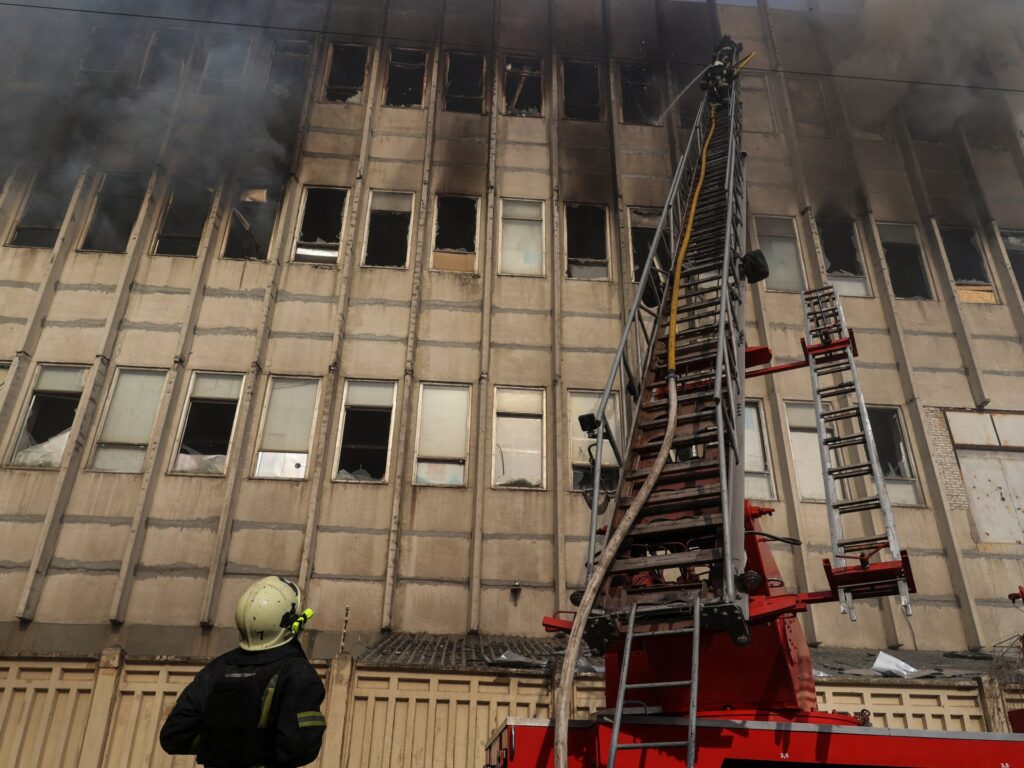
Attacks follow largest raids on Kyiv in weeks, as Zelenskyy pleads with West for air defence systems. Russian missiles have struck Ukraine’s Kharkiv, knocking out part of the city’s power supply a day after Ukrainian President Volodymyr Zelenskyy made an urgent appeal to the West to deliver air defence systems. Kharkiv Mayor Ihor Terekhov said on Friday morning that 15 blasts had been heard, with missiles causing partial blackouts and disabling the city’s water pumps. There were no immediate reports of casualties. Kharkiv lies just 30km (19 miles) from the border with Russia in Ukraine’s northeast and has come under frequent bombardment since Moscow launched its full-scale invasion of the country in February 2022. Ukrainian officials said Russian missiles had also hit Kryvyi Rih, which is Zelenskyy’s hometown, and Vinnytsia, both in central Ukraine, damaging a “critical infrastructure object” in the latter city. Ukraine’s state hydropower company said on Friday that a Russian strike hit Ukraine’s largest dam, the DniproHES in Zaporizhzhia in the south of the country, but that there was no risk of a breach. “There is currently a fire at the station. Emergency services and energy workers are working on the spot, dealing with the consequences of numerous air strikes,” the utility said. The administration of Zaporizhzhia reported eight missile attacks in the city and said some residents had been wounded. The attacks follow closely on the heels of Russia’s strikes on Kyiv the previous day, the largest attack on the Ukrainian capital in weeks after Russian President Vladimir Putin promised retribution for strikes and incursions into Russia’s border regions. In Belgorod, a Russian region along the border with Ukraine, one woman was killed and several others were wounded in a Ukrainian attack on Friday, the regional governor, Vyacheslav Gladkov, said. The Russian Ministry of Defence said it had downed eight rockets fired on Belgorod on Friday from Ukraine with Vampire rocket launchers. Following the assault on Ukraine’s capital, which Russia’s defence ministry said had been delivered with long-range high-precision weapons, Zelenskyy called on the West to deliver air defence systems. Addressing the 27 leaders of the European Union via videolink, as they met in Brussels for a two-day summit, he told them the shortfall in ammunition facing his troops was “humiliating” for Europe. “Europe can provide more – and it is crucial to prove it now,” he said, also calling for additional air defence systems following the massive strike on Kyiv. Today, I addressed the European Council outlining five crucial elements to defend Ukraine and all of Europe from Russian aggression and terror: 1️⃣Air defense2️⃣Artillery ammunition3️⃣Europe’s defense self-sufficiency4️⃣Europe’s political unity5️⃣Frozen Russian assets A thread🧵 pic.twitter.com/SzmeCMeWwf — Volodymyr Zelenskyy / Володимир Зеленський (@ZelenskyyUa) March 21, 2024 EU leaders on Thursday agreed to push ahead with a plan to use the profits from frozen Russian central bank assets to arm outgunned Ukraine, days after Putin tightened his iron grip over his country by winning a new six-year term in presidential elections. The proposal, at the heart of talks between bloc leaders, could unlock some three billion euros ($3.3bn) a year for Ukraine once it is given a final green light. “I’m glad that leaders endorsed our proposal to use the extraordinary revenues from immobilised Russian assets. This will provide funding for military equipment to Ukraine,” European Commission chief Ursula von der Leyen told reporters. The push by the EU to find more funds for Ukraine comes as a $60bn support package from the United States, Ukraine’s other main backer, remains blocked in Congress. Adblock test (Why?)
Australia to contribute $3bn for construction of AUKUS submarines

Defence Minister Richard Marles says allies working ‘at pace’ to ensure the security deal becomes a reality. Australia is set to provide 4.6 billion Australian dollars ($3bn) to British industry to help support the construction of nuclear-powered submarines under the AUKUS deal with the United Kingdom and the United States and ensure its new vessels arrive on time. Senior officials from the UK and Australia, as well as the US ambassador to Australia, visited the naval shipyard where the submarines will be built in the South Australian city of Adelaide on Friday. “The three governments involved here are working at pace to make this happen,” Australian Defence Minister Richard Marles told reporters at the Osborne shipyard where he was accompanied by his British counterpart Grant Shapps, as well as the foreign ministers of the two countries. “This is going to happen and we need it to happen.” Shapps said the submarine programme was expensive, but necessary. “Nuclear-powered submarines are not cheap, but we live in a much more dangerous world where we are seeing a much more assertive region with China, a much more dangerous world all around with what’s happening in the Middle East and Europe,” Shapps told the Australian Broadcasting Corporation. The announcement came a day after Australia and the UK signed a defence pact to better meet security challenges such as China’s increased activity in the South China Sea and the Pacific. Australia, the UK and the US first announced the AUKUS trilateral security alliance in 2021 and revealed further details of how Australia would acquire the nuclear-powered submarines a year ago. The 10-year plan will boost capacity at the UK’s Rolls-Royce factory in Derby where the nuclear reactors for the vessels will be built, while the submarines themselves will be constructed by BAE Systems in Adelaide, the state capital of South Australia. The Virginia-class submarines will be primarily from a British design but will have a US weapons system on board. Australia hopes to have eight nuclear-powered vessels in the water by the 2050s, a mix of the new AUKUS-class subs built at home and in the UK, and Virginia-class vessels purchased from the US. Marles said a “drumbeat” of AUKUS-class submarines would then continue to roll off Australian production lines “every few years” in perpetuity. “There is no country in the world which has obtained the capability to build nuclear-powered submarines, which has then turned that capability off,” he said. “We will see submarines being produced here on an enduring basis.” The nuclear-powered submarines will be quieter and stealthier than Australia’s existing diesel fleet, and capable of deploying over vast distances without surfacing. China has claimed the AUKUS deal risks setting off an arms race in the Asia Pacific. Beijing has stepped up its own military activities in recent years, modernising and expanding its armed forces, including its navy. It has also become more assertive over its territorial claims in the disputed South China Sea where it has built artificial islands and reefs, and deployed its coastguard and maritime militia. The sea is also claimed all or in part by Brunei, Malaysia, the Philippines, Taiwan and Vietnam and Beijing has ignored a 2016 international court ruling that its claim on the sea had no legal basis. Beijing has also become more assertive over its claim to the self-ruled democratic island of Taiwan. On Friday, authorities in Taiwan said they had detected 36 Chinese military aircraft around the island over the previous 24 hours, the highest number in 2024. Adblock test (Why?)
The US war on reproductive rights should concern women everywhere
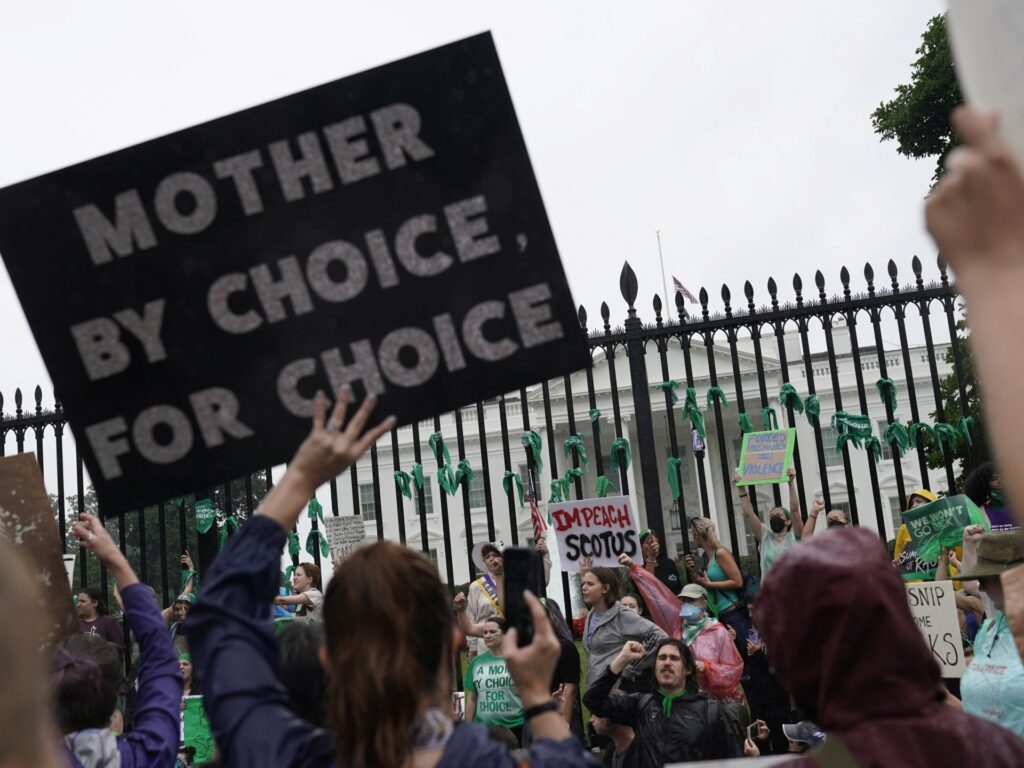
In the United States, women’s reproductive rights, gained through half a century of feminist struggle, are rapidly being replaced with reproductive wrongs. In 2022, the Supreme Court overturned Roe v Wade – the landmark 1973 ruling that gave women the constitutional right to abortion. Since then, in 28 states access to abortion has been restricted depending on gestational age, with bans ranging from six weeks to more than 24 weeks. Abortion is almost completely banned with limited exceptions in another 14 states. In Idaho, for example, abortion is allowed only in cases of rape or incest that have been reported to police, or where necessary to prevent the death of the pregnant woman. A similar ban is in force in Indiana, while in Kentucky and Louisiana, it is banned except in the case of a medical emergency or if the pregnancy is “medically futile”. There are also efforts to establish not only the rights of foetuses but even those of embryos frozen in labs as superior to the rights of women. Just last month, the Alabama Supreme Court ruled that frozen embryos have the same rights as children under state law. The perplexing decision was issued in relation to a “wrongful death” claim made by three couples whose frozen embryos were accidentally destroyed at a fertility clinic. Judges, citing verses from the Bible, ruled that a 1872 state law called “the Wrongful Death of a Minor Act” that allows for parents of deceased children to seek punitive damages where “the death of a minor child is caused by the wrongful act, omission, or negligence of any person” could be applied to “all unborn children, regardless of their location”. The ruling will have overreaching implications on the legality in the state of in vitro fertilisation (IVF), which is problematic in itself as it feeds the surrogacy trade. More importantly, however, this ruling has wide-reaching implications for women’s bodily autonomy. It implies that any man who impregnates a woman – even through rape – could sue that woman under the Wrongful Death of a Minor Act for seeking an abortion at any point in gestation. This blatant war on women’s reproductive rights and bodily anatomy in the US should concern not only Americans but also feminists in Europe, and especially those of us in the UK. This is not only because we should expose and challenge threats to women’s rights wherever they appear, but also because the cultural norms and political perspectives gaining traction in the US will have a significant effect on British politics, and consequently rights and wellbeing of British women and girls. Indeed, in the past few decades, as the anti-abortion movement started to make legal and political gains in the US, we have started to witness a similar trend in the UK. Since 2015, the Pro-life All Party Parliamentary Group (APPG) has been working to dial back abortion rights across the UK. For the past four years, the country’s leading anti-abortion charity, Right To Life UK, has served as the Secretariat of this cross-party group. In 2021, as feminists were campaigning to fully decriminalise abortion, this same charity ran adverts calling on supporters to prevent Parliament from introducing “extreme” laws that would “introduce abortion, for any reason, up to birth”. Since October 2022, Maria Caulfield, the Conservative MP for Lewes, has been serving as the Parliamentary undersecretary of state for women, as well as for mental health and women’s health strategy. Caulfield supports cutting the abortion time limit and voted against buffer zones outside abortion clinics. She is vice chair of the Pro-Life APPG, and has voted against legalising abortion in Northern Ireland. The very fact that such an open and proud opponent of abortion rights was appointed minister for women is horrifying in and of itself, because it communicates the government’s sympathy towards efforts to restrict British women’s rights and freedoms. Caulfield has called the UK’s 1967 Abortion Act, which legalised abortion in Great Britain on certain grounds by registered practitioners, “one of the most liberal abortion laws in the world”. But this is untrue; Britain has some of the most draconian abortion laws in the world, and is still sending women to prison over “illegal” abortions. Indeed, as recently as in June 2023, a woman in Britain was sentenced to 28 months in prison for having an abortion after the legal limit of 24 weeks gestation during a COVID-19 lockdown in 2020. Following an appeal, her sentence was reduced to 14 months and suspended – but the case was a clear warning to all women that this could also happen to them. Feminist campaigners are now demanding an overhaul of the out-of-date laws the 44-year-old mother of three was sentenced under. These laws date back to the1861 Offences Against the Person Act, under which all abortions were criminalised – except those undertaken to save the mother’s life, a caveat introduced in 1929. The 1967 Abortion Act legalised abortions with an authorised provider, but this was a mere amendment to the 1861 act, which was never repealed. Thus, the deliberate termination of a pregnancy remains illegal in the UK unless certain conditions are met. The Abortion Act originally allowed terminations up to 28 weeks, though this was reduced to 24 weeks, the point after which the foetus is accepted as viable outside the womb, in 1991. Today, a woman in the UK may be allowed to abort after 24 weeks only if her life is at risk, or the child she is carrying would be born with a severe disability. Crimes under the Offences Against The Person Act carry a maximum sentence of life in prison. Prosecutions are rare, but according to data obtained under the Freedom of Information Act in England and Wales, 67 women were tried for “procuring an illegal abortion” between 2012 and 2022. While the overturning of Roe v Wade did not directly affect UK abortion law, it certainly emboldened anti-choice campaigners, many of whom have joined forces with their US counterparts
At least three killed in suicide bombing in Afghan city of Kandahar

At least 12 others wounded in blast that targeted a group of people waiting outside a bank in city centre. At least three people have been killed and 12 others wounded in a suicide bombing in front of a bank in Afghanistan’s Kandahar city, according to local police and officials. The ISIL (ISIS) group claimed responsibility for Thursday’s attack on its Telegram channel. The explosion at around 8:00am (03:30 GMT) targeted a group of people waiting outside the New Kabul Bank branch in central Kandahar city. Local police and Taliban officials said three people were killed and 12 were wounded. A source at a major hospital in the southern city said the toll was much higher, the AFP news agency reported. “Mirwais Hospital has received 20 people killed since this morning from the explosion,” the source told AFP on condition of anonymity out of fear of reprisal for speaking to the media. Inamullah Samangani, director of information and culture of Kandahar province, said the bank was busy with people collecting their salaries when the explosion went off. “Commonly our compatriots gather there to collect their salaries,” he said, adding that the “victims were civilians”. One of the victims, Khalil Ahmad, a father of eight in his 40s, had gone to the bank to get his salary, his nephew said at his funeral later Thursday. “He was just an ordinary, simple guy; he used to work as a painter,” Mohammad Shafiq Saraaj said, as Ahmad’s relatives gathered around his body wrapped in a white cloth for burial. “Such incidents used to happen under the previous government … and now it is happening as well,” Saraaj said. “We beg for security to be properly maintained in the country and especially in crowded places, and that our nation be saved from this kind of tragedy.” ‘Under control’ In the aftermath of the explosion, Taliban authorities surrounded the area outside the bank and did not allow media workers to approach the site. Samangani said on Thursday morning that “the situation is under control” at one of the city’s hospitals where the wounded were transported, denying there was an urgent need for blood donations as had been circulated on social media. “There is no such issue, and the wounded people are not in serious condition; they have superficial injuries,” he said in a message to journalists. Taliban leader Hibatullah Akhundzada lives in Kandahar, the second-largest city in the country. The number of bomb blasts and suicide attacks in Afghanistan has markedly declined since the Taliban seized power in August 2021, ousting the United States-backed government. However, a number of armed groups – including the regional chapter of ISIL – remain a threat. Several explosions have been reported around Afghanistan since the start of the Muslim holy month of Ramadan on March 11, but few have been confirmed by Taliban officials. The US Charge d’Affaires for Afghanistan, Karen Decker, condemned “all acts of terror” in a post on X, offering condolences to the families of the victims. “Afghans should be able to observe Ramadan peacefully & without fear,” she said. The regional chapter of ISIL has a history of targeting Shia Muslims who it considers heretics, but is also a rival of the Taliban. Adblock test (Why?)
Why has Vietnam’s president resigned after just a year?

Vo Van Thuong is the latest high-profile figure to resign amid a corruption crackdown. Vietnam’s president has resigned after only a year in office. Vo Van Thuong is the latest high-profile figure to resign amid a corruption crackdown in a country important to both China and the West. So, why has he gone? And what are the international implications? Presenter: Rob Matheson Guests: Hai Hong Nguyen – Senior lecturer at VinUniversity in Hanoi Carlyle Thayer – Professor emeritus at the University of New South Wales – Canberra Nguyen Khac Giang – Visiting Fellow at ISEAS-Yusof Ishak Institute, a think tank in Singapore Adblock test (Why?)
Blinken: Clear consensus for immediate, sustained ceasefire in Gaza

NewsFeed US Secretary of State Antony Blinken said a ceasefire is the best way to increase the flow of humanitarian aid to Gaza. He spoke in Cairo following a meeting with Arab leaders that focused on a truce deal between Israel and Hamas as well as the release of captives. Published On 21 Mar 202421 Mar 2024 Adblock test (Why?)
A Ramadan no Palestinian will ever forget
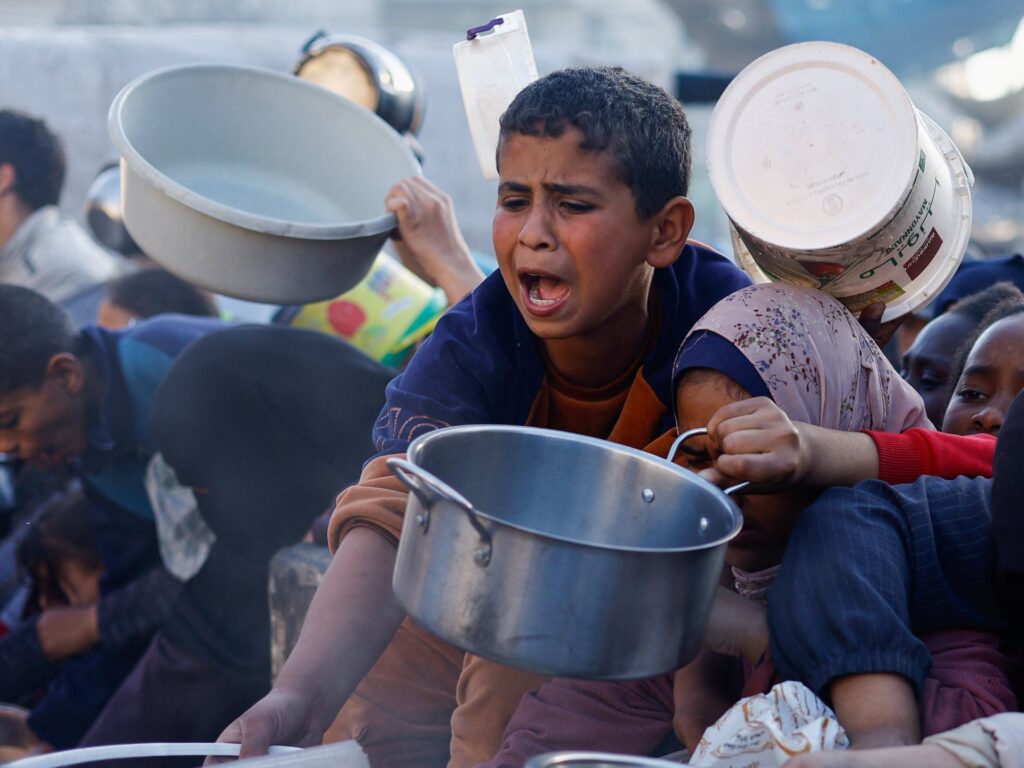
It was in the streets of Nablus, el-Bireh, and – whenever I was able to sneak past illegal checkpoints – those of occupied East Jerusalem, that I first experienced the purest form of Ramadan and recognised the true meaning and purpose of my religion. It was there that I realised Ramadan is much more than just fasting and prayer, that it is a remembrance of the strength of our faith, and a celebration of the resilience of our people. In those streets, occupied and under constant threat of aggression, but defiantly full of hope and children’s laughter, I came to appreciate the unique beauty of the sound of Adhan and the calming wisdom of being Muslim. This Ramadan, I am not at home, in Palestine. And as I break my fast at every sundown with the images and sounds of my homeland’s ongoing destruction playing out in my mind, I am devastated to think what Ramadan now looks and feels like for my beloved people. For those in Gaza, who survived more than five months of genocide, there is no food for Iftar. Israel is still blocking aid from reaching the most desperate, and people are cooking grass to have something, anything, to break their fast with. Babies and children are all malnourished, and dozens have already died from lack of food and clean water. Everyone in the besieged enclave lost someone, but they are not even provided with the time and space to breathe, mourn and process their trauma. There is no mosque left undamaged, and no safe place for collective prayer. Indeed, people of Gaza are still under constant bombardment. Even those who tried to find refuge in Rafah, that last so-called “safe zone” in the besieged enclave, are still being threatened with a ground invasion – an invasion that would undoubtedly kill and maim thousands more innocents. Sure, Ramadan has not been carefree for the people of Gaza for years – due to Israel’s relentless blockade, many parents were going without food in this holiest of months to feed their children long before the beginning of this genocide. Yet death and destruction has never been this close, and fear about the future this acute in this once beautiful land, during any Ramadan, ever. For those in the West Bank, Ramadan is nothing like it was before either. Sure, Ramadan was never a straightforward affair in the occupied territory. It always involved navigating illegal checkpoints, enduring harassment from occupation soldiers and resisting provocations. But this year, it is much, much worse. Palestinians in the West Bank are not only agonising over the genocide of their brothers and sisters in Gaza, but also trying to survive relentless attacks from settlers, police and soldiers. They wonder who among them will be the next to be arbitrarily arrested, displaced or assaulted – they wonder whether they and their loved ones will live to see another Ramadan. And for those in the diaspora, we are left practicing our faith with an undying guilt that I do not have the capacity to describe neither in English nor in Arabic. How should I break my fast when so many of my people haven’t properly eaten in months? Pray in a mosque while my people pray on rubble? Religiously, I know I must, but that does answer the questions that make my heart bleed. Ramadan after Ramadan, the Palestinian people have been tested. But the Palestinian spirit will outlive the tyranny of occupation. As I watch Gazans perform Friday prayer amidst the rubble of their society, I am reminded of what steadfastness looks like: that you can destroy one’s home or mosque, but never one’s Iman (faith). I often imagine what Ramadan would look like if Palestine were never occupied. Perhaps I would be breaking fast with the children of Gaza who are no longer here. Perhaps I would be making knafeh, my speciality, in the eastern mountains of Nablus, on land that was stolen from my grandfather, who never got to see freedom. One thing is certain, Ramadan will never be the same. Every year from now on, my prayers will not be for myself but for my martyred people who are no longer able to pray for themselves. I will be praying to absolve my guilt for not being able to do enough to save them. May God’s mercy be upon the souls of our martyrs. The views expressed in this article are the author’s own and do not necessarily reflect Al Jazeera’s editorial stance. Adblock test (Why?)
Israel’s war on Gaza will continue, Netanyahu tells US Republican senators
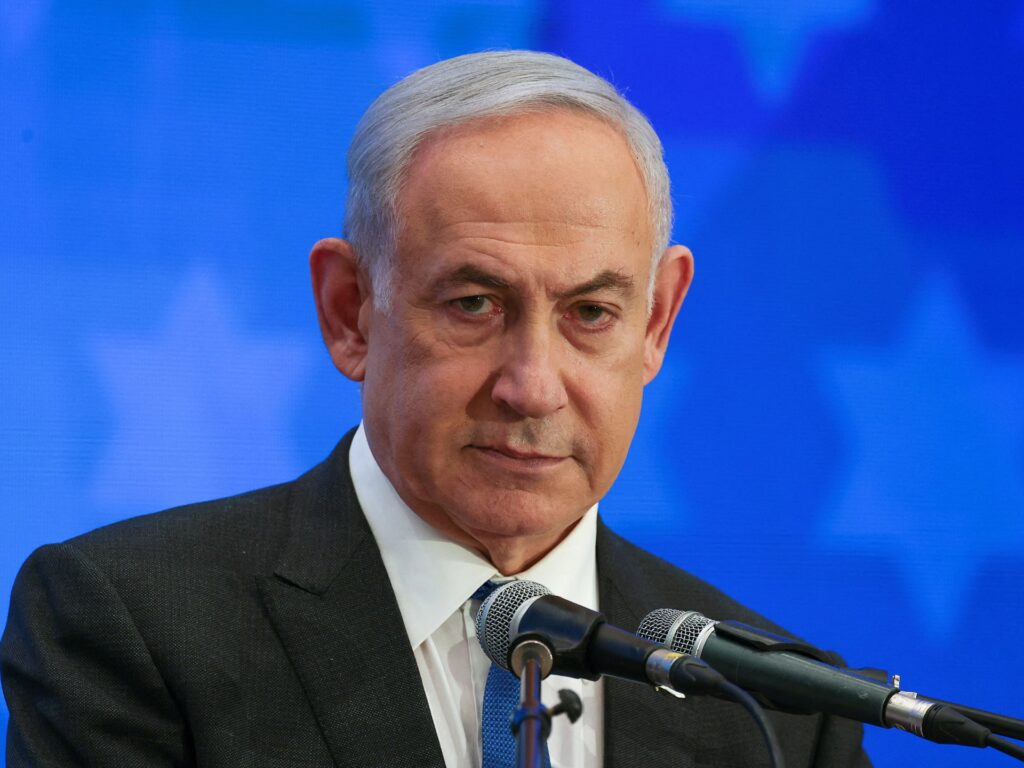
Israel’s war on Gaza will continue, Israeli Prime Minister Benjamin Netanyahu has told US Republican senators, despite mounting criticism from Democratic leaders about the growing humanitarian catastrophe in the besieged Palestinian territory. Speaking to Republican senators via videolink on Wednesday, Netanyahu said his government would continue its efforts to defeat Hamas in the Gaza Strip, according to the lawmakers he addressed. “He’s going to do what he said he’s going to do. He’s going to finish it,” Senator Jim Risch said. Netanyahu’s speech came after Senator Chuck Schumer, the Senate’s Democratic majority leader and a Jewish American, in last week’s Senate address branded the prime minister an “obstacle to peace” in the region. Schumer said Netanyahu was no longer fit to govern Israel because of his government’s “dangerous and inflammatory policies” particularly around getting aid into Gaza, as pressure mounts within the Democratic Party for the United States to discontinue its unconditional political and military support for Israel. Netanyahu has, however, retained backing in Republican circles. Republican Senator John Barrasso criticised Schumer’s comments and said: “We told [Netanyahu] Israel has every right to defend themselves and he said that’s exactly what they continue to do.” Senate Republicans heard from Prime Minister @Netanyahu today — he gave us an update on the war, hostage releases, and defeating Hamas.@POTUS and @SenSchumer are running scared of the extremists in their own party. Republicans continue to stand with the people of Israel. pic.twitter.com/ZX8DOO2Iov — Sen. John Barrasso (@SenJohnBarrasso) March 20, 2024 A spokesperson for Schumer said Netanyahu had offered to speak to the Democrats as well, but Schumer declined, saying the conversation should not be partisan. “I care deeply about Israel and its long-term future. When you make the issue partisan, you hurt the cause of helping Israel,” Schumer told reporters. ‘Mistake’ US President Joe Biden warned Netanyahu in a call this week that Israel’s stated goal to invade Rafah in southern Gaza – the last refuge in which approximately 1.5 million displaced Palestinians have sheltered – without a clear humanitarian plan would be a “mistake”. Biden also asked Netanyahu to send a team of intelligence and military officials to Washington, DC to hear concerns about a potential invasion of the city. “Gaza’s other major cities have largely been destroyed, and Israel has not presented us or the world with a plan for how or where they would safely move those civilians – let alone feed and house them and ensure access to basic things like sanitation,” US National Security Advisor Jake Sullivan told reporters on Monday. “I made it clear to President Biden in our conversation, in the clearest way, that we are determined to complete the elimination of Hamas in Rafah as well,” Netanyahu said of the call in a statement on X. Rafah, on the Gaza Strip’s southernmost tip, has seen its population balloon from 300,000 to about 1.5 million people, as Israel has forcefully pushed hundreds of thousands of displaced residents fleeing bombardments in north and central Gaza since the start of the war in October. Western countries, including Israel’s European allies, have cautioned against a ground attack on Rafah, which serves as a key hub for humanitarian aid coming through the Egyptian border. Looming famine This week, United Nations experts warned of a looming famine between now and May in parts of Gaza because of an acute shortage of food and water. About 1.1 million people – half the population – were facing “catastrophic” levels of hunger as people resort to skipping meals for days on end, and as some starve to death, according to the researchers. Oxfam, a global charity, accused Israel of “deliberately” blocking the entry of critical food and medical supplies into the Strip by using bureaucracy to slow down the inflow of trucks carrying humanitarian supplies via the two Israel-controlled border crossings currently open to aid. Josep Borell, the European Union’s foreign policy chief, reiterated previous calls for Israel to lift the blockade and again accused it of using starvation as a “weapon of war”. More than 100 Palestinians have been killed by Israeli attacks across Gaza in the last 24 hours. Gaza’s Ministry of Health said on Thursday that at least 31,988 Palestinians have been killed and 74,188 wounded in Israeli attacks on Gaza since October 7. Adblock test (Why?)