

Hong Kong’s new security law comes into force amid human rights concerns

A new national security law has come into force in Hong Kong despite growing international criticism that it could erode freedoms in the China-ruled city and damage its international financial hub credentials. The law, also known as Article 23, came into at midnight on Saturday, days after Hong Kong’s pro-Beijing lawmakers passed it unanimously, fast-tracking legislation to plug what authorities called national security loopholes. Hong Kong Chief Executive John Lee said the law “accomplished a historic mission, living up to the trust placed in us by the Central [Chinese] Authorities”. He has often cited Hong Kong’s “constitutional responsibility” to create the new legislation as required by the Basic Law, the city’s mini-constitution since its handover from the United Kingdom to China in 1997. Lee also said the law was necessary to “prevent black-clad violence”, a reference to Hong Kong’s massive and at times violent pro-democracy protests in 2019, which brought hundreds of thousands to the streets demanding greater autonomy from Beijing’s grip. A previous attempt to pass Article 23 was scrapped in 2003 after 500,000 people protested. This time around, public criticism has been muted amid the security crackdown. What does the new law entail? Hong Kong, a former British colony, returned to Chinese rule in 1997 with the guarantee that its high degree of autonomy and freedoms would be protected under a “one country, two systems” formula. Currently, the new Article 23 law has expanded the British colonial-era offence of “sedition” to include inciting hatred against China’s Communist Party leadership, with an aggravated sentence of up to 10 years in jail. Under the security law, penalties can run up to life in prison for sabotage endangering national security, treason and insurrection; 20 years for espionage and sabotage; and 14 years for external interference. City leader Lee is also now empowered to create new offences carrying jail terms of up to seven years through subsidiary legislation, while the security minister can impose punitive measures on activists who are overseas, including cancelling their passports. Moreover, police powers have also been expanded to permit detaining people for up to 16 days without charge – a jump from the current 48 hours – and to restrict a suspect from meeting lawyers and communicating with others. International condemnation The United States, the European Union, Japan and the UK have been among the law’s strongest critics, with UK Foreign Minister David Cameron saying it would “further damage the rights and freedoms” of those in the city. US Secretary of State Antony Blinken on Friday expressed “deep concern” that the law could be used to undermine rights and curb dissent, adding it could damage Hong Kong’s reputation as an international finance hub. Meanwhile, Australia, the UK and Taiwan have updated their travel advisories for Hong Kong, urging citizens to exercise caution. “You could break the laws without intending to and be detained without charge and denied access to a lawyer,” the Australian government said. People hold up placards at a demonstration outside the Foreign and Commonwealth Development Office in London to protest the introduction of the Article 23 National Security Law in Hong Kong [Justin Tallis/AFP] In a joint statement led by the overseas-based Hong Kong Democracy Council, 145 community and advocacy groups have also condemned the law and called for sanctions on Hong Kong and Chinese officials involved its passage, as well as review the status of Hong Kong’s Economic & Trade Offices worldwide. “It’s time for the United States to step up for political prisoners and freedom in Hong Kong. Every time we let authoritarians get away with atrocities, we risk other bad actors attempting to do the same,” wanted Hong Kong activist Frances Hui said in Washington, during a news conference with the US Congressional-Executive Commission on China (CECC), which advises Congress. Protests have also taken place in Taipei’s fashionable Ximending shopping district, where more than a dozen Hong Kong, Taiwan and Tibet activists gathered to protest the law and shout their denunciations. Other protests are planned in Australia, the UK, Canada, Japan and the US. But authorities in Hong Kong have “strongly condemned such political manoeuvres with skewed, fact-twisting, scaremongering and panic-spreading remarks”. What is China’s stance? China has defended Hong Kong’s security crackdown as essential to restoring order after months of sometimes violent antigovernment and pro-democracy protests in 2019. About 291 people have been arrested for national security offences, with 174 people and five companies charged so far. Chinese authorities insist all are equal before the security laws that have restored stability, but while individual rights are respected no freedoms are absolute. Adblock test (Why?)
Can the UN Security Council agree on a ceasefire resolution for Gaza?

Members reject text drafted by the US in advance of another vote. The United Nations Security Council has failed to pass a United States-drafted resolution recognising the need for a ceasefire in Gaza. It was the first time the Americans had used such strong language, but it was not enough for Russia, China and Algeria. They rejected the text because it did not demand an immediate ceasefire and because it tied any pause in hostilities to the release of all Israeli captives. Another draft is due to be tabled on Monday, this time with stronger language. But can Council members overcome their entrenched positions and internal politics to reach an agreement? Presenter: James Bays Guests: Francis J Riccardione – Former US ambassador to Egypt and Turkey. Hussein Haridi – Former Egyptian assistant foreign minister and a former ambassador. Hanan Ashrawi – Member of the Palestine Legislative Council. Adblock test (Why?)
At least 19 reported killed as Israeli forces fire on Gaza aid seekers

Authorities in Gaza said 23 people were also injured while waiting for bags of flour and aid near Kuwait Roundabout. At least 19 Palestinians have been killed in an Israeli attack targeting civilians who were waiting for aid southeast of Gaza City, Gaza’s Ministry of Health and its Media Office said. “The Israeli occupation commits a massacre, killing 19 and injuring 23 civilians while thousands of citizens were waiting for flour and aid near Al-Kuwait roundabout,” Gaza’s media office said in a statement on Saturday. It said that the Israeli army and tanks opened fire with machine guns “towards the hungry people who were waiting for bags of flour and aid in a place far from posing any danger to the occupation”. Mahmud Basal, the spokesman for the Civil Defence Department in Gaza, said there had been “heavy shooting at civilians” and victims had been transported to a nearby Ahli Arab Hospital. But with Gaza’s healthcare system at near collapse, many were treated outside in the open air. “There were very serious injuries, some of whom were injured by shrapnel. The reality is tragic, difficult and challenging,” he said. Alaa al-Khudary, a witness at the scene, told Al Jazeera that the Israeli forces shot at the crowd, leaving “many dead” and leaving others injured while they tried to get “a bite to eat” for their children. Palestinians wounded in the attack were taken to Ahli Arab Hospital in Gaza City [Dawoud Abo Alkas/Anadolu Agency] Looming famine Half of Palestinians in Gaza are experiencing “catastrophic” hunger, with famine projected to hit the north of the territory by May unless there is urgent intervention, a United Nations-backed food assessment warned on Monday. But aid distribution has become increasingly dangerous and sometimes lethal. Last Tuesday, 23 Palestinians were killed, and several others were injured by Israeli bombing that targeted Palestinians waiting for humanitarian aid in the northern Gaza Strip. On February 29, Israeli forces opened fire on hundreds of Palestinians as they gathered south of Gaza City waiting to receive humanitarian aid in what is known as the “flour massacre”, leaving 118 dead and 760 wounded, according to the Health Ministry in the enclave. UN Secretary-General Antonio Guterres said on Saturday during a visit to the Rafah crossing that the line of blocked aid trucks stuck on Egypt’s side of the border with the Gaza Strip while Palestinians face starvation on the other side is a “moral outrage”. Al Jazeera’s Tareq Abu Azzoum, reporting from Rafah, said the latest shooting is part of a “clear, systematic policy that Israel has been using in the course of the past few months”. He said the Israeli forces have been imposing restrictions on aid deliveries to the north of the enclave while also attacking people who attempt to reach humanitarian aid convoys. He said that people in Gaza, despite the risks, continue to wait for the convoys as they are “hungry, dehydrated, and they want to return back to their families with something to break the fast“. Volunteers distribute rations of red lentil soup to displaced Palestinians in Rafah in the southern Gaza Strip on February 18, 2024 [Said Khatib/AFP] Reports of shooting ‘are incorrect’: Israel The Israeli army denied it had fired on the crowd. “The reports claiming that the [Israeli military] attacked dozens of Gazans at an aid convoy are incorrect,” an army statement said. “Preliminary findings have determined that there was no aerial strike against the convoy, nor were there incidents found of [Israeli] forces firing at the people at the aid convoy.” Adblock test (Why?)
US Senate passes $1.2 trillion budget, averting government shutdown

Bill passes after hours of gridlock over funding for three-quarters of the government for the next six months. Lawmakers in the United States Senate have passed a $1.2 trillion spending bill, narrowly averting a partial government shutdown. The lower house on Saturday approved the measure by a 74-24 vote after funding had expired for three-quarters of the government at midnight. But the White House sent out a notice shortly after the deadline announcing that the Office of Management and Budget had ceased shutdown preparations because there was a high degree of confidence that Congress would pass the legislation and the president would sign it on Saturday. Key federal agencies including the departments of Homeland Security, Justice, State and Treasury, which houses the Internal Revenue Service, will remain funded through September 30 after the bill was passed in the Democratic-majority Senate. But the measure did not include funding for mostly military aid to Ukraine, Taiwan or Israel, which are included in a different Senate-passed bill that the Republican-led House of Representatives has ignored. The bill also eliminates US funding for the United Nations Relief and Works Agency for Palestine Refugees (UNRWA) – which provides vital services on the ground to Palestinians in Gaza and across the Middle East – until March 2025. The agency lost millions of dollars in international support, led by the US, following allegations by Israel that some of its staff in the Gaza Strip were involved in the October 7 Hamas-led attacks. The House on Friday voted 286-134, narrowly gaining the two-thirds majority needed for approval of the six-bill package which represents the largest and most contentious section of federal funding. More than 70 percent of the money is set for defence spending, with the bills also covering the military, homeland security, healthcare and other services. Funding for those programmes was set to expire on March 22. Top Senate Democrat Chuck Schumer said it was “a very long and difficult day, but we have just reached an agreement to complete the job of funding the government”. “It is good for the country that we have reached this bipartisan deal. It wasn’t easy, but tonight our persistence has been worth it,” he added. We have just reached an agreement to complete the job of funding the government tonight. It wasn’t easy, but tonight our persistence has been worth it. It is good for the American people that we have reached this bipartisan deal. — Chuck Schumer (@SenSchumer) March 23, 2024 It took legislators six months into the current fiscal year to get near the finish line on government funding, the process slowed by conservatives who pushed for more policy mandates and steeper spending cuts than the Democratic-led Senate or White House would consider. The impasse required several short-term, stopgap spending bills to keep agencies funded. The first package of full-year spending bills, which funded the departments of Veterans Affairs, Agriculture and the Interior, among others, cleared Congress two weeks ago with just hours to spare before funding expired for those agencies. The vote tally in the House reflected anger among Republicans over the content of the package and the speed with which it was brought to a vote. House Speaker Mike Johnson brought the measure to the floor even though a majority of Republicans ended up voting against it. To win over support from Republicans, Johnson touted some of the spending increases secured for about 8,000 more detention beds for migrants awaiting their immigration proceedings or removal from the country – or about a 24 percent increase from current levels. Republican leadership highlighted more money to hire about 2,000 border patrol agents. Democrats, meanwhile, boasted of a $1bn increase for Head Start, an early childhood development programme, and new childcare centres for military families. They also played up a $120m increase in funding for cancer research and a $100m increase for Alzheimer’s research. Adblock test (Why?)
Moscow concert hall attack: Death toll rises to 115 with scores injured

Camouflage-clad gunmen with automatic weapons burst into a packed concert hall near Moscow, where the veteran rock band Picnic was to perform, shooting into the crowd and detonating explosives, setting the building on fire. The attack on the Crocus City Hall on Friday killed at least 115 people and injured more than 187. Russian authorities expected the number of casualties to rise. The blaze ripped through the venue, with smoke filling the building and screaming visitors rushing to emergency exits. The concert hall, one of the most popular in Moscow, can hold some 6,200 people. Graphic videos posted on social media showed the gunmen firing repeated rounds as they entered the building, shooting at screaming people at point-blank range. Helicopters were brought in to douse the flames from the air, as firefighters battled the blaze from the ground. The fire was eventually brought under control early on Saturday. The Emergency Situations Ministry said firefighters helped about 100 people escape through the building’s basement, while rescue operations were also launched for people trapped on the roof. ISIS-K, an offshoot of ISIL (ISIS), the hardline group that once sought control over Iraq and Syria, claimed responsibility for the attack on its Telegram channel, saying the gunmen had escaped. Russian investigators said on Saturday that 11 people had been detained so far. Adblock test (Why?)
Dissecting the ‘TikTok problem’

What’s the US’s issue with TikTok? Is it data security, secret Chinese influence or pro-Palestinian content? The threat to ban TikTok in the United States has prompted an online backlash. Critics question the premise that Chinese ownership poses a security risk and suggest the real reason may be the surge in pro-Palestinian content since October 7. Contributors:Julia Angwin – Tech Policy Writer, New York Times; Founder, Proof NewsRussel Brandom – Tech Editor, Rest Of The WorldMarwa Fatafta – MENA Policy and Advocacy Director, Access NowEvan Greer – Director, Fight for the Future On our radar: In yet another deadly raid on Gaza’s al-Shifa Hospital, Israel abducted Palestinian journalists covering the story – including one of Al Jazeera’s own. Producer Nicholas Muirhead reports. Why Russia has looted Ukraine’s art Following Vladimir Putin’s expected re-election this week, we’re revisiting a story about the Russian military’s targeting of Ukraine’s heritage. Producer Tariq Nafi explores how Russia’s war on Ukrainian culture is designed to rewrite history and weaken the country’s resistance. Featuring:Milena Chorna – Head of International Exhibitions, War Museum in UkraineAlina Dotsenko – Director, Kherson Regional Art MuseumIhor Poshyvailo – General Director, Maidan Museum Adblock test (Why?)
AOC decries ‘unfolding genocide’ in Gaza, urges halting weapons to Israel

Washington, DC – Describing the humanitarian catastrophe in Gaza as a genocide, progressive Congresswoman Alexandria Ocasio-Cortez has called on the United States to suspend weapons transfers to Israel. In an impassioned speech on the floor of the House of Representatives on Friday, Ocasio-Cortez condemned the Israeli blockade on Gaza, which the United Nations says has put the territory on the verge of famine. “This is a mass starvation of people, engineered and orchestrated following the killing of another 30,000, 70 percent of whom were women and children killed. There is hardly a single hospital left. And this was all accomplished, much of this accomplished, with US resources and weapons,” Ocasio-Cortez, a US representative from New York, said. “If you want to know what an unfolding genocide looks like, open your eyes. It looks like the forced famine of 1.1 million innocents. It looks like thousands of children eating grass as their bodies consume themselves, while trucks of food are slowed and halted just miles away. “It looks like good and decent people who do nothing, or too little, too late.” Ocasio-Cortez, one of the most recognised names in Congress and a rising star in President Joe Biden’s Democratic Party, had previously faced criticism from the left for failing to join many of her fellow progressive in accusing Israel of genocide in Gaza. The Biden administration rejects allegations that Israel is systematically committing human rights violations in Gaza. Earlier this year, it called South Africa’s petition to the International Court of Justice (ICJ) accusing Israel of genocide unfounded. Ocasio-Cortez said on Friday that the US cannot continue to “facilitate” mass killings in Gaza in the name of honouring its alliance with Israel. “The time is now to force compliance with US law and the standards of humanity, and fulfill our obligations to the American people to suspend the transfer of US weapons to the Israeli government in order to stop and prevent further atrocity,” the congresswoman said. The US is Israel’s top weapons supplier. Washington provides at least $3.8bn in aid to Israel annually, and Biden is working with Congress to secure $14bn in additional aid to the US ally. Public opinion polls, however, show that the Biden administration’s steadfast support for Israel may cost the president votes as the election season gets under way, and Biden and key Democrats have in recent weeks been more forceful in their criticism of the Israeli government siege of Gaza. US officials have repeatedly warned Israel against invading Rafah in southern Gaza, where more than one million displaced Palestinians have taken shelter. But White House national security spokesperson John Kirby suggested on Friday that Washington will not halt its weapon transfers to Israel. US officials have said that they share Israel’s goals of eliminating Hamas in Gaza. Asked whether the US will use its “leverage” to dissuade Israel from launching a major ground operation in Rafah, Kirby said, “We’re going to continue to approach this with Israel as we have in the past, which is to make sure that they have the tools they need to defend themselves against a still-viable threat.” Kirby added that, at the same time, the US will use its ties with Israel and the relationship between Biden and Israeli Prime Minister Benjamin Netanyahu to “urge them to minimise civilian casualties” and allow more humanitarian assistance to Gaza. Earlier on Friday, the UN Security Council failed to adopt a US-authored proposal around a ceasefire in Gaza. The measure backed the “imperative” for “an immediate and sustained ceasefire to protect civilians on all sides” but fell short of explicitly demanding an end to the war. Kirby said the draft resolution signals no change in the Biden administration’s position, which has been to push for a temporary cessation of hostilities as part of a deal that would see the release of Israeli captives in Gaza. “It is in line with our longstanding calls for an immediate ceasefire in Gaza over a period of at least six weeks as part of our hostage deal – nothing new there,” he said. The White House spokesperson added that progress is being made in the talks to reach a truce agreement. “Nothing is negotiated until it’s all negotiated. But we do believe that the gaps are narrowing and we are getting closer,” he told reporters. There is no world in which the forced famine of 1.1 million people cannot be considered genocide. And that is exactly what we are watching unfold in Gaza now. We must enforce U.S. laws and halt weapons transfers to the Israeli government to stop an atrocity in the making. pic.twitter.com/N40Jk3yKc7 — Rep. Alexandria Ocasio-Cortez (@RepAOC) March 22, 2024 However, US progressives have long argued that a temporary halt in fighting is not sufficient, calling on Washington to revise its unconditional support for Israel. “This is not just about Israel or Gaza. This is about us. The world will never be the same,” Ocasio-Cortez said on Friday of the mounting death toll and hunger in the Palestinian territory. “Our story must be not that we were good men who did nothing, but that we were a committed democracy that did something.” Adblock test (Why?)
Israel seizes 800 hectares of Palestinian land in occupied West Bank
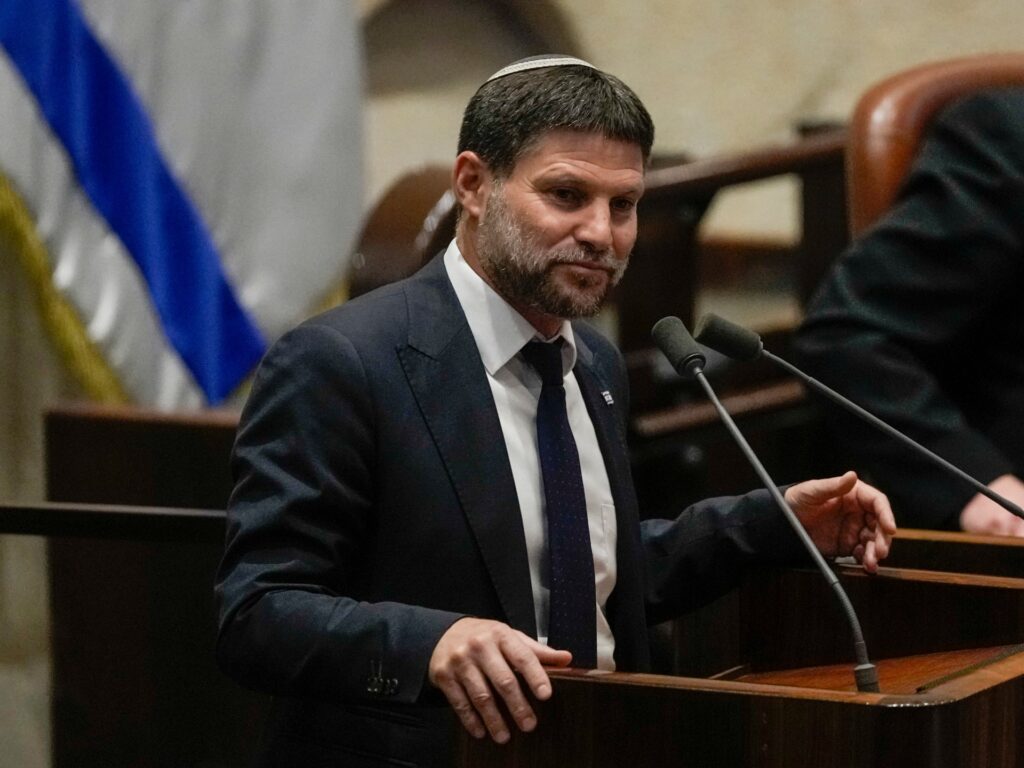
Finance Minister Bezalel Smotrich’s announcement comes despite international pressure against Israel’s building of illegal settlements. Israel’s Finance Minister Bezalel Smotrich has declared 800 hectares (1,977 acres) in the occupied West Bank as state land, in a move that will facilitate the use of the ground for settlement building. The announcement on Friday came as United States Secretary of State Antony Blinken visited Israel for talks with Prime Minister Benjamin Netanyahu. Smotrich underlined the government’s determination to press ahead with settlement building in the West Bank, despite growing international opposition. “While there are those in Israel and in the world who seek to undermine our right to Judea and Samaria and the country in general, we promote settlement through hard work and in a strategic manner all over the country,” Smotrich said, using Biblical names for the area of the West Bank that are commonly employed in Israel. The denomination of the land in the Jordan Valley as state land follows a similar designation of 300 hectares (740 acres) in the Maale Adumim area of the West Bank, which the Palestinians want as the core of a future independent state. The US said last month that Israel’s expansion of settlements in the West Bank was inconsistent with international law, signalling a return to longstanding US policy that had been reversed by the previous administration of Donald Trump. The change brought the US back into line with most of the world, which considers the settlements built on Palestinian territory Israel captured in the 1967 Middle East war to be illegal. Israel itself disputes this view, citing the Jewish people’s historical and Biblical ties to the land. Earlier this month, UN Human Rights Chief Volker Turk said, “The establishment and continuing expansion of settlements amount to … a war crime under international law.” ‘Complicity and cover’ Palestinian authorities condemned the land seizure and expansion of settlements. The Palestinian Ministry of Foreign Affairs called the latest move a “crime” that is part of an “official policy racing against time to annex the West Bank and eliminate the possibility of creating a Palestinian state”. “There are no morals, values, principles or international resolutions that can stop the extremist right,” the ministry said in a statement. “The international failure to protect our people is complicity and cover for Israel’s ongoing evasion of punishment,” it added. Smotrich, the influential leader of one of the hard-right pro-settler parties in Netanyahu’s coalition, himself lives in a settlement and has consistently backed settlement building. Israeli settlement watchdog Peace Now said the announced seizure is the single largest since the 1993 Oslo Accords, and “2024 marks a peak in the extent of declarations of state land”. Peace Now called the timing of the announcement a “provocation” as it came during the visit by Blinken, who has been critical of settlement expansion by Netanyahu’s government. International pressure for a resumption of efforts to reach a two-state solution, with an independent Palestinian state alongside Israel, has grown amid efforts to end the nearly six-month war in Gaza. Little progress has been made in achieving Palestinian statehood since the signing of the Oslo Accords. Among the obstacles impeding it are expanding Israeli settlements. Adblock test (Why?)
Peruvian democracy weakened as government consolidates control: Report
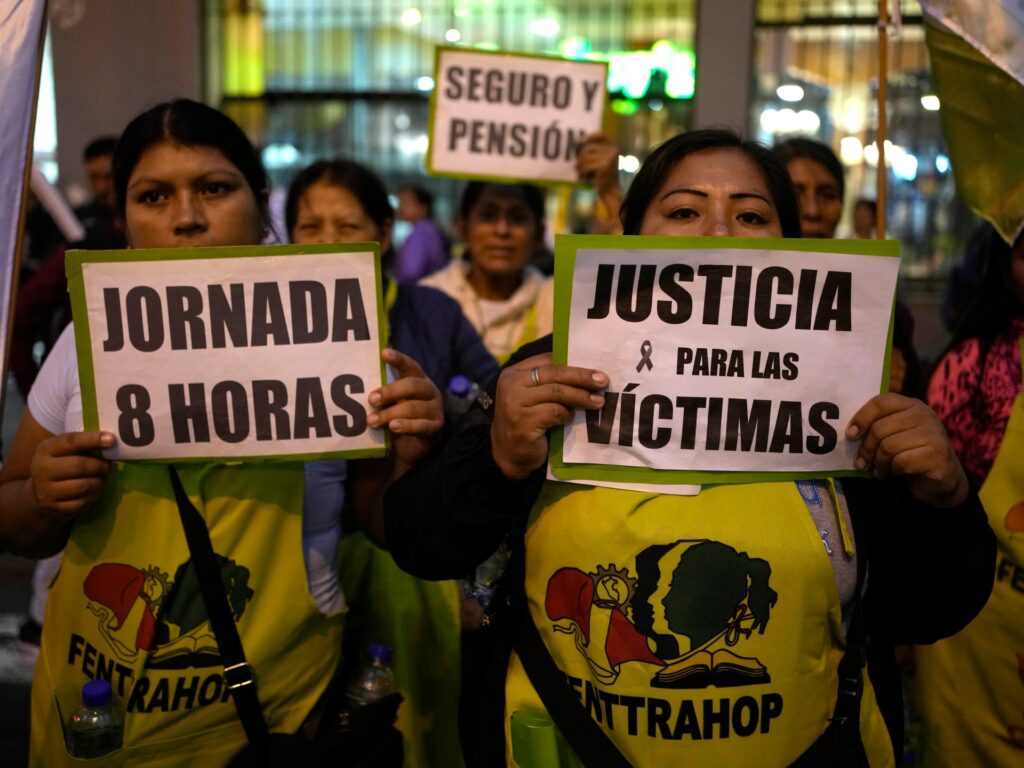
Peruvian democracy has continued to deteriorate more than a year after the removal of former President Pedro Castillo, according to a recent report from the Washington-based nonprofit Freedom House. The report — released this month — traced the lingering effects of a government crackdown on protesters, as well as efforts to interfere with judicial independence and other oversight bodies. The result was that Peru slumped from a rating of “free” in 2022 to “partly free” in 2023 and 2024, as Freedom House noted declining democratic protections for the freedom of assembly and eroding safeguards against corruption. “All these regulatory bodies and independent branches of government used to have the possibility of opposing decisions by Congress, and now that possibility is really attenuated,” said Will Freeman, the author of the report and a fellow for Latin America Studies at the Council on Foreign Relations. He added that Peru saw the fourth-largest drop in its Freedom House score of any country in the world. “It’s all producing a situation where it’s very possible that, by the next elections in 2026, there will be no institutions that are not under the thumb of Congress.” Harsh crackdown While issues such as corruption and government repression are not new to Peruvian politics, experts have said they worsened after former President Castillo was impeached and arrested in December 2022. A left-wing teacher from the country’s largely Indigenous countryside, Castillo had been facing his third impeachment proceeding at the time, led by an opposition-controlled Congress. Two prior impeachment attempts had been unsuccessful. But on the day he was expected to appear before Congress, Castillo instead issued a televised address, in which he announced plans to dissolve Congress and rule by decree — moves widely viewed as illegal. The announcement galvanised support for his impeachment, which was carried out the same day. His former vice president, Dina Boluarte, was quickly sworn in to run the government for the remainder of his term. But the political upheaval prompted confusion and protests across Peru. Castillo’s supporters argued that he had been targeted by a hostile legislature that launched multiple investigations to stymie his administration. Many took to the streets, blocking roadways to push for government reform and Castillo’s release. New elections became a key demand. In the immediate aftermath of Castillo’s arrest, public opinion polls suggested that more than 80 percent of Peruvians supported new elections, for both Congress and the executive branch. Boluarte initially said she would push Congress to fast-track a vote. But Congress, with an approval rating of less than 10 percent, rejected such efforts on at least five occasions. Boluarte has also reversed course, saying she would remain in office until the end of her term. “The conversation is over,” Boluarte said in June of last year. “We will continue until 2026.” A January poll found that she had an approval rating of just 8 percent, one of the lowest of any political leader in the world. Boluarte has also taken a hardline approach to the protesters, portraying them as “terrorists”. Government forces killed at least 49 civilians during confrontations with protesters, including bystanders, according to the Peruvian attorney general’s office. Human rights organisations like Amnesty International compared the deaths to extrajudicial killings and documented reports of human rights abuses. Rural and largely Indigenous parts of the country suffered a disproportionate share of the violence. Boluarte said that any abuses would be investigated, but advocates say there are few signs of accountability more than a year later. “There’s been no convictions,” said Freeman. “It doesn’t seem like the investigations have advanced much.” While antigovernment protests flared up again in July 2023, they have largely fallen off in the time since. The Freedom House report notes that, while some groups continue to hold smaller protests against the government, “the presence of heavily armed riot police at demonstrations since has exercised a chilling effect on civil society”. “What was new was the scale of this crackdown. It’s hard to say how much that’s contributing to the demobilisation of society, or if it’s a sense of apathy and belief that there’s no way to dislodge the status quo,” said Freeman. Diminishing transparency The flagging protest movement has coincided with congressional moves to diminish transparency and shore up the interests of legislators, Freeman said. In February, for instance, a body known as the Constitutional Tribunal, whose members are appointed by Congress, moved to weaken judicial oversight of the legislature’s actions. The Constitutional Tribunal also approved a resolution allowing Congress to put officials from Peru’s electoral court, the JNE, on trial before the legislature. In its latest report, Freedom House warned that the resolution would open the court up to greater political pressure. Right-wing lawmakers have long castigated the JNE, pushing unsubstantiated claims that the court perpetuated fraud during the 2021 election, which saw Castillo — a political outsider — voted into office. The election, however, was given a clean bill of health by international observers. Nevertheless, far-right actors have continued to threaten the JNE. For instance, in 2023, the Inter-American Human Rights Court granted protective measures to the JNE’s President Jorge Luis Salas Arenas, after he received a series of death threats. “The international missions recognized the results of the polls,” Miguel Jugo, deputy secretary of the National Human Rights Coordinator (CNDDHH) in Peru, told Al Jazeera. “Dr Salas Arenas ruled against all of the requests by the fraudsters [making claims of fraud], and for this they have never forgiven him.” In December, Congress also passed legislation making it more difficult to form new parties and diluting the influence of regional movements. The Freedom House report also found that efforts to crack down on corruption have suffered under the current administration. In September and October, Attorney General Patricia Benavides removed lead prosecutors from one of the country’s largest anticorruption cases, involving the Brazilian construction firm Odebrecht. The Odebrecht scandal had already rocked governments throughout the region, with allegations against senior political figures in multiple countries. Benavides also fired prosecutors
Why is the Biden administration suing Apple? All to know

The US government has filed a landmark antitrust lawsuit against Apple, in which it accuses the tech giant of maintaining a “broad, sustained and illegal” monopoly over the smartphone market. Here is what we know about the case and what might happen next: Why is Apple being sued? Apple is the largest of the four main tech giants, Amazon, Apple, Meta and Google, all of which have market capitalisations of more than a trillion dollars. All four have been investigated by regulators in the United States and Europe in recent years following complaints that they are monopolising the tech market by stifling competition. Apple, the highest-valued publicly listed organisation in the world, is the “test case” for the US government’s legal challenge. “We allege that Apple has maintained monopoly power in the smartphone market, not simply by staying ahead of the competition on the merits, but by violating federal antitrust law,” Attorney General Merrick Garland told a news conference. “If left unchallenged, Apple will only continue to strengthen its smartphone monopoly. The Justice Department will vigorously enforce antitrust laws that protect consumers from higher prices and fewer choices,” he added. The US government argues that Apple “undermines apps, products and services that would otherwise make users less reliant on the iPhone”. Garland also noted that Apple’s net income “exceeds the individual GDP of more than 100 countries”. He said this is a result of the iPhone’s success. “Apple’s share of the entire US smartphone market exceeds 65 percent,” he added. What are the main allegations put forth by the Department of Justice? In its legal challenge, lodged in federal court in New Jersey, the Department of Justice alleges that Apple is illegally preventing competition by restricting access to its hardware and software. The 88-page lawsuit, filed in New Jersey federal court, listed five areas in which Apple allegedly abuses its power. Blocking innovative apps: The lawsuit says Apple has disrupted the development of apps that could make it “easier for users to switch between competing platforms”. Suppressing mobile cloud streaming services: It also alleges that the company has prevented the development of cloud streaming apps that would allow consumers to enjoy high-quality video games and other cloud-based applications without having to pay for expensive smartphone hardware. Cross-platform messaging apps: Messages between iPhone and Android phones can be less secure as iMessage does not allow the exchange of encrypted messages with competing platforms. The company is also accused of “gumming up” photos and videos exchanged with non-Apple devices and reducing their quality. In 2022, Apple’s CEO, Tim Cook, was asked during a tech conference whether Apple would fix iPhone-to-Android messaging. The questioner said: “Not to make it personal but I can’t send my mum certain videos”. Cook responded: “Buy your mum an iPhone.” Diminishing the functionality of non-Apple smartwatches: The suit alleges that this means “users who purchase the Apple Watch face substantial out-of-pocket costs if they do not keep buying iPhones”. Limiting third-party digital wallets: The suit alleges that Apple has prevented third-party apps from offering tap-to-pay functionality, inhibiting the creation of cross-platform third-party digital wallets. This is the first legal challenge to Apple by US president Joe Biden’s administration. However, the firm has come under regulatory scrutiny for years. Apple has been involved in antitrust investigations in Europe, Japan and South Korea, with US-headquartered video gaming and software company Epic Games having already initiated legal action. Apple CEO Tim Cook introduces the new Apple Watch in 2014 [Marcio Jose Sanchez/AP] How has Apple responded? Apple has called the lawsuit “wrong on the facts and the law”, and warned the case would set a “dangerous precedent”. “At Apple, we innovate every day to make technology people love – designing products that work seamlessly together, protect people’s privacy and security, and create a magical experience for our users,” the company said in a statement. “This lawsuit threatens who we are and the principles that set Apple products apart in fiercely competitive markets. If successful, it would hinder our ability to create the kind of technology people expect from Apple – where hardware, software, and services intersect.” Apple iPhone 15 Pro smartphones at a Best Buy store in Montreal, Quebec [File: Graham Hughes/Bloomberg via Getty Images] According to experts, however, the lawsuit does not seek to “dictate how the tech company should design its products, but rather to emphasise the range of options available to users”. “There is always a concern [with legislations] .. in the sense that legislation on technology is a little bit behind to where the technology is,” Katharine Trendacosta, director of policy and activism for Electronic Frontier Foundation, told Al Jazeera. “But that’s not exactly what this lawsuit is about. This lawsuit is about practices that Apple is doing that are anticompetitive. There is a difference between legislation that says you need … to allow people to do something versus you have to design in a specific way,” she added. What impact has the suit had on Apple? Shares of the company slid by just over 4 percent to close at $171.37 after the announcement. Apple shares have fallen more than 10 percent so far this year. This marks a departure from 2023, when the company’s stock surged to an all-time high of $197.86 on December 14. When will the court rule? Analysts say a resolution is not expected soon. Apple is likely to defend itself vigorously and this case could roll on for some time. In another antitrust case against Microsoft in the 1990s, in which the company was accused of illegally forcing PC manufacturers to favour its Internet Explorer software, it took three years to reach a settlement and another four years to go through the appeals courts. Adblock test (Why?)