

Sixteen Nigerian soldiers killed in attack in Delta state

The soldiers were on a mission to stop the conflict between two communities in the Bomadi region. Sixteen Nigerian soldiers have been killed on a mission to halt clashes between two communities in the southern state of Delta, an army spokesperson said. The troops from the 181 Amphibious Battalion deployed in the Bomadi region, had responded to the conflict in the Okuoma community when they were killed on Thursday, Brigadier General Tukur Gusau said in a statement on Saturday. “The reinforcement team led by the commanding officer was also attacked, leading to the death of the commanding officer, two majors, one captain and 12 soldiers,” he said. The chief of defence has also directed an immediate investigation and the arrest of those involved, according to Gusau. “So far, a few arrests have been made while steps [are] in place to unravel the motive behind the attack,” he added. There are frequent clashes, sometimes deadly, over land or compensation for oil spills by energy companies in many Delta state communities. Moreover, conflict has also continued to roil Nigeria’s northern and central regions, where armed groups are active and government forces have been accused of committing abuses. Earlier this year, at least 30 people were killed in renewed violence in Nigeria’s central Plateau State, where clashes between Muslim herders and Christian farming communities have erupted for years. The state lies in the Middle Belt, a region seen as the dividing line between Nigeria’s mostly Muslim north and predominantly Christian south. Inter-communal violence has been common in the region, which is home to dozens of ethnic minorities, such as the Mwaghavul. Clashes in the region and the northwest are rooted in community tensions over land between nomadic herders and Indigenous farmers, but exacerbated by the effects of climate change and population rise in the region. Adblock test (Why?)
US prosecutors investigating Meta for role in illicit drug sales, WSJ says

The Wall Street Journal report also says the Food and Drug Administration is helping to investigate the Facebook owner. US prosecutors in Virginia are probing whether Facebook-parent Meta’s social media platforms facilitated and profited from the illegal sale of drugs, according to a Wall Street Journal report. Citing documents and people familiar with the matter, the article published on Saturday reported that prosecutors sent subpoenas last year and have been asking questions as part of a criminal grand jury probe. The report added that prosecutors have also been requesting records related to drug content or illicit sale of drugs via Meta’s platforms and said the Food and Drug Administration (FDA) has been helping with the investigation. “The sale of illicit drugs is against our policies and we work to find and remove this content from our services”, a spokesperson for Meta told the WSJ. “Meta proactively cooperates with law enforcement authorities to help combat the sale and distribution of illicit drugs,” he added. Meta’s president of global affairs, Nick Clegg, said on social media platform X on Friday that Meta had collaborated with the US Department of State, the United Nations Office on Drugs and Crime and Snapchat to help disrupt the sale of synthetic drugs online and educate users about the associated risks. “The opioid epidemic is a major public health issue that requires action from all parts of US society,” Clegg, said. The opioid epidemic is a major public health issue that requires action from all parts of US society. That’s why @Meta has joined the Alliance to Prevent Drug Harms alongside the @StateDept @UNODC & @Snapchat to help disrupt the sale of synthetic drugs online + educate users… — Nick Clegg (@nickclegg) March 15, 2024 This is not the first time Facebook’s parent company has been taken to court by lawyers in the United States. Last year, a lawsuit was filed in Delaware by several investment funds claiming that Meta’s directors and senior executives have long known about rampant human trafficking and child sexual exploitation on Facebook and Instagram, but have failed to address the predatory behaviour. David Ross, a lawyer for Meta, argued that the lawsuit should be dismissed because the alleged conduct of the company’s leaders has not resulted in Meta suffering “corporate trauma” as required by Delaware law. The company also argues that the lawsuit’s claims are based on speculation that it might face future harm or loss. In a statement, Meta spokesperson Andy Stone said the company has spent “over a decade fighting these terrible abuses both on and off our platforms and supporting law enforcement in arresting and prosecuting the criminals behind it”. Adblock test (Why?)
Thailand’s flourishing cannabis culture under threat as gov’t seeks ban

Thodsapol Hongtong is enjoying a smoke with his friends at the Green Party, a venue where recreational cannabis enthusiasts meet in the Thai capital Bangkok to chat and have a good time. But it’s a pastime that may be coming to an end. The 31-year-old influencer, who runs his own cannabis shop, regularly touts recreational marijuana as good for the country’s economy on his online platform Channel Weed Thailand. The booming cannabis sector could be worth $1.2bn by next year, according to an estimate by the University of the Thai Chamber of Commerce. “Where [else] in the world can we lie around on the beach and enjoy a joint,” Thodsapol told the Reuters news agency, taking a puff from his bong. But the Thai government is looking to stamp out cannabis culture with a ban on its recreational use to be rolled out by the end of the year. Medical use will still be permitted. In an interview with Reuters last month, Thai Health Minister Cholnan Srikaew described recreational marijuana as a “misuse” of cannabis that has a negative impact on Thai children and could lead to other drug abuses. Recreational cannabis flourished in Thailand after the country became the first in Asia to fully decriminalise the substance in 2022, enabling a new public wave of weed appreciation culture. Neon signs of cannabis leaves in multiple languages are visible on many street corners in Thai towns and cities, marking the tens of thousands of shops, spas, bars and gaming lounges where a variety of cannabis strains are readily available. Many streetside shops in tourist areas sell smoking paraphernalia, while cannabis-related festivals became more common, like last year’s joint-rolling competition in the resort island of Phuket that drew in weed aficionados from around the world. The Thai government’s draft law banning recreational use of cannabis will be up for cabinet approval later this month. Adblock test (Why?)
Russia says two killed in Ukrainian shelling and drones hit oil refinery

Ukraine launched a series of attacks as Russians entered the second day of voting in the presidential election. Ukrainian shelling in the southern Russian city of Belgorod has killed two people and a drone attack caused a fire at a Russian oil refinery south of Moscow, officials have said, while Russian authorities claimed to have thwarted a new attempt by saboteurs to cross the border. Saturday’s attacks occurred as Russians entered the second day of voting in a presidential election that is all but certain to extend Vladimir Putin‘s rule by another six years. A man and a woman died in the attack, and three other people were wounded, regional Governor Vyacheslav Gladkov said on the Telegram messaging app. It marks the latest exchange of long-range missiles and rocket fire in the Russia-Ukraine war. Five people were also wounded when a Ukrainian drone hit a car in the village of Glotovo, some two kilometres (1.25 miles) from the Ukrainian border, Gladkov said. Russia’s Ministry of Defence also said Saturday that it had thwarted attempts by “Ukrainian sabotage and reconnaissance groups” to enter the country from Ukraine’s Sumy region. That followed an armed incursion claimed by Ukraine-based Russian opponents of the Kremlin on Tuesday in the Belgorod and Kursk regions. The Russian Defence Ministry said that Moscow’s military and security forces killed 30 fighters while thwarting the latest incursion. The Russian Volunteer Corps – one of the groups who claimed to have crossed the border on Tuesday, who say they are “fighting for the freedom of the Ukrainian and Russian peoples” – released a video on social media Saturday claiming to have captured 25 Russian soldiers. Cross-border attacks in the area have occurred sporadically since the war began and have been the subject of claims and counterclaims, as well as disinformation and propaganda. Ukrainian drone attacks A Ukrainian drone attack caused a fire at a Russian oil refinery on Saturday that burned for hours before it was brought under control. Interfax news agency quoted the emergencies ministry as saying that “open burning” at the Syzran refinery had been halted, but measures were still under way to extinguish it completely. It was not clear how the fire would affect production at the plant, which has the capacity to process 8.5 million tonnes of crude oil a year, or 170,000 barrels per day. An attack on another refinery, Novokuibyshevsk, was thwarted on Saturday, the local governor said. Both plants are owned by Rosneft and located in the Samara region southeast of Moscow, some 800km (500 miles) from the nearest Ukrainian-controlled territory. A Ukrainian drone also dropped an explosive close to a polling station in the Russian-annexed Zaporizhia region of Ukraine, Russian state news agency TASS said. No injuries or damage were reported. The attacks come a day after a Russian assault on the Ukrainian port city of Odesa killed at least 20 people. The ballistic missile attack blasted homes in the southern city on Friday, followed by a second missile that targeted first responders who arrived at the scene, officials said. More than 50 people are still in the hospital following the attacks, Odesa Deputy Mayor Svitlana Bedreha said on Saturday, according to Ukrainian state media. Ukrainian President Volodymyr Zelenskyy promised a “just response” to the attack in a video address on Friday evening. Adblock test (Why?)
Attack on Pakistan army post near Afghan border kills seven, military says

Assailants used vehicle packed with explosives as well as suicide vests in attack that also involved a shootout. An armed group attacked a military post in northwestern Pakistan near the border with Afghanistan using a vehicle laden with explosives as well as suicide bombs, killing seven security force members, Pakistan’s military said. Troops responding to the attack on Saturday in North Waziristan, a district in the restive province of Khyber Pakhtunkhwa, killed six attackers, some of who were wearing suicide vests, according to the military statement. While the military’s media wing did not say who was behind the attack, a newly formed group, Jaish-e-Fursan-e-Muhammad, claimed responsibility for it. “The terrorists rammed an explosive-laden vehicle into the post, followed by multiple suicide bombing attacks, which led to collapse of portion of a building” in which five security personnel were killed, the military said, adding that another two security force members died in subsequent fighting with the assailants. A clearance operation was still under way in the area. Residents told the Reuters news agency that an explosion shook doors and damaged windows during the attack. Pakistan’s President Asif Ali Zardari and Prime Minister Shehbaz Sharif condemned the attack and paid tribute to the troops who were “martyred”. North Waziristan long served as a base for the Pakistani Taliban and other groups until the army claimed a few years back that it had cleared the region of rebel groups. Occasional attacks have continued, however, raising concerns that the Pakistani Taliban are regrouping in the area. The Pakistani Taliban are a separate group but allies of the Afghan Taliban, who seized power in Afghanistan in 2021 as the United States and NATO troops were in the final stages of their pullout. Since then the Pakistani Taliban have stepped up attacks on security forces, especially in the northwest. Adblock test (Why?)
Can Russia’s Gen Z make a real change?

Following the loss of Alexey Navalny and with the approaching Russian presidential election predetermined, what are the hopes of Russia’s Gen Z? Russia’s Gen Z has only known life under Vladimir Putin – they have grown up with his increasingly anti-Western, patriarchal and patriotic narratives. Polling shows that young Russians are currently the group most critical of Putin’s rule and the most dissatisfied with Russia’s political system. As dissent grows on social media, research also shows that most of Russia’s Gen Z is apolitical. With the upcoming presidential election seemingly predetermined and the opposition sidelined, what drives the activism of young Russians? Most importantly, how does the death of prominent opposition figure Alexey Navalny resonate with the generation he profoundly influenced? Presenter: Anelise Borges Guests:Apollinaria Oleinikova – Political ActivistYulia Zhivtsova – Political Activist and TeacherAnna – Political Activist and Student Adblock test (Why?)
Play in Israel, just don’t pretend you didn’t know

Since October 7, scores of writers have authored scores of columns pleading – to no avail – with prominent politicians who wield transformative power to stop the genocide unfolding with such obscene lethality in the apocalyptic remnants of occupied Gaza. The same dynamic applies to a gallery of preening artists who claim that they are not only allergic to conformity, but also reject as tantamount to censorship any call from any quarter not to entertain audiences in Israel. Rather than beseeching Nick Cave, the Australian troubadour, or the British band, Radiohead, finally to heed the petitions of Brian Eno, Roger Waters and company and forgo performing in an apartheid state, my aim here is to challenge their, by now, discredited defences to opt to play in Tel Aviv. After not performing in Israel for some 20 years, in 2014, Cave refrained from signing on to an artist-organised pledge – meant to show tangible solidarity with imprisoned Palestinians – to boycott touring in Israel in the aftermath of yet another Israeli killing spree in Gaza. Cave later explained his decision this way: “There was something that stunk to me about that list. Then it kind of occurred to me that I’m not signing the list but I’m also not playing Israel and that just felt to me cowardly, really.” The lobbying, Cave added, constituted a “public humiliation” that apparently fuelled his determination to spurn the overture and stage shows in Israel. “It suddenly became very important to make a stand against those people that are trying to shut down musicians, to bully musicians, to censor musicians, and to silence musicians … so really you could say in a way that the BDS made me play Israel,” Cave said, referring to the Boycott, Divestment, Sanctions movement. In this flattering construct, Cave is the portrait of the principled renegade resisting the “age-old” rejectionist forces bent on muzzling him and, by extension, his art. In a 2017 letter to his “hero” Brian Eno, the British musical savant behind the boycott drive, Cave insisted that he was not a supporter of the Israeli government to blame for the “injustices suffered by the Palestinian population”. And yet, like the Israeli government he distances himself from, Cave recycled the stock canard to discredit the BDS movement by claiming that “the boycott of Israel can be seen as anti-Semitic at heart”. Cave suggested that Eno should, instead, adopt a more salutary approach by travelling to Israel to share his scorn for the “current regime” with “the press and the Israeli people … then do a concert on the understanding that the purpose of your music was to speak to the Israeli people’s better angels”. Cave’s admonition is grounded on a false premise: that the “atrocities” endured by generations of Palestinians are the sole responsibility of a succession of Israeli “regimes” and not the millions of Israelis who empowered and emboldened those regimes by exercising their democratic franchise – time and again. Cave lauded Israel as a “real, vibrant and functioning democracy” but absolved “ordinary Israelis” of the “atrocities” committed by the governments they elect. Cave’s jejune reasoning reached an embarrassing zenith in the following sentence that confuses naivete for wisdom. “How far must we have strayed from the transformative nature of music to feel justified in weaponising music and using it to punish ordinary Israeli citizens for the actions of their government.” Tom Yorke, the lead singer for Radiohead, has recycled, near-verbatim, this rationale in rebuffing filmmaker, Ken Loach, who implored the popular band not to go to Israel in 2017 given its encyclopaedic record of egregious human rights violations. “Playing in a country isn’t the same as endorsing its government,” Yorke responded. “We don’t endorse [Israeli Prime Minister] Netanyahu any more than Trump, but we still play in America.” Yorke’s rejection of BDS has the patina of gravitas that Cave’s smear lacks. “Music, art and academia,” he wrote, “is about crossing borders not building them, about open minds not closed ones, about shared humanity, dialogue and freedom of expression.” Yorke’s pretty soliloquy oozes saccharine. Gaza has been reduced to ruins by deliberate design. The Israeli architects of that ruin do not give a hoot about crossing borders, opening minds, shared humanity, dialogue and freedom of expression. Prime Minister Netanyahu and his septic cabinet are razing Gaza and the occupied West Bank with the explicit consent, approval and encouragement of most Israelis. Polls consistently show that the vast majority of “ordinary Israelis” back every malignant aspect of a genocide meant to erase Gaza. The carpet bombing. The blanket destruction of homes, hospitals, mosques, churches, schools and universities. The forced marches. The blockade of food, water, fuel, and medicine – a sinister blueprint to starve Palestinians into submission and capitulation. The “better angels” Cave urged Eno to “speak to” through music, have, like the bulk of Israel, been consumed by an unquenchable killing rage that burns like a towering bonfire. Cave and Yorke have compounded their blindness with hypocrisy that reveals a defining insincerity. In 2022, Cave was challenged by a fan to square his vocal, unabashed “solidarity” with Ukrainians with his glaring failure to do the same for “brutalised” and “suffering” Palestinians. “This saddens me,” the fan wrote, “for this puts you on [sic] a position of a double standard.” Cave’s reply was a pretentious lump of rhetorical flim-flam brimming with the standard evasions about how “a brutal, unprovoked attack” differs from “a deeply complex clash of two nations that is far from straightforward”. Cave wrote that he “sympathises deeply” with “the tragic fate of all innocents” and reminded his interlocutor that he has helped raise money for schools in Palestinian “communities”. “But this is not the time for these debates,” Cave averred. “This is the time to unite in unequivocal support and love for the Ukrainian people. Right now a catastrophe is unfolding, and I stand with all Ukrainians at this horrific moment in history.” Yorke parroted Cave’s condescension, scolding BDS supporters for engaging in “the
Ramadan repression in the West Bank

Violent repression in the West Bank is making a bad situation unbearable. With the global media’s attention trained on Gaza since October 7, things have worsened for Palestinians in the occupied West Bank, and near impossible for journalists to cover. With their movement severely restricted, dozens of Palestinian journalists have been arrested, often held without trial or charge. Contributors:Anan Quzmar – Journalist Assal Rad – Middle East Scholar and Author Mariam Barghouti – Writer and Journalist Oren Ziv – Journalist, +972 Magazine On our radar: Ahead of an upcoming election in India, there has been a slew of movie releases built around key Modi government talking points. Producer Tariq Nafi discusses Bollywood’s role in electioneering. George Soros – Financier, philanthropist Or bogeyman? Hungarian-American billionaire financier and philanthropist George Soros has been at the centre of countless conspiracy theories. Flo Phillips sifts through fact and fiction to understand how the crusade against Soros became one of the most destructive smear campaigns of the 21st century and a blueprint for others. Featuring: Emily Tamkin – Author, The Influence Of Soros Hannes Grassegger – Reporter and Founder, Polaris News Marius Dragomir – Director, Center For Media, Data and Society (CMDS) Credits: George Soros images courtesy of the Open Society Foundations Adblock test (Why?)
‘Overthrow the system’: Haiti gang leader Cherizier seeks revolution
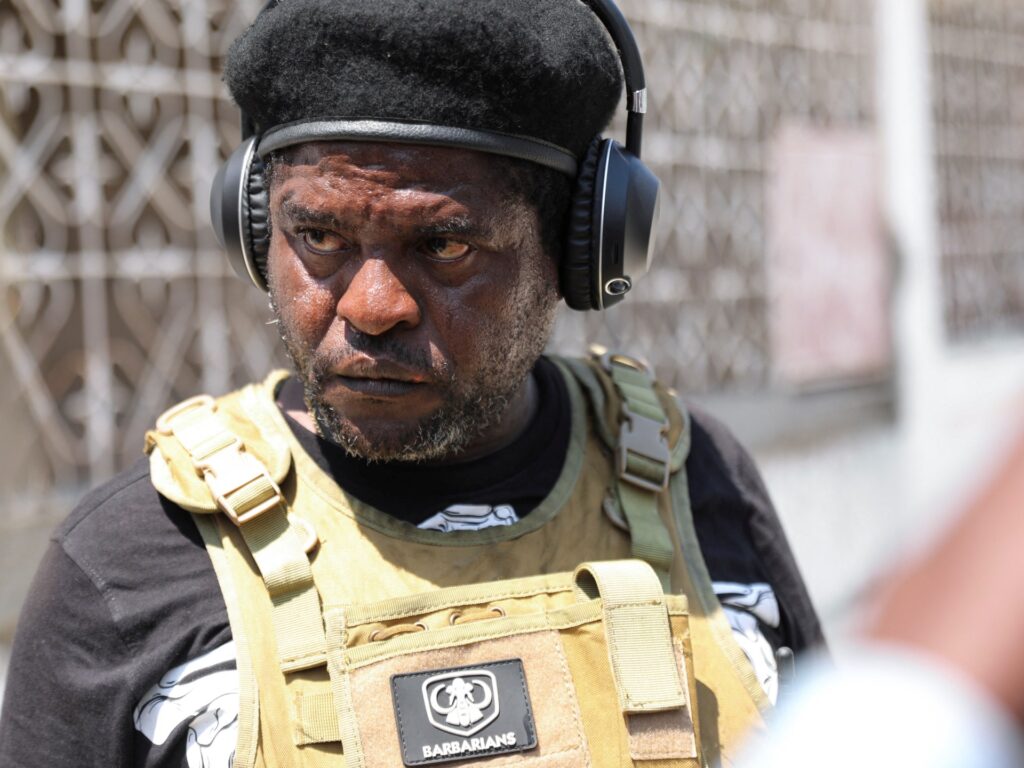
A powerful Haitian gang leader has rejected attempts by foreign nations for an electoral road map and a path to peace as the country plunges deeper into violent chaos and armed groups control most of the capital following the resignation of Prime Minister Ariel Henry. Regional leaders of the Caribbean Community and Common Market (CARICOM) held an emergency summit last week to discuss a framework for a political transition, which the United States had urged to be “expedited” as gangs wrought chaos in the capital, Port-au-Prince, amid repeatedly postponed elections. “We’re not going to recognise the decisions that CARICOM takes,” Jimmy “Barbecue” Cherizier, a former police officer whose gang rules vast swaths of Port-au-Prince, told Al Jazeera. Rights groups have accused his gang alliance of committing atrocities, including killings and rape. “I’m going to say to the traditional politicians that are sitting down with CARICOM, since they went with their families abroad, we who stayed in Haiti have to take the decisions,” Cherizier said, flanked by gang members wearing face masks, adding that he rejected plans for a transitional council made up of the country’s political parties. “It’s not just people with guns who’ve damaged the country but the politicians too,” he added. The United States and Caribbean nations have been pushing for the proposed council to appoint a new interim prime minister and lay a road map for elections. Cherizier and his G9 Family and Allies gang alliance have been major contributors to years of escalating violence and political instability in Port-au-Prince. They have blockaded fuel terminals, clashed with rival gangs and used violence to cement their grip on areas under their control, forcing thousands of Haitians to flee their homes. Cherizier – who is under sanctions from the United Nations, US and other countries – has been at the centre of a new surge in unrest in Port-au-Prince as he called for Henry’s resignation. In early March, Cherizier warned that Haiti faced the prospect of “civil war” if Henry did not step down. There have been widespread looting and pitched street battles in Haiti following the resignation last week of the 74-year-old Henry – and no plan in place for what comes next. The US, which denied pressuring Henry to step aside, called for a “political transition”. The Guatemalan and Salvadoran consulates were ransacked in Port-au-Prince along with hospitals as Henry’s office extended an overnight curfew to Sunday. Haitian civil society leaders welcomed the resignation of Henry, an unelected leader who was named for the post in 2021 shortly before the assassination of President Jovenel Moise, as a long overdue step. The prime minister was supposed to step down in February. He was effectively locked out of the country since the unrest spiralled, landing in Puerto Rico after being denied entry to the Dominican Republic, which shares the island of Hispaniola with Haiti. The poorest country in the Western hemisphere has, for years, been saddled with corrupt leaders, and plagued by failed state institutions and violence wrought by rival armed groups. Call for ‘revolution’ While some political groups are putting their names forward for the council, seeing it as a way out of Haiti’s current power vacuum, Cherizier said he wants a revolution. “Now our fight will enter another phase – to overthrow the whole system, the system that is five percent of people who control 95 percent of the country’s wealth,” he told Al Jazeera. According to Robert Fatton, a Haiti expert at the University of Virginia, Cherizier likes to compare himself to historical figures like South Africa’s Nelson Mandela or Cuba’s longtime President Fidel Castro. “And he likes to say that he’s essentially a revolutionary … and he’s going to redistribute wealth,” Fatton told Al Jazeera this week. While Cherizier has distributed some food and resources to people in areas under the control of his G9 gang, “that’s hardly a vision of the future or some sort of revolutionary [act]”, he added. Once a transitional government is in place it could pave the way for a multinational police force on the ground in Haiti, funded by the US and Canada. Kenya’s President William Ruto said his country would lead such a force, which Cherizier rejected. “The presence of Kenyans in Haiti will be an irony because the same people who gave weapons to people in poor neighbourhoods to rise up against the former government, then lost control of those armed groups, are now appealing to a foreign force to save things,” he said. “It is a mission that’s failed in advance – it’s a shame that William Ruto has to go in that direction.” The UN has estimated that gangs currently control more than 80 percent of Port-au-Prince. Reporting from the Dominican Republic, Al Jazeera’s John Holman said the two rival gangs – the G9 and G-PEP – have formed an alliance called Viva Ensemble to try and prevent foreign troops from entering Haiti. “They know it would challenge them,” he said. “Haitians have suffered immensely at the gangs’ hands. But the power that they have accrued means that they have to be taken into account in what is a largely lawless state.” Fatton noted that “it’s more that he [Cherizier] wants to control his turf,” and that those who have suffered the most from the continued gang violence in the Haitian capital are “the very, very poor people in the major slums”. “Something like over 200,000 Haitians had to leave their houses. They had to move into really very poorly equipped camps,” Fatton said. “You have, in other words, a situation where the people who are suffering the most are the very poor, the very people that Barbecue says he wants to help.” Adblock test (Why?)
Israel approves plan to attack Gaza’s Rafah but keeps truce talks alive

Nod for long-threatened invasion of Rafah, home to 1.4 million displaced people, comes as Israel to send team to Qatar. Israel’s Prime Minister Benjamin Netanyahu has approved plans for an attack on Rafah, where 1.4 million displaced Palestinians have sought shelter, while planning to send a team to further truce talks in Qatar after mocking a ceasefire proposal by Hamas as “ridiculous”. Israel’s allies and critics warned Netanyahu against the invasion of Rafah fearing mass civilian casualties, but the Israeli government claims that the area in southern Gaza is one of the last strongholds of Hamas which it has pledged to eliminate. “Hopefully, the ground invasion of Rafah is just a bluff so they can use this as leverage to get something in negotiations. But everything Netanyahu said he will do, he did it, so I assume it is very likely this is going to happen,” Luciano Zaccara of the Gulf Studies Center at Qatar University told Al Jazeera of Israel’s mixed messages. Hamas had presented a new ceasefire plan to end Israel’s war on Gaza that includes the release of Israeli captives in exchange for Palestinian prisoners, with sources telling Al Jazeera that it would be a three-phased truce, with each stage lasting 42 days. A statement from Netanyahu’s office late on Friday said the Israeli military was “preparing operationally and for the evacuation of the population” of Rafah. However, it gave no timeframe and there was no immediate evidence of extra preparations on the ground. Widespread criticism Reporting from occupied East Jerusalem, Al Jazeera’s Hamdah Salhut said Israel’s talk of an impending ground invasion in Rafah comes despite growing opposition, especially from its biggest political and military ally, the United States. “American officials say they simply wouldn’t support an operation such as this,” Salhut said, adding that Netanyahu has planned “both for the military invasion and evacuation of about 1.5 million Palestinians in Rafah”. US Secretary of State Antony Blinken told reporters in Austria on Friday that the US needed to see a clear and implementable plan from Israel for Rafah, including to get civilians out of harm’s way. Dutch foreign minister Hanke Slot said: “The Netherlands firmly repeats its call to Israel to refrain from such an offensive, which would result in an even bigger humanitarian catastrophe,” adding in a post on X that “an immediate humanitarian ceasefire is of the highest importance, resulting in a sustained cessation of hostilities”. The United Nations had already warned Israel last month that a ground invasion of Rafah “could lead to a slaughter in Gaza”. “They could also leave an already fragile humanitarian operation at death’s door,” UN aid chief Martin Griffiths said. Humanitarian situation ‘beyond catastrophic’ Jagan Chapagain, the head of the International Federation of Red Cross and Red Crescent Societies, said civilians in Gaza are “facing an unprecedented level of indignity, misery and suffering”. “The healthcare situation is on the brink of collapse with hospitals facing desperate conditions,” he said in a statement on X, adding that the humanitarian situation in the enclave is “beyond catastrophic”. Meanwhile, the first aid vessel to reach Gaza, operated by the Spanish charity Open Arms, has offloaded 200 tonnes of food aid to the enclave, completing a pilot project that could open the way for more assistance to come in via maritime corridors. US charity World Central Kitchen said a second shipment was being prepared in Cyprus and that thousands of tonnes of aid could reach Gaza each week going forward. Humanitarian organisations have repeatedly called for Israel to open more land border crossings to let in humanitarian supplies, insisting that airdrops and maritime corridors are costly and inefficient ways of delivering assistance. Adblock test (Why?)