

Elite Afghan soldiers turn barbers, gym trainers in India to escape Taliban

New Delhi, India – It is almost 5:40 in the evening. A hair salon in New Delhi’s bustling New Friends Colony neighbourhood is alive with the sound of buzzing clippers and chattering customers. The air is thick with the scent of hair spray and aftershave. Zaki Marzai, 29, stands behind a barber’s brown chair, his hands moving with precision as he snips a customer’s hair. Wooden shelves on the walls bear colourful bottles of shampoo and styling products. The mirrors reflect Marzai, his eyes focused on the hair before him. His customer looks satisfied. Marzai, though, would rather be elsewhere – with a rifle in his hand, not a razor. Three years ago, Marzai was a soldier in the elite special force of Afghanistan’s army, fighting the Taliban in a war that started with the United States and NATO forces invading the country in the aftermath of the 9/11 attacks. The Western-backed Afghan government had sided with the US in the 20-year war. Marzai joined the army in 2015 as a sergeant and was on track to become a commissioned officer. Everything changed on June 20, 2018. Zaki Marzai, 29, in his room in Bhogal, New Delhi [Luqmaan Zeerak/Al Jazeera] ‘Sitting ducks’ At about 2am that day, Marzai was stationed outside a camp in Ghazni province of Afghanistan when a barrage of bullets hit him and his fellow soldiers. Before Marzai and his comrades could realise what happened, 25 soldiers had died on the spot and six others had been injured. Bullets had pierced through Marzai’s chin and right leg. “The attack was so intense we couldn’t do anything. The bullets were coming from all four sides. We were sitting ducks. The Taliban wiped out the entire camp,” he recalls. According to the United States Institute of Peace, an estimated 70,000 Afghan military and police personnel lost their lives in two decades of war in Afghanistan. It was eight hours before any backup arrived to rescue the wounded. Marzai, who had lost a lot of blood, was first taken to a nearby hospital in Ghazni and soon transferred to a hospital in Kabul for further treatment on his jaw. After nearly a year of treatment, his jaw was still deformed, so the Afghan government sent him to India for better care. He left behind his parents, a sister and seven brothers. In 2019, Marzai arrived at a medical facility in Gurgaon, a city adjoining New Delhi. Later, he was also taken to two other public sector hospitals in the Indian capital. By August 2021, Marzai hoped to return to Afghanistan, his face finally fixed. But the Afghanistan he knew was about to be broken. Bullets had pierced through Marzai’s chin during the Taliban attack [Luqmaan Zeerak/Al Jazeera] ‘I cried all night’ As the Taliban grabbed control of province after province in Afghanistan in early August, Marzai was following the news on his phone, watching YouTube, tracking Twitter and waiting for Facebook updates. Then, on August 15, the Taliban stormed into Kabul and took power, forcing the US and NATO forces to flee the country in a chaotic exit. Marzai tried to reach his family and soldier colleagues on the phone, but couldn’t get through because mobile networks were down. He was stunned: Marzai had expected a fight, not a meek surrender from the country’s politicians, whom he accuses of looting Afghanistan and then escaping. “I cried all night when the Taliban took over the country,” says Marzai. “I was heartbroken. I was looking forward to returning to my family and rejoining the army, but now I am stuck here [in India].” Marzai is from Ghazni, an Afghan province dominated by the Shia Hazara community, which has been persecuted by the mainly Sunni Taliban for a long time. And he is a former soldier for a government that the Taliban viewed as the enemy. Since August 2021, despite a general amnesty announced by the Taliban after its takeover, the United Nations Assistance Mission in Afghanistan (UNAMA) reported that at least 200 former Afghan soldiers and government officials have been killed extrajudicially by the new authority. Marzai is not the only Afghan soldier in India, unable to return home. Zaki Marzai displaying his picture when he was hospitalised after the Taliban attack [Luqmaan Zeerak/Al Jazeera] ‘We couldn’t return’ Khalil Shamas, a 27-year-old former lieutenant who now works as a waiter at a New Delhi restaurant, arrived in India in 2020 for training at the elite Indian Military Academy (IMA) in Dehradun, the hilly capital of India’s northern state of Uttarakhand. By the time he and his colleagues completed the course, the Afghan army had ceased to exist on the ground. He says there were about 200 Afghan soldiers training at the IMA. A few returned to Afghanistan. Many others migrated to Iran, Canada, the US and Europe. But at least 50 of them stayed back in India – unable to get visas to the West, and too scared to return to Afghanistan. Back in India, the difficulties for Afghan soldiers forced to stay in exile worsened after the Afghanistan embassy in New Delhi, their only source of contact and support, stopped funding their stay after the government in Kabul changed. The soldiers are reticent about sharing details of just how the embassy supported them financially. “Since 2021, we have not received any help from the embassy. We have been left on our own, to fend for ourselves,” says Marzai. After exhausting all of his savings and with no help coming, Marzai managed to enrol in a six-month haircutting course and started working in a salon. He lives in a two-room apartment with a damp odour, with three other Afghan men in the congested Bhogal area of South Delhi. The paint is peeling off the walls, and dirty quilts are strewn about. Zaki Marzai in his room in Bhogal, New Delhi [Luqmaan Zeerak/Al Jazeera] Not far from Bhogal, Shamas lives with seven Afghan friends in a small apartment in the city’s Malviya Nagar area. “It is challenging to live in a
Kim Jong Un takes ride in luxury Russian limo given to him by Putin

State media says car ride is ‘clear proof’ of the close and deepening relationship between the two countries. North Korean leader Kim Jong Un took his first ride in the luxury car that was given to him as a gift by Russian President Vladimir Putin. Pyongyang and Moscow have forged closer ties since Kim met Putin in Russia last September, their first summit in four years. Putin also invited Kim to try out his high-end Aurus Senat limousine, and the vehicle arrived in Pyongyang in February. On Friday, Kim used the car for the first time, according to his sister and prominent government official Kim Yo Jong. The journey was “clear proof of the DPRK-Russia friendship, which is developing in a comprehensive way on a new high stage”, Kim Yo Jong was reported as saying by state-run KCNA, using the acronym for North Korea’s official name, the Democratic People’s Republic of Korea. According to Russian state media, Aurus is Russia’s first luxury car brand and has been used in motorcades of top officials since Putin first used an Aurus limousine during his inauguration ceremony in 2018. Kim Jong Un, 40, has a collection of foreign-made luxury cars believed to have been smuggled into the country. During his Russia visit, he travelled between meeting sites in a Maybach limousine that he brought with him on his special train. Other limousines Kim has reportedly used include a Mercedes-Maybach S600 Pullman Guard and a Maybach S62. A 2021 United Nations report highlighted an attempted shipment of luxury vehicles worth more than $1m allegedly from the United Arab Emirates to Ningbo, China, for onward delivery to North Korea. North Korea and Russia have become increasingly close over the past year as North Korea advances its weapons and nuclear programmes and Moscow continues its full-scale invasion of Ukraine. The United States and South Korea have raised concerns that North Korea is supplying Russia with weapons to use in its war in Ukraine in return for technological expertise. Kim also observed paratrooper drills with his daughter Kim Ju Ae [KCNA via KNS and AFP] Russia and China, North Korea’s oldest ally, have repeatedly blocked attempts to impose new UN sanctions on North Korea over its banned ballistic missile tests. South Korea’s Ministry of Unification said it had assessed that the gift of the Aurus was also a violation of UN sanctions. “We condemn North Korea for its brazen attitude of publicly disclosing violations of the UN sanctions,” a ministry official told reporters, speaking on condition of anonymity. “Russia should also be aware of its responsibility as a permanent member of the UN Security Council and stop an act that undermines international norms,” the official added. State media said that Kim also monitored paratroop drills on Friday that were aimed at showing his soldiers’ ability to occupy an “enemy region at a stroke”. He was accompanied by his daughter. Adblock test (Why?)
For many Chinese, there are ‘more important things’ than Taiwan unification

“It is difficult to imagine that this used to be a warzone,” 23-year-old *Shao Hongtian told Al Jazeera as he wandered along a beach near the city of Xiamen on China’s southeast coast. Halting by the water’s edge where gentle waves lapped against the sand, Shao gestured beyond the shallows towards the sea and the Kinmen archipelago – now peaceful, but in the 1940s and 1950s, a battleground. The communists won the Chinese Civil War in 1949, and the nationalists of the Kuomintang (KMT) fled Beijing for the island of Taiwan. It was on Kinmen, the main island of the archipelago of the same name, less than 10km (6.2 miles) from the coast of China, that the nationalists repulsed repeated communist invasion attempts, but not before the fighting had wreaked havoc on both Xiamen and Kinmen. Kinmen and its outlying islets – some of which lie even closer to the Chinese coast – have been a part of Taiwan’s territory ever since. Chinese citizens like Shao were once able to get tourist visas to visit the islands, but that ended with the pandemic. “Kinmen, China and Taiwan are all part of the same nation, so it should be possible to visit, and I hope I can visit one day,” Shao said over a video connection – his eyes fixed on Kinmen. Like Shao, Chinese President Xi Jinping and the ruling Chinese Communist Party (CCP) claim that Taiwan and its territory are part of China. Defences line the beaches of Kinmen where nationailsts beat back the communists in the wake of the 1949 civil war [File: Ann Wang/Reuters] Xi said in his New Year’s address that China’s unification with democratic Taiwan was an “historical inevitability“, and China has not ruled out the use of force to achieve unification. Last year Xi called on China’s armed forces to strengthen their combat readiness. In recent years the Chinese military has increased its pressure on Taiwan with almost daily airborne and maritime incursions close to Taiwan’s air and sea space. At times of particular tension, such as during the visit of former House Speaker Nancy Pelosi to Taipei, such manoeuvres have been accompanied by sabre-rattling rhetoric and large-scale military drills. Capsized boats, recriminations Recently, tensions have been rising near Kinmen as well. In February, two Chinese fishermen were killed when their speedboat capsized as they attempted to flee the Taiwanese coastguard when they were discovered fishing “within prohibited waters” about one nautical mile (1.8km) from the Kinmen archipelago. Since then, the Chinese coastguard has stepped up its activities around Kinmen. Zhu Fenglian, a spokesperson for the Chinese government’s Taiwan Affairs Office, said the February incident was “vicious” and stressed the waters were “traditional” fishing grounds for fishermen in China and Taiwan. There were no off-limits waters around Kinmen, she added. A second capsize was reported on Thursday, and on this occasion China asked for help from the Taiwan coastguard. Standing on the beach looking out towards Kinmen, Shao says hostilities are not the way to bring China and Taiwan together. “I want unification to happen peacefully,” he said. If that is not possible, he would prefer things to remain as they are. Soldiers pay tribute to the fallen during a 2023 ceremony commemorating the 65th anniversary of China’s attack on Kinmen island [File: Chiang Ying-ying/Reuters] He knows that many of his friends feel the same way. According to Shao, if they go to Kinmen and Taiwan, it should be as visitors, not as fighters. “The Taiwanese haven’t done anything bad to us, so why should we go there to fight them?” he said, convinced that any war between China and Taiwan would result in significant casualties on both sides. “Unification with Taiwan is not worth a war.” No appetite for war A study published by the University of California San Diego’s 21st Century China Center last year suggests that Shao and his friends are not alone in opposing a war over Taiwan. The study explored Chinese public support for different policy steps regarding unification with Taiwan and found that launching a full-scale war to achieve unification was viewed as unacceptable by a third of the Chinese respondents. Only one percent rejected all other options but war, challenging the Chinese government’s assertion that the Chinese people were willing to “go to any length and pay any price” to achieve unification. Mia Wei, a 26-year-old marketing specialist from Shanghai is not surprised by such results. “Ordinary Chinese people are not pushing the government to get unification,” she told Al Jazeera. “It is the government that pushes people to believe that there must be unification.” At the same time, support for a unification war turned out to be close to the same level found in similar studies from earlier years, indicating that despite the growing tension in the Taiwan Strait and renewed talk about taking control of Taiwan, there has not been a corresponding increase in support for more forceful measures. Wei believes that Chinese like herself are more concerned with developments inside their country. “First there was COVID, then the economy got bad and then the housing market got even worse,” she said. “I think Chinese people have their minds on more important things than unification with Taiwan.” According to Associate Professor Yao-Yuan Yeh who teaches Chinese Studies at the University of St Thomas in the United States, there is currently little reason for Chinese people to be more supportive of conflict with Taiwan. US President Joe Biden has on several occasions said the US will defend Taiwan in the event of a Chinese invasion. At the same time, the US has been strengthening its military ties with countries such as Japan and the Philippines – Taiwan’s immediate neighbours to the north and the south. “There is no guarantee of a quick victory in a war over Taiwan,” Yeh told Al Jazeera. “Also, many people in China have business partners, friends and family in Taiwan, and therefore don’t want to see any harm come to the island
Ship carrying aid arrives off the coast of Gaza

NewsFeed A ship carrying 200 tonnes of food aid has arrived off the coast of Gaza. There are plans to distribute the aid in the north of Gaza, which has been mostly cut off from receiving aid by Israel, since October. Published On 15 Mar 202415 Mar 2024 Adblock test (Why?)
Will President Vladimir Putin extend his mandate?

The Russian leader is running for a fifth term in the presidential election. Russians are heading to the polls to elect a president for the next six years. If Vladimir Putin wins, as is widely expected, it will be his fifth term in office. Critics describe him as a ruthless dictator, while supporters say he’s the resilient leader Russia needs. However, his policies are shifting alliances and altering Moscow’s ties with Europe and the United States. There’s the invasion of Ukraine, nuclear threats and a changing world order. So, will Putin define Russia’s future for years to come? And is his political vision aligned with the country’s long-term interests? Presenter: James Bays Guests: Dmitry Babich – Russian journalist with more than 30 years of experience and has covered eight Russian elections Anatol Lieven – Director of the Eurasia Programme at the Quincy Institute for Responsible Statecraft and author of several books about Russia and its neighbours Alexander Clackson – Founder of Global Political Insight, a London-based think tank, whose research specialises in Russia and former Soviet states Adblock test (Why?)
Bolsonaro presented plan to reverse election after 2022 loss: Court records

Top military leaders reported plan to police, said they would arrest Bolsonaro if he moved forward, documents show. Top military leaders in Brazil have alleged that former President Jair Bolsonaro presented them with a plan to reverse the results of the 2022 presidential election, according to court documents. The filings, released on Friday, offer some of the first evidence that Bolsonaro was directly involved in an effort to subvert the vote, which he narrowly lost to left-wing candidate Luiz Inacio Lula da Silva. The documents contain testimony from the former commanders of the country’s army and air force, both of whom said they refused to accept the right-wing president’s plan. Instead, they alleged they warned Bolsonaro that any attempt to overturn the election results could lead to his arrest. The allegations emerge as part of several probes Bolsonaro faces before Brazil’s Supreme Court, including an investigation that seeks to determine his involvement in a 2023 attack on key government buildings, shortly after Lula’s inauguration. Friday’s court filings contain a federal police report, in which former army commander Marco Antonio Freire Gomes described Bolsonaro holding several unscheduled meetings at the presidential palace after the second round of voting in 2022. Gomes told federal police that, in one of the gatherings, Bolsonaro told the three commanders of his military, as well as then-Defence Secretary Paulo Sergio Nogueira, that he wanted to create a commission to “investigate the confirmation and the legality of the electoral process”. He added other tools could be used to look into the elections, including a decree calling for a state of siege. Gomes said he repeatedly told Bolsonaro that “under the conditions at the time, there was no possibility to reverse the result of the elections from a military standpoint”. Former Air Force commander Brigadier Carlos de Almeida Baptista Junior also told federal police he rejected Bolsonaro’s efforts. He said that he believed that Gomes’s rebuke was key to stopping Bolsonaro from seeking to reverse the election results. “General Freire Gomes said that, if such move was attempted, he would have to arrest the president,” the court filings read. Confiscated passport The release has come as prosecutors have continued to pursue an investigation into whether Bolsonaro and his inner circle sought to overturn the election through a military coup. In February, police confiscated Bolsonaro’s passport amid a series of raids. At the time, a court order by Supreme Court Justice Alexandre de Moraes said that Bolsonaro had received a draft decree in November 2022, prepared by his aides, that would have overturned the election results. It would have also issued arrest warrants for Moraes, as well as fellow Supreme Court Justice Gilmar Mendes and Senate leader Rodrigo Pacheco. The court order said that Bolsonaro had requested some changes to the draft decree, but his edited version continued to call for the arrest of Moraes and for a new presidential election. Bolsonaro has already been ruled ineligible to run for office until 2030 after Brazil’s Superior Electoral Court determined in June that he had spread false claims about the election and misused public funds to do so. Investigators are also continuing to search for links between Bolsonaro and the riots on January 8, 2023, which trashed government buildings in the capital Brasilia. Bolsonaro refused to publicly concede defeat following his election loss, and he and his allies have suggested the result was the result of voter fraud. Adblock test (Why?)
South Korea to China: Why is East Asia producing so few babies?
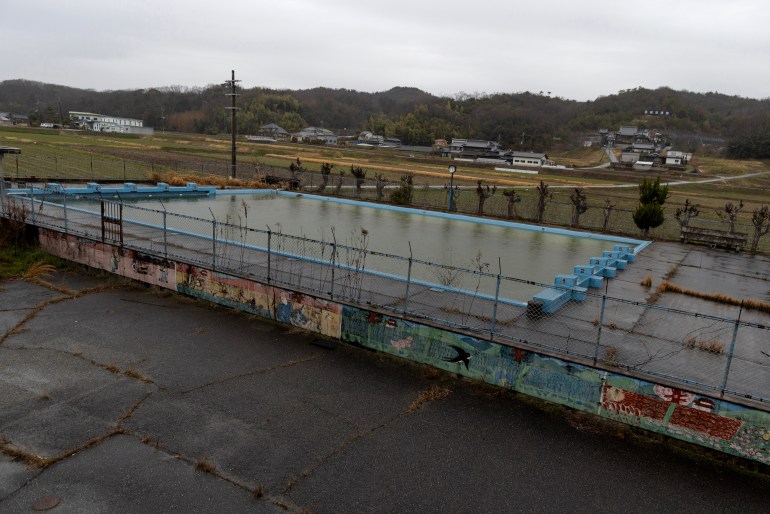
South Korea’s low birthrate has been declared a national emergency despite its government’s efforts to incentivise people into parenthood by paying 2 million won ($1,510) on the birth of each child as well as providing a host of other benefits to parents. The country is one of several in East and Southeast Asia where birthrates have declined rapidly in recent years. Indeed, all five of the countries with the world’s lowest birthrates (stripping out Ukraine, which is undergoing a war) are in East Asia, according to a 2023 CIA report. What is causing this, and why does it matter so much? Which countries have the lowest birthrates? South Korea, which already had one of the lowest fertility rates in the world, has experienced yet another drop in its birthrate. Last month, Statistics Korea published data showing that the country’s birthrate has dropped by 8 percent in 2023 to 0.72 compared with 2022 when it was 0.78. The birthrate refers to the number of children the average woman will have during her lifetime. Experts are warning that South Korea’s population of 51 million people may halve by 2100 if this rate of decline continues. According to the 2023 CIA publication comparing fertility rates around the world, the birthrate decline is much sharper in East Asia than any other region. The CIA’s report puts South Korea’s birthrate a little higher than the country’s own estimate – at 1.11. However, this is still the second-lowest in the world. According to the CIA report, the birthrate in self-governed Taiwan is the lowest in the world at just 1.09 while in Singapore and Hong Kong, the birthrates are 1.17 and 1.23, respectively. China, where a strict one-child policy was in place from 1980 to 2015, has a birthrate of 1.45. Japan, which has been facing the issue of an ageing population for some time, has a birthrate of 1.39. These figures are in stark contrast to other parts of the world. The 10 countries with the highest birthrates are all in Africa. Niger is the highest at 6.73, followed by Angola at 5.76. In the West, birthrates are much lower than this but still higher than East Asia. In the United States, it is 1.84 while it is 1.58 in Germany. Why are birthrates in East Asia dropping? While demographers refer to the birthrate as the fertility rate, this term encompasses those who choose not to have children as well as those who are unable to have children. There are several reasons for the decline in Asia. Economic growth and improving living conditions have reduced child mortality rates, and since more children are expected to live into adulthood, this has led to couples having fewer children, said analysts at the East-West Center, an international research organisation. The analysts explained in an article in Time magazine that economic growth and educational opportunities for women have also led them to resist traditional roles, such as housewife and mother. As a result, they may “choose to avoid marriage and childbearing altogether”. However, Ayo Wahlberg, a professor in the anthropology department at the University of Copenhagen, told Al Jazeera that this explanation is an “incomplete description of what’s going on”. While there may be a correlation between more women being employed and lower birthrates, Wahlberg said both men and women are working longer hours than they did in the past, giving them less time and energy to dedicate to childcare. He cited the example of China’s “996 working hour system”, under which some companies expect people to work from 9am to 9pm, six days a week. Wahlberg added that in South Korea, the working conditions are similarly stringent. “When are you going to have the time to look after a child in such cases?” he asked. He also pointed out that in many countries, the burden of housework and childcare falls more heavily on women than men. Additionally, women experience pregnancy-based discrimination in the workplace if companies decide to avoid hiring an employee who will need to take maternity leave. Women in East Asia face some of the worst gender pay gaps among members of the Organisation for Economic Co-operation and Development (OECD). Additionally, they are aware that taking maternity leave could harm their chances of promotion and progression in their careers. Therefore, they decide not have children despite family or societal pressures to do so, he said. “Is that selfish? I think it’s more being very rational about a very unacceptable situation,” Wahlberg said. Both women and men are also deciding not to have children as part of an emerging movement that has deep concerns about climate change. Why is a declining birthrate a problem? Low birthrates will ultimately lead to population declines. Wahlberg said, to replace and maintain current populations, a birthrate of 2.1 is required. A declining birthrate could have disastrous economic consequences. Many countries are facing labour shortages and are struggling under the demands of an ageing population. With improvements and developments in health and science in recent decades, life expectancy has risen sharply, which raises concerns about people growing into old age in a society that does not have enough young people to take care of them. The burden on younger people to support a much larger, aged population who are no longer working could also become intolerable, according to a 2023 report by the Pew Research Center in the United States, which concluded that income and sales taxes could have to rise steeply in the future to compensate. An abandoned school swimming pool at Shijimi Junior High School in Miki, Japan, which closed three years ago due to a lack of demand. Japan’s birthrate is falling faster than expected, and school closings have accelerated, especially in rural areas [Buddhika Weerasinghe/Getty Images] What is the solution in East Asia? East Asian countries are trying to increase fertility rates by incentivising women to have more children. In Japan, where schools have been closing at a rate of more than 475 per year since 2002
Boom time for Myanmar opium farmers amid coup chaos

In a remote corner of Myanmar, a line of farmers moves through a field of nodding poppies, making small cuts in the greenish-purple pods to release opium resin. The next morning they will collect the residue that has seeped out overnight and parcel it into bundles of sticky opium – the building blocks for manufacturing heroin. Myanmar became the world’s biggest opium producer in 2023, according to the United Nations, overtaking Afghanistan after the Taliban government launched a crackdown on the crop. Since the military in Myanmar seized power in 2021, causing social and economic turmoil and armed conflict across the country, the cash crop has become more important to some farmers struggling to get by. “I planted poppies in recent years, but only a few,” said Aung Moe Oo, speaking from the vast field enclosed by hills on the border of Shan and Karen states. “This year, I planted three acres.” He expects those three acres (1.2 hectares) to yield about 16 kilogrammes (35 pounds) of poppy resin this harvest, which he hopes to sell for about $4,500. “Growing poppies is the best way to make a living for our family,” he said, sporting a brown bucket hat and a striped grey shirt. Aye Aye Thein, another farmer from the region, used to grow rice, corn, beans and avocado. But when the fighting between the military and armed groups came to her home, she was forced to leave her fields. Conflict since the coup, which ended a rare experiment with democracy in Myanmar, has displaced almost two million people, according to the UN. Even before Aye Aye Thein had to leave her home, the plunging value of the local kyat currency had made buying agricultural products such as fertiliser much more expensive. “After the political situation changed and there is fighting, we can’t grow anything in our own fields,” she said. Aung Moe Oo agreed. “If we send our crops to the brokers’ centre, there are lots of costs that we can’t afford,” he said. “So, we grow poppy flowers instead of corn this year.” The raging conflict is disrupting transport and stunting the export of agricultural goods like rice and corn, the World Bank said late last year. Meanwhile, poppy cultivation is becoming more sophisticated, the UN says, with increased investment and improved irrigation pushing up crop yields. Myanmar produced an estimated 1,080 metric tonnes of opium last year, the world body’s office on drugs and crime said, up from an estimated 790 metric tonnes the previous year. The opium is refined into heroin in factories hidden in the jungles and ravines of Shan state and then smuggled through neighbouring countries such as Thailand and on to the world market. Adblock test (Why?)
US prosecutors willing to delay Trump hush money criminal trial
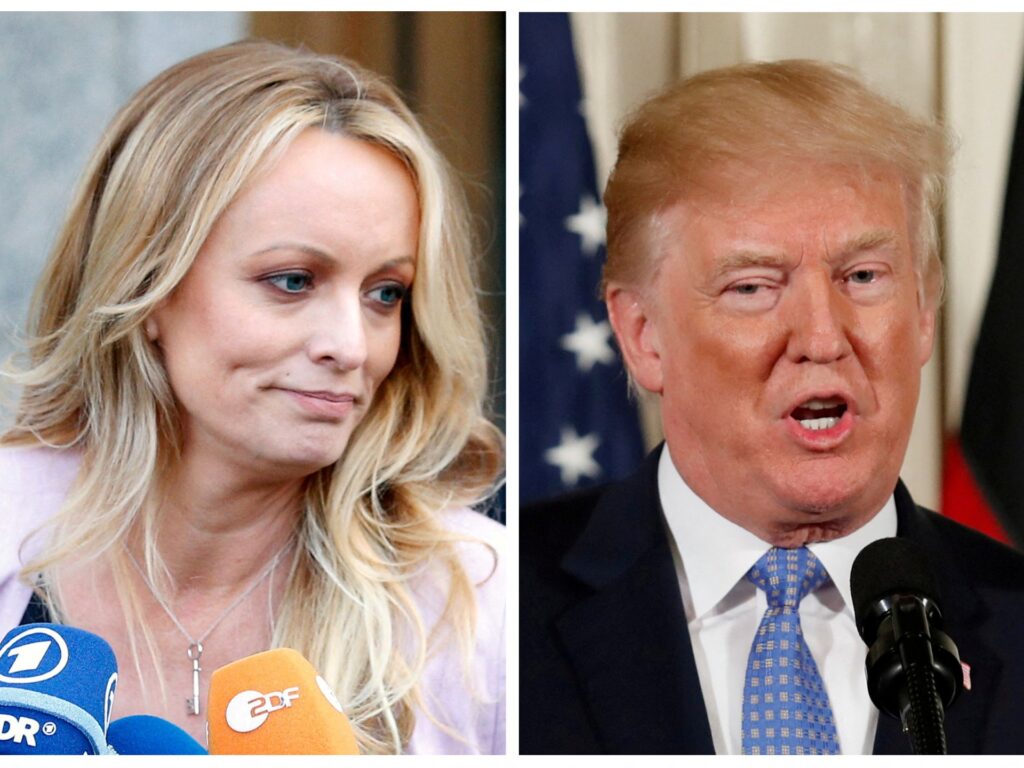
Manhattan prosecutors say they will not oppose delay of up to 30 days in trial set to start March 25. Prosecutors in the United States have said they are willing to delay Donald Trump’s criminal trial on charges related to making hush money payments for up to 30 days so the former president’s lawyers can review newly obtained evidence. The first-ever criminal trial of a former US president was set to begin on March 25. On Thursday, New York prosecutors said they were open to delaying the start of the trial “in an abundance of caution” to give Trump’s lawyers time to review records from a previous federal investigation into the matter. Trump – the presumptive Republican presidential nominee and likely opponent of President Joe Biden in the November election – has pleaded not guilty to 34 counts of falsifying business records to hide his former lawyer Michael Cohen’s $130,000 payment to adult performer Stormy Daniels for her silence before the 2016 election about a sexual encounter she says they had a decade earlier. In a heavily redacted filing dated March 8 and made public on Thursday, Trump’s lawyers said they needed more time to review thousands of pages of documents they recently received from the US Attorney’s office in Manhattan, which had previously investigated Cohen’s payment to Daniels. A delay would mark another victory for Trump, who has sought to slow down proceedings in his various legal entanglements. The hush money case in Manhattan is scheduled to be the first of four criminal cases against Trump to reach trial. None of the other cases has a firm trial date but any delay to the New York trial could complicate their scheduling. Trump denies an encounter with Daniels. His lawyers have argued that Cohen paid off Daniels to spare Trump’s family embarrassment, not to boost his electoral chances as prosecutors have alleged. They suggested at least a 90-day delay to the trial and also urged Justice Juan Merchan to consider dismissing the indictment altogether, arguing some of the federal prosecutors’ evidence undermined the district attorney’s arguments. Merchan would have to approve any delay to the trial. It was not immediately clear when he would rule. “The statements demonstrate that Cohen did not seek to be, and was not, acting for the benefit of President Trump’s campaign,” Trump’s lawyer Todd Blanche wrote. The statements he was referring to were redacted. Cohen pleaded guilty in 2018 to federal charges of violating campaign finance law through the payment to Daniels, whose real name is Stephanie Clifford. The US Attorney’s office in Manhattan did not charge Trump in that case. Earlier this week, Trump asked Merchan to postpone the trial until the US Supreme Court finishes its review of his claim of presidential immunity in his federal criminal case over efforts to overturn his 2020 election loss to Biden. The Supreme Court is due to hear those arguments on April 25. A 30-day delay to the hush money trial would mean it would start that same week – a little over six months before Election Day. Trump also faces a state criminal prosecution over his push to reverse the 2020 election results, and a federal prosecution in Florida over his handling of sensitive government documents after leaving the White House in 2021. He has pleaded not guilty in all cases. Adblock test (Why?)
Advocates fear special US visas for Afghans could run out despite dangers
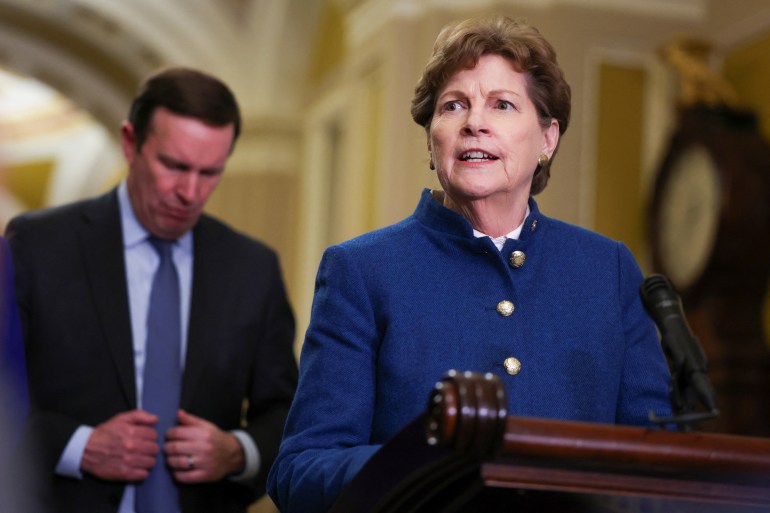
Washington, DC – As the United States withdrew its troops from Afghanistan in 2021, millions of Afghans faced the prospect of life once more under Taliban rule. For thousands among them, the danger was particularly acute: They had worked with the departing Americans and could be subject to Taliban reprisals as a result. But a long-running US programme offered the possibility of life abroad: Translators, contractors and other Afghan employees with direct ties to the US military were eligible for a Special Immigrant Visa, or SIV. Now, less than three years later, advocates fear this narrow immigration pathway — a cornerstone of Washington’s relief efforts — could quietly fall victim to deadlock in the US Congress. The legislature must pass a set of budget appropriations bills before March 22 in order to avert a government shutdown. But critics fear the package will pass without authorisation for more Special Immigrant Visas for Afghans, leaving them with even fewer options to escape the threats they may face. On Thursday, a bipartisan group of legislators sent a letter (PDF) to top Senate leaders urging them to include the provision for Special Immigrant Visas in the final version of the appropriations bills. Senator Jeanne Shaheen, one of the letter’s signatories, told Al Jazeera in a statement that Afghans connected to the US military remain “at grave risk, as the Taliban continue to hunt for them”. “For two decades, the US military mission in Afghanistan relied on trusted Afghan allies who stood shoulder-to-shoulder with American troops,” said Shaheen. “We promised to protect them — just as they did for us.” US Senator Jeanne Shaheen has pushed for 20,000 additional Special Immigrant Visas for Afghans to be authorised this year [Amanda Andrade-Rhoades/Reuters] Protecting Afghan allies Shaheen is one of 13 senators pushing for 20,000 more Special Immigrant Visas to be included for Afghans in the 2024 State and Foreign Operations (SFOPS) appropriations bill, part of the budget package that needs to pass this month. But immigration is a hot-button issue in the US election year, and advocates worry anti-immigrant sentiment could scuttle attempts to increase access. Revised drafts of the Afghan Allies Protection Act — which sets the parameters for the Special Immigrant Visas — were introduced in both the House and Senate last year. But while the Senate Appropriations Committee authorised the 20,000 additional visas, the Republican-controlled House has not approved more on its end. Because the visa programme for Afghans — first established in 2009 — was considered temporary, Congress has to regularly extend its mandate and adjust the number of visas available. Currently, there are just 7,000 special visas left for principal applicants, but advocates say there are more than 140,000 pending applicants, with at least 20,000 nearing the final stages of the process. The current processing rate is about 1,000 applicants a month, which means the visas are set to run out around August — the month that marks the third anniversary of the US troop withdrawal. Without further legislation, it is unclear what would happen next. “I’m just mystified by this whole thing,” Kim Staffieri, the executive director of the Association of Wartime Allies (AWA), told Al Jazeera. Her organisation helps Afghans associated with the US military with their visa applications. “I’ve been doing this for seven, eight years, and have never come to the point of worrying about running out of [SIVs] ever,” she said. Few options for Afghans The possibility that the programme could run out of visas has left Afghans like Abdulrahman Safi feeling betrayed. Safi, 35, worked with both the US military and the Central Intelligence Agency (CIA) in Afghanistan, before fleeing on an evacuation flight to the US in 2021. “We come here with all these promises: ‘We won’t leave you behind,’” Safi told Al Jazeera. “Now it feels like none of that matters.” Safi is one of the tens of thousands of Afghans who have applied for Special Immigrant Visas. The shortage, however, only compounds existing problems with the programme: Critics say it has been dysfunctional for years. The spike in applications following the 2021 troop withdrawal, advocates add, has only amplified the mile-high application backlog. There are relatively few options outside of the Special Immigrant Visas — and they too suffer from long wait times and tight caps on the number of applicants admitted. Some Afghans who evacuated in 2021 were granted humanitarian parole, a temporary status with no pathway to permanent residency or citizenship. Others have applied for asylum status, although that process is likewise backlogged and can take years, with no guarantee of success. A victim of partisanship Support for the special visa programme has historically been bipartisan in the US, due in no small part to widespread advocacy from veterans groups, according to Adam Bates, a supervisory policy counsel at the International Refugee Assistance Project (IRAP). In many ways, he said, the programme has been “compartmentalised away from the broader immigration debate”. “The Afghan SIV program has been around since 2009. For that entire time period, it has enjoyed widespread bipartisan support,” said Bates. “It had support across presidential administrations, even during the [Donald] Trump administration.” Bates is among the advocates who worry the programme may be falling victim to partisanship in Congress, heightened by November’s impending general elections. The immigration debate has played a prominent role in campaigns so far. Joseph Azam, a lawyer and board member for the Afghan-American Foundation, told Al Jazeera he fears other issues are overshadowing the Special Immigrant Visa programme for Afghans. “For whatever reason — because we’re in election year, there are other things going on in the world, or people are just not paying attention — this programme has gotten to the point of almost withering away,” he said. “That would be catastrophic for the tens of thousands of Afghans who have been left behind, who are in hiding with their families and were some of the first on the kill list for the Taliban when they took over.” Azam noted that no legislators