

Putin rails against Ukraine as attacks mar Russian presidential election
Russians begin voting in a three-day election that is almost certain to hand the president six more years. Russian President Vladimir Putin has accused Ukraine of trying to disrupt his country’s presidential election by shelling Russian territory and using 2,500 soldiers to try to pierce Russia’s borders, promising to punish Kyiv for its actions. Polls opened across 11 time zones in Russia on Friday to begin three days of voting with Putin almost certain to secure his fifth term since winning his first election in 2000 with dissent in the country almost completely stifled. The shadow of the Ukraine war fell across the election with what Putin said was repeated shelling of western Russia and an attempt by Ukrainian proxies to cross into Russian territory in two Russian regions. “These enemy strikes will not remain unpunished,” a visibly angry Putin said at a meeting of Russia’s Security Council, which includes military and spy chiefs as well as the most powerful civilian state officials. Putin said there had been four attacks on the Belgorod region and one on the Kursk region – both on the border with Ukraine – by about 2,500 Ukrainian proxies. He said they had 35 tanks and 40 armoured vehicles and 60 percent of the fighters were killed. Ukrainian officials said earlier on Friday that armed Russian groups based in Ukraine that are opposed to the Kremlin carried out the attacks in Belgorod and Kursk. The first day of the election was also marred by disruptions that included dye being poured into ballot boxes, a Molotov cocktail thrown at a polling station in Putin’s hometown and reported cyberattacks. At least nine people were arrested for acts of vandalism at polling stations. There were two incidents in Moscow, where one woman filled a ballot box with ink and another woman at a different voting station set a booth on fire. Several people poured green liquid into ballot boxes, an apparent nod to the late opposition leader Alexey Navalny, who in 2017 was attacked by an assailant splashing green disinfectant in his face. Russia’s electoral commission chief, Ella Pamfilova, said those who committed the acts of vandalism face up to five years in prison and suggested they had been paid by people seeking to disrupt the vote. The other candidates running are from Kremlin-friendly parties: Nikolai Kharitonov of the Communist Party, Leonid Slutsky of the nationalist Liberal Democratic Party and Vladislav Davankov of the New People Party. Opposition politician Boris Nadezhdin tried to run against Putin on an antiwar ticket but was barred from standing after the Central Election Commission said irregularities were found in his list of supporters’ signatures. Other possible opposition candidates who could have run against Putin have either died or been jailed or live abroad. Al Jazeera’s Dorsa Jabbari, reporting from Moscow, said every person she spoke to at the voting station she visited said they were backing Putin. “They say that he is the man for the country, they trust him and they have known him for many, many years. They believe in his policies both domestically and foreign,” she said. “What is clear is that Putin will again continue his reign in power and tighten his grip.” Annexed regions People in the Russia-annexed regions of Ukraine – Crimea, Luhansk, Donetsk, Zaporizhia and Kherson – also took part in the presidential election. In the eastern region of Donetsk, armed soldiers in full combat gear accompanied election officials as they set up mobile voting stations on small tables in the streets. Ukraine has condemned the election being held in the annexed territories. In December, Ukraine’s Ministry of Foreign Affairs issued a statement calling on the international community to “impose sanctions on those involved in their organisation and conduct”. “Any election in Russia has nothing to do with democracy. They serve only as a tool to keep the Russian regime in power,” the ministry said. Olga Tokariuk, a Chatham House OSUN Academy Fellow in the Ukraine Forum, also said Ukrainians are not taking the election “seriously”. “Real change in Russia will not come automatically with the removal of Putin from power; it is only possible if Russia gives up on its imperialist ambitions and stops waging wars of conquest – which is not on the horizon,” Tokariuk told Al Jazeera. Adblock test (Why?)
First Friday prayers of Ramadan in Al-Aqsa
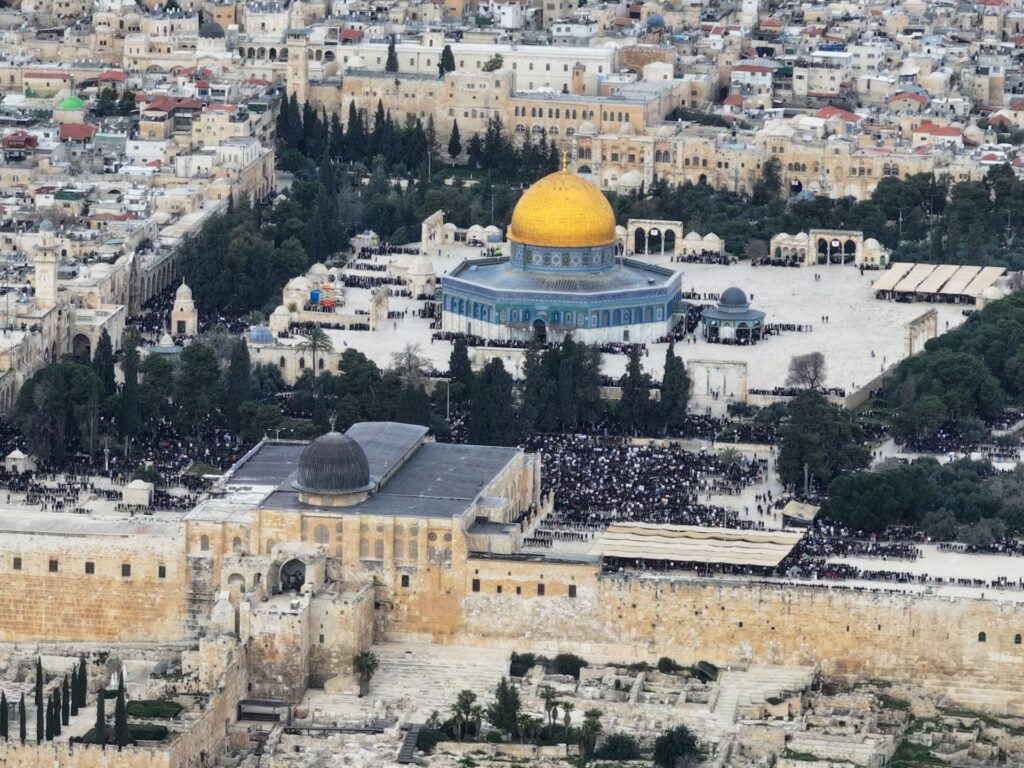
NewsFeed Despite Israeli authorities blocking thousands of Palestinians from reaching the Al-Aqsa Mosque for first Friday prayers of Ramadan, around 80,000 worshippers are reported to have made it to the holy site. Published On 15 Mar 202415 Mar 2024 Adblock test (Why?)
Is this a watershed moment for Jewish solidarity with Palestinians?

We look at whether there is a shift within the Jewish community against Israel’s actions and policies. Israel’s war on Gaza rages on, now in its sixth month, causing mass devastation and resulting in the deaths of more than 31,000 Palestinians, mostly women and children. With mounting humanitarian crises, Jewish groups across the world have rallied in large numbers to denounce Israel’s actions and policies. This is not the first time Jewish communities have come together to criticise Israel. A growing number of progressive Jewish groups have been organising against Israel’s policies towards the Palestinians for years. This week on UpFront, Marc Lamont Hill talks to the founder of Rabbis for Ceasefire, Rabbi Alissa Wise, and the national spokesperson for IfNotNow, Eva Borgwardt, about the Jewish communities mobilising for Palestinian liberation. Adblock test (Why?)
Russian attack on civilian sites in Ukraine’s Odesa kills 14, injures 46

Russia has stepped up its attacks on the southern port city in recent weeks with a series of deadly drone and missile strikes. A Russian missile attack has hit civilian infrastructure in Ukraine’s Black Sea port city of Odesa, killing at least 14 people and wounding 46, Ukrainian officials say. Russia has stepped up its strikes on Odesa in recent weeks, launching drones or missiles almost every day. “As a result of the Russian missile attack, 14 people were killed, including local residents, a medic and a rescuer,” Oleh Kiper, the regional governor, said on Telegram. The medic and rescuer were killed by a second missile after rushing to the scene to treat people hurt in Friday’s initial strike, Kiper added. Ten houses, a low-pressure gas pipeline and rescue vehicles were damaged, emergency services said. Rescuers battled to put out fires on the pipeline and in a house over a total area of about 120sq metres (144sq yards). Twelve people, including five children, were killed in a drone strike on a residential building in Odesa on March 2. On March 6, Ukrainian President Volodymyr Zelenskyy was showing Greek Prime Minister Kyriakos Mitsotakis the destruction caused by that attack when Russia struck the city again, killing at least five people. Rescuers work in a residential area of Odesa hit by a Russian missile [Stringer/Reuters] Odesa, one of Ukraine’s biggest ports, has long been a target of Russian attacks, especially after Moscow quit a United Nations-brokered deal that had allowed safe passage for Ukrainian grain shipments via the Black Sea. “The Russian terror in Odesa is a sign of the weakness of the enemy, which is fighting against Ukrainian civilians at a time when it cannot guarantee the safety of people on its own territory,” Ukrainian presidential chief of staff Andriy Yermak wrote on Telegram. Ukraine has developed and used long-range drones to try to strike back at Russia, stepping up attacks on a string of oil refineries this week in the run-up to Russia’s three-day presidential election, which began on Friday. Moscow has repeatedly denied targeting civilians in its full-scale invasion of Ukraine, which it launched in February 2022. Adblock test (Why?)
‘We want Sonko’: Senegal opposition boosted after leaders freed before vote

The release of firebrand Sonko and his right-hand man Faye could help opposition chances in the March 24 election to replace outgoing President Macky Sall. Celebrations broke out among Senegal’s opposition supporters after two of their top leaders were freed from jail 10 days before the country’s delayed presidential election. Firebrand politician Ousmane Sonko and his close aide Bassirou Diomaye Faye were released late on Thursday in a move that could boost the opposition’s chance to win in the March 24 election and replace outgoing President Macky Sall. Sonko, the charismatic anti-establishment politician who has won over crowds of youngsters by promising to fight corruption, had been behind bars since July, serving a two-year sentence for corrupting the youth. He was barred from running for the presidential race due to a separate case involving defamation charges. His supporters maintain Sonko’s legal woes were an outcome of efforts to keep him away from competing in the elections. Excluded from the presidential race, Sonko urged his supporters to vote for Faye, a lesser-known politician and deputy of his now-dissolved PASTEF party. “Ousmane is Diomaye,” was the message his supporters spread from prison. Faye was also in jail but on administrative detention — a state of arrest that does not bar him from contesting in the election. “Sonko represents hope for the entire nation,” said Cheick Diara, a young Senegalese man cheering in the streets of Dakar on his release. “Look what is happening around the youth, they want change – we want Sonko in power,” he said. Bassirou Diomaye Faye was picked by Ousmane Sonko to replace him in the presidential race [Zohra Bensemra/Reuters] Faye’s mission is now to bank on Sonko’s popularity to win the country’s top job. Dressed in a sky-blue tunic and a white cap, he was welcomed as a hero by a crowd gathered in front of Cap-Manuel prison in the capital Dakar as the news of his release started circulating. “The way from prison to the presidential palace is now paved,” said human rights activist Alioune Tine, noting that their release will re-energise the opposition front. “President Sall thought he could neutralise their popularity by putting them in prison, but he understood that it wasn’t working – he was forced to release them,” added Tine, who held a key role in mediating between Sall and the opposition following Sall’s attempt to delay the vote, which was originally set for February but then postponed by the outgoing president. Faye’s programme includes the establishment of a new national currency and the renegotiation of the country’s mining and energy contracts between the government and private conglomerates. Central to his campaign is also a review of the relations with former colonial power France whose economic interests in the country are perceived by some in the opposition as a form of neo-colonialism. He has also promised to tackle youth unemployment: Three out of 10 Senegalese aged 18 to 35 are jobless. The crisis is further exacerbated by the speed at which the population is growing – it doubles every 25 years, according to Afro Barometer data. “This is a radical youth for a radical change who wants to see a new way of doing politics,” said Hawa Bo, associate director of the Open Society Foundation. “They want to break with clientelism, endemic corruption and lack of accountability,” she added. The anti-establishment presidential hopeful’s election could have significant implications for the region’s economy and the country’s plan to become an oil producer by the end of 2024. Senegal is the region’s number one recipient of foreign aid, including a $1.8bn loan from the International Monetary Fund. Supporters surround the car of Senegalese opposition leader Ousmane Sonko, who was released from prison along with the presidential candidate he is backing in the March 24 election, Bassirou Diomaye Faye [Zohra Bensemra/Reuters] Meanwhile, Sall’s governing Alliance of the Republic party has bet on Amadou Ba, a former prime minister. He ran the Ministry of Finance and Economic Planning from 2013 to 2019 and was the country’s top diplomat between 2019 and 2020. His victory would mean policy continuity with the previous government, something that would likely reassure foreign investors. Western allies are also closely monitoring developments in Senegal after months of protests have rocked Senegal’s image as a rare bastion of stability in a region plagued by military coups. The latest round of demonstrations took place after Sall postponed the elections originally planned for February. The decision plunged Senegal into uncertainty with critics saying the move amounted to a constitutional coup for Sall to get a third mandate. Presidents in Senegal have a two-term limit. The Constitutional Court overruled the delay and elections were finally set for March 24. In an attempt to quell tensions, Sall passed a controversial amnesty law – under which Sonko and Faye were released on Thursday – that critics have said is an attempt to make a clean exit from power and avoid being targeted once he is out of office. Sall’s second term was marked by restrictions on civil liberties, a ban on demonstrations and internet shutdowns. At least 40 people were killed and more than a thousand political opponents ended in jail since 2021, according to Human Rights Watch. Adblock test (Why?)
India rejects US concern over citizenship law as ‘misplaced, unwarranted’

New Delhi’s strong response follows the US State Department saying it will ‘closely monitor’ the implementation of the religion-based law. India has rejected comments by a United States official raising concern over the implementation of a religion-based citizenship law as “misplaced, misinformed and unwarranted”. On Monday, just weeks before the general election, Prime Minister Narendra Modi’s Hindu nationalist government announced rules to implement the Citizenship Amendment Act (CAA), which makes getting Indian citizenship easier for non-Muslim refugees from three Muslim-majority South Asian nations: Afghanistan, Pakistan and Bangladesh. The move sparked sporadic protests with critics, including Muslims groups and opposition parties, saying the law discriminates against Muslims and undermines India’s secular constitution. On Tuesday, a US Department of State spokesperson expressed concern about the law and said Washington is “closely monitoring how this act will be implemented”. “Respect for religious freedom and equal treatment under the law for all communities are fundamental democratic principles,” the spokesperson added. In response, a spokesman for India’s Ministry of External Affairs on Friday said the CAA was an “internal matter” and the US State Department’s statement was “misplaced, misinformed and unwarranted”. Spokesman Randhir Jaiswal said the law was “in keeping with India’s inclusive traditions and our longstanding commitment to human rights” and “grants a safe haven to persecuted minorities”. “The CAA is about giving citizenship, not about taking away citizenship. It addresses the issue of statelessness, provides human dignity and supports human rights,” he told reporters in New Delhi. “Lectures by those who have a limited understanding of India’s pluralistic traditions and the region’s post-partition history are best not attempted,” he said, referring to the colonial-era division of the Indian subcontinent to create the state of Pakistan in 1947. The United Nations, which also expressed concerns about the CAA’s enforcement, had called the CAA “fundamentally discriminatory in nature” when it was passed in parliament in 2019. Modi’s government did not implement the law that year as nationwide protests broke out over its passage. In eastern parts of New Delhi, Muslim neighbourhoods were attacked for days, and dozens of people were killed. Activists and human rights groups said the law, combined with a proposed national register of citizens, could discriminate against India’s 200 million Muslims – the world’s third largest Muslim population. Some fear the government might remove the citizenship of Muslims without documents in some border states. Rights groups also note the law leaves out Muslim minority groups like the Shias from India’s neighbouring Muslim-majority countries while also excluding countries where Muslims are a minority, like the Rohingya in Myanmar. On Thursday, Amnesty International said the CAA was “a blow to Indian constitutional values and international standards” and demanded its repeal. “The Citizenship Amendment Act is a bigoted law that legitimises discrimination on the basis of religion and should never have been enacted in the first place. Its operationalisation is a poor reflection on the Indian authorities as they fail to listen to a multitude of voices critical of the CAA,” said Aakar Patel, chairperson of the board at Amnesty International India. Next week, India’s top court will hear nearly 200 petitions challenging the constitutional validity of the law implemented before the general election, local media reports said on Friday. India is expected on Saturday to announce the date of the vote, scheduled to be held in April and May, in which Modi is seeking a third straight term. Adblock test (Why?)
Fast food giant McDonald’s suffers global tech outage
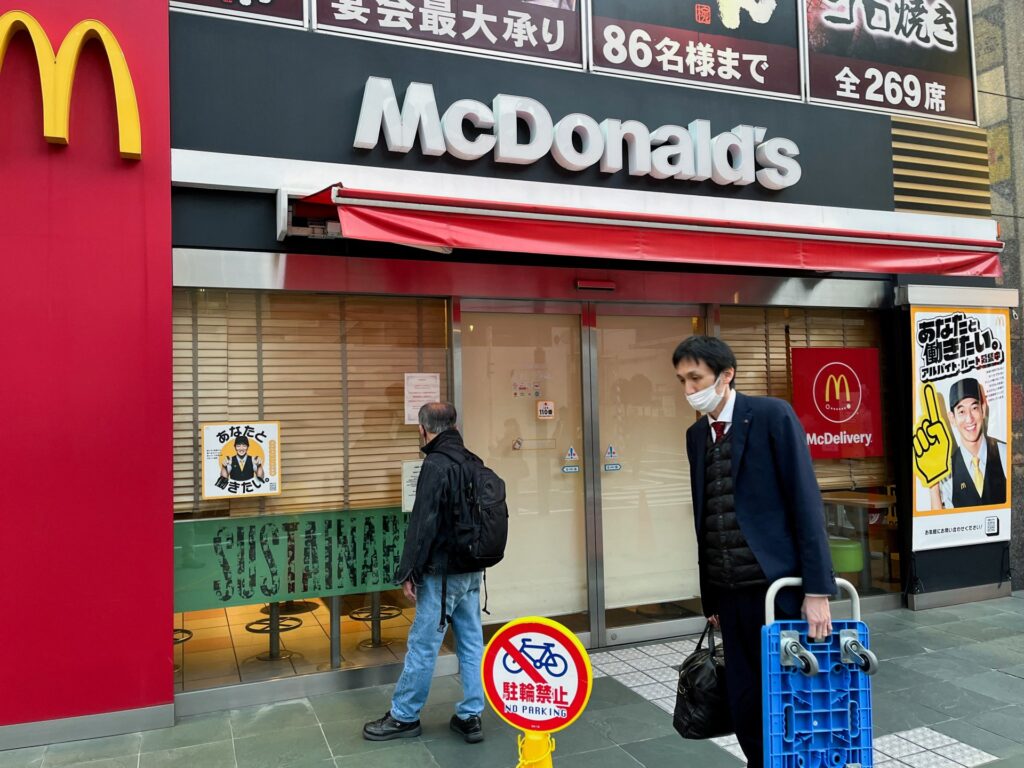
‘System failure’ shutters some restaurants for hours, leading to complaints from customers on social media. Fast food giant McDonald’s has experienced systems failures in several countries that led to some of its restaurants being shuttered for hours, but ruled out cybersecurity issues as a potential cause of the problem. The United States-based chain said the “technology outage” on Friday affected operations in outlets around the world, including Australia, Japan and the United Kingdom. McDonald’s in Japan wrote on X that “operations are temporarily out at many of our stores nationwide” and called the incident a “system failure”. Patrik Hjelte, owner of several McDonald’s restaurants in central Sweden, told local newspaper Nya Wermlands Tidningen that all of the chain’s “restaurants are connected to a global network and that is what’s messed up”. It was not immediately clear how many stores were affected globally. Outage tracking website Downdetector reported a spike in problems with the McDonald’s app, while media outlets reported that customers from Australia to the UK had complained of issues with ordering. The fast food chain has about 40,000 restaurants worldwide, with more than 14,000 stores in the US. In February, it reported that it had missed its first quarterly sales target in nearly four years, citing Israel’s war on Gaza as a factor. The slump came after customers in Muslim-majority countries called for a boycott of the chain in response to its Israeli franchisee donating thousands of free meals to the Israeli military. Earlier this month, Meta-owned Facebook and Instagram also faced technical issues that disrupted global services for hundreds of thousands of users for more than two hours. Adblock test (Why?)
Russian elections set to make Putin longest-serving leader
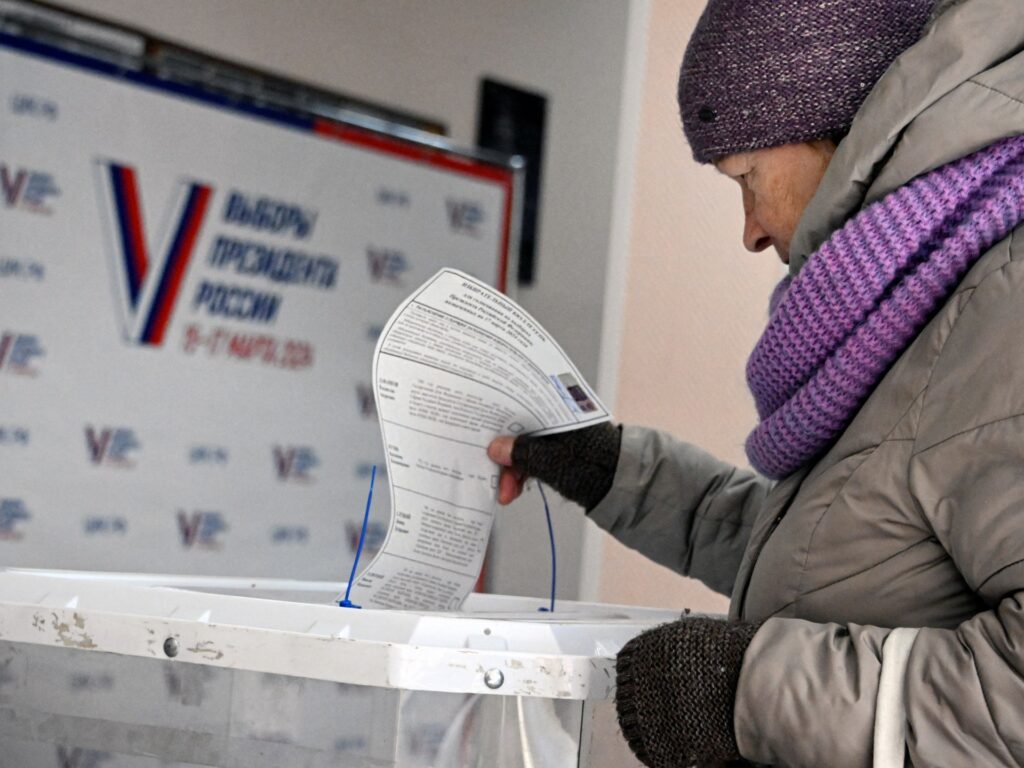
NewsFeed People in Russia and the territories it has annexed are voting in a three-day election that is set to make President Vladimir Putin country’s longest-serving leader. Al Jazeera’s Dorsa Jabbari has been at a polling station in Moscow. Published On 15 Mar 202415 Mar 2024 Adblock test (Why?)
‘Russian Time’: How Burkina Faso fell for the charms of Moscow

In the heart of Burkina Faso’s capital, Ouagadougou, a poster advertising free Russian language courses has been attached to the large, iconic model of a globe on a road intersection which locals refer to as the “United Nations roundabout”. In the 1980s, the Soviet Union (USSR) had a strong presence in Africa through diplomatic representation and cultural centres, including in Burkina Faso. Three decades since Russia left large parts of Africa amid the breakup of the Soviet Union, however, signs of its return are visible in Burkina Faso, where the capital’s walls are adorned with pro-Russian graffiti, and Russian flags fly in the streets. “Something has changed, and it is eye-catching. You can feel it immediately, walking the streets and the roundabouts,” said a resident who asked to remain anonymous for fear of repercussions from the government, which has been controlled by the military since a coup in January 2022. In the aftermath of that coup, which overthrew the elected president, Roch Marc Christian Kabore, Russian flags began to appear during anti-French protests. At a time when Russian President Vladimir Putin, who is seeking re-election for a fifth term as leader of the country this weekend, is no longer welcome in many parts of the world following the invasion of Ukraine, Moscow is seen as a friend in Ouagadougou. A view of the United Nations roundabout in Ouagadougou on November 5, 2020 [Olympia de Maismont/AFP] A football tournament, a graffiti festival, a photo exhibition, film screenings, a public conference, and a daily radio show called “Russian Time”, during which hosts speak in a mixture of French and Russian, are some of the events that take place in Ouagadougou every day, as local frustration for former coloniser France has been exploited by Russia to secure influence in the country. Organisations such as the African Initiative – which describes itself as “an association of Burkinabè and Russians whose aim is to strengthen friendship and mutual understanding, peace and harmony between the peoples of Burkina Faso and Russia” – and Russia’s cultural centre, The Russian House, are working to promote Russia’s image in the country. This charm offensive began in early 2022 and has gained ground significantly since a grand Russia-Africa summit was held in Saint Petersburg at the end of July 2023. During that summit, Russian President Vladimir Putin promised to send aid to Burkina Faso and duly followed up on January 26 this year with an official donation of 25,000 tonnes of wheat as part of that promise. In spite of France Dissatisfaction with French influence has grown on two fronts. One of these is cultural. One researcher who did not wish to be named explained that many people in Burkina Faso do not identify with what they see as the West European country’s progressive policies, such as same-sex marriage, and see less permissive Russian attitudes as more in line with their own. “Russia is popular in Burkina Faso today because people are fed up with French politics,” explained a Burkinabe university professor and researcher who also requested anonymity. “The Russians sensed that France poorly negotiated its turn with Africa. It has arrived in a country in the throes of a divorce with France,” the researcher added. “In the case of Burkina Faso, Russia is making significant diplomatic gains by repositioning itself in areas that have traditionally been Western strongholds. And the best part is, it can achieve this at a lower cost,” said Newton Ahmed Barry, a Burkinabe journalist currently in exile in France. Bags of Russian wheat donated to Burkina Faso are displayed at an official donation ceremony in Ouagadougou on January 26, 2024 [Fanny Naoro-Kabre/AFP] Like Mali and Niger – two neighbouring countries led by military governments – Burkina Faso’s primary complaint against the former coloniser, however, is its inability to curb threats from armed groups in the Sahel region since 2013. France had been providing military support to Sahel countries in this fight, with troops deployed in Mali since 2013, in Niger since 2014, and special forces that have been based in Ouagadougou since 2009. Despite this, armed groups have remained powerful, and protests filled with Russian flags and images of Vladimir Putin took place in Ouagadougou in January 2023 to demand the departure of the French military and its ambassador. Russia has tried to step into the void. Under the leadership of Captain Ibrahim Traore, who took power in a second coup in September 2022, Burkina Faso has strengthened its military cooperation with Russia, seeking support from Moscow in its fight against armed groups. “It is an official and assumed option to make Russia the partner, replacing all other partners, namely, Westerners and mainly France,” Barry said. He added that the move is not a “diversification of partnerships”, but rather a clear choice to rely on Russia to equip the army and protect the regime – similar to Russia’s involvement in Syria, the Central African Republic and Mali. In November 2023, the first group of Russian soldiers landed in the capital city of Burkina Faso, followed months later by another group of about 100 Russian military advisers. A ‘laboratory’ for Russian expansion Since then, the signs of a shift from French to Russian influence have become increasingly apparent. In Ouagadougou, large French-owned companies like the telecom giant Orange or the brewer Brakina are still present. But, apart from these businesses, significant changes are happening politically, diplomatically and, lately, increasingly culturally. These “influence initiatives” recall the ones in the Central African Republic (CAR), where Russia, through the Wagner mercenary groupexp, anded its influence in the country in 2018 and, from there, onto other countries in the region, such as Mali. Observers refer to the CAR as a “laboratory” for expanding Russian influence in sub-Saharan Africa through Wagner. While Wagner has no current official presence in Burkina Faso, they say this process is being repeated there, too. “Burkina is becoming the laboratory of the post-Prigozhin Russian presence, where the dominant actor is the Russian state,” Maxime Audinet,
Al-Shabab fighters killed as overnight siege of Mogadishu hotel ends

Storming of hotel near Somalia’s presidential palace highlights resilience of the al-Qaeda affiliate. A 13-hour siege of a popular hotel near government buildings in Somalia’s capital, Mogadishu, has ended after the al-Shabab fighters who had taken control of the building were killed by security forces. “All the terrorist gunmen were killed, and the situation has returned to normal now,” police officer Abdirahim Yusuf told the Agence France-Presse news agency on Friday. “The security forces are carrying out a thorough clearance and investigations.” He didn’t mention how many fighters from the al-Qaeda-linked group were killed. Fighters had stormed the SYL Hotel in a hail of bullets late on Thursday, and al-Shabab claimed responsibility in a brief statement. The attack on the hotel, popular with government officials, demonstrated the group’s continued ability to strike the capital despite a major military offensive by the internationally backed federal government and local clan militias, supported by an African Union (AU) mission and United States air strikes. As part of the attack, a suicide bomber drove a car loaded with explosives in front of the hotel, killing at least five people, the German Press Agency dpa reported. “As far as we know, one terrorist, three hotel security officers and two members of the security services were killed in the attack,” police spokesman Qasim Ahmed Roble said on Friday. Omar Mahmood, senior analyst at the International Crisis Group, said it was a “highly significant attack that shatters a sense of calm in Mogadishu”. “It also serves as a signal from al-Shabab that despite much heralded efforts by this government to weaken them, the group remains active and resilient and even able to hit the government close to home,” Mahmood added. The SYL Hotel has been the target of several al-Shabab attacks despite being in a high-security area of the city due to its location opposite the presidential palace. Somali security officers take positions on the rooftop at a section of the SYL Hotel in Mogadishu, Somalia, on March 15, 2024 [Feisal Omar/Reuters] Strong presence Al-Shabab has been waging war against the Somali government for more than 16 years. The armed group was born out of Somalia’s many years of anarchy after a 1991 civil war. Over time, an AU-led force with the backing of the US and other countries pushed the group out of Mogadishu. Since then, al-Shabab has been battling the government and the AU-mandated peacekeeping mission as it seeks to establish a new administration based on its interpretation of Islamic law. It retains a strong presence in rural Somalia and has carried out numerous attacks against political, security and civilian targets, including in Mogadishu. In August 2022, 21 people were killed and more than 100 injured in a 30-hour siege on the Hayat Hotel in the capital. Two months later, 100 people were killed and 300 were wounded in twin car bombings in Mogadishu. In February this year, at least 10 people were killed in multiple attacks in a crowded market in Mogadishu. That same month, the group claimed responsibility for an attack on the General Gordon military base in Mogadishu, which killed several people, including four Emirati soldiers and a Bahraini military officer. Al-Shabab sees the United Arab Emirates as an “enemy” of Islamic law for backing the Somali government in battling the armed group. It has also carried out attacks in neighbouring Kenya in retaliation for Nairobi’s provision of troops and material to the AU force in Somalia. Adblock test (Why?)