

Why Putin is desperate for a big election win

For many, the outcome of the Russian presidential election, scheduled to take place between March 15 and 17, is already known. President Vladimir Putin is facing little competition from the other candidates on the ballot after the election commission barred any challenger who could have garnered some public support from running. Yekaterina Duntsova, a former TV journalist, who in November announced her intention to run, was disqualified shortly after submitting her application; her candidacy had attracted too much public attention and interest for the Kremlin’s liking. Boris Nadezhdin, a liberal politician, who had called for the end of the war in Ukraine, was also not allowed to run, after showing the potential to attract the anti-Putin vote. Putin clearly does not want his election victory to be called into question and would like to see a landslide win that would give him the mandate to continue his policies, including what he calls “the special military operation” in Ukraine. A landslide victory would “prove” Russian society fully supports his war and enable him to take unpopular measures, including announcing a second wave of mobilisation. Putin’s plan is likely to amass enough troops to launch a new major offensive, break through the Ukrainian defences, and take Kharkov, Odesa and perhaps even Kyiv. Then he hopes Donald Trump would come to power in the US and negotiate and sign a peace deal on Russian terms. The reason why the Kremlin is so desperate for a big win in the presidential election is because it realises the majority of the Russian population is not too enthusiastic about the war. Currently, all official pollsters in the country report in their surveys high support for the war (about 70 percent). But their method of polling involves the narrow question “Do you support the special military operation?” Given the passing of legislation criminalising criticism of the Russian military and the detention and imprisonment of many who have dared openly declare their opposition to the war, few respondents would be willing to say “no” and risk getting in trouble. The Kremlin knows that. Independent pollsters, like the Chronicles Project, take this fear into account and add more questions to detect public sentiment, such as “Do you support the end of the operation?” and “Do you support the top federal budget priority should be the army”. This approach reveals that the “consistent supporters of war” are just 17 percent of those polls. Among them are undoubtedly, civil servants and people employed by the military-industrial complex, which is now receiving large government orders and driving some of the country’s short-term economic growth. If you look at the Telegram channels of the leading “war correspondents” – pro-government bloggers who write about the war – the dominant theme in their messages and posts is not the victories of the Russian troops, the effectiveness of Russian weapons or even the constant criticism of the poor state of affairs in the Russian army, the corruption, and so on. Rather, it is their disdain for the perceived public indifference to the war. These bloggers constantly complain about ordinary Russians displaying little interest in developments on the battlefield and even sometimes hostility towards the participants in the “special operation”. Indeed, the majority of Russians – who may answer “yes” to a question on whether they support the war – generally try not to think about the conflict or get involved in politics at all. Many of them consider the war inevitable and feel they cannot do anything about it. This is, no doubt, a reflection of what psychologists call “learned helplessness” – the result of decades of living under oppressive regimes. This silent and passive obedience – a mode of survival – is very often mistaken for support for Putin’s regime and the war. At the same time, there is a large group, roughly 20 percent, who are openly against the war and Putin’s regime. These are people with democratic and anti-war convictions. In February and March 2022, they took to the streets to demonstrate their opposition to the full-scale invasion of Ukraine. About 20,000 people were detained across the country, which reflects the scope and scale of these demonstrations. The extent of anti-Putin sentiment was also made apparent by the unprecedented attendance of the farewell for opposition politician Alexey Navalny, who died in prison in February. Tens of thousands of people came to say goodbye and lay flowers on the grave of a man who had dedicated his entire political career to fighting Putin’s regime. By contrast, the funerals of prominent pro-war figures, such as Wagner mercenary company founder Yevgeny Prigozhin, who died in a plane crash in August, and Vladen Tatarsky, a well-known “war correspondent” assassinated in Saint Petersburg in April last year, did not draw such crowds. This group of opposition-minded citizens has now been called to challenge Putin at the polls. Members of the Russian opposition, including Navalny’s widow Yulia, have encouraged people to show up at the polling stations and either vote for any of the other candidates on the ballot or to spoil it. The idea is to shrink Putin’s expected victory of 80 or 90 percent to, say, 45-55 percent. The incumbent would still win but such a large protest vote would demonstrate to the Kremlin and the political elite that he does not really have the kind of legitimacy he claims. Is this a viable strategy? In principle, the inert majority tends to ignore elections. Those who do show up, will likely cast a vote for Putin not because they support everything he does, but because for them, he is a symbol of stability and the only hope that the situation will improve. It is still quite difficult for the apolitical majority to make a direct logical connection between the president, his policies and the deterioration of the situation in Russia. They tend to associate their standard and circumstances of living directly with local authorities, at most with the governors. Putin personally is always above the fray.
Israeli forces accused of new massacre of people waiting for Gaza aid

NewsFeed Witnesses say Israeli helicopters and tanks opened fire on crowds of desperately hungry people waiting for aid in north Gaza, where Israeli forces have repeatedly been accused of attacking aid seekers. Published On 15 Mar 202415 Mar 2024 Adblock test (Why?)
Australia to unfreeze UNRWA funding as Israel attacks Gaza aid seekers

Australia to restore $6m in funding to embattled UN agency for Palestinian refugees and pledges additional Gaza aid. Australia says it will restore funding to the United Nations agency for Palestinian refugees weeks after it lost millions of dollars in international support following allegations by Israel that some of its staff in the Gaza Strip were involved in the October 7 Hamas-led attacks. Australian Foreign Minister Penny Wong said on Friday that the country was “unpausing” funding to the UN Relief and Works Agency for Palestine Refugees (UNRWA), refuting Israel’s accusations that 450 members of the agency’s staff had participated in the attacks in southern Israel that sparked the current war. Australia is lifting the pause on funding for UNRWA following steps to strengthen the integrity of UNRWA operations. pic.twitter.com/RD5FhRH7B2 — Senator Penny Wong (@SenatorWong) March 15, 2024 “The best available current advice from agencies and the Australian government lawyers is that UNRWA is not a terrorist organisation,” Wong told reporters in Adelaide while she announced a new aid package. As well as reinstating $6m in stalled funding for UNRWA, Australia has pledged an additional $2.6m to UNICEF, the UN’s agency for children, to provide urgent services in Gaza. It will also deploy a C-17 Globemaster plane to deliver defence force parachutes to help with the airdropping of humanitarian supplies to the enclave’s starving population. The deliveries have been criticised as inefficient and costly, and humanitarian groups have called on Israel to stop blocking aid deliveries by land. Friday’s decision to reinstate funding follows similar moves by Canada, Sweden and the European Union to resume support for the agency, which had seen about 15 countries freeze funding while the Israeli allegations were investigated. The freeze slashed UNRWA’s funds by an estimated $450m and left it on the brink of collapse. UNRWA chief Philippe Lazzarini thanked Australia for becoming the latest country to restore funding to the agency, which employs roughly 13,000 people in Gaza and is the main supplier of food, water and shelter there. “Your support is testament to your commitment to humanitarian principles & the plight of #PalestineRefugees during unprecedented crisis,” he wrote in a post on X. “I hope that other donors who have temporarily paused their contribution will make similar announcement & support the Agency to reverse the widespread hunger in #Gaza & to remain a life line for Palestine Refugees across the region.” Thank you #Australia for joining donor countries who have maintained/increased their funding and those who have recently announced their contribution to @UNRWA at this critical time in #Gaza and the region. Your support is testament to your commitment to humanitarian principles… — Philippe Lazzarini (@UNLazzarini) March 15, 2024 Israeli forces have attacked thousands of Palestinians waiting for food and other humanitarian supplies in Gaza. At least 21 people were killed in the latest attack on Thursday at Gaza City’s Kuwait Roundabout, a central hub for the arrival of aid trucks. At least five people were killed on Wednesday in an Israeli air strike on an UNRWA-run aid distribution centre and warehouse in Rafah in southern Gaza, where more than half of the enclave’s population of 2.3 million people have been displaced. Adblock test (Why?)
Israel’s war on Gaza: List of key events, day 161

At least 20 Palestinians have been killed and more than 150 injured in Gaza after Israel attacked a crowd of people waiting for humanitarian assistance. Here’s how things stand on Friday, March 15, 2024: Fighting and humanitarian crisis OpenArms, an aid ship bound for Gaza is close to the coast, according to MarineTraffic.com data. The aid ship departed from Cyprus on Tuesday, towing a barge containing about 200 tonnes of flour, rice and protein. Separately, at least 20 Palestinians were killed and more than 150 injured in northern Gaza City on Thursday, after Israel attacked a crowd of people waiting for humanitarian assistance. Mohammed Ghurab, director of emergency services at a hospital in northern Gaza, reportedly said on Thursday that people were wounded by gunshots at the Kuwait Roundabout in Gaza City. He told the AFP news agency that there were “direct shots by the occupation forces” on people waiting for a food truck. Meanwhile, according to a Reuters report, Hamas has submitted a new Gaza ceasefire proposal that includes the release of Israeli captives in exchange for freedom for Palestinian prisoners, 100 of whom are serving life sentences. In a post on X, the Israeli prime minister’s office said Hamas was “continuing to hold to unrealistic demands”, adding that a new update will be released on Saturday. The Prime Minister’s Office this evening: Hamas is continuing to hold to unrealistic demands. An update on the issue will be submitted to the War Cabinet and the Security Cabinet tomorrow. — Prime Minister of Israel (@IsraeliPM) March 15, 2024 Regional tensions President Abdel Fattah el-Sisi said on Friday that Egypt is pushing for a ceasefire in Gaza, to increase the amount of aid entering the Strip and to allow displaced people in the south of the enclave to move to the north. El-Sisi also warned against an Israeli incursion into the city of Rafah, where an estimated 1.5 million people are sheltering close to Gaza’s border with Egypt. US Senator Chuck Schumer called for new elections in Israel on Thursday, calling the “extremist” government and Prime Minister Benjamin Netanyahu “obstacles to peace”. Israeli ambassador Michael Herzog responded, saying that Israel’s “democratic ally” should not comment on the country’s “domestic political scene”. On Friday, UNRWA chief Philippe Lazzarini thanked Australia for becoming the latest country to restore funding to the UN agency for Palestinian refugees. Violence in the occupied West Bank Armed Israeli settlers carried out attacks in the occupied West Bank on Friday, setting a car on fire and raiding a school, according to local media reports. Israeli military vehicles entered the West Bank city of Tulkarem where three Palestinians were arrested, the Wafa news agency reported on Friday. Israeli forces also raided the nearby town of Bal’a, north of the city. Israeli forces have also arrested a Palestinian man during a raid on the town of Arraba, south of Jenin, according to local media. Adblock test (Why?)
US Senate leader calls for new elections in Israel

NewsFeed US Senate Majority Leader Chuck Schumer says that Israel’s PM Benjamin Netanyahu is ‘an obstacle to peace’ and calls for Israel to hold new elections. Published On 14 Mar 202414 Mar 2024 Adblock test (Why?)
A Two-State Solution?

It’s been called the war on Gaza but all of the occupied territories are at war, in one way or another. Hopes were once high that the West Bank might one day form part of a sovereign Palestinian state. But is a two-state solution even possible today? And where would you even start? Adblock test (Why?)
Palestinian family breaks fast in destroyed Gaza home

NewsFeed Mahmoud Ahmed is one of thousands of Palestinians spending the month of Ramadan in a bombed out home, with few ingredients to prepare meals to break the day’s fast. Published On 14 Mar 202414 Mar 2024 Adblock test (Why?)
Japan’s bid to cancel residency of foreigners who dodge taxes stirs unease
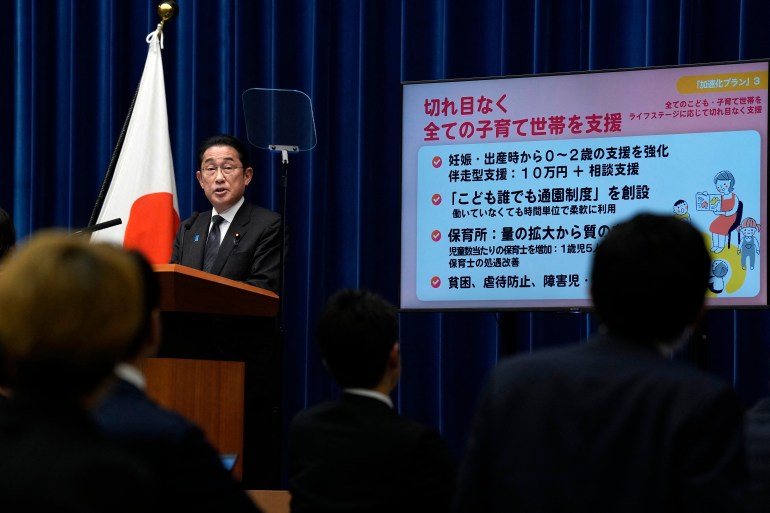
Tokyo, Japan – For foreigners in Japan, permanent residency has long been a much sought-after assurance of security in a country that has historically shunned mass immigration. But proposals by Tokyo to cancel the permanent residence status for those who fail to pay their taxes and social insurance contributions are now calling that security into question, stirring unease among some longtime foreign residents. Ben Shearon, a British native who has lived in Japan for almost 24 years, is among those questioning the rationale behind the proposed changes to immigration law. A permanent resident, Shearon retired in 2022 and now spends most of his time working on his website RetireJapan, where he offers coaching and financial advice to Japan’s expatriate population. “I am not worried about my own status in Japan. I have paid all my taxes and I have also been paying into the national health insurance and public pension in Japan since I arrived,” Shearon told Al Jazeera. “My main issue at the moment is that the headlines seem to feed a narrative that foreign residents, especially permanent residents, are not paying their fair share.” Japan’s Prime Minister Fumio Kishida has raised the alarm about his country’s declining population [File: Eugene Hoshiko/AFP] Under the standard process for obtaining permanent residency, applicants must have lived in Japan for at least 10 years and held a work visa for five of those years. But since 2017, foreign residents have been able to fast-track the process to as little as one year if they score highly on a points-based assessment that looks at work experience, salary, academic qualifications, age and Japanese language proficiency. The law also states that a foreigner’s permanent residence must be in the best interests of Japan, which includes paying taxes, pension contributions and health insurance premiums. At present, the government can only revoke an individual’s permanent residence in a narrow set of circumstances, including being sentenced to more than one year in prison. Under the proposals, authorities would be able to cancel residents’ visas over the non-payment of taxes and prison sentences of less than one year. ‘Small minority’ Shearon, like other foreign-born residents, is concerned that the proposals single out non-Japanese citizens for special scrutiny. “I’m also not a fan of creating new penalties that only apply to foreigners when we already have laws and consequences for not paying tax that apply to everyone in Japan equally,” he said. “If not paying health insurance or pension is a significant problem in Japan, then surely the way to address it is to strengthen enforcement for everyone, not just focus on a small number of a small minority.” Permanent resident visa holders currently number about 880,000 in Japan, less than one percent of the population. Since the announcement of the proposals last month, foreign residents reacting to the plans have generally fallen into one of two camps. While some see Prime Minister Fumio Kishida’s administration stoking xenophobia, others have scoffed at the suggestion foreigners are being singled out, arguing that tax evaders should be punished and only those seeking to game the system have anything to fear. “What are these gaijin even complaining about? If you already pay your taxes, congratulations. You have nothing to worry about,” Oliver Jia, a Kyoto-based researcher and writer, said on X in response to a post decrying the proposals as discriminatory. “Do these people realize that permanent residence by default means you have less rights than citizens? That’s how virtually every country on earth functions,” Jia added. “Japan isn’t going to bend over backwards for you, especially because you’ve decided you don’t want to pay taxes. Unhinged.” Austin Smith, public policy manager at GR Japan, a politically neutral government relations and advisory firm, said the proposed amendment would water down permanent residence status, but only to an extent. “PR visa revocation will likely still be a rarity, but it will be more common than under the current system,” Smith told Al Jazeera. “Still, even a slight increase in the likelihood of having one’s PR status revoked is bound to worry foreign residents, many of whom have built their lives around Japan.” Smith said he believed the measures would most likely only be applied to those who knowingly committed tax evasion or crimes resulting in imprisonment. “There are concerns, however, that this could affect those unable to pay taxes due to job loss or other factors,” Smith said. “Or that it could be expanded in the future to enable revocations for crimes resulting in fines.” Japan’s workforce is shrinking rapidly due to its low birth rate [File: Eugene Hoshiko/AP] The move comes despite a push by Japan to attract more immigrants as it faces rapid population decline. In recent years, municipalities throughout Japan have simplified the pathway for obtaining visas for startup owners and business managers. Later this month, Tokyo is set to launch a new digital nomad visa, targeting remote workers from 49 countries who earn more than 10 million yen a year. Japan’s foreign trainee programme, which has often been maligned as a cover for importing cheap labour since its introduction in 1993, is undergoing a sweeping overhaul to make it easier to transition to being a skilled work visa holder, and, eventually, permanent resident. In late February, the government also eased visa regulations to allow more foreign students to find jobs in Japan after they’ve completed their studies. According to official forecasts, Japan’s population is on track to shrink from about 125 million to fewer than 80 million by 2070. Policymakers see higher levels of immigration as one way to replenish the workforce and avoid a further slowdown in the country’s already meagre economic growth rate. Smith said he is sympathetic to the need for more immigrants, but does not see the proposed changes to the permanent residency rules as necessarily in conflict with Japan’s turn towards pro-immigration policies. “The goal here for lawmakers seems to be aligning PR visa revocation conditions with the guidelines for securing PR status,” he said.
US Senate leader Chuck Schumer calls for new Israel elections amid Gaza war

The top legislator in the United States Senate, Chuck Schumer, has offered his most strident criticism of Israel since the war in Gaza began, calling for a leadership shake-up in the country. On Thursday, Schumer, a Jewish-American Democrat, took direct aim at Israel’s Prime Minister Benjamin Netanyahu in a speech from the US Senate floor, saying the Israeli leader has been “too willing to tolerate the civilian toll in Gaza”. Schumer pushed Israel to hold elections to replace Netanyahu and said the prime minister had “lost his way” in his pursuit of “political survival”. “There needs to be a fresh debate about the future of Israel after October 7,” Schumer said, referring to the date when the Palestinian group Hamas launched an attack on southern Israel, spurring the present-day war. “As a democracy, Israel has the right to choose its own leaders, and we should let the chips fall where they may,” Schumer continued. “But the important thing is that Israelis are given a choice.” Schumer, the Senate majority leader, did not suggest a timeline for any eventual vote, though. More than 31,341 Palestinians have been killed in Gaza since the start of the war, many of them children. The spiralling death toll has prompted widespread condemnation and fears of genocide in the territory. But President Joe Biden and other prominent US leaders have largely been circumspect in their criticism of Israel’s military campaign. The US is a longtime ally of Israel, and it contributes approximately $3.8bn in aid to the country every year. Still, Schumer’s words — and more vocal criticisms from Biden himself — have signalled a shift in the approach Democratic leadership is taking towards Israel, amid mounting public pressure to seek a permanent ceasefire. “We should not let the complexities of this conflict stop us from stating the plain truth: Palestinian civilians do not deserve to suffer for the sins of Hamas, and Israel has a moral obligation to do better,” Schumer said in his speech. “The United States has an obligation to do better.” Schumer added that Netanyahu was one of several “major obstacles” to a two-state solution that might eventually resolve the conflict. Netanyahu has repeatedly rejected the notion of a two-state solution, despite the Biden administration insisting it should be a cornerstone of any post-war plans. Given the Israeli government’s refusal so far to change course, Schumer hinted that the US may be forced to “play a more active role in shaping Israeli policy by using leverage”. Response to Schumer’s speech The speech marks one of the most direct and biting speeches given by a high-ranking US political leader during the war’s first five months. And it quickly prompted a response, both from the Israeli government and the Biden administration. Speaking to reporters on Thursday, US Department of State spokesperson Matthew Miller said Schumer’s comments were his own and did not represent the stance of the administration. “There are a number of things we wanted to see Israel do differently,” Miller acknowledged nevertheless. Far-right Israeli Finance Minister Bezalel Smotrich weighed in as well, condemning Schumer’s remarks. “We expect the largest democracy in the world to respect Israeli democracy,” Smotrich said. US Republicans, for their part, used the speech to blast the Democratic leadership. Senate minority leader Mitch McConnell, for instance, described Schumer’s call for new elections in Israel “grotesque and hypocritical”. “The Jewish state of Israel deserves an ally that acts like one,” McConnell said. Critics push for action Schumer attempted to preemptively fend off such criticism during his speech, underscoring his pro-Israel bona fides. As the highest-ranking Jewish person in US government, he also drew on his family’s history with the Holocaust to underscore his sympathy for the Israeli plight. “If the events of the last few months have made anything clear, it is that Israel is surrounded by vicious enemies, and there are many people around the world who excuse and even support their aims to expel and kill Jews living in their hard-won land of refuge,” Schumer said. But while Schumer and other top Democratic leaders have remained stalwart in their support of Israel, their rhetoric has shifted in recent weeks to be increasingly critical of its military campaign. Biden, for instance, has warned Israel about pursuing a ground operation in the southern city of Rafah, calling it a “red line“. Officials have also denounced Israeli impediments to the distribution of aid in Gaza. Still, critics of the administration have said such words are empty without more material action. Earlier this week, for instance, eight US senators — including Vermont’s Bernie Sanders — issued a letter to the president calling on him to premise aid to Israel on the condition that access to humanitarian aid in Gaza be expanded — and any impediments removed. Settler sanctions Schumer’s speech on Thursday also came as the US announced more sanctions on Israeli settlers and illegal outposts in the occupied West Bank — one area the Biden administration has shown more willingness to act. The US Department of State said the outposts known as Moshes Farm and Zvis Farm had been bases for violence against Palestinians. Thursday’s sanctions also targeted three illegal Israeli settlers. The administration in February imposed sanctions on four Israeli men it accused of being involved in settler violence in the occupied West Bank, which has surged since October 7. “It is critical that Israel take additional action to stop settler violence and hold accountable those responsible for it, not just for the sake of the victims of this violence, but for Israel’s own security and standing in the world,” Miller, the State Department spokesman, told reporters. Adblock test (Why?)
Palestinian President Abbas appoints Mohammed Mustafa as prime minister

The move comes as the Palestinian Authority faces pressure to reform from the US amid Israel’s war on Gaza. Palestinian President Mahmoud Abbas has appointed his longtime economic adviser Mohammed Mustafa to be the next prime minister in the face of US pressure to reform the Palestinian Authority as part of Washington’s post-war vision for Gaza. Mustafa, a US-educated economist and political independent, now faces the task of forming a new government for the PA, which has limited powers in parts of the Israeli-occupied West Bank. In a statement announcing the appointment on Thursday, Abbas asked Mustafa to put together plans to re-unify administration in the occupied West Bank and Gaza, lead reforms in the government, security services and economy and fight corruption. Mustafa replaces former Prime Minister Mohammed Shtayyeh who, along with his government, resigned in February citing the need for change amid Israel’s war on Gaza and escalating violence in the occupied West Bank. The internationally recognised PA, which is dominated by the Fatah party, exercises limited self-rule in the occupied West Bank, but lost control of Gaza to Hamas in 2007. Aims to reunify governance of Palestinian lands after face major obstacles, including strong opposition from Israeli Prime Minister Benjamin Netanyahu, and a devastating war that is still grinding on with no end in sight. Fatah and Hamas are expected to meet in Moscow this week for talks. Mustafa, 69, has held senior positions at the World Bank and previously served as deputy prime minister and economy minister. In 2015, Abbas appointed Mustafa as the chairman of the Palestine Investment Fund (PIF), which has nearly $1bn in assets and funds projects across the occupied Palestinian territory. He served as a deputy prime minister responsible for economic affairs from 2013 to 2014, when he led a committee tasked with rebuilding Gaza after the seven-week war in which more than 2,100 Palestinians were killed. Speaking at Davos in January, Mustafa said the “catastrophe and humanitarian impact” of Israel’s continuing war on Gaza was much greater than a decade ago. At least 31,341 Palestinians have been killed in Gaza since October 7, most of its 2.3 million population have been displaced and are in desperate need of aid, and swaths of the enclave now lie in rubble. Biden administration officials have urged Abbas to bring new blood, including technocrats and economic specialists, into a revamped PA to help govern post-war Gaza. But it is unclear whether the appointment of a new cabinet led by a close Abbas ally would be sufficient to meet US demands for reform, as the 88-year-old president would remain in overall control. Israel, meanwhile, has said it will never cooperate with any Palestinian government that refuses to reject Hamas and its October 7 attack on southern Israel. Mustafa, in his Davos remarks, described the October 7 attack as “unfortunate for everybody”. “But it’s also a symptom of a bigger problem … that the Palestinian people have been suffering for 75 years non-stop,” he said. “Until today, we still believe that statehood for Palestinians is the way forward, so we hope that this time around we will be able to achieve that, so that all people in the region can live in security and peace.” Adblock test (Why?)