

Haiti crisis: Is a gang-led coup next?

Haiti’s government declared a 72-hour state of emergency on Sunday after armed gang members stormed the Caribbean nation’s two biggest prisons, freeing more than 4,700 inmates. In capital Port-au-Prince, wounded corpses lay in neighbourhoods and burning tyres are serving as roadblocks. Meanwhile, the whereabouts of Prime Minister Ariel Henry are unknown, after he visited Kenya last week. Finance Minister Patrick Boivert, as acting prime minister, announced the curfew. How did Haiti get to this point? At least 12 people have been reported dead, four of them being police officers. Gangs have targeted police stations including the national penitentiary, the Toussaint Louverture International Airport, and even the national soccer stadium. A second prison in Port-au-Prince containing around 1,400 inmates was also overrun. Yet the violence has roots in turbulent political history that has shaped — and continues to shape — Haiti. 1959: A failed coup by military officials and foreigners to overthrow President Francois “Papa Doc” Duvalier, led him to create his secret police force, the Tonton Macoutes, to serve as a counterweight to the army. 1990s: Former parish priest Jean-Bertrand Aristide, a left-wing champion of the poor, won Haiti’s first free election in 1990. He was removed in a coup in 1991 to be replaced by Rene Preval. 2000: In the early 2000s, Aristide formed his own armed gangs known as the Chimeres, serving as a protection racket and an instrument of political opposition. In 2001, Aristide was sworn in as president again. 2004: A prominent gang, known as the Cannibal Army at the time, also called the Artibonite Resistance Front, seized control of Gonaives, a commune in northern Haiti on February 5. Later that month, they took control of the country’s second-biggest city, Cap-Haitien. As the gang attacked Port-au-Prince, Aristide resigned, amid allegations of French and US support for the coup plotters because of Aristide’s call for reparations — claims that Paris and Washington have denied. 2010: A catastrophic earthquake killed between 100,000 and 300,000 people, according to various estimates. The earthquake also led to former gang members escaping prison and taking over makeshift camps, originally made for earthquake victims. Gender-based violence perpetrated by gangs also began to rise. 2011-14: Michel Martelly won the presidential elections. But amid mounting anger over corruption and poverty, large anti-government protests broke out against his government. 2017: Banana exporter-turned-politician Jovenel Moise was declared the winner of the 2016 presidential election. 2018: Members of the Moise government allegedly helped gangs commit massacres by providing them with money, weapons and government vehicles used in attacks on the capital. 2019: Due to a political gridlock and unrest, Haiti failed to hold new elections, leading to Moise steadily amassing power. 2021: Thousands protested on the streets calling for Moise’s resignation, chanting “No to dictatorship”. Moise was assassinated in July by Colombian mercenaries with unknown paymasters. Ariel Henry was sworn in as prime minister with the help of international backing after Moise’s assassination. How much power do gangs have in Haiti? Gangs hold considerable influence in Haiti. Until recently, they controlled around 60 percent of the capital, and United Nations (UN) officials say that number has grown to 80 percent. Around 200 gangs exist in Haiti, and 23 dominant ones are believed to be operating in the metropolitan capital. Firearms – typically smuggled from the United States, alongside ransom payments to kidnappers – have lent financial independence to gangs. An underfunded and under-resourced police department has also allowed the gangs to amass power that the state has struggled to match. “Present-day gangs enjoy a much higher degree of military capacity than those a decade ago,” according to a report by the Global Initiative against Transnational Organized Crime, a non-governmental organisation headquartered in Geneva. “This has largely been driven by the gangs’ ability to acquire high-caliber weapons.” A 2023 UN report stated that recovered weapons destined for Haitian ports include “.50 caliber sniper rifles, .308 rifles, and even belt-fed machine guns”. Since the recent outbreak of violence, around 15,000 people have fled the capital, as estimated by the International Organization for Migration. Many of the people who escaped were already previously displaced and in makeshift camps in schools, hospitals and public squares. In 2023 alone, around 200,000 residents fled the kidnappings, looting and sexual violence related to gangs. Around 3,000 people were killed as a result of gang violence and 1,500 were kidnapped for ransom. Why did the violence escalate? Analysts believe the escalating violence is aimed at ousting Henry — it has coincided with the prime minister’s visit to Kenya, where he has pushed for the UN-backed deployment of an international force to help fight the gangs. Henry had repeatedly requested for international intervention in Haiti and in July 2023, Kenya stepped up and volunteered to lead an international force to combat the gang violence. Kenya promised to “deploy a contingent of 1,000 police officers to help train and assist Haitian police”. In January, a Kenyan court blocked the deployment of that force, but during his visit to Nairobi, Henry inked a pact with Kenyan President William Ruto for a reciprocal deal that they suggested could allow the East African nation to send soldiers to Haiti. Separately, on October 2, 2023, the UN adopted a resolution authorising the creation and year-long deployment of a “Multinational Security Support” (MSS) mission to reinforce the Haitian police, restore security and protect critical infrastructure. The Bahamas, Bangladesh, Barbados, Benin and Chad formally pledged troops to this force, and less than $11m was deposited in its fund. However, a date for when the troops will be deployed is still not set. Could gangs overthrow the government? Gangs already act as de facto authorities in parts of the country. Gang leaders — Jimmy “Barbecue” Cherizier is the most prominent among them — want to bring down Henry. The country has failed to hold parliamentary and general elections since 2019 and there are no elected officials. The latest round of attacks also came amid Henry’s pledge to hold long-awaited general elections by mid-2025. Cherizier is a
Is Gantz really a danger to Netanyahu’s power in Israel?
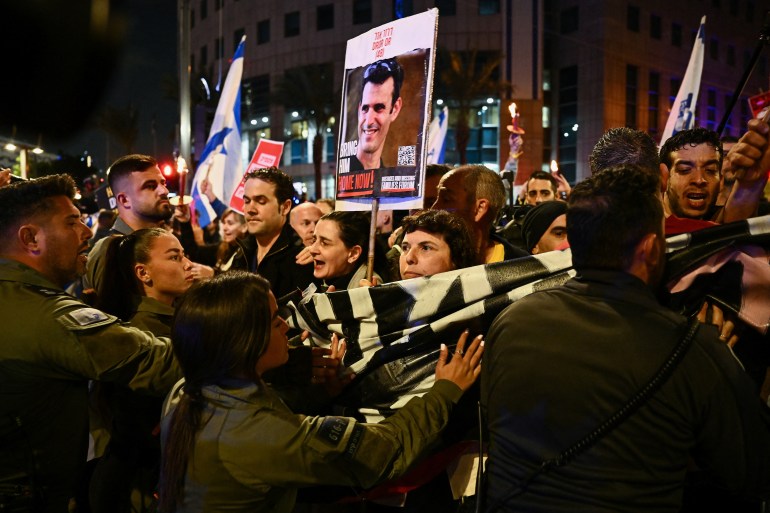
Beirut, Lebanon – Benny Gantz – the main opposition to Israeli Prime Minister Benjamin Netanyahu, a member of Israel’s war cabinet and the man touted by his supporters as the next prime minister – is in Washington, DC, invited there by the United States government. Analysts have told Al Jazeera this is a result of its public frustration with Netanyahu and his far-right government, which is leading US President Joe Biden’s administration to turn to Gantz, a former military chief of staff and political centrist, as an ally and he is trying to build on that. While Gantz may be using this trip to strengthen ties with US officials and capitalise on an Israeli political scene in which Netanyahu is increasingly unpopular, his stated aims are boosting support for Israel’s war on Gaza, which has killed more than 30,000 Palestinians, and pushing for the release of Israeli captives, according to Israeli officials. Gantz met US Vice President Kamala Harris, National Security Adviser Jake Sullivan and Middle East envoy Brett McGurk on Monday and received “sharp and highly critical messages about the humanitarian situation in Gaza”, according to The Jerusalem Post. He is scheduled for talks with Secretary of State Antony Blinken on Tuesday. ‘A political parking lot’ Gantz currently leads Netanyahu in opinion polls asking Israelis who they want as their next prime minister. [embedded content] Despite Netanyahu’s decreasing popularity, there are analysts who believe the prime minister is not politically dead and buried and Gantz’s approval numbers have more to do with his opposition to the incumbent than on his own strength. “Benny Gantz doesn’t have a lot to offer ideologically,” Eyal Lurie-Pardes, a visiting fellow in the Program on Palestine and Palestinian-Israeli Affairs at the Middle East Institute, told Al Jazeera. “He’s a political parking lot right now for people who are frustrated by Netanyahu.” In July, hundreds of thousands of people marched in Israel in what were described as pro-democracy protests as Netanyahu’s government pushed through legislation that limited the power of the judiciary. In January, the Supreme Court struck it down. In contrast, Gantz is seen as a moderate figure compared with Netanyahu, who leads the most right-wing government in Israel’s history. Netanyahu still has a support base, but many Israelis believe that since 1,139 people died in attacks by Hamas’s Qassam Brigades and other Palestinian armed groups on Israel on October 7, he is prioritising his political survival over the return of the remaining captives taken into Gaza. Netanyahu is also standing trial on several corruption charges, including breach of trust, accepting bribes and fraud in proceedings that will likely continue for several more months. [embedded content] Anti-Netanyahu protests have picked up again in recent months, largely over his handling of the war on Gaza although the numbers of demonstrators have not been large. Despite its disapproval of Netanyahu’s far-right coalition, the White House has steadfastly backed Israel’s war on Gaza – bypassing Congress twice to send additional military aid, refusing to place conditions on the aid and using its veto at the United Nations Security Council multiple times to kill resolutions calling for a ceasefire in Gaza. Capitalising on Netanyahu’s unpopularity Gantz’s party members have urged him to quit Netanyahu’s war cabinet, but voters are split on the issue. Many believe his presence acts as a counterweight to right-wing elements in the government. Some feel it is time he removes his support from the war cabinet. Others worry he would be replaced by a far-right figure like National Security Minister Itamar Ben-Gvir or Finance Minister Bezalel Smotrich. Naming Ben-Gvir and Smotrich to his cabinet caused friction between Netanyahu and the US at the end of 2022, and the coalition he formed then with far-right figures, including members of the settler movement, is seen as one of the reasons the US prefers Gantz. Israeli police hold back protesters demonstrating against Netanyahu’s government in Tel Aviv on February 24, 2024 [Dylan Martinez/Reuters] While Smotrich and Ben-Gvir are often painted as fringe figures, Lurie-Pardes said: “They are not [fringe figures]. They’re very powerful ministers who represent the third largest party in the Israeli parliament.” Many political figures in Israel are looking to capitalise on Netanyahu’s unpopularity and have begun calling for elections. If elections were held now, a recent poll conducted by Israel’s Channel 13 showed, Gantz’s National Unity party would clinch 39 seats in the Knesset, compared with 17 for Netanyahu’s Likud party. But should elections be announced, several other candidates would likely enter the race and take away Gantz’s fire. Tamir Sorek, a Middle East history professor at Pennsylvania State University, told Al Jazeera, that while “Benny Gantz might represent the US interests in the Israeli government”, “Netanyahu doesn’t really need him for his coalition, so he doesn’t have the same leverage as the extreme right parties have.” Netanyahu’s terms Many more Palestinians could die in Gaza as Israel continues to bomb indiscriminately and prevent adequate aid from entering the small, besieged enclave that is home to more than two million Palestinians. Palestinian children wait to get food from an aid distribution team in Beit Lahiya in northern Gaza on February 26, 2024 [AFP] The UN is warning of famine for at least half a million people. As protests against the war continue in cities around the world, including many US cities, and voters make their voices heard in other ways, the Biden administration seems to be shifting the blame onto Netanyahu. Biden recently went on a late-night American talk show and said Netanyahu’s “incredibly conservative government” was losing international support. US media have reported that Biden privately described Netanyahu as an “a******” on at least three occasions. There have also been reports that both Biden and Blinken are upset by the destruction and death in Gaza. Meanwhile, pressure is increasing on the US and Israel for a ceasefire. Biden recently said he hopes a ceasefire will be announced soon and Harris called for an immediate ceasefire on Sunday. But as long as the
Who is George Galloway, the British politician who has won Rochdale?

George Galloway, the firebrand veteran British politician, made a triumphant return to Westminster’s House of Commons on Monday after securing a thumping by-election victory in northwest England last week, largely as a result of his opposition to the Israeli bombardment of Gaza. Galloway, who represents the hard-left, fringe Workers Party of Britain, which he founded in 2019, took the constituency of Rochdale with 12,335 votes or 39.7 percent of the vote. The constituency was formerly held by Labour’s Sir Tony Lloyd, whose death in January triggered the by-election. In the 2019 general election, Lloyd won 53 percent of the vote in Rochdale. But on February 12, the Labour Party withdrew support for its candidate, Azhar Ali, after he was accused of making anti-Semitic comments and it emerged he had suggested that Israel had deliberately allowed the October 7 attack by Hamas to happen. The shunned Ali, who stood for election anyway, went on to poll just 7.7 percent. In his victory speech after his headline win last Thursday, the Scottish-born legislator, who has a fondness for fedora hats and cutting put-downs, signalled local voters’ disillusion with the mainstream parties when he labelled the United Kingdom’s Conservative Prime Minister Rishi Sunak and Labour’s opposition leader, Sir Keir Starmer, “two cheeks of the same backside”. It was a typically provocative statement from the four-times married Galloway, who, stridently pro-Palestinian, has campaigned against Israel’s war on Gaza in the Greater Manchester town which hosts a large Muslim minority. Then-Respect Party member George Galloway, left, with antiwar demonstrators in Manchester on the eve of The Labour Party Conference in September 2006 [Christopher Furlong/Getty Images] Who is George Galloway? Galloway, 69, hails from Dundee on Scotland’s east coast. He has long been a thorn in the side of the British political establishment, not least since 2003 when then-UK Labour Prime Minister Tony Blair expelled him from the party due to his uncompromising opposition to the Iraq War. Galloway had once been viewed as a Labour Party rising star, having become chair of the Scottish Labour Party at just 26 in 1981. Six years later, he made good on his prospects when he won a UK Parliamentary seat in Scotland’s largest city, Glasgow, while Conservative leader Margaret Thatcher was prime minister. However, Galloway soon revealed his taste for the outlandish and the controversial when, still a newly elected member of Parliament, a journalist asked him in September 1987 about his attendance at a charity conference in Greece. Bizarrely, he responded, “I travelled and spent lots of time with people in Greece, many of whom were women, some of whom were known carnally to me,” responded Galloway, who was then married to his first wife, Elaine. “I actually had sexual intercourse with some of the people in Greece.” Galloway’s spicy revelations earned him the moniker “Gorgeous George”. His expulsion from the Labour Party in October 2003 over his strong objection to the war in Iraq did not dim his political ambitions. He served as an MP for the antiwar Respect Party in London’s Bethnal Green and Bow from 2005 to 2010, and Bradford West in northern England from 2012 to 2015. Whether Galloway’s decision to imitate a cat and nibble from a fellow contestant’s hands in the 2006 edition of the UK’s popular reality TV show Celebrity Big Brother – described in the Times this week as a “temple of vacuousness” – also added to his electoral appeal in Rochdale is unknown. Why is he so passionate about the Palestinian cause? Galloway attributes his commitment to the Palestinian cause in part to a visit to war-torn Beirut in 1977. He would later recall of the trip, “Although it was a difficult decision for me to make the journey back to Scotland, barely a week after my return, I made a pledge in the Tavern Bar in Dundee’s Hawkhill District, to devote the rest of my life to the Palestinian and Arab cause, whatever the consequences for my own political future.” He kept his word and, in 1980, was involved with the twinning of his native Dundee with Nablus in the Israeli-occupied Palestinian West Bank. He has spent time in the Palestinian territories, meeting then-Palestinian leader Yasser Arafat in Ramallah in 2002. In August 2014, Galloway was assaulted on a street in west London by a man wearing a shirt with an Israeli military logo, leaving him needing hospital treatment for cuts and bruises to his head and ribs. His assailant, Neil Masterson, was jailed later that year for 16 months. Palestinian leader Yasser Arafat, right, welcomes British Member of Parliament and peace activist George Galloway, May 8, 2002, in his office in the West Bank city of Ramallah [Hussein Hussein/PPO/Getty Images] What highly controversial positions has he taken? In 1994, Galloway met then-Iraqi President Saddam Hussein and, in front of the TV cameras, stated, “Sir, I salute your courage, your strength, your indefatigability.” Galloway later claimed that he was saluting the people of Iraq, not Saddam Hussein himself. But his comments prompted the politician’s many political detractors to accuse him of supporting an oppressive Iraqi regime. It also heralded the arrival of “indefatigability” – a hitherto rarely used word – into the British public mainstream where, for many Britons of a certain age, it retains a somewhat comical link to Galloway. In his 2004 book, I’m Not the Only One, Galloway appeared to defend Iraq’s claim over Kuwait, describing the state – which was invaded by Saddam in 1990, sparking the first Gulf War – as “clearly a part of the greater Iraqi whole stolen from the motherland by perfidious Albion”. Galloway’s interest in Iraq led to him being accused by the US Senate of profiting from Iraqi oil sales. The Briton, never one to shirk a challenge, faced down his accusers in 2005 when he appeared before a Senate Subcommittee, and declared, in a clear nod towards Senator Joe McCarthy’s anti-communist witch-hunt of the early 1950s, “I am not now nor have I ever been
Palestinians seeking aid attacked by Israeli forces again

NewsFeed Israeli forces have once again opened fire on desperate Palestinians seeking aid from a supply convoy entering Gazy City. This is the second such attack since last Thursday’s ‘flour massacre’ which killed at least 117 people. Published On 5 Mar 20245 Mar 2024 Adblock test (Why?)
Turkey detains 7 suspected of spying for Israel

Suspects allegedly collected data on individuals and companies in Turkey and sold it to Mossad. Turkish police have detained seven people suspected of selling information to the Israeli spy agency Mossad. The suspects were taken into custody on Tuesday during simultaneous raids in Istanbul, Interior Minister Ali Yerlikaya said on X. The detentions are the latest in a wave of such arrests in Turkey. The detainees are suspected of collecting data on individuals and companies in Turkey and selling it to the Israeli intelligence agency, Yerlikaya said. The raids were a joint operation with Turkey’s National Intelligence Organization (MIT). “We will never allow espionage activities to be carried out within the borders of our country. We will catch them one by one and bring them to justice,” Yerlikaya insisted. A video released by the Minister of the Interior showed police raiding homes in Istanbul and apparently seizing guns, drugs and electronic devices. It was not immediately known if any charges had been issued and the authorities provided no additional information. Israel did not immediately comment on the operation. Wave of arrests Last month, seven other people were arrested on similar grounds, while in early January, 34 people were detained by Turkish police on suspicion of spying for Israel. The suspects arrested in January have been accused of planning to carry out activities including reconnaissance and “pursuing, assaulting and kidnapping” foreign nationals living in Turkey. At the time, Justice Minister Yilmaz Tunc said most of the suspects were charged with committing “political or military espionage” on behalf of Israeli intelligence. The state-run Anadolu Agency, citing unnamed security officials, said those detained on Tuesday included a former civil servant currently working as a private detective, who was allegedly trained by Mossad in Belgrade, Serbia. He reportedly collected information on Middle Eastern companies and individuals, and placed tracking devices in vehicles of people targeted by Israeli intelligence. He received payments in cryptocurrency that did not appear in official records, MIT said. Following years of tension, Turkey and Israel normalised ties in 2022 and reappointed ambassadors. However, the resumed quickly deteriorated with the start of the Israel-Hamas war, with Ankara one of the strongest critics of Tel Aviv’s military campaign in Gaza. In December, the head of Israel’s Shin Bet security agency said that his organisation was prepared to target the Hamas group anywhere, including in Lebanon, Turkey and Qatar. Turkey’s President Recep Tayyip Erdogan quickly warned of “serious consequences” should Israel target anyone on Turkish soil. Adblock test (Why?)
UNRWA photographer recounts Israeli killing of his daughter

NewsFeed ‘I relive it every single day.’ A Palestinian father and UNRWA photographer returns to the place where Israeli forces killed his four-year-old daughter while following evacuation orders to flee to south Gaza. Published On 5 Mar 20245 Mar 2024 Adblock test (Why?)
Australia’s Sam Kerr pleads not guilty to racially aggravated offence

Chelsea striker Kerr was charged with harassment of a police officer in an incident in London last year and faces trial in February 2025. Australian football captain Sam Kerr has pleaded not guilty to racially aggravated harassment of a police officer in London more than a year ago, but will face trial on the charges, prosecutors in the United Kingdom have said. The 30-year-old striker, who plays club football for Chelsea in London, was charged with causing a police officer harassment, alarm or distress during an incident in Twickenham, southwest London, on January 30 last year, according to the Crown Prosecution Service. “The charge relates to an incident involving a police officer who was responding to a complaint involving a taxi fare on 30 January 2023 in Twickenham,” the Metropolitan Police said in a statement on Monday. Kerr, one of the world’s most recognisable female footballers and a sporting idol in her home nation, was charged on January 21, almost a year after the incident was alleged to have occurred. The Chelsea forward, who on the day before the incident scored a hat-trick against Liverpool in the FA Cup at Chelsea women’s home ground Kingsmeadow, is due to appear in court in February next year. The 30-year-old pleaded not guilty via video link at Kingston Crown Court on Monday, British media reported. Kerr denied the charge at a plea and trial preparation hearing at Kingston upon Thames Crown Court on Monday, the PA news agency reported. Chelsea have not commented on the reported incident. Football Australia CEO James Johnson and women’s national team coach Tony Gustavsson told Australian media they had only been made aware of the charges against Kerr on Tuesday morning. Johnson said he had sent a message to Kerr to check in on her welfare but had not had a conversation with her about it. “We’re trying to get to the bottom of it. We have our own questions we would like to know,” Johnson said during a press conference in Adelaide. “There is a process that is under way and that process needs to run its course. “I don’t want to get into the allegations. They are serious allegations. At the same time, Sam has rights – natural justice rights, procedural rights – that she has to work her way through and we respect that.” Gustavsson said he could not comment on the charges and referred to an earlier statement from Football Australia. “The only thing I can comment on is my experience and interaction with Sam as a person and as a footballer,” he said, “and I have only positive experience with that.” In an earlier statement issued after media reports started emerging from Britain, Football Australia (FA) said it was aware of the proceedings involving Kerr but was unable to comment on the ongoing legal matter. “Our focus remains on supporting all our players, both on and off the field,” FA said in a statement. “We will continue to monitor the situation and provide support as appropriate.” Kerr is currently sidelined after an anterior cruciate ligament injury during a warm-weather training camp with the Chelsea women’s team in Morocco in January. Revered by Australian football fans, Kerr’s global celebrity helped bring the women’s game into the mainstream and drive a major increase in corporate sponsorship for the national Matildas team, who reached the Women’s World Cup semifinals on home soil last year. Kerr battled a calf injury that ruled her out of much of the action but returned later in the tournament and scored a wonder goal in the semifinal against England. Last May, she led the Australian delegation as flag-bearer at King Charles’s coronation at Westminster Abbey. She is the country’s all-time leading scorer in international football with 69 goals from 128 games. The forward has scored 58 goals for Chelsea in the WSL since 2020. Adblock test (Why?)
US Supreme Court delays Texas immigration law
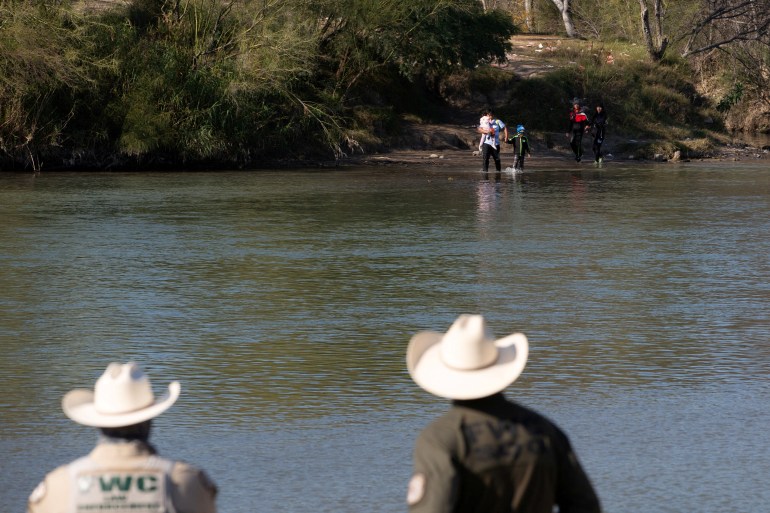
The law, known as Senate Bill 4, had been set to take effect on Saturday and it would allow state officers to arrest people suspected of entering the country irregularly. A United States Supreme Court judge has temporarily blocked a bill that would hand authorities in Texas draconian powers to arrest and expel migrants and refugees who enter the country without documents. An order issued on Monday by Justice Samuel Alito puts the legislation on hold until at least next week, when the court is set to examine it again. Opponents have called the measures, which would give state officials broad powers to arrest, prosecute and order the removal of people who cross the border from Mexico irregularly, the most dramatic attempt by a state to police immigration since an Arizona law more than a decade ago. Known as Senate Bill 4, the law had been set to take effect on Saturday under a decision by the conservative-leaning 5th US Circuit Court of Appeals. Alito’s order pushes that back to March 13. The delay came just hours after the Department of Justice asked the Supreme Court to intervene. “Make no mistake: S.B. 4 bypasses federal immigration authority and threatens the integrity of our nation’s constitution and laws,” a coalition of groups that took legal action against the bill, including the American Civil Liberties Union, said in a statement. Republican Texas Governor Greg Abbott signed the law in December as part of a series of escalating measures on the border that have tested the boundaries of how far a state can go to keep migrants from entering the country. The legislation would allow state officers to arrest people suspected of entering the country illegally. People who are arrested could then agree to a Texas judge’s order to leave the country or face a misdemeanour charge. Those who fail to leave after being ordered to do so could be rearrested and charged with a more serious felony. A migrant family crosses the Rio Grande River amid criticism of the Biden administration’s immigration policies [File: Kaylee Greenlee Beal/Reuters] ‘Ongoing crisis at the southern border’ The Justice Department told the Supreme Court that the law would profoundly alter “the status quo that has existed between the United States and the States in the context of immigration for almost 150 years.” It went on to argue that the law would have “significant and immediate adverse effects” on the country’s relationship with Mexico and “create chaos” in enforcing federal immigration laws in Texas. The federal government cited a 2012 Supreme Court ruling on an Arizona law that would have allowed police to arrest people for federal immigration violations, often referred to by opponents as the “show me your papers” bill. The divided high court found that the impasse in Washington over immigration reform did not justify state intrusion. The Supreme Court gave Texas until March 11 to respond. In a statement, the Texas Attorney General’s Office said the bill mirrors federal law and “was adopted to address the ongoing crisis at the southern border, which hurts Texans more than anyone else”. The federal government’s emergency request to the Supreme Court came after a federal appeals court over the weekend stayed US District Judge David Ezra’s sweeping rejection of the law. In a 114-page ruling on Thursday, Ezra rebuked Texas’s immigration enforcement and brushed off claims by Republicans about an ongoing “invasion” along the southern border due to record-high illegal crossings. Ezra added that the law violates the US Constitution’s supremacy clause, conflicts with federal immigration law and could get in the way of US foreign relations and treaty obligations. The battle over the Texas immigration law is one of multiple legal disputes between Texas officials and the Biden administration over how far the state can go to patrol the Texas-Mexico border and prevent illegal border crossings. Several Republican governors have backed Abbott’s efforts, saying the federal government is not doing enough to enforce existing immigration laws. Adblock test (Why?)
Haitian gangs try to seize airport

Heavily armed gangs have tried to seize control of Haiti’s main international airport, exchanging gunfire with police and soldiers. The Toussaint Louverture International Airport was closed at the time of the attack on Monday, with no planes operating and no passengers on site. It was the latest attack on key government sites in an explosion of violence that includes a mass escape from the country’s two biggest prisons. It was far from the first assault targeting the transport hub amid a series of gang attacks. Last week, bullets had struck the airport, but the attackers did not enter the premises. The latest attack came hours after the Haitian authorities ordered a night-time curfew following violence in which armed gangs overran the two biggest prisons and freed thousands of inmates over the weekend. A 72-hour state of emergency began on Sunday night as the authorities launched a hunt for the killers, kidnappers and other violent criminals they said had escaped. Gangs have been estimated to control up to 80 percent of the capital, Port-au-Prince. They are increasingly coordinating their actions and aiming at once unthinkable targets like the Central Bank. Prime Minister Ariel Henry travelled to Kenya last week to try to salvage support for a United Nations-backed security force to help stabilise Haiti amid the conflict with the increasingly powerful crime groups. The surge in violence follows protests that turned deadly. Having taken over as prime minister following the 2021 assassination of Jovenel Moise, Henry has postponed plans to hold parliamentary and presidential elections, which have not happened in almost a decade. Jimmy Cherizier, a former elite police officer known as Barbecue who now runs a gang federation, has claimed responsibility for the attacks. He said the goal was to capture Haiti’s police chief and government ministers and prevent Henry’s return from Kenya. The prime minister has shrugged off calls for him to resign but did not comment when asked if he felt it was safe to return home. Adblock test (Why?)
US sanctions Zimbabwe president Emmerson Mnangagwa over alleged abuses

US targets Mnangagwa, his wife and top government officials in overhaul of sanctions regime imposed in 2003. The United States has sanctioned Zimbabwe’s President Emmerson Mnangagwa, his wife and senior government officials for their alleged involvement in corruption and human rights abuses. The US Treasury’s Office of Foreign Assets Control announced the sanctions – targeting three companies and 11 people, including the Mnangagwas, Vice President Constantino Chiwenga, and retired Brigadier-General Walter Tapfumaneyi – after a review of the sanctions programme that had been in place since 2003. Other than the people listed on Monday, Zimbabweans formerly under US sanctions will see restrictions lifted. “The changes we are making today are intended to make clear what has always been true: our sanctions are not intended to target the people of Zimbabwe,” Deputy Treasury Secretary Wally Adeyemo said. “We are refocusing our sanctions on clear and specific targets: President Mnangagwa’s criminal network of government officials and businesspeople who are most responsible for corruption or human rights abuse against the people of Zimbabwe,” he said. Mnangagwa is accused of protecting gold and diamond smugglers that operate in Zimbabwe and directing government officials to facilitate the sale of gold and diamonds in illicit markets, and taking bribes in exchange for his services. An Al Jazeera investigation last year found Zimbabwe’s government was using smuggling gangs to sell gold worth hundreds of millions of dollars, helping to mitigate the impact of sanctions. Gold is the country’s biggest export. US Secretary of State Antony Blinken said the new measures were part of a “stronger, more targeted sanctions policy” on Zimbabwe and voiced concern over “serious cases of corruption and human rights abuse.” “Key individuals, including members of the government of Zimbabwe, bear responsibility for these actions, including the looting of government coffers that robs Zimbabweans of public resources,” Blinken said in a statement. “Multiple cases of abductions, physical abuse, and unlawful killing have left citizens living in fear.” ‘This is massive’ The earlier sanctions were imposed after a campaign of forced takeover of land from white farmers. The Zimbabwean government welcomed those measures’ removal. “Well, this is massive,” government spokesman Nick Mangwana wrote on X, in what he called “a great vindication” of Mnangagwa’s foreign policy. “That said, as long our president is under sanctions Zimbabwe remains under illegal sanctions, as long as members of the First Family are under sanctions, Zimbabwe remains under illegal sanctions, and as long as senior leadership is under sanctions, we are all under sanctions,” he added. State Department spokesman Matthew Miller quipped in response: “It’s rare that you see a government say that sanctions on the sitting president is a victory for the government.” In Zimbabwe’s neighbour Zambia, President Hakainde Hichilema praised US President Joe Biden for ending the 2003 programme. “This is further evidence that Pres. Biden listens to his African partners. We hope this is an opportunity for a new direction for Zimbabwe and regional engagement,” Hichilema wrote on X. Mnangagwa, whose party has been in power for more than four decades, was declared the winner in elections last August that international observers said fell short of democratic standards. Mnangagwa pushed an ailing Robert Mugabe out of office in 2017. Mugabe died two years later at the age of 95. Adblock test (Why?)