

The foundation feeding thousands in Hebron impoverished by Israel’s war
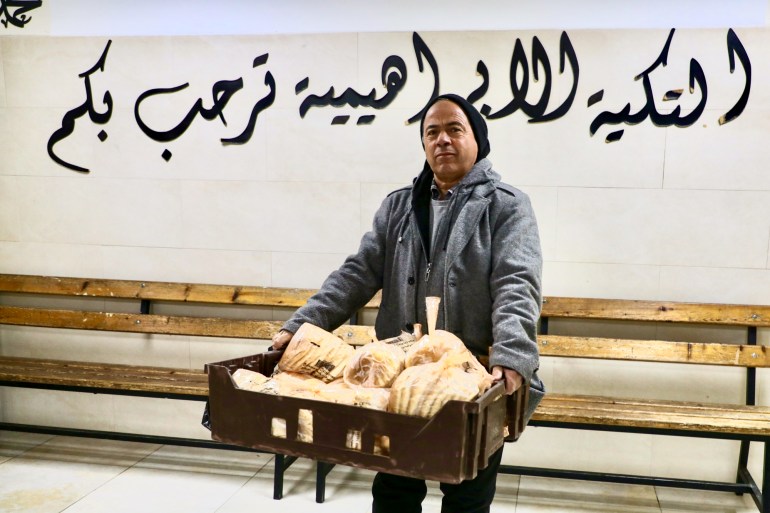
Hebron, occupied West Bank – Sari al-Jabari has shown up early to work at Hebron’s Tikkiyya Ibrahimiyya, a refuge for the poor and the needy since its founding in 1279, one of the oldest in the region. A tikkiyya is a charitable foundation in the Islamic tradition, set up to offer shelter, food and help to those most in need. The 37-year-old oversees the Tikkiyya’s cold storage, a vital part of the supply chain, he explains, if thousands of meals are to be prepared a day. Al-Jabari believes fervently in the mission he volunteered in for three years before being hired a year and a half ago. He explains his role to Al Jazeera, how the following day’s needs are determined so that every family that came there had enough food, irrespective of its size, to get them through the day. “We work hard to provide enough food to everyone who comes here,” he adds, gesturing around at the team of nine other permanent staff and what looks like countless volunteers. Fresh bread was on the menu at the Tikkiyya [Mosab Shawer/Al Jazeera] The Tikkiyya has been running since the 13th century, although it is now beside the Ibrahimi Mosque, not in its original location. In 1963, the building it was in was demolished and the foundation had to move, only to move again in 1983 to its current location, metres from an Israeli checkpoint but still accessible to those who need it. Hebron, like many other cities in the occupied West Bank, is hamstrung by Israeli checkpoints that choke off movement for the people living there and make transport between cities nearly impossible. But the Tikkiyya team perseveres, day after day. Keeping people alive Before October 7, when Israel launched a relentless assault on the Gaza Strip in retaliation for an attack by armed Palestinian factions out of Gaza on Israeli territory, the Tikkiyya provided about 1,000 meals a day. It relied on donations to allow it to make that much food, and the Palestinian Authority’s Ministry of Awqaf and Religious Affairs provides funding for salaries and administrative costs. That was, until the war on Gaza caused a chain reaction of economic distress, with tens of thousands of workers from Gaza trapped in the occupied West Bank and unable to go home or work while trade has ground almost entirely to a halt. Some people come to take meals to eat at home with their families [Mosab Shawer/Al Jazeera] The Palestinian Authority has had to shore up the Tikkiyya’s funding in light of the thousands of extra hungry mouths that need to be fed. Like 55-year-old Hatem Dawoud al-Rajabi and his family who have been relying upon the Tikkiyya since al-Rajabi’s work as a plumber dried up after the war broke out. “I found no alternative but to go to the Ibrahimiyya,” he said, adding that he has a wife and 11 children. Thankfully, he said, “the Tikkyya helps people”, with him and his family one among many. Hebron, he adds, is a “city where nobody ever goes to bed hungry”, an adage about the city. Bubbling away The Tikkiyya team is determined to not let people like al-Rajabi down, and they bustle around the different parts of the building, taking care of administrative tasks, setting up the dining areas for women and men, preparing the containers that some families will take their food away in. Those families start lining up as early as 10am, so the team starts work between 5:30 and 6am, right after dawn prayers. On the day Al Jazeera visited, the menu was chicken, soup and fresh bread. Different days bring different meals, depending on seasons, availability and what has been donated. Some days the team cooks beef, other days sheep, and some days simpler fare like beans or soup. Checking on the doneness of the day’s meal [Mosab Shawer/Al Jazeera] In the spacious kitchen with its enormous cooking cauldrons and utensils, the chefs bustle around preparing everything they would need for the day. The teams are distributed according to their tasks. Some are putting the pots in position while others are preparing the chicken and others are lighting the stoves. One of the Tikkiyya’s longer-serving employees, 56-year-old Ataya al-Jebrini is looking around happily, taking in the activity. He spent 23 years on the payroll, then decided to volunteer his time for free for the past nine years. Despite the decades, al-Jebrini explained, the nature of his work has not changed significantly, with the same daily rhythm taking over every morning at the crack of dawn and the frenetic activity taking the team through the day. Hazem Mujahid, the Tikkiyya director, estimates that the operating costs are about 35,000 shekels ($9,700), a figure that is expected to double as Ramadam approaches. Responsibility for raising that money falls to the head of the tikkiyya’s supervision and support committee, where Wissam al-Kurdi is responsible for maintaining the Tikkiyya’s 745-year-old mission. He has already begun looking for donors to get the Tikkiyya through the days to come. A member of the team prepares coffee for his hard-working colleagues [Mosab Shawer/Al Jazeera] Adblock test (Why?)
Israeli army fires on crowds of hungry Palestinians waiting for aid

NewsFeed Palestinians risked their lives trying to get aid in Gaza City as Israeli soldiers opened fire on the starving crowd, gathered in hopes of receiving an aid parcel to feed themselves and their families. Published On 19 Feb 202419 Feb 2024 Adblock test (Why?)
The United States must be held accountable for its ‘war on terror’ crimes
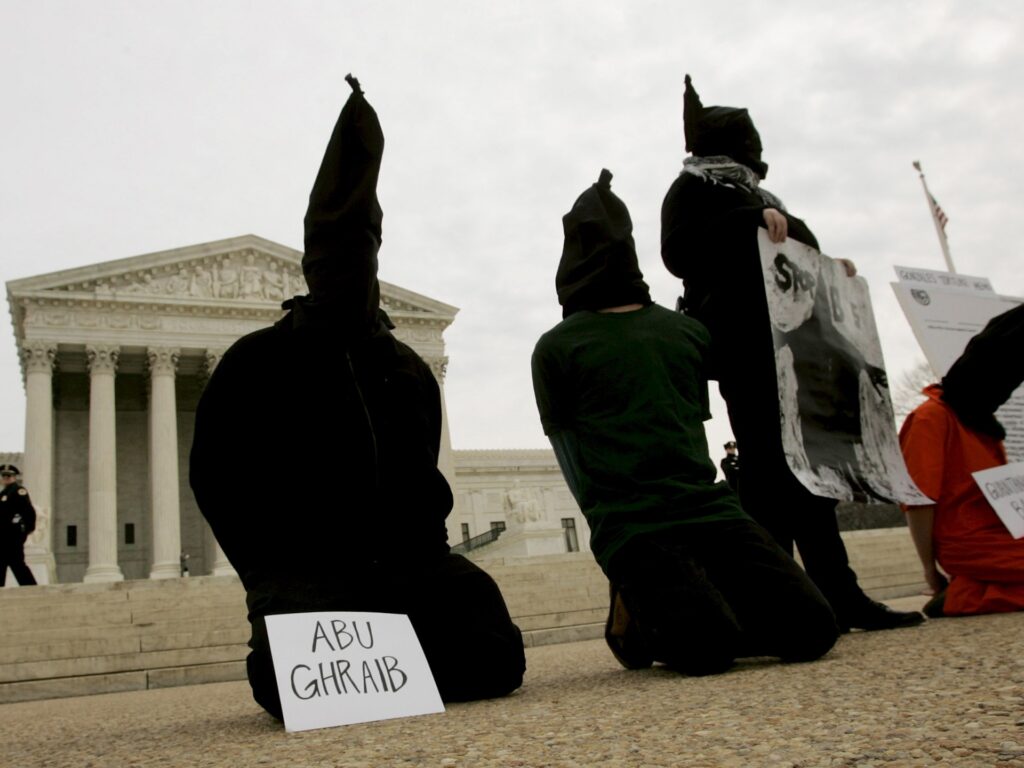
On January 16, the European Court of Human Rights issued an important ruling in the context of accountability for abuses perpetrated during the United States-led “war on terror”. In the case of Mustafa al-Hawsawi v Lithuania, the court found that the latter violated the European Convention on Human Rights due to its complicity in the CIA’s secret detention programme and its mistreatment of al-Hawsawi, a Saudi national. Lithuania was ordered to pay compensation to the victim worth $108,660 for the time he was at “Detention Site Violet”, a CIA black site it hosted. Al-Hawsawi is currently detained at the Guantánamo Bay detention centre, alongside 29 other Muslim men. This judgment is the latest in a series of court rulings holding European countries accountable for their involvement in post-9/11 abuses. The European Court previously ruled against Poland, Romania, Italy and Macedonia. Other European institutions, including the European Parliament and the Council of Europe, as well as individual European countries, have also taken measures for accountability, although they have not always been ideal. The UK paid over $28.8m to Iraqi victims for documented war crimes and abuses during its involvement in the US-led invasion of Iraq. Additionally, compensation was provided to British citizens detained in Guantánamo and to two Libyan families who were kidnapped and tortured with the help of British intelligence. However, the UK abandoned an independent inquiry into post-9/11 extraordinary rendition and torture by its forces and closed an investigation into alleged crimes in Iraq. Italy convicted in absentia 23 Americans, including CIA agents and an air force colonel, for kidnapping Hassan Nasr, an Egyptian imam based in Milan and handing him over to Egypt, where he was tortured. An Italian court also sentenced the former military intelligence chief and his former deputy to 10 and nine in jail respectively for their involvement in the case. Sweden compensated Mohammed Alzery and Ahmed Agiza, who were forcibly deported to Egypt at the request of the CIA and tortured. Prosecutors also opened investigations in France, Portugal and Spain over the CIA’s use of their airports for renditions, although they did not result in formal charges. There remains an ongoing criminal investigation into CIA activities in Poland. Canada, too, apologised and paid $8.1m to Omar Khadr, a Canadian national, over its role in his imprisonment in Guantánamo; it also compensated Maher Arar, another Canadian national, with the same amount over its role in the US government’s decision to deport him to Syria, where he was detained for a year and tortured. While these court cases and settlements highlight efforts to bring to justice European and other countries complicit in the abuses perpetrated during the “war on terror”, they underscore the persistent lack of accountability for the US, its chief architect and leader. As a state party to the Convention against Torture and Other Cruel, Inhuman or Degrading Treatment or Punishment, the US is obligated to provide redress to survivors of torture carried out by its government forces. But legal barriers have often prevented survivors from pursuing justice in US courts. By invoking the state secrets privilege, for example – most recently used in the United States v Zubaydah case – the government can withhold information it deems sensitive to national security. In the lawsuit filed by Abu Zubaydah, a Saudi-born Palestinian man currently held in Guantanamo, the defence sought evidence about his torture that the government argued would harm national security; the Supreme Court ruled in the government’s favour. Similarly, historically, court dismissals, have been the result of the US government citing immunity – which has protected its forces as well as private contractors. The US has also bypassed global and regional instruments of justice. It has warned of reprisals against the International Criminal Court if it launches an investigation into US crimes in Afghanistan. Additionally, it maintains that the American Declaration of the Rights and Duties of Man is not binding, rendering decisions and recommendations from the Inter-American Commission on Human Rights (IACHR) nonbinding. In 2020, the IACHR found the US responsible for the torture, abuse and indefinite detention of Djamel Ameziane, a former Guantanamo detainee, and recommended the US compensate him, which the US government has not done so far. There have been only minimal steps towards accountability within the US judicial system. An investigation into abuse at Abu Ghraib prison resulted in the court martial of 11 low-level soldiers. An Obama-era investigation into 101 CIA interrogations that used “enhanced interrogation techniques” found only two merited further inquiries. In 2012, the investigation was closed without further action. According to Human Rights Watch, out of 506 claims made as of 2007 under the Foreign Claims Act, which allows foreign nationals to seek compensation, there is a record of only one being paid – $1,000 for unlawful detention in Iraq. Settlements were reached in two lawsuits against private military contractors. In 2013, a defence contractor paid $5.28m to 71 former detainees held in Abu Ghraib and other black sites. In 2017, a case brought by the American Civil Liberties Union on behalf of three torture victims reached a confidential settlement with psychologists James Mitchell and Bruce Jessen, who were paid over $80m by the US government to create the torture programme. And despite 18 dismissal attempts, a lawsuit launched by four Iraqi torture victims against government contractor CACI International for torture at Abu Ghraib is heading to trial. These lawsuits and investigations have fallen short of adequately addressing the scale and severity of the harm inflicted on victims during the “war on terror”. Lack of redress further compounds the suffering of those who have endured physical and psychological trauma. To date, no senior government or military official has been held responsible for post-9/11 policies and actions. The US remains unwilling to face accountability for acts of torture, as it continues to detain 30 men in Guantánamo in conditions that amount to ongoing cruel treatment. It is long past due for a reckoning. The US is not above international law and must not
X faces restrictions in Pakistan amid protests over alleged vote rigging
Islamabad, Pakistan: Social media platform X, formerly known as Twitter, continues to remain inaccessible to users in Pakistan after internet watchdog groups started to report outages on Saturday. NetBlocks, an organisation that monitors accessibility issues on the internet, On February 17 confirmed that a “national-scale disruption” has hit X in Pakistan in the aftermath of widespread protests in the country triggered by the alleged vote rigging in general elections. ⚠️ Confirmed: Live metrics show a new national-scale disruption to X/Twitter in #Pakistan amid escalating unrest and protests over allegations of election fraud, following a high-level resignation and public admission of vote manipulation by a senior election official pic.twitter.com/6YT73lG7SM — NetBlocks (@netblocks) February 17, 2024 Government officials, however, have refused to acknowledge any such restriction. Gohar Ejaz, caretaker minister for interior, told Al Jazeera that he was not aware of any such restrictions. “No knowledge. it doesn’t come under interior [ministry],” he told Al Jazeera via a WhatsApp message. Murtaza Solangi, caretaker minister for information, also failed to respond to the questions regarding the inaccessibility. Officials at the Pakistan Telecommunication Authority (PTA), the state regulatory body, did not respond to multiple questions on the closure but indicated that the PTA is only a regulatory body which enforces orders issued by the government. While a large segment of users unable to access their X accounts since Saturday, the caretaker minister for information technology, Umar Saif, was able to post a message on his account on Monday afternoon. He did not respond to questions from Al Jazeera regarding the closure of the social media platform. Repeated internet outages Pakistan has repeatedly seen internet accessibility issues in the last few weeks, often coinciding with virtual events organised by the Pakistan Tehreek-e-Insaf (PTI) party of former Prime Minister Imran Khan. In at least three instances in January, different social media platforms such as Facebook, YouTube, Instagram, TikTok and X have faced restrictions. Pakistani authorities shut down mobile services on the day of the general elections on February 8, citing security concerns. NetBlocks also reported the inability of users to access X on February 10 while the country was awaiting election results which took an inordinate delay, leading to doubts over their authenticity, particularly from the PTI. ⚠️ Confirmed: Live metrics show a nation-scale disruption to X/Twitter across #Pakistan; the incident comes amid political turmoil after a controversial election held under an internet and mobile network blackout 📉 pic.twitter.com/1sZpkbWN6L — NetBlocks (@netblocks) February 10, 2024 As final results eventually came out by February 11, PTI-backed candidates secured 93 seats, followed by Pakistan Muslim League-Nawaz (PMLN) at 75 and Pakistan Peoples Party (PPP) at 54 seats. However, PTI has alleged that it was robbed of a “clear mandate” and held protests across the country along with smaller parties. The latest restriction on X was reported on Saturday when a senior government official “confessed” his involvement in the alleged manipulation of Pakistan’s elections. Videos of the official, Liaquat Ali Chattha, circulated on social media platforms, including X, where he was seen speaking about his involvement in electoral fraud, while also implicating the country’s top judge, as well as the chief of the Election Commission of Pakistan (ECP). The chief justice of the Supreme Court, Qazi Faez Isa, denied the charges and demanded proof of allegations, whereas the ECP, while issuing a denial, said it would hold an inquiry. Farieha Aziz, co-founder of Bolo Bhi, a digital rights advocacy group, said the repeated restrictions on the internet and platforms like X result in depicting Pakistan as an “unstable political environment and uncertain digital market”. “The impunity with which access is cut off shows rule of law simply does not exist. Pakistan and its citizens will continue to be held hostage to whims and ad hoc decision-making that serve the narrow political aims of a few,” she told Al Jazeera. Aziz also questioned the blame game about the restriction, saying the responsibility lies with the PTA. “All legal responsibility rests squarely on the PTA,” she added. According to Bytes for All, an internet rights group in Pakistan, at least 15 internet shutdowns were recorded in the country in 2023. “Major shutdown includes a weeklong blackout amid violent protests [that] broke out after former Prime Minister Imran Khan was arrested in May. It is said to be the longest shutdown in the history of Pakistan,” Shahzad Ahmad, country director for the group, told Al Jazeera. Many users, who were able to access X using a virtual private network (VPN), a mechanism to access the internet despite restrictions, complained about the government’s decision. “Tesla is landing in India soon, Over 4,500 IT firms [are] thriving in Bangladesh. Sri Lankan IT industry has approximately $1.2 billion contribution to economy. While in Pakistan we are still using VPN [because] Govt blocks social media. How long Pakistan will suffer like this?” a user posted on X. A similar sentiment was expressed by senior PTI leader Ali Muhammad Khan, who called the blocking “wrong”. “Access to information and freedom of speech are constitutional rights. [The] government needs to explain its position on this and must stop blatant violations of constitutional rights of its citizens and political workers,” he posted on X on Sunday morning. Blocking of X (former Twitter) is Wrong ! Access to information and Freedom of speech are constitutional rights. Government needs to explain its position on this and must stop blatant violations of constitutional rights of its citizens and political workers. — Ali Muhammad Khan (@Ali_MuhammadPTI) February 18, 2024 Bolo Bhi’s Aziz said more than sheer numbers, it is the influence of X that makes it such a target. “Locally and globally, you have heads of state, governments, political parties, think tanks, international and national media, all on Twitter. That’s where its importance and relevance lie politically,” she said. “This is the battleground right now for candidates and parties to get their voice out globally on the irregularities, and it has clearly gotten attention too. And this is what’s being limited.” Adblock
EU launches Red Sea naval mission to protect shipping from Houthi attacks
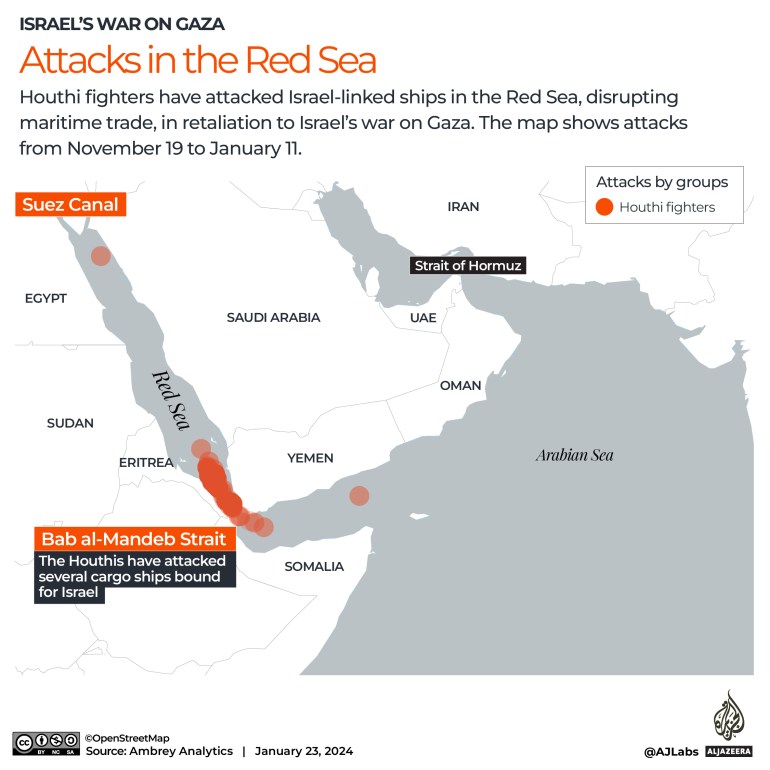
The operation will send European warships and early warning systems to the Red Sea, Gulf of Aden and surrounding waters. The European Union has launched a naval mission to protect cargo ships in the Red Sea from attacks from Yemen’s Houthi rebels. European Commission President Ursula von der Leyen announced the decision to deploy Naval Force Operation Aspides on Monday on X, saying, “Europe will ensure freedom of navigation in the Red Sea, working alongside our international partners.” “Beyond crisis response, it’s a step towards a stronger European presence at sea to protect our European interests.” I welcome today’s decision to launch the EU Naval Force Operation Aspides. Europe will ensure freedom of navigation in the Red Sea, working alongside our international partners. Beyond crisis response, it’s a step towards a stronger European presence at sea to protect our… — Ursula von der Leyen (@vonderleyen) February 19, 2024 The naval mission will send European warships and airborne early warning systems to the Red Sea, Gulf of Aden and surrounding waters. Italian Foreign Affairs Minister Antonio Tajani confirmed the launch during a meeting of foreign ministers in Brussels, Belgium, calling it “an important step towards common European defence”. So far, France, Germany, Italy and Belgium have said they plan to contribute ships. Aspides vessels, whose operational command centre will be in the Greek city of Larissa, will have orders to fire on the Houthis only if they attack first and will not be authorised to shoot pre-emptively, an EU official told the German Press Agency dpa. (Al Jazeera) Since November, the Houthis have been attacking commercial and military shipping in the busy Red Sea, across which 12 percent of global trade travels. The group initially said it was targeting Israel-linked ships in solidarity with Palestinians in the Gaza Strip, which has been under a Israeli assault since October. The group later said it was expanding its targets to include vessels linked to the United States and the United Kingdom after Washington and London carried out air strikes on Houthi sites in Yemen in response to the attacks on shipping. On Friday, an EU official said the country most harmed by the Houthi attacks was not Israel but Egypt, where declining traffic has caused a 40 percent loss of revenue for the Suez Canal Authority. EU Economy Commissioner Paolo Gentilloni told reporters on Thursday: “As shipping through the Red Sea has been rerouted, delivery times for shipments between Asia and the EU have increased by 10 to 15 days, and the costs of these shipments have gone up by around 400 percent.” Earlier on Monday, the Houthis claimed an attack on the Rubymar cargo ship, a Belize-flagged, British-registered and Lebanese-operated cargo ship, in the Red Sea and said it was at risk of sinking. Houthi military spokesperson Yahya Sarea said the crew were safe despite the attack. “The ship was seriously hit which caused it to stop completely. As a result of the extensive damage the ship suffered, it is now at risk of sinking in the Gulf of Aden,” Sarea said. He said the group had also shot down a US drone in the port city of Hodeidah. Adblock test (Why?)
ICJ occupation hearing: ‘Ruling could change world for Palestinians’
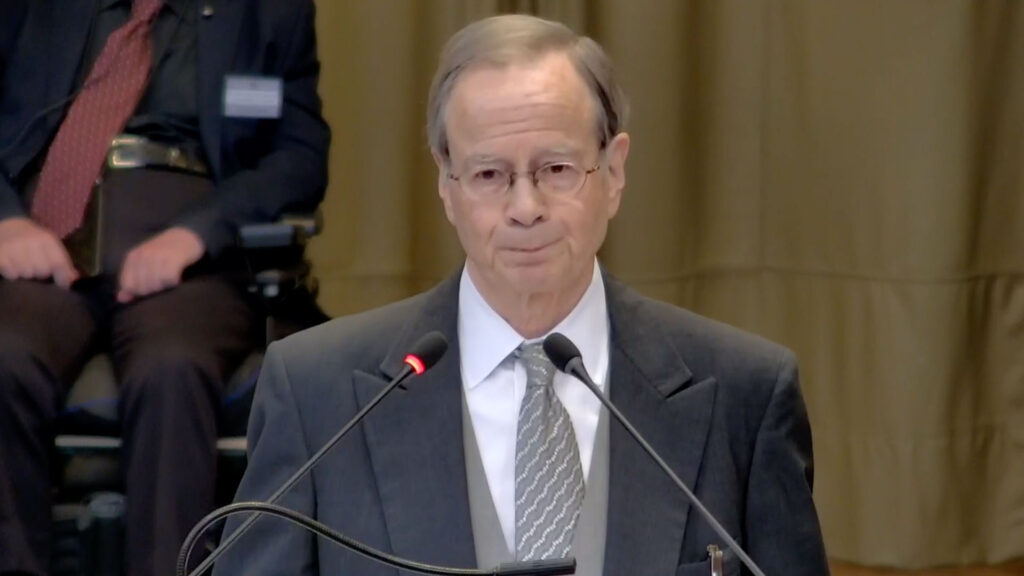
NewsFeed A legal representative for Palestine at the ICJ hearing on Israel’s occupation says that the UN’s top court cannot remain silent and that their words could ‘change the world’. Published On 19 Feb 202419 Feb 2024 Adblock test (Why?)
Niger defaults on debt payments again as post-coup woes pile

The West African state’s total debt default since last July’s coup is now $519m. Niger missed a debt payment of 13.4 billion CFA francs ($22m) last week, the West African debt management agency said on Monday, bringing the total default to some $519m since a July coup and its suspension from regional financial markets. The West African monetary union debt management agency UMOA-Titres said in a statement that Niger had failed to make a repayment of principal which was due on February 16. It previously missed payments in August, November, January and February. UMOA-Titres noted that this occurred in the context of Niger being subject to sanctions imposed by the Economic Community of West African States (ECOWAS) and the West African Economic and Monetary Union, also known by its French acronym UEMOA. “This situation is carefully monitored by UMOA-Titres in collaboration with the institutions concerned,” the agency said in a statement on Monday. The sanctions were imposed after the July 30 coup by members of the Nigerien presidential guard, that overthrew President Mohamed Bazoum. Other countries, including the United States, that had provided aid for health, security and infrastructure needs, also suspended their support. Until the coup, aid accounted for almost half of Niger’s annual budget. Niger’s neighbours also closed their borders to the country, and more than 70 percent of its electricity, supplied by Nigeria, was cut off. Financial transactions with West African countries were suspended. Niger’s assets in external banks were frozen, and hundreds of millions of dollars in aid were withheld. In July, a planned 30 billion CFA franc ($51m) bond issuance by Niger was cancelled by the Central Bank of West African States (BCEAO). The sanctions were the most stringent yet imposed by the regional bloc to stem the tide of coups in the Sahel. But they have had little or no effect on the ambition of the government, which has consolidated its hold on power while millions in Niger face growing hardship. Last month, the country announced, along with neighbours Mali and Burkina Faso, that it was leaving ECOWAS with immediate effect. The three states formed the Association of Sahel States (ASS) in September and are reportedly considering discontinuing the use of the CFA, the currency of the UEMOA. Adblock test (Why?)
Ukraine: Escaping the Darkness

In war-torn Ukraine, a family weighs the dangers of leaving their makeshift bunker for the promise of freedom outside. In the wake of Russia’s invasion of Ukraine, a young family endures life in Mykolaiv’s subterranean haven, “The Garages”. As the front line shifts, volunteer soldier Yuri is determined to keep his family safe underground even when their neighbours return to life outside. But his wife, Svetlana, is craving a normal home, and their teenage daughters are growing restless in isolation. When a chance for a new life emerges in the countryside, the family must reach an agreement, balancing their dreams and fears. Ukraine: Escaping the Darkness is a film by Clement Gargoullaud. Adblock test (Why?)
Ukraine accuses Russia of killing unarmed prisoners after fall of Avdiivka

Security Service of Ukraine announces probe after footage of alleged executions circulates on Telegram messaging app. Ukraine has launched an investigation into allegations that Russian forces executed eight unarmed Ukrainian soldiers after they took control of the city of Avdiivka. The Security Service of Ukraine, under the guidance of the Donetsk Regional Prosecutor’s Office, opened a pre-trial investigation into the alleged killing of unarmed prisoners of war in Avdiivka and the village of Vesele, state-run media outlet Ukrinform said on Monday. “Under the procedural supervision of the Donetsk Regional Prosecutor’s Office, a pre-trial investigation has been initiated into the violation of the laws and customs of war combined with premeditated murder (Part 2 of Article 438 of the Criminal Code of Ukraine),” Ukrinform quoted the security agency as saying in a statement. Ukrinform said evidence of the killings was shared on the Telegram messaging app, including footage showing a Russian soldier shooting two captured Ukrainian soldiers at close range. Moscow has not publicly responded to the claims. Ukraine has repeatedly accused Russia of unlawful killings and other war crimes since Moscow launched a full-scale invasion of its neighbour in February 2022. Russia has also accused Ukraine of committing violations of international law. Russia on Saturday announced that it had taken full control of Avdiivka after the withdrawal of Ukrainian forces in the biggest gain for Moscow since the fall of Bakhmut last May. Russian President Vladimir Putin hailed the capture of the city as “an important victory” in the nearly two-year-long war. Ukraine’s military said on Sunday that Russian forces launched multiple attacks to the west of Avdiivka to build on their territorial gains, including unsuccessful assaults on the village of Lastochkyne. “The enemy is trying to actively develop its offensive,” Ukrainian military spokesman Dmytro Lykhoviy said on state TV. Ukrainian forces’ retreat from Avdiivka came after they were forced to ration ammunition due to dwindling supplies, which the administration of United States President Joe Biden has blamed on Congress’s failure to swiftly approve a package of military aid for Kyiv. Adblock test (Why?)
What’s the ICJ case against Israel’s illegal occupation of Palestine?
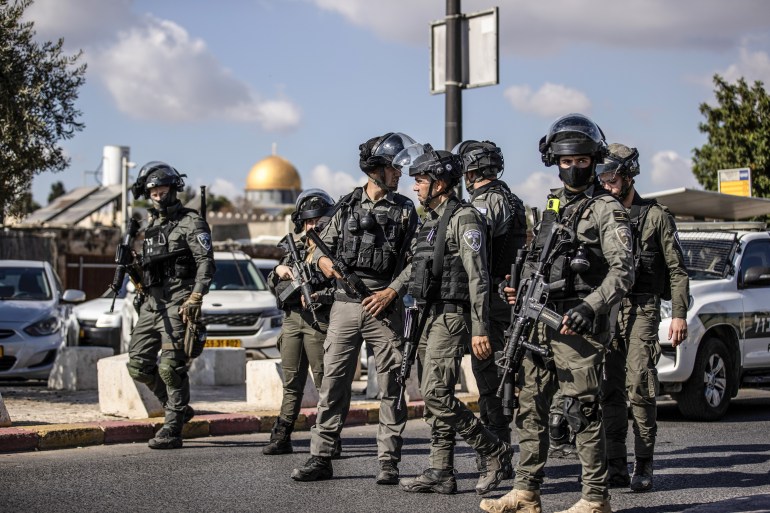
The International Court of Justice will begin hearings on Monday in a case against Israel’s occupation of Palestinian territories, barely a month after it issued a series of directions to Tel Aviv in a separate case where it is accused of genocidal acts in the Gaza Strip. In a first-of-its-kind case, at least 52 countries will present arguments on controversial Israeli policies in the West Bank, the Gaza Strip and occupied East Jerusalem. It’s the largest number of parties to participate in any single ICJ case since the court was established in 1945. Israeli authorities, since 1967, have illegally occupied the West Bank and East Jerusalem – part of Palestine under the United Nations-determined division of historic Palestine in 1948 – running a system that restricts the citizenship rights of Palestinians, hampers their free movement and strips them of ancestral lands. Between 1967 and 2005, Israel also directly occupied Gaza, and since 2007, has imposed a land, sea and air blockade on the coastal enclave. It decides what food, water, medicines, fuel, construction material and other commodities can go into Gaza, and stops their flow when it wants. Even as the war on Gaza is now in its fifth month, Palestinians in the West Bank have come under increased attacks from Israeli forces, with hundreds of people killed. In a statement last week, the ICJ said oral arguments in the case would last for about a week, during which all countries, as well as three international organisations, are expected to state why they support or oppose Israel’s measures. Tel Aviv has declined to present, choosing to submit a written argument instead. A court ruling is likely in several months. Israeli forces prevent Palestinians from reaching the Al-Aqsa Mosque [Mostafa Alkharouf/Anadolu via Getty Images] Here’s all you need to know about the case: Who brought the case against Israel? The case was triggered by a request from the UN General Assembly (UNGA) on December 30, 2022, when a majority of members voted to seek the court’s opinion on the legal consequences of the continuing Israeli occupation of Palestine. Arab countries, Russia and China voted in favour of the move, while Israel, the US, Germany and 24 others voted against it. During the Six-Day War in 1967, Israel occupied East Jerusalem and the West Bank, which were formerly under Jordanian control, and with an Arab-majority population. Most countries and the UN still view occupied East Jerusalem as the capital of a future Palestinian state, and regard Israel’s occupation as illegal under international law. In a long missive to the ICJ, signed by UN Secretary-General Antonio Guterres, the UNGA asked judges to answer questions about how the rights of Palestinans are being affected by the occupation and continuing attempts to displace them, as well as what the responsibilities of the UN and its member states were in the face of those violations. “What are the legal consequences … from the ongoing violation by Israel of the right of the Palestinian people to self-determination, from its prolonged occupation, settlement and annexation … aimed at altering the demographic composition, character and status of the Holy City of Jerusalem, and from its adoption of related discriminatory legislation and measures?” the UNGA missive asked. The UNGA asked the court to answer those questions using a combination of international humanitarian laws, as well as the Charter of the United Nations and various UN resolutions. According to Human Rights Watch, Israel’s policies in the occupied territories amount to apartheid and persecution, both crimes against humanity. The Hague-based court hears and adjudicates on matters between states, and it’s the second time it will weigh in on Israel’s illegal occupation. In 2004, the ICJ ruled that Israel’s ‘barrier wall’ in the West Bank that separates many Palestinian families, is illegal and should be dismantled. However, Israel rejected the ruling, and has since extended the wall. What countries will participate? The oral hearings will last from Monday, February 19, until Monday, February 26. A total of 52 countries – about 10 a day – will present their arguments to ICJ judges through the week. A majority of them originally voted in favour of the UN decision to approach the ICJ. A few, like Canada, voted against, while Switzerland abstained from the vote. Legal teams representing the State of Palestine will kickstart the hearings on Monday. On Tuesday, South African and Canadian teams will be among the speakers. The US, China and Russia will take the floor between Wednesday and Thursday, while the Maldives will wrap up the final presentation. Three multilateral organisations will also make their cases in the proceedings: the League of Arab States, the Organisation of Islamic Cooperation and the African Union. Israeli forces prevent Palestinians from gathering at Lions’ Gate (Bab al-Asbat) [Mostafa Alkharouf/Anadolu via Getty Images] So this is different from South Africa’s ICJ case against Israel? It is. This case is separate from another ICJ case by South Africa on December 29 that alleges that Israel is committing the crime of genocide in Gaza in its continuing war on the Strip. In a preliminary ruling in that case, the court ordered Israel to prevent and punish incitement to genocide, and to provide needed humanitarian aid by February 26. The case whose hearings start on Monday, is not linked directly to the current war that Israel is waging on Gaza, though it pertains to many of the concerns of international law violation that bind Tel Aviv’s approach to all Palestinian territories. What might the court’s ruling be? The ICJ is composed of 15 judges from different parts of the world, elected by the UNGA for nine-year terms. Justice Nawaf Salam of Lebanon currently leads as president. Judges will listen to the extensive presentations and publish a written opinion afterwards. It is unclear when the opinion will be released, but the ICJ’s processes are painstaking and usually take time. Some law experts say the opinion might surface before the end of the year. It’s hard to predict what