

North Korea’s Kim gifted car by Russia’s Putin, state media says

The Russian-made car was delivered to Kim for his ‘personal use’, North Korea’s state-run KCNA says. North Korean leader Kim Jong Un has been gifted a car by Russian President Vladimir Putin in recognition of their “special personal relations”, state media has reported. The Russian-made car, the make and model of which was not disclosed, was delivered to Kim’s top aides, including his sister Kim Yo Jong, on February 18 for the North Korean leader’s “personal use”, state-run Korean Central News Agency (KCNA) said on Monday. “Kim Yo Jong courteously conveyed Kim Jong Un’s thanks to Putin to the Russian side, saying that the gift serves as a clear demonstration of the special personal relations between the top leaders of the DPRK and Russia and as the best one,” KCNA said, referring to North Korea by its official name, the Democratic People’s Republic of Korea. Putin’s gift appears to violate Moscow-backed United Nations sanctions against Pyongyang, which prohibit the supply of all “transportation vehicles” to North Korea. Kim is believed to own an extensive collection of high-end cars and has been spotted travelling in luxury models including the Mercedes-Maybach S600, Rolls-Royce Phantom and Lexus LX 570. During his visit to Russia’s far east in September, Kim admired Putin’s presidential Aurus Senat limousine and was invited by the Russian leader to sit in the back seat. [embedded content] Putin and Kim, both of whom are increasingly isolated on the international stage, have forged closer ties since Moscow launched its full-scale invasion of Ukraine in February 2022. In October, Kim wished Putin victory over the “imperialists’ anti-Russia scheme” in a letter marking the 75th anniversary of their countries’ bilateral relations, state media reported. The United States and its ally South Korea have expressed concern about growing military cooperation between Moscow and Pyongyang. South Korea’s spy agency said in November that Russia likely assisted North Korea’s successful launch of a spy satellite, which Seoul, Tokyo and Washington condemned as a pretext to test ballistic missile technology. Adblock test (Why?)
US banking giant Capital One to buy Discover Financial for $35.3bn

The proposed acquisition would create the biggest credit card company in the US. Banking giant Capital One has announced plans to acquire Discover Financial Services for $35.3bn in a deal combining two of the United States’s biggest lenders and credit card issuers. Capital One founder and CEO Richard Fairbank described the deal as an “incredible opportunity to bring together two exceptional companies”. “This deal accelerates our longstanding journey to work directly with merchants, to leverage our customer base, our technology and our data to drive more sales for the merchants and great deals for consumers and small businesses,” Fairbank said in a video statement posted on the company’s website on Monday. Discover CEO Michael Rhodes said the acquisition would bring “together two strong brands with enhanced ability to accelerate growth” and that it “maximises value for our shareholders”. “We look forward to a bright future as part of the Capital One family and to providing expanded opportunities for our loyal customers,” Rhodes said in a statement. Capital One, the 12th largest US bank with more than $470bn in assets, would become the biggest US credit card company by loan volume under the acquisition. Discover, the smallest of the four major US-based credit card companies, boasts a network of some 305 million cardholders – nearly triple Capital One’s existing customer base. Credit cards have been a lucrative business for US issuers, with Americans’ card balances rising to a record $1.13 trillion in the fourth quarter of 2023, according to the New York Federal Reserve. Under the proposed takeover, Discover shareholders would receive a little more than one share of Capital One for every Discover share they hold – a premium of about 27 percent compared with Discover’s closing price Friday. Capital One’s shareholders, which include Warren Buffet’s Berkshire Hathaway, would own 60 percent of the combined company, with Discover shareholders owning the rest. The announcement of the deal attracted pushback from consumer rights advocates. Jesse Van Tol, the chief executive of the National Community Reinvestment Coalition, said the acquisition would likely raise concern among regulators, including the Federal Trade Commission and Consumer Financial Protection Bureau “Retailers might also oppose? I can’t think of [a] bank merger facing more opposition than Capital One buying Discover,” Van Tol said in a post on X. US President Joe Biden’s administration has put tougher antitrust enforcement at the centre of his economic agenda, declaring that “capitalism without competition isn’t capitalism”. Last year, the US Justice Department’s antitrust division announced plans to enhance its review process for bank mergers in light of advances in technology in the financial services industry. Adblock test (Why?)
Chinese Coast Guard boards Taiwan tourist boat, triggers panic

Incident comes as Beijing announces stepped up patrols near Taiwan’s Kinmen Islands following the death of two Chinese fishermen in the area. Chinese Coast Guard officials briefly boarded a Taiwanese cruise ship on Monday in an incident the government in Taipei said triggered panic among the people of the self-ruled island. The incident near the Taiwanese Kinmen Islands, off the coast of the Chinese cities of Xiamen and Quanzhou, came a day after Beijing said it would step up patrols in the area in response to the deaths of two Chinese fishermen who drowned last week while being chased by the Taiwanese Coast Guard. In a statement on Monday, Taiwan’s Coast Guard said six Chinese officials boarded the Taiwanese tourist boat, which was carrying 11 crew members and 23 passengers. The Chinese officials checked the boat’s route plan, certificate and crew licenses and left about half an hour later. Taiwan’s Coast Guard said it dispatched its personnel to the scene. They arrived shortly after their Chinese counterparts left the cruise ship and “accompanied the ship all the way back to Shuitou Port” in Kinmen, it said. There was no immediate comment from Beijing, which claims Taiwan as its territory. In Taipei, Kuan Bi-ling, the head of Taiwan’s Ocean Affairs Council, condemned Beijing’s actions. “We think it has harmed our people’s feelings and triggered people’s panic. That was also not in line with the interest of the people across the strait,” she told reporters, adding that it was common for Chinese and Taiwanese tourist boats to accidentally enter the other side’s waters. “Boats like these are not illegal at all,” she said. Kinmen is located just 5km (3 miles) from China’s Xiamen and has been controlled by Taipei since Chiang Kai-shek’s nationalists fled to Taiwan in 1949 after losing a civil war with Mao Zedong’s communists. Fishermen from Taiwan and China regularly sail the stretch of water between Kinmen and the Chinese mainland. And on Wednesday, Taiwan said two of four Chinese fishermen died after their boat capsized while fleeing the Taiwanese Coast Guard. It said their boat was fishing “within prohibited waters” about one nautical mile (1.8km) away from the Kinmen archipelago. The other two survivors remain in Taiwan’s custody. China issued a furious condemnation and its coast guard said it would step up law enforcement patrols in the area. The patrols are intended to “further maintain the order of operations in relevant waters and protect the safety of fishermen’s lives”, Gan Yu, a spokesperson for the Chinese Coast Guard, said in a statement on Sunday. Beijing has also called for the immediate release of the detained Chinese nationals. Taiwan’s Mainland Affairs Council – which handles issues regarding Beijing – announced late on Monday that the families of the detained Chinese crew members are expected to arrive in Kinmen on Tuesday. The Straits Exchange Foundation – a semi-official Taiwanese body that handles technical and business affairs with China – said it “will also send personnel to Kinmen to provide humanitarian care to the mainland family members… and assist them in handling the aftermath”, it said. The incident has added to escalating tensions in the Taiwan Strait. Chinese President Xi Jinping has in recent years ramped up rhetoric of unifying China and Taiwan, while the Chinese military has stepped up pressure on the island by deploying warplanes and naval vessels around it on a near-daily basis. Taiwan had a presidential election in January, which saw the win of Democratic Progressive Party’s Lai Ching-te – a candidate Beijing considers a “separatist”. Adblock test (Why?)
Brazil recalls ambassador to Israel in row over Lula’s Gaza comments
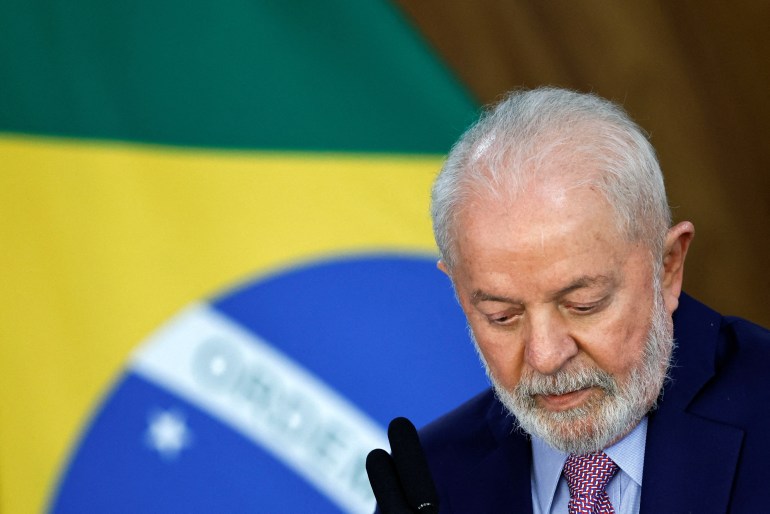
Israel says Brazilian president is not welcome in the country after he compared Israel’s war on Gaza to the Holocaust. Brazil has recalled its ambassador to Israel, and Israel says Brazilian President Luiz Inacio Lula da Silva is not welcome in the country in a diplomatic rift after Lula compared Israel’s military campaign in Gaza to the Holocaust. “What’s happening in the Gaza Strip with the Palestinian people hasn’t happened at any other moment in history. Actually, it has happened: when Hitler decided to kill the Jews,” Lula said on Sunday. During World War II, the Nazis systematically killed six million Jewish people. Israeli Prime Minister Benjamin Netanyahu described Lula’s comments as “disgraceful and grave”. On Monday, Israeli Foreign Minister Israel Katz announced that Lula is not welcome in the Middle Eastern country until he takes back his comments. “We will not forget nor forgive. It is a serious anti-Semitic attack. In my name and the name of the citizens of Israel, tell President Lula that he is persona non grata in Israel until he takes it back,” Katz told Brazil’s ambassador, according to a statement from Katz’s office. Israel says Brazilian President Luiz Inacio Lula da Silva is not welcome in the country {file: Adriano Machado/Reuters] In response, Brazil’s Ministry of Foreign Affairs said it would summon Israel’s ambassador to Brazil, Daniel Zonshine, for a meeting in Rio de Janeiro. “He [Brazilian Foreign Minister Mauro Vieira] also recalled the Brazilian ambassador in Tel Aviv, Frederico Meyer, for consultations. He will depart for Brazil tomorrow,” the Foreign Ministry added on Monday. Meanwhile, Lula, 78, also faced backlash at home over his statements on Sunday, which came during a press conference on the sidelines of an African Union summit in Addis Ababa. The Brazil-Israel Institute called his comments “vulgar” and warned they risk “fuelling anti-Semitism”. Lula condemned the Hamas-led October 7 attacks on southern Israel as a “terrorist” act the day it happened, and he has since grown vocally critical of Israel’s retaliatory military campaign in Gaza. Adblock test (Why?)
ICJ: Palestine presents case against Israeli occupation
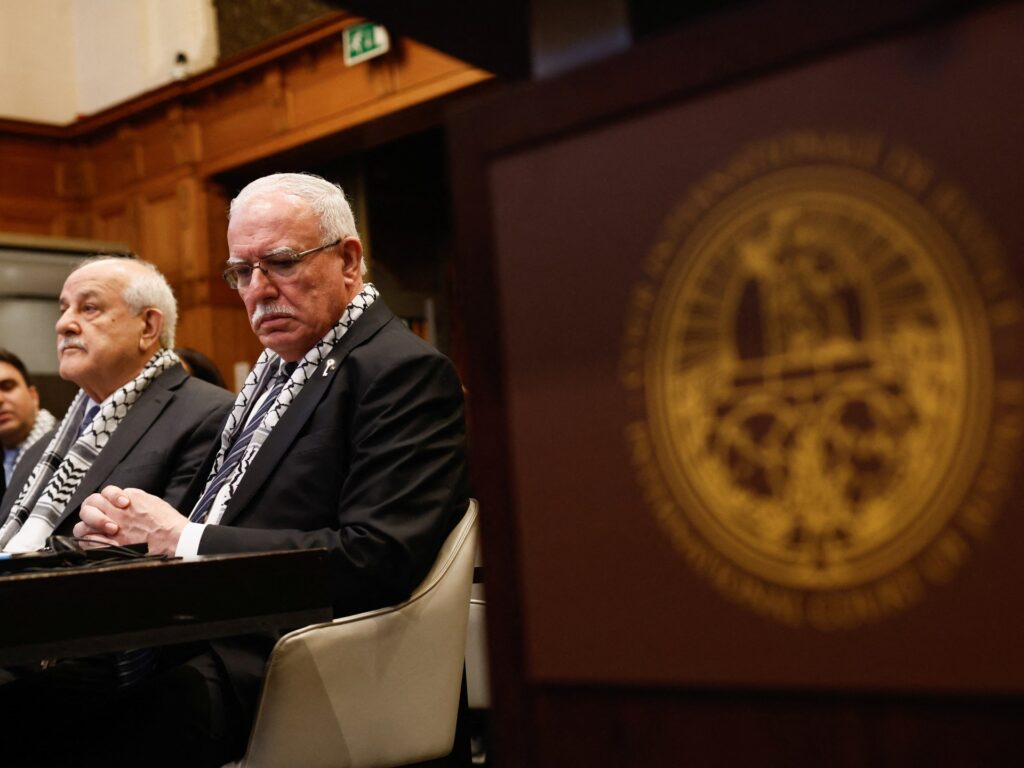
NewsFeed In a historic hearing, Palestine presented its case against Israel’s occupation of territories to the International Court of Justice. Palestinian lawyers and representatives outlined how Israel ‘systematically denies’ Palestinians a right to life and called for an immediate end to the occupation. Published On 19 Feb 202419 Feb 2024 Adblock test (Why?)
Palestinian man’s emotional response to new wheelchair
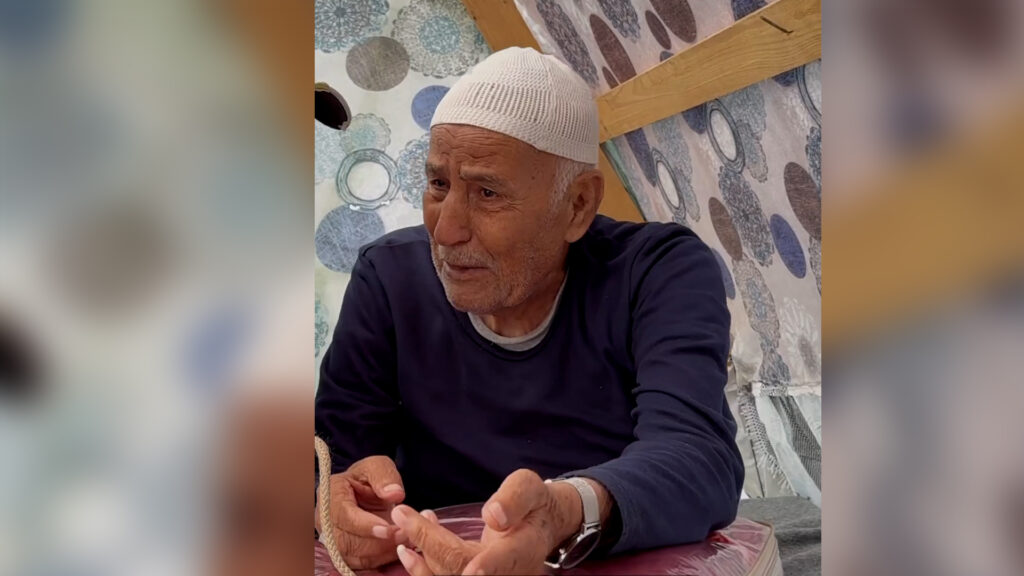
NewsFeed Video shows a Palestinian man requesting a wheelchair, and his emotional response to receiving it. Published On 19 Feb 202419 Feb 2024 Adblock test (Why?)
Taliban’s conditions to attend UN meeting ‘unacceptable’, Guterres says

The Taliban has set unacceptable conditions for attending a United Nations-sponsored meeting about Afghanistan in the Qatari capital, Doha, UN Secretary-General Antonio Guterres says. “I received a letter [from the Taliban] with a set of conditions to be present in this meeting that were not acceptable,” Guterres said at a news conference on Monday. “These conditions denied us the right to talk to other representatives of Afghan society and demanded a treatment that would, to a large extent, be similar to recognition,” the UN chief added. The two-day meeting which ended on Monday in Doha brought together member states and international envoys to Afghanistan to discuss an array of issues facing the country. But the Taliban didn’t attend because its demands were not met. The Taliban took over Kabul in August 2021 after United States and NATO forces withdrew following two decades of war. However, no country recognises it as Afghanistan’s government, and the UN has said that recognition is almost impossible while bans on female education and employment remain in place. The biggest point of contention between the international community and the Taliban are the bans imposed on women and girls. Since it retook power, it has ordered women to cover up when leaving home, stopped girls and women from attending high school and university, and banned them from parks, gyms and public baths. The Taliban insists the bans are a domestic matter and reject criticism as outside interference. Guterres said it was essential to revoke the restrictions. In January, Taliban chief spokesperson, Zabihullah Mujahid, said the UN preoccupation with Afghan women was unwarranted and dismissed its concerns. “Afghan women wear hijab of their own accord,” he said on X. “They don’t need to be forced. The Vice and Virtue Ministry hasn’t forced anyone [to wear hijab] either.” Another point of contention is the appointment of a UN special envoy in the country, which the Taliban opposes. On Monday, Guterres said there needed to be “clear consultations” with the Taliban to have clarification of the envoy’s role and who it could be to “make it attractive” from the Taliban’s point of view. He said it was in the Taliban’s interests to be part of the consultations. Many governments, international organisations and aid agencies have cut off or severely scaled back their funding for Afghanistan in response to the Taliban policies, causing a serious blow to the country’s struggling economy. “One of our main objectives is to overcome this deadlock,” Guterres said, explaining that a roadmap needed to be created in which “the concerns of the international community” and the concerns of the “de facto authorities of Afghanistan” are taken into account. Lotfullah Najafizada, CEO of Amu TV, an international media outlet, told Al Jazeera the Taliban made a strategic mistake by not attending the talks. “I think it is very important also for the Taliban to understand where the world stands. At the moment the world has planned to go ahead without the Taliban, which is not something that they expected,” he said. “I think it is very important for the international community to build consensus and deal with the Taliban with one voice.” The meeting in Doha also aimed at a more coordinated response to tackle issues in Afghanistan. Guterres said there had been discussion of a “contact group”, with a “limited number of states able to have a more coordinated approach in the engagement with the de facto authorities”. He said this could include permanent members of the UN Security Council, neighbouring countries and relevant donors but it would be “up to member states to decide how to create it”. “I believe it would be a way to have coherence in the way the international community is engaging with the de facto authorities of Afghanistan,” he said. Adblock test (Why?)
Israel to restrict access to Jerusalem’s Al-Aqsa Mosque during Ramadan
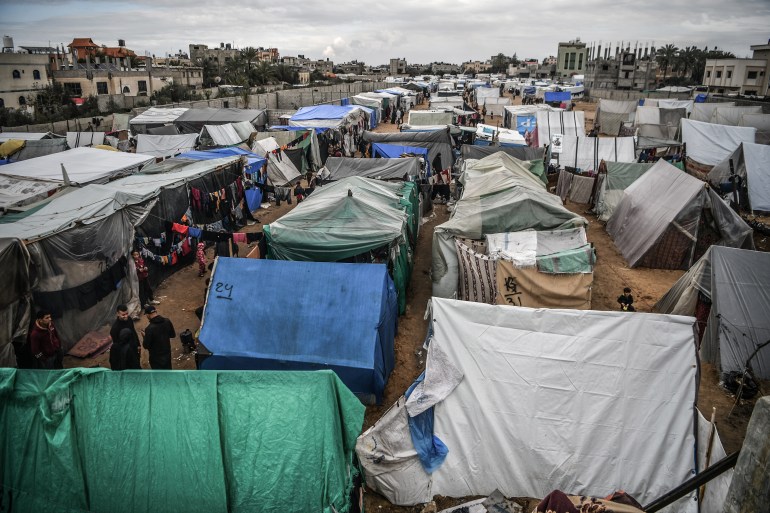
PM’s office says Israel will impose some restrictions on access to Old City site during Islamic holy month. Israel will impose some restrictions on access to Al-Aqsa Mosque in the Old City of occupied East Jerusalem during the Muslim holy month of Ramadan according to “security needs”, Prime Minister Benjamin Netanyahu’s office says. The Al-Aqsa compound, the third holiest site in the world for Muslims, sits atop a hill in the Old City. The site is also revered by Jews, who refer to it as the Temple Mount. Restrictions on access to the site have long caused friction, particularly around religious holidays such as Ramadan, which will begin about March 10 this year. Asked about the possibility of blocking access for some worshippers during the holy month, Netanyahu’s office said on Monday: “The prime minister made a balanced decision within the security needs determined by professionals.” His office gave no further details. Hamas, the Palestinian group that governs the Gaza Strip, denounced the planned restrictions and urged Palestinians to mobilise against them. It described the restrictions as “a continuation of Zionist criminality and religious warfare led by the extremist settlers group in the terrorist occupation government against our Palestinian people”. The group called on Palestinians in Israel, Jerusalem and the occupied West Bank to “reject this criminal decision, resist the occupation’s arrogance and insolence, and mobilise to stand firm and steadfast in Al-Aqsa Mosque”. Israel often sets rules to limit the number of worshippers at the site, citing security reasons. Israeli forces have previously undertaken violent raids at the site during Ramadan. Tents in Rafah house Palestinian families displaced by Israel’s air, land and sea attacks on the Gaza Strip on February 18, 2024 [Abed Zagout/Anadolu via Getty Images] The announcement comes as Israel warns that it will continue its assault on Gaza during Ramadan, including in the densely populated Rafah area in the south. “The world must know and Hamas leaders must know: If by Ramadan the hostages are not home, the fighting will continue everywhere to include the Rafah area,” war cabinet member Benny Gantz said on Sunday. “We will do so in a coordinated manner, facilitating the evacuation of civilians in dialogue with American and Egyptian partners and to minimise the civilian casualties as much as possible.” “Hamas has a choice. They can surrender, release the hostages and the civilians of Gaza can celebrate the feast of Ramadan,” he said. Israel launched its assault on Gaza on October 7 after Hamas led attacks on Israel, killing at least 1,139 people, according to an Al Jazeera count based on official figures. It also took about 250 other people captive. Israel’s bombardment and ground invasion of Gaza has killed more than 29,000 people, according to Palestinian authorities. It has also reduced much of Gaza to rubble and displaced more than 80 percent of its population, according to aid groups. Negotiations over a potential truce and hostage-for-prisoner exchange have appeared to stall in recent weeks with Netanyahu publicly describing demands by Hamas as “delusional”. The United States, Israel’s top ally, has said it still hopes to broker a pause in hostilities but signalled it would veto a draft United Nations resolution calling for a ceasefire and argued against measures that could jeopardise “the opportunity for an enduring resolution of hostilities”. There is growing international pressure on Israel to halt the war in the enclave, especially as UN agencies warn of catastrophic damage and casualties if Israeli forces press on towards Rafah. Still, Netanyahu has insisted on his war goals of “destroying” Hamas. On Sunday, the Israeli leader promised “total victory” over Hamas despite rising anger from desperate relatives of the remaining captives and growing antigovernment protests. Israel says it believes about 130 captives remain in Gaza, including 30 presumed dead. Adblock test (Why?)
Qatar criticises Israel’s Netanyahu over Hamas comments

Qatar Foreign Ministry officials accuse prime minister of seeking to prolong Israel’s war on Gaza. Qatar has criticised comments from Israeli Prime Minister Benjamin Netanyahu in which he said the Gulf state should do more to secure the release of hostages held by Hamas in Gaza and claimed that the Palestinian group is financially dependent on Doha. In a speech before American Jewish leaders on Sunday, Netanyahu said pressure should be applied on Qatar, which played a key role in mediating November’s truce and hostage-prisoner exchange between Israel and Hamas. “Qatar can press Hamas as no one else can. They host Hamas leaders. Hamas is dependent on them financially,” Netanyahu said. “I urge you to press Qatar to press Hamas because we want our hostages released.” Qatari Ministry of Foreign Affairs spokesman Majed Al-Ansari said Doha “categorically rejects the empty accusations”. “The Israeli Prime Minister’s recent statements in which he calls on Qatar to pressure Hamas into releasing the [Israeli] hostages are nothing but a new attempt by him to delay and prolong the war for reasons that have become clear to everyone,” he wrote on X on Monday. The Israeli prime minister’s recent statements calling on Qatar to pressure Hamas to release the hostages are nothing but a new attempt to stall and prolong the war for reasons that have become obvious to everyone. The Israeli Prime Minister knows very well that Qatar has been… — د. ماجد محمد الأنصاري Dr. Majed Al Ansari (@majedalansari) February 19, 2024 “We categorically reject the empty accusations made by the Israeli Prime Minister regarding Qatari efforts in reconstruction and humanitarian aid to the Palestinian people in Gaza, portraying them as funding Hamas, which he personally knows were carried out in full coordination with Israel, the US, Egypt, the United Nations, and all concerned parties,” Al-Ansari said. Qatari Prime Minister Sheikh Mohammed bin Abdulrahman bin Jassim Al Thani said over the weekend that negotiations over a potential ceasefire were “not very promising”. Sheikh Mohammed, who is also foreign minister, said on Saturday he could not give details on the talks but, as with past deals, there were two elements: humanitarian conditions in Gaza and the number of Palestinian prisoners to be released in exchange for the release of Israeli captives. The United States, Qatar and Egypt have spent weeks trying to broker a halt to fighting in Gaza and release of the captives, but there’s a wide gap between Israel’s and Hamas’s demands. Qatar said on Saturday that the talks “have not been progressing as expected”. Hamas has said it will not release the remaining hostages without Israel ending the war and withdrawing its forces from Gaza. It also demands the release of hundreds of Palestinians imprisoned by Israel, including top fighters. Netanyahu has publicly rejected the demands and any scenario in which Hamas would rebuild its military and governing capabilities. He said he sent a delegation to ceasefire talks in Cairo last week at US President Joe Biden’s request but doesn’t see the point in sending a team again. In an interview with Israel’s Kan public broadcaster, Netanyahu’s national security adviser, Tzachi Hanegbi, said military pressure and sticking to a strict line in negotiations could lead Hamas to drop its “absurd demands”. Netanyahu also opposes Palestinian statehood, which the US calls a key element for normalisation of relations between Israel and regional heavyweight Saudi Arabia. Previously in December, Israel pulled its Mossad negotiators from Qatar after an impasse in negotiations. Israel had accused Hamas of not fulfilling its side of an agreement to extend the November truce in Gaza. Adblock test (Why?)
Corporate Japan deals an unwitting blow to US East Asia policy

Japanese trading giant Itochu’s surprise announcement on February 5 that it was terminating its agreement with the Israeli defence contractor Elbit Systems has sent shockwaves throughout corporate Japan. Itochu stated specifically that they based their decision on the International Court of Justice ruling that Israel may be committing genocide in Gaza, and on the position of the Japanese government that the ICJ decision must be implemented “in good faith”. Itochu matters; it is a household name in Japan, being the third largest trading firm and one of the titans of the country’s economy with a 2023 revenue of over $104bn. Prominent trading companies like Itochu are also politically important, as they have historically been looked at as the captains of Japan’s trade-based economy. Itochu’s decision sends a very clear message about the acceptability of doing business with Israel. The decision puts Itochu in a different league from the many Western states and companies that have either ignored the ICJ ruling or disparaged the charges of genocide as “without merit”. The governments of the United States, the United Kingdom, France and Germany, just to name a few, have continued to shower Israel with weapons and political support to continue the wanton slaughter of innocent civilians, in blatant violation of the ICJ’s preliminary decision. Some Western governments have started to backtrack on their support, but words are cheap, and the flow of weapons continues. Indeed, those governments have taken their criminal complicity to a new level, by terminating funding to UNRWA, the main UN agency serving Palestinian refugees, on the basis of no doubt spurious Israeli accusations that a handful of the organisation’s 13,000 staff may have been involved in the October 7 attacks on Israel. One cannot help but question the timing of the “dodgy dossier” Israel submitted to its Western accomplices, literally hours after the ICJ issued its ruling that Israel was plausibly committing genocide. Always recipient to the Israeli narrative, the pliant Western media have duly highlighted UNRWA’s imagined involvement in terrorism, while practically ignoring the ICJ ruling. The defunding of UNRWA will almost inevitably result in famine amongst the over 85 percent of Palestinians in Gaza who are displaced – a textbook example of “deliberately inflicting conditions of life calculated to bring about the physical destruction” of an ethnic group, which qualifies as an act of genocide under international law. Generally, Japan is not an outspoken champion of Palestinian rights – indeed, the country joined its Western allies in stopping funding for UNRWA – or of human rights in general. Itochu, for its part, is one of the first Japanese companies to start human rights-based due diligence of its business operations (a process which clearly failed when they signed an agreement with Elbit in the first place). Nevertheless, in recent years Japanese companies have proven increasingly sensitive to public opinion on human rights and environmental issues. The failed 2020 Tokyo Olympics left behind a legacy of wasted public funds and corruption, but it at least served as a catalyst for corporate Japan to take the UN Guiding Principles on Business and Human Rights (which state that companies have a responsibility to respect international human rights norms) more seriously. That is not to say that Japanese companies are necessarily better than their Western counterparts – they are not – but in this instance, the demonstrations that had been taking place in front of Itochu’s Tokyo headquarters, and the popular boycott of the Itochu-owned convenience store chain Family Mart in Muslim countries like Malaysia, clearly pushed the company over the line. According to Itochu, the agreement with Elbit was to procure material for the Japanese military, not for the provision of Japanese technology or weapons to Israel (Itochu also stated they tied up with Elbit on the basis of a Japanese government request – a claim implausibly denied by the authorities). Assuming that is true, that makes the cutting of ties even more significant. Itochu has essentially accepted that doing business with Israeli military companies ipso facto results in complicity with Israeli genocide. It logically follows that relations with companies – Israeli or not – that are involved with other Israeli violations of international law should also be terminated. That is exactly what the Boycott, Divestment, and Sanctions (BDS) campaign rightfully calls for, to hold the apartheid state to account for its crimes. Itochu’s decision is surely the harbinger of increasing Israeli isolation. The Western world has long been the primary front line of the BDS movement and the Israeli attempts to suppress it. The developments in Japan show, if there ever was any doubt, that BDS has truly gone global. The decision by Itochu may also have reverberations far beyond Palestine, since Japanese remilitarisation has long been integral to the US’s grand strategy in East Asia. After World War II, Japan adopted a pacifist constitution that prohibits the use of force to resolve international disputes. However, US pressure on Japan to play a larger military role in Asia has increased in recent years, as Americans get more and more anxious about Chinese challenges to US hegemony. What until then was a cautious Japanese approach changed dramatically in 2012, with the advent of the ultranationalist Shinzo Abe as prime minister. With little to no regard for public opinion, Abe rammed through extremely controversial bills and policies aimed at remilitarisation, in particular giving the military much greater latitude in fighting in concert with allied (read: US) forces even outside of Japan. Weapons exports and international joint development, long a taboo, became a government priority overnight. Japan also proactively entered into alliances overtly aimed at keeping China in its place in the international pecking order, such as the Quadrilateral Security Dialogue. Abe finally stepped down in 2020, but the general direction has remained the same, and in 2022 the government jumped on Russia’s invasion of Ukraine to push forward a near-doubling of the military budget. From the get-go, stronger relations with Israel were integral to Japan’s greater incorporation into the US military alliance. Heavy reliance on oil from Arab