

Israel’s war on Gaza: List of key events, day 106

Footage and witness accounts shared with Al Jazeera reveal how Israeli forces carried out summary executions in Gaza. Here are the other major updates. Here’s how things stand on Saturday, January 20, 2024: Latest developments The United States has said it is investigating the killing by Israeli forces of a 17-year-old with American citizenship east of Ramallah, in the occupied West Bank. Hezbollah has warned Israel that it will receive “a real slap in the face” if its forces step up fighting along the southern Lebanon border. Displaced Palestinians in four evacuation zones in Gaza City have been ordered by the Israeli military to leave and head towards the central areas. Clashes have broken out as Palestinians resisted an Israeli military raid on the Balata refugee camp, east of Nablus, where homes were searched and an Israeli military bulldozer destroyed civilian infrastructure, according to the Palestinian media. An armed Palestinian group allied to Hamas has claimed that a captive held in Gaza has died of injuries due to an Israeli air strike. A 20-year-old Palestinian man has been shot and injured by Israeli forces during a raid on the Rafidia area, west of Nablus. Palestinian fighters have claimed attacks on Israeli forces in the Jabalia area of northern Gaza for a fourth consecutive day, amid assessments by the Institute for the Study of War (ISW) and the Critical Threats Project (CTP) that armed groups in Gaza are “re-infiltrating” areas in the north. The Palestinian Red Crescent Society has accused Israel of firing at a hospital in Khan Younis, as a major advance in the main city in the southern Gaza Strip threatened the few healthcare facilities still open. The Israeli army shelled the al-Katiba area and the al-Amal neighbourhood in Khan Younis. US Central Command forces have conducted strikes against three Houthi anti-ship missiles that were aimed into the southern Red Sea and were prepared to launch, according to the US army. Human rights Footage and witness accounts shared with Al Jazeera reveal how Israeli forces carried out summary executions in Gaza City last month. Dozens of Democratic Party politicians sign a letter calling on US President Joe Biden to affirm his opposition to Israel’s forced displacement of Palestinians from Gaza. United Kingdom government legal advisers have been unable to conclude that Israel complied with international humanitarian law in its war in Gaza, according to the Guardian newspaper, citing court documents. The United Nations women’s agency reports 70 percent of those killed in Gaza are women and girls, and two mothers are being killed “every hour” amid the Israeli onslaught on the Palestinian territory. Adblock test (Why?)
Popcorn and curfews: India gets ready for Ram temple with frenzy and fear

Yavatmal/Mumbai, India – For a month now, mini-trucks have been snaking their way on labyrinth roads cutting across villages in Yavatmal district in central India. Yavatmal has been in the grip of agrarian distress so deep that more than 5,800 farmers have taken their own lives here in the last two decades, according to data provided by the local divisional collectorate. But these trucks haven’t been carrying any relief for distressed farmers. Instead, with a photo of the Hindu god Ram on posters stuck on their sides, the trucks have been foraying deep inside the district, exhorting farmers to donate grains. The grains are headed to Ayodhya to feed hundreds of thousands of devotees visiting the city where Prime Minister Narendra Modi will consecrate a temple to Ram on January 22, over three decades after a mob led by Hindu nationalists tore down a mosque that stood on the spot. The trucks are being operated by the Vishwa Hindu Parishad (VHP), a part of the Hindu nationalist network Sangh Parivar led by the Rashtriya Swayamsevak Sangh (RSS) that includes Modi’s Bharatiya Janata Party (BJP). At Yavatmal’s Samvidhan Chowk, workers hurriedly load a large container truck with sacks of grains. “We have managed to fill three container trucks with these donations, and this is the fourth one,” says VHP Vidarbha Prant President Raju Niwal. The idea, VHP volunteers on the spot say, is to mobilise farmers and make them “feel involved” in the celebrations. It’s a sentiment that the Modi government and its ideological allies have successfully managed to evoke across the country. For over seven decades, the movement to build the Ram temple in Ayodhya, at the spot where he is believed to have been born according to Hindu scriptures, had been shrouded in violence and bitter contestation. Close to 2,500 people (PDF), according to a research paper by the Institute of Peace and Conflict Studies, were killed during the violence that broke out around the BJP-led agitation demanding a Ram temple in the early 1990s. But as Modi gets set to inaugurate the Ram temple, the country has been flooded by popular culture acts and symbols that ignore that troubled past, giving the Ram temple movement a benign image, and creating a lasting legacy for Modi among Hindus, say analysts. Labourers stand on top of the illuminated grand temple of the god Ram ahead of its opening in Ayodhya in India, January 19, 2024 [Adnan Abidi/Reuters] Pop songs and popcorn From social media timelines to schools, the temple’s inauguration is everywhere. Music platforms are filled with a glut of new songs exhorting citizens to celebrate the occasion, insisting that Ram was “coming back”. New TV shows have come up around Ram’s life. Reality TV shows have dedicated entire episodes to songs hailing Ram, with a makeshift temple built in the studio. News television channel vehicles are sporting huge Ram stickers, while news studios feature large cutouts of Ram as the backdrop for news debates. India’s largest domestic airline, Indigo, got its cabin crew to dress up as Ram, wife Sita and brother Lakshman, in its inaugural flight to Ayodhya from Ahmedabad. On Friday, PVR Cinemas, one of India’s largest cinema chains, announced that they were, in association with a top Hindi news channel Aaj Tak, going to broadcast live visuals of the temple’s inauguration ceremony in cinema halls across the country, with “a complimentary popcorn combo” for attendees. On WhatsApp and Instagram, reels and videos are honouring the temple’s inauguration with vivid imagery – one image, viral across platforms, shows Modi, towering over Ram, and walking him into the temple. Modi has approved most of this – an analysis of his Twitter timeline reveals that he has tweeted out at least 16 songs around Ram this month. He even created a playlist of 62 such songs that he tweeted out on Friday. On his WhatsApp channel, of the 14 posts since January 1, at least five are around the Ram temple’s inauguration. Buoyed, several high-profile singers have come out with songs around the event in the recent few weeks – from Sonu Nigam, Jubin Nautiyal, Shaan, Udit Narayan, Alka Yagnik and Kailash Kher, to music composers Amit Trivedi and Anu Malik. Many of these music videos feature visuals of Modi. These songs have been repurposed for crowd-created reels and videos, amplifying their reach multiple times over. But many say what is missing amid the euphoria is an acknowledgement of the bloodied past of the movement around the temple. 1947 all over again? Author Nilanjan Mukhopadhyay, who reported on the agitation that led to the demolition of the 16th-century Babri Mosque in Ayodhya, says the celebrations carry an echo of the events of August 15, 1947. India celebrated its independence from British colonial rule at the same time that large parts of the country were drowning in inter-religious hate, and the subcontinent was being carved into two. “There are striking parallels that can be drawn between January 22 and August 15, 1947, not with the celebrations around India’s independence, but with the tragedies surrounding its partition [into India and Pakistan],” says Mukhopadhyay, author of the 1994 book, The Demolition: India at the Crossroads. Mukhopadhyay recalls a recent conversation with a Muslim friend, who told him how Muslims were exchanging messages warning each other not to travel in public transport on January 22, or to not showcase their Muslim identity on the day. “On the other hand, the triumphant Hindu is relishing this fear. There is a sense of collective triumphalism in many,” he says. None of this fear and disappointment, though, is reflected in the popular discourse around the inauguration. People wait to buy tickets at an INOX movie theatre in Mumbai, India, March 29, 2022. Movie theatres are planning to broadcast the temple consecration ceremony live, with complementary popcorn [Francis Mascarenhas/Reuters] The young identity What is reflected is the triumphalism that Mukhopadhyay mentions – in some cities, pregnant women have reportedly asked for their deliveries to be timed with the inauguration. The Bar
‘Low-trust’ ties: What’s next for Pakistan, Iran after tit-for-tat attacks?

Islamabad, Pakistan – Pakistan and Iran have agreed to de-escalate tensions after tit-for-tat military strikes on each other’s territory this week, but the episode reveals a lack of trust between the neighbours that will continue to plague relations even after the missiles and accusations have subsided, say analysts. On Friday evening Pakistan’s Foreign Minister Jalil Abbas Jilani spoke to his Iranian counterpart Hossein Amirabdollahian. “The two foreign ministers agreed that working level cooperation and close coordination on counter terrorism and other aspects of mutual concern should be strengthened. They also agreed to de-escalate the situation,” a Pakistan foreign ministry statement read. Late on Tuesday, Iran had conducted missile and drone strikes in Pakistan’s Balochistan province, killing at least two children and injuring three. Tehran said the rare border intrusion targeted Jaish al-Adl, a Sunni Muslim armed group accused of attacks inside the Iranian territory of Sistan-Baluchestan. In fewer than 48 hours, Pakistan responded with “precise” military strikes that killed at least nine people, including four children and three women. Iranian media reports, quoting state officials, said those killed were “non-Iranians”, implying they could have been Pakistani nationals. The rare military actions between the two countries threatened to escalate into a broader conflict in a region already on edge over Israel’s more than three-month war in the Gaza Strip. Pakistani caretaker Prime Minister Anwaar-ul-Haq Kakar cut short his visit to Davos, Switzerland, where he was attending the World Economic Forum. On Friday, he chaired a meeting of the National Security Council to review the security situation. As the United Nations and world powers urged restraint between the two Muslim-majority countries and their close ally China offered to mediate, Islamabad and Tehran toned down their rhetoric. In a statement on Friday, Iran’s Ministry of Foreign Affairs referred to “the friendly and brotherly government of Pakistan”. A similar statement by Pakistan’s Ministry of Foreign Affairs on Thursday said Islamabad “fully respects the sovereignty and territorial integrity of the Islamic Republic of Iran”. But embedded even in those reconciliatory statements were signs of the border tensions that linger between the neighbours, and that exploded in the form of missile attacks this week. Iran’s Friday statement said that it expected Pakistan “to adhere to its obligations in preventing the establishment of bases and the deployment of armed terrorist groups on its soil”, calling the safety of its citizens “a red line”. And Pakistan insisted it had struck targets in Iran “in pursuit of Pakistan’s own security and national interest which is paramount and cannot be compromised”. (Al Jazeera) ‘Reckless and feckless’ Analysts have questioned Iran’s motive behind conducting strikes inside Pakistan during Israel’s assault on Gaza, which has also involved Iranian allies such as Hezbollah in Lebanon and the Houthis in Yemen. Joshua White, professor of international affairs and a non-resident fellow at the Brookings Institution think tank in the United States, told Al Jazeera that Iran and Pakistan have ample reasons to de-escalate after the “unusual strikes”. “The reality is that both the governments deploy rhetoric about brotherhood when it suits them but are often suspicious of the other’s motives. This is a low-trust relationship, but neither Islamabad nor Tehran have much to gain from seeing tensions escalate,” he said. Ali Vaez, Iran project director at the International Crisis Group, added that the Iranian move against Pakistan risked opening a new front against a nuclear-armed neighbour. “The strike was both reckless and feckless against a nuclear state on whose cooperation Iran depends for reigning in armed Baloch groups – and a deadly message sent to the wrong address – as most of the setbacks Iran has suffered in the past few weeks were perpetrated at the hands of Israel, the US and the so-called Islamic State [ISIL/ISIS],” Vaez told Al Jazeera. Islamabad-based expert on security issues Syed Rifaat Hussain said dialogue was necessary for the two countries to restore trust. “The conversations need to happen between the two nations, and they could be at either the military level or at civilian level, but leadership will play an important role in defusing the tension,” he told Al Jazeera. Hussain said the unprovoked Iranian strike remains a mystery to him. “The Iranian calculus is rather complex. Perhaps Iran overplayed its hand. They thought Pakistan will absorb the strike and will show restraint, or at most, a verbal protest,” he said. Vaez concurred, saying Iran “overreached” in its apparent need to demonstrate strength. “It left Pakistan in a position where it had no option other than retaliating in kind to draw a red line on unilateral Iranian strikes into its sovereign territory,” he said. Vaez wondered if Iran’s decision to strike was guided by an “internal pressure on the need to flex its military muscle to deter further targeted killings of its senior army commanders and strikes against its allies in the region”. “Plus, the Iranian government also seems keen to wag the dog, given that it has parliamentary elections coming up in six weeks amid a high degree of political apathy,” he told Al Jazeera. White said it is unlikely that the Pakistan-Iran tensions will feature significantly in US policy towards the two countries. “I don’t think this episode will alter the US attitude towards Iran or is likely to meaningfully change Washington’s engagement with Islamabad, either. American officials have long seen Iran-Pakistan tensions in the Balochistan region as a complex but localised conflict,” he said. Vaez said neither Iran nor Pakistan appear interested in escalating tensions but added a word of caution considering the volatility in the region: “This is not likely to escalate beyond a limited tit for tat, but it is a reminder of the elevated risks of miscalculation in the fog of the Gaza war that can spread and escalate the conflict further.” Adblock test (Why?)
US Senator Tim Scott endorses Trump for president in blow to Nikki Haley

Trump holds commanding lead in polls ahead of key New Hampshire primary on Tuesday. United States Senator Tim Scott has endorsed his former rival Donald Trump for the Republican nomination for president, in a setback for Trump’s closest challenger and fellow South Carolinian Nikki Haley. Tim Scott, who dropped out of the 2024 presidential race in November, appeared on stage with Trump in New Hampshire to offer his backing ahead of next week’s high-stakes primary in the state. “We need a president who sees Americans as one American family, and that’s why I came to the very warm state of New Hampshire to endorse the next president of the United States, President Donald Trump,” Scott told Trump supporters in Concord on Friday. Scott, whose unsuccessful campaign stressed the Christian faith and conservative values he learned growing up in a single-parent household, argued that Trump would cut taxes and bring Americans together as president. “We need a president who unites our country,” said Scott, who is the lone Black Republican in the Senate. Scott did not mention Nikki Haley, the former UN ambassador and governor of South Carolina who first appointed Scott to the Senate in 2017. Haley is hoping for a strong performance in New Hampshire on Tuesday to keep her presidential bid afloat following Trump’s commanding victory in last week’s Iowa caucuses. Haley, who earlier on Friday won the endorsement of Vermont Governor Phil Scott, is trailing Trump by double digits in New Hampshire, with Florida Governor Ron DeSantis a distant third in the state. In New Hampshire, Trump asked voters to help bring a swift end to the Republican race to allow him to focus on beating President Joe Biden in November. “We want to win by big numbers,” Trump said, “so everybody has to vote.” Trump also bashed his rivals, arguing that Haley was “not capable” of being president and lambasting DeSantis’s slide in the polls as “one of the great self-destructions I think I’ve ever witnessed”. Adblock test (Why?)
South Africa seeks to stop auction of historic Nelson Mandela artefacts

About 75 items are to go under the hammer in a deal between Mandela’s family and a New York-based auctioneer. The South African government has said it will challenge the auctioning of dozens of artefacts belonging to the nation’s anti-apartheid stalwart Nelson Mandela, saying the items are of historical significance and should be preserved in the country. The 75 items belonging to Mandela – the country’s first democratically elected president who spent 27 years in jail for his anti-apartheid struggle against white minority rule – are to go under the hammer on February 22 in a deal between New York-based auctioneers Guernsey’s and Mandela’s family, mainly his daughter Makaziwe Mandela. But South Africa’s Ministry of Culture said it has filed an appeal to halt “the unpermitted export” of the objects. “Former president Nelson Mandela is integral to South Africa’s heritage,” Minister of Sport, Arts and Culture Zizi Kodwa said in a statement. “It is thus important that we … ensure that his life’s work and experiences remain in the country for generations to come.” Mandela passed away in 2013. The items include the late leader’s iconic Ray-Ban sunglasses and “Madiba” shirts, personal letters he wrote from prison, as well as a blanket gifted to him by former US President Barack Obama and his wife Michelle. Nelson Mandela, left, was known for wearing his iconic ‘Madiba’ shirts, some of which are up for auction. A champagne cooler that was gift to him from former US president Bill Clinton, right, is also up for auction [File: Scott Applewhite, Pool/AP] A champagne cooler that was a present from former President Bill Clinton is also on the list, with bidding on it starting at $24,000. Among the items is also Mandela’s ID “book”, his identification document following his release from prison in the 1990s. Last month, the North Gauteng High Court in Pretoria gave the go-ahead for the auction after dismissing an interdict by the South African Heritage Resources Agency, which is responsible for the protection of the country’s cultural heritage. ‘Almost unthinkable’ On its website, Guernsey’s says the auction “will be nothing short of remarkable”, and that proceeds will be used for the building of the Mandela Memorial Garden in Qunu, the village where he is buried. “To imagine actually owning an artefact touched by this great leader is almost unthinkable,” it says. In an interview with US media published on Thursday, Makaziwe Mandela said her father wanted the former Transkei region where he was born and raised to benefit economically from tourism. “I want other people in the world to have a piece of Nelson Mandela – and to remind them, especially in the current situation, of compassion, of kindness, of forgiveness,” she told the New York Times. Reports of the auction have sparked heated debates on social media platforms in South Africa, with many criticising the auctioning of what they consider to be the nation’s cultural heritage. The planned auction has come as many African countries seek to have treasured African artworks and artefacts that were removed from the continent during colonial years returned to Africa. Most recently, Nigeria and Germany signed a deal for the return of hundreds of artefacts known as the Benin Bronzes. The deal followed French President Emmanuel Macron’s decision in 2021 to sign over 26 pieces known as the Abomey Treasures, priceless artworks of the 19th century Dahomey kingdom in present-day Benin. Adblock test (Why?)
New Hampshire primary: Haley and the anti-Trump movement’s last best hope

New Hampshire — the next stop in the Republican primary calendar — is known as the Granite State, named for the rock that gave rise to some of its mightiest peaks and mountains. For former United Nations envoy Nikki Haley, however, the Granite State could be the cliff off which her presidential ambitions tumble. Tucked in snow-covered New England, a region in the northeastern United States, New Hampshire offers a unique opportunity for Haley. Its conservative voters lean more moderate, making the state’s primary on January 23 a beacon for rivals of Republican frontrunner Donald Trump. Haley could potentially win big in New Hampshire: A survey released on Tuesday from the American Research Group showed her with 33 percent support among the state’s Republican voters, just behind Trump’s 37 percent. A victory in the state could offer her campaign the validation it has been seeking, showing that the former UN envoy can indeed be a serious contender against Trump. “Haley really has to either win or be extremely close to Trump, given the expectations she’s been building up,” said Henry Olsen, a senior fellow at the Ethics and Public Policy Center, a Washington-based think tank. “If she doesn’t get within single digits, ideally within five points, her campaign is effectively over.” James Davis, a Republican strategist and founder of the marketing firm Touchdown Strategies, added that Haley’s prospects in the 2024 presidential race hinge on Tuesday’s primary. “It’s within striking distance for her to pull the win in New Hampshire — and that’s what she’s got to do.” ‘New Hampshire voters are different’ Even a victory in New Hampshire would still mean an uphill battle against Trump, who continues to trounce Haley and fellow Republican contender Ron DeSantis in national polls. Trump’s towering lead was confirmed in the Iowa caucuses, the first event in a season of primaries and caucuses that will eventually determine which candidate receives the Republican nomination for the presidency. Even before the Iowa caucuses closed, media outlets confirmed Trump would win, setting a record for the margins of his victory with 51 percent of the vote. In the so-called “race for second”, Haley received 19 percent support, behind Florida Governor DeSantis, who snagged 21 percent. Still, Haley’s prospects may not be as low as they appear. Davis explained that DeSantis “had basically banked his campaign on Iowa”, while Haley “invested very little” in the state. That means Haley’s “neck-and-neck” finish with DeSantis in Iowa could actually indicate momentum for her campaign moving forward, Davis said. Several other factors may give Haley a boost as she heads to New Hampshire. Robert Boatright, a political science professor and elections expert at Clark University, said the most significant element was the simplest: New Hampshire is not Iowa. Considered a “purple state” in a region otherwise dominated by Democrats, New Hampshire has a notable Republican base, not to mention a libertarian streak. Its elections have therefore resulted in a mixed bag of political figures: Its governor is Republican, and its state legislature is Republican-controlled, but its representatives and senators in the US Congress are all Democrats. “New Hampshire voters are different from Iowa voters in a number of important ways,” said Boatright. “It’s a wealthier state. It’s a less religious state. Republicans in New Hampshire tend to be more like the old Republican Party.” That is largely why Trump’s Republican critics have singled out New Hampshire as a bellwether in this election cycle. One former candidate, former New Jersey Governor Chris Christie, focused his campaign almost exclusively on the state before withdrawing from the Republican race on January 10. Unlike Christie, Haley has remained more circumspect in her criticism of Trump, a former president with a devoted following. She served in his administration from 2017 to 2018. However, she has sharpened her attacks on Trump going into New Hampshire, taking particular aim at the 77-year-old’s age and the “chaos” of his leadership. Trump too has taken swipes at Haley. He recently floated a conspiracy theory that Haley — a South Carolina native with Indian heritage — was born outside the US, falsely suggesting she was ineligible to be president. Meanwhile, DeSantis is expected to be a non-factor in New Hampshire, where his campaign has not connected with voters. He has instead focused more on South Carolina, Haley’s home state, which is set to hold its Republican primary in late February. The format of the vote itself is expected to benefit Haley, as well. Iowa holds caucuses, in which party members attend meetings across the state to debate and then choose a candidate. But in New Hampshire, a primary is organised instead — asking that voters only cast a ballot, just as they would during a general election. Olsen, from the Ethics and Public Policy Center, said this is an advantage for Haley. Typically, caucuses only “attract the true believers because of their time commitment”. In a primary, however, “all you have to do is show up and give maybe 15 minutes of your time rather than three hours of your time. And that always helps the candidate who is less enamoured by the base.” Boatright and Davis also said that the low turnout in Iowa made its caucuses a less reliable predictor for success in the Republican race. Only about 108,000 Iowans participated this year, comprising 14 percent of the state’s registered Republicans. “Caucus-goers in Iowa are not necessarily all that representative of the state or even of Republican voters within the state,” said Boatright. Davis echoed that point: “Iowa tends to be a field-narrower in terms of its process, rather than a kingmaker.” The elephant in the room Experts say early contests in the US primary season tend to be more about establishing a narrative than winning delegates, who ultimately vote to confirm the party’s nominee at a national convention. New Hampshire is only the first primary race in a series that includes every state in the US. But a strong showing in the state can turbo-charge a
Actor Alec Baldwin charged again over fatal film-set shooting

Grand jury indicted Baldwin for involuntary manslaughter over 2021 shooting on set of, Rust, that killed Halyna Hutchins. A grand jury has indicted American actor Alec Baldwin on an involuntary manslaughter charge after a 2021 shooting during a rehearsal on a movie set killed the cinematographer. Special prosecutors brought the case before a grand jury in Santa Fe, New Mexico this week, months after receiving a new analysis of the gun that was used. While the proceeding was shrouded in secrecy, two of the witnesses seen at the court included crew members, one of whom was present when the shot was fired, and the other had just walked off the set the day before due to safety concerns. In April last year, special prosecutors dismissed an involuntary manslaughter charge against Baldwin, saying they were informed that the gun might have been modified before the shooting and malfunctioned. But the prosecutors later began weighing whether to refile a charge against the actor after receiving new analysis of the gun. Baldwin, the lead actor and co-producer of the movie, Rust, said he pulled back the hammer, not the trigger, and the gun fired. Cinematographer Halyna Hutchins was killed once the gun went off, and director Joel Souza was injured. Judges recently agreed to put on hold several civil lawsuits seeking compensation from Baldwin and the film producers after prosecutors said they would present charges to a grand jury. The new analysis used to indict Baldwin relied on findings from experts in ballistics and forensic testing using replacement parts to reassemble the gun fired by Baldwin after parts of the pistol were broken during FBI testing. But the report findings, led by Lucien Haag of Forensic Science Services in Arizona, stated that although Baldwin denied pulling the trigger, “given the tests, findings and observations reported here, the trigger had to be pulled or depressed sufficiently to release the fully cocked or retracted hammer of the evidence revolver.” The findings were similar to a previous FBI test on the firearm. The weapons supervisor on the movie set, Hannah Gutierrez-Reed, pleaded not guilty to involuntary manslaughter and evidence tampering. Her trial is set to begin in February. The filming of, Rust, resumed last year in Montana under an agreement with the cinematographer’s widower, Matthew Hutchins, that made him an executive producer. Adblock test (Why?)
Namibia’s president to undergo treatment after ‘cancerous cells’ found
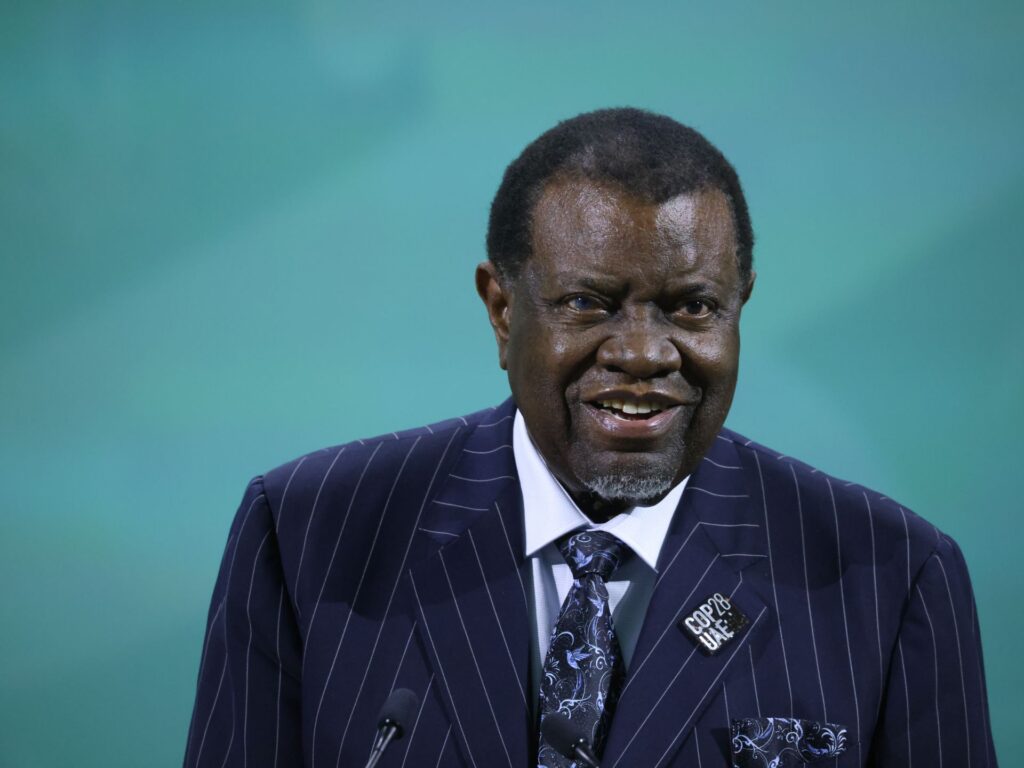
Hage Geingob, 82, will continue to carry out his presidential duties while seeking treatment, his office said. Namibian President Hage Geingob will start treatment for cancer after routine medical checkups led to the detection of “cancerous cells”, his office has said. In a statement from the Namibian Presidency on Friday, it said that “as part of regular annual medical examinations” the 82-year-old leader had a colonoscopy and a gastroscopy on January 8, followed by a biopsy. “The results revealed cancerous cells,” the statement said. “On the advice of the medical team, President Geingob will undertake appropriate medical treatment to deal with the cancerous cells,” it added. Geingob’s office gave no more details on his diagnosis but said he would continue working. “With Presidential and National Assembly elections programmed for the end of the year 2024, The Presidency wishes to inform the Namibian public that President Geingob will continue to carry out presidential duties, alongside the Cabinet, of which he is the Chairperson,” the statement said. Health scares have followed the president even before he took office. In 2013 Geingob underwent brain surgery. A year later, he told the public that he had survived prostate cancer. In 2023, the tall, deep-voiced leader, underwent an aortic operation in neighbouring South Africa. Geingob, who is serving his second term, was first elected as president in 2014 after spending 12 years as the country’s longest-serving prime minister. Namibia will hold elections to choose a new leader in November. Geingob will not be standing for re-election. Last year, the governing party, the South West Africa People’s Organisation (SWAPO), named Netumbo Nandi-Ndaitwah as its candidate for the election. She is the party’s vice-president and Namibia’s current deputy prime minister. Adblock test (Why?)
Journalist questions bombing of Gaza university

NewsFeed “It’s not troubling to you?” A reporter questions the US State Department about Israeli justification for destroying Israa University in Gaza City in what appears to be a controlled demolition. Published On 19 Jan 202419 Jan 2024 Adblock test (Why?)
‘Until Israel stops!’: Yemenis rally for Houthis, Palestinians in Sanaa
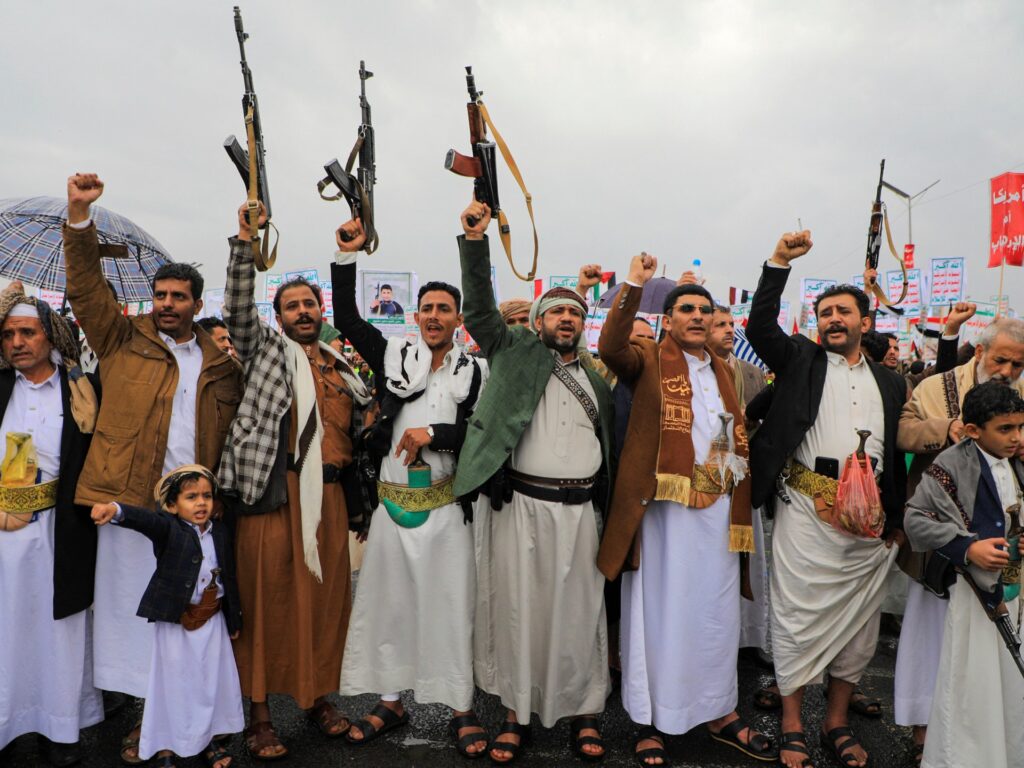
Thousands of demonstrators have taken to the streets of Yemen’s capital, Sanaa, to show their support for Palestinians and protest against Western attacks on Yemen, as Israel’s war on Gaza continues. Al Jazeera’s Mohammed al-Attab, reporting from the scene of the protests on Friday, said many in the crowd accused the United States of supporting Israel’s war and promised to continue standing by their “brothers in Palestine”. “They are now saying that, ‘We don’t care about your rage, we don’t care about whatever you do to us, we will continue our support and resilience with Palestinians until Israel stops its war on Palestine,’” he added. Demonstrators also chanted against the US attacks on Yemen and some criticised the US designating the Houthis a “terrorist group”. On Wednesday, the Biden administration re-listed Yemen’s Houthis as a “Specially Designated Global Terrorist” group over the rebels’ attacks in the Red Sea on ships it says have links to Israel. In response to the shipping attacks, which have disrupted maritime trade between Asia and Europe, the US has also launched attacks on sites in Yemen since last week. The Houthis say their attacks on ships will continue until Israel’s war on Gaza stops. Other rallies reportedly also took place in Hodeidah, western Yemen, in Hajjah and Saada provinces of northwestern Yemen, in southwestern Taiz province, and in Al-Bayda province of central Yemen on Friday, according to the Houthi-run Al-Masirah channel. Adblock test (Why?)